Author: Casino Connection Staff

BetMGM Launches Borgata Site in Pennsylvania

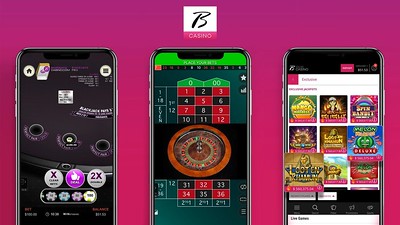
BetMGM announced the launch of the Borgata Casino app in Pennsylvania through a market-access partnership with Rivers Casino Philadelphia. Borgata Casino joins BetMGM Casino, which launched in December, as BetMGM’s second online casino in the Keystone State.

Borgata Casino is available for download on iOS and Android, and accessible via desktop.

“Pennsylvania marks an important milestone for us as we introduce the Borgata Casino brand to the first state outside of New Jersey,” said BetMGM CEO Adam Greenblatt.

The Borgata Casino app features a variety of games, including more than 150 slots and table games, such as Premium Blackjack Pro and MGM Grand Millions. Its progressive jackpot, linked to slot offerings and available to players in Pennsylvania, starts at $300,000. Once signed up, players receive a 100 percent welcome deposit match up to $1,000, along with $20 in free play.

BetMGM’s integration with MGM Resorts’ M life Rewards program allows Borgata Casino customers in Pennsylvania to redeem their play for accommodations at MGM Resorts properties nationwide, such as Bellagio and MGM Grand in Las Vegas, Borgata in New Jersey, and MGM National Harbor in Maryland.

With Trump Plaza’s Gone, What’s Next in AC?

At 9:08 a.m. on February 17, the former Trump Plaza Hotel & Casino in Atlantic City was imploded, ending seven years of neglect in just seconds. It took 3,000 sticks of dynamite to level the 34-story structure.

That was the easy part.

The hard part will be figuring out what should takes the place of the former gaming hall, which was located in an enviable spot at the foot of the Atlantic City Expressway.

The ball is in Carl Icahn’s court. The billionaire investor bought the property from the Trump Organization, long after the former president was best known as a casino magnate.

“I don’t see Icahn sitting on such a valuable piece of land, as he did while the building was closed and in decay,” said Bob Ambrose, casino consultant, adjunct professor of casino management and former casino executive. “It’s a prime piece of real estate and a showcase for Atlantic City to those driving in from the expressway. Can we pull the rabbit out of the hat and guess the future?”

A lot of people are trying to do just that. Given the site’s resort designation, the possibilities are many, Ambrose said: non-gaming, multi-use development, and—a long shot in a town with nine casinos—another gaming enterprise.

In the early 2000s, when Atlantic City was enjoying significant growth, a new casino hotel might have seemed reasonable, even inevitable. After Borgata opened to rave reviews in 2003, companies were tripping over each other to create the next big thing. But those days are long gone. In recent year, some industry analysts even questioned the wisdom of letting the Hard Rock and Ocean casinos join the neighborhood (both opened in June 2018).

“I don’t believe the market will support another casino,” said Michael Busler, professor of finance and finance program coordinator at Stockton University of New Jersey. “In fact, I’m worried whether all the nine existing casinos can make it in the long run.”

Instead, he said, the city needs “something spectacular that can draw the ‘ohs and ahhs’ of guests. The problem is trying to figure out exactly what that should be.”

In the short term, a manicured park might look good when the rubble is cleared away—something to beautify a dead area. Or maybe not. The same approach was taken after another Boardwalk casino, the Sands, was imploded in 2007. Originally, Pinnacle Entertainment planned to build its own another casino at the site, but the Great Recession put an end to that. So in 2012, the Casino Reinvestment Development Authority paid $3 million for an art installation called Wonder—little more than mounds of grass covered with signs saying, “Look,” “Imagine,” “Glorious” and “Possible.” In 2016, the city turned the site into something more useful: a parking lot.

“A great deal of promises were made about the future of the 18-acre Sands site,” Ambrose told GGB News. “I don’t want to sound negative, but hopefully ‘promises made and promises broken’ will not be repeated. Atlantic City’s had enough punches thrown at it.”

One idea that may make sense is a mixed-use development, said Nicholas F. Talvacchia, partner at the Cooper Levenson law firm and a veteran land-use lawyer.

“Connect the Boardwalk to the Walk outlet stores, with retail, entertainment, restaurant and residential uses,” he said. Such a plan would reinforce the link between the Boardwalk and the popular Tanger Outlet stores, spanning three blocks in the city’s downtown. The problem with that idea, however, is the looming Trump Plaza parking garage which was not imploded and there are no demolition plans for it.

If money were no object, “non-gaming entertainment uses would attract new visitors to the city and help attract new business to the Walk and to the Boardwalk to support and complement existing businesses,” Talvacchia said.

One funding mechanism could be the New Jersey Economic Development Authority’s new Aspire program, which a developer could use as gap financing. It’s a key part of the New Jersey Economic Recovery Act signed into law by Governor Phil Murphy on January 7.

Another intriguing possibility is the expansion of the Caesars Atlantic City footprint in some form, Ambrose said; Caesars is also located on the Boardwalk, along with five other gaming resorts; Borgata, Harrah’s and the Golden Nugget are set apart, in the Marina District.

“Based on my photographic studies of the area, it would be a nice addition,” said Ambrose, “and from an ideological viewpoint, it sounds good. But feasibility-wise, in dollars, is another story.”

The land could also become part of an expanded Boardwalk Hall, Ambrose said. A larger arena could attract more concerts and add another dimension to the convention trade in the resort.

“We’d still be looking at the need for more hotel rooms in the city,” he said, but if the expansions succeed, it could attract more hotel rooms. “We’d also be looking at expanded retail and culinary,” Ambrose said.

Atlantic City Mayor Marty Small Sr. leans towards a family entertainment attraction, but in the end, the decision rests with Icahn and his people.

“We look forward to working with them to make a development happen there,” Small told GGB News. “Let this implosion soak in and we’ll soon start discussions with Icahn’s people.”

Icahn’s office did not return a message for comment.

What Atlantic City really needs, Busler said, is something buzzworthy that will renew interest in the shore town: “some attraction that’s difficult to duplicate, and is so appealing that vacationers say that they simply must go to Atlantic City to see it.”

Ambrose agreed. “This is an opportune time to collaborate with stakeholders from all disciplines, both private and government, to unlock a piece of land that is a virtual pathway to future views of the Atlantic City market.”

For now, all that remains of the blasted Trump Plaza is an eight-story pile of rubble.

Golden Nugget Ink Mobile Deals in New York

Golden Nugget Online Gaming has concluded an agreement with a New York casino to operate mobile sports betting as a skin once it’s legalized in the state.

Golden Nugget struck a deal with Tioga Downs Casino Resort near Binghamton in the south-central part of the state, joining Penn National in gaining something of a pole position in a state that experts believe has the potential to be the most lucrative betting market in the country.

The deal also runs 20 years and similarly would operate under a Tioga Downs skin or skins. Golden Nugget would pay Tioga Downs a percentage of the net gaming revenue subject to a set minimum.

“New York is key to our growth strategy and we look forward to the state embracing online gaming,” Golden Nugget Online President Thomas Winter said.

A recent study completed by Spectrum Gaming estimates the state’s four commercial casinos and three gaming tribes could take in more than $1 billion in online sports bets a year, which would lead to roughly $100 million in taxes for the state, depending on how the market is structured.

And that’s the question, and in New York it’s a highly charged one.

Governor Andrew Cuomo opposed the expansion of betting onto the internet, and his opposition has resulted in a limited market in which bets must be placed in person at a casino.

Then the pandemic hit, devastating the state’s finances and prompting the governor to walk back his opposition. But he has said he will only support legalization through a single platform run as a state-sponsored monopoly similar to a government lottery.

It’s a position that has placed the administration at odds with mobile’s advocates in the Legislature, who have introduced bills authorizing a more open-market approach designed around multiple privately operated skins, similar to what Penn and Golden Nugget are looking to establish with the Rivers and Tioga Downs partnerships.

“A state the size of New York certainly warrants open competition and a free-market approach,” said Kaplowitz.

Podcast with The Cordish Companies

The Cordish Companies hit an exacta early this year when it opened two Pennsylvania casinos—a mini-casino outside of Pittsburgh, and a full casino resort in Philadelphia. Rob Norton has led Cordish Gaming since the company opened its fabulously successful casino in Maryland, outside of Baltimore and has taken the lead, along with Cordish Companies Principal Reed Cordish on the Pennsylvania casinos. The talk about the different markets, the online opportunities in the state and the future of the company. They sat down with GGB Editor Frank Legato during the grand opening of Live! Philadelphia earlier this month.

NJ CRDA to Fund Free Job Training for AC Residents

New Jersey’s Casino Reinvestment Development Authority (CRDA), the agency charged with spending a portion of Atlantic City casino revenue taxes for local improvement projects, has given preliminary approval to help fund the transformation of a former bank building into a training center offering low-cost job training programs to Atlantic City residents, and to create a free job training program at the Atlantic Cape Community College.

The authority gave preliminary approval to contribute $2.25 million to a $4.5 million project that will renovate a former bank building to create a training center, along with offices for the International Union of Operating Engineers (IUOE Local 68).

The Preliminary Determination of Project Eligibility (PDPE) for the training and office facility is for a $2.25 million grant to the union to create a training center that will host over 100 students, faculty, and members. The new center will provide residents of Atlantic City access to train in skilled trades to use directly in industries within Atlantic City.

“The IUOE helps residents find work that supports and sustains their families,” said CRDA Board Chairman Robert Mulcahy. “This development project will allow them to offer accessible training at a more affordable cost to Atlantic City residents.”

Funding from the authority will pay for the construction costs in rehabilitating the property and will create 60 temporary jobs. Following this PDPE approval, a public hearing will be conducted and the board will be presented with a request for final project approval.

“This type of development project is perfect for Atlantic City,” said CRDA Executive Director Matt Doherty. “It will turn a vacant building into a training center and office facility that will directly benefit Atlantic City residents.”

Along with the union training center, the board approved fund reservation for a grant of $492,780 to create a free job training program at Atlantic Cape Community College for Atlantic City residents under the “Atlantic City Works Program.”

The Atlantic City Works Program addresses the training needs of Atlantic City residents who are unemployed or underemployed and will assist Atlantic City casino employees by expanding their training to help ensure continued employment and access to promotion opportunities.

The board also approved a PDPE for the Stockton University Atlantic City Campus Phase II Project. The project, scheduled to begin this year, will include a $10 million long-term loan from the CRDA.

Giannantonio Named Chairman of NJ College Gaming Board

Mark Giannantonio, longstanding president and CEO of Resorts Casino Hotel, assumed the chair of the advisory board of the Lloyd D. Levenson Institute of Gaming Hospitality and Tourism at Stockton University on February 18.

A member of the board since 2010, Giannantonio brings his expertise as a CEO and Stockton graduate to the position, said Alphonso Ogbuehi, dean of the School of Business, which oversees LIGHT.

Giannantonio said he is looking forward to advancing public policy when it comes to the gaming, hospitality and tourism industries in New Jersey. This takes on more weight as the industry deals with the Covid-19 pandemic, according to the Press of Atlantic City.

The LIGHT board performs research, holds seminars and classes, and works with businesses dealing with its core mission. The institute draws on the views of 30 industry leaders to promote the economic success of the Atlantic City region and New Jersey.

Giannantonio replaces Mark Blum who published the Press of Atlantic City before leaving to become director of business operations at The Buffalo News.

“I know that Mark Giannantonio, who is one of the most passionate and capable people that I met in Atlantic City, will make a positive difference as chair,” Blum said.

Nevada Relaxes Casino Capacity Limits

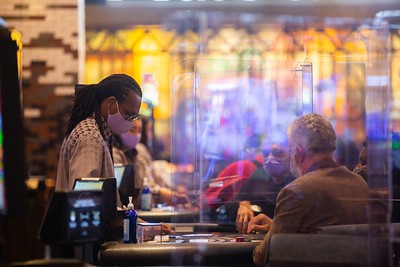
Nevada’s casinos are increasing the capacity on their gaming floors from 25 percent to 35 percent, and could expand it to 50 percent next month.

The increase commenced February 15 under a new forward-looking state plan that calls for turning over control of Covid mitigation to counties and cities by spring.

Under the new rules, public gatherings that had been limited to 50 people can increase to 100 people, or 35 percent of fire code capacity, and up to 250 people, or 50 percent of code, starting March 15.

The new limit also encompasses non-gaming restaurants and bars and those venues, mostly taverns, that hold licenses for operating up to 15 machine games per location.

“The goal of this plan is to avoid a scenario where I have to come before all of you again and pause our efforts,” Governor Steve Sisolak said at a virtual press conference to announce the easing. “I believe this plan can work, but we must all invest in making it successful.”

MGM Resorts International responded by announcing that it would restart 24/7 operations at three of its premier Las Vegas Strip properties—Mandalay Bay, Park MGM and The Mirage—on March 3. The three have been closed weekdays amid massive declines in tourism to since the pandemic first hit last winter.

Chief Executive Bill Hornbuckle termed it “an important step for us,” one the company said will be accompanied by the return of several live shows beginning this month.

“We remain optimistic about Las Vegas’ recovery and our ability to bring employees back to work as business volumes allow us to do so,” Hornbuckle said.

Noting that the city has several large conferences on tap for June, the first such gatherings slated for the convention mecca in almost a year, he added, “I’m hoping by end of spring, as we go into June, we’ll see yet another significant rollback.”

Sisolak imposed the 25 percent restriction in November in response to a surge in Covid infections across Nevada that peaked early in December at a daily average of 2,709. By mid-January, more than half of the hospitals in and around Las Vegas were at 90 percent capacity or greater. One suburban medical center declared a capacity crisis, with more patients than beds, nearly half of which were occupied by Covid patients. On January 21, the death toll hit 71, the highest for the state ever in a single day. The toll for the month was 1,132, the worst since the pandemic first hit the state last March. December was second.

“The way we typically interact with people in Las Vegas is not one that stops the spread of Covid,” said Brian Labus, an assistant professor of epidemiology at the University of Nevada, Las Vegas and a member of Sisolak’s medical advisory team. He told the Las Vegas Review-Journal, “We want people in close contact, we want big events, we want nightclubs. How do we let people interact, but do it in a way that’s safe? That’s something we haven’t quite figured out yet.”

That said, the situation has improved greatly. The 14-day average of new infections statewide was down last week to 650, according to news reports. The rate of positive tests dropped to around 14 percent from mid-January’s 21 percent-plus. On February 17, the state reported its lowest single-day total of infections in more than five months. The two-week positivity rate at that point was the lowest since mid-November.

The pandemic has taken a withering toll on gaming and tourism, Nevada’s principal industries.

Visitation was down by more than half in 2020 to 19 million, compared with 42.5 million in 2019. Gaming revenues declined 34.6 percent to $7.87 billion, the lowest annual total since 1997. Strip gaming revenues declined 43.7 percent to $3.73 billion, the lowest 12-month total since 1996. The state’s take from a 6.75 percent tax on win was down 40 percent. Unemployment went from an all-time low of 3.6 percent last February to a worst-in-the-nation 30.1 percent in April. The rate was down to 9.2 percent in December.

Sisolak last month announced that casino and hospitality workers would be among the first groups to receive vaccines, though the exact timeline remains unclear.

“It’s important everyone that has a face-to-face interaction with one of our tourists gets a vaccine,” the governor said. “It protects our workers and residents, and I want everyone coming here to know this is the safest place for a vacation.”

The Las Vegas sports scene will also benefit. The NHL Vegas Golden Knights submitted plans to Sisolak to welcome fans back to the T-Mobile Arena matching 20 percent capacity. And the Pennzoil 400 NASCAR race scheduled for early March would allow 14,000 fans at the Las Vegas Motor Speedway. The minor league baseball team, the Las Vegas Aviators, also expect to welcome a limited number of fans to their games starting on April 15.

Statewide, more than 307,000 first doses of the vaccine have been administered to date and more than 82,000 second doses.

“The hope is that we can make Las Vegas, the health (and) safety capital of the world,” said James Murren, the former MGM chairman and CEO who now heads Nevada’s Covid-19 Response, Relief and Recovery Task Force. “That, I think, is going to help consumer confidence, which will bring people back.”

He likes the chances of this under the Biden administration.

“I’m a big fan of the current president,” he told the Review-Journal. “I have great confidence and comfort in the national response to this pandemic, finally, after a series of inexcusable blunders over the last year. So I just feel like we’re going to get a lot more vaccines into the state. The amount of supply nationwide is increasing.”

Caesars Sells South Korean Venture for ‘BBQ Pork’

In January, Caesars Entertainment sold its entire stake in a South Korean casino project to its former partner in the venture, Hong Kong-listed Guangzhou R&F Properties Co. Ltd. The sale was disclosed to GGRAsia last week by an official from the Incheon Free Economic Zone Authority (IFEZA). The source disclosed no terms of the transaction.

The project known as Midan City Resort Complex is now being promoted by an entity called R&F Korea (RFKR), the news website reported. It replaces RFCZ Korea, a 50-50 joint-venture between Caesars and China’s Guangzhou R&F.

Last year, Caesars Entertainment Corp. merged with U.S. regional casino operator Eldorado Resorts Inc. in a $17 billion deal; the merged operation became Caesars Entertainment Inc. In mid-2019, when the merger was first announced, an Eldorado Resorts executives seemed to downplay the opportunity for Caesars in Asia, saying any opportunity would have to be “stupendous for us to be running in that direction.” Shortly thereafter, in August 2019, Caesars said it was dropping its pursuit of a Japan casino license, one of the first U.S. companies to announce an exit from the race. It was soon followed by others like Wynn Resorts and Las Vegas Sands.

The South Korea project is located near Incheon International Airport, known as “the gateway to Seoul.” Along with a foreigners-only casino, the 1.85-million-square-foot, $767.5 million complex was to include a 720-room hotel along with suites and villas.

Construction was meant to be completed as early as March 2018, but funding problems and construction delays left the resort unfinished. Work on the project was suspended in February 2020, with the resort only half-finished, and in February of this year, the former partners asked South Korea’s Ministry of Culture, Sports and Tourism if they could postpone the Phase 1 opening of the complex from March 2021 to March 2024.

The Korean Ministry of Culture, Sports and Tourism and the IFEZ warned the partners that if they did not have an approved plan to complete the location by mid-March, they would lose their license. That’s when Caesars withdrew from the market.

While Caesars’ exit was likely based in part on a plan to focus on its U.S. business, the project had been troubled for years before the company cut the cord. RFKR now must find a new partner with casino-operations experience. “The approval of the project change, such as extending the completion period, will be decided through a review by the Ministry of Culture, Sports and Tourism,” said an official from the Incheon Economic Office. “If approved, the speed of the project will increase.” If the license isn’t extended, the project could be abandoned altogether.

In a conference call with investors for the fourth quarter report last week, CEO Tom Reeg said that the company is becoming largely U.S.-centric, emphasized by the sale of the Korean project.

“We sold it for some barbequed pork,” said Reeg, who claimed the sale happened last May rather than January as had been reported. The quip quickly offended Asians, and if the company had any notion of a Far East expansion, that was ended with a bang.

But Reeg doubled-down on the U.S. business.

“You should expect that over time (our Windsor management contract in Ontario, Canada) will be the extent of our non-U.S. business,” he said.

On a positive note, Reed said that Las Vegas, the epicenter of the Caesars empire, was ready to rebound.

“We feel very good that we’ve seen the bottom in Vegas and in the business, and that we’re only going to keep getting better,” he said. “In Las Vegas, we are at our highest level of bookings since reopening,” he said. “It’s almost like a switch was flipped sometime late January, early February.”

He also said that a sale of any Las Vegas property, which had been contemplated at the time of the Eldorado purchase, would not occur in 2021, and he said that Planet Hollywood would likely not be sold at all.

Richmond Bids For Capital of Virginia Gaming

Competition is heating up for the right to develop a resort casino in Virginia’s capital city of Richmond.

The field widened to six last week with three leading operators in U.S. regional gaming𑁋Bally’s Corp., Golden Nugget Hotels & Casinos and Wind Creek Hospitality𑁋joining the fray and proposing investments surpassing a combined $2 billion.

Richmond voters approved a casino in concept in a referendum on the November ballot, the last of five eligible cities in the state to do so.

The others are already moving forward with theirs: Danville partnering with Caesars Entertainment for a Horseshoe branded resort; Portsmouth going with a Rivers-branded resort by Rush Street Gaming; Bristol selecting a consortium led by the Seminole Tribe of Florida’s Hard Rock brand; and Norfolk partnering with Virginia’s own Pamunkey Indian Tribe, which also has thrown its hat into the Richmond ring.

Richmond’s choice won’t be known until late spring at the earliest. It will be based on the work of an evaluation panel appointed by Mayor Levar Stoney comprised of two City Council members and eight administration officials and assisted by New Orleans-based casino consultants Convergence Strategy Group, which also led the Danville bidding process. The winning bid will then go before City Council and the Virginia Lottery for their endorsements and finally back to the voters for their verdict in November.

Of the three new competitors, Rhode Island-based Bally’s unveiled their proposal on February 22, promising what CEO George Papanier hailed as a “vibrant new attraction that is sure to turn Richmond into a dynamic tourist destination.”

NYSE-traded Bally’s𑁋known until recently as Twin River Worldwide Holdings𑁋owns and operates 11 casinos in seven states and has acquisitions in the pipeline for four more in Indiana, Illinois, northern Nevada and Pennsylvania. Their Richmond pitch, sweetened with a one-time $100 million payment to the city, calls for a $650 million resort encompassing 1.6 million square feet on 61 acres at the western edge of town and featuring a hotel, restaurants, shopping and a major entertainment venue. The company says it expects Bally Richmond Casino Resort, as it’s called, will draw 3.7 million visitors annually, generate $415 million in total revenues and provide the equivalent of 1,700 full-time jobs.

“Our proposal,” Papanier said, “represents an unprecedented project for the Richmond community that will embrace and showcase the city’s existing culture and traditions in an environment positioned towards entertainment and leisure.”

Golden Nugget and Wind Creek announced their proposals on February 24th.

Privately owned Golden Nugget, based in Houston, owns the famed Downtown Las Vegas casino of the same name and four casinos in Atlantic City, Mississippi, Louisiana and Laughlin, Nevada. Their proposal calls for 950,000 square feet of public space with a 177-room hotel, a 1,500-seat concert venue, events space, restaurants and retail and a 93,000-square-foot casino representing a total investment of $400 million. The company is offering the city one-time donations of more than $70 million for local education and affordable housing. The proposal also comes with a promise to share 5 percent of the equity of the project with two entities dedicated to expanding opportunities for minority-owned businesses in and around Richmond, one of them partly owned by former Virginia Lottery Director Richard Williams.

Wind Creek, the resort arm of Alabama’s Poarch Band of Creek Indians, is pitching a $541 million development covering 46 acres on Richmond’s South Side. Highlights include a pair of hotels totaling 500 rooms, seven food and beverage venues, spa and fitness facilities, a 67,000-square foot entertainment center and 100,000 square feet of gaming.

Wind Creek’s expertise extends to three casinos and a greyhound track in the tribe’s home state, a greyhound track in the Florida Panhandle, casinos in the Caribbean islands of Aruba and Curacao and a casino in central Nevada. The company made a major addition to the portfolio in 2019 with its $1.3 billion purchase of Las Vegas Sands’ Sands Bethlehem in eastern Pennsylvania, now Wind Creek Bethlehem.

Impressive as these proposals sound, they’re facing competition already in place and pretty formidable in its own right.

Urban One, owner and operator of 55 radio stations, four of them in Richmond, and a cable TV network, holds a minority stake in MGM Resorts International’s MGM National Harbor casino hotel on the Maryland side of Washington. Its $517 million Richmond casino, however, would be the first wholly owned by an African American company.

ONE + Resort, as it’s called, would be built on 100 acres near Interstate 95 and feature 150 hotel rooms, a 3,000-seat concert hall hosting 200 Live Nation shows a year, an on-site TV production studio, a dozen food and beverage outlets, several of them minority-owned, 20,000 square feet of events space and a 90,000-square-foot casino managed by Peninsula Pacific Entertainment, a Virginia historic horseracing machine operator and owner of the thoroughbred track and racino at Colonial Downs outside of Richmond. The resort would furnish 1,500 jobs and include $30 million of donations to various local projects.

“We stand ready to work with the city. Our proposal can’t be matched,” Urban One CEO Alfred Liggins said in a recent interview with local TV station WRIC.

After winning the bid for Norfolk, where construction could start later this year, the 200-member Pamunkey community, Virginia’s only federally recognized Indian tribe, proposed its Richmond casino last spring. The tribe wanted to build in the city’s Manchester section, but neighborhood opposition prompted a move to 24.5 acres on the South Side off Interstate 95. Plans there call for a $350 million resort with 300-room hotel with a spa, pool and fitness facilities and several restaurants. The tribe estimates it will attract more than 5 million visitors a year and provide 1,900 jobs.

“They are native Virginians, they are the home team here,” a spokesman for the tribe said. “So they want to reinvest locally right here back in Virginia.”

The Cordish Companies also wanted a Norfolk casino and claimed to have an agreement with the city to allow one at a $40 million dining and shopping area it developed as part of its refurbishment of the city’s Waterfront district. Later, when the state approved casinos it became a leading opponent of siting one in Norfolk.

The privately held conglomerate, based in Baltimore, known for its extensive holdings in commercial and residential real estate and urban redevelopment, entertainment and non-gaming luxury hotels, partnered with the Seminoles in the tribe’s Hard Rock casinos in Tampa and Hollywood, Florida, and has marquee casinos under its own Live! brand in Baltimore, Philadelphia and Pittsburgh.

Its $600 million Richmond resort would be built in the Scott’s Addition neighborhood and feature a 300-room hotel, a 4,000-seat entertainment venue, multi-use events space, 18 food and beverage outlets and 250,000 square feet of gaming space.

In addition to community investments, Cordish says the project will employ three “prominent” minority-owned general contractors, provide 3,000 permanent jobs and deliver billions of dollars in positive economic impacts.

“Our project will be a key link in realizing the vision set forth in the Richmond 300 Master Plan for the development of a higher-density dining, entertainment, hospitality and commercial node connecting the Diamond and Boulevard developments to our site and the Washington Football Club training facility,” said Chief Operating Officer Zed Smith.

Details of all six proposals as well as the timeline and procedures for the process can be found here.

Mayor Stoney has not commented on any of the proposals, but he’s made it clear where he stands on casinos generally.

“It means more than just (tax) revenue,” he said at a media briefing earlier this month. “We’re talking about community benefits that are going to uplift our community and center around economic justice.”

Leonard Sledge, the city’s director of economic development, said officials will be looking for intensive public engagement that will include online forums and feedback from representatives of the city’s Office of Community Wealth Building, among other initiatives.

“In response to our RFQ/P, the city of Richmond received six proposals which our Evaluation Panel will review over the coming weeks,” he said. “Simultaneously, the city has launched a community engagement process to inform Richmonders of the proposals received, listen to citizens’ concerns about casinos, and facilitate discussions that result in the best possible option for Richmond voters to determine if the city will have a resort casino.”

Suzanne Perilloux Leckert, a managing partner of the Convergence Strategy Group, which oversaw the bidding process, says it resulted in six “really strong” bids, “which is not surprising given the size and potential of the Richmond area market. As the last remaining commercial casino license in Virginia, and its location in the capital city, this project takes on an even more significant and highly visible role. The city leadership has sought out a transparent public process from the start, and we will continue to aid them in that regard. State law stipulates the timeline for the Selection Committee’s decision and subsequent approval by the City Council, which we expect to be announced by early this summer.”

Gaming Commission Intervenes in Suit Against Encore Boston

The Massachusetts Gaming Commission (MGC) will intervene in a lawsuit in which Wynn Resorts’ Encore Boston Harbor is accused of bilking blackjack players. The suit contends that the casino doesn’t explain to players that its blackjack odds are less favorable than is traditional at other casinos.

Previously the commissioners had agreed that taking sides in a similar case would be a bad look for them since it is their job to regulate the casino.

Now they have decided to file an amicus (friend of the court) brief in the 2019 class action lawsuit by New York gambler A. Richard Schuster against Wynn Resorts that claims the Encore “established rules of the game of blackjack to increase its statistical advantage and lower the lawful payouts owed to its customers.”

The lawsuit claims that the practice of paying out 6-to-5 odds when a player hits blackjack, instead of the traditional 3-to-2 odds, is a “steal.”

The suit declares, “Assuming an average wager of $50 per hand and 80 hands of blackjack per hour, Encore’s customers can expect to lose $35.60 per hour more than the losses they are already expected to incur in a fair blackjack game that complies with Massachusetts law.”

A previous investigation by the MGC determined that the same practice, by the MGM Springfield, did not violate Bay State law. A similar case on appeal is now before the state’s highest court, the Supreme Judicial Court, which is scheduled to hear arguments in April.

The justices have asked for an amicus brief from the commission on that case and so it has decided to give one to the court in the class action lawsuit too.

The commission’s executive director, Karen Wells, told the panel that it’s important to establish “that there is information out there publicly demonstrating the integrity of the game at the Massachusetts casinos,” and that the commission’s Investigations and Enforcement Bureau “purposefully did not take enforcement action against either casino at the time these lawsuits were filed or since then.”

Commissioners added that it is in the best interests of the state to make it clear that the rules as practiced by Wynn are legal and to clarify that the rules process is conducted with integrity.

Nevada Weighs Esports Regulation

The growing popularity of esports in Las Vegas is spurring talk in Carson City of creating the first regulatory body in the U.S. to oversee the competitions.

Nevada state Senator Ben Kieckhefer is drafting legislation that would empower an agency for esports similar to the Nevada Athletic Commission, which licenses boxing and combat sports such as UFC and mixed martial arts and has the authority to issue fines and other sanctions.

Nevada currently considers esports wagers as event betting, like wagering on the Olympics, rather than sports betting, and an application and review process is required for each event before someone can place a bet. The Nevada Gaming Control Board has approved betting on several esports competitions over the past year.

Regulation, in terms of registering players and establishing competitive rules and the like, would lend integrity to the industry as a mainstream sport and provide “greater stability and security,” Kieckhefer told the Las Vegas Review-Journal.

Esports as a business that was just coming into its own in Las Vegas before the pandemic hit, drawing thousands of new visitors to city to attend tournaments and prompting more and more casinos, as they recognized the potential, to respond by designing state-of-the-art arenas to host them.

About 55 percent of U.S. residents played video games during the first phase of the pandemic, according to a recent report by Nielsen subsidiary SuperData cited by the Review-Journal. The same report found that the games and interactive media industry grew 12 percent year over year to a $139.9 billion powerhouse in 2020. Streaming reached 1.2 billion people in 2020 and generated $9.3 billion in revenue.

Moreover, it’s a business Las Vegas is eager to grow, especially in the struggle to recover from the Covid crisis𑁋a business populated by mostly younger demographics that tend to be less interested in traditional casino games.

“I think the general consensus now is that the time has come for something like this,” said Kieckhefer, a Republican who represents Carson City and parts of southern Washoe County.

“This is about adding events to Las Vegas and adding flights and bringing people back,” said former state Gaming Control Board Chairman A.J. Burnett, who is a partner in Kieckhefer’s law firm of McDonald Carano. “It’s pretty clear that unless the convention business and the airlines come back, then Las Vegas will continue to struggle,” he told the Review-Journal.

Kieckhefer said he expects his bill will be ready to introduce during the current session of the Legislature, which began February 1.

Insiders like Milo Ocampo, founder of 8-Bit Esports, sees regulation as “the best possible step” toward legitimizing esports as a gambling activity, one with the potential to make Las Vegas the “esports capital of North America.”

Chris Grove, an analyst with California-based research firm Eilers & Krejcik Gaming, agrees, although he sees some devils in the details.

“Jurisdiction is going to be a tricky question,” he told the newspaper, “and getting buy-in from all relevant stakeholders will also be a challenge.”

This would include players, game publishers and developers and essential tech providers, said Ocampo.

“I think that coming together and figuring out lines to color within, it’s really smart because it promotes the integrity of the overall industry,” said Sam McMullen Jr., founder of technology and development company FiveGen and an advisor to Kieckhefer on the bill’s provisions.

“We need to get ahead of it,” he added.

“If not Nevada, who?”

March Debut Set for Virgin LV

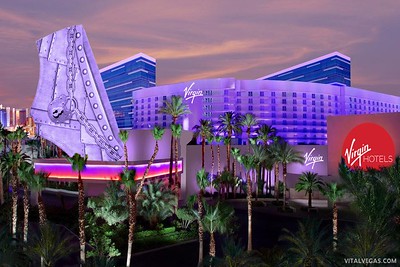
Virgin Hotels Las Vegas has set its much-anticipated opening for March 25.

Located on Paradise Road about a mile east of the Strip at the site of the former Hard Rock Las Vegas, the property had been targeted for a fall 2020 debut, but the Covid crisis put it on hold.

“It has been a journey, but to finally reach this milestone and confidently announce our opening date would not be possible without our incredible partners and construction team,” said Richard Bosworth, CEO of JC Hospitality, the developer and leader of a consortium of investors that includes Richard Branson’s Virgin Group.

The consortium bought the Hard Rock in 2019 for $500 million, closed it early last year, and spent more than $200 million on the revamp and rebranding.

The new property will feature 1,500 rooms and suites operated under the umbrella of Hilton Hotel’s Curio Collection. There will be 12 restaurants, a 4,500-seat theater, 130,000 square feet of conventions and meetings space, a five-acre pool and 13,000 square feet of outdoor entertainment and events space.

The 60,000-square-foot casino will be run by Mohegan Gaming, the casino management arm of Connecticut’s Mohegan Indian Tribe.

Kentucky Governor Signs HHR Legislation

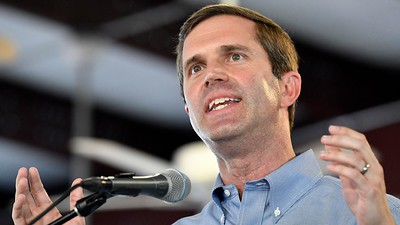
Kentucky Governor Andy Beshear signed into law SB 120, which changes the definition of parimutuel wagering to include historical horseracing machines. The legislation was necessary after the Kentucky Supreme Court ruled in September that some HHR machines are illegal because they are not parimutuel wagering under Kentucky law. Due to that ruling and the high court’s rejection of an appeal, Red Mile racino in Lexington temporarily closed.

Kentucky Governor Andy Beshear recently signed SB 120. Prior to signing the bill, Beshear said, “I’m 100 percent for it. This is a win for the entire commonwealth.” Beshear noted although the bill protects the thoroughbred industry, it’s still necessary to “get the second piece of this done on the tax structure. We need a fair and equitable tax structure.”

The Kentucky Equine Education Project had praise for Beshear. “We thank Governor Beshear for signing Senate Bill 120 into law, which ensures the future of our equine industry while protecting thousands of local jobs. Kentuckians and the legislators who represent them have made clear that they support historical horse racing and the many benefits it brings to our communities. We are optimistic about the horse industry’s road ahead and remain committed to keeping Kentucky a world-class racing destination for many years to come,” the group said in a statement.

Martin Cothran, senior policy analyst at the Family Foundation, which filed the lawsuit that led to the Supreme Court ruling against HHR machines, said, “Lawmakers didn’t address the problems with the bill opponents had pointed out. Instead, it ignored them, and rather than the horse tracks and their allies on the Kentucky Horse Racing Commission changing their actions to bring them into alignment with the law, lawmakers simply changed the law to suit a very wealthy and influential special interest. The horse industry made a deal with the Devil, add that’s never a good bargain.”

State Rep. Steve Sheldon was among lawmakers who voted against SB 120. He stated, “I voted my conservative beliefs and values. It was framed as merely changing the definition of parimutuel wagering, but expanded gambling is about what it amounts to.” He agreed that taxes on HHR revenue must be raised significantly, noting, “In Illinois, Indiana and other gambling states, they’re getting twice the tax revenue we’re getting. There will be a push for Kentucky racetracks to pay their fair share in taxes.”

Jason Bailey, executive director of the Kentucky Center for Economic Policy, said players spend three times more on HHR machines than on lottery tickets, but the lottery takes in nearly 20 times more tax revenue.

HHR has significantly benefited the state’s racetracks including Kentucky Downs, where betting increased from $20 million in 2010 to $800 million in 2018. Due to that growth, the state Horse Racing Commission recently approved Kentucky Downs’ request to expand its licensed premises in Franklin to an extension facility in Bowling Green. A location has not yet been announced.

Kentucky Downs officials said the number of machines will be doubled at the venue after the completion of a $25 million renovation and expansion announced in 2019 by owners Ron Winchell of Lexington’s Winchell Thoroughbreds and former Nevada casino executive Marc Falcone, who purchase the venue in 2018. The project will add 13,000 square feet of gambling space, new restaurants and a hotel.

In a letter to KHRC Executive Director Marc Guilfoil that accompanied Kentucky Downs’ application for an extension facility, Winchell wrote, “The location will be a great benefit to the city of Bowling Green and Warren County, bringing additional tourism, tax revenue and much-needed jobs, as well as a benefit to the continued growth of horseracing in the commonwealth.”

New Mexico Track Cancels Racing

At its monthly meeting on February 18, the New Mexico Racing Commission (NMRC) made a motion to cancel the 2020-21 horse racing meet at Sunland Park Racetrack & Casino. This year’s meet was scheduled to start in December and finish on March 30, with 47 days of racing. But the property, both the racetrack and the casino, have been closed since March 15, 2020, due to Covid-19. Among the canceled events was the Sunland Derby, a point qualifier for the Kentucky Derby.

According to MSN, casinos at racetracks in Albuquerque, Hobbs, Ruidoso and Farmington have also remained closed. Ruidoso finished its summer racing meet last September, while Albuquerque and Zia finished their meets in the fall with reduced days and purses.

According to NMRC, Ruidoso Race Track & Casino, SunRay Park in Farmington, the Downs at Albuquerque and Zia Park in Hobbs all have race dates set for 2021, but those dates are questionable should the casinos remain closed. Casino revenues help provide the purse money for horse racing.

Several trainers, jockeys and owners have gone elsewhere this winter as horse racing has stalled at Sunland Park, reported MSN. Among the tracks where they have gone are Turf Paradise in Phoenix, Arizona, and Sam Houston Park in Houston.

Churchill Downs Sells Arlington Racetrack

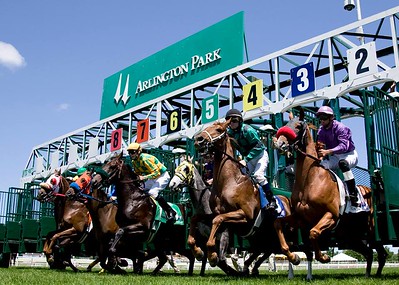
Churchill Downs has put up a for sale sign for the Arlington International Racecourse outside of Chicago.

Louisville-based Churchill Downs, the track’s owner for the past 20 years, hired real estate firm CBRE to market the 326-acre site. The track, founded in 1927, will complete what may be its last racing season on September 25.

“Arlington’s ideal location in Chicago’s northwest suburbs, together with direct access to downtown Chicago via an on-site Metro rail station, presents a unique redevelopment opportunity,” Churchill Downs CEO Bill Carstanjen said in a statement. “We expect to see robust interest in the site and look forward to working with potential buyers, in collaboration with the Village of Arlington Heights.”

Carstanjen suggested Arlington’s racing license could go to another community, according to CDC Gaming Reports.

“We are exploring potential options and remain optimistic that we can find solutions that work for the state, local communities, and the thousands of Illinoisans who make their living directly or indirectly from thoroughbred horse racing,” Carstanjen said. “We are committed to the Illinois thoroughbred racing industry and will consider all options in working toward opportunities for it to continue.”

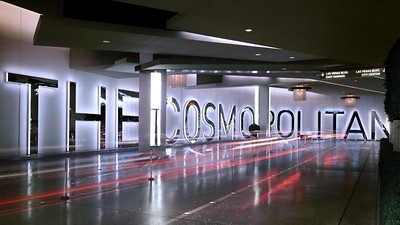
Cosmopolitan to Honor Covid Heroes

The Cosmopolitan of Las Vegas has come up with a special way to say thanks to locals who have served their community during the Covid-19 pandemic.

The resort has been accepting nominations for a “heroes giveaway promotion,” which will provide 11 people with complimentary stays at the Strip resort, among other prizes.

Ten winners will receive a two-night stay in a Cosmo wraparound suite and a complimentary dinner for two valued at about $1,600, reported the Las Vegas Sun.

One lucky grand prize winner will get a multiday stay in a penthouse suite with 24-hour butler service and a personal photographer, plus a helicopter tour of the Strip. The package is valued at more than $50,000.

Any local front-line worker medical worker can be nominated, according to resort officials, as well as any individual who’s provided a “shining example of what it means to be Vegas Strong through the Covid-19 crisis.”

“We thought it would be appropriate to recognize some of the individuals who have been on the front lines during the pandemic,” Daniel Espino, head of Cosmopolitan’s human resources department, told the Sun. “We started to brainstorm about how we could do that, and this program is what we came up with. Quite honestly, anyone can be nominated who did something above and beyond during this pandemic.”

The Cosmopolitan supports a number of charitable causes. In 2019, it was the first Strip resort to implement the Everi Cares Giving Module, a program for casino guests to donate spare change from slot vouchers to charities, including Opportunity Village and the Ronald McDonald House Charities of Greater Las Vegas. Each quarter, the Cosmopolitan matches the first $10,000 donated to the rotating list of charities. Through the end of 2020, about $115,000 had been donated.

ESPN Broadcasts WSOP Events

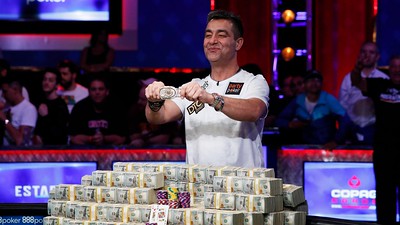
For the 19th consecutive year, ESPN exclusively broadcast the 2021 World Series of Poker Main Event. The broadcast yesterday featured four hours of hand-to-hand action of the International and Domestic Final Tables, culminating in the first-ever Heads Up World Championship. Hosting the program was legendary announcer Lon McEachern, and for the first time as co-host, poker pro Jamie Kerstetter.

The 51st year of the World Series of Poker (WSOP) $10,000 No-Limit Hold-Em World Championship, also known as the Main Event, was unlike any of the previous 50 events, taking on a new hybrid format due to travel restrictions and out of an abundance of caution for player safety.

Play began online, with one entry on WSOP.com or GGPoker.com before shifting to a live setting for final table play on two continents. The winners of the two final tables then battled in the first-ever heads-up duel for the World Championship at Rio All-Suite Hotel & Casino in Las Vegas. At stake was $1 million in additional prize money courtesy of Caesars Entertainment, Inc. and GGPoker, and the most valuable trophy in the world of poker, the diamond- and gold-encrusted WSOP Main Event bracelet.

“We could not be more excited to deliver poker fans new primetime content on ESPN,” said Ty Stewart, executive director of the World Series of Poker. “With compelling storylines and unpredictable action, these episodes remind us all why there was a poker boom in the first place.”

Boyd: Younger Customers Invaluable During Pandemic

Boyd Gaming officials say young customers have played a role in propping up revenues during the Covid-19 pandemic.

During an earnings call last week, Boyd officials said the younger gaming customer segment in Las Vegas has returned robust revenues for the company during the Covid-19 crisis.

“The nature of the customers coming into the door hasn’t changed much over the last six months,” said Keith Smith, president and CEO of the company, according to the Las Vegas Sun. “It’s the younger demographic and the higher-worth segment.”

Josh Hirsberg, the company’s executive vice president and chief financial officer, said he’s optimistic about 2021. “With the passage of time, we expect the participation from that older demographic to grow,” Hirsberg said. “It’s certainly understandable that we’re not seeing that today. With the passage of time, we expect people to feel more comfortable. It’s anybody’s guess when that will happen, but we expect that to improve over time. We expect to get the benefit of that.”

Also on the call, officials said online gaming has been a key revenue-generator during the pandemic. Smith said the company is generating “solid returns” from its online gaming operations, predominately mobile sports betting in partnership with FanDuel in Pennsylvania, Illinois, Indiana, and Iowa. He said the cash flow from online sports betting contributed $10 million in 2020, and that the operator plans to launch an online casino in Pennsylvania in the coming months that could generate $20 million in cash flow in 2021.

“Online gaming is clearly a compelling growth opportunity for our industry and our company,” Smith said. “By partnering with a proven market leader like FanDuel to pursue these opportunities, we are generating immediate and growing profits from digital gaming today while maintaining flexibility to explore the many opportunities available to us to ensure that we are well-positioned for the future.

“Looking beyond this year, we see further potential from online gaming.”

Boyd Gaming lost $134.7 million in 2020, compared to net income of $157.6 million in 2019.

GameCo CEO Denied License in Nevada

Although the Nevada Gaming Control Board had recommended approval of a gaming license for Blaine Graboyes, the CEO of GameCo, a skill game maker based in Las Vegas, the final arbiter of the decision, the state Gaming Commission voted 4-1 to reject his bid for licensure. Graboyes had been operating on a temporary license for two years while he clear up some tax issues and liens, and was requesting to be granted an unencumbered license.

Graboyes, known as “Blaine Goldman” in the submission, did not convince the members that his ownership of intellectual property from a bankrupt company known as Beyond Gaming, was above board. Graboyes spend two years as a consultant to Beyond Gaming from 2012 to 2014. Although he claims to have worked hard to make Beyond Gaming a success, he offered $50,000 to buy the technology produced by the company at a time he alleges the company was worthless. When that bid was rejected, and the company declared Chapter 7 bankruptcy, Graboyes acquired the IP. But a former executive with Beyond Gaming, Justin Yamek, alleged that Graboyes engineered the bankruptcy, a charge Graboyes denied.

Graboyes was grilled for nearly four hours by commissioners about a 300-page report compiled by the Dickinson Wright law firm about the Beyond Gaming situation. He claimed he worked diligently to bring success to Beyond Gaming, and says he did nothing wrong.

“I spent more than a year working to try and salvage this company,” Graboyes said according to CDC Reports. “I’ve been incredibly transparent through this process. There was nothing that I was aware of that I needed to disclose.”

He blamed his lawyers for failing to bring this to his attention.

“It doesn’t feel right, and I can’t reconcile it,” said Commissioner Ogonna Brown. “I have trouble with the veracity of the statements he has made today. I don’t feel like he has been truthful. I believe denial is an appropriate step.”

Graboyes was ordered to divest himself of any interest in GameCo, throwing the future of the company into doubt. He told the commission that the company has deployed only 16 machines, four in Oklahoma and 12 in Nevada, while employing 31 people.

GameCo was one of the first companies in the skill-games field in the gaming industry with a product Graboyes called video game gambling. Another early entry, Gamblit, closed its headquarters and manufacturing facility in California in March 2020.

Senator Files Massachusetts Sports Betting Bill

Senator Eric Lesser has filed a bill that he says will “bring sports betting into the daylight.”

Lesser’s bill would allow both in-person and mobile wagers at casinos, racetracks, OTBs and on mobile platforms, but prohibit wagers on college and youth sports.

The bill would call for a $1 million application for existing casinos and racetracks and a $2 million fee for online providers, the difference reflecting the investment brick-and-mortar casinos have to make.

Casinos and racetracks would pay 20 percent in taxes and non-casinos would pay 25 percent. Lesser anticipates that the state could collect ul to $35 million a year, which is “not a panacea” for the state’s budgetary deficits, he said.

It would include provisions to protect sports integrity and protect athletes and consumers.

Lesser commented, “It was really a balancing act in which we are trying to encourage as much competition, as many participants as possible, but also making sure that people who applying for a license are serious about it and have the financial capacity to handle safely this type of betting, to be able to appropriately address risk during this type of betting.”

The Bay State has three casinos: Encore Boston Harbor, Plainridge Park slots parlor and the MGM Springfield.

Lesser isn’t the only one to file a sports betting bill. Massachusetts allows the governor to file bills, and Governor Charlie Baker, a vocal supporter of sports betting, filed a bill prior to the deadline.