Author: Casino Connection Staff

Bill Would Put Texas Sports Teams in Betting Business

Texas Rep. Dan Huberty has filed a bill in the state legislature that would allow sports teams in the state to become licensed sports betting operators. The three racetracks in Texas could also offer sportsbooks. The legislation would require amending the state constitution with a referendum on the November ballot.

The bill would tax gross wagering revenue at 10 percent.

Texas has 13 professional sports teams spread out among Dallas, Houston, Austin and San Antonio.

Opposing the bill is Lt. Governor Dan Patrick, who told a radio talk show host February 9, “I’ve never been in favor of it. We are nowhere close to having the votes for it … I don’t spend much time on it because the members are just against it.”

A rival bill was filed by Rep. Harold Dutton, whose district includes Houston, home of five pro sports teams. A third bill, from Rep. Joe Deshotel, would legalize Class III gaming and also has a provision for sportsbooks.

Huberty’s bill would allow sports teams to make deals with leagues to share sports betting revenues.

The Dallas Cowboys issued a statement supporting H.B. 2070, with Executive Vice President Charlotte Jones, declaring, “Unregulated and illegal sports gambling is already taking place in the state of Texas. Legalized sports betting would regulate the industry and generate hundreds of millions of dollars of new revenue for the state which will help fund critical programs without raising taxes.”

Dutton and Huberty differ in how they approach the number of licenses—Dutton would only authorize five, and Huberty would allow many times that. Dutton would tax at 6.25 percent and Huberty at 10 percent. Huberty’s bill would allow betting on college teams, and Dutton’s does not.

These bills have tended to overshadow the efforts by Las Vegas Sands lobbyist to promote a bill that would allow five casinos in the state. Andy Abboud, senior vice president of government affairs for Las Vegas Sands, is promoting Dallas-Fort Worth as the top site.

According to several Texas pundits, LVS doesn’t have much of a chance. Mark P. Jones, political science professor at Rice University’s Baker Institute said Abboud is “spitting in the wind.” He added, “Lt. Governor Dan Patrick has been very clear that casino gambling legislation will not see the light of day in 2021.”
North Dakota House OKs Sports Betting, iPoker Bill

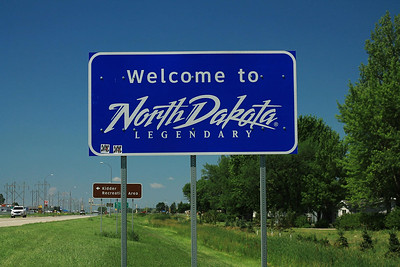
In North Dakota, members of the House of Representatives recently approved a pair of bipartisan resolutions and companion bills that establish rules for sports betting and internet poker. Proponents said the activities would generate revenue for charitable causes and for the state, including problem gambling services.

The proposals now move to the Senate. If both chambers approve the measures, the issues could appear on the November 2022 ballot.

State Rep. Jim Kasper has attempted to pass internet poker legislation since 2005. “Sixteen years!” he exclaimed, noting if the proposal had succeeded then, North Dakota would have been the first state to license and regulate online poker. However, the Senate rejected the measure.

In addition, the Republican-controlled House recently defeated a Democratic bill that would have authorized North Dakota’s five Native American tribes to negotiate with the governor an agreement allowing internet gambling and sports betting. A majority of lawmakers did not support a provision requiring servers located within the reservations.

Also, the House rejected a measure that would have allowed historical horseracing machines. The state Senate killed a similar bill two years ago.

Westgate SuperBook Threatens Barstool with Legal Action

In 2012, Las Vegas sportsbook, Westgate SuperBook, registered the phrase, “Good Teams Win, Great Teams Cover.”

Then upstart sportsbook Barstool Sports used the phrase in its promotions, triggering a trademark battle. Westgate sent a cease-and-desist letter to Barstool in June 2020. As if to mock the veteran Westgate, Barstool Sports founder Dave Portnoy tweeted the letter, and Westgate’s law firm, Greenspoon Marder, sent a second letter.

Westgate cites Barstool’s usage of the trademarked phrase on the company’s Twitter feed.

“This is the second time we have had to contact you, which is evidence that your conduct is willful,” the letter read. “This use of ‘Good teams win, great teams cover,’ after a priori warning is an intentional effort to trade on the goodwill associated with Westgate’s ‘Good teams win, great teams cover,’ mark.”

When contacted by Legal Sports Report, Penn National senior vice president of public affairs Eric Schippers said the tweet “speaks for itself.”

Tweeted Portnoy, “Nothing makes me more confident when other gambling companies like @WestgateVegas start sending us cease and desists for tweeting ‘good teams win, great teams cover.’ By the way, there is literally no chance they invented that. That’s like saying you invented the question mark.”

Westgate filed for a trademark in 2008 and that trademark was registered in 2012. Westgate registered the phrase before it became common, said Mike Schuster, a professor of legal studies at the Terry College of Business at the University of Georgia.

“The U.S. Trademark Office apparently did not believe this was a common phrase when it was registered in 2012 in the field of wagering services,” Schuster said. “Further, due to the registration’s age, the mark is now incontestable—meaning that it is immune from allegations that the trademark is invalid, except in fairly limited circumstances.

Colville Tribe Opposes Washington Sports Gaming Bill

The Confederated Tribes of the Colville Reservation, operators of the 12 Tribes Resort Casino, Mill Bay Casino and Coulee Dam Casino in Washington State have announced their opposition to Senate Bill 5212 in the legislature.

The Colville Business Council voted February 4 to “strongly” oppose the bill, which would allow commercial card rooms and racetracks to offer sports betting. The wagers are currently limited to the more than 24 tribal casinos in the state.

Lawmakers approved sports betting for tribes last year, which set in motion renegotiations of existing tribal-state gaming compacts. About five tribes are taking part in the negotiations, which would let them offer sportsbooks.

Indian Gaming Association Executive Director Rebecca George said the bets should be limited to tribal operations. “This was done to maintain the integrity and the safety of gaming in Washington, and to ensure the benefits go to our state’s residents, not other states or private company investors,” she said. “This proposal threatens to up-end that approach.”

One of the authors of the bill, Senator Curtis King, commented, “Last year, we gave the tribes all of the authority to do sports wagering in their casinos, which brings absolutely no revenue to the state of Washington.”

The state has more than 40 card rooms that pay licensing fees to the state, he said. “They employ people with good family-wage jobs in most cases, and provide excellent benefits to those people as well. That doesn’t mean the tribes don’t do the same… This is about fairness, equity, all of that.”

King argued that the tribes control “the vast majority of the gambling that goes on with this state,” and said his bill wouldn’t touch that revenue. “We need to support our cardrooms that are scattered all around this state.”

In testimony before lawmakers, George pointed out that tribes fund government services with gaming, such as “health care, education, natural resources, basic infrastructure.” She added, “Tribal governments have very few options when it comes to raising revenue. This is our tax base. Any impact to our properties would mean a decline in our essential services to Indians and the surrounding, often rural, communities.”

Supporters of the bill assert that its 10 percent tax on gaming revenue could raise $50 million annually. Senator Derek Stanford is among those who view this claim with suspicion: “The fiscal note is reflecting somewhere along the lines of $3 to $4 million to the state,” he said. “I think we should be careful about the expectations we are setting up when talking about this.”

George took the opportunity to lob a verbal grenade against the bill’s biggest cheerleader, Maverick Gaming, characterizing the bill as one that would “enhance the bottom line of a Nevada company.”

Maverick Gaming operates 19 casinos in Washington and currently pays $27 million in local taxes. Its CEO, Eric Persson, who just moved the company’s headquarters to Washington, tells anyone who will listen that he was born in the state.

Two Tennessee Sportsbooks Under Investigation

The Tennessee Education Lottery recently announced sports betting regulators and law enforcement are investigating two of the state’s four regulated online sportsbooks—as yet unnamed–for “significant anomalies” including “illegal” betting activity on Super Bowl Sunday.

As a result, a total of 74 sports wagering accounts have been closed permanently. In addition, “several” open Super Bowl bets were voided.

Tennessee’s four sportsbooks handled a combined $15.5 million on the Super Bowl game and paid out $12.6 million in winning bets. The rest was kept as revenue.

Between the launch of sports betting in Tennessee on November 1 through January 31, the sportsbooks handled $523 million in wagers, according to lottery officials. The four books handled $131.4 million in November and $180.9 million in December. January handle was more than $210 million.

They also recently stated that Churchill Downs, Wynn Sports and William Hill are moving forward toward launching in the state, although no dates have been provided. Two other operators also are getting ready to launch in Tennessee, they said.

Georgia House, Senate Consider Sports Betting

The Georgia House Economic Development and Tourism Committee recently approved a revised version of online sports betting legislation, House Bill 86.

Originally, the bill would have taxed profits at 10 percent; the revision doubles that rate. Committee Chairman Ron Stephens, who said he’d like the tax rate to fall between 10 percent and 20 percent, estimates that taxes from the industry would raise more than $30 million annually, with funds going to the HOPE college scholarship program and public education.

In the state Senate, the Regulated Industries and Utilities Committee recently held a hearing on SB 142, which is similar to the House’s online sports betting legislation. Profits would be taxed at 10 percent. The bill’s sponsor, state Senator Jeff Mullis, said, “Sports wagering is currently legal in 22 states. Around us are Tennessee, Mississippi, Louisiana and Florida is taking it up this year as well. Over 2 million Georgians are doing it now. Do you know who’s in control of it? The bookies.”

Mullis estimates sports wagering could produce $40 million annually for the state. He noted, unlike some lawmakers, most people who play the lottery do not participate in sports betting. “It doesn’t take away from the lottery. It’s extra money,” he said.

Both the House and Senate measures name the state Lottery Commission to be in charge of licensing a minimum of six operators, such as FanDuel or DraftKings, with annual licensing fees of $900,000.

The Atlanta Hawks, Atlanta United FC, Atlanta Falcons and Atlanta Braves all have expressed support for legal sports betting. Attorney Robert Highsmith, who represents the Hawks, told lawmakers, “The Hawks want their fans engaged. If the fans are going to bet on a Hawks game, they want them doing it in a legal, cleanly regulated, in-from-the-cold environment.”

One ongoing argument is whether the state can legalize sports betting without a state constitutional amendment. Last year lawmakers tried to pass a sports betting bill that would have amended the constitution to allow sports betting. Stephens said, “It clearly does not require a constitutional amendment. It’s just a matter of us giving the Georgia Lottery Commission direction and authority they already have.”

Highsmith said the state constitution only expressly prohibits casino gambling, whereas sports betting only requires the legislature to pass a statute authorizing the Georgia Lottery to add sports betting to its current regulatory duties. He noted passing a constitutional amendment would delay sports betting since it would have to appear on the 2022 statewide ballot. But if we do that, it would be at least 2023 before it could be effective. Going the statute route would be cleaner and eliminate that debate,” Highsmith stated.

In addition to the sports betting debate, state Senator Brandon Beach also has proposed a constitutional amendment for a statewide referendum on horseracing, plus a separate bill indicating how the industry would operate in Georgia. Beach’s legislation was discussed at a hearing of the Senate Regulated Industries and Utilities Committee.

Beach said horseracing would produce an economic impact of more than $1 billion a year from gambling as well as horserace breeding. “It’s all private investment. We’re not going to have any public investment in this,” Beach said, adding polls show strong statewide support for legalizing horseracing.

The proposal calls for three mixed-use developments, each with a racetrack, hotels and restaurants. The facilities also could include convention space, entertainment venues and retail shopping. One of the racetrack complexes would be required to be located within 50 miles of Hartsfield-Jackson Atlanta International Airport, with minimum investment of $250 million. The other two would be located outside the metro region with an investment of at least $125 million.

Horseracing revenue would be derived from parimutuel betting during at least 60 days of live racing; betting on simulcast races; and betting on historic horseracing machines. Some of the proceeds would go toward education, health care and rural development, problem gambling services and promoting Georgia’s horseracing and breeding industries.

Bally’s Is Official Sports Betting Partner of the NHL

Bally’s Corp., a leading U.S. provider of land-based gaming and interactive entertainment, has announced a multiyear partnership with the National Hockey League that made Bally’s an Official Sports Betting Partner of the NHL. This deal represents Bally’s first sports betting partnership with a professional sports league.

The partnership provides Bally’s with rights to use NHL marks and logos as well as use of the League’s official data across its expanding portfolio of sports betting products. In addition, through its media partnership with Sinclair Broadcast Group, Bally’s will create engaging content for NHL fans and integrate that content into live NHL game coverage spanning 19 regional sports networks.

George Papanier, president and CEO of Bally’s Corp., commented, “We are thrilled to enter into this partnership with the NHL, which represents an important milestone in our strategy to become a leader in the online sports betting and iGaming space. With access to the NHL’s official logos and brands, together with our first-of-its-kind media partnership with Sinclair, we will continue on our path to transform how fans engage with their favorite hockey teams.”

“We’re thrilled to become the first national sports league partner of Bally’s Corp.,” said Keith Wachtel, NHL chief business officer and senior executive vice president. “With its Sinclair Broadcast Group partnership combined with a strong strategic vision for its portfolio of sports betting products, Bally’s is an ideal partner for the NHL to further engage our avid fan base on a national and local level.”

Bally’s online sports betting and iGaming offering, which is powered by Bet.Works’ proprietary technology stack, is complemented by its Monkey Knife Fight daily fantasy sports platform and SportCaller’s leading free-to-play products. The deal is the first sports betting partnership for Bally’s with a professional sports league.

Bally’s CEO George Papanier said the agreement “represents an important milestone in our strategy to become a leader in the online sports betting and iGaming space.”

Sinclair’s regional networks provide sports broadcasts for almost a dozen NHL teams, including the last two Stanley Cup Champions, the Tampa Bay Lightning and the St. Louis Blues. Bally’s currently operates 11 casinos in seven states and has acquisitions pending that will add four more casinos in three new states, per CDC Gaming Reports.

Princess Cruises Offers Onboard Sports Betting

Princess Cruises has become the first cruise line to offer onboard sports wagering. The move will help the company recover from a year without cruising due to Covid-19, officials said.

Onboard sports wagering would be available via a custom app onboard all MedallionClass ships. These vessels have ship-wide wifi and are designed for passengers who want to remain connected to their devices. The Ocean Medallion program uses quarter-sized RFID-enabled chips that allow touchless operations to order food or beverages, locate people onboard, watch TV and play games.

Multiple casino games also are available through the Ocean Casino app, which was developed in partnership with gaming technology firm Miomni. As part of the OCEAN Guest Experience platform, the Ocean Casino app will include a sports wagering section. Bets can be placed anywhere onboard—not just in the casino.

John Padgett, chief experience and innovation officer for parent company Carnival Corp. stated, “A fully connected guest experience now goes well beyond a superior wifi position, and Ocean Sportsbook reinforces the unparalleled position MedallionClass enjoys in the industry. Wagering is now seamlessly fused into the overall guest experience in both digital and physical interactions all powered by the OCEAN Guest Experience platform.”

Princess Cruises President Jan Swartz added, “On Princess MedallionClass cruises, our guests can stay connected with their friends and family around the world, and now with Ocean Sportsbook they can also stay connected to their favorite teams and wager on a host of events whenever they sail with us. Taking a Cruise vacation no longer means being disconnected from a big game, an iconic event or friends and family.”

Officials said like other onboard gambling, sports betting only will be available in international waters or “wherever permitted by law.” Guests will be able to wager on sporting events that occur during their cruise as well as on future events.

Since Carnival Corp. is affiliated with the Miami Heat, passengers won’t be able to bet on NBA events involving the Heat.

Late last year, Princess Cruises announced all of its ships would return to service in 2021, all featuring the line’s MedallionClass service.

BetMGM, Topgolf Are Now Partners

BetMGM and Topgolf Entertainment Group last week announced a new partnership to create what they call “an integrated sports betting and entertainment experience.” The two companies will collaborate on marketing and promotional offers through the BetMGM platform at select Topgolf venues and within WGT by Topgolf, the leading online golf game which has been part of the Topgolf family since 2016.

“We look forward to introducing Topgolf guests to the immersive sports betting experience that only BetMGM can provide,” said BetMGM Chief Revenue Officer Matt Prevost. “Topgolf is known for offering unique and interactive entertainment options, which our loyal BetMGM users can now access through a variety of exclusive and customized packages.”

The partnership will allow Topgolf and BetMGM to engage with consumers on a large scale while reaching new audiences, both digitally and in-person.

JF Prata, Topgolf Media Chief Operating Officer, said, “We are thrilled to partner with BetMGM as we continue to energize and grow our entertainment communities. Topgolf has always been committed to providing new and exciting experiences to our guests, and this partnership delivers on that, while providing our longtime fans, as well as those less familiar with Topgolf, an introduction to a complementary experience with BetMGM.”

Details of the partnership include BetMGM digital branding throughout Topgolf venues in cities where BetMGM operates, including Topgolf’s marquee Las Vegas location at MGM Grand; Indianapolis; Nashville; Detroit; Virginia Beach; and Denver, as well as within the WGT by Topgolf platform. BetMGM will also activate branding and promotional integrations in additional Topgolf locations as its sports betting and gaming platforms become available in new states.

Apple Sued Over Illegal Gaming Apps

A class action lawsuit charges Apple with running an unlicensed casino on its App Store. The suit, filed February 16 with the U.S. District Court for the Northern District of Columbia, revolves around casino style apps that offer free-to-play games but with in-app purchasing options for digital currency.

Games in the lawsuit were developed by Zynga.

According to the suit, Apple allegedly “permits and facilitates illegal gambling by operating as an unlicensed casino,” allowing users to buy “coins” or “chips” to play blackjack, roulette, poker, keno, bingo, and other games.

In most of the games, players began with a limited number of chips which when exhausted required users to buy more coins and chips to continue playing. Paying money to win more playing time violates anti-gambling laws in 25 states, according to the plaintiffs, who seek an injunction, damages, restitution and legal costs, according to Apple Insider.

The suit mirrors one filed in October that says gambling apps violate state laws by prompting users to pay real money for more playing time, and a complaint from January that focuses on addiction to casino-style games.

Illinois Lawmakers Consider iGaming

Illinois state Rep. Bob Rita recently filed the Internet Gaming Act, which would authorize casinos and racetracks to launch up to three online casino platforms in Illinois. The initial license fee would be $500,000 with a $250,000 renewal. All proceeds would be directed to the state gaming fund. The Illinois Gaming Board would oversee internet gaming regulations.

The bill is designed to get iGaming sites up and running quickly. Once signed into law, the bill provides that the Illinois Gaming Board will have 90 days to draw up the industry’s regulations. The bill authorizes the board to take as many regulations as possible from other states and from current brick-and-mortar gaming regulations to speed up the process.

Specifically, the measure would allow Illinois casinos and racetracks to offer online casinos, either via proprietary platforms or through contracting with a partner. It also includes “provisions for age verification, location of wagering, responsible gaming” and other key rules. The bill would open up the market to 13 licenses, one for each of the state’s 10 casinos and three racetracks. Each license holder, in turn, could have up to three skins. The tax rate would be 12 percent of adjusted gross gaming revenue.

Five sports betting operators appear to be the most likely contenders for a license: BetRivers, William Hill, FanDuel, DraftKings, and PointsBet. However, Barstool, BetMGM, Unibet and others reportedly are eyeing setting up shop in the state.

The bill expressly states that providers will be able to accept wagers from out-of-state bettors, opening the door for a compact with online poker rooms from different states. A section of the bill states the Illinois Gaming Board “may enter into agreements with other jurisdictions to facilitate, administer and regulate multijurisdictional approved internet games, including, but not limited to, poker.” Currently the only multi-state compact available is on WSOP.com between players living in Nevada, New Jersey and Delaware.

The bill also calls for the regulators to adopt emergency rules within 90 days of its passage. That could make Illinois the fastest of any state to go from legislation to implementation of online gambling. If an operator that already has a sports betting license applies for an online casino or poker license, the bill requires the gaming board to issue a one-year temporary license to within 30 days.

The bill has been referred to the Rules Committee. If it passes, it will head to the floor for a full vote.

South Dakota Lawmakers Defeat iGaming

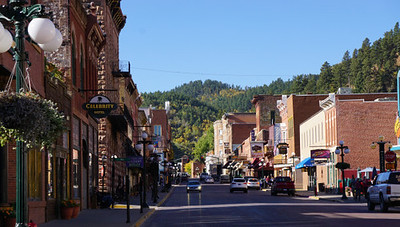
The House Taxation Committee in South Dakota voted down a proposal to allow mobile sports betting, 11-1. Also defeated was a bill to allow restaurants, bars and other locations with on-site alcohol consumption to take bets on behalf of Deadwood casinos.

In November, voters approved a constitutional amendment to permit sports betting in Deadwood, according to KELO.

In support of the proposals, Garrett Gross, from Dakota Gaming Group, said geofencing technology would have ensured bets came inside South Dakota borders. He estimated that South Dakotans bet $30 million per month in Iowa casinos or through the black market.

“These wagers are not tracked, regulated or taxed,” he said.

Sports bettors will continue to go that route rather than drive to Deadwood, Gross said.

David Wiest, deputy secretary for the state Department of Revenue, said none of that matters, that the constitution spells out that gambling—including sports betting—must occur in Deadwood.

The proponents of the internet-betting legislation want lawmakers to expand the exemption for sports wagering statewide without asking the voters on another constitutional amendment, Wiest said.

“That is something quite frankly none of us can do,” he said.

Representative Mark Willadsen, who proposed the restaurant change, required each venue to create a contract with a Deadwood casino and create a kiosk to accept wagers.

South Dakota voters amended the state constitution on November 3 to allow the legislature to establish a system for sports wagers to be made in the city of Deadwood. Wiest said a new amendment would be required to change that.

“We believe that it is clear that the phrase ‘within the city limits of Deadwood’ means that you must physically be in Deadwood to play limited card games, slot machines, roulette, keno or craps, or to place a wager on a sporting event,” he said.

Willadsen’s proposal would have permitted 901 municipal and 219 county bars, 29 convention centers and 37 full-service restaurants to participate.

Trump Plaza Imploded in Atlantic City

At 9:08 a.m. on Wednesday, February 17, the former Trump Plaza casino in Atlantic City was detonated and toppled to the ground, to the cheers of spectators. By 9:09 a.m., the 38-story structure had disappeared from the city skyline, leaving an 80-foot pile of rubble and a cloud of dust.

The 39-story structure was former president Donald Trump’s first casino in Atlantic City. Per the Press of Atlantic City, it opened as Harrah’s at Trump Plaza in May 1984, with a 60,000-square-foot casino, 614 hotel rooms, seven restaurants a 750-seat showroom and health club. Later that year, the name was changed to Trump Plaza to avoid confusion with Harrah’s property in the city’s Marina District.

In 1986, Trump bought out Harrah’s and opened two more casinos, Trump Marina (now Golden Nugget Atlantic City) and Trump Taj Mahal Casino Resort (now Hard Rock Hotel & Casino). In 2014, the casino organization went bankrupt and the real estate magnate left town.

For the next seven years, the building was unoccupied and unused. In 2020, Atlantic City officials filed an injunction in New Jersey Superior Court to speed the demolition of the Alan Lapidus-designed property, calling it an “imminent hazard” and threat to public safety, with chunks of concrete and stucco falling onto pedestrian pathways. The site where the casino stood is considered prime real estate in the shore town: located at center Boardwalk, at the foot of the major highway into the city.

“This is the best property in town,” said Atlantic City Mayor Marty Small in comments made after the implosion. “It needs no GPS. You just say, ‘Take the Atlantic City Expressway until it ends and you can’t go any further.'”

No plans have been announced for the tract’s future development. It will take months to clear the area, possibly until June, the start of the busy summer season. Small would prefer to see a family-friendly mixed-use development at the site rather than another casino.

The event was witnessed by hundreds of people who gathered on the beach, plus some who congregated in bars, along sidewalks, and at Bader Field, a former airport. People expressed mixed feelings about the implosion.

Ronald Rinker, who worked at Trump Plaza for 30 years as a bartender, told the Press, “I have a lot of great memories. It’s a part of history.”

Dani Summerson, another former Plaza employee who met her husband, Mark, at the casino, was also nostalgic. “I know a lot of people are happy it’s coming down, but for us, it’s sad,” she said.

Other onlookers, like Gina Wasik, felt differently. “I’m glad to see it go,” she told NJ.com. “Anything that’s got (Trump’s) name on it has to go.”

And Mike Lopez, a local blogger known as AC Mike, said he was “just blown away, so exciting to watch it go down and be a part of it. Our skyline has changed forever. It’s not what it was. Hopefully it gets better.”

Former Trump Plaza Casino Due for Implosion This Week

The former Trump Plaza Casino on Atlantic City’s fabled seaside Boardwalk is due to be imploded at 9 a.m. this Wednesday, February 17. The demolition site, at the terminus of the Atlantic City Expressway, should be cleared before summer, according to city officials.

By scheduling the implosion on a weekday morning, without the fanfare that often accompanies implosions, the city may sidestep some crowding concerns in the Covid era. According to the Press of Atlantic City, Mayor Marty Small Sr. is urging spectators to gather at a onetime airport, Bader Field, to see the implosion.

For safety reasons, “We don’t want anyone near the downtown area” to view the event, Small said.

Also for safety reasons, the building’s owner, billionaire Carl Icahn, called a halt to a planned auction, which would have awarded the right to push the demolition button to the highest bidder. Bids had reached $175,000 and were to go to the Atlantic City Boys and Girls Club. Though the auction was called off, the club didn’t lose out: Icahn donated the same amount, and a second auction, which awarded prime viewing seats from the nearby One Atlantic event center, raised an additional $17,000.

Trump Plaza, closed since September 2014, in recent years has fallen into disrepair, to the point that it was deemed hazardous to passersby. Two smaller buildings that are part of the Plaza complex will be taken down separately.

New York Warned of Meadowlands Threat

An extensive report on the future of gaming in New York state suggests the powers that be in Albany would do well to act sooner rather than later to license casinos in New York City.

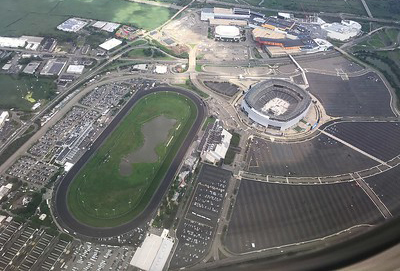
The long-awaited report, prepared by Spectrum Gaming Group under contract with the New York Gaming Commission, warns that a new full-scale casino in New Jersey is a distinct possibility, and its likely location in the Meadowlands Sports Complex in East Rutherford—less than a half-hour drive from the New York City—could pose a threat to the three licenses New York is authorized to award in 2023 in and around the Big Apple.

“In such an environment it is important that the state’s new gaming policies consider how licensing, tax rates and other regulations will impact the ability of downstate gaming to remain competitive with a future Meadowlands casino,” the report states.

The Covid-19 pandemic has battered New York’s finances and spurred a growing movement in the Legislature to speed up the downstate timetable, a move the report appears to support.

“Owners/operators/developers associated with both the Meadowlands complex and Liberty National Golf Club in Jersey City are ongoing proponents of casinos at those locations,” it states. “Being first to market would allow a casino on the New Jersey side to develop player loyalty.”

The report examines a number of scenarios for the downstate licenses, the likeliest being the addition of live table games and house-banked slot machines to the market’s existing racinos: Empire City at Yonkers Raceway, owned and operated by MGM Resorts International, and Resorts World New York City, located at Aqueduct racetrack in Queens and owned by a U.S. subsidiary of Malaysian resort conglomerate Genting.

There has been much talk of placing the third license in midtown Manhattan, a proposal that has attracted influential supporters and equally powerful opponents.

Spectrum estimates the gaming revenue potential at around $1.3 billion annually with little variation regardless of where the third license ends up, and less than half that, incrementally speaking, factoring out the dollars that would have gone to the two racinos as they currently exist.

The report projects the cost of a Meadowlands casino to New York state’s annual tax revenue to be $90 million to $130 million, while its potential negative impact on gaming revenues would vary depending on location, minus-3 percent at Jake’s 58 slots venue on Long Island, 8 percent at Resorts World Catskills, 12.5 percent for a Manhattan casino, minus-20 percent at a slots venue Resorts World plans to develop in Orange County.

The case for speeding up the downstate license awards include an immediate boost to the state treasury of as much as $1.5 billion, based on a widely discussed $500 million one-time fee for each license. That’s not counting a prospective tax rate on slot machines of up to 40 percent and 10 percent on table games.

But whatever direction the state takes, the report urges lawmakers and the administration of Governor Andrew Cuomo to proceed with due deliberation.

“The addition of a commercial casino in the New York City area, either through issuing commercial licenses to one or both VLT facilities in the region or by approving a new property, would profoundly alter the gaming landscape in New York, and arguably throughout the nation,” it says.

“Policymakers need to ensure that whatever gets authorized in the nation’s largest metropolitan area will serve the interest of New Yorkers for decades to come. Whatever entities are granted the privilege of commercial casino licensure in that market, whether they are existing VLT operators or new entrants, must rise to the challenge of developing projects that are iconic, that are sufficiently capitalized to capture and expand multiple market segments and that advance public policies that will serve the entire state.”

The report ignores, however, a 2018 advisory referendum where New Jersey voters rejected a Meadowlands casino by more than 70 percent of the vote. The casino would require a constitutional amendment that must be approved by state voters that would allow gaming to expand outside of Atlantic City, which was approved in 1976 as an amendment to the state constitution.

PA Governor Revives Proposal to Strip Racing Fund

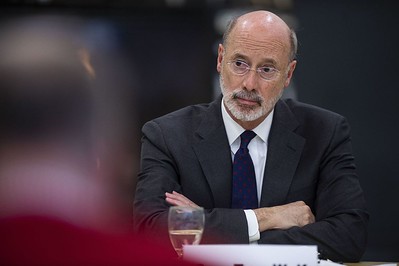
Pennsylvania Governor Tom Wolf, in his new budget plan submitted to lawmakers, has revived a plan that he proposed last year to divert $199 million from the slot revenue fund propping up the state’s horse racing industry to create a scholarship program for students in state colleges and universities.

The proposed program would assist an estimated 20,000 students with annual scholarships of up to $5,700 per student, depending on household family income.

In a statement, Wolf pointed to the fact that Pennsylvania college graduates have the second-highest student loan debt in the U.S. “There is a student loan debt crisis across our country,” Wolf said. “It’s a burden on young people and their families that can last for years and holds them back.”

Representatives of the horse racing industry, which supports around 7,400 direct jobs and supports another 8,000 jobs, say the fund diversion would destroy racing in the state. The Race Horse Development Fund, created by the 2004 gaming law, is funded by a portion of the 55 percent tax the state imposes on slot revenues. The state’s racetracks fund 95 percent of purses with that money, which returns around $200 million a year.

“This would absolutely destroy the horse racing industry and the more than 20,000 jobs that are associated with it,” said Pete Peterson, spokesman for the Pennsylvania Equine Coalition, in an interview with the Philadelphia Inquirer.

Others in the state, particularly in the education field, are not sympathetic. “The legislature has to make a choice,” Susan Spica, executive director of the advocacy group Education Voters of Pennsylvania, told the Inquirer. “They can either fund college students who will become our teachers and nurses or continue to give $200 million to wealthy horse owners, many of whom live out of state.”

A spokesperson for Wolf told the newspaper it is time for the state’s racing industry to stop relying on the subsidy. “While the racing industry is important to Pennsylvania, it is time for the industry to support itself and continue to build upon the unprecedented generous economic investment made by the commonwealth to this single industry,” said Elizabeth Reenter. “The industry survived long before the subsidy began and it has had 16 years and $3 billion to develop what, by now, should be a self-sustaining industry.”

It is unclear whether Wolf’s proposal, which failed to gain legislative support last year, will fare any better this year. For one thing, success would require amending or repealing another law, passed in 2017, that deems the racing trust fund untouchable for other purposes.

N.Y. Shopping Mall Targeted for VLTs

Resorts World Catskills wants to open a major VLT venue at a shopping mall about 60 miles north of New York City.

The largest of New York’s four upstate commercial casinos, located in Thompson in Sullivan County, has been looking for a home for as many as 1,100 of the machine games since its sister racino at nearby Monticello Raceway in Monticello succumbed to the competition Resorts World presented and was closed in the spring of 2019.

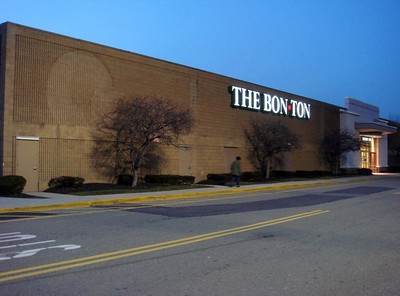
The site Resorts World proposes is a 68,000-square-foot property at the Newburgh Mall that once was a Bon-Ton department store and is occupied currently by a Jennifer Furniture outlet.

The 40-year-old mall, whose anchor tenants include the last Sears in the Hudson Valley, has been struggling for some time, but it enjoys a prominent location about 50 miles southeast of Monticello in Orange County near the intersection of Interstate 84 and the New York State Thruway.

“Developing a video gaming machine facility in Orange County has, for many years, been part of Resorts World’s long-term vision for Hudson Valley and the Catskills,” said Malaysia-based resort conglomerate Genting, which indirectly owns both Resorts World and Monticello Raceway. “It will create hundreds of good-paying unions jobs, generate significant revenue for New York’s public schools, and is an important step in ensuring the long-term sustainability of Resorts World Catskills.”

The plan is scheduled to come before the Newburgh Town Board on February 22. The board will need to amend its zoning to accommodate gaming at the location. Planning Board approval also is required along with an environmental review.

The venue is expected to take a year to develop and will employ around 225 people.

“I want it to be successful at that site, and I think that area could use a boost,” said Orange County Executive Steve Neuhaus.

Resorts World Catskills and Monticello are directly owned and operated by Empire Resorts, which was a Nasdaq-listed public company prior to 2019 with a Genting-controlled entity, Kien Huat Realty, as majority shareholder.

The opening of Resorts World early in 2018 made the racino redundant and it closed the following spring after 11 years in business. But Empire’s woes continued after Resorts World failed to perform to expectations in New York’s crowded gaming market, and the double blow had Empire preparing to seek the protection of U.S. Bankruptcy Court when Kien Huat and other Genting entities bought out its minority shareholders and took it private in the fall of 2019.

Monticello’s 1,100 VLTs were up for grabs at that point, but Empire, backed by Genting, beat out eight other submissions with a $1.2 billion bid to keep them and was permitted by the New York Gaming Commission to relocate them.

Their first home was to be a defunct chemical plant in the Orange County town of Harriman, which is closer to New York City and the major population centers of northern New Jersey, but the site proved too contaminated to be workable.

Red Rock’s Fertitta: Nevada Casinos to Remain Closed

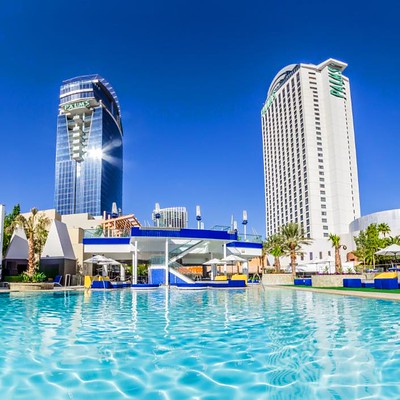
Red Rock Resorts said it will not reopen three of its suburban Las Vegas casinos or the off-Strip Palms until Southern Nevada is able to put the Covid crisis behind it.

Speaking February 9 at Nasdaq-listed Red Rock’s fourth quarter and year-end conference call, CEO Frank Fertitta III said the company’s eight operating properties are enjoying an increase in patronage from a younger demographic, but state-imposed capacity restrictions and customers’ ongoing concerns about the health risks of the pandemic necessitate caution.

As a result, Texas Station, Fiesta Henderson and Fiesta Rancho, which generally cater to an older neighborhood clientele, will stay closed indefinitely, Fertitta said.

As for The Palms, which Red Rock acquired four years ago for $360 million and spent another $690 million to renovate, he said it’s “unlikely to reopen until the tourist market returns.”

“Any properties we open must be accretive,” he said.

Red Rock posted fourth quarter net income of $29.7 million, compared to $4.8 million a year ago, although total revenues declined by 35.5 percent to $343.4 million, which included a 27.8 percent drop in Las Vegas revenues.

For the year, the company declared a net loss of $174.5 million on net revenues that fell 36 percent year over year to $1.2 billion.

On a positive note, the company said it was moving toward a groundbreaking by the end of June for a long-stalled tribal casino project near Fresno, California, in partnership with the North Fork Rancheria of Mono Indians.

CFO Stephen Cootey said plans for the resort include a 100,000-square-foot casino, two restaurants and a food court on 213,000 square feet of total space.

Vaccine Means Outdoor Atlantic City Events

While most attention in Atlantic City last year was focused on the shutdown and reopening of the casino industry, events outside the casinos also came to a grinding halt at a time when warm-weather events like beach concerts and the Atlantic City Air Show dominate the Boardwalk. According to New Jersey Governor Phil Murphy, this summer likely will be different.

Murphy told radio host Harry Hurley of WPG Talk Radio last week that if the state reaches its Covid-19 vaccination goal by the end of spring, it should mean that summer outdoor events will return in 2021.

Murphy said the state already has administered more than 1 million vaccines. “This is definitely forward progress, and it shows how we’re working to maximize every dose received from the federal government,” said Murphy, who added that beach activities and the Air Show going on is “a higher probability than something indoors. I think something can happen indoors, but I don’t think it will be back to where we’re all piled on top of each other watching a concert.”

Fertitta Takes Landry’s, Golden Nugget Public

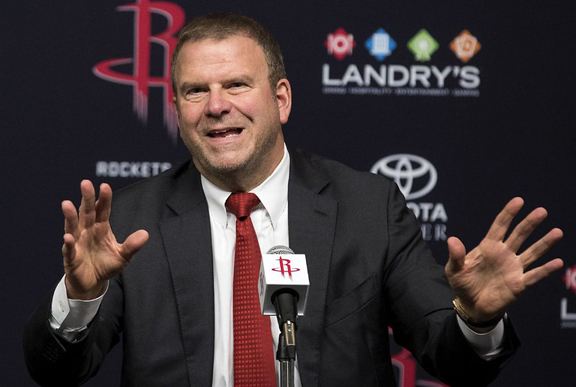
Texas casino and dining billionaire Tilman Fertitta, has taken his company public by merging with the special acquisitions company (SPAC) Fast Acquisition of New York. This gives Fertitta a 60 percent share of a company that’s already on the New York Stock Exchange.

The merged company has a combined value of $6.6 billion. This put’s the gaming sector of Fertitta’s empire, including Golden Nugget and his dining sector, Landry’s Inc., which has 500 restaurants.

Eventually Fast Acquisition will be re-christened as Golden Nugget Entertainment. It will not include Fertitta’s hotels or the Houston Rockets baseball franchise. He will be chairman and chief executive officer.

This gives the Texas billionaire the capital to compete with other gaming companies. He told the Houston Chronicle: “We’re looking to do some substantial mergers and acquisitions in gaming. We want to be aggressive in the M&A world.” Two years Fertitta was outbid by Eldorado Resorts when he tried to buy Caesars Entertainment.

The move represents Fertitta’s change in strategy, from a restaurant focus to building a casino empire and especially toward online gaming.

He told the Chronicle, “I’ve grown my huge net worth by being an opportunistic buyer, and yes, there’s going to be opportunities out there I want to seize upon.”

He said he hopes to be able to take advantage of acquisition opportunities created by the Covid-19 pandemic.

He told Bloomberg, “I want to do big gaming deals. Thirty years ago there was gambling in two states. Now we’re approving new states for online almost on a weekly basis.”

His company was slammed by the pandemic, but he says he expects earnings to rebound in 2021 and 2022, with increased buying leverage.

He plans to use the money realized from investors to retire some of the company’s $3.4 billion in debt.