Author: Casino Connection Staff

Pequot War Revived With Sports Betting Pact

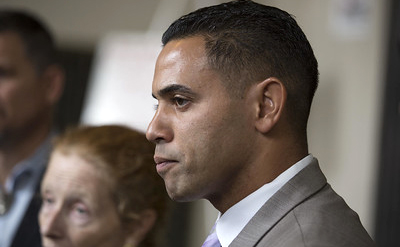
Rodney Butler, chairman of the Mashantucket Pequot tribe, owners of the Foxwoods Casino, says the separate deal Connecticut Governor Ned Lamont struck with the Mohegan tribe over sports betting and online gaming reopened wounds dating back to the 1600s and almost ended hopes of a deal with his tribe.

Butler told the Hartford Courant “I can’t describe what a setback and insult Tuesday was. It almost killed the deal.”

He referenced the Pequot War of the 1630s, when English settlers waged war against the Pequots, assisted by their allies the Mohegans. It was one of the bloodiest wars, in terms of percentages of the population killed on both sides, of any Indian war in American history. “It opened up wounds between our tribal nations that go back centuries,” said Butler.

Mohegan Tribal Chairman James Gessner Jr. said a mere business deal could not damage the relationship between the tribes. He told the Courant in an email: “The roots of that generational relationship run far deeper than the nuances of any business decisions we each make relating to our commercial enterprises.”

He defended the deal he reached with Lamont as “fair agreement, one that would keep Connecticut and its gaming industry competitive.”

Just two days before the separate deal was announced, Butler had referred to the Mohegans as “cousins” and said they were united in their goals. After the announcement he said that it gave the impression that “a deal was done.” He added that the announcement had been “extremely disrespectful in terms of process and substance.”

Lamont said he released details of the deal in answer to questions from reporters after being asked what were the terms of the agreement. He said he and both tribes are continuing negotiations.

The terms of the separate agreement include a 20 percent tax on online gaming such as poker and a 13.75 percent tax on sports wagers. It would authorize sportsbook venues at multiple locations, including larger ones in Hartford and Bridgeport, the state’s two largest cities.

Any tribal state gaming agreement would require the assent of the legislature.

Although he was annoyed at the “bad faith negotiations,” Butler said “I immediately re-engaged. I let off some steam.”

He wouldn’t share why his tribe didn’t agree to the same terms as the Mohegans. “It’s not my style of negotiating. I’m not going to negotiate in the press.”

He had earlier said that the tribe and state disagree on the percentage the tribes will pay the state. Calling it a “rounding error” as it relates to the state, he added, “For us, we’re a small tribe who have our have our challenges and focus on sustainability of our nation in the long run. And a half a million, a million dollars makes a huge difference in our ability to service our population with the critical programs and services that support the health of our elders, the education of our youth, our public safety department. And I can go on and on and on.”

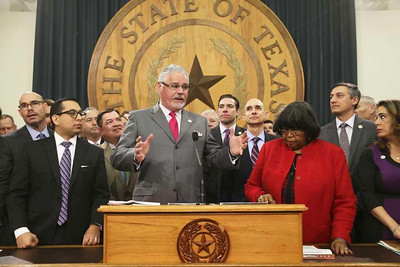
Meanwhile, 17 lawmakers who represent the region of the state where the two tribes are located said they wouldn’t accept a separate deal that didn’t include the Pequots.

The legislators declared, “We remain committed to the future and to the modernization of gaming in Connecticut.”

They added, “However, we cannot accept this agreement as it is incomplete. It is necessary that the agreement include both the Mohegan Tribe and the Mashantucket Pequot Tribal Nation. Unless an agreement includes both tribes, the eastern Connecticut delegation simply cannot support it.”

The governor’s office in a statement said it agreed that the Mashantucket Pequots needed to be party to any agreement but added, “Governor Lamont is urging the Mashantucket Pequot Tribal Nation to join this agreement immediately, and Eastern Connecticut legislators should do the same.”

Gessner, in another statement said the Mohegans came to a separate agreement, because “we felt that if we didn’t find compromise now, Connecticut would risk missing out once again on making these changes, to the detriment of both the state and local municipal budgets, and also to the Mohegan Tribe and its tribal members.”

Somewhat lost in the big noise of the governor’s apparent snubbing of the Pequot tribe is Lamont’s even bigger elbow in the eye of OTB operator, Sportech, whose President Ted Taylor has not admitted defeat, declaring “We’re not done.”

On March 5 Taylor, who has operated OTB in Connecticut for 11 years said, “We’ve got to fight. Ultimately we believe we have certain rights and we deserve a seat at the table. We have employees, investments and standing. We want to survive and thrive.”

The pandemic hasn’t been good to Sportech. It used to have 16 locations before Covid but now has 11. But the decline of OTB began well before the pandemic.

Nevertheless it continues to be a big business, with its most successful operations including Bobby V’s sports bars in Stamford and Winners at Sports Haven Bar & Grill in New Haven, where bettors wager on horse and dog races—all out of state. In 2019 OTB wagers totaled $141.4 million, paying $3 million to the state. However, that’s a pittance compared to the $250 million and more that tribal gaming paid.

The possibility exists that the CT Lottery could operate some of its locations in partnership with Sportech, but nothing has been announced yet and Taylor worries about that.

He said, “Will the lottery have brick-and-mortar locations? We’re kind of gathering our horses right now and working out our next steps. We’ve never deviated from what we’ve said from the start. Fortunately there are conversations happening now. We have very close relationships with many legislators. We also know some legislators don’t share the same interests as us.”

Sportech is well suited to operate online and mobile sports betting in Connecticut if it is allowed to. It supplies parimutuel technology to operators in 38 countries.

To protect its interests, Taylor says he’s ready to go to court.

However, the tribes have always said they too are ready to battle in court to protect what they feel their compacts guarantee them, and Lamont’s office appears to side with them.

But Paul Mounds, the governor’s chief of staff, indicated that there may be a way forward for Sportech. He told reporters last week, “There is a role in which Sportech can be able to play with the CT Lottery Corp. So it’s not a matter of keeping them out of negotiations. Here’s the thing; a lot of people would like to be a part of those discussions, but you have to start discussions with the very parties that we need to allow us to have those discussions, and those were the tribal nations.”
UFC Signs 5-Year Deal with DraftKings

Add UFC to the list of organizations partnering with sportsbooks.

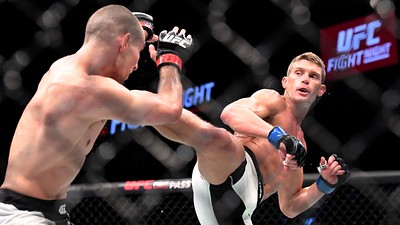
The Ultimate Fighting Championships named DraftKings as its first official sportsbook and daily fantasy partner. The five year deal valued at $350 million, closed on March 4 and covers the U.S. and Canada, according to ESPN.

The partnership will include in-game promotions, odds integrations during broadcasts and enhanced prop bets on MMA bouts.

“I’m looking forward to all the exciting things we’re to do with DraftKings over the next few years,” UFC President Dana White said in a news release.

Bookmakers say MMA has grown as a betting sport in recent years.

“Combat sports, and UFC in particular, have scaled significantly across both our sportsbook and daily fantasy verticals, evolving from a niche offering to a high-demand category that we believe will only grow further as we innovate,” DraftKings CEO and co-founder Jason Robins said in the release.

Beginning with UFC 259, a DraftKings clock will be part of the Octagon that counts down each round.

“We’re optimistic that in a relative short period of time we’re going to have a lot more in-game, real-time data that’s going to enhance the gaming experience on UFC,” COO Lawrence Epstein told ESPN.

MLB, the NBA, NHL and the PGA Tour are among the leagues with official sportsbook partners since sports betting became legal in 2018.

“Sportsbook operators see the conversion of sports fans into sports betting customers, and the closer they can get to that fan, it’s definitely going to unlock more value,” consultant Sara Slane said.

North Dakota Lawmaker Amends His Gambling Bill

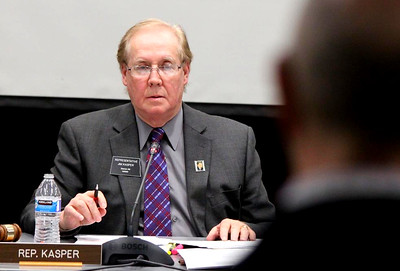
In North Dakota, state Rep. James Kasper sponsored two sports betting companion bills that passed in the House late last month. In the Senate, the Joint Finance and Taxation Committee recently held its first hearing on the bills. HCR 3032 would place legalizing sports betting on the November 2022 ballot, leaving it up to voters whether they want to change the state constitution. HB1234 would create a structure for legal retail and mobile sports betting. If both bills pass in the Senate, legal sportsbook options could be available in North Dakota in August 2023.

The sponsor of House Bill 1234, state Rep. James Kasper, introduced it to the committee and then offered some amendments to it. These included banning credit cards for placing bets and excluding all North Dakota college sports. The bill also proposes a 24-month period before mobile sportsbooks could launch, giving retail-based sports wagering kiosks a head start to help local businesses. The mobile app wouldn’t be available until 2025. The bill proposes low tax rates of 6.75 percent on retail wagering and 10 percent on online betting.

Kasper stated, “If mobile and retail start at the same time, then the mobile will garner 80 percent to 90 percent of the market, because there is no overhead and no catch-up and no lag time. In order to provide an opportunity for local business development this bill provides for 24 months for kiosks to get started.”

Commenting on Kasper’s amendments, Dave Weiler, a lobbyist representing Western Distributing Company, said, “It’s a bill that now has nothing good in it for North Dakota. Very seldom have I ever seen a bill get changed to the detriment of North Dakota citizens, North Dakota business owners and in favor of out of state companies.”

DraftKings also isn’t happy about the new bill. The sports betting behemoth opposes prohibiting the use of credit cards on mobile platforms, claiming that removes a player’s ability to gamble on sporting events. DraftKings also opposes the two-year launch delay while retail sports wagering kiosks ramp up. And it opposes the ban on local college sports, stating that would make bettors continue to make illegal offshore wagers.

Tribal leaders have expressed concern that legalizing sports betting could further hurt business, leading to permanent closures. Spirit Lake Casino Gaming Director Collette Brown said adding another gaming option would harm business. Collette Brown, gaming executive director for the Spirit Lake Nation, said the tribes, represented by the United Tribes Gaming Association, are opposed to statewide mobile gaming. She said expanding gaming yet again is just “adding salt to our wounds. We have seen a 65 percent decrease in our Class III revenues and we cannot sustain that anymore. Any further expansion of gaming in the state will definitely cause my tribe to close our entertainment destination and casino.”

Forecasters estimate the new sports betting industry could produce about $7.2 million in tax revenue for the state per biennium. The North Dakota legislature is in session through April 28.

South Dakota Governor Signs Sports Betting Legislation

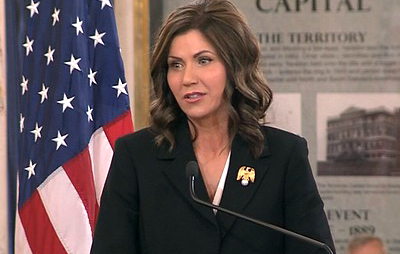
South Dakota Governor Kristi Noem signed Senate Bill 44 on March 18, legalizing sports betting in Deadwood and at tribal casinos.

Afterward, Deadwood Gaming Association Executive Director Mike Rodman said, “It’s a big day for Deadwood and our next step now is to work with the South Dakota Commission on Gaming to promulgate the rules. We’ll be working through the process with the hope that we will be able to offer sports wagering by September 1.”

Rodman said he expects commissioners to have draft rules ready by their June 16 meeting. “The gaming commission reiterated their commitment to work to get those in place as quickly as possible, but wanting to make sure they are the right rules to have the appropriate sports wagering for South Dakota,” Rodman said.

The gaming commission already has met in Deadwood to work on the draft rules, following voters’ approval last November of a constitutional amendment legalizing sports betting at Deadwood casinos via sportsbooks, kiosks or a mobile app.

Two other sports gambling bills were killed in committee earlier in the session. HB1211 would have allowed a business with a liquor license to have a betting kiosk connected to a Deadwood casino. HB1231 would have allowed sports betting from an electronic device anywhere in the state.

Rodman said most Deadwood casinos are planning to offer sports gambling and several are planning to renovate and expand to accommodate sports betting lounges. “They’re making some major investments in making sure sports wagering is successful here in Deadwood,” he stated.

The Deadwood Gaming Association expects sports wagering to produce more than $22 million in additional gaming revenue and $2.2 million in additional gaming taxes. It’s also expected to create 150 new jobs with $6.1 million in additional income.

Rodman said sports betting could launch in September, coinciding with the start of the National Football League season, which attracts the most sports bettors. “We certainly want to catch as much as that football season as possible. We think that’s probably the earliest and we’re going to work as hard as we can to catch as much of that football as we possibly can.”

And since Noem signed the bill in March, Rodman added, “March Madness would be incredible for Deadwood. Deadwood is really excited to get a piece of that action. We’re looking forward to when we’re able to have those live, legal sports wagers for March Madness next year.”

Wyoming House Switches Gears, OKs Sports Betting

One day after the Wyoming House voted 32-28 to defeat House Bill 133, an online sports betting bill, state Rep. Mike Yin—who originally voted against the bill—introduced a measure for reconsideration. Under the rules of the legislature, a lawmaker who votes with the majority on any given issue can ask for a reconsideration of a bill. That’s what Yin did. When that vote was held, the result once again was 32-28, but this time he and state Rep. Chad Banks voted in favor of the measure and it passed. The bill now will be considered by the Wyoming Senate.

Under the legislation, the Wyoming Gaming Commission would establish rules for online sports betting and issue at least five licenses. Operators would pay an initial $100,000 fee, valid for five years and annually renewed for $50,000. Vendor permits would cost $10,000 with renewals at $5,000. Operators would pay taxes of 10 percent of revenue.

The first $300,000 in annual revenue would go toward problem gambling education and services and the remainder would go to the state general fund. Bettors must be at least 18 years of age and physically located within the state borders.

The bill initially failed after several representatives expressed concern over social costs. State Rep. Evan Simpson said, “This particular fun activity has the potential of destroying a lot of lives. Addictions are real and they will happen in our society if we pass this bill.”

State Rep. Jared Olsen argued, “Sports betting is already happening, so you have the opportunity to regulate it and craft the framework around what works and doesn’t work. To protect the citizens of Wyoming without telling them the choices they can and cannot make, it’s setting parameters that keeps consumers safe.”

Ohio Gaming Committee Holds Fifth Hearing

Representatives from several sports and entertainment companies recently gave presentations at a meeting of the Ohio Senate Select Commission on Gaming—its fifth meeting in six weeks. State Senator Kirk Schuring, chairman of the committee, said the legislature will take a two-week break before lawmakers return in mid-April and Senate committee hearings resume April 20.

Schuring said, “During that two-week period, I’ll be contacting every member of this committee for their input on the bank of evidence that has been presented to us relative to gaming as a whole. Then I’ll be conferring with the Senate president after I have a chance to talk to everybody on the committee. From that point we’ll build a bill, we’ll introduce a bill and when you all come back after the break, we will be discussing a bill.”

The Cincinnati Bengals, Cleveland Browns, Columbus Blue Jackets and Columbus Crew all sent representatives to the Senate meeting. Bengals’ Chief Marketing Officer Brian Sells said the state’s 11 casinos and racinos are “the core to sports betting in Ohio. However, market access for Ohio’s professional teams is vitally important to our ability to compete with others in our respective leagues. So, in addition to providing market access to the 11 casinos and racinos, we believe the local professional sports teams should be provided market access as well. How this access is defined is up to debate, but at a minimum, having access to a mobile skin seems appropriate. Such a provision would recognize the significant economic investment the NFL, Bengals, Browns and other professional teams have made in the state of Ohio.”

All the pro teams and the National Football League have requested that sports betting legislation require the use of official league data. And, they expressed the desire to get their own licenses to offer sports betting themselves.

Cincinnati Reds Chief Financial Officer Doug Healy stated Ohio sports teams strongly support sports betting. Healy said he hopes Ohio will establish a competitive mobile marketplace that allows teams to partner with operators for market access. “We look forward to working with this committee to make Ohio’s legalized sports betting market a true example for the rest of the country. One that recognizes that all three legs of the stool—the casinos, the state and the sports teams—are partners in the integrity of the sports betting market, as well as its growth and success.”

Healy also noted integrity measures should include sharing real-time betting information from the sportsbooks to the leagues; establishing a procedure for sports governing bodies to limit risky bets; banning insiders from teams and leagues from betting on their sports; and requiring sportsbooks to use official league data.

Ted Tywang of Haslam Sports Group, representing the Browns and Crew, said, “We would like to see legalized sports betting in Ohio as soon as possible, and would suggest that the legislation include a concrete and accelerated timeline for regulatory implementation. Of course, we do not want to rush the process in any way that would result in a negative outcome, and it is critical that we have appropriate integrity and consumer protections, along with the optimal market structure. To summarize, we cannot continue to allow the illegal marketplace to thrive and have tax and commercial benefits leave our state by delaying the inevitable. We want legalized sports betting to be done right and as quickly as possible.”

Draft Kings Senior Manager of Corporate Affairs Kevin Cochran explained the importance of a competitive framework for mobile betting, one that would protect Ohioans through responsible gaming practices. He noted successful legalized sports betting markets can generate more than 90 percent of revenue through online betting. Cochran also recommended that casinos offer multiple skins and a wide-ranging sports betting menu. The regulating body should offer a practical licensing process, he stated.

Inter-University Council of Ohio President Bruce Johnson noted concerns about the welfare of its student-athletes. He said the council does not want to see any college betting on its 14 schools. Johnson added the universities also would have to create “costly comprehensive compliance programs” for most everyone associated with sports.

He noted that many states are banning betting on in-state schools, although there’s no evidence that these bans are effective. Those games still will be available just over the state line in other states where sports betting is legal and through illegal operators. Johnson concluded, “Sports betting also demeans the competition and competitors alike by spreading a message that is contrary to the purpose and meaning of ‘sport.’”

The bowling industry also expressed its opinions about sports betting. Like the Ohio Licensed Beverage Association testified last week, representatives from Poelking Lanes and the Bowling Centers Association stated sports betting should be accessible through existing lottery kiosks. Joel Poelking said that would help keep bowlers at the lanes longer, like keno. “It’s a win-win for the state and small businesses,” Poelking said.

David Corey, executive vice president of Bowling Centers Association of Ohio, said sports betting at bowling centers would represent a small piece of the whole market, but a big deal for bowling centers. “Allowing sports betting is not a Covid-19 bailout. Rather it’s a long-term opportunity for our centers to thrive and be part of this new strategy in Ohio,” he said.

Allied Esports Selling WPT to Bally’s, Cancels Element Deal

Allied Esports Entertainment, Inc., a global esports entertainment company, announced that the company’s board of directors has decide to pass on an offer announced in January to sell its World Poker Tour assets to equity firm Element Partners, LLC, opting instead to sell WPT to Bally’s Corp., which the company said had offered a “superior proposal totaling $90 million.

The decision, in consultation with its financial and legal advisors, has decided to accept a revised proposal from Bally’s Corp. under which Bally’s would acquire all of the equity interests of Club Services, Inc. (CSI), an indirect wholly-owned subsidiary of the company that directly or indirectly owns its poker-related business and assets, including the entities comprising the World Poker Tour, for consideration totaling $90 million in cash at the closing.

The company notified Element that it intends to terminate their stock purchase agreement unless, prior to 5 p.m. Pacific Time on March 19, the company and Element negotiate an amendment to their pending stock purchase agreement such that the Bally’s revised proposal no longer constitutes a superior proposal.

Prior to making its determination regarding Bally’s revised proposal, the company received a proposal from Bally’s to sell the outstanding capital stock of the company for $100 million, which would include the sale of the World Poker Tour and the company’s esports operations. After discussions, Bally’s updated its proposal to acquire only the entities comprising the World Poker Tour to more closely mirror the structure of the company’s pending stock purchase agreement with Element.

There can be no assurance that the company will enter into a definitive agreement with Bally’s or consummate any transaction with Bally’s, according to a press release from Allied Esports.

Bill Sponsor: Sports Betting Overdue in Texas

Texas Rep. Dan Huberty began thinking about sports betting bill in 2018, after the U.S. Supreme Court lifted the federal ban on sports wagers. Today, he’s more inspired by the Gold Rush-type speed in which other states have embraced sports betting, and the potential money it could bring the state.

“Sports betting is legal in 25 other states, and 21 are trying to get it passed,” Huberty told GGB News. “You’ve got the ability to do it in Louisiana and Arkansas,” two states that border on Texas. By one estimate, sports fans in Texas wager already $5.6 billion on sports each year.

“You have people who are already gambling, but they’re doing it offshore,” said Huberty. “So our view of the world is that it’s been ruled as legal by the Supreme Court. It’s already happening, and it’s something we should collect a fee for. My plan is for revenues to be dedicated towards special education.”

Huberty has a particular interest in special education funding, as his son is dyslexic; he believes revenues from sports betting could help fund programs for children in need. “It’s important to identify who those kids are.”

Big State, Big Fans

By any definition, Texans are sports fans. There are 13 professional teams in the state, and numerous college teams. With 29 million people, Texas is the second largest state by population. Many of them would like to place legal bets on their favorite teams.

Huberty’s House Bill 2070 would be tied to a joint resolution (H.J.R. 97) to put a measure to amend the state constitution before the voters in November. It’s phrased as “the constitutional amendment authorizing the legislature to legalize sports wagering in this state.” A companion bill in the Senate is being carried by Senator Juan “Chuy” Hinojosa. This is a bipartisan effort: Huberty is a Republican and Hinojosa a Democrat.

If passed, the legislation would open up a huge sports betting market and create a framework for the Dallas Cowboys, Dallas Mavericks, Houston Astros, Texas Rangers, San Diego Spurs and other pro sports teams to partner with sportsbooks and bring the wagers inside arenas. The ownership groups of the Cowboys, Mavs and Rangers are all part of the Sports Betting Alliance, a coalition of franchises and sportsbooks pushing for legal bets. BetMGM, DraftKings and FanDuel are also members.

Racetracks including Lone Star Park, Retama Park and Sam Houston Race Park would also be able to offer sportsbooks (Penn National Gaming owns Sam Houston, so it would have an entry into sports betting that way).

Roadblocks Ahead

There are obstacles in the way. For decades in Texas politics, there’s been a built-in inertia against any kind of gaming expansion. Most forms of gambling are banned by the constitution, with the exception of bingo, the Texas Lottery—added in the 1990s—and horse and greyhound racing. Amending the constitution would require passage of a bill by two-thirds of both legislative chambers, then a “yes” vote by the people.

In February, Lt. Gov. Dan Patrick told Lubbock radio station KFYO that he doesn’t see support for sports betting in the Texas Senate, which he presides over, or among Republican voters. “It’s not even an issue that’s going to see the light of day this session,” Patrick said. “We are nowhere close to having the votes for it.”

But Huberty believes the people are ready. A recent poll by the Dallas Morning News and the University of Texas at Tyler showed that 43 percent of Texans approve of legal sports betting, with 26 percent opposed and 31 percent had no opinion.

“There’s a tremendous amount of support and a lot of interest,” Huberty said. “We have the lottery and racing, we already have gambling in these areas. This would allow betting for people who don’t necessarily want to go to a casino. And there is 100 percent support from the sports teams. Every major sports team is behind it. Our view is simply to let the voters decide.”

How much money could sports betting raise in tax revenues? “Initially, about $150 million a year, and it could go up from there,” said Huberty.

Despite Texas’s traditional resistance to a gaming expansion, Huberty thinks he can pass his bill this session. “I tell people, open up the newspaper to the sports section and you can get the line above the story. Why do they publish the line if people aren’t already gambling?”

As Cowboys Executive Vice President Charlotte Jones has said, “Unregulated and illegal sports gambling is already taking place in the state of Texas. Legalized sports betting would regulate the industry and generate hundreds of millions of dollars of new revenue for the state, which will help fund critical programs without raising taxes.”

Ultimately, it’s a matter of personal liberty, Huberty contends. “Texans believe in their liberties and freedom. I’m asking my colleagues to give people the chance to vote. That’s all I’m asking people to do.”

“Our mantra is, ‘Don’t bet against us.’ This is a good opportunity to get this done.”

Georgia Senate Passes Sports Betting Amendment

In a 41-10 vote, the Georgia Senate has passed SR 135, which would place a sports betting question on next year’s ballot. The Senate also approved SB 142, which would regulate Georgia sports betting.

Both Senate bills now head to the House, where sports betting legislation is among the legislation help up by a disagreement between Republicans and Democrats over Republican-sponsored bills that would end certain voting rights.

A House a subcommittee approved HB 86, a constitutional amendment that would allow voters to approve legalizing casinos, sports betting and parimutuel betting on horseracing.

State Senator Jeff Mullis, who sponsored both sports betting bills in the Senate, said, “A no vote for this bill is allowing the bookies to continue to control sports betting, the bookies, the illegal activity. The yes vote is to allow the people to decide. The conference committee that will probably be formed from this issue will have representation from all sides in this chamber. So that’s where the changes may be made, that you will have a hand in it by everyone being represented in the conference committee properly.”

However, observers said it’s unclear if a constitutional amendment is required to legalize sports betting. Senate Regulated Industries and Utilities Committee Chairman Bill Cowsert, co-sponsor of SR 135, said, “We had the legislative counsel’s office give us an opinion: does sports betting require a constitutional amendment? And our legislative counsel’s office says yes, it does.” He added, “This is not currently permitted under our state constitution. Sports betting’s a lottery game? Well if it was, we could have been doing it for years.”

House Economic Development and Tourism Committee Chairman Ron Stephens’ bill to legalize sports gambling has yet to receive a vote. Stephens has argued a constitutional amendment is not needed as long as the Georgia Lottery Corp. is put in charge of sports betting.

Over the years, numerous polls have indicated a majority of Georgia voters would support legalized gambling if a statewide referendum was held. State Rep. Alan Powell said, “Let folks vote on it. They’re the only ones who can make the decision.”

The original legislation was limited to casinos, with a portion of the proceeds directed to the HOPE Scholarship program. A more recent version of the also extended legalized gambling to horseracing and sports betting. In a newer version, casino and horseracing proceeds would be directed to health care, and sports betting revenue would go to needs-based scholarships.

House Democrats said directing sports-betting proceeds to needs-based scholarships would help line up support for the constitutional amendment from the Democratic Caucus.

However, constitutional amendments require two-thirds majorities in the House and Senate, meaning the legislation faces a significant challenge.

Powell said if the constitutional amendment clears the legislature this session, an enabling bill spelling out casino gambling, sports betting and parimutuel horseracing details would follow next year. The statewide referendum would take place in November 2022.

The two bills are similar in that wagerers must be 21 years old, and the Georgia Lottery would grant a minimum of six sports betting licenses; the House would require a fee of $900,000 a year and the Senate would charge $100,000 annually and require at least one-third of sports betting licenses must go to businesses owned by minorities, veterans or women. Other differences arise in taxation, with the House bill taxing sports betting revenue at 20 percent and the Senate at 16 percent. Also under the Senate bill, bettors could not wager on Georgia college sports.

Atlanta’s four major league professional sports teams support sports betting legislation, noting it will help keep fans engaged in games.

More U.S. States Move Toward Sports Betting

The Bureau of Indian Affairs approval of the compacts between the Eastern Band of Cherokee Indians and North Carolina checked off the final step needed to bring sports betting to the state. The goal is to be ready for wagers by March Madness time, making it one of the first to go live this year.

North Carolina approved the enabling legislation in 2019, but the Covid-19 pandemic shutdowns delayed the process. The law only permits betting at the two tribal casinos, according to Legal Sports Betting.

Legislation designed to approve sports betting in Nebraska moved from the General Affairs Committee. The details include a constitutional amendment to permit casinos in racetracks and to regulate the gambling halls. Tax revenue would aid property tax relief. The bill comes after voters approved gambling in November 2020.

But the proposal skirts around sports betting.

Committee Chairman State Senator Tom Briese said the language permits all “games of chance,” which could include sports betting.

Senator John Lowe opposed the bill for inclusion of sports betting, according to WSN.

The legislation would not include mobile and online wagering; would prohibit betting on credit; would create a self-exclusion list for those who demonstrate a record of problem gaming; would bar wagers on underage athletes competing in college and university championship games.

If sports betting survives passage, a regulatory format would be needed to oversee the details.

South Dakota is poised to be the first state of the year to put an approved sports betting bill on the governor’s desk. The House passed the legislation March 4 outlining the details. Voters approved sports betting in November.

If Governor Kristi Noem puts her signature on the legislation, Deadwood casinos would add sports wagering to their offerings. The law does not permit online betting or wagering on South Dakota college teams, according to Sports Handle.

Licensing fees are only $2,000. The state tax rate on revenue will be 9 percent. The South Dakota Commission on Gaming will oversee sports wagering. Tax revenue will go towards the preservation of historic Deadwood.

In addition to South Dakota, fall referendums approved sports betting in three other states, including Maryland and Louisiana, which are working on their frameworks.

States surrounding South Dakota with already approved sports betting or bills before the legislation include Iowa, Montana, Minnesota, North Dakota, and Wyoming. Only Iowa offers statewide mobile.

With February’s $143.6 million in handle in February, Iowa surpassed $1 billion in total handle, the seventh state to do so.

“It is an exciting milestone to reach $1 billion total handle wagered since inception … and the 3rd consecutive $100+ million month,” Iowa Gaming Association President Wes Ehrecke said to Sports Handle. “With the casino sportsbooks offering remote registration and online access, it has created more options for those who love watching and wagering on sporting events!”

The other six states include Nevada, New Jersey, Pennsylvania, Indiana, Illinois, and Colorado.

“The Iowa Racing and Gaming Commission has been very pleased, to this point in time, with how the sports wagering industry has progressed in Iowa,” Administrator Brian Ohorliko said in an email to Sports Handle “The foundation of the Iowa sports wagering industry was the thoughtful legislation that has allowed for market growth in a highly regulated environment.”

Revenue for February decreased to $7.7 million from the record setting $11.3 million in January. The state took in $520,444 in taxes from operators.

One of the triggers for a leap in handle was the introduction of remote registration starting in January. The mobile handle In February exceeded $125.2 million, accounting for 87.2 percent of the entire February handle.

Thirteen of the 18 sportsbooks with mobile access took in $2 million or more in wagers, led by the Isle Casino in Waterloo with nearly $21.6 million bet through William Hill. Diamond Jo in Dubuque, with FanDuel came in second, whose mobile book is run by FanDuel, was second with more than $20.8 million.

NCAA Tournament Sweet Sixteen Betting Preview

The second weekend of March Madness tips off on Saturday afternoon with the first slate of Sweet 16 games. Read below for a full breakdown of how BetRivers.com and PlaySugarHouse.com bettors are wagering on the upcoming NCAA Tournament games.

No. 1 seed Baylor has been a popular pick for bettors thus far, as the Bears ML was one of the top two strongest winning bets in each of the first two rounds (89% vs. Hartford, 81% vs. Wisconsin). Baylor faces No. 5 seed Villanova on Saturday, and bettors have made it the most wagered-on game of the Sweet 16 thus far. The public is backing Baylor with 75% of the ML handle and 83% of the spread handle. Baylor -6.5 is currently the most wagered-on game bet of the upcoming college basketball weekend.

Saturday’s second most popular game has upstart Oral Roberts trying to make history against No. 3 seed Arkansas by becoming the first ever No. 15 seed to advance to the Elite Eight. Arkansas ML is the second most wagered-on bet of the Sweet 16, but the public isn’t ignoring Oral Roberts either, as the Razorbacks are backed by 65% of the ML handle but just 42% of the ML bets. Oral Roberts +11.5 is the most wagered-on underdog spread bet of the Sweet 16 by total money, and the public has placed 60% of the spread handle and 78% of spread bets behind the Golden Eagles.

Saturday Sweet 16 Schedule (All times ET):
2:40 p.m: #8 Loyola-Chicago (-6.5, -295 ML) vs. #12 Oregon State (+235 ML). O/U 125.5
5:15 p.m.: #1 Baylor (-7.5, -315 ML) vs. #5 Villanova (+250 ML). O/U 141
7:25 p.m.: #3 Arkansas (-11.5, -625 ML) vs #15 Oral Roberts (+410 ML). O/U 159
9:55 p.m.: #2 Houston (-6, -250 ML) vs. #11 Syracuse (+200 ML). O/U 140.

No. 1 seed Gonzaga and No. 2 seed Alabama enter the weekend as the two heavy betting favorites to advance to the Elite Eight. More money is backing the Bulldogs to cover -13.5 against No. 5 seed Creighton than any other Sunday bet. The public is backing Gonzaga to cover with 81% of the spread handle and 76% of spread bets. Gonzaga has covered in both of its NCAA Tournament games and is 7-2-2 ATS this season when the spread is less than 20.

Alabama looked impressive over the course of the first weekend, and beating Maryland by 17 points in the second round led to Alabama -6 being the strongest winning bet of the second round, backed by 82% of the spread handle. The No. 2 seed Crimson Tide enter their Sweet 16 matchup against No. 11 seed UCLA backed by 84% of the spread handle, by just 46% of spread bets. The Crimson Tide are backed by 70% of the ML handle and 65% of ML bets.

Michigan, the final No. 1 seed to tip off in the Sweet 16, is backed by 65% of the ML handle but 50% of the ML bets to beat No. 4 seed Florida State. Even more of a toss up is the game line, in which Michigan -2.5 is currently backed by 52% of the spread handle and 54% of spread bets. Michigan vs. Florida State is also the on Sunday game in which the public is on the under, with 81% of the O/U handle and 71% of the O/U bets backing Under 144.

Sunday Sweet 16 Schedule (All times ET):
2:10 p.m.: #1 Gonzaga (-13.5, -1115 ML) vs. #5 Creighton (+700 ML). O/U 158.5
5 p.m.: #1 Michigan (-2.5, -143 ML) vs. #4 Florida State (+120 ML). O/U 144
7:15 p.m.: #2 Alabama (-6.5, -286 ML) vs. #11 UCLA (+230 ML). O/U 146
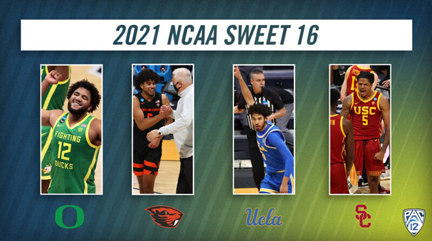
9:45 p.m.: #6 USC (-1.5, -124 ML) vs. #7 Oregon (+104 ML). O/U 139

Gonzaga remains the heavy favorite to win the NCAA Tournament championship, and is currently backed by 54% of the total remaining futures handle. Baylor (14%) and Michigan (10%) are the next most popular remaining picks to win it all.

NCAA Tournament Championship Futures (Handle %/Bet%)
1. Gonzaga +155 (54%/37%)
2. Baylor +350 (14%/14%)
3. Michigan +750 (10%/13%)
4. Houston +900 (8%/9%)
5. Alabama +1100 (8%/10%)
6. Florida State +1500 (3%/5%)

Prior to the start of its first round matchup, Oral Roberts was backed by less than five total bets to make the Final Four. With a dream run to the Final Four just two wins away, the Golden Eagles are backed by 10% of all remaining Final Four futures bets, trailing only Alabama (15%) and Michigan (11%). ORU is backed by 7% of the total remaining Final Four handle, trailing only Gonzaga (22%), Alabama (12%), Michigan (10%), Houston (9%) and Florida State (8%).

NCAA Tournament Final Four Futures (Handle%/Bet%)
1. Gonzaga -295 (21.8%/7%)
2. Alabama +175 (12%/15%)
3. Michigan +175 (10%/11%)
4. Houston +100 (9%/5%)
5. Florida State +250 (8%/9%)
6. Oral Roberts +3000 (7%/10%)


Stardust Lives On—Online and at Sportsbooks

Boyd Gaming and the FanDuel Group are resurrecting one of the most iconic brands in gaming, with plans to create online casinos and sportsbooks branded with the historic Stardust name.

Boyd Gaming owned the legendary Stardust in Las Vegas before closing it in 2006 to make way for the ill-fated Echelon, a victim of the Great Recession that subsequently was sold to Genting Corp., which is slated to open Resorts World Las Vegas on the site later this year.

Boyd and FanDuel last week announced plans to launch Stardust-branded online casinos/sportsbooks in New Jersey and Pennsylvania.

“While the resort has been gone for more than a decade, the Stardust brand is still as well-known and popular as ever,” said Keith Smith, president and CEO of Boyd Gaming, owner of the Stardust brand, in a statement. “We are excited to work with our partners at FanDuel to launch our first real-money online casinos and are confident this legendary brand will give us a significant advantage in connecting with players looking for a distinctive online gaming experience.”

Boyd own 5 percent of FanDuel, which will operate the online sportsbook.

According to the statement, FanDuel plans to rebrand its existing Betfair Casino in New Jersey under the Stardust brand, and bring the brand to Pennsylvania as a new market entry. Pending final regulatory approval, the casinos are expected to launch by next month, with mobile apps available for iOS and Android.

“The new Stardust Casino will retain all of the great games that customers love on Betfair Casino, while incorporating a new stylish look that captures the glitz, glamour and nostalgia of old Las Vegas,” said Amy Howe, president of FanDuel Group, in a statement. “Stardust Casino allows us to take a market-leading product to the next level, creating a unified platform across New Jersey and Pennsylvania.”

“Online gaming is clearly a compelling growth opportunity for our industry and our company,” Smith said in February, according to CDC Gaming Reports. “By partnering with a proven market leader like FanDuel to pursue these opportunities, we are generating immediate and growing profits from digital gaming today while maintaining flexibility to explore the many opportunities available to us to ensure that we are well-positioned for the future.”

Japan Safety Official: No Plan to Legalize iGaming

Hachiro Okonogi, chairman of the Liberal Democratic Party’s National Public Safety Commission, says Japan’s ongoing plan to develop three integrated resorts (IRs) in the country doesn’t mean iGaming is on the horizon.

According to Inside Asian Gaming, the question was raised by Hiroyuki Moriyama of the Constitutional Democratic Party, who asked if legal iGaming might naturally follow, due to the increase in offshore online gaming caused by the Covid-19 pandemic.

Okonogi replied, “There are provisions on casino acts in the existing IR Development Act, but it does not include online casinos and they are not subject to this regulation. However, when I was asked at the Cabinet Committee last week, I answered that we would continue to take strict action as the police and chairperson of the National Public Safety Commission.”

Okonogi added, “The reason online casinos are not subject to the ‘casino acts’ in the IR Development Act is because online casinos are illegal in the first place.”

U.K. Study: 5 Percent of Bettors Account for Most of Yield

A new study from the U.K.’s National Centre for Social Research at the University of Liverpool says just 5 percent of online gambling accounts represent more than 70 percent of British betting and gaming gross gambling yield. The study, commissioned by the problem gambling group GambleAware claims that 0.7 percent of accounts used for betting and 1.2 percent of gaming accounts sampled lost £5,000 (US$7,000) over the course of a year.

The research, conducted by Professors David Forrest and Ian McHale, looked at 140,000 iGaming accounts between July 2018 and June 2019, reported iGamingBusiness.com.

It found that 85 percent of online bettors spent less than £200 per year on betting, and 90 percent of accounts showed either an overall win or loss of less than £500. A small number of accounts were responsible for a very large portion of overall losses, with 4 percent of players losing more than £500 in a single session. According to the researchers, that’s about 60,000 betting accounts and 47,000 gaming accounts nationally.

Four percent of players received some sort of social responsibility interaction, usually by email. This included 36 percent of customers who spend more than £2,000, with a smaller number—0.8 percent—getting a cautionary phone call.

The biggest losers were men in their 40s. Football and horse racing were the most popular sports for betting in terms of accounts playing bet and betting yield. The majority of gaming accounts and spend were focused on slots.

“This research was able to analyze and assess an unprecedented source of information on how people in Great Britain gamble and opens up numerous opportunities to further understand people’s gambling habits. These interim findings are just the first stage and future research will provide a greater opportunity to understand the risk factors associated with gambling behavior,” the report stated.

A spokesperson for the U.K. Betting and Gaming Council (BGC) said the data was important, but was gathered before the BGC was created in 2019. As a result, it said, the British gambling industry had improved its player safety measures significantly since the dates measured.

“The data in this report was collected before the BGC came into being and so does not take account of the work we have done to raise standards,” the spokesperson said. “This includes the whistle-to-whistle ban on TV betting commercials during live sport before the 9pm watershed, ensuring 20 per cent of all broadcast advertising is now safer gambling messages, significantly increasing funding for research, education and treatment, implementing a credit card ban (excluding National Lottery) and introducing a new games design code of conduct, which has led to the slowing down of spin speeds and the banning of several gaming features.

“This report acknowledges that technology now enables betting companies to see where customers are starting to display markers of harm, meaning those at risk are now subject to enhanced checks and interventions. It also shows that a large number of customers are taking advantage of safer gambling tools like setting deposit limits, which we encourage.

“None of these new changes apply to the unsafe, unregulated and growing online black market online, but the BGC will use the government’s review of gambling to identify further best practice and changes going forward to ensure our work on promoting safer gambling continues.”

For example, BGC members have pledged to adhere to standards to keep younger audiences from viewing gambling ads. Its members have also funded a £10 million national education program developed by gambling prevention charities YGAM and GamCare.

It also supports an increase a measure to raise the purchasing age-limit on National Lottery products from 16 to 18.

Michael Dugher, CEO of the Betting and Gaming Council, said: “Our members rightly have a zero-tolerance approach on this issue, which is why we have welcomed the Government’s decision to increase the minimum age for playing the National Lottery to 18.

“For our part, we have introduced a raft of new online protections for young people and taken action to reduce their exposure to gambling advertising, and our work with YGAM and GamCare is also delivering results, with progress during the first year of the partnership far exceeding expectations.

“We are making good progress,” Dugher said, “but we are committed to doing even more as part of our ongoing drive to deliver change and raise standards.”

Peru Mulls iGaming to Boost Sector

Peru’s brick-and-mortar gaming industry continues to be pummeled by the economic effects of the pandemic, prompting the government to contemplate legislation to legalize online gaming.

Rep. Walter Ascona has introduced a bill that would allow online gaming at a 12 percent tax rate. Current estimates are that the underground sports betting industry currently is valued at about $485 million. If taxed at that rate it would generate about $65 million annually for the government.

The effects of the pandemic have cost brick and mortar casinos in Peru as much as $540 million and 15 percent of casino jobs, according to union leader Iván Katekaru who said, “It’s one of the largest sources of jobs in the country with 87,000 formal jobs and 250,000 indirect jobs, and one of the most organized sectors as it contributes more than $135m a year.”

India’s Online Gaming Industry Heads Toward $3.1 Billion

The online gaming industry in India is expanding rapidly, boosted by the Covid-19 pandemic. The market is projected to reach US$3.1 billion by 2023, according to capital markets and investment group CLSA.

CLSA’s report notes that the Indian mobile gaming market grew under the lockdown period, with an estimated 365 million mobile gaming users in the country in fiscal 2020. The industry is currently valued at $1.2 billion.

Driving the surge are names such as Dream11, a fantasy gaming manufacturer, and Nazara Technologies, an up-and-coming player in Africa and North America. Nazara’s products include eSports and interactive gaming.

Indian players play for an average of 8.5 hours a week, sometimes for three or more hours at a time.

FanDuel Sportsbook Opens At Illinois Racino

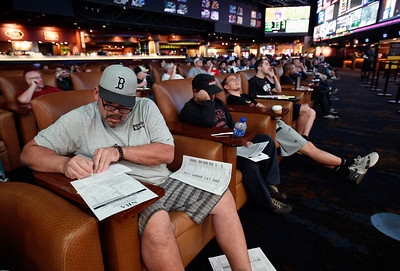
Just in time for March Madness, FanDuel Group recently held an opening ceremony and began taking bets at its new sportsbook at Fairmount Park racino in Collinsville, Illinois. It’s the third sportsbook to open in the region in the past year.

Last November, Fairmount owner William Stiritz and Associates and FanDuel agreed to a partnership to expand the horseracing track and rebrand it as FanDuel Sportsbook & Horse Racing. As part of that deal, FanDuel said would make a “multimillion-dollar investment,” including opening the sportsbook. The new 2,500-square-foot features a 98-inch video screen, 24 65-inch video displays, five live betting windows and 22 self-service betting kiosks.

FanDuel purposely planned the opening date the Fairmount venue to coincide with the first week of the NCAA Division I Men’s Basketball Tournament. The American Gaming Association said more than 47 million Americans are expected to make wagers on the 2021 March Madness tournament.

FanDuel Senior Director of Retail Operations Jeff Lowich said, “In the retail sports betting industry, you’ll always see a lot of openings the week of March Madness, the week before the NFL starts. It’s a ‘strike-while-the-iron-is-hot’ type of thing for retail sports betting where we like to get open before the big events take place.”

Lowich said the Fairmount sportsbook will comply with health and safety protocols in regard to Covid-19. Those include social distancing and social distanced seating, plexiglass barriers between the self-service kiosks and disinfecting measures.

Walker’s Bluff Casino Resort Construction Planned

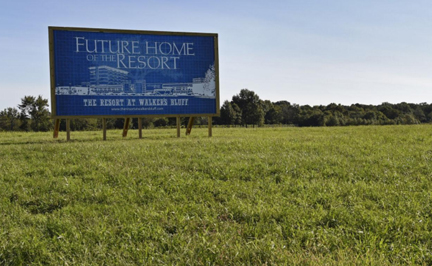
Developer Elite Casino Resort has moved up the construction timeline of its planned Walker’s Bluff Casino Resort in Carterville, Illinois. Original plans called for the building to be constructed in phases but will now be built in a single phase. Dan Kehl is the CEO of Elite Casino Resorts. The new proposed construction schedule allows the casino, hotel, spa and all signature Elite amenities to be opened sooner. The proposed permanent casino resort will feature more than 650 slot machines, 20 table games, ELITE Sportsbook (a sports wagering platform), a 116-room hotel, pool, spa, a retail shop, show lounge, event center for concerts and events, and signature restaurants including a family dining outlet, Ruthie’s Steak and Seafood and Draft Day Sports Lounge. Bids are being sought for construction of the resort.

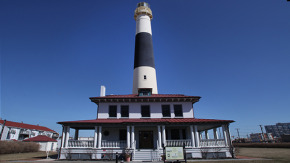
Absecon Lighthouse Open Daily for Spring Break

NEW this year!  Spanish Tours on Thursdays between 11am – 1pm!

Looking for something fun and fit to do with the kids on Spring BreakAbsecon Lighthouse, normally closed on Tuesdays & Wednesdays, will be open daily for Spring Break Thursday, March 25th through Monday, April 12th.  The last climb is at 3:30pm.

Go to www.abseconlighthouse.org and print off a special coupon for $1 off admission when you climb.  The museum, grounds, and parking are all free.  Normal business hours will resume on Thursday, April 15th , with the lighthouse being open Thursdays through Mondays, 11am to 4pm.  First lit in 1857, Absecon Lighthouse is the tallest lighthouse in New Jersey and the third tallest in the country.  It is the oldest man-made structure in Atlantic City, boasts a first-order Fresnel lens still in place at the top, and offers fabulous views of Atlantic City and Brigantine.

Admission to climb the 228 steps to the top is $7 for adults, $5 for seniors, $4 for children 4-12, and $3 for Atlantic City residents.  Active Military are invited to climb for free.  Dogs on leashes are welcome to tour the grounds and museum.

Absecon Lighthouse is a state-owned historic property administered by the non-profit Inlet Public/Private Association. Located at 31 So. Rhode Island Avenue in Atlantic City, it is open to visitors Thursday through Monday from 11 a.m. to 4 p.m. Absecon Lighthouse received a general operating support grant from the New Jersey Historical Commission, a division of Cultural Affairs in the Department of State. For more information about Absecon Lighthouse and its programs call (609) 449-1360 or visit us on the web at www.abseconlighthouse.org.

NCAA First Four and First Round Betting Preview

The 2021 NCAA Tournament gets started Thursday afternoon with the First Four and continues into early next week with the first and second rounds. Read below for a full preview on how BetRivers.com and PlaySugarHouse.com bettors are wagering on the First Four and First Round matchups.

FIRST FOUR PREVIEW:

The public is backing Michigan State with more money and more bets than any other team competing in the First Four. Michigan State -2 is currently the most wagered-on bet of the opening weekend, with 83% of the spread handle and 82% of the spread bets backing the Spartans over UCLA. Drake opened as a two-point underdog to Wichita State, but is now a 1.5-point favorite. The public is nearly split on the matchup. Drake is backed by 55% of the spread handle and 52% of the spread bets, while Wichita State is backed by 58% of the ML handle and 51% of ML bets.

5:10 p.m. ET: #16 Mt. St. Mary’s (-0.5, -109 ML) vs. #16 Texas Southern (-109 ML). O/U 133
6:27 p.m.: #11 Drake (-1.5, -125 ML) vs. #11 Wichita State (+105 ML). O/U 141
8:40 p.m.: #16 Appalachian State (-3, -159 ML) vs. #16 Norfolk State (+135 ML). O/U 133.5
9:59 p.m.: #11 Michigan State (-2, -136 ML) vs. #11 UCLA (+114 ML). O/U 135.5

FIRST ROUND PUBLIC UPSET PICKS:

The first round of the NCAA Tournament tips off on Friday afternoon. The public has identified four first round upsets to back, including three of the four #5 seed vs. #12 seed games. Over the past 40 years, the #12 seed has won 50 of 140 games against the #5 seed (35.7%), with 21 #12 seeds advancing to the Sweet 16.

#12 Winthrop (+215 ML) vs. #5 Villanova: 91% of ML handle, 85% of ML bets
#12 UCSB (+245 ML) vs. #5 Creighton: 79% handle, 72% bets
#12 Georgetown (+180 ML) vs. #5 Colorado: 78% handle, 86% bets
#9 Georgia Tech (+128 ML) vs. #8 Loyola (IL): 66% handle, 72% bets

FIRST ROUND MOST WAGERED-ON BETS:

No first-round game is backed by more money or more bets than the matchup between #8 North Carolina and #9 Wisconsin. The public is backing UNC -1.5 with more money than any other first round game bet. Virginia exited the ACC Tournament due to COVID contact tracing and the public is backing the Ohio Bobcats to cover in their first-round game. In fact, Ohio +7.5 is backed by the largest percentage of spread handle (93%) and spread bets (86%) of any first-round game.

1. #8 North Carolina -1.5 (-113) vs. #9 Wisconsin. Fri., 3/19. 7:10 p.m.
2. #13 Ohio +7.5 (-114) vs. #4 Virginia. Sat., 3/20. 7:15 p.m.
3. #6 Texas Tech -4.5 (-109) vs #11 Utah State. Fri. 3/19. 1:45 p.m.
4. #12 Winthrop +6 (-109) vs. #5 Villanova. Fri., 3/19. 9:57 p.m.
5. #1 Illinois ML (-10000) vs. #16 Drexel. Fri., 3/19. 1:15 p.m.

NCAA CHAMPIONSHIP FUTURES:

Gonzaga continues its stranglehold on the NCAA Championship futures. Since the brackets were revealed, no team has been backed by more money or bets to win the NCAA Tournament than the Bulldogs, with twice as many bets and twice as much handle as Illinois, the second most popular team. Prior to the start of the conference tournaments, Illinois was outside the top ten in most wagered-on NCAA Championship futures bets. But with Ayo Dosunmu healthy and a dominant Big Ten Tournament performance under their belts, the public believes the Illini to be a threat to the undefeated Bulldogs.

Team, Odds (Handle %/Bet %)
#1 Gonzaga +205 (24%/37%)
#1 Baylor +500 (8%/10%)
#1 Illinois +700 (13%/15%)
#1 Michigan +800 (8%/7%)
#2 Iowa +1700 (5.5%/4%)
#2 Houston +2000 (5%/4.5%)
#2 Alabama +2000 (5%/4%)
#2 Ohio State +2000 (4%/3%)
#4 Oklahoma State +2700 (4%/3%)
#3 Texas +3300 (3%/2%)