Author: Casino Connection Staff

FOX Sports, NYRA Announce Landmark Deal

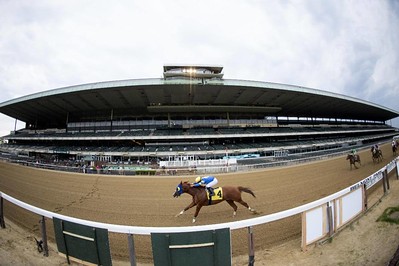
FOX Sports, a unit of Fox Corporation and the New York Racing Association, Inc. (NYRA) announced an expanded partnership agreement that establishes FOX Sports as the official wagering partner of NYRA Bets and the leading media provider for thoroughbred racing through the next decade.

The prior FOX Sports/NYRA media rights agreement provided a FOX Sports subsidiary with an option to acquire a 25 percent stake in NYRA Bets, LLC , a leading advance deposit wagering (ADW) platform launched in 2016 and available to customers in 30 states across the country. The FOX Sports subsidiary will exercise this option by the summer of 2021, pending final regulatory approval.

The newly announced agreement provides a FOX Sports subsidiary with a future opportunity to increase its equity interest in NYRA Bets.

As an unprecedented year interrupted live sports around the world, horse racing operated safely and continuously. NYRA Bets achieved record growth in 2020, as new fans engaged with horse racing by watching an coverage across the FOX Sports family of networks.

NYRA Bets generated $225 million in wagering handle in 2020, a more than 100 percent increase compared to 2019.

“The remarkably rapid expansion of NYRA Bets, and the digital ADW wagering marketplace, make this an ideal opportunity for FOX Sports to deepen and broaden its investment in both premier media rights and the high-growth sports wagering industry,” said Michael Mulvihill, FOX Sports executive vice president and head of strategy and analytics.

“With our investment options in NYRA Bets, FOX is now uniquely positioned as the only media company with strategic stakes in digital bet-taking businesses in horse racing, sports betting, poker and casino gaming. We’re confident that our television partnership with NYRA will fuel continued growth for NYRA Bets in the years ahead.”

Dave O’Rourke, president and CEO of NYRA, added, “FOX Sports has shown an unwavering commitment to the sport of horse racing over the past five years. The strength of our partnership with FOX Sports, and the continued expansion of our high-quality telecasts, has proven to be hugely beneficial for the New York racing community and the sport as a whole.”

The new agreement will extend FOX Sports’ television rights with NYRA through 2030 and further expand exclusivity for daily racing at Belmont Park and Saratoga Race Course.

Under the new deal, FOX Sports expects to air at least 700 hours of coverage each year from Belmont Park and Saratoga Race Course and, outside of prior commitments, gives the network exclusive national broadcast rights at Belmont Park and Saratoga Race Course through 2030. NYRA will serve as the production arm for all horse racing events during the term of the partnership.

NYRA and FOX Sports began their collaboration during the first season of Saratoga Live during the 2016 summer meet at historic Saratoga Race Course.

BetMGM Poker App Debuts in New Jersey, Michigan

Google Play features BetMGM casino play and BetMGM sportsbook. Now comes BetMGM Poker. Unlike casinos and sportsbooks, the poker app can only be accessed by players in New Jersey. BetMGM Poker is one of several skins on the Partypoker Network, which operates out of Atlantic City’s Borgata, according to Online Poker Report.

Casino and sports betting revenue does far better than online poker.

According to the New Jersey Division of Gaming Enforcement, Borgata collected $796,647 in revenue from online poker. While down from January’s $926,288, it’s almost double the February 2020 total of $454,527.

By comparison, Borgata collected nearly $25 million in online casino revenue in February, along with $4 million from online sports betting during the same month.

BetMGM Poker debuted in Michigan on March 22. BetMGM also launched online sports betting and casinos in Michigan.

“The demand for online poker in Michigan was made clear by players across the state. We’re confident that BetMGM Michigan customers will enjoy an engaging, reliable and fun poker experience,” said Ray Stefanelli, director of poker, BetMGM.

Pennsylvania could be next for BetMGM Poker. As new states roll out, responsible gaming education programs will come into play from BetMGM.

In other New Jersey news, the state welcomed another online presence when the DGE issued an affiliate license to Mr-Gamble. The company, owned by CashMagnet, allows players to browse hundreds of gambling brands, not unlike a clearinghouse. Born in Finland in 2019, and launched in the U.K. the following year, Mr-Gamble sees a bright future in the U.S.

With DGE approval, players in New Jersey can access Mr-Gamble to compare online casinos approved in New Jersey. They can also use the site to seek the best bonuses, sift through a library of articles and guides to play responsibly, according to Casino Beats.

“As the market continues to mature and more online casino brands become available to players, sites like Mr-Gamble will play a vital role educating players and making them aware of the casinos that deliver the best experience across all key areas,” said Tero Päivärinta, head of accounts at CashMagnet Ltd and Mr-Gamble.

Taking Sides Over Richmond Casino

The city of Richmond, Virginia recently rejected casino development proposals from the Pamunkey Indian Tribe and the Poarch Band of Creek Indians. That leaves ONE, the Cordish Companies and Bally’s Corp. in the competition. However, ahead of three community meetings to address the proposals, questions have been raised about those companies’ commitments to minority investment and ownership.

A low point came with the appearance on social media of an anonymous flyer implying the casino should be built near predominantly black and Latin neighborhoods. The flyer read, “More traffic. Higher crime. Lower quality of life for us. Tell them to build it over there.” The flyer quickly drew criticism. It wasn’t clear where it originated but observers said it appeared to imply the casino should be located in the 70 percent black 8th District, where black-owned media conglomerate Urban One is planning to build.

Amy Wentz, a community activist and former city council candidate in the 8th District, said the flyer gave the wrong impression of Richmond.

“We’re building a narrative of Richmond as a progressive city, moving past the painful history of the Confederacy, taking down monuments and building equity in our policies. Everyone is on this wave of thinking and then here we go with this. People don’t value our neighborhoods equally,” she said.

Wentz said most people she’s spoken to in the proposed Urban One casino area are ambivalent or supportive. They hope it could lead to related benefits such as new sidewalks and stormwater drainage system improvements. She said she’s concerned that too many public statements from elected officials for or against the proposals could have negative effects.

Washington, D.C.-based Urban One proposes a $517 million casino resort, partnering with Peninsula Pacific Entertainment, the Los Angeles-based owner of Virginia’s Colonial Downs racetrack and Rosie’s gaming emporiums. Their project would be built on property owned by Philip Morris USA in the 8th District. Urban One would be the majority investor in the only majority black-owned casino in the country.

Urban One President and CEO Alfred Liggins said, “Richmond is the last opportunity for some big African American representation to happen. The city of Richmond is going to end up with the most lucrative of all the casino licenses,” he said. Liggins strongly denied that Peninsula Pacific would be in control. “Absolutely, an unequivocal hard no,” he said.

Urban One would pay Peninsula Pacific to develop and operate the casino resort, but Liggins said he and his company would provide more than $60 million of the $75 million in common equity for the project and borrow money from Credit Suisse to build the project. “It’s not any billionaires at all. The majority of the capital is coming from my company, as well as myself and my mother,” who founded and chairs Urban One.

The Cordish Companies proposes a $600 million casino resort on the 17-acre Movieland property in the 2nd District, also 70 percent black. Officials said the company is offering 50 percent minority ownership. The company already operates casinos under the Live! brand in Baltimore, Philadelphia, Pittsburgh and Tampa and Hollywood, Florida. One of its investors is former National Football League star defensive lineman Bruce Smith, a Virginia Beach businessman and a former member of the Washington Redskins (now the Washington Football Team), which calls Richmond its home for training camp.

Bally’s Corporation proposes a $650 million development in South Richmond’s 4th District, which is 65 percent white and nearly 29 percent black. The company operates 11 casinos across seven states. Investors include two former National Football League superstars including NFL linebacker Willie Lanier.

Interestingly, Urban One’s Liggins said he discussed possible minority investment in casino projects with both Cordish and Bally’s, as well as MGM, the majority owner of MGM National Harbor, Maryland. Urban One has a $40 million stake in the MGM project, or 7 percent. “Peninsula Pacific came up far and away the best partner for us because they know Virginia better than anybody,” he said.

The flyer provoked responses from local political leaders, residents and community groups. Richmond city council members Katherine Jordan, 2nd District, and Kristen Larson, 4th District, who represent the areas around the Cordish and Bally’s proposals, respectively, issued statements opposing the projects in their districts.

Residents near the Bally’s site close and the Cordish site have begun organizing and collecting input from their neighbors. Ginter Park resident Randee Humphrey said she and several neighbors started circulating a survey to measure how people in the area fell about the Cordish proposal. She said 1,000 have responded, and 85 percent oppose the casino. Humphrey said she would have advised against posting the divisive flyer, noting, “This process, it’s sort of been set up for us to be against each other. It’s unfortunate.”

State Delegate Betsy Carr recently issued a statement opposing the Bally’s project over constituents’ concerns about traffic congestion. She also said she hoped the city would choose the Urban One proposal, calling it an opportunity for “economic justice.”

Carr’s support of Urban One brought criticism from Councilman Mike Jones, who’s running against Carr for the Democratic nomination in the 69th House district. Jones said he isn’t opposed to the Urban One project or the prospect of a casino in the city. He said, “It’s not about a casino. It’s about white privilege and NIMBY-ism. It’s being made manifest in this casino deal. We all know what this is about. We’ve seen this playbook before: ‘Don’t put it in our neighborhood, put it in their neighborhood.’”

Carr said Jones’ response was a political attack. She said she stood by her comments, noting the jobs the casino would create. “I listen to my constituents. What is said in much of South Richmond is jobs are needed. Good paying, easy-to-reach jobs that will help support families,” Carr said.

City spokesman Jim Nolan said council members are welcome to comment on the casino proposals. “We simply request that all city officials involved in the process be mindful of the impact their comments can have on the city’s negotiating position so we can negotiate the best resort casino project possible to put before voters in November,” he said.

In related news, Bally’s Corp. recently joined the Virginia Council on Problem Gaming. Council President Carolyn E. Hawley, Ph.D., said, “We are extremely pleased that Bally’s has joined our council as a platinum member. Their support helps our efforts to keep gambling in the Commonwealth of Virginia recreational. It’s important that industry stakeholders take the forefront to ensure gambling doesn’t become harmful or perceived as a form of investment for people who may be prone to problem gambling behaviors.”

Labor, Community Groups Push for NYC Casinos

The New York legislature is getting an earful from an array of community, business and labor leaders calling for the speedy licensing of Resorts World New York City in Queens and Empire City in Yonkers as full-scale casinos.

Resorts World’s case was brought to state Assembly Speaker Carl Heastie and Majority Leader Andrew Stewart-Cousins in the form of a petition signed by nearly three dozen individuals and organizations in and around the New York City borough who want the giant Aqueduct racino awarded one of three casino licenses designated for the downstate region by the end of the year. Governor Andrew Cuomo also received a copy.

“Covid-19 has absolutely ravaged our city and state, but the virus has been particularly damaging to those who faced significant challenges and struggles before the pandemic ever started,” the coalition wrote. “Hundreds of thousands of New Yorkers have lost their jobs; tax revenues that support vital services are drying up; non-profits are facing existential threats to their survival.”

Noting that Resorts World has generated more than $3 billion for New York’s public schools and other recipients in its 10 years in business, the letter claims that a full casino at the property would create thousands of jobs within months.

“Our borough and our local business community have benefited greatly from Resorts World’s commitment to Queens. RWNY attracts tourists, catalyzes economic activity that supports small businesses, creates jobs for local residents and generates billions in tax revenue,” Queens Chamber of Commerce President and CEO Tom Grech said. “Allowing RWNY to become a full-scale gaming destination will only increase the positive impact they have on our borough and help the entire region recover from the devastation brought on by the pandemic.”

Hope Knight, president and CEO of the Greater Jamaica Development Corporation, added that “The ability to provide good-paying jobs with relatively low barriers to access to southeast Queens residents is crucial to Covid recovery, particularly for families of color, with quality health care and benefits to sustain a life cycle for family.”

Signees include the Queens Economic Development Corporation, Queens Centers for Progress, Rockaway Development & Revitalization Corporation and the Jamaica Center for the Arts.

“Beyond the jobs and revenue, during its decade of operations, Resorts World has proven to be a solid partner for the Queens community we all represent,” the letter states.

New York voters in 2013 endorsed an amendment to the state Constitution allowing seven privately owned casinos on a Las Vegas scale with live-dealer table games such as blackjack, baccarat and roulette and house-banked slot machines. Four of the licenses were designated for locations designed to provide jobs and economic development upstate. The remaining three are earmarked for the New York City area but under a moratorium delaying them 10 years to 2023 to allow the upstate casinos, which opened in 2016, 2017 and 2018, to establish themselves competitively.

The result is that Resorts World, which is owned by a U.S. subsidiary of the Malaysia-based Genting Group conglomerate, and Empire City, which is attached to Yonkers Raceway and owned by Las Vegas-based MGM Resorts International, house massive casinos with thousands of machine games, but these are limited to video lottery terminals and electronic versions of traditional table games.

The push for the New York City licenses is nothing new. Genting, MGM and other big names in gaming such as Las Vegas Sands have been lobbying for years for an end to the moratorium without apparent success𑁋that is, until the pandemic hit and engendered a statewide fiscal crisis that is pressuring Albany to act this year to award them.

On March 26, a coalition of influential labor groups staged a virtual rally to tout the benefits an Empire City license would bring to Yonkers, the Bronx and the greater Westchester County region.

“Think of all of the additional union jobs this would create for the building and construction trades men and women,” said Thomas Carey, president of the Westchester-Putnam Central Labor Body. “A full-scale license means the transition would happen immediately, so we would start to see all of this impact for our unions and our communities, very quickly.”

Membership in the coalition, “A Sure Bet for New York’s Future,” as it’s called, has more than doubled over the last month to include some 60 unions and allied businesses along with community and faith-based organizations.

They say the license will generate 13,000 jobs, $75 million in additional wages, $400 million in private investment and $1 billion in economic impacts for the region.

“The workforce that would benefit from this project lives right here in Westchester and the Bronx,” said Richard McSpedon, business representative for Local 3 of the IBEW. “A full-scale casino license for Empire City Casino will support the creation of thousands of union jobs. This project makes total sense for our communities.”

“Because gaming revenues in New York are directed to the education fund, this means our state will get the resources it needs to adequately support our children’s education,” said Samantha Rosado-Ciriello, president of the Yonkers Federation of Teachers.

Jodie Reaver, a political organizer for the Southern Westchester Action Committee, said, “This has the chance to be life changing. We’re talking about thousands of good paying, family-sustaining jobs to a region that desperately needs them. For these communities, it’s as simple as that.”

Wynn Agrees to Settlement in Tip-Sharing Dispute

Wynn Resorts will pay $5.6 million to resolve a long-running dispute with dealers at its two Las Vegas Strip resorts over tip-sharing.

The agreement, which will compensate an estimated 1,000 current and former dealers, was sealed in an order issued by U.S. District Judge Andrew Gordon, who called it a “fair and reasonable resolution of a bona fide dispute arising under the (U.S.) Fair Labor Standards Act for those collective action members.”

The dispute dates back to 2006, when Wynn Las Vegas, then just a year old, was drawing large numbers of high rollers and dealers were earning more than pit bosses and floor supervisors after tips were factored in. Then-Chairman and CEO Steve Wynn decreed that dealers henceforth would share a percentage of their tips with supervisory staff, partly out of concern for morale among management on the gaming floor and partly over concerns on Wynn’s part, reportedly after the property was hit by a string of big losses at the tables, that the interests of his dealers might be too closely aligned with his players.

To sidestep the fact that tip-sharing with management is illegal under federal law Wynn Las Vegas reconstituted the positions of pit boss and floor supervisor, designating them “casino service team leads,” becoming the only property on the Strip with such a designation and the only one to allow other employees to share in its dealers’ tip pool.

The dealers, who are represented by Local 3555 of the United Auto Workers, sued in Nevada state court to overturn the policy without success and then took their case to federal court in 2013 and again in 2018, demanding the return of as much as $50 million in lost tips.

After Wynn resigned early in 2018 in response to accusations of sexual harassment, his successor as CEO, Matt Maddox, sought to resolve the dispute by raising dealer pay $2 an hour and reducing the amount of tip-sharing to 12 percent.

Nonetheless, some current and former dealers claim the policy cost them hundreds of thousands of dollars, while the latest settlement, which was reached with the help of a mediator with the 9th U.S. Circuit Court of Appeals, will pay those involved in the class action less than $4,200 each after attorneys’ fees and court costs. They can, however, decline the settlement, and those who do can file their own actions.

“We are pleased that all of the parties worked cooperatively to reach a resolution and bring this matter to an amiable conclusion,” a Wynn Resorts spokesman told the Las Vegas Review-Journal.

Nevada Eyes Esports Regulation

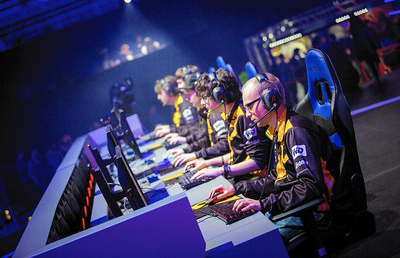
The big business of video gaming tournaments, esports as they’re popularly known, has lawmakers in Nevada considering ways to persuade the industry to think of the Silver State as its regulatory home.

State Senator Ben Kieckhefer, a Republican representing Carson City and parts of Reno’s Washoe County, is sponsoring a bill to create a five-member Nevada Esports Commission, an oversight body whose work would be similar to the Nevada Athletic Commission’s regulatory and sanctioning power over boxing and mixed martial arts.

The bill also calls for creation of a technical advisory committee of esports professionals, including game publishers, event organizers and players.

“This is an effort to bring new events to our state by doing one of the things that Nevada has always done well, which is working with industry to make them want to be here,” Kieckhefer said.

According to Kieckhefer, more than 5,000 live and online video game competitions were conducted around the world in 2019, drawing tens of thousands of players and generating wagering in the realm of $15 billion a year, equal from a betting perspective to golf and tennis.

Estimates he cites put the revenue potential over the next couple of years at more than $1.5 billion.

“I’m looking at it primarily from an economic development perspective,” Kieckhefer told the Reno Gazette-Journal.

He sees it as a tool to lure big-time competitions and the tourism that goes with it.

“That’s the hope,” he said. “Just like the success story of the Athletic Commission and MMA. That partnership with those events really helped that industry explode and grow to what it is today.”

In Las Vegas, the Luxor casino hotel on the Strip already is home to the 30,000-square-foot HyperX Esports Arena, the state’s first-of-its-kind hub for gamers to compete against each other in tournaments, sometimes for cash prizes.

“We work with all the big game publishers and try to attract their esports events to Nevada, obviously with our place being the destination for all that,” said Jud Hannigan, the CEO of Allied Esports, which owns the venue.

Kieckhefer added that venues like Las Vegas’ new 65,000-seat Allegiant Stadium, home to the Raiders of the National Football League, would be perfect for mega-tournaments such as the League of Legends World Championship, which is held at different venues around the world every fall and draws tens of millions of unique viewers.

Paul Hamilton, president and CEO of Atlanta Esports Ventures, said he sees Las Vegas as a potential “esports mecca.”

“The goal here is not to put up so many guardrails that we prohibit esports from coming or scare people away, but to show the publishers and the public that we understand it in a way that we can help make it better, bring it here and cast it in the biggest light possible,” he said.

But the potential wouldn’t be limited to Las Vegas either, Kieckhefer said.

“There’s a great opportunity for Reno and Northern Nevada to create a name for itself in this space as well. You’ve got those big tournaments, but you’ve also got ongoing events that happen continuously throughout the year, kind of like what we see with the (National) Bowling Stadium. That place brings in people continuously.”

The bill, SB 165, currently is awaiting action by the Senate Judiciary Committee.

Competing Casinos Worries Illinois Leaders

Soon Wisconsin and Illinois are likely to have two casinos competing with 20 miles between them. The Wisconsin casino could begin building later this year. No one knows when the Illinois casino will be approved.

Some leaders worry that this could cause saturation, but not Wisconsin Governor Tony Evers, who last week signed off on the $405 million Ho-Chunk Nation’s Casino in Beloit. Meanwhile the city of Rockford waits approval for its Hard Rock Casino from the Illinois Gaming Board, which received the application in 2019.

The Hard Rock’s approval process has taken years, which has frustrated some town members. Illinois State Senator Dave Syverson last week gave voice to that frustration:

“Every month that we delay is a month that the state and local governments are losing revenue,” he said. “This is one of the things I tried warning the state about all the way back to 2017.”

Rockford Chamber of Commerce Executive Vice President Caitlin Pusateri told 13 WREX, “Once we both have casinos up and running, we could somehow partner to create a regional destination.”

Beloit City Manager Curtis Luther said “I believe that both can be successful. They’re going to be unique destinations and unique locations that provide different amenities and different choices. We’re providing options and that’s good for both of us.” He added, “We know it’s going to bring much needed jobs to this entire region.”

The revenues, said Luther, “are going to be really significant, and again bringing additional stability to the local economy and helping us plan for the future.”

Pusateri believes both casinos will create a “ripple effect” throughout the area.

Senator Syverson concluded, “I’m hoping this will be a wake-up call for the state. The competition is going to be one that, historically, would be a real problem for us … If Wisconsin beats us to the punch and gets opened people are going to get used to going to a casino like that, and then it makes it tougher bring them back home.”

Virgin Hotel, Mohegan Casino Opens in Las Vegas

When the Hard Rock casino in Las Vegas opened in 1995, it was the world’s first rock ‘n roll casino imagined by Hard Rock founder Peter Morton. The casino closed in 2020 after a series of owners failed to revive the property’s flagging fortunes. Now another British legend, Richard Branson, has loaned his Virgin brand to the hotel, which is owned by JC Hospitality in partnership with Juniper Capital Partners, Virgin Group, LiUNA, Fengate Asset Management, Dream and Orlando Development.. The operator of the casino is Mohegan Gaming & Entertainment, counts the Mohegan Sun Casino at Virgin Hotel as its first Las Vegas gaming venture.

Built on the site of the former Hard Rock Hotel at Flamingo and Paradise, the property has twice postponed a grand opening due to the coronavirus pandemic. The third time was the charm, and the 60,000-square foot premium gaming venue debuted to the public at 6 p.m. March 25, welcoming invited guests, celebrities, locals and visitors.

“May we live in a world and may Las Vegas live in a world where we never have to close doors again to our resorts,” said Richard “Boz” Bosworth, president and CEO of JC Hospitality and owner of Virgin Hotels Las Vegas.

The completely redesigned property features three hotel towers, a 60,000 square foot Mohegan Sun casino, an events lawn that takes the place of the former Rehab area of the Hard Rock, a 4,500-seat entertainment venue, the Theater at Virgin, which replaced the Joint at Hard Rock, and a more than a dozen restaurants and retail outlets.

Attending the grand opening were Mohegan Gaming & Entertainment Interim CEO Ray Pineault and Mohegan Tribal Councilors Joe Soper and Ken Davison. Soper and Davison presented tribal gifts to Bosworth and Lou Serafini, president and chief executive officer of Fengate, including a hand-crafted Mohegan gourd, sweetgrass and a Mohegan blanket.

Celebrities in attendance included actor and TV host Mario Lopez, who tossed the ceremonial first dice roll at the craps table, The Bachelor, Matt James and Chrisell Stause of Selling Sunset and Dancing with the Stars; stars of Vanderpump Rules, Tom Sandoval and Tom Schwartz, and Real Housewives of New Jersey star Melissa Gorga.

The sports book at Mohegan Sun Casino will be operated by BetFred, the British sports betting company, in its first operation in the U.S., once licensing is completed.

The pool area of Virgin will open in May.

“The opening of Virgin Hotels Las Vegas is just one more positive sign of the recovery of the Las Vegas economy,” said Bosworth. “We’re excited to have our team members back to work as we prepare to welcome locals and tourists alike at our completely redesigned resort.”

Pennsylvania to Ease Covid Restrictions April 4

Pennsylvania casinos are preparing to welcome more guests back next week, as Governor Tom Wolf announced on March 15 that casinos can increase capacity April 4 from 50 percent to 75 percent, and that alcohol can again be served on casino floors. Dining capacity will increase from 25 percent to 50 percent.

“We can increase now to about 1,500 people in the casino to the first floor and on the second floor, and our restaurants get to pick up another 20-30 seats,” Live! Casino Pittsburgh General Manager Sean Sullivan told local station WPXI-TV. “So it’s all helpful. There’s about three to four hours every night where we get really busy and we click and count everybody coming in, and we know we can’t get over 1,000 people currently.

“We can now serve alcoholic beverages to the casino floor, past 11 o’clock so we can now go to 2 a.m. That’s big.”

Louisiana Casino Supporters, Opponents Face Off

At a February meeting of the Tammany Parish, Louisiana city council, residents mostly spoke in favor of a $250 million casino in Slidell proposed by Los Angeles-based Peninsula Pacific. But now opponents are organizing against the project. Foes of the casino turned out at a recent meeting of the Slidell City Council. Council Chairman Kenneth Tamborella told attendees a casino resolution on its agenda was not for or against the casino, but simply allowed citizens to express their opinions.

And express they did. Ray Larry, pastor at Providence Missionary Baptist Church, said, “I’ve been on the other side. I was addicted to gambling. In 1981, I lost a month’s wages. I know what it does to a family. Why bring it to our city?” Another pastor, Emil Gretarsson of Open Arms ministries, wondered why the entire parish could vote on a casino that would only affect Slidell. Others cited gambling ills, including addiction, financial hardship, divorce, domestic violence, suicide and declining property values.

Gene Mills, executive director of the Louisiana Family Forum said, “It’s difficult to get elected officials to look long-term when the short-term looks so glittery. I’ve been watching for two decades, the same battle over and over again.”

Slidell resident Lisa Clayton said, “Pontius Pilate was given the opportunity to make a decision or not, and he decided to punt and wash his hands and say let the people decide. We have an opportunity to speak against something that God does not want in this community.” Slidell Police Chief Randy Fandal said that after hearing the speakers, he decided to oppose the casino.

At the end of the meeting, the council voted to hold another public session, in the city auditorium, on April 19. Peninsula Pacific officials will be there to provide more information to Slidell residents.

Anti-casino groups also are making their voices heard. The religious-based lobbyist group Louisiana Family Forum sent out an email blast against the Slidell casino. And Watchdog PAC LLC, a 501(c)4, sent a mailer to parts of St. Tammany Parish picturing New York Governor Andrew Cuomo and claiming del Lago, a Peninsula Pacific-owned casino in upstate New York, overpromised how much tax revenue it would generate and then sought a tax break. “Even a bad governor like Andrew Cuomo could see it with his own eyes,” the mailer stated.

When asked if other casinos were funding their effort, Watchdog PAC Chairman Scott Wilfong said the group doesn’t disclose its donors. “We’re taking a position on what we see as a local issue. We’re not done with our efforts,” he said.

Legislators and other elected officials, however, said they’ve heard mostly positive feedback about the casino. Even half of the homeowners in the subdivision closest to the site support the proposed project.

Elected officials note gambling isn’t as controversial as it was in 1996 when 62 percent of voters rejected casinos and video poker, or in 2008 when then-Parish President Kevin Davis proposed a Slidell casino but backed down due to strong opposition from the religious community.

Meanwhile, representatives from Peninsula Pacific have been meeting with civic groups, local leaders and homeowners groups to gain support for the project, while accusing Mississippi Gulf Coast casinos of financing anti-casino efforts. Local spokesperson Jay Connaughton said, “It’s shameful that Mississippi casinos are slinging mud and twisting facts while we are engaging with the community to develop a first-class resort. It should surprise no one that Mississippi casinos will spend whatever it takes to protect the $350 million they earn off of Louisiana residents every year.”

North Carolina Report Forecasts Billions in Gaming Revenues

The North Carolina legislature asked the North Carolina Education Lottery to commission Spectrum Gaming for a report, at a cost of $425,000, researching revenue projections for sports betting, casinos, legal video poker, internet casino games, horseracing and internet lottery.

The report indicated within five years the state could expect $2.2 billion in revenue from casinos, $2.5 billion from statewide video poker, $367 million in sports betting, $300 million from internet casino games and $15 million on horseracing.

Spectrum Gaming Senior Vice President, Financial Analysis Matt Roob said, “It has been used in the past as an economic development tool. You take a look at what behavior has been like in other states.” Roob said the researchers also considered income levels and the types of gaming offered by surrounding states.

The Eastern Band of Cherokee Indians operate two Harrah’s Cherokee casinos in the western part of the state. The Catawba Indian Nation’s Two Kings Casino is under construction. The Spectrum report also said North Carolina could benefit from up to nine state-run casinos.

Roob said, “Where would be logical places to put them? Kind of like you want to go where the money is, right?” The recommended locations included three casinos in the Charlotte area, two in the Triangle and one each in Pinehurst, Wilmington, Winston-Salem and Asheville. Spectrum estimated the nine casinos with integrated hotels would cost $1.8 billion. However, by the fourth year, state tax revenue from gambling alone would cover the cost—and that doesn’t include other tax revenue generated through hotel stays, meals and income tax from the jobs created.

The revenue numbers are impressive but Roob cautioned there will be plenty of opposition to state-run gambling. He said Spectrum simply provides the information and state lawmakers, and voters, make the ultimate decision. “I understand that people don’t necessarily want this in their neighborhood, but that’s why there’s a legislative process. You want to know: Is this an industry we want in our state? How do people feel about it and what sorts of revenue and employment can we get?”

Now that legislators have the report, Roob advised them to act fast since surrounding states are ahead in terms of sports betting. Legislation approving sports betting at the Cherokees’ tribal casinos was approved in April 2019 and became legal in July 2019. The state reached a gaming compact with the tribe in time for them to open sportsbooks for March Madness.

The Spectrum report indicates the state would offer sports betting terminals in convenience stores and sports bars—up to 5,000 machines across the state within five years. However, Roob said using mobile phones to make bets is critical. Without mobile or online betting, the drop in revenue would be “huge,” he said. However, online and mobile sports betting is illegal under current state law. “Does the state legislature want that? Do you want everyone having a sports book in their pocket?” Roob said.

Observers said a sports betting bill is expected to be filed in the near future, including selling licenses to private companies to offer online betting apps with state regulation.

Wyoming Sports Betting Bill Awaits Governor’s Signature

A bill that would legalize sports betting has been moved to the Senate floor by the Appropriations Committee after passing in the House 32-28.

Proponents says they are optimistic of passage.

Rep. Tom Walters, who wrote the bill, told lawmakers “These activities are going on, hosted through illegal offshore accounts. There’s no consumer protections, you could place a wager and win, if the bookie can’t pay, you’re out.”

Supporters argued that Wyoming is losing tax money to Colorado, which is one of the most successful sports betting markets in the West.

Under the bill’s provisions online sports betting would be authorized with at least operators would be allowed. They would need to be qualified in at least three other states. Operators will pay $100,000 for a five year license. Wagers would be taxed at 10 percent, which would go into the general fund.

Wyoming is very aware of competition from Colorado, which took a $326.9 million handle in January and from South Dakota, where sports betting was just legalized in Deadwood. Montana also has sports betting through the Montana Lottery.

Massachusetts Casinos Want Poker to Return

Although the Bay State’s two casino resorts have been allowed to reintroduce craps, roulette and a fourth seat at gaming tables, they would like for the Massachusetts Gaming Commission to give them the go ahead to bring back poker.

They may be waiting awhile.

Since the changes were made between July and October, players have started to complain about no poker, according to Investigations and Enforcement Bureau Assistant Director Bruce Band. He told the MGC, “Complaints about not having poker have gone up greatly since two weeks ago,” he told the Gaming Commission. “Everybody wants to know when we’re gonna do it.”

Poker is not profitable for the casinos when only four players are allowed at a table, said Band.

According to the Encore Boston Harbor in Everett, “fully operational” poker would need nine seats at a table. It posted this on its website:

“When that time comes, we will evaluate the viability of the market, the demand for the game, and our facility’s capacity to support it. Until then, we will continue to operate without live poker.”

Band told the panel: “They’re still working on a table there to see if they can figure out a way to get the dividers and make it safe for everybody at the table.”

The commission allowed a fourth seat to table games on March 11. This resulted in 90 new gaming positions at the MGM Springfield and 183 at the Encore.

Band explained “But the only thing that we observed was that a normal craps game gets about 130 rolls per hour. With the plexiglass that’s probably cut that down to about 90 rolls per hour, slowed the game down a little bit.”

Mohegan Leadership Shakeup

Connecticut-based Mohegan Gaming and Entertainment (MGE) announced March 17 that CEO and President Mario Kontomerkos is stepping down at the end of March. He will be replaced on an interim basis by COO Ray Pineault as the company conducts a replacement search. And former CEO Bobby Soper, a tribal member, will return as president of the international division where the tribe has projects approved in Korea and Greece.

Kontomerkos will leave six days after the opening of the Mohegan Sun Casino at Virgin Hotels in Las Vegas, which it’s operating for JC Hospitality after it purchased the Hard Rock Las Vegas last year.

Kontomerkos had served as CEO since 2017 and before that was CFO.

MGE Chairman James Gessner praised Kontomerkos: “Mario played a critical role in the growth and success of the organization,” he said. “We thank Mario for his many years of service to the tribe and Mohegan Gaming and Entertainment, more recently navigating the company successfully through the ongoing global pandemic as well as a major refinancing earlier this year.”

Domestically, MGE owns and operates the Mohegan Sun Resort in Connecticut and the Mohegan Sun Poconos in Pennsylvania. It manages casinos in Atlantic City, Washington state and Louisiana and the Fallsview Casino Resort in Niagara Falls, Canada.

MGE’s foreign ventures include the $5 billion Inspire Entertainment Resort near Incheon International Airport in South Korea and a bid to build a casino resort in Nagasaki Japan.

Pineault, who become chief operating officer last July, has been with MGE for two decades, including a stint as president and general manager of the Mohegan Sun.

In Soper’s new role as international president, he will represent MGE as he oversees and coordinates all aspects of the South Korea and Japan projects.

Gessner commented, “Having served the Mohegan Tribe and MGE for many years, we are confident in Bobby’s experience and capabilities to guide our efforts on the ground in Asia.” He added, “Bobby’s leadership and presence representing MGE will serve as a catalyst and result in significant progress with both of these important international project commitments.” Soper was chief executive officer of MGE from 2015-2017. Since 2017 he has been president and chief executive officer of Sun Gaming & Hospitality.

Hard Rock Gary to Open May 14

Hard Rock International Chief Operating Officer Jon Lucas recently announced the new $300 million land-based Hard Rock Northern Indiana will open to the public on May 14, following a Friends and Family event on May 11 and a VIP opening on May 13. Spectacle Entertainment currently operates Majestic Star Casinos in Gary, which will close once the new Hard Rock casino opens. Hard Rock and Spectacle are partners in the Gary project as well as the new Lady Luck casino under construction in Terre Haute. Greg Gibson, vice chairman of Spectacle Entertainment, said its Gary and Terre Haute projects have a total value of half a billion dollars.

Just a few weeks ago it seemed possible the new Gary casino might sit empty for months as former Spectacle Chief Executive Officer Rod Ratcliff fought to retain his ownership share of the company, even though the Indiana Gaming Commission ordered him to divest his Spectacle shares following an investigation into campaign finance violations. The commission said those and other misdeeds were enough to order Ratcliff to permanently relinquish his Indiana gaming license.

The gaming commission also approved a $530,000 settlement with Spectacle Entertainment for the 53 days it took between the commission’s divestment order and Ratcliff selling his shares, primarily to Spectacle Vice Chairman Greg Gibson. IGC Executive Director Sara Tait said, “Never has a casino licensee failed to comply with an IGC order for more than 50 days.” Tait said she felt it was necessary to follow strict regulations to maintain the integrity of Indiana gaming.

The IGC had filed a complaint with Lake Superior Court in February to permanently revoke Ratcliff’s Indiana gaming license, citing numerous examples of alleged wrongdoing, including being part of a scheme to funnel corporate campaign funds to an Indiana candidate for Congress, taking company money to fund his personal horse racing betting account without reporting it and obstructing justice. The situation nearly postponed the opening of the new Hard Rock Gary.

IGC General Counsel Greg Small said the other parties involved in the casino are in good standing. He noted ratifying the orders calling for Ratcliff’s divestiture “allows this very important economic development project to move forward.” According to Jon Lucas, chief operating officer of Hard Rock International, “all the speed bumps” regarding Ratcliff are in the past.

Tait said the transition from boat to land casino in Gary is important for the city of Gary and its residents. Gary Mayor Jerome Prince said the Gary casino alone generated $52 million in construction contracts awarded to Lake County companies, $32 million of which went to Gary contractors. It also is providing 400 to 600 new jobs.

The 200,000-square-foot venue will offer1,637 slot machines, 80 table games, a sportsbook, five restaurants including a Hard Rock Cafe, multiple bars and lounges, a 1,954-capacity Hard Rock Live entertainment venue and plenty of music memorabilia.

Spectacle Vice Chairman Greg Gibson stated he’s “very optimistic about the future and moving forward in partnership” with Hard Rock. “Projects like these don’t come along often and we’re ready to show how Indiana investors and an international corporate brand can collaborate to bring these fantastic facilities to the state of Indiana. We have certainly had our ups and downs. Things seem to jump between crisis and celebration. Today is a time for celebration.”

New York Lifting Casino Curfew

New York is lifting its 11 p.m. curfew for casinos and certain other businesses as part of an ongoing plan to gradually relax Covid-related restrictions around the state.

In addition to casinos, movie theaters, bowling alleys, billiard halls and fitness centers will move to full hours on April 5, according to an announcement by Governor Andrew Cuomo’s office.

New York has one of the highest rates of new coronavirus cases per person of any state, and cases and deaths aren’t declining as quickly as in the nation as a whole, according to federal and Johns Hopkins University data.

But as a growing number of New Yorkers get vaccinated, “We are reaching the light at the end of the tunnel,” the governor said.

Approximately 4.7 million of the state’s 19 million residents have received at least one vaccine dose, and another 2.4 million have been fully vaccinated, according to state statistics cited by the Associated Press.

The latest relaxation doesn’t include bars and restaurants, however. They will remain under curfew, the wire service said, and catered events still have to shut their doors by midnight.

“Restaurants are struggling to survive, so it’s disappointing, because lifting the curfew is critically important to help many of them generate much-needed revenue, while allowing struggling workers to earn more money and accommodate customers,” said Andrew Rigie, executive director of the NYC Hospitality Alliance, a trade group representing the sector.

Gyms have been reopening, with limited capacity and mask requirements, since late summer. But it was only earlier this month that the state included indoor fitness classes, which remain limited, at least for now, to 33 percent capacity.

Las Vegas Tourism on the Mend, But Gaming Revenue Lags

Signs are pointing to a steady return of tourists to Las Vegas but without a recovery in gaming revenues to match.

February numbers compiled by the Las Vegas Convention and Visitors Authority show 1.5 million visits during the month, down almost 54 percent from the same month a year ago but up a healthy 19 percent over January.

Occupancy across Southern Nevada’s 145,300 hotel and motel rooms hit 42 percent, a 10 percent increase over January but still way below the 87 percent recorded in February 2020.

But with the first big convention since last March scheduled in June, the World of Concrete trade show, which is expected to draw 60,000 construction industry attendees to the newly expanded Las Vegas Convention Center, observers are hoping the momentum will continue.

Gaming revenues are still lagging, however. Statewide win was basically flat compared to January. Compared to last February, win on the Las Vegas Strip was down almost 42 percent and accounted for nearly 92 percent of February’s statewide decrease year on year of nearly 26 percent, according to results published by the Nevada Gaming Control Board.

Revenue for the state’s casinos totaled $772.4 million for the month, up slightly from January’s $762 million but a long way off from last February, which was one of the best months ever at $1 billion-plus.

“I would expect March 2021 to be up significantly over last March,” said Control Board analyst Michael Lawton said. “Gaming activity is improving due to improved metrics related to Covid-19, capacity limitations being increased and stimulus checks which are acting as a catalyst to elevated spending by consumers.”

The return of air travel from the market’s main sources of high rollers will be another key.

McCarran International Airport noted that international passenger traffic was down almost 95 percent in February compared to the same month a year ago, and the effects were apparent in an overall decline in passenger volume of 58 percent compared with February 2020.

Through the first two months of 2021, McCarran’s passenger numbers are 61 percent behind January and February 2020’s, with 3.1 million passengers so far this year compared to 8 million to start last year, according to data released by the Clark County Department of Aviation.

Caesars Suing Insurers for Pandemic Losses

Caesars Entertainment is suing dozens of insurers for more than $2 billion for losses connected with the Covid-19 pandemic.

In a filing with the Securities and Exchange Commission, the casino giant said it purchased broad property insurance coverage to protect against “all risk of physical loss or damage” and resulting business interruption and paid more than $25 million in premiums “to secure a top-of-the-line, all-risk policy portfolio” that provided more than $3.4 billion in coverage limits.

“However, even though the vast majority of the company’s insurance policies do not exclude loss or damage caused by a virus or pandemic, the company’s insurance carriers have refused to pay the company’s losses which are estimated to exceed $2 billion,” Caesars said.

The suit, filed in Clark County District Court in Las Vegas, attempts to recoup losses to both the company’s 15 casinos in Nevada and several of its regional properties. The company operates more than 50 casinos and racinos in 16 states, all of which were closed at various times last year as states and tribal governments ordered the shutdowns of nearly 1,000 casinos in 43 states in an effort to slow the spread of the virus.

In the lawsuit, Caesars said it hired epidemiologists and crisis management advisors to help mitigate the physical loss or damage. The company drew down $1.6 billion under its bank loans and raised $772 million in new debt to cover ongoing costs to maintain the company, it said, and also furloughed and laid off “a substantial number” of its pre-pandemic workforce and reduced salaries of management and “mission-critical” personnel.

Caesars is not the first casino operator to pursue its insurers in court over losses due to pandemic-related casino closures. Last summer, Treasure Island and Circus Circus owner Phil Ruffin and a San Diego-area tribal casino operator filed legal claims against their insurers over similar issues.

Caesars declined to comment on the suit, according to news reports, but said in the SEC filing that it hopes for “an amicable resolution” with the insurance companies.

DraftKings Expands Reach with VSiN Buy

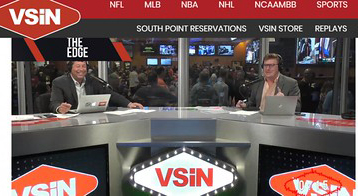
In the latest partnership by a major U.S. sports betting company, DraftKings has purchased Vegas Sports Information Network, known as VSiN, which broadcasts live from the South Point and the

Circa casinos in Las Vegas with sports betting content, news, analysis and data.

Terms were not available, according to the Associated Press.

“VSiN creates authentic and credible content that resonates with sports bettors at every level, whether they’re experienced or new to sports betting,” said Jason Robins, co-founder, CEO and board chairman of Boston-based DraftKings, in a news release. “VSiN has an established infrastructure that DraftKings can immediately help expand.”

And vice versa. The idea was first planted at a gaming tradeshow two years ago, when VSiN CEO Brian Musburger bounced the idea around with Robins, according to CDC Gaming Reports. At that point, both VSiN and DraftKings were still in their relative infancy when it came to sports betting alliances.

“Jason and I were on a panel together,” Musburger said. “We just sat down afterward and talked.”

VSiN develops, produces, and distributes as many as 18 hours of live content daily, as well as 24/7 streaming services. Its roster of talent features legendary sportscaster Brent Musburger and former NFL executive Michael Lombardi, who’s worked for the San Francisco 49ers, the Cleveland Browns, the Philadelphia Eagles and the Los Angeles Raiders. From 2014 to 2016, Lombardi was an assistant to the coaching staff of the New England Patriots. He’s also worked for numerous media outlets, including Sports Illustrated.

DraftKings expects to keep the existing work force, including VSiN CEO Brian Musburger—Brent’s nephew—who will manage day-to-day operations with his team.

VSiN’s content can be found on Comcast Xfinity, Sling TV, fuboTV, Rogers’ Sportsnet, MSG Networks, NESN, AT&T Pittsburgh, Marquee Sports Network, iHeartRadio and TuneIn, as well as podcasts and betcasts.

“We created VSiN as a destination for sports bettors to find the most credible content to help inform their wagering decisions,” Brian Musburger said of the deal. “This new ownership is going allow us to achieve some of our goals. Editorially, there will be no change. Our strength is our content.”

In a note to investors, Deutsche Bank gaming analyst Carlo Santarelli said, “Strategically, the acquisition of VSiN should enhance DraftKings’ ability to produce content and grow its audience reach, presumably aiding in customer acquisition and further broadening brand awareness.”

According to the Chicago Tribune, DraftKings stock was up 1 percent on the news, after losing 8.5 percent in value on news that online sports betting in New York for 2021 wasn’t a sure thing.

“We are incrementally positive on the acquisition as we believe it positions DraftKings to further build out its content capabilities to a betting centric content consumer, make a broader push into streaming, deepen their presence in Las Vegas and create unique betting products integrated with VSiN content and personalities similar to Barstool Sportsbooks,” said a note from market research analyst Oppenheimer. Oppenheimer has DraftKings as an “outperform” with a price target of $80, up nearly 40 percent from where the stock was in late March.

In related news, on March 29 DraftKings announced that it’s added WWE as its latest official gaming partner, subject to regulatory approvals. The collaboration centers on DraftKings’ free-to-play pools product and will launch at WWE’s two-night WrestleMania on April 10 and 11.

“This relationship helps fuel the engagement and drama of WWE’s signature matchups and storylines as audiences enjoy the second-screen experiences our products provide,” said Ezra Kucharz, chief business officer at DraftKings.

DraftKings will receive an exclusive license to media assets and in-game branding for WWE pay-per-view events. Both WWE fans and DraftKings customers can participate in a number pools contests and products and experience digital promotion and program integration.

“This collaboration marks a deepening engagement with our fans and will provide DraftKings the opportunity to leverage the appeal and reach of the WWE brand,” Stephanie McMahon, chief brand officer for WWE.

Johnny Avello, director of race and sportsbook operations at DraftKings, recently was the guest of Tim Skubick on his weekly PBS show, “Off the Record,” on WLNS in Lansing, Michigan. Skubick asked Avello, “On a scale of one to 10, Avello said, the Michigan sports betting market is “a nine. Michigan has been a big state for us.”

Connecticut Committee OKs Sports Betting Measure

The Connecticut House’s Public Safety Committee March 24 approved of a basket of four sports betting and online gaming bills negotiated between Governor Ned Lamont and the state’s two gaming tribes. A casino in Bridgeport is also included in the bills. The legislation now heads to the Senate and the House.

The bills were the result of years of negotiations between the governor and the Mohegan Tribe and Mashantucket Pequot Tribal Nation. Committee Chairwoman Maria Horn commented, “This has been a long time coming.”

The hope is that sports betting can begin in time for the 2021 NFL season.

Besides sports gaming and online gaming, the committee approved lottery and keno on mobile platforms, a tribal casino resort in Bridgeport and specifically scuttled the controversial East Windsor satellite casino the tribes were authorized to build several years ago. The legislation includes a prohibition on coaches and athletes betting on sports they take part in.

The governor estimates the state will rake in tens of millions of dollars annually from the new gaming tax revenues. The ten year pact (which can be expandable by another five years) calls for a 13.75 percent tax on sports betting and 18 percent tax on iGaming for five years, increasing to 20 percent thereafter. The tribes say this could be as much as $80 million a year for the state.

The Connecticut Lottery, besides offering online sports betting, will be authorized to create as many as 15 retail sports betting outlets.

There was some opposition from legislators representing the area that includes East Windsor. Others opposed limiting sports betting to the tribes and the Connecticut Lottery Corp.

The East Windsor casino was problematic from the start because, being 14 miles from the MGM Springfield in Massachusetts, it sparked such a ferocious scorched earth opposition from MGM in the courts and politically that the tribes were never able to actually start work on it. Market saturation also played a hand in the casino never being built.

Other lawmakers objected to the tribes being given a monopoly on developing a casino in Bridgeport, while excluding commercial gaming operators, such as MGM, which several years ago made a major lobbying effort to sell a casino in the state’s largest city. Today there are no MGM lobbyists in the state capital.

The Senate chairman of the committee, Senator Dennis Bradley, who represents Bridgeport, commented, “I’m not under any illusion that it’s not going to happen overnight, but we’re just trying to get the wheels going to make it happen. This is just the first legislative step.”

During the press conference held outside Norwich City Hall, when Lamont and the tribes and their ally Senator Cathy Osten, and the congressman who represents the area, Joe Courtney, announced the agreement.

Mashantucket Pequot Chairman Rodney Butler observed that new revenue would help stabilize the economic recovery from the Covid-19 pandemic. This was demonstrated by states that have already legalized sports betting. “It stabilized their economies during the pandemic, but pre-pandemic, it strengthened them,” he said.

He explained how mobile sports betting would benefit the tribes by expanding their customer base: “That’ll drive foot traffic to the property,” he said. “You know, the western edge of the state is two and a half hours away. That’s a long drive to come to Foxwoods or Mohegan. So in the meantime, when you’re not visiting us and enjoying yourselves on property, you can be doing it from the comfort of your home.”

Speaking of the results of the negotiations, Lamont said, “We felt that both teams came out ahead for the betterment of all.”

Butler added, “Governor, we had our moments throughout this process. And I really do appreciate the fact that you stuck with it. There are many times where you could have walked away. I mean, you probably should have walked away, as well as myself and Chairman Gessner, but we all had cooler heads at the table.”

Assuming that the bills are passed by both chambers and signed by Lamont, the U.S. Bureau of Indian Affairs will need to approve of it, as its imprimatur is required on all state tribal compacts.

Both tribes need the additional money. Each has about $2 billion in debt and the Pequots recently had to explain missing a $250 million payment to its lenders. They recently extended a forbearance agreement that the tribe has operated under since defaulting on $2.3 billion in 2009.

The tribes are aiming at getting sports betting up and running by the fall to take advantage of the biggest season of sports betting: the NFL. Butler said that once federal approval happens: “And then from the back end, from a technology perspective, we’re both ready to launch.”

Lamont called on the legislature to move quickly to make that happen: “I want the Legislature to move this thing forward as fast as we can – a good clean bill, simple and ready to go. I think we have some folks down at the Department of Interior ready to move this along.” He added, “Why not? Let’s get going for this fall.”

House Speaker Matt Ritter acknowledged the urgency: “We know we’d like to do it in April because that gives them an opportunity to be up and running for the NFL season, which we know is important from a marketing standpoint and getting people signed up.” He added, ‘So if we can do it, we’d like to.”

While the tribes and the state may be happy with the new deal, the city of East Windsor is not. First Selectman Jason Bowsza declared, “I think that what we have now is a 30-acre parcel of commercially marketable property between highway exits. I think that there needs to be something meaningful to happen to that.”

He was talking about the former Showcase Cinemas property near I-91 that many now believe will remain vacant for a decade.

Butler is unhappy about that too. “For me the commitment we’ve had to East Windsor and our belief in that project quite frankly was the most difficult part of agreeing to some type of delay as a part of this deal.” He noted that the tribe spent $20 million on the project.

He noted that the governor had insisted on it because of “legal concerns,” which refers to MGM’s continued—and effective—opposition.

Bowsza added, “What we don’t want to have is people driving by the highway seeing vacant commercial properties.” He said the state has an obligation to help develop the property.

Rep. Carol Hill, who voted against the change, agrees: “I agree with probably everything else in that bill except the piece that eliminates the casino.”