Author: Casino Connection Staff

MGM Will Pass on Chicago

Count out MGM Resorts as a bidder for a casino in Chicago, which issued its RFP last month.

During a conference call with investors MGM Resorts President and CEO Bill Hornbuckle said, “we’re just not keen or focused on it at this time.” He also was concerned about the convoluted bidding process and thought the tax rate was too high, even after it was brought down from an original rate of more than 70 percent.

MGM CFO Jonathan Halkyard expanded on Hornbuckle’s comments

“Chicago is just complicated,” he said. “The history there in Chicago, the tax and the notion of integrated resort at scale don’t necessarily marry up. And while I think they’ve had some improvement, we’re not interested at this point in time there.”

Chicago Mayor Lori Lightfoot had wanted to attract “some of the top gaming ventures in the world,” but Asha Binbek, deputy press secretary to Lightfoot, in a release said she respected MGM’s decision.

“Chicago would have been delighted to receive an MGM casino proposal,” Binbek said. “We understand each casino operator will need to determine which opportunities are best suited for their organization and that MGM has prioritized its focus for several years on opportunities in Japan and its mobile wagering businesses.”

Gaming companies such as Wynn Resorts, Las Vegas Sands, Rush Street Gaming and several others have expressed interest in Chicago, however.

Progress Continues On Virginia Casinos

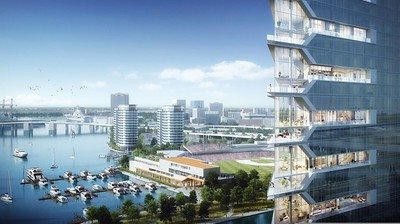
New casinos are taking shape in Virginia. The Pamunkey Indian Tribe released renderings of its planned $500 million casino resort in Norfolk. In Bristol, lottery officials said a temporary Hard Rock Casino is unlikely. And in Richmond, a neighborhood group protested the proposed location of the Cordish Company’s Live! Casino and Resort and another supported a competitor’s proposal.

The Pamunkey Tribe’s planned casino resort alongside Norfolk’s Harbor Park, expected to be completed in 2023 pending licensing by the Virginia Lottery, will feature a glass-and-metal structure with a rooftop pool offering a view of Norfolk Tides games, attached to an 8-story, 300-room hotel, 2,000-car parking facility and a marina on the Elizabeth River. It also will offer a spa, sports bar and grill, steakhouse, rooftop event space and multi-purpose event center.

Pamunkey Chief Robert Gray said, “I’m confident that this project will exceed the expectations of everyone. We are living up to every promise we made and are determined to make this a project of which Norfolk can be proud.”

Norfolk voters approved the casino resort nearly 2 to 1 in a referendum last November, despite two petition drives seeking to stop it. Voters in Bristol, Danville and Portsmouth also approved casinos; Richmond voters will have their opportunity this fall.

In Bristol, Virginia Lottery Executive Director Kevin Hall said it’s unlikely a temporary Hard Rock will be built, after all. Officials at the Hard Rock Bristol Hotel and Casino Resort had frequently mentioned opening a temporary gaming venue while the main casino was under construction at the former Bristol Mall. The enabling legislation allows a temporary location for up to one year after the gaming license is approved, among other requirements. The permanent Bristol casino is expected to open in late 2022.

Hall said, “We’re aware at least one of the casino operators has expressed some eagerness to perhaps stand up some temporary gaming. In fact, they have publicly suggested temporary gaming could occur as soon as December of this year. Let me state for the record, in light of all these steps that are required between now and then, we believe temporary gaming as soon as this December is highly unlikely, largely improbable, next to impossible. I don’t know that I can be any more clear.”

In response Hard Rock officials said, “We look forward to working with the Virginia Lottery to open our temporary casino as soon as possible.”

Hall said there are several steps that must be accomplished before a casino can open. “The casino operator has to be thoroughly vetted and approved for a license. That is a very intensive, up to a one-year process. Suppliers and vendors have to be vetted and licensed. Every employee with access to a gaming area has to be fingerprinted and licensed. Temporary facilities, just like a permanent casino, have to have the same extensive surveillance and financial accounting systems in place before they can open for business. Every slot machine, even in a temporary facility, has to be linked to a central monitoring system, and that will require us to go through an RFP process.”

The Lottery Board approved preliminary casino regulations in February. Hall said the license application process is likely to start within a few weeks. He said, “We’ll begin the in-depth financial and criminal background investigations for applicants, casino operators and key executives. These are very thorough, and each one takes considerable time. The legislation provides for up to a year for us to complete these background reviews, and we’ll need it.”

Hall noted lottery officials have informed casino operators in the four voter-approved Virginia cities about the lottery’s plans and an expected timeline. He said lottery staff members have started working on proposed permanent casino regulations and expect to present those to the board in July. If the draft regulations are approved, they’ll go through two months of public feedback and two executive branch reviews. Final regulations must be completed by September 2022.

Hall stated, “As the regulator, we’re building this airplane even while we’re flying it. We have a statutory and a regulatory duty to make sure that casino gaming—whether it’s in a temporary facility or a permanent facility—is done the correct way with appropriate oversight, licensing, security and audit features. As the regulator, we are not going to be taking any shortcuts.”

In Richmond, the Richmond Highway Neighborhood Civic Association endorsed Urban One’s proposal for a casino in an industrial area. The association’s President Charles Willis urged neighbors and Richmond residents to contact city leaders to support the Urban One plan.

He said, “We have seen firsthand how Urban One’s project will make this part of Richmond stronger with good jobs and the kind of economic development we have been waiting for a long time. This is how we grow our part of the city and bring tourism and new business opportunities to South Richmond.”

Media company Urban One is partnering with Peninsula Pacific Entertainment, owner of Colonial Downs racetrack and Rosie’s Gaming Emporiums, to develop a casino resort on land currently owned by Philip Morris USA.

In another part of town, about 50 members of neighborhood groups in the Fan District and North Side staged a protest against Maryland-based Cordish Companies’ proposed 1.9 million-square-foot casino resort at the 17-acre Movieland property. They waved colorful “No Casino” signs and rattled cowbells and other noisemakers as rush hour traffic passed.

However, the Scott’s Addition Boulevard Association board of directors recently voted 10-9 not to enter the fight against the project.

The group’s president, Trevor Dickerson, said it still has many concerns about the project, such as traffic congestion and the competition with local businesses. However, he said, association leaders felt it would be more beneficial to work with Cordish in case the city selects them to develop the casino.

“We want to make sure we’ve got a seat at the table,” Dickerson said.

He noted Cordish has agreed to the group’s requests to develop a multi-use trail and to make an annual payment of $100,000 to help pay for streetlights, trees and other improvements in the Scott’s Addition area.

Still, nearby residents are concerned about the casino’s potential impact on the quality of life in the area. Jonathan Marcus, chairman of RVA Coalition of Civic Associations, said 11 neighborhood groups, including the Fan District Association, Fan Area Business Association, Ginter Park Resident Association and Sherwood Park Civic Association, have issued statements against the Cordish project.

“Casinos historically do not serve the public interest. We’re concerned it’ll be a drain on the area. The opposition to this proposal has been that broad and that deep. The traffic alone, there’s a lot of talk about development on Arthur Ashe boulevard between here and I-95. That alone is going to overwhelm the street, but a casino, which is designed to bring in thousands of people on weekends, doesn’t fit with the traffic program,” Marcus said.

He added Scott’s Addition business leaders are “naive” if they think the developer’s benefits and commitments will outweigh the negative impact a casino would have on the community.

Earlier, Stratford Hills residents held similar demonstrations for several weeks against the proposed Bally’s casino resort. That proposal was rejected by city officials who said community members’ concerns did indeed have an effect.

Cordish spokesperson Cari Furman said the company is still working with local residents and businesses to tweak the project to make it the most desirable. She said, “We mean what we say when we talk about serving as a true partner to the community. Our project is the one that brings the highest economic value and community benefits to the city and local residents, and for that reason, we expect that it will ultimately get the greatest support.”

The company said the projected economic impact for the city would be $5.3 billion in the first 10 years. The 1.9 million square foot venue is projected to create 5,000 construction jobs and 3,000 permanent jobs.

Plans also are moving forward for the $300 million Rivers Casino in Portsmouth, projected to open in fall 2022 with a gaming floor, sports wagering lounge, event center, outdoor entertainment venue and several bars and restaurants.

Missouri Lawmaker Proposes Truck Stop Slots

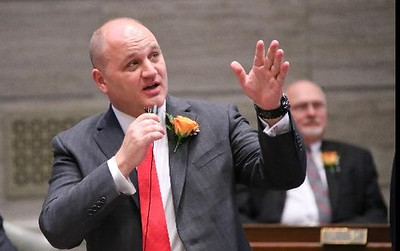
Missouri state Senator Denny Hoskins said he will introduce a bill allowing slots at truck stops and fraternal and veterans organizations. Each location could have up to five machines. The Missouri Gaming Commission would oversee a centralized system for taxing and regulating the program. Hoskins said his legislation would eliminate the untaxed and unregulated slots that have proliferated statewide in recent years.

However, Missouri Gaming Commission Chairman Mike Leara said he would not have enough staff to oversee and regulate additional legalized slots. “That would be a burden on us. We don’t have the staff on the books to do that. We’re not in a position to efficiently manage all those video lottery terminals out there, as I see it,” Leara said. Last year, in response to Covid-19, the gaming commission eliminated more than two dozen jobs at the state’s 13 casinos that closed as the pandemic spread.

Leara said lawmakers would have to approve a separate budget allowing him to hire more workers, but the legislature’s proposed budget for the fiscal year starting July 1 does not include money to pay for additional staff. As a result, any launch of video gambling or sports betting could be delayed.

Hoskins’ bill shows legalized slots could generate $175 million annually by 2027. The Missouri Lottery Commission would regulate the video terminals.

The Missouri Department of Mental Health also would need to hire more counselors to help problem gamblers and would require additional funds for advertising and public service announcements. The agency’s total annual budget would be $670,000.

According to the fiscal analysis, “Currently, DMH has twelve certified compulsive gambling treatment providers; this number would likely increase over time along with the need for additional compulsive gambling counselors. DMH estimates 25 new compulsive gambling counselors will be needed throughout the state.”

Nebraska Legislature Poised to Pass Gaming Bill

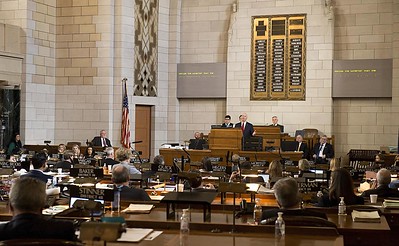
The unicameral Nebraska legislature has sent a gaming bill toward final consideration after amendments were beaten back.

The final version of LB 561, sponsored by Senator Tom Briese, will contain a keno element and a sports betting element that will allow wagers on local college games. Because it contains more provisions than was authorized by the voters last November, approval would require 33 votes in the 49 member Senate. This seems like as the first round approval garnered 37 votes.

Senator Mike Groene noted that voters didn’t know they were approving sports betting when they voted for casino gaming last year. That initiative authorized racinos at the state’s licensed racetracks and at a $200 million casino resort that will be built in Lincoln. A large portion of the projected $91 million in state taxes will be earmarked for property tax relief.

Illinois Restaurant to Be Temporary Hard Rock

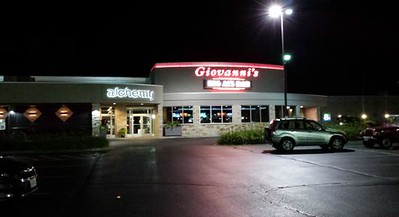
The group behind bringing a Hard Rock Casino to Rockford, Illinois—815 Entertainment—announced it will purchase Giovanni’s Restaurant and Convention Center and renovate it for a temporary casino.

The Illinois Gaming Board denied Giovanni’s request for a casino supplier’s license when the restaurant sought to withdraw its application at the last minute. No reason was given for the late request, but Gaming Board Director Marcus Fruchter alluded to “conduct and associations that would jeopardize the integrity of gaming and discredit or attempt to discredit the state and Illinois gaming.

“Staff in our investigations division, our licensing division, our financial audit division, our legal staff and many others have been working on this application and this matter for many months, dedicated a considerable amount of time and effort into this application into this matter and it has been the board’s consistent practice to not grant request to withdraw on the eve of full consideration by the board.”

The denial triggered a clause in the lease and ownership agreements that allows 815 Entertainment to acquire the property and the Castrogiovanni family’s stake in the company, according to 815 Entertainment attorney Terence Dunleavy.

Joe Castrogiovanni explained, “I have decided to remove myself and my wife from the IGB licensing process and work with the Hard Rock folks to facilitate their realization of the project, knowing they will put forth a wonderful product for future employees and customers. The city of Rockford deserves nothing but the best, and we will continue to proudly support this project and all that it will bring to our region.”

Rockford Mayor Tom McNamara said, “We are aware that the current owners of the temporary casino site will be selling the location to existing investors. We do not anticipate that this change in ownership will slow down the casino process.” The IGB had unanimously approved a preliminary suitability study for the Hard Rock Casino in February.

The temporary casino inside Giovanni’s would be open for 18 months to 24 months while the Hard Rock Casino is built. It would house 736 slots, a snack bar, casino bar and existing Legacy Restaurant,

State Rep. Dave Syverson commented, “I feel bad for the Castrogiovanni family because they’ve done so much and given so much to the community but it sounds like there’s still a win-win in this case that they’re able to sell the building and move forward with the project.”

Esports Poised to Return to Live Action

Like most gaming activities, esports took a leave of absence when the coronavirus pandemic struck in early 2020. As vaccinations and a reduction in cases have lessened the likelihood of contracting the virus, the casinos expect to bring esports back.

Pre-Covid, casino resorts offered esports tournaments as a different breed of gambling. Agua Caliente Casinos in the Coachella Valley in California, and Luxor in Las Vegas attracted large crowds, according to Ocean County Register. Events drew up to 700 at the Rancho Mirage location.

But as post-Covid emerges, small scale tournaments attracting less than 100 have occurred at the HyperX Esports Arena at Luxor, with health and safety precautions. But the goal is to host larger events later this year.

Esports company Conflux Gaming and Agua Caliente Casinos expect to bring back tournaments as early as May.

“As we open up, as shots start going into arms, as people start moving around and are more comfortable with being out and social, I think the natural question is ‘When do we get back to work?’” Jay Bednar, entertainment coordinator for the Agua Caliente Casinos, said. “The interest is there. I feel like it’s going to be a lot of pent-up demand once we’re able to launch.”

The Agua Caliente Casinos have not set to return to live tourneys. Brian Bork, Agua Caliente’s senior director of marketing, has talked about returning in June.

Owner Chadwick Blackard said the staff at Conflux will be vaccinated prior to returning to in-person tournaments.

“We are thinking very, very big in terms of where we want to go with esports for Agua Caliente and making Agua Caliente certainly the home for the Coachella Valley and perhaps the large part of Southern California,” Bork said.

Indiana Racino to Build New Barn, Dorm

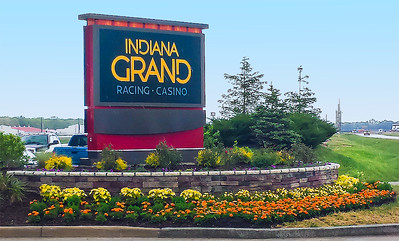
Caesars Entertainment Inc. announced a $7 million expansion project at the barn and dormitory at Indiana Grand Racing & Casino in Shelbyville, Indiana. One month ago ground was broken on a $32 million expansion at the casino.

Caesars officials said the project will include a 100-stall enclosed, winterized barn with 10 wash bays, restrooms and 10 tack rooms. The dormitory to be built next to the new barn, will include 50 additional rooms and house the staff who look after the horses.

Eric Halstrom, vice president and general manager of racing at Indiana Grand Racing & Casino said construction will begin next month. He noted, “As our racing continues to grow at the national level, we receive even more requests to race at our facility. This addition will further solidify Indiana Grand as a premier racing destination.”

LV Sands Continues Push for Texas Casinos

The Las Vegas Sands Corp. wants the eyes of Texas to focus on the “billions” in gaming revenues and tourism dollars it’s losing to states with casino resorts.

The company has begun airing TV and radio ads telling residents the state needs casinos. It has also formed a group, the Texas Destination Resort Alliance, with a website and social media to carry the same message.

One 30-second ad explains that the legislature could put a measure on the ballot in November to let voters decide the issue. A constitutional amendment would be needed to allow four casino resorts in the state’s largest cities: Dallas-Fort Worth, Houston, San Antonio and Austin. The ad concludes, “Let’s boost our economy, create tens of thousands of jobs and help fund vital services like schools and public safety.”

LVS has hired a small army of lobbyists to besiege the state house and try to persuade lawmakers, who have resisted such attempts for decades. No action has been taken on House Joint Resolution 133—sponsored by LVS—although the House State Affairs Committee has heard testimony. Lawmakers also heard testimony on a bill that would allow sports betting, which is supported by a coalition of Texas professional sports teams.

LVS Senior Vice President of Government Relations Andy Abboud told the panel that the casino company would “never claim to be an economic panacea” but represents a new industry that wants to enter the state. To criticism that the Sands’ proposal would disadvantage homegrown companies, Abboud said local companies could partner with Las Vegas-based gaming companies and said his company has been working closely with Texas billionaire Tilman Fertitta.

Joking about the large number of lobbyists his company has brought to Austin, Abboud said they did it “because we wanted to be transparent” and have as many people as possible available to answer lawmakers’ questions about a major issue.”

Supporters of HJR 133 emphasize that all it does is allow the voters to choose to allow casinos. Some, like Rep. Charles Geren, say casinos will create jobs and give a shot in the arm to the hospitality industry.

To critics who fear casinos will import social ills, Geren declared, “To that I say: We already have negative social impact.”

He added, “Go no further than our borders than those with an addiction can drive less than 20 minutes and then return home to our state with no resources in place for them. Go no further than your smartphone, where illegal bets are being placed on illegal bookie apps every day.”

Opposition speakers included representatives of the Texas Baptist Christian Life Commission, and the Kickapoo Tribe, the only one of three Texas tribes that is allowed to operate a casino.

The effort that was begun by the late Sheldon Adelson, founder of Las Vegas Sands, is being continued by his widow, Miriam Adelson, who traveled to meet with Texas Governor Greg Abbott and Lt. Governor Dan Patrick.

Resorts World LV Set for June Debut

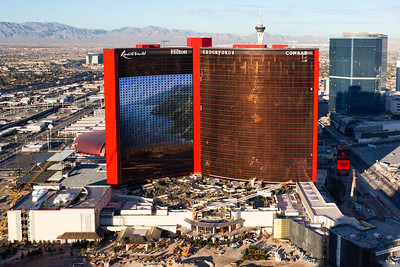
Resorts World Las Vegas, seven years and $4.3 billion in the making, will finally open its doors on June 24.

Reservations are already being taken for the more than 3,500 rooms and suites at the first ground-up casino hotel to open on the Strip in more than a decade.

“We are filled with gratitude and excitement as we approach our opening this June and hope to play a role in Las Vegas’s rebound after what has been an incredibly challenging year for the destination and greater hospitality industry,” said Scott Sibella, president of the 88-acre complex.

It’s been a long time coming.

For nearly half a century the North Strip site was home to the legendary Stardust, which Boyd Gaming had owned and operated since the mid-1980s and demolished in 2007 to make way for a multibillion-dollar casino hotel, Echelon, it was to be called, that was scrapped when the global financial crisis hit.

In 2013, Malaysia-based resort conglomerate Genting Group paid Boyd $330 million for the land, which was vacant save for some of the early shoots of Echelon’s steel skeleton, and immediately announced plans for an elaborate Asia-themed destination that was to feature everything from live pandas to a replica of the Great Wall of China.

But two years passed before construction got under way, and it proceeded slowly as various completion dates were announced and canceled and plans for the development were gradually scaled down.

What’s taken shape is impressive nonetheless.

The curved red structure stands 59 stories high behind a massive Strip-facing LED façade and houses three Hilton-branded hotels covering a range of price points and amenities: from a 1,774-room Las Vegas Hilton at Resorts World to a 1,496-room Conrad Las Vegas reported to be the largest Conrad in the world, to a high-end Crockfords Las Vegas/LXR Hotels & Resorts, one of the first LXR locations in the U.S. and featuring 236 luxury rooms and suites that top out at 7,000 square feet.

The casino, which stretches across 117,000 square feet, will support a similar array of attractions: a state-of-the-art 5,000-seat entertainment venue operated in partnership with AEG Presents and Concerts West; 70,000 square feet of retail shops; a nightclub and day club operated in partnership with Singapore’s Zouk Group; more than 40 food and beverage venues; a 5.5-acre pool complex; a 27,000-square-foot spa; and 250,000 square feet of meetings and conventions space.

Sibella described the complex as a “monumental property with some of the most innovative partners in the industry.”

“Resorts World Las Vegas will redefine the hospitality standard in Las Vegas with unmatched dining and entertainment, more variety of hotel accommodations than anywhere else on the Strip and the city’s most progressive technology”𑁋highlights of which include mobile check-in and digital keys, an AI-powered concierge named “Red” and the first underground people mover to connect to the Las Vegas Convention Center.

It remains to be seen how the property will fare out of the gate in the midst of a global tourism environment severely hampered by the Covid pandemic.

Nevada governor Steve Sisolak has set June 1 as the date for the casino industry’s return to 100 percent capacity for the first time in more than 14 months, but social distancing and other safety guidelines will stay in place.

Debt-monitoring agency Fitch Ratings estimated in a March report that it could take a few years for Resorts World Las Vegas to hit its full earnings stride.

“The pandemic is likely to delay operational ramp-up, as we expect inbound flights and demand for large-scale conventions in Las Vegas to remain soft.”

Rivers Casino & Resort Schenectady Hosting Madden NFL eSports Tournament Finals

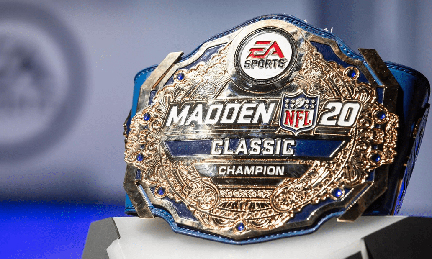
Rivers Casino & Resort Schenectady will again be hosting the Electric City Classic, a single-elimination Madden NFL eSports tournament featuring players from across the country and potentially the Capital District.

The best EA Sports Madden NFL 21 video game players from across the country will be squaring-off on the virtual gridiron at Van Slyck’s, next to the Rivers Sportsbook, on Saturday, May 15, at 2 p.m.

The tournament, organized by Compete4ever, will feature the top four players from the national online qualifier that took place on May 4. Local in-person registration, for a chance to earn the last spot in the live finals, will start at 11 a.m. on the day the event.

Former Cincinnati Bengals linebacker and Penn State Captain, Brandon Bell, will join the voice of Madden Football and famed sportscaster, Larry Ridley, in the booth for play-by-play action from Rivers Casino as they broadcast live online on twitch.tv/compete4everyoutube.com/compete4ever, and facebook.com/compete4ever.

The event will also air on national TV on the Black News Channel 3-4 weeks following the tournament finals. The Black News Channel is available on Spectrum channel 232, DIRECTTV channel 342, and the DIRECTTV app, and can be streamed on Sling, Roku, Amazon Fire TV, and other steaming services.

Players can register online for the Competer4ever (C4) Madden 21 Electric City Classic by going to www.compete4ever.com/RiversCasino. You must be 21 years of age or older to participate in the competition or to enter Rivers Casino.

The 1st place winner will receive a cash prize of $300, 2nd place $100, 3rd and 4th places $50. The 1st place winner will also receive an NFL gaming chair by Zipchair and a Big League Chew prize pack.

Players that advance to C4 Madden 21 Electric City Classic at Rivers Casino, along with their guests, are responsible for their own travel and dining accommodations; however, each player will receive one free hotel stay for the night before the event, with a dining credit that can be used at Rivers Casino.

Connecticut Lottery Gets 15 Sports Betting Proposals

The Connecticut Lottery Corp. has gotten 15 proposals from sports betting operators interested in operating retail or online sportsbook in the state. The lottery hopes to begin accepting wagers by September. The names of the firms were not released. Nevertheless, it is widely expected that FanDuel, DraftKings, William Hill, BetMGM and Penn National will be among the applicants.

Once Governor Ned Lamont and the Mohegan and Mashantucket Pequot tribes reached an agreement in March on how to divide sports betting in the state, the Lottery April 12 issued a request for qualifications (RFQ.) The tribes operate the Mohegan Sun and Foxwoods Resort Casino.

Lottery board of directors Chairman Rob Simmelkjaer commented in a news release: “We are pleased to see significant interest from companies who would like to partner with the CLC to bring our online and retail sports betting offering to market.”

He added, “Our staff and board will now begin a process of carefully reviewing the qualifications of the submitting parties as we work towards choosing the right partner in this important initiative for our state.”

Besides the casinos themselves, the Lottery envisions two large retail sportsbooks at Bridgeport and Hartford, the state’s largest cities. The request for qualifications stated: “Other locations may be within existing off-track-betting (OTB) locations of the state’s current OTB operator; and others may be coordinated within existing lottery-licensed locations.” Such retail operations can include actual sportsbook windows, kiosks or a combination.

The tribes have already announced their sports betting partners: DraftKings for the Pequots and Kambi for the Mohegans.

A September opening is envisioned, to take advantage of the NFL season.

Although the governor and tribes did reach an agreement, the legislature still has to turn that agreement into legislation. It must also be approved by the Bureau of Indian Affairs.

DraftKings Accused of Marketing to Excluded Gamblers

In early April NJ Online Gambling said New Jersey fined DraftKings $10,000 for sending marketing material to self-excluded gamblers.

DraftKings blamed the snafu to missing a step in the process. The sportsbook, under the banner of Resorts Casino Hotel, is not permitted to market to folks on the state’s self-exclusion list. In New Jersey, a gambler can self-exclude for a year or a lifetime and anything in between.

A third party company provided 50,000 names for DraftKings to send marketing materials to. But DraftKings had the job of checking the names against the self-exclusion list. The online sportsbook failed.

As a result, literature could have gone out to 11 people on the self-exclusion list. A gambler on the lifetime list told the state DraftKings sent him literature last November. The judgment also required a detailed account on its methodology used to prevent this from happening again.

In March, DraftKings received a $3,000 fine in Indiana for a similar violation. In February, New Jersey again hit DraftKings for $500. The state levied a penalty of $2,000 for letting restricted gamblers bet in 2019, and Iowa issued a judgment of $5,000 for a late download of the self-exclusion list.

For gamblers, the direct marketing material may trigger a relapse.

Measures to keep problem gamblers at bay may improve as the industry matures. DraftKings insists they take the issue seriously.

“People who are problem gamblers are not good long-term customers. … It can create a stain on the whole industry, and it’s not in our business interest,” DraftKings CEO and co-founder Jason Robins told the Financial Times in a recent article. Robins said the firm is working to improve safeguards.

Maryland Looks to Speedy Launch of Sports Betting

Maryland officials are looking for sports betting to become available to state residents as soon as the World Series.

State Senator Craig J. Zucker, lead sponsor of that bill that legalized the market, told news site Elite Sports New York that in-person betting at Maryland casinos and horse racetracks “hopefully” should be up and running within the next few months and online and remote betting in time for Super Bowl LVI in February.

The legislation derived from Zucker’s bill provides for 60 remote licenses in two classes governing venues both within and outside the larger casinos, racetracks and professional sports teams.

It’s believed in-person betting for casinos and racetracks will be a quicker venture as they have existing infrastructure to support sportsbooks, have completed background checks and will have partnered with companies who have already gone through the process of creating in-person and online sportsbooks, Zucker said.

Maryland Live! has a current partnership with FanDuel, MGM National Harbor Casino is associated with its own national BetMGM sportsbook, Caesars Entertainment, which recently acquired William Hill, owns Horseshoe Baltimore Casino and Hollywood Casino in Perryville has an existing relationship with Penn National Gaming.

The online market, on the other hand, will take longer to implement, he suggested, because applicants will have to satisfy criteria issued by a newly formed Sports Wagering Application Review Commission and the state’s gaming regulator, Maryland Lottery and Gaming, to get licensed.

“I guess in a perfect world you might be able to see the casinos offering on-premises-only betting in time for the upcoming football season, if not maybe in time for the Super Bowl itself,” Maryland Lottery and Gaming Director Gordon Medenica told ESNY. “That is the best outcome. In total, the whole process as the bill requires is probably adding 12 to 24 months.”

Washington Tribe Concludes Sports Betting Compact

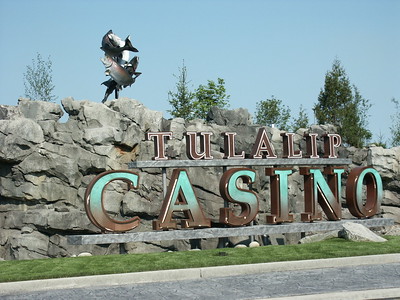
The Tulalip Tribes recently reached an agreement with the Washington State Gambling Commission for a sports gaming amendment to the tribal state gaming compact.

They hope to begin offering sports betting in time for the fall NFL season. The tribe will offer online sports betting, but only within the confines of its brick and mortar casino.

The tribe operates two casinos, the Tulalip Resort and Quil Ceda Creek casinos, including one next to a hotel and events center, where it will also probably be able to offer online sports betting.

The commission’s legal and legislative manager Brian Considine told CDC Gaming Reports, “This is the first time where we’ve really ever talked about any form of online gambling.” He continued, “And so there’s a lot that can go into that. What is it going to look like? Is the mobile piece just going to be on site, or can it be on the premises property and how is that going to be defined?”

More than 80 percent of the profits made from sports betting since the Supreme Court lifted the ban in 2018 has been through online sportsbooks, according to the American Gaming Association. That percentage is 92 percent in New Jersey, which currently has the most successful sportsbooks in the U.S.

The tribes’ next step will be to submit a proposed geofencing map for mobile online gaming to set up a wagering perimeter. Mobile apps will only be allowed to operate within the map’s boundaries. This would allow outside wagering, for example at an outdoor event or in a parking lot.

Some, like Auburn City Councilmember Chris Stearns, a former member of the gambling commission, hopes and expects that eventually online sports wagers will be accepted all over the state. He said, “The public’s view of gambling has changed a lot in the past 48 years,” adding, “And there will likely be more and more demand for easier access to sports betting by the citizens of Washington.”

The Tulalip compact amendment is only the first of many. Other tribes, out of a total of 22 federally recognized tribes, that are also in negotiations include the Muckleshoot, Snoqualmie, Kalispel and Suquamish tribes.

The Tulalip deal is expected to serve as a template for at least some of those tribes. Deals could come thick and fast as most want to achieve that fall NFL season goal. Practically speaking that would mandate reaching agreements by mid-May.

Tulalip Tribes chairwoman Teri Gobin released this statement after the agreement was reached: “The revenue sports wagering provides — like all tribal gaming revenue — stays in Washington, creating jobs and increasing charitable contributions that benefit communities throughout the state.”

Caesars Completes William Hill Buy; Asher Steps Down

Caesars Entertainment finally closed its $4 billion acquisition of sports betting provider William Hill last week after a British court dismissed a suit challenging the buy. Two hedge funds said the board of directors didn’t do enough to solicit competing bids, but that was rejected by the judge.

Tom Reeg, Caesars CEO, said his company has big plans for William Hill.

“We are thrilled to complete the acquisition of William Hill, combining two of the premier operations in the sports betting and iGaming industries under one roof,” said Reeg. “We look forward to announcing future sports partnerships that will drive long-term growth.”

As a result, however, Joe Asher, the president of William Hill US, departed the company. He joined the company in 2008, when Hill bought his Brandywine Bookmaking, running the company’s Nevada books, and shepherding the company through the early days of legal sports betting in the U.S.

As for Asher, who got his start as the youngest racetrack announcer at a Delaware track, he told Legal Sports Report he’s going to take some time off and “pick some winners at Del Mar.”

Sportsbooks Line Up in Arizona

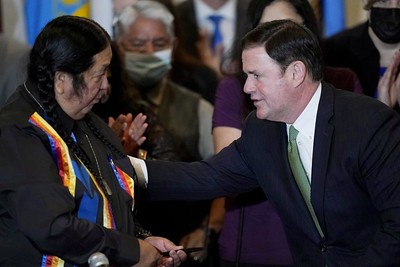
When Arizona Governor Doug Ducey signed HB 2772 to legalize sports betting, representatives of 22 tribes stood with him. The bill also extends tribal-state gaming compacts, originally signed in 1992, for another 20 years.

The tribes have contributed almost $1.5 billion to the state in revenue sharing. The new compact will commit them to also give a percentage of their profits to local charities.

The compact could add another 6,300 slot machines to the nearly 14,000 that are already deployed. Another 570 can be added each year to the total number allowed.

Now, well-known sportsbooks are lining up in preparation of applying for licenses. DraftKings, FanDuel, BetMGM and William Hill already have obtained a footing through tribes or commercial partners.

Reportedly BetMGM will gain entrée through the Gila River Indian Community, owner of three casinos near Phoenix. That would place it near its rivals DraftKings and FanDuel, the latter of which last year announced a “multi-year market access partnership” with the NBA Phoenix Suns. It plans to open a “luxury” sportsbook in the Suns arena in time for the next NBA season.

Phoenix Suns President and CEO Jason Rowley said in a statement: “FanDuel is the perfect partner as our missions are fully aligned. Simply put, FanDuel is committed to making sports more exciting while the Suns are focused on delivering exciting sports and entertainment and engaging fans at the highest level possible.”

DraftKings has partnered with the PGA to operate a sportsbook at TPC Scottsdale and operate a mobile platform. It could become the first sportsbook at a PGA Tour stop in the country.

At most 20 retail/mobile licenses will be issued and will be “tethered” to tribal casinos or professional sports facilities, plus another ten retail sports betting licenses for racetracks.

The professional sports outlets that are being talked about include NFL Arizona Cardinals, NBA Phoenix Suns, MLB Arizona Diamondbacks, NHL Phoenix Coyotes, NASCAR’s Phoenix Raceway, and the PGA Tour’s TPC Scottsdale.

Will Hill has reportedly made a deal to operate a sportsbook through the Harrah’s Ak-Chin Casino, which is also near Phoenix.

It is unknown who the Phoenix Raceway will work with, but it is suggestive that WynnBet and Penn National already have agreements with NASCAR. WynnBet is tethered with Martinsville Speedway and Richmond Speedway in Virginia.

Sports betting isn’t the only feature of the new law. Keno fans will now be able to play at their local American Legion or VFW. Also, the Arizona Lottery will be offering lottery tickets from the comfort of your own cell phone. Betting will be allowed on fantasy sports leagues.

The tribes have achieved a major goal of expanding the tables games they offer with the addition of baccarat, craps and roulette. They will also be able to add four more casinos. One in particular is mentioned in the 92-page compact: a Pascua Yaqui casino on Interstate 10, near Tucson. This could only happen if the land, once home to a now defunct cinema, is put into trust for the tribe by the Bureau of Indian Affairs.

According to a statement from the tribe: “The new gaming compact does allow for a new casino to be built, but the adoption of the compact does not guarantee it. The land will need to be taken into trust by the United States, which would require federal legislation to be passed. Development of a casino is not imminent, as additional steps must be taken before the process is final. The Pascua Yaqui Tribe looks forward to working with the City of Tucson on the potential development of the tribal land in the future.”

The other casino specifically mentioned in the compact would also be in the Phoenix metro area and would be built by the Tohono O’odham Nation, which owns the Desert Diamond Casino near Glendale.

Stacie Stern, governmental affairs for FanDuel, recently addressed the question of just how fast sports betting could be operating in Arizona. She told the Gilbert Sun News: “Let’s assume with the new 5G technology that you’re able to send and receive information quickly, you should be able to sit in a stadium and do in-game betting, just like you at home where you would presumably have a good internet connection.”

California Could Vote On Sportsbook Petition This Year

A coalition of gaming tribes in California say they have submitted enough signatures to qualify a sports betting initiative for the 2022 ballot. But it could happen sooner.

Another petition to recall Governor Gavin Newsom has gathered more than 2 million signatures. If the Secretary of State validates 1.5 million, an election will be held by the end of this year. That could mean other measures, like the tribal sports betting measure, could be on the same ballot.

If enacted by voters, the measure would legalize sports betting at tribal casinos and racetracks; a deliberate omission leaves out the 60 or more commercial card clubs in the state.

The tribes have gathered nearly 1.5 million signatures, and only need 1 million to qualify for the ballot, which will be announced this week.

Sports wagers, however, would also be limited to retail locations inside brick-and-mortar casinos. This removes the mobile element that has turned out to be the most profitable aspect for sports betting for the states that have adopted it. The tribes say this is an interim step until they’re ready to go into mobile sportsbooks.

“Moving into the online/mobile space immediately could have disadvantages for a lot of tribes who can’t find a partner in the space,” said James Siva, chairman of the California Nations Indian Gaming Association. He said online sports betting in the Golden State could take five to 10 years to achieve. “The initial phase of brick-and-mortar-only will help tribes to figure out the best way to engage with this and find the best partners.”

The state has more than 100 gaming tribes, he said, and there simply aren’t enough sports betting partners to go around. The lack of mobile betting will frustrate some Golden State lawmakers—and definitely members of the industry who want to tap into what could be the largest sports betting market in the nation. But political observers recognize that no solution without the tribes is possible.

Victor Rocha, conference chairman of the National Indian Gaming Association and a member of the Pechanga tribe, said, “The tribes have exclusivity for gaming and no intention of giving that up. We can wait it out. Look at iPoker. If it becomes adversarial, nobody wins. If people try to push it before then, we have historical evidence to show they are going to have a really tough time.”

There have been several attempts in the legislature to reach a consensus on sports betting since 2018, when the Supreme Court lifted the federal ban on such wagers in the U.S. However, basic disagreements between the gaming tribes on the best approach kept any proposal from making it to the floor for a vote.

Advocates of online sports betting—professional teams and leagues, card rooms and others—point to the recent compact in Arizona where tribes got several concessions to permit sports betting to be conducted off reservation land. A competing petition that would permit a full slate of sports betting option is being considered.

Tennessee Lawmakers Seek to Strengthen Wagering Authority

The Tennessee Senate passed a sports betting regulation bill that would give some authority to the Sports Wagering Advisory Committee, rather than limit it to providing suggestions.

The bill allows the committee to consider disciplinary action against sportsbooks, and bring about a decisions on Tennessee sports betting without the approval of the Tennessee Education Lottery‘s Board of Directors, according to Legal Sports Report.

A House committee expected to take up a companion bill.

Recent situations may have prompted the legislative move. The Lottery allowed local sportsbook Action 24/7 to accept cash deposits through a sister company, high-interest lender Advance Financial 24/7. A prior bill to ban the practice died this year.

A customer of both Advance Financial and Action 24/7 told a House member winnings were being withheld to pay back a loan. Advance Financial denied the accusation.

In addition, questionable betting activity surfaced from two sportsbooks during Super Bowl wagering. In one instance, a worker with Action 24/7 helped some 40 bettors place illegal proxy bets. The lottery suspended the Action 24/7 license indefinitely over almost two dozen cases of alleged debit card fraud in which the sportsbook took too long to report. However, Action received a temporary injunction, in part because the lottery failed to follow the rules.

Action 24/7 said Lottery chair, Susan Lanigan, acted unilaterally in issuing the suspension, a violation of rules.

Senator Richard Briggs worried that the current bill doesn’t go far enough.

“I’m supportive of this amendment but I think at some point in the future we may need to look at a different structure on how we’re doing it because there have been problems,” Briggs said. “We’re new to the sports gambling game but it just seems like there have been issues that have come up along several lines and we may need to have another structure to look at this.”

In related news from Tennessee, players wagered $205.9 million in March, the second-highest total since the state opened sportsbooks last November.

The figure represented a 16.8 percent increase over the $176.3 million in February and 2.6 percent off the $211.3 million record set in January, according to figures published by the Tennessee Education Lottery. Players won $187.9 million in March, leaving $16.1 million in adjusted gross revenue for the month, a gain of 23.9 percent over February, according to iGaming Business.

The state collected $3.2 million in taxes.

Canada Parliament Nears Legal Single-Sports Wagering

The legalization of single-sports betting in Canada won a critical House of Commons vote April 22 and will now advance to the Senate.

Bill C-218 would amend the Criminal Code to allow Canada’s provinces and territories to regulate online and in-person wagering on individual sporting events. Currently only parlay wagering and single event horse racing wagers are legal.

The bill’s rapid and enthusiastic advancement, with only one significant amendment, has inspired shares to rise in value in companies likely to take advantage of legalizations, such as Score Media and Gaming (theScore) and FansUnite Entertainment. They hope Canada’s sports gaming market will reflect the growth of the U.S. market after the federal ban was lifted three years ago.

The Canadian Gaming Association estimates the country is losing revenues from $14 billion in both illegal and offshore wagering sites that Canadians use but which don’t pay Canadian taxes. Under legalization that market could be grown to $28 billion within five years, according to a report by Deloitte Canada. This could translate into $5.4 billion in annual gross gaming revenue, according to theScore.

Canada’s land-based casinos, which have been hard hit by the pandemic, are also hoping to reap some advantages. They have lost revenues to casinos in the U.S. that now operate sportsbook operations and draw Canadians to drive across the border to wager.

Louisiana Lawmakers Address Sports Betting Details

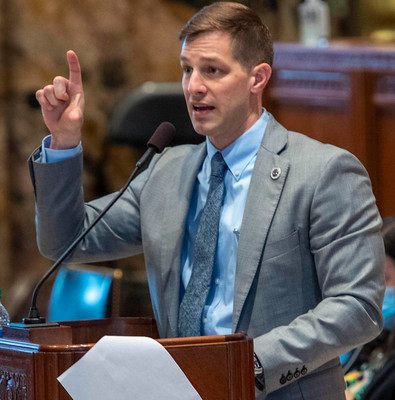
The Louisiana House Ways and Means Committee recently moved one of two bills that establishes a framework for sports betting, which voters in 55 of 64 parishes approved last November. The measure sets the tax rate for retail sports wagering at 10 percent online wagering at 18 percent, and charges $250,000 for an application fee and $500,000 for a 5-year “franchise fee.” Similar bills will move through the Senate. Bill sponsor state Rep. Todd Stefanski said several legislators have told him they’ll support the measure, which addresses taxes, fees and lottery issues.

Stefanski said the legislation allows 20 land-based licenses, each with two skins. The Louisiana Lottery also will have an online skin and retail locations. Lottery locations would offer wagering kiosks and any lottery partner or holder of a Class A alcoholic beverage license could participate in sports betting. “We wanted to find a way for your local bar, local restaurants to take part in this, and we think this is the way, and also would allow for kiosks in each place,” Stefanski said.

The Senate bill, sponsored by Senate President Patrick Page Cortes, addresses non-lottery sports betting, which would be regulated by the Louisiana Gaming Control Board. The measure caps the number of licenses at 20 for the state’s 15 riverboat casinos, the Harrah’s land-based casino in New Orleans and four horse racetracks. The bill is in Judiciary B Committee; no hearing date has been set.

Stefanski noted, “The kicker here is full mobile. If you look at Mississippi, they have mobile, but you have to be on the gaming floor. But if we pass full mobile, I think we’ll be on the higher end of the spectrum.” If the legislation passes, Louisiana would be the first in the region to allow bettors to wager from their mobile devices. Mississippi retail sports betting allows on-site-only mobile wagering.

One of lawmakers’ primary concerns is how sports betting tax revenue would be spent. Past proposals directed funds to early childhood education. Stefanski, who has an autistic brother, said his bill only deals with revenue from lottery based sports betting, and revenue would be earmarked for a “developmental disability sub-fund” and for K-12 education. Cortes’ bill addresses sports betting proceeds from commercial entities.

Stefanski commented, “I just want sports betting to become a reality. I don’t want us to fumble the ball again, and I don’t want everyone in the state to be looking at us and saying, ‘Why didn’t you do this?’”