Author: Casino Connection Staff

Italian iGaming Resilient in Covid Year

Covid-19 hit Italy especially hard, but the country’s iGaming market has managed to grow. In the past year-plus, though the market has been pummeled by a ban on advertising, a tax hike and an economy hammered by Covid-19, the market maintained a measure of growth.

According to iGamingBusiness.com. figures from Ficom Leisure show that revenues from all online verticals rose nearly 95 percent in February compared to the same month in 2020, just before the first lockdown.

Gross gaming revenues (GGR) for the month came to more than €359 million (US$423.5 million, just short of the record set in December). In March, online sports betting was still up more than 160 percent year on year. The resumption of sports betting last June helped steady the market.

“A number of new players have opened online accounts as effect of the lockdowns,” said Christian Tirabassi, senior partner at Ficom Leisure in Rome. “We believe this increase will stay, as a number of players have (become accustomed to) the online/mobile betting and gaming experience.”

Fabio Schiavolin, CEO of iGaming concessionaire Snaitech, cited a revenue spike of 58 percent over 2019. “Snaitech’s 2020 numbers showed a clear evidence of the digitalization process of demand for all products and services, boosted by the retail lockdown with customers experiencing the online offer with increasing confidence,” he said.

“For a number of years now, we have been focusing a great deal on the acquisition of online players through our points of sale, sharing the revenues with (betting) shop managers and building a real omni-channel view on the customers,” he continued. “Even the more reluctant retailers have experienced the importance of exploiting the digitalization, which was for them the only income during these recent months.”

However, the surge in iGaming couldn’t replace revenues lost to the shutdown of betting shops, which remain closed today, said Alexander Martin, CEO of SKS365, the company behind the Planetwin365 brand.

“Online revenues have been stronger in the last year but could not compensate the industry losses by retail closure,” he said. “The land-based network is a crucial asset both in terms of brand awareness and customer protection,” said Martin. “The key to staying ahead of the game is offering an omni-channel experience that allows customers to have both options and therefore to choose which channel best suits them at that particular time.”

The ban on advertising, while posited as a protective measure for consumers, can backfire, said Ekaterina Hartmann, director of legal and regulatory affairs at the European Betting and Gaming Association (EGBA). “It is very harmful, as it does not allow the consumer to be informed of who the regulated operators are.”

Schiavolin agreed. “How can customers distinguish between illegal operators and legal gaming licensees, if the latter are denied the right to promote their brand?”

A 0.5 percent turnover tax on sports betting, imposed in May 2020, “is really killing the business,” said Hartmann. “Being able to offer attractive odds is what keeps players on the regulated market. From our point of view the advertising ban and the new sports tax are very problematic. … A fundamental rethink about the substantial effects of both these measures is urgently necessary.”

Evolution Launches Live Casino with Entain in U.K.

Live online casino game specialist Evolution Gaming announced that it has launched a selection of its content with Entain-owned online casino and sports betting brands Ladbrokes and Coral in the U.K.

Under the terms of a commercial agreement between the casino games maker and provider and the major gambling operator, Evolution is also set to soon launch its suite of products with Entain’s Gala Casino and Gala Bingo iGaming brands.

The partnership will eventually see Evolution integrate its entire range of gaming titles with its partner’s Ladbrokes, Coral and Gala online platforms in the U.K. The phased integration of content has kicked off with the provider’s Live Casino titles and game show-style products, including Lightning Roulette and Crazy Time. These are now available on Ladbrokes and Coral’s .co.uk sites.

Evolution’s full suite of Live Casino games and game shows, including upcoming new release Gonzo’s Treasure Hunt, will be added across Entain’s brands in the coming weeks. The partnership also covers the supplier’s first-person RNG games. All of Evolution’s products are available to players on desktop and mobile.

In addition to the provider’s newly added content, Entain’s online gaming brands already offer online slots from Evolution’s NetEnt and Red Tiger operations. The live casino specialist recently closed the $2.2 billion acquisition of NetEnt. The deal also included Red Tiger, which NetEnt acquired a couple of years ago.

Atlantic City Swimming Test Set

The Selection Committee of the 2nd Annual Jim Whelan Open Water Festival, featuring the 55th Around the Island Swim , has announced the competitor lineup for the legendary open water marathon swim taking place on Sunday, August 1, 2021.

This year’s lineup currently features 18 individual swimmers and relay teams. They come from across the country and around the world. Skill levels range from amateur athletes to legends in the open water swimming community, including several English Channel swim participants, swim association directors and board members, and even an International Marathon Swimming Hall of Fame honoree. Combined, the participants have over 200 years’ experience in open water swimming!

The 22.75mi (36.6km) course around Absecon Island will start in the back bays of Atlantic City, enter the Atlantic Ocean via the Absecon Inlet, and return through the Great Egg Harbor Inlet and the back bays of Longport, Margate, and Ventnor. It’s anticipated that most swimmers will complete the course in 8 – 10 hours. Participants are vying for a combined $10,500 purse.

“We are so excited to be able to hold the race this year, and even more excited to have these incredible athletes participate,” says Assistant Race Director Sari Carroll. “ Many have told me that swimming in the Around the Island is part of their ‘bucket list’ of races to compete in. We’re proud to help make that dream a reality . ”

The following is a list of selected competitors anticipated to participate: Ruth Gilgenbach (NJ), Kathleen Wilson (SC), John Zeigler (PA), Ned Denison (Ireland), Eric Schall (PA), Mark Quinn (DE), Greg O’Connor (MA), Samir Barel (Brazil), Eric Tucker (NJ), Robert Gatto (NJ), David Shackley (VA), Seth Baetzold (WI), Andrew Wallace (NJ), and Colum Lavelle (IL). Relay teams participating are “SOFA Queens & King,” “SRVA Hammerheads,” “For The Love Of Swimming,” and “Team Ringoes.”
The Around the Island Swim swim, which started as a $100 bet back in 1953 between two members of the Atlantic City Beach Patrol, became one of the premier open water events in the world. After a hiatus, the race was resurrected in 2019 as part of the Jim Whelan Open Water Festival, named after the late Atlantic City Mayor, NJ State Senator, and advocate of swimming and water safety education. All proceeds from the festival benefit Green Whales, Inc. a NJ non-profit supporting various children’s swim programs in Atlantic County, NJ.

For more information, visit www.jwopenwater.org.

PGA Championship Betting Preview

All eyes will be on the Island Course at Kiawah Golf Resort this weekend when the best golfers in the world tee off at The PGA Championship. Read below for a breakdown of how players are wagering on the second major of the year.

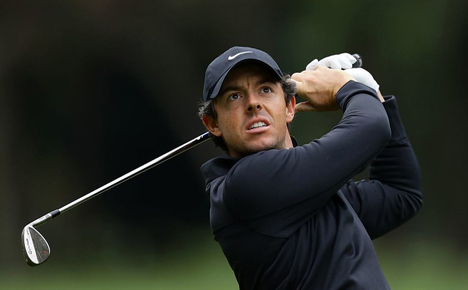
Two-time PGA Championship winner Rory McIlroy (+1100 to win), who won this event at Kiawah in 2012, enters the 2021 event as the odds-on favorite, having taken the top spot on the odds list following his win at the Wells Fargo Championship in early May. The public is backing the Northern Ireland superstar with the largest percentage of total handle (8.3%), outright winning handle (11.2%) and outright winning bets (13.1%). Only one golfer, Jordan Spieth (+1400 to win), is backed by a larger percentage of total bets, with 5.1% compared to 4.2% for McIlroy. While McIlroy is the odds-on and public favorite, he’s not a runaway favorite, with Justin Thomas (+1400), Bryson DeChambeau (+1600) and Viktor Hovland (+1800) close behind in public backing.

The largest current wager is a $10,000 bet on Rory McIlroy +1100 to win which will pay out $120,000 if McIlroy can win his third PGA Championship. A win for McIlroy would place him in elite company, as just five other golfers — Jack Nicklaus (5), Walter Hagen (5), Tiger Woods (4), Gene Sarazen (3) and Sam Sneed (3) — have won three or more PGA Championships.

The single bet with the largest potential payout is a $3,000 wager on Max Homa +6600 to win, which will pay out $201,000 if the 30-year-old can claim his first major title. Homa has been a popular darkhorse play by bettors throughout the 2021 season, and the public won big when the rising star claimed a victory at the Genesis Invitational in February. But Homa has missed four cuts in five major events.

Looking to place a bet online? Here are some excellent places for you to get in on the action:
Get up to $25 back in Free Bets: PointsBet.com
Log in Every Monday at PlaySugarHouse.com, and you’ll get a 20% Profit Boost
• Get a $25 free bet at WilliamHill.com

PGA CHAMPIONSHIP ODDS TO WIN:
Rory McIlroy +1100
Jon Rahm +1400
Jordan Spieth +1400
Justin Thomas +1400
Bryson DeChambeau +1600

LARGEST % OF TOTAL HANDLE:

Rory McIlroy (8.3%)
Jordan Spieth (7.9%)
Justin Thomas (5.6%)
Bryson DeChambeau (5.1%)
Viktor Hovland (4.9%)

LARGEST % OF TOTAL BETS:
Jordan Spieth (5.1%)
Rory McIlroy (4.2%)
Viktor Hovland (3.7%)
Will Zalatoris (3.6%)
Justin Thomas (3.5%)


New Jersey, New York Lift Most Covid-19 Restrictions

Mark the calendar for May 19. That’s when New Jersey and New York lift most restrictions in place due to the Covid-19 pandemic.

The list of businesses able to open to 100 percent capacity include restaurants, retail stores, casinos, salons and barber shops, gyms, swimming pools, both indoor and outdoor, amusement parks, and places of worship. The caveat, social distancing and masks remain as requirements, according to the Press of Atlantic City.

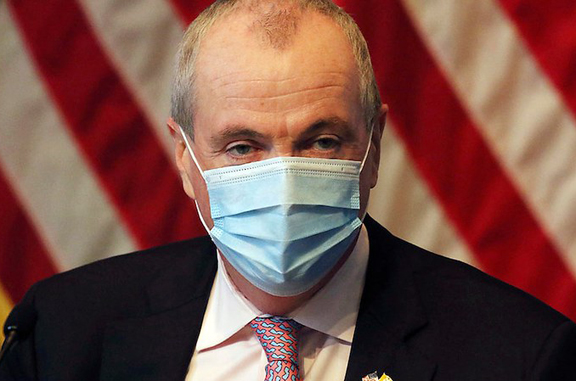
“Should the CDC revise its 6-foot distancing guidance, we will revise our requirements accordingly,” New Jersey Governor Phil Murphy said. “My guess is that that 6-foot number will come down.”

The there are no longer limits to the size of a party per table in restaurants; no limits to outdoor gatherings; a 250-person limit on catered events, funeral or memorial services, performances, political activities, and commercial gatherings; and a 30 percent capacity limit for indoor fixed-seat venues with 1,000 seats or more such as concerts and sporting events.

As of May 7, socially distanced bar seating is now acceptable in New Jersey. For restaurant tables and bars, seating can be closer than six feet if there are barriers in place. Buffets also can go back into business.

“These are the most aggressive steps we have taken to reopen to date,” Murphy said. “We have done exactly what we said we would do. We made decisions on our public health metrics and not on politics.”

The new orders come as close to normal as possible, said Michael Chait, president of the Greater Atlantic City Chamber of Commerce.

This “significantly helps the restaurant business,” he said. “The smaller restaurants can’t really expand because of the six-foot restrictions, but it really helps the larger businesses.”

Murphy moved up the start dates for the increased capacity limits for gatherings from May 10 to May 7.

Credit the declining number of cases and hospitalizations and the growing number of vaccinated residents which stands at more than 3.2 million.

“It’s a step, a meaningful step, in the right direction,” Murphy said.

According to Murphy, casinos like at Ocean, Borgata and Hard Rock could use the 250-person limit per room, and the 30 percent capacity for large venues to hold conferences.

“I’m not suggesting that it’s full on open for business, but I think it’s a pretty meaningful step,” Murphy said.

People now have the confidence to get together and visit small businesses as the summer approaches, said Lori Pepenella, chief executive officer of the Southern Ocean County Chamber of Commerce.

While many businesses have praised the lifting of restrictions in New Jersey, officials say trade shows and conventions have been ignored. They gathered on April 30 at Kennedy Plaza on the Atlantic City Boardwalk to complain.

“Ideally, it’s about consistency with some of the regulations,” Chait said. “So if you look at a casino floor, it’s not much different than a convention space and they’ve been occupied at 50 percent for a while now.”

Assemblyman Vince Mazzeo submitted a reopening plan to Murphy and awaits a response. The Governor expected to address the situation this month.

Since March 2020, sidelined events include the Atlantic City Boat Show and the annual Air Show, the latter still uncertain for this year. The convention center hosted just 21 events in 2020, compared to 87 in 2019. Even if Murphy eases the restrictions, the calendar for conventions in 2022 may be impacted given the long lag time for trade show planners.

“We cannot risk losing conventions and trade shows that bring in nearly $2 billion in revenue a year to Atlantic City and provide jobs for thousands of residents across the area,” Atlantic County Commissioner Caren Fitzpatrick said. “New Jersey has been a national leader in its response to the pandemic and throughout the vaccine rollout. It’s now time that we set an example to the rest of the country on how to hold larger events like conventions and trade shows safely.”

Mayor Marty Small Sr. agreed that safety first is required. “But we are a town that depends on entertainment and conventions. That’s what drives our visitors here, and I stand in support to open up more. People are going to flock here. We have more to offer than anyone.”

Further lifting of restrictions depends in part on the rate of vaccinations in the state. There are 3.26 million New Jersey residents who have received the Covid-19 vaccine and the goal is to hit 4.7 million or 70 percent by the start of summer.

Harrah’s relies on the Waterfront Conference Center for a significant amount of mid-week business. Other casino hotels spent significant money on convention and meeting space, according to the Associated Press.

“We are ready to go,” said Maureen Kern, national sales manager for the Atlantic City region for Caesars Entertainment. “We are losing business not just now, but for years down the road. Unless you can tell them ‘you can have your meeting,’ they can’t commit.”

Post-Pandemic Report on Atlantic City Released

Last summer, amid the coronavirus pandemic sweeping the world, New Jersey convened the Restart and Recovery Working Group to come up with ideas to help a post-pandemic Atlantic City. Its report will serve as a guide to help the state help revitalize all aspects of the city.

The group covers workforce development, economic diversification, public health and wellness and community outreach.

“This report represents my administration’s commitment to helping the Atlantic City community come out of Covid-19 stronger and more resilient than when this public health emergency started,” said New Jersey Governor Phil Murphy. “It also demonstrates our determination to build on the great progress that was being made pre-pandemic.”

According to the report, the Boardwalk is “in an advanced state of disrepair and in several places could well collapse in the near future. If the meteorologists are correct in predicting future costal storms, there is also the possibility that one of those storms could wipe out the Boardwalk in its present condition, unless it has been rebuilt, with disastrous and wide-spread negative implications for everything that we want to do to restart and recover Atlantic City.”

The reports suggests rebuilding the Boardwalk within the next three years.

Upgrading the appearance of Pacific and Atlantic avenues could do for Atlantic City what the Inner Harbor revamp did for Baltimore, the report said. The city also needs to increase home ownership, encourage development of vacant lots, enforce building codes and relocate social services out of the tourism district.

“This is an important step to have the government of the state draw up a blueprint as to how Atlantic City can move forward. And they did that with the input of residents, stakeholders,” said Councilman Kaleem Shabazz.

Mayor Marty Small Jr. added, “Make no mistake: Atlantic City is coming back for everything and more that the Covid-19 pandemic took away.”

Recommendations are all well and good. But paying for all this is quite another thing. The report indicated one way to help pay for these recommendations could be the sale of legalized recreational marijuana, according to the Associated Press.

“The state should consider the opportunities that may be created by new initiatives, including the legalization of recreational use marijuana, as potential sources of political and financial support for the efforts to restart and recover Atlantic City,” the report said.

In other New Jersey tourism news, it should come as no surprise that hotel jobs suffered a setback from the coronavirus pandemic. A study from the American Hotel & Lodging Association estimated that the industry lost more than 15,000 positions in New Jersey alone. Between 2019 and 2020 the numbers fell from 54,498 to 38,647. The industry has added almost 7,000 positions so far in 2021.

“Clearly the pandemic had an impact on the entire hospitality sector,” said Michael Chait, president of the Greater Atlantic City Chamber. “The restrictions, specifically capacity and travel restrictions, caused a lot of your hospitality sector employers to reduce staff.”

The industry should bounce back, particularly in Atlantic City, Chait told the Press of Atlantic City.

“We (the resort) are a tourism and travel destination, and I do think there is going to be a very strong desire for people to dine out, travel and stay overnight again,” Chait said.

Despite hotel jobs still not recovered from the pandemic, the industry faces a shortage of people to fill existing positions.

“There are some people who have a fear to go back because of the pandemic, the additional $300 from unemployment, and some employees have transitioned to other jobs all together because of the closures and uncertainty in the industry,” he said.

To combat the lack of labor, the chamber is working with the Casino Association of New Jersey and the Atlantic County Workforce Development Board to promote the industry as a source of work.

Nationwide, the hospitality industry shed 3.1 million jobs as a result of the pandemic, or some one-third of all unemployed people in the country, according to the federal Bureau of Labor Statistics (BLS). The rate of employment in Atlantic City last August fell 21 percent from 2019 levels.

“With hotels expected to end 2021 down 500,000 jobs, based on the pre-pandemic ratio, an additional 1.3 million hotel-supported jobs are in jeopardy this year without additional support from Congress,” the BLS said.

Caesars Will Sell William Hill’s Non-U.S. Assets

As expected, Caesars Entertainment has taken steps to unload William Hill’s non-U.S. betting shops. A sale could involve some 1,400 shops, as well as its U.K. and European online businesses. It could bring in up to £1.5 billion (US$2.1 billion).

Apollo Global Management and Shaked Ventures, the parent company of 888 Holdings, are favorites to tender a bid, according to The Telegraph. Apollo would be expected to combine William Hill’s assets with Gamenet, an Italian gambling operator it owns, and make cost cuts.

Shaked boss Itai Pazner told analysts last week: “We have mentioned William Hill in the past that could be something that we would be looking at.

888 Holdings’ shares have tripled in the last year and its 23 percent market share is values at more than £350 million. 888 might make a good fit as its focus centers on casino and poker gambling.

Fred Done, the British billionaire behind Betfred, might be interested in bidding but with 1,600 shops of its own, Betfred might face competition obstacles. Swedish based Kindred, the owner of 32Red, and Betsson, could toss its hat in the ring.

The auction could be announced this summer and completed by year’s end.

Caesars bought the sportsbook for $3.7 billion last month and promised to dispose of any assets outside the U.S. Caesars could also sell its nine Harrah’s-branded U.K. casinos as part of its U.S. only operation.

California Tribe Strikes Deal for the Palms in Vegas

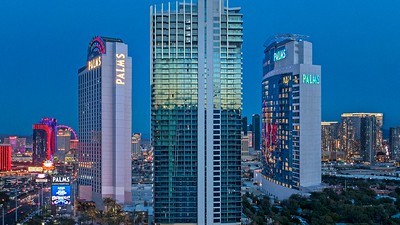
The San Manuel Band of Mission Indians, one of Southern California’s most successful gaming tribes, is expanding into Las Vegas via a $650 million deal with Red Rock Resorts to buy the off-Strip Palms Casino Resort.

The tribe and its casino arm, the San Manuel Gaming and Hospitality Authority, confirmed the purchase on May 4 and said they expect to close on it by the end of the year.

“Our board believes that the Palms is a casino resort that many of San Manuel Casino’s loyal guests would enjoy,” authority Chairwoman Latisha Casas said in a statement. “We are excited to move forward with this transaction.”

The Palms is one four Las Vegas casinos operated by Red Rock subsidiary Station Casinos that haven’t reopened since the 78-day shutdown the state of Nevada imposed last March to contain the Covid pandemic.

The closure, coupled with the battering the pandemic has wrought on travel and tourism, not to mention public gatherings as a whole, proved a particular disaster for the Palms, which was struggling to make good on $690 million worth of top-to-bottom refurbishments commissioned by Red Rock almost immediately after purchasing the resort from the Maloof family in 2016 for $312.5 million. The remodeling took almost three years and was completed just 11 months before the pandemic hit.

“We were actually starting to get some traction at the Palms,” Red Rock Vice Chairman Lorenzo Fertitta said in confirming the sale last week.

The redesigned resort, located on Flamingo Road about a mile west of the Las Vegas Strip, features a 94,000-square-foot casino, 703 hotel rooms and suits along with an adjoining condominium tower, an array of casual and upscale restaurants and entertainment lounges, a 2,500-seat theater, a pool and spa, meetings and conventions space, high-priced artwork and new outdoor signage highlighted by a 272-foot-high LED wall.

But between cost overruns and an expensive fiasco resulting from operating disputes at a 73,000-square-foot nightclub and day club that ultimately was closed at a cost of $34 million, the prospects of the resort recouping its investment were looking bleak even before the pandemic hit.

Fertitta acknowledged during Red Rock’s first quarter earnings call that the company had spent “too much money” on the property’s nightlife segment in a market that already was overcrowded and wasn’t growing.

“We needed to focus on the core parts of our business,” he said.

For the San Manuel, however, the Palms offers “a well-designed property which has been beautifully redeveloped and maintained,” as Casas put it, moreover, one that provides the tribe with a powerful opportunity to market Las Vegas to the extensive customer list it has built over 35 years at its San Manuel Casino in Highland, California, about 70 miles east of Los Angeles, the closest tribal casino to the metropolitan area.

The casino, which features more than 100 table games and 4,900 machine games, is in the midst of a major remodeling of its own that includes the addition of more than 400 redesigned hotel rooms, new restaurants, expanded high-limit gaming and new space for meetings, conventions and special events, along with another 1,500 slot machines.

At the same time, the greater Los Angeles area has long been a major market for Las Vegas and one the San Manuel have been busy leveraging through sponsorship deals with the NFL’s Las Vegas Raiders and Allegiant Stadium, the NHL’s Las Vegas Golden Knights and contributions to the University of Nevada, Las Vegas and other local organizations.

“We have so many team members, friends and partners who call, or have called, Las Vegas their home,” San Manuel Chairman Ken Ramirez said at one point late last year. “It’s in this spirit of understanding and solidarity that we were moved to show our support for Las Vegas.”

He said the tribe views the Palms as an “important step” in a “long-term economic diversification strategy.”

The San Manuel will be the second Native American enterprise to enter the Las Vegas market this year following Mohegan Gaming and Entertainment’s deal to operate the casino at Virgin Hotels Las Vegas, which opened in March on Harmon Avenue just east of the Strip at the site of the former Hard Rock casino hotel. But the tribe will be the first to actually own a Las Vegas property.

Analyst Chris Grove of Eilers & Krejcik Gaming told the Las Vegas Review-Journal he expects tribal gaming to be a “material component of the next wave of Las Vegas casino ownership.”

“San Manuel,” he said, “has long been one of a short list of elite tribal casino operators thought to have the ambition, financial wherewithal and operational chops to execute on a Las Vegas opportunity.”

Florida Lawmakers Start Special Session May 17

On the final day of the Florida legislative session, Governor Ron DeSantis put in a plug for the new 30-year gaming compact he negotiated with the Seminole Tribe of Florida. “Our budget looks great, but why not get more in the kitty, right?” he said. DeSantis noted the deal will bring in to the state $2.5 billion over the next five years and $6 billion by 2030.

Under the deal, sports betting would be allowed on Seminole properties, including digitally through the Hard Rock Digital app. The tribe also could offer craps and roulette at its casinos and would agree to drop its legal battle against designated player games at non-Seminole venues.

If the compact passes the legislature, it will face the scrutiny of the U.S. Department of Interior. Federal law specifically allows gambling on tribal lands; as a result, observers said the Hard Rock Digital aspect of the deal, which expands availability statewide, may pose a legal hurdle, although the tribe may argue servers would be based on reservation lands.

Another hurdle could be a constitutional amendment passed in 2018 stating any gambling expansion must be approved by voters statewide. “If Amendment 3 wasn’t designed to stop something like this, the biggest expansion of gambling in Florida history, then what did voters mean by it exactly?” said John Sowinski, president of No Casinos, the group behind the amendment, which already is threatening to challenge the compact in court even if it does get ratified. Observers, however, said the amendment may not be an issue since the amendment allows the state to negotiate separate agreements “for the conduct of casino gambling on tribal lands.”

Besides ratification of the compact, the special session will address three gaming bills remaining from the regular session. Two of the measures would establish a gaming commission and a third removes the live racing requirement for parimutuel permit holders.

Meanwhile, the Seminole Tribe has released a 60-second broadcast ad, “The Seminole Story,” designed to boost support for the compact. The tribe released a statement noting, “The Seminole Tribe of Florida has a great story to share with all Floridians. It’s about the tribe’s longtime partnership with the state and how the new gaming compact reinforces the tribe’s steadfast commitment through a $2.5 billion revenue sharing guarantee over the first five years of the agreement. The people of Florida should know the future is secure and bright for their state and for the Seminole tribe.”

Top Chef to Partner with Morongo

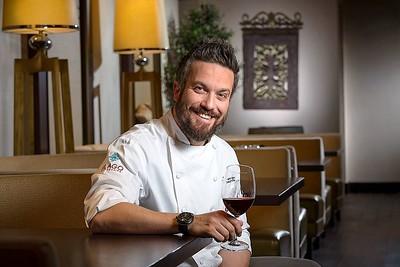
“Top Chef” reality series star Fabio Viviani will bring his culinary vision to Morongo Casino Resort & Spa near Palm Springs, Southern California.

Morongo COO Richard St. Jean said in an announcement, “We are beyond thrilled to be joining forces with Fabio Viviani, whose vision for unsurpassed service and exceptional guest experiences aligns perfectly with our mission here at Morongo.” He added, “Fabio is one of the most well-known, well-loved and well-regarded names in dining and restaurant innovation on the globe, and we are delighted to be collaborating with him.”

Fabio Viviani Hospitality has opened 41 restaurants across the country. Viviani said in a statement: “I am excited to be partnering with the innovative team at Morongo to develop new concepts for celebrating the food and culinary influences we all love.” He added, “This partnership is about our common goal to find exciting new ways to creatively heighten the dining experiences for Morongo’s guests by providing amazing dishes that people will enjoy.”

Wynn, Cosmo Return to 100 Percent Capacity

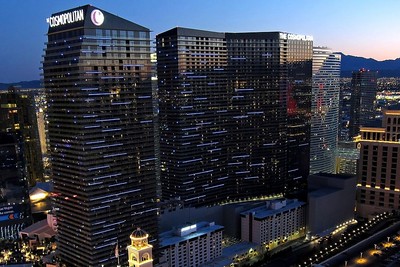
Wynn Resorts’ two Las Vegas Strip casinos and The Cosmopolitan of Las Vegas returned to full capacity last week after reporting that more than 80 percent of their workforces have been vaccinated against the Covid-19 virus.

The clearances, issued to Wynn on May 3 and The Cosmopolitan the following day, were granted by the Nevada Gaming Control Board in accordance with vaccination guidelines established for the state’s resort industry by Governor Steve Sisolak.

All three properties were cleared as well to remove social distancing restrictions and plastic barriers at gaming tables and slot machines.

Wynn, which achieved 88 percent employee inoculations, issued a statement saying, “Our employees and guests will continue to follow health and safety guidelines, including mask compliance, to ensure a safe and comfortable environment for all.”

To get to 80 percent The Cosmopolitan, like Wynn and other major operators in the city, launched a comprehensive internal campaign to boost vaccination rates through education and on-site inoculations. The property also has paid out nearly $1 million in cash bonuses to workers who have complied.

“We believe the only clear path to normalcy and bringing our entire workforce back is through vaccinations,” CEO Bill McBeath said. “It’s pertinent to not only The Cosmopolitan but to our entire industry in ensuring travel can safely return to the destination. I could not be more proud of our team for doing their part to protect our city.”

The program has proven so effective Control Board Chairman Brin Gibson said, “We’ve asked them to share their methodology, strategy, and success with the wider hospitality industry.”

Wynn Resorts also offers vaccinations at an in-house clinic at Encore for employees there and for those at Wynn Las Vegas.

MGM Resorts International, Caesars Entertainment, Las Vegas Sands, Red Rock Resorts, Golden Entertainment and Boyd Gaming also offer on-site shots.

With rates of infection steadily improving across Southern Nevada, casinos on the Strip and throughout Clark County progressed to 80 percent capacity on May 1 and are expected to go to 100 percent on June 1 once 60 percent of the eligible population has received at least one dose of a vaccine.

Maryland Casinos Log Third-Best Month Ever

Maryland’s six casinos generated the third-highest monthly revenues in the industry’s history for month of April, according to numbers released by the Maryland Lottery and Gaming Control Agency.

The state’s casinos generated $162 million in revenue last month, following an all-time record of $169 million in March. While the state’s casinos were closed for all of April 2020, the revenue numbers represent a 12 percent increase over April 2019.

The casinos raised their revenues last month despite some ongoing limits due to the pandemic. Due to local orders, MGM National Harbor and Baltimore’s Horseshoe Casino were limited to 50 percent capacity during April.

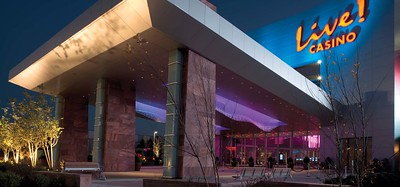
MGM National Harbor posted a 2.5 percent increase in gaming revenue to $62 million in April 2021, compared with April 2019. Live! Casino & Hotel in Hanover increased gaming revenue to $58 million in April 2021, an increase of $10.4 million (21.7 percent) over April 2019.

Mississippi Casinos Free to Set Own Covid Rules

Starting April 30, casinos in Mississippi were informed they can decide which, if any, Covid-19 safety protocols to implement, following the Mississippi Gaming Commission’s recent announcement that all restrictions related to Covid-19 that were mandated on March 4 will be canceled, including masks, social distancing and 75 percent occupancy.

The state’s casinos had different reactions. For example, at Beau Rivage in Biloxi, Regional Communications Director Mary Cracchiollo Spain noted MGM Resorts, including Beau Rivage, will continue to require masks and social distancing. In a statement, Spain said, “We are in the process of removing hand washing stations from the casino floor and will no longer be conducting temperature checks for team members as they enter the property. For the safety of our employees and guests, we will continue to require masks at MGM Resorts properties at this time. As vaccination efforts continue, we will reassess our health and safety protocols consistent with guidance from health experts, changing regulatory requirements, and input from our guests and employees.”

At the Scarlet Pearl in D’Iberville, Chief Executive Officer LuAnn Pappas said, “Friday at 5 p.m., we’re like Mr. Rogers in the neighborhood. It’s the best day ever.” Pappas said she expects at least half the casino’s customers will continue to wear masks, “judging from the text messages I received today. At least it’s their choice now, which is freedom versus being mandated.” She said the venue also stopped taking temperatures. She added, “Any associate that wants to continue to wear the masks may absolutely do so. We are going to keep the cleaning protocols because our guests have learned to love their slot machine getting cleaned between each session. The table games customers liked that their chairs were being wiped down, so we’re going to keep that.”

Golden Nugget Casino Biloxi General Manager Chett Harrison said the venue also will continue to clean and disinfect high-frequency touch-point areas at least once every two hours. “We do that anyway, even before Covid-19. We want it to look crisp and clean every day,” he said.

Palace Casino Resort General Manager Keith Crosby said the decision to wear a mask will be left up to employees. “The first reaction is a sigh of relief that we got a clear indication that our diligence with cleanliness, social distancing, wearing masks and, more importantly, getting vaccinated has paid off,” Crosby said.

Treasure Bay officials said masks no longer will be required but other safety protocols, like Plexiglas barriers and limited seating at some table games, will remain.

Mississippi casinos were closed due to Covid-19 for two months and allowed to reopen May 21, 2020. “Our state I think did it right, taking a period to pull back and see what this coronavirus was.”

Some casinos also have started to book live entertainment. For example, Queensrÿche is scheduled in June at Hard Rock Biloxi and comedian Ron White is scheduled in July at Beau Rivage. Harris noted the Southern Gaming Summit, which was canceled last year, returned to Beau Rivage May 4-6.

Scarlet Pearl’s Pappas said common areas, like the sportsbook, were “less impacted than one would think” since most bettors used the stand-alone kiosks. “The mandates more impacted video poker at the sportsbook bar because of social distancing restrictions,” Pappas noted. She added Plexiglas dividers were installed at the table games but “the biggest issue for us was no one wanted to play with only three people, and that’s what the mandate was,” Pappas said.

Pappas said some of the Covid-19 safety changes will remain, most notably the casino’s buffet, which will become a service instead of a self-service restaurant.

Casinos must abide by state and local rules for ordinances relating to Covid-19, the MGC stated. As a result, masks still must be worn in the six casinos in Tunica County, where a mask mandate still is in effect. County Board Attorney John Keith Perry said, “If you look at our ordinance, if there’s going to be more than 10 people gathered then they need to have a mask on. We don’t want to take steps backwards. We don’t want to do more than necessary because we want to protect our citizens from being exposed to Covid-19.”

Next door in Louisiana, L’Auberge Baton Rouge, the largest casino in the region, also dropped its mask requirement for all guests. A Facebook post stated, “Masks are no longer required for our guests when visiting L’Auberge Baton Rouge. We appreciate your patience during this time and hope to see you soon!”

In addition, L’Auberge has been posting dozens of jobs in recent days, from cashiers to dealers and hospitality workers. The company’s policy regarding mask-wearing was not immediately clear.

Two Times a Charm for Federal Sports Betting Tax?

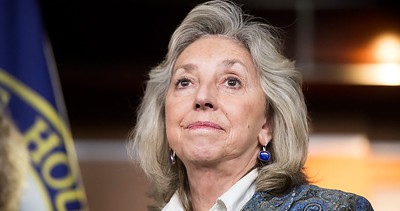
Nevada Congresswoman Dina Titus has introduced a bill in the House of Representatives to repeal an age-old federal tax on sports betting wagers.

It’s a battle she’s fought before without success, as she recently told the news site Sports Handle, but she’s hoping this time will be different.

“We still have trouble in Washington with the old, negative images of gaming. Reduce the tax on gaming, ‘Oh that’s a sin.’ So it’s a hard sell,” said the six-term Democrat, whose first congressional district includes most of the Las Vegas Strip and a portion of Downtown.

“The industry is hindered by an outdated tax code and burdensome regulations that penalize legal, regulated operators while providing illegal operations with an unfair advantage,” said Pennsylvania Rep. Guy Reschenthaler, the bill’s Republican co-sponsor.

The tax dates back to 1951, when Nevada was the only state with legal gambling and legal sports betting and the industry was viewed across most of the country as unsavory at best and at worst criminal.

Initially set at a punishing rate of 10 percent of handle the levy was enough to precipitate the closure of 20 of the 24 books operating in Nevada at the time, including all 13 books in Las Vegas.

It wasn’t until the early 1970s, when the tax was cut to 2 percent, that the sector revived. It was reduced again in 1982 to 0.25 percent.

Titus tried early in her tenure in Congress to get it repealed with a stand-alone bill that went nowhere.

But much has changed since, with regulated sports betting spreading rapidly nationwide and major sports leagues and the media enthusiastically on board, and the time may finally be ripe for killing it.

“The common enemy remains these illegal offshore sportsbooks that don’t have these tax obligations,” American Gaming Association President and CEO Bill Miller said. “We should do everything we can to support the legal system that still is competing with both the illegal corner books and the offshore illegal sites. Whatever the rationale in 1951 was, it’s time for us to support the legal industry.”

This go-round, Titus is planning a different approach, making the rounds of the House’s informal gaming caucus, seeking additional sponsors and talking to the staffs of committees where the bill might have legs.

“If we can get it put into a (pandemic) recovery package or in Ways and Means or one of those ‘Christmas tree’ packages, whatever it takes, that would be fine,” she said.

Canadian Senate Begins Work on Sports Betting Bill

Passed in the Canadian House of Commons last month, the “Safe and Regulated Sports Betting Act” to end the longstanding prohibition against single-event sports betting, is now under review in the Senate.

The bill was introduced April 30 by Senator David Wells, after MP Kevin Waugh carried it in the House of Commons. During Covid-19, the Senate seldom met, but now is in session for the next seven weeks.

In introducing the bill, Wells declared, “Colleagues, if this bill passes, these stringent provincial regulations, frameworks and consumer protections would all apply to single-event sports betting and the product would be brought safely into the well-regulated light of day.”

The bill would not affect horse racing, which would remain under federal oversight.

Wells added, “We must take (sports betting) back from the black and grey markets and bring it into the light. Colleagues, this is a bill that we should all support. A vote against it would not be a vote against gambling, it would be a vote against increased safeguards, regulations and community programming.”

Proponents hope to pass the legislation before the summer recess. For it to become law, the Senate would have to pass an identical version of the House bill or pass its own bill and send it back to the House of Commons so that chamber could agree to changes. Finally, if Royal Assent is given, the bill would become law.

The only sports betting allowed in Canada is parlay betting and wagers on horse racing. If the current legislation is approved, Canadian provinces and territories would be authorized to adopt their own regulations and license retail and online single-event sports betting.

The first stage will be committee hearings, when amendments might be attached. If the House progress is any portent—a very short debate and a vote in which only 15 MPs were opposed—it could be clear sailing for the bill in the Senate.

But Wells is taking nothing for granted, including the bill’s passage in the House. “I give no weight to that at all,” he told iPolitics. “You’ll never hear me say, ‘Well, here’s why you should support this bill: because it passed overwhelmingly in the House.’ … My job is to look at it independently — and specifically, independently of the House.”

Wells says he won’t seek unanimous consent. He believes the Senate is a more deliberative body with the responsibility to delve deeper into the bill than the House.

At this point, there’s no clear opposition in the Senate, and Wells acknowledged that the bill seems to have “widespread support.” He added, “There may be some amendments at committee, or it may pass through committee unamended, in which case, it comes back to chamber. If we can get it to that point, there’s a good chance we can get it passed before the session ends.”

There is a certain level of urgency, he said. “If we don’t pass it this spring, then we probably won’t be addressing this until next year, or the year after. And there’s opportunity being missed; not just the economic opportunity, but an opportunity to control and regulate gaming and gambling in Canada right now.”

Wells says the bill is necessary so that Canada can remains competitive with other nations, especially the U.S., where sports betting is becoming widespread. “It’s not that I’m highly engaged in the world of online betting or sports betting; I don’t bet,” he said, “but I do recognize the disadvantages that Canada has … with our competition around the world. If a Canadian decides to bet on a match between the Leafs and the Canadiens, I want that money to remain in Canada.”

According to the Canadian Gaming Association (CGA), “Experts in responsible gambling, law enforcement and amateur sport all believe that bringing regulatory oversight and control to sports wagering is the best way to protect people, athletes and the integrity of the games.”

The CGA estimates that residents are currently spending $10 billion annually on illegal sites, sometimes run by criminal enterprises. It cites the December 2019 case of Ontario Provincial Police (OPP) disassembling an illegal ring operated by the Hells Angels that brought in $131 million over five years. The OPP alleges that the outlaw motorcycle gang controlled these sports websites: Ultimate Sports Book, Titan Sports Book, PlaytoWin Sports Book, Privada Sports Book and Players Sports Book.

The CGA argues that amending the Criminal Code to allow single-event sports wagers would cut off oxygen to “illegal wagering activities,” such as the offshore wagering sites so many Canadians visit. It would also increase consumer protections and provide economic opportunities for communities.

Opposition from sports leagues has diminished. In 2012 Paul Beeston, former president of the Toronto Blue Jays and MLB told Canadian senators, “If large numbers of our fans come to regard baseball only or even partially as a gambling vehicle, the very nature of the sport will be altered and harmed.”

But as CGA CEO Paul Burns told the Toronto Star, “It’s a very different environment. There’s more stakeholder support today.”

MP Waugh, who sponsored the bill in the House, echoed that sentiment: “Provincial and municipal governments want this bill passed, industry groups want this bill passed, advocacy groups want this bill passed, but most importantly Canadians want this bill passed.”

Senator Brent Cotter, a former deputy minister of justice and deputy attorney general for Saskatchewan, told the Star, “There’s so much money involved in professional sports now, and having something exposed to sunlight is better than it not being exposed. We have a better sense of problem gambling. (Legal) entities are expected to address this issue … organized crime doesn’t have a problem gamblers division.”

Legalized sports betting would include age and ID verification, and information and data sharing that would help regulators fight match-fixing.

This is not the first time an effort has been made to legalize single-game wagers in Canada. The last attempt was in 2015.

Illinois iGaming Pits Casinos Against Bars, Taverns

In Illinois, a possible conflict is brewing between tavern and restaurant owners who operate video game terminals and casinos and racinos pushing for legislation that would allow them to offer online gambling.

At a recent hearing of the General Assembly’s Executive Committee, chaired by state Rep. Bob Rita, sponsor of the iGaming legislation, state Rep. Daniel Didech said legal online gaming would counteract illegal offshore betting operators who “pay no taxes, create no jobs and are a significant drain on the Illinois economy. Legal iGaming would allow the state to regulate game integrity and crowd out predatory companies” by creating a safe environment for players and helping problem gamblers.

Didech added legal online gambling would produce an estimated $100 million in annual tax revenue to support the “many priority initiatives of members of the General Assembly.”

Penn National Gaming Vice President of Strategic Financial Planning Jeff Kaplan addressed concerns that online gambling might cannibalize revenue from brick-and-mortar casinos. He stated, “Prior to the pandemic, we performed an analysis of our customers to determine if there was any cannibalization to our brick-and-mortar revenue and what we found was iGaming was almost entirely complementary to our brick-and-mortar play. In addition, we attracted a different type of customer online as our online database averages 10 years younger than our brick-and-mortar players. Due to these factors, we believe iGaming will grow the gaming marketplace and allow us to connect to a new type of player that we may not have previously attracted to our properties,” including three of Illinois’s 10 land-based casinos—Hollywood Aurora, Hollywood Joliet and Argosy Alton.

Kaplan noted online players are attracted “back to the casino” since they’re in the company’s database and earn rewards points for their play that they can redeem for food and other services at the brick-and-mortar venues.

At a separate panel that addressed VGT issues, state Rep. Tim Butler pointed out how the statewide growth in VGTs over the past decade benefited “mom and pop businesses that are not casinos and that depend on revenue from VGTs.” He added the current partnership that provides tax revenue to local communities is a “unique combination.”

Also speaking against online gambling, Illinois Licensed Beverage Association Executive Director Dan Klossner suggested internet gaming could deter customers from returning to bars, restaurants and taverns where VGTs are located, as more of the public are getting vaccinated. He called the situation “FOGO,” or “fear of going out.”

The Video Gaming Act was signed in 2009; the expanded gambling bill of 2019 also allowed bars, restaurants and taverns to install a sixth game, and permitted truck stops to offer more machines. Today about 39,000 VGTs are in operation throughout the state; since March 2020, when sports betting launched at casinos, VGTs have generated nearly $455 million in tax revenue, including $388 million to the state, from more than $1.3 billion in operator revenue−including four months of shutdowns due to Covid-19. In comparison, casinos have generated $577.2 million in revenue, including more than $103 million to the state; sports betting raised an additional $31 million from $208.8 million.

Maine Again Mulling Sports Betting

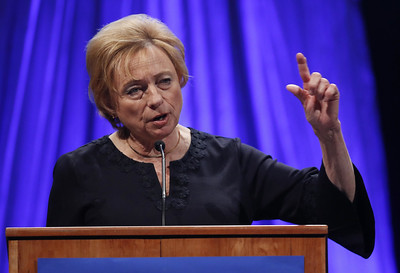
Two years ago Maine lawmakers passed a bill legalizing sports betting, only to have Governor Janet Mills veto it.

The governor hasn’t changed but the legislature is nevertheless looking at the issue again. The Veterans and Legal Affairs Committee April 30 heard about four competing gaming bills.

Proponents argue that Maine residents are already betting heavily on sports. Their bills would just regulate that activity and protect consumers, while collecting some tax on it.

One of the proponents, Rep. Tim Roche, told colleagues, “You are having people come into your state, New Hampshire, and they are making all the money, and we are losing a lot. Like tomorrow, we are going to lose a lot of money because the Kentucky Derby is tomorrow, and people are going to drive to New Hampshire to make a bet.”

Although all four bills would legalize sports betting, each takes a different approach on what to do with the tax revenue, from putting it in the general fund to helping harness racing.

Neighboring New Hampshire last year collected $11 million in taxes from $300 million in sports wagers. The State Lottery expects that number to grow.

Roche believes Governor Mills can be persuaded to be on board this time because her veto was related to not allowing bets on state college teams or marketing to children.

State Senator Louis Luchini, who introduced the bill that was vetoed, said, “Sports betting can’t be marketed towards kids. That was a big issue for the Governor and rightfully so.” He has reintroduced his bill but with safeguards on marketing to minors.

Said Roche, “I think she’s going to be OK with this because the guidelines are better, lessons learned so to speak from the one two years ago.”

Luchini predicts the four bills will be merge into one bill during committee hearings.

Both Roche and Luchini don’t predict large amounts of revenue for the state but figure it all should go to the Granite State.

Luchini said, “I think sports betting could generate some revenue for the state of Maine. It’s not going to be a huge revenue generator.” He favors a “tethered” model that would allow mobile sites to set up anywhere if they met licensing guidelines and regulations.

The owners of the two casinos in Maine, including the Hollywood Casino Hotel & Raceway, favor the untethered scenario where sportsbooks would be linked to brick-and-mortar locations, such as casinos and off-track betting sites.

Roche said, “We have to embrace this now because it’s just what it is, it’s the future of sports. Revenue is going out of the state.”

Luchini’s bill would allow the state’s federally recognized tribes to participate. “This bill would hopefully give equity to the tribes that they’ll be able to hopefully conduct a form of gaming here in the state of Maine,” he said.

Washington Tribe Agrees to Sports Betting Compact

The Suquamish Tribe is the latest of two Washington tribes to reach a sports betting agreement with the state gambling commission. The commission expects more tribes to follow suit.

The Washington Indian Gaming Association’s Executive Director Rebecca George said in a statement: “Today’s announcement that the Suquamish Tribe is the second tribe to reach a tentative agreement on a compact with the state to allow sports wagering at their casino is another strong indication that our carefully regulated system of tribal gaming is working.”

The commission previously reached a tentative agreement with the Tulalip tribe.

George added, “Over the last three decades, tribes have built a strong partnership with the state to build a system that creates a range of gaming opportunities for the public at a limited number of tribal casinos while protecting against the negative social consequences that would result if gambling were expanded in our neighborhoods.” George continued, “We expect more announcements soon about additional Tribe-State agreements. And we’re looking forward to offering sports wagering at tribal facilities across the state as soon as this fall.”

Before the compact amendments become effective, the U.S. Department of the Interior will need to approve, as well as the state legislature.

Churchill Downs Reports Second-Highest Derby Wagering

Churchill Downs Inc. reported the May 1st, 14-race card that included the 147th running of the Kentucky Derby brought in $233 million in wagers. That’s the second-highest handle in Derby Day history, right behind $250.9 million wagered in 2019. Handle for the race itself was $155.4 million, down from the record $165.5 million that was bet two years ago.

Last year, the race was moved to Labor Day weekend due to Covid-19; fans were not allowed in and wagering on the day’s races fell to $126 million. More bets are made on the Kentucky Derby than any other event in U.S. horseracing, which typically generates about $11 billion in total handle.

This year’s handle included every source−wagers made at other tracks and through online platforms like Churchill Downs’ own TwinSpires, which reported a “preliminary record” handle of $62.7 million. Another “preliminary record” was set for the Kentucky Derby alone, at $40.8 million, wagered through TwinSpires. Churchill Downs said the race-day handle was up 66 percent from 2020, and the TwinSpires Derby handle was up 75 percent.

On-track wagering figures were not released but observers said due to Covid-19 occupancy restrictions, those numbers most likely are much lower than the 2019 total of $21.3 million.

Attendance at Churchill Downs was 51,838 on Derby Day−the largest crowd to watch a sporting event since the Covid-19 pandemic began. However, that’s about one-third the number of 150,729 attendees who watched the races in 2019.

Online wagering got a boost from broadcast viewership, officials said. NBC Sports on Sunday said preliminary data showed Saturday’s broadcast averaged about 15 million viewers. Last year, about 9.3 million people, the smallest TV audience in Derby history, watched the race. In 2019, average viewership was 16.5 million.

By now, everyone knows Medina Spirit won the Kentucky Derby, giving trainer Bob Baffert his record-setting seventh win in the race and jockey John Velazquez his fourth. Commenting on the possibility of Medina Spirit running in the next stop toward the Triple Crown—the Preakness Stakes at Pimlico Race Course in Baltimore –Baffert commented, “Can he win the Triple Crown? I don’t know, but he’s the Derby winner and that’s all that matters.”

In 2018, Baffert’s Derby winner Justify went on to become his second Triple Crown winner in four years. Now, Medina Spirit’s biggest threat is considered to be one of his Santa Anita stable mates, Concert Tour, Baffert’s top horse before he ran third in the Arkansas Derby. Baffert and Concert Tour’s owners Gary and Mary West skipped the Kentucky Derby in favor of the Preakness.

Baffert stated, “Medina Spirit came out of it well. It takes about a week to determine, so I’m going to come back next weekend and see. But I don’t see anything discouraging right now. I’ll sit down and talk to Mr. West. He wants Concert Tour to develop, and we’re not rushing things. We know he’s a good horse. The thing is how they’re training. They both would have to be training well.”

Maryland Live! Launches Sports & Social

Baltimore-based Cordish Companies announced that its Sports & Social sports bar concept, currently a hit at its new Live! Philadelphia casino has officially opened at its Live! Casino & Hotel Maryland, its flagship property adjacent to Arundel Mills Mall in the Baltimore suburb of Hanover.

The unique restaurant, gaming and social lounge features a 500-foot-long LED screen and different styles of sports-bar entertainment, such as a wide variety of interactive social games, including mini-bowling and oversized foosball table. In Philadelphia, it centers around the FanDuel Sportsbook, a feature that will be active in Maryland pending the finalization of the state’s sports betting regulatory structure. At Maryland Live!, the venue is located in the heart of the casino floor.

Sports & Social is a national concept that Cordish has located in high-profile entertainment districts, world-class casino resort destinations, and at the front door of professional sports stadiums around the country. The new $15 million project created by ICRAVE, an internationally acclaimed award-winning strategy, design and development firm, is the first Sports & Social venue to open in Maryland.

The 212-seat, 13,775-square-foot Sports & Social Maryland is designed for diehard Maryland and D.C. sports fans as a place to cheer on their teams. Outfitted with a state-of-the-art AV system featuring more than 100 linear feet of LED screens, including a giant, 47-foot wide main screen, fans can watch multiple games and sporting events at once.

“Adding the nationally recognized Sports & Social to Live! is an extension of our commitment to providing our guests with unparalleled and unforgettable dining and entertainment,” said Rob Norton, president of Cordish Gaming Group. “Everyone that comes in is blown away by the visual and audio sports viewing experience. Combined with the extensive culinary menu and variety of games, Sports & Social is a must-see for anyone living or visiting this region.”

Dining at Sports & Social includes a classic American grill menu in addition to two main bars, tiered sports viewing lounge chairs and VIP lounges.

Through its partnership with FanDuel Group, and pending regulatory approval, the venue will provide guests with multiple options to wager, including self-service kiosks and retail windows, all within sight of the big game screens.