Author: Casino Connection Staff

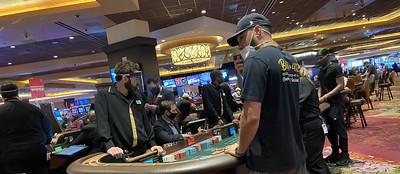
Vegas Recovery No Mirage; City Was No. 1 Memorial Day

A report from AAA named Las Vegas as a top travel destination for the Memorial Day weekend, the unofficial kickoff of the summer season. Analysts say the city is rebounding quickly from a year-plus of Covid-19 shutdowns and restrictions. AAA pointed to Las Vegas as a favorite among travelers for the long holiday weekend—it was the No. 1 road trip destination, followed by Orlando, Florida, Myrtle Beach, South Carolina, Denver, Colorado and Nashville, Tennessee.

“As more people get the Covid-19 vaccine and consumer confidence grows, Americans are demonstrating a strong desire to travel this Memorial Day,” said Paula Twidale, senior vice president of AAA Travel. “This pent-up demand will result in a significant increase in Memorial Day travel, which is a strong indicator for summer.”

The Las Vegas Review-Journal reports that gaming and tourism experts aren’t ready to pop the cork right yet; they say it will take more time for Vegas to truly return to pre-Covid levels of visitation and business.

But the start of the recovery is reason enough for celebration, and it’s been evident for months. “It’s been great to see Las Vegas come alive again to the vibrant destination that we’ve all come to know and enjoy,” CEO Bill Hornbuckle told investors on a late April earnings call. “Our gross bookings in March were one of the best months in the company’s history, clearly backed by pent-up leisure and casino demand.”

“I’m pretty bullish on the summer, which is typically a lull in the year for the business,” said Josh Swissman, partner at the Strategy Organization. “It felt almost like pre-pandemic times. “I think the summer is going to be a big, big volume season for us in Vegas this year.”

In March, Nevada casinos brought in $1 billion in gaming win, and 2.23 million visitors came to Las Vegas. Both were the highest totals since February 2020. It was the best month for Nevada casinos in eight years.

And according to a statement from the Las Vegas Convention and Visitors Authority, “We continue to see an increase in leisure visitation with every passing month since vaccines have become widely available throughout the U.S. With pent-up demand for travel, even greater pent-up demand for the unrivaled Las Vegas experience, we anticipate visitation continuing to grow.”

An MGM Resorts International spokeswoman told the Review-Journal it’s important to maintain health and safety precautions to “ensure we keep this incredible recovery moving forward.”

“Las Vegas is recovering much faster than expected, and it’s incredibly exciting to witness,” said Callie Driehorst, manager of corporate media relations. “It’s thrilling for us to be bringing employees back and hiring new team members at a pace and scale unlike anything our company or community has seen before.”

Nevada Resort Association President Virginia Valentine said resort operators have gone out of their way to ensure that workers are vaccinated, “an extra level of reassurance for visitors. It’s been wonderful to see more and more visitors returning and returning with real excitement and energy, ready to have fun.”

Alan Feldman, gaming industry expert and a distinguished fellow at UNLV’s International Gaming Institute, said leisure travel has come “roaring back.”

“There is no road map to compare this to, but I would say the ramp-up has been a bit faster than I expected it to be, at least in the leisure travel sector,” he said. “Remember that we still haven’t seen business and meeting travel return yet.”

The annual World of Concrete trade show, scheduled for June 8-10, will be the first major convention in Las Vegas since the pandemic’s onset. As business travel returns, Swissman said, “There’s nothing economically I see that could slow things down, nothing from a business trend standpoint.”

As for gaming revenues, May’s numbers are expected to be strong with most casinos opening at 100 percent capacity and vaccinated customers no longer required to wear masks. The Nevada Gaming Control Board lifted all Covid restrictions on casinos starting at 12:01 a.m. on June 1.

“The economic outlook has improved dramatically since December,” said Gaming Control Board Research Analyst Michael Lawton. “The rollout of vaccines, the decrease in infection rates and the subsequent increases to capacity, along with federal stimulus, have allowed for gaming win amounts to quite honestly exceed our expectations throughout the year.”

In April, according to J.P. Morgan, Strip slot revenues of $327 million increased 19 percent compared to April 2019. Slot handle was up 16 percent and hold was 8.5 percent. Table game win decreased 26 percent in April compared to 2019 to $150 million. Table drop decreased 18 percent and hold was down to 11.5 percent, and when baccarat was omitted, table game win decreased 10 percent and drop fell 3 percent.

CNN reported that the comeback is especially welcome, given high unemployment in Las Vegas. “It has been more difficult on Las Vegas than probably any city in the United States,” said Las Vegas Convention and Visitors Authority President Steve Hill.
Pennsylvania Senate Committee Looks at Skill Games

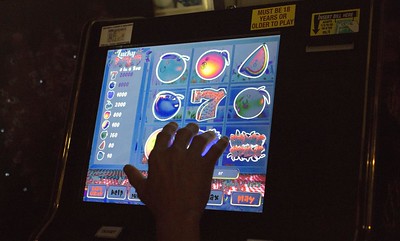
Pennsylvania state lawmakers last week held the first of what is expected to be a series of hearings examining unregulated, illegal gaming machines that have appeared in convenience stores, gas stations and other non-casino locations around the state.

There are estimated to be more than 20,000 of these machines in operation at locations as diverse as pizza shops and laundromats across the state. Most of them are branded Pennsylvania Skill, and are supplied by Georgia-based Pace-O-Matic, which claims the games are not gambling because skill is involved in the outcome.

The state Senate Community, Economic and Recreational Development Committee conducted the first hearing on the subject in the northeastern Pennsylvania district of Senator John T. Yudichak, a former Democrat who, as an independent, caucuses with the Republican Party. Yudichak presided over the hour-long hearing by noting that his district includes a convenience store in Hazelton where one of the unregulated machines appears to have been connected to a murder.

Yudichak has said the lack of security in convenience store locations, in addition to the facts that the machines are not taxed and employ no player safeguards as with regulated machines, warrants further examination of the phenomenon.

One of those testifying at the hearing was Peter Shelly, who as the head of the citizen group Pennsylvanians Against Illegal Gambling (PAIG) has been battling the spread of the unregulated machines for years.

According to the Play Pennsylvania news site, Shelly testified that law enforcement agencies must “address this crisis and remove these illegal machines…. We are encouraged with the enforcement actions taken by the district attorneys’ offices in Berks and Delaware counties. The machines are a menace to communities across our state.”

Committee minority chair Senator Amanda Cappelletti’s district includes Montgomery County and a portion of Delaware County where the D.A. Jack Stollsteimer estimates they are over 20,000 illegal gambling machines.

Cappelletti, an East Norriton resident, commented that she sees the illegal gambling machines where she purchases gas. She told PlayPennsylvania during an interview that her gravest concern is that the unregulated machines can exacerbate compulsive gambling with no safeguards in place.

“I worry about individuals struggling. I worry about individuals who can’t afford $5 thinking ‘if only I hit once’ who play more often now that machines are widespread outside casinos.”

No one from Pace-O-Matic or other advocates of the Pennsylvania Skill games testified at the first hearing. Pace-O-Matic has been involved in efforts to have the company’s games officially legalized and regulated.

Atlantic City First-Quarter Profits Soar

The first quarter of 2020 featured two and half months of business as usual and two weeks when most revenue disappeared as the Covid-19 pandemic took hold. By mid-year, the casino business in Atlantic City returned, if limited in scope and remained limited through the first quarter of this year.

But the city’s casino industry posted gross operating profits of $95 million in the first quarter, more than three times higher than the same period last year. Figures from the New Jersey Division of Gaming Enforcement indicated eight of AC’s nine casinos showed an increase; only Bally’s posted a loss, according to the Associated Press.

Gross operating profits include earnings before interest, taxes, depreciation and other charges.

James Plousis, chairman of the New Jersey Casino Control Commission, said this year’s figures are not evenly comparable to the first quarter of 2020 due to the virus-related shutdowns. In comparison to the first quarter of 2019, this year produced 11 percent more gross operating profit.

“The strength of internet gaming and the safe return of tourists to Atlantic City are a powerful combination,” Plousis said. “Last month’s lifting of casino capacity restrictions bolsters confidence for a strong recovery this summer.”

Borgata posted $29 million during the quarter, up some 28 percent; Tropicana reported $16.2 million, an increase of 128 percent from last year; Harrah’s earned $9.5 million, a gain of 224 percent; Hard Rock posted $8.5 million, compared to a $4.2 million a year ago; Caesars reported almost $8.2 million, after a loss of $593,000 in the first quarter of last year; Ocean Casino Resort earned $7.94 million, compared to a $574,000 loss in 2020; Golden Nugget produced $4.7 million, which jumped 406 percent; Resorts earned just over $1 million, compared to a $3.4 million loss in 2020; and Bally’s reported a loss of nearly $6.5 million, compared to a loss of over $8 million last year.

The results follow the same pattern as U.S. statistics in the casino industry.

According to the American Gaming Association, commercial casinos in the country took in more than $11.1 billion in the first quarter of this year, which equaled the best quarter, the third quarter of 2019.

Occupancy rate in the first quarter exceeded 50 percent, with an average room rate of $131 a night. Ocean produced the highest average room rate at $175, while Resorts had the lowest-priced at $91.

These results are a “further sign that the industry is recovering,” said Jane Bokunewicz, coordinator of the Lloyd D. Levenson Institute of Gaming, Hospitality and Tourism at Stockton University. “As the last restrictions are lifted, there is every reason to expect to see even stronger recovery in the second- and third-quarter data.”

In related news, among the factors that attracted gaming companies to Atlantic City is one of the lowest tax rates in the nation—8 percent on GGR, and 15 percent on iGaming operations. For brick-and-mortar sports betting at New Jersey’s casinos and at the racetracks, the tax is 8.5 percent, while the tax on online sports betting is 13 percent.

Those rates are not about to change, though they mean fewer revenues for the operators.

“The tax rate should have been higher in the first place,” said Assemblyman Ralph Caputo, a former casino executive who is the chairman of the Tourism, Gaming and the Arts Committee. “I agree that we should have taken advantage then, but it wasn’t politically possible. Nobody wanted to upset the apple cart.”

For former New Jersey Senator Ray Lesniak, the goal of sports betting wasn’t to rake in money. “It was to save the casinos and the racetracks from bankruptcy and it worked. It’s a booming business. We’re maintaining open space [through preservation of horse farms] and we’re keeping a lot of jobs.”

State Senator Paul Sarlo, whose district includes the Meadowlands Sports Complex, agrees. “It doesn’t work to overtax casinos,” said Sarlo, the chairman of the powerful Senate Budget Committee.

Macau Recovery Is Up and Down

Gross gaming revenues for Macau’s casino industry could drop 30 percent from May due to an increase in Covid-19 cases in South China’s Guangdong Province, the region closest to Macau. Since the beginning of June, more than 140 new infections have been confirmed in the province, which accounts for some 45 percent of Macau tourism each year.

According to Bernstein Research, GGR for the first week of June came to MOP1.35 billion (US$169 million) 70 percent less than the same period in June 2019, before the pandemic began.

Guangdong is an important feeder market for Macau, reported GGRAsia, and incoming travelers now must present a negative Covid test. Some also must quarantine for 14 days.

Macau was a topic of much discussion at the recent Bernstein Annual Strategic Decisions Conference. Rob Goldstein, chairman and CEO of the Las Vegas Sands Corp., said he’s “disappointed” by the uncertain pace of recovery in the Macau, while understanding that the local and mainland governments have taken a “zero-tolerance” approach to risk.

“We were hoping for a quicker recovery,” Goldstein said, adding that he has “no concerns about long-term demand” in Macau.

MGM Resorts President and CEO Bill Hornbuckle said he expects the company’s operations in Macau to be right-sided in about a year, despite the wobbly recovery to date.

“It’s more disappointing than other places such as Las Vegas,” said Hornbuckle. “We’ll see ebbing and slowing over the next couple of quarters, but I can’t imagine as they continue to get jabs into their arms, albeit slower than the U.S., that we’re not going to return to a new norm.”

Hornbuckle said mass business is at about 60 percent of pre-pandemic levels, while premium mass is around 12 percent, up from single digits from a few years ago. “While there may or may not be top-line revenue, there will be more bottom-line potentially,” referring to the mass and premium mass segments, he said.

“I think Macau will take a little bit longer than we’d like, but fundamentally it is in great shape.”

When it comes to Singapore, the executives agreed that local demand has helped support revenue levels at Marina Bay Sands, but additional growth will depend on a resumption of travel from traditional feeder markets.

Philadelphia Lifts Most Covid Restrictions

While the state of Pennsylvania has lifted most Covid-19-related restrictions on businesses, including casinos, the city of Philadelphia has followed by lifting most, but not all of the restrictions.

While the state requires only that non-vaccinated people wear masks indoors, Philadelphia is leaving the full indoor mask requirement in place for now. Also, Philadelphia is leaving the temporary 11 p.m. last call in place at bars and restaurants.

However, according to local ABC affiliate WPVI-TV, city officials say that if current virus trends continue, the final restrictions could be removed by the end of this week, June 11.

New York City Casino Flops

The New York legislature last week removed the possibility of plan to fast track a casino in New York City after negotiations to add funds from the effort to the 2022 state budget. Governor Andrew Cuomo wanted the plan to add revenue from a casino to help the city and state recover from the pandemic. But several issues arose that precluded the success of this plan.

The financial reasoning for a New York casino was lessened recently when the federal government designated more than a trillion dollars to states to aid their recoveries. More pressing, however, was Cuomo’s demand that the state control the process of the siting of the casino and the choice of the owner/operator.

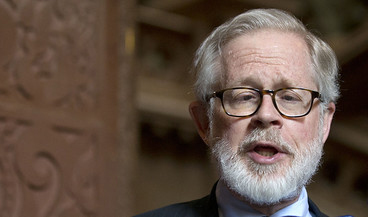
In a story published by the New York Post, Manhattan Assemblyman Richard Gottfried, who represents the Upper West Side, said he was very concerned.

“I adamantly oppose any casino in Manhattan,” he said. “I believe it would be seriously detrimental to the residential and commercial quality of Manhattan.”

More likely, however, Gottfried wanted to control the process, unlike the previous four casinos in upstate New York, where the state controlled the site selection and the licensing. Cuomo wanted that process to be duplicated for the three downstate casinos that were approved at the same time as the upstate casinos, in 2013. He also is believed to be concerned that giving Manhattan special circumstances in the casino process would encourage other groups to want favors in unrelated budget negotiations.

The 2013 legislation awarded four northern casinos in New York state, with three southern New York casinos eligible to be selected seven years after the opening of the first northern casino. Under those guideline, the southern casinos wouldn’t be eligible to be opened until 2023. But efforts to speed up the process began when the pandemic hit, and Cuomo was an instant fan, salivating at the $1.5 billion in licensing fees the three casinos would bring.

Conventional wisdom seems to guarantee full casinos to the two current racinos, Empire Casino in Yonkers, owned by MGM Resorts, and Resorts World Casino at Aqueduct racetrack in Queens, owned by Malaysia’s Genting. But Yonkers officials aren’t taking any chances, holding a rally last week to encourage state officials to move quickly.

“Albany, can you hear me? Are you listening?” was a refrain mentioned several times during the rally. Labor officials say a full-scale casino will bring back jobs lost during the pandemic.

“Our members need jobs,” says Thomas Carey of Westchester Putnam Center Labor Body. “If we get the gaming license back, it creates thousands of jobs for many members.”

“Bringing living wage jobs to the region provides people with the economic security that they need to stabilize their lives and provide a future for their children,” says Shawyn Patterson-Howard, the mayor of neighboring town Mount Vernon.

While the collapse of the negotiations likely means the plan will be gone for this year, some still have hope.

Freeman Klopott, a spokeswoman for the New York State division of the budget, said the bill is still alive.

“With the influx of federal funding, there was less of an imperative to change the status quo, however we are continuing to work with the legislature to see if there is a path forward this year,” she said.

But a more powerful official says hope is gone for this year.

Senator Joe Addabbo, chairman of the Racing and Wagering Committee, told the Post, “There’s mere discussion at this point. There’s nothing really going on.”

Wynn Resorts, Las Vegas Sands and the Bally’s Corp. were all considering bidding on the license and will likely use the added time to refine their presentations.

Sightline Acquires Mobile App Developer Joingo

Sightline Payments, a fintech company specializing in digital payments solutions for the sports betting and casino markets, announced the acquisition of Joingo, a leading mobile engagement and loyalty platform for the casino gaming industry.

Joingo serves more than 100 casino operators across North America and is the only app solution focused exclusively on the casino industry. Its patented mobile loyalty platform allows casino brands to reach their mobile users with highly personalized and interactive mobile marketing campaigns designed to increase reach, loyalty and revenue.

The acquisition gives Sightline the ability to offer customers a turnkey cashless gaming solution as well as a broader suite of products to help North American casinos enhance loyalty and personalization for customers, and drive increased visitation and loyalty for properties.

“This acquisition positions Sightline to provide a more robust digital payments experience in casinos,” said Joe Pappano, CEO of Sightline Payments. “We know that enhancing a guest’s mobile experience is the key to cashless gaming adoption in casinos. We welcome Joingo’s talented team to Sightline to further strengthen our ability to empower the digital transformation of the consumer experience.”

“Joining forces with Sightline gives us access to significant resources and capabilities to accelerate our product development initiatives and deliver the most robust and seamless cashless solution for land-based casinos in the industry,” said Mike McManus, CEO of Joingo. “Joingo and Sightline Payments share an impressive roster of common clients in the gaming space, and today’s announcement will deliver powerful value-added benefits to those clients, and many others as we move forward.”

On April 1, Sightline announced the completion of a $100 million funding round to help build out organizational capabilities including people, systems, technology and marketing, which helped fund this acquisition. Strategic investors participating in the round included Cannae Holdings, Genting Group, Point Break Capital, Searchlight Capital Partners, Shift4 Ventures, Walter Kortschak and Vectr Ventures.

“Think of it as a marketing mobile platform that now we’re able to embed cashless,” Pappano told CDC Gaming Reports during a recent interview. “We can better drive consumer engagement, understand all the touchpoints of what they’re doing with that mobile app, provide real-time messaging and rewards, and leverage that safe, secure payment ecosystem for moving money in and out of a wagering account. It’s a perfect fit to create this vertically integrated solution.”

Sightline said it chose Joingo because of the company’s “entrepreneurial spirit.”

“The cultures are very similar,” Pappano said. “We sat down and look at various mobile providers, some that support the gaming industry and some that do not. The alignment of the culture, the people, the innovative spirit, how they operate with a sense of urgency, there was great clarity and a vision… The architecture of (Joingo’s) platform is scalable with tremendous flexibility. They just understand the gaming and entertainment market.”

With integrations into all major casino management system providers—Joingo, point-of-sale systems including Shift4 and Freedom Pay, and with financial services leader NRT—Sightline provides an end-to-end product in its Play+ suite.

Miami Beach Mayor Slams Seminole Gaming Compact

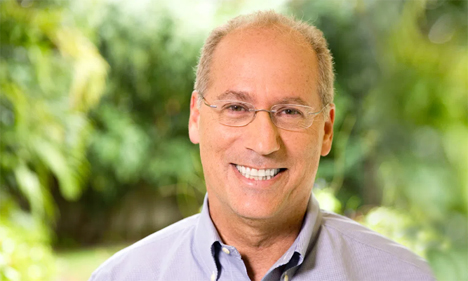
In a nine-page letter, Miami Beach Mayor Dan Gelber urged U.S. Interior Secretary Deb Haaland to reject the proposed gaming compact between the state and the Seminole Tribe, which gives control over sports betting to the tribe.

Gelber and Miami Beach have long opposed casino gaming within the city limits. He wrote to Haaland that he supports the goals of the Indian Gaming Regulatory Act (IGRA), “namely, to provide Native American tribes with a pathway to greater independence and economic vitality.

“But the Florida compact you are considering was not crafted in pursuit of those goals. It was simply a vehicle hijacked by non-tribal casino interests who fully corrupted the legislative and executive process in order to obtain advantages outside of tribal land and in direct contravention to the interests of Floridians.”

The Department of the Interior must approve or reject the compact within 45 days after May 25; that’s the date Governor Ron DeSantis signed the bill to ratify the compact. If Interior takes no action within that time frame, the compact will be considered approved.

The 74-page compact, negotiated between DeSantis and Tribal Chairman Marcellus W. Osceola Jr. gives the tribe exclusive rights to full casino games in Florida and directs 40 percent of sports betting to the state. In exchange, the tribe would guarantee the state $500 million a year in revenue-sharing payments for 30 years. The legislature passed the measure by a large margin.

Gelber also alleges the compact was negotiated with an improper purpose, since it “also requires the Seminole Tribe of Florida to agree not to object to gambling operations that are farther than 15 miles from its Hollywood casinos.”

He noted, “Our governor was not seeking to advance the goals of IGRA. Rather he was most interested in advancing the interests of non-tribal political donors and his most important political patron,” Donald Trump. The rumor mill says the former president may try to transfer a casino license to his financially struggling Trump National Doral Miami and potentially sell it to a casino operator.

Gelber also mentioned Jeffrey Soffer, owner of the Fontainebleau Miami Beach, who’s been trying for years to obtain a casino license for that resort. Gelber argued that certain language in the compact—that the Seminoles may not challenge a casino license for a business more than 15 miles “in a straight line” from the tribe’s Hard Rock Hollywood—would enable a gaming license for the Fontainebleau and the Trump property.

Gelber said state officials including DeSantis get “plane trips, parties on yachts and other non-monetary contributions” from those interests. He accused DeSantis of “setting the groundwork for casino expansion for a prime campaign donor at the Fontainebleau Miami Beach, and for his major political patron at the Trump Doral.”

DeSantis dismissed the allegations, saying, “It’s ridiculous,” and expressed confidence that the compact will be approved. “I think it’s just an example of some of these partisan politicians always trying to elevate themselves with any type of cheap headline they can get, trying to inject Trump into this.’’ DeSantis said the compact is a good deal for Florida. He noted a casino license transfer cannot occur without the approval of the legislature.

Seminole Tribe spokesperson Gary Bitner added, “While the Seminole Tribe of Florida always is respectful of the opinions of others, the gaming compact was overwhelmingly approved by the Florida House and Senate with broad bipartisan support. It fully complies with the law and is good for the people of Florida.”

Jim Allen, CEO of Seminole Gaming and Hard Rock International, testified before House committees that the tribe has a sterling record regarding regulation of its gaming operations. Allen called the deal “a $500 million-a-year solution” that benefits both sides and state residents, especially in light of Covid-19.

Gelber wasn’t impressed and called the compact “a vehicle by which widespread casino gambling will be spread throughout our state. The Interior Department should not join this misguided effort.”

He also pointed out that Florida voters supported Amendment 3, which gave them exclusive rights to approve expanded gambling in the state. The current compact, he said, was “the only route arguably available to expand gambling to non-Indian interests.”

Bally’s Finalizes Deal to Buy Trop Evansville

Bally’s Corp. has announced that it completed its acquisition of the Tropicana Evansville casino operations in Indiana from Caesars Entertainment, Inc.

As part of the transaction, Bally’s also acquired the unencumbered rights to the Evansville operations’ sports betting and iGaming skins, which will provide the company with greater access to the growing Indiana gaming market.

“The Tropicana Evansville acquisition closing marks another major accomplishment in what has already been a truly remarkable year for Bally’s,” said George Papanier, president and chief executive officer of Bally’s Corp.

“As we continue to implement our growth and diversification strategy with precision, we are excited to welcome the Tropicana Evansville into the Bally’s family and look forward to the opportunity to provide our first-in-class land-based and interactive entertainment offerings to the Indiana gaming market.”

As previously announced, Bally’s acquired the Tropicana Evansville for $140 million. As part of the transaction, an affiliate of Gaming & Leisure Properties, Inc. acquired the real estate associated with the Tropicana Evansville casino for $340 million, which it is leasing to Bally’s for $28 million per year, subject to escalation.

GLPI also acquired the real estate associated with Bally’s Dover Downs casino for $144 million, which it is leasing back to Bally’s for $12 million per year, subject to escalation. Both leases are governed by a master lease agreement with GLPI, which has an initial term of 15 years and includes four, five-year options.

As a result of this structure, no cash outlay was required by Bally’s at closing. Bally’s expects this transaction to be immediately accretive to earnings.

Tropicana Evansville maintains 79,000 square feet of enclosed space, including 45,000 square feet of casino floor, four dining venues, a race and sportsbook, and back-of-house space. The complex also includes 11,000 square feet of convention space adjacent to the casino, and a Riverfront Event Center located across the street, which includes 10,000 square feet of convention space overlooking the Ohio River. Accommodations include a 243-room hotel tower and a 95-room boutique hotel.

While it was anticipated that the Evansville property would be rebranded as a Bally’s, the acquisition of the Las Vegas Tropicana may give the company second thoughts.

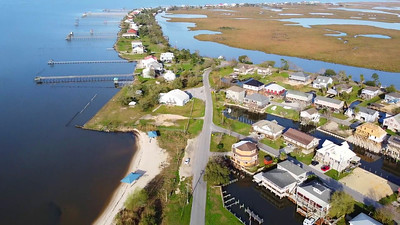
Louisiana Senate Approves Slidell Casino Vote

The Louisiana Senate recently approved House Bill 702 on a 23-14 vote. The measure authorizes an October voter referendum on a casino in Slidell. The bill now goes Governor John Bel Edwards, who’s indicated he will sign it.

The vote was a significant development for Los Angeles-based Peninsula Pacific Entertainment, which hired 19 lobbyists to persuade Louisiana lawmakers to give St. Tammany Parish voters the chance to determine the casino issue this fall. Peninsula Pacific wants to move the license from its closed DiamondJacks Casino in Bossier Parish to the proposed $250 million Slidell casino. The referendum would reverse an anti-casino vote from 1996.

At a recent Finance Committee hearing, Spectrum Gaming Senior Vice President for Analysis Matt Roob, citing a 2019 Spectrum study, said 22 percent of the gamblers in Mississippi come from Louisiana, according to the Mississippi Gaming Commission. If the Slidell casino captured 33 percent of those players’ money, Louisiana could reap $27 million in annual tax revenue.

The legislation faced opposition from other casino operators. Boyd Gaming operates the Treasure Chest in Kenner and the IP Casino in Biloxi, both less than an hour’s drive from Slidell. Penn National operates the Boomtown Casino in Harvey and two casinos on the Mississippi Gulf Coast; all are located within an hour’s drive of Slidell. Also, Full House Resorts operates the Silver Slipper Casino in Waveland, located less than 30 minutes from Slidell.

Full House President and Chief Executive Officer Dan Lee said his company would build a $500 million casino in Lake Charles if the license becomes available for open bid.

Religious groups also fiercely opposed the casino. For example, John Raymond, the pastor at New Horizon Church and headmaster at Lakeside Christian Academy, both in Slidell, cited studies that indicated placing a casino in a community creates more problem gamblers within a 10-mile radius. “The casino culture is a parasitic presence in a community over time,” Raymond said.

Will Hall, director of the Office of Public Policy at the Louisiana Baptist Convention, said statistics show that since gambling was legalized in Louisiana in 1991, the number of problem gamblers in Louisiana had more than tripled to more than 6 percent of the adult population, according to a 2016 state study. “We know casinos don’t make good neighbors,” Hall said.

Anti-casino direct mail already is being sent by a group called Watchdog PAC, headed by Republican operative Scott Wilfong. He declined to identify who funded the campaign.

Ultimately, the Louisiana Gaming Control Board would determine if the license would be transferred. Chairman Mike Noel said, “If for some reason the legislation doesn’t make it through the last step or if it does but the voters don’t pass it, Peninsula would have to make a quick decision whether to reopen in Bossier Parish or turn the license in for public bid.”

On a related note, soon after the vote, Noel informed Edwards he was resigning effective June 10. Observers said the move pre-empts a Senate confirmation hearing in which Noel could have been questioned about his State Police tenure during the fatal arrest of a Black man, Ronald Greene. The death remains under investigation.

Edwards’ spokesperson Christina Stephens stated, “The governor is appreciative of his service at the Gaming Control Board and will work to find a suitable replacement for Mr. Noel.”

Noel was the State Police chief of staff at the time of Greene’s death in May 2019. Noel retired from that agency in June 2020 when Edwards named him to lead the state gambling regulatory board.

State Rep. Ted James, leader of the Louisiana Legislative Black Caucus, did not support Noel as head of the state gambling agency. “I had concern with giving somebody who was deeply involved in what I perceive was a cover-up any type of promotion,” he said.

Virginia Casino Investors Also Political Campaign Donors

Among the named local investors in the Urban ONE casino project in Richmond, Virginia are four donors to the 2016 and 2020 election campaigns of Richmond Mayor Levar Stoney, according to Virginia Department of Elections records. The four pledged to invest in the casino before Stoney urged the city council to consider it.

Exactly when the four individuals committed to invest in the casino project isn’t known. But Urban ONE spokesperson Mark Hubbard said, “There are signed agreements with the investors that date back months.” Stoney recommended the ONE casino project on May 20. It beat out proposals by Bally’s and the Cordish Companies’ LIVE! casino project.

Responding to media questions about the investors in the ONE project and Stoney’s campaigns, he said, “You have to talk to Urban ONE about that. This is obviously news to me Am I surprised? No. I have had supporters and donors on both sides, whether it was with ONE or whether it was LIVE! I’m sure there are many of those who consider themselves donors or supporters of mine on all those sides.”

A Cordish Companies spokesman, Cari Furman, stated, “The Cordish Companies nor any member of the LLC Applicant contributed” to Stoney. Furman added Cordish did contribute to candidates or active members of Richmond’s City Council in the 2020 election cycle.

Virginia does not restrict who may donate to a candidate or cause nor how much an individual may donate. Rich Meagher, PhD., a political science professor at Randolph-Macon College, noted the people who vetted the casino proposals should have thought not only about “who had the best management team, who offered the most amenities to the city, but also, ‘Who might have a conflict of interest? Who might have donated money to politicians in the city? Who might have a–sort of–thumb on the scale in terms of the decision-making process?’”

Meagher called the “kind of overlap” between Stoney and his donors “unseemly,” and said, “It might cause people to doubt the process a little more than they otherwise might.”

According to state campaign finance records, Urban ONE Chief Executive Officer Alfred Liggins has contributed to existing and potential members of Virginia’s legislative black caucus Hubbard said. Also, Hubbard noted, Liggins donated to Richmond City Councilman Mike Jones during his bid for the Virginia House of Delegates in the 2020 election cycle.

When asked about his political contributions, Liggins said, “We are a national African American-targeted, and African American-owned, media company. From the inception of our company, we have supported African American legislators seeking higher office.”

A public hearing will be held Monday, June 14. If the city council votes to accept Stoney’s and the casino evaluation panel’s recommendation of Urban ONE’s proposal, a referendum will be held in Richmond in the November election.

New York Mall Casino to Open in ’22

Construction is expected to begin this summer for a Resorts World casino inside a mall in Newburgh, New York, about two hours north of New York City. Once operational, the VLT casino will be open 20 hours a day, reports the Albany Times Herald-Record.

Resorts World also operates the $1 billion casino Catskills resort that opened near Monticello in 2018.

The Newburgh Planning Board signed off quickly on the proposal, approving plans for the gaming hall just a month after Resorts World presented them. The company has agreed to pay the town of Newburgh $3 million a year in host benefits, largely to offset additional policing costs or other expenses caused by the casino, which will offer 1,300 electronic games.

The $32 million project, to be called Resorts World Hudson Valley, will span 90,000 square feet of mall space and take up to 12 months to complete. The company hopes to open the casino in the first three months of 2022. Meghan Taylor, a vice president of government affairs and public relations for Resorts World, thanked the town board and local community for supporting the project in a statement on Friday.

“We look forward to breaking ground soon and delivering on our commitment to create good-paying union jobs for local residents, help revitalize the Newburgh Mall, serve as an economic engine in the Hudson Valley, and begin generating revenue for New York State’s public schools,” Taylor said.

Resorts World has projected the slot-like devices at its Newburgh casino will generate a robust $160 million in gross gaming revenue, part of which goes to the state to spend on education. By comparison, the much larger casino in Sullivan County, which has table games in addition to electronic machines, ran up $206 million in gross revenue over the 12 months before the pandemic.

Bill Would Give Harrah’s New Orleans Tax Break

Harrah’s New Orleans would get a major tax break under legislation approved by the Louisiana state Senate. The bill would provide for the state to begin receiving a $1.3 million per year payment from Harrah’s in lieu of current law that has the casino company paying state sales, use and occupancy taxes that add up to about $1.6 million per year to two state entities, the Louisiana Stadium and Exhibition District (which oversees the Superdome, among other things) and the Ernest N. Morial New Orleans Convention Center.

The state is apparently moving to cut a deal with Harrah’s after the state Supreme Court affirmed that Harrah’s owes the state about $43 million in taxes not paid while contesting the law.

The court ruled that Harrah’s owes the back taxes to the state for rooms it comps at its hotel across the street from the casino on Poydras Street but not for rooms it comps at hotels owned by others.

“This ends the lawsuit,” said Sen. Gary Smith, D-Norco, who handled the legislation in the Senate, in an interview with The Advocate.

Kimberly Robinson, the state secretary of Revenue, told the publication that Governor John Bel Edwards is supporting the legislation as part of a larger deal with Harrah’s that will end the lawsuit in which the company for years has challenged state taxes on hotel rooms it comps for its guests.

“The administration is working on a resolution for a broad set of issues that support the overall New Orleans tourism infrastructure,” Robinson said.

Under a 2019 agreement with the state, Harrah’s has begun work on a $325 million investment that will build an additional hotel on top of the existing casino. Harrah’s will also upgrade other parts of its existing facilities.

Nevada Governor Signs ‘Right to Return’ Law

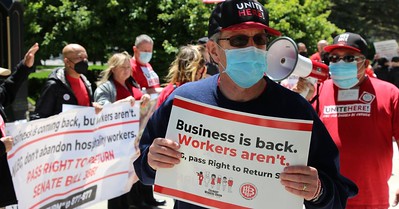
Las Tuesday, Nevada Governor Steve Sisolak signed “Right to Return” legislation that ensures laid-off hospitality workers are able to return to their previous jobs.

Representatives of the gaming industry and the state’s influential Culinary Union negotiated a deal on the workers’-rights legislation with less than a week left in the 120-day legislative session.

The union made some concessions in bargaining, limiting the reach of the bill, exempting certain employee categories including managers and stage performers, and also exempting some small businesses like restaurants that adjoin casino resorts.

According to reports, every vote on SB386 was made along party lines, with Democrats in support and Republicans opposed.

The Nevada Resort Association agreed to take a neutral position in return for the concessions, and major gaming operators like MGM Resorts International, Wynn Resorts and Caesars Entertainment backed the amended bill. The opposition came from Las Vegas locals casinos.

In a statement, Culinary Secretary-Treasurer Geoconda Argüello-Kline said the new law would “protect over 350,000 hospitality workers” in Clark and Washoe counties.

“At the height of the pandemic, 98 percent of Culinary Union members were laid off and currently only 50 percent are back to work,” Argüello-Kline said. “While a majority of unionized hospitality workers already have extended recall protections in their contracts, most hospitality workers protected by the new SB386 Right to Return law are not unionized.”

South Point Casino-Hotel attorney Barry Lieberman said the bill was “a confusing patchwork of vague, burdensome and non-helpful requirements” that forced employers “to guess at their peril as to what the bill actually requires them to do.” He suggested the changes infringed on an employer’s right to rehire casino workers who have “superior skills.”

Addabbo: Don’t Rule Out Big Apple Casino

New York lawmakers may have declined to approve a casino in New York City, but that doesn’t mean the campaign is over. According to the Washington Examiner, plans continue to award three casino licenses to downstate communities—possibly including Manhattan or one of New York City’s other four boroughs.

The New York State Gaming Commission must first issue a request-for-information (RFI), both to gauge interest in the downstate licenses and determine the casinos’ potential size and scope. Under current law, the licenses would not be awarded until 2023.

Addabbo tried to speed the downstate licenses as part of the 2021 budget process, citing a need to spur job growth and development coming out of the Covid-19 pandemic.

A report in the New York Post cited a study by industry consultants Spectrum Gaming Group that showed a Manhattan casino, along with upgrading existing racinos at Aqueduct Race Track in Queens and Yonkers Raceway, would produce more gaming tax revenue than if the resort license was awarded to Brooklyn or Queens.

The Big Apple scenario would generate an estimated $1.31 billion in gaming tax revenues—$46.7 million more than a Brooklyn resort and $58.7 million more than under a Queens facility. Addabbo, chairman of the state Senate Committee on Racing, Gaming and Wagering, said a casino anywhere in New York City would be successful.

“Generally speaking, licenses go to where you need an economic boost in terms of construction jobs, post-construction jobs … for New Jersey, they were placed on a boardwalk that was a blight prior to the casinos getting there,” he said. “Even in our state, the first four full-fledged casinos were placed upstate in areas that needed an economic boost. So I can see there’s an argument to be made that you don’t need it in Manhattan. Manhattan already has its economic boost. But I would think anywhere in the five boroughs, it’s going to be lucrative.”

Illinois Gaming Board Clears Temporary Hard Rock

The Illinois Gaming Board (IGB) recently took action on a temporary Hard Rock Casino in Rockford, and also provided an update on the planned casino in Danville.

In Rockford, the board approved a supplier’s license for 815 Beltway Holdings, the owner of the land where the proposed $310 million Hard Rock Casino will be built. This action will allow a temporary casino to open at the former Giovanni’s Restaurant & Convention Center.

In addition, the IGB also approved 52 people and entities of 815 Entertainment, including former Rockford Mayor Charles Box, Karen Nielsen and Rick Nielsen, guitarist with the rock group Cheap Trick.

The IGB denied a temporary casino license to Giovanni’s in April after owner Joseph Castrogiovanni failed to report he had been arrested for shooting at an occupied car in his driveway.

The IGB still is reviewing the license application for the permanent casino project. The recent ruling means 815 Entertainment can now apply for a construction permit for the Hard Rock Casino Rockford.

Hard Rock officials said the venue will create 1,000 construction jobs and 1,200 permanent jobs. The company has committed to building a music production studio and an outdoor amphitheater, make improvements to the Sinnissippi Music Shell and support neighborhood youth programs.

In October 2019, the Rockford city council approved the casino plan from Hard Rock International over proposals from Rock River West Casino Group and Forest City Casino.

Regarding the Danville casino, IGB Administrator Marcus Fruchter said the board had spent seven months vetting the first casino license applicant, who subsequently withdrew its application in July 2020. A second applicant, Rochester, New York-based Wilmorite Construction, was selected and submitted an application last November. The company has lined up Golden Nugget branding for the casino, which will include 500 slots, 10 table games, a steakhouse and food court in phase one. Wilmorite officials said the casino is projected to generate $66 million in annual revenue, with $6.2 million going to the city of Danville.

Fruchter added no applications are pending for the Chicago casino.

Six new casinos were authorized as part of the 2019 gambling expansion bill: Danville, Waukegan, Rockford, South Suburbs, Williamson County and downtown Chicago.

Zoning Change Speeds New York Mini-Casino

The U.S. Department of the Interior has approved of the updated tribal state gaming compacts that were approved in April between Arizona Governor Doug Ducey and the state’s gaming tribes.

Ducey characterized the new compacts as a “once-in-a-generation milestone for tribal nations, their communities, and the entire state of Arizona.”

This is the next to the last piece in the puzzle before tribal casinos and professional sports teams in the state may begin to operate sportsbook facilities and online gaming. It also authorizes fantasy sports wagering.

The last piece to the puzzle will be the rules and regulations that the Arizona Department of Gaming must produce in time for the NFL season in September. Max Hartgraves, public information officer for the department commented May 31, “We do need to set up a whole new regulatory structure and develop these rules. So, we are on a pretty tight timetable.” He added, “Luckily, we do have that emergency clause, so we’re able to kind of expedite that rule-making process. But, just putting that whole regulatory structure in place, because this form of gaming has never been legal in the state.”

The compacts were updated for the next 20 years.

The state’s 18 tribal casinos create more than 38,000 jobs.

Twenty sports betting gaming licenses have been issued, 10 for tribal casinos and 10 for professional sports teams.

Some tribes will also be able to add new casinos. One of them is the Yavapai-Prescott Tribe, which has retrieved plans for a new casino in Prescott. It will start with site work on the parcel, which is located just off Highway 69 and across the street from the Frontier Village Shopping Mall.

The tribe already owns Bucky’s and Yavapai casinos in Prescott. The original plan was to replace them.

The Navajo Times quoted Bob Ogo, president of the tribe’s board: “The gaming market in Arizona is changing and the tribe is preparing for the future.”

Massachusetts Casinos Fully Open

Casinos in Massachusetts reopened fully on May 29 without restrictions. But the shadow of Covid lingers as the Bay State casinos are giving $20 credits to patrons who can show they have been fully vaccinated.

They are also allowed to go unmasked. Plainridge Park slots parlor General Manager Northscott Grounsell quipped: “Guests can walk right up to a bar and do crazy things — purchase a drink, consume it there, stand, enjoy themselves.” He added, “We’re also able to turn on a few more slot machines, open a few bars, our restaurants are now at full capacity.”

The effects of Covid also mean that some plexiglass barriers remain, although live music is starting to return.

Grounsell told NBC 10 News: “Folks who have gotten both shots and show us their vaccination card can get $20 to play on slots. We’re doing that as a way to reward folks who have already gotten vaccinated and maybe provide that extra bump to folks who are still on the fence.”

The Massachusetts Gaming Commission May 27 voted 4-0 to lift all restrictions and return to pre-pandemic rules. That allowed the Encore Boston Harbor and MGM Springfield to bring back blackjack, craps and roulette without social distancing requirements. Capacity limits were also lifted, although it will realistically be months and maybe years before the casinos return to pre-Covid levels.

R.I. Bill Would Guarantee Money for Host Towns

A bill authored by Rhode Island state Rep. John G. Edwards would guarantee that the casino host towns of Tiverton and Lincoln wouldn’t lose their $3 million annual payments, even if the casinos they host have to close down again.

Last year, both towns lost money because the two Bally casinos closed due to Covid restrictions.

Bill 2021-H 6355 would guarantee $3 million annually to each city. In a statement Edwards said, “Last year during the pandemic, Tiverton did not receive their full stipend due to the closing of the casino, and the amount due them was not addressed in a prorated manner.” He added, “Under the current law, the casino could close for one day and then either town risks not receiving some of any of their stipends. This legislation would close that loophole. Both towns incur costs to host the casinos and as such should be compensated.”

The bill has been referred to the House Finance Committee.

Louisiana Legislature Approves Sports Betting Rules

In a 33-3 vote, Louisiana senators have passed rules allowing sports betting at sportsbooks, mobile apps and kiosks in 55 parishes where the bets were approved by voters last November.

Senate Bill 247 now heads to Governor John Bel Edwards who is expected to sign the bill, leading the way for sports wagering to launch this fall. The House previously passed the legislation in a 78-15 vote along with a separate bill setting rules and tax rates passed earlier in the session.

State Rep. John Stefanski said, “I’m more optimistic now that sports betting will launch during football season. We gave the gaming control board the ability to give provisional licenses, so even if they don’t have a physical sportsbook built, they can go live with a mobile application. It’s very likely.”

Under the new law, the state’s casinos and racetracks will get the first crack at 20 sportsbook licenses available under the new law; two skins are allowed per license. If those venues don’t grab all 20 licenses by January 1, fantasy sports betting operators and video poker establishments in the parishes will be eligible to apply.

Any licensed onsite operator also can offer the bets via web and mobile app. The Louisiana Lottery Corp. will operate its own sportsbook through an online site, mobile app and kiosk locations in bars and restaurants where alcohol is served.

Wagerers must be 21 or older and must set up an account with a sports betting operator in the state, in person or online. Bets on high school or youth sports events will be prohibited. Athletes, coaches and referees will not be allowed to bet on any sports event they are involved in. Bettors who live in parishes that did not approve sports betting can place wagers only in a parish where sports betting was legalized.

The state will tax net sports betting proceeds at onsite locations at 10 percent and mobile apps and electronic devices at 15 percent. Sports betting operators also will be required to pay an application fee of $250,000 and a $500,000 license fee good for five years; Edwards already has signed the tax and fee measure into law. Analysts said sports betting revenue could generate $20 million to $50 million annually.

Lawmakers still haven’t determined how sports betting revenue will be spent. The split currently under consideration includes 25 percent to the Louisiana Early Childhood Education Fund; 12 percent to parishes where sports betting is allowed; 2 percent to the Behavioral Health and Wellness Fund and 1 percent the Sports Wagering Purse Supplemental Fund.

State police officials said that agency would need to hire 19 additional people to regulate sports gambling, including six auditors, two compliance specialists, 10 investigators and one staff officer. Attorney General Jeff Landry has stated he would need to hire two more assistant attorneys general and an administrative assistant.

In related news, sports betting network VSiN and WBRZ Channel 2, the ABC affiliate in Baton Rouge, Louisiana have made a content distribution agreement that will bring VSiN content to the market.

VSiN’s sports betting and entertainment programming now airs on WBRZ+ Monday through Friday from 10 a.m. to 11 a.m. CT and 8 p.m. to 9 p.m. CT as well as Saturdays from 3 p.m. to 6 p.m. CT. Viewers in Baton Rouge will have access to some of VSiN’s most popular programming, including “A Numbers Game” hosted by Gill Alexander and “Prime Time Action,” hosted by Alexander, LSU graduate Matt Brown and Danielle Alvari.

“We’re thrilled to bring VSiN’s sports betting content to sports fans and soon-to-be wagering enthusiasts across the Baton Rouge Market,” said Noah Kozinko, director of marketing at WBRZ. “We knew we wanted to get ahead of the legislative process and start to educate our audience on sports betting before it kicks off here in Louisiana. We wanted to find the best in the business to help introduce folks to sports betting and there just wasn’t anyone better than VSiN to do that.”

“You’d be hard pressed to find fans more passionate than folks in SEC country and we couldn’t be more excited to bring our unique sports betting content to Baton Rouge,” said Brian Musburger, founder and CEO of VSiN. “As we continue to expand our distribution footprint across the U.S., we’re thrilled to be able to collaborate with innovative providers like WBRZ, who are ahead of the curve in educating their audience, having recognized the growth in this type of content.”

The DraftKings subsidiary has studios inside the sportsbooks at South Point Casino and Circa Resort and Casino in Las Vegas, as well as satellite studios at leading gaming properties across the country.