Author: Casino Connection Staff

In Atlantic City, No Takers (Yet) for Former Airport

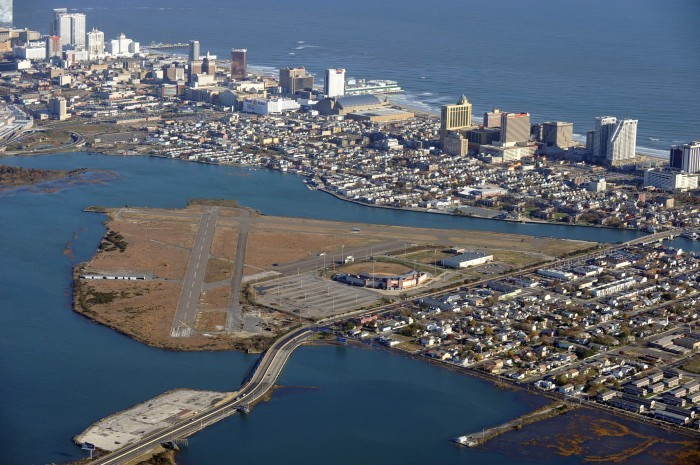
In 2011 and 2012, Atlantic City’s Bader Field seemed to have found its calling. In those years, the 150-acre site of a former municipal airport hosted numerous concerts and music festivals featuring popular bands such as Phish, the Dave Matthews Band and Flaming Lips.

But summer concerts don’t constitute meaningful development in an island resort. Since the historic airport ceased operations in 2006, proposals for its use have come and gone: casinos, amusement parks, housing and the latest idea: a Formula One style race course—complete with housing.

Atlantic City Mayor Marty Small Sr. says the city will soon announce a major development plan for Bader Field, with a 99-year lease, according to the Press of Atlantic City. But mum’s the word on further details. “At this time, there are no concrete details to publicly share on the development of Bader Field,” said Atlantic City spokeswoman Rebekah Mena.

Could it be the track proposal? Mum’s the word on that score too. Lawyer Dan Gallagher, who represents the track people, didn’t return repeated calls for comment.

Say what you will about the worthiness of any of these proposals, the common thread is that they never seem to get to first base (an apt metaphor, as one company pitched a “world-class athletic destination focused on sports, competition, and education”). The jury is still out on the racecourse proposal, of course, but if history is any indicator, don’t expect anyone to start their engines anytime soon.

The state Local Finance Board has authority over any development at Bader Field and according to spokeswoman Lisa Ryan, the agency has not received any recent inquiries. So what’s up?

Lots of Interest, No Action

That the airport has been vacant for 15 years may come as a surprise—after all, this is the largest piece of unencumbered land inside a world-famous shore resort. On paper, it sounds like a developer’s dream. Find another island along the Jersey Shore where that land wouldn’t be snapped up.

James W. Hughes, professor of urban planning and policy development at Rutgers University of New Jersey, says developable shore property isn’t enough to make the parcel attractive in today’s market. Just look at various empty suburban office buildings throughout the state, like the former Merck & Co. headquarters in Hunterdon County.

“It was among the finest office buildings,” Hughes said, “but there’s no market for that type of building in that specific location, so it has no value.”

Bader Field may lack a viable economic market, he added. “There’s a surplus of casinos and water parks in the state. And you don’t need more townhouses and condos.”

That said, Bader Field still has significant potential, according to Oliver Cooke, associate professor of economics at New Jersey’s Stockton University. “In my mind, an important question is whether a development should add to Atlantic City’s existing tourism/hospitality portfolio or be used to incubate entirely new non-leisure and hospitality opportunities,” he said.

Initially, no developers bit because of a very high asking price, noted Michael Busler, professor of finance at Stockton. Once the price was reduced somewhat, a casino developer—Penn National Gaming—offered $800 million to build several casinos there. But lawmakers declined the proposal, demanding a competitive bidding process. And by that time—2008—the casino market had begun to collapse. Now the price has been reduced again, significantly, but nothing is happening.

“A developer must answer what to build on the site that the market will react favorably to,” Busler said. Atlantic City hasn’t been able to attract large scale non-casino development, he said. The proposed water park at Showboat is non-gaming, but still part of the leisure and hospitality sector.

Another element—a major one, it turns out—is how the post-pandemic economy will shake out and what that means for Bader Field, Hughes said.

A report released by the William J. Hughes Center for Public Policy at Stockton said the Covid-19 pandemic proved more damaging to the leisure and hospitality industry than the Great Recession between 2007 and 2009.

Educated Guesses Include eCommerce

Fast forward to the most recent global crisis, in 2020, and similar factors are in play. In 2020, the greater Atlantic City metropolitan area had the third largest employment decline in the nation, at almost 16 percent, and the leisure and hospitality sector saw an almost 35 percent decline in employment. During the pandemic, casino brick-and-mortar win declined by almost 44 percent, as compared with 13 percent in 2009, though casinos were able to recoup some revenue through online and internet gaming.

Cooke, who is also editor of the South Jersey Economic Report, said, “A key question that will loom over the regional economy as the national and regional recoveries play out over the remainder of 2021 and into 2022 is whether Atlantic City casino industry managers elect to return their physical properties’ personnel levels to pre-pandemic benchmarks or redirect resources to higher profit margin revenue streams, which require far fewer brick-and-mortar workers.”

If the national recovery “continues to gather steam” throughout 2021, it would be “especially welcome news for the southern New Jersey regional economy,” Cooke said.

One area of economic growth is the demand for ecommerce, Hughes said. In four years, ecommerce could account for 25 percent of all retail, which doesn’t bode well for bricks-and-mortar stores. Fulfillment centers are in hypergrowth, he said. Could that provide an option for Bader Field?

Probably not, Hughes said. “They’re oriented more towards the New York and Philadelphia corridors, with easier access to the ports. You see them popping up along I-295 and the New Jersey Turnpike.”

Busler ventured an educated guess on Bader Field’s future. “It will probably end up with a mix of residential and commercial. The residential can take advantage of the views and the waterfront living. As for commercial, what’s really needed is an attraction that’s unique, one that vacationers will feel like they `must see.’ That will be difficult to pull off.”

Hughes said time will tell. “Short-term gains can cost you in the long term,” he said. “I’d suggest you hold onto the land if there’s no slam dunk. Wait until you see what the new economy is like.”

One thing is certain: no new casino will ever be built at Bader Field. But the parcel did prove useful in February, when the city opened it up—at $10 a carload—for spectators to see the implosion of Trump Plaza.
New Jersey Signs Deal to Fund Esports Center

New Jersey’s Economic Development Authority signed an agreement with Stockton University June 22 to create an esports Innovation Center at the university’s Atlantic City campus, according to the Associated Press.

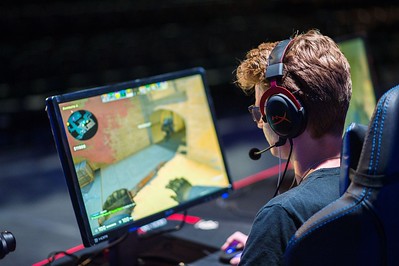
The past few years have seen an exponential jump in the exposure of esports, which pits players against one another in video games such as “Call of Duty” and “Overwatch” in tournaments.

Research firm, Newzoo, expects esports to increase global income by 14.5 percent in 2021 producing more than $1 billion. Greater Atlantic City Chamber President Michael Chait said that could increase by 400 percent by 2027. And 79 percent of the audience is under 35, he said.

“I was shocked when I saw the numbers,” said Brian Sabina, the authority’s chief economic growth officer. “It’s the fastest-growing college sport in America. Nearly 500 million people tune in to watch esports events.”

The center will likely be involved with related software development, video streaming technology, data analysis and technical work, according to PhillyVoice. The EDA will offer staff support while the center will collaborate with private firms and other schools to keep in step with progress. The center will also host coding challenges such as hack-a-thons which sound ominous but isn’t.

Thanks to decades of casino gaming experience, and legislation to permit its expansion into esports, Atlantic City could soon set the bar on esports betting, according to the Press of Atlantic City. The Innovation Center will be needed to entice leagues and businesses to the resort, said Bill Penders, of the EDA.

“If I’m a company within the esports ecosystem trying to decide where I’m going to plant my flag in the United States or grow my business,” Penders said.

Only two states have the infrastructure to support esports expansion into gambling, New Jersey Division of Gaming Enforcement Director David Rebuck said during a recent panel discussion with industry leaders. “And Nevada is behind us because they’re talking about creating an esports commission to regulate esports. Well, we already have it.”

Competitive gaming is already approved for wagering New Jersey, should specific events be approved.

But Atlantic City must compete with Philadelphia, which will get a $50 million esports arena in South Philadelphia. The city will also be global headquarters for The Block, a unique hub for esports to be built at 401 Broad Street.

AC’s Hard Rock, Ocean Finish in Top 3 for 2020

Perennial frontrunner Borgata topped the list of best-performing casinos in Atlantic City last year.

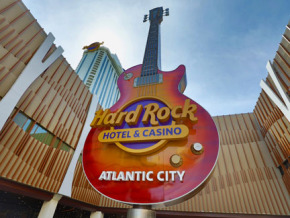
But the city’s newest gaming halls came in second and third. Hard Rock Atlantic City followed Borgata in terms of money won inside the casino in 2020, with $224.8 million, and Ocean Casino Resort won $183.5 million.

“The change this past year of Hard Rock and Ocean, to not only become comparable to Borgata but to overtake the Caesars Entertainment properties has been remarkable,” said Joe Lupo, Hard Rock’s Atlantic City president.

Ocean CEO Terry Glebocki said, “Where we are today versus where we were is truly night and day. The first 12 months the property was open, we lost $42 million. The most recent 12 months, including what I anticipate this month, we won $55 million.”

Jane Bokunewicz, coordinator of the Lloyd Levenson Institute at Stockton University, said both casinos brought something new to the table.

“Hard Rock’s focus on live entertainment with a full calendar of top artists pre- and post-pandemic breathed new life into a property that was built for shows and events,” she said. “Ocean retooled the former Revel property, adding casino amenities and maximizing the existing assets of the building, to create a luxury resort with a strong casino product.”

Luxor Capital Group, which bought the casino, told Glebocki to bring in more money and spend less. It worked. The property’s gross operating profit was $21.8 million, up 224 percent from a year earlier. Hard Rock’s gross operating profit last year was $10.9 million, down 71 percent from a year earlier.

Factoring in online betting and sports wagers, Golden Nugget would take the second place position; Hard Rock would drop to fourth place, and Ocean would rank sixth among the city’s nine casinos.

New Jersey CRDA Appoints Butler As Chairman

New Jersey’s Casino Reinvestment Development Authority (CRDA) appointed its first African American chairman on June 24. Modia Butler, a board member since 2018, replaced Robert Mulcahy.

“I am pleased to bring a new voice and energy to the CRDA board,” Butler said in a statement. “Together we will work with the City of Atlantic City and other stakeholders to make a difference in the future of Atlantic City.”

Michael Beson assumed Mulcahy’s seat on the board. In addition, Brett Matik of Linwood, replaces Howard Kyle. William Sproule of Galloway replaces Frank Spencer, according to the Press of Atlantic City.

“I’ve felt a great deal of satisfaction in attempting to accomplish some of the things that need to be done in Atlantic City,” he said. “We are by no means done, but I think we’re focused on the right direction. I’m pleased to have been a part of that change and those accomplishments.”

Butler works at Mercury Public Affairs and has experience in government relations, political campaigns and strategic communications in New Jersey and Washington, D.C. He served as chief of staff to U.S. Senator Cory Booker, and before that when he was mayor of Newark.

Mayor Marty Small Sr. welcomed Butler’s appointment as a move towards diversity on the board.

“Mo will be a great asset to the great city of Atlantic City, and I look forward to working with him and getting support for our agenda for the good people of Atlantic City,” Small said.

It’s Not Over Till It’s Over

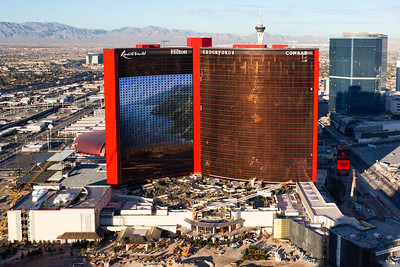
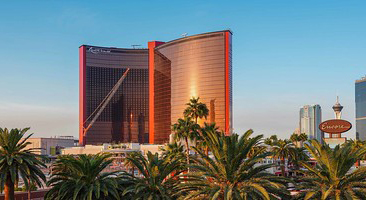
The opening last month of Resorts World Las Vegas was a high note for that city and yet another indicator that its main industry is getting back to normal. Like Vegas, many U.S. gaming markets have comfortably rebounded. But other markets continue to cope with Covid-19 restrictions and in some cases, a return to lockdown status. Here’s an update.

In the Philippines, President Rodrigo Duterte recently extended Metro Manila’s general community quarantine from June 30 to July 15 with “some restrictions.” The quarantine zone includes Entertainment City or “E-City,” home of integrated casino resorts Okada Manila, Resorts World Manila, Solaire Resort Casino and City of Dreams Manila.

The Straits Times reported that new coronavirus cases in the Philippines exceeded 5,000 on June 28, bringing the total to more than 1.4 million. The government plans to administer as many as 10 million vaccines in July after meeting its goal of injecting 5 million doses this month.

And according to the RT Times, Duterte has threatened to jail people who refuse to get vaccinated. “If you don’t want to get vaccinated, leave the Philippines. Go to India if you want, or somewhere to America.”

The always colorful president reportedly asked government officials to identify people who refuse to get the shots. “I will order their arrest,” he said. “Choose—get vaccinated or get imprisoned.”

Casino reopenings are in the works in Canada, and it can’t come fast enough for Caesars Windsor in Ontario. Property officials and the employees’ union are lobbying the provincial government to let them resume business sooner than mid-July, which Premier Doug Ford set for a Stage 3 reopening. Ford moved the province into Step 2 on June 30.

Unifor Local 444 David Cassidy declared, “There’s no reason we can’t be opened up to 50 percent capacity, which is 5,000 people at a time. The safeguards that are in place are second to none.”

Cassidy said vaccination rates for the adult population in the region are in the 70 percent to 80 percent range for one dose and 20 percent for two doses. “We should not be where we are today, based on the numbers, based on all the requirements,” he said. “We’ve done our due diligence down here.”

Ongoing safety protocols include using clear plastic to separate tables and slots, with every other slot off to support social distancing. Sanitizers are ubiquitous and patrons will sign in at the entrance.

Casinos in British Columbia reopened July 1. Great Canadian Casinos, which operates nine properties in B.C., began recalling hundreds of employees who hadn’t worked at the casinos since March 2020, when the pandemic shut down most gaming.

Hospitality businesses are having trouble attracting workers. Great Canadian Executive Vice President Chuck Keeling said his company “will be challenged,” by those shortages. But he was mainly upbeat. He told the Vancouver Sun, “We are thrilled by the number of our team members that we’re calling that are coming back. We’re running north of 90 percent of those that we are calling.”

According to the B.C. Lottery Corp., casinos will be operating under enhanced sanitation protocols such as physically distanced slots at least six feet apart and clear plastic barrier between gaming tables and cash cages.

The Saskatchewan Indian Gaming Authority opened its seven casinos June 20, but initially limited capacity to 150 people. The Northern Lights Casino reopened for the first time since December 2020 with 115 staff members.

General Manager Richard Ahenakew told CTV, “A lot of the machines have dividers in between them, and/or ATMs have dividers in the front. And we have hand sanitizing stations throughout the casino.” After the casino reaches capacity, patrons can get on a waiting list. No food or alcohol is being served on the casino floor. The casino is also hosting a pop-up vaccine clinic near the main entrance.

Casinos in the Australian states of Queensland, New South Wales and Victoria last week suspended operations due to new Covid cases.

The Queensland government announced a three-day lockdown for 11 local areas that include the Star Gold Coast and the Ville Resort Casino. The website of the Treasury Casino (l.) in Brisbane, another Star Entertainment property, reported that its casino and restaurant would remain temporarily closed. Star said it would continue to pay its employees during the closure.
Though the situation remains fluid, as of last Friday the state of Victoria had announced a further easing of Covid restrictions following Melbourne’s 14-day “circuit-breaker” lockdown. Through July 8, social distancing measures are in force in the region, and workers can return to their offices at 75 percent capacity. The website of Crown Melbourne stated, “Crown is pleased to safely welcome guests to our restaurants, bars, hotels, shopping and selected entertainment venues. Our casino is open to Crown Rewards members only and a guest, and will operate under restrictions to designated gaming areas, each with maximum capacity limits.”

Queensland was under a “snap lockdown” order last Friday, but residents anticipated an imminent easing of Covid-19 safeguards.

In Malaysia last week, the government extended its nationwide lockdown through so-called movement control orders to help curb the spread of Covid-19, reported state news agency Bernama.

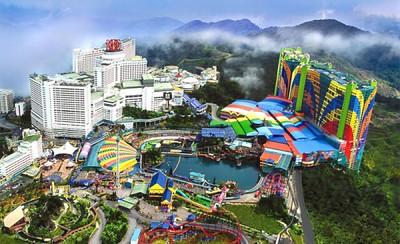
The massive Resorts World Genting casino complex (l.) in Genting Highlands, which “temporarily” closed May 31, remains inoperable due to “the government’s announcement on the nationwide total lockdown.”
Movement control orders will remain in place until Malaysia’s daily-infection tally falls below 4,000, said Prime Minister Muhyiddin Yassin. As of June 29, Malaysia had recorded 5,218 newly-confirmed Covid-19 cases in 24 hours. That took the country’s cumulative confirmed cases to almost 740,000. So far, only 6.33 percent of Malaysia’s population has been fully vaccinated, added Bernama.

On June 29, Genting’s casino cruise arm, Genting Hong Kong confirmed it had voluntarily suspended its Explorer Dream cruising activities in Taiwan, in place since May 12, due to a new Covid outbreak. Ship capacities in Singapore, which had been reduced from 50 percent to 25 percent in May, have now returned back up to 50 percent as of June 14.

In Hong Kong, the government has indicated that its Genting Dream will resume service at the end of July.

Meanwhile, the world’s foremost casino hub, Macau is exercising caution to keep the virus at bay, and has revisited a planned travel bubble with Hong Kong. “If Macau rushes into opening the border with Hong Kong it might end up suffering a big loss for just a little gain,” Macau Economic Association President Lao Pun Lap told the Macau Post Daily. “The vaccination rate is still low in Macau. It is only when people are fully vaccinated that we have the prerequisite to lift mandatory quarantine with neighboring regions and countries.”

Lao said vaccines are “the only hope” to revitalize the city’s economy. In addition, he said, the pandemic should serve as a reminder to the government and citizens to continue to diversify the territorial economy.

In the U.K., with infections on the decline, racetracks have become an issue for parliament as operators call for increased capacity.

Conservative MP Lawrence Robertson asked if capacities could be increased if pilot events show no differences between racetracks and stadiums, which can currently host as many as 10,000 spectators. The horse racing industry wants track capacities to increase to 10,000 too, but Sports Minister Nigel Huddleston nixed the request on the advice of public health officials.

“I’m aware of the impact that has had on certain sectors, in particular racing, and that is exactly why we want to get the Events Research Program moving and all these sectors open as soon as possible,” he said. The government did permit a capacity of 12,000 for the Royal Ascot festival, June 12-15.

“It will take a little while to gather the results from Ascot,” said

David Armstrong, CEO of the Racecourse Association. “If that were to come back with very positive results, we would continue to press even harder because that would be the first comparable event with real evidence.”

French casinos reopened in June and stadiums and racetracks will follow on July 11, subject to limits of 5,000 people. And in Italy, once a hotbed of the coronavirus infections, industry leaders are acknowledging what SBC News called “a paradigm shift” in the wake of Covid-19.

Marco Castaldo, CEO of Microgame, warned gaming operators to face a “change in mindset” across the industry if they expect to stay relevant. “The pandemic has definitely marked a drastic acceleration of the shift towards online gaming,” he said.

In the Greek-controlled Republic of Cyprus, Melco Resorts’ four satellite casinos are open, some with limited hours.

Back in the USA, while Las Vegas continues its rebound, Covid-19 has left “an indelible imprint” on the tourism industry, according to a report from research firm Applied Analysis, commissioned by the Las Vegas Convention and Visitors Authority. Principal Jeremy Aguero told Newsbreak.com that the “implications of Covid-19 were unprecedented in terms of our community’s core tourism industry” and affected every part of the economy in a “pretty dramatic and meaningful way.”

“Is the industry going to be forever changed because of Covid-19? The answer to that question is absolutely yes,” Aguero said. “The visitors are coming back and that will include business and eventually international travelers, but travel is going to be different for a while. The way we service visitors is going to be different for a while.”

Nevada, however, became the second state to lead the nation in the Delta Covid variant. With less than 40 percent of its residents being vaccinated and Las Vegas again hosting millions of people from around the nation, there is concern. Governor Steve Sisolak has requested federal assistance to get more people vaccinated.

Indian Country Today reports that the Navajo Nation has yet to record a single case of the Delta variant of Covid-19, but is not letting down its guard. Navajo President Jonathan Nez recently told the Washington Post, “I think we need to continue to be cautious. We have heard updates that the city of Tucson has identified a Delta variant … so we are concerned.”

For an updated list of casino markets in the U.S. and their Covid-19 status, visit the American Gaming Association’s Covid-19 tracker here.

MGM Buys CityCenter to Sell to Blackstone

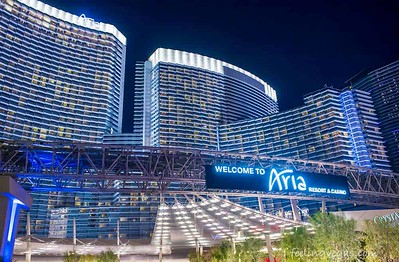
Las Vegas’ CityCenter, at one time the most expensive private development in U.S. history, will be owned by investment firm Blackstone after MGM Resorts consolidated its ownership of the property.

The project was developed by MGM and Infinity World, a unit of Dubai World. It took five years and 9,000 worker to build, and opened in December 2009. The project includes the Aria casino, the Veer residential towers, and the non-casino hotels, Vdara and the Waldorf Astoria (originally the Mandarin). The project was also to include the Harmon tower, but construction defects forced a halt to the building and an eventual demolition. Blackstone is only buying Aria and Vdara, however.

Last week, MGM Resort announced it would buy Infinity World’s 50 percent interest for $2.12 billion and then sell the complex to Blackstone for $3.89 billion. The original price tag for CityCenter was $8.5 billion. The deal values the property at $5.8 billion, including debt of $1.5 billion.

The sale continues MGM’s “asset light” strategy where the company has sold most of its real estate to real estate investment trusts (REITs) but continues to operate them on a leaseback arrangement.

“We expect to continue executing on our asset-light strategy and utilizing the proceeds from our real estate transactions to secure new growth opportunities,” MGM Resorts CEO Bill Hornbuckle said.

“Uniting all of CityCenter under MGM Resorts’ corporate structure and strategy will allow us to consolidate financial results, build on efforts to strengthen our operating model and guest experience and further our vision of becoming the world’s premier gaming entertainment company,” he continued.

Blackstone will lease back the Aria casino and Vdara to MGM for an initial annual rent of $215 million. The deal is set to close in the third quarter of this year.

FBI Investigating Tribal Casino Cyber-Attacks

The Federal Bureau of Investigation is looking into cyber-attacks at tribal casinos in Oklahoma and Wisconsin. Many of the casinos involved shut down after the attacks and some remain closed. Officials stated there’s no indication the incidents were related; they didn’t say what the hackers demanded or if any demands were met.

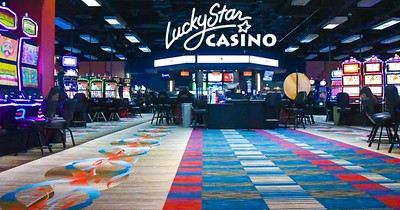
The Cheyenne and Arapaho Tribes of Oklahoma’s six Lucky Star Casinos shut down on June 18 after a cyberattack infiltrated the venues’ information technology networks.

The Lucky Star in Concho reopened June 24, but it’s not known when the other casinos in Clinton, Canton and Watonga will resume business. The gaming parlor inside the Concho travel center reopened June 27, but the Hammon location remains closed.

Lucky Star said its casinos are among many businesses and government agencies breached by ransomware. In a statement, officials said confidentiality and data security are a top priority. As soon as online systems went down, they added, the FBI and federal law enforcement agencies were notified. The venues’ insurance provider and cybersecurity experts recommended that casino officials suspend operations. The property pledged to keep employees on the payroll during the shutdowns.

Officials said Lucky Star’s IT team and external forensic cyber investigators are working closely with federal law enforcement to resolve the situation. They added the insurer will provide credit monitoring services for the next 12 months.

In a letter to customers, Lucky Star officials wrote, ” The security and confidentiality of all data are a top priority for us. We apologize to our customers and partners and emphasize the need to be extra vigilant, particularly regarding suspect communications. As the investigation continues, Lucky Star Casino commits to communicate directly to impacted customers and employees with whom we appreciate their patience as we work through this situation so that operations can resume in the coming days.”

A similar attack took place in Keshena, Wisconsin at the Menominee Casino, which remained closed for nearly two weeks. General Manager Daniel Hansen said the venue experienced “technical difficulties due to an attempted external attack” on computer systems. He said his team was working with law enforcement, cybersecurity and forensic experts to investigate the cyberattack.

Hansen said the gaming floor has reopened but not table games, bingo, gift shop or the hotel. Forest Island Restaurant and Spirit Island Lounge are open with limited menus and taking cash only, Hansen said. “Our team has been and continues to work diligently to provide an entertainment experience that is secure and enjoyable. We are confident in the measures we have taken to reopen and are excited to invite you back to our casino for gaming.”

In Winnebago, Nebraska, Ho-Chunk Inc. IT Director Jerry Beaver said, “We get thousands of attempts on a daily basis. Think of it as an alarm system, but you have to make sure the alarms are on. Hackers are always learning new tricks.” Beaver said Ho-Chunk prepares for ransomware attacks by continually updating backups, firewalls, VPN and setting separate credentials for administrative functions.

According to Cybercrime expert Teresa Rule, ransomware hackers hold the casino’s mainframe hostage, since almost all games are computerized. Rule said that if casinos pay the ransom to get operational again, they feed the system created by the cyberbullies. She advised casino customers to stay cyber-safe by using a prepaid credit card, not their debit or credit cards.

Cybersecurity company Palo Alto Networks said the average ransom paid in 2020 soared by 171 percent to $312,500—up from $115,000 in 2019.

With Debut of New Vegas Property, Genting Considers North American Listing

The early success of its newest integrated resort, Resorts World Las Vegas, has prompted Malaysia’s Genting Bhd to seek a North American stock listing, according to Bernstein Research.

In addition to the $4.3 billion Las Vegas property, which opened to great fanfare on June 24, Genting Americas runs slot operations at Resorts World New York City and Resorts World Catskills in Monticello, New York. It also has secured waterfront land in Miami in hopes of developing the market there.

“But all will depend on the success of Resorts World Las Vegas,” said Bernstein, which expressed approval of the North Strip property. “Coming on the heels of the Covid epidemic that had left Las Vegas a temporary ghost town, the city is alive again, with leisure and gaming visitors flocking back and anticipation that the throng of conventioneers will soon follow. It is into this bullish demand resurgence that Genting’s US$4.3 billion gamble is opening.”

Analysts Vitaly Umansky, Kelsey Zhu and Louis Li said the property’s positioning, management team and quality “bring new competition to long-established casino properties and the result will be a better, more vibrant Las Vegas.”

However, they added, “a digital strategy may be needed” for a North American listing.

Genting Group Chairman and CEO Lim Kok Thay told Bloomberg TV he’ll look at listing in the United States “sooner rather than later,” reported Inside Asian Gaming.

“As the numbers pick up and when investor confidence returns, that is something we will seriously look at in terms of consolidating our U.S. investment and then seeking a listing,” he said.

Genting Bhd also owns Resorts World Sentosa in Singapore, as well as its flagship property in Genting Highlands in Malaysia.

Gaming Legend John Ascuaga Dies at 96

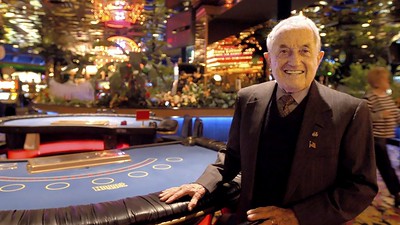
On June 28, gaming industry icon John Ascuaga died at age 96. Almost at once, tributes began to pour in for the entrepreneur who created the concept of Reno-Sparks as a single entertainment destination.

It was 1960 when Ascuaga, then general manager of the Nugget Casino Resort in Sparks, decided to buy the property from Dick Graves. Over the next few decades, he turned it into a leading resort.

“To me, he was larger than life,” said former Sparks Mayor Geno Martini. “He was well-respected and knew how to grow and grow.”

Sparks City Councilman Donald Abbott said Ascuaga was pivotal in the development of Sparks and a community favorite who often could be found “wandering the casino floors … He would engage with you and have a conversation with you.”

Truckee Gaming CEO Ferenc Szony told the Reno Gazette-Journal that Ascuaga “really did believe in the idea of Reno and Sparks being together and helped make that happen. That was such a plus.” He considered the Nugget a family business, and his children assumed key roles there until the property was acquired by Marnell Gaming in 2016.

“That’s just the way they ran it—it was a very family-oriented operation,” Szony said. “He was one of those guys like Don Carano and Barron Hilton who were class acts who figured out how to make gaming a quality business that you can invest in and feel good about. He was a hell of a guy.”

Christine Johnson, executive director of the Sparks Heritage Museum, said the Ascuaga family as a whole “has been a huge contributor to the feeling of family and belonging that Sparks is known for, and John Ascuaga was at the heart of that.”

Nevada Resort Association President Virginia Valentine said his name “is synonymous with Sparks and Northern Nevada, as he was a driving force in the gaming resort-hotel industry’s evolution and expansion. Mr. Ascuaga will always be remembered as one of Nevada’s visionary industry leaders and will be greatly missed.”

And Gary Carano, executive chairman of the board of directors for Caesars Entertainment, called Ascuaga an “unwavering friend.”

“Nevada has lost a true pioneer, and the entire Carano family is deeply saddened by the loss of John Ascuaga,” Carano said. “And while the community has lost one of its pillars and the gaming industry has lost a trailblazer, those of us whose paths crossed John’s have lost a mentor, a leader, and a great friend.”

Reno-based gaming analyst Ken Adams told the Nevada Independent, “Nothing in Northern Nevada gaming happened without John being involved. John was always supportive of the community and the driving force for anything that happened east of Reno, but also anything in Reno as well.”

“We are truly saddened to hear of John Ascuaga’s passing and our heartfelt sympathy goes out to his family and all the members of the community who knew him and benefitted from his impact,” Marnell Gaming CEO Anthony Marnell III said in a statement. “John was not only an icon in Northern Nevada and throughout the region, he was also one of the true pioneers in Nevada gaming and helped shape the direction of the entire state.”

Marnell called Ascuaga “a tireless community philanthropist who gave generously to graduates throughout Northern Nevada through the Nugget Scholarship Program.”

In a statement, Nevada Governor Steve Sisolak said Ascuaga turned the Nugget into “a family-run gaming juggernaut for more than 50 years.”

“John walked the casino floor daily and popped into the restaurants to visit with tourists and employees alike,” Sisolak said. “From scholarships to countless fundraisers to special events, they made sure John Ascuaga’s Nugget was there to help.”

Washoe County Commission Chairman Bob Lucey said Ascuaga was “an iconic figure in our community” who was dedicated to public service.

“He was one of the pioneers of the resort and hospitality industry in Northern Nevada, turning a small coffee shop into one of the largest resort properties in Reno-Sparks,” Lucey said. “His vision helped shape the Truckee Meadows into the dynamic destination we call home.”

Sparks Mayor Ed Lawson announced Ascuaga’s passing before Monday’s city council meeting. “To say that Mr. Ascuaga was an integral part of Sparks is an understatement,” Lawson said in a statement. “He was, without a doubt, one of Nevada’s most prominent and successful businessmen who truly helped shape our city.”

In an interview with Nevada Magazine, Ascuaga was once asked what the state’s “Battle Born” motto meant to him.

“You’ve got to have some true grit,” he replied. “Never take no for starters. If you have a goal, think positive and you’ll fulfill it.”

Ascuaga was inducted into the American Gaming Association’s Gaming Hall of Fame in 1992. He is survived by his children Camille, John, Michonne and Stephen.

Harrah’s Philadelphia Reduces Slot Count

Harrah’s Philadelphia, six miles outside of Philadelphia in Chester, Pennsylvania, has received permission from the Pennsylvania Gaming Control Board to remove 563 slot machines from its floor. The reduction adjusts the machine count—once nearly 3,000 machines—to 1,700.

The reason Harrah’s officials gave the gaming board for the reduction was that the higher number was no longer optimal in the face of increased competition, and that the cost of operating them did not justify retaining the older, under-utilized machines.

Officials also noted that it creates better social distancing between customers with no loss of revenue, and it expects no loss of revenue or staffing from removing some of its older, under-utilized machines.

“The new layout will provide a more comfortable gaming environment for our guests and we do not anticipate any revenue loss from this reduction,” Harrah’s officials said in requesting the reduction.

The final game count of 1,700 is still higher than the 1,300 offered when capacity was limited due to the Covid-19 pandemic. Pennsylvania Governor Tom Wolf lifted all restrictions earlier this month.

Washington Operator Gives Nevada Properties a New Look

Washington-based Maverick Gaming is giving its recently acquired Nevada properties a new look.

Trevor Lynch, vice president of casino marketing and operations told the Elko, Nevada Daily Free Press: “We acquired the properties (Red Lion, Gold Country Inn and Casino and High Desert Inn) in 2019 and wanted to expand our reach in northern Nevada. We started with the Wendover properties.

“We are a new company—young, bold ‘mavericks.’”

Lynch noted that 90 percent of Elko casino activity comes from the local area. Maverick plans to add to the 330 employees in Elko. The casino interior will get the latest slot machines, new outdoor signage, exterior painting and landscaping. Later on the hotel rooms will get a facelift.

Lynch said the exterior of the Gold Country Inn and Casino “will really pop. There’s going to ‘ neon around the porte cochere and a light show underneath. There will be tracing lights all around the building.” A July 31 grand opening is planned.

The casino’s food venues are upgrading their menus and that the seafood buffet will probably return soon. “We have to have something in Elko that brings them off the highway,” said Lynch.

Maverick also hopes to partner with an airline to bring a few flights a week in and out of Elko, he said.

All Ashore for Louisiana Riverboats

Louisiana Governor John Bel Edwards recently signed legislation allowing the state’s 15 riverboat casinos to move ashore and expand operations.

Under Senate Bill 316, riverboat casinos can move inland from their designated berth space by 1,200 feet, the length of four football fields. The bill passed by one vote.

Wade D. Duty, executive director of the Louisiana Casino Association, said, “Not everyone will make the move all at once.” He noted it will take at least six months for the first few casinos to file applications with the Gaming Control Board.

And massive casino/hotel resorts like L’Auberge Baton Rouge, constructed over watery sloughs to technically comply with state law, will have to wait six months before they can legally switch off their circulating paddle wheels.

Gaming Control Board Chairman Ronnie Jones said it could be two months before regulations are written outlining designs, financing, amenities, application procedures and other details in regard to moving ashore. Then those rules must go through public hearings before approval.

SB316 also allows 30,000 square feet of gambling space per boat instead of 2,365 gaming positions. Jones said the new regulations will have to clarify how that number is counted. “We’re talking about $500 million, $600 million, to build a first-class facility. They’re not going to be allowed to move slot machines into some warehouse space,” said state Senator Ronnie Johns, who is being considered as the new chairman of the Gaming Control Board.

Hollywood Casino in Baton Rouge already filed a permit to move onto land and spend $21 million to $25 million to expand its current dockside facility to include 106,209 square feet gaming space. The riverboat’s 859 slot machines and 12 table games will be moved into the current atrium. The plans also will feature a 250-seat sports bar/entertainment venue, sports viewing area and a Shaquille O’Neal’s Big Chicken Restaurant. The sports bar or the viewing area eventually could become a sportsbook.

Casino Queen in East St. Louis, Illinois is in the process of buying Hollywood. The deal is set to close in the second half of the year, pending regulatory approval.

Riverboat gambling in 2017 generated $419.2 million in taxes and fees for Louisiana. Harrah’s New Orleans, the state’s only land-based casino, contributed $60 million of that total.

Johns said gambling interests pay more to the state than any other industry with no tax breaks or other financial incentives that routinely given by taxpayers to manufacturers, oil and chemical concerns.

Illinois Regulators OK Temporary Rockford Casino

The Illinois Gaming Board recently approved the construction of a temporary Hard Rock Casino in Rockford, to operate for two years while the $311 million permanent casino is built. A 37,790-square-foot former restaurant and banquet hall will undergo an $8.8 million renovation to serve as the temporary casino with 736 slot machines and two restaurants.

Mayor Tom McNamara said, “This is a huge accomplishment for our community, and it will bring hundreds of construction jobs to Rockford.” McNamara noted the Rockford casino will be the first of six new casino locations approved by the legislature in 2019 to begin construction.

Before the temporary casino can open, the gaming board must give permission for owner 815 Entertainment LLC to operate; the casino’s security and surveillance plans also must be approved. Also, the permanent casino must pass several regulatory steps before construction can begin.

Former Owners of Encore Property Lose Suit

The former owners of the Everett, Massachusetts site where the Encore Boston Harbor now operates lost their claim that they were owed $40 million for the land that they were forced to sell for much less than they had originally asked.

Suffolk County Superior Court Judge Kenneth Salinger June 16 dismissed the lawsuit against the Massachusetts Gaming Commission brought by FBT Everett Realty LLC. The former owners of the land had sued because they claimed they were victims when Wynn Resorts negotiated to pay $35 million for the 35 acres instead of the $75 million it originally agreed to pay.

The difference in the price was because of the allegation (later disproved) that one of the owners of the land was felon Charles Lightbody. The Commission pressured Wynn to lower its offer to what the owners had originally paid, to prevent Lightbody from profiting from gaming—which would have violated state law.

The group claimed they could have sold the land for $75 million to be used for a big box store, which would not have required oversight by a state commission. They argued that the result amounted to a “regulatory taking,” since Lightbody had already sold his interest in the land at that time.

The judge ruled that at the time the investors bought the land for $8 million they had no expectation that they would be in a position to later sell it for a casino resort since casinos had not yet been legalized in the Bay State.

Maine Sports Betting Bill Hangs on More Votes

Another vote in each chamber of the Maine legislature is required before a sports betting bill is sent to Governor Janet Mills for approval or veto.

LD 1352, like all bills, must be voted on twice in each chamber—whereas it has only been voted on once in the Senate and the House. The first vote was done over the protests of the bill’s sponsor, Senator Louis Luchini, who opposes the tethering requirement in the bill that would legalize mobile sports betting.

The bill would require that any online provider be tethered to one of the state’s two casinos, OTB vendors and racetracks.

If the bill is finally sent to the governor, she will have ten days to decide to let it become law or veto it, as she did for another sports betting bill two years ago.

If Mills signs it, sports betting will probably go live in 2022.

Steve Silver, chairman of the Maine Gambling Control Board, told Sports Handle, “No matter when the deadline for Governor Mills to act expires, I hope we do not experience an 11th-hour veto again.” He added, “It is clear that the majority of Mainers want what the majority of American states already provide — the ability to wager on sports in a legal, regulated market.”

Sci Games to Shed Lottery, Sports Betting Businesses

Scientific Games has announced it will divest its founding business, lottery supply, as well as its sports betting division to concentrate on being a content supplier for online and internet casinos and social gaming.

In a press release, the company said it’s “evaluating strategic alternatives” to divest the two businesses, including an initial public offering or a merger with a special purpose acquisition company (SPAC), an outright sale or a strategic combination with another business.

Scientific Games’ lottery business traces back to the company’s founding in 1973. The company produced the first secure instant lottery ticket in 1974, and lotteries remained central to the company’s identity after the 2014 merger brought the former Bally Technologies, WMS Gaming and Shuffle Master businesses together. The newly merged company took the name of the lottery business. Scientific Games provides tickets and systems to lotteries in 50 countries worldwide, and is the world’s largest supplier of instant games.

The company’s sports betting business is a much more recent development, created after the 2018 acquisition of Don Best Sports led the company to launch its OpenSports platform the following year. The business is currently part of the SG Digital division.

In announcing the impending divestiture of the two businesses, Jamie Odell, executive chairman of Scientific Games, said, “When I joined the board in September 2020, I told stakeholders that we were focused on rapidly deleveraging the balance sheet, unlocking the value of the company’s products and technologies and creating a flexible, nimble company positioned to deliver above-market returns to investors.

“Today, we have announced major initiatives aimed at achieving each of these key objectives, recognizing significant value in each of the businesses and positioning the company for sustainable growth, all as a result of the dedicated work of our teams.”

In a later conference call, Odell said, “We have concluded that our lottery and sports betting businesses will be better positioned for the future as independent businesses with their own capital structures and investment strategies. We therefore intend to divest those businesses.”

Barry Cottle, president and CEO of Scientific Games, said the move “reflects key steps to optimize our portfolio and strengthen our balance sheet by significantly delivering while also targeting investments in our largest growth opportunities.

“These steps will accelerate our path to become a content-led growth company focused on leading in both land-based and digital markets. Our company will be positioned to build great games that define the future of gaming, supported by platforms that power the best operators in the world.

“We believe these steps will enable us to capitalize on the high growth potential of each of our businesses, including their expanding digital content offerings and platforms, unlocking value for shareholders, customers, and employees. Each of our businesses will be better positioned to partner with their respective customers and to deliver long-term growth and profitability. At the conclusion of this process, the new company will consist of leading gaming, iGaming and SciPlay businesses, all of which have great momentum and will collectively deliver great value.”

Cottle said the aim is to move forward as an omni-channel content supplier for gaming. “We will capitalize on the increasing convergence of these businesses, as players look to play their favorite games wherever and whenever they want to play,” he said “As the leading cross-platform global game company, we are uniquely positioned to take advantage of the incredible industry transition that is underway.

“Given this significant opportunity, we are targeting our digital businesses to be comparable in size to the land-based gaming business within three years. I’m confident that, with these steps, we are well positioned for future growth prospects.”

Scientific Games’ announcement noted that there are no assurances that the company’s exploration of divestiture of lottery and sports betting business will result in actual transactions, and that the company will not comment further on the effort “unless and until it determines that further disclosure is appropriate or required based on the then-current facts and circumstances.”

Initial reactions to the plan from Wall Street were positive.

“We have refined our pro forma estimates from our first blush version following the announcement,” wrote David Katz of Jeffries in an investor note. “We believe the sports betting platform should have high desirability in the current environment and should trade for between 12X and 14X LTM revenue, given the strong growth prospects of the business currently.

“We further believe that the lottery business could fetch 10X-12X trailing EBITDA, well-support by the publicly traded global comps that trade at 12X-plus…

“The new version of SGMS has compelling attributes in our view, which suggest there could be further upside. First, the gaming business has the potential to execute more effectively. The gaming operations business in particular has seen decline in its installed base over the past several years since the combination of SGMS with WMS and Bally in this segment.

“While the product cycle is lengthy and recovery could be gradual, we expect the business to improve, irrespective of the moderate fundamental environment for slots. Secondly, we believe the opportunities in iGaming and social gaming would be rapid growers in the near term at least, based on the operating environment supported by management’s stated intention to grow this segment by 50 percent CAGR the next three years.”

Deutsche Bank group analysts Carlo Santarelli and Steven Pizzella said should the firm succeed in its efforts; the divestment exercise would leave it with “essentially” three areas of business. “These business lines, in aggregate, generated roughly US$1 billion of 2019 adjusted earnings before interest, taxation, depreciation and amortization,” they wrote.

J.P. Morgan analyst Joseph Greff wrote the divestment will help bring the company’s debt down to levels comparable with competitors.

“Simplistically assuming just disposition of the lottery business (without making assumptions about sports betting, which is embedded in the digital segment),” Greff wrote, “incorporating our in-print 2022 EBITDA estimates, our 8.0X multiple for the segment, and 100 percent of gross proceeds going to debt pay-down, we estimate net leverage just below 4.0X in 2022, down from 9.6X at 1Q21-end and 6.4X at year-end 2019.”

On the conference call, Scientific Games Executive Vice President and Chief Financial Officer Michael Eklund said there’s no timeline for the divestment of the businesses.

“At this point the market is going to determine the timing, the value, the final structure of the deal,” Eklund said. “We are very well advanced in the process. It’s been a thoughtful, detailed planning process we’ve gone through with all the teams. … We think we can move pretty quickly and maximize value while we’re going through this.”

Florida PAC Launches Sports Betting Petition

The political action committee Florida Education Champions recently launched a petition drive to make sports betting legal through a constitutional amendment. Revenue would be dedicated to the state’s Educational Enhancement Trust Fund.

The Florida Division of Elections authorized the ballot initiative, which is getting its message out on social media. DraftKings and FanDuel are behind the campaign, according to the group’s spokeswoman Christina Johnson. In order for the amendment to appear on the November ballot, petitioners must collect 891,589 Florida voter signatures plus approval from the Florida Supreme Court.

Individuals may submit a request for a ballot petition, which would be sent by mail along with a postage-paid envelope for returning ballots to the PAC.

The group is headed by a team of certified public accountants and a political consultant. Their proposed amendment 21-13 would impact a major part of the gambling compact negotiated by Governor Ron DeSantis and the Seminole Tribe of Florida, whereby providers other than the tribe could offer on-site and mobile sports betting. Under the compact, the Seminole Tribe holds exclusive rights to sports betting provided wagers are processed by servers located on Seminole tribal land. But the proposed Constitutional amendment would allow providers other than the Seminole Tribe of Florida to do sports betting and mobile sports betting.

In fact, the PAC’s website claims sports betting already is legal in Florida. But the federal government has not approved the gambling compact.

Louisiana Delays Sports Betting Launch

The launch of sports betting in Louisiana has been delayed due to the lack of a Louisiana Gaming Control Board chairman.

Senate President Page Cortez said, “It’s a little bit of a hiccup. We don’t have a Gaming Control Board chair, and until then the board can’t promulgate the rules.”

Governor John Bel Edwards recently signed several bills legalizing the framework for sports betting. The Gaming Control Board must publicize the rules before casinos can begin building sportsbooks and restaurants and bars can secure kiosks where bets can be placed.

Former Chairman Mike Noel resigned as chairman on June 9 rather than face a Senate confirmation hearing where he could have been questioned about his role in the State Police regarding the death of a black man during an arrest. The situation still is under investigation.

Noel was appointed only a year ago when former longtime chairman, Ronnie Jones, had his re-nomination blocked by a state senator.

Edwards’ spokesperson Christina Stephen said, “The governor looks forward to making an appointment sooner rather than later. The governor is working to find a commissioner with the right skill and experience to lead during this important time for the gaming industry in Louisiana.”

Observers said Edwards may name state Senator Ronnie Johns to the job. Johns confirmed he has spoken about it with Edwards. “It’s the governor’s call to make, but should he honor me by offering me the position I would very much like to serve. I think I’d have a lot to offer because the board needs leadership to make sure the industry is compliant, clean and pristine during this critical time.”

Gambling generated about $600 million in state taxes in 2020. The launch of sports betting will be the largest gambling expansion in Louisiana since the legislature established the lottery, casinos and video poker in the early 1990s. Wagering will be available at sportsbooks at the state’s casinos and racetracks, online through mobile devices; and at kiosks at bars and restaurants.

Twenty sports book licenses will be available, and existing casinos and racetracks will have first refusal option. Each of those licenses will include two skins, for partnering with mobile application providers.

Last November, voters in 55 of Louisiana’s 64 parishes approved legalizing sports betting in their communities. However, during the spring legislative session, lawmakers had to set up the framework to regulate and tax sports wagers. Next the gaming board must get public feedback on the rules, as soon as a chairman is selected.

Geofencing technology will keep residents in parishes that did not approve sports betting from accessing mobile sports betting sites.

Las Vegas Will Host Next Year’s NHL All-Star Game

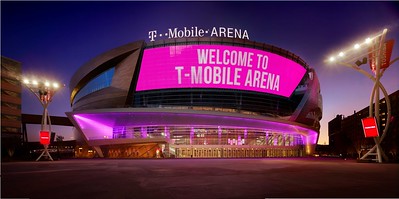
Las Vegas has been chosen to host the 2022 NHL All-Star Game at T-Mobile Arena, home of the Vegas Golden Knights. The selection was announced by Commissioner Gary Bettman on June 28, before Game 1 of the Stanley Cup Final.

Las Vegas has also been chosen to host the NFL Pro Bowl on February 6 at Allegiant Stadium.

Golden Knights President and COO Kerry Bubolz released a statement saying, “This is one of the (NHL’s) premier events of the year, and we are thrilled to bring fans from around the world to Las Vegas to celebrate hockey. This event will also help continue our growth of the game in Nevada and our surrounding areas.”

The NHL is hoping to release the 2021-22 schedule between the end of the Stanley Cup Final and the NHL Draft, which begins July 23, reported the Las Vegas Review-Journal.

“For us, when these all-stars come to town, they’re going to appreciate just how great a city Vegas is and how hockey-ready it is and how engaged our fans are with the Golden Knights,” team owner Bill Foley said. “There’s going to be all kinds of things going on. Las Vegas is a great host city, and we’re done with Covid at that point. There will be a ton of different events and things to go to, opportunities for individuals to see and be around some of these great hockey players.”

  1. Fletch Brunelle, vice president of marketing at the Las Vegas Convention and Visitors Authority, said in a statement the LVCVA is “thrilled” by the announcement said that hosting “events of this caliber solidifies our position as the sports capital of the world.

“The excitement around live sports and events is palpable, and from world-class dining and entertainment to the game itself, we look forward to showing hockey fans the only-in-Vegas experiences they’ve come to expect,” Brunelle said.

NASCAR Works Out Sports Betting Content for Broadcasts

NASCAR is committed to keeping its fans happy during broadcasts of events such as the Ally 400, the first event of 2021. But the league is also committed to offering gamblers content. It comes down to providing information without annoying anyone.

Integration of content and odds will only get bigger as legalized gambling expands. For example:

  • When Dale Earnhardt Jr. and Brad Paisley started pre-race coverage on “Countdown to Green,” betting odds ran across the ticker on the bottom of the screen, along with other information about drivers, the track and more
  • Jac Collinsworth asked Dale Jarrett and Kyle Petty for their picks and the odds for those selections
  • On Lap 194, odds were displayed on the left side of the screen, beneath the leaderboard

“One of the things we’re cognizant of is not all of our fans want to see betting content as they’re watching a race,” said Joe Solosky, managing director of sports betting at NASCAR. I think FOX and NBC are doing a good job of towing that line.”

Ed Williams, director of content, sports betting and gaming at NBC Sports Edge, said, “We’re aiming to put together probably a 60-second clip, nothing too intense, hitting on best bets, some of the dark horses, that kind of thing.”

NASCAR proponents believe the future lies with in-race betting, making this a priority for broadcast content.

“From my point of view, there are opportunities there, and that’s another one of those things where we’re kind of just getting started,” Williams said. “I think it’s ultimately where you can expand to, and as more people get used to betting in general, live betting will become more prevalent.”

With leagues and networks concerned about turning off viewers who aren’t interested in betting, some of this content will likely migrate to alternate platforms. This past April, ESPN2 provided a peek into the second-screen experience, as it aired a betting-themed broadcast of Nets vs. 76ers to accompany the main broadcast on ESPN.

“If your goal is to try and educate fans on betting, which is one of our goals at NASCAR, you’re not going to start with more complex markets (such as live betting),” Solosky said. “I think what NBC and PointsBet did, in terms of just having the odds to win the race, is a good move. If (a viewer) opts into a second screen that’s more focused on betting, then you can integrate more of the complex or in-race markets.”