Author: Casino Connection Staff

Online Gambling a Growing Concern in the U.K.

GamCare, a national helpline in the U.K., said new statistics show a sharp rise in women searching for help with gambling addictions. Data revealed a 4 percent rise in women needing support.

The study indicated 2,764 women contacted the helpline in 2019-2020, but the numbers rose to 3,005 in 2020-2021. Women also comprised 23 percent of the calls between April 2020 to April 2021, a jump of 19 percent from 2018 to 2019.

Marina Smith, manager of GamCare’s women’s program, told The Independent the increase goes back to the Covid-19-fueled lockdowns.

“This has created many more opportunities for women to gamble,” she said. “Data shows women have been more likely to be furloughed in the pandemic, as well as taking on more caring responsibilities. This can make recovery more difficult. Social support is extremely important for recovery from gambling.”

Another factor speaks to the rise of mobile gambling. Some 70 percent of women gamble online.

Gamstop, a U.K. tool to block gambling apps and websites, has signed up 50,000 women for its service. In March 2020, women represented 26 percent of all its users, but that figure increased to 31 percent by September.

“Women talk to me about not thinking about anything else. No stresses and anxieties of day-to-day life. But the coping mechanism exacerbates the underlying issues,” said psychotherapist Liz Carter.

Carter says gambling is like self-medication for stress, anxiety, or depression.

She gave another example of a woman who was so heavily addicted to gambling she lost everything she owned and will soon have to sell her home. “She cannot stop for two reasons. She is trying to get her money back. Also, by this stage, her real life feels so scary and so dark she can’t face it, so she is continually seeking to escape it.”

In related news, results from a U.K. Gambling Commission telephone study in July indicated online gambling is a growing issue post-pandemic. The study conducted in the fall of 2020 and the spring 2021, asked about gambling done the prior four weeks.

The total number who had gambled declined across all demographics but one, sliding to 41.6 percent. Additionally, betting frequencies fell 29 percent compared to 2020 when it dropped 21.3 percent.

Yet the number partaking in gambling online increased through all age groups to 24.7 percent in comparison to 21.9 percent the year before. But the results decreased if you exclude the national lottery from the equation, according to SBC News.

“The pandemic has significantly impacted gambling behavior and it is yet unclear whether this will have a short- or long-term impact,” said Anna Hemmings, chief executive, at GamCare. “Online gambling is a growing issue for callers to the National Gambling Helpline and we want people to know we are here for them and can help.”

The study found only a slight reduction in the problem gambling rate, from 0.5 percent to 0.4 percent, although the number of moderate risk gamblers’ fell 0.7 percent and low risk gamblers tumbled 2.3 percent.

A Yonder survey funded by the Commission said gamblers are not knowledgeable enough about safer gambling tools. The study surveyed 8,000 people, with 4,576 admitted to gambling in the prior 12 months, according to iGaming Business.

Only 13 percent used one of the seven safer gambling tools, with younger players more likely to partake. While 26 percent of those aged 18 to 24 admitted to using one tool, only 4 percent of 65 plus did so. Online gamblers were also more likely to rely on at least one tool, but their numbers still came in at only 16 percent.

Limits on deposits or losses were the tool used most frequently by 8 percent of those surveyed. Reality check tools followed with 5 percent, time out 4 percent of players, and exclusion, 3 percent. Only 2 percent tried blocking software such as Gamban, multi-operator self-exclusion such as Gamstop or payment-blocking tools from banks.

Awareness revealed placing limits was the only tool familiar to more than half the gamblers, while 37 percent were aware of reality checks, 45 percent of time out and 29 percent product-level exclusions.

“It was particularly interesting to see that the awareness of payment card blocking with your bank, which was first brought in during 2018, had higher levels of awareness than some of the more established gambling management tools,” the Gambling Commission said.

Scientific Games Acquires Lightning Box

Scientific Games Corp. has acquired content studio Lightning Box as the company continues to execute on its vision to become a leading, cross-platform global game company.

The acquisition is a key step forward on the company’s strategic plan to become a content-led sustainable growth company. SG continues to capitalize on its largest growth opportunities with a focus on digital markets.

The addition of the Lightning Box studio bolsters the company’s in-house studios. Lightning Box, a Sydney-based slot developer, has a proven track record for creating feature-rich, land-based inspired games that deliver exciting experiences for online slot players worldwide.

The studio’s titles include strong performers such as ChickenFox, Lightning Horseman, Lightning Leopard, ChickenFox5x Skillstar, Astrocat and Silver Lion. Lightning Box is currently live with more than 50 of the leading U.S., Canadian and European iGaming operators, including BetMGM, Rush Street, Golden Nugget, FanDuel, BCLC, Loto Quebec, Unibet, 888, Sky Bet, LeoVegas, William Hill, Betsson and many more.

“Lightning Box games are hugely popular with slots players around the world, and we’re excited to welcome these talented game designers to our team,” said Dylan Slaney, senior vice president, digital at Scientific Games. “Our strategy is a simple one: talented, passionate people make great games, and the addition of the Lightning Box team is another example of this and how we will continue to be the iGaming industry leader.”

Scientific Games and Lightning Box have a longstanding partnership, which should lead to a seamless integration. Lightning Box games are already proven performers across the OpenGaming platform in the U.S., and the studio will continue deliver new games while benefitting from Scientific Games’ comprehensive range of resources, including data analytics and commercial support.

Peter Causley, CEO and co-founder of Lightning Box, said, “Wow, what an amazing opportunity and recognition of our team’s efforts. Joining the Scientific Games team and working even more closely with them comes at the perfect time to drive forward our ambitious product innovation plans. Having been an OpenGaming partner since its early days, we knew that Scientific Games had the capabilities to propel our games to new heights. We’re now in a better position than ever to bring our robust pipeline of high-quality slots more effortlessly to our global online casino partners.”

India Considers Centralized Online Gaming Framework

The government of India is moving forward on a centralized gaming regulation framework for online gaming.

India’s skill-based gaming industry is churning out profits and lawmakers would like to launch online gaming towards a similar result.

The Prime Minister’s Office said recently that the “Draft Guiding Principles for the Uniform National-level Regulation of Online Fantasy Sports Platforms in India” that were developed by a think tank will soon be deliberated by the Council of Ministers.

Currently each individual state regulates online gaming. Casinos are only allowed in Goa and Sikkim, while other states permit skill-based gaming. But the legality of skill-based games and fantasy sports are under challenge in the courts.

A centralized gaming policy would clear up a lot of confusion, proponents argue. Others are hoping for a positive ruling on Fantasy Sports by India’s Supreme Court. A source told Asia Gaming Brief, “Such a decision which treats fantasy sports positively would be of immense benefit to fantasy sports operators and the overall online skill gaming sector as it would provide much needed certainty with regard to the legal status of the game.”

Greentube Opens Online Casino in Ukraine

Greentube Internet Entertainment Solutions, a developer and supplier of iGaming solutions has opened its portfolio with First Casino in Ukraine.

Greentube said it views the country as “a key territory in Eastern Europe following the legalization of its online gaming market earlier this year.”

The partnership will give First Casino customers access to titles that include Diamond Link: Mighty Elephant and Diamond Link: Mighty Sevens, Book of Ra, Sizzling Hot deluxe and Lucky Lady’s Charm.

Greentube’s Ukraine account manager Opher Ben Zvi commented “The online gaming market in Ukraine is one rich with potential and we are delighted to have further expanded our presence into the country with this partnership.”

Zvi continued, “Having established itself in the newly regulated market with its strong brand and emphasis on responsible gaming, First Casino represents a perfect ally as we introduce Ukraine’s players to our portfolio of content which has proven popular with customers all over the world.”

First Casino CFO Maistrenko Andrii commented: “Greentube’s content has a deserved reputation for providing a popular blend of land-based appeal with fresh, exciting titles developed especially for the online market.”

Free Community Event in Atlantic City’s Lighthouse District

FREE Community Event in Atlantic City’s Lighthouse District!

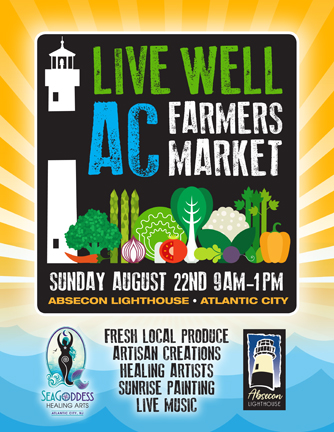
  • Absecon Lighthouse presents “Live Well AC Farmer’s Market” on Sunday, August 22 9AM to 1PM
  • AC Arts Foundation hosts 48 BLOCKS 11AM to 3PM at the Lighthouse
  • Sunrise Painting for artists beginning at 7AM

Join us for a FREE Community Event in Atlantic City’s Lighthouse District! Absecon Lighthouse, New Jersey’s tallest and the country’s third tallest masonry light, will host “Live Well AC Farmers Market” in collaboration with SeaGoddess Healing Arts, LLC, on Sunday, August 22nd, from 9am to 1pm. Artists are welcome to arrive and utilize the lighthouse property for inspiration beginning at 7am for a “Sunrise Painting” session. AND:   The Atlantic City Arts Foundation will be hosting 48 Blocks AC 2021 from 11am to 3pm at the Absecon Lighthouse, where visitors can enjoy demonstrations, workshops, performances, and art exhibitions from various artists.

This event will feature fresh local produce, artisan creations, healing artists, live music, and sunrise painting space for artists. Here’s the good news! Vending spaces are free, as well as the event, with the goal being to create a time and space to celebrate the season’s harvest, living well together in our seaside community, and enjoying the bounty of Mother Nature and the artistry of colors and sound that capture the essence of summer.

The Atlantic City Arts Foundation Applications are now open until August 6th for anyone who would like to submit an art project proposal! Questions? Email kate@atlanticcityartsfoundation.org AC Arts Foundation Application link: https://atlanticcityartsfoundation.org/48bac-project-app-2021

Farmers Market Vendor spaces are first come first serve, and vendors supply their own tent, tables, and chairs. Set up begins at 7am on Sunday, 8/22/21. For information on becoming a vendor please contact seagoddesshealingarts@gmail.com or visit www.abseconlighthouse.org.

Absecon Lighthouse is a state-owned historic property administered by the non-profit Inlet Public/Private Association. Located at 31 So. Rhode Island Avenue in Atlantic City, it is open to visitors Thursdays through Mondays, 11 am to 4 pm. For information call 609-449-1360 or visit www.abseconlighthouse.org.

Movies Under the Stars

Movies Under The Stars is back in Atlantic City for summer 2021. All movies are free and begin at dusk. Movies are Thursday nights at Bartram Avenue on the beach and Sunday nights at Gardner’s Basin. Bring a chair or blanket, a soft drink and popcorn and enjoy an evening out with a family-friendly flick.

• Thurs. August 5, 2021: Trolls World Tour (Bartram Ave. Beach)
• Sun. August 8, 2021: Trolls World Tour (Gardner’s Basin)

• Thurs. August 12: Jumanji (Bartram Ave. Beach)
• Sun. August 15: Jumanji (Gardner’s Basin)

• Thurs. August 19: Abominable (Bartram Ave. Beach)
• Sun. August 22: Abominable (Gardner’s Basin)

• Thurs. August 26: Raya and the Last Dragon (Bartram Ave. Beach)
• Sun. August 29: Raya and the Last Dragon (Gardner’s Basin)

48 Blocks Atlantic City

Join the Atlantic City Arts Foundation on Saturday, August 7 at O’Donnell Memorial Park for the epic return of 48 Blocks AC arts festival.

The Atlantic City Arts Foundation will be unveiling the incredible 2021 Adirondack chairs alongside the 2020 chairs. Meet the artists, mix & mingle with the community, and snap some photos for your social media!

EVENT SCHEDULE:

1 PM: All levels flow yoga with Leadership Studio
1 – 3 PM: 2021 Adirondack Chair Unveiling
1 – 3 PM: Deep Dope Soul the 120 Minute Festival: DJs, Poets, and Artists Create Live with 
 Raymond Tyler
1 – 5 PM: T-shirt design workshop with Kenneth Lazan Faulk, Jr.
1 – 5:30 PM: Live mixed media painting demonstration by Michael Crews
2:00 PM: Qigong for Stress Reduction with Diane Ramftl
2 – 5 PM: Interactive body painting and collage making with Heather Deegan Hires and Ruben 
 Garcia: become part of a living canvas!
2 – 5 PM: Stories of AC story bank – have your story collected and shared!
3:00 PM: Belly Dancing class and performance with Diane Miller; all levels flow yoga with 
 Leadership Studio
3 – 5:30 PM: DJ Dru Coley
4:30 PM: Tai chi and Qigong for Health and Longevity with Diane Ramftl

PLUS: Sovereign Avenue mural walking tours every hour starting at 1PM!

For complete information check out ACAF Facebook page.

Rivers Casino & Resort Schenectady Holding Hiring Event On August 5

Rivers Casino & Resort Schenectady is holding a hiring event this Thursday, August 5 from 10 a.m. until 2 p.m. at the casino’s Event Center. The casino currently has nearly 50 openings in its food & beverage department ranging from entry-level hourly positions to salaried management positions. Join the team that’s been named a Top Workplace by the Times Union for four years in a row!

Rivers’ Human Resources team will be on site interviewing candidates for a variety of positions including cooks, chefs, bartender & cocktail servers, shift managers and more. Both part-time and full-time jobs are available throughout all shifts. Applicants must be at least 18 years old and are encouraged to bring their resumes.

“Working at Rivers Casino is more than just a job, it’s a whole lot of fun and very rewarding,” said Linda Waters, Director of Human Resources at Rivers Casino. “It’s a great place to work and we always celebrate diversity, encourage personal and professional growth, and stay focused on enriching the lives of our team and their families.”

Full time positions at Rivers Casino include paid time off, medical/dental/vision plans, a 401(k) plan with company match, and more. All positions also offer complimentary shuttle bus service from the local CDTA blue line stop.

For more information about career opportunities at Rivers Casino & Resort Schenectady, please visit riverscasino.com/schenectady/careers.

Podcast with Joe Lupo, President, Hard Rock Hotel & Casino Atlantic City

Joe Lupo joined Hard Rock International in 2016 where was assigned to guide the expansion project for Hard Rock Tampa property, one of the most successful casinos in the world. Two years later, he was transferred to Hard Rock Atlantic City where he helped to improve revenues and performance at the property. Lupo knows Atlantic City like the back of his hand. He spent over 12 years as an executive with Borgata, still Atlantic City’s most successful casino. Lupo talks about how his property and his company navigated the pandemic, how it managed the reopening process and why it’s gaming market share every month now that all restrictions have been removed. He spoke with Global Gaming Business (Casino Connection’s parent publication) Publisher Roger Gros at his office in the Hard Rock for the cover story of the August issue of GGB in July.

► Listen in iTunes and Subscribe to GGB Podcasts.

► Listen on Spotify

Esports: The Next Big Betting Trend?

It’s a scene that’s played out in generations of homes over the decades: a young video gamer, hunkered down in front of a computer console, engaged in virtual shootouts with cartoon-like opponents and ignoring Mom’s call to supper.

From the 1970s on, untold millions of kids and teens were raised on video games like Pong and Space Invaders, and later, Dungeons and Dragons, Grand Theft Auto and Call of Duty. They played alone in their bedrooms or basements. They played with friends in video arcades. And eventually, thanks to the internet, they played in multiplayer virtual matches.

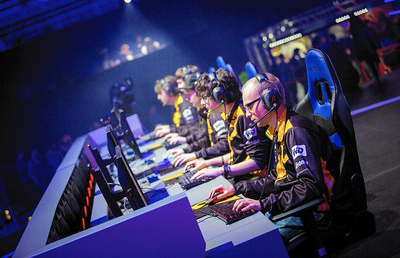
Today, the audience for video gaming has only grown. And a sophisticated, competitive, team-based version known as esports has become a global phenomenon.

Billion-Dollar Boom

In 2018, when the HyperX Esports Arena opened at the Luxor in Las Vegas, UNLV research scientist Brett Arbanel predicted esports would become a billion-dollar global industry “within three years.”

She was right on the money; according to research firm Newzoo, esports will generate $1.08 billion in revenues this year. And Juniper Research projects a 67 percent growth in esports and game streaming by 2025 for a market value of at least $3.5 billion (other estimates put the figure in the $9 billion range).

“I was shocked when I saw the numbers,” said Brian Sabina, chief economic growth officer for the New Jersey Economic Development Authority, which will kick in $200,000 to start an Esports Innovation Center in Atlantic City. In an interview with the Philly Voice, Sabina called esports “the fastest-growing college sport in America. Nearly 500 million people tune in to watch esports events.”

In another development, the Pro Football Hall of Fame in Canton, Ohio is adding a Helix eSports Center, just as lawmakers debate legalizing sports betting in the state. Esports Entertainment has teamed up with the Cleveland Cavaliers to be the NBA franchise’s “official esports tournament platform provider,” and according to Market Watch, on news of the partnership earlier this month, shares of Hall of Fame Resort & Entertainment and Esports Entertainment were up, 7 percent and 3 percent respectively.

Comcast Spectacor and the Cordish Companies are also betting big on esports’ appeal. They’re investing $50 million in the Fusion Arena, a “next-generation esports and entertainment venue” at the Philadelphia Sports Complex, site of Cordish’s Xfinity Live! Casino.

‘Next-Gen’

The clue is in the term “next-generation.” For gaming enthusiasts, esports franchises like Team Liquid, FaZe Clan, Vitality and Cloud9 are the rock stars of their era. These teams compete before tens of thousands of people at live events, live-stream to millions more, and win millions in prize money in the bargain.

And while some traditionalists scoff at the definition of video games as a sport, athletes like Shaquille O’Neal and Alex Rodriguez have a different view. Both have invested in NRG Esports, launched by Andy Miller, co-owner of the Sacramento Kings. Steph Curry of the Golden State Warriors has invested in L.A.-based esports company TSM, and David Beckham founded Guild Esports, the first esports company to go public on the London Stock Exchange. Pittsburgh Steelers wide receiver Juju Smith Schuster, himself an avid gamer, recently launched and esports organization, Diverge Esports.

The Betting Element

Esports might be a big deal, but are its fans also bettors? Adam Weinstein, CEO of esports and DFS company ThriveFantasy, says yes—with an asterisk.

“When it comes to fantasy and betting, nobody’s been able to successfully align with or take the time to put a strong focus on esports as a primary sport, especially here in the U.S,” according to Weinstein, whose company currently offers games for CS:GO, League of Legends, Dota 2 and Valorant (with Call of Duty, Overwatch, and several other titles in the works).

His firm is “dialed into this market and putting our attention, resources and technical acumen to cornering this market,” Weinstein said, for a simple reason. “Gamers are young, affluent and have the tendency to gamble. This market will only grow. We’re betting on esports and our prop-bet style platform to fill that whitespace.”

Just how does betting on esports differ from betting on major league or college sports? “As far as the actual act of betting, esports and sports betting aren’t that different—you’re betting on outcomes,” said Weinstein. “But the audiences are completely different, and the channels by which they view and interact with the games, contests and tournaments are as well.” Traditional sports are still mostly broadcast on television. Esports tournaments are streamed, through non-broadcast media like YouTube and Twitch. But that’s all to the good, as esports fans “tend to be younger and more tech-savvy than the traditional sports audience.”

We asked Weinstein to talk about the future of esports, and convince naysayers that these competitive games are indeed sporting events. Here are excerpts from that interview:

How do prop bets work in esports betting, and what are the kinds of things people could bet on?

Weinstein: Our platform is focused on prop-style bets. So will Ryan Tannehill throw more than two touchdowns? Pick yes or no. Will Scump have more than 45 kills in Call of Duty? Pick yes or no. We only deal with the top players and simple props, so there’s no need for our users to have to do hours and hours of research and set lineups based on knowing backup tight ends or second-tier esports athletes.

Props are a fun and simple vehicle for our game because they’re based on the outcome. This creates an engaging second-screen experience for our users, as they’re invested in particular statistical outcomes of what these athletes are doing in-game.

A by-product of props is that they actually help educate users on specific intricacies of the game. For instance, in the esport game Valorant, you may not have known that assists are a statistic that athletes are trying to accomplish. So by placing a prop bet through our platform and watching the live event unfold, you’re actively educating yourself on new ways to play and bet on the game.

You’ve said your prop betting concept means users don’t have to know and research every player on every team like traditional DFS, so they have a chance to win more. Can you explain why?

With traditional betting, there are so many variables that can impact a particular outcome. For instance, if you bet on a team to win a game and their best player injures themselves during the game, you’re probably less likely to win.

However, with prop betting, there’s a larger ecosystem of options that you can pick from. Will this player score a goal? Will this player achieve five kills by the end of the session? Props allow users to make simple decisions and become invested in particular nuances of the game.

How do you respond to people who think esports shouldn’t fall into the sports bucket at all, since there’s no athletic component?

It’s the same argument people use in saying NASCAR isn’t a sport because the drivers are only driving a car. The stamina, reaction time and mental sharpness it takes to be a NASCAR driver is incredible, and sports science shows just how physically and mentally tough those drivers need to be to achieve success.

There’s a stereotype that these players just sit in dark rooms all day, playing video games. There’s a new focus in the industry surrounding the physical aspect of gaming. Esport athletes seriously focus on eating right, mental health strengthening and physical exercise to increase their stamina and mental sharpness. The hand-eye coordination that these players require to be on the top of their game is astounding. Esports athletes are 100 percent athletes.

Will esports and esports betting one day be mainstream? It’s even been floated as a possible Olympic event.

Absolutely. The 2024 Paris Olympics are actually featuring esports as a demonstration event. As I’ve stated, the research and projections on the growth potential of the esports market is nothing but a pure hockey-stick curve.

Right now the esports audience is very young, but as they mature, there’s no reason why esports won’t become more mainstream. Will it ever be as mainstream as the NFL? Nobody’s denying the strength of the NFL as the leading sport for betting—it has its own day, dedicated every single week to nothing but the NFL. It’s a perfect medium for betting. However, if you put all the esports titles together, we think the market could even surpass the NFL.

We’re not even in the first inning of the growth of esports. Our bet and thesis for Thrive is esports, esports, esports.

Genting Spending Big to Bring NYC Casinos

Genting New York LLC, a subsidiary of Genting Malaysia, has been identified as one of the Top 10 highest-spending lobbying entities in New York State last year. According to the New York State Joint Commission on Public Ethics’ 2020 Annual Report, published July 8, the unit came in sixth on the list, spending $1,221,000 in its effort to expand gaming downstate.

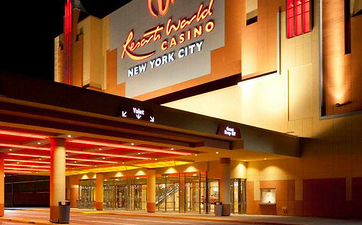
Genting runs Resorts World New York, a gaming hall located in Queens borough alongside Aqueduct Racetrack, offering more than 6,500 slots and electronic table games on two floors, as well as Resorts World Catskills in Monticello, about two hours north, which is a full-scale casino complete with all the accompanying amenities. According to Inside Asian Gaming, the company’s 2020 lobbying efforts coincided with a push by Governor Andrew Cuomo to delay a public tender for NYC casino licenses to 2023 due to Covid-19. According to the New York Post, “Manhattan politicos squashed Cuomo’s plan to fast-track a Las Vegas-style casino in the Big Apple,” due to pushback from lawmakers.

“I adamantly oppose any casino in Manhattan,” Manhattan Assemblyman Richard Gottfried told the newspaper. “I believe it would be seriously detrimental to the residential and commercial quality of Manhattan.”

Other companies eyeing the Manhattan opportunity are Wynn Resorts, Bally’s Corp. and the Las Vegas Sands Corp., the Post reported.

Resorts World parent company Genting Berhad just opened its US$4.3 million Resorts World Las Vegas on the north end of the Strip.

Analyst: iGaming May be ‘Stunting’ Pennsylvania Live Growth

A prominent gaming analyst has issued a report suggesting that Pennsylvania’s healthy internet gaming business may be slowing the growth of the state’s brick-and-mortar industry, which recently was surpassed in growth gaming revenue by Atlantic City as the second-highest GGR in the U.S.

Deutsche Bank analyst Carlo Santarelli noted that while Pennsylvania’s gaming revenues are outpacing 2019, the last pre-pandemic year, exceptions in internet vs. brick-and-mortar casinos should raise concern.

“We think it is worth considering the notion that the presence of iCasino in Pennsylvania could be stunting the casino recovery,” Santarelli wrote. “Compared with 2019, gross gaming revenue (GGR) in 2021 at the state’s 14 commercial casinos was down 12 percent in March, up 1 percent in April, and down 3 percent in May. But Pennsylvania added two new casinos since 2019—Live! Casino Pittsburgh, a satellite venue at the Westmoreland Mall, and Live! Casino Philadelphia, a full-scale casino resort in the city’s Stadium District.

“On a stand-alone basis, given the pandemic, these results would appear reasonable in isolation. However, when compared with performance across a host of other states across the Northeast, Midwest, and Southeast, they stand out a bit.”

Santarelli cited the convenience of mobile casino play as a prime reason it could slow land-based casino growth. “Though the convenience of a pocket casino is surely a strategic advantage, if you’re a slot customer, it appears the iCasino is actually the value play for your entertainment dollar as well,” Santarelli wrote. “Said differently, the entertainment dollar lasts twice as long in the iCasino environment….

“Accordingly, we find the theme of the pandemic making iCasino legalization a likely source of funds for states far less likely now, post bailouts, than perhaps was the case six-12 months ago. As such, we think the rollout of iCasino is likely to be a lot more challenging than most expect, and far more challenging than sports betting.

“As per our findings here, we also think there is some merit to cannibalization of traditional casino operations, which would thereby lessen the desire of certain casino operators that haven’t had success in iCasino, or aren’t well-positioned to succeed in the vertical, to push for legalization.”

PODCAST: John Koster, Eastern Regional President, Caesars Entertainment

John Koster began his career in hospitality and after some experience on the Pacific Rim, he returned to the U.S. to work for several gaming companies. He joined Eldorado Resorts several years ago, and oversaw the company’s property’s in Lake Tahoe both before and after the Caesars transaction. Just recently he was tapped to replace the retiring Steve Callender and now oversees the three Atlantic City properties, as well as Harrah’s Philadelphia and Horseshoe Baltimore for Caesars Entertainment. He explains how he navigated the pandemic in Lake Tahoe and what he expects of the Atlantic City properties, where Caesars has committed to reinvesting millions of dollars. He spoke with Global Gaming Business (Casino Connections parent magazine) Publisher Roger Gros for the cover story of the August issue of GGB.

► Listen in iTunes and Subscribe to GGB Podcasts.

► Listen on Spotify

Masks Return For Las Vegas Employees as Covid-19 Rises

They’re back.

Clark County has re-imposed a mask mandate but only for employees of indoor businesses in the county, including all casinos. Just days before, the Westgate Hotel-Casino required its employees to mask up again whether they are vaccinated, part of the efforts to keep guests and staff safe as the Delta variant explodes.

Las Vegas Sands changed its mask policy at that time as well.

“In response to new recommendations from the Southern Nevada Health District, we now require that all team members (vaccinated or not) wear company-issued face masks while working in indoor public spaces, and in indoor areas where people congregate,” Sands said in a statement. “Complimentary face masks are available to our guests at front desks, grazie desks, and concierge desks.”

Las Vegas Sands spokesman Keith Salwoski said in an email Monday that all employees of the Venetian, Palazzo, and Sands Expo—vaccinated or not—be required to “wear company-issued face masks while working in indoor public spaces, and in indoor areas where people congregate. In addition, we have revised our signs posted at public entrances to share this new SNHD recommendation.”

The problem is the low rate of vaccinations for Nevada residents, less than 50 percent.

The Culinary Union has undertaken a campaign to convince members to get vaccinated as almost all admissions to hospitals for Covid-19 are from the unvaccinated population.

Amanda Belarmino, an assistant professor at the William F. Harrah College of Hospitality at UNLV, said a return to masks make sense but that doesn’t make the option any easier for locals and tourists.

“I would recommend a middle-of-the-road approach where employees return to wearing masks, masks are available for customers, in the guest rooms and at the entrance, and consider a return to more visible cleaning standards,” she said.

Josh Swissman, founding partner of the Las Vegas-based Strategy Organization, like so many others trumpeted the need for vaccination as a way to slow down the infection spread and thus the need for restarting masks.

“The most important message that should be shouted from the rooftops is that everyone who hasn’t gotten vaccinated yet should do that,” he said.

Vaccination remains the best defense, and Nevada businesses including the resorts are working awfully hard to get their employees vaccinated, Nevada Resort Association President Virginia Valentine said. “We’re going to comply with it,” said Valentine, who leads the association made up of large casino resorts. “We think it’s an important step.”

The Clark County Commission made it easier by voting to make employers require workers to wear masks in indoor public spaces like stores, malls and clubs, and post signs citing local health district advice that everyone vaccinated or not should wear face coverings.

“We’ve got to do something,” Commissioner Jim Gibson said as he raised the specter of crowded hospitals and canceled trade shows. “We have already been through a shutdown and a start-up. We cannot afford to have major conventions choose to go elsewhere.”

A hastily called and sometimes contentious emergency meeting drew a big audience and about 50 speakers—almost all opposed to mask requirements, vaccinations and business closures and distancing.

The commission voted to require locations with more than 250 people submit plans about possible next steps to stem the spread of coronavirus.

The vote made the mask rule effective July 22 with a follow up review on August 17.

Some indicated they won’t comply.

On May 13, Governor Steve Sisolak, following CDC guidelines, dropped the requirement for vaccinated people to wear face coverings in Nevada. Unvaccinated people were still advised to wear masks.

In the two months since then, the Delta variant has attacked Nevada.

“The Delta variant has changed the game,” said Brian Labus, a longtime Southern Nevada Health District epidemiologist who now teaches public health at the University of Nevada, Las Vegas. He said in an interview the debate about masks re-emerged “because we’re still in the middle of a pandemic.”

Labus has advised the governor on pandemic issues and has called for people to get vaccinated. He acknowledged data shows that most people now contracting the virus are not vaccinated, according to the Associated Press.

The number of new cases of Covid-19 reported July 20 in Nevada exceeded 1,000. State vaccination rates have stalled. Less than half are fully vaccinated. The state hit a seven-day average of 708 cases on July 19, numbers not seen since early February, said the Nevada Independent.

“You don’t want to alienate customers,” Belarmino said. “It’s hard to tell people again they’re going back to restrictions. But I think most people would rather wear a mask than not be able to leave home.”

The Gaming Control Board will enforce the mandate at gaming locations.

Post-Adelson, Las Vegas Sands Changing

The death of billionaire Sheldon Adelson has triggered sea change at the company he founded, Las Vegas Sands. Adelson died in January, at the age of 87, and the changes began almost immediately when the company announced the sale of its Las Vegas properties, the Venetian, Palazzo and Sands Expo Center to New York-based Apollo, the former owner of Caesars Entertainment, and the REIT VICI Properties. While that sale occurred in March 2020, Adelson had previously said the sale of those properties was being considered.

Last week, the company backed two amendments in Florida that would permit the expansion of gaming in the northern part of the state, where it has previously been prohibited. Both amendments seem to be designed to avoid conflicts with the Seminole tribe, which last month signed a compact with the state of Florida guaranteed billions of dollars to the state in exchange for several more south Florida casinos and complete control of sports betting within the state.

Another amendment proposed by FanDuel and DraftKings directly challenges that sports betting monopoly, and the Seminoles are sure to strongly oppose it. Not so for the northern Florida expansion.

The two amendments to expand gaming in Florida would permit the existing card rooms to operate the facilities as long as they were, according to one bill, “more than 130 miles on a straight line from all tribal facilities.” The second bill shortens the straight line to 100 miles. The licensees would be required to invest either $250 million or $500 million to offer full-service casino resorts, including slots and tables, hotels, food and beverage, and meetings and convention facilities.

Gary Bitner, spokesperson for the Seminoles, said the tribe has no issue with the amendments.

“Unlike the proposed sports betting ballot initiative, neither of these initiatives would interfere with the new gaming compact, nor would they impact the $2.5 billion revenue-sharing guarantee for the state of Florida over the compact’s first five years,’’ he said.

But the biggest change was yet to come. For years, Adelson was among the most vociferous opponents of online gambling. He once declared he was “willing to spend whatever it takes” to stop the expansion of the industry. In 2014, Adelson created the Coalition to Stop Internet Gambling with the sole purpose of restoring the federal ban on internet betting.

And last week, with the establishment of a digital gaming investment team, the Sands Corp. made its first foray into the virtual space.

The company announced plans to become a strategic investor in business-to-business digital gaming technologies. The new team will be led by Davis Catlin, who spent 14 years with Sands Capital Management in Arlington, Virginia (no relations to the Las Vegas Sands Corp.).

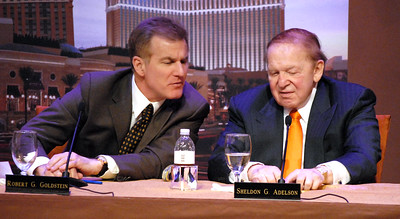
According to Sands Chairman and CEO Rob Goldstein, the company is “determined to grow its leadership position within the industry and is committed to doing that through strategic steps we think best position the company for future growth. Digital gaming and other related offerings are still very much in the early stages of development, and we believe there is an outstanding opportunity for us to invest in the technologies being developed.”

He added that the Sands’ “platform, expertise and financial resources, together with the investment team led by Davis, will provide meaningful opportunities to … generate significant long-term benefits for the company. And just as our integrated resorts were not built in a day, by being patient and investing for the long-term, we believe these investments in digital gaming technology will deliver significant returns for the company and its shareholders.”

Beyond that, details of the company’s plans are scant. But with Adelson’s longstanding opposition to online gaming, the company, with mega-resorts in Macau and Singapore, is entering unexplored territory. Bernstein Research noted, “Getting in at this juncture would be fraught with risk. A go-it-alone strategy in today’s dynamic market would be difficult and acquiring an existing sports betting/iGaming operator would be very expensive based on current valuations.”

But Sands is certainly flush, having sold its Las Vegas operations in March for $6.25 billion. The firm said at the time that it was “focused on reinvestment in Asia and high-growth opportunities in new markets,” possibly including Texas, Florida and New York City.

Goldstein first hinted the company would go online during an earnings call in January, shortly after Adelson’s death. “I have very strong thoughts about (online gaming),” he said at the time. “We are exploring it and if we have something concrete to say we will tell you. Right now it’s simply exploratory.”

At a June conference, Goldstein acknowledged the company’s commitment to “being in that space… not just in the U.S,” but possibly in Canada, Europe or South America.

According to the Nevada Independent, there’s been talk that the company will buy a major sports betting or online gaming provider. Eilers & Krejcik Gaming analyst Chris Grove debunked the speculation, saying last week’s announcement “definitely leans more in the direction of a (business-to-business)-focused company versus a company with a heavy direct-to-consumer angle.

“I think there’s definitely a world where Sands makes a series of smaller bets in younger companies and builds something new from that foundation,” Grove said, “versus trying to accomplish their goals with a single splashy acquisition.”

Back in April, Deutsche Bank gaming analyst Carlo Santarelli said the company is taking a prudent path to online gaming. “Given it still remains an embryonic market, Las Vegas Sands is taking a smart and targeted approach, whereby they could leverage their balance sheet to pursue either (mergers and acquisitions) or organic growth opportunities within the U.S. or abroad,” he said.

Back in Florida, the three proposed constitutional amendments have produced a flood of lobbying dollars.

In response to the new gaming compact signed by Seminole Tribe officials and Florida Governor Ron DeSantis and the introduction of the proposed amendments, three out-of-state gaming giants made $62 million in political contributions to influence the future of sports betting and casino gambling in Florida.

Among other contributions, FanDuel and DraftKings each gave $10 million to Florida Education Champions, a PAC supporting a 2022 ballot initiative asking voters to authorize online sports betting at all Florida parimutuels, professional sports stadiums and anywhere else in the state. Florida Education Champions is marketing its constitutional amendment campaign by pledging to dedicate sports betting tax revenue to education.

The third out-of-town player is Las Vegas Sands, which has long been trying to enter the Florida gaming market. Las Vegas Sands is controlled by Miriam Adelson, the wife of the company’s late founder and CEO, Sheldon Adelson. In March, the company sold its Las Vegas properties and announced its plans to expand into other states.

Observers said Sands may be interested in operating a Florida casino either by partnering with or buying out an existing permit holder.

The Genting Group also is said to be interested in the Doral resort; or a casino in Miami where the company purchased the former Miami Herald site in 2011, hoping to open a waterfront casino resort.

The new Seminole compact does allow an existing license to be transferred. But to obtain a license to offer sports betting or casino games at those venues, Adelson would need statewide approval from voters under Amendment 3.

“The compact has opened the floodgates to everybody getting everything now,” said John Sowinski, director of No Casinos, the group that managed the 2018 Amendment 3 campaign.

Gearing up for ballot issues in 2022, lobbyist Nick Iarossi, who has represented Las Vegas Sands, said Sands formed Florida Voters in Charge and gave it $17 million to collect signatures as soon as they decide what their gambling expansion proposal will look like. Iarossi said, “There’s ongoing talks but there are multiple versions of the language that can be filed.”

Voters In Charge spokesperson Sarah Bascom added, “We are contemplating various options with no intention to violate the recently passed compact/revenue sharing agreement. Our initial donor, the Las Vegas Sands Corp., has long been interested in Florida and we look forward to sharing more about the Florida Voters in Charge effort in the coming weeks and months.”

However, getting an issue on the ballot in time for the 2022 elections will be a huge task. Florida law prohibits petition companies from paying signature gatherers per signature. There are a limited number of companies that perform signature-gathering work. And because of the record turnout in the 2020 elections, more signatures will be needed by the February deadline.

The 30-year, $500 million-a-year gaming compact signed by the Seminole Tribe and the governor would allow voters to approve additional casinos in Florida. It states as long as a new casino is 100 miles from any of the tribe’s casinos and has the tribe’s consent, it would not violate the compact. In Miami-Dade and Broward counties, a new casino could not be located within 15 miles of the Seminole Hard Rock Casino near Hollywood.

The Seminole Tribe naturally wants to defend the new 30-year, $500 million-a-year gaming compact and have some influence over the 2022 ballot, so it contributed $10 million to the PAC Voters in Control Inc. The U.S. Department of the Interior still must approve the new compact.

Tribal spokesman Bitner said the tribe strongly opposes the constitutional amendment proposed by FanDuel and DraftKings, which would legalize sports betting outside of the tribe’s agreement with the state. He said, “This is millions of out-of-state corporate dollars to try and manipulate the people of Florida, who are smarter than that. They think they can buy their way into the state. Our team intends to use our Florida dollars to protect the interests of the people of Florida.”

If the FanDuel-DraftKings initiative gets enough signatures and appears on the 2022 ballot, and gets 60 percent of voter approval, it would derail the compact provision that allows the tribe to enter into agreements with existing parimutuels to operate sports betting at their facilities by having all transactions go through the tribe’s servers.

Besides giving the tribe exclusivity to operate online sportsbooks in Florida for the next 30 years, the compact also would pave the way for a huge expansion of the Seminoles’ gaming empire. The tribe would be allowed to operate craps and roulette at all of its seven casinos and to build three more casinos on existing tribal property east of Florida’s Turnpike in Broward County.

In return, the tribe would give the state $500 million a year in revenue-sharing payments. However, if the sports betting component is ruled unconstitutional by the courts or rejected by federal regulators, or if a constitutional amendment is passed authorizing sports betting outside of a tribal server, the Seminole Tribe would reduce its annual payments to the state by $100 million.

The sports betting provision of the Seminole compact is the subject of a federal lawsuit filed by the Havenick family’s West Flagler Associates, owner of Magic City Casino in Miami. The lawsuit claims the sports betting language in the compact is unconstitutional. The Havenicks argue the agreement authorizing sports betting outside of tribal lands in Florida is in violation of the Indian Gaming Regulatory Act.

In an effort to protect its interests, West Flagler Associates created its own political committee, People Against Regulatory Legislation Addressing You. Chairman Isadore “Izzy” Havenick, vice president for public affairs, said West Flagler Associates gave the PAC $15 million.

“The committee was formed in order to make sure our family business and other multi-generational family businesses are not excluded from any conversations that could cannibalize us. We know there are national companies out there that see the potential of our great state, and we believe we should all work together to give the best product to the people of Florida in an inclusionary fashion,” Havenick said.

The multi-million political contributions from FanDuel, DraftKings, Las Vegas Sands and West Flagler Associates represent the largest contributions made so far to the Florida 2022 election cycle, according to campaign finance records.

Wallenda to Christen Firekeepers New Tower

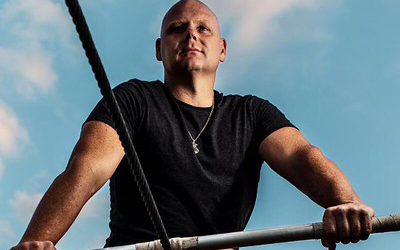
FireKeepers Casino Hotel has partnered with Nik Wallenda, world renowned daredevil of the legendary performing family, the Great Wallendas to celebrate the Grand Opening of the property’s major expansion, which features a 203-room hotel tower plus new high limit gaming space, a new location for the property’s signature Nibi restaurant, and new Lobby Bar. Wallenda will walk a high wire from FireKeepers’ existing tower to the new tower, a span of more than 400 feet—nearly 200 feet above ground.

This is an iconic event for the casino, its tribal owners, the Nottawaseppi Huron Band of the Potawatomi, the city of Battle Creek and the State of Michigan. Spectators are encouraged to attend this free event. FireKeepers will begin the opening ceremonies at 5 pm on August 16, with Nik Wallenda’s walk at approximately 5:45 pm. Details for remote viewing will be announced via FireKeepers website and social media channels soon.

“We are thrilled to welcome Nik Wallenda to FireKeepers, and can think of no better way to signify our moving forward than with his aerial adventure across our towers,” state FireKeepers Casino Hotel CEO Kathy George. “We look forward to welcoming guests to watch this awesome feat, and to experience the new expansion!”

With 11 Guinness World Records and a list of never before seen death defying feats, Nik Wallenda has written his name in history as truly the “King of the High Wire”. Wallenda has performed live in every state in the USA and all over the world. He has garnered the support from tens of millions of live viewers worldwide in network television specials on ABC, The Discovery Channel and others. From being the first person to cross the Grand Canyon, Niagara Falls, and Times Square, to walking blindfolded between two towers in Chicago, Wallenda’s latest television special on ABC was a walk over an active volcano in Nicaragua.

Wallenda personifies the Wallenda Family legacy of “Never Giving Up” and has time and time again proven that “Fear is a Liar.” Wallenda’s latest initiative is his book, Facing Fear focuses on how most of us will never walk a tightrope, but we face things that scare us every day. Whether putting ourselves out there socially or seeking a dream job, all of us allow anxieties and fears to hold us back. Facing Fear is a reader-centric memoir, interweaving parts of Wallenda’s personal story of a tragic 2017 accident and how he conquered his fear with practical advice for readers to overcome whatever fears are holding them back.

The new eight-story hotel was designed by JCJ Architecture, of Hartford Conn., and constructed by Clark Construction Co. of Lansing, Mich., in alignment with FireKeepers’ existing standards of excellence, as the current hotel has been designated a AAA Four Diamond award winner for the past five consecutive years. The welcoming 39,000 square foot first level will deliver a vibrant new lobby bar, front desk and the second Gapi Coffee and Sweets location. FireKeepers signature restaurant, Nibi, one of Michigan’s finest dining experiences, will enjoy a new location with seating for approximately 125, expanded wine storage and presentation, and a private dining area for up to 20, perfect for special parties or small business meetings. There will be new luxurious High Limit Gaming sections for slots and table games, plus a new bar and VIP lounge for select Red Hot Rewards Club members.

Judge Orders Station Casinos to Negotiate With Union

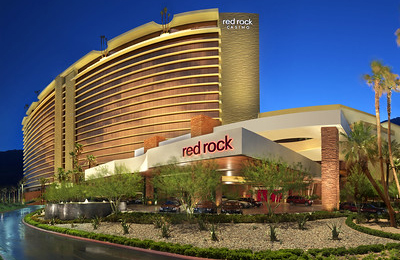
A federal judge July 20 ordered Station Casinos to negotiate a contract with a culinary union that includes more than 1,350 employees of its Red Rock Casino. This despite the fact that the employees voted down the union in an election in December 2019.

The judge agreed with the regional National Labor Relations Board that Station’s announcement of new incentives and benefits was timed to influence the election to determine if the employees would unionize under the Culinary and Bartenders Union. The judge called the casino company’s actions a “hallmark violation” of the National Labor Relations Act (NLRA)

The order for Station Casinos to negotiate with the union was part of an injunction that the United States District Court ordered in a case where the NLRB seeks to prove that the company violated federal labor law in several instances when several days before the election it announced that it would be making an HMO health plan premium-free and deductible-free while also increasing company contributions toward employees’ 401(k) accounts.

In the injunction the judge also ordered Red Rock to cease interrogating employees about union support, to stop promising employees increased wages or benefits to discourage them from supporting the union, changing employees’ schedules or decreasing seniority because of their support for the union—among other things. The injunction ordered Red Rock to “cease and desist from engaging in unfair labor practices, in English and Spanish, to all employees, supervisors, managers, and executives.”

Geoconda Argüello-Kline, secretary-treasurer for the culinary union, commented, “We are pleased with the federal court’s extraordinary and vindicating ruling in favor of Red Rock Casino workers. We commend Red Rock Casino workers for their courage and resilience in the face of the massive anti-union campaign that Station Casinos waged against their own employees and we look forward to negotiating and winning a union contract to protect workers.”

Navajo Nation Casinos Reopen After 15 Months

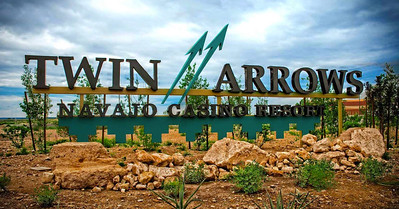
Twin Arrows Navajo Casino Resort near Flagstaff, Arizona reopened Monday, July 12 after being shut down for 15 months due to Covid-19. The ban on non-residents of the Navajo Nation also was lifted. Navajo Nation Gaming Enterprise Chief Executive Officer Brian Parrish said a grand reopening event is planned for August 1 at all four Navajo casino resorts, which closed on March 17, 2020.

Parrish stated, “It’s been 15 months. We’re very excited about this opportunity to reconnect with all of our patrons.” The closure laid off 1,100 employees at Twin Arrows, he added.

Patrons’ temperatures are being checked and masks are required inside the casinos. Visitors also must present a government-issued I.D., such as a driver’s license, before they may enter the casinos. In addition, a curfew is in effect from 11 p.m. to 5 a.m. until further notice.

Parrish said 8 percent of all casino employees have been vaccinated.

“We’re continuing to screen all of our patrons, all of our team members. We’re conducting tests of all of our team members every two weeks. And we’re also educating our team about the importance of getting vaccinated,” Parrish said.

Twin Arrows casino and hotel are operating at 50 percent capacity, Parrish said, with limited hours and social distancing. The buffet, arcade, bingo, pool, fitness center and valet service will remain closed. In addition, he said Navajo New Mexico casinos, including Fire Rock Casino in Church Rock, Northern Edge Casino in Farmington and Flowing Water Casino in Shiprock, all reopened with 25 percent occupancy.

“We’re starting off with 50 percent capacity and we’re gonna stick with that until the nation transitions from the yellow stage to the green stage,” Parrish said.

Navajo Nation Vice President Myron Lizer stated, “Reopening ensures that our Navajo people have jobs to sustain the livelihood of their families and provides income for the entire nation.”

Illinois Gaming Board Approves Rockford Casino Participants

The Illinois Gaming Board recently approved a series of key businesses, executives, managers and owners who will participate in the Hard Rock Casino Rockford project.

Approvals went to Hard Rock International Chief Executive Officer Jim Allen, Hard Rock Chief Operating Officer Jon Lucas and Dotty’s gambling café chain owner Dan Fischer, the casino’s chief investor.

Last month, the gaming board approved a temporary casino at the former Giovanni’s Restaurant and Convention Center. The $8.8 million, 37,790-square-foot temporary location is expected to be completed within 90 to 120 days and offer 620 slot machines, two restaurants and a retail area. It will operate for two years while the permanent $311 million Hard rock Casino Rockford is built at the former Clock Tower Resort location. That project is awaiting additional permissions.

Rockford Mayor Tom McNamara said an extraordinary amount of “work, time and energy” has been going on behind the scenes to bring the casino project to this point. Lucas stated, “This is a giant step forward. We’re grateful to the state of Illinois and the Illinois Gaming Board for their support. We’re excited to get this project up and running beginning with the construction of the temporary casino. It won’t be long before we need people to join our team and we plan to share more details on how the community can participate through employment and supplier roles in the days and weeks ahead.”

Lightfoot: Chicago Eager For Casino

At the recent opening of the National Council of Legislators from Gaming States, Chicago Mayor Lori Lightfoot promoted her city and its eagerness to host a casino.

“For interested owners and operators, our city truly provides a once-in-a-generation opportunity to build a casino and entertainment district in a major American city,” Lightfoot said. “I’m looking forward to reviewing the proposals that come in.”

In 2019, Governor J.B. Pritzker signed legislation allowing sports betting statewide and casinos in six locations, including downtown Chicago. The city issued its request for proposals in late and will close applications next month. Finalists are expected to be announced next year. The winning bidder can select its casino location, subject to city approval.

Lightfoot said Rush Street Gaming, which has a substantial stake in Rivers Casinos in Des Plaines, is among the applicants. But she added, “This RFP is wide open. There are no hometown favorites. We want to make sure we get the best-in-class opportunities for anyone across the country who understands the value of being in a city like Chicago.” The downtown casino is expected by open by 2025.

Rivers Casino generates more gaming revenue than any of the other nine casinos in Illinois. In June, it brought it more than half of the $21.4 million in gaming taxes produced by the state’s casinos, according to Illinois Gaming Board figures. For the year, it has produced nearly $200 million in adjusted gross revenue and more than $50 million in state and local taxes.

Lightfoot said she’d like the casino to be part of an integrated casino resort, meaning, “a world-class entertainment district, anchored by a casino but also providing other amenities so that our tourists and residents can take advantage of a first-class gaming experience.”

Lightfoot noted her office is a friend of the gambling industry. “So an operator who comes to invest in Chicago is going to have a partner in our government that is going to provide support to uplift the surrounding community and environment. So not only will you have a great business opportunity, you’re going to find a ready, willing and able workforce that is going to be supported by this administration.”

Lightfoot said Chicago has been studying other areas to identify best practices that will make the city a top choice of potential bidders. She said, “We’re watching what happens in cities like Las Vegas and other gaming centers around the world, and seeing how these other centers have adapted to a post-pandemic economy and realities. And we are well poised to take advantage of the best practices that we have seen across the country and, truly, across the world.”

Lightfoot also noted the new casino project will create thousands of jobs and produce hundreds of billions in new gaming revenue for both the city and state, money that Chicagoans would have spent at northwest Indiana casinos. She added the project must integrate well with the existing community, meet high architectural standards and earn LEED certification.

“While much work remains, this project is an important step in the right direction, as it will not only generate and expand our communities’ access to social-economic opportunities but ensure the prosperity of our city for years to come. It will also serve as an example to executives of legislatures around the country that highlights their ability and responsibility to invest in our cities and the well-being of our residents,” Lightfoot stated.