Author: Casino Connection Staff

Hard Rock Indiana Closes In on the Competition

According to Indiana Gaming Commission (IGC) figures, the Hard Rock Casino in Gary is catching up to the Northwest Indiana market leader Horseshoe Casino in Hammond. In June, Horseshoe posted $34.4 million in net casino revenue. Hard Rock, open only since May 14, reported $25.9 million in June revenue.

Table games revenue came in even closer, with $36.3 million for Hard Rock and $36.9 million for Horseshoe. However, players at Hard Rock kept only $5.4 million in table game winnings, compared to $9.1 million in table game winnings at Horseshoe. Hard Rock President Matt Schuffert said, “Many table games customers left Hard Rock extremely happy in June. But to essentially be the highest table games producing casino in the state in terms of volume, in only our first full month of operation, is a testament to the product and the team we have assembled at Hard Rock.”

Hard Rock led the state in baccarat play in June with $17.8 million compared to $13.7 million at Horseshoe. Hard Rock also was a close second to the Horseshoe for June wagers on blackjack, craps and roulette, according to the IGC.

In June, Horseshoe led Indiana’s 12 casinos with $251.2 million in slot play and $25.4 million in slot win. Coming in second was Indiana Grand, posting $222.1 million in slot play and $23.4 million in slot win, and Hard Rock with $201.7 million in slot play and $20.5 million in slot win.

It’s also important to note Horseshoe offers 1,969 slots, more operational machines than any other casino in the state. That’s because some slot machines in Indiana casinos remain turned off to promote social distancing in response to Covid-19. Still, Hard Rock, with 1,291 slot machines, had more win per machine in June at $15,913 compared to Horseshoe at $12,886, according to IGC records.

Shannon McKellar, Horseshoe vice president of marketing, said, “We continue see our most loyal guests, Caesars Rewards members, make return visits and there is strong interest in taking advantage of travel benefits. Reservations for summer travel to various Caesars Rewards resorts continue to ramp up, including Las Vegas, Lake Tahoe and Atlantic City.”

Statewide, Indiana casino revenue totaled $230.9 million in June, up 4.5 percent over May and up 120 percent over June 2020 when casinos were open only half of the month due to Covid-19 restrictions. Ameristar Casino in East Chicago posted revenue of $21.6 million in June, a 19 percent drop compared to May, when patrons of the shuttered Majestic Star Casino most likely visited Ameristar during the half-month transition from Majestic to Hard Rock and Gary had no operating casino. The Blue Chip Casino in Michigan City also saw revenue decline in June to $11 million, down 11.9 percent compared to May.

On the sports betting front, IGC data show Indiana wagerers bet $246.3 million in June, close to May handle of $254.4 million. PlayIndiana.com Analyst Jessica Welman said sports betting was fairly stagnant in June after the Indiana Pacers exited early from the National Basketball Association playoffs and no other major sport events were going on. She said, “Overall, Indiana’s sportsbooks have performed well over the last three months compared with other Midwestern states, which have so far experienced steeper declines in betting volume.”

According to the IGC, Indiana bettors wagered a total of $2.9 billion on sporting events between July 1, 2020 and June 30, 2021. At the same time, the Hoosier Lottery posted $1.1 billion in sales. Play at slots and table games at state-regulated casinos totaled nearly $1.9 billion in June alone.
Gaming Board to Hold Hearing on PA Casino

The Pennsylvania Gaming Control Board (PGCB) will hold a public hearing August 16 on an application by SC Gaming Op Co., LLC to operate at Category 4 casino in College Township, Centre County.

SG Gaming is a partnership of Bally’s Corp. and Philadelphia investor Ira Lubert, former owner of the Valley Forge Casino Resort, who won an auction in September for the Category 4 license with a $10 million bid.

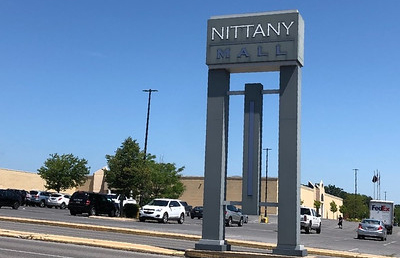
Lubert is proposing the Nittany Mall as the location for the casino, about three miles northeast of State College, home to Penn State University. A former Penn State board chairman and current board member, the investor obtained an option last year to lease a former department store in the mall for the casino.

The hearing will provide a forum for individuals to voice their support or opposition to the proposed casino at the Nittany Mall and to permit those with an interest in the applicant’s proposal to learn more about the project.

The PGCB has adopted a “hybrid” model that will permit individuals to choose to attend and/or provide oral testimony either in person or online. The hearing will also be streamed live from the PGCB’s website.

A page on the agency’s website, gamingcontrolboard.pa.gov, will be made available on Wednesday, July 21, with additional information on this project and a link that would permit citizens, public officials and community groups to choose to speak at this hearing either in person or remotely, or submit written testimony.

The deadline for registration to speak or submit written testimony is noon on August 12. A separate public hearing will be held at a later date in Harrisburg.

Circus Circus, Insurer AIG Take It to Court

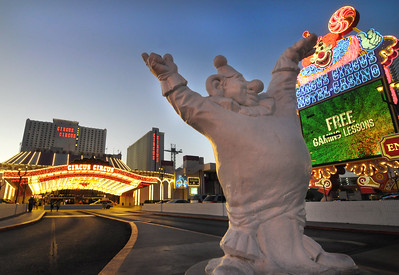
Attorneys for the Las Vegas casino Circus Circus LV LP and AIG Specialty Insurance Co. on July 12 submitted briefs to the Ninth Circuit Appeals Court in the case Circus Circus LV LP v. AIG Specialty Insurance Co.

The casino sued the insurance company in Nevada federal court July 2020 for breach of contract for losses related to the pandemic after AIG refused to pay the claims, saying there was no physical loss or damage to trigger coverage. A lower federal court agreed with the insurance company.

In its brief, AIG argues that the casino’s claim “defies common sense” because it was still able to access its property despite executive orders by Governor Steve Sisolak for most workers to stay home and for casinos to close.

In its brief, Circus Circus told the federal panel that the lower court’s ruling was “wrong from the very first sentence” because the casino’s complain was not about economic losses but coverage of physical loss and damage related to contamination by the virus.

AIG counters that Covid-19 is not perceptible to human senses, unlike cat urine, smoke and gas fumes that were cited by Circus Circus to bolster its claims.

Christopher J. Cunio from Hunton Andrews Kurth LLP, which represents Circus Circus, commented about the case, claiming that the insurance company couldn’t refuse the allegations as required by the rulings in Bell Atlantic Corp. v. Twombly and Ashcroft v. Iqbal and added, “allegations of persistent and pervasive physical alteration of the content of the indoor air and the characteristics of the surfaces” at the casino satisfy Nevada law.

United Policyholders, a nonprofit that provides information to insurance customers, has endorsed Circus Circus’s contention. JC Hospitality LLC, the owner of the Virgin Hotels Las Vegas and Casino, and Boyd Gaming Corp. neighbors of Circus Circus, have filed friend of the court briefs in support of the casino.

Ill-Fated Fontainebleau to Reopen As JW Marriott Las Vegas

In contrast to the original very public announcements of the Fontainebleau Las Vegas and a subsequent unveiling of the Drew, an addition to the website of JW Marriott was the only indication that there are new plans for the blue elephant that has been languishing on the north Strip for almost 10 years. The webpage describes “JW Marriott Las Vegas” will replace the former Fontainebleau and open late in 2023.

Jeffery Soffer was the original owner of the property when it was to become the second Fontainebleau following the hotel he owns in Miami Beach. His partner was former Mandalay Bay executive Glenn Schaeffer. The original plans for the Fontainebleau Las Vegas were unveiled in 2005, construction began in 2007 and bankruptcy arrived in 2009. Billionaire Carl Icahn purchased the nearly finished property out of bankruptcy in 2010 for $150 and sold to New York developer Steve Witkoff and real estate firm New Valley, who immediately hired former MGM executive Bobby Baldwin. The property got a new name—the Drew—named after his deceased son, and was to include two Marriott flags. But when a $2 billion construction loan fell through, Soffer re-emerged, along with the real estate arm of Koch Industries, to re-acquire the property.

As for Marriot, a spokeswoman told the Las Vegas Review Journal that nothing had changed in its role.

“Marriott remains the hotel operator and we have two brands — the Edition and the JW Marriott — that are a part of this resort and casino complex,” she said.

The 67-floor resort has more than 3,700 rooms and suites along with more than 500,000 square feet of meeting and convention space. The website touts a new pedestrian bridge that will link the hotel to the Las Vegas Convention Center. It would be the first appearance on the Strip for JW Marriott, which also has an affiliation with the hotel at the Rampart Casino in Summerlin.

Marriott has a long-standing opposition to gaming because of the religious views of one of its founders, JW “Bill” Marriott Jr. A devote Mormon, he has avoided getting involved in the gaming industry, and anywhere the Marriott flag flies on a casino hotel, the gaming operation is conducted by a separate company.

“This is a business where it is very easy to get in trouble with all the bars and nightclub operations,” he told a group in 2004.

Andrew MacDonald Steps Down from Las Vegas Sands

One of the brightest and most analytical minds in gaming, Andrew MacDonald, has stepped down as the chief casino officer for Las Vegas Sands and Sands China. MacDonald has been with LVS for more than a decade, and is considered one of the most analytical minds in the gaming business.

Just last year, MacDonald was given responsibility for running Marina Bay Sands, as Managing Director George Tanasijevich turned his attention to local and international expansion.

After starting as a dealer at Wrest Point Casino in Hobart, Tasmania, he advanced quickly until being appointed a regulator in Queensland. Later, he worked for Genting, Crown and Jupiter’s Gold Coast, now the Star Gold Coast. He later joined investment banking firm Macquarie Capital as managing director and co-global head before joining Marina Bay Sands in 2010 and then the corporate role at Las Vegas Sands two years later.

As corporate senior vice president and chief casino officer for LVS, he was responsible for analyzing the gaming performance at all company properties, and his love of teaching spread the word about effective casino operations to thousands of LVS employees and executives. As a young executive, he helped legendary University of Nevada Reno Professor Bill Eadington develop the Executive Development Program, still the most rigorous and intense educational program in gaming today. His Urbino.net website was one of the earliest casino management portals in the industry, launched around 2000, gathering together some of the brightest minds in gaming to offer their views and assessments.

MacDonald is relocating to Glasgow, Scotland to be closer to his extended family.

No Plans for Poker Return to Encore Boston Harbor

The Bay State’s largest casino, Wynn’s Encore Boston Harbor, doesn’t plan to bring poker back soon, if ever. If it does return, says the casino, it will be in a “reduced capacity.”

The large number of complaints the Massachusetts Gaming Commission has received from poker fans about the fact that their favorite game hasn’t returned yet to either the Wynn casino or the MGM Springfield prompted a discussion at the most recent commission meeting.

MGC’s Assistant Director of Investigations and Enforcement Bureau Bruce Band told commissioners July 15 that complaints about the lack of the game “have increased tenfold in the last two weeks.” Band added, “Basically people are saying if the properties aren’t going to offer poker, we should establish poker parlors, which we explained the statute doesn’t allow for.”

Both casinos reopened fully in May—both said they will decide the future of poker before the end of 2021.

On July 15 the Encore Boston Harbor issued this statement where it acknowledged its guests’ disappointment about no poker but said, “Based on current market conditions and the resulting need to prioritize space, Encore Boston Harbor will not be bringing back live poker at this time. If and when poker should return to Encore, it will likely be at a reduced capacity.”

When the two casinos were allowed to reopen in the summer of 2020 poker wasn’t allowed because it was deemed impossible to play the game with social distancing and plastic dividers. It was also not profitable with only four players allowed, said the casinos. However, even though the players limits are now lifted, the casinos say the game isn’t profitable.

Commission Chairwoman Cathy Judd-Stein said the commission should look into the matter and asked MGC’s legal department to give a report.

Commissioner Enrique Zuniga said he’d like the casinos to give more details on why they don’t want to bring back poker. “I would be very curious to see what they have to say,” Zuniga said. “Clearly, if the public is asking for it and that was something that was initially promised as an option, I think that’s worth inquiring.”

Gambling Operators Form Georgia Lobbying Coalition

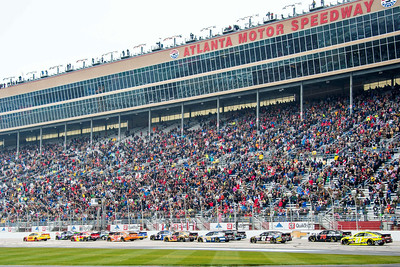
Sixteen well known casino developers, operators, vendors, hospitality and gaming companies have formed a coalition to lobby Georgia lawmakers to expand the state’s gambling laws next year. The group Caesars Entertainment, Bally’s, Hard Rock, Wynn Resorts and Gaming & Leisure Properties. Penn National Gaming, co-owner of Barstool Sports, also joined the effort, as well as Foxwoods Resort Casino, the Native American-owned firm behind Atlanta Motor Speedway’s proposed $1 billion destination resort.

Coalition members claim legalizing casino gambling in Georgia would lead to an economic boom, generating millions in property and sales tax revenue to boost the HOPE scholarship and the state’s pre-K program, which were Impacted by Covid-19.

Observers said the coalition companies are interested in downtown casino sites such as CNN Center and the planned $5 billion sports and entertainment district Centennial Yards. Meanwhile, Atlanta Motor Speedway officials are moving forward with plans to build an attraction in Hampton. Other sites in Augusta, Hartwell, Kingsland and Liberty County also have been proposed.

Multiple polls have shown a majority of Georgians approve expanding gambling laws and would support a measure on the general election ballot next November. But casino gambling In Georgia has its share of opponents, such as casino companies near coastal Georgia and in neighboring Alabama and North Carolina. Also, evangelicals and conservative religious groups like Faith and Freedom Coalition say casino and online gambling should remain illegal.

Lobbyists are likely to tell legislators a vote against gambling legislation “would be a vote against $5 billion in brick-and-mortar construction and 50,000 new jobs in Georgia,” said Rick Lackey, an Atlanta commercial real estate executive who has been marketing potential casino sites in Savannah and Midway.

Petition, Two Lawsuits Seek To Stop Louisiana Casino

In St. Tammany Parish, Chandler and Jason Goltz recently filed a petition with the Louisiana Gaming Control Board to stop the transfer of a riverboat gambling license in Bossier City to Slidell, where Los Angeles-based Peninsula Pacific Entertainment wants to build a $325 million casino. The couple, who live near the proposed casino site, argue transferring the license is illegal and unconstitutional, and also premature. P2E holds the license to operate DiamondJacks Casino in Bossier City, which closed due to Covid-19.

The gaming board must approve the license transfer. In addition, St. Tammany voters must reverse the parish’s 1996 ban on casino gambling.

Earlier, a pair of lawsuits were filed in 22nd Judicial District Court to block a November 13 referendum allowing the Slidell casino. The Sl. Tammany Parish Council recently put the issue on the ballot.

Like those lawsuits, the Goltz’s petition claims state law requires parish voters vote yes or no on riverboat gambling “on a parish-wide basis” rather than tying approval to a specific location. The current ballot wording specifies the site near Slidell. The filing reads, “The Constitution requires a parish-wide vote to flip the entire parish from a ‘NO riverboat gaming parish’ to a ‘YES riverboat gaming parish’ before there may be any consideration of whether a riverboat gaming license may be transferred to any particular location within the parish.”

The petition alleges none of the legal prerequisites for transferring the license have taken place. It also questions whether it’s in the state’s best interest to allow such a move and states doing so would violate the gaming board’s fiduciary responsibilities. The filing reads, “Quite simply, financially, it would be much more advantageous for the state to allow open bidding for the transfer of this license from one party to another.” It notes failing to allow open bidding removes the possibility of significant financial gain for taxpayers.

An interested potential bidder is Dan Lee, whose Full House company owns five U.S. casinos including the Silver Slipper in Mississippi, which would directly compete with a Slidell-area casino. Lee said that he wanted to bid for the license and build a $500 million casino in Lake Charles.

The gaming board also must approve an agreement between P2E and the St. Tammany Parish Economic Development District in which 5 percent of net gaming revenue would to go to the parish. The filing states the 5 percent share is an “illegal tax not approved by the voters of St. Tammany Parish and /or the state of Louisiana.”

As a result, the casino operator could seek to have that provision stricken and end up paying nothing, the petition stated. However, casino representatives said the agreement will be part of the license and will be enforced by the gaming control board.

Micro-Betting: Made in America for U.S. Sports Bettors

Back in 2017, there was a spate of news reports about baseball’s “pace-of-play problem.”

Critics griped that games were too slow, lasted too long, and sagged when they should have sizzled, in the final innings. The National Review jeered that “the Congress of Vienna moved more briskly” than the average baseball game. And research showed that even “avid” baseball fans watched an average of 50 minutes per game before packing it in.

One solution was live or in-play betting, which lets sports fans place wagers throughout the course of an event, revising their bets as the odds shift, and taking advantages of those pauses in play.

A more recent innovation, micro betting, could take that concept a giant step farther.

Micro bets depart from pregame and in-play wagers—which are basically win-lose propositions—by letting bettors bet on incremental in-game events.

“With a micro bet, you can bet on every pitch and at-bat in baseball, every drive in an NFL game—every betting opportunity that happens while the game’s in play,” said Chris Bevilacqua, CEO of Simplebet, a pioneer in the space, in an interview with GGB News. “These bets occur while the game’s going on; they’re created and resulted immediately. In other words, within minutes or seconds sometimes, you know if you’ve won or lost.”
Along with near-instant gratification, Bevilacqua said, micro bets “allow for gamification of the game, and turn live sports into something more like a slot machine.”

Appearing on a Sportico podcast, MLB Commissioner Rob Manfred said his NBA counterpart Alan Silver told him that “Sports betting is a massive opportunity for fan engagement.”

He said Silver told him to stop talking about pace of game, because baseball’s pace of game is perfect for sports betting (meaning wagering between pitches and innings).

Homegrown

Micro betting is so U.S.-centric, it may not be widely imported to Europe or the U.K., where in-play bets account for 75 percent of all wagers. And that’s because of soccer.

“Soccer isn’t really conducive to micro-market sports betting, because it’s a very fluid game—there’s not a lot of opportunity for in-game, discrete elements, whereas there’s a lot of scoring in Major League Baseball, the NFL and the NBA,” said Bevilacqua.

He said older, European-based technology platforms have shown little interest in micro betting, at least so far. “It took a very U.S.-focused company like ours to invest in and build a platform that’s driven by plays, drives, pitches, at-bats, shots and possessions, which are more endemic to U.S. sports.”

JP Morgan analyst Daniel Politzer graciously described those pace-of-play issues as “the accommodating cadence of U.S. sports” versus “the continually running clock” in soccer. The very structure of U.S. sporting events could make micro-betting a great big deal for operators and investors here, and “help turn live sports into a more immersive gaming experience.”

The equation is pretty simple: more time for bets equals more bets equals greater revenue potential. It also multiplies fan engagement, according to Bevilacqua. During the 2020 NFL season, Simplebet and its partner FanDuel tested micro betting with free-to-play games where fans could bet with tokens but win cash.

“We turned every quarter of every NFL game into its own contest, where users could bet on every play and drive,” said Bevilacqua. The partners found that “the average user on Sundays was betting over 80 times per user. The average user was on the FanDuel site for about 25 minutes, and about 25 percent of all users were on FanDuel for an hour or more.” Some 10 percent to 11 percent hung in there for two hours or more.

Micro betting “makes for super-duper fan engagement,” said Bevilacqua, “and a very sticky, gamified experience.”

Mass Market Tool

In addition, he added, micro betting was designed with casual sports fans in mind, not hardcore punters.

“Our thesis is that sports betting is way too complicated and not attractive to the mass market. So there’s a UI-UX product innovation piece to this—we built the back engine to power it, but the front end is just as important. The usability and simplicity of the consumer interface really critical to unlocking” a broad-based audience.

With micro betting, “you can’t go around shopping for the best lines—it happens too quickly,” he said. “Each pitch of a baseball game lasts 23 seconds. Each at-bat is 90 seconds. It’s not designed for a sports punter or a real heavy duty sports bettor, but for the casual mass market.”

In the U.S., micro betting—like sports betting in general—is spreading more quickly than anticipated, in part due to economic pressures from Covid-19. As of June, Simplebet had formed real-money partnerships with FanDuel, Intralot and PointsBet in Montana and Washington, D.C., and free-to-play deals in all 50 states with FanDuel PlayAction, NBA InPlay via FanDuel, and the MLB Rally App, presented by BetMGM.

It’s a Simplebet edict that “sports comprise moments,” and micro betting was developed to make those moments count for millions of fans. In March, JP Morgan’s Politzer said live betting, including micro betting, could lift the U.S. sports betting market to a $9.25 billion industry by 2025.

”There is tremendous revenue upside” to the young industry, said Bevilacqua. “We’re on a path to help prove all that out. We’re in the top of the first inning.”

Massachusetts House Approves Sports Betting Bill… And More

The Massachusetts House voted 156-3 on July 22 to authorize sports betting in the Bay State. It now goes to the Senate.

But a last-minute addition that would allow up to five slot machines at some veterans organizations like the VFW could be a problem.

Rep. Jerald Parisella, who co-chairs the legislature’s Joint Committee on Economic Development and Emerging Technologies, commented after the vote, “Now people can bet in Rhode Island and New Hampshire; Connecticut and New York have legalized sports betting. It’s all around us. Massachusetts is passionate about sports. Let’s take advantage of it,”

Licenses would be in three categories: casinos, racetracks and mobile operators. Casinos, simulcasting facilities, and horse racing tracks could apply for licenses. These facilities could have from one to three mobile sports betting platforms. In addition, mobile-only operators could also seek licenses. Gross gaming revenue from bets make in person would be taxed at 12.5 percent and at 15 percent for mobile wagers. Another 1 percent would be tacked on wagers inside the state to help fund sports betting “security and integrity.”

Supporters estimate sports betting could generate $70 million in tax revenues each year.

A recent poll commissioned by the Encore Boston Harbor and Plainridge Park Casino showed that 61 percent of Bay State voters supported sports betting. It has been legalized in the surrounding states of Rhode Island, New Hampshire, Connecticut and New York. A total of 30 U.S. states have sports betting laws.

The two casinos issued a joint statement praising the legislature’s work so far: “We appreciate the hard work by members of the legislature to bring legalized sports betting to the citizens of Massachusetts. As we learned last month, an overwhelming majority of voters support keeping the revenue generated by sports betting in the commonwealth.” It concluded, “We look forward to working with legislators on this important issue and getting it across the finish line as soon as possible.”

The House bill would put sports betting regulations under the Massachusetts Gaming Commission.

While wagers could be placed on college sporting events, bets on individual performance would not be allowed.

That could be a sticking point for the more conservative Senate. Debates on previous versions of the bill showed the Senate to be unconvinced, particularly about betting on amateur sports. And the expansion of gaming to veterans organizations could also be a deal breaker.

In the past, the Senate President Karen Spilka and Majority Leader Cynthia Creem opposed sports betting.

“There will be a lot of discussion,” Spilka said in March. “I know a lot of members have had various ideas and thoughts about it, whether to do it or not do it, or how to do it. So there will be a lot of debate and discussion about it.”

Governor Charlie Baker is pushing for the legalization because he penciled in $35 million to his budget for 2022 attributable to sports betting.

Senator Eric Lesser, the sponsor of the Senate bill and chair of the Economic Development Committee, thinks it can be passed.

“I think we’re ready,” he said. “Look, it’s been three years since the Supreme Court allowed states to move forward on sports betting. Since then you went from two states—New Jersey and Nevada—that had sports betting markets to 30. And again, almost all of our neighbors in almost all the states in the Northeast now have it. So it’s time. It’s time for Massachusetts to do this.”

Esports Supporters Push Wagering in New Jersey, Pennsylvania

Will esports in the U.S. end up as a major competition for wagering as it is in Europe? The participants are making all the right moves, from legislators to universities to casinos, but the outcome is far from certain.

Investors have pumped big bucks into competitive gaming. Stockton University is turning esports into courses. But few states have taken it seriously enough to add to its list of competitions, in large measure because it is perceived as more game than sport, according to the Philadelphia Inquirer.

On the plus side, the New Jersey Senate in June put its weight behind legislation to expand the gaming law to permit wagers on any skill attraction, including esports, awards races and even competitive eating.

“Esports is quickly emerging as an economic and cultural force on par with many other traditional sports, and it is important that New Jersey accommodate the many ways fans engage with their favorite teams and events,” New Jersey Division of Gaming Enforcement Director David L. Rebuck said last year.

In Pennsylvania, State Rep. Ed Neilson introduced a bill to expand the definition of a sporting event to include video games if players are at least 18.

“Now is the time to do this, because we see other states around us doing this,” said Neilson.

The Philadelphia 76ers operate a franchise in an NBA 2K League, where teams compete in video basketball. The Philadelphia Eagles plan to partner with Esports Entertainment Group as the first tournament provider for an NFL club.

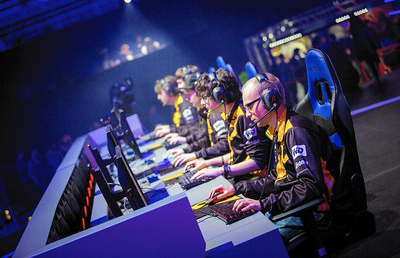
Comcast Spectacor’s Philadelphia Fusion, one of 20 professional esports teams that compete in the Overwatch League, a shooting game involving taking and defending land. Spectacor and Cordish Group proposed a 3,500-seat arena prior to Covid-19. Comcast Spectacor put the $50 million project on hold last year after the Overwatch League suspended live competition during the pandemic.

Still, Spectacor is considering the venue in the stadium area, said Sean Coit, a spokesman.

“As we emerge from the pandemic, we’re eager to resume development of an innovative, state-of-the-art facility in the heart of Philadelphia’s sports and entertainment district,” Coit said in an email. “We hope to make announcements about the ongoing project in the coming months.”

Casinos and sportsbooks do not see the hurry, said Doug Harbach, a spokesman for the Pennsylvania Gaming Control Board.

“Esports will become more important to legal U.S. sports betting in the long run,” Chris Grove, a managing director of Las Vegas gaming consultant Eilers & Krejcik. “We’re already seeing this happen in Europe, where esports is evolving into a tier-two sport for major bookmakers.”

Nearly 500 million people watch esports games, and revenues could exceed $1 billion in 2020, according to the New Jersey Economic Development Authority. Plus, games can be played remotely.

New Jersey, which has allowed limited esports betting on two previous occasions, addressed some of the issues in its legislation, which limits wagers on esports to $100 or to a potential win limit of $500.

Todd Kowalski, executive director of the Pennsylvania Esports Coalition, expects Pennsylvania lawmakers will also want mechanisms in place to protect esports competitors if betting is legalized.

“I just have to think that the state’s going to say, ‘You have to make sure that your teams are looking out for the physical development and emotional and psychological and educational development of kids,’” he said. “You can’t just pay them $30,000 a year to live in a house and play video games for 60 hours a week.”

Women Make Up About One-Third of Sports Bettors

American Gaming Association data from 2019 indicated that 32 percent of sports bettors in the previous year were women.

Let that number seep in: 32 percent. That means one in three wagers were placed by women.

In light of that figure, you’d expect more details, more studies on a what is clearly a significant portion of total sports bettors. But so far, analyses of women as sports bettors are pretty hard to find—perhaps because of the misconception that sports are a guy thing.

“Relatively little research has been done to distinguish the sports wagering motivations and experiences of women from other demographic groups,” said Jane F. Bokunewicz, faculty director of the Levenson Institute of Gaming, Hospitality & Tourism at New Jersey’s Stockton University.

In its own 2019 study, the institute surveyed sports betting and other gambling behavior among Stockton students. Granted, it was a limited demographic, but it yielded similar results: 12 percent of women wagered on sports, compared to 33 percent of men. Again, a little more than a third.

A 2020 survey by Statista.com found that 20 percent of males participated in sports betting compared with 7 percent of females. Once more, the breakdown is about three males for every female.

Yet the SuperBook at Westgate, women represent only 5 percent of its database, said Jay Kornegay, vice president of race and sportsbook operations at SuperBook.

“The overall counts have trickled up over the years with an uptick in recent years,” Kornegay said.

Do Women Watch Only Women’s Sports?

Is there a sense of what women are betting on? Do they follow traditional men’s leagues or gravitate towards women’s tennis, the LPGA or WNBA?

“In general, gamblers are most likely to wager on games and players that they have particular knowledge of and interest in,” Bokunewicz said. “Inasmuch as women are more likely to have played women’s sports, they may have a particular interest in wagering on women’s athletic events. This certainly doesn’t preclude women from wagering on men’s events or men from wagering on women’s events.”

None of this surprises Johnny Avello, DraftKings’ director of race and sportsbook. “We’re seeing more women wagering and as we continue to expand in multiple states, we surely expect that number to grow,” he said.

Increasing media coverage of female athletes and sporting events could generate even more interest among women. And sportsbooks are buying in: PointsBet, for example, just became an official betting partner of the WNBA, and BetMGM has partnered with the LPGA.

“Tennis is probably the biggest draw among women,” said Avello, “but we’ve also seen an increased interest around entertainment events award shows such as the Oscars.”

They have shown the same betting patterns as men, Kornegay said.

“They tend to migrate to the popular events/sports like football and basketball. Football is the king for women bettors and their biggest presence in the SuperBook is during the Super Bowl. They don’t only play the game but they warm up to our buffet of football props (we usually post approximately 500).”

Speaking to Cronkite News, Cheri Kempf, senior director of the women’s sports collective Athletes Unlimited, said betting enhances involvement in the game, for both women and men. “Suddenly you care about every at-bat, you care about the player who you’re wagering on.”

But that depends on team performance, said Jill R. Dorson, managing editor at sports betting news site SportsHandle.com. “If you’re in a state where the women’s college basketball teams are mediocre and don’t have a great following, sports betting is not going to massively positively affect them,” she told the publication.

Then there’s Bally’s Corp. acquisition of the Association of Volleyball Professionals, and its potential impact on sports betting.

“Bally’s (and a handful of other online operators) are starting to understand the impact and opportunity that exists with female sports bettors,” said Josh Swissman, founding partner and analyst with the Strategy Organization. “Just look at Bally’s recent sponsorship of the WNBA’s Phoenix Mercury for proof.  The ownership of the AVP is a logical next step in this female forward strategy.”

Are Women Better Bettors?

A study by 888 Holdings showed that women win more when they bet on sports in New Jersey.

According to the results, the overall return on investment for women was almost 20 percent, while for men it was -4.6 percent. Women between the ages of 25 and 44 had an ROI of around 128 percent, while the highest for men was 16.9 percent in the 45-to-54-year-old age group.

With those kinds of returns, women would likely do well betting on male sports—and apparently, they already are.

“The NFL is certainly popular among women and has the edge over the Big 3 (football, basketball and baseball),” Avello said. “The NBA sees moderate action, but MLB really lags behind.”

Incidentally, 888 Holdings, the parent company of 888poker, recently made a partnership deal with Authentic Brands Group, owner of Sports Illustrated, in part because SI is popular among female and older consumers.

The final word on the subject to date should go to a woman. In a 2020 interview with SBC Americas Vice President Sue Schneider, Erika Nardini, CEO of Barstool Sports, said, “There’s no reason that you can’t ignite betting amongst women, but you have to do it the right way. It has to be compelling and honest. There are a lot of things that are esoteric and insular about betting, factors which need to be made digestible so people can have fun.

“When you look at the casual bettor, you think about sports fans, I think about women.”

Washington Tribes Aim at Sports Betting by NFL Season

Fifteen Washington gaming tribes recently added sports betting amendments to their tribal state gaming compacts. They say they aim to open the sportsbooks in time for the NFL season in September.

The amended compacts, signed by Governor Jay Inslee, must also pass muster with the Department of the Interior, which has 45 days to approve or reject them.

Rebecca George, executive director of the Washington Indian Gaming Association, said in a statement: “People are very excited. We have worked diligently to bring sports betting to Washington by the start of football season.”

She added, “With over 70 percent bipartisan support of the legislature, a unanimous vote of the Washington State Gaming Commission, and now full support of the governor’s office, this action is further confirmation that the state and the tribes agree that our tribal gaming system is safe, regulated and responsible, and that it works well for Washington state residents.”

The list of 15 tribes includes the Confederated Tribes of the Colville Reservation, the Cowlitz Indian Tribe, the Jamestown S’Klallam Tribe, the Kalispel Tribe of Indians, the Lummi Nation, the Muckleshoot Indian Tribe, the Puyallup Tribe of Indians, the Shoalwater Bay Tribe, the Snoqualmie Indian Tribe, the Spokane Tribe of Indians, the Squaxin Island Tribe, the Stillaguamish Tribe, the Suquamish Tribe, the Swinomish Indian Tribal Community, the Tulalip Tribes and the Skokomish Indian Tribe.

Betting will be allowed in brick-and-mortar casinos and mobile devices on casino premises.

A year ago, the Washington legislature approved sports betting exclusively for tribal casinos. The law authorizes betting on professional, collegiate, international and Olympic sports and esports. Bets in-state, minor league sports and high school or youth sports are not allowed.

George added, “We have tribal, state and federal government regulations. We work hand and hand with legislature and are one of, if not the most, regulated industries in the country. The revenues generated from Indian gaming stay in Washington, creating thousands of jobs and benefiting communities across our state.”

Gaming in the state accounts for $5.3 billion in economic activity and 37,000 jobs.

Live Dealer Casino Games Debut In Michigan

On Thursday, July 22, the 6-month anniversary of the launch of internet gaming in Michigan, live dealer casino games made their online debut. Evolution was the first provider to be authorized by the Michigan Gaming Control Board to offer live dealer casino games− blackjack, baccarat and roulette−through its Southfield studios

Evolution already has partnered with several Michigan online casino platforms to provide games. Playtech also has designated space in Southfield for live casino games but has not been authorized as yet.

MGCB Executive Director Henry Williams said, “Players can use a mobile device or computer to play typical land-based casino games like blackjack, baccarat and roulette with a real-time, live dealer. Cameras capture the dealer and the play, and the providers’ apps or websites share it live with remote players.”

The MGCB noted other dealers plan to offer live dealer studio games, Including Barstool Casino, BetMGM Casino, BetRivers Casino, DraftKings Casino, FanDuel Casino, Golden Nugget Casino, Stars Casino, TwinSpires Casino, William Hill Casino and WynnBET Casino.

According to the MGCB, internet gaming generated $483.1 million In revenue In June, Including $85.2 million in state taxes, $24 million in taxes and fees for the city of Detroit and $9.1 million for tribal operators.

Poll: Almost Half of Olympic Bets Outside of Sportsbooks

The American Gaming Association said 20.1 million people in the U.S. expected to wager on the Olympic Games. The poll was conducted by Morning Consult July 9-12, with 2,200 adults, according to Sports Handle.

Of the 20 million bettors, the AGA found that 47 percent will bet with friends not through sportsbooks. The survey Indicated 43 percent will wager online but makes no distinction whether it includes offshore betting.

The survey also found 16 percent will visit a retail sportsbook to bet.

“Demonstrating Americans’ strong desire for legal betting options,” the AGA said in the presser, “10 percent of Americans who do not plan to place a bet on this summer’s games said they would be more likely to wager if it was legal to place an Olympic bet in their state.”

Cordish Approved for Second PA Sportsbook License

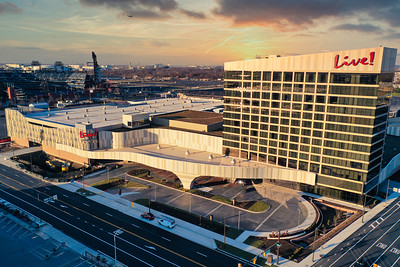
The Pennsylvania Gaming Control Board last week approved the petition of Stadium Casino LLC, the Cordish Companies subsidiary that owns the Live! casinos in Philadelphia and Pittsburgh, for a second sports betting certificate.

Cordish paid $10 million for the license, which evidently will not apply to either Live! casino. The gaming board had initially rejected company officials’ argument that it should not be required to pay a second fee to create a sportsbook at Live! Pittsburgh, a Category 4 satellite casino tied to the stand-alone license for Live! Casino Philadelphia.

However, Cordish was successful in lobbying for legislation last year that removed the requirement that the satellite facility pay a second $10 million fee, so the payment was not required for a sportsbook at Live! Pittsburgh. Both casinos are offering FanDuel retail sportsbooks.

The newly granted petition allows Stadium Casino to create a sportsbook outside of the two it currently operates, but it was not immediately known where the company plans to place the operation.

Wyoming Opens Sportsbook Application Process

On July 15, the Wyoming Gaming Commission (WGC) opened the application process for sports betting. State law adopted April 5 only allows for mobile sports betting, but the state’s four Indian casinos are able to offer retail sportsbook at their brick-and-mortar locations.

The commission said its goal is to have operators accepting live wagers shortly after the NFL season begins.

On July 15 the WGC made available on its website directives about the licensing process, integrity monitoring and how to apply for a license. Barstool Sports, BetMGM, DraftKings and FanDuel have all submitted formal letters of intent to apply, with SuperBook Sports considered a potential applicant. A minimum of five digital platforms are called for by state law, with no upward cap.

Wyoming is the second state to legalize digital-only sportsbooks; Tennessee was the first in 2019.

The regulations for mobile sports betting are still under public review. The WGC anticipates that the final draft will be approved by September 3 at the latest.

Alaska to Study Sports Betting

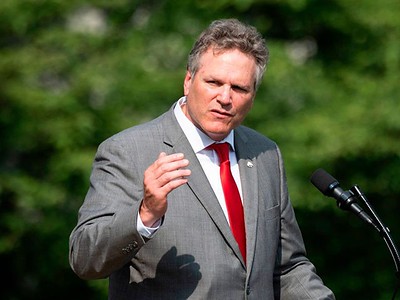
Alaska’s Department of Revenue has commissioned a $400,000 study of revenues that could be generated for the state through lottery-operated sports betting.

Governor Mike Dunleavy has called for lottery sports betting as a revenue source and early last year pushed the creation of an Alaska Lottery Corp. That bill is stalled in the legislature. Department of Revenue Commissioner Lucinda Mahoney said recently that she was looking for a “more modern” revenue source.

In addition to a lottery, the study will look at the potential for casino gaming, sports betting and other forms of wagering. No completion date has been set, according to the Fairbanks Daily News-Miner.

Currently, two tribal casinos operate in the Last Frontier, which have a total between them of 900 slot machines. The state’s population is less than 740,000, so the cash pool is limited. But sports betting could be sold as a way to boost tourism and link the state to neighboring Canada, where single-wager sports betting was just legalized.

Dunleavy said in a statement, “In the face of low state revenues, my administration has been actively seeking new revenue sources to diversify our economy. Not only does this legislation have the potential of creating new business opportunities, the profits generated from lottery activities will be designated to K-12 education, domestic violence prevention programs, drug abuse prevention programs, foster care, and homelessness.”

Wisconsin Casino to Offer Sports Betting

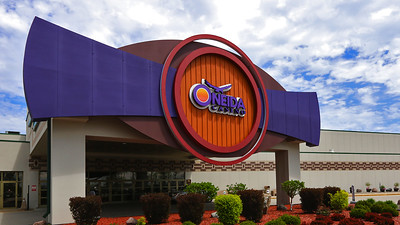
Wisconsin’s Oneida Nation announced July 1 that its Oneida Casino will be the first in the state to offer sports betting. The announcement followed the signing by the tribe and Governor Tony Evers of amending state tribal gaming compact.

The change allows for “event wagering” including sports betting and televised events such as award shows and sports league drafts.

The amended compact must still be reviewed and approved by the Department of the Interior, which has 45 days to make that determination.

Tribal Chairman Tehassi Hill said in a statement: “The Oneida Casino aims to commence sports betting at its main casino in early fall 2021 which will include retail, kiosks, and mobile wagering at select locations.”

Hill continued, “Thirty years ago our Nation signed its first gaming compact in 1991. At that time we were a reservation struggling but fighting to grow our economy to ensure a better quality of life for our people. Since that time we have grown tremendously and I thank those who came before us for laying the foundation so that we can offer a better way of life for our tribal members today.”

The governor declared, “Today, Chairman Hill and I will sign the compact amendment to allow event wagering from Packers’ games to the Oscars to occur in the state of Wisconsin. This will be the first time that event wagering will be permitted in Wisconsin in recent history.”

The tribe said it plans to have a temporary sports bar operating by the fall and that later the sports bar will be remodeled and converted into a permanent sportsbook.

Tribal spokesman Chad Fuss told Native News Online: “I think a lot of our general tribal council members, or membership, understands that as we can provide more opportunities for customers to come to visit Oneida Casino, that it really helps our economy within the Oneida Nation as well as the greater Green Bay area.” The tribe will manage day to day operations of the sports betting but partner with a provider of sports betting data, which will also manage mobile wagering.

Michigan Casino Now Offers Online Casino, Sports Betting

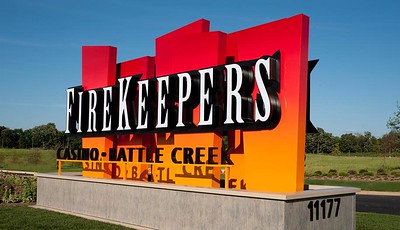
FireKeepers Casino in Battle Creek, Michigan, owned by the Nottawaseppi Huron Band, recently received authorization from the Michigan Gaming Control Board (MGCB) to offer online casino and sports betting.

The venue becomes the 13th operator to provide online gaming and sports wagering in Michigan. Its partner NYX Digital will provide the self-branded platform. The MGCB stated it will permit the 14th and final operator to provide “internet casino gaming only, at this time;” observers expect that will be Soaring Eagle, the only eligible casino operator that has not launched yet.

MCGB Executive Director Henry Williams said, “We welcome the addition of FireKeepers Casino and partner NYX Digital to Michigan’s growing online gaming and sports wagering market. The tribe’s representatives provided key support for development of the laws signed in 2019 that allow federally recognized tribes in Michigan to seek licenses for internet casino gaming and online sports betting. Their participation will generate revenue to support K-12 education, economic development and the Nottawaseppi Huron Band’s tribal community.”

So far, FireKeepers’ online casino offerings include 88 Fortunes, QuickHits, Monopoly, Blackjack and Let it Ride. Sports bettors can wager on football, basketball, hockey, baseball, NASCAR, boxing, MMA, soccer, championship golf, championship tennis and futures wagering on upcoming championships in major sports.

In conjunction with the launch, FireKeepers will match a wagerer’s first deposit, up to $500, and offer a sports bet first match, also up to $500. Deposits and withdrawals can be made from user’s devices or at the FireKeepers Casino cashier.

FireKeepers Chief Executive Officer Kathy George said, “We are thrilled to be able to provide another level of entertainment to the people of Michigan. Guests can now enjoy the FireKeepers experience from the comfort of their own homes, or wherever they are within the state of Michigan.”