Author: Casino Connection Staff

Like Tribes, California Tracks Wary About Mobile Sports Betting

The debate about California sports betting is typically seen as a showdown between 63 tribes who run the state’s 66 Indian casinos, and their longtime rivals, 72 commercial card rooms.

But racetracks also have a stake in the decision, which is heading for a vote next year. And the tracks are hardly neutral.

The current initiative would legalize sports betting at brick-and-mortar tribal casinos and also allow tribes to add Las Vegas-style games such as roulette and craps. In addition, it would authorize four racetracks in Alameda, Los Angeles, Orange and San Diego counties to offer retail sports betting but no mobile sportsbooks.

Like the tribes, the racetracks prefer to keep betting offline for now.

Californians Have a Say

In May 27, the Coalition to Authorize Regulated Sports Wagering qualified more than 1 million signatures from registered voters who support the measure. Only 997,139 names were needed to put the initiative over the top; the measure will now go to a referendum in November 2022.

Although closely allied with the group of tribes that led the campaign and while following their lead, the tracks have different interests at stake. Their industry is not confined to the racetracks themselves, but also includes breeders of thoroughbred horses, jockeys, service providers and hundreds and thousands of people who work in racing-related jobs.

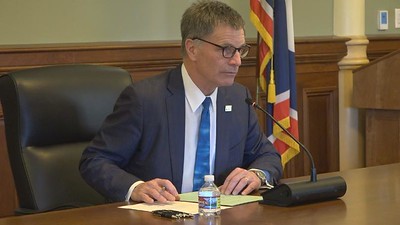
“For us—the thoroughbred breeders and most of the racing industry—we’re very supportive of the tribal initiative,” Robyn Black, lobbyist for the California Thoroughbred Breeders Association (CTBA) told GGB News. “We’ve been working with the tribes for a number of years, ever since the 2018 Supreme Court decision [that ended the federal ban on sports betting.] We knew it was going to someday become a reality, and we’ve been working together to get it right.”

Reasons for Track Support

In many states, proposals to add sports betting to parimutuels is seen as a way to rescue an ailing racetrack industry. Black says that’s not really the case for California’s four functioning racetracks.

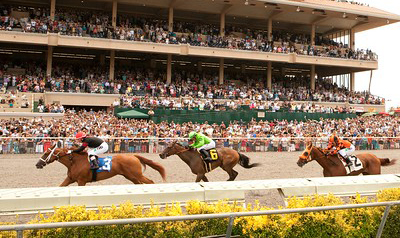
“Del Mar Racetrack is doing great. Most of the racetracks included in the proposed initiative are doing well. The racing handle has been going up. We’ve been taking wagers for a very long time in California and we actually take wagers online—so our folks are doing great.”

Nevertheless, the CTBA sees two important reasons to create a legal sports betting industry. “There are two pieces,” said Black. “There’s the sports wagering at the brick-and-mortar casinos and racetracks, which we think protects California jobs and will increase foot traffic to them. The other is protecting consumers.”

That echoes the chief argument for legal sports betting in the U.S.: the massive, remote, untaxed and unregulated betting industry. According to the American Gaming Association, when sports betting was illegal outside Nevada, Americans still bet $150 billion on sports with illegal bookies.

“There was no consumer protection, and (in California) folks right now have to go offshore illegal sites,” said Black. “There’s no protection for underage folks and problem gamblers. There is no benefit to the state. But there is a benefit—we hope—from the measure to create brick-and-mortar sportsbooks.” For one thing, it will create new jobs. “But equally important, we see protections for consumers that simply don’t exist today.”

The amendment to California’s constitution specifically does not authorize online sports betting—and that’s a plus, from both the tribes’ and the racetracks’ perspective. “I think it will help keep jobs in California for brick-and-mortar businesses as opposed to just massively opening up the internet to sports betting,” said Black. And that, of course, means more money for the racetracks and the breeders. However, mobile sports betting may be inevitable down the line.

Next Steps

With a $54 billion budget deficit—the worst in its history—California is motivated to open a new revenue stream. And though sports betting is a low-margin industry, the Golden State, with a nation-leading population of almost 40 million, could be the biggest untapped market of all.

Before Californians can join them, voters must OK a constitutional amendment on the 2022 ballot. If that happens and a sports betting bill is pushed through, fans could start rooting for (and betting on) their favorite home teams by the following year.

Meanwhile, Black said the horseracing industry won’t be involved much in electioneering efforts. Some political observers say spending on both sides of the measure may be comparable to that in 2008, when commercial interests spent $154 million in a campaign to oppose expanded Indian gaming, and tribes spent $115 million in support of it. The card clubs lost that battle.

“The tribes have done a phenomenal job so far,” said Black. “The important thing to recognize is that the tribes are incredibly astute and we feel they have written a very solid initiative. We will take our cues from them but it is their initiative and they know what they are doing. We are here to support the initiative in any way we can.”
DraftKings Weighs Fallout from Short-Seller Attack

DraftKings, Inc., the daily fantasy sports pioneer that’s been riding the wave of U.S. sports betting growth, saw its shares drop as much as 12 percent last week after Hindenburg Research, a short-sell specialist, published a report alleging “black market” ties against SBTech, DraftKings’ platform subsidiary.

DraftKings went public in 2020 via a three-way merger with SBTech, a Bulgarian sports betting platform supplier, and the SPAC, Diamond Eagle Acquisition Corp. Acquisition of the SBTech sportsbook platform placed DraftKings in the center of the U.S. boom in sportsbooks that has intensified in the wake of the removal of the federal ban on sports betting with the 2018 repeal of the Professional and Amateur Sports Protection Act. As DraftKings has collected sportsbook partners, its stock has soared as much as 400 percent since going public.

On June 15, Hindenburg Research, a short-seller of DraftKings stock, published a report titled “DraftKings: A $21 Billion SPAC Betting It Can Hide Its Black Market Operations.” The report alleges that SBTech has done business with black-market sites in jurisdictions where sports betting is illegal, and where the sites are tied to money laundering and organized crime.

Hindenburg, which described the company as having experienced “one of the more successful deals in a recent wave of SPAC transactions marred by scandal and bad actors,” alleged that half of SBTech’s revenue comes from markets where gambling is unregulated or banned, including China and Vietnam. The report concluded, “DraftKings has systematically skirted the law and taken elaborate steps to obfuscate its black market operations.”

Hindenburg disclosed a short position against the stock, meaning it will benefit from any drops in the shares. It is the third recent short-seller attack by Hindenburg, which has waged campaigns against Lordstown Motors Corp. and Nikola Corp., both of which contributed to heavy losses on those stocks.

DraftKings was quick to point out the short-sell motive of Hindenburg. “This report is written by someone who is short on DraftKings stock with an incentive to drive down the share price,” a DraftKings spokesman said in a statement to Yahoo Finance. “Our business combination with SBTech was completed in 2020. We conducted a thorough review of their business practices and we were comfortable with the findings. We do not comment on speculation or allegations made by former SBTech employees.”

DraftKings shares were already faltering over recent months amid a dearth of top sporting events. Bloomberg reports that the company has yet to turn a profit and is not expected to post positive earnings until 2026.

However, Wall Street analysts have remained bullish on the company, with 20 rating shares a “buy.” The Hindenburg report does not appear to have changed the positive outlook of stock analysts on DraftKings.

Daniel Adam, senior analyst at Loop Capital Markets, told Yahoo Finance Live that SBTech, which Hindenburg states accounts for 25 percent of DraftKings’ total revenue, which was true just after the IPO, actually only accounts for around 10 percent today.

“If you look at the logic behind the SBTech acquisition, it never had anything to do with external customers based in Asia or elsewhere, but more to do with integrating that technology into DraftKings’ vertical tech stack, which would differentiate them from virtually every other player in the industry,” Adam wrote, adding that if any of the “black market” allegations were true, it definitely would have come to the attention of state regulators, which never happened. Adam called DraftKings’ business “very credible, and not misleading.”

“I can’t comment intelligently as to whether or not these allegations that were made relating to business dealings that occurred five and 10 years ago at SBTech are actually true, but the reality is—fast-forward to today—that that piece of the business is pretty irrelevant in the grand scheme of things for DraftKings,” Adam wrote.

Ben Chaiken of Credit Suisse, an investment bank that has an “outperform” rating on DraftKings stock, issued a research note the day after the report that said basically the same thing. “Our view is that SBTech was purchased by DKNG for its tech platform (which DKNG plans to vertically integrate) rather than existing revenue stream,” the report said. “Said another way, if SBTech revenue were to go away entirely, we think there would be minimal impact on the DKNG stock.”

Barry Jonas of Truist issued a note saying that many of Hindenburg’s allegations had been investigated by Oregon regulators who found the company suitable for licensing.

The Hindenburg report called for an independent audit of DKNG’s revenue streams. Law firm Bernstein Liebhard LLP, which specializes in class-action lawsuits on behalf of shareholders, announced it is investigating DraftKings for potential violations of securities law.

Ohio Senate Passes Sports Betting Legislation

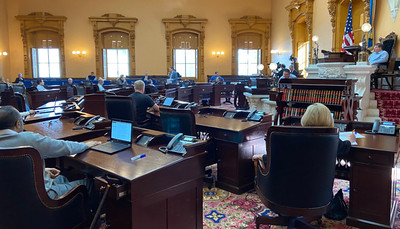
After reviewing 45 proposed amendments and making numerous last-minute revisions, the Ohio Senate passed a sports betting bill in a 30-2 vote.

Legislators said sports wagering could be launched as soon as April 1, 2022. Net sports betting revenue would be taxed at 10 percent, and would generate $17 million to $23 million starting in mid-2022, analysts said. The revenue would go toward education. Another 2 percent would be directed to problem gambling services.

The proposed legislation allows casinos, racinos and other businesses to apply for one of up to 58 sports betting licenses; 33 are designated for brick-and-mortar stores and 25 for online and mobile betting. Originally the bill offered 40 licenses. The license fee would be $1 million. The Ohio Casino Control Commission, which would oversee and regulate sports wagering, would select who gets a license.

Sports betting licenses would be distributed to brick-and-mortar businesses throughout the state based on a county’s population. For example, Franklin County with more than 1 million residents could have three Type A licenses, while Hamilton County would be limited to two Type B licenses. State Senator Kirk Schuring said, “That’s our way of saying we want to spread the economic value that we think goes with the B license.”

An unlimited number of Type C licenses would go to businesses with a liquor license and would cost $6,000 each. However, they would be limited to two kiosks per store. The kiosks could offer spreads and over/under bets. The Ohio Casino Control Commission would limit how many vendors can provide those kiosks. Each vendor would need to pay a $100,000 application fee.

Ohio’s professional sports teams, the Memorial Tournament and a NASCAR event in Ohio would get preferential treatment when they apply for licenses; they still would have to meet the criteria for a license.

The proposed legislation also would allow electronic instant bingo at veterans and fraternal organizations, with 10 machines per location; ban tax deductions for promotional play credit for five years, then tax deductions at 20 percent, not the current 10 percent; and allow wagers on competitive video games if participants are 18 and older.

The bill now moves to the House, then to Governor Mike DeWine for his signature. DeWine has said sports betting in Ohio is “inevitable.”

In a related development, the Senate Workforce and Higher Education Committee approved a bill allowing college athletes to earn money based on the use of their names, images and likenesses. Under the College Athlete Compensation Bill, universities or college athletic conferences could not punish athletes if they are compensated based on their sports performance. The compensation could include a book-signing at a bookstore or a deal with a local restaurant, for example. Exceptions would include sponsorships for marijuana, alcohol, tobacco and casinos, according to bill sponsor state Senator Niraj Antani. Athletes would have to notify universities 15 days ahead of signing endorsement contracts. Ohio State University football coach Ryan Day urged quick passage of the bill to make sure Ohio schools would not face a recruiting disadvantage with other states that have similar legislation.

Since 2019, at least 16 states have approved legislation allowing college athletes to make money through advertisements, sponsorship deals and other types of promotions. Five of those bills, approved by Alabama, Florida, Georgia, Mississippi and New Mexico, will become law July 1.

Wyoming Sports Betting Launch Uncertain

Rules for Wyoming sports betting have been forwarded by the Wyoming Gaming Commission to Governor Mark Gordon for final approval, but it’s uncertain when sports bets will actually be accepted.

When DraftKings representative Chris Cipolla asked when applications would be released. Commission President Bob Davis quipped, “I think that’s putting the cart before the horse.”

Commission Executive Director Charlie Moore added, “For me, the focus is what’s in front of me and then I’ll move to Phase 2. Obviously, you want to start operating, we have the same goal. We have a lot on our plate right now, and we’ll keep plowing through.” Moore provided no timeline for applications and licensing.

The sports betting law calls for rules to be completed by September 1, about a week before the official beginning of the NFL season.

Wyoming’s online sports betting marketplace will be as freewheeling as the Old West. It will be the second state to offer online-only sports wagering because the state has no casinos.

USA Basketball, MGM Resorts Sign Deal

USA Basketball has signed a multi-year partnership with MGM Resorts. It starts July 6 with the onset of training camp in Las Vegas for the men’s and women’s national teams. MGM Resorts will also become an official partner of the basketball exhibition tour.

MGM Resorts will host another four countries in Las Vegas, bringing competition Nigeria, Australia, Argentina, and Spain in advance of the Tokyo Olympic games. That includes seven exhibition games between July 10 and 18. Each of five days of exhibition games will consist of doubleheaders.

“We’re excited to bring our national teams to their properties as we prepare for the challenging competition that lies ahead this summer,” said Jim Tooley, USA Basketball CEO. “Training camps are such an important foundation for our preparation and having such a strong commitment from MGM positions us for great success.”

MGM Resorts and Las Vegas has had a long history with USA Basketball, said Lance Evans, senior vice president of sports for the casino giant. “This partnership will allow us to showcase our resorts as we host multiple USA Basketball games at Michelob ULTRA Arena at Mandalay Bay.”

Comprehensive health and safety protocols will be in place, including mandatory and regular Covid-19 testing for athletes, coaches, officials, and staff.

Covid-19 Boosts Esports Betting

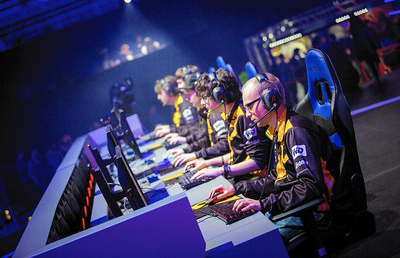
When the Covid-19 pandemic wiped out athletic competition around much of the world, esports continued almost unabated. Participants played League of Legends, Dota 2, Counter Strike Global Offensive, Fortnite, and even sports-related games such as FIFA and NHL. These games did not escape the attention of bettors, according to the Toronto Star.

“Covid-19 propelled esports betting two to three years ahead,” said Charlie Watson, CEO of Tidal Gaming, a Toronto-based esports online gaming company. “It accelerated more areas to recognize the betting opportunities and to legitimize esports.”

Watson, who has Canada’s first esports team, Lazarus Esports, hopes to do well with the legalization of single-event sports betting.

“I am bullish on esports, and the video game industry more broadly, as I view the space as a confluence of media, data, technology, and the next generation of customer with a large helping of pop culture,” said Jeff Harris, of Deloitte.

According to a study conducted by Deloitte’s global center for media, technology and telecommunications, the top activity among those 14 and 38 is playing video games, with 87 per cent of Gen Z and 83 per cent of millennials participating at least once a week.

Esports presence on social media has driven awareness as well as business. Professional gamer and streamer Tyler (Ninja) Blevins earns as much as $500,000 a month playing Fortnite on Twitch. Blevins has 24.2-million subscribers on YouTube and 14 million Instagram followers, right up there with NBA stars Russell Westbrook and Kyrie Irving.

Score Media and Gaming Inc. says its esports platforms had 86.5-million total video views for the second quarter.

“We have a dedicated esports newsroom that talks to the audience as a whole,” said Aubrey Levy, senior vice-president of marketing and content for theScore.

Another Canadian firm, Overactive Media, plans to build a $500 million theatre-style entertainment venue and hotel complex to be completed in 2025. The venue will host esports competition with two of Toronto’s two professional teams the Toronto Ultra of the Call of Duty League and Toronto Defiant of the Overwatch League.

Codere Online to Go Public

Coder Group announced that it will pin of its Codere Online division, valued at approximately $350 million (£251.8 million/€294.2 million), to create a newly listed public company through a merger with a special purpose acquisition company (SPAC).

Codere Group said in a statement that the listing will progress through a business combination agreement between Codere Online and the SPAC, DD3 Acquisition Corp., which has already been approved by the boards of both parties.

Codere Online plans to take its business model in Spain and Mexico throughout Latin America, according to the statement. It will also analyze options to access the Hispanic online gambling niche in the U.S.

“We are proud of this deal, which will provide our online team with the financial resources needed to grow Codere Online and take it to a new, higher level,” said Vicente Di Loreto, chief executive of Codere Group. “It is a good signal of the value we have been able to create in the last three years boosting this business unit.”

Moshe Edree, managing director of Codere Online, said, “This deal brings together the renowned Codere brand and our deep expertise in growing online gaming businesses with a world-class sponsor like DD3 that has a proven track record of building businesses through a team of seasoned investors.

“By going public and with the new capitalization, we will be in a superb position to leverage our online business in our core countries of Spain, Italy, Mexico, Colombia and Panama, as well as the city of Buenos Aires, where we expect to start operating in late 2021, to fuel our further expansion in other high-growth Latin American markets.”

Fast Track, Kindred Team on Player Engagement

Kindred Group’s 32Red now has a live version of the Fast Track CRM platform.

The partnership hopes to give 32Red more flexibility for player engagement campaigns, and with less manual labor. The enhanced program provides access to more than 400 data points to define each segment, according to SBC News. This data helps automate the display of relevant content in emails, as well as creating a personalized experience.

“Fast Track’s flexibility has allowed us to build the platform we needed to execute on our vision for player engagement,” said Mike Kirwan, head of U.K. customer marketing at Kindred Group. “We are looking forward to making use of all the capabilities we have worked on with the Fast Track team, as well as continuing to collaborate on new ideas and features.”

Fast Track held a series of in-depth workshops along with ongoing discussions to develop the right foundation to implement the plan.

“Working with 32Red has been a great example of how that strong sense of partnership can benefit everyone involved,” said Fast Track COO Jean-Luc Ferriere.

BetConstruct Introduces Pocket Keno

To pave the way for more unique betting options, BetConstruct has released a new product called Pocket Keno, which accepts bets on keno games through application via cashiers (agents).

Pocket Keno was designed to attract clients and ensure a longer player lifetime. The application is compact, user-friendly and multi-functional with the capability to be optimized with other devices.

Transactions are secure, fast and hassle-free for both the client and the mobile agent. Its eye-catching features include bet placement on Keno tables, complete history of placed bets, ticket scanner and status checker, reporting, and more. The scalability and high quality performance of the product are a powerful contribution to revenue streams.

Pragmatic Play Launches Unibet Studio

Pragmatic  Play, a leading game content provider to the gaming industry, has launched its dedicated Live Casino-branded for Unibet, the leading Kindred Group brand.

Unibet customers can now access numerous live gaming tables including blackjack and roulette, enjoying a bespoke environment with the operator’s branding and design. Pragmatic Play’s entire Live Casino selection of titles is broadcast from a custom-designed, state-of-the-art studio in Bucharest, Hungary, incorporating the latest 4K video technology and immersive sound systems.

The completed integration marks another milestone for Pragmatic Play, whose dedicated Live Casino environments are now available from leading brands across the world. Kindred is one of the largest digital entertainment companies in the industry, with Unibet attracting players from all over Europe.

“Yet another landmark moment occurs for Pragmatic Play as we take a dedicated studio live with Unibet,” said Yossi Barzely, chief business development officer for Pragmatic Play. “Dedicated environments ensure that players would have an incredibly bespoke gaming experience as they enjoy some of the most engaging Live Casino games in the industry, and we’re extremely proud of hitting this milestone.”

David Robertson, Head of Casino & Gaming at Kindred, added, “Pragmatic Play’s Live Casino portfolio provides amazing gaming products built to the highest standards, and we’re very pleased to be able to offer them all to our Unibet customers through a dedicated studio which has been tailored to our needs. It is a real statement of the closeness of our relationship, and we can’t wait to see how our players enjoy the dedicated environment.”

Pragmatic Play currently produces up to five new slot titles a month, while delivering Live Casino and Live Bingo games as part of its multi-product portfolio, available through one single API.

PlayStudios Partners with Peppermill

Mobile and social gaming supplier PlayStudios is partnering with Peppermill Resorts to provide customers of Peppermill Resort Spa Casino in Reno and Montego Bay Casino and Resort in West Wendover, Nevada with its award-winning social gaming app.

Under the partnership, customers engaging PlayStudios free-to-play apps myVEGAS Slots, myVEGAS Bingo, myVEGAS Blackjack POP! Slots and myKONAMI Slots will generate loyalty points for real-world experiences, special offers, and complimentary items at both properties.

The expanded playAWARDS rewards portfolio offers both midweek and weekend complimentary guest rooms, exclusive player rates, and free casino play at Peppermill Reno. The partnership will also include a selection of rewards available at Peppermill Reno’s sister property, Montego Bay. Additional dining rewards at Peppermill Reno’s lineup of restaurants and rewards at Spa Toscana will be added in the future as local and state-mandated pandemic guidelines and restrictions allow.

“Award-winning hospitality experiences and complimentary perks are the hallmarks of our playAWARDS portfolio,” said PlayStudios Head of playAWARDS Rob Oseland. “Our partnership with Peppermill Resorts expands our ability to offer geographically accessible rewards to more of our players from destinations we’re confident they will enjoy discovering.”

“Peppermill Reno is rooted in premier hospitality and we have long sought out partnerships with brands that reflect our values,” said Peppermill General Manager Billy Paganetti. “Together with playAWARDS, we are giving millions of players the opportunity to stay, play, and relax in our world-class destination.”

The playAWARDS loyalty marketing platform connects players to a growing lineup of rewards from global hospitality, entertainment, travel, leisure, and lifestyle brands, including MGM Resorts International, Wolfgang Puck, Maverick Helicopters, Gray Line Tours, House of Blues, Norwegian Cruise Line and Royal Caribbean International, among others.

Peppermill Reno, which is celebrating its 50th anniversary in 2021, is recognized as one of Northern Nevada’s premier resort destinations, and is home to the largest poker room in Reno. Montego Bay in West Wendover is a multi-state destination for gaming, golf, and entertainment at the famed Peppermill Concert Hall.

PlayStudios recently entered into a merger agreement with Acies Acquisition Corp. (Nasdaq: ACAC, ACACU, ACACW) which, upon closing, will result in the company becoming listed on Nasdaq under the ticker symbol MYPS.

Boardwalk Budz

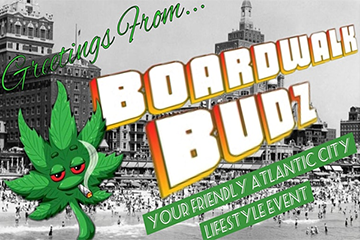
Boardwalk Budz is a lifestyle event for the growing cannabis market. The festival is 3 days, June 25-27, featuring vendors, live music, pro wrestling, comedy shows, food trucks, nightclubs and so much more!

Atlanitc City’s  Showboat Hotel & Event Center will host the festival. From a Cannabis Nightclub to comedians to food trucks and live bands, this first of its kind festival is the perfect summer high.

For information visit: https://boardwalkbudz.com.

North Beach Fireworks Spectacular

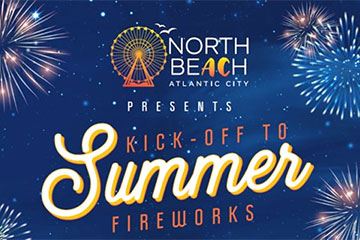
North Beach AC is kicking off the summer season with a spectacular fireworks display! The firework spectacular, in partnership with Fireworks by Grucci, will be free and open to the public featuring several viewing locations throughout the north end of the boardwalk including: Hard Rock Hotel & Casino Atlantic City, Ocean Casino Resort, Resorts Casino Hotel, Showboat Hotel and Steel Pier. Tennessee Avenue restaurants will have boardwalk activations throughout the evening.

Friday, June 25
Time: 9:30 PM

Father’s Day Free Climb at Absecon Lighthouse

FATHERS CLIMB FREE AT ABSECON LIGHTHOUSE ON FATHER’S DAY AND GET REWARDED WITH A SLICE OF TONY BOLONEY’S PIZZA

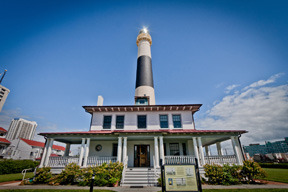
If your family is looking for a memorable way to show Dad he’s the light of your life, then bring him to Absecon Lighthouse on Sunday, June 20th because dear old Abby is treating Fathers to a free climb on Father’s Day.  And if Dad makes it all the way to the top and gets an “I Climbed Absecon Lighthouse” card, he can show it at Tony Boloney’s Pizza on Oriental Ave. and get a free cheese slice of pizza! Hours of operation for the lighthouse are 11am to 4pm, with the last climb at 3:30pm.  What better way to say thanks to Dad than make him climb 228 steps with you and eat pizza?!

Absecon Lighthouse is a state-owned historic property administered by the non-profit Inlet Public/Private Association.  Located at 31 So. Rhode Island Avenue in Atlantic City, it is open to visitors Thursdays through Mondays, 11 am to 4 pm.  Absecon Lighthouse received a general operating support grant from the New Jersey Historical Commission, a division of Cultural Affairs in the Department of State.  For more information about Absecon Lighthouse and its programs call (609) 449-1360 or visit us on the web at www.abseconlighthouse.org.

U.S. Open Betting Preview

Place your bets at PlaySugarHouse.com and BetRivers.com for the 2021 U.S. Open. We’ve got all you need to know below.

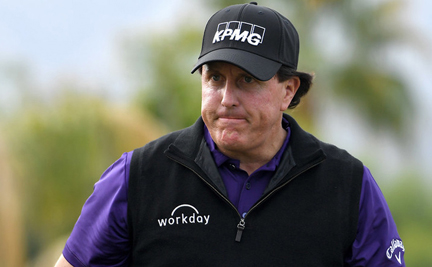
Phil Mickelson made history last month becoming the oldest golfer to win a major, as the 51-year-old dominated the final round at Kiawah Island to win the PGA Championship. Now Mickelson (+6600 to win) returns to his “home course” at Torrey Pines in La Jolla, California for the 2021 U.S. Open, and despite entering with relatively long odds to win, the public is backing “Lefty” with more championship bets and money wagered than any other golfer in the field. With Mickelson going off at 66/1, the liability on “Lefty” is currently well into the six-figure range. Close behind Mickelson in the eyes of the public is Brooks Koepka (+1800 to win), who finished T2 at the PGA Championship. Although World No. 1 Dustin Johnson (+1400 to win) is tied for the second shortest odds to win, the public is not particularly keen on his chances this weekend. Johnson is outside the top 5 in total bets, and outside the top 10 in total money wagered for the first time in a major tournament in almost two years. Xander Schauffele (+1400 to win), who finished T3 at The Masters and T5 at last year’s U.S. Open, has picked up a good bit of late action with 9% of the championship handle, up from 5% a week prior.

Koepka’s heated rivalry with Bryson DeChambeau (+3300 to win) is expected to take center stage this weekend, and it should come as no surprise that the Koepka-DeChambeau match-up bet is the most popular match-up bet by both total handle and total bets. The public is heavily behind Koepka (+105) to finish higher than DeChambeau (-135), backed by 89% of the handle and 95% of the bets.

Wagering on the first round leader is also a very popular prop bet, and Tommy Fleetwood (+8000 First Round Leader), is backed by 14% of bets, while Tony Finau (+3300) is backed by 11% of the handle.

The largest current U.S. Open wager is a $3,900 bet on Justin Thomas to win (+2200) that will payout $89,700 if Thomas can win his second career major championship this weekend. With less than 24 hours until the first group tees off, the 2021 U.S. Open already has more bets and money wagered than last month’s PGA Championship.

U.S. OPEN ODDS TO WIN:
Jon Rahm +1000
Bryson DeChambeau +1400
Dustin Johnson +1400
Xander Schauffele +1400
Brooks Koepka +1800

LARGEST % OF TOTAL HANDLE:

Phil Mickelson (10.1%)
Brooks Koepka (9.2%)
Xander Schauffele (9%)
Jon Rahm (5.7%)
Bryson DeChambeau (5.5%)

LARGEST % OF TOTAL BETS:
Phil Mickelson (6.1%)
Jon Rahm (5.4%)
Brooks Koepka (5.3%)
Collin Morikawa (3.9%)
Bryson DeChambeau (3.7%)

NJ Casino Tax Relief Bill Goes to Murphy

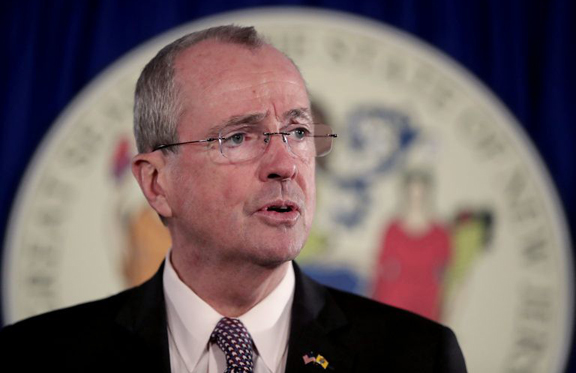
The New Jersey legislature just sent a convoluted casino tax break bill to Governor Phil Murphy. In simple terms, the law will reduce the 8 percent casino tax if gaming revenue falls below a corresponding month’s revenue from March 2019 to February 2020.

For example, suppose Borgata generates gross gaming revenue of $60 million in June. The casino generated almost $65 million in June 2019, so the tax liability would be 25 percent less. The bigger the falloff, the bigger the tax reduction. The measure drew wide support from both chambers, according to Champion Deck.

Internet casino revenue is taxed higher, at an effective rate of 17.5 percent. Fifteen percent goes to the state, and 2.5 percent to a community investment fund. The bill also lets casinos hand out $90 million in tax-free promotional credits for the next two years.

“It is necessary for the state to take action to ensure the continued viability of the Atlantic City region’s financial condition, and to assist the region’s population in dealing with the financial and economic problems resulting from the Covid-19 pandemic,” the text of the bill read.

In related news, another bill in the Senate calls for voters to decide if betting should be allowed on games involving New Jersey college teams or games played in New Jersey involving teams from other states. Both types of bets are currently prohibited.

Yet another bill would allow charitable, religious and other similar groups to conduct bingo or raffles remotely, and a fourth measure would also call for a public referendum on a constitutional amendment to allow such groups to use the proceeds of those games to support their organizations. Currently, only veterans and senior citizens groups may use the net proceeds.

The Assembly still must take up the sports betting and the bingo and raffle bills.

Branson Gets the Party Started!

It’s official! Virgin Hotel in Las Vegas is open for business. Virgin Group founder, Sir Richard Branson, made his grand arrival to the newly reimagined and re-conceptualized, Virgin Hotels Las Vegas, part of Curio Collection by Hilton, as part of the property’s “Unstoppable Weekend” celebration, marking the complete opening of the resort. In the early afternoon, Branson was the first to arrive at the casino-resort in a parade of classic British cabs where he was welcomed by executives from JC Hospitality, Hilton, Virgin Hotels and Virgin Hotels Las Vegas team members.

Kicking off summer in a way only Branson and Las Vegas can do, he headed over to Élia Beach Club, Virgin Hotels Las Vegas’ Mykonos-inspired dayclub. He was welcomed by executives and investors of the property and alongside Damon Damato, the “breath visionary,” as he led the Élia Beach Club team in a breath work and meditation session. In true Vegas fashion, Branson insisted on dropping the first beat the at beach club, “Start Me Up” by the Rolling Stones.

“Virgin Hotels Las Vegas is unstoppable. What an incredible time with the Virgin Hotels team and all our guests. It was so delightful seeing such energy and excitement in the air as we welcomed the latest Virgin Hotel to the family,” he said. “We celebrated with a fun party, a lot of dancing, and of course, many surprises and delights for our guests. Looking forward to my next visit!”

Virgin Group founder, Richard Branson with Governor Steve Sisolak.

Branson was joined by Richard “Boz” Bosworth, president and CEO of JC Hospitality, owner of Virgin Hotels Las Vegas; Gary Scott, COO of JC Hospitality, owner of Virgin Hotels Las Vegas; James Bermingham, CEO, Virgin Hotels; Gary Steffen, global head, Hilton Hotels & Resorts, DoubleTree by Hilton, Curio Collection by Hilton, Tapestry Collection by Hilton and Signia by Hilton; Jenna Hackett, global head, Curio and Tapestry Collections by Hilton; Joseph Mancinelli, international vice president, regional manager Central and Eastern Canada at LIUNA; and Governor Steve Sisolak for a press conference where they discussed their vision of Virgin Hotels Las Vegas, the impact the property has on the city and the Virgin brand and more. Paying homage to the acquisition announcement press conference in March 2018, Branson celebrated with a champagne toast, after spraying his cohorts with the bubbly.

“It felt great to welcome our partners, friends and family to Virgin Hotels Las Vegas to celebrate the completion of the resort and the opening of Élia Beach Club,” said Bosworth. “We’re eager and prepared for a busy summer at the reimagined resort for anyone who is ready to get back to the business of good times.”

Branson made a surprise appearance at T-Mobile Arena during the Vegas Golden Knights Stanley Cup playoff game versus the Colorado Avalanche. He rang the siren before puck drop of the first period, rallying the home crowd ahead of game six, where the Knights eventually went on to win the game 6-3 and the series 4-2.

The party continued at the Theater inside Virgin Hotels Las Vegas with special performances by Mix Master Mike, Flo Rida and Christina Aguilera in front of a sold-out crowd. Flo Rida made the crowd get on their feet, performing “Low,” “My House,” and “Wild Ones.” The event was hosted by Mark Shunock and included a surprise appearance by Sir Richard Branson who welcomed GRAMMY Award-winning crooner Christina Aguilera to the stage, who performed smash hits “Lady Marmalade,” “Fighter,” and “Ain’t No Other Man.”

The casino at Virgin is operated by Mohegan Gaming & Entertainment, the first casino in Las Vegas to be run by a tribal gaming enterprise.

U.S. Commercial Revenue Hits 2nd Highest Total Ever in April

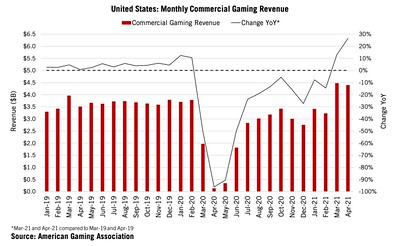
Just one year after hitting its nadir, gross gaming revenues at U.S. casinos hit their second-highest level in history, according to the American Gaming Association’s Commercial Gaming Revenue Tracker. In April, U.S. revenue hit $4.4 billion, just 1 percent lower than the highest total on record, $4.8 billion, set one month earlier. The total was lower in April than in March because of a near 20 percent decline in sports betting revenue in April versus March. The figure was also 26 percent higher than April 2019, the last “normal” April.

The boost in revenue is attributable to most casinos returning to normal operations. According to the AGA, eight of the 25 commercial casino states allowing full capacity with no restrictions. Of the nation’s 463 commercial casinos approximately 80 percent are operating under some restrictions, anywhere between 25 percent and 75 percent of capacity.

Sports betting revenue dipped because of the end of March Madness in early April. However, iGaming revenue increased, and when added together with sports betting, the interactive wagering accounted for 13.1 percent of total revenue, down from the 14.8 percent in March but much higher than April 2019.

IIG Wins Caesars AC Design Competition

Interior Image Group (IIG), an interior design, branding and procurement firm, has won a competition organized by Caesars Entertainment to design the new guest rooms at two Atlantic City Resorts—Harrah’s Resort Atlantic City and Caesars Atlantic City.

Caesars recently announced its $400-million master plan and investment in Atlantic City, where it owns and operates three of the region’s preeminent casino destinations. The first phase of the project, a $170 million renovation of approximately 600 guest rooms and suites in Caesars’ Centurion and Ocean Towers as well as Harrah’s Atrium Tower, will debut this summer.

The towers will offer accommodations with spectacular views and modern design elements in rooms ranging in size from 450 to 700 square feet. These developments will bolster the city’s position as a Vegas-style destination market with a focus on revitalizing the world-famous Atlantic City Boardwalk, just steps from Caesars Atlantic City.

The Crown Point, Indiana-based firm has extensive hotel and gaming experience and a contemporary, timeless design approach. Its concepts for Caesars were mindful of various architectural conditions, function, cost and durability with nods to regional influences and local personality.

At Caesars Atlantic City, guest rooms will feature a modern Roman aesthetic that adheres to Caesars brand-driven guidelines, while the fresh and airy color palette draws inspiration from the scenic beaches of Atlantic City. They will feature a palette of rich hues like blue and cream used as accents and contrasting white and gray complemented by contemporary furniture and modern bathrooms with oversized showers, mirrors, and signature amenities.

At nearby Harrah’s Resort Atlantic City, IIG took cues from the casino’s upscale yet accessible hospitality brand for the winning concept. The guest rooms showcase fun, lively, and vibrant design elements playing off the resort’s sophisticated location in the Marina District and historic landmarks from the nearby boardwalk.

“We were honored to compete with several talented firms to develop the new guest room concept that is thoughtful in execution, tailored in style, regionally-inspired, and forward-thinking,” said Patti Tritschler, president and CEO of IIG. “We place storytelling at the heart of every project to create memorable environments; our partnership with Caesars also marks a significant milestone in our own story.

“Winning this competition has allowed IIG to hire an additional 12 team members, which means everything to us during this unprecedented time in the hospitality industry.”

Hospitality Returning, But Jobs Go Unfilled

Last spring, the Covid-19 pandemic slammed the door shut on businesses across the U.S., and kept them closed for many months.

Perhaps no industry was harder hit than hospitality, including entertainment and gaming, from Las Vegas to Atlantic City and most every place in between. Dealers? Gone. Wait staff? Gone. Housekeepers? Gone. Bartenders, chefs, desk clerks, pit bosses? All were left out of work for extensive periods of time.

Nevada, with its tourism-based economy, took the brunt of it. Over the past tumultuous year, employers did all they could for as long as they could to lessen the financial impact on workers, according to Virginia Valentine, president of the Nevada Resort Association. Employers extended health benefits, paid wages and established employee assistance funds.

But the pandemic shut down the Silver State for 78 days. When casinos reopened last June, jobs didn’t rush back, because properties were operating at reduced capacities, ranging from 25 percent to 50 percent. According to U.S. Bureau of Labor statistics for the Las Vegas-Henderson-Paradise area, the number of jobs in leisure and hospitality in March 2021—a year after the pandemic hit—came to 201,100, 30.8 percent fewer than the year before.

With a more diversified economy, Northern Nevada is less reliant on tourism for its solvency. As a result, the economy there has rebounded more quickly. Reno and Lake Tahoe also serve more regional drive-in customers and have a strong base of local patrons.

But Southern Nevada’s economy is driven by trade shows, meetings, conventions and special events, and also depends more on air travel and international visitors. “All of these segments are taking more time to recover,” said Valentine.

The Atlantic City Story

Atlantic City has seen similar struggles. At the end of 2020, the work force at the Borgata Hotel Casino & Spa totaled 3,600, as compared to more than 5,550 at the end of 2019. In February 2021, the tourism industry as a whole in the resort employed 5,200 fewer employees than the prior February. And that’s more than six months after casinos reopened in July.

Covid restrictions, including a long-term ban on indoor dining, kept the employee rolls down. But figures for this March showed about 21,300 jobs in Atlantic City, including 15,250 full-time positions, a slight increase over February figures.

And with summer fast approaching, employment should approximate pre-pandemic levels. But employment is returning more slowly than expected, even with job availability, said Jane Bokunewicz (l.), coordinator of the Lloyd D. Levenson Institute of Gaming, Hospitality and Tourism at New Jersey’s Stockton University.

“The types and distribution of jobs throughout a property may change,” she said. “The need for fundamental jobs like housekeeping and food service will remain a constant, but there will likely be some shift in how other personnel are deployed. Investment in both gaming and non-gaming amenities will also create new employment opportunities.

“It’s impossible to say when employment will reach pre-pandemic levels, but it almost certainly will.”

’UI Discouragement’ or Something Else?

So, why aren’t more workers returning to the fold? The answer is “complicated,” said Oliver Cooke (l.), Stockton associate professor of economics. Factors include a continuing fear of Covid, childcare constraints, J-1 visa problems for some foreign workers and to an extent, the bonus unemployment insurance (UI) that is still available to many.

“There’s been heated national debate over the unemployment insurance issue for several weeks now,” Cooke said. “Is the ‘UI discouragement effect’ possible? Sure. But, I tend to think it’s overstated.” To fill unfilled jobs, higher wages can’t hurt, he added. “But if the other issues play a role, higher pay won’t matter.”

Cooke described April hiring as robust nationwide in leisure and hospitality. Another positive sign is that first-quarter wage growth returned to levels last seen in the fourth quarter of 2019. “Neither of these two items suggests that UI is a major culprit,” he said. “The reality is that the economy ground to a halt and has come back rather strongly. So there’s real competition for labor right now.”

First-quarter results year-on-year show the Atlantic City labor market remained down, while Cape May County to the south was up, he added. “If unemployment insurance was a real issue, we’d expect to see similar trends in both metro areas—but we don’t.”

The industry itself could also be hesitant over whether the expected summer demand proves itself through early June. More data might clarify the situation, Cooke said.

Back in Nevada, according to Valentine, “Every day, resorts are adding back more employees and helping to drive down the area’s unemployment rate, which is a positive sign for our economic recovery. The resorts, as with other businesses, continue to focus on reaching out to furloughed and laid-off employees in the hope of bringing them back.

“We’ve heard that there are a variety of reasons for people not coming back to the jobs they once held in any industry. As some people decide not to return, resorts are actively recruiting for those open positions through job fairs and hiring events.”

‘Sweetening the Pot’

David Schwartz (l.), associate vice provost for faculty affairs at the University of Nevada Las Vegas, said, “I imagine that if there’s a labor shortage, they’ll have to raise wages or otherwise sweeten the pot for applicants.”


It happened recently at the Gun Lake Casino in Michigan, which raised the minimum wage to $14 effective June 1—an increase of 30 percent at a property that hopes to hire an additional 200 employees. Tribal Chairman Bob Peters said the decision was made because “the past year has presented all of our team members with unique circumstances and an ever-changing environment.”

For resort areas like Las Vegas and Atlantic City, a lack of trade shows, conventions, special events and headliner entertainment has also suppressed employment, Schwartz noted. “That would make sense. Those are labor-intensive functions, and having them return will help with resuming full employment.”

The problem is that conventions and trade shows require lengthy planning and a long lead time from booking to event, and there isn’t much that can change those dynamics.

In Las Vegas, in particular, the industry also needs those international travelers who “tend to stay longer and spend more than a domestic leisure visitor or a business traveler,” Valentine said. “International travel will depend on the vaccination rate in other countries and the return of international flights, which may take some time.”

Still another factor is a decrease in the number of employees due to technological advances. The phenomenon grew out of concerns about sanitization and other risks caused by Covid-19. The pandemic has “expedited the adoption of touchless or contactless technology as guests have become more comfortable using them,” Valentine said.

Other technologies include mobile check-in and digital room keys, virtual menus with QR codes, virtual waitlists where patrons get text updates, ticketless and remote event registration and virtual concierge services—all innovations that mean fewer live bodies. “But hospitality employees will always be a critical component of the guest experience,” Valentine said. “No one else can deliver world-class customer service like we do.”

For employers hiring, it’s a numbers game, added Bokunewicz. The number of food and beverage employees is determined by the number of dinners served. The number of table games opened is determined by the number of players wishing to play. And the number of hotel rooms serviced is determined by the number of overnight guests.

“As business volumes return to pre-pandemic levels, we’ll have a better idea of what, if any, lasting changes operators are making to their staffing levels,” Bokunewicz said.

‘Right-to-Return’ Bill

In Nevada, the legislature has recently pass and the governor has signed “right-to-return” legislation, a law that would require employers to give priority to former workers who want their old jobs back, rather than hiring new staff members, possibly at lower rates.

Valentine called the idea counterproductive and said it would place “an arduous burden on employers through needless, time-consuming requirements that will significantly slow down rehiring.

“Nevada’s largest industry and economic engine continues to navigate the challenges created by the pandemic,” she said. “Now is not the time to create more obstacles to getting Nevadans back to work.”

Amid all the confusion, adaptation and readjustment, there are encouraging signs, she added. “We’re seeing the pent-up demand for the entertainment and attractions Nevada offers and bookings for the second half of the year look good, so it depends on business levels.

“But predictions are difficult. It’s been a devastating year, but encouraging signs that point to better days ahead.”

Meanwhile, an Atlantic City shop manager, Alex Rivera, told the Press of Atlantic City, “Everyone likes collecting unemployment. People don’t want to have regular jobs anymore. During the quarantine, people started being creative, following their other talents and pursuing their dreams.”