Author: Casino Connection Staff

Arizona to Launch Sports Betting in September

The Arizona Department of Gaming has set September 9, the official beginning of NFL season, as its target date for sports betting to go live.

In advance of that move, it plans to post industry rules for “public inspection and comment” on June 14. Both tribal casinos and professional sports organizations are authorized to offer retail and mobile sports wagering; each category got a total of 10 licenses.

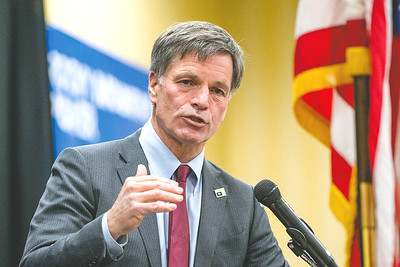
NFL season has always been the target for lawmakers and Governor Doug Ducey. Industry experts expect the state to generate more than $154 million in sports betting revenue. The legislature’s budget analysts say they expect the state will bring in $34 million in taxes.

Gretzky Now Ambassador for BetMGM

The Great One, NHL superstar Wayne Gretzky is the latest brand ambassador for U.S. sportsbook BetMGM, the parties announced last week.

The hockey legend and four-time Stanley Cup champion signed on for a multi-year gig, joining BetMGM’s hockey and North American marketing efforts.

“BetMGM is a terrific company and one at the forefront of the dynamic changes taking place in the sports business,” said Gretzky. “I’m excited to be a part of the company’s continued expansion into new states and territories and to help tell BetMGM’s story.”

Gretzky is widely regarded as the greatest hockey player of all-time, winning four Stanley Cup trophies for his home team, the Edmonton Oilers. He holds or shares 61 unique NHL records and is the all-time leader in both goals and assists, totaling 2,857 points in 21 seasons with Edmonton, Los Angeles, St. Louis and the New York Rangers. He also won nine Hart Trophies throughout his storied career as the league’s Most Valuable Player.

“Wayne is an exceptional talent who transcends the sports world and we’re proud to welcome him to the BetMGM team,” said BetMGM Chief Revenue Officer Matt Prevost. “As we look toward potential expansion into Canada, and elsewhere throughout the United States, Wayne will bring a unique ability to tell our brand story.”

Last week Gretzky became an analyst for Turner Sports. The Toronto Globe and Mail said Gretzky will be paid $3 million per year to work with Turner.

In related news, BetMGM has been named the exclusive Sports Betting Partner of the Hockey News, pairing leaders in the sports betting and hockey media industries. Under the multi-year partnership, BetMGM and the publication’s award-winning journalists will collaborate on print and video content, giving hockey fans unique insights into the game from a betting perspective.

“When looking for the best sports betting partner for our readership, trust and brand positioning were key factors,” said W. Graeme Roustan, owner and publisher of the Hockey News. “BetMGM is a trusted, well-known operator and we couldn’t be more excited to have found a long-term partner for our sports betting related content.”

Mohawks Oppose Canada’s Online Sportsbook Bill

The Mohawk Council of Kahnawake has come out in opposition to Bill C-218, Safe and Regulated Sports Betting Act that would legalize single game sports wagers in Canada.

The bill is near to passing, having passed the House of Commons and is going for a final pass from the Senate. Once the Criminal Code is amended, individual provinces and territories would be able to regulate the activity.

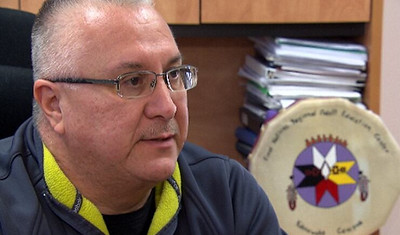
Kahnawake has operated online gaming through its Mohawk Online platform for six years, although technically it is operating outside of Canadian law. It has made millions of dollars that are spent on tribal members, said MCK Chief Michael Delisle Jr. Those funds are threatened if provinces and territories are allowed to take sports betting while his First Nation is not, he said.

He added that other First Nations and Indigenous communities would also have to operate outside the law. He said the way to solve this problem is add the term: “Indigenous governing body” to the definition of who can adopt regulations governing sports betting.

The bill was authored by MP Kevin Waugh, whose legislative assistant Michael Giesbrecht told CTV News, “C-218 simply amends a single line in the Criminal Code to remove the criminal restriction on single-event wagering. It is the jurisdiction of the provincial governments to license operators and regulate this sector if Bill C-218 passes.”

Ontario Senator Vernon White, who supports adding an exception for the indigenous communities, said “The reality is, the gaming industry in First Nations, they probably run better than it is in any province or territory,” adding “This is about money. It’s not about relationships, it’s not about sports.” The senator added, “It’s not about gambling addiction, it’s not about First Nations and it’s not about match-fixing. It’s about revenue, and they believe they can tap into that revenue.”

Delisle added, “In effect, it eliminates Kahnawake from single-source betting that we’ve been able to become a part of for the past six years.”

When Waugh presented the bill, he declared, “It is all done by unregulated and unsupervised offshore betting sites and black market bookmakers. There are no consumer protections in place. There are no problem-gambling programs offered and no guidelines that bookmakers are required to follow. This also means that the economic benefits are not being felt by Canadians.”

Lawmakers are hesitant to begin any process for amending the existing bill because they want to get the law adopted before a possible election is called in the fall. If that happens, all pending bills will become moot.

Wyoming Commissioners Approves Sports Betting Rules

On June 8, the Wyoming Gaming Commission approved the fifth draft of sports wagering rules for the state and submitted them for approval to Governor Mark Gordon.

There will now be a 45-day public review period. Commission Executive Director Charles Moore stated, “We appreciate the hard work everyone has put into this. We still are on track for the September 1 deadline.”

The commission drew inspiration for its rules from a variety of other states, including Colorado, Iowa, Michigan and Tennessee. It also consulted with sportsbook operators such as BetMGM, FanDuel and DraftKings.

Governor Gordon signed the sportsbook legislation into law on April 5. It provides for online-only sports betting in the Cowboy State, which has

no commercial casinos and four tribal casinos. Last fall, the Northern Arapaho Tribe announced it was offering sports betting.

The state will collect a $100,000 fee for a sports betting permit good for five years. It will tax sports wagering revenue at 10 percent.

Virginia Sports Betting Surpasses Tennessee

Over the past four months, Virginia sports fans have bet more than $865.2 million. If the state can attract wagers of $135 million when May is calculated, it would exceed $1 billion in five months, surpassing Tennessee, according to the Virginia Lottery Board.

Online betting launched in Virginia on January 21. The state has seven sportsbooks with no retail outlets yet, according to the Bristol Herald Courier.

“In most ways, Virginia and Tennessee mirror each other,” according to Jessica Welman, analyst for the Las Vegas-based PlayUSA.com network, which includes PlayVirginia.com and PlayTenn.com. “Both created online betting as the sole focus at launch and both created tax systems that have not inhibited operators even though rates are on the high side compared with other states.”

Virginia imposes a 15 percent tax on sports betting, while Tennessee has a 20 percent tax. Virginia has also brought in over $3 million in tax revenues thus far. The seven include FanDuel, DraftKings; BetMGM; William Hill, operators of the future Danville casino; WSI US LLC, or Wynn and Unibet Interactive, which went live in late April.

The three others, Barstool Sportsbook, Golden Nugget and Bally’s all hold temporary permits as they wait to go live.

Las Vegas In Search of NBA Team

First came hockey. Then the NFL. And last month, MLB baseball kicked the tires of Las Vegas to see if moving the Oakland As made sense. So, is it any wonder that an ownership group wants to bring an NBA expansion team to the city?

Investor Jay Bloom along with NBA first-round draft pick Marcus Banks and motivational speaker Tony Robbins, are part of the group.

Commissioner Adam Silver said in February that expansion was on a backburner for sure. But Las Vegas and Seattle seem to be on the short list if it moves to the front burner, according to the Las Vegas Review-Journal.

“I think it’s more likely than not that we’ll get a team in Las Vegas,” Bloom said, “and I hope my group gets it.”

Bloom mentioned playing in the T-Mobile Arena, MGM Grand Garden Arena, or even building a new arena for home games.

“If it happens, we have the money to do it,” he said. “Nobody is better positioned than Las Vegas to have an expansion team.”

PointsBet, Maryland Riverboat Make A Deal

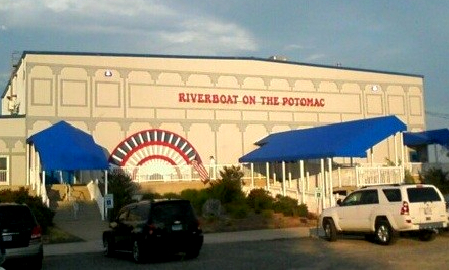
PointsBet Maryland LLC, a wholly owned subsidiary of PointsBet Holdings Ltd., last week announced plans to enter the Maryland sports wagering market through an exclusive agreement with Riverboat on-the-Potomac, a popular Off-Track Betting (OTB), keno and licensed lottery retailer on the Potomac River in Charles County.

Once approved by regulators, PointsBet will quickly offer its retail and online sports betting product at the facility, once known as “Little Reno.”

“With terrific partners in the Riverboat on the Potomac, PointsBet is thrilled to begin the process toward offering the passionate, sports-loving community of Maryland with the fastest and most differentiated sports betting product across every customer touchpoint,” said Johnny Aitken, CEO of PointsBet USA. “We look forward to quickly and responsibly introducing sports bettors to the newly legalized competitive advantages PointsBet possesses in owning our technology end-to-end, such as market-leading ease of use and the deepest slate of betting options available in the world.”

“We’re excited about this new endeavor, PointsBet is not only an international leader but has recently proven to be an industry trailblazer. Their landmark agreement with the Riverboat on-the-Potomac has provided an incredible model for the diversity and inclusion of MBEs all over the United States,” said Winston DeLattiboudere, co-managing member of the Riverboat Group. “We are proud to be partnering with a giant that understands and believes in the value of inclusiveness in every facet of the industry, from the owners to the bettors.”

As the official exclusive sports betting partner of NBC Sports, PointsBet will utilize the media giant’s premium television and digital assets to promote the PointsBet brand in Maryland.

Caesars Partners with PlayUp

Caesars Entertainment has signed a partnership agreement with Australian online betting platform provider PlayUp, which will begin providing its platform to Caesars sites in New Jersey.

Caesars, which recently announced plans to rebrand recent acquisition William Hill US with the Caesars name, is moving ahead with other revenue streams.

“In most of the states, the amount of available licenses is very limited,” commented PlayUp USA CEO Laila Mintas in a video announcing the partnership. “And they are, of course, in high demand, as operators from all over the world are trying to get access to the U.S. market, which is said to become the largest legal sports betting market in the world. So I couldn’t be more excited to share with you that PlayUp has continued to acquire market access—now, through a deal with Caesars Casino, which is a very strong brand.

“The deal gives us immediate access into (online sports betting in) Indiana, Iowa and iGaming [in] New Jersey.”

New Jersey will be PlayUp’s first iGaming offering in the U.S. Mintas said PlayUp’s partnership with Caesars in New Jersey will result in the launch of a new iGaming product, pending state regulatory approval. This means online casino, since PlayUp isn’t in the poker business.

The company raised $12.5 million from private investors in February for U.S. expansion. PlayUp’s 2020 annual report detailed the company’s $17.5 million in net revenue during the fiscal year ending on June 30, 2020. It also said its American expansion would include sports betting, daily fantasy sports, parimutuel horse racing, esports and iGaming “on a state by state basis, throughout the USA.”

Colorado Bettors Love Ping-Pong

Colorado bettors have a peculiar affinity for ping-pong, otherwise known as table tennis.

Jackson Wieger, who writes about the sport for DenverSportsBetting.com, is one of them. He told Yahoo Sports that it didn’t matter that the matches are played in a faraway country and that he often bet without much information.

“It kind of makes it exciting,” he said. “There’s a lot of volatility.”

In the Centennial State, Wieger isn’t an outlier. The state’s fascination with table tennis got its start during Covid-19, when almost no major league sports were active. But it’s still flourishing, and for several months this year, it was the fourth-most bet sport.

BetMGM Vice President of Trading Jason Scott admits to being confused. “I’m probably as shocked as the rest of the gambling community,” he said. “Once sports came back, I thought it would disappear off the map. It’s crazy.”

One thing ping-pong has going for it is the fast pace. Most games last no more than 15 minutes. There are many to bet on, too. If you want a change of pace, you can wager on sets. Another Colorado journalist who covers Ping-Pong, Conor McCormick-Cavanagh, said, “You play the slots, it’s purely a game of chance. Sports betting can be a game of skill to a point. With table tennis, you can play it like you’re rolling the dice or pulling a slot lever. You’re betting on some random Russian dude.”

Another odd fact about the ping-pong sports betting phenomenon is that while plenty of people bet on it, they don’t talk it about. According to McCormick-Cavanagh, there’s little data about active bettors, because they’re embarrassed to talk about it.

Maine Sportsbook Bill Stands Alone

There were once four sports betting bills in the Maine legislature; now there is one, whose sponsor is Senator Louis Luchini.

Luchini’s bill survived the May 28 vote of the Legislature Committee on Veterans and Legal Affairs. The bills were combined because they had largely the same language: legalization of sports betting. Where they differed was on how to regulate sportsbooks and give licenses.

The main thing separating legislators is whether they want a tethered or untethered model. In the sportsbook world, “tethered” means that only brick-and-mortar operations including casinos and racetracks can be licensed, though they may partner with sportsbooks such as William Hill or DraftKings. Using this approach, casinos would be able to offer mobile sports betting.

The “untethered” model would allow any qualifying provider to offer mobile sports betting, independent of a physical location.

An example frequently given is the Hollywood Casino Hotel & Raceway, one of two casinos in Maine. Using the tethered approach, that Bangor casino, owned by Penn National, would be able to offer mobile sports betting all over the state. If lawmakers go with the untethered model, any provider could operate in the state, even if it isn’t based in Maine.

The last sports betting bill passed by the legislature was vetoed by Governor Janet Mills, who has not yet taken a position on the new bill.

Ricketts Signs Nebraska Sports Betting Bill

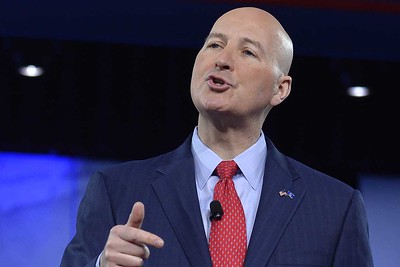
Nebraska Governor Pete Ricketts has signed a gaming expansion bill, one that includes sports betting. The bill includes a constitutional amendment to allow for the expansion of gaming in the state. It also creates a State Racing and Gaming Commission to oversee gaming regulations, according to Legal Sports Report.

Sports betting will be permitted in designated areas within casinos, even though it will reduce the number of bets as bettors travel to nearby states to place bets using mobile phones.

In related news, the Nebraska Horsemen’s Benevolent and Protective Association filed for a permit May 25 to build a temporary casino in the simulcast building at Lincoln Race Course. The venue, which will house 305 slot machines, will remain in operation until the WarHorse Casino is built. The temporary quarters could be in operation within six months.

The permanent casino could take as long as 24 months once construction begins, according to Lincoln Journal-Star.

The $220 million WarHorse will feature about 1,200 gaming stations, a 196 room hotel, event space, as many as half a dozen restaurants and a spa.

Tom Sage, director of the Nebraska Gaming and Racing Commission, said it will begin evaluating proposed rules and regulations received from gaming consultants.

With a process that includes a public hearing on the proposed rules, a review by the Attorney General’s office and approval by the governor, casino operators would have to wait until at least September to apply for a license.

Illinois House OKs Limited In-State College Betting

In a 96-22 vote, the Illinois House recently passed House Amendment 1 to Senate Bill 521, which would allow in-state bettors to wager on Illinois college sports teams—on a two-year trial basis.

Such wagers would have to be placed on-site at a sportsbook, not online. Plus, the bet would have to be placed pre-game and could only be a Tier 1 wager; that is, it is “determined solely by the final score or final outcome” of a sporting event. Also, bets on an individual athlete’s performance would not be permitted.

The bill must be passed in the Senate and signed by Governor J.B. Pritzker. It would take effect immediately and run through July 1, 2023.

Rita said the bill would allow betting on all college athletics, not just Division 1 sports. It also would permit veterans and fraternal organizations to apply for video gambling machine licenses, even if they are banned by the local municipality and even if they don’t have a liquor license. However, those provisions would not apply in Chicago and Cook County.

The measure also would sports wagers to be placed at Wintrust Arena, home of the Chicago Sky of the Women’s National Basketball Association. The venue would have to pay the $10 million or 5 percent of adjusted gross receipts, whichever is less, renewable in four years for $1 million.

In addition to sports betting provisions, Rita’s bill also would allow non-Illinois breeders to bring their stallions to Illinois to breed with mares.

Rita said he also plans to “work with all the labor unions over the summer and try to figure out how to come up with something that is right for this industry, right for the unions.”

William Hill Opens D.C. Sportsbook

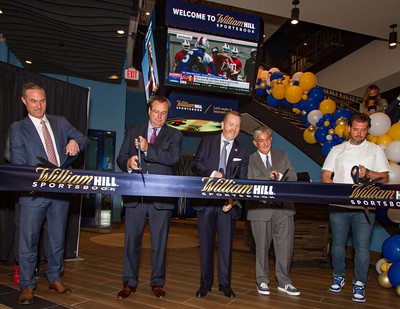
William Hill Sportsbook opened its permanent location inside Capital One Arena last month, the first of its kind in the U.S. The arena is home to the NBA’s Washington Wizards and the NHL’s Washington Capitals.

The two-story, 18,000 square foot sportsbook features 17 betting windows and 12 self-service kiosks. It also includes a broadcast studio, two VIP areas, and a private dining and entertainment space. Nicholas Stefanelli, a Michelin-starred chef, and owner of restaurants in D.C. including Masseria and Officina, provides food and beverage, according to CDC Gaming Reports.

“Providing a data-driven, technologically advanced environment in a beautiful approachable space with fine dining options provided by Chef Stefanelli will further enhance the indelible memories we create nightly at Capital One Arena and draw even more visitors to our historic downtown D.C. neighborhood,” said Monumental Sports & Entertainment Founder and CEO Ted Leonsis in a statement.

The Athletics’ Sean Shapiro said this could become a trend in sports betting. “How quickly it impacts other venues and teams will depend greatly on state and local approval for projects like this,” Shapiro wrote.

The first game was game three of the first round of the Eastern Conference playoffs between the Wizards and the Philadelphia 76ers. NBA commissioner Adam Silver and 76ers owner Josh Harris toured the sportsbook prior to the game.

Bettors who arrived early bet on the Champions League final between Manchester City and Chelsea. After the 76ers game, some customers hung around to catch the Jazz and Grizzlies game, according to ESPN.

“The place was busy and had energy,” said Dan Shapiro, William Hill vice president of strategy and business. “The great thing to see was the energy in the venue.”

The 76ers game represented 40 percent of the money wagered on the NBA at the sportsbook on the day, but overall, the sportsbook lost money. William Hill operated from the arena’s box office while the venue was being built.

Cleveland Cavaliers Sign Deal with Esports Group

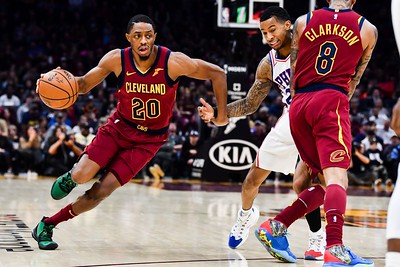
The Cleveland Cavaliers has tapped Esports Entertainment Group, Inc., as the team’s official esports tournament platform provider. The group will run three co-branded esports tournaments for the Cavs annually.

“We are delighted to announce the Cavs as our first NBA team partnership. Our platform will help the Cavs strengthen connections with their fans, while providing new avenues for engagement,” Grant Johnson, CEO of Esports Entertainment Group, said in a statement.

The esports group will get courtside LED signage at all Cavs regular-season home games throughout the 2021-2022 season. The team’s’ NBA 2K League affiliate, Cavs Legion, will host an upcoming NBA 2K tournament operated by Esports Gaming League, according to WKYC.

“The growing popularity of esports provides a great opportunity for our team to create deeper connections and engagement with our fans,” said Matt O’Brien, Cleveland Cavaliers vice president, global corporate partnerships. “We think these tournaments will be very popular with our fans and a fun way to compete.”

PA Lottery Scores iGaming Win

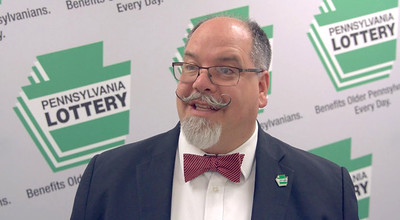
The Pennsylvania Lottery scored a win in court last week, when a state judge ruled the lottery’s internet-based games do not infringe on operators’ rights related to their own online casinos.

Seven casino operators filed suit against the lottery after the iLottery games were revealed, noting that at least nine of the games carried the same titles and/or themes as casino slots on Pennsylvania floors, or games that were offered online in other states to that point. The operators noted that the iLottery games had an average return to player of 81.6 percent to 89.1 percent, close to the casino minimum return of 85 percent, while instant games returned payouts in the range of 61 percent to 77 percent.

Operators claimed in their suit that the iLottery games would cannibalize an online gaming market for which each paid a $10 million license fee.

Judge Renee Cohn Jubelirer did not agree, attributing the similarities to trends in the overall entertainment market. She dismissed the lawsuit.

“The features of iLottery games challenged by petitioners are not signature, iconic, or key features particular to casino slot machines,” Jubelirer wrote. “Rather, they are features that: relate to technological advances in online gaming; are based on online entertainment and gaming, as well as existing entertainment sources like television and board games which have indisputably inspired both iLottery game and slot machines game designers; or existed in the same or similar fashion in traditional lottery products that were translated into a new online medium.”

Jubelirer wrote that the legislature, in framing the 2017 gaming expansion law that added both the iLottery and internet gaming, did not intend to preclude either medium from taking advantage of technological advances in gaming or entertainment.

Pennsylvania Lottery Executive Director Drew Svitko lauded the decision. “Because the lottery’s online games have been an incredible success—generating more than $170 million in profit since their launch in May 2018—we have another popular product in our portfolio that helps us responsibly generate funds for programs that benefit older Pennsylvanians,” Svitko said, according to the Penn Live news site.

Pennsylvania’s online casinos linked to commercial operators as revenues jump from $240.9 million in 2019-20 to $707.1 million for the first 10 months of the current fiscal year.

The operators, who could appeal the decision, have made no public comments on the ruling.

Connecticut Next State to Legalize Online Casino, Poker

Under recently approved legislation, Connecticut has become the sixth U.S. state to legalize online gaming and the seventh to authorize online poker.

Online poker is still in bad odor in some states owing to the persistence of some websites in allowing residents of states that haven’t legalized it to play with money.

Last year the U.S. Justice Department prosecuted Isai Scheinberg, founder of PokerStars, one of the largest internet gambling concerns, in a ten-year-old case that dated back to April 15, 2011 and so-called Black Friday. On that date, the Justice Department cracked down massively on unregulated poker sites across the U.S. for allegedly violating the Unlawful Internet Gambling Enforcement Act (UIGEA).

While most poker sites fled America, PokerStars, under new ownership by the European gaming company Flutter, stayed to fight. It has become active in the legal online poker markets of, New Jersey, Pennsylvania and Michigan. And it will most likely seek to enter the new Connecticut market.

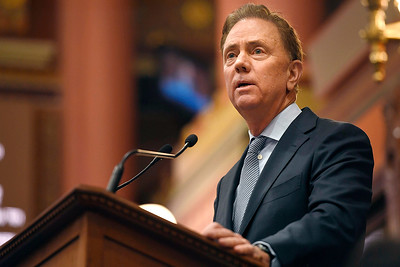
May 27 Governor Ned Lamont signed into law legislation that authorized online sports betting, casino and online poker. This allows the state lottery and Mohegan and Mashantucket Pequot tribes to offer those games.

They have a monopoly on all online gaming, while Connecticut Lottery Corp. shares with them sports betting and online lottery.

PokerStars is most likely the company the tribes will turn to. However, it might also consider BetMGM or Caesars Interactive. None of this will happen quickly. The recently approved compacts between the state and tribes must be endorsed by the Bureau of Indian Affairs before they take effect.

Nevada Adds iGaming Self-Exclusion List

In May, the Nevada Gaming Commission approved a self-exclusion list for online gamblers who want to curb their play. Joining the list blocks the user’s access to online casinos but doesn’t apply to land-based gaming, so anyone on the list can still play casino games in person.

The Las Vegas Review-Journal reports that language was added to Regulation 5A, which regulates online gaming. It says, “The board shall establish and maintain a statewide list of individuals who have self-excluded from participating in interactive gaming and the date each individual self-excluded. The board shall update the statewide list of individuals who have self-excluded each day and provide operators with access to the list.”

Details of the program are still being ironed out. Alan Feldman, former public affairs VP for MGM Resorts, a distinguished fellow at UNLV’s International Gaming Institute and an authority on responsible gaming, said there’s no evidence that self-exclusion programs stop problem gambling, but the act of signing up “validating and affirming” in itself.

“It’s now that moment where you’ve said, ‘I need to do something,’ and that often is a critical moment in a problem gambler’s journey,” Feldman said. “Does it actually do anything for them? Do they have a better outcome ? Not really, but I wouldn’t throw it all away because of that.

“So far,” Feldman said, “I think they’ve handled this appropriately.”

European Union Considers e-ID for Gamblers

The European Gaming and Betting Association (EGBA) supports a proposal by the European Commission verify gamblers’ identity through electronic identity wallets, or e-IDs. Proponents say the technology could minimize compliance costs across online gambling jurisdictions.

“A standardized identity verification method would particularly help reduce administrative and compliance costs for those online gambling operators who operate across multiple European jurisdictions,” an EGBA statement read. The commission hopes to get 80 percent of EU residents on e-ID by 2030, according to SBC News.

“An EU e-ID would, for example, help strengthen existing processes to prevent minors from accessing online gambling and to fight fraud and money laundering,” said Ekaterina Hartmann, EGBA director.

PayNearMe Approved in Michigan

PayNearMe, a payments platform designed to manage the complexities of iGaming, announced the company has been granted approval by the Michigan Gaming Control Board to provide its award-winning iGaming Solution, which simplifies the deposit and payout experience across a wide range of payment types, to licensed operators within the state.

William Hill US, a longtime leader in sports betting and recently acquired by Caesars Entertainment, has been accepting cash deposits at retail locations with PayNearMe since April 2015, and is among the first to go live in Michigan with the company.

PayNearMe has launched three clients in Michigan that represent over half of the market, and is actively working to enable additional operators across the state to accept players’ cash and electronic payment deposits.

“PayNearMe is excited to take our operators live in Michigan. We worked closely with the Michigan Gaming Control Board to ensure our service is compliant with all applicable statutory requirements,” said Connor McNulty, senior regulatory counsel for PayNearMe.

“PayNearMe now operates and processes payments for licensed online sports betting and iGaming operators in 12 U.S. states, and we’re focused on quickly and efficiently expanding our gaming footprint as new states legalize online sports betting and iGaming.” 

PayNearMe provides a complete payment solution for online sports betting and iGaming, with a focus on removing friction to enable operators to deliver a best-in-class player journey. With one platform and integration, operators can facilitate deposits, payouts and engagements using data to automate decisioning and better manage payment experiences that ultimately reduce costs and increase revenue.

Evolution Launches Live Online Slot Show

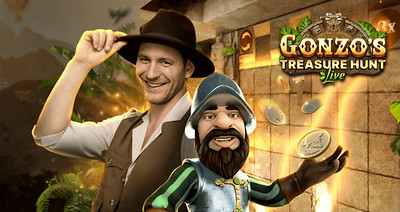
Sweden-based Evolution Gaming has launched the first live casino game combining live action and slots play with the option to play in Virtual Reality mode.

The game, Gonzo’s Treasure Hunt, is inspired by NetEnt’s Gonzo’s Quest online slots game and is the latest in Evolution’s growing list of live game shows. Evolution Gaming recently acquired NetEnt, and Gonzo’s is the first game to use intellectual property from that company.

The game centers on hidden treasures in a large stone wall, where each stone could hide the treasure.

Todd Haushalter, Evolution’s chief product officer said, “This is our first product that combines the best of NetEnt with Evolution. I’ve been excited to work with the amazing NetEnt intellectual property since the acquisition was announced and we are starting by taking the most famous character in slots and bringing him to live casino.”

He continued, “This is also the first live game ever where players have such a high degree of control over their game strategy and the potential outcome.”