Author: Casino Connection Staff

Massachusetts Doesn’t Press Casinos on Poker

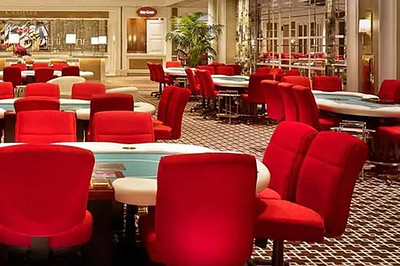
The Massachusetts Gaming Commission has heard the reasons why its two casino resorts aren’t offering poker yet, and has decided not to press them about it.

At the MGC’s July 29 meeting commissioners closely questioned Encore Boston Harbor Senior Vice President and General Counsel Jacqui Krum about why the card game hasn’t yet returned, even though casinos have been allowed to reopen at full capacity since May.

A large volume of complaints by members of the public prompted the commission to investigate. Normally the panel fields five complaints a month. Lately it has gotten ten times that amount, all related to poker.

“To be clear, we did not say ‘never’ to poker. We have said, ‘just not at this time,’” said Krum. “We’re constantly readjusting offerings based on guest demand.”

During the height of the pandemic the MGC mandated that poker be limited to four players separated by clear plastic barriers. Both the Encore Boston Harbor and MGM Springfield said they couldn’t make the game profitable on those terms and so poker didn’t return. However, once things were back to normal, the games still didn’t come back.

Both casinos promised to revisit the situation by the end of the year.

One reason that poker hasn’t returned is, not surprisingly, money. According to Krum, the space once occupied by Texas Hold ‘em Tables is now taken up by “some of our highest performing slot machines.” She added that the slots were “physically large machines that take up quite a bit of space” and that the room’s popularity has grown “exponentially.” The implication is that while poker fans may be loud, their numbers are few.

Still another reason is more telling still: a shortage of poker dealers. Krum explained, “We remain in continual hiring mode. We simply cannot find enough dealers, cashiers or food servers.” The casino has offered to pay for poker school for new hires.

Reopening poker, she said, would require closing other table games. “We fully understand the impact of these changes to our valued guests, including our poker players, and if we could add another floor to the casino we would.”

The commission decided to, uh, table any action, deferring to the casinos to run their operations at maximum efficiency. They did ask both casinos to give them regular updates, however.

MGM Donates Land for Memorial

In 2017, 60 concertgoers who were shot and killed in a mass shooting at Mandalay Bay in Las Vegas. Last week, Clark County officials announced that the venue’s operator, MGM Resorts International, has donated two acres of land for a memorial to the victims and survivors. Fifty-eight people at the Route 91 Harvest festival were killed October 1 by a gunman firing from the window of his suite at the property. Two others died later, and hundreds more were injured.

Clark County Commissioner Jim Gibson called MGM “a part of this community. I think it demonstrates as much as anything does that their heart is where it ought to be as we work on this.”

MGM donated a parcel of land near Reno Avenue and Giles Street, reported the Las Vegas Review-Journal.

“Having a permanent memorial commemorating the victims and heroes of 1 October is vital to our community’s continued healing, and we are honored to donate a portion of the Village site to help bring that memorial to fruition,” MGM Resorts said in a statement. “We look forward to supporting the committee as it proceeds with planning for the memorial.”

Casino KC Rebrands As Bally’s Kansas City

The public is invited to the rebranding ceremony of Casino KC to Bally’s Kansas City Casino on Wednesday, August 18. The event will include live entertainment, food samples and remarks by Bally’s Corp. executives and local officials. The exterior entrance sign is being replaced now and Bally’s officials said the complete rebranding, including new dice cards, chips and table game layouts, will be completed in the first half of 2022.

Bally’s President and CEO George Papanier said, “We are proud to bring the Bally’s brand to Kansas City as part of what we believe will be a transformative redevelopment of the property. This represents an exciting time for our customers as we have several new and engaging experiences planned for the property, which will generate additional excitement on the Berkley Riverfront.”

The all-new, 4-tiered Bally Rewards program also has been introduced at the property. All existing rewards will be transferred to members’ new Bally Rewards cards.

Bally’s also recently announced a $40 million land-based expansion at the property featuring national restaurant brands like Sugar Factory and Chickie’s & Pete’s sports bar, plus new amenities and retail options.

Major Operators Say No Thanks To $1 Billion Chicago Casino

In April, the city of Chicago issued a request for proposals from companies to develop a mega-casino resort downtown by 2025. City officials hope a casino could generate $200 million in tax revenue to help fund its troubled pension program. However, the RFP’s requirements add up to an investment of at least $1 billion, observers said.

Specifically, the request includes a 500-room, five-star hotel; an “iconic outdoor public space”; 60,000 square feet of meeting space; plus, restaurants, entertainment, shops and museums designed with innovative architecture. Proposals are due August 23; developers would present plans to the public in late September. The applicants also are asked to propose the site for the project. Casino revenue would be taxed at an effective rate of 40 percent.

Mayor Lori Lightfoot said, “We expect to have a very unique entertainment and gaming experience that you’re not going to find anywhere else in the region. That is certainly our expectation. We’re going to be driving toward that.”

Last year, four gambling operators responded to Chicago’s initial request for information from interested companies. Those included Las Vegas’s MGM Resorts International and Wynn Resorts Ltd., Hard Rock International and Chicago-based Rush Street Gaming, owner of the Rivers Casino in Des Plaines. MGM Resorts and Wynn Resorts have since dropped out. Hard Rock declined to comment.

But Rush Street Gaming officials, working with Chicago real-estate development firm Related Midwest, said the companies “are long-term believers in the promise of Chicago’s future” and “are working together to evaluate this unique opportunity.”

Lightfoot said the envisioned entertainment district would have a mix of public and private investment, and the city would also have “skin in the game,” including new infrastructure. She said, “We want to make sure that we’re setting up whoever the operator is for maximum success.”

Under the 2019 gambling expansion law, the chosen developer would have to pay state fees of $30,000 per slot and seat and table games gaming positions. If the casino chose to offer the total 4,000 positions allowed under the law, that would equal fees of $120 million, based on an analysis by Union Gaming Analytics. In addition, the developer would have to pay fees of up to $480 million based on annual gross revenue in the first three years of casino operation.

In a statement, city officials said even with the fees, the Chicago casino would be “the biggest and most compelling liberalization of gaming in the U.S. today,” and an opportunity for a company to create a profitable property.

Illinois’s gambling expansion law also allows five more new casinos, including two in the Chicago area plus expanded gambling at existing locations. But the tax rate in Chicago is challenging, said Brendan Bussmann, partner and director of government affairs at Global Market Advisors. “The challenge with Chicago is, the sun and the moon and the stars really have to align to make it work,” he said.

In addition, besides the tax rate, a recent proposal to bring sports betting to Chicago stadiums also could scare off a mega casino. Woinski said sportsbooks are not significant moneymakers for casinos, but they attract players. “If the action happens elsewhere, that’s one less reason for people to physically go to the casino,” he said.

However, Chicago City Alderman Walter Burnett believes sports betting is essential for the city’s gaming mix. He recently introduced an ordinance to remove Chicago’s home-rule ban on sports betting and set up sports wagering license requirements. Under the ordinance, sports betting would be authorized either at Wrigley Field, Guaranteed Rate Field, Soldier Field, the United Center and Wintrust Arena or in a “permanent building or structure located within a five-block radius” of those stadiums.

“Wrigley and the United Center have both been talking about setting up a spot for it. So, this ordinance needs to be passed in order for that to happen. We’ll see where the council wants to go with it. In my community, it’ll bring more people to the United Center. They may spend more money. It helps with the sales tax and also the amusement tax that these guys pay. So, there is some upside. There’s more benefits for the state, but there’s some auxiliary benefits for the city,” Burnett said.

He noted the city would issue two types of sports wagering licenses. Primary sports licenses would start at $50,000 a year with an annual renewal fee of $25,000. Secondary sports licenses would start at $10,000, with an annual renewal fee of $5,000.

Burnett acknowledged his ordinance is sure to lead to debate about those who can least afford to wager on sports. However, Burnett noted sports betting already has been legalized in Illinois. “The only downside would be that folks who do it anyway may get addicted to it,” Burnett said.

Meanwhile, the Cubs have agreed to a $100 million partnership with DraftKings that could lead to the first stadium sportsbook in Major League Baseball at Wrigley Field. But it can’t happen unless the Chicago city council lifts the ban on sports betting in the city.

Councilman Walter Burnett said, “But I can take you to every office in this City Hall building. Everybody’s doing squares, pools and all kind of other things in regard to sports betting. And a lot of people are doing sports betting on their telephones. That’s a conversation we can have once we get it introduced. I’m just bringing it to the table so we can all talk about it.”

Lightfoot has vowed to impose “tight restrictions” on sports betting to avoid turning Chicago neighborhoods into, as she put it, “the Las Vegas strip.”

Asked if she feels sports betting would cut into revenues at a Chicago casino, the mayor said, “First of all, sportsbook is the law of our state. That got passed by the General Assembly in 2019. I support that law. No, I do not believe that it will undercut our efforts on a future casino and we’re gonna make sure that it doesn’t.”

A new building or renovation of an existing building would require a change to the planned development under which the Cubs renovated Wrigley and developed the land around it. So would sports betting of any kind, since gambling is outlawed in Chicago.

Alderman Tom Tunney, whose ward includes Wrigley, has acknowledged sports betting is a “reality across the country” and, more recently, in Illinois. “In one way, shape or form, it’s coming to major league sports and to all of the stadiums,” Tunney said.

Cubs spokesman Julian Green has said the partners hope to build an addition to the $1 billion Wrigley campus that could be a year-round attraction. “DraftKings says this would be their largest sportsbook in the country with a food and beverage option and betting. In the winter months, you have Super Bowl. You have March Madness. Having a facility where groups may want to come in and watch the Super Bowl or March Madness’, that’s something we could accommodate.”

Currently all 10 of Illinois riverboat casinos have sportsbooks, as well as two racetracks. At the moment, Chicago bettors have to drive to one of those physical locations outside the city to place a wager or register for a mobile betting application.

Meanwhile, thousands of Chicagoans already place bets on their phones with mobile sports gambling operators, legal and illegal. In fact, since the first legal sports bet was placed in Illinois in March, bettors statewide have wagered more than $4.6 billion. Observers said black market wagers probably are close to that figure, too.

Caesars Buys Superdome Naming Rights

Louisiana lawmakers recently approved a 20-year agreement between the New Orleans Saints and Caesars Entertainment Inc., giving Caesars naming rights to the Superdome. The deal is estimated to be worth $138 million.

The Saints organization had been looking for a sponsor to succeed Mercedes-Benz, which bought the Superdome naming rights in 2011 in a 10-year deal that reportedly cost it $50 million to $60 million. That agreement ended July 15.

Observers said workers already have removed the silver letters of the carmaker’s name and have begun stripping its logo from the Superdome roof. Mercedes-Benz officials said the German automaker decided not to renew its Superdome sponsorship due to its increasing commitment to Atlanta, Georgia. The company moved its North American headquarters there and already has the naming rights to the Atlanta Falcons’ home stadium.

The naming-rights cash will be spent on renovations and upkeep of the iconic domed stadium, said ASM Global Director of Business Operations Evan Holmes. ASM manages the state-owned Superdome and other facilities in the Louisiana Stadium and Exposition District.

The New Orleans Saints will be the first NFL team to play in a stadium named for a casino operator. Hard Rock, which holds naming rights to the home venue of the Miami Dolphins, wasn’t allowed to make any gambling references when its agreement was made in 2016. Other major professional sports venues affiliated with casinos are the National Hockey League’s Gila River Arena, home of the Arizona Coyotes, and the Mohegan Sun Casino in Connecticut, home to the Women’s National Basketball Association’s Connecticut Sun.

Holmes said the Caesars deal won’t affect the Superdome’s ability to host amateur events like high school football championships or the NCAA’s basketball Final Four. “The building has the status that it does, and we didn’t want to risk any negative impact of that,” Holmes said.

Although the Superdome is owned by taxpayers and overseen by a state agency, Caesars signed a confidentiality agreement with the Saints to avoid putting the team at a “competitive disadvantage.” A Saints document states, “While the team wishes to be fully transparent and respects the members’ questions about the financial terms, the team asked that the financial terms remain confidential.”

Besides Saints games, the Superdome hosts about 200 events a year, including the Essence Festival, the New Orleans Bowl, the Allstate Sugar Bowl, the Bayou Classic football game between Southern University and Grambling State University and others. The 2025 Super Bowl is scheduled to be played in the stadium.

Saints President Dennis Lauscha said, “This will be (Caesars’) building for the next 20 years at least, so a big part of the discussion has been about how do we get some of the world class entertainment they have. How do we get some of the big boxing matches into New Orleans? How do we develop Champions Square to take it to another level from an entertainment standpoint? Those are really big investments that we’re talking to them about making jointly.”

Caesars is set to break ground this month on its planned $320 million hotel expansion at its Harrah’s casino on Canal Street. The Harrah’s brand will be changed to Caesars at some point.

Caesars President for the Gulf South region, Dan Real, said, “Nowhere else in the world are we doing as much as we’re doing in New Orleans. We’re investing hundreds of millions of dollars into the city and our goal is to have the Dome renovated and maintained in a manner where we will be able to hold our head high and go after the biggest events that there are in the world.”

Governor John Bel Edwards supported the deal. Michael Hecht, president and chief executive officer at the regional economic development organization, Greater New Orleans Inc., said the Superdome already contributes $600 million in annual economic impact to the state. He said that amount is likely to rise, since the new Caesars-Superdome partnership will produce new jobs, tax revenue and promotion of New Orleans.

NHL’s Kane Denies Betting On, Fixing Games

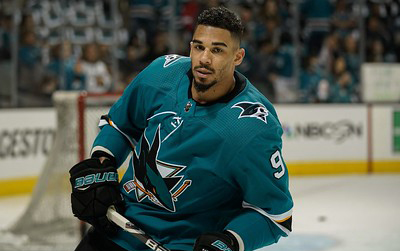
San Jose Sharks forward Evander Kane has denied claims by his wife that he bet on NHL games and tried to throw games in which he played. The couple is in the midst of acrimonious divorce proceedings.’In an Instagram post, Anna Kane wrote, “How does the NHL let a compulsive gambling addict still play when he’s obviously throwing games to win money? Hmm maybe someone needs to address this.”

She added: “Can someone ask (Commissioner) Gary Bettman how they let a player gamble on his own games? Bet and win with bookies on his own games?”

In all-caps outrage, Kane responded on Twitter, “I have NEVER gambled/bet on Hockey, NEVER gambled/bet on a Sharks game, NEVER gambled/bet on any of my games and NEVER thrown a hockey game.”

Kane continued, “I love the game of hockey and would never do any of what was alleged. I look forward to cooperating fully with the league’s investigation, having my name cleared and looking forward to this upcoming season.”

The NHL plans to conduct a full investigation, saying, “The integrity of our game is paramount and the league takes these allegations very seriously.”

A team spokesman told the Associated Press that the Sharks “support a full and transparent investigation into the situation to maintain the integrity of the game and consistency with our team values.”

Kane is a known gambler. In 2019, he was sued by the Cosmopolitan Las Vegas when he allegedly failed to pay a $500,000 marker incurred during a playoff series against the Vegas Golden Knights. The suit was later dropped.

According to ESPN, in January Kane filed for Chapter 7 bankruptcy, claiming to have lost $1.5 million gambling “at casino and via bookie” over a 12-month period. According to Cap Friendly, Kane has lifetime earnings in the NHL of just under $56 million. He’s three years into a $49 million contract with the Sharks, with $26 million to go.

ESPN reached out to players who knew Kane or were his teammates. None said they ever heard him mention betting on hockey. Said one: “Did he like to gamble? Sure. I just don’t believe he was actually betting on hockey games.” A former teammate said Kane wagered on football and basketball, but “I never once heard him say he bet on hockey.”

Another NHL player said, “I’ve known guys that are big bettors, but I don’t think I ever heard of them wagering on hockey.”

In 2016, Bettman said hockey “doesn’t lend itself to gambling in the same way football and basketball do” and expressed concerns about gambling’s impact on the “family friendly” environment of NHL games. Three years later, after the overthrow of PASPA, Bettman sang a different tune.

“I owed it to our fans, I owed it to our clubs, to embrace the evolving world, whether it’s sports betting or changes in technology,” he said. “In this day and age, you either evolve or become extinct.”

In an op-ed piece on the website ProFootballTalk.com, Mike Florio wrote, “The ongoing spread of legalized gambling increases the pressure on all sports to ensure that its players don’t rack up big debts and in turn, strike deals with gamblers that could entail efforts to control the outcome of a game. Although it’s seemingly difficult for one player in a hockey game to make much of a difference, the NHL needs to take this very seriously.”

Three types of punishment can be imposed on a player who is found to have gambled on his own sport or team: a fine of up to $10,000 for a first-time offender; the cancelation of the player’s contract; or suspension “for a definite or indefinite period” from the NHL.

Penn National Pays $2 Billion for Canadian Company The Score

Penn National Gaming continued its foray into online gaming and sports betting with the purchase of the leading Canadian company, the Score Media and Gaming. Based in Toronto, TheScore had the inside track when just a few weeks ago, Canada legalized full sports betting—only parlay betting had previously been permitted—since it had a big head start on the field. While the $2 billion deal clearly valued the country’s sports betting future, it really was technology that clinched the deal.

Jay Snowden said the company embarked on its journey into sports betting when it acquired 36 percent of Barstool Sport in January 2020 for $163 million, but Score Media is the “missing piece” because it gives Penn its own technology, enabling it to cut ties with B2B vendors and producing “industry leading margins.” Penn’s platform supplier, Kambi, saw its stock plummet by 30 percent on the announcement.

“Importantly, the transaction provides us with a path to full control of our own tech stack,” says Snowden. “TheScore has developed a state-of-the-art player account management system and is finalizing the development of an in-house managed risk and trading service platform.”

The deal gives Score shareholders $37 a share in a mix of cash and Penn equity. The agreement has been approved by both companies’ boards of directors, and should close in the first quarter of 2022.

Score Media was formed by its CEO John Levy in 2012 after he sold his cable television network to Rogers Communications for $131 million. Levy’s son Benjie serves as the COO. It’s expected that the Levys will continue to operate Score following the transaction.

In addition to its Canadian customers, TheScore is legal in four U.S. jurisdictions—Colorado, Indiana, Iowa and New Jersey. Two-thirds of its customers are outside of Canada.

Analysts were generally enthusiastic about the deal

Macquarie Capital’s Chad Beynon believes it’s a good deal for Penn.

“I think what Penn is buying is a pretty solid front-row ticket to be a major player in Canada,” Beynon told Forbes. “You do that math—Penn essentially paid market rates for these customers, and on top of that, they got the technology synergies and a Canadian beachhead,” Beynon says.

Jefferies’ David Katz says the deal fulfills a goal that Snowden had set for Penn.

“Our broad view of the necessary elements for digital success is consistent,” Katz wrote in a note to investors. “As we have previously indicated, PENN has had the market access and audience but lacked the technology and content to progress at the rate of the largest players. The progression from its current B2B providers to an integrated platform with SCR, which is in the process of developing its own PAM and risk/trading capabilities, could take several quarters that offset any incremental revenues generated. The long term revenue and profit should become evident over time.”

Meanwhile, Score Media and Gaming has announced a one-year partnership with Canlan Sports, which owns numerous hockey arenas and sports complexes in North America.

The agreement will lead to sports betting in Ontario, Canada, specifically at Canlan’s six sports complexes in or near Toronto—though Ontario hasn’t yet adopted rules and regulations for sports betting.

Included in the deal is a title sponsorship and branding opportunities for the theScore Bet as well as title sponsorship of the Adult Safe Hockey League. At the same time Canlan will be able to use Score Media to promote its arenas and programs.

Liana Guiry, Canlan’s VP of sales, marketing and customer experience, commented, “We’ll do some test-and-learn things this year and hopefully it’ll lead to a long-term agreement.”

Meanwhile, Ontario’s Alcohol and Gaming Commission announced July 28 that it was ready to receive public comments on its draft standards for sports and events wagering.

The Ontario Lottery Corp. is also promoting its new Pro Line+ online betting product.

Score Media has been very proactive about sports betting. Less than a day after the Canadian Senate gave final approval to the amendment to the Criminal Code of Canada that lifted the ban on sports betting, the company had begun putting up billboards in Toronto’s Dundas Square.

Aubrey Levy, Score Media’s vice-president of marketing and content, told the Toronto Star: “As a Canadian company, we’re in a fantastic brand position but that doesn’t create any less impetus to be aggressively in the market. We don’t take anything for granted.”

Monday Deadline for NY Mobile Sportsbook Bids

Monday, August 9 is the deadline for mobile sportsbooks and platform providers angling to break into the New York market.

The New York Gaming Commission will select a minimum of two platform providers and four mobile sports betting operators. Applicants that include a tribal partner will receive five bonus points in a 75-point scoring formula, but tribal participation is not mandated.

Selected bidders may give oral presentations starting September 1, and winning applicants must be chosen by December 6.

Even if state gaming commissioners pounce on the applications, fans won’t be able to bet on the NFL this fall or anytime this year, according to Legal Sports Report. However, Senator Joe Addabbo Jr., who pushed mobile betting in the Empire State, hopes the apps will be live by the Super Bowl next February.

PointsBet Funds U.S. Expansion

Australia-based sports betting operator PointsBet is seeking to raise about $400 million to fund its expansion in the United States. The company, which opened a Denver headquarters in August 2019.

According to a news release, the company is looking to consolidate and expand upon its strong position in the rapidly expanding U.S. sports betting and iGaming market.

The funds will be used to support North American marketing and client acquisition, technology and product development, U.S. market access and government licensing fees and continued investment in talent and scale of operations, reported the Motley Fool. PointsBet management also observed that the infusion will give it balance sheet flexibility.

PointsBet Managing Director and Group CEO, Sam Swanell, commented: “Since inception, PointsBet’s Board and management have been working to establish and consolidate the key building blocks that have put us in the strong position we are today to pursue the expansion of the North American sports betting and iGaming opportunity.

“Today, in addition to our profitable Australian business, we have live operations in six U.S. states, with iGaming live in two of these states. By December 2022, we plan to be live in at least 19 North American states or provinces. The North American sports betting and iGaming market could be a $54 billion revenue opportunity by 2033, and our strategy is to continue to invest to become a Top 5 player in this market, targeting a 10 percent market share in all key North American jurisdictions.”

Swanell said fresh capital “will position PointsBet to execute this strategy.”

Goldman Sachs and MST Financial have already shown their support for the investment. Fourth-quarter results showed turnover up 182 percent to AU$986.1 million and total net win up 81 percent, to AU60.8 million. The group’s U.S. turnover rose 956 percent during the quarter to AU$17.7 million, while down under it was up 63 percent, to AU494.8 million, with net win at AU43.1 million, up 33 percent.

Station Casinos Launches Sports App, Adds VP McCormick

Las Vegas-based Station Casinos is heading into football season with new and convenient experiences for fans to enjoy. The leading locals gaming provider has debuted its all-new STN Sports App, a “splashy” campaign starring Instagram comedian Matt Cutshall and a new executive at the helm, Vice President of Race and Sports Operations Jason McCormick.

The new app, launched on July 28, offers an enhanced user experience, making it faster and easier for guests to place wagers. Features include virtual play-by-play stats and scoring available in the in-play experience, additional remote funding options including Play+, PayNearMe and ACH, the ability to deposit funds for both race and sports, expanded “buy points” offerings in all football and basketball games, and an extended three-month transaction history for race.

McCormick takes the helm with nearly 25 years of professional experience in the race and sports industry, including 18 at Station Casinos. He has worked in every role in race and sports operations including writer, cashier, bookmaker, supervisor and director. In his new role as vice president, McCormick oversees all aspects of race and sports programming at Station Casinos.

Under McCormick’s leadership, bettors will see an extensive menu of new pre-match and in-play offerings as well as a more favorable moneyline split.

Additionally, Chuck Esposito has been promoted to director of race and sports for the hub at Red Rock Casino. Jason Simbal is now director of STN Sports. And Bert Cirincione has been named director of race and sports retail operations.

D.C. Lottery Debuts Sports Betting Kiosks

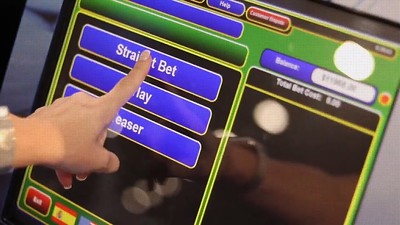
The D.C. Lottery launched its retail program on July 30, with self-service kiosks at four popular sports bars: Dirty Water, Ben’s Next Door, Lou’s City Bar and Takoma Station. Players 18 years and older can place sports bets and cash in their winnings at any kiosk. They operate on the GambetDC platform.

Dirty Water Owner Chris Defelice said, “We want to provide the best sports watch experience. We’ve got a ton of TVs. We do lots of drink deals, a lot with Bud Light, but adding the sports gaming is a next-level venture.” Takoma Station Co-Owner Mel Florez added, “Sports betting is a form of entertainment, and we offer entertainment.”

Nicole Jordan, director of marketing and Communications at the D.C. Lottery, commented, “I like to say that each of these locations has their own sportsbook that happens to be run by us in the background. Our tagline is, ‘Bet on D.C.,’ and it is a bet on D.C., but it’s also a bet on our community.”

Revenue from the machines goes to the D.C. General Fund, which helps finance infrastructure, education and other services in the District. Host businesses also earn a 5 percent commission off sales.

The self-service kiosks in D.C. offer wagering on National Basketball Association, National Football League, National Hockey League and Major League Baseball games, plus horseracing and some international competitions. Currently, players can bet on some Olympics events.

Jordan said more kiosks are planned for other locations, convenience stores.

Dakota Nation Sportsbook Plans Fall Opening

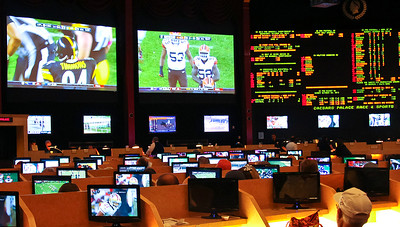
Dakota Nation Gaming Enterprise based in Hankinson, North Dakota, announced it will open a Las Vegas-style sportsbook, operating on the IGT PlaySports platform, at its Dakota Magic Casino this fall. The venue will be one of the first retail sportsbooks in North Dakota.

Besides the retail sportsbook, the casino, also will offer self-service betting kiosks.

Wanda Varns, general m at Dakota Magic Casino, said, “We are thrilled to be one of the first enterprises in the state to add sports betting to the list of things to love at our casinos.” She said wagerers can place bets on all popular sports, including football, golf, basketball, tennis, baseball and hockey.

In addition to Dakota Magic Casino and Hotel, one of the state’s largest tribal casinos, Dakota Nation Gaming Enterprise, owned by the Sisseton Wahpeton Oyate Tribe, operates Dakota Connection Casino in Sisseton, South Dakota and Dakota Sioux Casino and Hotel in Watertown, South Dakota.

Wisconsin’s Oneida Nation Preps For Sports Betting

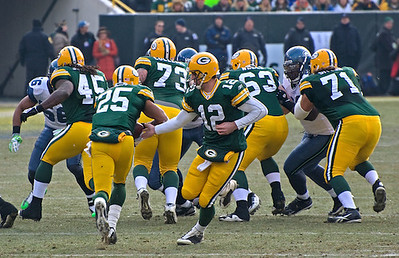
The Oneida Nation of Wisconsin hopes to open a temporary sportsbook at its Oneida Casino in Green Bay by September 12, the day the Green Bay Packers kick off the 2021 National Football League season against the New Orleans Saints. All the tribe needs is approval from the U.S. Department of the Interior. Tribal officials and Governor Tony Evers signed an updated gaming compact allowing sports betting on July 1 and submitted it to Interior on July 2. Approval of the compact is expected by August 16.

The temporary sportsbook, under construction at the Oneida Casino, will feature betting windows and self-service kiosks. College betting is permitted, with the exception of hometown teams like the University of Wisconsin. However, Wisconsin residents will be allowed to wager on the Emmys and Oscars and similar events.

As yet, none of Wisconsin’s other two-dozen-plus tribes have announced sports betting deals with the state.

Currently statewide mobile betting is not allowed, as federal law states gaming tribes cannot offer bets outside their own property. Oneida tribal leaders are waiting to see the outcome of the Seminole Tribe of Florida’s lawsuit against the Interior Department; the tribe’s new compact states it can offer statewide mobile betting since its online servers will be located on reservation land.

NC Senate Committee OKs Sports Betting Bill

The North Carolina Senate Finance Committee recently approved legislation to license and tax sports betting statewide. The bill has bipartisan support. Its sponsor, state Senator Jim Perry, said, “We have sports betting today for those who want to bet. It’s just not something regulated and taxed by the state. I don’t want to put my head in the sand over that issue, but I also don’t want to belittle anyone who’s uncomfortable with it.”

Perry pointed out many residents already place sports bets from their computers or smartphones through out-of-state betting sites or through conventional bookies. He stated it just makes sense to regulate these activities to produce revenue for things like education. He also noted the Eastern Band of Cherokee Indians opened onsite betting operations at its two Harrah’s Cherokee casinos earlier this year.

Under Perry’s bill, operators could offer betting on college, professional and some amateur sports, including game outcomes and others not based on final scores. The North Carolina Education Lottery commission would issue up to 12 mobile sports wagering operator licenses, plus supplier licenses for those operators. The operators also could set up an in-person betting location within or near a professional sports arena, such as the Spectrum Center in Charlotte or on-site at an annual pro golf event.

The initial operator fee would be $500,000 and revenue would be taxed at 8 percent. Half of the net proceeds would go to a special fund to attract sporting events and attractions to the state; the balance would go to the state. The legislature’s fiscal staff estimated the combined annual total collected could be $8 million to $24 million. Perry said he thinks that amount actually would be higher, especially if lawmakers raise the tax rate.

The bill now must pass through three more Senate committees before it reaches the floor and possibly move on to the House. Observers said that won’t be an easy path with certain legislators still opposing gambling. None of the committee members spoke against the measure directly, however several questioned how financial benefits would outweigh societal costs.

North Carolina Family Policy Council President and Executive Director John Rustin told the committee the legislation “represents a massive proposed expansion of legalized gambling in North Carolina.” He said that could lead to more problem gamblers impacting families and society, adding the state’s well-known sports heritage would be tarnished. “Gambling, and not the games themselves, will become the centerpiece of sports competition in North Carolina,” he stated.

Perry said some Senate colleagues were convinced to support the bill after realizing how easy it is for anyone to place an online bet. However, he said even his own mother opposes the legislation. “I think there is healthy skepticism around the bill,” he said.

Connecticut Sports Fans Don’t Want to Miss Out on NFL

Connecticut Senator Cathy Osten, chief sponsor of the state’s sports betting bill and member of the committee that reviews new regulations, doesn’t want anything standing in the way of taking wagers by the opening of the NFL season September 9.

“My goal is to not miss any games,” said the senator July 26. However, as much as everyone would like it to happen, that goal may not be attainable, according to many experts. It would require a trifecta: 1) approval of the new memorandum of understanding to the existing state tribal gaming compacts with the Mohegan and Mashantucket Pequot tribes who operate the state’s two casinos by the Bureau of Indian Affairs, 2) the Connecticut Department of Consumer Protection must issue licenses to providers and 3) the legislative committee must approve of the multitude of regulations within less than a month.

The BIA has 45 days to approve of the amendment, i.e. until September 3.

The regulations first have to be drafted—with all the I’s dotted and T’s crossed by the Department of Consumer Protection before being submitted to the legislative committee. They are designated as “emergency” regulations, which could grease the skids to an extent. They also don’t require a public hearing.

Besides the tribal casinos, the Connecticut Lottery Corp. will also be offering sports betting. It will soon announce a contractor to take wagers on the up to 15 retail sports betting locations authorized.

Arizona Sportsbooks to Accept Bets September 9

The Arizona Department of Gaming it is on track to accept sports wagers starting September 9, the first day of NFL season.

Rules are finalized and were submitted to the Secretary of State’s Office, say officials. The legislature authorized sports betting five months ago, and Governor Doug Ducey signed the updated tribal state gaming compacts on April 15.

Daily fantasy sports will unroll on August 28. Providers must submit applications by August 4 and sports betting by August 9. Those who qualify will be announced August 16.

A total of 20 event wagering licenses are authorized, with 10 going to tribes and 10 to professional sports organizations. Ten limited event wagering licenses will go to racetracks and off-track betting operations. Such licenses are forbidden on the reservation. It will cost $750,000 for the first license and $150,000 for a renewal.

Meanwhile, the Arizona Diamondbacks have announced a partnership with Caesars Entertainment; the Phoenix Suns with FanDuel; and the Phoenix Mercury with Bally’s. The PGA Tour and TPC Scottsdale are partnering with DraftKings. Penn National and Barstool Sportsbook are going with NASCAR and the Phoenix Raceway. The San Carlos Apache Tribe is partnering with WynnBET, and Cliff Castle Casinos Hotel with the Yavapai-Apache Nation. PointsBet Holdings has made a sponsorship deal with the Fort Yuma Quechan Indian Tribe and Kindred Group/Unibet.

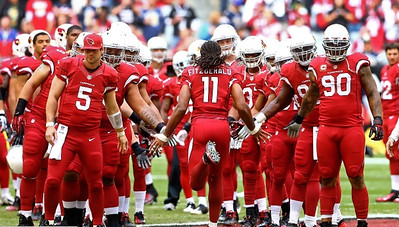
That leaves BetMGM the odd man out, without an announced partner. The only sports franchises without matches are the NFL Cardinals and NHL Coyotes.

Penn National plans to open a retail sportsbook at the raceway and offer Barstool Sportsbook as a mobile platform. Jon Kaplowitz, senior vice president of Penn Interactive said, “Barstool Sportsbook has proven itself to be a market leader in the jurisdictions where it has launched due to a combination of unique offers and a leading mobile experience.” He added, “This new partnership will allow us to engage a passionate sports fan base in Arizona while having access to a best-in-class sports entertainment facility in Phoenix Raceway.”

Since available licenses available, there will be competition and Department of Gaming officials will decide who wins or loses. The competition would likely be between tribes of which there are 22, although only 16 have casinos. The Department created 19 criteria it will consider when awarding licenses. Including such things as experience, financial stability and employment enhancement. For tribal licenses it will lean towards funds being distributed among non-gaming tribes.

It is asking applicants to answer which criteria they fit. If “we end up having more than 10 qualified applicants on either the sports side or tribal side or limited event wagering operator side,” said Arizona Department of Gaming Director Ted Vogt. “We are asking that all of that be submitted during this 10-day period so … we will have the additional information there to move into that supplemental allocation decision if necessary.”

Fantasy sports will be played online, administered by licensed operators. Racetracks and veterans and fraternal organizations can host kiosks for betting on fantasy games. Individuals, limited to 15, can hold licenses to host fantasy sports.

Competition for off-track betting sites will likely be as hot, if not hotter than for tribal licenses, as there are many times more than 10 such operations. They must partner with Event Wagering Operators, tribes or sports organizations.

In a related development, and indicative of the highly competitive atmosphere anticipated in Arizona, Barstool Sports announced it would be the title sponsor and broadcast rights holder to college football’s Arizona Bowl. This gives it the right to broadcast the December 31 football game—with teams from the Mountain West and Mid-American Conferences— over its platform, formerly offered by CBS Sports.

Barstool founder Dave Portnoy said on his Twitter account: “We’re not just sponsoring a bowl game. We are, but we’re not. Because we have exclusive broadcast rights. CBS used to own it—see ya! Smell ya later! We control everything: the bowl, the broadcast, the halftime show, the national anthem. We are getting into the live sports broadcast game.”

Barstool has also launched Barstool Athletics Inc., which will retail Barstool merchandise and events for college athletes. Penn National Gaming owns a 36 percent share of Barstool Sports.

DraftKings Ends Oregon’s Daily Fantasy Sports

In order to win favor with the Oregon Lottery, DraftKings has ended its daily fantasy sports activities in the state. DraftKings is after much bigger fish: the state contract for sports betting monopoly.

Currently sports betting may only be placed through the lottery’s ScoreBoard app, which DraftKings would like to operate.

In an announcement to its DFS customers, DraftKings wrote: “As you might already be aware, DraftKings has been in discussions with the Oregon Lottery to potentially transition its Scoreboard app to the DraftKings platform.” It continues, “During these discussions, some questions have been raised about whether paid fantasy sports contests are permissible under Oregon law.”

While not agreeing with the Lottery, DraftKings is deferring to it to maintain an amiable relationship. It stopped DFS contests in the state on July 26.

Devoted DFS players fired nasty but ultimately impotent emails at DraftKings.

Interestingly enough, DraftKings’s major rival, FanDuel, is not giving up the fight. It will continue to offering daily fantasy sports contests, except that now it won’t have to fight DraftKings over turf.

Football Legend Lynch Named BetMGM Brand Ambassador

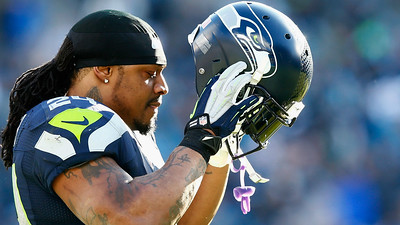
Leading U.S. sportsbook BetMGM has announced the signing of former NFL running back Marshawn Lynch as a brand ambassador. The Super Bowl champ will be featured in BetMGM’s upcoming marketing campaigns, promotions and fan events.

“Being part of the BetMGM family is dope and an honor,” said Lynch. “They’re the leaders in online gaming so I’m excited to learn about the industry from the best and find ways where I can have an impact. Plus, with ambassadors like Barry, Gretzky and Jalen, I think da’ kid is in good company, ya know what I mean?” Other BetMGM celebrity ambassadors include NFL running back Barry Sanders; NHL legend Wayne Gretzky; and NBA star Jalen Rose.

Lynch, commonly referred to as “Beast Mode” for his powerful, highlight-reel running style, played 12 seasons in the NFL for the Buffalo Bills, Seattle Seahawks and Oakland Raiders. He earned four consecutive Pro Bowl appearances, one first-team All-Pro selection and twice led the league in rushing touchdowns. He also helped the Seahawks win its first Super Bowl.

BetMGM Chief Revenue Officer Matt Prevost said, “Lynch is both an incredible athlete and larger-than-life personality. The impact he has made on the game of football, coupled with his status as an electric superstar, makes him a tremendous addition to the BetMGM team.”

Lynch will engage with BetMGM players through a variety of activations. Additionally, Lynch will appear in BetMGM’s social media content, marketing campaigns and media appearances.

Michigan iGaming, Sports Betting Produce $90 Million

Online casino gambling and sports betting launched in late January in Michigan, generating nearly $90 million in tax revenue for the state through June. Analysts said that total could reach $200 million by the end of the year, significantly higher than initial estimates of $10 million to $50 million.

PlayMichigan analyst Matt Schoch said, “We knew it would be big. This is a state with a casino culture, but it’s been huge. And that’s just crushing the projections of even the more optimistic ones that people had going into it.”

Online casinos and sports books have taken in $483.1 million from late January through June. Online sports betting is taxed at 8.4 percent and online casino play is taxed from 20 percent to 28 percent.

Schoch noted, “Sports betting has been about what we expected, but online casino certainly has been a lot bigger than what people expected. I think the growth is going to be coming in the sports betting. I think that there’s a little bit of industry belief that maybe the online casino numbers have already plateaued a little bit.”

Schoch explained most of the tax revenue goes to education. “The horseracing industry gets a little bit of that tax money. There’s a prevention fund for firefighters who had been getting afflicted with a type of cancer,” he said. Another large amount goes to problem gambling services run by the state Department of Health and Human Services.

But now the traditional summer slowdown is taking effect. Michigan Gaming Control Board Executive Director Henry Williams said, “Summer is here, and Michigan is reopening after the pandemic restrictions so there are many entertainment opportunities. The slight tenth of a percent decline from May to June shows internet gaming and online sports betting continues to draw Michigan residents’ and visitors’ interest.”

Despite the lack of games among professional and college sports, operators in Michigan handled $253.1 million in online sports bets during of June. Combined with casino sportsbook wagers, the bets total reached $259.4 million, 0.7 percent higher than May. By comparison, operators handled $383.7 million in bets during March.

PlayMichigan analyst Jessica Welman stated, “Michigan’s sportsbooks grew so quickly from January through March that the slowdown that has followed might feel more dramatic than the reality. Sportsbooks remain in excellent position for a ramp-up when football season approaches. Until then, they will have to rely on opportunities such as the Olympics and the National Basketball Association finals to stoke interest.”

In June, gross revenue for online sports gambling rose 28.2 percent to $24.9 million, up from $19.5 million in May. Online sports betting also generated $16.8 million in taxable revenue in June, with a combined $1.4 million to state and local taxes. Schoch said, “We’ve been waiting for a bump in taxable revenue that led to a real increase in tax revenue, which we finally got in June. If there has been a disappointment with Michigan’s launch, it’s that tax revenue gains have lagged. So hopefully, this will continue into the fall, when we know revenue from sports betting will make a big leap forward.”

Revenue for online casinos and poker rooms fell to $89.2 million for June, a 4.9 percent decline from May. Online gaming generated $66.2 million in taxable income, producing $13.7 million in state taxes and $5 million in local taxes.

Mohegan Sun Launches iGaming Platform

On June 30, Mohegan Gaming & Entertainment launched its iGaming platform Mohegan Digital. Mohegan Digital President Rich Roberts sees the online casino as an extension of the physical properties.

“We are going to extend that brand so when customers leave the property, they feel confident that they’ve got this digital experience that’s going to engage them. It can’t be in the same way, but in a complementary way. They can have that digital experience that will bring them back to the casino experience that they enjoy so much.”

After the launch, the casino announced a deal with FanDuel to provide sports betting, iGaming and fantasy sports, which Connecticut legalized at the end of May.

Roberts dismisses the idea that online gaming will cannibalize the brick-and-mortar casinos. It will bring in new customers, he says.

He told CDC Gaming Reports, “We expect that what we’re going to offer from a digital experience will capture that audience. The rewards and the experiences that we will give them through Mohegan Digital will get them into the casino, which is ultimately where we this customer to engage and be part of the Mohegan Sun experience.”

Not all games at the casino will translate to digital, but there will be some overlap, said Roberts. “We do know some of the classics like Monopoly and Slingo will be on the platform and in the casino.”