Author: Casino Connection Staff

Caesars Sells William Hill Non-U.S. Operations to 888

Caesars Entertainment has agreed to sell its William Hill International non-U.S. operations to 888 Holdings Plc for £2.2 billion (US$3 billion). Caesars anticipates net proceeds of $1.2 billion after repayment of debts and other adjustments.

Caesars bought all of William Hill earlier this year for £2.9 billion, but made it known the corporate interest was only for U.S. assets so the U.K. and other holdings were there for the right bidder.

The acquisition brings 2 million active U.K. customers to 888. The deal, which makes 888 the third largest U.K. operator, will ramp up its portfolio, hasten revenue growth, generate savings of £100 million and enhance profits. Earnings per share could increase more than 50 percent in the first full year of operations from the purchase.

The purchase includes all of the technology and brands, and over 10,000 new employees. “As a result, the transaction critically enhances the scale and diversification of the business, particularly in betting,” CEO Itai Pazner said.

Ivor Jones, an analyst for Peel Hunt, believes 888 is diversified as is so the scale of the sale is far more important. noted that while 888’s success across a number of markets suggested it may already be suitably diversified, the scale it achieves through the deal would be more important, according to iGaming Business.

“The additional scale will most obviously provide cash from more mature markets to recycle into driving growth in the U.S. with the new Sports Illustrated sportsbook brand.”

Pazner said William Hill’s market share in the U.K. has been on the rise even after the sale to Caesars. He credits “good marketing, good product and good customer satisfaction”.

In the end, bidders included Betfred, private equity group Apollo Global Management and German betting giant Tipico, owned by CVC Capital Partners. The number of suitors bid the price upwards, Jones said.

“888 has demonstrated how it will be able to create value for shareholders by extracting cost synergies and achieving higher revenue growth and margin from enhanced market shares in key markets,” he said.

The combined company would have generated EBITDA of $464 million and revenue of $2.5 billion last year. James Wheatcroft of Jefferies said cost savings could result in 888 growing earnings per share as high as 80 percent.

888 secured £2.1 billion in debt financing from banks to fund the deal.

The company also expands from an online-only business to one with retail shops. Pazner denied speculation the company might sell off the retail sports holdings.

“Our plans are absolutely to keep the shops. The shops are run well, they are profitable, they went through a big transformation in the last couple of years,” Pazner told Reuters.

Betfred founder and CEO Fred Done has expressed interest in William Hill’s 1,400 betting shops, according to SBC News. BoyleSports may also seek out the purchase.

Company chief strategy officer Vaughan Lewis indicated 888 could emphasize some of its brands more than others.

“We’re going to see which brands deliver the greatest returns in each market and keep other brands as more of what we’d call tactical brands.”

IGT Creates Digital & Betting Business Segment

International Game Technology PLC announced that it has established a dedicated Digital & Betting business segment, comprising its iGaming and sports betting activities that were previously part of the Global Gaming segment.

As a result, beginning with the third quarter of FY2021, IGT will report results under three business segments: Global Lottery, Global Gaming and Digital & Betting. The IGT iLottery business will remain part of the company’s Global Lottery segment.

Enrico Drago will serve as CEO, Digital & Betting, reporting to Marco Sala, CEO of IGT, effective immediately. Drago, 44, previously had oversight of the IGT iGaming, iLottery and sports betting businesses as senior vice president, PlayDigital.

“IGT has established strong leadership positions and driven dynamic growth across its iGaming and sports betting businesses. With significant growth expected to continue, we have decided to establish a dedicated Digital & Betting business segment,” said Marco Sala, CEO of IGT. “These businesses have become strategically important to IGT as they afford us the opportunity to leverage the global reach and strong customer relationships of our Global Gaming segment. The new structure gives us more flexibility in our product and solutions portfolio and enables better appreciation of the intrinsic value of these activities.”

In advance of its third quarter 2021 earnings call, the company expects to provide a recast of its historical financials to reflect the new segment disclosure. In addition, due to the increased restrictions and ongoing uncertainty surrounding COVID-19 and its delta variant, IGT has decided to hold its Investor Day event virtually and has moved its date to November 16. More information on the event will be forthcoming.

Indian State Poised to Ban Online Gaming

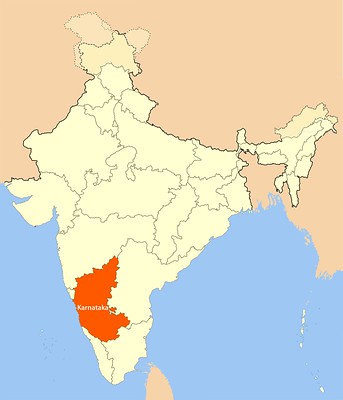
The Indian state of Karnataka is poised to amend the Karnataka Police Act to ban online gambling. A bill to accomplish that was taken up by the state legislature September 13.

Under the proposal, made at the request of the High Court of Karnataka, online gaming will be a crime and offenders could be sent to three years in prison.

The bill defines online gaming as: “involving all forms of wagering or betting including in the form of tokens valued in terms of money paid before or after the issue of it, or electronic means and virtual currency, electronic transfer of funds in connection with any game of chance.” Not covered will be lottery or horse racing.

Netherlands iGaming Group: Ad Controls Inadequate

The Netherlands Online Gambling Association (NOGA) says the Dutch advertising code for gambling doesn’t go far enough. It’s called for more regulation to prevent a “gambling advertising avalanche.”

New regulations limit gaming advertising to three ads per commercial break—but only on the internet.

The Netherlands gaming market is set to open in October. Guidelines were issued recently by Kansspelautoriteit (KSA) the Dutch gaming authority.

Director Peter-Paul de Goeij of NOGA, the country’s most prominent online trade group, complains that offline advertising isn’t limited. He declared, “The viewer does not make the distinction between offline and online at all—the consumer just sees an irritating gambling ad.”

He added, “This code does not go far enough. The limit of three gambling advertisements per block, applies only to internet gambling advertisements. So, in addition to three advertisements for online gambling, Holland Casino, Gaston and Koning TOTO will be allowed to advertise their offline offerings without any restrictions.”

Some of the most prominent sportsbook companies belong to NOGA, including Entain, Flutter, Kindred and Bet365.

NOGA has called for all stakeholders—including broadcasters, lotteries and gaming companies— to agree on the total amount of advertising allowed. Otherwise patrons will flee to illegal sites that don’t pester them with advertising appeals.

De Goeij added, “If we do not prevent this from happening, there may be a ban on gambling advertising introduced soon and then we will not be able to persuade consumers to play at a legal gambling site. NOGA therefore advocates advertising volume control.”

Podcast with George Papanier and Phil Juliano

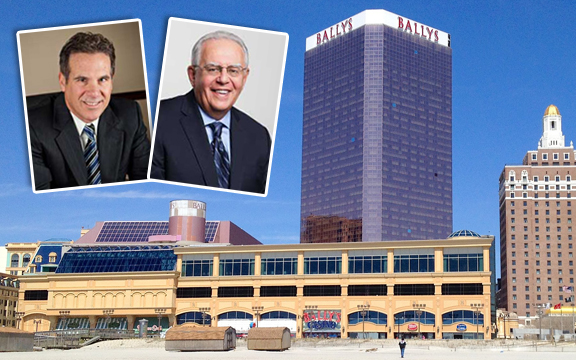
Bally’s Atlantic City was the third casino to open on the Boardwalk in 1980 and quickly became a success. Through a variety of owners down through the years, Bally’s wound up as a Caesars property up until last year when as a condition of licensure for the new owners, Bally’s was sold to the then-Twin Rivers casino company. After the purchase of the property, Twin River followed up with Caesars to buy the Bally’s brand. The company has pledged to invest as much as $100 million in the property, which had suffered from neglect over the past few years, and the differences are immediately recognizable. George Papanier, the president and CEO, and Phil Juliano, executive vice president, casino operations and chief marketing officer, of Bally’s Corporation sat down with GGB Publisher Roger Gros at the Bally’s offices at Atlantic City in July.

► Listen in iTunes and Subscribe to GGB Podcasts.

► Listen on Spotify

PA Lawmakers to Address Unregulated Gaming

The Pennsylvania state Senate is planning to again address the problem of unregulated gaming in the state when it reconvenes in September, according to a report on the news site PlayPennsylvania.com.

The report says the planned legislation will target every form of gambling device not now regulated by the Pennsylvania Gaming Control Board or the Pennsylvania lottery, state Senator John Yudichak told the site. Yudichak chairs the Community, Economic & Recreational Development committee, which oversees most gambling legislation.

The committee held a series of hearings on unregulated gaming machines last session but produced no bills before the session ended.

Last year, Senator Jake Corman, the former Republican majority leader and now president pro tempore of the state Senate, had proposed to widely legalize and tax all gambling devices known as “skill games” and add many more video gaming terminals (VGTs), but failed to gain support.

Corman said the plan for September is only to address “illegal” machines, particularly “games of skill,” according to PlayPennsylvania.

Corman said he wants the legislation to be “bipartisan and bi-cameral.”

Mike Barley, a spokesman for the Pennsylvania Skills machine distributor Pace-O-Matic told PlayPennsylvania in a statement that the company supports legalization of its games.

“While Pace-O-Matic and Pennsylvania Skill strongly support the regulation and additional taxation of skill games in the commonwealth, we are surprised to hear that legislation appears to be being drafted without any input from the skill game industry,” Barley said.

“Additionally, we are concerned that this is a back-door attempt to legalize VGTs under the guise of skill game regulation. There were a number of hearings in the summer on this issue, and we were not invited to participate. As this issue holds the livelihoods of thousands of small business owners as well as the financial solvency of many of our fraternal groups.”

Barstool Sportsbook Launches in New Jersey

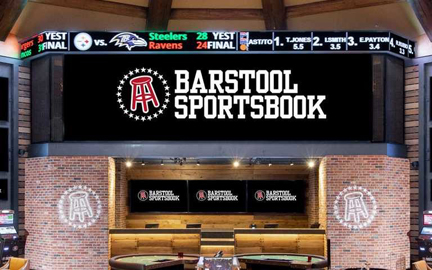
Penn National Gaming and Barstool Sports quietly launched the 19th online sportsbook in New Jersey, and the operator’s seventh and largest online book. The Barstool Sportsbook was launched under the license of Freehold Raceway, which is jointly owned by Penn National and Greenwood Racing.

The sportsbook was activated under a soft launch that granted access to 500 people. It will be fully active by the start of the NFL season September 9.

New Jersey is one of five states that Penn has designated for launch of an online Barstool Sportsbook by the start of the NFL season. The others are Arizona, Tennessee, Colorado and Virginia. The latter two are already live, and Arizona is expected to launch September 9. Three proposed Tennessee sportsbooks have not yet received approval from the Tennessee Education Lottery.

Sportsbook Ads: How Much Is Too Much?

If you haven’t noticed a flood of television ads for sports betting, you likely live in an area where such wagers aren’t yet legal. But in legal markets, the ads are ubiquitous—on TV, on radio and online. Could it reach a point where regulators pull the plug?

Recent polling data show that U.S. consumers aren’t overly concerned about the level of gaming advertising compared to ads for other industries. Research by the American Gaming Association shows that more Americans “believe there’s too much advertising for alcohol and fast food than for casinos and sports betting,” according to Cait DeBaun, the AGA’s vice president of strategic communications and responsibility.

In the mature U.K. market, the omnipresence of sports betting ads has struck a nerve—and sparked calls for greater and more stringent regulation. Though the systems differ in fundamental ways, sportsbooks here could view the U.K. as a cautionary tale.

“The United States has a fundamentally different government structure than the United Kingdom,” DeBaun said. Unlike the U.K., which has a national gambling commission to regulate activity, gambling in the U.S. falls under the jurisdiction of individual states. And the U.S. industry is one of the most heavily policed in the country.

Almost 200 partnership deals have been made among operators, gaming companies, teams and leagues since the Supreme Court overturned the federal ban on sports betting in 2018. But only a small number include logo placement components, DeBaun said. “We work closely with the more than 4,000 commercial and tribal regulators to protect players and the game,” DeBaun said.

In the U.K., critics are concerned about the impact of betting ads on impressionable teens and problem gamblers. As a result, a voluntarily whistle-to-whistle ad ban is now in place from five minutes before a live event until five minutes after.

Some also want an end to sportsbook advertising on player jerseys. Of 20 English Premier League teams, half allow their players to wear sponsors’ ads on their backs, according to a recent report, “The Marketing Moment: Sports, Wagering and Advertising in the United States” from the International Gaming Institute at the University of Nevada, Las Vegas. In the lower leagues, 17 of 24 teams have sports gambling sponsors, a practice that hasn’t taken hold in the U.S.—yet—but could happen in the future.

This month, the National Hockey League approved ads on jerseys starting in the 2022-23 season. And last year, the NHL allowed corporate logos on helmets for the first time.

Self-Regulation: Better than the Alternative

Sports betting along with online gaming are embryonic industries in the U.S., noted Brian Wyman, senior vice president of operations and data analytics for The Innovation Group. “We’ll understand problem gambling in those areas more as the industry matures.

“I would note, though, that the very nature of online gaming—in particular, electronic verification of identity and the inability to bet anonymously—makes it easier for the industry to intervene in cases of likely problem gambling,” he said.

It also helps to have advocacy groups like the National Council on Problem Gambling (NCPG), which work to keep problem gambling in check and point people to the help they need, Wyman said. “We know problem gambling exists. So I think that as these industries emerge, the industry and states will work together to produce an appropriate response.”

The AGA has already stepped up, said DeBaun. “Right out of the gate in 2018, we extended our member responsibility code to include sports betting. Then, looking at lessons learned from the U.K., our members worked together on the Responsible Marketing Code for Sports Wagering to set the standard for sports betting advertising.”

The ad industry has restrictions on target audiences, and anyone can file a complaint at AmericanGaming.org if an ad does not meet the standards. In January, for instance, Barstool Sportsbook ran an online ad for its “Can’t Lose Parlay.” NCPG Executive Director Keith Whyte filed a complaint, alleging that “can’t lose,” violated the code, which states that no advertising message “should suggest that social, financial or personal success is guaranteed by engaging in sports wagering.”

Penn National Gaming, Barstool’s parent company, took exception to Whyte’s characterization, saying the term didn’t guarantee a win; its response satisfied the AGA, which closed the case with no further action.

Still, the basic tenets of the code are solid, said Alan Feldman, distinguished fellow in responsible gaming for the International Gaming Institute and co-author of the UNLV study. “Thus far, there have been very few instances of companies violating the principles behind the code, and these have been quickly resolved by the errant company,” he said.

And if the alleged offender doesn’t comply?

“That would be problematic,” Feldman said. “Will jurisdictions impose discipline? Will the industry? Will the leagues? Will the federal government? Clearly, it’s in the industry’s best interests to maintain self-discipline.”

The best time to curb excessive advertising is before it starts, according to the UNLV report, sponsored by sportsbook Entain. There’s already been some early grumbling over the volume and repetition of ads in newly established markets. The report argues that U.S. operators should already rethink how online sports betting is promoted.

Act Before the Backlash

“Advertising is due for a critical evaluation before backlash emerges,” the report states. “Gambling has a right to advertise its products; however, those rights can and should be questioned when they impose upon others’ experiences in a way that leads to direct and clear harm.”

No advertisements should be placed in media outlets or on clothing, toys, games or other products that primarily appeal to those below the legal age for wagering, according to the AGA code.

“Gaming operators are legally obligated to verify users’ ages before they engage with our products, whether it’s sports betting or traditional casino games, brick-and-mortar or mobile. We employ age and ID verification technology to prevent underage gambling,” DeBaun said.

One helpful step is educating sports broadcasters on the issues of problem and responsible gambling. “This is mandated for other important social issues in the workplace, and the same approach should be taken with problem gambling,” the UNLV report said. The report calls for a summit on sports gambling and advertising, especially in an industry with little product or price differentiation.

In 2019, the AGA launched its “Have a Game Plan. Bet Responsibly” campaign, now supported by the country’s biggest sportsbooks (DraftKings and FanDuel), as well as sports organizations like NASCAR, the PGA Tour, the NHL and recently, the Washington Football Team.

The leagues’ participation is a good thing, said Feldman. “I don’t think you can leave the leagues out of this picture. They’ll certainly be playing a role, in the sense of wanting to ensure the highest level of integrity. I can also say from firsthand experience, the leagues have far greater lobbying impact in most state houses and in Congress than the casino industry.”

According to the UNLV report, some critics suggest a whistle-to-whistle ban on in-game advertising, an approach it doesn’t support. “Instead, we believe that these kinds of measures, which are not in place with other potentially harmful products like alcohol, only address a relatively small part of the problems that vulnerable populations face.”

In some states—for example, Tennessee and West Virginia—advertisers must submit ads to the regulatory agency in advance for approval before they’re broadcast or otherwise disseminated.

Feldman expects the states to remain the driving force behind the regulation of advertising—”until or unless the need for uniformity hits a stumbling block and states simply refuse to cooperate. There will be some immediate industry support, with others following with varying degrees of enthusiasm.

“As has always been the case, the enthusiasm levels will go up in relation to the threat of increased regulation.”

Nevada Casino Industry Still Down 67,000 Jobs

Nevada unemployment dropped marginally, from 7.8 percent to 7.7 percent between June and July. But state employment officials say the rate of growth slowed during the same period as the recovery continues.

The jobless rate was 16.6 percent in July 2020, according to the data. Nevada has recovered about 68 percent of jobs lost during the recession and overall employment has grown to within 92 percent of the prerecession peak, but total job numbers are down by 67,000, according to the monthly report by the Department of Employment, Training and Rehabilitation, cited by the Associated Press.

“While July data is positive, there is still significant disruption to the economy as businesses and labor force seek to recover from the effects of the pandemic,” said Chief Economist David Schmidt.

Schmidt said the casino-hotel industry is 62 percent recovered, while food services have recovered by 92 percent and retail trade employment is now at 100 percent. Employment in the Las Vegas area increased from June to July by 6,500 jobs, the AP reported. Reno-Sparks added 500 jobs.

More Lawsuits Challenge Seminole Compact

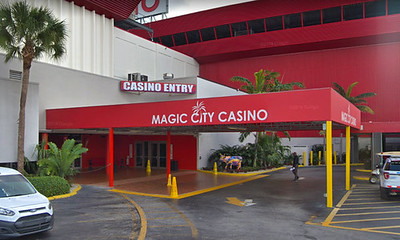
In Florida, the Havenick family, owners of the parimutuels Magic City Casino in Miami-Dade County and Bonita Springs Poker Room, recently filed a federal lawsuit similar to the lawsuit they filed last month in Tallahassee.

The suit contends the sports betting provision in the gaming compact between the state of Florida and the Seminole Tribe, recently approved by the Department of the Interior, violates federal laws and will be “significant and potentially devastating” to their businesses.

Under the agreement signed by Governor Ron DeSantis and Seminole Tribe Chairman Marcellus Osceola Jr., sports betting would be legalized in Florida with the tribe serving as the host for sports wagering. Parimutuels would get a cut of online bets placed through the parimutuels’ mobile apps.

This “hub-and-spoke” system allows bettors anywhere in Florida to place online bets that would be processed through computer servers on tribal property. According to the compact, bets placed anywhere in Florida “using a mobile app or other electronic device, shall be deemed to be exclusively conducted by the tribe.”

The 43-page lawsuit, which names Interior Secretary Deb Haaland and her agency among the defendants, stated, “Through this fiction, the compact and implementing law seek to expand sports betting outside of Indian lands to individuals located anywhere in Florida so long as they have a computer and internet connection, subject only to the tribe’s monopoly.”

Earlier this month, the federal Bureau of Indian Affairs, headed by Haaland, took no action on the compact during a 45-day review period. Under the federal Indian Gaming Regulatory Act (IGRA), that means the compact is “considered to have been approved” but only “to the extent that the compact is consistent with the provisions” of the law.

IGRA did not anticipate sports betting or fantasy sports, but “evolving technology should not be an impediment to tribes participating in the gaming industry,” said Bryan Newland, a deputy assistant secretary for Indian affairs at the federal department. He added, the “pursuit of mobile gaming is in line with the public policy considerations of IGRA to promote tribal economic development, self-sufficiency, and strong tribal governments.”

But the parimutuels’ latest lawsuit maintains that the Interior Department does not have the authority to approve the Florida compact. Furthermore, it claims the sports betting provision will hurt parimutuel operators because gamblers will not have to go to the venues to place sports wagers. “By enabling the tribe to offer sports betting via computer or phone from a person’s home or any other location in Florida, the tribe will have a significant competitive advantage and cost plaintiffs significant amounts of revenue,” the lawsuit states.

Seminole spokesman Gary Bitner essentially said the compact is a done deal. “It has been agreed to by the governor and the Seminole Tribe, approved overwhelmingly by the Florida legislature and deemed approved by the Department of the Interior. It has the support of two-thirds of Floridians. The state, the tribe and Seminole Gaming are moving forward,” Bitner said.

Under the 30-year deal, the Seminoles can offer roulette and craps at their Florida casinos, The tribe will pay the state $2.5 billion over the first five years. If the sports betting provision doesn’t take effect, the state will lose $50 million a year, guaranteeing the state an annual payment of at least $450 million.

Observers said if the Interior Department wins this legal challenge, other states will be encouraged to approve online sports betting. They said the Department would not “read restrictions into the IGRA that do not exist” and would not get involved if a proposed framework for tribal gaming expansion through sports wagering was clearly authorized under a gaming compact and state law.

Atlantic City Profits Back in Big Way

The second quarter proved profitable for eight of the nine casinos in Atlantic City.

Based on stats released by the New Jersey Division of Gaming Enforcement, the industry posted gross operating profit of $185.1 million. Compare that to an operating loss of $112.4 million for the same period in 2020, when the coronavirus pandemic forced closure of casinos for the entire quarter.

An even better comparison would be the second quarter of 2019. This year’s profits were 16 percent higher than two years ago.

“With Atlantic City in the midst of recovery, especially considering where it was one year ago, all of the operators and their employees are to be commended for providing excellent customer experiences, first-class dining and entertainment, and a safe environment,” said James Plousis, chairman of the New Jersey Casino Control Commission.

Gross operating profit reflects earnings before interest, taxes, depreciation and other charges, and is a widely accepted measure of profitability in the Atlantic City casino industry.

Bally’s was the only casino to post an operating loss in the second quarter, but it still improved from a loss of $8.8 million to less than half that, at $3.5 million. The other eight casinos all went from losses to profits.

Three internet-only businesses proved profitable, but not as profitable as in 2020, when online was the only way to go, according to the Associated Press. Caesars Interactive Entertainment NJ posted a $4.4 million profit, down more than 43 percent; Golden Nugget Online Gaming had a $7.8 million profit, down nearly 11 percent; and Resorts Digital recorded a $3.5 million profit, off over 38 percent from the second quarter of 2020.

For the first six months, the city’s casinos recorded operating profits of $280.6 million against a 2020 loss of $82.3 million.

Lawmakers to Pritzker: Suburban Chicago Needs Casino

Five frustrated state representatives from Chicago’s south suburbs recently sent a letter to Governor J.B. Pritzker, asking him to push the Illinois Gaming Board (IGB) to award a casino license to one of four competing operators.

They wrote, “Your constituents in south suburban Chicago have suffered many hardships in the last two years, but none may be worse than the failure of their own government to act on legislatively sanctioned proposals to create new jobs, higher incomes and more robust local economies.”

The five—state Rep. Anthony DeLuca, chair of the House Cities and Villages Committee, Marcus Evans, Nick Smith, Bob Rita and Debbie Meyers-Martin—added, “Please spur IGB into action. Every day that we delay the casino project in the Southland—where annual household incomes range as low as $27,000—means another day that families in our area are denied chances to win better jobs and better incomes.”

Rita led the push for gaming expansion legislation approved by lawmakers in May 2019. The legislation required the gaming board to solicit and review applications and award a casino license to the south suburbs by October 2020. Board members have said they’re overwhelmed with work related to Covid-19 and other aspects of the 2019 gaming expansion.

The applicants are Calumet City and partner Delaware North; Wind Creek LLC and the Poarch Band of Creek Indians; Lynwood and the Ho-Chunk Nation; and Matteson and the Choctaw Nation of Oklahoma. Currently a consultant hired by the gaming board has been conducting background checks and reviewing other materials.

“The bottom line is, the applicants, they don’t feel they’re any closer,” DeLuca said. He added his group has met a few times with the gaming board “where there was very good communication. I felt they were very transparent and forthright about what the process was. The problem is, there doesn’t seem to be follow through on that, and that’s what prompted this letter.”

Gaming Board Administrator Marcus Fruchter responded, “The IGB fully appreciates the significance of the new casino license to the communities of the south suburbs. The casino application process is a rigorous and significant undertaking. The IGB is obligated to act in the public interest and to ensure that the licensing process adheres to the law and operates with accountability, integrity and transparency.”

New Casino Breaks Ground in Carson City

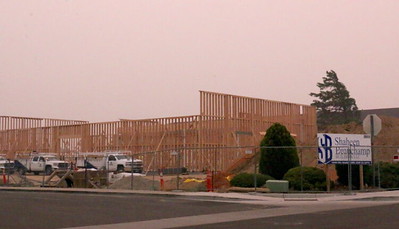
A new 9,500-square-foot casino is being built in Carson City, Nevada by Northern Nevada Comstock Investments. The company operates several gaming locations throughout the northern part of the state, including Comstock Casino, Cactus Jacks and Jackpot Crossing in Carson City, the Fernley Nugget, COD Casino in Minden and the Fallon Nugget.

The casino is scheduled to open in the summer of 2022, according to the Nevada Appeal.

The architect for the project is Frank Woodliff of Fallon. Lumos and Associates is the civil engineer.

“The building will be an attractive addition to Carson City and another quality entertainment and gaming option,” said Mark Beauchamp, owner of Mark Beauchamp, owner of Shaheen Beauchamp Builders, which is the construction contractor behind the project.

Station Casinos, Culinary Union Clash

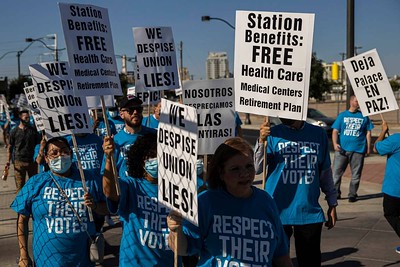
On August 22, up to 100 Station Casinos supervisors picketed the Las Vegas office of the Culinary Union, objecting to ongoing attempts by Local 226 to unionize Station employees.

In a statement, Station Casinos said the union “has refused to accept” that workers at Palace Station and Boulder Station declined to organize last year.

In April, after employees signed petitions rejecting the union, the National Labor Relations Board accused Station of “engaging in a scheme to use layoffs during the Covid-19 pandemic to undermine unions representing or seeking to represent their employees,” a release said. The NLRB said Station prodded employees to push for decertification, the process by which a union is disbanded, according to the Las Vegas Review-Journal.

Employees at neither property held a decertification vote to leave Culinary, the union has said.

A spokesman for Red Rock Resorts, Station Casinos’ parent company, said the company “rejects the biased and unfair allegations” of the labor board. “The company demands that the Culinary Union respect and stop trying to overturn the wishes of the Palace and Boulder team members.”

Geoconda Argüello-Kline, the union’s secretary-treasurer, replied, “Here, it seems that Station Casinos is simply trying to bring public attention to the wide-ranging allegations of legal misconduct it faces. In our nearly nine decades of organizing, the Culinary Union has never seen company managers or supervisors picket—especially on their day off, when it is 99 degrees outside.”

But Hernan Andrade, director of internal maintenance for Red Rock, said team members at his casino are “furious” with Culinary Union. “We’re out here to send a message,” Andrade said. “A message to the union to just leave us alone.”

A hearing on the matter will begin before a National Labor Relations Board judge on August 31.

In a separate case, U.S. District Court Judge Gloria Navarro ruled last month that Red Rock Resorts illegally influenced the outcome of a 2019 union election within the company. The company was ordered to negotiate with the union for employees at Red Rock Resort.

As for the recent protest, according to the Las Vegas Review-Journal, Culinary Local 226 called it a “publicity stunt.”

MGM Springfield to Bring Back Poker

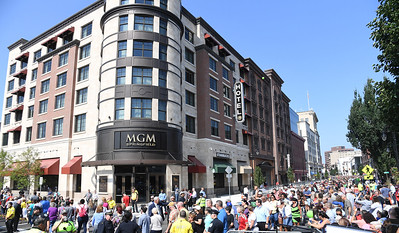
After months of “will they or won’t they,” officials at MGM Springfield have informed the Massachusetts Gaming Commission they will reintroduce poker before the end of the year.

Daniel Miller, the casino’s compliance director, told the panel, “So, really, I think our first statement is that poker will be returning to MGM Springfield. We have plans that it will come back in Q4 of this year.”

The Springfield property and its rival, Wynn Resorts’ Encore Boston Harbor, both shut down poker during the worst of the pandemic. After all restrictions were lifted, they hesitated to bring back the games. This delay prompted hundreds of complaints to the MGM.

There will be fewer poker tables, however, no more than a dozen, instead of the 28 that were there before the arrival of Covid.

Whether Encore will follow suit is unknown. Last month, a representative said the casino had replaced the poker room with slots. A spokesman added, “Based on current market conditions and the resulting need to prioritize space, Encore Boston Harbor will not be bringing back live poker at this time. If and when poker should return to Encore, it will likely be at a reduced capacity.”

MGM Springfield also marked the celebration of the beginning of its fourth year with a new high-tech sports lounge that could be converted into a sports betting lounge, if the Bay State ever legalizes it. As MGM Springfield President and COO Chris Kelly declared, “Our best days still lie before us.”

The numbers would seem to bear him out. In July, the casino took in $23.71 million in gross gaming revenue, its best month since June 2019. The addition of poker could raise that total in coming months.

The new lounge has more than 70 luxury theater seats looking onto a 45-foot high-definition wall that can show 16 channels at once. Converting to sports betting would be seamless. Kelly added, “We’re very optimistic that we’ll see legislation later this year and in the event we have the opportunity to start taking bets this is the room. We’re ready to rock and roll.”

He continued, “I walk the floor of the casino every day and if there’s one question I get more than any other it is ‘When will I be able to place a sports bet at MGM Springfield?’”

Golden Employees: Vaccinate or Show Negative Test

Nevada’s Golden Entertainment has given employees two choices to keep working with the company: present proof of vaccination or present a negative Covid-19 test each week.

The company, with nine casinos in and 66 pubs and taverns, has watched as the pandemic surges in the state, though in August, Nevada passed the 50 percent mark for vaccinations for those 12 and older, according to CDC Gaming Reports.

MGM Resorts International became the first major U.S. casino operator to require its salaried employees to be vaccinated. Its mandate will apply to new hires as well. Salaried employees who don’t work from home must be vaccinated by October 15. The policy doesn’t affect hourly employees, but MGM said it was considering expanding the requirement.

Golden Entertainment President and Chief Financial Officer Charles Protell

said in a letter that while many properties and corporate functions “have made progress toward vaccination,” some have not.

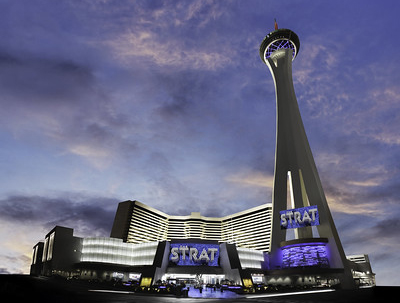
Golden is hosting several vaccination clinics at both The Strat and Sierra Gold Jones in the upcoming weeks. The vaccinations are free and open to anyone in the employee’s family.

“Vaccination is the most effective method to slow the spread of Covid-19. Hopefully, we can all continue to do our part to maintain the health of our business and communities,” Protell said in the letter.

Casino consultant Josh Swissman, founder of the Strategy Organization, said he expects more casino operators to follow in the footsteps of MGM and Golden. “Beyond the gaming industry, this seems to be the trend,” Swissman said. The fact that these new requirements are being put in place does become newsworthy. Customers see it and I’m sure that affects some folks’ travel patterns to go to places where they feel safer.”

New Orleans’ mandate requires customers of restaurants, casinos, stadiums, and other establishments be vaccinated or show a negative test. The Raiders this week required its fans to be vaccinated in order to enter Allegiant Stadium. Same with concert promoters for casino entertainment venues. Some trade shows are doing the same.

Tourism officials, who just debuted a national ad campaign soliciting sports fans, wonder how the requirement will play out. Lori Nelson-Kraft, senior vice president of communications for the Las Vegas Convention and Visitors Authority, said the same situation involved the convention industry. The Consumer Electronics Show, one of the largest, will insist attendees be vaccinated. Other conventions could follow suit.

“I think it’s a tremendous commitment by these private enterprises to make some of those really tough decisions,” Nelson-Kraft said. “It’s really important that our visitors, our employees, and our community feel safe during this time. Those are good responsible decisions. Could there be an impact? Of course. We won’t know until the back-end Allegiant hosts its first game in September on Monday Night Football and there are empty seats.”

Large convention bookings remain on track for this year and next. It will take conventions time to get back to normal attendance wise because many companies have not recovered completely.

Attendance is expected “to be a little lower for a while and everyone is okay with that,” Nelson-Kraft said. The most important step is simply returning to in-person events, rather than virtual.

“Our convention customers remain committed,” Nelson-Kraft said. “Nothing replaces being there and getting deals done and shaking hands. Since June, the city has 35 additional shows of 5,000 people or more committed.

The new ad touts not only the Raiders, but also the Vegas Golden Knights, Las Vegas Aces, NBA Summer League, NASCAR, National Finals Rodeo, UFC, championship boxing, college football, college basketball, and other events billed as the greatest arena on earth.

“We have really evolved into the capital of the sports world, with not only the venues, but the LVCVA heavily investing in bringing large citywide sporting events to town,” Nelson-Kraft said.

Las Vegas registered 2.97 million visitors in June, 70 percent of the June 2019 total. Hotel occupancy was 76 percent compared to nearly 92 percent in June 2019. The difference was weekday occupancy at 71 percent, down from 90 percent in June 2019.

Report: Pandemic Took a Toll on Tribal Gaming

The American Gaming Association (AGA) and National Indian Gaming Commission (NIGA) recently released reports on tribal gaming revenue in 2020.

Not surprisingly, both spelled out significant drops in revenue, mainly due to Covid-19. The viral outbreak caused every tribal gaming operation in the U.S. to shut down at one point, for the first time since the federal Indian Gaming Regulatory Act became law in 1988.

By December 31, 457 Native American casinos had reopened, but 13 percent remained closed. The pandemic ended nine consecutive years of increasing revenue for tribal gaming following the Great Recession.

In the AGA’s 2021 State of the States report, economic development consultant James Klas said it could have been worse for tribal enterprises. At the end of last year, he predicted gaming revenues would reach $25 billion, revising the figure upward from his previous projection of $20 billion. Even so, it was a dramatic decline of nearly 28 percent from 2019 for commercial casinos.

“Whatever you think of our public health approach to this pandemic, there’s definitely been a less severe economic impact than we initially feared,” Klas said.

The federal CARES Act, approved in March 2020, provided some relief to tribes and their casinos in the worst days of the pandemic. The law set aside $8 billion for tribes; without it, tribal casinos would have lost $17 billion to $20 billion instead of $9 billion to $12 billion, according to Klas.

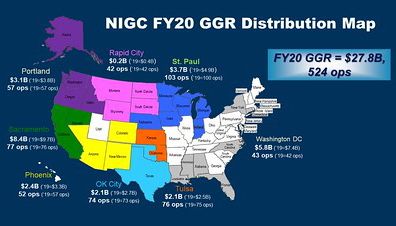
From National Indian Gaming Commission, specific figures for fiscal-year 2020 showed deep financial losses for tribes, with GGR totaling $27.8 billion, down $6.7 billion or 19.5 percent compared to 2019. In the year before the pandemic, tribes reported a record-breaking $34.6 billion in revenue, said NIGC Chairman E. Sequoyah Simermeyer and Vice Chair Jeannie Hovland, who spoke at the recent Oklahoma Indian Gaming Association Conference.

Simermeyer said the 2020 decrease “was expected; the unknown was just how much of an impact Covid-19 had on Indian gaming. Nevertheless, tribes were on the forefront of creating standards, developing new safety protocols and sharing community resources. I foresee this decrease as only a temporary setback for Indian gaming.”

The GGR figure was compiled from 524 independently audited financial statements of 248 federally recognized tribes across 29 states.

“Unfortunately, due to the pandemic, all eight NIGC administrative regions reported a decrease in their gross gaming revenues,” noted Hovland. “While this was not necessarily surprising news due to the impact the pandemic has had on our communities, we’re grateful the reported decline in revenues was not more severe.”

California and Northern Nevada tribes reported the smallest revenue decreases—13.2 percent, from $9.68 billion to $8.39 billion. The Midwest including South Dakota, North Dakota, Wyoming and Montana had the biggest declines: from $376.4 million in 2019 to $238.6 million in 2020, a drop of more than 36 percent.

According to the AGA report, “This once-in-a-century cataclysm accelerated the evolution of tribal gaming, particularly with regard to sports betting.”

Simermeyer noted the pandemic also provided tribes a chance to make significant investments in public health, workforce development and economic enterprise, and in their gaming properties.

On a positive note, the continuing strength of tribal gaming is reflected by recent acquisitions of Las Vegas resorts by tribal operations. In March, the Mohegan Tribe of Connecticut opened its Mohegan Sun Casino at Virgin Hotels Las Vegas, formerly a Hard Rock property. In May, California’s San Manuel Band bought the Palms Resort for $650 million.

“These investments often resulted from action taken by the Indian gaming industry, tribal regulatory bodies, and tribal governments during this past year,” Simermeyer said. “This invaluable investment can provide hope for the industry’s strong return and an important stability for a well-regulated industry and is important to tribal communities that use Indian gaming to strengthen tribal governments and economies.”

The Mohegans also are building gaming resorts in Athens, Greece and Incheon, South Korea, and recently vied to be one of the first three integrated-resort operators in Japan.

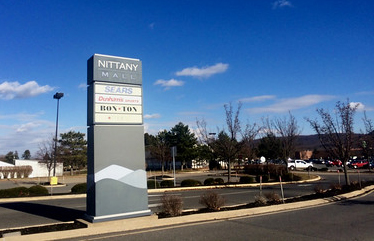
PA Board Holds Hearing on Nittany Mall Casino

The Pennsylvania Gaming Control Board hosted local residents, business owners and elected officials at a public hearing on a mini-casino planned by Ira Lubert and his SC Gaming, LLC for a Category 4 mini-casino at the Nittany Mall in Centre County, near State College and the campus of Pennsylvania State University.

Lubert, a Penn State alumnus and sole official of SG Gaming, won the license at the first auction open to bidders outside of current casino licensees. Category 4 casinos, limited to 750 slots and 40 table games, were originally available only as satellites to current Category 1 (racino) and Category 2 (stand-alone casino) licensees.

At the meeting, Lubert said the casinos can reinvigorate the Nittany Mall and create new business for the surrounding area.

“This in turn will create jobs and help drive the region’s economy,” Lubert told the board, according to the Centre Daily Times. “And with Penn State’s immense alumni base and other visitors flooding into the area throughout the year, not just football season, we will provide a new entertainment venue that everyone can enjoy.”

Eric Pearson, the prospective casino’s CEO, gave an overview of the project and timeline. Bally’s Corp. has partnered with Lubert to design, develop, construct and manage the casino.

The proposed 94,000-square-foot casino has a $123 million budget. They would use the existing structure of Macy’s, which is about 94,000 square feet. Construction would take about a year. It also would include a sportsbook and a sports-themed restaurant and bar with live entertainment, and a multi-outlet food court.

“We really envision the casino being able to serve as a catalyst for revitalization within the Nittany Mall, which is currently at about 50 percent occupied,” Pearson said. “As you’re well aware, the Nittany Mall… has become more and more vacant as businesses there have made a mass exit. This facility, once a community asset, is no longer drawing people from outside the area,” said Mark Long, district manager for Rep. Kerry Benninghoff. “Representative Benninghoff applauds the effort to repurpose this space and make it more vibrant while finding ways to keep local people employed and our economy moving ahead.”

Local officials who spoke at the hearing echoed the positive sentiment. Some residents spoke out against the proposed casino, generally offering familiar arguments normally seen in new gaming jurisdictions, such as concerns over low-income people gambling, and moral objections by religious groups.

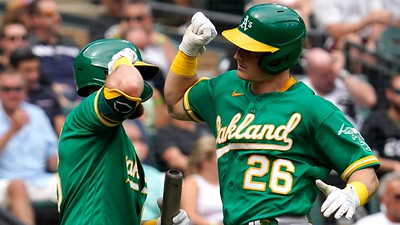
A’s Reps Return to Las Vegas to Search for New Stadium

Maybe the Oakland Athletics’ brain trust just likes to spend time in Las Vegas, get away to someplace quiet during a heated pennant race.

Whatever the reason, team owner John Fisher and president Dave Kaval expected to visit the region again from August 25 to 27, the fifth such trip.

The rationale for the excursion is to continue exploring relocation options after discussions over a new stadium in Oakland ran into a brick wall in July when city council’s proposal fell short of the team expectations. Talks have resumed.

The team execs have come up with more than 20 potential sites in the Las Vegas area for a stadium, according to the Las Vegas Review-Journal. Like the one on Las Vegas Boulevard and Warm Springs Road next to the planned Brightline West high-speed train station and not far from I-15 and McCarran International Airport.

Besides site hopping, the team will meet with various groups and discuss how ticket sales, transportation and parking would fit together.

Since the A’s brass began their exploration into the Las Vegas market, they have had tentative conversations with Hobbs, Ong, and Associates about advising them on the financial aspects of ballpark construction, according to Guy Hobbs, managing director of the firm. They had similar conversations with the Oakland Raiders prior to their move to Las Vegas.

“If you recall with the Raiders, it (Allegiant Stadium) being located in the unincorporated county was certainly different than it being located within the city relative to certain things that could be done, with respect to financial mechanics” Hobbs said. “With the Raiders there was a public element with that and with the A’s I’ve heard the term public-private partnership mentioned.

MGM Resorts Now Requires Employee Covid Vaccination

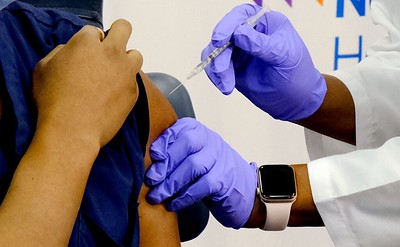
MGM Resorts International now requires Covid-19 vaccinations “as a condition of employment for all salaried employees and new hires throughout the United States.” All salaried employees who don’t work exclusively from home must be vaccinated by October 15. New hires must provide proof of vaccination before starting, effective August 30.

The new conditions were reportedly announced in a letter from MGM President and CEO Bill Hornbuckle, who recently decried Covid surges in Nevada, saying the low vaccination rate “is putting us back on the path to overrun hospitals, unnecessary deaths, fewer tourists, and possible furloughs and layoffs. … After the pain endured by so many these past 16 months—and the tremendous progress made in 2021—I can think of no more damaging scenario for us as a community.”

According to MSN, the company is also offering incentives to up the vaccination rate in its “Show Us Your Vax” campaign. Employees who upload their vaccination proof to MGM’s internal portal are eligible for prizes including cash, hotel stays, restaurant vouchers and show tickets.

Previously, MGM required that employees be vaccinated or be tested regularly, and pay the co-payment.

Hornbuckle said the vaccine requirement “may be an unwelcome development” but stated the group is “determined to do our part to curb the spread of the virus … vaccination is the most effective tool in doing so.”