Author: Casino Connection Staff

PA Casino Execs: Unlicensed Games Hurting Profits

Unlicensed, unregulated so-called “skill games” in non-casino locations across Pennsylvania are hurting demand for casino slot machines, two casino executives told the state Gaming Control Board.

Two Mount Airy casino executives testified at a gaming board hearing that the unlicensed machines, estimated at more than 20,000 in Pennsylvania and located in pizza parlors, convenience stores and other non-casino locations, are a major reason Mount Airy has eliminated 130 older and less-used slot machines.

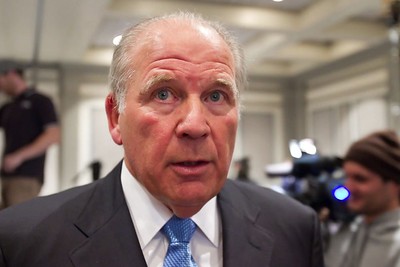
Mount Airy COO Frank Leone told the board the cost to casino slot revenues due to unregulated machines in the state “can range from $20,000 to $50,000 across the commonwealth,” according to the Play Pennsylvania website. “There’s no question in my mind it has a negative impact on land-based slot revenue.”

Mount Airy is one of four Pennsylvania casinos that have requested approval this year to remove machines from slot floors.

While there have been pledges from the legislature to ban the unregulated machines, no bill has been introduced. “There’s a lot of behind-the-scenes conversations; nothing is scheduled yet,” state Senator Wayne Fontana told Play Pennsylvania. “But the door is open. And the Republicans have their own battles (over how best to proceed with legislation). My impression though is the horse is out of the barn.”

Fontana said while there is a bipartisan consensus for “regulation and oversight” of the unlicensed games, he said regulation alone doesn’t address fairness. “I’m not sure that’s good enough. There’s a difference. I don’t know how you legalize the machines without matching the taxes.” Regulated casinos pay a total of 54 percent of slot revenues in state and local taxes.

Ocean Casino Sues Live! Philadelphia Over Slogan

Atlantic City’s Ocean Casino Resort has filed suit against Cordish Companies’ Live! Casino & Hotel Philadelphia over the promotional slogan, “Go for the win.”

Ocean is accusing Live! of engaging in unfair competition by introducing a campaign a month after Ocean launched its “Go for the Win” marketing campaign that uses a nearly identical tagline, “Let’s Go for the Win.”

According to the lawsuit, filed in federal court in Camden, New Jersey, Ocean and its advertising agency spent $140,000 developing its “Go for the Win” marketing campaign, launched on June 22, and then spent more than $1.5 million to promote the campaign in the South Jersey/Philadelphia region. Less than a month later, Live! started its own campaign using the phrase.

“Indeed, Live! ran ‘Let’s Go For The Win’ on a digital sign on the Atlantic City Boardwalk just a few doors down from Ocean’s Casino Resort,” the lawsuit states, saying it did so “without the consent of Ocean as part of a deliberate plan to trade on Ocean’s Go For the Win service mark.”

Ocean is seeking a court order barring Live! from using the slogan and requiring the Philadelphia casino to destroy all marketing material carrying the slogan, as well as court costs and unspecified damages.

In other news, Ocean has added a new night spot. The $25 million Nola’s Bar & Lounge will be ready at some point in the fall.

“Over the last several months, Ocean has reinvested more than $15 million in our resort, team members and local community, including a completely reimagined gaming experience,” said Terry Glebocki, CEO of Ocean Casino Resort.

Occupying 2,800-square-feet off the casino floor, Nola’s will feature live entertainment, wooden walls, a 35-foot bar, brass and emerald touches and premium seating, according to Atlantic City Weekly.

“Nola’s will introduce a true Las Vegas-style lounge to Atlantic City,” said Warren Richards, Senior Vice President of Food & Beverage for Ocean Casino Resort. “It’s not just another bar or just another stage. Everything from the interior design to the curated entertainment lineup will make Nola’s an unmatched destination.”

U.S. Operators Deliver Upbeat Outlook

Top executives of several of the largest gaming operators in the country presented optimistic outlooks for the gaming industry this year in remarks at the J.P. Morgan Gaming, Lodging Restaurant and Leisure Management Access Forum in Las Vegas last week.

Caesars Entertainment CEO Tom Reeg arrived at the conference on Tuesday, September 14, stating that pent-up demand for hospitality remains high and ample consumer savings should boost the gaming industry into next year.

Joseph Greff, gaming analyst with J.P. Morgan, reported on Reeg’s remarks in an investor note.

“Caesars expects to run 50 percent-plus (adjusted earning) margins in Las Vegas and 40 percent-plus in regionals, driving 40 percent-plus consolidated margins through the foreseeable future,” Greff said.

“Helping the Las Vegas Strip segment is the ramp-up of Caesars Forum and high-margin midweek business, which pre-Covid was a significant (adjusted margin) generator. If viewed as a single property, it was one of the largest in the portfolio.”

Boyd Gaming CEO Keith Smith and CFO Josh Hirsberg at the conference the same day , with similar optimism “Boyd described the regional gaming consumer as resilient and ‘amazingly consistent,’ with minimal impact seen from mask mandates and higher Covid-19 new-case trends,” Greff said. Downtown Las Vegas, however, has been a bit more challenging, given the segment’s reliance on Hawaii travel, he added.

Similar to other casino operators, Boyd management said it is seeing spend-per-customer tracking above 2019. “The database today is intentionally different from pre-Covid, with no marketing to the lower end of the database,” Greff said. “From a demographic standpoint, the 55-plus core customer is coming back, though still has room to grow toward 2019 levels.”

Two other speakers Tuesday were Gaming & Leisure Properties CEO Peter Carlino and CIO Matthew Demchyk. GLPI will sell Tropicana Las Vegas to Bally’s Corp. for $308 million in a deal expected to close by early 2022 at the latest.

“The company sees ample white space with its existing tenant base in regional markets, noting that its newest tenant, Bally’s, remains very active,” Greff said. “The key driver of deals for GLPI is the spread to its cost of capital, so this could resemble both single-asset and portfolio transactions. While the market for gaming real estate is at the highest point ever, this still resembles a discount to traditional REIT assets.”

Meanwhile, rumor has it that MGM Resorts International may be interested in two big acquisitions: of the Cosmopolitan Las Vegas and sports betting and gaming giant Entain. But CEO Bill Hornbuckle isn’t talking… about the rumors, that is.

Speaking to analyst Joseph Greff September 13 at the JPMorgan Gaming, Lodging, Restaurant & Leisure Management Access Forum, and without specifically naming the Cosmopolitan, Hornbuckle said, “There are probably some synergies to be had there, for sure, that only we could probably unlock. I don’t want to comment on it any further than that. I do want to diversify. We have a lot of Las Vegas to begin with, but it’s a compelling asset. But time will tell.”

Cosmopolitan owner Blackstone is said to be seeking a buyer willing to ante up at least $5 billion, a figure sure to reduce the number of suitors. MGM, with a growing cash stockpile and existing relationships with Blackstone has fueled speculation that the two might make a deal.

Blackstone tried to sell the 3,000-room casino hotel in 2019 for $4 billion, but ultimately was unsuccessful. According to Bloomberg, this time around, Apollo Global is also among the interested suitors exploring a deal to purchase the Cosmopolitan. MGM operates the properties on either side of the resort, Bellagio and CityCenter.

Talk also turned to Entain, MGM’s 50/50 partner with BetMGM. Earlier this year, Entain rebuffed an $11 billion takeover offer from MGM. However, the growth of sports betting in the U.S. has led to speculation MGM will come back with another offer.

“The reality is we’re number two in the marketplace today,” Hornbuckle told Greff. “When you add it all up, we are, because we got there so quickly. And so as much as we bang ourselves in the head why we gave away half of our business, the reason we did is so that we could be in these markets, and it’s clearly been proven first to market, it has one.”

Hornbuckle did venture about other U.S. markets as far as expansion. Texas and Georgia. He scratched off Florida because the Seminoles dominate. He called Chicago complicated.

“I don’t know that you can win in Chicago based on the set of rules that we understand today,” he said.

PA Township Approves Nittany Casino Plan

The proposal for a Category 4 mini-casino in College Township near Pennsylvania State University has received local approval. College Township Council last week unanimously approved a land development plan for what is tentatively called Nittany Casino, at the Nittany Mall in Centre County, near State College and the Penn State campus.

The proposed casino still awaits licensing by the Pennsylvania Gaming Control Board. The casino license was won by Penn State alumnus Ira Lubert and his SC Gaming, LLC, at the first auction open to bidders outside of current casino licensees. Category 4 casinos, limited to 750 slots and 40 table games, were originally available only as satellites to current Category 1 (racino) and Category 2 (stand-alone casino) licensees. Lubert has reached a deal with Bally’s Corp. to build and operate the casino.

The casino is planned for a 94,000-square-foot building that formerly housed a Macy’s anchor store at the mall. It would include a casino, a sportsbook, a sports-themed restaurant and bar with live entertainment, and a multi-outlet food court. The construction budget is $123 million.

Under the current township ordinance for new development, 365 linear feet of new sidewalks would be required for the new property. The developer proposed 215, but also plans to add more than 1,000 feet of other pedestrian pathways as well as ADA ramps, Councilman Rich Francke noted at the approval hearing.

Caesars Presents Danville, Virginia Plans

Caesars Entertainment recently revealed plans for its $500 million casino resort, Caesars Virginia, in Danville. Ground is expected to be broken by the end of the year with an anticipated opening in late 2023.

Caesars Entertainment President and Chief Operating Officer Anthony Carano said, “Caesars Virginia will be an economic driver for the region, both as a tourist and entertainment draw and through the more than 1,000 good-paying jobs the resort will create. The people of Danville have entrusted us to build a world-class resort, and we look forward to proving that trust was well founded with an incredible resort worthy of the iconic Caesars brand.”

Danville Mayor Alonzo Jones added, “Over the course of the last two years, myself, city council and staff have taken great care to develop plans, alongside residents and Caesars Entertainment, to create a resort that will positively impact the community through new tax revenue, jobs, partnership opportunities with local businesses and tourism dollars. We are confident that Caesars Virginia will honor the old Dan River Mills’ Schoolfield site and become a pillar of pride for Danville and its people.”

Plans for Caesars Virginia include a gaming floor with more than 1,400 slots and table games, 18-story, 500-room hotel, Caesars Sportsbook, spa, pool and fitness center, the 25-table World Series of Poker live poker room, 40,000 square feet of meeting and convention space, 2,500-seat entertainment venue, a celebrity chef Gordon Ramsay restaurant and a 4-story parking garage.

Officials said the project will create 900 construction jobs and 1,300 permanent jobs.

The three 220-foot brick smokestacks, known as the Three Sisters, remaining from the original Dan Rivers plant have been preserved, said Dave Howryla, president of architecture at architects Marnell Companies. “The Three Sisters are the best element on the site, and everything is based on them. They will be cleaned up and they will be the focal point,” he said.

In a referendum in 2020, Danville voters overwhelmingly voted to allow casino gambling in five cities. Voters also passed referendums in Bristol, partnering with Hard Rock International; Portsmouth, partnering with Rush Street Gaming; and Norfolk, partnering with the Pamunkey Indian Tribe. A referendum has yet to be held in Richmond.

Iowa Greyhound Park Announces Shorter, Final Season

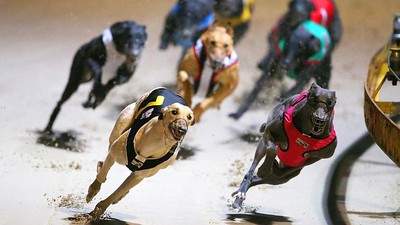
The Iowa Greyhound Park in Dubuque has announced plans for a final, shortened season in 2022.

General Manager and Director of Racing Brian Carpenter said the season would last 30 to 60 days compared to 112 racing days this year. But even that may not be possible, he stated, because dogs that raced in Dubuque also competed at tracks in Florida; however, in 2018, Florida voters approved a constitutional amendment to end greyhound racing at the end of the 2020 season. That upset the industry and has led to a dramatic decrease in greyhound breeding, Carpenter said. “We don’t know if we will get enough dogs,” he commented.

In addition, Iowa Greyhound Park has been able to survive thanks to subsidies going back to 2014, when Dubuque’s Mystique Casino & Resort, now Q Casino and Hotel, and the casino in Council Bluffs reached a settlement allowing the casinos to sever ties with the greyhound industry. Under this deal, Council Bluffs agreed to pay an annual subsidy of $4.6 million to Iowa Greyhound Park through 2022 and Q Casino agreed to pay a yearly subsidy of $500,000 through 2021.

Carpenter said these subsidies have allowed the park, which opened in 1985, to operate in the black. “We never did make it to a point where we could survive on our own. We were heading in the right direction. Every year we were going up. But we were not where we needed to be. We just ran out of time. We lasted longer than most people expected we would,” Carpenter stated.

DeSantis Seeks Dismissal of Compact Lawsuit

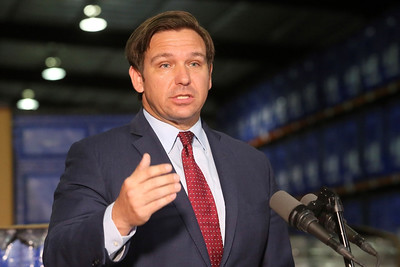
In a 33-page motion, attorneys for Florida Governor Ron DeSantis and Florida Department of Business and Professional Regulation Secretary Julie Brown recently argued U.S. District Judge Allen Winsor should dismiss a lawsuit filed by two parimutuels challenging the new 30-year Seminole Compact. Tribal attorneys filed court documents seeking dismissal of the case on the same day.

Owners of the parimutuels Magic City Casino in Miami-Dade County and Bonita Springs Poker Room in Southwest Florida filed the lawsuit in July. Under the compact, the Seminole Tribe can operate sports betting, with wagers run through servers on tribal property and bettors located anywhere in the state. The tribe would contract with parimutuels to help market sports betting, which would generate some revenue for the parimutuels, DeSantis administration attorneys said.

In their motion to dismiss, DeSantis administration attorneys noted parimutuels do not have legal standing to challenge the compact because they have not shown that they would be harmed. The motion stated, “To satisfy the fundamental requirements of standing, plaintiffs must allege a concrete and particularized injury caused by the defendants−one which affects each plaintiff in an individual way and which is real, and not abstract, hypothetical or speculative. Plaintiffs acknowledge that they have the option to participate in the online sports betting component by marketing the tribe’s sportsbook and receiving 60 percent of the profit.”

However, in an amended version of the lawsuit filed in August, the parimutuels noted, “The 2021 compact will significantly harm plaintiffs’ businesses by introducing online gaming into Florida and granting the tribe the exclusive right to engage in it. As a result, anyone physically located in Florida, including plaintiffs’ customers, will be able to engage in sports betting online with the tribe from their home or from any Florida location where they have access to an internet connection. This approval will therefore have a significant and potentially devastating competitive impact on plaintiffs and the brick-and-mortar businesses who depend for their profits on individuals coming into their businesses to engage in gaming activities.”

The lawsuit also alleges the sports-betting portion of the compact violates the Indian Gaming Regulatory Act because bets would be placed by people off tribal lands. The lawsuit stated, “The Indian Gaming Regulatory Act restricts tribal gaming to ‘Indian lands,’ which are either Indian reservations or lands held in trust by the United States for the benefit of a federally recognized Indian tribe. Importantly, the IGRA does not authorize tribal gaming outside of Indian lands unless there is an applicable exception. No exception applies here.”

The DeSantis administration attorneys disagreed with that interpretation of the IGRA. In their motion, they wrote, “Plaintiffs contend that Indian tribes are never permitted to offer gaming activities to patrons who are physically located off their Indian lands. This is not so.” They noted the U.S. Department of the Interior approved the Seminole Compact in August. The parimutuel owners filed a separate lawsuit in Washington, D.C., against the Interior Department and Interior Secretary Deb Haaland.

Under the 30-year deal, the Seminoles will pay Florida about $20 billion, including $2.5 billion over the first five years. The compact also allows the tribe to offer roulette and craps at their casinos.

Station-Culinary War: No Sign of Truce

The longstanding feud between a powerful Nevada casino company and an influential casino workers’ union shows no signs of abatement after more than 20 years.

According to the Nevada Independent, tension continues to simmer between the Culinary Workers Local 226 and locals casino company Red Rock Resorts, which operates Station Casinos.

In recent elections, a number of Democratic candidates wooed the Culinary Union, including presidential candidate Joe Biden, who told union members, “Folks, I promise you one thing. If I end up being your president you will never ever, ever have in American history someone who is more pro-labor in the White House than Joe Biden.” California Senator Kamala Harris, then seeking the Democratic presidential nomination, also came out in support of the union, and said she wrote a letter to Red Rock CEO Frank Fertitta III saying she wouldn’t support a bill to give Red Rock a tax break. Harris also said the company should sign a collective bargaining agreement with the unions for about 13,000 non-gaming hospitality and restaurant employees at 10 Southern Nevada properties.

“What they’ve been doing at Station Casinos is wrong. I applaud your leadership,” Harris told the union members. Others who stood in line for union support were Senator Elizabeth Warren, Bernie Sanders and Pete Buttigieg. Ultimately the union did not throw its support to any candidate.

At issue is Culinary’s inability, with its affiliated Bartenders Local 165, to negotiate a contract with Station Casinos, even though the union won six of seven elections at Station properties between 2016 and 2019.

Per the Independent, in July a federal judge in Las Vegas ruled Station Casinos management interfered with a vote at the Red Rock Casino in Summerlin on a new incentives and benefits package for employees. The judge ordered the company to negotiate a union contract covering more than 1,350 non-gaming employees.

In a statement to the newspaper, Red Rock said it “respectfully disagrees with the district court’s decision granting a temporary injunction and has appealed the ruling. The decision, which negates the clear vote of the Red Rock team members rejecting the Culinary Union, appears to have been based on a misunderstanding of the procedural background and, worse, appears to have accepted the argument that Red Rock team members and the Red Rock property should be punished because Station Casinos treated its team members too well.

“Station Casinos does not believe it is correct or consistent with the purpose and stated mission of the National Labor Relations Act to punish Station Casinos and its team members for providing best-in-class benefits to team members based on a dubious theory that doing so ‘undermines’ the union,” the company added.

In April, the National Labor Relations Board (NLRB) shot down 2020 union decertification efforts at Palace Station and Boulder Station, saying the company unlawfully encouraged employees to circulate and sign petitions seeking to end union representation.

As part of that case, an administrative law judge in August said CEO Frank Fertitta III and his brother, company Vice Chairman Lorenzo Fertitta, would have to answer questions about allegations that Station Casinos tried to “undercut labor organizing efforts.” The company is also appealing the order.

“Station Casinos believes that the attempts to depose Frank Fertitta and Lorenzo Fertitta are just another chapter in the Culinary Union’s decades-long campaign of harassment of Station Casinos and its principals, this time with the willing assistance of Region 28 of the NLRB,” the company said.

Earlier this year, Red Rock came out against the so-called “Right to Return” bill, which guarantees that casino workers laid off during the pandemic the right to return to their jobs.

Most casinos have reopened, but Red Rock has kept four of its properties closed: the Fiesta Henderson, the Fiesta North Las Vegas, Texas Station in and the Palms. The latter is being sold to Southern California’s San Manuel Indian Tribe for $650 million. Currently, Red Rock is pursuing a new casino development in southwest Las Vegas—a plan the Culinary Union hopes to quash “To approve another casino when three are still closed after a year is ludicrous,” said union representative D. Taylor.

“What’s the endgame? One side gives up,” said Bill Werner, an associate professor at UNLV’s Harrah College of Hospitality and a former casino industry in-house counsel.

“For Station Casinos, the end game is the union goes away and their employees don’t want a union anymore,” Werner said. “I don’t see that happening because the Culinary is very good at maintaining its momentum.” Labor law scholars say they are not surprised the hostilities have dragged on for more than 20 years.

The Culinary has shown it won’t back down, having taken part in the nation’s longest-ever workers strike over a contract dispute, from September 1991 until February 1998 at the Frontier Hotel on the Strip.

“One thing this union has shown is staying power,” said Ruben Garcia, a professor at UNLV’s Boyd School of Law. “The law favors a lot of processes and favors a lot of time. Legally, both sides are required to bargain in good faith. But the sides can also appeal. That is what is going on now. … They could just do this forever.”

Churchill Downs Silent On Arlington Buyer

Endeavor Properties, an investor group led by Roy Arnold, former president of Arlington International Racecourse, bid more than $120 million to purchase the 326-acre racetrack property in Arlington Heights, Illinois.

But Arnold said he hasn’t heard from Churchill Downs, the track’s owner, in more than a month. Endeavor is one of three finalists interested in buying the track.

Arnold said he believes Churchill Downs may choose another bidder, possibly the Chicago Bears, meaning racing at Arlington would come to an end. “My only conclusion is that they are motivated by the desire to limit competition. This is about protecting Rivers Casino,” Arnold stated.

Observers said Churchill Down’s ownership in Rivers Casino in Des Plaines is the reason why it’s shutting down Arlington Park, which will commemorate its last race with a huge fireworks show on September 25, officials said. The Illinois Thoroughbred Horsemen’s Association even has asked Illinois Attorney General Kwame Raoul’s office to investigate potential anti-competitive or antitrust violations by Churchill Downs.

The company refused to seek a casino gambling license for the track, after years of lobbying lawmakers to allow a casino at the track. It also did not get authorization to hold racing at Arlington next year. ITHA President Mike Campbell said those actions clearly were meant to stop any future owner from operating horseracing or gambling at the track, to avoid competition with Rivers Casino.

In 2018, Churchill Downs became majority owner of Rivers Casino in Des Plaines, located 20 minutes from the racetrack. Afterwards, Churchill Downs said it would not operate gambling at Arlington because it could make more money from Rivers casino gambling and not have to fund purses for the horseraces.

Following the Bears’ June announcement that it had submitted a bid to buy the racetrack, Rivers Casino announced it reached an exclusive deal to partner with the team on casino gaming and sports betting. Observers thought that suggested the Bears’ bid could be the winner to buy the racetrack.

Arnold said his team’s proposal would include an ice hockey arena, potentially for a minor league team, plus senior housing, condominiums and apartments, an entertainment district with retail and restaurants. Other bidders include Chicago real estate developer Glenstar Properties and UrbanStreet Group in Schaumburg, which also would build a mixed-use development.

Churchill Downs officials issued a statement: “There was strong interest by many qualified bidders to purchase the property, and our team continues to work through the sale process. In order to preserve the integrity of that process, we have executed confidentiality agreements with each bidder, and we intend to uphold our obligations under those agreements. As such, we will not comment on any negotiations or speculation by others. CDI will provide an update on the sale process at the appropriate time.”

In early June, Churchill Downs said it would announce the winning bidder within a few weeks. However, no announcement has been made yet.

Hard Rock Table Play Surpasses Horseshoe

The Indiana Gaming Commission recently released figures showing the Hard Rock Northern Indiana in Gary, opened May 14, once again moved ahead of Horseshoe Casino in table game play for the second consecutive month in August. Horseshoe, however, held onto its top statewide position for total win.

According to the IGC, in August Hard Rock gamblers played $42.3 million on table games−more than any other Indiana casino and just slightly below the combined table games drop at the five southern Indiana casinos located on the Ohio River. Players wagered $23.4 million on baccarat, or 55 percent of table game play

Matt Schuffert, president at Hard Rock Casino Northern Indiana, said, “We are very happy with our August results. Despite August typically being a slower month than July, we surpassed $30 million in gaming revenue and have clearly become the overall table-games leader in the state of Indiana, led by our strong baccarat play.”

The IGC said Horseshoe, located in Hammond, collected $8.4 million in August table-game win, including $2.8 million in blackjack win on $11 million in blackjack play, which led the state. Hard Rock’s blackjack win was $1.9 million on play of $9.1 million.

Horseshoe also surpassed Hard Rock in slot machine play and win in August, although Hard Rock had 11.5 percent more win per slot machine compared to Horseshoe, IGC records show. In August, Horseshoe gamblers played $248.2 million in the casino’s 1,974 slots, generating $24.9 million in win for the casino.

Meanwhile, Hard Rock came in third in the state for August slot play with $209.1 million and win of $20.9 million on its 1,448 machines. Second-place went to Indiana Grand with $221.5 million in play on 1,595 slot machines and win of $23.5 million.

In total, in August, the four Northwest Indiana casinos produced 46.4 percent of the state’s $209.3 million combined win from its 12 casinos, with Horseshoe in the lead with $33.3 million, Hard Rock at $30.2 million, East Chicago’s Ameristar Casino with $21.5 million and the Blue Chip Casino in Michigan City at $12.1 million.

Also in August, Indiana casino sportsbooks reported $215.6 million in total sports wagers, mostly on baseball and multiple sport parlay bets. That was a 10.9 increase compared to July sports betting handle of $194.5 million and a 27.6 percent rise in wagers on Indiana professional and collegiate sports.

In Downtown Vegas, Foot Traffic Surges

Downtown Las Vegas casinos experienced increased foot traffic in August, bucking a national trend of less foot traffic due to the lingering Covid-19 pandemic, according to a new report from Jeffries Equities Research.

According to the report, national foot traffic in casinos and casino districts was down 18 percent in August, as compared to July. Foot traffic on the Las Vegas Strip was down 24 percent compared to July, and 26 percent compared to July 2019, mirroring the national foot traffic dip. In Downtown Las Vegas, though, foot traffic volume was up 10 percent compared to July, and 10 percent over August 2019.

Downtown Las Vegas registered $71.2 million in gaming revenue in July, down from $79 million in June when an all-time record was set. The July numbers, however, were 35.5 percent higher than 2019. Analysts speculate the opening of the Circa Resort in October boosted the district’s overall numbers.

New Missouri Lottery and Casino Laws Take Effect

Two new Missouri gambling-related laws, affecting the state lottery and riverboat casinos, took effect Sunday, September 5.

Missouri lottery winners now will be able to remain anonymous. Until now, the lottery posted the names of large prize winners on its website. The new law prohibits the State Lottery Commission, any lottery employee and any organization working with the lottery from publishing any identifying information about a lottery winner without his or her consent. The legislation moved through the Senate and House this spring with no dissenting votes.

The law is designed to protect prize winners from harassment, since over the years several winners have had strangers contact them in an attempt to get money. State Senator Angela Molsey said, “Individuals should have the choice to disclose their identity as they navigate this life-changing event and tackle the unexpected challenges they may encounter.” She sponsored the measure along with her husband, state Rep. Jay Mosley.

Future lottery winners may applaud the move but Missouri Lottery Director May Scheve said not publicizing them could affect sales. She said, “To talk about winners is a great way to advertise. It takes a tool out of our toolbox. Scheve noted Missouri now is the only state to criminalize the publication of a winner’s name. “It is one of the most stringent pieces of legislation passed in the country by making it a Class A misdemeanor.” She added, “Integrity is everything to the Missouri Lottery. We feel that, in the players’ eyes, we’ll lose that transparency.”

The Missouri Press Association agreed. In testimony, Doug Crews, former executive director of the organization said, “Keeping names of lottery winners open promotes transparency and a feeling of fairness in the operation of the Missouri Lottery. Publishing the winners’ names is good for the entire lottery system. Revealing lottery winners’ names builds trust and excitement, which drives ticket sales.”

In other gambling law, Missouri casinos may now become non-floating, with certain stipulations. They must be located within 1,000 feet of either the Missouri or Mississippi River. Also, according to Missouri Gaming Commission Chairman Mike Leara, “Now, they still have to maintain 2,000 gallons of Mississippi or Missouri river water in or about on the facility. So not necessarily under the gaming floor, which makes it much easier for these facilities to maintain their gaming floor.”

This could allow casinos to expand in size, however, under law the total number of licenses granted by the state remains at the current 13. Leara noted, “Lake of the Ozarks or Springfield, Missouri, something like that, I just don’t see that viable without a change in the constitution, or at a minimum, statutes expanding the number of licenses.”

WSOP to Demand Vaccination Proof

After scratching the live event last year due to the Covid-19 pandemic, the 2021 World Series of Poker tournament and $10,000 No-Limit Hold ‘em World Championship return to the Rio All-Suite Hotel & Casino in Las Vegas for live games.

But all attendees will need to show proof of vaccination against the coronavirus. The tournament runs from September 30 to November 23.

“This is not a decision we have taken lightly—it is made with no agenda beyond protecting player eligibility and the operations of a unique televised gaming event,” said Ty Stewart, WSOP executive director. “We want players to be excited for their return to the WSOP, while offering the greatest level of protection and limiting complications during the tournament this fall.”

The WSOP will also provide the ability to verify alternate documents including physical vaccination cards, and state or country-specific health passes. Players must receive their final vaccine no later than 14 days before the tournament begins.

In addition, attendees and employees have to wear masks. If exposed to someone who tested positive, an attendee must quarantine before leaving the venue.

DraftKings Offers $20 Billion for Entain

It may sound confusing at first, but you be the judge.

In 2018, Vegas-based MGM Resorts International and U.K.-based Entain Plc—formerly GVC—went halfsies on a sportsbook dubbed BetMGM. The sportsbook and its companion online casino have done well in a crowded field.

Now another sportsbook, DraftKings, has reportedly offered more than $20 billion to buy Entain. The offer is a mix of cash and stocks, mostly the latter. The offer eclipses the $18 billion value of Entain, according to CNBC.

If the offer goes through—and that’s a big if—Entain and DraftKings might live happily ever after, but for one nagging thorn. MGM still owns half of BetMGM.

Is this making any more sense?

Just speculating, but one avenue for MGM Resorts could be to offer more than $20 billion to acquire Entain. The company pitched $11 billion to Entain in an offer that was roundly rejected. You can see why now. According to SBC News Entain Chairman Barry Gibson said the offer “significantly undervalued the company’s future growth prospects.”

One thing is certain. MGM isn’t going to roll over while DraftKings flexes its muscle. Here’s what the company said in a statement:

“MGM is Entain’s exclusive partner in the U.S. online sports betting and iGaming market through our highly successful 50/50 joint venture BetMGM LLC. As a consequence, any transaction whereby Entain or its affiliates would own a competing business in the U.S. would require MGM’s consent. MGM’s priority is to ensure that BetMGM continues to capture the growing online opportunity.”

Truth be told, MGM wants a controlling interest, not halfsies. BetMGM generated net gaming revenue of $357 million in the first six months of 2021. The sportsbook is projected to rake in more than $1 billion in revenue next year.

After an initial slow start, BetMGM has emerged as a significant player. In June, it was the third-largest operator in sports betting in the U.S., after FanDuel and DraftKings, and No. 1 in online casino games, according to the research firm Eilers & Krejcik.

“MGM will engage with Entain and DraftKings, as appropriate, to find a solution to the exclusivity arrangements which meets all parties’ objectives,” the gaming company said.

As recently reported by Inside Asian Gaming, MGM has also flagged a global vision for BetMGM as part of its long-term expansion plans.

“We could see this as a positive for MGM if they walk away owning 100 percent of BetMGM,” said Barry Jonas, an analyst with Truist Securities.

As of last week, DraftKings had no comment on its reported bid. The sportsbook has until October 19 to confirm if it will make an offer, Jonas said.

DraftKings could end up with Entain’s non-U.S. businesses, which would fill its coffers, including proceeds for Entain’s sale of its share of BetMGM, according to CDC Gaming Reports. “It would accelerate a move to profitability, helping fund growth with international cash flow,” Jonas said.

“We have indicated that MGM could make another bid for Entain, especially as the company has meaningfully improved its capital structure,” Jefferies’ analyst David Katz said. “We believe Entain is an attractive takeout target, given its strong track record and growth profile, as well as its proprietary tech stack.”

What happens if the deal does go through? DraftKings and MGM would be partners in BetMGM.

“Given the joint venture between Entain and MGM, the acquisition of Entain by DraftKings or another party raises the matter of how the joint venture is aligned going forward,” Katz said.

If the transaction were to occur, Katz asked, what might be the response of other players such as FanDuel, Caesars Entertainment, Penn National and Hard Rock?

“We are already seeing Penn broadening its purview through the acquisition of Score Media and Gaming,” Katz said. “Is the focus continuing on gaining more market share or technological capabilities? One could argue both in acquiring Entain, but whether others are positioned with leading technology and content to win and maintain leading share over time remains an open debate.”

Brendan Bussmann, director of government affairs for consulting firm Global Market Advisors, said DraftKings and MGM may have different views on how to deal with a sportsbook.

“I would be hard-pressed to see something like this going through for a couple of reasons,” Bussmann said. “Number one, you have two giants (MGM and DraftKings) who don’t necessarily see eye to eye on how they address sports betting. And number two, you probably have some regulatory hurdles because of market share. You would have to have regulatory approval within states where they operate and SEC approval at some point.”

Last Tuesday, Jonas said it would be “a positive” for MGM if it ends up owning 100 percent. “While MGM could still offer a competing bid for all of Entain, we think it makes more sense for them to just buy Entain’s 50 percent share of BetMGM. MGM owning all of its online business would be a clear long-term positive, in our view, though price would obviously be an important factor.”

Maryland Opens Sports Betting License Applications

The Maryland Lottery and Gaming Control Agency has officially opened the sports betting license application process for the 17 locations named by the state’s sports betting enabling legislation as eligible for sportsbooks.

Legislators named 17 establishments in enacting legislation to receive sports betting licenses. They include:

  • MGM National Harbor
  • Live! Casino & Hotel
  • Horseshoe Casino
  • M&T Bank Stadium
  • Oriole Park at Camden Yards
  • FedEx Field
  • Ocean Downs Casino
  • Hollywood Casino
  • Rocky Gap Casino
  • Laurel Park Race Track and Pimlico Race Track
  • Maryland State Fairgrounds
  • Bingo World
  • Rod-n-Reel
  • Jockey Bar and Grill
  • Greenmount Station
  • Long Shot’s
  • Riverboat on the Potomac

Future NBA, NHL or MLS franchises that lease a stadium in Maryland can also qualify for an A-1 license.

The locations can apply for retail licenses on the MLGCC website. Maryland sports betting legislation allows for more than 100 sports betting licenses. In addition to the 17 named entities, there can be 30 additional Class B retail locations.

Applications for the competitive licenses, including the 60 mobile licenses, will open at a later date. Online sportsbook operators can partner with the Class A and B licensees to offer retail sportsbooks. The 17 named retail establishments can also apply for online sports betting licenses.

There are potentially 60 mobile licenses available, the most in any U.S. online sports betting jurisdiction.

Maryland voters approved sports betting in November 2020, and the sports betting regulations become operational on October 22. The state’s Sports Wagering Application Review Committee is in charge of accepting and reviewing licenses. The latest estimates have live betting commencing in early 2022.

New York Speeds Sports Betting

The New York Gaming Commission has waived oral presentations by New York online sports betting license bidders in hopes of getting the industry up and running by the Super Bowl.

According to Elite Sports NY, Senator Joseph Addabbo Jr. supports the move and says it won’t compromise the integrity of the process. “If the gaming commission in its professional opinion and the bidders, knowing they’re professionals in the industry, are OK with this, then full steam ahead,” Addabbo told the website. “If there’s any way we can protect the integrity of the process and speed up the process to get it where we need to be before the Super Bowl, than let’s do it.”

Addabbo says the industry should be fully operational by February 13, 2022, Super Bowl Sunday, and may be underway before that date. Commissioners set a deadline of December 6 to award two online sports betting licenses. Six groups of bidders have applied for the available licenses.

Addabbo said the state should expect a few speedbumps along the way.

“There will be issues, there will be problems. We have to take the volume that we expect to happen in New York, we have be ready for all the attention, all the focus that will be on New York entering the mobile sports betting arena, and we have to be ready,” he said.

Addabbo said the groups of licensees, which represent the biggest names in mobile sportsbooks, are experienced and knowledgeable enough to launch quickly in what could be one of the country’s leading markets.

“Speed to market is right up their alley. This is what they do. This is their business. I think they could be ready tomorrow if we asked them to be.”

In related news, according to the Albany Times-Union, the New York Gaming Commission is relying on casinos and gaming operators to exclude patrons for any reason; those names will added to the state list, which currently has no entries.

“At present there’s no one on the list,” spokesman Brad Maione told the Times Union. “The commission has not undertaken to add names to the excluded persons list, but each gaming facility themselves has certain authority to bar individuals.”

“New York is yet to find a single person deemed worthy of banishment” from gaming venues, the newspaper reported, despite the presence of “five organized crime families in New York City alone, in addition to multiple criminal organizations that could be interested in gambling.”

James Walden, a former assistant U.S. attorney in Brooklyn, said the no-list list is “mind-boggling,” as is the lack of a process to add criminals to the list. “Not to mention convicted drug traffickers, given the widely known use of casinos to launder money,” said Walden, a partner in the firm of Walden Macht & Haran in Manhattan. “It seems like an enormous hole, easily filled. The absence of anyone on the list is a clear indication that the powers that be don’t really care, and do not want to fill it.”

At least in theory, New York law allows for the exclusion of “career or professional offenders” and those convicted of “any crime of offense involving moral turpitude,” as laid out in Section 1342 of the New York Racing, Pari-Mutuel Wagering and Breeding Law.

The commission can prohibit “cheats and persons whose privileges for licensure or registration have been revoked,” the law states.

Convicted murderer and mob underboss Sammy “The Bull” Gravano is not on the list, Maione said, because “he is not known to patronize New York gaming facilities.”

Patrick McKenna, a spokesman for the New York Racing Association, said the association can remove customers and permanently ban people “for a number of reasons including bad behavior, past criminality or actions that violate NYRA policies.”

“Accordingly, NYRA maintains active records to ensure those who have been ruled off are not permitted to enter Belmont Park, Aqueduct Racetrack or Saratoga Race Course,” he said.

Bears May Leave Chicago Over Landlord Issues

Will Da Bears leave Chicago? It’s an option the team is considering, especially with news that the franchise tendered a bid to purchase Arlington International Racecourse in suburban Chicago.

At the center of this turn of events is the strained relationship between the team and its landlord, the Chicago Park District, which owns Soldier Field. And at the center of the latest in a growing list of grievances in the relationship is sports betting, according to WBEZ.

However, a spokesman for the team denied sports betting and its potential revenues had anything to do with talk of relocating.

But in a memo dated June 3, 2021, Ted Phillips, the team CEO, and president, wrote to Chicago Park District Superintendent Michael Kelly detailing efforts to begin discussions about opening a sportsbook in the vicinity of the stadium.

When originally proposed in 2020, the team also sought to build a sports betting lounge within Soldier Field for Bears game days, a venue that looks and feels like a sportsbook but without the ability to place a bet. The team could pick up revenue through advertising.

Phillips offered the district 20 percent of the advertising revenue. The response from Kelly amounted to thanks but no thanks. Phillips responded in June.

“It is disappointing that it is over a year since we reached out to you and you have refused to engage in good faith discussions about an opportunity that generates revenue for the CPD while leveraging the Chicago Bears brand,” Phillips wrote.

By mid-June, the team indicated its plans to bid on the track in Arlington Heights. While acquisition of the racecourse would permit sports betting on site, the location included 326 acres where the team could build a new, larger stadium with room for entertainment facilities.

A new stadium would be bigger, and if built with a roof, would allow the venue to host the Super Bowl as well as enjoy the revenue sports betting would provide.

“Sports betting is going to be a fixture and an important revenue stream for sports teams and sports leagues going forward,” said Marc Ganis, a sports economist with Sportscorp Ltd.

Yet, waiting for the landlord to say yes may not be worth it in the long run.

“This is an example of the limitations that are on the team and why they would want to build their own facility,” Ganis said.

The Bears declined comment on subsequent communications, said spokesman Scott Hagel.

“This is clearly a negotiating tactic that the Bears have used before,” Mayor Lori Lightfoot said when the bid was first announced. “As a season ticketholder and longtime Bears fan, I am committed to keeping the ‘Chicago’ name in our football team.

Caesars Strikes Deals with Colts, LSU

Caesars Entertainment partnered with the Indianapolis Colts to become the team’s only official casino. The deal also makes Caesars Sportsbook a sports betting partner.

The multi-year agreement adds to the Colts-Caesars partnerships with Harrah’s Hoosier Park Racing & Casino and Indiana Grand Racing & Casino. Caesars Sportsbook will receive naming rights for Lucas Oil Stadium’s South Gate, which will become Caesars South Gate and open

a Caesars Sportsbook Lounge at the stadium’s former Blue Room. Live odds will be displayed on LED screens and Caesars ambassadors will help fans download the Caesars Sportsbook App and place bets.

“This new partnership expands our ability to offer Colts fans a truly unique experience, whether at Lucas Oil Stadium or watching from home on gameday,” said Roger VanDerSnick, Colts chief sales and marketing officer.

Caesars Sportsbook will be integrated into the franchise’s media and marketing efforts, with offers and promotions for fans through the sports betting app.

“Indiana has been a special place for our company, and we know how passionate these fans are for their home team,” said Chris Holdren, co-president of Caesars Digital. “Caesars will continue to push for innovation to bring the best in sports experiences, both in-person and on mobile, to the Hoosier State through Caesars Sportsbook and our partnership with the NFL.”

Caesars also signed a multi-year partnership to become the gaming and sportsbook partner of the Louisiana State University athletics department. The value of the deal will be “multiple millions” of dollars, a person familiar with the agreement said, according to ESPN.

The alliance will focus on alumni and fan engagement opportunities while expanding responsible sports gaming and education, with guidance by multi-media rights holder, Playfly Sports.

“LSU Athletics programs have always exemplified excellence, and at Caesars, we couldn’t be happier to partner with such an iconic brand in college athletics,” Holdren said. “We have a proud legacy in Louisiana and bringing LSU fans and alumni closer to the sports they love while also offering scholarship opportunities will help us build upon that.”

Caesars Sportsbook will receive marketing and sponsorship resources including naming rights for the Caesars Sportsbook Skyline Club at Tiger Stadium, signage throughout the stadium, additional signage at the Pete Maravich Assembly Center, Alex Box Stadium, and an exclusive presence on the LSU Sports mobile app.

Broadcast and digital sponsorship rights and visibility for Caesars Sportsbook throughout all of LSU’s 21 men’s and women’s sports programs are also part of the deal, as are opportunities for Caesars Sportsbook customers to attend LSU athletic events and access VIP hospitality at Tiger Stadium through Caesars Rewards.

Caesars will work with the Louisiana Association on Compulsive Gambling, and the community to provide responsible gaming resources to all eligible sports bettors in the state and driving awareness of the responsible gaming tools available on the Caesars Sportsbook app.

In addition to a financial commitment to LSU, Caesars will also create an annual scholarship fund to support Louisiana-resident students who major in sports administration, commerce, and leadership.

The deal comes as Louisiana, already home to several land-based or riverboat casinos, prepares to offer sports betting. The Louisiana Gaming Control Board is accepting casino applications for sports betting licenses.

“We share a clear vision of how athletics and entertainment can come together to enhance the fan experience,” LSU athletic director Scott Woodward said. “We are excited to join with Caesars to make that vision a reality.”

Another deal involving sports betting, Caesars and Louisiana revolves around the publisher of the Times-Picayune and the New Orleans Advocate. The publisher, through NOLA.com, has partnered with Caesars Entertainment, a deal which makes the publication an exclusive sports betting and odds provider for Caesars Sportsbook, according to CDC Gaming Reports.

Governor John Bel Edwards signed legislation legalizing sports betting in June 2020 for 55 parishes.

“The partnership with NOLA.com allows us to deepen our connection to the people of Louisiana,” Coldren said. “Through collaborative content, we will bring sports fans closer to the games they love by delivering fun, engaging, and timely updates to keep readers apprised on what’s happening in the sports world.”

Caesars Sportsbook will provide odds, trends, analysis, and exclusive offers to readers via Bet.NOLA.com. The partnership also will integrate live lines and odds directly from Caesars Sportsbook with newspaper content.

“Caesars is the leader in this space, and with their presence in Louisiana already, they were the natural choice to be our premier partner,” said NOLA.com President and Publisher Judi Terzotis in a statement. “Our goal is to provide our readers with the widest variety of the most accurate odds. Caesars is the only one who can provide that.

Extreme Networks, NFL Agree to Multi-Year Deal

Extreme Networks and the NFL have agreed to a multi-year deal that retains Extreme as wifi analytics provider through 2024. The arrangement could have major repercussions for in-game betting from an in-stadium point of view with the growth of mobile sports wagering, according to Sports Handle.

The San Jose-based Extreme Networks will add new Wi-Fi 6 for several NFL franchises, including the Baltimore Ravens, Green Bay Packers, New England Patriots, and Seattle Seahawks. Wi-Fi 6 is pegged as the next generation of Wi-Fi based on increased speed and efficiency.

“Stadium environments require high-density, powerful Wi-Fi networks that can be adjusted and scaled depending on the needs of each event, and these are environments where Extreme excels,” COO Norman Rice, said in a press release. “With the right network technology and analytics in place, the NFL can continue to make data-driven decisions that advance the game and keep fans engaged.”

In-game betting accounted for 35 percent of PointsBet’s handle in 2019, but this summer, the figure grew to some 50 percent, PointsBet U.S. Head of Trading Jay Croucher told USBets in June. By 2023, the in-game portion could rise to 70 percent.

On September 19, the Kansas City Chiefs’ in-game odds jumped to +800 in the closing minutes against the Baltimore Ravens, after Kansas City running back Clyde Edwards-Helaire lost a fumble with the Chiefs in field goal range with 1:25 left.

Analysts predict in-game betting to become more prominent during the season as a result of league partnerships with Genius Sports and other related organizations.

“Our partnership with Extreme allows us to stay ahead of the curve, providing every team in the NFL with a resource for leading stadium Wi-Fi network technology,” said Michelle McKenna, the NFL’s chief innovations officer in a statement. “We’re extending our relationship with Extreme because we want to continue working with a partner that is equally invested in creating a superior fan experience every single week.”

Under the revised partnership, Extreme will work with an additional five NFL stadiums, home to six teams, including SoFi Stadium, home to Super Bowl LVI in February, the company said.

Dungy May Leave Football Over Sports Betting

The NFL could bring in several hundred million dollars in revenue this season just from deals with seven sportsbook operators. Given how big a cash cow gambling appears to be, most people connected to the NFL are happy to see the league reap the benefits.

Tony Dungy disagrees.

The former NFL coach works for a network that airs league-sanctioned gambling ads and ads for sportsbooks. Dungy says the ads and the NFL’s partnership with gambling might end his association with the game, according to InsideHook.

“That’s going to be the one thing that drives me out of this,” he said. “We’ve got to do things for sponsors, No. 1. We’ve got to do two or three segments about fantasy football, and gambling. I want to talk about the game. I’m very frustrated by that. I think it’s going to nose its way into our business, and I don’t think it’s good.”

It’s a noble sentiment, and for many in pro sports, an unpopular one. The NFL for decades fought widespread legal sports betting, but has now embraced it. While the legendary coach and broadcaster may not like it, gambling is here to stay, and so are those ubiquitous ads.