Author: Casino Connection Staff

Satre: Maddox Made Wynn ‘Stronger, More Stable’

Phil Satre, chairman of the board of Wynn Resorts Ltd., spoke out last week about the imminent departure of CEO Matt Maddox. Satre cleared away some confusion about the surprise announcement, saying Maddox will leave of his own volition, despite board members’ requests that he stay on. Some sources insisted, however, that Maddox was forced out for a variety of reasons.

In a statement, Satre said Maddox “led our company through two of the most fundamentally challenging events any executive could possibly expect: the abrupt departure of a founder and a pandemic.” Steve Wynn was forced out in February 2018 following a sexual harassment scandal that rocked the company.

“Most companies would hope to emerge merely intact, at best, on the other side of those events,” Satre continued. “Remarkably, Matt’s stewardship resulted in a Wynn Resorts stronger and more stable than it has ever been.”

He added that the 46-year-old Maddox wants “to explore opportunities outside of gaming and now is the right time for him to do that from a career standpoint. I commend him for it, even as I regret it.”

According to the Las Vegas Review-Journal, Maddox “yearned for a new challenge” after nearly 20 years with the company, four of them as CEO after he succeeded Wynn. He announced November 10 that he will depart January 31, to be replaced by President and Chief Financial Officer Craig Billings.

Maddox will remain on the board of Wynn Macau Ltd. until the end of 2022, he said, to “assist with the concession renewal and help solidify our place as the premium operator in the region.”

Nevada Considering Remote Cashless Signup

Regulators in Nevada, responding to a request by cashless technology supplier Sightline Payments, are considering authorizing remote signup for cashless wagering accounts. Sightline launched the industry’s first property-wide cashless payment system earlier this year at Resorts World Las Vegas, where customers can pay for anything at the resort using their cashless accounts.

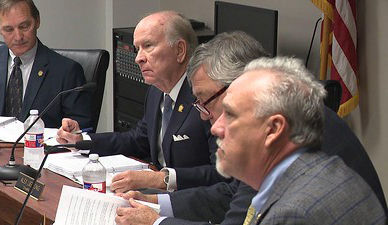
The Nevada Gaming Control Board held a 70-minute workshop to discuss the prospect of remote signup to address bottleneck of customers waiting in line at casinos to sign up for cashless accounts in person.

The board heard testimony from Sightline co-founder and co-CEO Omer Sattar, who noted long lines at Resorts World.

“At Resorts World, primarily because of the ID verification issue, in the absolute best of cases the time was six minutes,” Sattar said. “In reality, the time was more like two hours. That included paper forms being filled out, people writing Social Security numbers on pieces of paper and handing them to cage personnel, and cage personnel trying to identify each person by looking at their ID. Our partners have been quite successful, but the experience from a user perspective (hasn’t been). The lines have been hundreds of people long waiting to enroll and fund and play. That’s what we’re trying to solve over here.”

The proposal is not without opposition. Station Casinos attorney Marc Rubinstein told the board that the Federal Crime Enforcement Network (FinCEN), which permits remote signup for online wagering accounts, still prohibits such remote activity for physical casino transactions.

We do not dispute what is permissible for online gaming,” Rubinstein said. “Federal law indeed requires in-person validation of a government-issued ID in order for a terrestrial casino transaction.”

Board members, however, noted that FinCEN permits remote signup at both commercial and tribal casinos outside Nevada.

“It is a nuisance for players to wait in a queue when they could easily do this remotely, which they already do (for online poker),” said board member Phil Katsaros. “To not allow for that in the terrestrial world where that player has to come into the casino, and I know the commission is on the record saying we don’t want to discourage people from coming to casinos. This would actually encourage it because they sign up for it and theoretically thereafter they want to go to the casino. It doesn’t detract in any way.

“Much has been on the record in discussion on the sports wagering side of the aisle. This doesn’t touch that. I am supportive of this concept but not necessarily to this exact language. I would like the opportunity for us to tweak internally and put out another draft so it is then brought back to us for consideration.”

The Gaming Control Board is slated to further discuss the issue at upcoming board meeting, after which it would make a recommendation to the Nevada Gaming Commission, which has the final say on such a change.

Florida Casino Closes Jai-Alai Fronton

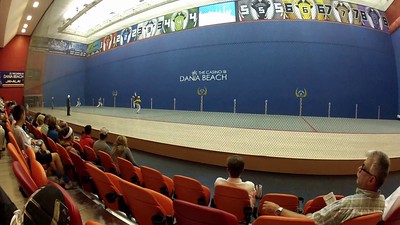
After 69 years, the jai-alai fronton at the Casino at Dania Beach in Florida closed on November 28. Last spring the Florida legislature and the Seminole Tribe of Florida negotiated an agreement allowing parimutuels to decouple from jai-alai and harness racing, spelling the end for Dania Beach.

In its heyday in the 1970s and 1980s, crowds of 10,000 people and more packed the Dania fronton; seating capacity at the venue had dwindled to 500. Former player and Jai-alai Operations Manager at the Casino at Dania Beach Benny Bueno said he plans to complete the current season. “I’m trying to bring this big bird in for a landing. It’s disappointing but not a surprise as they have been talking about this for a while now. Jai-alai was always attached to something with the casinos, but when the bill was introduced to decouple us and it passed, that was it.”

Bueno said he will help the 26 players on the roster as well as Dania jai-alai’s 40 employees. He said, “There is a lot of emotion and a lot of young guys that don’t want it to end and want to keep playing. There are a lot of different paths that people are taking. Many are going back to France and Spain and some are remaining here because they have wives and kids. They will be looking for employment. It has been tough and even though we have accepted it, we wish it wasn’t so.”

Bueno added, “The season has been great despite the news that we are going to be closing. The players continue to play hard and we have been fortunate that there have been few injuries. There’s still prize money to be earned before we close, and there are incentives for players when they win.”

During the farewell ceremony, a trophy was presented and players were introduced to the large crowd. Famous players like Hall of Famers Joey Cornblit and Arriaga Andoni Echaniz attended the final event.

Prior to the finale, Bueno said, “People can still get an opportunity to witness in person one of the greatest sports in the world. I’m going to enjoy watching what little jai-alai is left. I remain confident that something positive will be on the horizon.”

New York Lawmakers Want to Axe Racing Subsidies

A fight is brewing between racetrack supporters and opponents in New York. At the center of this disagreement are plans to introduce a bill to eliminate using funding from video lottery terminals to subsidize the horse racing industry.

The legislation, from New York State Assembly member Linda Rosenthal and State Senator Zellnor Myrie, will look to redirect what it says are $230 million in annual subsidies toward funding public schools, agricultural grants, human services and workforce protections, according to the Blood Horse.

The New York Racing Association (NYRA), which operates Belmont Park, Aqueduct Racetrack, and Saratoga Racecourse in New York, opposes the legislation, Pat McKenna, NYRA’s senior director of communications, said in a statement.

“Racing support payments are not subsidies,” McKenna said. “The payments from VLT revenues are made to the thoroughbred industry in part because NYRA transferred land and other intellectual property to the state in 2008 and has acted as the steward of the properties in the years since. The VLT payments are compensation for that transaction rather than subsidies. Rather than a rational public policy disagreement, these groups are only interested in how best to damage horse racing to further their own political agenda.”

New York lawmakers are unlikely to act on legislation until they return for the next session in January. A similar bill that would redistribute revenues in 2020 failed to pass, according to the Albany Times-Union.

Workers Sue Penn National Over Smoking Surcharge

U.S. District Judge Stephen Bough in Kansas City recently granted certification for a class action lawsuit against Penn National Gaming brought casino workers in Missouri, Kansas and other states.

The workers, who are smokers, claim a $50 monthly tobacco surcharge withheld from their paychecks violated federal law regarding employee health plans. The certified class includes about 1,500 workers who participated in Penn National’s group health plan from 2016 to 2020 and had the tobacco surcharge deducted from their wages.

The lawsuit originally was filed in Platte County Circuit Court in March 2020 by three casino workers, on behalf of other workers in a similar situation. Penn National moved the case to federal court, as it was entitled to do, in April 2020.

The lawsuit also alleged Penn National operated an illegal tip pool and also unlawfully deducted from workers’ wages the cost of obtaining and renewing the workers’ gaming licenses. Both parties have agreed those claimants can be certified as a class.

Workers were informed they could avoid the surcharge if they completed a smoking cessation program. But they weren’t reimbursed for the surcharges that accumulated prior to completing the program.

Attorney Alex Ricke, representing the workers, said no Penn National employee who completed a tobacco cessation program over the last 5-plus years has avoided paying the surcharge. Attorney George Hanson, also representing the workers, said Bough’s ruling was the first of its kind involving a tobacco surcharge that allegedly violates federal laws. He said Penn National was penalizing smokers who work in environments where smoking is common. He said, “In some of these casinos, smoking continues to be permitted. So just think of the irony of penalizing a worker for smoking when they are all smoking in some way in at least those facilities which permit patrons to light up.”

Penn National operates 41 casinos in 19 states and employs 18,000 workers. Venues include Argosy Casino in Riverside, Missouri; Hollywood Casino St. Louis; and Hollywood Casino at Kansas Speedway in Kansas City, Kansas.

Seminoles Shut Down Mobile After District Court Ruling

U.S. District Court Judge Dabney Friedrich says she won’t issue a stay on her ruling that effectively bans all sports betting in the state.

The judge also said the Seminole Tribe may not launch roulette and craps at its Florida casinos. Friedrich contends the tribe hasn’t proved it would be irreparably harmed if the stay isn’t granted.

As a result, the tribe halted sports wagering on its app, but in-person sports betting will remain at the tribe’s Florida casinos.

At issue is the concept, found in the amended 30-year gaming compact signed by the state of Florida and the Seminole Tribe last spring, that any bet placed anywhere in Florida that’s processed on a Seminole server is considered a bet placed on tribal lands. That model, which is similar to a state regulation in New Jersey that assumes the sports bets are made in Atlantic City, the only place casino gambling is legal in the state, gives the tribe a monopoly on retail and online sports wagering in Florida.

In her ruling, Friedrich wrote, “Altogether, over a dozen provisions in Indian Gaming Regulatory Act regulate gaming on ‘Indian lands,’ and none regulate gaming in another location. It is equally clear that the Interior Department secretary must reject compacts that violate IGRA’s terms.” Friedrich added, although the compact “deems” sports betting to occur at the location of the tribe’s servers, “this court cannot accept that fiction. When a federal statute authorizes an activity only at specific locations, parties may not evade that limitation by ‘deeming’ their activity to occur where it, as a factual matter, does not.”

Under the deal, the Seminoles would have given the state $2.5 billion over the first five years, in exchange for controlling sports betting and being allowed to add craps and roulette at tribal casinos. Tribal officials said $37.5 million in sports wagering revenue was paid to the state in both October and November.

Meanwhile, the Seminole Tribe filed for an immediate stay on Friedrich’s ruling to the D.C. Court of Appeals. In their brief, lawyers for the tribe stated, “Without a stay, the tribe will suffer injury to its sovereignty, and hundreds of tribal and vendor jobs related to sports betting, craps and roulette will be lost, hurting hundreds of Floridians and their families. Further, tens of millions of dollars in investments will be jeopardized, and the people of Florida will lose nearly $40 million per month in tribal payments.”

The Department of the Interior and the plaintiffs, West Flagler Associates, responded to the tribe’s emergency motion. The Interior Department declared, “The federal government advises that, while it does not join in the tribe’s motion for stay pending appeal and does not agree with all analysis presented in that motion, it also does not oppose the motion.”

In their brief responding to the tribe’s emergency motion, the plaintiffs, West Flagler Associates, owners of the parimutuels Magic City Casino and Bonita Springs Poker Room, stated the “unambiguously unlawful” compact causes irreparable harm to the businesses. Also, the plaintiffs said, “The tribe wants to have it both ways: to persuade this court to grant a stay, it tells the court that it is about to lose millions in revenue; but if this court refuses to grant a stay, it is keeping its options to ‘remain fully open to all players.’”

The plaintiffs also argued that any harm the tribe will suffer is self-inflicted, since it launched sports betting product before the district court ruled on the compact’s legality.

The anti-gambling group No Casinos, Monterra MF LLC, a Broward County business, and Miami businessmen Armando Codina, James Carr and Norman Braman filed an amicus brief, joining West Flagler to oppose the tribe’s emergency stay request, but for different reasons. No Casinos’ brief stated, “The parimutuels support gambling expansion so long as they are allowed to enjoy it alongside the Seminole Tribe. No Casinos and its allies oppose the expansion of gambling in the state, consistent with the Florida constitution, even if it occurs on tribal lands.”

The brief also argues the tribe violated the will of Florida voters who passed a constitutional amendment in 2018 giving them exclusive rights to approve gambling expansion. “In substance, the Seminole Tribe argues that the public interest is of no consequence, even where an agreement to expand gambling is plainly violative of Florida law that gives voters the exclusive right to approve or reject the expansion of gambling.”

The Washington, D.C., district judge struck down the compact on November 22, ruling that it violates federal Indian gaming laws. The tribe, continuing to accept sports bets, filed for a stay of that order, which Friedrich denied, and filed notice it would appeal to a three-judge appellate panel, where it has again requested a stay.

The three-judge appellate panel then announce the ruling on Friday, December 3. A decision favoring the tribe would have allowed sports betting to continue while Friedrich’s ruling plays out. A denial of the motion required the state and tribe to revert to the 2010 compact, which did not include mobile sports betting.

“Despite the decision, the Seminole Tribe looks forward to working with the state of Florida and the U.S. Department of Justice to aggressively defend the validity of the 2021 Compact before the Appeals Court, which has yet to rule on the merits of the 2021 Compact,” tribal spokesman Gary Bitner said in a statement. “The Seminole Tribe of Florida, the state of Florida and the United States have all taken the position that the 2021 compact is legal.”

Attorney Daniel Wallach, who specializes in gaming law, said, “You cannot shoehorn mobile sports betting into a compact. The judge’s ruling makes that crystal clear.”

Wallach noted the tribe could try to get sports betting legalized through a ballot measure. The group Florida Education Champions, largely supported by DraftKings and FanDuel, currently is gathering signatures on petitions to place the issue on the 2022 ballot.

“The advantage, I think, to having the initiative rather than the compact provide online sports betting is it’s the difference between a monopoly with just one provider versus a competitive marketplace,” Wallach said. If voters approved the issue, sports betting could launch by January 2023.

PlayUSA.com Network Lead Analyst Dustin Gouker commented, “We knew from the beginning the unusual nature of the compact would eventually put the fate of Florida sports betting in the hands of the courts, and this is far from over. The future for Florida sports betting stands on shakier legal ground and its future is far murkier today than it was yesterday.”

Also last week, Las Vegas Sands filed a suit against the tribe for “tortious interference with business relationships” claiming the Seminoles are trying to block Las Vegas Sands from gathering nearly 900,000 signatures needed to get a gaming expansion measure on the 2022 ballot.

LVS alleges that the tribe is paying off its hired petition gatherers to get them to back off by working for them in signing a so-far non-existent tribal referendum or not work at all.

“In addition to their coordinated harassment and intimidation campaigns, parties acting on behalf of the Seminole Tribe are ‘paying off’ contracted petition circulators as part of a scheme to ensure such circulators do not perform the tasks they have been contracted to provide to the plaintiffs,” said the lawsuit. The suit seeks to stop the interference as well as seeking unspecified monetary damages.

Senator Jeff Brandes is seeking an investigation into the situation in which he alleges that the Seminoles were paying others to bully, intimidate and harass Florida voters.

Lightfoot: Sportsbooks Won’t Cannibalize Chicago Casino

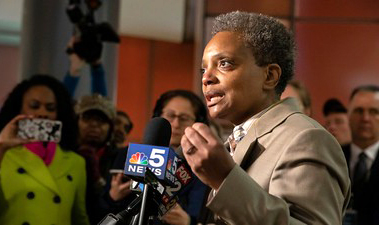
Chicago Mayor Lori Lightfoot recently said there is no hard evidence that allowing sportsbooks in and around five stadiums would “cannibalize” revenue from a Chicago casino.

Responding to “dire warnings” from Neil Bluhm, owner of Rivers Casino in Des Plaines and Rush Street Gaming, which presented two proposals for a downtown Chicago casino, Lightfoot emphasized she would never jeopardize casino revenue which would be directed to struggling police and fire pensions funds.

Lightfoot said, “There’s been some dire warnings that have been issued by some who already use sportsbook at their own casinos and who are trying to kill sportsbook here in Chicago. They have not put forth any convincing evidence that somehow it’s gonna cannibalize a casino here in Chicago. We’ve seen zero indication that that’s the case. We’ve heard a lot of talk by people who would profit by not allowing the sports teams to have a sportsbook of their own. But talk is talk. Facts and data, that’s what I’m about.”

Noting the Illinois legislature authorized sports betting in 2019, Lightfoot said she expects the city council will approve an amended ordinance lifting the Chicago ban this month. That would allow sports betting at Wrigley, Guaranteed Rate Field, Soldier Field, the United Center and Wintrust Arena, and also in a “permanent building or structure located within a 5-block radius” of those stadiums.

Lightfoot added, “Of course, there will be some impact on a Chicago casino. There’s never been any suggestion that it won’t impact it. The reality is, you can’t watch a sporting event now without seeing an ad for FanDuel or DraftKings. Sportsbook is in our DNA and blood system now in the city of Chicago and really across the country where it’s legal. So, the question is, how do we manage this in a way that benefits Chicago taxpayers? That’s really the only question.”

Bluhm said lifting the city’s ban on sports betting would have a “material negative impact” on a Chicago casino and revenue it would generate for the city. Specifically, he said losses could be as much as $88 million, about 10 percent of the “projected gaming revenue,” no matter which of five proposals is selected.

Bluhm said, “The person who gambles on sports is very likely a gambler who also bets on tables and slot machines. It’s 20 percent of our business. The bottom line is that less people will come to the Chicago casino when they can bet on sports at the stadiums. That means that less sports bettors will walk around the casino and play slots and table games and less people go to the restaurants at the casino if they can also be betting sports at the same time at the stadium.”

He added, “For almost 20 years, the city has tried to get a casino. Now, when you finally can have one, why would you create several competitors when the city gets no revenue from sports betting? What is more important, that the city have a great casino or the sports teams have a retail sports betting book? This is not good for the city. It’s gonna cost them a lot of money.”

Michigan Tribe Looks Ahead to Mobile Sports Betting

In Michigan, the Saginaw Chippewa Tribe, owners of Soaring Eagle Casino and Resort in Mount Pleasant, the state’s largest retail casino, and Saganing Eagles Landing Casino Hotel, announced it may launch online sports betting in time for Super Bowl LVI on February 13.

Saginaw Chippewa Gaming Enterprises would be the state’s 15th and final online gambling operator. The Michigan Gaming Control Board still must approve the tribe’s plans.

Soaring Eagle spokeswoman C.C. Griffus said, “The current estimated timeframe for retail sports betting at the two properties, along with the online sports betting and online casinos launches, is mid-January 2022.”

Most Michigan online casino operators secured MGCB approval and launched on January 22, the first day of legal online sports betting. The rest, except for Soaring Eagle, launched by July. The state’s online casinos and poker rooms generated $110 million in gross revenue in October.

In May, California-based iGaming provider GAN Limited announced its partnership with Soaring Eagle. GAN helped Soaring Eagle develop its iGaming and sports betting apps and worked on Access Club marketing. A GAN statement read, “Soaring Eagle Casino & Resort offers an expansive 210,000 square-foot casino facility with thousands of slot machines and the widest variety of floor games available in the Midwest. It also possesses an extremely sizable database of patrons, who the parties anticipate converting into active online players via GAN’s patented iBridge loyalty platform.”

Malta-based Kambi Group also is assisting SCGE with its retail and online sportsbooks.

Barstool to Open Philadelphia Sports Bar

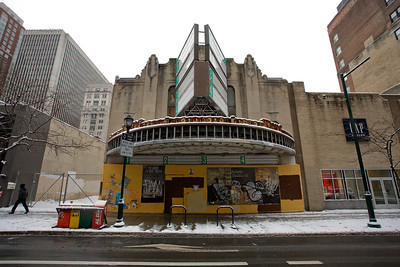
Barstool Sports has revealed it has broken ground on the Barstool Sports Bar in Center City Philadelphia. The company, part-owned by Penn National Gaming, is building the venue on the site of the Boyd Theater in Philadelphia’s Rittenhouse Square.

The sports bar will not include a retail sportsbook, which negates the requirement for Barstool to secure a gaming license for the venue. However, the location will promote the use of the Barstool Sports mobile sportsbook in an atmosphere catering to a younger demographic with food, drinks and multiple TV monitors.

Barstool and Penn National, which had kept the location of a planned Barstool-branded sports bar secret, revealed the location in a Thanksgiving Day Instagram post.

Penn National paid around $163 million last year for a 36 percent stake in Barstool, with the option to eventually acquire the entire company.

NY Another Step Closer to Mobile Sports Betting

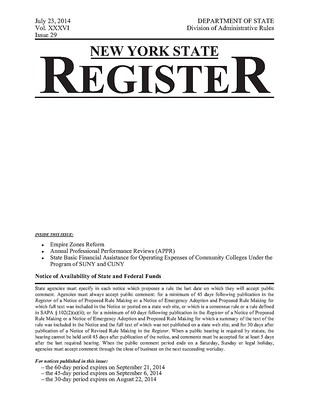
Nobody ever accused the New York State Register of being a riveting read. But for proponents of mobile sports betting in the state, issue 47, posted a day before Thanksgiving, is a must-read document that moves the needle that much closer to the launch.

The Register contained what amounts to the launch code—the rules and regulations governing online sports wagering. If these guidelines didn’t get published the process would grind to a halt, according to USBETS.

With the publication, the New York State Gaming Commission can “prescribe the rules for mobile sports wagering through servers located at casinos and improve sports wagering regulation at casinos,” the Register says.

Comments and requests received by the commission were answered in the Register. Some of the issues related to DraftKings. The company sought approval for employees of one sportsbook to wager on a competitors’ site. No deal, the Commission said.

The reason: it would compromise “the integrity of sports wagering if employees of one licensee used their knowledge of wagering data to gain wagering advantages, to the perceived disadvantage of bettors in the public who lack access to such information.”

DraftKings also objected to a requirement that all software be tested in advance, preferring only critical software. The commission nixed that idea as well saying all software can be considered critical.

DraftKings also asked for—and was denied—the link to customer complaints to be taken off the main page and out on the customer account page.

The New York Racing Association wanted to offer its advance deposit wagering platform to the mobile sports betting licensee. The commission was amenable as long as applicable regulations were followed.

Penn National asked that promotions be submitted for approval in as little as 48 hours in rather than 15 days as the law states. That request also fell on deaf ears.

The next step is approval of the technological requirements to go live. Sportsbooks need to set up their servers at one of four upstate commercial casinos, and have regulators approve the set up. Negotiations are underway. The annual cost for this arrangement is $5 million for each operator, paid to the host casino, plus the cost to construct a server room and maintain the server.

This could be completed by early 2022, in time to accept bets for the Super Bowl, according to PlayNY.

New York State Senator Joseph Addabbo has requested that all providers launch on the same day, a date selected by the gaming commission.

“I don’t believe it bodes well for the consumer or the state if everybody starts haphazardly,” Addabbo told PlayNY. “When that definitive date is chosen, most likely by the gaming commission, the question is, ‘Will they be up and ready by then?’ Some might be because of their experience, and maybe they all will.

When it does go live, bettors won’t be able to wager on any in-state college teams, like Syracuse, St. John’s or Army.

“The intent was an effort to protect New York college athletes from outside influences,” Addabbo said. “This issue is a fraction of the totality of mobile sports betting, but it’s something to keep an eye on. … If we’ve missed the mark on something, the legislature has to stay ready to correct it or to improve it. I’m always constantly thinking about the next step. I think that’s what the market dictates.”

New Jersey has the same regulation, and at the polls in November, voters chose to retain the rule.

Once the launch date arrives, the marketing battle for bettors will step up as the state becomes the largest mobile market in the country, according to Forbes.

“With nearly 20 million residents, one of the most visited cities in the world, and fervently loyal fan bases, New York is the next battleground for sportsbooks to compete for valuable market share,” said Max Bichsel, vice president of US Business for the Gambling.com Group, which operates affiliate Bookies.com.

USFL Is Reborn, Banks on Sports Betting

The U.S. Football League (USFL) played three seasons of pro spring football in the 80s then disappeared when the owner of the New Jersey Generals thought it was a good idea to switch to fall football and take on the NFL.

Since those heady days, the American Association of Football came and went. So did the XFL. But those were in days when sports betting was illegal in most states.

With those failures as a backdrop, the USFL—with the same teams, but without the Generals owner, one Donald Trump—is returning in April. The hope is that the spread of legalized gambling will draw enough of an interest on the tube and in stadiums to make it a success in the spring time slot, according to Penn Bets.

Teams include: the Philadelphia Stars, Pittsburgh Maulers, the Michigan Panthers, the New Jersey Generals, the Birmingham Stallions, the New Orleans Breakers, the Tampa Bay Bandits and the Houston Gamblers.

Here’s one drawback. The teams will not play in their home cities. All games will be played at one site. Birmingham seems to be the leading choice. So, what makes teams wedded to the city that hosts the name? To be determined.

Games will be broadcast on FOX, FOX Sports, USA Network and NBC.

But just because they build it doesn’t necessarily mean they will come.

“In the past, these leagues have struggled to get traction at the betting counter,” said Jay Kornegay, vice president of race and sportsbook operations at the Westgate SuperBook in Las Vegas. “It’s usually dominated by sharps that have done their research. We always hope they get the attention from the recreational player, but it’s usually tough sledding. We’ll be rooting for them.”

Robert Walker, the director of sportsbook operations for US Bookmaking, agrees—to an extent.

“Being able to watch it is critical,” Walker said. “Television has driven sports betting for the last 40 years. They go hand in hand. And it has to be a decent product. Look at arena football. That was kind of fun, but never really caught on with the betting public. But remember: We’re only using Nevada as the gauge, as opposed to having all these states legalized.”

Walker thinks the schedule—games on Friday night, Saturdays, Sundays, and Monday night—should help.

“I definitely think the games being standalone, you’ll be able to watch all four games, that’s a plus,” Walker said. “As a bookmaker, we’re obviously rooting for it to succeed.

Caesars Adds Knicks, Rangers to NY Partners

To accompany its selection as one of nine mobile operators in New York, Caesars sportsbook has reached a deal with Madison Square Garden (MSG) for sponsorship of the New York Knicks NBA team and the New York Rangers hockey team.

In addition, MSG Network will air a series featuring comic JB Smoove, who plays Caesar in the company’s ad campaigns, according to Barrett Sports Media.

“When we looked around and said who’s the best partner we could choose, this seemed like a fairly obvious outcome, actually,” said Caesars Digital Co-President Eric Hession. “When you looked at the assets that they have, you end up with a really great package that can all be used in different ways.”

To date, BetMGM is the only other sportsbook among the nine to make a deal with MSG.

“We are privileged in that our home base sits atop the largest commuter hub in North America in Penn Station and that New York state is projected to be the largest gaming market in the country,” said MSG Entertainment Executive Vice President/Marketing Partnerships Ron Skotarczak.

The Madison Club at the historic hall will get a makeover when the season ends. When it reopens, it will feature Caesars branding and boards posting lines and odds for the 2022-23 season.

NBC Pays $2.7B for Premier League Rights in U.S.

NBC Sports has renewed its contract with the English Premier League for $2.7 billion. The renewal leaves NBC as the lead U.S. broadcaster of the soccer matches through 2028.

Reports indicate the network doubled the value of its existing contract in an effort to remove would-be suitors ESPN, CBS, and Warner. NBC Sports has held its position with the league since 2013. The games attracted an average of more than 600,000 viewers this season, according to SBC News.

The renewal means NBC Sports will show all 380 Premier League matches per season, while also simulcasting games in Spanish.

The Premier League expects to also renew its broadcast contracts with Sky and BT Sports uncontested. The concession settled Covid-19 disputes when the U.K. permitted re-scheduled matches to be shown on terrestrial TV during the lockdown.

“Interest in the Premier League is going from strength to strength, and it is great to see the growing global demand to watch our matches and engage with the league,” said the league’s chief executive, Richard Masters. “We are proud to provide more investment into our football pyramid than any other football league in the world.”

Arkansas Considers Mobile Sports Betting

The Arkansas Racing Commission announced it will meet on December 30 in Little Rock to consider rule changes to sports betting in the state.

Among the changes to be considered is not requiring bettors to place wagers at casino sportsbooks, a move that could lead to online and mobile betting. Currently sports betting only is allowed on casino premises.

Arkansas Department of Finance and Administration official Scott Hardin said, “So if you’re in Northwest Arkansas, Northeast Arkansas and don’t want to make the drive and want to place a sports wager, that opens up an entirely new market.” Hardin said if the proposed rule change is approved, mobile sports bets could launch in time for the 2022 Super Bowl.

The commission meeting will include a public comment period. After that, commissioners are expected to vote on the rule change following public comments.

Under the proposed rules, licensed casinos−Oaklawn in Hot Springs, Southland in West Memphis and Saracen in Pine Bluff−could partner with up to two platforms or apps. Bettors would not have to register for an account in-person, as required now.

A sports betting bill that would have allowed casinos to operate online sports wagering died in a House committee on the final day of the last legislative session.

Arkansas voters legalized sports betting in November 2018. At least $86 million has been wagered since the first retail sports bet was placed in 2019.

Louisiana Mobile Sports Betting Shoots for January

Online sports betting is expected to be available in Louisiana in early or mid-January 2022, in time for National Football League playoffs, according to Gaming Control Board Chairman Ronnie Johns.

Previously, Johns said online betting would begin by New Year’s Day. “We want to do it quickly,” he said, “but we want to do it the right way.”

On-site retail sports betting now is available at eight Louisiana casinos. The applications of six other casinos and racetracks are under review; five eligible venues still have not applied for sports betting licenses, but may get in under the wire; the application deadline is December 31.

“All the reports I’ve gotten from across the state is that everything has gone out without a hitch,” Johns said.

Fees are $750,000 for the initial license and $500,000 for annual license renewal. Louisiana residents may sign up for Caesars Sportsbook and DraftKings app and web accounts, but can’t place mobile bets while the license approval is pending.

Louisiana residents in 55 parishes approved sports betting last November. Sports wagering at casinos was expected to begin in September, but the kickoff was delayed by Hurricane Ida.

The eight venues offering sportsbooks are:

  • Barstool Sportsbook at Boomtown Casino and Hotel in Bossier City
  • Barstool Sportsbook at Margaritaville Resort Casino in Bossier City
  • Barstool Sportsbook at L’Auberge Casino Hotel in Lake Charles
  • DraftKings Sportsbook at Golden Nugget Hotel & Casino in Lake Charles
  • Caesars Sportsbook at the Horseshoe Casino in Bossier City
  • Barstool Sportsbook at Boomtown Casino and Hotel in Harvey
  • Caesars Sportsbook at Harrah’s New Orleans
  • Barstool Sportsbook at L’Auberge Casino and Hotel in Baton Rouge

Paragon Casino Resort in Marksville, owned by the Tunica-Biloxi tribe, also opened its Betfred Sports retail sportsbook on October 6. The state control board does not regulate tribal casino operations.

AZ Casino Launches Betting with IGT PlaySports

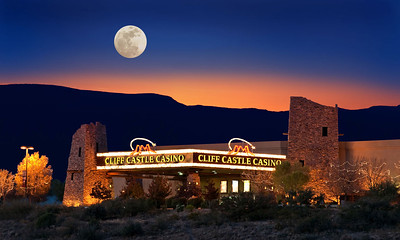
The Yavapai-Apache’s Cliff Castle Casino in Camp Verde, Arizona, has entered into a multi-year agreement with International Game Technology PLC to launch a retail sportsbook utilizing the IGT PlaySports technology and trading advisory services, enabling casino guests to place pre-match and in-game wagers over the counter or at the venue’s self-service PlaySports kiosks.

“We believe adding sports betting to Cliff Castle Casino’s existing entertainment offering will enable us to attract new patrons, extend and enhance our guests’ visits and help us stay competitive in Arizona’s rapidly growing sports betting market,” said Aaron Moss, Cliff Castle Casino general manager. “Cliff Castle Casino looks forward to introducing our guests and local sports fans to the excitement and quality of an IGT-powered sportsbook.”

“Cliff Castle Casino can be confident in the reliability and scalability of IGT PlaySports technology, and in the abilities of our skilled trading advisory services team to help them maximize the opportunity,” said Joe Asher, IGT president of sports betting. “Arizona is an exciting sports betting market, and we’re pleased to see IGT’s longtime customer, Cliff Castle Casino, be a part of this growth opportunity.”

FanDuel, Genius Sports Sign New Partnership

Genius Sports Ltd. has inked a new agreement with FanDuel Group to provide a range of official NFL data, content, media products and trading services. This follows FanDuel’s selection in April as one of the NFL’s official sports betting partners.

At the same time, Genius Sports was chosen as the league’s exclusive live streaming partner as well as a distributor of official play by play stats and betting data feeds. Alongside the NFL’s official data feeds, Genius Sports will create value for FanDuel for pre-match and in-game betting and more.

FanDuel will also access official data-powered in-play content and live trading solutions across multiple sports and thousands of live events.

“We are delighted to partner with FanDuel to help them create the most compelling and contextual sports betting experience possible,” said Mark Locke, CEO of Genius Sports. “With official data at its heart, this partnership enables FanDuel to better engage and monetize its customer base at every step of their journey.”

Niall Connell, general manager of FanDuel Group, said “We are always looking for ways to improve our product and the data opportunities gained via this agreement help FanDuel achieve that objective.”

IGT Sues DOJ Over Wire Act

International Game Technology PLC has filed suit against the U.S. Department of Justice, seeking a declaration that it will never be prosecuted under the 1961 federal Wire Act for operations related to its internet lottery sales.

IGT is seeking clarification of the law, created by U.S. Attorney General Robert Kennedy to battle mob-controlled sportsbooks, as it applies to sales of lottery tickets over the internet.

In a 2012 opinion after a request by the Illinois Lottery, the DOJ stated the Wire Act applied only to sport betting. That opinion cleared the way for the creation of the internet gaming business. In 2018, the agency under President Donald Trump reversed that opinion to stat that the act applies to all online gaming across state lines.

Critics claimed this move was to placate the late Las Vegas Sands Chairman Sheldon Adelson, a Trump supporter and top Republican donor who was opposed to online gaming.

The New Hampshire Lottery sued the DOJ, arguing the reversal would “extend criminal liability” to its operations, while “intruding on the sovereign interests of the state of New Hampshire without unmistakably clear language that Congress intended such as result. Such a construction of the statute is not faithful to the text, structure, purpose, or legislative history of the text.”

A district court ruled for the lottery, holding it is exempt from the opinion.

The court ordered the new DOJ interpretation to be set aside. The DOJ appealed, and the higher court again ruled New Hampshire exempt but vacated the order for the opinion to be set aside.

IGT is suing to head off any future interpretation of the act that could affect its lottery business.

“IGT’s entire non–lottery gaming business is subject to prosecution, and DOJ has offered only the promise of a 90–day heads up before it can subject IGT’s lottery business to the Wire Act as well,” the company said in the lawsuit, which calls on the courts to remove all remaining ambiguity from the law.

Evolution Shares Tumble Due to Illegal Gambling Claim

Shares in Evolution AB, the Swedish online gaming giant, tumbled after a competitor accused the company of doing business in jurisdictions where iGaming is illegal.

Evolution launched its own internal investigation of what led an unnamed U.S. competitor to send a letter to the New Jersey Division of Gaming Enforcement claiming Evolution allows its live-dealer games to be played in countries where online betting is illegal. The letter, sent by attorney Ralph Marra, said the claim was based on research from private investigators hired by the competitor, according to a Bloomberg News report.

The company also reached out to the DGE last week, noting that the company only does business where iGaming is legal, and informing regulators of the internal review.

In an investor call, Evolution CEO Martin Carlesund said Evolution is proactively working to answer any questions posed by the DGE as it seeks to bring its live-dealer games to New Jersey. Carlesund also affirmed that Evolution only sells its games to licensed iGaming operators.

Carlesund told Bloomberg he believes those behind the letter used an internet address from a legal iGaming jurisdiction to enter the Evolution gaming lobby and make it seem like the company was doing business in banned markets.

Meanwhile, Evolution’s stock price, which had risen 73 percent this year prior to last week, fell by 31 percent after the news broke, reducing the company’s market value by more than $11 billion.

Wynn Dumps Plan for iGaming Spinoff, Names New President

Wynn Resorts has indicated it is abandoning a plan to spin off its online gaming branch, Wynn Interactive, ditching a plan to merge the division with a special-purpose acquisition company to create a $3.2 billion public company.

According to a report in the Las Vegas Review-Journal, Wynn Resorts said Wynn Interactive and the SPAC, Auserlitz Acquisition Corp., mutually agreed to end the merger plan immediately.

The announcement came during an investor earnings call by Wynn Interactive CEO Craig Billings, who takes over as Wynn Resorts CEO February 1 with the departure of Matt Maddox.

“In light of elevated marketing and promotional spend in the sports betting industry, we are pivoting our user acquisition efforts to a more targeted ROI-focused strategy,” Billings said. “In so doing, we expect the capital intensity of the business to decline meaningfully beginning in the first quarter of 2022. WynnBET’s best days lie ahead of us.”

“With the elimination of the venture, we believe Wynn is likely to trade on a revenue multiple, akin to peers,” said Deutsche Bank analyst Carlo Santarelli in an investor note, retaining a price target of $131—compared to $93.95 on the day of the earnings call.

Also last week, Wynn Resorts named Ian Williams as president of Wynn Interactive. In his new role, Williams will oversee Wynn Interactive’s global day-to-day operations.

A 20-year gaming industry veteran, Williams joined WynnBET in October as chief operating officer. Prior to that, he served as president of online gaming for Churchill Downs Inc. and helped CDI’s interactive’s division develop into one of the most profitable online wagering businesses in the U.S.

Williams helped grow Churchill Downs’ horse racing advance-deposit wagering business (Twinspires.com and Betamerica.com) during his five-year tenure, profitably delivering record handle in every year with the company. He was also responsible for spearheading the initial development of Churchill Downs real money sports and iGaming businesses.

A graduate of Leeds Metropolitan University, Williams has 17 years of experience as a C-level executive in the United States, with stops in Canada and the United Kingdom. He also founded Thistle Gaming, a company distributing real-time sports data feeds and virtual racing to the leading bookmakers in Europe and Asia.