Author: Casino Connection Staff

Chicago Hears Pitches From Casino Bidders

It was a dog-and-pony show in Chicago last week when the groups interested in building a casino in the city gave their pitches. The five proposed projects all would cost in excess of $1 billion and create at least 2,000 permanent jobs. All but one would also utilize temporary casinos until their permanent projects were ready in three or four years. Two companies, Bally’s and Rush Street Gaming each offered two proposals, and a third company, Hard Rock International, presented the most expensive one. Each project estimates it will deliver at least $200 million every year to the city to alleviate the massive multi-billion pension liabilities the city has pledged to the fire and police unions. Each project included much community involvement and support, including pledges to involve women- and minority-owned businesses in a big way.

The projects are:

  • Rivers McCormick, Lakeside Center, McCormick Place. The $1.2 billion Rush Street Gaming, Farpoint Development, and McClaurin Development project would transform the Lakeside Center, a huge building adjacent to McCormick Place, Chicago’s convention center. Renovations would take 12 months and would not require a temporary casino and create 2,800 permanent jobs. Rush Street Gaming Chairman Neil Bluhm is a Chicago native. He stressed his company’s ability to build and develop casinos, saying Chicago needs an experienced developer, not on-the-job training.” Rivers McCormick is the only project that would not be built in phases. The project does not include a hotel, but there are many adjacent hotels that Rush Street says they will utilize.
  • Hard Rock One Central. The Hard Rock International, Landmark Development and Loop Capital project would go on the southern portion of the One Central project, 32 acres on railyards adjacent to the McCormick Center and Soldier Field, the home of the NFL Chicago Bears. Phase one of the project is expected to cost $1.7 billion. The casino would be just part of a mixed use development proposed by developer Bob Dunn with an estimated price tag of at least $6 billion. Dunn has requested billions in subsidies. The Hard Rock casino would not depend on such subsidies and would be fully funded once it is approved. But observers see the looming subsidies as a negative since the Hard Rock facility would become a magnet for further investment.
  • Rivers 78. The second Rush Street proposal, this time with developer Related Midwest, is envisioned as being the heart of an entertainment district in the 78 neighborhood. The $1.6 billion project would include 300-room hotel and a Riverfront Plaza with a 1,000-foot observation tower, which the local media are calling Chicago’s “Eiffel Tower.” The project boasts 200 minority investors and 7,000 construction jobs. The downtown location is a drawback as traffic is already congested and would require some infrastructure improvements.
  • Bally’s Chicago. Bally’s has designed two locations for similar designs—either McCormick Place marshalling yard or the former Chicago Tribune publishing center on Grand Ave. The project would cost $1 billion for phase one and another $600 million for a second phase. A temporary casino in an older warehouse would cost $70 million. The permanent casino would take three years to build. Bally’s Chairman Soo Kim emphasized that Bally’s has no competitive conflicts unlike his competitors. Hard Rock has casinos in Gary, Indiana and Rockport, Illinois, while Rush Street owns, along with Churchill Downs, Rivers Des Plaines, the most successful casino in Illinois. The property promises a state-of-the-art sports book, a Chicago sports museums and rotating art exhibitions.

Bally’s proposal for the marshalling yards, which Bally VP Chris Jewett called the “best location,” was immediately called into question since the company does not own the yards, which are under contract to another company. Chicago-based GRIT Chicago LLC was awarded a request for proposal that runs until May 2023 to redevelop the property. A spokeswoman for the Metropolitan Pier and Exposition Authority, which owns the land, said it was not for sale.

Four of the five locations are near ethnic neighborhoods and various politicians and community leaders have voiced objections to having a casino so close to their locations.

Chicago Mayor Lori Lightfoot will pick the winner sometime in early 2022 and send it to City Council. After consideration, council will then forward the bid to the Illinois Gaming Control Board, which will then proceed with licensing approvals. Following the presentations, she tried to dampen the enthusiasm of proponents.

“They look beautiful, and they’re saying a lot of things that really, I think, speak to our values, but as you all know, the devil’s in the details, and my financial team is going to do a deep scrub to make sure that we understand: are these projects really viable?” Lightfoot said.

Also last week, after a surprise rejection of Lightfoot’s desired sports betting ordinance, the Chicago city council came around and passed Alderman Walter Burnett’s substitute ordinance allowing sports venues in the city to apply to the Illinois Gaming Board for sports betting licenses. New language added to the original ordinance Includes a “2 percent tax on the adjusted gross sports wagering receipts from sports wagers that are placed within the city at, or within a 5-block radius of, any of the following: a casino facility, race track facility or sports facility where sports wagering is allowed.”

Currently, adjusted gross revenue from sports wagering is taxed by the state at 15 percent and all betting is taxed by Cook County at 2 percent. The city’s Business Affairs and Consumer Protection Department estimated the annual tax receipts from the new tax would range from $400,000 to $500,000 annually.

Under the ordinance, the Illinois Gaming Board could grant sports wagering licenses to Wrigley Field, Guaranteed Rate Field, Soldier Field and the United Center. Wintrust Arena does not meet the seating capacity in the Sports Wagering Act signed into law in June 2019 legalizing sports betting legal in the state; however, it could become eligible if Governor JB Pritzker signs HB 3136 into law, which is expected.

The city council passed Burnett’s ordinance without debate after it was approved by a joint committee. However, Joint Committee Chairwoman Emma Mitts noted seven aldermen protested the ordinance.

Last month, the joint committee heard from Neil Bluhm, owner of Rush Street Gaming, which has a large minority stake in Rivers Casino in Des Plaines and which has proposed two of the five downtown casino plans. Bluhm said sports betting at a downtown casino would cost between $10 million to $12 million in tax revenue per year. Rivers leads Illinois casinos in casino gaming revenue and retail sports betting and also operates mobile sports wagering through BetRivers, which, along with the Rivers sportsbook are the official exclusive partners with the Chicago Bears.

Bulls and White Sox owner Jerry Reinsdorf, Cubs owner Tom Ricketts and Blackhawks owner Rocky Wirtz all support sports betting at the stadiums. Reinsdorf said, “What is perplexing is that Neil Bluhm, who does not want our buildings to have sportsbooks, met with us on several occasions seeking to operate sportsbooks in our buildings. And that was long after the casino was approved for Chicago. At that time, he had no assurance he would be chosen to operate a casino in Chicago and was not concerned that these books would, in any way, cannibalize whoever was chosen to operate the casino. It makes me wonder if he had gotten his way back then, would we be having this meeting today?”

Ricketts said his team is “ready to go today” on its $100 million partnership with DraftKings, allowing Wrigley Field to house the first stadium sportsbook in Major League Baseball.

“With your approval of this ordinance, construction would begin immediately with the aim of opening a restaurant with a sportsbook in time for the 2023 season,” he said. “This will create construction jobs and revenues now and permanent jobs in just over a year. This ordinance will provide additional resources to the city’s professional sports teams that will help them compete.”

Following the vote, Burnett said he felt “like an ant in between elephants with all of these billionaires fighting over this stuff.” Previously, Alderman Greg Mitchell argued the city was moving “too fast” and that 2 percent is “not a sufficient reward for the risks we’re taking.”

Under the plan, no more than 15 kiosks or wagering windows would be allowed at each location unless bettors can also buy food and beverages there. No one under age 21 would be allowed to place a bet. Sports wagering would be prohibited from midnight to 10 a.m. Monday through Thursday; midnight Friday to 9 a.m. Saturday; and 1 to 9 a.m. on Saturday and Sunday. The city would issue two types of sports wagering licenses: Primary sports licenses would start at $50,000 a year and cost $25,000 for annual renewal; secondary sports licenses would start at $10,000, with an annual renewal fee of $5,000.

The ordinance also includes the city’s pledge to “actively seek to achieve racial, ethnic, and geographic diversity when issuing primary sports licenses” and “encourage” minority and women-owned businesses to apply. Still, Budget Committee Chair Pat Dowell said the revised ordinance includes “zero benefits that I can see for minority ownership or involvement or community benefits.” She said she’s still concerned about the potential impact on casino revenue and that the 2 percent city tax on sports betting would deliver “peanuts” for Chicago.

Hard Rock Buys Mirage on Las Vegas Strip

The Mirage will once again be the catalyst for a major change on the Las Vegas Strip. When it opened in 1991, the property became the first true integrated resort that combined non-gaming amenities, meetings and conventions and casino gambling in a cohesive manner. MGM Resorts, which owned the operating assets of the Mirage, agreed to sell it to Hard Rock International, which has been on the hunt for a Las Vegas Strip location since it gained the ability to offer the Hard Rock brand in Las Vegas in 2018.

Hard Rock will pay $1.075 million for the operations and invest another $1.5 billion to rebrand the hotel as the Hard Rock Las Vegas. The real estate is owned by the REIT VICI, which recently purchased MGM Growth Properties, the previous owner of the real estate.

In a digital photo accompanying the release, a Guitar Hotel is superimposed in front of the existing Mirage building, which itself is emblazoned with the Hard Rock logo. The first Guitar Hotel opened two years ago at Seminole Hard Rock in Hollywood, Florida, and has become a must-see attraction in the state. Even with this photo, Hard Rock has not gotten into any specifics about how and when it would reinvest in the property with a Guitar Hotel.

In an interview with the Nevada Independent, Hard Rock CEO Jim Allen declined to say what he plans for the iconic volcano or any of the animals— white tigers or the dolphins—that call the Mirage home.

Even without the hotel, Allen said the property would be completely renovated.

“MGM has just really kept it in great condition, but certainly I think we all know that it’s extremely dated,” Allen told the Independent. “You will see concrete on the floor and concrete on the roof and everything else will be brand new. Frankly, some of the structure will change. For the existing 3,000 rooms, it’s our plan to gut them completely, bathrooms and everything, and start over.”

MGM will lease the Mirage brand to Hard Rock for three years, when it will revert to MGM and could be used at another property, either in Las Vegas or elsewhere. Allen also did not reference any plan to completely close the property during the renovation.

Analysts liked the deal. John DeCree, an analyst with CBRE Equity Research, likes the position of MGM Resorts after the sale, calling the Mirage a “non-core asset.”

“MGM will pocket an estimated $815 million net of taxes and fees, further bolstering its already impressive balance sheet,” wrote DeCree in a note to investors. “At the same time, the company is avoiding at least $100 million of capex required at the Mirage. This capex avoidance gives management additional flexibility to redeploy capital to higher-ROI initiatives or return additional cash to shareholders in the near term.”

David Katz of Jefferies said the deal compared favorably other recent deals. Given the revenue produced by Mirage in 2019, the deal implied 12.7x EBITDA based on $90M of rent remaining constant. The compares with a 9.5x EBITDA that Las Vegas Sands got when selling the operation of the Venetian and Palazzo.

Barry Jonas, an analyst with Truist Securities, views the transaction “as a modest positive for MGM.”

“Overall, we view the transaction as a positive for MGM as it rebalances its Las Vegas portfolio,” Jonas said. “MGM swaps the older Mirage operations with the newer Cosmopolitan. We also think there is a chance MGM can retain some of the lost Mirage (earnings) via its Mlife database, though we believe Mirage has a very loyal property-specific player base.”

For the Las Vegas Strip, the sale of the Mirage could once again be a pivot point. Caesars Entertainment has committed to selling at least one of its properties and the price MGM got for the Mirage could push up the value of any property.

DeCree says it’s a win-win for everyone involved, and not involved.

“For Caesars, we assumed its proposed Strip casino sale could generate $2.5 billion of gross proceeds; however, considering current Las Vegas real estate prices and this (operating-company) precedent, that figure could swell to $3 billion plus,” he said. “For Wynn, the impact could be even greater. The potential value that Wynn could unlock in Las Vegas alone could be transformative, especially for an asset that needs no (capital expenditure) and has plenty of excess land for development.”

Katz agrees the Caesars should be able to ask more for whatever it sells, and the deal will have other ripple effects.

“Caesars has also publicly indicated plans to divest one Strip asset in 2022 which should see strong demand,” he wrote. “We expect there could be further redevelopment activities around the older, mid-market properties across the Strip, some owned by MGM and other disparate owners.”

Las Vegas Officially Awarded Super Bowl

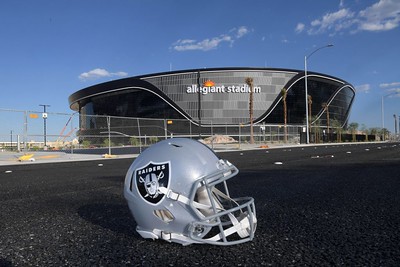
“We are bringing the world’s greatest championship game to the world’s greatest arena,” declared Las Vegas Convention and Visitors Authority (LVCVA) President and CEO Steve Hill December 15. “That combination is unbeatable.” The city will be hosting the 2024 Super Bowl at the $2 billion Las Vegas Raiders’ Allegiant Stadium February 24.

The NFL owners decided to award the 2024 Super Bowl to Las Vegas after a year of contemplating it. The spot opened up after New Orleans decided it preferred to host the Super Bowl in 2025 instead of 2024. With that, planning began with major players being the NFL, the Raiders and Las Vegas officials.

Hill described the process, “The sense all along from that conversation was that we would be able to work this out,” Hill said. “They certainly had an alternative location in mind in the event that Las Vegas wasn’t able to do this and meet their qualifications. But I don’t think they ever seriously thought that that would happen.”

As with many good things, hosting the February 24. Super Bowl will cost the city lots and lots of money: up to $60 million says Hill. Including money for security, transportation, venue support and marketing, among others.

Hill anticipates up to $25 million in sponsorships from national and local brands. He will recommend the LVCVA board authorize $40 million to cover remaining costs.

On the flip side, Hill says the city will make out like a big one-armed bandit, bringing in $500 million more than it would on a normal Super Bowl weekend. Such weekends typically attract 310,000 visitors.

Hill told the Las Vegas Review-Journal: “It is a huge event for Las Vegas to have it in the city,” Hill said. “That doesn’t even value all the eyes of the sporting world on Las Vegas.”

He added, “The stadium and the Raiders have been fabulous for Las Vegas … I don’t know that there’s ever been a move of a professional team that has meant more to the team and more to the city at the same time.”

Governor Steve Sisolak, an early supporter of the stadium, says the plan is working out as he envisioned. Part of the stadium ($750 million) was financed by an increase in the hotel tax. Sisolak said, “Allegiant Stadium is an economic engine for our state, without a doubt. It’s driving a lot of people coming here and those people are spending their money and employing our residents.” He added, “I think it will be on the regular rotation, at least I hope so, for the Super Bowl. Like they have in Dallas and Miami. Hopefully we’ll get it every four or five years.”

It’s a far cry from 2003 when the NFL rejected a TV commercial for the LVCVA because of the connection between the city and sports betting.

But today sports betting is legal and respectable in half of the states.

Casino Consultant Brendan Bussmann of Global Market Advisors told CDC Gaming Reports, “It’s huge. Huge. Hosting one of the iconic sporting events in Las Vegas proves even further that we are the sports and entertainment capital of the world. There will be no better Super Bowl than Vegas will be able to do. Period.”

Andrew Klebanow, a principal at C3 Gaming, told CDC Gaming Reports, “That’s what happens when you get a Super Bowl,” he said. “It moves Las Vegas from being a gambling and entertainment town to a true major league city that can support major leagues teams. There’s not another major city in the U.S. that’s capable of hosting an event like the Super Bowl, with its 150,000 hotel rooms, including 120,000 rooms within 20 minutes of Allegiant Stadium.”

Live! Pittsburgh Unveils New Attractions

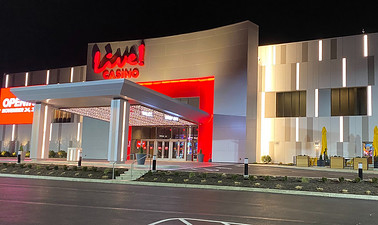
Cordish Companies’ Live! Casino Pittsburgh, which opened one year ago in a former anchor store at the Westmoreland Mall outside Pittsburgh, has unveiled several new attractions in its first expansion.

Last week, the Category 4 casino unveiled a new poker room, an event center, a FanDuel FanCave sportsbook attraction, new electronic gaming tables, and a reconfigured high-limit room. The casino opened with the maximum 750 slots and 30 table games allowable for Category 4 casinos, commonly called “mini-casinos.”

The 1,500-square-foot second-floor poker room features seven table games adjacent to Sports & Social Steel City, the signature Cordish sports bar. The new 7,000-square-foot event center can be used for weddings, private parties and special events. The event center currently can hold 650 people. Once it is remodeled, it will accommodate 850 people.

Also on the second floor near Sports & Social Steel City is the FanDuel FanCave.

The FanDuel FanCave is an 826-square-foot space featuring betting terminals with 13 leather recliners and a 173-inch television. (The casino has a retail FanDuel Sportsbook on the first floor.)

On the first floor, near a bar that features a 45-foot television screen, 20 new electronic gaming tables are slated for the casino floor starting Dec. 23, pending approval from the Pennsylvania Gaming Control Board. Electronic roulette and blackjack dealt by a live dealer will follow the design of the “R Bar” attractions at other Live! properties.

The reconfiguration of the high-limit room to include 18 additional slot machines.

The poker room and ETG areas are subject to gaming board approval.

“A year after we opened, we didn’t rest on our laurels,” said Live! General Manager Sean Sullivan in an interview with the Pittsburgh Tribune Review. “We went and expanded everything. The point is, we listen to people. We constantly want to improve things. If you don’t, you become stale, you become criticized.

“My hope is that we continue to listen to our customers, we continue to understand their needs and wants and we continue to provide solutions. We continue to increase the entertainment experience here at Live! Casino.”

Atlantic City Hard Rock to Host 1st Esports Tourney

On December 10, Hoboken-based Esports Entertainment Group signed a deal with Hard Rock Hotel & Casino Atlantic City to present the first sanctioned esports skill-based wagering games in the U.S. The two cross-state companies will unveil LANDuel January 22 and 23. The tournament will be the first of many and could lead to a permanent installation in the hotel in the future, according to ROI-NJ.

“We are extremely excited to partner with one of the top global hotel and casino venues to kickstart the world of regulated peer-to-peer wagering in esports,” said Grant Johnson, CEO of Esports Entertainment Group. “This partnership and event are a tremendous accomplishment for our brand and creates a wide variety of opportunities for our groups to explore more innovative esports events.”

The competition will include 256 players involved in skill-based games where participants can bet on themselves, believed to be a first approved by the Division of Gaming Enforcement.

Players will be able to wager on their own games as they move up In the competition.

“We are extremely proud to offer a one-of-a-kind e-sports wagering experience in partnership with EEG,” said Joe Lupo, president of Hard Rock Hotel & Casino Atlantic City. “We are confident that this innovative and highly regulated partnership will prove to be a success, contributing to our market-leading gaming offerings.”

The venue will also include PCs for non-tournament participants to compete in side matches on LANDuel. This permits tournament spectators or casino guests to make side-wagers in their own games outside of the tournament. The event will include a showcase stage for the tournament with spectator seating.

Illinois Governor OKs Remote Signup, College Bets

A new law signed by Illinois Governor J.B. Pritzker will permit remote registration as of March 5 and limited bets on in-state schools.

The Illinois Gaming Board has 90 days from receiving online applications to issue a license or licenses at $20 million each as spelled out in the June 2019 law. The current period of in-person registration issued by executive order expires in early April. The extensions helped propel Illinois to a top three market. Illinois set an all-time monthly handle record with $840.4 million in October, which is currently the ninth-largest monthly handle nationally, according to Sports Handle.

The law allows wagering on in-state school competitions, but only for pre-game bets made in person at retail sportsbooks, with no live wagering. Wagers are also limited to the outcomes of games, not individual performances. Also, the in-state ban would be reinstated in two years unless lawmakers pass another bill allowing it.

Wagering on college sports in Illinois totaled more than $789.8 million through the first 10 months of the year. More than 96 percent of that handle came via online wagering, and that handle does not consider bettors who may be including college games in parlay wagers. But the University of Illinois athletic director is among the law’s critics, who have argued it puts student-athletes at risk, according to the Chicago Sun-Times. Josh Whitman, University of Illinois athletic director, said athletes could face undue pressure and even physical threats from bettors.

But industry leaders counter that residents can already bet on Illinois teams in nearby Indiana.

The bill also gives Wintrust Arena the option to receive a sports facility sports wagering license, raising the number in Chicago to five.

State Rep. Mike Zalewski, D-Riverside, who spearheads Illinois sports betting legislation, said the tweaked law “strikes the right balance between a modern sports betting market and player safety.”

January Launch For New York Sports Betting; Bill Would Bring Sportsbooks To Stadiums, Racetracks

New York Rep. J. Gary Pretlow, December 13 sponsored a bill to allow professional sports stadiums and off-track betting (OTB) to have mobile betting kiosks. A8538 would also add fixed-odds horse betting to mobile wagering options.

The bill is nearly identical to Senate Bill S.7536 authored by Senator Joseph P. Addabbo Jr. last month. The two legislators sit on committees that oversee racing and wagering in New York.

The Empire State will launch mobile wagering early in 2022, in time for the Super Bowl. Operators must pay a $25 million fee for a 10-year license and the maximum tax for gross revenue is 51 percent.

While many stakeholders in New York had hoped to launch online and mobile sports betting before the end of the year, state Senator Joseph P. Addabbo, Jr. commented in an interview with Elite Sports New York that the more realistic projection is for online sports bets to initiate in January 2022.

New York sports bettors have anxiously been awaiting for word of the state’s sports betting launch since nine operators and eight platform providers were awarded online sports betting licenses in November.

“If the uniform start date is before the end of the year, I’d be ecstatic at that point. I’m an optimistic person, but I’m trying to be realistically optimistic and say sometime in January,” Addabbo told ESNY.

Stakeholders hope to work out any potential glitches well before Super Boal LVI on February 13, 2022. “That, to me, is the benchmark—ow we perform during the Super Bowl,” Addabbo said.

Addabbo had suggested a uniform start date for all nine operators to launch sports betting by Christmas, but he stressed to ESNY that all sportsbooks should launch at the same time, rather than what he called a “haphazard” staggered launch.

“There should be a standard or uniform start date for mobile sports betting in New York, not a haphazard launch where one entity starts at one date and another entity starts at another,” he said. “I like uniformity; I think the residents of New York benefit from that, and we’re hopeful that all providers and operators can be on the same page and start on the same date.”

FanDuel, DraftKings, BetMGM, Bally Bet, Caesars, Wynn Interactive, PointsBet, Rush Street Interactive and Resorts World were approved by the New York Gaming Commission as the state’s online sports betting operators.

U.N. Report: Illegal Sportsbooks Reap $1.7 Trillion a Year

A new report published by the United Nations estimates that the illegal sports betting market worldwide draws total bets of up to $1.7 trillion annually.

This compares to around $40 billion wagered last year by the legal sports betting market, mostly in Asia ($19.6 billion) and Europe ($15.2 billion), according to the report. North American sportsbooks drew $2.3 billion in wagers in 2020.

The U.N. Office on Drugs and Crime also reported that proceeds from illegal sportsbooks are typically used by organized crime for money laundering. The report estimates that $140 billion is laundered annually through sportsbooks.

The U.N. document also cited a 2020 American Gaming Association study that showed 52 percent of U.S. sports bettors participated in the illegal market, unwittingly for the most part.

California Voters May See Four Sports Betting Referendums in November

As many as four referendums could land on the California ballot next November, as signature gathering is under way. But the one ballot measure that has already been approved by Secretary of State Shirley Weber could be in trouble after a pair of cardrooms have filed suit saying the wording of the referendum violates the state constitution.

Hollywood Park Casino and Cal-Pac Rancho Cordova (Parkwest Casino Cordova) contend that the measure includes several issues which is specifically forbidden under the constitution. “The initiative’s proponents seek to exploit the popular demand for legal sports wagering by hitching two unpopular wish-list measures to a sports-wagering initiative,” the suit reads. The constitution says that referendums can only apply to one issue. The actual clause in the constitution says “(d) An initiative measure embracing more than one subject may not be submitted to the electors or have any effect.”

The initiative is backed by more than a dozen state tribes. In addition to retail sports betting, the referendum would legalize roulette and some dice games as well as allow for the use of private lawsuits to settle gaming disputes.

But the initiative being pushed by the cardrooms may have the same fatal flaw. While it would legalize statewide mobile wagering and retail wagering at card rooms, professional sports venues and racetracks, it also would allow card rooms to “additional games that are played with cards or tiles.” Despite this similar issue, Weber has approved the measure to start to gather the 997,139 verified signatures needed to be placed on the November ballot.

Meanwhile a measure backed by online gaming operators like DraftKings, FanDuel, BetMGM, WynnBet and others would legalize mobile sports betting with the licenses tied to tribal gaming operations. While it doesn’t mention retail sports betting, it’s likely that approval would allow tribes to add sports books to their physical casinos. The measure is called the California Solutions to Homelessness and Mental Health Act, which would dedicate money to solving the homelessness issue that is engulfing major cities in the state.

The fourth potential referendum, one supported by four tribes— San Manuel Band of Mission Indians, the Rincon Band of Luiseño Indians, the Federated Indians of Graton Rancheria and Wilton Rancheria—allows for both mobile and retail sports betting, with funds going to a similar source as the sports betting operators, the “Age-Verified Tribal Online and In-Person Sports Wagering & Homelessness Solutions Act.”

The language of this initiative was changed last week in response to a federal court ruling the Seminole compact with Florida to be in violation of the Indian Gaming Regulatory Act because the compact deemed that bets made on the Hard Rock mobile sports books were actually taking place on Indian land. Now the initiative copies the language of the sports betting compacts made with tribes in Arizona and Connecticut that allows bets to be made anywhere in those states, not just on Indian land.

With the challenge to the first tribal initiative, the fourth bid could emerge as the only tribal bid because it protects tribal sovereignty, benefits all tribes in the state, not just the gaming tribes, and creates a fund to address homelessness and mental health.

Rachel DeMita joins Caesars as Brand Ambassador

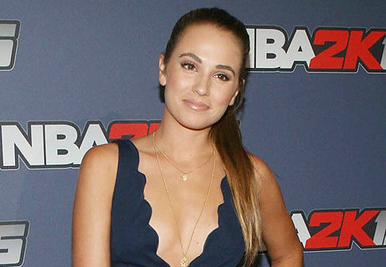
Caesars Sportsbook has signed former All-American basketball star Rachel DeMita to be a brand ambassador and also produce original sports betting content. DeMita will be one of the few women serving as a brand ambassador for a sports betting operator.

“Rachel is an incredible talent who knows how to engage with a wide array of audiences, said Caesars Digital Chief Marketing Officer Sharon Otterman in a statement. “Her deep knowledge of basketball and ability to create compelling content stands out among the many personalities in sports. We can’t wait to collaborate with her and see what she brings to life.”

DeMita will produce content, including fan engagement pieces, that will be shared across Caesars social media channels. She is slated to begin working for Caesars this holiday season.

“I’m so excited to be a part of the Caesars Sportsbook team,” said DeMita in a statement. “We are going to create some incredible content around basketball this season with the many sports fans who enjoy betting on the game. I’ll be jumping in quick, so make sure to be on the lookout!”

DeMita joins football’s Manning family, actors J. B. Smoove and Patton Oswalt and ex-ESPN broadcasters Kenny Mayne and Trey Wingo as Caesars brand ambassadors.

Caesars Sportsbook is live in 21 states and jurisdictions, 14 of which are mobile. Its mobile app offers expansive wagering options, including live in-game betting, and safe and easy ways to deposit and withdraw funds. Caesars Sportsbook partners with the NFL, NBA, NHL, MLB, and several individual teams, and is the exclusive odds provider for ESPN and CBS Sports.

Hollywood Perryville Receives Sportsbook License

The Maryland Lottery and Gaming Control Commission (MLGCC) has issued a sports wagering license to Hollywood Casino in Perryville.

Prior to receiving its license, Hollywood Casino successfully completed two days of controlled demonstrations, during which invited guests participated in live wagering as Maryland Lottery and Gaming staff ensured the facility complied with all required procedures, and that its systems and revenue reporting controls functioned properly.

The casino is among the 17 entities that were designated in the sports wagering law to conduct sports wagering operations pending a review of their qualifications to receive licenses, and is the fifth facility to open.

MGM National Harbor in Oxon Hill opened its sportsbook to the public on December 9, followed by Live! Casino in Hanover and Horseshoe Casino in Baltimore on December 10 and Ocean Downs Casino in Berlin on Dec. 17. The Sports Wagering Application Review Commission (SWARC) awarded licenses to the five casinos in November.

Three off-track-betting venues—Long Shot’s in Frederick; Riverboat on the Potomac in Colonial Beach, Virginia, and Greenmount Station in Hampstead—have been approved by the MLGCC and awarded licenses by the SWARC. All three were among the 17 entities named in the law and are expected to launch sports wagering operations in early 2022.

Maryland Lottery and Gaming’s licensing investigators are in frequent contact with additional sports wagering facilities that were designated in the law, whose applications are in progress.

Scientific Games, WCLC Launch Single-Game Betting

Scientific Games Corp. and the Western Canada Lottery Corp. (WCLC) have introduced an array of new offerings for players, including single-game sports lottery betting, real-time odds and futures.

The launch is powered by SG’s sports betting engine, customized for WCLC to integrate directly with its central gaming system also provided by the company. Scientific Games Lottery’s global sports betting business provides sports products and services to multiple lotteries in Canada, Europe and the U.S.

“We’re extremely proud of the hard work by both the WCLC and Scientific Games Lottery teams that helped us rejuvenate the sports betting experience in western Canada and introduce real-time odds, futures and single game betting,” said Tedda Sandercock, vice president of IT for WCLC. “By integrating new sports betting functionality with our gaming system, we’re now able to offer players an experience they’ve never had before.”

As part of the modernization, WCLC offers several betting options under the umbrella of Sport Select, including Point Spread, Pro-Line, Props, Over/Under, Pools, and Futures. There is a $100 limit on wagers.

“By using the new ticket builder functionality found online at sportselect.com, players can make their picks using real-time odds to generate a QR code which they then take to a lottery retailer to purchase their ticket,” said Sandercock. “We’re thrilled to offer this convenient new online approach to building a betting slip, while maintaining a more traditional method of building a ticket at retail for players who prefer it.”

“We are excited to collaborate with WCLC to bring another first-to-market lottery offering to western Canada and support WCLC’s strategic plan and generate maximum proceeds for the provincial partners it serves,” said Christian Kometer, managing director, international lottery systems for Scientific Games. “This is another great example of a multi-channel solution from Scientific Games Lottery technology that is modernizing the lottery experience.”

In addition to the new sports betting solution and central gaming systems technology, Scientific Games also provides WCLC with an online subscription program that utilizes a player account management platform as well as online instant games.

Bally Bet Live in Indiana

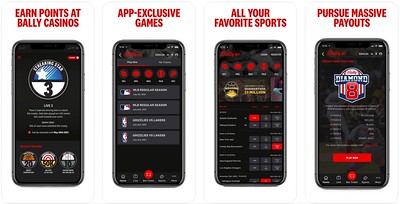
Bally’s Corp. announced that its sports betting platform, Bally Bet, officially launched in Indiana after receiving approval last week from the Indiana Gaming Commission.

Bally Bet is the 13th mobile sports wagering platform to go live in Indiana, which legalized sports betting in May 2019. On Sept. 1, 2019, retail locations began taking sports wagers, Bally Bet was previously live in Iowa, Colorado, and Virginia.

In addition to its Indiana presence, Bally’s has big plans for its future in the U.S.

“We will combine media assets with chat, trivia, all the stuff you should be able to do when you’re watching sports with your friends,” board Chairman Soo Kim told Sports Handle in November.

Kim added that Bally’s plans to have three iterations of Bally Bet. The first version, dubbed Bally Bet 1.0, is currently offered in states where the app is live, is what is now live in Indiana. The second iteration will combine the BetWorks platform and Gamesys technology, and Bally’s plans to launch that iteration in Arizona in 2022.

As for the third version of Bally Bet, it’s supposed to integrate various features in hopes of providing a comprehensive betting experience for fans of both watching and betting on sports.

PointsBet Launches in Virginia

PointsBet, in partnership with Colonial Downs, launched its mobile sports betting app in Virginia last week. Virginia becomes the eighth state where PointsBet has launched a betting option.

PointsBet is the 11th operator to be granted a license since sports betting began in 2019 in the state.

“We are thrilled to be launching in Virginia with our partner Colonial Downs, now bringing our best-in-market technology to such a passionate sports community,” Johnny Aitken, PointsBet USA CEO, said in a statement. “Virginian sports bettors will now have access to the fastest online sports betting product with the most betting options, including in-play capabilities.”

Colonial Downs is the only licensed gaming company that operates and is headquartered in Virginia. Colonial Downs operates Rosie’s Gaming Emporiums in Richmond, Hampton, New Kent County, and Vinton. The company also owns the Colonial Downs Racetrack, which is located in New Kent County.

“Colonial Downs is proud to partner with PointsBet, a premier sports betting platform and one of the most successful operators in the nation,” Colonial Downs Group Chief Operating Officer Aaron Gomes said. “We are pleased to help bring this gaming option to our loyal customers and other gamers in Virginia.”

Going live in Virginia continues PointsBets’ trend of building a presence near the nation’s capital. It partnered with Riverboat-on-the-Potomac in June to gain access to Maryland, and that retail sportsbook will likely launch in the next few months. The operator also became the official sportsbook of the University of Maryland. Additionally, PointsBet has a relationship with NBC Sports Washington, and it has a regular presence on shows related to the Washington Capitals, Football Team, and Wizards.

“Our partnership with NBC Sports has positioned us well as we enter the market,” PointsBet USA CMO Kyle Christensen said in the press release. “Viewers who have become familiar with the PointsBet brand through our odds integrations and expert analysis during television broadcasts can now truly experience what sets PointsBet apart.”

Second Wisconsin Tribe to Offer Sports Betting

On Monday, December 20, Wisconsin Governor Tony Evers announced that he and Chairman William Reynolds of the St. Croix Chippewa Indians had signed a compact amendment allowing the tribe to offer betting on sports and non-sporting events, such as the Academy Awards.

The signed amendment was sent to the U.S. Department of Interior where it will undergo a 45-day review. It’s expected to be approved, according to local CBS affiliate WKOW.

The St. Croix Tribe has already begun construction of a sportsbook inside its Turtle Lake Casino. The revised amendment includes remote event wagering on land owned by the tribe or held in trust for the tribe.

Earlier this year, the Oneida Nation became the first tribal operator in the state to allowing sports wagers at its affiliated casinos in Green Bay.

Fubo Sportsbook Now in Arizona

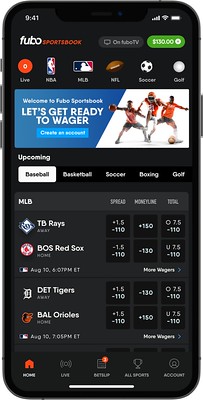
Fubo Gaming, a subsidiary of leading sports-first live TV streaming platform FuboTV Inc., last week announced the launch of its Fubo Sportsbook brand in Arizona, marking the second state in which the market-defining sportsbook is available.

Sports enthusiasts 21 years of age and older in the Grand Canyon State can now place wagers on thousands of live professional and collegiate sporting events, including the upcoming bowl games and professional football championship game, using the mobile app or on the Fubo Sportsbook website.

The launch in Arizona, in partnership with the Ak-Chin Indian Community, expands Fubo Sportsbook’s presence in the U.S. following last month’s launch in Iowa. More than a wagering platform, Fubo Sportsbook is purpose-built to meet U.S. sports fans’ growing demand for interactivity through an industry-first integration of an owned-and-operated sports wagering platform with a live TV streaming experience. By integrating with FuboTV, the mobile app delivers personalized omni-screen experiences that turn passive viewers into active participants.

Fubo Sportsbook’s proprietary feature, Watching Now, leverages FuboTV’s first-party user data to engage participants by recommending relevant bets based upon what they are streaming—even as they change the channel. Fubo Gaming intends to continue iterating the app, launching additional features that will further integrate wagering into the FuboTV platform, to create an even more immersive and personalized experience.

“We are honored to partner with our first Native American tribe, the Ak-Chin Indian Community, to launch our market-defining sportsbook within the great state of Arizona,” said Scott Butera, president of Fubo Gaming. “In less than a year of establishing Fubo Gaming, we brought our sports betting platform to passionate sports communities across two states and look forward to continuing introducing our unique product to many more consumers.”

“Fubo Sportsbook is a major pillar of FuboTV’s mission to integrate interactivity into our live TV streaming platform and define a new category of interactive sports and entertainment television,” said David Gandler, co-founder and CEO of FuboTV. “I’m very proud of how quickly the Fubo Gaming team has brought Fubo Sportsbook to market: from our announcement to expand into online sports wagering to the launch of Fubo Sportsbook in Arizona, our second state, all in the same year.”

Earlier this year, Fubo Gaming received regulatory approvals to operate as the management service provider to the Ak-Chin Indian Community to go live with mobile betting operations within the state of Arizona. The company has also obtained market access agreements in four other states, including Pennsylvania via the Cordish Companies, Indiana and New Jersey via Caesars Entertainment Inc., and Iowa via Casino Queen. Fubo Gaming expects to announce the launch of Fubo Sportsbook in additional markets, subject to requisite regulatory approvals.

“We’re so excited this day is finally here,” said Robert Miguel, chairman, Ak-Chin Indian Community. “The Ak-Chin Indian Community is proud to work with an industry-leading partner like Fubo Gaming in the development of its mobile app for online sports wagering, and we look forward to providing our customers the premier gaming experience they’ve come to expect.”

The company has partnerships with NASCAR and the New York Jets football team. It is also an authorized gaming operator (AGO) with the NBA through a multi-year agreement with the Cleveland Cavaliers.

Ohio Legislature Passes Sports Betting Bill

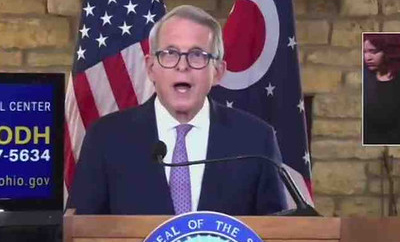
The Ohio Legislature December 8 passed HB 29, a sports betting bill, by wide, bipartisan, veto-proof majorities. Buckeye state Governor Mike DeWine has said previously that he will sign it.

It took lawmakers three years of trying to pass the bill.

The bill mandates the Ohio Casino Control Commission to designate a start date for sports gaming no later than January 1, 2023. The state lottery had also been in the running for operating sports betting, but ended up losing that political struggle.

The bill calls for a 10 percent tax rate on revenue, which compares to 9.5 percent and 8.4 percent for neighboring states. Imitating Virginia and Arizona, the bill makes licenses available for professional sports teams, , motor sports, Olympic events, professional golf and tennis, and major college sports to offer retail and mobile sports betting. Unusually, it allows establishments with liquor licenses to also take certain kinds of “mainstream” bets with a $700 per week betting limit.

There are actually three kinds of licenses, ones for mobile wagering, one for brick and mortar casinos and racinos and one for professional sports teams, bars and eateries with self-serve kiosks.

The seventh largest state in population, Ohio has a vibrant and diverse sports landscape of professional and college sports. It has two NFL teams, two Major League baseball teams, two Major League Soccer teams, and one NHL team.

There are also many college sports teams, and unlike some states, Ohioans will be able to wager on all of them, including in-state teams. When asked that question, Ohio Casino Control Commission executive director Matt Schuler said, “That’s the big question: Will people be able to bet on the Ohio State Buckeyes?” He answered, “Yes, they will.”

The law provides for simultaneous launch for operators.

All these things point to a healthy sportsbook market. The state’s Legislative Budget Office has projected a $1.1 billion handle for the state for FY 2023 and $3.1 billion for FY 2024.

Flutter Buys Italian Gaming Company, Sisal

Flutter has added another vertical to its company with the purchase of Italian gaming operator Sisal. While Sisal has decent market share in Italy with an estimated 11.9 percent share of online gaming and sports betting revenue, including a 14.4 percent share of betting and an 8.8 percent of online casino. But the real attraction that interested Flutter is the lottery segment. Sisal has been running the Italian lottery since 1997 and recently won contracts in Turkey and Morocco. Sisal has applied to operate the U.K. Lottery now run by Camelot. The contract with Camelot is up in 2024 and most observers expect a new operator to be named prior to the expiration of the deal.

Flutter paid €1.913 billion (US$2.16 billion) for Sisal with has a significant retail footprint in Italy with an estimated 1,700 outlets and 40,000 points of sale. With the recent crackdown on gambling advertisements in Italy, this retail presence is becoming more valuable. Flutter says the acquisition aligns with its strategy of building leadership in regulated markets. Along with Flutter brands PokerStars and Betfair, the acquisition should give Flutter approximately 20 percent of the Italian online market. After the U.K., Italy is the second-largest gaming market in Europe.

Sisal says it will generate €248 million in EBITDA for the 12 months of 2021, with 58 percent coming from online and the remainder coming from retail and lottery. The company says it averages 300,000 online players each month, and a total of 9.5 million registered. The purchase is expected to close by the end of the second quarter of 2022.

Inspired to Supply Games to RSI

Inspired Entertainment, Inc. signed a framework agreement to supply its Interactive games to Rush Street Interactive.

Following the execution of this contract, Inspired’s interactive content will be integrated onto the RSI game platform and its games will be made available in multiple North American jurisdictions, including New Jersey, Michigan and West Virginia.

Inspired’s interactive games have developed a following in North America and are now available in New Jersey and Michigan, and are coming soon to West Virginia. RSI will launch with four of Inspired’s titles, including Santa King Megaways and Christmas Cashpots as well as its mega-hit Big Spin Bonus, which is Inspired’s top performer in the North American market and has proven extremely popular with players.

“Rush Street Interactive is a well-known operator with top gaming sites in key North American jurisdictions,” said Brooks Pierce, president and chief operating officer of Inspired. “This framework agreement allows us to launch our content with RSI in multiple markets and grow our North American presence. We are excited to expand our reach in the future with additional North American jurisdictions where Rush Street operates.”

RSI launched its first online gaming casino site, PlaySugarHouse.com, in New Jersey, in September 2016 and was the first gaming company to launch a regulated online gaming site in Pennsylvania. With its BetRivers.com sites, RSI was also the first to launch regulated online gaming in the states of Indiana, Colorado and, most recently, Illinois.

RSI has been an early mover in Latin America and was the first U.S.-based gaming operator to launch a legal and regulated online casino and sportsbook, RushBet.co, in the country of Colombia.

“We are thrilled to add Inspired’s games to the RSI platform,” said Richard Schwartz, chief executive officer of Rush Street Interactive. “We pride ourselves on our exceptional content and the premier experience we offer our customers. Inspired has proven to be a top iGaming provider, and we are looking forward to working with them on delivering an innovative online entertainment experience to our loyal players.”

Mystic Lake, Minnesota Vikings Partners on iGaming App

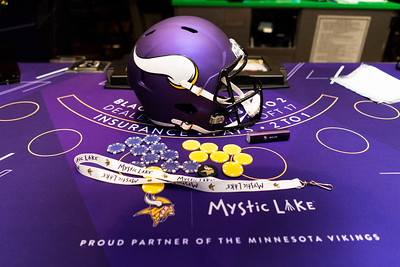
Ruby Seven Studios, Mystic Lake Casino Hotel and the Minnesota Vikings announced the launch of the new Vikings Lounge within the Mystic Slots app, adding yet another dimension to the already strong relationship between Mystic Lake and the team.

The launch brings unique, Vikings-branded game content to the award-winning Mystic Slots free-to-play app and website. The addition of the new jackpot lounge marks one of the first partnerships between a professional football team and a social gaming platform to create team specific gaming content.

The Vikings-branded jackpot lounge features a Vikings-branded slot machine, Vikings keno and scratcher games, as well as a sports game, ScoreBox. ScoreBox allows players to pick randomized squares and see if their square matches the outcome of the Vikings games throughout the season.

Mystic Slots is free to download or play online and ties into Mystic Lake’s Club M rewards, allowing guests to earn points redeemable for hotel stays, meals and more. The Mystic Slots social casino game includes custom content and video slot titles available at the casino, including games from Konami, Everi, AGS and many others. It also features video poker, bingo, keno, roulette and blackjack. Mystic Slots was developed by Ruby Seven Studios, a top social casino game developer and publisher.