Author: Casino Connection Staff

Florida Judge Lets Seminoles Intervene in Casino Lawsuit

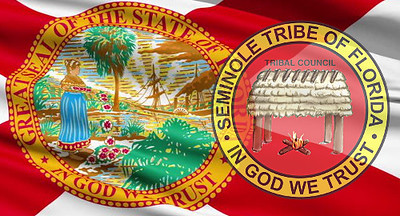
In Leon County, Florida, Circuit Judge John Cooper recently accepted the Seminole Tribe and its political action committee, Standing Up For Florida, as interveners in a lawsuit filed by Las Vegas Sands-backed political group, Florida Voters In Charge.

The latter group had attempted to collect enough verified petition signatures to get a casino referendum on the November ballot. The Seminoles said the proposed North Florida casino, would compete with its Hard Rock casinos in South Florida and Tampa. The Sands campaign did not gather enough signatures by the February 1 deadline.

According to campaign finance reports through December 31, Florida Voters in Charge spent $45 million on the effort; the Seminole Tribe’s Standing Up For Florida campaign spent $20 million on advertising opposing the petition efforts.

On January 31, Florida Voters in Charge sued Florida Secretary of State Laurel Lee, in an attempt to get a judge to extend the deadline for petition processing. The group claimed flaws in state law, how county election officials processed petitions and the large number of unprocessed petitions caused the failure of the campaign. Judge Cooper has not yet ruled on those claims.

The tribe asked to intervene in the lawsuit based on its 2010 gaming compact with the state of Florida. That pact briefly was superseded by a new pact negotiated in 2021 by Governor Ron DeSantis. The state legislature and the U.S. Department of the Interior both approved that agreement in 2021, but a federal judge invalidated it in November. However, the 2010 compact still is in effect through 2030. In its motion to intervene, the tribe stated, “The Seminole Tribe is party to a compact with the State of Florida entered in 2010.”

The tribe noted its 2010 compact still gives it exclusive rights to offer slot machines and similar devices in Florida “with narrow exceptions not relevant to this matter.” Also, the tribe shared revenue with the state in exchange for exclusivity.

The court filing further stated, “The proposed amendment if passed would be an infringement on the tribe’s right to exclusivity under the Compact and threatens to disrupt a contractual relationship between the Tribe and the State that has been highly beneficial to both parties.”

The tribe only recently resumed making revenue sharing payments after a hiatus of three years, starting in 2018. Tribal spokesman Gary Bitner said last month the Seminoles started making payments again under the 2021 gaming compact, even though that compact was rejected by a federal judge. The Seminoles and the Interior Department have appealed that decision.

Under the 2021 compact, the tribe will make annual revenue sharing payments of at least $500 million; payments under the 2010 compact were around $350 million.

Pennsylvania Casino Seeks Slot Reduction

Wind Creek Bethlehem, the casino owned by Alabama’s Poarch Band of Creek Indians that formerly was Sands Bethlehem, last week became the fifth Pennsylvania casino since the Covid-19 crisis began in 2020 to request a permanent reduction in its slot machine count.

A filing submitted by the casino to the Pennsylvania Gaming Control Board seeks authorization to reduce its slot complement by 655, from 2,973 to 2,318.

The casino’s request explained that it “seeks the referenced permanent slot machine reduction based on decreased utilization, to create a more comfortable and engaging experience for its patrons, taking into account added desire for social distancing, with no projected negative impact on revenues to the commonwealth,” according to Penn Bets.

The Wind Creek request comes after similar reductions granted last year to Harrah’s Philadelphia, Mount Airy Casino Resort, Hollywood Casino at Penn National, and Hollywood Casino at The Meadows.

Las Vegas Becoming Pro Sport City

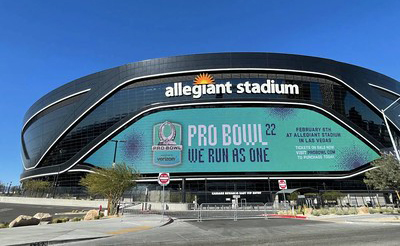
In the space of the past several years, Las Vegas has become the sports capital of the U.S., if not the world. The weekend of February 4, the city hosted the NHL and NFL all-star games, a first. The city also has NHL and NFL franchises. And can MLB be far behind as the Oakland A’s have kicked the tires over and over and over again?

The NFL will host the draft in Las Vegas in April and then the Super Bowl in 2024, according to the Las Vegas Review-Journal.

“It’s very rare for us to have the opportunity to host a major event in a market and come back just a few months later, execute another one and come back a few years down the road,” said Matthew Shapiro, NFL vice president of event strategy. “The sequencing of these events is really fortunate for us.”

NHL commissioner Gary Bettman said he’s been impressed with the host city for this year’s all-star game.

“Where else would they let us shut down their main thoroughfare so that we could have a skills event?” he said.

In related news, MGM Resorts International, BetMGM, and the NHL have extended their partnership. As partners, MGM Resorts and BetMGM will continue to be integrated into major events with camera-visible signage, as well as tapping into the NHL fan database.

Both brands get exposure on NHL media channels with odds integration and a Showcase Odds segment on the NHL Network.

“We are thrilled to renew our partnership with MGM Resorts and BetMGM,” said Evin Dobson, NHL group vice president, partnership marketing. “Our extension enables us to continue to work together on delivering innovative content programming to connect with our passionate fans.”

Lance Evans, senior vice president, sports & sponsorships for MGM said, “Our partnership with the NHL has been a tremendous success, allowing us to provide guests and hockey fans with unparalleled access to their favorite teams.”

Encore Boston Harbor Revises Development Plans

On February 10, Encore Boston Harbor in Everett, Massachusetts briefed state gaming commissioners on revised development plan for land across the street from the casino.

The new plan is more modest in scope, but still includes an entertainment center, new dining options and a parking garage with 2,200 spaces.

In January, the Wynn Resorts casino told the Massachusetts Gaming Commission it had decided to “pause the permitting process for this development so that they can do some reevaluation on whether the development as proposed is the best use for the site.”

Recently Wynn gave the go-ahead to proceed. According to Encore Community Affairs Office Joe Delaney, the company “had reduced the size of the theater (originally to be 1,800-seats), the entertainment venue, to under 1,000 seats—whether that’s 900, 950, 999, I don’t know, we’ll be finding that out very shortly.”

Former Wynn Exec Sentenced in ‘Varsity Blues’ Case

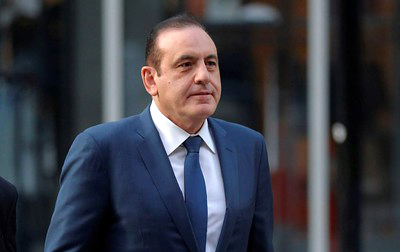
Former casino executive Gamal Aziz, who worked for Caesars Entertainment, MGM Resorts and Wynn Resorts during his career, was sentenced to a year in prison and fined $250,000 for bribery in the “Varsity Blues” college admissions scandal.

Aziz was president and executive director of Wynn Macau from 2014 to 2016 and spearheaded the development and opening of Wynn Palace in the city’s Cotai district. The five-star hotel and resort opened in August 2016.

Aziz was convicted of paying $300,000 to get his daughter into an exclusive university. His sentence by U.S. District Judge Nathaniel Gorton in Boston is the longest anyone has received in the scandal to date. Fifty-seven people have been charged in the investigation, in which parents conspired with college admissions consultant William “Rick” Singer to pay bribes to secure prestigious college admissions for their children.

Gorton said Aziz showed a “lack of integrity, morality and common sense” and “stole an admission spot at a good college from a deserving student who did not have all your advantages.”

Aziz intends to appeal the decision.

South Dakota Senate Passes Online Sports Betting

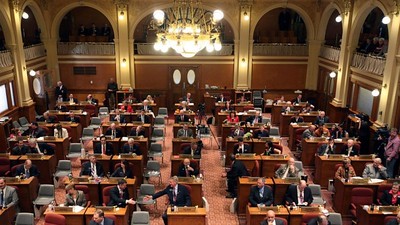
In an 18-17 vote, the South Dakota Senate recently passed SJR 502, which would let voters decide if the state constitution should be changed to allow online sports betting. The measure still needs House approval to appear on the November ballot. Earlier, the bill advanced out of the Senate Commerce and Energy committee by a 1-vote margin. A constitutional amendment allowing sports bets to be placed in Deadwood passed by a 58 percent majority two years ago.

Governor Kristi Noem has stated her opposition to expanded sports betting and the Deadwood Gaming Association, which pushed for sports betting in the past, did not take a position.

The proposed constitutional amendment would allow players to wager from anywhere in the state through mobile devices or electronic platforms. The bets would be connected to a Deadwood casino, which would be required to keep its computer server within city limits.

Native American tribes also would be allowed to accept online sports bets from anywhere in the state.

State Senator Kyle Schoenfish, the resolution’s sponsor, said, “Anyone in South Dakota right now can spend thousands of dollars building fantasy sports line-ups without breaking the law. Fantasy sports apps have been up and running for years and those proceeds are not subject to South Dakota laws governing sports wagering. Sports wagering and gambling is here and it’s very prevailing, but with this vote we can have it in the smartest and safest manner that will give South Dakota the most benefit.”

He added, “We want people to have their burgers and beverages in Sioux Falls, not Iowa. Or in Beresford instead of Iowa, Vermillion or Yankton, not Sioux City. Rapid City, not Cheyenne, Wyoming. Let’s support the businesses in South Dakota, versus the offshore sportsbook companies that aren’t operating legally.”

Opponents in the Senate said online sports betting should be legalized through a citizens’ petition drive, not through the legislature. Also, some senators argued online sports betting would not help South Dakota businesses like in-person sports gambling does. State Senator Jim Bolin said, “The backers of this resolution have adequate resources to accomplish their goal. They are not small operators, but multi-million-dollar gambling companies. They could easily kickstart a campaign to get the needed signatures for a resolution by petition.”

Other opponents, including state Senator Wayne Steinhaur, expressed concern that greater access to sports betting would lead to more problem gambling. “When you can gamble away the income for your family to put food on the table, that’s a problem. We’re trying to finance our state on the backs of those that have a problem,” Steinhaur said.

North Carolina Governor Wants Mobile Sports Betting

North Carolina allows retail sports betting at the two Harrah’s Cherokee casinos, owned by the Eastern Band of Cherokee Indians. Now a bill legalizing online and mobile sports betting, SB 688, introduced by state Rep. Jason Saine in 2021, appears to have a good chance of passing in the House this year. “I do think it’s going to move. I’ve got a pretty good vote count where I think we’ll have the votes,” Saine said.

The 2021 state legislative session technically still is in session, but it’s unlikely lawmakers will discuss anything besides redistricting before the 2021 session adjourns soon. Observers said the sports wagering bill, which passed the Senate in 2021, will be taken up in the House the legislature reconvenes in mid-May.

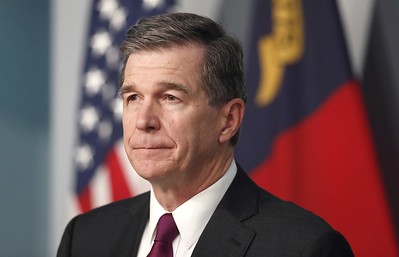
North Carolina Governor Roy Cooper has said he supports online sports betting. “It’s here, whether we like it or not. The issue is, will North Carolina try to be on the cutting edge for the technology jobs and other employment that it will create, plus be able to get state taxpayers their cut, or are we just gonna let it happen all around us? I think it’s time for North Carolina to step up and do this,” he said.

Cooper noted certain stakeholders want the current proposed 8 percent tax rate on adjusted gaming revenue to be increased. Neighboring Virginia taxes mobile sports betting revenue at 15 percent and Tennessee has a tax rate of 20 percent.

Speaking against online sports betting, state Rep. Marcia Morey, a former Olympic swimmer, said, “Money is the god of everything. Let’s keep that out of sports.” Several other legislators and stakeholders also expressed concern about the negative impact of gambling, including addiction. But Cooper said many people become addicted to gambling because of illegal, black-market sportsbooks, so regulating the industry and offering problem gambling services offer a good long-term solution for the industry.

Virginia Could Lift In-State College Bets Ban

In Virginia, HB 1127, state Del. Schuyler VanValkenburg’s bill to allow bets on in-state college sports, recently was voted down in a House General Laws subcommittee. However, the General Laws and Technology committee voted 11-4 to advance Senator Monty Mason‘s companion legislation, SB 576, to the Finance and Appropriations committee. The measure only would authorize betting on spreads and totals for in-state college sports events. Currently, prop bets on college sports are not allowed under the state’s sports betting law.

At the House subcommittee hearing, state Del. Barry Knight explained his opposition to HB1127. “The agreement that we had when we were counting the votes is not to allow sports betting on college sports in Virginia to try to keep a little bit−I hear the gentleman talking−but a little bit of arm’s length from the situation. And that’s kind of how we anticipated things going two years ago and I’m just going to stick with what I agreed to two years ago.”

Also at the subcommittee hearing, DraftKings Government Affairs Counsel John Mohrmann said sportsbooks want local bettors to have the right to wager on their favorite teams. He added without offering that option, it’s more difficult to win bettors back from offshore sportsbooks and to oversee the integrity of college sports. “If we want to make sure integrity stays in college sports, the best way to do that is in a legal betting market,” said Mohrmann, representing the Sports Betting Alliance which includes Bally Bet, BetMGM, DraftKings and FanDuel. The SBA also includes Fanatics, which has not yet launched a U.S. sportsbook.

At the Senate committee hearing, Mason said, “Quite candidly, I could not care less about the additional revenue. It is all focused on driving this above ground and not keeping it behind closed doors as it has always been.”

Mississippi Mobile Betting Bills Fail

Five mobile sports betting bills were introduced in the Mississippi state legislature this session and all five died in committee. In the House, state Rep. Casey Eure, chairman of the House Gaming Committee where four of the measures were rejected, said they faced opposition from five local casino operators. “I think we’ve hit a roadblock,” he said.

Mississippi has had a lucrative sports betting market since August 2018, but bettors are required to place their wagers in person at one of the state’s 36 casinos and parimutuel venues located in 13 cities. Bets can be placed using a mobile app that only works on-site.

Cedric Burnett introduced HB 184 on January 4. He said, “The thought is, mobile wagering is a convenience. It’s just that simple, I don’t gamble a lot. It’s inconvenient for me to go to the casino to actually make the sports bet, but to be honest with you, I will bet if I had the opportunity to on my cellphone. I have it with me all the time. It just makes sense.”

Other failed sports betting bills were Eure’s and state Rep. Kevin Felsher’s HB 997 and state Rep. Jay McKnight’s HB 1165. Both bills were introduced on January 17 and referred to the House Gaming Committee.

In the Senate, Philip Moran introduced SB 2462 which included language defining a “digital platform” as “the operation of a sports pool or racebook over the internet, including on websites and mobile devices, by the holder of a gaming license or by an operator on behalf of the holder of a gaming license.” State Senator Scott DeLano also introduced SB 2652 which would have legalized online wagering “under certain conditions.” Both bills were introduced on January 17 and assigned to the Senate Gaming Committee.

Meanwhile, neighboring states are counting the tax revenue they receive from mobile sports wagering. Tennessee has offered mobile-only sports betting since November 1, 2020 and deposited $40 million in tax revenue in 2021. Sports betting launched in Louisiana on January 28. Observers said Arkansas, which kicked off legal retail sports betting in July 2019, could be next and Alabama lawmakers also are discussing the issue.

Ohio Regulators Release More Sports Betting Rules

On January 31, the Ohio Casino Control Commission released the third batch of proposed sports betting rules, focusing on Type C licenses that permit in-person wagering at smaller venues, and sports betting exclusion programs. The public comment period on those rules closed February 11.

Governor Mike DeWine signed HB 29, allowing sports betting, on December 22; it stipulates that sports wagering must launch by January 1, 2023. OCCC Executive Director Matt Schuler said, “January 1 is not an arbitrary date. Some people are saying, ‘Can you get it going by the 2022 NFL kickoff?’ No.” He explained the process leading up to launching sports betting requires 12 months.

Batch 1 of the draft rules, released in mid-January, focused on provisional licensing and testing standards. Batch 2 focused on licensing for mobile (Type A) and retail (Type B) sportsbooks, general wagering provisions and equipment.

Batch 3 draft rules detail the problem gamblers’ voluntary exclusion program. For example, bettors would have the option to self-exclude for one or five years or for life. When their chosen time period is over, individuals must formally request to be removed; those on the lifetime list can request to be removed after five years.

As part of the voluntary exclusion language, the regulator covers in Rule 3772-12-03 the “responsibilities of voluntarily excluded individuals.” As part of this draft rule, the commission wrote that if “an individual is owed a cash amount from an excluded entity or facility, the individual still has the right to receive that amount from the entity or facility, even after placement on the voluntary exclusion program.”

One issue that other states have wrestled with is what happens to pending wagers when a bettor signs up for the exclusion list. Operators have expressed concern that the exclusion list could provide a loophole for avoiding paying a losing bet. For example, if a large wager were placed on the World Series, and one team has a 3-0 lead, if a bettor chooses to self-exclude after Game 3, what would happen to the wager? Would the bettor get back his or her money?

Schuler said it takes 180 days for a batch of rules to move from being released for public comment to receiving final approval. He said he hopes all the batches will be approved during the summer. Then the application process for various sports betting licenses could start in the fall. Background checks on all sports wagering license applicants also will take some time, Schuler said.

He noted the OCCC has been “immersed very much in every other state,” including neighboring Michigan, Indiana, West Virginia and Pennsylvania, to review how they rolled out sports wagering. Schuler said commissioners have been focused on New Jersey since it was the first state to launch sports betting. He added Ohio’s rules more likely will follow Indiana’s.

Additional draft rules will be released at the commission’s next scheduled meeting on February 16. “I anticipate at least a few more batches as we go through this process,” Schuler said.

Kentucky Lawmaker Will File Sports Betting Bill

Kentucky state Rep. Adam Koenig announced he will file a bill that would legalize online and retail sports wagering; both currently are not allowed in the state.

Koenig said he’s not sure when he’ll file the measure, which also would regulate online poker and daily fantasy sports.

Koenig noted with the passage of a historical horseracing bill last year, many lawmakers are less hesitant to support sports wagering. He said,

“I’ve talked to many of them that voted yes and they went home and they got pushback from one, two, three, four, five people and then it went away. So the pushback that was perceived on a pro-gaming vote just really isn’t what people expected it to be.”

Koenig also noted many lawmakers who feared they might have to explain their vote on historical horseracing in the coming primary elections have

Still, Martin Cothran, spokesperson for the conservative Family Foundation of Kentucky, said the group would fight any attempt to expand gambling in Kentucky and would challenge the constitutionality of any sports betting proposal. Cothran said, “We already have a problem here in Kentucky with an underclass that has been exploited in many ways, from easy cash at the local shop to the lottery, and now we’re going to throw this on them as well. This is a regressive tax.”

Missouri is the only state bordering Kentucky that has not yet legalized sports gambling.

Louisiana Sports Wagers Surpass New York—Per Capita

During the first 36 hours after mobile sports betting launched in Louisiana on January 28, 3.6 percent of the state’s adult population posted an online transaction, according to GeoComply.

By comparison, 3.3 percent of New York State’s adult population recorded a transaction in the same time period when online sports wagering kicked off January 8.

Over the first weekend of legalized online sports betting in Louisiana, 3.4 million geolocation pings ranked the state eighth in legal U.S. sports betting markets. According to GeoComply, 68 percent of the transactions occurred in southeastern Louisiana, including New Orleans and Baton Rouge. Coming in ninth was Indiana; tenth, Tennessee; eleventh, Colorado; and twelfth, Connecticut. Louisiana’s population is approximately 4.7 million, the 25th-most populous U.S. state. In comparison, Tennessee’s population is about 6.9 million.

In December, retail wagers in Louisiana totaled $39.5 million. Retail sportsbooks debuted October 31 and took in $27.6 million in bets in November. In comparison, Indiana sportsbooks took in wagers of $463.0 million in December; Tennessee handled $341.8 million; and Colorado took in $461.4 million.

The six sportsbooks that launched in Louisiana on January 28 are Caesars Sportsbook, BetMGM, Barstool Sportsbook, BetRivers, FanDuel and DraftKings. Louisiana Gaming Control Board Chair Ronnie Johns said more operators will be approved in the near future. The Louisiana Lottery also will receive a sports betting license and is in the process of selecting a partner. The lottery will operate a mobile app and kiosks at lottery retailers.

Fubo Gaming Secures Market Access in Three New States

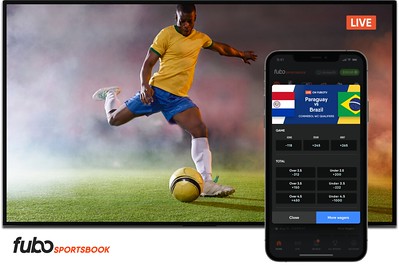
On February 10, Fubo Gaming, a subsidiary of leading sports-first live TV streaming platform fuboTV, announced that it has secured market access agreements for Fubo Sportsbook in Mississippi, Louisiana and Missouri through Caesars Entertainment Inc. That brings the company’s total to 10 states.

The agreements provide statewide mobile access for sports betting, with the launch of Fubo Sportsbook subject to regulatory approvals and, in certain jurisdictions, enactment of legislation. According to Fubo, the sportsbook was “purpose-built to integrate with fuboTV, creating a personalized omniscreen experience that turns passive viewers into active and engaged participants.”

This marks Fubo Gaming’s second round of market access deals with Caesars following its New Jersey and Indiana agreement in March 2021. Additional market access deals include Arizona, Iowa, Ohio, Pennsylvania and Texas. Fubo Gaming launched Fubo Sportsbook in the fourth quarter 2021 and is live in two states: Iowa and Arizona.

“We are pleased to have the opportunity to extend our relationship with Caesars Entertainment as we expand access to Fubo Sportsbook across key markets in the U.S.,” said Scott Butera, president of Fubo Gaming. “Mississippi, Louisiana and Missouri all have passionate fan bases, particularly around college athletics, who will embrace our unique, immersive sports and wagering entertainment platform.”

Also last week, the Cleveland Cavaliers and Fubo Gaming have formed a market access agreement to make Fubo Sportsbook an official mobile sports betting partner of the team when the sportsbook launches in Ohio.

The February 8 announcement advances a current marketing partnership formed in October 2021 and follows the legalization of sports gambling in the Buckeye State. Pending regulatory approvals, Fubo Sportsbook will launch its omnichannel wagering platform in Ohio, giving Cavs fans a more personalized and immersive game-day experience.

Fubo Gaming launched Fubo Sportsbook in the fourth quarter of 2021 and is now live in Iowa and Arizona. The sportsbook was developed to meet U.S. sports fans’ growing demand for interactivity through an industry-first integration of an owned-and-operated sports wagering platform with a live TV streaming experience.

The partnership will feature the opening of a 3,000-square-foot sports lounge inside Rocket Mortgage FieldHouse, which will serve as a game-day destination for fans with incentives and special bonus offers provided by Fubo Sportsbook. Additionally, fans will be able to watch NBA games and other sporting events from the comfort of the lounge.

“This is an exciting evolution of our continued partnership with Fubo Gaming,” said Len Komoroski, CEO of the Cavaliers and Rocket Mortgage FieldHouse. “The Fubo Sportsbook mobile wagering platform provides leading technology, connectivity and entertainment that aligns perfectly with our commitment to innovation and engagement across every aspect of the fan experience. We look forward to the continued collaboration with Fubo as we work to establish a best-in-class sports betting marketplace to offer our fans in Cleveland and throughout the state of Ohio.”

“The opportunity to enter the Ohio sports betting market with the Cavaliers as our partner is a major step forward for Fubo,” said Scott Butera, president of Fubo Gaming. “Ohio has a passionate fan base who will enjoy Fubo’s uniquely integrated streaming and wagering sports betting experience. The Cavs are at the forefront of sports innovation and consistently create highly engaging fan experiences. This partnership provides Fubo instant access to a highly attractive customer base.”

Fubo Gaming expects to announce the launch of its sportsbook in additional markets in the coming months. This marks Fubo Gaming’s seventh market access agreement, in addition to Arizona, Indiana, Iowa, New Jersey, Pennsylvania and Texas.

Another Washington Sportsbook Opens

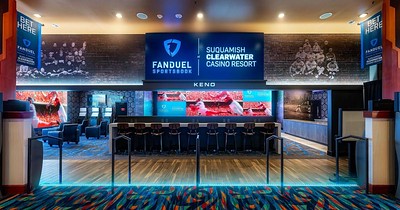
Suquamish Clearwater Casino Resort, in Washington state, has opened its sportsbook. The grand opening February included VIPs such as former NFL stars Steve Largent and Jim Zorn. They both placed the ceremonial first bet.

The sports betting is offered through FanDuel in partnership with Port Madison Enterprises, the tribes business arm.

The 2,086-square-foot sportsbook, located on the casino floor, boasts three live betting windows, 12 self-serve kiosks, and video wall where patrons can watch games from the comfort of armchairs.

Patrons can wager on all professional U.S. sports and on many college events—but not on teams based in Washington colleges and universities.

Port Madison Enterprises CEO Rion Ramirez commented, “We are excited to have formed a partnership with FanDuel, America’s #1 Sportsbook, and be their exclusive partner in Washington State.”

He added, “The joint effort between the Suquamish Tribal Gaming Commission, the Washington State Gambling Commission, FanDuel, and a number of our Casino employees made this all possible and we are thrilled that our sportsbook is now open.”

Suquamish Tribal Chairman Leonard Forsman added, “The Suquamish Tribe is extremely proud to have added sports wagering to our gaming compact. With the launch of our sportsbook, revenue from sports wagering will help support the Suquamish Tribe’s important governmental services offered to both tribal members and the local non-tribal community.”

FanDuel is now operating in 14 states.

Croker: Aristocrat Will Continue Pursuit of iGaming

Trevor Croker, chairman of Australian slot supplier Aristocrat Leisure Ltd., said the company’s market position and outlook remain strong despite its failure in a takeover bid for London-based iGaming supplier Playtech, PLC, which he blamed on a group of Asian investors holding around 15 percent of the company that formed a blocking group that led to the company falling far below the 75 percent approval threshold for the deal to go through.

“In particular, the emergence of a certain group of shareholders who built a blocking stake while refusing to engage with either ourselves or Playtech materially impacted the prospects for the success of our offer, which had been recommended by the board of Playtech,” Croker said of the takeover bid in a statement issued last week.

“The long-term interests of our shareholders are the absolute focus of M&A at Aristocrat. We will always take a highly disciplined, strategic approach to our investment choices, consistent with our customer-centric philosophy. Aristocrat has entered into 2022 with excellent operational momentum, flexibility and resilience with continued strong product-led performance across gaming and Pixel United (formerly Aristocrat Digital).”

The Playtech merger was intended to give Aristocrat immediate market presence in the burgeoning online gaming market in the U.S. and elsewhere.

“We look forward to providing further detail to shareholders at our upcoming AGM later this month,” Croker continued. “From a strategic perspective, Aristocrat’s commitment to participate in the online (real-money gaming) segment will not change.

“In the future, online RMG capability will be one way we deliver new and connected experiences that leverage our world-leading content, and unlock additional value across Aristocrat’s portfolio while deepening customer engagement.

“Our focus now shifts to accelerating our plans for alternative online RMG scaling options, and continuing to execute our growth strategy, in a way that is consistent with our rigorous investment criteria, high regulatory standards and integrity. We look forward to sharing more details with shareholders as we move forward.”

Betsson Launches iGaming in Buenos Aires

Betsson Group has launched its online gambling product in both the Province and City of Buenos Aires.

In collaboration with Casino de Victoria, a local land-based operator and a subsidiary of Grupo Mautone, Betsson has been granted regulatory permission to launch an online gambling service in the region, which is still relatively new to iGaming.

“The launch in Argentina signifies yet another milestone in LatAm and further strengthens Betsson’s market presence in the region,” said Pontus Lindwall, Betsson CEO. “The license for the Province of Buenos Aires, together with the license for the City of Buenos Aires, cements our position in the region.

“LatAm is a strategically important region where we are performing well and we have great ambitions for the future in Argentina.”

The two platforms, one focused on the city and another on the province, offer a range of sports betting options, both pre-game and in-play; as well as a variety of online slot titles, table games and horse racing. Both offerings are now live.

Hungary May End iGaming Monopoly

The parliament of Hungary is considering legislation that would end the state-run iGaming monopoly. It would open the market to private online operators.

The most recent gaming laws, passed in 2014, created a private market for land-based casino and poker operators. However, the online sports betting was limited to government-run Szerencsejáték Zrt.

The revised law would allow an unlimited number of operators within the European Economic Area to operate online gaming in Hungary. They would need to obtain permission from the country’s gaming regulator.

Operators who have operated sites without a license during the past decade will not be allowed to operate in the country.

Operators will be required to offer a plan to protect against excessive gambling. The bill notes: “In a liberalized online betting market, several private companies are competing with each other, so there is a danger of encouraging excessive gambling instead of maximizing the principle of responsible gaming.”

The bill must be reviewed by the European Commission. This review period is until May 4.

Spearhead Launches John Daly-Themed Game

Game developer Spearhead Studios has officially released its newest branded slot title, John Daly: Spin It and Win It.

The title brings the loud, colorful, and unpredictable character of professional golfer John Daly to life in the form of a feature-packed five-reel video slot.

Daly, known for his “zero to hero” victory in the 1991 PGA Championship, his playoff win in the 1995 British Open Championship, and unique swinging technique and character, recently won the PNC father/son tournament with his son against Tiger and Charlie Woods at Grande Lakes in Orlando, Florida.

The highly volatile 243-ways slot game has three compelling base game modifying features, three unique bonus features, and a win potential of over 20,000.

The base game offers random wilds, a walking wild, and expanding wins modifiers. There are three distinctly different bonus features; “Free for All” (free spins), “Sticky Balls,” and the unique “John Daly’s Big Hit,” special feature where the golf star whacks a ball into the heavens, causing win multipliers.

“John Daly: Spin It and Win It is our new marquee game,” said Kevin Corti, game development director at Spearhead Studios. “It is by far the most feature-rich title we’ve ever produced, crazily volatile, and with no less than eight buy features. More so, the ability to gamble their bonuses gives players unparalleled control over how they want to play.”

Operating under EveryMatrix Group, Spearhead Studios’ portfolio of 80+ titles is now available across 14-plus markets in Europe and Latin America, with the United States coming soon.

New York Mobile Sports Betting Surpasses New Jersey

It’s good to be king. It’s not so good to be a deposed king. New Jersey knows the feeling.

The Garden State has led the way ever since widespread legal sports betting began in 2018—in fact, it was New Jersey’s legal challenge that overturned the Professional and Amateur Sports Protection Act (PASPA), which opened the doors to the fast-growing national industry.

Now New Jersey is on the outside looking in when it comes to sports betting at least for part of January.

Figures confirm that New York was top dog in mobile sports betting during the first two weekends of this month, at least according to numbers of transactions. Vancouver-based tech geolocation company GeoComply recorded 17.9 million transactions from January 14 to 16 in New York State, up from 17.2 million January the previous weekend, when mobile sports betting first went live in the state.

New Yorkers wagered a total of $150 million through four betting apps during the first weekend of legal mobile sports betting program, according to Forbes Magazine. The four are Caesars, DraftKings, FanDuel and Rush Street Interactive.

The data documents the number of times the company was called on to confirm a caller’s location. It is considered a good indicator for at least a minimum level of sports betting activity, since at least four out of five bets come via online.

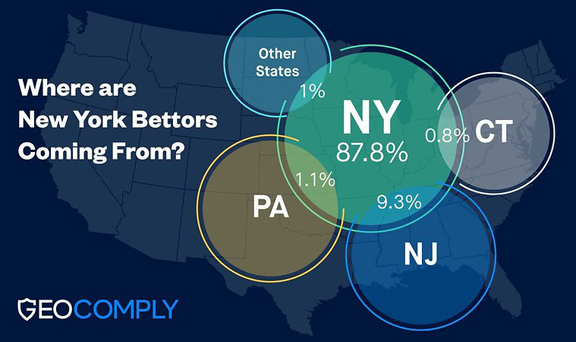
GeoComply indicates 1.2 million new accounts were initiated in New York since mobile sports betting began on January 8. Close to 88 percent of those customers bet for the first time. During a 12-hour period that ended at 9 p.m. on January 8, GeoComply recorded 5.8 million transactions on mobile phones within New York state. By contrast, the volume in the two closest states topped 2.3 million transactions in Pennsylvania and 2.1 million in New Jersey.

New York’s online sports betting market expects to top $1 billion in annual revenue, according to analysts at Macquarie. Yahoo Sports’ betting app, powered by BetMGM, launched a week after the first four. The other four companies—Bally’s, Wynn Interactive, Resorts World and PointsBet—have been conditionally licensed and will be approved if they meet the state’s requirements.

New York State Senator Joe Addabbo, a leading proponent of online gambling in the state, is confident the other five licensed operators—BetMGM, PointsBet, WynnBET, Bally Bet and Resorts World—will make up for the head start and create a nine-horse race.

“I don’t have to watch a Mets game any longer and see ads targeting New Yorkers to go to New Jersey to bet. I wanted to rip the TV off the wall,” he said.

The momentum of New York’s sports betting launch has continued and it is mostly home-grown, said Lindsay Slader, the company’s managing director of gaming. “The data tell us that New Yorkers are dumping illegal sportsbooks for the new legal options, and operators are also excelling at attracting first-time bettors,” she said.

But don’t shed a tear for the Garden State quite yet.

Figures on the quantity of bets—or handle—in both states have yet to be reported. It’s important to note that while log-ins show that New York attracted more bets than New Jersey, the results did not come at the expense of New Jersey, which likely did not lose business to New York.

That possibility will be followed as New Jersey casinos and sportsbooks claim at least 20 percent of their business has come from New Yorkers crossing over into New Jersey to make bets in the days prior to the opening of New York’s mobile market.

New Jersey averaged 12.6 million geolocation transactions in the two weekends before New York’s mobile launch, and 13.1 million in the two weekends since.

Around 9.3 percent of bettors have accounts in both states, the company said.

“The growth in New York has been explosive,” said Richard Schwartz, CEO of Rush Street Interactive, which operates the BetRivers online sportsbook. “It is, by far, off to the fastest start of any of our sportsbook markets in terms of handle. Along with having the largest population of any state with legalized sports gambling, New York is one of the few U.S. states with multiple teams across all four major sports. It’s simply a recipe for long term success.”

FanDuel said it is “very pleased” with the New York market to date.

“While all markets are critical, it was especially important for FanDuel to do well within our home state,” spokesman Kevin Hennessy said.

States require a bettor to be physically set within their borders in order to make an online sports bet. It uses a combination of cellphone data, software, hardware, and databases to determine where a phone or laptop trying to make a bet is actually located.

Governor Kathy Hochul’s proposed budget allocated $249 million in revenue from mobile sports betting this year. The state has already collected $200 million in licensing fees. In 2023, the state expects to collect $357 million and $465 million in 2024. By 2027, New York will bring in $518 million in mobile sports betting revenue.

The success could accelerate the process of awarding the three licenses for casinos in the Greater New York City area. The state will enjoy a windfall from the application fees first and then from the state’s take of casino revenue.

New Sportsbook Coming to AC’s Ocean Casino

Ocean Casino Resort in Atlantic City will step up its sports betting game this summer with the opening of a $4 million 2,500-square-foot sportsbook and entertainment venue. Construction begins in March, according to the Press of Atlantic City, and the venue is expected to debut by summer.

The location will blend an bar, lounge and gaming experience with sports wagering.

“As Ocean continues to strengthen its position within Atlantic City, we are steadfastly dedicated to property growth and development,” Bill Callahan, Ocean’s interim CEO, said in a statement.

US Bookmaking, a subsidiary of Elys Game Technology Corp., will provide the sports betting end, pending approval by gaming regulators. US Bookmaking will be the oddsmaker, but the casino will run the book itself.

“This allows us to capitalize on their expertise to bolster our land-based wagering product,” Callahan said.

The existing sportsbook, which is operated by William Hill, will stay open through Super Bowl LVI, a spokesperson said. Afterward, a betting window and kiosk will be available for in-person wagering during construction.

Ocean’s two online sports betting partners, Tipico and the as-yet unavailable Out the Gate, won’t be affected by the changes.

The project is part of $75 million in upgrades at the Boardwalk resort this year, including 460 new guest rooms and suites.

The existing retail sportsbook at Ocean Casino Resort brought in $2.4 million in revenue in 2021, second only to Borgata.