Author: Casino Connection Staff

Nebraska Lawmakers Debate Racino Limits

In a session closed to the public, the Nebraska legislature’s General Affairs Committee recently discussed amendments to a casino proposal that would prohibit licensing any new racinos before January 2025.

The Nebraska Examiner reported the eight-member committee was not in agreement about the issue.

Committee Chairman state Senator Tom Briese proposed an amendment that would permit the state’s existing racetracks to relocate. He said that could allow the state’s only quarter horse track move from Hastings to North Platte. Briese’s amendment also would require an extensive “feasibility and sustainability” study of a new racino and its impact on the local economy before the Nebraska Racing Commission could grant a license.

The amendment also would require existing tracks to hold a minimum of five racing days and 50 live horseraces annually, beginning in 2026; by 2031, they’d have to hold at least 15 race days and 120 horse races a year. The proposal also sets minimums for new racetracks. Currently, racetracks must hold only one race per year. Critics said that hasn’t helped rebuild the state’s ailing Thoroughbred industry, which was a main argument for legalizing casino betting at racetracks.

Briese’s amendment also would raise the casino licensing fee from $1 million to $5 million.

State Senator John Lowe asked whether more than six tracks in Nebraska would be sustainable and attract enough racehorses. He noted California, with about 20 times the population of Nebraska, only has six racetracks.

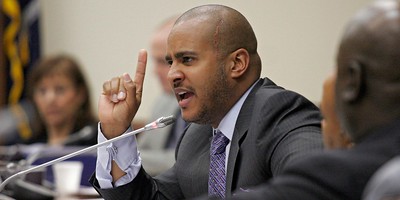
State Senator Justin Wayne said the constitutional amendment voters approved in November, legalizing casinos at licensed racetracks, did not limit the number of venues. He said there was no reason to “stifle” the gambling industry. “Really?” responded state Senator John Arch. He said voters approved casinos only at “racetracks,” meaning the existing six tracks in Omaha, Lincoln, Columbus, Grand Island, South Sioux City and Hastings.

Ohio Officials Approve Proposed Casino Plan

The Columbus, Ohio city council recently approved the proposed redevelopment plan from developer Convergence LLC, which would include a casino, racetrack and hotel.

Mayor Jim Bulkley said, “I think it’s important to recognize this proposal was in front of planning and zoning a week ago and it was aired there and had the ability for the public to come forward and give their inputs and feedback. There was no negative feedback that came back. Again, here this evening, there has been no negative feedback.”

He added, “We all know all programs and projects have pluses and minuses. This was diligently worked to try to minimize the negatives that would be there and build the positives that this would bring to the community.”

Last month, Convergence officials received approval of its redevelopment plan from the Columbus Planning Commission, a major step in receiving tax increment financing for the project infrastructure.

Caesars Palace Unveils Renovations

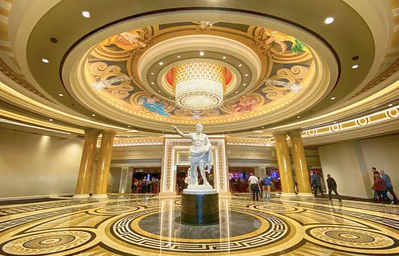
The entrance to Caesars Palace is one of the most iconic in Las Vegas. So, it’s big news that the property unveiled a multimillion-dollar renovation.

The work included new mosaic tiling, a domed ceiling, and a 15-foot-tall statue of Augustus Caesar standing beneath an ornate chandelier in the center of the lobby, according to the Las Vegas Review-Journal.

“Caesars Palace set the standard for luxury and grandeur when it opened in 1966, delivering experiences unlike anywhere else in the world. Since then, the resort has proudly been a change-maker and trendsetter in Las Vegas. We are thrilled to reopen our front doors with a dramatic, new main entrance,” Sean McBurney, regional president of Caesars Entertainment, said in a statement.

In addition to the entrance, changes to come feature a revamped lobby bar, gaming areas, and the 182 rooms of the luxury boutique Nobu Hotel, according to McBurney.

“Once complete, this will be the arrival and gaming experience that Caesars Palace deserves and will set the tone for everything we offer at the iconic resort,” McBurney said.

No Profit, Big Losses by New York Sportsbooks

There’s no argument that New York State broke all records for sports betting handle since the January 8 debut. But for the four sportsbooks in operation, that record came at a cost: no profits. An analyst concluded the operators lost about $200 million.

The reason is simple. The goal is to sign as many new customers as possible and with each operator offering the same kind of bets, the competition rested on giveaways. Promotions amounted to as much as $150 per new account.

On top of the promotional costs, bookmakers paid the 51 percent tax on gross revenue and on promotional money.

“I got lucky by not winning a New York license,” a sports betting operator who tried and failed to secure a local license, joked to The New York Post.

When New York launched mobile sports betting, it was one of three states with a 51 percent tax rate, along with New Hampshire and Rhode Island. Sportsbooks may balk, especially when they have to spend so much to promote their operations to sign up customers, but the state has enjoyed a bonanza of riches in the first seven weeks. New York has realized $91.5 million for state coffers.

Should the U.S. expect an explosion of states following New York’s lead and setting taxes at 51 percent or close to it?

Ah…not likely analysts say. In fact, New York may eventually lower the tax rate.

“I don’t think it’s a unicorn, but I think as a model it’s going to be very selectively applied,” said Daniel Wallach, a gambling industry legal analyst.

California and Florida—the two largest states without legalized sports betting—seem to be on a different tack altogether. Instead of lawmakers creating the legislation, tribes and other stakeholders will take on that role, even if it means voters will have their say on the draft through a referendum.

“For the large part, they are operating through tribal entities,” Wallach said of the other large states. “The tribes are not going to be paying 51 percent to the state of California. That’s a non-starter, as I think it is in Florida.”

Hawaii legislator, John Mizuno, first proposed legalizing mobile sports betting with a 55 percent tax rate. If it worked for New York…yada yada yada. But he now describes that as an opening salvo for discussion.

“Maybe in Massachusetts, Hawaii, and Arkansas you could see some traction, but I think it’s going to be very limited in how it proliferates beyond New York. State governments are laboratories for experimentation, but what works in one state doesn’t necessarily mean it works in all states.”

There’s also this, according to NY Online Gambling. New York launched during the NFL playoffs with the Super Bowl and March Madness approaching. The rest of the year may not be as productive financially.

“It’s a very important market, especially for something like sports betting,” Ulrik Boesen, a policy analyst at the nonprofit Tax Foundation, said of New York. “I do think in the longer term, there’s a risk with this kind of tax rate, and it will limit the ability of the industry to prosper and for competition to be healthy.”

New York law allows the tax rate to fall to 35 percent if the state goes beyond nine licenses. As of early March, seven of the nine were operating.

Boesen also said New York taxes gross gaming revenue not net revenue, which is quite a bit higher and considers promotional costs as part of the revenue.

“I just worry about the prohibitive nature of it and the ability of these giants to compete properly,” Boesen said.

If the goal was signing up new people, the bookmakers succeeded way beyond their expectations. The operators signed as many as 2 million new accounts. The state said the handle through February 13 came to $2.4 billion.

“The volumes in New York were about two times what we were anticipating,” Caesars CEO Tom Reeg told investors. Since then, Caesars has cut back on its promotional spend.

DraftKings lost about $50 million in New York through the week ending February 13. FanDuel controls about 36 percent of the market, with DraftKings and Caesars at 25 percent and BetMGM at 10 percent.

“DraftKings is targeting a two-to-three-year path to profitability for the state,” CEO Jason Robins said.

Even as New York continues to gather a record haul of tax dollars from online sports gambling and works through the process of approving three brick-and-mortar casinos for the New York City region, some lawmakers have their eye on a potentially bigger prize, according to NY Online Gambling.

The man with the gambling plans has his sights set on iGaming. He is pushing for it to be part of the 2023 budget talk. Heck, iGaming may prove bigger than the hugely successful sports betting.

“The quick answer is, yes, we want to have that initial discussion on iGaming this year,” Addabbo said. “If we can put it in this budget, great.”

New Jersey has more than 30 sites offering a mobile version of a casino.

“In New Jersey and other states, while brick-and-mortar casinos were getting hit by the pandemic, iGaming numbers were going through the roof,” Addabbo said. “Even post-pandemic, there may be a population that is not crazy about going into large gatherings like you’d see at a casino.”

“New York’s proximity to New Jersey and the competition for gambling dollars and for customers is going to incentivize New York to try to beat what New Jersey’s doing, or at least have what New Jersey has,” said Daniel Wallach, an expert in gaming law.

Casino games provide more reliable revenue and higher margins than sports betting. New Jersey reported $1.37 billion in gross gaming revenues from online casino games in 2021 compared to $815.8 million from online sports gambling. That amounted to $205.2 million in taxes for the state, compared to $96.2 million collected from online sports wagering.

S8412 would allow commercial and tribal casinos to offer online apps and websites that would allow people to play slot machines and table games from their computers or mobile devices, according to The Center Square.

Addabbo, who chairs the Senate Committee on Racing, Gaming and Wagering, said New York would quickly become the national leader in online casino gaming, generating hundreds of millions of dollars in tax revenue annually as it continues to recover from the economic downturn caused by the pandemic.

Based on a 25 percent tax rate in the legislation, Addabbo expects $475 million in annual tax revenue for the state.

The bill would allow each casino to partner with two online gaming platforms that would need to be approved by the New York State Gaming Commission. Apps from casinos would be subject to an initial licensing fee of $2 million, while independent operators that partner with casinos would pay a $10 million licensing fee.

“We have long argued that states must consider regulating online casinos games along with sports betting,” said John Pappas, state advocacy director for the iDevelopment and Economic Association, an online gaming trade group. “There’s also those consumers who would like to go to a casino but are intimidated about playing and sitting down at a poker table or a blackjack table because they don’t really know how to play.”

Neighboring New Jersey is home to the largest online casino gambling market in the nation, with platforms there winning $1,366,891,492 from online gamblers in 2021. New York could see much more thanks to a population of about 19.5 million compared to the Garden State’s roughly 8.9 million. New York operators would likely be well north of $2 billion in winnings off players.

“New York quickly became the leading mobile sports betting market in the nation, generating nearly $70 million in tax revenue in a single month,” Addabbo said, according to The Center Square. “Similarly, if authorized, New York would quickly become the national leader in online casino.”

Report: Two-Thirds of U.S. Population Watched Super Bowl LVI

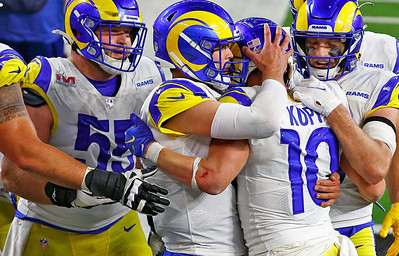
Based on a survey by the NFL and Nielsen Ratings, about two-thirds of the country watched the Super Bowl. Nielsen said the total audience averaged 112.3 million. But it grows to 208 million if you add those watching in groups and outside the home, as in a bar, according to the Associated Press.

The University of Chicago surveyed 5,000 households to arrive at the numbers.

“We are always looking for ways to more strongly collaborate with our clients to better understand who may be watching, and how they may be watching,” said Jon Stainer, Nielsen sports managing director for the Americas.

Nielsen also concluded almost 90 percent of all people using a television on February 13 watched the game.

Virginia Lawmakers Reject In-State College Betting

Members of the Virginia House General Laws Committee recently rejected two bills that would have legalized in-state betting on Virginia college and university sports.

First, HB 1127 was defeated, then the committee failed to pass SB 576 after it was approved by the Senate. State Senator Monty Mason reminded the House committee that illegal, offshore bets are being placed on Virginia college sports. He said, “I just want that final vestige behind closed doors below ground to go above ground and be tracked and traced.”

Among the reasons given for rejecting the legislation was that mobile sports betting was legalized in Virginia in 2020 and, as state Del. David Bulova explained, “It’s kind of a short period of time to be revisiting the issue.”

Bulova added college athletes are just “kids.” He noted state college and university officials felt strongly about this issue when the legislation passed. He said, “This is looking out after our Virginia students. This is making sure that we aren’t going ahead and putting our seal of approval on that kind of activity.”

For now, Virginia residents who want to legally wager on University of Virginia and Virginia Tech games must travel to retail sportsbooks in Maryland, or wager via retail and mobile sportsbooks in Washington, D.C. and West Virginia retail and mobile, among other venues.

Minnesota Hopes to OK Sports Betting Bill this Year

Minnesota lawmakers have moved forward with a new effort to approve sports betting. Democrats and Republicans in both chambers have found renewed interest, according to the Associated Press.

Republican Senator Roger Chamberlain, is leading the effort in the GOP-controlled Senate while Democratic Rep. Zack Stephenson, will introduce his own bill in the House.

“We are an island in the Midwest,” Chamberlain said at a news conference “The proposal here is good for the tribes, it’s good for the tracks and most importantly, it’s good for the consumers.”

The Senate bill would allow mobile betting and brick-and-mortar locations at tribal casinos and the state’s two racetracks, which would pay a licensing fee to the state. Tribal nations would control mobile licensing and issue sub-licenses to other online gaming vendors, who would be taxed by the state on each transaction outside of tribal lands.

Chamberlain said a bill will be ready within a week, and sports betting statewide would go live in the fall of 2023 if the bill is signed into law by Governor Tim Walz this year, he said.

A bill introduced last legislative session by Democratic Senator Karla Bigham, and Republican Rep. Pat Garofalo, would have allowed on-site sports wagering at tribal casinos for the first year, then mobile betting for those who sign up for an account at a casino. Revenue would have been taxed at 6 percent for on-site betting and 8 percent for mobile, with the proceeds going to the state’s general fund.

Stephenson said his bill is coming together after conversations with the state’s professional sports teams, the University of Minnesota, sports gaming companies and all 11 of Minnesota’s tribes. Past efforts were opposed by the Minnesota Indian Gaming Association, which represents tribes.

Stephenson’s bill would keep taxes on revenue generated from sports betting much lower than states like New York, which went live last month and taxes revenue at 51 percent. He said revenue would be taxed just enough to fund the state’s regulatory model to encourage bettors to stop using illicit underground operations and offshore websites.

Chair of the House Commerce Committee said he expects a hearing for the bill in his committee in March.

“We are an island in the Midwest and not the tropical kind,” Assistant Senate Majority Leader Roger Chamberlain, said. “This proposal is good for tribes, it’s good for tracks, and most importantly, it gives Minnesotans gaming options at brick-and-mortar locations and online vendors. It respects the tribal nations and provides a revenue stream to the state.”

The Minnesota Indian Gaming Association (MIGA), the state’s tribal casino lobbying group, has historically opposed efforts to legalize sports betting, but late last year signaled potential willingness to support a bill this year.

MIGA has not yet offered any specific comment on legal sports betting proposals since Stephenson announced his new push on the issue in November 2021.

“The tribal governments making up MIGA have been examining the various ways sports betting has been implemented across the country and its impacts on tribal communities,” MIGA Executive Director Andy Platto said in a statement.

Chamberlain said even though the tribes have not yet openly supported sports betting legislation, the new Senate proposal seeks to protect their interests.

Stephenson said he will hold a hearing on a bill in the commerce committee next month and that he’s been having “very positive” conversations with stakeholders, including the state’s 11 tribes.

Kentucky Lawmaker Proposes Sports Betting Bills

Bills pending in both the Kentucky Senate and House would legalize sports betting. Previous analyses indicated legal sports wagering would generate about $22 million in yearly revenue for the state.

State Senator David Yates sponsored SB 213, which would allow retail and mobile sports betting, as well as online poker and daily fantasy sports. The measure would allow sports betting to be offered at the state’s licensed horseracing tracks and professional sports venues. In-person registration for mobile betting would be required through 2023.

Yates’ measure would allow betting on major professional sporting events and college sports. It would tax retail sports betting at 9.75 percent and online wagering at 14.25 percent. Each venue would be allowed one skin. The Kentucky Horse Racing Commission would regulate sports betting.

State Rep. Adam Koenig’s bill would legalize most forms of sports wagering and regulate taxation of all online gambling, including fantasy sports and online poker. Koenig said legalizing sports betting “would allow Kentuckians to do what they would like to do with their own money and take it away from the bookies and the off-shore accounts.” Koenig has sponsored similar sports wagering bills in previous sessions. None has passed both chambers.

Also included in Koenig’s bill is a proposal to tax all parimutuel wagers, including historical horseracing, simulcast bets and advance-deposit wagering, at 1.5 percent. In addition, the measure would ban electronic gambling machines, so-called “gray machine,” that have proliferated in convenience stores across the state.

Koenig said he hopes by combining several gambling proposals in one comprehensive measure, it may have a chance of passing. However, he said if that strategy isn’t successful, he’ll try to pass the proposals individually.

Sports betting has bipartisan support in the state legislature and the approval of Governor Andy Beshear. Yet, since it’s an election year, observers said some lawmakers won’t change their anti-gambling stance and risk losing votes. In addition, conservative groups like the Kentucky Family Foundation strongly opposes any form of gambling.

Meanwhile, Kentuckians continue to place sports wagers with illegal bookies and unregulated offshore betting platforms, and cross state lines into neighboring Tennessee, Illinois, Indiana, West Virginia and Virginia to place legal sports bets; Ohio is finalizing sports betting regulations.

California Sports Betting Measure Survives Challenge

A measure that would expand gaming at California’s tribal casinos by allowing retail sports betting, roulette and craps will remain on the ballot.

The California Supreme Court rejected a lawsuit by two card rooms, the Hollywood Park Casino and Cal-Pac Rancho Cordova. They claimed that the initiative, which gathered 1.5 million signatures last year, violates the state constitution because it has multiple subjects, which, besides the additional games and sports betting, also includes a provision where tribes could sue card clubs in the name of the state for gambling violations.

Gaming tribes have long contended that the state attorney general and other gaming regulators are reluctant to take card clubs to court over what the tribes consider to be violations.

However, the state Supreme Court has in the past been reluctant to disqualify ballot measures over the issue of multiple subjects. The court unanimously rejected the lawsuit. The suit was brought directly to the court, which gives the card clubs the option to refile with a superior court.

A spokesman for the tribal campaign, Kathy Fairbanks, said in a statement: “We’re confident California voters will see through their deceptive and wasteful tactics and continue to stand with California Tribes who they have entrusted to provide safe, responsible gaming for over two decades.”

Nevada Panel Begins Work on Esports Betting, West Virginia Considers

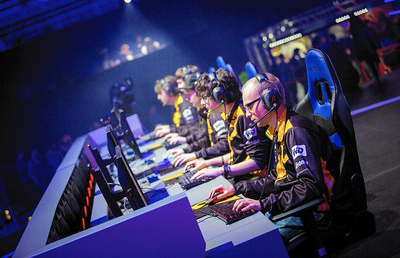
A new advisory committee commissioned by Nevada regulators heard testimony last week from casino operators and other stakeholders on the potential expanding of esports betting in the state.

It was the first of a series of hearings by the eight-member panel, consisting of experts and workers in the esports industry. The committee will return a report on the prospects of esports betting to the Nevada Gaming Control Board.

Eric Bowers, vice president of innovation for Boyd Gaming, testified that esports betting should draw a younger audience into the casinos. “We don’t believe all of these potential esports wagers are going to convert right to races and sports wagers,” Bowers said, according to CDC Gaming Reports. “They may convert to iGaming and social gaming. We believe that the demographic is a little different, and even in the intent to launch esports, we’re not necessarily going to target (from a branding and marketing perspective; that’s another channel of sports wagering). We feel it gets lost in that.”

Bowers said Boyd would like to see in-play wagering on esports as part of any sports betting expansion in the state. “I think it would be a deal breaker if we didn’t have that,” he said. “We look at it as more of a primary building block than match-based wagers in our launch, and we’re looking at technologies to support that.”

Jeff Cohen, vice president of corporate strategy at the Esports Entertainment Group, which has been allowed by New Jersey to accept esports wagers, said there are a lot of misconceptions about the esports industry among regulators and lawmakers.

“We often hear concerns that gaming and gambling shouldn’t be mixed because of the young age of gamers,” Cohen said, according to CDC. “Just a few weeks ago when asked about esports, American Gaming Association President and CEO Bill Miller said this is not an area that’s been opened up. The people primarily playing esports are underage and betting on them creates a whole host of issues. While we certainly respect Mr. Miller’s perspective and leadership at the AGA, when you evaluate the data, it turns out not to be the case.”

Meanwhile, West Virginia delegates Moore Capito, Bennett Queen, Steve Westfall, Shawn Fluharty, Clay Riley and Daniel Linville are sponsoring House Bill 4826, which would expand legal sports wagering to include esports betting.

The bill defines esports as an event or “electronic sport or competitive video game played as a game of skill for spectators.” The bill is under consideration in the House Finance Committee.

West Virginia, one of the first states to legalize sports betting, launched online and retail wagering in August 2018. Currently, sports betting in West Virginia is allowed on professional and collegiate sports events and competitions.

Although esports is considered to be one of the fastest-growing betting markets, with significant appeal to millennial and Gen Z demographics, it has not been included in sports betting legislation in several states. As a result, the legality of esports in some states is unclear or not addressed.

Opponents pointed out individuals below the permitted gambling age participate in these events, so betting on esports should not be allowed.

But supporters make the case that wagering is permitted on college sports, where many of the competitors are below age 21.

Maryland Approves Bingo World for Sports Betting License

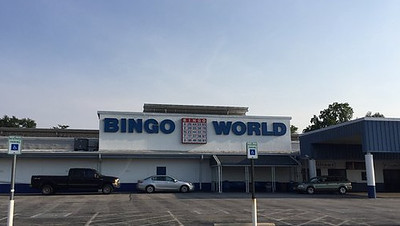
The Maryland Lottery and Gaming Control Commission has approved a retail sports betting license for Bingo World, one of 17 entities named in the state’s sports wagering law as designated licensees.

Final approval of licenses is the responsibility of the Sports Wagering Application Review Commission (SWARC), which took no action at its regular monthly meeting two weeks ago.

The commission also approved Rush Street Interactive as the platform supplier for Bingo World’s retail sports book.

Retail sports betting is expected to go live later this year, but mobile sports betting is not expected until next year. The sports betting law authorizes 30 retail licenses and 60 mobile licenses up for competitive bid. However, the bureaucracy, including the two-tiered approval process, has slowed things down in the state.

BetMGM Signs McDavid as Brand Ambassador

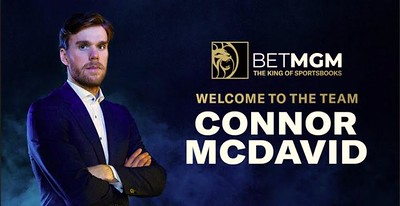
BetMGM, a leading sports betting and iGaming operator, announced last week that it has signed the National Hockey League’s reigning MVP, Connor McDavid as its newest brand ambassador.

McDavid becomes BetMGM’s first active professional athlete from the four major sports to become an ambassador. The All-Star center will be featured in BetMGM’s upcoming marketing campaigns, promotions, social media content and fan events.

“I am very excited to partner with BetMGM as they continue to shape the future of sports betting,” said McDavid. “It’s also a real honor to be on the same BetMGM team with star athletes like Wayne Gretzky and Kevin Garnett, both of whom I admire very much.”

McDavid burst onto the NHL scene in 2016, becoming the league’s youngest-ever captain at 19 years old. That same season, he won the Art Ross Trophy as the League’s leading scorer, the Hart Memorial Trophy as the NHL’s most valuable player and the Ted Lindsay Award as the League’s best player. Only six seasons into his career, McDavid has won each of these awards multiple times and is already considered one of the sport’s greats.

BetMGM’s Chief Revenue Officer Matt Prevost said, “The accomplishments that Connor has already earned on the ice is astonishing and we are excited to welcome him to the BetMGM family. We look forward to working together to engage BetMGM players across North America.”

BetMGM is currently available in 21 markets across the U.S.

FanDuel Signs Deal with Buffalo Sabres

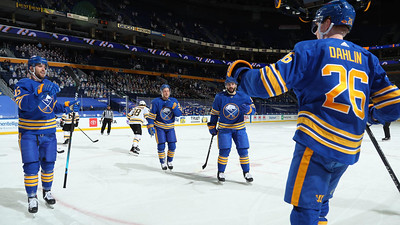
FanDuel signed an exclusive multi-year partnership with the NHL’s Buffalo Sabres. The agreement provides branding rights, sports betting odds and promotions during Sabres’ broadcasts, according to CDC Gaming Reports.

“We’re excited to partner with the Sabres to infuse sports betting content into the hockey viewing experience,” said FanDuel Group CMO Mike Raffensperger in a statement. “This is just the beginning for New York sports fans and partnering with a fellow leader in the sports and entertainment industry lets us collaborate to take things to the next level.”

FanDuel will receive broadcast integration in all phases of Sabres broadcasts, including pregame, in-game, intermissions, and postgame. The broadcasts will feature FanDuel sports betting segments. Real-time betting odds from the FanDuel Sportsbook will be integrated throughout the broadcast.

FanDuel also will be able to use official marks and logos in marketing and in-arena signage for home games.

“We’re proud to expand our relationship with FanDuel and extend content to Sabres fans,” said Pegula Sports & Entertainment Senior Vice President of Business Development Dan Misko. “FanDuel has built a strong reputation as a premier sports betting destination for sports fans, and we’re very excited for all that this partnership will offer.

In other partnerships, the Rocket Mortgage FieldHouse moved closer to offering sports betting with the signing of a partnership between the Cleveland Cavaliers and Caesars Entertainment, according to the Cleveland Plain Dealer.

The deal makes Caesars Sportsbook an official sports-betting partner and Caesars Entertainment the official casino partner of the Cavs, which will include a retail sportsbook on the street level inside the arena’s northwest atrium area.

Caesars Sportsbook will have betting windows for cash wagering and offer hospitality experiences for Caesars Rewards members. The venue will feature a full-service bar and VIP lounge, menu, and televisions.

The venue should open by year’s end. The sportsbook will be open year-round, events or no events.

“As we prepare to launch sports betting in Ohio later this year, this wide-ranging partnership enables us to connect with the Cavs passionate and highly engaged fanbase,” Chris Holdren, co-president of Caesars Digital, said in a release.

Fubo Gaming also agreed to a deal with Fubo Sportsbook as official mobile sports-betting partner of the team. A 3,000-square-foot sports lounge is slated for inside the arena as a result of the Fubo Gaming deal.

Louisiana Mobile Sports Betting Surpasses Retail

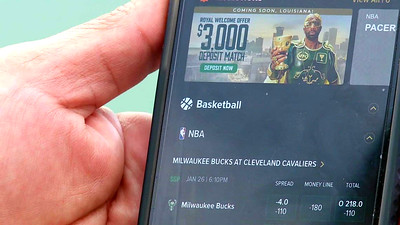
Six mobile sportsbooks in Louisiana took $40.5 million in bets from January 28 through January 31, the first four days of legalized sports wagering, according to a Louisiana Gaming Control Board report. In comparison, the state’s 13 retail sportsbooks took in $49.3 million during the entire month of January, up 24 percent over $39.5 million in December and $27.6 million in November.

Altogether, bettors wagered about $j89.8 million in January, producing $2.7 million in revenue for the state at a 6.7 percent hold. Retail sportsbooks produced $5.3 million in revenue at a hold of 10.8 percent.

Louisiana Gaming Control Board Chair Ronnie Johns granted sports betting licenses to six sportsbook for the January 28 launch: Barstool Sportsbook, BetMGM, BetRivers, Caesars Sportsbook, DraftKings Sportsbook and FanDuel Sportsbook. In total, the sportsbooks spent $11.7 million in promotions during those first four days. Mobile sportsbooks lost a total of $9 million after adjusting for promotional spending. State law allows sportsbooks to deduct up to $5 million a year in promotional spending.

A seventh mobile sportsbook, WynnBET, launched February 10. In addition, two retail sportsbooks opened in January: Amelia Belle and   Sam’s Town.

Louisiana allows 20 sports betting licenses; each can operate up to two online skins. Also, the Louisiana Lottery is allowed to operate an online sportsbook and kiosks at lottery retailers.

Oklahoma House Committee Advances Sports Betting

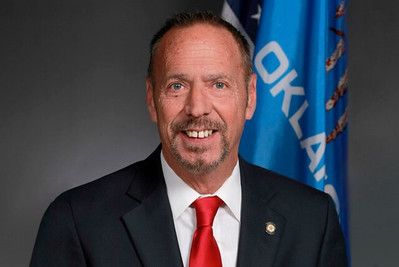
In a 6-4 vote, an Oklahoma House committee passed HB 3008, which would legalize sports betting at tribal casinos. The bill’s sponsor, state Rep. Ken Luttrell, said offering allowing sportsbooks at tribal casinos would create thousands of jobs and generate significant revenue for both the state and the tribes. The bill would allow tribes to opt in, but not every tribe supports the legislation.

Luttrell said, “I would be happy to facilitate that, get everybody to the table and have some good open dialogue and discussion about this. It’s not a make or break for the tribal entities.”

Luttrell noted Mississippi is making $1 million a month from sports betting revenue while Oklahomans will keep betting on sports elsewhere. He said, “Oklahomans are sending millions of their dollars down to the Caribbean in online sports betting. The state is making no income from that. No share from that. The tribes are not getting any share of that income.”

State Rep. Kevin West, among other lawmakers, said he’d prefer to see negotiations between the state and tribes before gambling expands. “If this passes, the state would get 10 percent. We’ve seen in other states where they’ve made agreements for up to 25 percent of the take, so I’m not necessarily saying we need more of take, but all entities need to be involved,” West said.

He added even if the state’s share of revenue is increased, he’d still vote against Luttrell’s bill. “But I would have a lot less heartburn over it if we took out the terms portion of it and made it to where it’s negotiated,” West said.

Oklahoma Indian Gaming Association Executive Director Matthew Morgan said he can’t divulge members’ concerns. “But I can tell you this, our members are very interested in the subject, they engage quite regularly within their own communities and their local representatives and state senators. Everybody is unique when it comes to their markets and what they would like to see,” Morgan said.

As written, Luttrell’s bill doesn’t include online sports betting. But he said if the measure passes, he’d quickly push for adding online betting.

Still, a major issue is that Governor Kevin Stitt would have to negotiate and sign an amended gaming compact with tribes before sports betting could be allowed. At the moment, the relationship between the governor and the tribes is shaky.

Missouri House Committee Debates Sports Betting Bills

In Missouri, the House Special Committee on Public Policy recently debated the sports betting bills HB 2502 and HB 2556.

The state’s professional sports organizations came out on behalf of the bills, with representatives in attendance from the St. Louis Cardinals, Kansas City Royals, St. Louis Blues, Kansas City Chiefs, St. Louis City Soccer Club and Kansas City Current. A representative of Barstool Sportsbook, owned by Penn National Gaming, owners of three Missouri casinos, also supported the bills.

St. Louis Cardinals President Bill DeWitt III said, “First and foremost, all the pro sports teams in Missouri support sports wagering as a way to increase engagement with our fans and provide a fun and exciting new way to enjoy sports and root for our teams, which are such ingrained members of our communities. We also know that sports wagering will generate a significant new source of tax revenue for Missouri.”

A recent legislative estimate indicated Missouri could receive $15 million in annual tax revenue from legal sports wagering, with $7.8 million to $15.3 million directed toward education.

Supporters noted Missourians already are betting on sports, without the benefits of a legalized, regulated market. Besides traveling across state lines to place sports wagers, GeoComply found nearly 70,000 sports wagering attempts were blocked in Missouri over Super Bowl LVI weekend, meaning users tried to place mobile bets in neighboring states where sports wagering is legal.

Taxation of sports betting revenue also was a hot topic at the hearing. The bills under discussion propose a tax rate of 10 percent, drawing comment from state Rep. Dottie Bailey, the committee vice chairman. Bailey asked why Missouri’s tax rate would be lower than Illinois’, which is 15 percent.

State Rep. Scott Cupps, committee chairman, expressed concern over the potential surge in advertising that could follow legalized sports betting. He said, “I was driving through Indiana with some friends of mine a couple weeks ago, and we were bombarded so much by sportsbook billboards and sign. Everywhere we went and everything we did, all there was, was sportsbook ads and so I can’t help but think that’s a discussion that we need to have when we’re working through this. Because I know there’s a lot of people who maybe don’t want their entire existence to be bombarded by sportsbook advertisement and promotion.”

Supporters of the bills said the initial marketing influx eventually would slow down as operators gained market share.

Another issue was providing funds for problem gambling services. The bills both provide $250,000 for that purpose but some committee members said that amount was too low.

Since 2019, Missouri lawmakers have filed more than 20 bills including some form of sports betting but none have passed the legislature.

Wisconsin Tribe to Offer Sports Betting

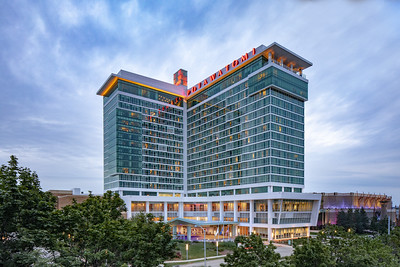
Wisconsin Governor Tony Evers and the Forest County Potawatomi Community have signed an amended gaming compact allowing sports and event wagering at the tribe’s Potawatomi Hotel & Casino in Milwaukee and affiliate locations.

The amendment also extends current compact to 2061. The U.S. Department of the Interior is expected to approve the amended compact after a 45-day review.

Tribal spokesman George Ermert stated, “These discussions take time to hammer out and the state and Potawatomi worked diligently on this.” He said a new sportsbook will be built at the Milwaukee casino by the end of the year. Ermert noted the tribe is allowed to offer sports betting at its Potawatomi Carter Casino Hotel in northern Wisconsin but, he said, “Right now we’re focused on bringing that amenity to our Milwaukee facility.”

Under the existing compact, the tribe is required to pay the state 6.5 percent of net win at the Milwaukee venue, and a sliding scale of up to 5 percent of net win at the Carter facility.

Evers stated, “I am glad for the good work of Chairman Ned Daniels, the Forest County Potawatomi and the folks at the Department of Administration to get this done so folks can enjoy sports and other event wagering in our state while benefitting the tribe’s economic growth. I look forward to continuing our partnership together to find new opportunities that support and bolster the tribe’s success and our state’s success for years to come.”

Daniels commented, “We appreciate Governor Evers and his administration working with us in a government-to-government manner to provide our tribe the tools needed to compete in the marketplace and giving us the business certainty to continue our investments in Milwaukee and throughout the state.”

Evers also recently signed similar compacts with the Oneida Nation and the St. Croix Chippewa Indians of Wisconsin.

South Carolina Legislator Sponsors Expanded Gambling Bill

In South Carolina, the only legal form of gambling is the state lottery. But state Rep. Todd Rutherford recently filed a bill to legalize sports betting, as well as horseracing, card and dice games and electronic gambling devices throughout the state. Rutherford said, “This is about the ability to do something that people are already doing and take advantage of that and let South Carolina benefit from that.”

It’s not the first time Rutherford has sponsored sports betting legislation. But he thinks his bill stands a chance this year due to bipartisan support and the growth of online sports betting. He said, “You have major corporations, MGM, Caesars, that want sports betting to come. I think that’s going to move the needle towards more progression and more freedom.”

Legalized sports betting could generate $40 million in annual revenue for the state, analysts said. Rutherford’s bill would direct that revenue toward highway, road and bridge maintenance, construction and repair. A portion also would be directed to education. “We’ve got to keep up. We’ve got to make sure that we are competitive,” Rutherford said.

If the legislature passes Rutherford’s bill, a voter referendum would determine the fate of expanded gambling in South Carolina.

Palmetto Family Council President Dave Wilson said his group is concerned that expanded gambling would lead to increasing societal problems. He said, “What it actually does is it sets up the structure for doing all forms of gambling in South Carolina. What we have to find out is whether or not the voters in South Carolina actually want to see that happening in our state.”

Alabama Lawmaker Proposes Sports Betting Bill

Alabama state Senator Greg Albritton has introduced three sports betting bills, each coming at the issue in a unique way. He explained, “This is not a package of bills. These are three separate bills addressing it in different ways. We have the vehicle, if you will, to move this along. We have the votes in the House and Senate to pass these bills, alright? The problem is getting them through the process. That’s where we’ve fallen short in the House each and every time.”

Albritton added, “I’ve been told by House leadership, ‘Don’t bring it up. Don’t do it. We’re not going to deal with it this year.’ That’s a hurdle to overcome.”

Last year, the Alabama Senate passed a sports betting bill that also would have expanded the casino market and created a state lottery; Alabama is one of five states without a lottery. However, the legislative session ended before the House could act on it. Previously, other attempts to pass lottery legislation failed due to conservative opposition to gambling, battles over electronic gambling and how to distribute lottery revenue.

Meanwhile, Alabama gamblers wager through offshore sportsbooks and illegal local bookies, and travel to Mississippi, Tennessee and North Carolina where sports betting is legal. Albritton commented, “Gambling is already present, with all of its problems and ills and issues right now, but we have no control over it. It’s the Wild West out there. Alabama has to take control of this industry.”

Another solution has been presented by state Rep. John Rogers, sponsor of HB 405, which would allow mobile and retail sports wagering only in Jefferson County, Alabama’s most populous county. The bill calls for the creation of the Jefferson County Sports Wagering Commission which could issue up to seven 5-year sports wagering licenses with a fee of $100,000 per application, renewable for another $100,000. Adjusted gross revenue from sports wagering would be taxed at 10 percent. The measure would permit betting on professional and collegiate sports, including Alabama colleges and universities.

Churchill Downs Eliminates Online Betting

In a fourth-quarter earnings call, Churchill Downs Chief Executive Officer Bill Carstanjen announced its online business, including casino gaming and sports betting, would wind down its Twin Spires operations over the next six months.

He said Churchill Downs plans to sell its market access to other operators and will focus on its retail sportsbooks.

He said the four CDI-owned casinos with retail sportsbooks—Harlow’s Casino in Greenville, Mississippi; Presque Isle Downs Casino in Erie, Pennsylvania; Ocean Downs Casino in Berlin, Maryland; and Rivers Casino in Des Plaines, Illinois—are profitable.

“When the Supreme Court overturned the ban on sports betting in 2018, we had high hopes for building a profitable business in this space. We have profitable retail books in four of our casinos. However, the online betting and casino space is highly competitive with an ever-increasing number of participants. Many are pursuing maximum market share in every state with little regard for short-term or potentially even long-term profitability,” Carstanjen said.

Many are pursuing market share in every state, with limited regard for short-term, or potentially even long-term, profitability, he said. “Because we do not see a path in which this business model delivers predictable and acceptable margins for at least several years, if ever, we have decided to exit the online sports betting and iGaming space over the next six months.”

TwinSpires has online sportsbooks live in Arizona, Colorado, Indiana, Michigan, New Jersey, Pennsylvania, and Tennessee. It has online casino operations in Michigan, New Jersey, and Pennsylvania.

Carstanjen added, “We are always committed to building long-term value for shareholders. Consistent with this commitment, when we see an investment is not progressing as planned, we will redeploy the capital to other growth projects or return it to shareholders. This isn’t the result we wanted when we started the business in late 2018 but it is the prudent next step forward for our company. We remain absolutely committed and excited about TwinSpire’s online horseracing business.”

Churchill Downs launched the BetAmerica brand in late 2018. It relaunched last year as TwinSpires and changed technology providers in an unsuccessful attempt to stop losses.

Other companies are experiencing similar losses. Last November, Wynn announced it was cutting marketing spending and in January announced it would sell off its digital business altogether. Caesars recently announced it was cutting external marketing to try to cap sports betting losses at $1 billion. And DraftKings and similar companies’ stocks have experienced massive sell-offs as investors object to underwriting additional losses.