Author: Casino Connection Staff

Arizona Mulls Permanent Sports Betting Rules

The Arizona Department of Gaming is holding hearings for permanent rules governing sports betting. One of the hottest issues is “parity” between gaming tribes and sports teams.

Sports betting was legalized by the Arizona legislature in February 2021. The legislation allowed 20 digital and retail event wagering licenses, 10 for tribes and 10 for professional sports teams.

However, there weren’t 10 teams that qualified, and more than 10 tribes wanted the licenses. This created an issue in the tribes’ minds of “parity.” The ADG wants to come up with a solution for this problem by the deadline to file with the Secretary of State’s office.

The ADG can’t create more licenses but it hopes to determine how to divide up the ones that exist. Both tribes and sports teams are partnering with operators like FanDuel and DraftKings to offer sportsbooks. The ADG does have the power to revoke a license if the responsible party “fails to continue operations.”

This line has some tribes worried that they might lose their license if they change service providers.

The Navajo Nation has partnered with Hard Rock Sportsbook and the NBA Suns with FanDuel.

Other issues the ADG is dealing with include the location of a licensee, which is a problem since the professional sports team licenses are tied to a venue, such as a sports field. This implies that if a sports team relocates, it could lose its license.

Maine Bill Would Keep Sports Bettors Close to Home

A mobile sports betting bill now before Maine legislators hopefully would keep residents from going to New Hampshire to place their bets.

It’s no secret that a lot of Mainers cross the state line to bet from time to time. Once there, they find a spot in a parking lot or along the road that allows the geolocation of their phones to determine they are in the Granite State. Then they freely make sports bets on the DraftKings app.

One customer told the Portland Press Herald about his experience betting on the Super Bowl: “I went to the Brook (a retail sports-betting site in Seabrook) for the experience. However, I used the DraftKings Sportsbook app to place my bets. It is so much easier and I’d rather have full control of my money. Whereas if I were to go to the window and place a bet, I’d have to drive back down to New Hampshire to collect my money.”

New Hampshire legalized sports betting in 2019 and it has grown steadily ever since. This is largely due to the ease of placing bets with the mobile software on computer or by app. It has raised a tidy sum in taxes through the lottery commission, which contracts exclusively with DraftKings. There are also three retail locations, in Dover, Manchester and Seabrook. However, mobile bets account for 84 percent of all sports wagers in the state.

New Hampshire is uniquely positioned in that its three neighboring states have not yet legalized sports betting. So it gets all of their bettors, which accounts for about 15 percent of the total.

The lottery collects 50 percent of retail sales revenue and 51 percent of the mobile revenue. Last year that was about $15 million in taxes from $579 million in wagers.

Maine lawmakers would like to put a stop to their residents making bets there and keep their business at home.

Rep. Tim Roche sponsored the initial bill to legalize sports betting. It was later superseded by what emerged from the Judiciary Committee, which in March voted 8-6 vote on a bill that would allow the state’s tribes to operate mobile sports betting. Oxford Casino and the state’s harness racing tracks and off-track betting venues would be able to offer retail sportsbooks.

New Hampshire’s success motivated Roche. “I just saw a ton of money heading south. I have people I know who go over to New Hampshire and place bets,” he said. “They bet, and then they turn around and come back, and New Hampshire’s getting that. We have scratch tickets. We have bingo. What’s the difference if somebody wants to put a little on the Patriots?”

The bill has some concessions for those who think problem gambling is largely ignored in the national rush to legalize sports betting. Unlike New Hampshire, where bettors can be as young as 18, Maine’s bill raises the age limit to 21. One percent of sports betting profits would be earmarked to threat gambling addiction. Additionally bets would not be allowed on teams based in Maine.

Paysafe Expands Betsson Partnership

Paysafe, a leading specialized payments platform, announced its expanded partnership with Betsson Group, the international iGaming operator with multiple online sportsbook and casino brands, including Betsafe. Building on Paysafe’s longstanding payments support for Betsson globally, the company is now providing a range of traditional and alternative payment solutions to the new Betsafe online sportsbook for Colorado.

The extension of Betsson and Paysafe’s payments partnership to the U.S., starting in Colorado, is the latest phase of a partnership that dates back 15 years. Since 2007, Betsson brands have been offering their European players the paysafecard online cash, or eCash, solution, including in major markets such as Sweden, Germany, Italy, Spain, Denmark, and Greece. In tandem, Paysafe’s Skrill and Neteller digital wallets are payment methods for Betsson iGaming brands in more than 60 global markets.

Now, with Betsson’s recent launch of its Betsafe mobile sportsbook for Colorado, Paysafe is facilitating Centennial State players’ online credit and debit card deposits. Whether a sports bettor wants to wager on U.S. sports league games or international sports, their card deposit to fund their Betsafe account will be processed seamlessly through Paysafe’s best-in-breed payment gateway.

The Paysafe integration also sees Betsafe able to offer players a comprehensive selection of alternative payment methods (APMs). Colorado sports bettors will be able to use Paysafe’s Skrill USA digital wallet, which underwent a major product upgrade in Q4 2021, to instantly make deposits and receive payouts of their winnings.

Alternatively, cash-focused sports bettors will be able to use either of Paysafe’s eCash solutions, paysafecard or Paysafecash, to fund their Betsafe accounts, with both APMs available at thousands of U.S. in-store retailers in Colorado and across the wider U.S.

“We’re delighted to support our longstanding partner Betsson Group’s expansion into the U.S. sports-betting and iGaming space with their Betsafe brand,” said Zak Cutler, CEO of North America iGaming at Paysafe. “We have a proven track record facilitating payments for Betsson brands and their players in multiple European and global markets, and we’re confident that we’ll play an equally important customer acquisition and retention role for the operator in Colorado and beyond.”

Marina Bogard, managing director, U.S. for Betsson Group, commented, “At Betsson, the customer is at the core of everything we do. We aim to make the entire journey on our brands as smooth and convenient as possible, including their deposit and payout experiences. As they have done in other markets, we are confident that Paysafe’s payment solutions will be able to support us with all our needs to achieve our goals.”

William Hill Sets Aside Funds for Likely Violations

When the U.K. Gaming Commission reviewed 888’s acquisition documents for William Hill Group, it discovered potential sanctions. William Hill set aside £15 million (US$19.6 million) to cover the cost of a potential regulatory settlement, according to iGaming Business.

The update related to an agreement between 888 and current William Hill owner Caesars to reduce the cash portion purchase price for William Hill assets by £250 million.

888 justified the change as a reflection of the change in the macroeconomic and regulatory environment since the deal was agreed to last year.

In the document, 888 revealed that William Hill is subject to an ongoing license review, launched following a compliance assessment conducted in July and August 2021. The operator addressed certain actions relating to its social responsibility and anti-money laundering obligations.

The sanction could turn out to be the largest related to social responsibility and money laundering.

Caesars would cover further costs if any of the licenses held by William Hill entities ended up suspended, 888 said.

In other William Hill news, the sportsbook got the all clear from the Nevada Gaming Control Board April 7 to run the race and sportsbook at the soon-to-reopen Palms. Board members unanimously recommended approval of a nonrestricted gaming license to William Hill after a short hearing. The Nevada Gaming Commission will consider final approval on April 21, according to the Las Vegas Review-Journal..

Jeffrey Hendricks, senior vice president and assistant general counsel of regulatory and compliance for Caesars, and David Grolman, senior vice president of retail operations, told board members the Palms book will have five betting stations and six kiosks when it opens April 27.

The San Manuel Band of Mission Indians owns the Palms.

Palms will have its first guests in more than a year on April 28, the night the National Football League draft begins.

William Hill operates 124 locations in the state.

Bally’s Purchases Stake in Snipp Interactive

Platform-as-a-service company Snipp Interactive Inc., a global provider of digital marketing promotions, rebates, and loyalty solutions, announced that a subsidiary of Bally’s Corp. has closed on an agreement to invest US $5 million in Snipp. As part of the investment, Bally’s will be entitled to nominate one director to Snipp’s board of directors, which is expected to be increased in size to five directors.

Bally’s will also be provided with a right of first refusal in respect to any offer to purchase all or substantially all of Snipp’s assets received by Snipp from any competitor of Bally’s. Completion of the Investment is subject to the approval of the TSX Venture Exchange as well as the satisfaction of other customary closing conditions.

Following completion of the investment, Bally’s is expected to own approximately 9 percent of the issued and outstanding common shares of Snipp, having subscribed for 25 million common shares of Snipp at 20 cents per share as part of the investment.

Bally’s and Snipp will also enter into commercial agreements whereby Bally’s will become Snipp’s exclusive gaming partner for Snipp’s loyalty gaming platform Gambit, recently acquired in connection with Snipp’s February 22 acquisition of Gambit Rewards, Inc.

As part of the commercial arrangements, Bally’s will also receive a three-year term license of the SnippLOYALTY software platform at arm’s length rates, intended for implementation across Bally’s physical and online properties.

Work will begin on the first two deployment locations in the second quarter of 2022. In addition, Bally’s will be granted an option to license the source code for the specific version or versions of the SnippLOYALTY software platform actually implemented in any of Bally’s properties for a price of $10 million.

“Bally’s is one of the most forward-thinking companies in the gaming industry, and their investment illustrates the value that they see in SnippLOYALTY as well as our SnippCARE customer acquisition, retention, and engagement platform,” said Atul Sabharwal, founder and CEO of Snipp Interactive.

“Our acquisition of Gambit was intended as a way to better align ourselves with the gaming world. Now, only a couple of months later, we’re entering a deep relationship with Bally’s. We welcome their presence on our board and look forward to tapping their deep expertise in this high-growth industry.”

“Working together with Snipp furthers our strategic goals around omnichannel integration with well-established technology that can combine rewards platforms across the Bally’s brand and thereby provide our customers with a seamless user journey,” said Adi Dhandhania, chief operating officer of Bally’s Interactive, North America.

As part of the deal, Snipp will also license certain free-to-play games and trademarks from Bally’s for inclusion in the Gambit Rewards platform. Gambit free-to-play tokens, now available in 48 states, are offered as a point redemption option through participating loyalty sites. Bally’s members will soon have access to Gambit’s unique free-to-play mode and Gambit members will soon be able to redeem their Gambit Prize Tokens in the form of Bally’s loyalty points at arm’s length rates.

Launched in 2019 and acquired by Snipp in 2022, Gambit Rewards is a customer network that offers a groundbreaking approach to both online gaming and loyalty programs. Gambit converts brand rewards points into risk-free online gaming and sports betting. Users can play for actual cash winnings and other prizes without risking any real money. This system offers more choices for consumers and unlocks some of the U.S. $100 billion of cumulative value that is trapped in unused loyalty points.

“With 14 casinos, a racetrack, and digital sports betting properties across the country, Bally’s is the perfect partner to power Gambit’s Loyalty Gaming platform, and we look forward to revealing the newly designed and co-branded version of the platform in the near future,” said Richard Pistilli, founder and CEO of Gambit Rewards. “Our ability to deliver a proprietary gaming experience to consumers in nearly every state will help to expand Bally’s presence across the U.S.”

IGT to Acquire iSoftBet

International Game Technology PLC announced that it has entered into a definitive agreement to acquire iSoftBet, a leading iGaming content provider and third-party game aggregator, for approximately €160 million in cash (US$174 million).

The acquisition will more than double the IGT PlayDigital content library to approximately 225 proprietary games, in addition to providing a world-class, proprietary game aggregation platform to distribute third-party games, and leading data-driven promotional and user-engagement tools.

“The acquisition of iSoftBet will provide market-tested proprietary digital content, advanced game aggregation capabilities, scalable promotional tools, analytics and strong creative talent to IGT’s PlayDigital operations,” said Vince Sadusky, chief executive officer of IGT. “This will enhance PlayDigital’s competitive capabilities with a proven, complementary content portfolio across Europe and North America as we provide best-in-class games and technology to our fast-growing iGaming customers.”

The acquisition is expected to be completed during the second quarter of 2022, subject to the satisfaction of customary closing conditions.

Virtual Casino Ordered to Stop Selling NFTs

Here’s something new, an original crime: selling non-existent tokens to fund a non-existent casino in a virtual environment.

The online casino developer Sand Vegas Casino Club, based in Cyprus, has been ordered by Texas and Alabama securities regulators to cease selling non-fungible tokens (NFTs.) They allege the company was illegally selling unregistered securities and committing fraud.

The company allegedly offered thousands of Gambler and Golden Gambler NFTs in a “high-tech fraudulent securities offering” to raise money to fund a virtual casino in the metaverse, which is an internet-based virtual environment. They were promised profits of as much as $81,000 annually.

This is the first time any government authority has issued such an order. It is also a first for U.S. regulators seeking to impose order on NFTs, which are one-of-a-kind digital art that has no physical existence. Because NFTs are so new, they are a ripe environment for scam artists to take advantage of the unwary.

It is thought that this action by state authorities might create interest in the federal government. Especially so since NFTs are the rage among investors.

TVG Halts Greyhound Bets

As of April 4, TVG, one of the country’s largest advance-deposit wagering (ADW) bookmakers, has stopped accepting bets for greyhound racing entirely. In an email to customers, the company cited an “upcoming legislation change” as the primary reason behind the decision.

Although it isn’t mentioned by name, the change mentioned is likely a reference to SB 1504, which is a bill that will take effect July 1 in Oregon. The bill will bar gaming operators from offering or accepting wagers on greyhound racing in the state. Even though there haven’t been live races in Oregon since 2004, SB 1504 still signals a big blow to greyhound bettors and enthusiasts nationwide.

Thanks in part to advantageous tax incentives, Oregon is known as a “multijurisdictional hub” for ADW bookmakers that offer parimutuel betting, or pool betting. This means that a large percentage of greyhound wagers from around the U.S. are processed through the state hub–North Dakota is currently the only other jurisdiction with this designation.

Even though this move signals another blow to the shrinking greyhound racing industry, it likely won’t have huge business ramifications for TVG. According to industry experts, greyhound racing bets likely only accounted for 1 percent or less of the company’s handle.

So far, the bill has drawn support from animal rights advocates across the country, including Carey Theil, who is the director of GREY2K USA Worldwide, an anti-racing organization. Theil hailed the passage of SB 1504 as “good news for everyone who cares about dogs,” and that “the end of greyhound racing across all these sectors” is not far away.

Theil also expressed ire at the other ADW bookmakers who are not following TVG’s lead–after the bill was originally introduced, it was significantly amended in its greyhound-related provisions, and many feel that these changes were the result of aggressive lobbying on behalf of other ADW gaming companies.

Bally’s AC Invests $100 Million in Improvements

Bally’s Atlantic City is adding excitement to the Boardwalk with its all-new Carousel Bar, an elevated 24-seat rotating bar that offers 360-degree views of the casino and adjacent areas. The first venue of its kind in Atlantic City, it will offer craft cocktails with Atlantic City-themed flavors such as Saltwater Taffy, Cotton Candy, Shore Breeze and the Funnel Cake Espresso Martini.

Every aspect of the Carousel Bar’s elegant design, from the color palette to the custom curved lighting fixtures above the bar, lends a subtle nod to the boardwalk and speakeasy era and creates a feeling of nostalgia and whimsy. The changing light displays subtly nod to illuminated seaside amusement rides. The surrounding modern glass rail defines the space making it private yet visible, grabbing the attention of visitors and hints to the spinning rides of our childhood. It’s an experience you don’t want to miss.

The bar rotates at 2.5-5 revolutions per hour with horsepower of 0.16. The bar is slow-moving, so that patrons can simply walk onto the rotating floor. It’s centrally located, adjacent to the casino floor and Bally’s new hotel lobby.

The additions are part of $100 million in improvements at Bally’s, which was acquired in 2020 by the former Twin River Holdings of Rhode Island. Twin River then changed its name to Bally’s. A refreshed hotel lobby represents Bally’s Atlantic City’s commitment to enhancing the guest room experience from arrival to departure. The all-new design will include a complete refresh of the space from carpet to walls, to column enclosures. A reimagined front desk with new finishes transforms the arrival experience to align with the stunning new guest rooms.

Bally’s Atlantic City, under new ownership, will debut its $100+ million in renovations including new hotel rooms, hotel lobby, Carousel Bar, and The Yard on Memorial Day Weekend.

More N.J. Lawmakers Support Casino Smoking Ban

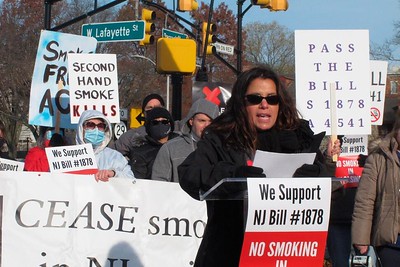
The New Jersey legislature in Trenton has reached a milestone. The majority of the members in the Assembly and Senate health committees co-sponsored legislation to eliminate the casino smoking loophole.

Assemblyman Daniel Benson and Assemblywoman Lisa Swain are signing onto the bill, according to a news release from Americans for Nonsmokers Rights. The nonprofit is working with other groups to pass the law and eliminate indoor smoking in casinos, according to the Press of Atlantic City.

“We have a responsibility to protect workers from dangerous secondhand smoke everywhere, not just in some workplaces,” Benson said.

“No worker should have to breathe secondhand smoke while on the job, period,” Swain said.

A total of 39 legislators are co-sponsoring the legislation. Of 40 New Jersey senators, 15 are co-sponsors of S264. Of 80 members of the Assembly, 24 are co-sponsors of A2151.

“Legislation to protect casino workers from secondhand smoke has never had this much support in Trenton,” said Cynthia Hallett, president and CEO of Americans for Nonsmokers’ Rights. “Our growing, bipartisan coalition knows that it is unacceptable to continue the outdated business practice of knowingly subjecting workers to dangerous secondhand smoke.”

Joe Lupo, president of the casino association and of Hard Rock Hotel & Casino Atlantic City, has said the resort “faces some very dire issues,” including lower levels of visitors in 2021 than 2019.

He has said now is not the time to enact a smoking ban, and that doing so “could cause a devastating effect to the community and state.”

DraftKings Soon to Close on Golden Nugget Online

By the end of May, DraftKings should close on the $1.56 billion all-stock acquisition of Tilman Fertitta’s Golden Nugget Online Gaming company.

In a filing with the Securities and Exchange Commission, DraftKings said the companies “continue to pursue the remaining gaming regulatory approvals necessary” to complete the transaction, according to the Nevada Independent.

The transaction includes a commercial agreement with Fertitta Entertainment. The holding company controls businesses across gaming, lodging, dining, and entertainment sectors, including the Golden Nugget casinos in downtown Las Vegas, Laughlin and three other states.

Fertitta, who owns 46 percent of Golden Nugget Online Gaming will join the DraftKings board after the deal closes. DraftKings operates retail and online sportsbooks in 17 of the 20 states with legal sports betting.

Under terms of the agreement, Golden Nugget will rebrand all retail sportsbooks under the DraftKings name.

Since neither DraftKings nor Golden Nugget Online Gaming operates with a Nevada license, the deal does not require Nevada gaming regulators approval before it closes.

DraftKings will open a Las Vegas office for a technology hub to employee around 1,000 workers, second in size only to the Boston headquarters.

Caesars AC to Add Hell’s Kitchen Restaurant

Caesars Entertainment will open a Gordon Ramsay Hell’s Kitchen restaurant at its Atlantic City casino resort this summer. A Ramsay’s Kitchen will open this fall at Harrah’s Las Vegas.

Inspired by the chef’s TV series, Hell’s Kitchen at Caesars Atlantic City will be the first of its kind on the East Coast, according to a press release. The head chef will be the winner of the show’s 21st season. The three-level restaurant will occupy spaces formally used by Dusk Nightclub, Planet Hollywood and a Boardwalk bar.

The new Hell’s Kitchen is part of a $400 million reinvestment Caesars plans for its three Atlantic City casino hotels: Caesars, Harrah’s Resort and Tropicana. John Koster, Caesars Entertainment’s regional president, is “thrilled” that Hell’s Kitchen is coming to Atlantic City.

“Caesars Entertainment is committed to leading Atlantic City’s evolution as one of the country’s modern-day capitals for entertainment, sports, and world-class culinary experiences,” Koster said.

The first Hell’s Kitchen opened in Las Vegas in 2018 at Caesars Palace. Other locations now include Lake Tahoe and Dubai, with more planned in Chicago, Miami and Washington D.C.

Bringing Back Bettors, Sans Promos

New York State mobile sports betting finally got out of the starting gate in January, and from the start, operators attracted the kind of handle that dreams are made of. Since launching on January 8, the nine current mobile apps have exceeded $2 billion in wagers.

But since all sportsbooks offer pretty much the same product, the competitors depended quite a bit on costly promotional deals to attract new customers. And while they attracted customers, they didn’t reap much in the way of profits—or any profits at all.

Truth is, Caesars, FanDuel, DraftKings, BetMGM and other operators lost money, proving that advertising and heavy promotion is not the path to profits. That’s especially true if lawmakers become concerned about the number and frequency of ads and promotions—concerned enough to shut them down, as in some European markets.

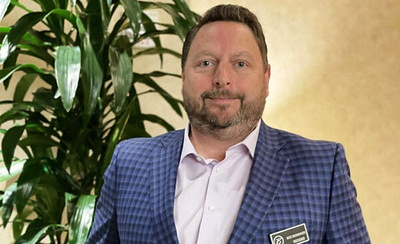
“One of the challenges that’s come up in legislative channels is the number of promotions,” said Brendan D. Bussmann (below.), managing partner at B Global. “Whether this be the number of ads or the number of promotions, U.S. operators need to make sure they don’t repeat the mistakes of some other jurisdictions, where legislators and/or regulators take a stark response to these efforts to market, as opposed to a prudent and patient response.”

Long-term efforts should go to the retention of existing customers and the reactivation of one-time clients. It’s a formula for success not only for sportsbooks, but iGaming operators as well.

“There are a host of companies out there that can assist with customer retention,” Bussmann said. “A rewards program is one of the keys that some operators have now implemented across the sports betting spectrum as opposed to just their regular gaming and non-gaming products. For the long-term viability, it is essential to be sustainable.”

Hello Again

Firms like Enteractive specialize in player reactivation. Working with operators, it opens new, two-way conversations with hard-to-reach players with the goal of regenerating dormant revenues. The process starts when the operator shares inactive customer data. That data is entered into what Enteractive terms its “ReActivation Cloud,” which connects agents to former players “for a friendly 1:1 talk in their language.” Reinstated customers are then entered into “a careful CRM contact loop to build long-term loyalty.”

“We’re a part of the customer relationship management mix for operators, filling in the gaps that require a more human approach,” said Andrew Foster (l.), Enteractive’s chief business officer. “Our call agents speak directly with players to cultivate brand trust, loyalty and long-term lifetime player value.”

The customer pool includes registered players who aren’t currently funded, have let their accounts lapse, or don’t respond to more traditional marketing. Contact can occur at any point in the player cycle, from a week after someone registers, to two years after they’ve dropped off.

Such businesses have been around a lot longer in Europe than in the U.S., where widespread legal sports betting is still in its early stages.

“We’ve been operating in Europe since 2008 and have grown and expanded our business globally since then, with fast growth in the last three to four years,” Foster said. “We’ve seen some great results for European clients including Kindred and Betsson.”

Enteractive is now adding U.S. markets to its portfolio, with an office in Miami cementing its domestic position. The company is licensed as a service provider in New Jersey and is looking to enter other states. Foster envisions partnerships with U.S. brands as well as European operators.

Like a law firm that takes no money unless there’s a favorable judgement, Enteractive offers its services on a “no-play, no-pay” basis. Operators pay via revenue-share or a remuneration package for each player who makes a new deposit, Foster said. There’s no financial outlay for operators, and therefore no downside.

‘Tortoise and Hare’

Bussmann views profitability and customer retention as “must-haves” in the present tense or near-term, and not as long-term goals. “While it’s still early on in the race, I’ve always viewed this as the tortoise and the hare, in which slow and steady will likely win in the end,” he said. “Yes, the rabbit may win on occasion, but profitability is becoming more of a focus as we look to enter year four of the post-PASPA era.”

He added that competition “breeds innovation, which breeds a better experience for the consumer. Market limitations on licenses have shown to constrain those efforts. Open markets have proven to be the best method for the consumer and the jurisdiction.” Markets like New York “should not be left to a handful of operators, but (focus on) how the market can best support those suitable operators that choose to operate.”

In that spirit, the New York Senate was expected to vote this week on a budget resolution that could allow up to 16 mobile sportsbooks by 2024, provided the New York Assembly and Governor Kathy Hochul go along.

New York State Senator Joe Addabbo Jr. told Gaming Today the Senate provisions are worth a look. “Everyone sees the potential that we’ve had with mobile sports betting,” he said. “This goes back to our original vision of more competitive skins or operators to compete with other states. So I think it’s a great conversation to have.”

New York Budget Counts On NYC Casino Licenses

New York state finalized its budget last week and the decision on accelerating the selection of up to three casino licenses in and around New York City was part of the plan.

New York City will score at least one full-blown casino license, maybe two, according to the New York Daily News. The two favorites remain Genting’s Resorts World in Queens and MGM’s Empire Casino in Yonkers. Both operate with video lottery terminals with a 66 percent tax rate. Even at that rate, they are two of the highest-grossing gaming establishments in the U.S.

If they acquire a full license, the slot rate drops to 45 percent and 10 percent for table game revenues, which is the rate paid by the four casinos in the northern quadrant of New York state.

“We would love to have two casinos in New York City,” Mayor Eric Adams told reporters, adding that the gambling dens would “help boost our economy and tourism” as the city scrambles to bounce back from a pandemic-induced recession.

“We are getting closer to agreement, with consensus on major policy items,” New York Governor Kathy Hochul said in a general budget statement. “New Yorkers should know that progress is being made and that we will put in the time it takes to reach an agreement that delivers for them and moves our state forward.”

The question remains: will one of those licenses go to Manhattan. The opinions are mixed. Some support it; others object.

“Personally, I’m not a big fan of gambling,” Assembly Speaker Carl Heastie, representing a section of Northeastern Bronx, said earlier this month of Hochul’s plan.

“Totally support this,” Bronx Council member Rafael Salamanca, who chairs the council’s Land Use Committee, tweeted of Adams’ push for two city casinos. “Bring it to the South Bronx.

Energized by the $160.4 million in new taxes generated from mobile sports gambling since it launched in January state officials are hoping to clear the way for the three new downstate casinos, according to NY Online Gambling.

There’s a lot of interest from gaming companies not already involved. With a minimum license fee of $500 million, additional investment could total in the billions. Wynn Resorts Ltd., Bally’s Corp., Rush Street Gaming LLC and Hard Rock International have all indicated interest in bidding for a New York City area casino.

“We look forward to exploring this exciting opportunity,” said Rush Street Chairman Neil Bluhm, whose company operates a casino in Schenectady. “New York is an exceptional gaming market, and we believe the expansion of casino gaming will play a critical role in the state’s post-Covid resurgence.”

Las Vegas Sands has had conversations with baseball’s New York Mets owner Steve Cohen about building a casino next to the Mets’ stadium, Citi Field, in Queens.

“We’re looking at all the proposals,” Adams said. “We want the best for New York City. We want the economic development.”

Hochul says the budget, including casinos in New York City, a gas tax suspension and a stadium fot NFL’s Buffalo Bills, will benefit the entire state.

“We have to look at our people, and meet them where they are right now in a time of stress,” she said. “This budget will put money back in people’s pockets.”

Boyd Gaming to Acquire Pala Interactive

Boyd Gaming Corp. announced that its wholly-owned subsidiary, Boyd Interactive Gaming Inc., has entered into a definitive agreement to acquire internet gaming technology supplier Pala Interactive LLC and its subsidiaries for total cash consideration of $170 million.

Pala Interactive is an innovative online gaming technology company that provides proprietary real-money and social gaming solutions on both a business-to-business (B2B) and business-to-consumer (B2C) basis in regulated markets across the United States and Canada. Pala Interactive’s technology includes its player account management system; plus casino, poker and social casino platforms.

Pala complements its online gaming platform with a full suite of managed services. Pala currently provides B2B services in eight states across the United States as well as Canada, and operates B2C offerings in New Jersey and Canada.

“The acquisition of Pala Interactive marks the next phase in the ongoing execution of our iGaming strategy, providing us full control over the technology, development and customer experience,” said Keith Smith, president and CEO of Boyd Gaming. “By integrating online casinos with our existing land-based operations, we will be able to further leverage and monetize our expansive customer database and the amenities of our nationwide portfolio of properties, driving growth in both our land-based and iGaming operations.

“Given our nationwide geographic distribution, significant database and established loyalty program, it makes sense for us to pursue a direct approach with our iGaming operations. By engaging directly with our guests and having the ability to personalize the customer experience, we are confident in our ability to create a cost-effective and profitable regional iGaming business.

“While the acquisition of Pala Interactive supports our iGaming strategy, we remain fully committed to our sports betting partnership with FanDuel, which has allowed us to participate in the nationwide expansion of sports betting. We look forward to welcoming the Pala Interactive team to our company and building a highly successful online gaming business in the years ahead.”

The transaction is expected to close by the first quarter of 2023, subject to customary closing conditions and the receipt of all required regulatory approvals. The transaction will be financed with a combination of cash on hand and the company’s existing credit agreement.

Jefferies analyst David Katz says the deal is tied to Boyd’s desire to establish its Stardust brand as an online gaming option.

“Boyd will migrate the Stardust business, which is currently operated by FanDuel, in-house and integrate it with its B Connected loyalty system,” Katz wrote in a note to investors. “The company indicated its current digital operations, which included mobile sports-betting in six states, iGaming in PA and NJ, and Social gaming, generated $24M in EBITDAR in FY21 and should exceed $30M in FY22.”

Katz says the acquisition will be “neutral for the shares, given it fulfills Mgt. indication of continued build-out of BYD’s iGaming business long-term and consumes a moderate amount of capital in the near term.”

Chicagoans Drill Casino Finalists

Community hearings introducing Chicago Mayor Lori Lightfoot’s three casino developer finalists took place April 5, April 6 and April 7, starting with Hard Rock Chicago, then Bally’s and Rivers 78. All three faced overflow and skeptical crowds.

Martina Hone, the city’s chief engagement officer, set the tone before Hard Rock Chicago officials began their presentation. She told the audience some may have “many strongly held and sincere views” but “screaming and hollering” is not going to help the city pick the winner.

Hard Rock. Inside the packed auditorium, Hard Rock Chicago officials presented plans for the $1.75 billion entertainment complex that would be built over train tracks west of Soldier Field. The venue would offer 3,000 slot machines and 1,166 table games, a 3,500-seat Hard Rock Live entertainment venue, 500-room hotel, spa, rooftop space, “several” restaurants and six bars. Officials said the project could generate $185 million in tax revenue within six years.

The facility would be part of the proposed One Central development, which has requested $6.5 billion in state assistance to create a gigantic retail center and transit hub, which already faces major community opposition. During the heated question-and-answer session, one audience member said, “You put together a comprehensive proposal, but One Central is the millstone around your neck. The community doesn’t want it.”

Hard Rock officials said the project could move forward even if that state aid doesn’t come through for One Central. Hard Rock Chief Executive Officer Jim Allen said, “We have nothing to do with the massive project for One Central. That’s separate from us. The development will not take one penny of subsidies on this casino.”

On another topic, Jim Reynolds, the African American chief executive officer at Loop Capital, told the crowd only the Hard Rock proposal includes minority involvement at the highest levels. The other two finalists will include minority investors as limited partners with “no influence,” he stated.

The Hard Rock officials said a temporary casino could open by second quarter 2023 and the permanent location would open in third quarter 2025. However, a city analysis said that timeline was “aggressive,” given the approvals needed from the Illinois Department of Transportation, Metra and the Metropolitan Pier and Exposition Authority, which manages McCormick Place. “The significant number of approvals needed creates execution risk to this proposal and the possibility for construction delays,” the city report said.

On the plus side, however, analysts stated Hard Rock Chicago could generate an estimated $200 million in annual revenue for the city, which would go toward funding gaps in Chicago’s fire and police pension plans. The state also could receive $200 million in yearly tax revenue.

Many of the attendees expressed concerns about increased traffic, crime and noise potentially “destroying the quality of life” in their neighborhood. Landmark Development President Bob Dunn noted the original designs have changed to extend the buffer with local neighborhoods. Other issues included minimizing bird collisions on the reflective glass structure and including local restaurants in the plan.

The audience also was shown several videos promoting Hard Rock that included the city’s musical heritage, computer renderings the proposed casino floor, entertainment venue and district exterior; and testimonials from local minority business owners touting the casino as a local economic driver.

Bally’s River West. Rhode Island-based Bally’s Corp. proposes building a $1.74 gaming and entertainment complex at the 30-acre site of Tribune Publishing’s printing plant in River West. The project would include a casino with 3,400 slots and 173 table games, hotel, 3,000-seat theater, outdoor music venue and Chicago Riverwalk extension. Bally’s Chairman Soo Kim said a temporary casino could open by second quarter 2023 and the permanent casino in first quarter 2026.

City analysts said Bally’s proposal is the most lucrative of the three finalists, generating yearly tax revenue of $192 million. However, that depends on Bally’s finishing both phases of construction, starting with 100 hotel rooms and expanding to 500. Unlike the other two finalists, Bally’s also has offered a $25 million upfront payment directly to the city if their plan is selected.

Attendees at the Bally’s meeting, like those at the Hard Rock gathering, expressed concerns about congestion, noise, crime and above all, traffic. (In fact, hours ahead of the meeting, the city issued a traffic alert hours in anticipation of the expected 300-capacity crowd). The 22,000-member River North Residents Association previously sent letters to their aldermen spelling out their objections. The group’s president, Brian Israel, wrote, “The Bally’s Casino complex is simply the wrong project for this location. The additional strain on infrastructure, noise lighting, traffic and impact on property values are unreasonable burdens.”

At the meeting, a River West resident declared, “I’m just gonna say it, flat out no. This casino does not belong in a neighborhood. You need to show the benefit of a casino to this neighborhood and as of right we have not articulated one good reason.” Thunderous applause followed.

Kim said the plan actually would reduce traffic because the budget includes millions of dollars in infrastructure improvements, including resurfacing Halsted and putting up new traffic and pedestrian signals. “Our project is complementary to the problems that you have,” Kim said. City officials previously indicated Bally’s plan “should result in less traffic in the weekday morning, similar traffic levels in the weekday evenings and additional traffic during weekend evenings.”

Regarding crime, Kim noted casinos “radiate security for blocks” through on-site safety personnel and video surveillance. “The worst place to commit a crime is around a casino,” he said.

Alderman Walter Burnett Jr. said although it seemed most of the attendees opposed the casino, a “silent majority” actually want a casino in the neighborhood. He said, “A lot of my senior citizens who don’t come to these things like to gamble. I’ve only had maybe four emails, a handful against.”

Bally’s already has had to tweak its minority investment program. Previously it offered potential minority investors the opportunity to purchase shares, but the company would have had the right to buy out the minority shareholders after six years. Chicago’s Chief Financial Officer Jennie Huang Bennett said the city “values having longevity of minority ownership” and Bally’s removed the provision.

Although Kim said criticism about minority participation was “noise,” he said, “We’ve continued to evolve on this,” adding women and minorities will account for “at least” 25 percent of the ownership group.

Another significant issue is the environmental impact of building a casino along the Chicago River. The nonprofit Friends of the Chicago River said Bally’s and Rivers 78 both are “an intense entertainment use” that would totally alter the character of some of the largest remaining river edge sites in Chicago. The group’s Executive Director Margaret Frisbie said, “We just think that the river is a place for people and wildlife, and that doesn’t usually go hand in hand with a casino.”

Rivers 78. Chicago-based Rush Street Gaming, owned by billionaire Neil Bluhm, has proposed a $1.62 billion riverfront casino at the 78, Related Midwest’s proposed $7 billion, 62-acre megacomplex on long-vacant land in the South Loop. The project would include a casino with 2,600 slots and 190 table games, live entertainment venue, 300-room hotel, restaurant, food hall, five bars, boat dock and a 1,078-foot observation tower that Related Midwest president Curt Bailey has called “an Eiffel Tower for Chicago.”

Bailey said, “This is where we’re different. We’re creating an entire neighborhood from the ground up. We’re shifting the epicenter of Chicago’s tourism south.”

Officials said a temporary casino could open in second quarter 2024 and the permanent casino in fourth quarter 2025. A city analysis indicated the casino would generate $174.2 million in annual revenue if it includes the hotel and observation tower; it’s the lowest projection among the three finalists.

Rush Street Chief Financial Officer Tim Drehkoff noted the company’s Chicago roots and history. “We only develop casinos in urban markets. It’s all we do and this experience matters. We have a community centered approach that drives everything we do,” he said.

Many in the community, however, seemed to want Rush Street to take its business elsewhere. Prior to the presentation, which one local newspaper called “the city’s final airing of public grievances” over a downtown casino, South Loop residents held a protest. Among them was Grace Chan McKibben, executive director of the Coalition for a Better Chinese American Community, said casinos have habitually “preyed” on vulnerable residents of nearby Chinatown.

Drehkoff responded the company has structures in place to identify and help problem gamblers. He added, “We don’t do predatory marketing like that. It’s not good for business. Our customers are high-end, they come to our casino to have some fun, make some wagers and have a great time.”

Also, last month, the 78 Community Advisory Council, a group of neighborhood representatives appointed by Lightfoot, released a survey indicating 78 percent of nearly 400 area respondents were “unsupportive” of the proposed casino. They cited concerns about crime, traffic and the character of the development. Bailey dismissed the survey as “a very small sample size” and not representative of the broader support for the Rivers 78 proposal.

He said, “There are many, many more constituents out there that are interested in seeing something happening in jobs and kind of changing the whole metric of where tourism occurs in the city.” However, Bailey added he welcomed community input, which sometimes leads to “significant changes” in a proposed development.

Bailey said more than 125 minority investors have invested more than $100 million in the project, at an average of $800,000 and equity participation starting at $25,000. He said, “For me, the real important piece was to be out to Chicagoans and to have a lot of investors, forgetting about denomination, but just they would participate and be our partners on the site. And that’s what we’ve been able to do.”

They raised many of the concerns that have been leveled against the other bidders, including increased traffic, the potential for more crime and the threat of gambling addiction.

After the meeting, Alderman Byron Sigcho Lopez said the presentation didn’t address the “legitimate concerns” of his community. If Rivers 78 wins the competition, he said he’ll “continue to engage” residents who are “demanding answers.”

After Lightfoot selects a finalist, that developer will be evaluated by a new special city council committee. If approved, the proposal needs the full support of the city council before it’s sent to the Illinois Gaming Board for the final go-ahead.

Berninger Named HR Executive at Borgata

The Borgata Hotel Casino & Spa in Atlantic City has appointed Rick Berninger vice president of human resources.

Berninger will be responsible for overseeing the resort’s human resources initiatives as he works to improve and streamline critical organizational performance in the areas of employee engagement and guest service, according to Borgata.

“Rick brings over two decades of experience within the hospitality industry to this role, making him an ideal fit for this position,” said Travis Lunn, president & COO of Borgata, said in a statement last week. “I’m looking forward to seeing all that he will accomplish as he continues to help us elevate Atlantic City as the premier East Coast destination for hospitality professionals.”

Berninger will also manage talent acquisition and compliance with corporate policies, procedures and programs.

Most recently, Berninger served as director of talent management at the Mirage in Las Vegas where he led the HR department. Prior to that, he held positions at MGM Grand Detroit, Luxor Hotel & Casino and Primm Valley Casino Resorts.

Berninger holds a degree from Michigan State University. Outside of his traditional work scope, he enjoys participating in multiple MGM Resorts International employee networking groups including EnAble, a group committed to working with and providing reasonable accommodations for qualified talent individuals with disabilities, and the veterans group. Once settled, Berninger plans to be active in the local Atlantic City community.

“I am thrilled to relocate to Atlantic City and explore all that this vibrant destination has to offer,” Berninger said in a statement. “It’s an honor to join the incredibly talented Borgata team, and I can’t wait to jump right in.”

PA Regulators Will Hold Hearing on Valley Forge License

The Pennsylvania Gaming Control Board has scheduled a public meeting for 10:30 a.m. on April 27 to hear public comment on the proposed renewal of the slot license for Valley Forge Casino Resort, which is now owned by Boyd Gaming.

The meeting, in the Upper Merion Township Building, will consider license renewal for Valley Forge Convention Center Partner, LLC, which operates the Valley Forge casino, a Category 3 resort-style casino.

Members of the public, local officials and representatives from community organizations are invited to either speak publicly or submit written testimony during the hearing. Those who wish to testify can register at the board’s website, gamingregulation.com.

Those looking to submit testimony can also do so by emailing boardclerk@pa.gov, or by faxing it to 717-265-7416.

A listing of all those from the public who have registered to speak during the hearing will be posted to the board’s website beginning April 20.

This will be the first of two license renewal hearings. Under Pennsylvania’s gaming law, the initial board hearing must be followed by a second public hearing at the state capitol in Harrisburg, during which casino representatives testify.

Palms Las Vegas, Now a San Manuel Property, to Reopen April 27

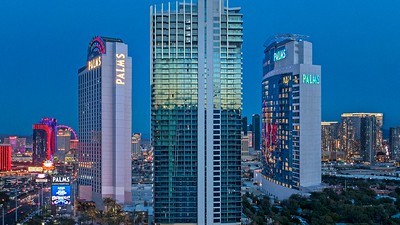
The Palms Casino Resort has announced April 27 as the official public reopening date for the Las Vegas property, with room and suite reservations now being accepted at www.palms.com for stays beginning on April 28.

The casino has been closed since the beginning of the Covid-19 pandemic in spring of 2020. It has since changed ownership, and will become the first Las Vegas property to open under the full ownership of a Native American tribe, California’s San Manuel band of Mission Indians.

“It’s an honor and a privilege for us to welcome everyone back to Palms Casino Resort Las Vegas,” said San Manuel Gaming and Hospitality Authority Chairwoman Latisha Casas. “We look forward to introducing our guests to our rich history, culture and signature hospitality. We can’t wait to make history together.”

“From our locals to guests visiting from near and far, our goal is simple—to deliver a truly distinctive experience that makes you feel at home while you are in Las Vegas,” added Palms General Manager Cynthia Kiser Murphey.

Having undergone more than a $600 million renovation in 2019, Palms Casino Resort boasts a diverse mix of bars and restaurants, featuring the return of popular outlets such as the highly acclaimed Scotch 80 Prime and Mabel’s BBQ by Chef Michael Symon.

Casual dining options include Send Noodles and the debut of Serrano Vista Cafe. The resort will also offer guests an expansive resort pool area featuring a multi-level, sprawling 73,000-square-foot space offering two luxurious main pools and 39 unique cabanas, most with their own private pool. The space also features oversized daybeds and poolside lounge chairs throughout.

“April 27, 2022 is another milestone date for Palms, for Las Vegas and the San Manuel Gaming and Hospitality Authority,” said Murphey. “We are thrilled to welcome guests back to this spectacular resort and our entire Palms team looks forward to creating a lively and fun environment throughout the property.”

The popular property, west of the Las Vegas Strip on Flamingo Road, made its name as a resort attracting both tourists and locals. It was known for restaurants and lounge attractions such as the Ghostbar, offering a bird’s eye view of the strip from its Apex rooftop.

“Las Vegas is known to be such an amazing, iconic destination,” Kiser Murphey told USA Today. “And I think as the Palms, we have a responsibility to continue to make Las Vegas so special. We’re super-excited.”

The San Manuel Gaming and Hospitality Authority, a governmental instrumentality of the San Manuel Band of Mission Indians, closed its purchase of the property from Red Rock Resorts Inc. for $650 million in December.

The fact of the recent makeover allowed the new owner to leave much of the property’s decor untouched, but Kiser Murphey told the newspaper guests can still expect to find upgrades.

The Palms upgrades include an overhaul of the property’s 14-screen movie theater, a remodeled lobby and new experiential elements at the 73,000-square-foot pool area, Kiser told USA Today. She said this could range from DJs to poolside brunch, but that those plans are still in the works.

The reopening will be celebrated with a fireworks extravaganza on opening night.

California Tribes’ Slot Machine Revenue Threatened

Five California gaming tribes are involved in a technical dispute with Governor Gavin Newsom that may delay the renewal of their tribal state gaming compacts. That, in turn, could force them to turn off their machines—and potentially lose millions.

The tribes are Robinson Rancheria, the Hopland Band of Pomo Indians, the Chicken Ranch Rancheria of Me-Wuk Indians, Blue Lake Rancheria and the Chemehuevi Indian Tribe. All the tribes are coming to the end of the original compacts they signed with the state in 1999 and were supposed to renew in 2020, but an automatic 18-month extension was added. The deadline to renew is now June 30.

These tribes object to several provisions the Newsom administration seeks to add to the compacts. Without compacts they can’t legally operate slots.

Most other tribes have renewed their compacts with the state. However, the five tribes are involved in a lawsuit Chicken Ranch Rancheria v. Gavin Newsom. The tribes argue that Newsom’s new provisions would violate the Indian Gaming Regulatory Act (IGRA.)

Some provisions they oppose including those on enforcing spousal and child support orders and the imposition of state law on the environment, minimum wage, and the labor code, among others. They say they violate tribal sovereignty.

Robinson Rancheria tribal Chairman Beniakem Cromwell told the Press-Democrat: “We closed ourselves for 125 days during the pandemic.” He added, “We know how devastating it is.”

He added, “This has nothing to do with revenue. It’s education for members in higher education or vocational school. It’s elders’ monthly social welfare. We use that revenue for after-school programs, sports teams. We fund employees at our elder center, our education center, our tutors.”

The attorney representing four of the tribes, Les Marston, explains that the tribes don’t oppose the goals of the provisions the governor insists on. He told the Press-Democrat: “Supporting children. Making sure spouses are adequately compensated. You really think tribes aren’t going to do that on their own?” He added, “How paternalistic is that? The issue here is the tribes’ right to govern themselves under their own laws, which is guaranteed to them by the Constitution of the United States.”

Last year federal judge Anthony Ishii ruled in favor of the tribes, writing, “The Tribal Plaintiffs have met their burden of producing evidence the State Defendants did not negotiate in good faith by raising topics in negotiations that were beyond the scope permitted by IGRA or which required some form of meaningful concession in return.”

But Nelson Rose, an expert on Indian gaming law, points out that on the rest of the issues raised in the lawsuit, the tribes didn’t win. The judge ruled that the governor didn’t have the authority to impose the provisions that they could also be the subject of negotiations.

Inevitably, the ultimate decision will be made by a higher court, where the state appeal is headed. However the case is decided could set precedent for gaming tribes throughout California. Several tribes have pending compact negotiations. If the five tribes win, some of them might demand to return to negotiations on some points that the state forced them to accept.