Author: Casino Connection Staff

Ontario Study: Covid Spurred More Risky Online Gaming

A study of Ontario residents shows that the isolation caused by Covid drove many to gamble online more and to take more risky financial decisions while doing so. Young males and those with Asian backgrounds were found to be at highest risk.

The study was done by the Responsible Gambling Council’s (RGC) Centre for the Advancement of Best Practices and the Ontario Gambling Research Society.

The study, released in April, included data from surveys taken during three separate Covid waves, when many residents were virtually confined to their homes for months by order of the provincial government. It was given to more than 2,000 Ontario gamblers 18 and over during 2020.

RGC CEO Shelley White said, “We found that a sizeable percentage of individuals increased their online gambling involvement during this period, spending more time and money and playing on more sites.” She added, “Those who were at highest risk of moderate to high risk for problem gambling were individuals with severe anxiety or depression, loss of income, gambling while intoxicated, gambling to earn income or to cope with their mental health issues. Young adults, 18-35 years, especially males, and individuals from East Asian and South Asian backgrounds were at the highest risk.”

During this time most land-based businesses, including casinos, were closed, leading many to seek entertainment online.

The study identified high risk motives such as gambling to salve negative feelings and to try to earn back lost income.

New Jersey Judge Will Respond to AC iGaming Suit May 2

Lawyers representing Atlantic County and the state of New Jersey once again came before Superior Court in their legal battle over the amended casino payments-in-lieu-of-taxes (PILOT) law.

At stake is whether the calculations should include sports betting and online gaming. The state, in support of the amendments, argued against inclusion of the two revenue streams as most of the money goes to outside operators. The county charges that the amendment violates a 2018 court settlement.

On April 25, Ron Israel, the state’s attorney, said Judge Joseph Marczyk erred when he ruled February 25 that the amendment violated the settlement, according to the Press of Atlantic City.

Israel claims the decision should have been limited to whether the law can take effect before the case is adjudicated. Instead, Israel said Marczyk went further and ruled the consent order had been violated. The state filed the request for reconsideration March 17. Due process requires giving the state opportunity to address the consent order in a separate hearing, Israel said.

Ron Riccio, representing the county, argued the opposite. Riccio said he had submitted “at least 10 different occasions in which defendants were put on notice the county considered the amendment to be a violation of the consent order.”

“Judge Marczyk’s decision is entitled to respect by your honor,” Riccio said. “They have made no allegation of substantive error of law … or that legal principles were violated in any way.”

With Marczyk temporarily reassigned to Appellate court, Assignment Judge Michael J. Blee will oversee the case. Blee will rule May 2.

If the state prevails, the county stands to be deprived of $15 million to $26 million through 2026. The original casino PILOT law in 2016 was designed to create stability to income coming in to help Atlantic City financial distress resulting from successful casino tax appeals.

Under the consent order, the county was to get about 13 percent of PILOT funds calculated under the 2016 law. That law was interpreted as including online sports betting and internet gaming under gross gaming revenues.

“All we want them to do is keep their agreement, honor their commitments,” Atlantic County Executive Dennis Levinson has said.

Tropicana Atlantic City Adds Eight F&B Outlets

On the heels of its 40th anniversary celebration last year, Tropicana Atlantic City is further strengthening its position as a leading destination on the East Coast. The casino-hotel announced today that it will be debuting eight new dining and entertainment concepts starting this summer and undergoing gaming enhancements to further the resort’s evolution as a casino of the future.

The new additions and enhancements are part of Caesars Entertainment’s commitment to invest $400 million into its Atlantic City resorts by 2023. Eight of the 14 new restaurants and fast-casual concepts debuting at Caesars Atlantic City properties this year are at Tropicana. The plans for Tropicana join the game-changing enhancements that are taking place at Caesars Atlantic City and Harrah’s Resort Atlantic City, including $170 million in room and suite enhancements across all three properties, NOBU Atlantic City and Gordon Ramsay Hell’s Kitchen arriving later this year and a brand-new show by Spiegelworld arriving in 2023 at Caesars Atlantic City.

“We are excited to double-down on our commitment to the Atlantic City market by raising the bar this year, introducing new dining, entertainment, and gaming experiences to our guests at Tropicana Atlantic City,” explained John Koster, regional president for Caesars Entertainment’s Eastern Division. “These exciting new offerings and enhancements will join game-changing developments at Caesars Atlantic City and Harrah’s Resort and will further solidify our position as the leading destination for entertainment, world-class hospitality experiences and sports on the East Coast.”

“Building on Tropicana’s success over the last four decades, we are thrilled to go all-in on our investment in this incredible resort destination, our Team Members, and the community we serve, as we introduce an unparalleled eight new dining offerings and additional transformative gaming enhancements this year,” explains Jacqueline Grace, senior vice president and general manager for Tropicana Atlantic City.

New arrivals this year include:

  • Wild Honey Smokehouse and Tavern: Joining The Quarter at Tropicana in April 2022, the 5,000 square foot BBQ restaurant will celebrate and elevate classic American comfort foods. Regional BBQ traditions from across the country and the finest quality meats and seafood guide the restaurant’s menu while the bar program features a robust beer list, innovative large format cocktails, and a selection of double-barrel smoked cocktails to complete the experience.
  • Ossu Japanese Tavern: Ossu will introduce a modern Japanese tavern experience, just in time for summer, with a focus on small plates, yakitori, sushi and more. Opening Memorial Day Weekend.
  • Hash House A Go Go: Known for twisted farm food and crafted cocktails, Hash House will bring its Midwest flair to Atlantic City this summer.
  • Purple Zebra: The delicious daiquiri bar will make its Atlantic City debut this Fourth of July.
  • Gin Rickey’s: A live music sing-along bar with dueling pianos will open in The Quarter this summer. The 4,000-square-foot space will be open seven days a week and will offer nightly live performances, showcasing dueling pianos Thursday – Sunday.
  • The Royce Social Hall: Debuting fall 2022, The Royce Social Hall is an American beer hall meets an adult rec room. Large format drinks, shareable food and games that range from ping pong to shuffleboard, cornhole and bowling abound in the 10,000-square-foot entertainment destination for groups and parties of all sizes. Located in The Quarter, the Royce Social Hall will be open seven days a week and will come alive on nights and weekends, with regular 21+ evenings on the schedule.
  • il Verdi: Ranked one of the top overall restaurants in Atlantic City according to Open Table, Il Verdi has offered delicious, authentic Italian cuisine – including house-made pasta and other Italian delicacies – for 40 years at Tropicana Atlantic City. Now, this restaurant will receive a new, beautiful beachfront location and design transformation, offering timeless, modern design and stunning views of the ocean. Il Verdi’s new venue and unique atmosphere will draw inspiration from the coast of Italy and the Amalfi region in its new venue this fall.
  • Hawthorne & Cork: An intimate and refined new signature bar and lounge experience with bespoke cocktails, fine wines, and spirits with personalized service, opening this fall.

In addition to the new dining concepts, a multitude of gaming enhancements will take place to create one of the market’s first casinos of the future. A new Caesars Rewards experience center will bring digital and in-person gaming together with tablets and a Caesars Sportsbook app center in a shared space. The experience center will feature self-service kiosks to check accounts and print cards, and a state-of-the-art video wall. Additionally, there will be 240 new games, with over 200 new titles on the floor. The entire gaming floor will be revamped, including new carpeting, to enhance the overall guest experience.

With these additions to Tropicana’s already strong dining, nightlife, entertainment portfolio, the property will have a diverse and unparalleled offering for guests this summer, further solidifying Caesars Entertainment resorts in Atlantic City among the top destinations for world-class hospitality experiences, gaming experiences, and sports.

More Details Released on Three Gotham Casinos

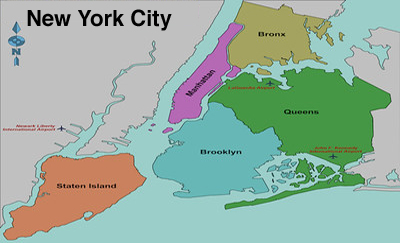
The best that can be said about Staten Island as a location for one of the three casino licenses in the New York City area is that it hasn’t been ruled out. It’s also not been ruled out that Martians will visit our planet in the not-too-distant future. Brooklyn, the Bronx and Manhattan haven’t been ruled out either, although the latter gets a lot of chatter for and against a casino.

Queens will probably get one of the three licenses because the borough is so far ahead of the game with its existing casino, Resorts World Queens at Aqueduct Racetrack. MGM Empire City Casino at Yonkers Raceway in Westchester County expects to gobble up a license for the same reason. The two racinos have slot-style games and ancillary amenities, with gross gaming revenues among the highest in the U.S. The only missing piece is the table games, and a full license brings that to the party.

Yes, each will cough up at least $500 million to the state for a license. But they get to pay less of their slot income to the state under the new license. They just have to pay a tax on table game income, too.

Let’s not forget Atlantic City, which Fitch Ratings says will feel most of the pain from New York casinos.

For those of you just entering the casino sweepstakes as an interested observer, let’s bring you up to speed on all this.

In 2013, the state of New York approved seven commercial casino licenses, four of them upstate. The other three, appropriately called downstate, were held back from consideration until 2023 to provide enough time to let the upstate casinos get a foothold.

Faced with deficits resulting from the coronavirus pandemic, lawmakers with the support of Governor Kathy Hochul, agreed to amp up the time frame to award downstate licenses to 2022, this year. She also canceled the penalties future downstate operators would have to pay to the upstate casino owners if they moved forward before the ban expired. Keep that in mind when it comes to lawsuits.

New York just approved a $220 billion budget that incorporates the three downstate casino licenses and what they will pay towards the budget. The New York Gaming Commission will oversee the license bidding, according to the New York Daily News. A community advisory committee will give its input as to locations.

“We’re looking more toward conversion: if you can convert an existing facility to a full-fledged casino, then that would be acceptable,” Assembly Racing and Wagering Chair Gary Pretlow said. “So if we can do a conversion, then it’s a slam dunk for Genting and MGM.”

Robert DeSalvio, the president of Genting Americas East, which operates Resorts World Queens, said the company will bring Las Vegas-style gambling to an already successful location.

“We welcome the opportunity to work with the state and local stakeholders on this important leap forward,” he said. “We are ready, willing and able to immediately double our workforce by adding more than 1,000 new union jobs and help the true potential of resort-style gaming, entertainment and hospitality right here in the heart of Queens.”

The third license is up for grabs.

“Following the budget, the legislature must monitor the timely, fair and transparent bidding process for the licenses, and ensure that the siting process is being credibly implemented,” said State Senator Joseph Addabbo.

New York City Mayor Eric Adams would like his metropolis to get two of the three. Resort World in Queens is one of them. This is where Staten Island comes in. Or doesn’t. According to the Advance/SILive, Staten Island has not been ruled out.

Some officials representing parts of Manhattan have made it clear they do not want their borough to be chosen, Politico reported.

“I just want to make sure that they cannot bigfoot any specific neighborhood to take a casino that they don’t wish to have there,” Senate Finance Chair Liz Krueger said.

According to NBC New York, some of the Manhattan locations that have been suggested include the Water Club in Kips Bay, on top of Saks Fifth Avenue in midtown and Time Square.

As noted by CDC Gaming Reports, the gaming tax rate—nominally 25 percent for slot revenues and 10 percent from table games—has not been finalized, nor has minimum capital-investment requirements.

CBRE analysts peg revenue at $1.3 billion a year for MGM Empire City and $1.5 billion annually for Resorts World, once the two complete their conversions. Not only are both operators deemed sufficiently liquid to shell out $500 million for a license, they would additionally benefit from the new, lower, taxation regime, as they’re currently paying out 60 percent of gross gaming revenue to New York state.

“It’s the most popular hypothetical,” Addabbo said of the two racinos. “People don’t want a lot of new gaming sites.”

New York City’s economic recovery cannot be about going back to the way things were, Adams said.

“We are going to rebuild, renew and reinvent our city, and accelerating and expanding gaming options within the five boroughs is the quickest way to make that happen,” he explained. “While the gaming commission will decide on where these casinos will be located, creating new gaming options in New York City will create thousands of good-paying jobs in hospitality, tech, security, construction and countless other industries, while simultaneously spurring billions in economic activity for our city and state.”

iGaming Analysis Shows Benefits in Atlantic City

The casino industry in Atlantic City hit a wall in 2006 when the first casinos opened in Pennsylvania. New competition ended the annual record-breaking revenue chain, which topped $5.2 billion that year. Revenues plummeted. Plans to build more casino resorts dried up. The downside lasted for seven years until Atlantic City introduced online gambling in 2013.

Critics blasted the decision as the destruction of the casino industry in town and the end of casino jobs. These doomsday warnings never came to pass. Instead, the evidence suggests that online gambling, and later sports betting, saved Atlantic City’s gambling industry. Despite Covid restrictions, 2021 land-based casino revenue was near 2019’s six-year high. It was all highlighted in a new report by Steve Ruddock on Wagers.com.

Looking at the bigger picture, 2021 was Atlantic City’s best year since 2008. Before 2021, total gambling revenue hadn’t eclipsed $4 billion since 2008.

Most importantly, land-based revenue was steadily growing alongside online casino gambling and sports betting pre-Covid

Based on the early results in 2022, land-based casino revenue is up 22 percent through February ($396 million in 2022 compared to $308 million in 2021). If that growth holds, land-based casino revenue could eclipse $3.3 billion, which hasn’t happened since 2011.

Excluding the Covid years, Atlantic City casino employment is relatively steady on a per operational casino basis. In 2012, the city’s twelve casinos employed an average of 2,900 people. In 2016, Atlantic City was down to seven casinos, but they had an average of 3,100 employees. 2019 showed the average employment per casino was around 2,900. Even during Covid, the average number of employees per casino was around 2,400.

Online gambling is not destroying brick and mortar casino jobs. Nor do these figures include the non-casino jobs created by online gambling firms. For example, a 2019 white paper commissioned by iDEA Growth concluded that online gambling created 3,240 indirect jobs in New Jersey.

In 2021 only the newly purchased Bally’s AC was in the red, with the industry tallying $766.8 million in operating profit. 2021 Atlantic City gross operating profit (including digital divisions):

  • Bally’s AC ($13.2 million)
  • Borgata $174 million
  • Caesars $62.1 million
  • Golden Nugget $35.6 million
  • Hard Rock $106.8 million
  • Harrah’s $99.5 million
  • Ocean Resort $91.2 million
  • Resorts Casino $27.6 million
  • Tropicana $118.7 million
  • CIENJ $16.6 million
  • GNOG $32.9 million
  • Resorts Digital $15 million

Compare that to 2013, the last year before online gambling when 12 casinos generated $235 million in profits, with five casinos in the red.

  • Atlantic Club ($12.7 million)
  • Bally’s AC $33.4 million
  • Borgata $121.6 million
  • Caesars $69.5 million
  • Golden Nugget ($10.4 million)
  • Harrah’s $102 million
  • Resorts Casino ($12.2 million)
  • Revel ($130.2 million)
  • Showboat $34 million
  • Tropicana $26.5 million
  • Trump Plaza ($4.7 million)
  • Trump Taj Mahal $19.6 million

Kansas and Missouri Try To One Up on Sports Betting

Kansas state senators will review a House-approved bill legalizing sports betting when they return for a veto session April 25. The Senate approved the measure last year. The bill would allow online and retail sports wagering. The state’s four casinos each would receive three skins and could request an additional online skin in partnership with a major league sports team; in Kansas that would be Sporting Kansas City of Major League Soccer. The casinos also could partner with up to 50 retailers.

The measure also calls for a 10 percent tax on sports wagering revenue, which some legislators said should be re-evaluated in light of the Kansas City Chiefs possibly moving to Kansas. In fact, a last-minute amendment was added to the House bill to set aside 80 percent of sports betting tax revenue for a new Attracting Professional Sports in Kansas fund.

Now Kansas and Missouri lawmakers have passed sports betting bills in one chamber. Both states are anxious to be the first to legalize sports wagering. Regarding the Chiefs, Missouri Governor Mike Parson previously said the state will fight to keep the team. A team official said it’s considering renovating Arrowhead Stadium.

Political Analyst Dr. Bob Beatty said, “In the end, sports teams do end up going with whoever has the best offer. The mood right now is it’s very possible Kansas could land a new Chiefs stadium on the Kansas side.”

Governor Laura Kelly has said she wants sports betting in the state and would sign the bill when it arrives on her desk.

Meanwhile in Missouri the tax rate is a hot topic. Following a recent hearing of the Senate Appropriations Committee, Chairman Dan Hegeman indicated he wanted the tax rate on sports betting to be higher than 8 percent, which is the rate the House approved. He noted the legislation started with a 10 percent tax and some Senate bills have set it at 21 percent, including the measure sponsored by state Senator Denny Hoskins.

Hoskins said at that rate, which is what the state’s casinos pay on net profits, the state would gain $153 million in annual sports wagering tax revenue. He pointed out the House bill, which includes deductions for promotional costs, would generate $10 million annually. “In my bill, the state would get the difference. In the House bill, the casinos would get the difference,” Hoskins said.

The House sports betting bill was drafted after negotiations between Missouri’s major professional sports franchises and the licensed casino companies. It would allow Missouri residents to place mobile or online bets on the outcome of games and performances of individual players. Prop bets would not be allowed.

Bill DeWitt III, president of Major League Baseball’s St. Louis Cardinals, said, “We need a fair tax rate that will produce revenue both for the industry and the state.”

The bill also would set aside $500,000 for the state fund that provides problem gambling services. State Senator Dan Houx told the committee the bill would promote awareness about problem gambling and the self-exclusion program allowing gamblers to ban themselves from access to casinos and online wagering. Houx said casinos and vendors providing betting apps would be required to submit a plan for addressing problem gambling.

Hoskins disputed the effectiveness of the provision, since the House bill would allow people to gamble through their smartphones, computers or smart televisions at home. Hoskins said some states spend millions on problem gambling services. “All accounts say we are underfunded in our problem gambling fund at $250,000 without sportsbooks,” he said.

The bill would allow wagering on college and pro sports and would require gaming platforms to use official league data for settling bets. Each of Missouri’s six licensed casino operators could offer three skins, with each casino company capped at a total of six; that would include Penn National and Caesars Entertainment which each operate three Missouri casinos.

One skin each also would be available to Missouri’s six major sports teams: the Cardinals, Kansas City Chiefs, Kansas City Royals, St. Louis Blues, St. Louis City soccer club and Kansas City Current women’s professional soccer team. Also, teams would have an exclusive zone around their stadiums for promoting their own team-branded skins.

Some lawmakers suggested, in light of the possible move by the Kansas City Chiefs to Kansas, that venues, not teams, own the skins. Senators questioned whether the team would have to give up its skin if it left Missouri. Anne Scharf, director of civic affairs for the Chiefs, said any move by the Chiefs to Kansas would not happen soon since the team has nine years left on its Arrowhead Stadium lease.

Michigan Joins Multi-State Internet Gaming Association

On April 6, the Multi-State Internet Gaming Association admitted Michigan, which joins Nevada, Delaware and New Jersey, states that allow online poker. Players from those states can play online poker together, across state lines, resulting in greater online poker liquidity, or participation, creating larger pools and offering more tournament opportunities. Pennsylvania also legalized online poker but observers said it’s not likely to join MSIGA.

MSIGA Manager and Delaware Lottery Internet Gaming Manager Rebecca Satterfield said, “The Multi-State Internet Gaming Association welcomes Michigan to its ranks, along with its nearly 10 million residents, who can now avail themselves of a full array of interactive gaming among the association’s member states. The association continues to be forward thinking and welcomes the interest of additional gaming jurisdictions in becoming party to the agreement.”

Michigan legalized online gaming, including poker, in 2019. The law allows the state to permit its online poker sites to pool players with other states where poker also sites are licensed. Analysts said players in the four states in the MSIGA agreement will all see a significant improvement in available services and operators including PokerStars US, BetMGM US and WSOP can expect a big boost in business.

Nevada and Delaware formed a compact in 2014 to share online poker, since Delaware’s population was too small to sustain its own viable poker app. New Jersey joined the compact three years later.

Michigan launched online poker in 2021, at the request of the state lottery. The legislature passed a separate bill allowing the Michigan Gaming Control Board to enter multi-state compacts exclusively for online poker. After Michigan entered MSIGA, it took WSOP six months to make its debut there. Powered by 888 Holdings, WSOP is the only operator that can pool players across all four of MSIGA member states.

In addition, for the first time players on PokerStars’ and BetMGM Poker‘s regulated U.S. sites will be able to play against opponents in another state. Luke Staudenmaier, BetMGM’s director of poker, said, “BetMGM applauds MSIGA for admitting Michigan into the consortium. Shared liquidity is paramount to the growth of online poker and this is a huge step in the right direction. We remain committed to expanding BetMGM’s poker offering and look forward to serving shared player pools in the future.” Exactly when that will happen isn’t known but observers hope the process will be more streamlined.

Billionaire Fertitta Buys Cripple Creek Casino

Texas billionaire Tilman Fertitta has agreed to buy the Wildwood Casino and Hotel in Cripple Creek, Colorado for $43 million. The purchase from American Gaming Group is expected to be completed by summer.

Fertitta Entertainment already owns the Golden Nugget in Las Vegas and four other properties. Last year the Houston-based company filed papers with the Securities and Exchange Commission to become a publicly traded company, but has since then given up on that idea.

The Wildwood is the largest casino in Cripple Creek, which is one of Colorado’s three casino towns. It has 528 slots, and 12 gaming tables.

Joe Canfora, CEO and managing partner of American Gaming, told the Colorado Springs Gazette: “Having multiple properties gives Fertitta more opportunities for staff and helps with overhead efficiency and marketing. They wanted to grow, and with the expansion by others in this market, the timing worked out.”

The Wildwood will be rebranded as a Golden Nugget property and will continue to employ those of the 300 employees who want to stay. Fertitta Entertainment COO Gerry Del Prete said, “We’ve always had an attraction for Colorado — we’ve owned the aquarium in Denver and restaurants across the state for a long time.” He added, “We have looked as the market has evolved over the years, and the changes going on in the market have make it more attractive. We looked at Cripple Creek and saw opportunity there.”

Philadelphia Reinstitutes Mask Mandate

The Philadelphia Department of Health is reinstituting its mask requirement for public indoor spaces casinos due to increasing daily cases of Covid-19. Beginning today, April 18, customers will be required to wear a mask in the city’s two casinos, Rivers Casino Philadelphia and Live! Casino Philadelphia.

“I hoped we wouldn’t be meeting like this, but here we are,” city Health Commissioner Cheryl Bettigole said during a Philadelphia Department of Health press conference last week. “We hope by having folks mask up in public indoor spaces we can get ahead of the wave and keep it from reaching a peak like we saw in January.”

Philadelphia is the first major city to reinstate its mask mandate.

AGA Urges U.S. DOJ to Crack Down on Illegal Gaming

The American Gaming Association has called on the U.S. Department of Justice to crack down on illegal online sportsbooks and casinos, and unregulated “skill game” machines in a letter to Attorney General Merrick Garland.


“While the challenge of illegal gambling is not new, the brazen and coordinated manner in which it occurs—both online and in communities—has elevated this problem to a level that requires significant federal attention,” AGA President and CEO Bill Miller wrote. “We urge the department to make it a priority to act… to protect American consumers, crack down on illegal operators, and enforce federal regulations.”

The AGA letter outlines the pervasive nature of illegal gambling and the threat unregulated operators pose to consumers, state economies and the legal gaming industry as part of the association’s ongoing initiative to stamp out the illegal market.

The AGA urges the Department of Justice to address illegal gambling by:

  • Continuing to educate consumers on legal gaming options and the dangers associated with illegal operations.
  • Investigating and indicting the largest offshore operations—such as Bovada, MyBookie and BetOnline—that openly violate federal and state laws.
  • Clarifying that “skill-based” machine manufactures must comply with Johnson Act registration requirements and anti-money laundering standards and pursuing aggressive enforcement actions against those entities that do not fully comply.

“Illegal operators have been put on notice: their days as a scourge on our nation are numbered,” wrote Miller. “These bad actors prey on vulnerable customers, offer no consumer protections, do not ensure integrity or fair play, and generate no economic benefit for states or tribal nations.”

Pennsylvania Approves Continent 8 Gaming Cloud

Continent 8 Technologies announced it has been given the green light by the Pennsylvania Gaming Control Board (PGCB) to launch its regulated Gaming Cloud to operators and suppliers in the state.

Continent 8’s Gaming Cloud is a public cloud, and is already available to customers in a number of other regulated North American locations including New Jersey and, most recently Ontario. It offers a multi-tenanted, scalable and resilient infrastructure-as-a-service (IaaS) platform that allows customers to host infrastructure as virtual machines.

Continent 8 works closely with regulators across the fast-growing North American market to ensure that its full suite of solutions is fully compliant, allowing its customers to leverage the first-mover advantage in each state.

For Pennsylvania, regulations state that tenants in the Gaming Cloud must be licensed by the PGCB, and hardware comprising the Gaming Cloud must be located at the primary and backup locations Continent 8 provides in the state.

The approval of a regulated Public Cloud adds to Continent 8’s existing services in Pennsylvania, which today comprise three data centers and points of presence. Pennsylvania legalized online gambling in 2017. Since then, Continent 8 has expanded its solutions to serve customer demand, offering a fully regulated hosting environment under its PGCB interactive Gaming Service Provider authorization.

Nick Nally, managing director of Americas at Continent 8 Technologies, said, “Receiving approval from the Pennsylvania Gaming Control Board for our Gaming Cloud forms part of our aggressive strategy to deliver our regulated cloud to multiple new states in the U.S., as demand for our cloud solutions continues to rise.”

Justin Cosnett, chief product officer at Continent 8 Technologies, added, “We are proud to be the first service provider to offer this regulated community cloud solution in the state; we understand the power of the first-mover, pay-as-you-grow advantage in such highly competitive states and markets.”

Continent 8 is already live in 24 U.S. states with additional sites set to launch in the coming months as the company continues its mission of being the go-to hosting and connectivity provider in North America.

Lawmakers Ban ‘Virginia is for Bettors’

In Virginia, effective July 1, gaming companies will be banned from using the phrase “Virginia is for bettors” in marketing materials. SB 96, sponsored by state Senators Thomas Norment and John Cosgrove, and signed by Governor Glenn Youngkin, keeps the state’s slogan, “Virginia is for Lovers,” intact. The measure had widespread bipartisan support.

Norment said, “We’ve spent a lifetime trying to market ‘Virginia is for Lovers.’ I just felt it was trespassing on it.” Any violation of the new law could lead to a fine of up to $50,000.

Norment’s bill was one of the few gaming-related measures to be signed into law this session. HB 1108 will add instruction on gambling addiction to existing school curriculums on drug and alcohol abuse.

A bill that didn’t make it out of a House committee would have legalized in-state wagering on Virginia colleges and universities. As a result, Virginians will have to wait at least another year before they can place legal in-state bets on University of Virginia and Virginia Tech sporting events.

HB 1103, which also died in committee, would have prohibited sports betting operators from excluding bonuses and promotions from taxable revenue after the first year of betting activity.

Chicago Casino Community Meetings Raise Concerns

At the recent community meetings featuring the three finalists for Chicago’s downtown casino license, slick videos and gaming company officials’ speeches took up most of the allotted time. Six hours were scheduled for the meetings but less than two hours were set aside for Chicagoans to question the development teams from Rush Street Gaming, Hard Rock and Bally’s.

When questions finally were allowed, residents expressed concerns over traffic property values, crime, quality of life and gambling addiction. Many were not convinced a casino would in any way be beneficial to Chicago.

At this point, observers said, it’s not clear if any of the three proposals has the leading edge, or if any of the plans could gain 26 votes in the city council. Not one of the three alderpersons who represent the wards where a casino would be located has endorsed the proposal. Alderman Walter Burnett said he’s open to Bally’s proposal for the River West neighborhood. Alderwoman Sophia King has taken a neutral stance on Hard Rock’s plan to build a casino over train tracks west of Soldier Field.

Alderman Byron Sigcho Lopez, however, has made it clear he’s not a supporter of the proposal from Neil Bluhm’s Rush Street Gaming to build the Rivers 78 Casino between the South Loop and Chinatown. Related Midwest has proposed a large development along the Chicago River there, known as the 78.

Sigcho Lopez said, “I have serious, legitimate concerns. I’m concerned the writing is already on the wall,” referring to Bluhm’s close ties to Chicago’s political and economic leaders. Sigcho Lopez is the only city council member whose ward includes a potential casino who was not asked to join Lightfoot’s special committee that will help determine the casino developer.

All three proposals would generate approximately $200 million for the city’s police and fire pension funds as well as create thousands of new jobs.

Caesars Revises Price in William Hill Sale

Caesars Entertainment, Inc. announced a revised agreement to sell the non-U.S. assets of William Hill to 888 Holdings PLC, for a revised enterprise value of between £1.95 billion and £2.05 billion.

The revised agreement reflects a £250 million reduction in consideration payable at closing, and Caesars being entitled to receive up to £100 million as deferred consideration subject to the enlarged business of 888 Holdings meeting certain 2023 financial targets.

After the repayment of debt and other working capital adjustments and subject to customary closing purchase price adjustments, Caesars expects to receive net proceeds from the transaction at closing of approximately £585 million or $785 million.

The transaction is subject to receipt of the approval of shareholders of 888 Holdings Plc and regulatory approvals. Caesars’ expectation is that the transaction should close in June 2022.

The two companies said in an announcement that changes in economic and regulatory conditions led to the revision. Shares in London-listed 888 soared nearly 30 percent in light of the fact 888 would have to raise less capital to partly fund the purchase.

Caesars bought British bookmaker William Hill in a $4 billion deal last year, and agreed in September to sell William Hill’s non-U.S. assets to 888 for £2.2 billion (US$2.88 billion). The purchase will give 888 access to William Hill’s 2 million active customers in the U.K.

888, which has online sports betting, poker and casino platforms, told Reuters it now plans to issue up to 70.8 million new shares, which represents about £136 million pounds. The prior plan was to raise £500 million.

Fifth Street, Ojos Locos to Develop Vegas’ First Latino-Focused Casino

Fifth Street Gaming, the operator of North Las Vegas’ Lucky Club Hotel & Casino, is partnering with Texas-based sports bar franchise Ojos Locos Sports Cantina to rebrand the property as a hotel and casino centered around Latino culture, the first of its kind in the U.S.

The property is located off of Interstate 15 near Cheyenne Avenue, and it will undergo extensive renovations and remodeling, including the addition of an Ojos Locos restaurant which is reported to be the largest yet for the franchise.

The two companies have yet to comment on how much each party will invest in the renovations or what the name of the property will be, but construction is expected to finish sometime near the end of the year.

In a statement released by the company, Fifth Street CEO Seth Schorr described Ojos Locos as “the ideal partner” for the project because of their track record of “providing authentic hospitality experiences to the Latino community.” Schorr also mentioned that Fifth Street themselves have an extensive history of putting on successful Latino-oriented entertainment events, which was partly why the partnership was appealing to both sides.

The project will aim to create a comprehensive Latino-focused gaming experience, with Latino culture being a prominent feature of the casino’s dining, entertainment, and gaming offerings. The renovation will feature a 10,000 square-foot casino floor, a new entertainment venue and the aforementioned Ojos Locos restaurant which is expected to have a maximum capacity of about 300.

“We look forward to adding to the Latino community experience with our excellent service, delicious food and fun atmosphere,” said Laura Caudillo, an Ojos Locos marketing executive, in a company release.

Ojos Locos currently operates 18 locations across Arizona, New Mexico and Texas–this latest project will be the company’s first foray into the Nevada market.

Former Indiana Legislator Faces Prison, Gaming Exec to Stand Trial

In Indiana, former Republican state Senator Brent Waltz pleaded guilty to receiving $40,000 in illegal campaign contributions from Centaur Gaming for his unsuccessful 2016 congressional run.

The plea came one week before Waltz was scheduled to stand trial on April 18 with John Keeler, a former Spectacle Entertainment executive. Keeler is charged with funneling illegal corporate contributions to Waltz’s campaign through a Maryland political consultant under a phony consulting agreement. Keeler has pleaded not guilty and will stand trial.

Waltz also admitted to making false statements to the FBI. However, his plea deal does not mention cooperating with prosecutors or testifying against Keeler.

At the hearing, Waltz, a state senator for 12 years before he gave up his seat in 2016 to run for Congress, said, “I plead guilty” when Judge James R. Sweeney III. asked how he pleaded to the two felony charges. Waltz faces up to five years in prison for each charge. Prosecutors dismissed three other counts. The judge did not set a sentencing date.

The indictment of Keeler and Waltz in September 2020 came about after an exhaustive FBI investigation into the activities of Spectacle Entertainment and its management. As a result, the Indiana Gaming Commission banned Spectacle from moving forward with its planned casinos in Gary and Terre Haute.

The commission also raised allegations of financial misconduct against former Spectacle Chief Executive Officer Rod Ratcliff, who agreed to give up his state casino license. He was not charged in the campaign finance case but his 10-year career as a major player in Indiana’s gambling industry was finished.

Ratcliff and Keeler founded and managed Centaur Gaming, which sold Indiana’s Anderson and Shelbyville racinos to Caesars Entertainment in 2018 for $1.7 billion. They led a group that then formed Spectacle Entertainment to buy the Gary casino.

According to the indictment, individuals were recruited to make maximum contributions of $2,700 each to the Waltz campaign. They were illegally repaid from money originating from Centaur.

D.C. Sports Betting App Pays for Super Bowl Crash

Intralot, the company responsible for operating Washington D.C.’s only citywide sports betting app, has paid $500,000 in compensation to the D.C. Lottery for a technical mishap that took the app offline for Apple users during the Super Bowl, which is usually the biggest single-day sports betting event in the U.S.

According to Frank Suarez, the director of the D.C. Lottery, the payment was allocated as such: $65,000 for lost gambling revenue, $6,300 for promotions the lottery spent while appeasing angry users, and $428,000 to assist with reputation management and overcome what Suarez dubbed as “negative sentiment.”

The app, known as GambetDC, was taken offline before the big game by Apple following a bungled software update from Intralot. As a result, all those with Apple devices–nearly half of the app’s 30,000 registered users–were unable to wager or access their accounts. Users with Android devices were unaffected.

In 2019 the D.C. Council granted Intralot a sole-source lottery contract that included the right to operate the only legal sports betting app in the city, which became GambetDC in 2020. The $215 million contract has been largely controversial since its passing, and this recent incident has only brought more criticism to the Greek lottery company.

Suarez, who assumed his role in mid-2021, said that Intralot’s recent payment will be crucial for marketing efforts as they try to regenerate their player base. With regards to the $428,000 allotment specifically, Suarez said that reputational damage can’t be measured, but there was some analysis of “how much we would have lost in player registration.”

GambetDC has been met with a lukewarm reception since its release, as users have complained that the city-endorsed app has poorer odds and less usability than other private apps available in other nearby markets such as Virginia.

Suarez reported to the council in March that GambetDC was slated to generate $1.5 million in revenue for the city this year, which is about 10 percent of what city officials were pitched when Intralot’s sole-source contract was being negotiated.

Despite this, Suarez remains confident that the evolution of GambetDC will garner success. In his statement to lawmakers, he reiterated that the recent developments would result in “a complete revamp and overhaul of the interface,” and that the end product would be “more user-intuitive and streamlined.”

As of now, the only other sports betting apps authorized to operate in the city are offered through sportsbooks located at Capital One Arena, Nationals Park, and a bar named Grand Central–the apps are only accessible within a two-block radius of those locations.

Esports Betting Company Oddin.gg Scores First U.S. Activation

Oddin.gg has partnered with Esports Entertainment Group for its initial activation in the U.S. Oddin will provide esports odds feeds to Vie.gg, EEG’s betting platform. Vie offers real money esports betting on games such as Call of Duty, Overwatch, CS:GO, League of Legends and DOTA 2.

The activation comes after Oddin obtained a licensed in New Jersey in February.

“Launching our Vie.gg esports betting platform in the U.S. was of the utmost importance to us,” said Esports Entertainment Group CEO Grant Johnson in a statement. “As part of our launch efforts, we completed a thorough, global search for an esports betting solution and found Oddin.gg as the most reliable, ideal partner.”

In March, Oddin signed a multi-year partnership with global gaming brand Betway, which operates in New Jersey, Colorado, Pennsylvania, Iowa, and Indiana.

“We are extremely happy that our first integration is live in the United States through one of the leading innovators in esports betting,” said Oddin Co-founder and Managing Director, Marek Suchar, in a statement. “EEG leverages the intersection of iGaming and esports, opening new avenues of growth and bringing fans, gamers, and bettors together in an unprecedented way.”

Ohio State Officials Suggest Sports Betting Limits

Officials at Ohio State University recently asked the Ohio Casino Control Commission to restrict the types of sports bets it will allow and to increase penalties for “coercion and cheating.” The OCCC currently is developing rules for sports wagering in the state, which will launch in January.

In a letter to the commissioners, Ohio State Vice President of Government Affairs Stacy Rastaukas wrote, “Our principal concerns are for the ongoing safety and well-being of our student body. Both athlete and non-athlete students will be exposed to undesirable behaviors surrounding wagering on collegiate events, and we must work together to ensure the best outcome for both our student population and the state of Ohio.”

Ohio State recommendations included:

  • Limit collegiate sports wagering to football and basketball only.
  • Restrict wagers to the outcome of the game and ban prop bets on collegiate sports.
  • Increase penalties and enforcement for coercion and cheating.
  • Specify that club sports are not eligible wagering activities.

Rastaukas added, “Outside gaming influences from those seeking to gain an edge in their wagering have used college students who are roommates, friends of, or the competitors themselves to create an advantage for themselves or even throw games. This must be prevented for the safety of the students and the integrity of the competition.”

Although Ohio State was the only university to submit stakeholder comments, it’s not the only school with concerns. At a recent “Future of Sports” panel discussion at the Hard Rock Casino in Cincinnati, Xavier University Athletic Director Greg Christopher said, “I get a call once a year, sometimes twice a year from either the FBI or the security company that handles the casinos out in Las Vegas because our line has moved too much. Inevitably, it leads to some questions like, ‘Who was playing? What was known/wasn’t known?’”

Christopher said the rules should not be the same for college and professional sports. He said, “You think about Joey Votto. He’s insulated. He’s making enough money that he’s not going to jeopardize his career over a prop bet or any other kind of gambling activity. But you know our basketball players, who are not making five, six figures, they’re not in that same position. They have to go to class with the same people that are betting on them. They have to live with the same people that are betting on them. That’s very different than a professional athlete.”

Christopher said he’s particularly concerned about prop bets, which are permitted under the Ohio sports betting law. But Cincinnati Reds President Phil Castellini said, “The prop betting is the stuff that can happen along the way. That’s just fun and engaging, especially our game, when we have so many of them, how do I keep people engaged longer per game?”

Miami University Athletic Director David Sayler said players already are exposed to gamblers seeking inside information. “One of our basketball players was telling me he’s gotten random texts about, ‘Are you playing tonight?’ From a cellphone. I don’t know how that person got our student athlete’s cellphone number but they did and that kid was injured. So, they obviously knew there was something going on. And the question was, ‘Are you playing tonight?’ So, that’s the stuff that really keeps me up at night.”

Arkansas Bettors Await Mobile Sportsbook

Mobile sports betting was legalized in Arkansas in late February and the state’s three casinos launched on-site wagering. But non-Android users still are waiting for a betting app. Southland Casino Racing operates Betly sportsbook, which is available within the state but only via an Android app.

Saracen Casino Resort officials originally said their online sportsbook would launch in time for March Madness. But in a recent tweet, Saracen Casino Chief Marketing Officer Carlton Saffa wrote, “Everything for the app is approved, but we’re still in a waiting game with external vendors. Hoping to have a bigger update soon, but it’s out of our hands for the time being. We’ll post as soon as we know more.”

Another reason for the delay, Saffa explained, is Saracen wants to drop sports betting as a complete product, not in stages, like Betly.

Southland and Saracen previously projected smartphone start dates but have stopped. Oaklawn Racing Casino Resort estimated its mobile betting platform could launch in a few months. Because of the state’s 51 percent revenue-sharing requirement, BetMGM, DraftKings and FanDuel are not expected to enter Arkansas anytime soon.