Author: Casino Connection Staff

Rhode Island Senate Passes RG Measure

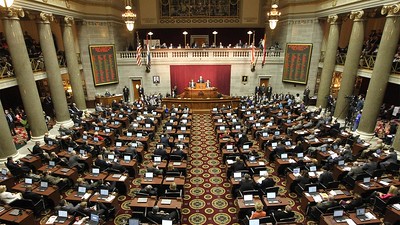
The Rhode Island Senate passed a bill that would provide problem and compulsive gambling programs to be run through the State Lottery Division.

The legislation, which passed the Senate on a 35-0 vote, would require Rhode Island’s two casinos, Bally’s Tiverton and Bally’s Twin River Lincoln, to contribute at least $200,000 annually to the programs, which would include a self-exclusion program and training for casino employees to help them recognize problem gambling.

The bill was sent to the House, where it was slated for debate May 31 by the Committee on State Government and Elections. It is unclear when the full House will vote on the measure.

In the opening of the bill draft, its intent is stated, “The division and the state acknowledge that the vast majority of gaming patrons can enjoy gambling games responsibly, but that there are certain societal costs associated with gaming by some individuals who have problems handling the product or services provided.”

“This act would establish a player’s self-exclusion program within the State Lottery Division,” Senator Frank Ciccone III, the bill’s sponsor, said on the Senate floor before the vote was taken.

An amendment to the bill would prohibit players enrolled in a self-exclusion program from collecting winnings or recovering losses from gambling activities. Ciccone said the amendment is “aimed at addressing compulsive and problem gambling and achieves the conceptual goals … whereby any forfeited funds would be reinvested towards the important work of preventing gambling addiction.” The bill would divert the winnings of any excluded person to the Rhode Island Council on Problem Gambling.

Proceeds also could benefit the promotion of a problem gambling hotline.

Engineers Union Holds Rally Outside Resorts World LV, Citing Foul Play

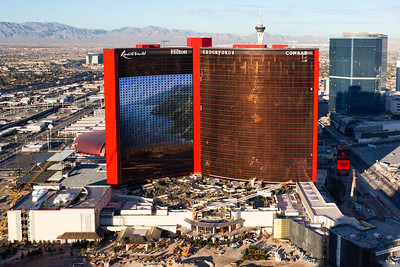
On Friday, May 27, representatives and union members from the International Union of Operating Engineers (IUOE) Local 501 held an hour-long rally outside of Resorts World Las Vegas, in response to allegations of unfair labor practices and broken union promises.

IUOE officials told the Las Vegas Review-Journal that the casino’s parent company, Genting Group, promised to fill 3,000 union positions when Resorts World first opened in June of last year. However, after the IUOE began raising support for a representation vote, Resorts World allegedly attempted to quell those efforts in multiple ways, including hiring a third party who acted as a “union buster.”

A IUOE spokesperson told the Review-Journal that the rally was an attempt to get Resorts World to “commit to what they agreed to.” Numerous state elected officials were also in attendance–Assembly members Cecelia González, Selena Torres and Susan Martinez all spoke at the event.

In addition to the in-person rally, a letter penned by 13 state senators and Assembly members was also sent to Scott Sibella, president of Resorts World, encouraging the company to exercise good faith in its labor dealings and recognize local unions.

“Across Nevada, unions have improved our families’ quality of life by increasing wages, benefits and improving working conditions,” the letter stated. “For several months, Resorts World workers have made attempts to bargain in good faith with the company. It is imperative that Resorts World do the right thing and recognize the value of the facilities and gaming tech workers.”

Just days before the IUOE’s rally was held, Resorts World announced that it had reached a deal with Culinary Union Local 226 to represent approximately 2,000 employees at the property, including cooks, servers, bartenders, bellmen and laundry attendants.

The company then cited the deal in an emailed response to lawmakers’ recent letter–-according to the statement, the new Culinary contract “speaks to our respect for the union process and the decision of our team members.”

With regards to the ongoing IUOE strife, however, Resorts World stood by its initial position.

“Team members voted in one IUOE election and chose not to select the IUOE as their representative,” said the company. “A second vote was taken for a larger group of team members, but IUOE instead requested that the NLRB block the ballot count. We do not believe it is appropriate to take any further action until the votes of our team members are allowed to be counted and their voices can be heard.”

Las Vegas’ Daily Room Rates Reached All-Time High in April

After two-plus years of Covid-related shakiness, the city of Las Vegas posted their highest average daily room rates ever in April, according to the latest report from the Las Vegas Convention and Visitors Authority (LVCVA).

The new record was bolstered by a string of high-profile events in the Las Vegas Valley, including four concerts across two weekends from Korean pop mega-group BTS, a five-day trade show for the National Association of Broadcasters and the 2022 NFL Draft. Between the three events, tourist traffic reached peak pre-pandemic levels, which led to a corresponding spike in prices.

Kevin Bagger, vice president of LVCVA’s research center, told the Las Vegas Review-Journal that in April, average daily room rates “exceeded $177, 62 percent ahead of last April and nearly 36 percent above pre-COVID levels of April 2019.”

Not only that, but the average revenue per available room was just under $150, which was more than 25 percent higher than that of April 2019, according to Bagger.

Interestingly enough, while prices and profitability reached new heights, total visitation was still just below pre-Covid levels. According to data from the LVCVA, nearly 3.4 million visitors traveled to Las Vegas this April, which was still 4.5 percent below that of 2019.

In terms of tourist visitation, the NFL Draft was perhaps the biggest disappointment of the three events, despite its strong revenue output. Deutsche Bank gaming analyst Carlo Santarelli told investors that based on his conversations with Strip casino executives, total attendance for the three-day football party was likely under 300,000, which is about half of the 600,000+ that was estimated prior to the event.

Overall, weekend and midweek hotel occupancies landed at 93.2 percent and 79.4 percent, respectively. Those levels are still a little sluggish compared to previous years, but this has largely been attributed to the floundering convention industry as well as decreased levels of international visitation.

North Dakota Puts Hold on Slot-Like Games While Missouri Fails

Two states in the Midwest moved in different directions when it comes to illegal slot-like games.

The North Dakota Gaming Commission recently voted 3-2 to change the definition of a bar in order to halt electronic pull-tab machines at gas

stations and liquor, grocery and convenience stores. Legislators will address the rule change during the 2023 session. The change will clarify where the Las Vegas-style, slot-like machines will be allowed.

North Dakotans spent more than $1.3 billion on electronic pull-tab machines in fiscal 2021−nearly twice as much as they spent in the previous fiscal year, according to state data. Gaming Commission Chairman Deb McDaniel said gamblers are on track to wager $1.8 billion on the games in the current fiscal year, ending June 30.

McDaniel and Attorney General Drew Wrigley said the rule change will make clear the intent of the legislature in 1994, when a bar was defined as a “retail alcoholic beverage establishment where alcoholic beverages are dispensed and consumed.” The amended language specifies a bar does not include gas stations and liquor, grocery and convenience stores, however a bar in a hotel, bowling alley or restaurant still could offer the machines.

Wrigley said, “I’ve never thought of a gas station or convenience store as a bar. That’s not what anybody envisioned.” McDaniel noted four gas stations that offered the games have begun selling alcoholic beverages. They can keep the machines until the legislature decides if that will be allowed.

Currently more than 4,100 electronic pull-tab machines are located in 770 sites around the state. Wrigley warned unless the definition of a bar changes, the machines will continue to proliferate.

Lawmakers approved the games in 2017 but they didn’t debut until August 2018. The machines generated more than $25.5 million in gambling taxes in the 2022 fiscal year, nearly double the amount collected in fiscal 2020 and three times the total in fiscal 2019. About $130 million went to charities, up from $95 million in 2020.

In Missouri, at a press conference signaling the end of the legislative session, Senate President Pro Tem Dave Schatz expressed frustration that after trying for four years, he was not able to get a bill passed creating stricter regulations on video gambling machines. An estimated 25,000 of the games are in operation in convenience stores, bars and truck stops throughout the state.

Schatz said the machines “are unlicensed, unregulated and they are obviously not being taxed appropriately. There’s millions of dollars every day going through, not getting into the hands of the taxpaying base in this state that should be going to education. So, if I’m disappointed about one thing not getting done, that’s one thing that needs to be stopped in this state.”

Criticizing Attorney General Eric Schmitt, Schatz said, “To have people on the Senate floor that claim to be constitutional people that stand up and prohibit that, that conversation going on, I think it’s shameful. I also think the attorney general has turned a blind eye to this issue, and let this continue on.”

Schatz is opposing Schmitt in the Republican primary for U.S. Senate.

Schmitt’s spokesman Chris Nuelle said, “As we’re currently in litigation defending the state’s interest in a related case, we’ll refrain from commenting at this time.” Schmitt’s office represents the Department of Public Safety and the Missouri State Highway Patrol in a Cole County lawsuit filed by Torch Electronics, distributor of the games, and Warrenton Oil Company, operator of FastLane Convenience stores, which offers the machines. They claim they are victims of a “campaign of harassment and intimidation.” Torch also has been charged with felony promotion of gambling in Linn County.

Schmitt’s office has declined to provide any guidance on the illegal gambling prosecutions. Greene County Prosecuting Attorney Dan Patterson said the Attorney General’s office should take the lead on gambling prosecutions. “This is one where we really have a statewide issue that would be much better dealt with in a statewide manner,” Patterson said. His office is in litigation with Torch over subpoenas as part of a Greene County criminal investigation.

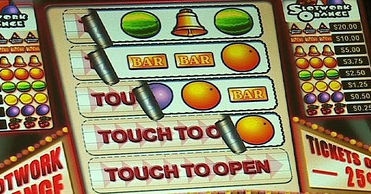
Torch and other video gambling machine suppliers claim the games are legal because the “pre-reveal” function allows a player to see the outcome of any particular game before wagering.

The company recently made six $40,000 donations to political action committees managed by its lobbyist and former House Speaker Steve Tilley. Last year, Torch contributed $230,000 to Tilley’s PACs. Observers said Tilley is exploiting a loophole that lets his clients to bypass donation caps, by allowing companies to donate any amount to the PACs, which then can give maximum amount to a candidate.

Illinois Judge Won’t Block Danville Casino

Illinois 5th Circuit Court Judge Mark Bovard recently denied Mervis Industries’ request for a temporary restraining order against the planned Gold Nugget Danville Casino.

Mervis’ property is next to the casino acreage. Bovard ruled Mervis “has failed to show that it will suffer irreparable harm if the TRO is not entered at this time.”

Construction on the $100 million project began in April, following unanimous approval from the Illinois Gaming Board on March 12.

Attorney Austin Zimmer, representing the city of Danville, stated, “Had Mervis been successful in its quest to revoke building permits and prevent the city of Danville from issuing new permits, it would have stalled construction of the project. The court found our arguments, that Mervis could show no harm to its property, persuasive and denied the temporary restraining order.”

Zimmer noted, “The city of Danville followed its established zoning review and approval process when it approved the zoning for the Gold Nugget Danville Casino. We are convinced that the court will find that the necessary and proper actions were taken by the city.”

The casino is expected to open in spring 2023 and create 300 full-time jobs.

Steve Wynn, Lisa Bloom to Settle Defamation Suit

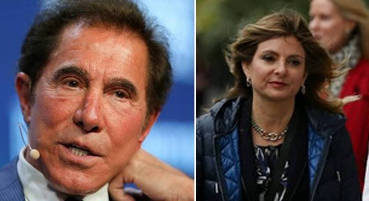
Former casino magnate Steve Wynn has agreed to an undisclosed settlement with Los Angeles-based attorney Lisa Bloom, thereby ending Wynn’s federal defamation lawsuit against Bloom after she accused Wynn of sexual harassment in a 2018 press release.

According to court filings, Bloom retracted her previous claims from the release, in which she said that she was representing a female dancer from the Wynn Las Vegas casino who accused Wynn of leering at dancers when they were rehearsing “revealing” show numbers and instructing them to strip “down to bras and panties” when he was in attendance.

The settlement amount was redacted from court documents, but Bloom and her attorneys did say that they wanted to “correct the record and state that there has been no evidence obtained that Steve Wynn made inappropriate instructions to dancers, nor that he knew about any inappropriate instructions.”

U.S. District Judge James Mahan, who previously denied Bloom’s request for dismissal before the 9th U.S. Circuit Court of Appeals referred the case back to him in 2021, approved the agreement and subsequently dismissed the case.

Bloom has yet to comment on the recent settlement. Conversely, Wynn said in a statement that he was pleased to have the case “fully settled, including with a retraction.”

Wynn had originally sought no less than $75,000 in damages in 2018–the suit began mere months after the casino mogul had resigned as CEO of Wynn Resorts and sold off his company equity.

This recent victory is only one of the multiple ongoing legal battles for Wynn, as the Nevada Supreme Court recently ruled that Wynn could still be subject to discipline from state gaming regulators regarding further allegations of sexual misconduct, even though he is no longer affiliated with the gaming industry.

Additionally, Wynn is currently involved in a separate defamation suit against The Associated Press and one of their reporters stemming from a story involving police accounts from two women who also accused Wynn of sexual harassment.

Queens Casino No Longer in N.Y. Senator’s District

Resorts World Casino New York City, the racino at Aqueduct racetrack, lie within the district of Senator Joe Addabbo. But redistricting left the track outside his boundaries. No matter. Addabbo sees It as a priority to secure one of the three downstate casino licenses expected to be doled out this year to the benefit of education funding.

Most people with knowledge of the legal gambling landscape in New York see Resorts World and the Empire City casino in Yonkers should both obtain licenses because they are so far ahead of the game than anyone else.

Assemblyman J. Gary Pretlow told NY Gambling Online that MGM, which owns the Yonkers casino, also has promised to build either a hotel or convention center If selected.

Addabbo considers the race for the third license “wide open,” with Assemblywoman Amanda Septimo pushing for a new casino in the Hunts Point neighborhood of her district in the South Bronx. Manhattan has also received some positive vibes.

The licenses will be awarded by the state gaming commission, with guidance by a community advisory committee.

“I think we’ll be interested to see who comes out with a viable, credible proposal that is beneficial to the state and the area which they’re proposing both in the short term and long term,” Addabbo said. “I don’t think we should look at this in any kind of vacuum. We need to look at the long-term impact, both positive and negative.”

licenses aside, Addabbo wants to increase the number of mobile sports betting operators in New York and to offer more betting options Including NASCAR and fixed-odds horse racing.

Addabbo introduced the bill for iGaming. But it didn’t advance beyond the Senate Racing, Gaming and Wagering Committee, which he chairs. With the legislature ending their session for this year on June 2, the bill will have to wait for next year.

“Currently, seven states have authorized online interactive casino gaming, including the neighboring States of New Jersey, Connecticut. and Pennsylvania,” the bill reads. “In 2021, online casino gaming revenue exceeded $1 billion in both New Jersey and Pennsylvania, generating approximately $120 million in tax revenue for each of those states.”

The bill also reminds legislators how successful online sports betting proved out of the chute, how it generated $70 million in tax revenue in a single month. The same thing would happen with online gaming, according to Card Player.

One estimate found the state would reap $475 million annually in taxes and another $150 million in licensing fees.

Addabbo will try again in 2023.

Bally’s Sues R.I. Host Cities Over Tax Bills

Bally’s two Rhode Island casinos have sued the towns of Lincoln and Tiverton over tax bills assessed when they were forced to close due to the Covid pandemic.

The Tiverton Casino & Hotel and Twin River Lincoln Casino Resort filed separate lawsuits in Superior Court. Patti Doyle, a spokeswoman for Bally’s, formerly Twin River, said the company seeks tax stabilization agreements with both towns.

Such an agreement would smooth out the tax assessment over a number of years, no matter whether valuation rises or falls. Doyle told the Boston Globe, “That process is underway and ongoing,” she said. They hope to reach a deal out of court that would “reflect the realities of the Covid-19 restrictions and closures.”

The lawsuits argue that the cities did not take into account the economic hits the casinos took when the pandemic forced them to close. They were closed for several weeks during the spring and winter of 2020. When allowed to reopen, it was with restrictions in capacity and times of operation.

The towns should have taken “economic obsolescence” into account, claims the lawsuit. In other words, a loss of value not connected to the property itself.

Tiverton’s attorneys counter that they did take “economic obsolescence” into account, but chose to disregard it. It rejected several appeals by the casino.

A similar appeal was also rejected by the city of Lincoln’s Tax Board of Assessment Review.

Bally’s seeks to recoup the loss of taxes they said they overpaid, plus penalties and interest.

Ohio Regulators Announce January 1 Sports Betting Launch Date

The Ohio Casino Control Commission (OCCC) recently announced the universal start date for sports betting will be January 1, 2023. That’s the date House Bill 29 mandated as the deadline that sports wagering must begin. Governor Mike DeWine signed the bill last December.

The OCCC’s announcement dashed hopes that sports betting would debut in time for football season. The commission’s executive director, Matt Schuler, said the January universal start date provides the necessary time for the state and prospective sportsbooks to prepare for launch.

Schuler also presented the timeline for state’s preparations leading to the January 1 launch, including a July 15 deadline for sports wagering license applications. A total of 65 licenses−40 retail and 25 mobile−will be available in the state.

Once it launches, players will be able to place sports bets online, at casinos and racinos and at betting kiosks in bars, restaurants and professional sports facilities. Wagers will be allowed on professional sports teams, motor sports, Olympic events, golf and tennis and major college sports.

Operators will pay a 10 percent tax on net revenue, which will be directed to public education and problem gambling services. The state Legislative Service Commission estimated sports betting eventually will generate $3.35 billion.

Bordering states Michigan, Indiana, Pennsylvania and West Virginia already have legalized sports betting.

New York Remains King of Mobile Sports Betting

New York has sucked in more revenue from mobile sports betting in five months than other states bring in over several years, according to Governor Kathy Hochul.

The state has generated $263 million in mobile sports betting since January and $4.3 million from the four commercial casinos since July 2019. Pennsylvania has brought in $253 million since November 2018, while New Jersey generated $229 million since June of that year, according to WHEC.

“In less than half a year, New York has become a leader among states in implementing successful gaming policies, with hundreds of millions of dollars going to important programs that will improve the lives of all New Yorkers,” Governor Hochul said. “I am committed to upholding responsible and effective gaming policies that will move the industry forward and continue to drive our state’s economic growth.”

New York has also collected $25 million in license fees from eight mobile sports betting providers, which brought $200 million to the state. All license fees have already been directed to education. Tax revenue will go to schools, youth programs, and problem gambling prevention, treatment, and recovery services.

College Sports Wagers Keeps Massachusetts Bill Sidelined

The lack of betting on college sports in a Senate version of the sports betting bill has stymied approval of the legislation in Massachusetts. House Speaker Ron Mariano called the omission a deal breaker as both chambers have to negotiate their differences.

The Senate version included consumer protections intended to curb problem gaming, which Mariano described as “well-intentioned.” But the lack of college sports betting will drive people to the illegal market which has no such restrictions.

“There’s no bookie I know that’ll check you into a rehab to help you beat your gaming addiction,” Mariano said. “There’s no bookie in the world that’s going to give you an extension on what you owe because you have a gaming problem.”

Mariano made his remarks at a Greater Boston Chamber of Commerce forum. The Senate version of the bill bans the use of credit cards to place bets, a restriction that baffles the Speaker. The legislation also limits advertising and creates a compulsive gambling program.

“This bill implements robust preventive measures for problem gambling and provides significant support for consumers who find themselves in over their heads,” Senate Ways and Means Chairman Michael Rodrigues said last month.

Sports betting conference committee members include Reps. Jerry Parisella, Aaron Michlewitz and David Muradian, as well as Senators Rodrigues, Eric Lesser and Patrick O’Connor.

Rodrigues’ office told MassLive the first conference committee meeting has yet to be scheduled.

Colorado May End Sports Betting Promo Tax Breaks

Colorado, which launched its competitive sports betting market in 2020, could become the first U.S. state to eliminate tax deductions for promotions by sports betting operations.

When the sportsbook market went live, Colorado allowed operators to deduct the costs of bonuses. The recently passed Bill 22-1402, awaiting Governor Jared Polis’s signature, would gradually end the write-offs. Beginning next year, as much as 2.5 percent of the sports betting handle could be deducted as free play, but that number will decline until the summer of 2026 when only 1.75 percent of the handle will be deductible.

Promos currently account for 3.2 percent of the state’s sports betting handle, which works out to be 51 percent of the gross. Experts say that as the sportsbook market matures it will need to spend less on promotions.

Last year, outgoing House Speaker Alec Garnett, who co-sponsored this year’s bill, commented, “It might make more sense after a certain amount of time to start taxing those boosts and incentives that are offered to players. When you’re allowing all those boosts to not be taxed, you’re leaving some money on the table.”

NCAA: MAC Announces Deal With Genius Sports Amid Concerns

The Mid-American Conference (MAC) has licensed the rights to its data and stats through Genius Sports, which will sell the data to sportsbooks.

Others will follow when they see how much money they can earn, and there isn’t much the NCAA can do to change course now that players are able to cash in on their fame, according to the Associated Press.

That said, those involved in college sports still can’t bet.

“They were able to turn the other way before and say, ‘Oh, that’s all happening over here.’ But the second you’re directly getting paid from sports betting, it also comes with some responsibilities,” said Matthew Holt of U.S. Integrity, a company that works with professional sports leagues and college conferences to monitor for gambling improprieties.

Holt said college sports is more open to betting scandals due to the absence of transparency about player availability, endorsement deals for athletes involving boosters, and the potential for unpaid players to cash in by placing a bet on themselves.

“What we’ve done, in fact, is brought sports wagering out of the dark corners and put sunshine on it and more transparency on it. And more eyes on it. That’s a positive, that’s not a negative,” MAC Commissioner Jon Steinbrecher said.

Navigate, a Chicago-based firm that does research and data analysis for professional sports leagues and college conferences, estimated that the MAC-Genius agreement could be worth up to $1.5 million per year. Other, larger conferences such as the SEC could make $20 million and the Big Ten $15 million from similar deals.

Holt spoke at college conference meetings in Arizona last month, warning of the potential for corruption in this new world. Unlike the NFL, college conferences do not have to disclose injury status and player availability. But someone has to know, and that person can be a bribery target.

“So, I do think that the collegian space, if they’re going to open up this category for revenue and monetization, needs to take the responsibility to take a step forward in injury information and availability reporting,” Holt said.

Holt recommends limitations on betting on the same athletes they are paying for endorsements.

“Say you have Tommy’s Used Car Shop giving the quarterback at name the university $100,000 a year and an NIL (deal),” Holt said. “Well, the owner of Tommy’s Used Car Shop should not be able to bet on that university. It’s a conflict of interest. He has a direct influence over the player.”

Most concerning is athletes betting on themselves, especially with prop bets, based on reaching individual goals in a game. Athletes can control their own performances.

“And it’s easier for fixsters to approach those players because they don’t have to ask the player to fix a match,” Holt said.

Holt convinced three states to pass laws that make prop bets on college games illegal.

“The other 30 said, ‘Thanks for the wonderful information, Matt, but DraftKings, FanDuel and Caesars, who have big lobbyists, they wanted it and they win,’” Holt said.

MaximBet Inks Endorsement Deal with Rapper, Singer Nicki Minaj

MaximBet has announced a unique partnership deal with superstar rapper and singer Nicki Minaj, in which Minaj will serve as a brand ambassador, creative director and an investor for the sports betting and iGaming operator.

As part of the deal, Minaj will collaborate with MaximBet on branding and marketing materials, merchandising and “money can’t buy” experiences for fans. A native of New York, Minaj has long been an avid sports fan.

In a statement, Minaj said that she has never “been prouder of a collaboration,” and that the company was the perfect match for her “natural, creative, sexy, fun, and fashion-forward expression.”

While it is a little unclear at this time exactly what to expect from the new partnership, it will surely unlock a new audience for MaximBet–Minaj currently ranks in the top 20 of most-followed people in the world, with a fanbase of nearly 300 million followers across social media platforms. She is the most-followed rapper on Instagram specifically, with 191 million followers. In addition to her deal with MaximBet, Minaj will also work with the operator’s parent company, Maxim, a publisher with a global circulation of just under ten million.

MaximBet CEO Daniel Graetzer said in a release that the company views Minaj not only as a “mega superstar,” but also considers her to be a “brilliant businesswoman.”

“Her role as a strategic advisor to MaximBet will be invaluable to us,” said Graetzer. “She’s built one of the most powerful brands in the world, her own, and she’s applying that same savvy and creativity to our lifestyle sports betting brand. I couldn’t be more excited to be working with her — she is creative, smart, passionate and bold.”

The operator is live in Colorado and has market access to 11 more states as well as Ontario, Canada.

Missouri Republican Senators Blocked Sports Betting

Legalized sports betting in Missouri has been pushed to next year, as state Senate Republicans failed to find a way forward. Sports wagering’s prospects looked good in January but sputtered by May.

The House passed a measure in March that would have permitted players 21 years and older to bet on college and professional sports teams online or at sports venues and casinos.

Senate Majority Leader Caleb Rowden said, “You’re going to have unfinished business. You don’t get to do 15 big things in a year. It’s just never going to be that way.”

Governor Mike Parson, expressing indifference, stated, “It depends whether you want sports betting or not, whether it’s a failure. I mean, I don’t know about that. Everybody has an opinion and whether it goes through the legislative process, that’s up to the legislators. I don’t know if that’s disappointing one way or another.”

A major stumbling block among Senate Republicans was video lottery machines. Senate President Dave Schatz estimates more than 25,000 so-called gray machines currently operate statewide.

He said, “The attorney general has turned a blind eye to this issue and lets this continue on. There are millions of dollars every day going through that should be going to education. If I’m disappointed in one thing that didn’t get done, that’s one thing that needs to be stopped in this state.” Schatz noted the unregulated video lottery machines proliferating in gas stations and convenience stores offer no consumer protections.

State Senator Denny Hoskins, who has filed sports betting bills for years, again sponsored a measure that would have allowed 5,000 video lottery games in the state, with a maximum of seven per location, such as truck stops, fraternal and veterans clubs and entertainment districts around the six professional sports teams’ stadiums. However, state Senator Mike Bernskoetter’s amendment, eliminating all video lottery machines, put an end to the debate over Hoskins’ bill.

Another reason sports betting failed in the Senate was because casinos rejected a 15 percent rate during the final hours of session. Hoskins said, “The casinos want a golden ticket. They want all the revenue to themselves and don’t want to provide the kind of revenue we need to help fund our veterans’ homes. Casinos basically killed this because of their greed.”

Hoskins said all of Missouri’s professional sports teams were on board with legalizing sports betting, but the casinos were not. He said this summer he plans to meet with stakeholders on both sides of the issue and to make sure lawmakers address the topic again next year.

He stated, “I think we’re going to see a lot of states realize that the casinos are getting really rich on this and it’s causing a lot of problems that those stakeholders, such as casinos, are not paying into the state to help out mental health when in regard to problem gambling.”

Gambling addiction was another reason sports betting legislation failed, observers said. State Senator Bill White said, “This is detrimental to society. How many more people are we going to have that are going to need some sort of assistance because someone spent a little too much money on any of these forms of gambling?” White added he sees video gambling machines at gas stations on his drive home from the Capitol. “What are the social costs dealing with this? How much money isn’t going home?” he stated.

TheScore Bet Drops U.S. to Focus on Canada Sports Betting

TheScore Bet will end its sports betting program in the U.S. and focus on Canadian operations as of July 1. Come June 15, theScore Bet will no longer accept customer deposits or new wagers in the U.S.

The Toronto-based company has prospered north of the border since the launch of the Ontario iGaming market in April. With the discontinuance of U.S. betting, theScore can focus on resources in Canada where it is the most popular sports media app. TheScore gets 50 percent of the Ontario downloads, with Bet365 a distant second at 36 percent, according to Sports Handle.

Penn National Gaming acquired theScore at the end of last year with a $2.1 billion cash-and-stock deal. One of the goals of the deal was to migrate Barstool Sportsbook onto the in-house risk and trading platform.

“This move enables us to maximize the value of both brands through our organic media and gaming approach,” Benjie Levy, president, and COO of theScore, told Sports Handle. “Key to our strategy is integrating theScore media app with Barstool Sportsbook, which we’re currently working towards. Bringing together theScore’s powerful mobile sports media platform with Barstool Sportsbook in a unified ecosystem, supported by our in-house technology and custom integrations, will strengthen the overall U.S. product offering and broaden its reach.”

TheScore said it became the first media company to debut sportsbook operations in the U.S. since the PASPA decision in 2018.

During the third quarter of 2022, theScore Bet will switch to the company’s proprietary in-house risk and trading platform in Ontario. The transition “will lead to expanded betting markets and parlay options, Penn National Gaming CEO Jay Snowden said. Barstool Sportsbook will shift to theScore’s player account management trading and promotional engine in late 2023.

“A large part of what we love about Barstool and theScore is their authentic voice, their scrappy nature, and their entrepreneurial spirit,” Snowden said in 2021.

Beyond theScore, the decision may serve as a harbinger for a larger pattern of consolidation across the industry. The top three mobile sportsbook operators in the U.S., DraftKings, FanDuel, and BetMGM, control at least 70 percent of the overall market share, according to various estimates.

By creating partnerships, companies such as Penn National Gaming and theScore can focus on their respective niches in the North American market.

“The timing is right to focus our U.S. efforts on marketing Barstool Sportsbook and our Canadian efforts on marketing theScore Bet,” Levy said.

WynnBET Applies For Illinois Sports Betting License

WynnBET has applied for a mobile sports betting license in Illinois, specifically a Management Services Provider license, but it’s not known if the operator would be tied to an existing or new casino.

Six of the state’s 10 casinos are licensed to offer retail sports betting, which was legalized under the gaming expansion bill passed in 2019. Five mobile operators are tethered to those six, and two others are associated with the state’s two horse racing tracks.

Argosy Casino Alton has a market access agreement with Unibet and Harrah’s Joliet has one with theScore Bet. Unibet submitted its sports wagering license application to the gaming board in November 2020. theScore has not yet submitted an application, but it reached a market access deal with Harrah’s Joliet in March 2021, a few months prior to being acquired for $2 billion by Penn National Gaming; as a result, it’s difficult to estimate when it might apply for a license.

Observers said Bally’s in Quad Cities most likely will operate its own platform if it decides to offer mobile wagering. Harrah’s Metropolis and Hollywood Casino Joliet do not currently have a known potential mobile partner.

Some of the six new locations that received casino licenses as a result of the 2019 gaming expansion bill already have sports betting partners or will operate their own mobile wagering platforms. Full House Resorts, which will open American Place in Waukegan, recently announced Circa Sports will operate both its retail and mobile sportsbooks; Circa submitted its application and deposit for a sports wagering license on May 16, according to the Illinois Gaming Board website.

Another of the six new locations, Hard Rock in Rockford, which opened a temporary casino last November, also is expected to offer its own mobile sports wagering platform. Bally’s, which recently was chosen to operate a downtown Chicago casino, is waiting for final gaming board approval before it announces sportsbook or mobile wagering plans.

Walker’s Bluff, which is building a casino in Williamson County, has not named an Illinois sportsbook partner but it partnered with Elite Sportsbook at its two Iowa properties. Wind Creek, which late last year was deemed preliminarily suitable to build a casino in suburban Cook County, also has not announced an Illinois sportsbook partner but it partnered with Betfred in Pennsylvania. That leaves Golden Nugget Danville, which recently broke ground, as another possible WynnBET partner.

GambetDC Passes Second Anniversary Plagued by Criticism

May 28 marked the two-year anniversary of the launch of GambetDC. It hasn’t been a pleasant two years, according to Sports Handle.

The oft-criticized sports betting platform hasn’t had an ideal two years of existence, as users have complained about the site’s odds and interface, among other concerns. There’s even potential that the D.C. Council could decide to move away from GambetDC in the coming months and years if the platform’s performance doesn’t improve.

D.C.’s council surprisingly awarded a no-bid contract to Greek firm Intralot to be the city’s lone sportsbook provider back in 2019.

Intralot created GambetDC to manage sports betting through the lottery. BetMGM, Caesars and FanDuel got a piece of the action through connections to arenas and stadiums. The three could only use mobile apps within a two-block radius.

Complaints about GambetDC began from the start–one of the biggest issues related to geolocation. Users wondered where they could place a bet, as gambling is not permitted on federal land, which is plentiful in D.C.

“By the end of the year, we’ll have a network with breadth,” said Nicole Jordan, the D.C. lottery’s director of communications. “We want to make sure bettors have the opportunity to play wherever they want to, however they want to, and really have a robust retail network to complement mobile.”

There are currently more than 40 GambetDC retail betting locations available throughout the city.

An audit of GambetDC conducted by the Office of the D.C. Auditor (ODCA) last September didn’t help its outlook.

“The Office of the D.C Auditor recognizes the difficulty of making judgments on the performance of GambetDC due to the unforeseen circumstances attributed to the Covid-19 pandemic,” the auditors wrote.

Better odds and interface enhancements were among the suggestions.

Although the District would retain a smaller share of revenue, improved odds may lead to an increase in bets. Improving the functionality and technical issues regarding the app could improve the situation.

Trends Emerge in Ontario Sportsbook Market

With the Ontario market just a few weeks old, some trends are starting to emerge. The market went live April 4.

A survey by OntarioBets.com which specializes in research and review of sportsbooks and online casinos found that 35 percent of provincial residents say they make sportsbooks wagers at least once a week, compared to 39 percent who never do. Those statistics are expected and about average said Max Bichsel, vice president of OntarioBets.com.

He added, “I think the unique part about Canada, in general, and more specifically, Ontario, is before regulated sports betting and regulated online casinos there was a grey market that was available … it already existed whereas in a state like New York nothing did. I think that’s why you’ve seen a fairly muted acceptance of sports betting because it didn’t require acceptance, it was already occurring within the bounds of the province.”

The survey also showed that the top choice among those surveyed was the NBA (28 percent) compared to the NHL (22 percent), NFL (13 percent), Major League Baseball (8 percent) with English Premier League and CFL bringing up the rear.

One of the first sportsbooks to launch in Ontario, FanDuel, decided to making a lasting impression with responsible gambling. The action was unprecedented, claims the operator.

It sent an email to Sports Handle that said, “Nowhere in the world has this ever been attempted, and we’re very proud to have delivered a safer gaming message during a key moment of acquisition and still rank among the top three operators in the market.”

FanDuel accounted for 20 percent of the sportsbook app downloads in the province the first 10 days. Only theScore Bet and bet365 beat it. The latter two sites have a hometown advantage since they have done business, although not in sports betting, in the province for several years.

TheScore is based in Toronto, where it offered a sports news app with more than 4 million users.

There are now 22 online gaming websites live in Ontario. One that hasn’t yet joined but will soon is DraftKings, considered FanDuel’s biggest rival in the U.S.

FanDuel General Manager Dale Hooper told Sports Handle, “Ontarians probably didn’t know that single-event betting was illegal or that they were playing in the gray market.” Hooper added, “Over the long term, when you’re building a brand, it comes from a position of trust and a foundation of trust. For us, we take responsible gaming very seriously. We don’t want any of our loved ones to place a bet they can’t place. Safety in the industry and ensuring we make it safe, sustainable, and fun is really important.”

This led to the decision to do something never done before. The first five days of the market FanDuel ran ads on responsible gaming.

This contrasted with some other operators, two of which were fined by the Alcohol and Gaming Commission of Ontario and iGaming Ontario for advertising guideline violations.

Nevertheless, FanDuel is happy so far with its market share. “It has been a great launch,” Hooper said. “People in Ontario were certainly ready and eager to try the new brands and operators that have come into the market. We’ve been very happy with their energy, feedback, and their focus on giving us a try. We’re really happy with where we’re at.”

A new entry into the Ontario online gaming market is the 1X2 Network, which recently obtained a license. This will allow licensed operators to be able to offer online gambling games from the 1X2 Gaming and Iron Dog Studio, such as Wolf Strike, Blazing 777s, Battle Maidens, Battle Maidens Cleopatra, Book of Ba’al and Phoenix Inferno.

1X2 Network already provides games to Loto-Québec. The company’s account management and marketing director Roy Kimber, commented, “Ontario promises to be one of the largest online casino markets in North America, so it made absolute sense for 1X2 Network as a leading provider of premium slot and table game content to enter the province.”

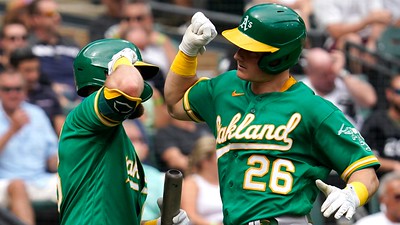
Oakland Fans Abandon Team That Might Abandon Them

Divorce often ends up with both sides unhappy with the situation, and that applies when the two sides are a municipality and its baseball team. Such is the situation in Oakland, California, where Major League Baseball’s Athletics seem ready to break up the marriage over a new stadium.

The issue is more complicated than that. Las Vegas is more than willing to open its arms and its pocketbook to help finance a stadium near the Strip.

Meantime while the A’s brass makes nice with Las Vegas officials, if you were an A’s fan, chances are good, you’re not showing up to a game this year. And the team will play to a stadium full of empty seats until Las Vegas is ready.

For Bay area fans, this double smarts because the area lost another Oakland team to Las Vegas when the Raiders left.

On May 2, only 2,488 fans showed up, the smallest attendance in more than four decades.

Unrelated to the potential relocation, the A’s favorite players are routinely traded away for more affordable alternatives. Their cavernous, concrete stadium, while maintaining a stubborn charm for some, is decrepit and grossly out of date.

For years, the A’s have been in the hunt for a sparkly new stadium or an energetic new city, creating a limbo that almost goads fans into staying away.

As recently as 2019, when Oakland hosted the Rays in a wild card game, the team drew more than 54,000 fans.

With the lowest attendance in the league, the A’s face three outcomes: A new stadium at Howard Terminal port along the downtown waterfront; a relocation to another city; or stay put in the Coliseum. Only three major league ballparks are older, all of them with historical significance and charm.

A’s President Dave Kaval said the team has to compete in the Bay area with the San Francisco Giants which has a relatively new stadium that opened in 2000 and a more successful franchise, with three World Series championships in the last decade. Kaval argues that staying in the Coliseum is no longer viable, not with the nearby Giants having dominated the market with a beautiful park next to San Francisco Bay.

“It’s especially important to have a waterfront, visionary ballpark in Oakland because we are a two-team market,” Kaval said. “I need to compete with the Giants, and I can’t have a substandard product, or people will just go to their games.”

Kaval has become a lightning rod for disgruntled fans and annoyed civic leaders, but he argues that at least the A’s are fighting to stay in Oakland, spending $2 million a month on the waterfront project. That is more than they spend on an annual basis on all but one of their players, shortstop Elvis Andrus.

“I think the A’s are cheap, but at least they are trying to stay in Oakland,” said Kevin Peters, 33, an A’s fan.

The NFL’s Raiders, who also played at the Coliseum in two separate eras, moved to Las Vegas for good in 2020. The NBA’s Golden State Warriors, who played in an arena just steps from the Coliseum for 51 years, moved to a glittery new palace in San Francisco in 2019, not far from the Giants’ ballpark.

“It’s an unfortunate situation for everyone,” said infielder Jed Lowrie, who has played seven years with the A’s, including three in which the team made the postseason. “As a big leaguer, you have to do your job. We understand there are grievances, but that’s above my pay grade. Hopefully it can get solved. Let’s put it this way: it has to be solved.”

Oakland Mayor Libby Schaaf supports the development place so long as protections are in place to protect public financing.

“It would be a tremendous loss for future generations of Oaklanders and not just Oakland A’s fans,” she said. “This is much, much bigger than baseball. This is about taking this precious asset that is the waterfront and putting it to best use for generations to come.”

Kaval said the waterfront park would add millions to the teams coffers and would end the cycle of player turnover. Not to mention bringing thousands of people to downtown Oakland for every home game.

The biggest hurdle is yet to come, however. To accommodate a new stadium and the associated development— a 35,000-seat ballpark, 3,000 homes, hotel rooms and retail stores, restaurants, parks, and other entertainment—the Howard Terminal site must be rezoned. And that faces lots of opposition and several lawsuits.

“The project in and of itself represents the question not just for the city, but the region and state, about whether or not you want to have a growing and industrial seaport in Oakland,” said Mike Jacob, the vice president of Pacific Merchant Shipping Association, a party in one of the lawsuits. “Instead of dealing with unresolved issues head on and being honest about the constraints of the site, the A’s and the city are content to put their head in the sand and not dealt with what’s in front of them.”

The site is currently being used as a truck staging area to load and unload the products carried by the ships, but it’s just a small fraction of the entire port.

“It’s 2 percent of the port property at the edge,” Kaval said. “Are you going to tell me the city of Oakland is going to turn down a $12 billion investment to have idling diesel trucks? Let’s call it for what it is. There is no existential crisis on the port, no risk of maritime or longshoreman jobs. Their argument is a complete fallacy.”

According to Steven Hill, the president of the Las Vegas Convention and Visitors Authority, public financial assistance may be forthcoming to help lure the A’s to Las Vegas. If Hill is correct, that means local and state politicians have had a change of heart about using public money.

“There’s a spectrum of possibilities for that partnership and I think it’s worthwhile to explore some of them,” Hill said. “I think there’s a broad set of options that could be helpful in making this move forward.”

According to media reports, the team is considering partnering with the operator and owner of the land under the Tropicana, Bally’s and GLPI, respectively. A’s officials are expected to make a final decision on the Las Vegas location within the next month.