Author: Casino Connection Staff

DraftKings, BetBlocker Partner on Responsible Gaming Tool

BetBlocker software, which first appeared in Europe, allows users to create restrictions on their gaming activities. It’s available free of charge for bettors who use regulated or unregulated sites. The company has now collaborated with DraftKings to improve awareness and access to the software, according to Sports Handle.

“BetBlocker’s contributions to safer play are commendable and DraftKings is pleased to team up with this enterprising and disruptive not-for-profit that is advancing responsible gaming in a comprehensive and consumer-friendly way,” Chrissy Thurmond, DraftKings senior director of responsible gaming, said in a press release. “We share BetBlocker’s vision that technology and innovation are critical to promoting safer play, and we extend a warm welcome to BetBlocker as they build their footprint in North America, following widespread success across the pond.”

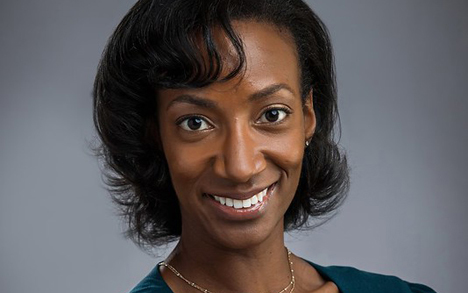
Brianne Doura-Schawohl, who previously worked for EPIC Risk Management and the National Council on Problem Gambling, calls the partnership a good thing for consumers.

“In the absence of easily accessible, streamlined self-exclusion programs that are unified throughout the nation, this will afford vulnerable patrons a means of protecting themselves across state borders at no cost,” said Doura-Schawohl, who has her own consulting firm, RG/PG. “Individuals struggling with a gambling addiction may also have financial burdens—removing barriers to assistance is exactly the initiative we need to be seeing more of across the nation.”

The DraftKings-BetBlocker creation resembles last year’s partnership between Gamban software and FanDuel, which blocks access to sites to those who sign up for self-exclusion or have a gambling problem.

BetBlocker users download the software anonymously, and it does not store personal data. Players choose from a range of restrictions from 1-5 days, 1-3 weeks, 1-6 months, 1-5 years, or, maybe just on weekends.

“We’ve been impressed with DraftKings’ leadership in responsible gaming, and we are grateful for their collaboration and financial support as we look to expand awareness of safer play technology,” said Pedro Romero, BetBlocker chief of safer gambling partnerships.

“We encourage other operators to follow DraftKings’ example of going above and beyond what is required region by region, to ensure all players have the knowledge and tools to bet responsibly,” said Romero.

More Sports Betting Options in Japan?

Lawmakers in Japan have denied reports that they may open the door to more sports betting in the country—specifically, betting on a wider variety of sporting events.

Local media recently reported that the country’s Ministry of Economy, Trade and Industry has drafted a proposal to allow betting on football, basketball and baseball (the latter may be as popular in Japan as it is in the United States). Currently, sports bettors are limited to legal bets on horse racing, cycling, motorboat racing and motorcycling.

It was also reported that Japan’s Sports Development Council could convene in July for the first time in five years. According to AsiaCasino.org, Chief Cabinet Secretary Hirokazu Matsuno said that doesn’t mean sports betting options will increase.

“Currently, the Ministry of Economy, Trade and Industry is holding a study group on sports,” he told reporters, “but it has also been reported that there is no plan to present a proposal to lift the ban on sports betting at any of the study groups. I refrain from commenting on hypothetical questions while this is not being done.”

His comments dovetail with those made by Minister of Economy, Trade, and Industry Koichi Hagiuda, who also denied the reports at a press conference earlier in the month. Opponents of such a proposal have expressed concerns about more gambling addiction—the same roadblock faced by would-be casino developers—as well as the potential for match-fixing.

According to Yogonet, the move toward broader sports betting options may be “aimed at increasing revenues from broadcasting and advertising” as well as an effort to boost the sports industry. It would advance the Sports Development Council’s 2016 goal to grow Japan’s sports market from ¥5.5 trillion ($41 billion) in 2015 to ¥15 trillion ($111.9 billion) in 2025.

While Hagiuda said there are “no moves” afoot to grow sports gambling in Japan, he did not seem to rule them out. “We’ll resume discussions, taking into account changes in the structure of the global sports industry due to the Covid-19 pandemic and digitalization, but when to start the discussions and what to discuss is not yet decided,” he said.

Another obstacle could be opposition from Japan’s professional baseball league, which prohibits gambling and does not support an expansion.

Caesars Sportsbook, NYRA Bets Launch Racing App

The new Caesars Racebook app, which allows mobile betting on thoroughbred races, recently launched in Ohio and Florida, in partnership with the New York Racing Association (NYRA). The app is not available to bettors in New York, but it operates on the NYRA Bets online platform. NYRA manages Belmont Park, Aqueduct and Saratoga Race Course.

Ohioans and Floridians can use Caesars Racebook to place mobile wagers on races at more than 250 international tracks, including Belmont and Saratoga in New York, Del Mar and Santa Anita in California and Keeneland in Kentucky. NYRA Bets also offers Caesars Racebook players race replays and expert handicapping insights. In addition, like the Caesars Sportsbook app, Caesars Racebook offers bettors access to the Caesars Rewards loyalty program. Currently new customers can receive a 100 percent first-deposit match, up to $500.

Caesars Digital Senior Vice President and Chief Development Officer Dan Shapiro said, “The launch of Caesars Racebook is an important milestone as we continue to add wagering opportunities for our customers and livestreaming content for the first time. Caesars Racebook is truly differentiated as the first horseracing advance deposit wagering app to include our award-winning Caesars Rewards loyalty program. We look forward to welcoming new horseracing customers and existing fans onto the platform and to working with NYRA Bets to grow horse racing as we deploy Caesars Racebook, with plans to launch in about 30 states across the country.”

NYRA Bets General Manager Matt Feig added, “The new Caesars Racebook app, which utilizes the NYRA Bets interface and technology, will expand access to world-class horse racing now and in the future. The partnership between NYRA Bets and Caesars is a win for horse racing, its stakeholders and countless racetracks around the world.”

NYRA recently reported that revenue rebounded in 2021 following Covid-19 losses. In addition, officials reported bettors wagered a record-breaking $815.5 million at the Saratoga Race Course last summer, shattering 2019’s record of $703.9 million.

Caesars also reported that the company’s horse racing interests generated $12.2 billion in parimutuel wagering handle in 2021.

BetMGM Partners with PokerGO on Poker Championship

Sports betting and iGaming operator BetMGM announced an agreement with PokerGO to host the BetMGM Poker Championship final table and a $25K freeroll tournament in the PokerGO Studio at Aria Resort & Casino in Las Vegas.

The championship live final table will feature six players on Sunday, June 26, during the 2022 ARIA Poker Classic. The newly added no-limit hold ‘em freeroll will take place on Wednesday, June 22, and is available exclusively to BetMGM Poker Championship online qualifiers.

“PokerGO delivers the best in poker content to fans around the world, and we’re thrilled to welcome them as a valued partner of the BetMGM Poker Championship,” said Luke Staudenmaier, director of poker at BetMGM. “Through this relationship, the first-ever championship final table and freeroll participants will play some of the most important hands of their lives in PokerGO’s iconic studio. With Jeff Platt and Jamie Kerstetter on the mic, players will have the opportunity to claim poker glory that will live on PokerGO’s platform for years to come.”

Headlining four days of branded poker events and carrying a $1 million guarantee, the $3,500 buy-in no-limit hold ’em BetMGM Poker Championship begins Thursday, June 23. On Saturday, June 25, a $600 buy-in BetMGM Poker Mystery Bounty will mark the first time Aria has run this modern take on a live poker knockout tournament.

“As BetMGM continues to expand into new markets, responsible gaming education remains a key focus,” the MGM and Entain venture added.

BetMGM provides resources to help customers play responsibly, including GameSense, a program developed and licensed to MGM Resorts by the British Columbia Lottery Corporation. The BetMGM Poker app is accessible on both iOS and Android, as well as via desktop.

Zitro Digital Partners with EveryMatrix

Zitro Digital, the online business unit of slot and bingo supplier Zitro, has forged a new partnership with leading B2B technology provider EveryMatrix.

The new agreement will see Zitro Digital’s most successful land-based games integrated into CasinoEngine, EveryMatrix’s iGaming integration platform.

This new partnership expands Zitro Digital’s presence in the online gaming industry and reinforces its mission to offer high-quality content to operators. Players will be able to enjoy popular Zitro Digital titles such as Link King, Link Me, and its video bingo game library.

“We welcome Zitro Digital’s games portfolio on our CasinoEngine platform. Through this partnership, we will offer our clients a few new games with proven performance,” said Amund Stensland, COO of CasinoEngine at EveryMatrix. “We are looking forward to a long-lasting and successful partnership.”

“We are excited and optimistic about our new partnership with EveryMatrix,” said José Javier Martí, COO of Zitro Digital. “It’s a great opportunity for Zitro Digital to expand its online business worldwide, and we look forward to integrating more game titles soon.”

Pragmatic Play Launches Betway Live Studio

Pragmatic Play, a content provider to the iGaming industry, has launched a bespoke live studio with Super Group’s leading brand, Betway.

The deal will see the relationship between the two enhanced with a dedicated blackjack studio, which will be replete with Betway branding throughout, giving customers an immersive environment to enjoy one of the most popular casino games.

It marks a further expansion of the relationship between the two companies, with Betway already taking the provider’s vast array of slots and live casino titles.

The dedicated studio deal gives further momentum to Pragmatic Play’s Live Casino offering, Betway being the latest tier-one brand to go live with the solution, following Kindred’s Unibet, Mansion’s M88, and Stake.

“We’re very pleased to further strengthen our close relationship with Super Group and provide a dedicated Live Casino environment to Betway,” said Yossi Barzely, chief business development officer at Pragmatic Play.

“Betway is a hugely recognizable brand in regulated markets all over the globe, and this is a fantastic opportunity for us to further showcase it through a state-of-the-art Blackjack studio.”

Anthony Werkman, CEO of Betway, said, “Creating incredible gaming experiences for our players is a priority for us, so launching a new dedicated live and immersive blackjack studio with Pragmatic Play is something we’re all excited about.

“The supplier has an incredible track record of delivering unmatched bespoke studios, and we’re very pleased to launch our Blackjack products with them.”

Pragmatic Play currently produces up to six new slot titles a month, while also delivering Live Casino and bingo games as part of its multi-product portfolio, available through one single API.

B.C.’s PlayNow Expands Into Saskatchewan

The British Columbia Lottery Corporation (BCLC) will be expanding its PlayNow online gaming platform to Saskatchewan. This becomes the third Canadian province to approve the platform.

BCLC signed a vendor agreement with the Saskatchewan Indian Gaming Authority (SIGA), they jointly announced on June 6. PlayNow currently operates in British Columbia and Manitoba. The goal is to go live by the end of this year.

SIGA operates seven First Nations-owned casinos in the province, which has a population of nearly 1.2 million. It conducted a request for proposals last year and spent several months selecting the vendor.

Last year the Saskatchewan government and the Federation of Sovereign Indigenous Nations (FSIN) announced an amendment to the 1995 Gaming Framework Agreement (GFA), to establish the legal framework for SIGA offering digital gaming. FSIN represents 74 First Nations in the province.

Soaring Eagle Adds Live-Dealer Games

Evolution Gaming Group announced that it has signed an agreement with Soaring Eagle Gaming for the provision of online casino content from its Evolution, NetEnt and Red Tiger brands in Michigan.

The deal see’s Evolution provide its expansive portfolio of online casino games, including its world-leading portfolio of online Live Casino games and First Person RNG titles from Evolution’s state-of-the-art live studio in Michigan. Additionally, top slot games from Red Tiger such as Gonzo’s Quest Megaways, Piggy Riches Megaways and Red Tiger’s well-known jackpots are now available to players in the state.

Popular NetEnt titles such as Divine Fortune Megaways, Fruit Shop Megaways and Starburst, will be available to players in the coming weeks.

Soaring Eagle Casino & Resort, near Mount Pleasant, Michigan, is a casino and entertainment complex owned and operated by the Saginaw Chippewa Indian Tribe of Michigan. The partnership between Soaring Eagle Gaming and Evolution will see a rich mix of Evolution online games made available to Soaring Eagle customers located in the state for play on desktop. Their mobile version of Eagle Casino & Sports is expected to be released in May.

“We are absolutely delighted that Soaring Eagle Casino is now live with such a wide selection of games from brands within the group in Michigan,” said Jeff Millar, commercial director, North America at Evolution. “Players will be able to immerse themselves in a uniquely entertaining Soaring Eagle online gaming experience from anywhere in the state.”

Melinda Coffin, CEO of Soaring Eagle Casino & Resort, commented, “In table games alone, Soaring Eagle prides itself on offering the hottest gaming action in the Midwest. Now our players will be able to experience the same thrill online, not only playing the casino classics but also exciting and entertaining game show-style games. We are confident that customers old and new are going to love what is the latest in a long line of Soaring Eagle developments.”

Podcast with Jacqueline Grace, Tropicana Casino

Jackie Grace was named general manager of the Tropicana in Atlantic City two years ago by Eldorado Resorts, just a few months before the deal to buy Caesars Entertainment closed. Grace explains how that deal complicated her leadership role because it meant lots of changes as the Eldorado database was incorporated into Caesars Rewards. She says the longtime employees of the Tropicana have inspired her and how it feels to return to Atlantic City, where she began her gaming career. She spoke with Global Gaming Business Publisher Roger Gros via Zoom from her Tropicana office in April. (Listen to the podcast or view a video of this interview below).

Atlantic City Casinos Hold Job Fair Amid Brewing Labor Dispute

There are plenty of jobs in Atlantic City’s gaming industry, so many that the Casino Association of New Jersey and the New Jersey Division of Gaming Enforcement partnered to hold a job fair June 2 at the Atlantic City Convention Center.

All the Atlantic City casinos recruited dealers as well as positions that are part of Local 54’s world: culinary workers, servers, and hotel housekeeping. Attendees could apply at the fair and garner an interview and a job offer, according to the Press of Atlantic City.

The job fair is just one of many signs that the industry is climbing out of the doldrums that enveloped it during and after the Covid-19 pandemic. The properties are investing, and some saw their gross operating profits increase.

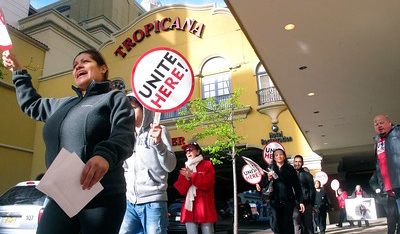
Meanwhile, pickets strolled in front of the Tropicana, a sign that things could get ugly in the labor world as members of Local 54 of Unite Here threatened a walkout over the lack of a new contract as of May 31. The union is seeking significant wage increases to help its members have their income keep pace with high inflation. Stressing wages over other issues is a change from prior contracts, when health insurance and pensions were lead issues.

“We have a long way to go before we get a contract. We’re not far enough down the road for me to give you any kind of a prediction yet,” said union president Bob McDevitt.

The good news, if you want to call it that, is that the union has not yet called for a vote to authorize a strike, nor is one scheduled as of June 1, according to the Associated Press.

The union went on strike in 2004 for 34 days and walked out against the former Trump Taj Mahal casino in July 2016. The latter move resulted in the Taj Mahal shutting down. The casino has since re-opened as a Hard Rock.

The workers say the casinos overall are doing very well, mentioning sports betting and online gambling. The industry counters with the argument that the casinos retain only 30 percent of that income; the rest fills the coffers of operators like FanDuel.

Money won from in-person gamblers is a much better indicator, and those numbers are still below the level of pre-pandemic 2019.

A member survey showed that 61 percent reported struggling to pay their rent or mortgage on time in the past year; 32 percent reported they lacked money for food, 37 percent lacked enough for utilities, and 27 percent for transportation.

“Enough is enough,” said Teresa Lopez, a Caesars employee. “We deserve better. The casinos are making their money; now it’s our turn.”

Hard Rock AC Accused of Media Gag Order on Smoking Ban

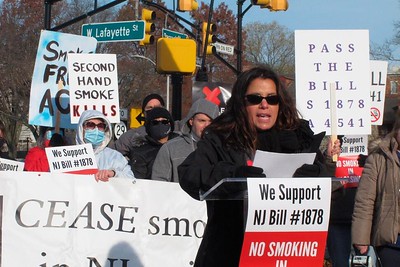
As support increases in the New Jersey legislature for a measure that would close the loophole for Atlantic City casinos that currently defers them from a statewide indoor smoking ban, anti-smoking advocates are accusing Hard Rock Atlantic City of trying to dissuade its employees from speaking out to the media on the issue.

Numerous media reports have quoted Atlantic City casino employees who say their health is at risk from secondhand smoke due to the casinos’ continued policy of allowing smoking on portions of each floor. Last week, the news outlet Politico obtained an internal memo from Hard Rock management stating that employees must obtain prior authorization before speaking to the media in their capacity as Hard Rock employees.

“Only authorized and approved team members are permitted to represent the property in the media,” the policy said, according to Politico. “This includes radio call-ins, TV-interviews, and/or comments to newspaper and magazine writers.”

The memo made no reference to the smoking issue, but advocates accused Hard Rock management of issuing the communication in response to the smoking controversy.

New Jersey Assembly bill 2151, which would end the casino exception to the state’s Clean Indoor Air act and ban smoking on the floor, has collected 33 co-sponsors to date. A companion bipartisan bill in the state Senate has 16 co-sponsors. Governor Phil Murphy has said he will sign the measure if it reaches his desk.

The Atlantic City Casino Association, which represents the resort’s casino operators, has consistently opposed banning smoking on the floors, claiming it will severely hurt business, putting them at a competitive disadvantage to casinos in nearby states that allow smoking. However, research has effectively questioned that position.

“A growing bipartisan coalition in Trenton strongly supports legislation to protect casino workers and make casinos smoke-free indoors,” said Cynthia Hallett, president and CEO of Americans for Nonsmokers’ Rights. “Legislators know that it is unacceptable to continue the outdated business practice of knowingly subjecting workers to dangerous secondhand smoke. It’s time to take the next step and hold hearings on this legislation in both the Senate and Assembly Health Committees.”

New Jersey Senate Approves AC Transportation Link

The New Jersey Senate has approved legislation that would help create a long-awaited transportation link between Atlantic City International Airport in Pomona and the tourism district centered around Atlantic City’s Boardwalk.

The chamber passed a bill sponsored by Senator Vince Polistina of Atlantic County meant to ease restrictions on the Casino Reinvestment Development Authority(CRDA) on how it can spend the money provided for tourism improvements through a portion of Atlantic City casino revenues.

Under the original gaming law, the CRDA is required to commit all of that revenue to projects directly in the tourism district and in Atlantic City neighborhoods. The Senate bill would allow the agency to divert some of those funds to link the airport with the tourism district, most likely via a rail line.

“Visitors from outside the area can easily book a flight to the city, but getting to and from the casinos and Tourism District is another story,” Polistina told the Press of Atlantic City. “This bill will authorize the CRDA to work with the New Jersey Transportation Trust Fund Authority and other entities to help develop a transportation solution.

“Utilizing the assets and influence of the CRDA to finally move ahead with meaningful transportation advances fits with the authority’s mission. The pressing social and economic needs of city residents would be well-served with better options to navigate between important sections of Atlantic City.”

A rail link already has been pushed by the Atlantic City Rail Line Coalition, formed in February 2021to work with planning agencies on formulating a transportation plan. What has been discussed is the creation of a stop at the airport in Pomona on the Atlantic City Rail Line that links the city with Philadelphia.

The Senate passed the CRDA measure by a 36-0 vote. A companion bill sponsored by Assemblyman Don Guardian is still in committee in the Assembly.

Caesars Offers Employees Education Assistance

Caesars Entertainment announced a new education assistance program for the company’s nearly 50,000 eligible employees. Called “All-In On Education,” the program includes student loan debt repayment options, tuition assistance, scholarship opportunities for team members’ dependents and a 529 college savings plan.

“We believe in the power and potential of our team members, and we know that in helping them achieve their educational goals, we can shape the future of our company and the communities in which we operate,” said Stephanie Lepori, Caesars’ chief administrative and accounting officer.

“Our expanded education assistance program, All-In On Education, will support our team members on their educational journey,” said Lepori. “Whether they’re paying off student loans, working their way through school, or tackling an advanced degree, we want our team members to know that we are right alongside them every step of the way.”

The robust educational resource program is available to eligible full-time and part-time Caesars Entertainment employees. Highlights of the program include:

  • an expansion of tuition assistance up to $5,250 annually for employees;
  • a list of in-network school providers who offer low-cost education opportunities with partner schools, plus academic advisory resources;
  • a new student loan debt repayment up to $5,250 annually for employees;
  • a 529 college savings plan which provides tax advantage funding options for team members to save for their dependents’ education expenses; and,
  • The Don Carano Legacy Scholarship, a competitive scholarship for dependents of employees offering up to $20,000 over four years to multiple recipients.

This scholarship was created in honor of Don Carano, founder of Caesars’ legacy company Eldorado Resorts, “as a tribute to his passion for the gaming industry and the family values shared by all team members,” according to the company.

Labor Strife Threatens Montreal, Atlantic City

Croupiers at the Montreal Casino in Canada have begun a general strike against Loto-Québec demanding safer working conditions and higher pay for new employees. In Atlantic City, officials of Unite Here Local 54 say the casinos there have some catching up to do in terms of wages. Meanwhile, in Las Vegas, Resorts World has concluded contract negotiations with the Culinary Union, to mutual satisfaction.

The Montreal strike began May 21 with workers staging a demonstration and walking a picket line. The general strike was preceded by two work stoppages the weekend before.

The union represents 521 dealers, who have been working without a contract since March 2020, when Covid shutdowns began. Besides safety and salaries, they are protesting shorter shift schedules that force croupiers to sometimes work six days a week to get more than 30 hours.

Union representative Jean-Pierre Proulx told the Montreal Gazette, “One in two of our employees suffers physical injuries due to the nature of the work, which includes dealing nearly 10,000 cards a day, five to six days a week.”

He added, “After 15 years on the job, that starts to add up,” and leads to repetitive strain injuries such as tendinitis and carpal tunnel syndrome. “We are demanding better management of work shifts and rest breaks to avoid injuries.”

Loto-Québec, which operates all casinos in the province, said the facility will operate as usual, with gaming tables, dining, slot machines and performances operating without interruption. Only the poker lounge is closed.

In a statement, the lottery operator insisted that it provides safe working conditions. It added that croupiers at the Montreal Casino “are asking for 30 minutes of paid break for each hour worked. They would, therefore, spend more than 30 percent of their shift on paid break, which is unusual in the industry.”

Loto-Québec wants to decrease the starting salaries of new employees by 5 percent, from $18.40 an hour to $17.44, which it says is much higher than what is offered in the market. Proulx calls this irresponsible in view of labor shortages and unacceptable.

In Atlantic City, employee contract negotiations were due to expire May 31, the unofficial but very busy start of summer at the shore. If the city’s casinos and the workers’ union negotiate in good faith, the union would likely not take any strike action. But when fast-food restaurants are paying $15 an hour, UNITE HERE officials say the AC casino industry needs to step up its compensation.

They say casinos have come out from under the weight of the pandemic and are profitable as an industry. The casinos counter that April was the first month where in-person revenue mirrored a pre-pandemic month. And even that hopeful sign was questionable. According to the Associated Press, the bump might have been a factor of an extra weekend day and nothing more.

To turn up the heat, the union established a website, actravelalert.org, which provides a list of hotels in the city with contracts in place. The website also includes a large photo of striking union members picketing outside the former Trump Taj Mahal casino in 2016. It was a defining moment in labor relations in Atlantic City, and led billionaire Carl Icahn to close the property, which reopened as a Hard Rock casino resort.

“We’re not threatening anybody,” said Local 54 President Bob McDevitt. “But we’re very serious about leveraging whatever we need to leverage to get our members a good contract.”

Local 54 is in negotiations with Caesars Entertainment, which owns Caesars, Harrah’s, and the Tropicana, and MGM Resorts International, which owns the Borgata. Ocean Casino Resort and Bally’s will agree to the terms reached with the other casinos.

“The reality is there are very few people at Caesars and no one at MGM that has any kind of institutional knowledge of what a conflict can be like here,” McDevitt said.

It’s not all labor strife in the news. In Las Vegas, members of the Culinary Union, the UNITE HERE local, overwhelmingly approved a new contract with Resorts World, the first mega-resort to open on the Strip since the Cosmopolitan in 2010. The Genting Berhad property opened in June 2021 on the site of the former Stardust Casino.

Last Wednesday, Culinary Workers Local 226 announced that 99 percent of its members had ratified a three-year agreement with Resorts World following negotiations that began in December.

In a statement, Culinary Secretary-Treasurer Ted Pappageorge said Resorts World was receptive to a card-check neutrality agreement, in which management takes a hands-off stance as the union worked to recruit employees. He said that position “showed the city and employees that the company respected workers’ right to choose whether to form a union.”

The new contract begins June 1 and covers guest room attendants, cocktail and food servers, porters, bellmen, cooks, bartenders, laundry workers and kitchen workers. The Nevada Independent reported that it includes health care benefits, wage increases, successorship under an ownership change and a sexual harassment policy, among other benefits.

Resorts World President Scott Sibella said in a statement that the agreement “recognizes the value of our employees and their contributions to the property.”


2022 World Series of Poker Now Underway on Las Vegas Strip

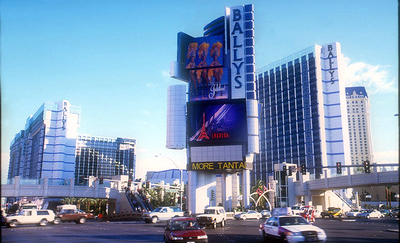
The 53rd edition of the World Series of Poker (WSOP) is underway, in what will be the event’s first foray onto the famous Las Vegas Strip after many years at Binion’s Horseshoe and The Rio. This year’s event will be held at both Bally’s and Paris Las Vegas. Bally’s is being re-branded as a Horseshoe casino, which will bring the tournament full circle since it was founded by Benny Binion at the Horseshoe casino in Downtown Las Vegas, now known as Binion’s.

According to WSOP Vice President Jack Effel, over 1,000 dealers and just under 600 tables will be utilized between the two venues. A definitive player count is a little difficult to determine due to the range of different events, but officials are confident that interest will be high, thanks to the new venues as well as the loosening of Covid travel restrictions.

WSOP Executive Director Ty Stewart told US Bets that “ there’s no reason for us not to break the all-time Main Event record,” which is 8,773 players. The record was set back in 2006.

In fact, WSOP officials are expecting such a turnout that there are already discussions about whether tables will have to run 10-handed instead of the standard nine-hand configuration. Eiffel, however, reiterated that the officials were “going to make every effort to play as many nine-handed events as possible.”

Overall, there are 88 scheduled tournaments, but viewers are probably most familiar with the famous no-limit Main Event, in which the best players in the world play for a literal pile of cash stacked in the middle of the table. Winners also receive the coveted WSOP bracelet, a diamond-studded piece similar to championship rings in team sports. This year’s Main Event is scheduled to take place July 3-16.

Stewart also said at a recent press conference that this year a special Main Event bracelet will be unveiled, but didn’t disclose any details about its design.

The WSOP is buy-in based, and the range of stakes is quite large. Of the 88 total tournaments, 18 have a buy-in of less than $1,000, while 28 are over $10,000. Players range from enthusiasts all the way up to ranked professionals.

Second Richmond Casino Referendum Must Wait for Petersburg Study

In 2016, Joe Morrissey lost the Richmond mayoral race to Levar Stoney. After that, Morrissey didn’t miss a beat. He ran for the state Senate and there he now sits, representing portions of Richmond and nearby Petersburg, according to the Richmond Times-Dispatch.

That backstory could be part of what’s driving the drama over a casino license. A 2020 gaming bill allowed struggling cities to ask their voters to favor a casino resort as a way to jumpstart the regional economy. Five cities qualified: Norfolk, Portsmouth, Bristol, Danville, and the capital, Richmond. Referendums were held in the five cities–only Richmond lost, and by a narrow margin. Casinos are already under construction in the four towns who said yes. The narrow Richmond vote surprised most residents and stunned city and casino leadership.

Now the city wants a second chance with voters.

At least, Richmond officials want a redo. After all, the proposed $565 million casino development had the backing of a partnership led by media conglomerate Urban One and casino operator Peninsula Pacific Entertainment. Backers of the failed Richmond casino outcome blamed white voters in the city’s more affluent areas for the defeat of the referendum.

This is where Morrissey returns to the story–he wants the fifth license to go to Petersburg, not to the do-over city of Richmond. He says the do-over vote smacks down the democratic process, so he introduced a bill to qualify Petersburg. But it failed in committee in February.

Undeterred, Morrissey convinced enough colleagues to add a provision in the budget bill that would bar Richmond from a second vote until 2023.

Not so fast, Joe.

In March, Richmond Circuit Court Judge Reilly Marchant ruled that Richmond does not have to wait until 2023 to ask city voters about a casino, thus overriding the budget provision.

Undeterred again, Morrissey went down another avenue. He had members of the Senate Finance and Appropriations and House Appropriations committees add a provision that required the General Assembly’s Joint Legislative Audit and Review Commission (JLARC) to consider the economic benefits of allowing Petersburg to get one of the casinos.

What does this mean for Richmond? The state may not issue their casino license until the Petersburg study concludes.

“They [Richmond] can have a referendum if they want to, but we just won’t agree to issue the license,” said House Appropriations Chair Barry Knight, one of the sponsors of legislation two years ago that allowed referendums on legalized casino gaming in five cities, including Richmond.

Petersburg Mayor Samuel Parham believes his residents will be behind a casino, which brings new jobs, tax revenue, and economic activity to the region.

“It can transform the City of Petersburg,” Parham said last December.

Relocating Richmond’s casino license to Petersburg could also be a boon for Morrissey’s re-election bid next year. The Times-Dispatch reports that Morrissey’s Senate district is considered a swing seat. And with the Democrats maintaining a narrow two-seat advantage over Republicans in the 40-seat Senate, the party will work hard to keep Morrissey in office.

While Morrissey’s 16th District includes parts of Richmond, the majority of the district’s votes come from south of the capital, in Petersburg and the surrounding towns.

Pennsylvania Board Sets Comment Deadline for Nittany Mall Casino

In the first regulatory action since a public-input hearing last August, the Pennsylvania Gaming Control Board has officially capped the public comment period on a mini-casino planned by Ira Lubert and his SC Gaming, LLC, along with Bally’s Corp., for a Category 4 mini-casino at the Nittany Mall in Centre County, near State College and the campus of Pennsylvania State University.

Last August’s hearing, at which residents expressed concerns about the project and local businesses championed it, kicked off the period when public comments were accepted by the board via online, email, fax or mail. Last week, the board set 5 p.m. June 12 as the cutoff for comment.

The next move is for the board to schedule another public hearing, after which the license can officially be granted. Since the board normally uses its monthly meetings for such hearings, the next three possible dates are June 15, July 20 and August 17.

Board spokesman Doug Harbach told the Centre Daily Times that contributing factors to the prolonged comment period were the lingering pandemic and significant background work.

“Many investigations take a good bit of time, sometimes because we have to continue asking for more and better info,” Harbach said. “Remember that we do background investigations for the licensing of many different gaming entities such as manufacturers, suppliers, etc., not just casinos. Many have taken a considerable amount of time.”

Then there’s the pending lawsuit from losing bidder Cordish Companies challenging the award of the license to Lubert, but Harbach told the newspaper the delay had nothing to do with that. Most license awards in the state have been challenged by losing bidders, but none have been successful.

Lubert, a Penn State alumnus and sole official of SG Gaming, won the license at the first auction open to bidders outside of current casino licensees—that’s one of the issues being challenged in the Cordish lawsuit.

Category 4 casinos, limited to 750 slots and 40 table games, were originally available only as satellites to current Category 1 (racino) and Category 2 (stand-alone casino) licensees.

The proposed 94,000-square-foot casino has a $123 million budget. Besides the casino, it would include a sportsbook and a sports-themed restaurant and bar with live entertainment, and a multi-outlet food court.

The plan would use the existing structure of the former Macy’s anchor store in Nittany Mall. Construction would take about a year, and the casino is expected to create 350-400 full-time equivalent jobs.

Iowa Regulators Punt On Cedar Rapids Casino

The Iowa Racing and Gaming Commission (IRGC) recently decided not to take action on a Cedar Rapids investor group‘s application for a Linn County gaming license.

Commissioners said they wanted to see if Governor Kim Reynolds will sign legislation allowing a 2-year moratorium on accepting new license applications. The measure would place a ban on new casino licenses retroactively from June 1, 2022 through July 2024, if it’s signed by Reynolds, who has not indicated where she stands.

Gaming commissioners expressed concern that the legislation brings politics into Iowa’s gaming operations. Commissioner Lance Horbach, a former Republican lawmaker, noted, “My concern is if this is signed, politics is now in Iowa’s gaming industry.” Horbach said the purpose of an independent commission is to keep politics, money and influence away from regulating Iowa casinos.

Commissioner Mark Campbell stated he and other commissioners “were all surprised” by the legislature’s action. He said, “We value the integrity of the process, and I think this commission values that and is going to work extremely hard to maintain that in the process of licensing regulation and how we move forward.”

Commissioner Daryl Olsen also said commissioners were “surprised” and “disappointed” with the moratorium. He said, “I truly believe these decisions should stay at the level of the commission, but our job is to regulate and not legislate, so we will continue to regulate.”

Senate Majority Leader Jack Whitver said the moratorium bill, which passed quickly in the waning hours of the session, succeeded because of “gaming fatigue within the Capitol.” He stated, “People just said, ‘We want a pause and see how this shakes out over the next couple of years. Especially after the sports gaming bill that passed, there’s so many ads, so much talk about gaming, that people said: ‘We just need to put a pause on this.’”

In response, Cedar Rapids Mayor Tiffany O’Donnell sent a letter to Reynolds, asking her to veto the measure. She wrote, “The best course for Iowa is to keep gaming decisions under the purview of the Iowa Racing and Gaming Commission. They are best suited to determine the appropriate path forward for our gaming industry.”

O’Connell noted Whitver commented on Iowa PBS’ “Iowa Press” that lawmakers discussed the moratorium for “probably 20 seconds.” She also noted the legislation does not consider the threat of expanded gambling in Nebraska and the net revenue gain of more than $50 million from a Linn County casino.

“Given that the amended bill was filed and passed both chambers in a matter of hours, the city and commission were unable to share this critically important information with the legislature,” O’Donnell wrote.

The moratorium was rushed through the legislature by state Senator Roby Smith, who along with other Republican lawmakers, have received campaign contributions from Dan Kehl, chief executive officer at Elite Casino Resorts. Elite operates casinos in Riverside and Davenport; Kehl has been a vocal opponent of a Cedar Rapids casino.

Meanwhile, the Cedar Rapids Development Group, consisting of mostly local investors, and the Linn County Gaming Association, the nonprofit that would allocate a portion of gaming revenue to local organizations, released plans for the $250 million Cedar Crossing entertainment complex, located near downtown on the site of the former Cooper’s Mill.

Jonathan Swain, president of Peninsula Pacific Entertainment, the city’s preferred casino operator, previously said the company would remain committed to Cedar Rapids and Linn County even if Reynolds signs the moratorium measure. He said, “Whatever the outcome is, whether there’s a veto or not a veto, we will be there for Linn County. We look forward to eventually bringing this project to fruition and bringing all the benefits to the nonprofits, jobs and all the economic opportunity that Cedar Crossing brings. Whatever happens, we’re ready for it, so let’s go.”

CA Law Exempts Tribal Projects From Environmental Reviews

California Governor Gavin Newsom has signed SB 900, which ratifies tribal state gaming compacts for two tribes and exempts certain projects from environmental review.

The bill, authored by Senator Melissa Hurtato, names the Santa Rosa Rancheria Tachi Yokut Tribe and the Middletown Rancheria Band of Pomo Indians. It also exempts certain projects from review by the California Environmental Quality Act (CEQA), which typically involves extensive public review and hearings.

The senator released a statement coinciding with the signing: “For decades the Tachi Yokut Tribe has been a valuable partner in the Kings County Community. The tribe provides scholarship assistance, job training and adult education programs, health and welfare assistance and other social services. I am pleased that the Tachi Yokut Tribe will receive the recognition they deserve.”

The Tachi Yokut tribe issued a statement thanking both governor and senator and adding, “We are pleased to continue our role as a positive economic force in the local community while maintaining the important opportunities and resources for our members, many of which are made possible by our gaming enterprise.”

Overruling Critics, Chicago City Council OKs Bally’s Casino Proposal

Chicago’s city council voted 41-7 to approve Bally’s proposal for a $1.7 billion casino-resort at the Tribune Publishing site in River West/ But the vote was preceded by a combative meeting and verbal fisticuffs between Mayor Lori Lightfoot and aldermen.

On May 4, Lightfoot announced her selection of Bally’s over Hard Rock and Rush Street Gaming after creating a special council committee to review “all things” related to the casino. But critics said the committee rarely met and lacked proper time to perform due diligence on the three competitors before Lightfoot picked Bally’s. Now the Illinois Gaming Board must sign off on the project.

Lightfoot’s office said Bally’s revenue estimates were slightly higher than the other two, with a shorter anticipated turnaround time. Analysts project the casino will generate $200 million in tax revenue by its second year of operations to offset the city’s police and fire pension debt; the resort is expected to open in late 2025 or early 2026. A temporary casino at the Medinah Temple, expected to open in summer 2023, is projected to produce $55 million in tax revenue, city officials said.

Observers added Lightfoot likely chose Bally’s since it committed to provide an upfront payment of $40 million to the city and $4 million in annual payments after that. In addition, Bally’s was first to make a deal with labor unions, and the Rhode Island-based company had no competing casinos in the area, officials said.

The deal has been loudly criticized by neighbors and aldermen. Residents expressed concerns over traffic congestion, crime and social problems. But the most intense opposition came from city council members.

Second Ward Alderman Brian Hopkins said the 64-page agreement between Bally’s “has so many holes in it, Swiss cheese would be jealous.” He said Bally’s had an “unfair advantage” and the company’s bid was “by far the least desirable” of the three finalists.

“This is a mistake and the ramifications of this mistake will continue on into the future,” Hopkins said.

Forty-Second Ward Alderman Brendan Reilly argued, “This has gone far too quickly at a breakneck speed. All of us have been put in this pressure-cooker artificially.”

He said the casino must perform “on super steroids” to generate the $200 million in annual revenue Bally’s has promised by 2027. Reilly added, “The funding allocation for security for the permanent and temporary sites is totally insufficient. Whomever came up with those numbers pulled them out of thin air. Why? Because a public safety assessment was never prepared for either location, there are no legitimate estimates for what it will truly cost to secure these locations.”

Reilly also blasted Lightfoot’s last-minute “switcheroo” of the temporary casino to Medinah Temple, which would be exempt from the liquor ban on that block. He argued the move will lead to an increase in River North crime and that the already congested area won’t be able to handle more traffic. Reilly said, “That’s a big deal. When the nightclubs shut down, that’s when all of the nonsense starts.”

But the biggest fireworks prior to the vote took place during a screaming match between Lightfoot and 25th Ward Alderman Byron Sigcho-Lopez.

“I know Mayor Lightfoot does not want to hear the facts, and it’s convenient to ignore the facts,” he stated. “I think as legislators we have the responsibility to review this process, a failed process, in an administration that is more worried about campaign contributions than doing the right thing for the city of Chicago.”

Lightfoot shouted back, “You are a liar. You are a liar, sir. And you are out of order. I will not tolerate you besmirching the hard work of so many people who have worked on this. You may not agree. Then vote no. But I will not sit here silently while you besmirch my reputation and the people that work for me from your pettiness and the things that you’re trying to do that expose this city to liability, sir. You can express your comments and your views. But you will not tear down the integrity of people who are working just as hard as you are. That is absolutely unacceptable.”

At a post-vote press conference, Lightfoot called the casino a “major, major milestone for our city. I’m not patting myself on the back. I’m not doing a victory lap. What I’m saying is that, after 30 years of futility, the men and women of this city will have good-paying jobs that they can build a future on. What I’m also saying is that the taxpayers of this city will not have to be called upon again to shore up our police and fire pensions.”

Soo Hyung Kim, chairman of Rhode Island-based Bally’s, said the venue will showcase “authentic” Chicago.

“We understand what a responsibility it really is and how many promises it allows the city of Chicago to keep to its police and firemen, to the hard-hit workers in the in the trades,” he said. “All of the underrepresented groups of black and brown people that have missed out on economic prosperity. We know all of these promises for all of these opportunities that can be shared with all these groups, and this casino allows for all of it.”

The project will include a gaming floor with 3,400 slots and 173 table games, 500-room hotel, 3,000-seat entertainment center, 1,000-seat outdoor music venue, six restaurants, food hall, three bars, fitness center, sun deck and pool spa, sportsbook and exhibition space including a Chicago sports museum. Bally’s officials said the facility will create 3,000 permanent jobs, including 60 percent minorities. The company also will invest $75 million in infrastructure improvements around the casino site, including synchronized traffic signals and road widening.