Author: Casino Connection Staff

Did Hard Rock Exec Send Email Asking for Hochul Donations?

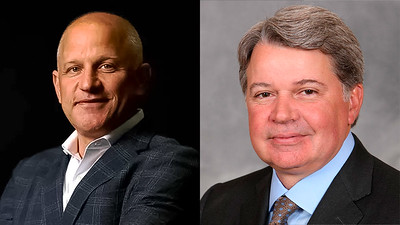
An unnamed Hard Rock executive emailed clients, customers, and contacts suggesting they send donations to New York Governor Kathy Hochul’s reelection campaign. It comes at a time when Hard Rock is all in when it comes to securing a license for a New York City area casino.

The email, reads, in part:

“As we prepare for the final stretch of our process for the third New York City casino license, Seminole Hard Rock ask that you consider the attached reception event and donation. … Hoping we can count on your support for Governor Kathy Hochul and Happy Father’s Day!”

In the June 28 issue of the New York Post, Hard Rock had this to say in response:

“Hard Rock hosted a fundraising event for Gov. Hochul on June 20th at the new Hard Rock Hotel in New York City. Participants were invited to that event via invitation that was approved by our compliance attorneys and sent by the President of Hard Rock Support Services with no reference to a casino or casino licensing process in New York,” the company said. “With regard to the alleged other e-mail, Hard Rock International takes these allegations very seriously and immediately initiated an internal investigation to determine whether anyone in our organization violated company policies related to political contributions.”

The New York Times reported that people connected to Hard Rock had given Hochul more than $100,000. Hard Rock Chairman Jim Allen gave $25,000 to Hochul on June 20, the Times reported.

PlayNY reported in May that Hard Rock was in the mix for a potential partnership with New York Mets owner Steve Cohen on a city casino project next to Citi Field.

For her part, Hochul said, “As governor, it’s my responsibility to be open-minded to all of these options right now, and that’s exactly what I’m doing.”

One thing to note is that the Citi Field casino project could face serious local opposition given the public parkland involved.

It is also interesting that the email referred to the third New York City casino license. That coincides with the common wisdom that the video lottery terminal operator MGM Empire City and Resorts World in Queens are heavy favorites for the first two licenses.

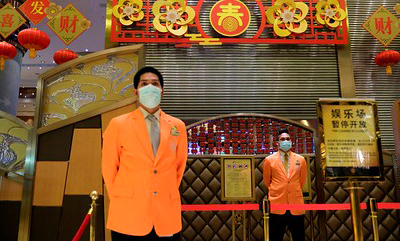
Macau Closes Businesses, Casinos for a Week

The recent rise in Covid cases in Macau has resulted in the second closure of casinos in the SAR, the first was the end of January through early February in 2020. The lockdown goes into effect at midnight on July 11 and goes until midnight on July 18. All industrial and commercial businesses, including casinos, will be required to close, except for some essential services and all residents must stay in their homes, leaving only for “reasons of necessary work, purchase of basic goods for everyday life or for other urgent reasons.”

Secretary for Administration and Justice André Cheong Weng Chon made the announcement and said everyone venturing outside must wear a mask of the HN95 variety or higher. “This is not a request. This is an order,” he said.

Macau police will be patrolling the streets and will prosecute those who violate the lockdown.

“If people are going out unnecessarily, the police will first ask them to return home, and if they continue to disobey, then the Prevention and Control of Infectious Diseases Act will be used to prosecute,” a police spokesman said.

In addition, all Macau residents must report for at least 12 Covid tests during the closure. As of Friday, 1,374 Covid-19 infections had been recorded over the past two weeks in the SAR.

According to Inside Asian Gaming, it’s unclear whether laid-off casino workers would be paid.

“Employers are not required to pay staff salaries, but it is better to come up a solution which is the best for both employers and employees,” replied Secretary for Economy and Finance Lei Wai Nong.

The lockdown is just the latest blow to the Macau gaming industry, which has been reeling from quarantines, a junket scandal, new gaming regulations and much more.

PA Rep. to Seek Expansion of Truck Stop Video Gambling

Pennsylvania State Rep. Seth Grove expects to introduce a bill expanding the number of eligible truck stops by eliminating the need for a licensee to sell a minimum of 50,000 gallons of diesel fuel a month, according to Penn Capital-Star.

“Simply linking a licensee to a commodity makes no sense. Think of it this way, would the Commonwealth link a tavern license to how many wings a tavern sells per month?” Grove wrote in a memo seeking co-sponsors for his proposal.

Peter Shelly, spokesperson for Pennsylvanians Against Gaming Expansion, a project of the state’s casino owners, said it’s uncertain how many terminals would even be added if you took away the diesel sale requirement.

According to the Pennsylvania Gaming Control Board (PGCB), the 65 video gaming terminal (VGT) sites around the state generated an average of $3.46 million in monthly revenue during the most recent fiscal year, which resulted in an average of $1.45 million in monthly tax revenue.

Mike Barley, communications director for skill games developer and distributor Pace-O-Matic, said other gaming legislation proposals would further tax and regulate skill games. One bill would insist skill games connect to a system which would permit the state to ensure the taxes were paid.

AGA Forms Task Force, Releases Guide to ID, Prevent Human Trafficking in Gaming

The American Gaming Association (AGA) has released a new resource, a guide titled Preventing and Combating Human Trafficking in the Gaming Industry, which is the introduction from its newly founded Anti-Human Trafficking Task Force.

“The AGA, our members, and the entire gaming industry are committed to stamping out all forms of human trafficking,” said AGA President and CEO Bill Miller. “Through the Anti-Human Trafficking Task Force, we will continue to bring the industry together to defeat this evil and pervasive human rights offense.”

In a press release issued Tuesday, the company stated that the guide builds on efforts by hospitality and nonprofit partners and the U.S. Departments of Homeland Security, Justice, and Treasury to guide the industry in applying anti-human trafficking practices including:

  • Educating individuals on what constitutes human trafficking, the risks it poses to the gaming industry, and how to intervene.
  • Empowering gaming employees to act when they notice human trafficking.
  • Preventing human trafficking from occurring at—or being facilitated through—gaming operations.
  • Addressing the specific needs of gaming executives as they institute anti-trafficking policies.
  • Protecting patrons and employees from human trafficking.

The resource specifically addresses areas such as sex trafficking and forced labor; trafficking myths and realities; state and federal anti-trafficking laws and enforcement; anti-money laundering measures; and best practices for preventing, spotting, and responding to trafficking at commercial and tribal gaming operations.

“AGA members are actively applying anti-trafficking protocols today, including displaying property signage and training employees, partnering with shelters and nonprofits, and working with law enforcement,” they stated.

“While many gaming companies already have robust anti-human trafficking policies, this guide will serve as an essential tool for the industry to assess and strengthen its current protocols,” said Alex Costello, AGA’s vice president, government relations. “Today’s announcement marks the first step in the task force’s ongoing work to enhance the gaming industry’s anti-trafficking efforts.”

Furthermore, the company explained that the task force will “continue to advance industry anti-trafficking efforts” in the coming months by co-hosting regional events, participating in educational sessions at Global Gaming Expo 2022, which will take place on October 10-13, and driving to-be-announced activations during National Human Trafficking Prevention Month in January 2023.

Comprised of AGA member executives with expertise in security, hospitality, anti-money laundering compliance, legal and other specialized sectors of the gaming industry, the AGA Anti-Human Trafficking Task Force’s mission is to “develop robust casino-specific tools and guidance that are practical in their application to make progress against human trafficking in gaming.”

Participating AGA member companies include Bally’s Corporation, Boyd Gaming, Delaware North, FireKeepers Casino Hotel, GeoComply, MGM Resorts International, Penn National Gaming, Rush Street Gaming, Seminole Hard Rock, South Point Las Vegas, and Wynn Resorts.

Nevada Regulators Give Final OK to Legends Bay in Sparks

After more than a decade of development, Legends Bay Casino in Sparks is finally set to open later this summer after the Nevada Gaming Commission (NGC) voted in favor of its licensure, the final approval needed for the first ground-up casino launch in the Reno-Sparks area in over 20 years.

The next challenge for Legends Bay’s parent company, Olympia Gaming, will be to fill at least 300 job openings at the property. The company already confirmed that interest is high, with 400+ applications for 70 managerial positions.

A formal opening date has not been set, and the lack of staff is one of the reasons why. Court Cardinal, Olympia’s regional president for the area, said that the company has “not committed to a specific date at this point because things can change at the last minute.”

Legends Bay will hold a job fair from July 13 through August 2 for the remaining positions.

Once opened, the casino will feature a 40,000 square-foot gaming floor with 660 slots, 10 table games and a sportsbook operated by Circa Sports, the Las Vegas-based sportsbook gurus.

The approval marks the end of a long and tumultuous path for Olympia, who originally purchased the property in 2006, with plans to invest over $500 million. After numerous setbacks and delays, that number ended up at around $120 million. Olympia also operates Fandango Casino in Carson City, which attracts about 2.5 million visitors annually.

Morton, Baidan Give New Details on Las Vegas Arena, IR Project

In a recent interview with the Las Vegas Review-Journal, Randy Morton and Marc Baidan—former heads of Bellagio and the Las Vegas Raiders who were pegged by Oak View Group and CEO Tim Leiweke to spearhead the massive $3 billion sports and entertainment development on the corner of Las Vegas Boulevard and Blue Diamond Road—shared some new details about the project, which will include a casino-resort and a new NBA-ready arena.

According to the two executives, about $1 billion of the $3 billion privately-funded budget will go towards the arena, which is expected to have a 20,000-seat capacity.

The arena is multi-purpose, but the general consensus is that it will house an NBA franchise if and when the league expands to Las Vegas and Seattle, which has been heavily rumored for years.

NBA Commissioner Adam Silver said at a recent press conference that the league will invariably expand, but it is not a priority at this time. Morton and Baidan indicated that development will proceed regardless of whether a team is planned for the city or not. In some respects, having the arena already built actually creates a stronger bid for a potential franchise.

There were few new details about the proposed casino-resort, although Morton did indicate that the company is “working on 2,000 rooms.”

Speculation has also swirled about the possibility of a Major League Soccer stadium being built alongside the complex, on a property owned by investor Wes Eden, but Baidan didn’t offer any details except that Eden’s group had secured “the rights to the expansion franchise,” and that “they’ve looked at that location for a potential stadium.”

The other topic of interest was the possibility of the complex being linked to the high-speed Vegas-to-SoCal Brightline train system that is expected to be built in coming years. When asked about this possibility, Morton affirmed that “transportation is very important,” and that he couldn’t say for sure at this time if it will actually happen. If it does, however, he is confident that it would be “very exciting and very welcomed certainly for all of our customers that would come from Southern California.”

Even though the property is on the south side of the Strip and away from most other high-traffic areas in the city, Morton believes that the “ease of getting in and out of this property will certainly benefit the casino business seven days a week.”

Virginia Casino Opening Delayed

The projected opening of the $500 million Caesars Virginia casino in Danville has been moved from December 2023 to 2024, due to supply chain and labor issues, officials said.

The venue is expected to attract 2 million visitors annually and generate about $38 million in annual tax revenue for the city. Danville City Manager Ken Larking said most of those funds will go toward infrastructure and parks improvement.

Caesars Virginia will offer more than 1,400 slots and table games, a Caesars Sportsbook and 25-table World Series of Poker room, as well as a 500-room hotel with a spa, pool area and fitness center. The venue also will include 40,000 square feet of meeting and convention space and a 2,500-seat entertainment venue, plus restaurants and bars. The project will create 900 construction jobs and 1,300 permanent jobs.

“Hopefully, the many visitors who come to our community to visit the resort will find our open spaces to be an attraction worth visiting while here and result in an extended stay or future stay in Danville,” Larking said.

Alabama Supreme Court Rules Casino Owes $70+ Million in Back Taxes

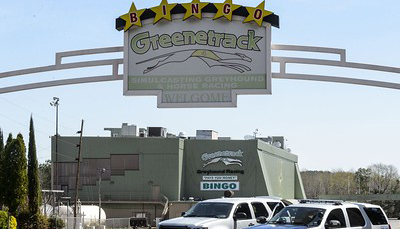
In the culmination of a decade-long legal battle, the Alabama Supreme Court has ruled that the owners of the Greenetrack racing and bingo facility in Eutaw, Greene County owes $76 million in unpaid taxes.

Under state law, counties may authorize nonprofit bingo parlors. However, an audit between 2004 and 2008 showed that most of the bingo profits went directly to Greenetrack, instead of the facility’s licensed nonprofit partners.

Those partners, licensed by the Greene County Sheriff, included numerous clubs from nearby Greene County High School, such as the athletic booster club, band booster club, math team, choir, Junior Reserve Officers’ Training Corps, library club, Future Homemakers of America, Future Business Leaders of America, National Honors Society, parent-teacher association and student government association.

Lower courts previously ruled in favor of Greenetrack, which claimed its bingo games were nonprofit and its status as a racing licensee made it exempt from certain taxes. However, the supreme court disagreed, stating Greenetrack’s racing license did not apply to other activities, like bingo. The court said if Greenetrack’s argument were true, any business could apply for a racing license to avoid paying taxes. The court also ruled Greenetrack’s partnerships with non-profit bingo lessees were illegal.

The court opinion stated, “For the low cost of $4,850 a day, Greenetrack was able to use the nonprofit organizations’ licenses as a fig leaf for its own illegal but extremely profitable bingo activities. The idea that the racing license law reaches so far beyond that narrow subject matter that it grants licensees of the commission a sweeping entity-based exemption from taxes on any and all activities they undertake, even activities completely unconnected to dog racing, is simply not plausible.”

Alabama Attorney General Steve Marshall added, “Every day, all across our great state, the people of Alabama get up, work hard to make an honorable living, obey the law and pay their taxes. And then there are the likes of Greenetrack, which schemes to make a dishonorable profit, break the law and evade their taxes. Such a sordid state of affairs is more than merely unjust. It is hateful to the rule of law. And, under my watch, it will not be tolerated.”

Greenetrack has not yet commented on the recent ruling.

Fremont St in DTLV Could See Increased Security Measures

After increased rates of crime and gun violence in recent weeks at the Fremont Street Experience (FSX) in downtown Las Vegas, city officials are mulling new security measures, including increased police presence and even an under-21 curfew for the city.

A meeting was held Tuesday, July 5 between Mayor Carolyn Goodwin, police officials and business representatives from the area to discuss these possibilities, and those familiar with the matter told the Las Vegas Review-Journal that Fremont Street will likely have an increased law enforcement presence during high-traffic times, especially events and weekends moving forward.

Goodman spoke to the Review-Journal after the meeting, saying that the increased levels of crime, especially gun violence, is “not tolerable anymore,” and that an under-21 curfew in the city is being considered. Any such proposal, however, would need several clearances, including from city council.

The FSX, which is privately owned and operated, has not commented on the proposed measures.

Two separate shooting incidents, one on July 4 and the other on June 19, left one dead and another critically injured. Both incidents began as physical altercations before escalating, according to police reports. The June 19 shooting occurred right underneath the FSX video canopy, which is a popular tourist attraction with multiple casinos nearby.

Derek Stevens, who owns three casinos near the FSX—Circa, Golden Gate and The D—was present at the meeting, and said afterwards that he and others in the area are committed to ensuring that Las Vegas is “very clearly safe and clean.”

“We are gonna clean up Fremont Street, period,” Stevens told the Review-Journal.

Others, however, were less enthused—Rohit Joshi, owner of the nearby Neonopolis shopping center, said that each venue, most notably casinos, already have extensive security systems in place. Joshi said that flare-ups like these are “nothing new.”

David Highhill First NFL Exec Dedicated To Sports Betting

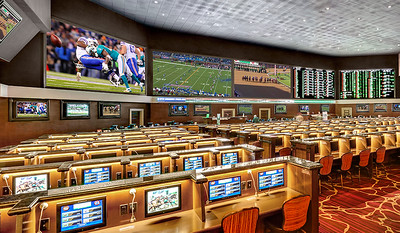
The NFL, once an ardent opponent of sports betting, has embraced it so much that the league appointed David Highhill as vice president, general manager of sports betting on June 27. The title, the first of its kind in the NFL, speaks volumes as to its importance to the league.

Highhill is no newcomer to the league—he’s spent the last 10 years in the NFL, and his most recent position was in the corporate strategy group where he oversaw the league’s sports betting initiatives. In his new role, he’ll lead efforts to protect the integrity of the game from gambling-related harm, advance the league’s brand and reputation, grow the value of the NFL’s data and intellectual property and drive fan engagement globally.

“The market has grown a lot in the last three or four seasons,” Highhill said. “What’s ahead is the exciting part of the opportunity.”

Last season saw the first sportsbook ads air during NFL telecasts. The league also partnered with sports betting operators, and those operators purchased official data from the league.

In 2021, the Washington Commanders franchise was granted a sports betting license in Maryland, but Highhill does not see the league or teams being directly involved in the sportsbook business.

“We’re going to focus on serving fans and the games rather than becoming a sportsbook,” Highhill told ESPN.

Highhill is also aware of the potential to do too much too soon when it comes to betting content, and the fact that some fans are not interested.

“We know there is a profile of fans that are most interested and a profile of fans that are less interested,” Highhill said. “So, serving fans where they are is very important and that goes right alongside with supporting our relationship with the National Council on Problem Gambling and ensuring that we take a leadership position on problem gambling.”

Operator-backed Sports Betting Initiative Approved for CA Ballot

The battle between tribes and operators for California sports betting supremacy is waging in full force, and now both sides’ initiatives will be featured on this year’s ballot, with the possibility of both passing.

Operators’ offering, known as the “California Solutions to Homeless and Mental Health Solutions Act” has been reclassified as an “eligible statewide ballot measure” by the California Secretary of State’s Office (CSSO), officially solidifying its spot ahead of upcoming elections.

The measure, which would make mobile sports betting legal statewide with platforms affiliated with tribal casinos, is backed by seven of the nation’s largest sports betting providers. According to the language of the bill, the majority of tax revenue would go towards homeless services, which has long been a hot-button issue around the state.

The move is being endorsed by various homeless organizations—Tamera Kohler, CEO of San Diego’s Regional Task Force on Homelessness, called the measure a “win-win” for the state, something that would “provide an ongoing funding source of hundreds of millions of dollars each year to fight homelessness and provide mental health services to those most in need.”

The operators have put up $100 million thus far to bolster its passing, and have pledged to contribute more if need be.

The state’s tribes have had a monopoly on its gaming industry for decades, and are vigorously opposed to the initiative, for fear of losing that control. That being said, their proposal would make sports betting legal only in person at tribal casinos—it makes no mention of mobile betting. Conversely, operators’ proposal does not address in-person betting, meaning that both could potentially pass.

Shortly after news of the CSSO’s ruling broke, Cody Martinez, tribal chairman of the Sycuan Band of the Kumeyaay Nation, said in a statement that operators’ proposal would increase “the risks of underage and problem gaming” by “turning virtually every cellphone, laptop, tablet, and gaming console into a gambling device.”

Tribal-backed advertisements with similar motifs have already been running in the state for weeks. Other organizations, including the NAACP and various law enforcement agencies, have also voiced their opposition to the operators’ measure.

California is the only state with sports betting initiatives on this year’s ballot. A proposal in Florida was in the works, but was eventually withdrawn earlier this year.

LIV Tournament Hopes to Improve Competitiveness with PGA

After a mixed reception in Europe, the LIV Golf Tour made its U.S. debut recently at the Pumpkin Ridge Golf Club in Portland, Oregon. Bookmakers expect an increase in wagering in the half-dozen states which permit betting on the tour, those being Arizona, Connecticut, Illinois, Nevada, Oregon and Washington.

BetRivers, Caesars Sportsbooks, DraftKings, PointsBet and the SuperBook are among the sportsbooks planning to offer betting on the LIV event in the approved states. DraftKings also is offering a daily fantasy contest on the event. FanDuel and Circa Sports have not yet posted odds.

Dustin Johnson is the consensus favorite, listed at 8-1 at the SuperBook. Louis Oosthuizen and Abraham Ancer are each 12-1. Phil Mickelson, perhaps the most high-profile PGA defector so far, is 80-1.

SuperBook is only taking bets with odds to win the tournament and a select few head-to-head matchups, according to ESPN.

Jeff Sherman, a longtime Nevada bookmaker with SuperBook, said the first LIV tournament in London drew a handle about one-seventh of what was wagered in the PGA event, the RBC Canadian Open, the same week.

“The handle was a little bit higher than I thought it would be for the first LIV event,” Sherman said.

Sherman anticipates more interest in the Oregon LIV event, but the PGA-backed John Deere Classic still has the edge even with a poor field, he said.

“You’re not going to find any PGA Tour field as poor as this one [at the John Deere Classic]. For a standalone PGA event, this is about as poor as it gets for quality of field,” Sherman said. “We’ll be interested to see how much LIV stands up to that.”

Controversy has shrouded the Saudi Arabian-financed LIV Tour, often about the kingdom’s human rights records.

Still, sportsbooks throughout the world are incorporating bets on LIV events, even with data feed and broadcast issues.

“While it did not meet the turnover of the RBC Canadian, we expect that to increase given the stronger and better field in comparison to the PGA tour this week,” Rachael Kane, a spokesperson for Irish sportsbook Paddy Power, told ESPN in an email. “It’s been enjoyable to watch and to trade on, despite the leaderboards being top heavy.”

The PGA Tour has created partnerships with American sportsbooks and relying on data companies, bettors can live wager on tournaments. LIV hopes to jump into that space sooner rather than later.

Everton: 20,000 Petition Football Club to Drop Betting Sponsor

More than 20,000 people have signed an online petition calling for the British football club Everton to drop their new gambling sponsor. The amount of opposition was described as unprecedented.

The club announced a “record” deal with online casino stake.com in early June. The deal includes stake.com logos on men’s and women’s team shirts next season, according to the BBC.

Everton facilitated the arrangement to help make up for its £372 million (US$452 million) in losses over the last three seasons. As of this writing, Everton will keep its partnership despite opposition.

Fellow club Norwich scrapped a gambling sponsor last season following protests which accused the marketing materials as being sexualized. Preston North End did not renew their betting partnership because of fan sentiment.

Everton season ticket holder Ben Melvin, who admits he has a gambling addiction, established the petition to send a message about the potential harm. But he never expected this kind of reaction.

“The partnership does not sit right with the club’s motto, the standards the club sets off the pitch and the fantastic work done by the club’s Everton In The Community in tackling mental health issues,” Melvin said. “I realize Everton may not change their decision, but I want them to know how many people have signed it and understand how some fans feel.”

A recent YouGov survey said 1.4 million people in Britain suffer from gambling harm and even more are at risk.

But the Premier League, the English Football League and Betting and Gaming Council all say there is a lack of evidence of a causal relationship.

The government is set to decide on whether to change gambling laws, including a ban of sponsorship in football, next month.

Station Fined For Nevada Sports Betting Violations

The Nevada Gaming Commission recently fined Station Casinos Inc. and its parent company, Red Rock Resorts, $80,000 for allowing its sportsbook app to take wagers after events had taken place.

Under terms of the settlement, Station did not confirm or deny the Nevada Gaming Control Board’s (NGCB) allegations. The 2-count, 13-page complaint originally was filed in September.

Station officials acknowledged they did not properly maintain virtual servers, and that a lack of computer memory allowed computer software to continue taking bets after events began. However, the officials said the software, provided by Las Vegas-based Stadium Technology Group LLC’s Stadium Live program and certified by regulators, contained a defect.

Station officials also said gamblers should not have attempted to bet on games that were already in progress. According to Senior Deputy Attorney General John Michela, the company took 35 wagers on five events on which the outcome was already determined on June 1, 2018. On January 9, 2019, the system took 116 wagers on events that had been concluded. And on March 7, 2019 another 30 bets were taken on three concluded events.

On August 29, 2019, regulators sent Station an order to show cause why disciplinary measures should not be imposed against the company. Station replied in September and October. On December 2, 2019, the board said it would not initiate disciplinary action if Station would implement “redundant monitoring processes to ensure it does not accept money or its equivalent ostensibly as a wager upon an event whose outcome has already been determined, including for wagering events administered by third-party wagering programs.”

Meanwhile, Station tracked down all illegal bets, nullified the wagers and returned bets back to all players.

Company officials believed they’d solved the problem by setting up alarm systems to notify them when servers reached 85 percent of server capacity. However, the problems consisted, including two more incidents of past-posting wagers. That resulted in a complaint and a stipulation of settlement signed on June 10.

Station attorney Marc Rubenstein said the company is in the process of getting a new vendor for its sports app, adding the company is moving away from the Stadium Live system “as quickly as they can.”

NGCB Chairman Brin Gibson said Station’s new software is in the testing phase. He said Station likely will use its current vendor for at least one and a half more years. He also stated regulators were satisfied the company was making a significant financial investment in a new system and moving as fast as possible to solve the problem.

ESPN: Media Needs More Involvement with Sports Betting

With support from its parent company, Disney, ESPN will get more involved in sports betting. Just how that plays out is still to be determined, says president Jimmy Pitaro. Disney’s consumer research indicated that the company should capitalize on the sports betting boom.

“It’s something we need to be doing,” he said on The Athletic’s Sports Media podcast. “It’s something that our fans are expecting from us.”

He called it a “must-have” as opposed to a “nice-to-have.”

ESPN has the opportunities “to partner with different folks and be a bit more aggressive in the space,” according to Pitaro. “We think we can potentially be doing more.”

The transition might not be such a jolt, Pitaro said. ESPN has been active in the betting space for some time now. After all, the brand has been in the odds and gaming spaces “for a while now,” according to Pitaro. This includes everything from podcasts to segments on SportsCenter and dedicated sections of their website. They also have studio shows such as Daily Wager.

Brands that operate within the gaming space are familiar with ESPN, too.

The company has a branded studio on the Strip in partnership with Caesars, and owns a 6 percent stake in DraftKings, according to Online Gaming Daily.

The willingness to delve deeper into the arena may lead down the path of accepting bets on its own platform— that means the potential acquisition of a sportsbook could be coming sooner than later.

Bally Bet to Get into New York Mobile Market in Early July

When New York State requested applicants for mobile sportsbooks, the gaming commission accepted nine. Of those nine, only Bally Bet has yet to sign on, but that could happen by July 1, according to PlayNY. Bally’s had no issue with taking its time, delaying entry, and avoiding the crazed promotions the other sportsbooks engaged in.

Legalized online sports betting went live in NY on Jan. 8. Bally’s had repeatedly said it was fine with being delayed. The operator wanted to get its new and improved 2.0 app technology up and running in Arizona before any other state.

“We have a longer-term plan. We think that the current version of sports betting is not a great business. It’s a fine business but not a great business,” Bally’s chairman Soo Kim told CNBC in late January. “But more importantly I think people will just stop competing with free money, but people will start competing with product.”

Bally’s CEO Lee Fenton agreed during a May earnings call.

“In New York, we will be cautious as we keep a keen eye on marketing spend and how to navigate a high tax environment in sports betting,” Fenton said.

Since the January 8 launch, FanDuel, DraftKings, Caesars and BetMGM have combined for over 90 percent of the market share and revenue share, not leaving much room for anyone else.

If Bally’s doesn’t offer significant promotions, it will be tough to convince bettors to leave their existing sportsbook. At the very least, however, Bally’s will be up and running for the first full NFL season featuring legal New York online sportsbooks.

Maine’s Betting Regulations Could Turn Off Sportsbooks

Leading sportsbook operators like FanDuel and DraftKings have stayed away from discussions with the state of Maine about setting up shop.

The legislature offered mobile sports betting rights to the Wabanaki tribes but left the in-person betting to casinos and off-track betting parlors. The revenue setup at the moment benefits the tribes. What’s more, it could take another two years before the first bet is even placed, according to the Bangor Daily News.

Still, some members of the industry are following the rulemaking efforts. And smaller companies may make a mark with enough time for changes as the state works on the rules.

Some 12 enterprises have contacted the Maine Gambling Control Unit for information, said Milton Champion, the unit’s executive director. These include Oxford Casino, the NFL, data trackers, and geolocators.

Champion bears responsibility for crafting regulations. But interested parties need to wait until the rules are released and a public comment period has commenced. A framework for initial rules should be released by late fall, after more staff come aboard.

“There’s clearly some interest,” Champion said. “But let’s face it, Maine isn’t a $6 million state. It’s not going to push out big numbers.”

On the revenue side, operators will collect 30 percent to 40 percent of revenue generated from wagers, which is insufficient to attract bigger firms. A limited number of licenses there may also keep companies away, he said.

These elements rank as a compromise between lawmakers and Governor Janet Mills, who did not want a wider sovereignty movement from the Wabanaki tribes and their supporters.

Tribal leaders supported the measure anyway because it could set up a pathway to running a gaming operation in the future.

The compromise did not sit well with casino proponents because it scuttled a previous bill that passed both chambers and allowed casinos to have mobile licenses.

Kansas Sports Betting Kicked In July 1, But No Bets Being Taken Yet

In Kansas, the law legalizing sports betting took effect on July 1. But state officials still are working on regulatory issues regarding the law. As a result, players may not be able to place wagers for several more weeks, said Hollywood Casino Vice President and General Manager Rick Skinner.

Skinner said Hollywood and other Kansas casinos are preparing for in-person betting. Mobile app regulations also have not been finalized, he said. A temporary sportsbook is expected to be ready by September 1, with a significantly larger space to be completed later.

“Really, the big construction will begin on our Barstool Sportsbook which will be in what used to be the Epic Buffet. There’s a lot of work going in on the front end so that by football season we can welcome our friends from Kansas and Missouri,” Skinner said.

Under the new law, casinos will pay a 10 percent tax on gaming revenue, with 80 percent directed to a fund that will be used to attract professional sports teams to Kansas.

The sports betting law also allows tribal casinos to establish sportsbooks and permits licensed businesses and fraternal organizations to install sports betting kiosks.

Ohio Sports Betting License Application Deadline Approaching

With a July 16 deadline looming, the Ohio Casino Control Commission (OCCC) is expecting a rush of online and retail sports betting applications from operators who want to launch in the state on January 1, 2023. The state’s sports betting law allows 25 online wagering proprietor licenses and 40 proprietor licenses for brick-and-mortar sportsbooks.

So far, applicants include Penn Sports Interactive LLC, a digital arm of Barstool Sportsbook owner Penn National Gaming, and HOF Village Newco LLC, a subsidiary of Hall of Fame Resort & Entertainment Company, owner of the Hall of Fame Village in Canton.

HOF Village Newco is seeking a proprietor license for both retail and online sports betting. In December, Hall of Fame Resort & Entertainment announced it signed a 10-year agreement with BetRivers-owned Rush Street Interactive for a sportsbook at the HOF Village.

Barstool Sportsbook will face significant competition in Ohio, as BetMGM, DraftKings and PointsBet have applied for mobile management services provider licenses; these allow operators to offer an online sportsbook on behalf of an Ohio-based professional sports organization, casino or other entity with a proprietor license for mobile betting.

Penn National operates four casinos in Ohio, and as a result, it can sell access to up to seven online skins besides Barstool Sportsbook. At least one of those skins is already designated for PointsBet. That should leave Penn National with two first-skin licenses and four second-skin licenses.

Elys Gameboard Technologies LLC also wants to operate its kiosks in Ohio, as it has in the District of Columbia market since October. Elys partners with restaurants that do not want to partner with the DC Lottery‘s GambetDC brand. Elys expects to sign up hundreds of potential partners in Ohio, with more than 700 retailers already pre-approved.

Bettors must be at least 21 years of age and must be physically located within the state.

Maryland Commission Inches Closer to Mobile Betting Launch

Governor Larry Hogan has thrown down the gauntlet—he wants mobile gaming taking bets by the start of the upcoming NFL season.

That undertaking falls at the feet of the Maryland Sports Wagering Application Review Commission (MSWARC),which met June 29 and made some progress discussing draft regulations and applications. The commission expects to award licenses in the coming months, according to Sports Handle.

Thomas Brandt, the MSWARC chairman, has offered a loose timeline. The agency hopes to approve the regulations and applications in the next few weeks.

After MSWARC approves the regulations, they need consent from the General Assembly’s Joint Committee on Administrative, Executive, and Legislative Review. A 30-day public comment period follows, which may trigger tweaks before implementation.

“I’m sharing this information to help us all adjust expectations as we proceed with our responsibilities,” Brandt said. “It’s our continued hope that we may be able to begin accepting applications in late summer.”

If the timeline holds, mobile sports betting can be launched in the fall and Hogan will be a happy man, especially if the betting goes live by week 1 of the NFL season.

Some commission members believe the application materials may prove too daunting to small business applicants.

“Are we overdoing it?” Brandt said. “Are we making it too hard with all the stuff we’re asking for? … It’s a lot for a restaurant or a startup.”

Commissioner Frank Turner agreed.

“Just listening to what is required to get a license, for the average person it’s going to be overwhelming,” Turner said. “Let’s not fool ourselves. I mean, that is a lot of information.”

Lawyers working on the preparations said the complications form a needed barrier to entry. There will likely be Maryland businesses interested in sports betting that lack the funds or experience to launch their own sportsbooks.

Maryland sports betting legislation includes language designed to foster involvement from women and minorities. To that end, MSWARC waits for the results of a disparity study that will help determine what measures it can legally implement to generate increased minority and women involvement.

“We still want to encourage the partnerships, but we want them to be true partnerships with equity positions, if you will, as opposed to in name only,” said Rosie Allen-Herring, a MSWARC commissioner.