Author: Casino Connection Staff

BetMGM, SportsGrid, Announce Expanded U.S. Partnership

Back in February, BetMGM and SportsGrid established a partnership, with one side delivering betting data and the other delivering related content on sports.

The agreement worked so well, the two firms agreed to expand and extend their relationship, Business Insider said.

Under terms of the multi-year agreement, BetMGM’s trading team and experts will offer insights during SportsGrid broadcasts, which includes Ferrall Coast to Coast, Pro Football Today, and In-Game Live Primetime. SportsGrid’s lead pro football analyst Warren Sharp will also deliver reports from MGM Resorts properties.

“SportsGrid is an ideal partner and, together, we look forward to providing our customers with more sports betting content just in time for the start of football season,” said BetMGM Chief Revenue Officer Matt Prevost in a statement.

Odds and betting promotions will be featured throughout Ferrall Coast to Coast, hosted by sports broadcaster Scott Ferrall.

“By further leveraging SportsGrid’s media-as-a-service model, BetMGM will benefit from the scale of our network’s audience and distribution footprints, the integration of top talent like Warren Sharp and the live content production from premier MGM Resorts properties,” said SportsGrid COO Adam Kaplan.

Sharp’s live reports will go out over SportsGrid’s content platforms which consists of the video streaming network, website, digital syndication publisher network and social media for both partners.

“I am excited to provide BetMGM customers and SportsGrid’s nationwide audience with my real time insights and analytics throughout the NFL regular season and playoffs,” Sharp said. “This partnership provides me with a unique perspective in covering the NFL matchups, spread, over/under and money lines, along with futures odds and player props.”

Seneca Nation President Seeks ‘Fair, New’ Gaming Compact

Matthew Pagels, president of New York’s Seneca Nation, says the tribe is seeking a “fair, new” gaming compact, noting that the gaming landscape has changed “drastically” in the 20 years since the tribe first obtained exclusive rights to operate three casinos in Western New York.

Commenting following a press conference at Seneca Niagara Casino in Niagara Falls, Pagels cited the expansion of casinos in New York outside the tribe’s exclusive territory as having presented many challenges to the three Seneca casinos—Seneca Niagara, Seneca Buffalo Creek and Seneca Allegany. He added that in addition to the opening of casinos including Del Lago Resort in the Finger Lakes region and Tioga Downs Casino in Nichols, the increased availability of video lottery terminals at racinos like Batavia Downs have drawn business from the Seneca properties.

“The landscape has exploded,” Seneca Nation spokesman Phil Pantano told the Niagara Gazette. Pantano noted the rise in online gaming as an additional drag on Seneca operations. “We’ve definitely seen an impact on brick-and-mortar sites,” said Pagels.

Pagels said the Senecas are beginning negotiations with the state on a new compact, and that he is “optimistic” that a fair deal can be reached. Under the current compact, which expires in December 2023, the tribe pays 25 percent of slot and VLT revenue to the state, which in turn distributes 25 percent to the host communities of Niagara Falls, Buffalo and Salamanca.

A spokesman for New York Governor Kathy Hochul told the Gazette the gaming commission and state executives have already begun preliminary negotiations with the tribe on a new compact. “We are confident that the process will continue in a way that best serves New Yorkers,” the spokesman said.

PandaScore, William Hill Strike Deal for Esports Odds Feed

William Hill entered into an agreement August 24 with PandaScore to obtain an odds feed on popular esports video games Dota 2 and League of Legends, according to CDC Gaming Reports.

Sports betting technology company Sporting Solutions will facilitate the distribution.

“Esports betting is on the cusp of entering the mainstream, allowing operators to engage new audiences and also provide tremendous added value to those already active with their brand,” said PandaScore Senior Sales Manager Dasha Kirilishina in a statement.

William Hill will also rely on PandaScore’s odds feed for Counter Strike: Global Offensive at a later date. Depending on a response from players and community, William Hill will consider expanding esports betting over the next few months.

“We see massive potential for esports betting to allow us to engage an even broader audience while providing existing players with new betting experiences,” said William Hill Global Director of Sportsbook Nick Maurice. “But to not only do this but do this right, we knew we had to work with a partner at the cutting edge of the vertical.

Tennesseans Can Bet On Arkansas Casino App

Southland Casino Hotel in West Memphis, Arkansas, recently launched its Betly online and mobile sportsbook for wagering anywhere in Tennessee.

Earlier this year, the venue debuted the first online and mobile sportsbook in Arkansas. Jeff Strang, Southland senior director of marketing, said, “We are thrilled to make the Betly online and mobile sportsbook available to our many loyal patrons in Tennessee. Now they can experience the excitement of wagering on their favorite teams and sports betting in general from the convenience of their homes and anywhere in the state.”

The Betly.com online sportsbook for Tennessee is available for both PCs and Macs. Betly Tennessee mobile apps are available for download for Apple iOS devices in the Apple App Store and for Android devices in the Google Play Store.

Located a short drive from Memphis, Southland Casino Hotel attracts a large number of patrons from Tennessee. It features the onsite Betly Tennessee sportsbook at its Sports Bar & Grill, and offers self-betting kiosks throughout the new 113,000-square-foot casino complex, opened in April. It’s part of the property’s ongoing $320 million expansion project that began in 2019. Phase one of the hotel portion of the expansion opened in July and the entire project is expected to be completed this fall.

MGM Receives Regulatory Approval for LeoVegas Acquisition

MGM Resorts International announced that it has received all regulatory and government approvals necessary to close on its acquisition of Stockholm-listed online gambling company LeoVegas.

The proposed acquisition, first announced in May, will see MGM pay SEK61 per share for the Swedish iGaming business, for a total value of around US$607 million.

“The completion of the offer is subject to the receipt of a number of clearances and decisions,” MGM announced in an SEC filing. “The company has now received all relevant approvals. Therefore, the condition regarding the receipt of all necessary regulatory, governmental or similar clearances, approvals and decisions is fulfilled.’

LeoVegas’ board of directors has unanimously recommended that shareholders accept the bid, which represents a 44 percent premium on the company’s closing stock price on April 29, the last trading day before the announcement was made on May 2.

“I see huge potential in what LeoVegas and MGM could achieve together,” LeoVegas CEO and largest shareholder Gustaf Hagman said at the time. “MGM Resorts has been working on creating the best offline casino experience for a long time, and we’ve done the same for the online experience. Merging the two is a very exciting prospect.”

PariPlay Granted Pennsylvania License

NeoGames S.A. subsidiary PariPlay, a leading aggregator and content provider for online gaming, has been awarded its Pennsylvania license as it continues to grow its footprint in North America.

The Interactive Gaming Manufacturer License, awarded by the Pennsylvania Gaming Control Board, is the fourth license secured by the provider in the U.S., following Michigan, West Virginia and New Jersey.

The Pennsylvania license enables PariPlay to offer innovative, feature-packed content from Wizard Games, as well as a wide variety of aggregated third-party games, to players across the Keystone State through its Fusion platform.

PariPlay’s Fusion product is the most flexible aggregation platform in the market and features leading titles and localized content from more than 80 vendors, offering more than 13,000 titles.

“We continually strive to expand in key markets, and Pennsylvania is one of the major emerging territories in the United States,” said Adrian Bailey, managing director at PariPlay. “Receiving our fourth license in the U.S. is an important landmark for us, and we’re eager to expand commercially in our newest market. It is one that has great potential both for PariPlay and our future partners.”

Lawrence Hanlin, head of compliance at PariPlay, added, “We pride ourselves on working extremely hard to study the regulations and compliance to enter markets swiftly and seamlessly, and Pennsylvania is yet another example of that. We’re very happy to receive this license, which will help serve our operator partners and their players with a huge range of locally appealing content.”

Wind Creek Launches ‘CasinoVerse’ App

Wind Creek Hospitality, the gaming enterprise of Alabama’s Poarch Band of Creek Indians, announced the launch of “CasinoVerse,” its latest generation of social gaming environments.

“This third-generation platform is the most engaging and most fun-to-play social gaming world we’ve ever offered to our players,” said Jay Dorris, president and CEO of Wind Creek.

“Providing our guests an escape from daily life to a fantasy world of fun and excitement is a core belief of Wind Creek Hospitality. We know that guests can’t always be at one of our physical locations, so we feel having an online brand experience that enables those same elements of escape, fantasy and game play available at home or on the go is paramount.”

The major advancement introduced in CasinoVerse is an immersive 3D world like the environments in widely available role-playing games (RPG) familiar to most gaming enthusiasts. This allows players to explore the Wind Creek globe and play at virtual representations of the various brick-and-mortar Wind Creek venues in North America and the Caribbean.

Players in this new world can create an individual avatar and escape into a fantasy world that exists solely as a place to have fun, according to the tribe.

Gaming content is and will always be critical, and as such, Wind Creek has always offered it on its social platform. CasinoVerse offers many of the same game titles found on its casino floors, additional titles from industry providers, and proprietary content developed by Wind Creek and its Flow Play Game Studio subsidiary.

Along with casino-style games, CasinoVerse is introducing idle play games that are simply fun to play. Most notably, CasinoVerse is a free-to-play social game, with no cost to download or play, and has no in-app purchases or “freemium” mechanics. This approach maintains the foundational tenets of the second-generation Wind Creek social gaming experience, WindCreekCasino.com.

“Our social gaming platforms occupy a unique niche among casino themed games” said Ken Rohman, chief marketing officer for Wind Creek. “They are always completely free in every regard to play, but the marketing offers provided to players are always real.” CasinoVerse players get real marketing rewards similar to monthly offers while playing, including free play, food credits, hotel stays and more that can be redeemed at any Wind Creek location.

With over 85,000 daily active users playing the current generation games, Wind Creek is predicting it will surpass 100,000 guests daily on the new platform.

CasinoVerse is available for download and play from both Apple and Google.

New Jersey Must Pay Millions Over PILOT Payments

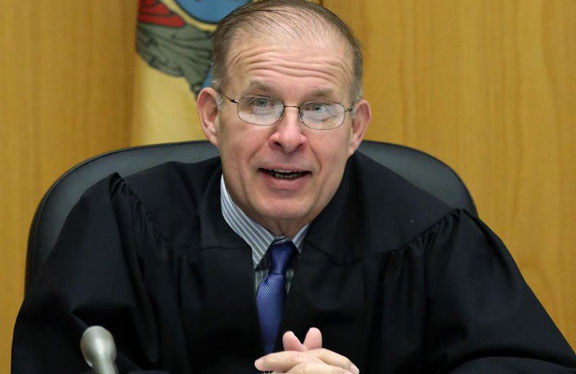
For the moment, Atlantic County is a winner. New Jersey Superior Court Judge Michael Blee recently agreed with the county that the state law approved last December which removed sports betting and online gaming revenues from the calculation of the casino industry’s tax bill violated a consent order from 2018.

The court said the tax program—known as PILOT for “payment in lieu of taxes”—was obligated to retain the original calculations when determining what the county receives, according to the consent order. The new legislation removed iGaming and online sports gaming revenues from what the state considered gross gaming revenues, and the county estimated that change would cost it about $5 million per year.

The state has indicated they will file an appeal. Had the decision gone in favor of the state, Atlantic County would lose $26 million over five years. That’s a lot of money.

“This is a big win for the taxpayers of Atlantic County,” County Executive Dennis Levinson said in a statement. “Our fight was to protect their best interests and hold the state accountable for its court-ordered agreement.”

Levinson said the county advised Governor Phil Murphy the amended PILOT legislation would breach the terms of the consent order, but Murphy ignored repeated attempts to communicate, he said.

“The governor quickly signed the bill four days before Christmas 2021 during a lame duck legislative session,” Levinson said. “To add further insult to injury, after our suit was filed, the state refused to mediate despite being strongly recommended to do so by the courts.”

Levinson said it was disappointing the state has responded to the order with more delaying tactics.

“The longer this continues, the more money ends up in the pockets of the attorneys,” he said.

In 2018, the county and the state worked out a settlement regarding the original PILOT legislation from two years prior.

Judge Blee’s order, issued July 29, requires the state to pay Atlantic County more than $2.4 million within five days for the shortfall in payments made to the County thus far in 2022. Judge Blee also granted an increase in payments to the County that are due on August 15 and November 15. In the end, Atlantic County would receive more than $22 million this year.

Judge Blee also required the state to make quarterly payments through 2026 under the terms of the consent order. Finally, the county will be reimbursed for attorney and similar fees.

In his decision, Blee said “the State made a ‘calculated decision’ to willfully violate multiple court orders . . . “ when it issued deficient payment to the county.”

Levinson dismissed state claims that he took an “antagonistic attitude against the State of New Jersey and Atlantic City,” which was based upon an emotional, political argument rather than a legal basis.

“Hogwash,” Levinson said. “With this ruling, the courts have substantiated my position. To this day, the state refused to speak to us. The citizens of Atlantic County deserve better. I took an oath to represent them and that is what I will continue to do.”

The motion to appeal stops the need to pay $2.36 million now or the two payments of about $5.6 million on August 15 and November 15, according to the Press of Atlantic City.

“The court’s requirement that the state make a multi-million dollar payment in such a short timeframe is burdensome, and the court’s quarterly payment calculation (even assuming that the court’s underlying conclusions on the merits of the county’s claims were correct) overstates the state’s obligation by $4,437,500,” attorneys for the state argued in a brief supporting the stay request.

Labor Peace at Atlantic City Casinos

And then there were nine. On July 27, Resorts Casino Hotel struck a deal with Unite Here Local 54, avoiding a walk-out. A day later, The Golden Nugget did the same.

The agreements were similar to the ones signed and ratified by the city’s other casinos:

  • Fully funded healthcare and pension plans
  • Protected jobs
  • Improved housekeeping workloads
  • Substantial pay increases

No date has been set yet for the 1,000 workers at Resorts and Golden Nugget to ratify, according to WGBO.

Employees at Borgata, Caesar’s, Hard Rock, Harrah’s, and Tropicana voted to accept agreements that were considered “historic.” Shortly thereafter, management at Bally’s and Ocean Casino Resort then agreed to the same deal the others signed. The agreements mean four years of labor peace until the contracts expire again.

Hard Rock Taps AC’s Joe Lupo to Take Over Las Vegas Casino

One of Atlantic City’s most successful gaming executives is headed west—Hard Rock International (HRI) has announced that industry veteran Joe Lupo will take over the Mirage Hotel & Casino in Las Vegas once the company completes the purchase of the property from MGM Resorts.

According to the Associated Press, Lupo will officially become president after the sale closes and he receives the requisite approvals from state regulators.

Lupo currently serves as president of Hard Rock Atlantic City. Prior to that, he spent time as senior vice president of Borgata, president of Seminole Hard Rock in Florida, and other executive-level positions around the industry.

HRI Chairman Jim Allen said in a statement that Lupo has produced “amazing results” during his time in Atlantic City, and that he is “ confident Joe Lupo will achieve even greater success at the Hard Rock Hotel & Casino Las Vegas.”

Lupo added that he is “humbled and excited to be appointed as the new president of the Hard Rock Hotel & Casino Las Vegas project, and to return home to my family.”

In addition to his duties with Hard Rock, Lupo also was also serving as president of the Casino Association of New Jersey, which is expected to name his replacement in the coming weeks.

Podcast with Felicia Grondin, Executive Director, Council on Compulsive Gambling of New Jersey

The Council on Compulsive Gambling of New Jersey (CCGNJ) is one of the first responsible gambling organizations set up as gaming spread across the United States. Felicia Grondin was appointed executive director of the agency a year ago after a long career on the regulatory side. She has recently negotiated the use of one of the unforgettable phone numbers in the business—1-800-GAMBLER. Along with the Nation Center for Problem Gambling, CCGNJ will coordinate the use of the number on a nationwide basis, throwing desperate and troubled gamblers a lifeline just when they need it. She spoke with GGB Publisher Roger Gros via Zoom from the CCGNJ offices in New Jersey in July.

Listen in iTunes and Subscribe to GGB Podcasts.

Listen on Spotify

McDowell to Receive Lifetime Achievement Award at ECGC

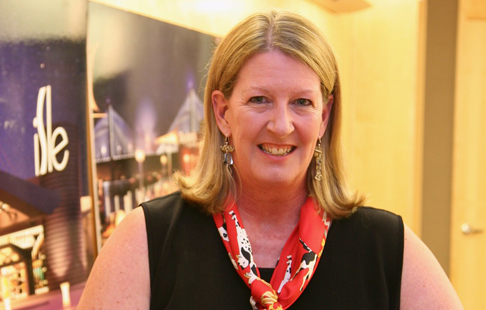
Veteran gaming executive Virginia McDowell will be honored with a Lifetime Achievement Award at the upcoming East Coast Gaming Congress & NexGen Gaming Forum (ECGC). McDowell will be the fourth gaming leader to ever receive such an honor, and it will be presented as the conference celebrates its Silver Jubilee September 21-23 at the Hard Rock Hotel & Casino Atlantic City.

McDowell, who served as the only female president and chief executive officer of a major gaming operating company from 2007 until her retirement from Isle of Capri Casinos in April 2016, has had a storied career rising through the industry’s ranks, including working for 16 years in the Atlantic City market.

As a gaming pioneer, she was the first female board member of the American Gaming Association, as well as the first woman inducted into the Mississippi Gaming Hall of Fame. She presently serves as a non-executive director of Entain PLC, as well as a vice president of Global Gaming Women, a nonprofit she co-founded in 2016 with a mission to support, inspire and influence the development of women in the gaming industry through education and mentoring.

Conference co-founders Michael Pollock and Lloyd D. Levenson issued the following statement: “In a career that has extended over four decades, Virginia McDowell has been a mentor to many, and a pioneer for women seeking to gain a foothold and build careers in this industry. We want to shine a light on her accomplishments, and to help inspire others to walk through the doors she has helped open.”

That theme of promoting inclusion will extend to the ECGC program signature events—the Industry Leaders Roundtables. Those sessions will include a candid discussion of what it will take for women and minorities to ascend to corporate leadership positions in the industry. The sessions, moderated by Juliann Barreto, chief operating officer of Spectrum Gaming Group, and Lynne Levin Kaufman, co-chair, Gaming & iGaming Practice Group, Cooper Levenson, will feature nine of the gaming industry’s top global leaders.

The conference will feature three keynote addresses and several panel discussions on issues facing the industry. The full two-day conference schedule and registration is at ecgc.us.

ECGC is organized and produced by Cooper Levenson, Attorneys at Law, Spectrum Gaming Group, Esports Entertainment Group, and Sports Illustrated Sportsbook.

Texans Spend $5 Billion Annually Gambling In Neighboring States

The Texas constitution prohibits casino gambling. As a result, Texans spend an estimated $5 billion a year in neighboring states where commercial and tribal casinos and sports betting are allowed.

Meanwhile, legalized gambling is permitted in Texas in the form of the state lottery and 1,300 charitable bingo operations. In addition, electronic bingo is offered at the Kickapoo Traditional Tribe’s Lucky Eagle Casino in Eagle Pass, the Alabama-Coushatta Tribe’s Naskila Gaming in Livingston and the Tigua Indians of the Ysleta del Sur Pueblo’s Speaking Rock Entertainment Center in El Paso.

To make casinos legal, a two-thirds vote in both chambers of the Texas Legislature would be required to pass a constitutional amendment, then a majority of Texas voters would have to vote for it.

Supporters and opponents are mobilizing around casino bills for the 88th Texas legislature in 2024. Pro-casino interests have donated more than $1 million to Republican and Democratic candidates, including Governor Greg Abbott, Lieutenant Governor Dan Patrick and House Speaker Dade Phelan. All three have made statements ranging from indifference to opposition. Earlier this year, Beto O’Rourke, the Democratic nominee for governor, said he was in favor of legalizing casinos and sports betting

at a campaign event earlier this year.

Observers noted lawmakers are not concerned with finding new revenue sources given the $30 billion balance in the state’s treasury, as recently reported by Comptroller Glenn Hegar. Instead, they may be more interested in cutting expenses.

Another challenge is making sure to appeal to Republican primary voters. At its convention in June, the Republican Party of Texas adopted a platform plank that explicitly condemns repealing the state’s casino ban. It states: “We oppose any expansion of gambling, including legalized casino gambling. We oppose and call for a veto of any budget that relies on expansion of legalized gambling as a method of finance.”

Opponents of legalized gambling also claim the social costs of casinos or sports betting would outweigh the limited economic advantages.

In neighboring Oklahoma there are two commercial casinos and 138 tribal casinos, according to the American Gaming Association (AGA). Casinos in Durant and other locations near the Red River attract players from the Dallas-Fort Worth metro area. The AGA reported the two commercials generated $55.9 million for the state in 2021, whereas the tribal casinos’ share or revenue was $1.64 billion.

New Mexico offers 21 tribal casinos and five commercial operations, primarily in the northern part of the state. However, casinos, like the Sunland Park Racetrack & Casino, attract players from the El Paso area. Excluding the state lottery, gambling taxes provide annual revenue of $125 million, according to state data.

Louisiana offers 19 commercial casinos and five tribal casinos, all easily accessible to East Texans and Houston area residents. The AGA reported the commercial casinos generated $1.38 billion in annual tax revenue and the tribal tax revenue share was $120.5 million.

Finally, Arkansas reported $83.2 million in tax revenue from casino gambling and sports wagering from July 2021 through June 2022. The state has three commercial casinos in Hot Springs, West Memphis and Pine Bluff, a 2-hour to 3-hour drive for players from Texarkana and other parts of northeast Texas.

Richmond, Virginia Drops Casino Revenue Referendum

The city council in Richmond, Virginia voted against placing on the November ballot a referendum that would allow voters to decide if tax revenue from a casino, if one were to be built, should go to renovate or replace more than 30 obsolete schools.

Council members dropped the proposal after City Attorney Haskell C. Brown III advised that the proposed charter change did not measure up, since it would involve nonexistent casino tax money.

The council still is considering other policy resolutions regarding the use of casino tax revenue that would not be sent to voters. For example, Mayor Levar Stoney supports a proposal that would use casino revenue to cut property taxes by two cents.

The proposal seemed to gain momentum recently after being endorsed by the Richmond Crusade for Voters organization and Cathy Hughes, founder and board chairwoman of the media company Urban One, which was the city’s choice to develop a casino resort in South Side in 2021.

However, Richmond voters narrowly rejected the project; voters in majority African American districts tended to support the casino, while voters in majority white districts tended to oppose it. Voters will have a second chance in November to support or reject Urban One’s proposed casino.

The state Department of Elections has stated it won’t challenge a Richmond Circuit Court order allowing the issue to be on the ballot. But even if the casino is approved, the legislature has prohibited the state lottery, which regulates casino gambling, from considering any Richmond application for a license to operate a casino for one year. Meanwhile, the legislature appears to support the city of Petersburg, instead of Richmond, as the site of the state’s fifth casino.

Louisiana Downs Purse Fund Missing $2 Million

In Louisiana, a July 29 Twitter post from the Shreveport Bossier Journal reported that $2 million in purse money was “missing” from the Horsemen’s Purse Fund at Louisiana Downs Casino and Racetrack in Bossier City.

The post included a link to the story, which has since been deleted. However, the BloodHorse said the money, generated from slot machines and parimutuel wagering, has not yet been located.

Benard Chatters, president of the Louisiana Horsemen’s Benevolent and Protective Association, said, “It’s a legal issue, and it is in the hands of the Attorney General and Racing Commission in our state. Hopefully, we can get a quick resolution. There are a lot of things going on in the Thoroughbred industry right now that are upsetting to the industry, and we certainly hope this can be resolved as soon as possible.”

A spokesman for Louisiana Attorney General Jeff Landry acknowledged that a “complaint” related to Louisiana Downs had been received. Landry’s spokesman Cory Dennis said, “We are aware of the complaint and are working with the Louisiana Racing Commission and the other parties to resolve the matter.”

When asked about the situation, Louisiana Racing Commission Executive Director Charlie Gardiner stated: “I have been instructed to forward all inquiries to the AG’s office.” Louisiana Downs’ new owner, Kevin Preston, president of Rubico Gaming, which purchased Louisiana Downs from Caesars for $22 million last fall, has not responded to inquiries.

Thoroughbred breeder Jay Adcock said he’s aware of rumors surrounding the purse fund at Louisiana Downs. “I don’t know any details, but it’s a big concern because money from the Horseman’s Fund trickles down to everyone. Anything that impacts the health of the industry is something we’re all concerned about.”

Opened in 1974, Louisiana Downs has a 12,000 square-foot casino in addition to horseracing facilities. The venue hit its peak in the early 1980s, attracting 1.3 million fans in a racing season. But observers said the quality of racing and crowd numbers has declined due to competition from nearby casinos in Shreveport and Bossier City. Louisiana Downs even suspended its signature Super Derby race in recent years.

Preston said Rubico has been investing in upgrades at Louisiana Downs since the sale closed last fall. He said, “We are prepared to bring this iconic track back to its iconic status,” and promised to bring back the Super Derby race.

Currently, Louisiana Downs is in the midst of its 84-day live thoroughbred racing schedule, offering live races Saturdays through Tuesdays, ending September 27.

Smoke-free Casino Advocate Comments on PA License Renewal

Americans for Nonsmokers’ Rights (ANR) submitted comments to the Pennsylvania Gaming Control Board highlighting the issue of indoor smoking after Mount Airy Casino performed better than their non-smoking counterparts while providing a smoke-free experience for workers and guests.

According to a new study published by the Las Vegas-based C3 Gaming, when Pennsylvania lifted the statewide smoking ban, Mount Airy opted to remain smoke-free indoors and experienced an increase in revenue compared to pre-pandemic levels, while its nearby competitor, Mohegan Pocono, reverted to allow smoking indoors and saw a nearly 2 percent drop in revenue compared to pre-pandemic levels.

In a letter to the board, Cynthia Hallett, president and CEO of ANR, points out Mount Airy’s success while they operated smoke-free indoors for most of the last two years as well as the broader trend of casinos going smoke-free to protect the health of their employees and guests.

“For significant parts of 2021 and 2022, Mount Airy voluntarily operated smoke-free indoors, even after pandemic-induced regulations and mask requirements were lifted across Pennsylvania. We applauded this decision and were disappointed to learn of their more recent decision to once again put employee and guest health at risk by allowing indoor smoking… In fact, Mount Airy posted higher revenue from in-person slot and table play for the first quarter this year than in the pre-COVID first quarter of 2019.”

Stressing the detrimental impact of indoor smoking on casino workers, Hallett referred the board to an opinion article by Tammy Brady, a table games dealer who wrote about working among clouds of secondhand smoke and her concerns returning to such unhealthy conditions as she battles cancer. Hallett also noted that experts in air filtration have warned that current systems don’t protect against the harms of secondhand smoke.

“Many in the industry claim that their advanced air filtration systems protect workers from the well-established harms of secondhand smoke,” Hallett wrote. “These claims are false, and the engineers who design those ventilation systems say they don’t solve the problem… warn that even the best filtration and ventilation systems ‘are not effective against secondhand smoke’ and “’can reduce only odor and discomfort but cannot eliminate exposure…

‘There is no currently available or reasonably anticipated ventilation or air cleaning system that can adequately control or significantly reduce the health risks of (environmental tobacco smoke) to an acceptable level.’”

Finally, the letter highlights neighboring states that adopted legislation to close the casino loophole and nearby casinos that are following the larger movement across the industry in going smoke-free indoors.

“The pandemic has brought about a sea change in how the gaming industry thinks about smoke-free policies, and smoke-free indoor casinos are quickly becoming the norm across the United States. Nearly half of all states—including Pennsylvania neighbors New York and Ohio—(and) more than 160 tribal gaming properties and nearly 1,100 gaming venues nationwide do not permit smoking indoors, including other Pennsylvania properties Parx Casino, Live! Philadelphia and Rivers Casino Philadelphia.”

Ruffin Meets With A’s About Potential LV Ballpark Site

Longtime Las Vegas casino developer Phil Ruffin recently held a meeting with the Oakland A’s MLB franchise to discuss the possibility of building a new ballpark at a site close to Ruffin’s Circus Circus casino, according to the Las Vegas Review-Journal.

The site is a 37-acre plot known as the Las Vegas Festival Grounds, which is located near the corner of Sahara Avenue and Las Vegas Boulevard. The A’s have been exploring relocation options in both Las Vegas and Oakland, and Ruffin’s proposal is just one of several meetings the team has had, according to the team’s president Dave Kaval.

Ruffin initially acquired Circus Circus from MGM Resorts back in 2019, and at that time he told the Nevada Gaming Control Board that he planned to overhaul many of the 3,700-room property’s amenities. A new professional sports stadium, however, was not among those proposals.

The other Las Vegas location that has been heavily rumored to be connected to the A’s is the site of the famous Tropicana casino, according to the Review-Journal.

The casino is operated by Bally’s, but the land is owned by Gaming and Leisure Properties (GLP). GLP previously announced in August of last year that it was meeting with Bally’s to discuss the “potential for more assets” to be developed on the property.

In January, Bally’s Chairman Sooyung Kim said the company was exploring numerous options for the Tropicana site, including demolition. The company purchased the property in April of last year for $308 million.

Arkansas Election Commissioners Toss Ballot Measure

Voters in Pope County, Arkansas will not have the opportunity to approve or reject a constitutional amendment that would remove Pope County as a casino location.

The Arkansas Board of Election Commissioners said the proposed amendment’s ballot title, submitted by the group Fair Play for Arkansas, was misleading because it didn’t indicate the fact that the Cherokee Nation of Oklahoma already has a permit for a Pope County casino.

The proposed ballot measure would repeal Amendment 100, which in 2018 authorized four statewide casinos, including one in Pope County. In November 2021, the Arkansas Racing Commission granted the Pope County license to the Cherokee Nation’s Legends Resort after commissioners nullified the license previously awarded to Gulfside Casino Partnership.

Numerous lawsuits have been filed ever since, including one from the Choctaw Nation of Oklahoma, which has spent millions to back Fair Play for Arkansas’ efforts to get the measure on the ballot.

Cherokee Nation attorney Dustin McDaniel had urged the election commissioners not to certify the ballot title because he said it was insufficient, misleading and had partisan tones. The commission also noted the proposed amendment would negate the Cherokees’ casino permit, which would have significant impact on potential economic development.

Fair Play officials said they plan to take the case to the Arkansas Supreme Court.

McDaniel said, “We assume Fair Play will petition the Supreme Court to review this decision and we will intervene to assist the attorney general’s office in defending it.” He noted Legends already has a contract with Pope County—the foundation has been poured and plans are underway to hire 1,200 employees.

Meanwhile, the Arkansas Secretary of State’s office still is qualifying signatures on petitions distributed by Fair Play to put the amendment on the ballot. At last count, Fair Play officials said they turned in 103,096 signatures, more than the 89,151 required to make it onto the ballot.

Earlier this month, the Arkansas Times reported several Pope County landowners have profited by selling pasture lands or otherwise undeveloped tracts to Legends. County assessor records showed Legends has purchased at least 12 parcels totaling 97.9 acres since January for a total of $22.5 million.

Clark County Expands ‘Order Out’ Laws for Las Vegas Strip

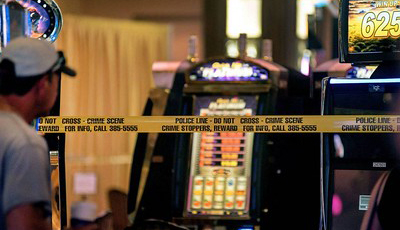
In response to rising crime rates in and around the Las Vegas Strip, the Clark County Commission (CCC) has voted unanimously to expand the parameters of its “order out corridor” ordinance. As part of the expansion, individuals who have been ordered by Clark County courts to stay away from the Strip could face a misdemeanor charge for violating said order.

Previously, the law only applied to those who had been convicted of drug or prostitution-related offenses, but the recent vote expanded that to encompass all crimes, according to CCC Chairman Jim Gibson. The new policy will be implemented before the end of the year.

Gibson told reporters that the ordinance “adds another layer of protection to the corridor” and “gives the court an additional tool to help us give them an opportunity to clean (an offender’s) life up, if that’s what it takes.”

He added that the CCC hopes that the new policy “will be one of those incentives, or an incentive, to stop committing crime on the boulevard.”

In addition to the expansion of crimes committed, the recent vote also widened the number of officials who can order such exclusions—this power was previously only allotted to Las Vegas Justice Court judges, but now all Clark County courts will have such authority.

According to Gibson, courts may only order such exclusions after an individual has been convicted of a crime, and only those who are in direct violation of such orders would face additional charges.

Exceptions can be given for those who work in the area as well as other activities, such as worship.

Boyd: Eastside Cannery to Remain Closed, No Plans to Demolish

Like most Las Vegas operators, Boyd Gaming has seen a welcome resurgence in revenue in the first half of 2022, but the company affirmed on a recent earnings call that its Eastside Cannery property off of Boulder Highway would remain closed indefinitely, with no plans for demolition at this time.

The property, which features over 60,000 square feet of gaming space and 300 hotel rooms, has remained closed for over two years, since the onset of the Covid-19 pandemic in March 2020. It is one of five Las Vegas locations yet to reopen, three of which—Texas Station, Fiesta Rancho and Fiesta Henderson—have already been tagged for demolition by Station Casinos.

When asked about Station’s recent announcement on the call, Boyd CEO Keith Smith said that he had “no inside knowledge” of the decision, but noted that he was “surprised” by it.

Neither Smith nor Josh Hirsberg, Boyd’s chief financial officer, commented directly on the company’s future plans for Eastside Cannery, but when Truist Securities analyst Barry Jonas asked about it, Hirsberg noted that demand just wasn’t high enough, especially considering the fact that Boyd also operates Sam’s Town Casino, which is next door to the Cannery.

Hirsberg told investors that Eastside “will remain closed” until the company sees “more demand or something else to suggest we should consider reopening.”

Smith, however, affirmed that the property “would not be demolished,” but did not comment on whether Boyd had received offers to sell the casino. When asked about labor shortages, the CEO said that most Eastside employees either left the company or went to work at one of the other 10 Boyd locations in the city.

Boyd first acquired Eastside in 2016, in a $230 million deal that also included the Cannery North Las Vegas property.