Author: Casino Connection Staff

Bally’s Completes Acquisition of Tropicana Las Vegas

On September 22, the Nevada Gaming Commission (NGC) gave final approval to Bally’s Corp. with respect to its acquisition of Tropicana Las Vegas—now, the company is looking to potentially overhaul the property as early as 2024.

Bally’s first announced it was acquiring the operations of the Tropicana from Gaming and Leisure Properties (GLPI) back in April, for a total of $308 million. The two sides then agreed to a 50-year lease, starting at $10.5 million per year and increasing periodically.

The deal also involved Bally’s selling the property rights of two other venues in Illinois and Colorado to GLPI and then leasing them back as well.

During regulatory proceedings, George Papanier, president of Bally’s, told state officials that the company will view the Strip property as its West Coast “flagship” location moving forward, over its existing Bally’s Lake Tahoe casino.

According to Papanier, the company will continue to operate the Tropicana as is for at least a year before announcing an official redevelopment plan. That plan could involve outside partners, which is a possibility the operator is currently exploring.

Bally’s Chairman Soo Kim, on the other hand, previously told reporters that the company may even explore options related to full or partial demolition and reconstruction. He was adamant, however, that the property will be rebranded at some point with the Bally’s name at the very least.

NGC members were also particularly curious about the operator’s finances moving forward, given the fact that the company recently won approval to build a massive $1.7 billion resort in Chicago, the city’s first and only casino.

Papanier was quick to downplay such concerns, telling commissioners that “we certainly have the bandwidth in our company to do that.”

Nebraska’s WarHorse Casino Holds Grand Opening, State’s First Legal Casino

Nebraska made history on Saturday, September 24 with the opening of the first state-licensed casino. It finally came after voters approved three initiatives in November 2020, one of which changed the state constitution to allow games of chance. 

The WarHorse Casino, located in Lincoln, saw hundreds of people arrive to the facility, eager to play one of the 433 slot machines at the temporary casino. The Nebraska Racing and Gaming Commission granted the license a day earlier. 

The casino was set to open at 10 a.m., but 30 minutes before, while a crowd of more than 100 people waited outside, Tribal Elder and member of the Winnebago Tribe of Nebraska’s Tribal Council Ken Mallory was among the first to play a slot machine. 

“What’s the difference between praying at church and praying at the casino?” Mallory joked to reporters and dignitaries as he pulled a slot machine. “At the casino you really mean it.” 

While there was general enthusiasm from the public about the casino’s opening, there is uncertainty when the other five will be available to the public. 

The initiative also called for casino-style gaming and sports betting at the race track casinos, often referred to as racinos. Since sports betting will only be allowed in casinos, the state will be losing millions in online wagering, usually the majority of a state’s handle. For example, neighboring Iowa, which permits online wagering, had 89.8% of its wagers placed online in August, accounting for $108 million of its $122.6 million in handles. 

Where Iowa will be affected is visitors from Nebraska who before the Lincoln casino opened, had to travel 64 miles up Interstate 80 to Council Bluffs, Iowa to visit the closest casino. 

Nebraska is taxing casinos 20 percent on its revenue. Of the taxes collected, 70 percent will go to the state’s Property Tax Credit Fund, while 25 percent goes to the city and county where the casino is located, split evenly, and 2.5 percent each to the state’s general fund and Compulsive Gamblers Assistance Fund.

When advocates were campaigning to get the initiatives passed, they claimed $45 million could be collected in taxes annually. That figure, however, was based on six fully operational casinos and sportsbooks, something that is at least a year away. 

How much revenue WarHorse Casino will provide to the state is unclear. By comparison, Harrah’s Council Bluffs Casino wagered $51.4 million on slots in August, with revenue of approximately $5.4 million. 

If the Lincoln casino can generate those types of figures, they could raise $1 million in taxes. 

Nevada Regulators Mulling Increased Cybersecurity Obligations

Due to the influx of cyberattacks against both tribal and commercial casinos over the past decade, the Nevada Gaming Control Board (NGCB) has proposed new cybersecurity regulations to better protect both operators and their patrons.

The NGCB held a workshop on September 26 with a number of high-profile gaming companies around the state to discuss these proposed obligations. During the 75-minute meeting, the board made it clear that if the regulations go into effect, operators would then be obligated to notify state officials of any cybersecurity breach within 72 hours.

October is federally recognized as Cybersecurity Awareness Month, and the Nevada Gaming Commission (NGC) will meet October 20 to vote on whether or not to approve the new regulations, which would go into effect starting January 1 of next year.

Since the beginning of 2020, cyberattacks have affected casinos in five different states—Arizona, Wisconsin, New Mexico, California and Oklahoma—and in November of that year, the FBI’s Cyber Division issued a formal warning to casino operators, specifically tribal owners, to start ramping up security efforts.

Commercial operators haven’t escaped these issues either, as Las Vegas Sands, Hard Rock, Binion’s and Affinity Gaming have all reported data breaches since 2014.

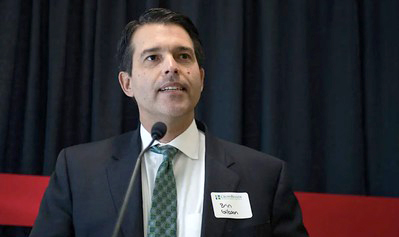
During the recent workshop, NGCB Chair Brin Gibson said that the board wants and expects all operators to invest in cybersecurity in order to protect the gaming industry and its patrons, which he called a “critical piece of the state’s infrastructure.”

If approved, the new regulations would require all operators, including race/sportsbook and iGaming companies, to conduct multiple risk assessments and audits from third parties with cybersecurity expertise in order to form best practices.

Gibson maintained that there is no mandated schedule for these assessments. However, he also noted that that is not a “safe harbor for licensees to do nothing between now and December 2023,” and if unreported breaches are discovered, “we still reserve the right to take action under Regulation 5 (that governs the operations of gaming establishments).”

Iowa requires its operators to assess security systems every two years, and Louisiana enforces a three-year schedule. Some have predicted that Nevada may opt for an annual obligation, but representatives from the South Point in Las Vegas said that this is too much for single-property operators to take on.

In a statement, the company said, “Risk assessments aren’t inexpensive and for single-property licensees generally have to be performed by an outside consultant. We believe a risk assessment should only be required to be performed once every three years. … While we believe the requirement of a risk assessment every three years is adequate, that does not mean that a licensee will not continuously monitor the adequacy of its protection. We simply don’t believe an expensive procedure like a risk assessment should be mandated on an annual basis.”

South Point also requested that the regulations, if approved, should not go into effect until November 1, 2024 in order for operators to have enough time to get the proper resources in place.

Jim Barbee, head of the NGCB’s technology division, responded by saying that risk assessment should be a continuous process, and shouldn’t be tied to a time window, as that may make operators lazy.

“By setting a floor, it might imply the X number of years is an acceptable method of doing things, but if you waited three years for a risk assessment, you would be grossly out of date and at much more risk,” he said.

Boyd Gaming also requested that “the definition of cyberattack be revised to include the term ‘successful’ to clarify that minor, entirely unsuccessful attempts to gain unauthorized access do not rise to the level of concern intended to be covered by the regulation.” The board agreed.

Gambler Initiates Class-Action Suit Against MGM Over Ticket Change

A Louisiana resident has initiated a class-action lawsuit against MGM Resorts International over the operator’s policy of keeping the change portion of cash-out tickets.

Like many casino operators, MGM deploys ticket redemption kiosks that do not dispense change. When a slot player uses a kiosk to cash out a ticket for, say, $15.80, it dispenses $15 and a voucher for the remainder. If the player wants the 80 cents, a visit to the casino cage within 30 days is required. The operator uses the leftover change from thousands of tickets to fund promotional programs.

New Orleans resident Leane Scherer filed suit and invited others to join the class action, saying casino customers “have been deprived, little by little, of millions of dollars” by MGM’s no-change policy. The lawsuit notes that there are no signs or kiosk messages noting that the kiosks do not dispense change, and nothing on the loose-change ticket says it can only be redeemed by a cashier.

The lawsuit alleges breach of contract, conversion, unjust enrichment and quantum meruit, the doctrine requiring parties to be paid what they deserve or have earned.

The potential class consists of patrons who played at an MGM Resorts casino after September 19, 2012 and were deprived of leftover change.

MGM has declined to comment on the case.

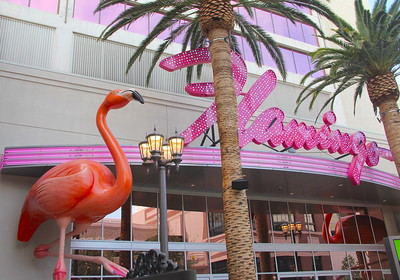
Caesars Still Yet to Sell Strip Asset, Including Flamingo

For months now, speculation has swirled regarding Caesars Entertainment and its quest to sell one of its Las Vegas Strip holdings—many have posited, by process of elimination, that it is the Flamingo on the auction block, but progress appears to be stalling as the third quarter of 2022 comes to a close.

Caesars had entered into a previous agreement in 2019 with VICI Properties, a real estate investment trust (REIT), in which VICI acquired the land and assets to three Harrah’s casinos, as well as the rights of first refusal for Caesars’ Strip properties, those being the Flamingo, Paris Las Vegas, Bally’s Las Vegas and Planet Hollywood.

During an earnings call in August, Caesars CEO Tom Reeg told investors, “ we have an ongoing sales process for a Strip asset that’s governed by the VICI agreements and ends about another month to run.” Now that that timeline seems to have expired, some sort of extension is expected to be announced.

The company has never confirmed that it is actively shopping the Flamingo, but reports first surfaced around six months ago that the operator is seeking around $1 billion for the iconic Las Vegas destination. In addition, Caesars has continued to make investments in the other properties listed, whereas the Flamingo, despite its well-known deficiencies, has remained largely untouched.

One could argue that these inherent renovation expenses are the driving force behind the lack of action, but Reeg said on the August call that there are “plenty of interested parties.”

Ongoing economic uncertainties certainly aren’t helping prospects, as rising interest rates will likely limit the number of potential buyers to those who can afford to pay cash.

In that case, private equity firms and large tribal operators stand out as the most likely candidates.

Richmond Casino Deal Voided for Urban One

Black-owned Maryland media company Urban One is out of the running, at least temporarily, for what was planned as the One Casino in South Richmond, Virginia, after a second referendum on the casino was pulled from this year’s November ballot.

Virginia’s casino law provides for five casinos, subject to voter approval. Urban One’s planned Richmond casino was narrowly defeated in a referendum vote in 2021. The contract signed by the company and the city states that the agreement “shall be void and of no force and/or effect if a majority of those voting do not approve” in the November 2022 referendum.

The cancellation also impacts Churchill Downs, which was going to operate the casino through a contract it acquired when it purchased Peninsula Pacific last year.

Richmond Circuit Court pulled a planned second referendum vote for November’s ballot after a request from the city saying it would be best to wait a year. Under the contract, no vote this year voids the contract.

The Richmond City Council could still select Urban One’s project a third time and send the matter to voters in November 2023. However, there is also a possibility that the Virginia General Assembly could select a competing city, Petersburg, to replace Richmond as the Central Virginia casino location.

Skill-Games Maker Sends Pennsylvania Lawmakers To Wyoming

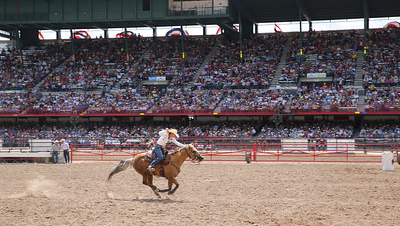
Georgia-based Pace-O-Matic recently treated several Pennsylvania lawmakers to an all-expenses-paid trip to Wyoming for Cheyenne Frontier Days, that state’s ultimate summer rodeo festival. The company makes slot-like skill games which, in Pennsylvania, are not legalized or regulated, but hoped to show how Wyoming does both.

Pennsylvania approved slot machines in 2004 and has expanded legalized gambling ever since−except for skill games, which continue to proliferate throughout the state although they are not authorized under the state’s gambling law and are not regulated by the Pennsylvania Gaming Control Board. Officials estimate more than 50,000 skill-game machines currently operate across Pennsylvania; they do not pay the 54 percent tax on revenue like other gambling devices at the state’s 16 casinos.

Pace-O-Matic and other manufacturers claim the games are not illegal since they require skill and physical ability for a successful outcome. They also claim they want state law to formally legitimize, regulate and tax their industry, even though they benefit financially from the legislature’s lack of action. But casinos and other gambling companies argue the state is saturated with gambling and added competition will cannibalize revenue from the existing market.

Also, the Pennsylvania Lottery, which sold $5 billion in scratch-off tickets between October 2017 and March 2022, said it lost $650 million due to skill-game gambling machines at lobby retailers.

Both sides have hired lawyers and lobbyists to advance their positions and have donated hundreds of thousands of dollars to key lawmakers’ campaigns. Last summer, several top Republican state senators returned donations they had received from Pace-O-Matic and other skill game makers, noting the games are unregulated.

Since early 2019, legislators and other elected officials have received contributions totaling about $1.2 million from political action committees associated with the skill-games industry, according to campaign finance reports. The donations include $28,500 to House Majority Leader Kerry Benninghoff, $8,350 to state Rep. Sue Helm, chairwoman of the House Gaming Oversight Committee, and $47,500 to state Rep. Greg Rothman, who all participated in the Wyoming junket. Pace-O-Matic’s guests received airfare, tickets to two concerts and two rodeos, meals and hotel rooms.

Benninghoff and Rothman reimbursed Pace-O-Matic for their expenses, including their hotel stay, about $1,700 not including airfare. Benninghoff spokesman Jason Gottesman said, “Rep. Benninghoff went on this trip to inform himself of how another state has dealt with a complex issue in a growing industry. He has not, nor will he not, allow those who provide amenities or campaign support to get in the way of him standing up for the best interests of Pennsylvania.”

Helm has not reimbursed Pace-O-Matic for the expedition. She said it was “not a lavish trip. They weren’t paying for first-class airfare.” Besides, she added, “I went more for the learning experience.”

Mike Barley, another Pace-O-Matic spokesperson, explained, “We invited Pennsylvania lawmakers from the House and Senate gaming committees and leadership to the event for the opportunity to meet with Wyoming legislators to learn how they regulated the skill game industry and how the system now successfully works in the state.”

Currently Pennsylvania has no ban against or limits on gifts lawmakers may accept from lobbyists, although gifts worth more than $250 and travel and hospitality valued at more than $650 must be reported. Recently, House leaders again did not bring up a bill to ban gifts, lessening its chances for a floor vote before the 2-year legislative session ends in November.

Different Fates for 2 Illinois Tracks, but Only Hawthorne Races

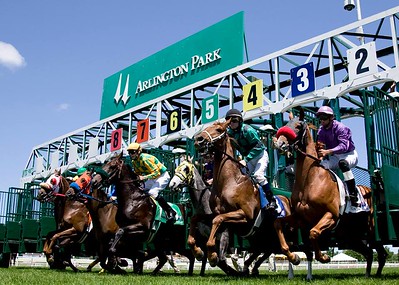
Arlington Park celebrated the dubious anniversary of its last day of racing.

The course is being liquidated before the Chicago Bears continue their due diligence on a pending $197.2 million purchase of the track, according to the Daily Herald.

That leaves only Hawthorne Race Course in Cicero, which received its 2023 race dates. Thoroughbreds entered the starting gate for their 2022 fall meet at Hawthorne on September 23. It’s a study in contrasts between the racetracks in the Northwest and Southwest suburbs.

Churchill Downs Inc., Arlington’s owner, calls the real estate too valuable for horse races, while the fourth-generation family owners of Hawthorne await a casino license to convert into a racino.

“We can’t wait,” Tim Carey, Hawthorne’s president, told the racing board at the dates hearing. “We fought for 12 years down in Springfield to get this legislation. We’ve done everything possible. The minute it was signed, we ran hard.”

The gaming board must give final approval for the project. Hawthorne is gathering the financial disclosures to regulators.

Racing Board Chairman Dan Beiser asked Carey if he’s comfortable with the financing that would make the project a reality.

“Absolutely, yes,” Carey said.

The expansion and renovation call for slot machines and table games, dining areas, a multilevel parking garage and upgraded wagering facilities. A temporary sportsbook, operated in partnership with PointsBet, has already been installed.

The project would involve 1,200 construction jobs, Carey said.

Meantime, thoroughbred racing will run from March 4 through Labor Day.

“Right now, when you look over there every day, there’s not a lot of optimism,” said David McCaffrey, the Illinois Thoroughbred Horsemen’s Association executive director. “If that project is going and you see progress, I think that that’s going to mean a lot and it’s going to allow people to invest in their stables.”

Arlington’s closure meant that thoroughbreds shared time with harness owners and trainers.

Harness had the track in January, February and March; thoroughbreds started in April, May and June; trotters returned in July, August and early September; and thoroughbreds just resumed.

Next year harness racing will begin at the state fairgrounds in Springfield June 12 to August 31, then come to Hawthorne in September.

“We’re in difficult times. We all realize that and we’re trying to do the best we can,” said Chris Block, president of the thoroughbred horsemen’s group. “The schedule we came up with was what we thought was the best for our horsemen and for the industry.”

It should take 14 months to build the racino, with construction set to begin in December.

Newburgh to Host New York’s Newest Casino

New York state’s newest casino, Resorts World Hudson Valley, will open in about three months in the Newburgh Mall, spreading over a couple of acres where a Bon Ton department store once operated. It will occupy about a quarter of the total mall space.

The $50 million project, which began nine months ago, will have 1,200 slots, including 82 that are unmanned imitations of craps, roulette and blackjack. It will include slots previously used at Monticello Raceway.

It will operate 20 hours a day. The property represents the third Resorts World casino in the state operated by Genting America.

The developer and mall owners hope the 90,000 square-foot casino will help revive the moribund, 40-year-old mall. It is a satellite of the $1 billion Resorts World Catskills casino. Owners hope it will improve revenue for that four-year-old property, whose profits have been disappointing so far. The project was sold as a way to revive the old Borscht Belt that was central to the Catskills for decades.

With a precise opening date not yet set, nearly all the machines are wired with dozens of miles of cable. However, construction is still lagging due to supply chain issues. Nevertheless, it is expected to open by the end of 2022.

A mobile sportsbook powered by Resorts WorldBet will be anchored by a large octagonal bar with eight overhead TVs carrying sports programming.

Meghan Taylor, vice president of government affairs and public relations for Genting Americas, told the Times News-Herald: “What we’re really trying to go for here is more of a locals hangout, almost like a Cheers vibe.” She added, “It’s a convenience play for those that are interested in gaming, but also a really cool and inviting environment for folks to just come and have a drink, relax, catch up with friends.”

The operator has held three job fairs so far and plans to hold others in October. Genting has agreed to pay the city $3 million to host the casino, including $500,000 to supplement the city’s first responders. The city plans to use some of those funds to hire two additional police officers.

The city’s government agencies, including its schools, could also realize a windfall in property taxes resulting from the increased value of the mall.

When it comes to casino competition, however, the Empire State is a target rich environment, with three gaming licenses pending in New York City and reported bids for Queens and Manhattan.

Developer Proposes New Casino in New Hampshire

A former New Hampshire lawmaker and Concord businessman, Andy Sanborn, is proposing to build a new, 43,000 square-foot casino and entertainment center on Concord’s east side.

The facility would include 24,000 square feet of gaming with 634 seats, 8,500 square feet of dining and a brewpub with a 150-patron capacity. Sanborn, a former state senator, made a presentation September 22 to the city’s planning board. He promised the city 250 jobs and more charitable contributions, according to the Concord Monitor.

Eventually he wants to add a hotel and an entertainment center. Sanborn is the owner of the Draft Sports Bar & Grill and the Concord Casino. In the Granite State, 35 percent of gross revenue from casinos go back to charity.

Sanborn added, “The way that New Hampshire has established the ability to help us raise money for charitable causes is really, really cool and we are just getting great satisfaction out of doing it.” Sanborn said Thursday. “We are traditional New Hampshire Yankee people who love everything that makes New Hampshire, New Hampshire. We want to pay homage to who we are as a people, and this is a way to aesthetically celebrate that.”

The project designer estimates that the proposed casino “would become the largest fundraiser for local charitable organizations in the county.”

Sanborn said he would increase the number of charities receiving contributions from his properties from 36 to 72. They include such things as Little League, veteran services, domestic violence shelters, homelessness and addiction services.

He said the facility would attract tourists, adding, “People won’t have to go to their local government body for a handout as much because this will truly provide services.”

Sanborn will formally present the plans for phase one, the casino and restaurant in October. Phase two would be the event center, and hotel. He is still looking for a location on the east side of the city.

Board members had some suggestions for Sanborn. One suggested that he use an already developed space, like an existing vacant mall—rather than “virgin” land. In general, though, they liked the proposal.

Las Vegas City Council Approves Marijuana Lounges

On September 21, the Las Vegas City Council (LVCC) voted 5-1 in favor of allowing marijuana consumption lounges in select areas of the city as well as unincorporated Clark County—surrounding areas such North Las Vegas, Henderson, Mesquite and Boulder City opted out of such businesses.

The city did not respond to an earlier letter from the Nevada Cannabis Compliance Board (NCCB), and therefore was automatically enrolled in the licensing process. However, the LVCC had the opportunity to pull out at the time of the vote and did not, voting nearly unanimously to move forward.

The lounges, once licensed and opened, will operate in much the same way as bars and taverns, except no alcohol sales will be permitted, and only existing cannabis dispensaries will be eligible for licensure—no licenses will be given to gaming establishments.

Nevada voters first legalized recreational marijuana use back in 2016, but the new lounges will be the first locations where individuals can legally smoke outside of private property. Since legalization, multiple officials have cited concerns about the fact that the tens of millions of tourists who come to the city every year have to indulge in parking lots, public streets and hotel rooms.

The lone detractor on the vote was Councilwoman Victoria Seaman, who argued that a better course of action would be to permit Clark County lounges first as a “trial and error” period before bringing them to Las Vegas. However, others were hesitant to go that route, given the fact that the second round of licensing would instead fall in the hands of state officials, which would make future passage for Las Vegas far from certain.

In all, a total of 20 licenses will be distributed throughout the state, and half of those have been reserved for communities who have been “adversely affected” by previous marijuana laws before legalization.

Now that the lounges have been approved, the next step for lawmakers will be to iron out regulations that were set forth in previous ordinances, including language in the Social Use Venue ordinance from 2019 as well as the 2021 state law that opened the possibility for such venues in the first place. Municipalities have the power to strengthen any state law regarding the lounges but may not weaken them.

As of now, the LVCC has not set any timetable for discussing and finalizing these regulations, but the NCCB has already announced that it would open a 10-day state license application window sometime in October.

Once applicants enter the state process, they will designate the jurisdiction they wish to operate in—which cannot be changed once selected—before entering that jurisdiction’s protocol. The city of Las Vegas expects to open its process in the first quarter of 2023.

Although the city technically had the ability to opt out, it probably would have created legal snafus, because the majority of state applicants will likely indicate Las Vegas as its preferred jurisdiction. Las Vegas City Manager Jorge Cervantes told the Las Vegas Review-Journal before the vote that the city was “already in, so it’ll be hard to get out.”

That said, most council members viewed the lounges as just another way to drive business in the area. Councilwoman Olivia Diaz told the Review-Journal that she was not in love with the premise, but voted in favor because of “business opportunity that consumption lounges will bring, and also some relief of issues we’re currently hearing about a lot because we’re not offering a place for folks to actually consume when they buy.”

Wynn Resorts Battles New Lawsuit from Massage Therapist

Wynn Resorts Ltd. and its attorneys are grappling with a new lawsuit that was filed on September 1 in Clark County District Court by a female former Wynn employee who is alleging that the company has continued to foster a hostile work environment for several years after former CEO Steve Wynn reportedly forced her to act as a “sexual servant” for another VIP guest.

Brenna Schrader, a former massage therapist for Wynn Resorts, is represented by attorneys Tracy Eglet, Robert Eglet and Daniele Miller. Wynn has requested that District Court Judge Joanna Kishner dismiss the suit, arguing that Schrader’s claims were already dismissed by Nevada courts in a similar suit from 2019.

A hearing to consider the motion is scheduled for October 25.

The company’s 22-page motion to dismiss reads in part: “Plaintiff’s complaint reasserts a meritless Nevada (Racketeer Influenced and Corrupt Organizations) claim that was already rejected by the U.S. District for the District of Nevada. Rather than seek to amend her complaint or appeal that dismissal, plaintiff refiled … in this court and then apparently sought out the press to garner attention for her latest filing, as if it contained new claims or recent allegations. It does not.”

Schrader’s latest suit includes new allegations from her previous complaint in 2019—the masseuse claims that Steve Wynn “trafficked” her to a high-profile guest, who then sexually assaulted her on multiple occasions from 2016 to 2018. Additionally, Schrader also accused the company of covering up other sexual assault complaints from female employees for over 30 years.

Representatives from Wynn Resorts released the following statement on the new lawsuit: “Wynn Resorts was recently made aware of a lawsuit filed by Ms. Schrader against the company and several former employees. The lawsuit largely mirrors allegations and claims Ms. Schrader made in a prior lawsuit against the company and same former employees more than three years ago, which has been largely dismissed by a federal district court. Given the current status of that prior lawsuit, and the false and outdated allegations contained in the new lawsuit, the company elected to respond immediately by seeking dismissal. Wynn Resorts will defend itself in this and any action that attempts to cast the company today with a light of the past.”

The casino magnate has been embroiled in allegations of sexual misconduct for several years now, even after he resigned and relinquished his gaming licenses in 2018. Wynn has never been charged criminally, and has maintained his innocence from the outset.

Wynn Resorts, on the other hand, has had to face numerous consequences on the mogul’s behalf, including massive fines from regulators in both Nevada and Massachusetts. Since its founder’s departure, the company has “made tremendous strides in reforming the organization through a reconstituted board of directors, refreshed executive team, new human resources policies and training and a world-class corporate governance program.”

New policies for reporting internal incidents as well as increased sexual harassment training have also been implemented.

Churchill Downs Agrees to Acquire Ellis Park

Churchill Downs Incorporated (CDI) announced that it has signed a definitive agreement to acquire Ellis Park Racing & Gaming in Henderson, Kentucky, from Enchantment Holdings, LLC, an affiliate of Laguna Development Corporation, for total consideration of $79 million in cash, subject to certain working capital and other purchase price adjustments.

CDI will also assume Ellis Park’s opportunity to construct a track extension facility in Owensboro, Kentucky.

“This is an exciting announcement for the horse racing industry, the cities of Henderson and Owensboro, and the entire Commonwealth of Kentucky,” said Kentucky Governor Andy Beshear. “Churchill Downs has proven it has the experience, resources, and desire to reinvigorate Ellis Park into a premier racing destination and provide unmatched gaming entertainment.”

Ellis Park, located north of the Ohio River and just south of Evansville, Indiana, celebrated 100 years of racing this year. In addition to being recognized as the historic home of summer thoroughbred racing in Kentucky, Ellis Park also features a gaming facility venue with approximately 300 historical horse racing machines.

“We are very enthused to welcome Ellis Park to the Churchill Downs racing family,” said Bill Carstanjen, chief executive officer of CDI. “Our team is committed to building a summer meet at the ‘Pea Patch’ that keeps more Kentucky-bred horses and Kentucky-based trainers in their home state while attracting top horse racing talent from across the country to the Bluegrass State each July and August.

“This investment will ensure our Kentucky horsemen and women have the best year-round racing circuit in the country and create jobs throughout the region and state. Churchill Downs is a great corporate citizen and an important part of Team Kentucky.”

The closing of the transaction is contingent upon approval by the Kentucky Horse Racing Commission. If change of control is approved, the parties expect to close the transaction shortly thereafter.

CDI has commenced planning to make both critical investments in the Ellis Park racing infrastructure and to construct Owensboro Racing & Gaming, a track extension and entertainment venue at Owensboro’s Towne Square Mall that will feature 600 historical horse racing (HHR) machines, a simulcast wagering center, and multiple food and beverage offerings. Over the next year, CDI expects its total investment in Henderson and Daviess Counties to be approximately $75 million in addition to the purchase price.

“The opportunity to bring Churchill Downs to Owensboro is particularly significant to us,” said Jason Sauer, senior vice president of corporate development for CDI.

“We are eager to start the work to elevate Ellis Park’s reputation as a summer destination for thoroughbred racing while delivering a premier gaming and entertainment experience to Daviess County. We look forward to sharing more exciting details about our plans in the coming days.”

CDI will acquire all of the outstanding equity of Ellis Entertainment, LLC, the parent company of Ellis Park. For tax purposes, the transaction will be treated as an asset purchase, allowing CDI incremental tax benefits that will provide additional cash flow and will enhance the overall economics of the transaction.

Groundbreaking Set For Illinois Hard Rock Casino

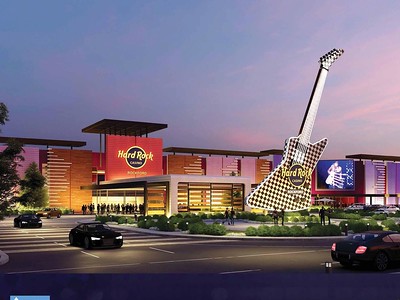
In Illinois, Hard Rock Casino Rockford officials will host a groundbreaking ceremony at their permanent casino resort located at 7801 E. State Street, near the Interstate 90 exit. An invitation-only event was held previously.

The temporary Rockford Casino, A Hard Rock Opening Act debuted 10 months earlier. Rick Nielsen, guitarist for the rock group Cheap Trick and a Rockford native, will attend the event.

Jon Lucas, chief operating officer at Hard Rock International, said, “Our opening act in Rockford has been fantastic, but I know the entire Rockford community is just as excited as we are for the main show. From the very start, Rockford’s energy has surpassed expectations and it’s no secret they are really ready to rock.”

The facility will include a 65,000-square-foot Hard Rock Casino, Hard Rock Café and 1,600-seat Hard Rock Live venue. A 250-room hotel is planned, but may be built in the second construction phase.

Meanwhile, Hard Rock Casino Rockford announced a partnership with the Coronado Performing Arts Center, including the $100,000 renovation of opera boxes in the balcony. President Geno Iafrate said, “The first time I walked into the Coronado, I was in awe. The rich history, beauty and quality of entertainment at the venue was an instant and natural connection for the Hard Rock.”

In exchange for its sponsorship, Iafrate said Hard Rock will receive a guaranteed block of seats that offer some of the best views of the stage. He said the seats will be used for business relationship purposes and also be given as prizes for members of Hard Rock’s Unity promotional program.

In addition, Hard Rock will receive exclusive use of the recently restored Club 27 hospitality suite, previously used as the owner’s apartment, and rebranded for the year 1927, the year Coronado opened. Hard Rock will use the suite to entertain guests before and after performances. The Rockford Symphony Orchestra and the Friends of the Coronado also will have access to Club 27 to entertain major donors, Iafrate said.

Hard Rock Applies for Illinois Licenses, Joins Crowded Field

Hard Rock is the latest operator seeking a sports wagering license in Illinois. The Florida-based company submitted an application for both a retail and a mobile license with the Illinois Gaming Board (IGB).

The local ownership group in Rockford submitted the brick-and-mortar application; the company has operated a temporary casino since November and just broke ground on a permanent gaming hall not far from the Wisconsin border, according to Sports Handle.

Seminole Hard Rock Digital filed a Management Services Provider application for a mobile license. Some seven operators await a decision on similar applications. Unibet has been in the queue the longest, its application dating back to November 2020.

Circa and Bally Bet submitted their applications in May and September, respectively. Both will be tethered to land-based casinos. Tekkorp Digital Application Corp., doing business as Caliente Interactive, was the only applicant the IGB moved forward for an online-only license at the end of April.

BetMGM is the most recent mobile company to launch in Illinois, back in March. Barstool Sportsbook began taking wagers in Illinois, launching in March, and Barstool Sportsbook and FanDuel Sportsbook & Horse Racing are also underway.

Hard Rock hopes to open its casino in November 2023, to beat out a tribal casino opening 25 miles away in Beloit, Wisconsin.

Depending on the IGB’s turnaround time on the Management Services Provider application, Hard Rock could be the closest retail option for central Wisconsin bettors, with the state capital of Madison approximately 55 miles from the Illinois state line. Circa, which is tethered to the Full House Resorts casino in Waukegan in the northeastern part of Illinois, has the potential to draw from the Kenosha, Racine, and Milwaukee markets.

Wisconsin currently has sports wagering available only through tribal gaming on-site at Oneida Casino in Green Bay and St. Croix Casino in Danbury in the northwest part of the state.

Retail wagering in Illinois has averaged slightly more than $30 million in monthly betting volume in 2022, highlighted by a $43.7 million handle in March. Rivers Casino in Des Plaines just outside of Chicago has attracted the most in-person betting, with $88.5 million in handle which makes up 41.7 percent of the state’s total this year.

In addition to the casinos and mobile sportsbooks, Betfair, FanDuel’s parent, applied for a sports facility sports wagering license for the United Center in Chicago.

There is no time frame for vetting and approval by the IGB, which means the two-story lounge that has been under construction since spring at the arena—home of the NBA’s Bulls and NHL’s Blackhawks—will likely open during the upcoming season without betting kiosks or windows and operate only during games.

If approved, the United Center would become the third arena in the U.S. to house sportsbooks, along with Capital One Arena in Washington, D.C., and the Footprint Center in Arizona. The latter, home to the Phoenix Suns and Mercury, is also run by FanDuel.

Though the United Center was eligible at the state level to be a license designee with the 2019 gaming expansion bill that legalized sports betting in Illinois, being allowed to offer retail wagering in the city required the Chicago City Council to pass an ordinance in December that lifted a home-rule ban on such activities. That ordinance included a 2 percent tax on revenue from wagers placed at those locations, in addition to the 15 percent collected by the state and 2 percent for Cook County on all wagers placed within the county limits.

Construction is advancing at Wrigley Field, where DraftKings will have a two-story sportsbook expected to accept wagers on opening day next season.

There are three other venues in the city eligible for sports facility sports wagering licenses: Soldier Field, Guaranteed Rate Field, and Wintrust Arena. Wintrust is home to the WNBA’s Chicago Sky.

In related Illinois news, Covid-19 may have put a damper on sports betting, but for the last two years, the state has enjoyed a steady buildup of revenue in its coffers.                                                                          

“I’m very happy that we have additional money, that this is on the positive side of the equation,” said Illinois State Comptroller Susana Mendoza. “But it’s not anything that I look at as something we could build or forecast our bill payment cycle on.”

The money raised to date—$140 million since March 2020—goes to infrastructure repair and replacement, according to NPR Illinois.

Here’s the breakdown:

Sports betting had just become legal in Illinois on March 9, 2020 when the state’s first legal wager was placed in person at Rivers Casino in Des Plaines.

Covid-19 canceled entire seasons and the bets that went with them. There was enough sports activity to produce a handle of $9 million, from which the state earned $400,000.

With restrictions easing in fiscal year 2021, casinos added in-person options, as bettors forked over $5.1 billion, with $57 million going to the state.                                          

2022 saw the gains continue. The handle topped $8.5 billion with $92 million headed for the state.                                                                                        

It can only get better, said the state’s Commission on Government Forecasting and Accountability which noted licenses still await takers, and revenue streams from operators in major sporting venues also to be issued.

Nevada Fines William Hill $100,000 For Sports Betting Failures

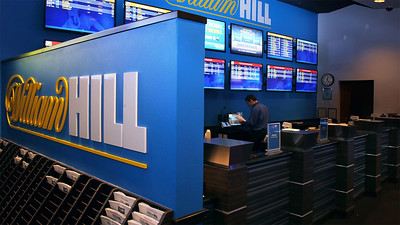
The Nevada Gaming Commission slapped a $100,000 fine against William Hill, owned by Caesars Entertainment, for a series of infractions that resulted in erroneous duplicate wagers. While some bettors won twice on a single bet, most lost twice.

The errors came from a system flaw with the sportsbook’s sports and cashless wagering system. The mistake on the platform went on for seven years.

William Hill settled with the Nevada Gaming Control Board (NGCB) on August 17, which then led to the fine.

During the time frame, the flaw processed more than 50,000 incorrect duplicate wagers, and resulted in a subsequent loss of $1.3 million.

An internal investigation by William Hill found 42,000 incorrect duplicate losing wagers in Nevada through December 2021, as well as 13,000 duplicate winning bets, the latter worth about $2 million.

In outlining the underlying causes of the system failures, the settlement represents a number of areas Caesars—the owner of William Hill—discovered to be insufficient, said Jeffrey Hendricks, who serves as assistant general counsel of regulatory and compliance at Caesars Entertainment.

“That is not the standard we set operationally. That is not the standard we set from a compliance perspective,” Hendricks told the commission.

Sometime in June 2021, repeated customer complaints to William Hill triggered a need to remove the flaw in the CBS wagering system.

The company discovered the duplicate bets were most likely to occur at periods of peak traffic.

The issue arose when a customer attempted to place a bet on his mobile app, then subsequently placed an identical wager on the same event, with the same odds, for the same dollar amount within a period of 60 seconds from the original wager, William Hill’s internal investigation determined.

The theory, according to the company was that the system came under a heavy load, resulting in wagers backing up.

If a bettor placed a $5 wager on a given event, the flaw resulted in a second identical bet of $5 to be deducted from the customer’s account, according to Hendricks. William Hill attempted to refund customers who inadvertently placed duplicate losing bets in full but has not been able to locate all of the customers, Hendricks added. William Hill admitted they don’t know how many losing bets were returned.

William Hill told Commissioner Ogbonna Brown a system patch attempted to correct the deficiency, but the gaming board was not informed for three months. Regulations require notification within three days.

Last month, Caesars Entertainment Executive Vice President Eric Hession said the company will convert all of Caesars’ branded apps and sportsbooks to the company’s Liberty tech stack by the end of the year.

Commissioner Steven B. Cohen criticized the respondents for a failure to report the matter in an expeditious fashion on numerous occasions.

BetMGM Takes Over NBC Sports Partnership for NFL Season

BetMGM has partnered with NBC Sports for the 2022 NFL season. The deal highlights weekly integrations on Football Night in America (FNIA) and content across other NBC platforms. The arrangement became available when PointsBet opted out, according to CDC Gaming Reports.

“It is a tremendous opportunity to partner with the talented team at NBC Sports and have the ability to engage with football fans nationwide,” said BetMGM Chief Revenue Officer Matt Prevost in a statement. “We look forward to delivering NBC viewers our BetMGM trading team insights as well as entertaining segments.”

BetMGM will be featured on FNIA, including a weekly segment hosted by former NFL quarterback Chris Simms and sports betting and fantasy pioneer Matthew Berry. The segment will focus on storylines and betting odds for the upcoming game on NBC, Peacock and Universo.

The post-game show—Peacock Sunday Night Football Final—will include BetMGM betting lines.

“As we continue to innovate within the rapidly growing sports-betting marketplace, this new partnership with BetMGM will allow NBC Sports to engage more fans across multiple platforms,” said NBC Sports Next & Fandango President Will McIntosh in a statement.

Additional high points feature:

  • Full BetMGM odds and lines in all Berry-hosted content across various NBC Sports platforms, including Fantasy Football Happy Hour and Fantasy Football Pregame.
  • Additional insights on Berry’s social media platforms throughout the NFL season and providing BetMGM’s platforms with access to Berry for curated boosts.
  • Co-branded content hosted by Chris Simms, including on the Chris Simms Unbuttoned podcast, as well on his social platforms throughout the 2022 NFL season and through the 2023 NFL Draft.

Complementing BetMGM programming, NBC Sports EDGE, a fantasy sports website, will provide content highlighting players and storylines impacting the football season on Peacock and across NBC Sports digital platforms.

Vermont Sports Betting Committee Represents a First Step Forward

No one wants to be the last kid on the block with the latest toy. But the state of Vermont finds itself in that position. With legal sports betting in surrounding jurisdictions, the state is reluctantly taking steps to join the club.

The reasons are the same as other reluctant locales—Vermonters are already betting in the neighboring states, building up their coffers. Maine and Massachusetts took steps this past legislative session to legalize sports betting, New Hampshire and Rhode Island and Connecticut are on board.

Thus, Vermont now has a legislative committee—the General Assembly’s Sports Betting Study Committee—which spent time September 27 hearing from government bureaucrats, a sportsbook operator, and a sports bettor on the subject of retail and online sports betting.

Seems like Vermont officials want some form of legal betting, instead of should-we-or-shouldn’t-we.

“We’ve already said we don’t want to be a prohibitionist market,” committee chair Wendy Knight said during a meeting.

The committee will issue a report before taking concrete steps.

A DraftKings government affairs manager appeared before the committee, As did representatives from the state attorney general’s office and the office of legislative counsel.

“As a player, it would be nice to have the convenience to be able to take advantage of the DraftKings app,” sports bettor John Herko told committee members.

FC Cincinnati Sees Sports Betting as Way to Expand Fan Base

The Ohio Casino Control Commission awarded licenses to professional sports teams throughout the state, including to FC Cincinnati, the city’s entry in MLS.

Sports betting could begin as early as January 1 in the state, and the team has announced a partnership with SuperBook Sports to operate a mobile app, Co-CEO Jeff Berding said.

The Cincinnati Bengals announced a partnership with bookmaker Betfred, making them the team’s official sportsbook.

FC Cincinnati chose SuperBook Sport because the bookmaker is headquartered in America, and has a user-friendly reputation, Berding said. Berding was one of the strongest advocates for Ohio pro teams to receive licenses, a marriage that has worked well in Europe, where he spent time.

Berding said the intent is to drive fan-friendly engagement.

“It’s a big part of the soccer ecosystem in Europe. It adds a lot of excitement that people can enjoy in how they consume sports,” Berding told The Cincinnati Enquirer September 21. “And what I understood from my time in Europe is it really adds a level of engagement. In this country, in Major League Soccer, we’re still building engagement. We’re still looking for ways to engage sports fans who may not be soccer fans and my thought was sports betting could be a vehicle.”

The FC Cincinnati phone app allows users to wager within Ohio’s borders. And Ohioans won’t have to drive to Indiana to bet in a retail location.

FC Cincinnati also expects to develop a sports betting bar north of the stadium, Berding said.

Berding was quick to call upon the league’s policies and laws related to gambling.

“I am personally a believer that sports betting … has shown that it’s possible to police it effectively,” Berding said. “People violate the law, and when they do there are enormous consequences, but at the end of the day it’s something fans desire. They’re doing it, whether they’re driving out of state or doing it illicitly. I’d rather put the spotlight of sunshine on it to make it legal and put it out in the open, it’s regulated, there’s very strict policies, there’s very tough consequences and I think at the end of the day, for FC Cincinnati’s part, we have the leadership on the soccer side.”

Nevada Moving Closer to Regulating Esports Betting

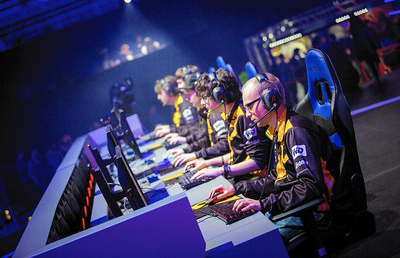
On September 21, Nevada’s Esports Technical Advisory Committee (ETAC) met with the state attorney general’s office to begin the process of drafting regulations pertaining to wagering on esports events, so that sportsbooks can begin hosting championships and tournaments starting next year.

The ETAC will now convene again October 24 to put together a formal presentation for review by the Nevada Gaming Control Board and Nevada Gaming Commission, the state’s regulatory bodies.

One of the chief concerns that the ETAC is trying to alleviate is the integrity of the competitions—currently, sportsbooks in the state must apply for and receive special approval in order to take action on esports events, which is a hassle they’d like to avoid in the future.

If approved, the new regulations would instantly make Las Vegas the leading esports betting market in the country, and the city would almost surely see an increase in tournaments and conventions.

In response to the ETAC’s requests, Senior Deputy Attorney General John Michela confirmed, “the overarching intent of the proposed changes will allow licensed books to accept wagers on esports events in the manner of traditional sporting events.”

Sportsbooks would be able to freely offer bets on esports competitions under new regulations, but they would also have to take on additional due diligence obligations related to competition integrity and security.

Michela added that books “would also be required to notify the Gaming Control Board on a quarterly basis on the esports leagues on which the books accept wagers,” and the chair of the Nevada Gaming Control Board would also have the authority to shut down wagering if issues develop during the course of a league.

ETAC member Jud Hannigan said that the proposed regulations “represent a strong path” towards a thriving esports betting market, but pointed out that a “significant portion of overall handle on esports wagering across the globe comes from individual events and not necessarily part of a common definition of a league structure,” as with other sports.

Michela said that the responsibility of vetting esports organizations and tournament organizers would largely fall on sportsbook operators. However, when asked whether books would be able to freely take action on one-off events that have passed due diligence, he asserted that “under the current language, it would require an esports league.”

Hannigan then suggested that a dual framework may need to be drafted that sets forth guidelines for both leagues and one-off events so that everything is covered under one umbrella. Michela agreed that this was probably the best course of action.