Author: Casino Connection Staff

Oklahoma’s Stitt Credits Kansas for Sports Betting Push

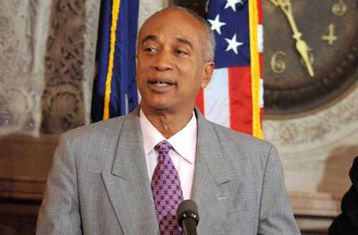
If Oklahoma legalizes sports betting this year, Kansas deserves some of the praise, according to Governor Kevin Stitt.

“We’ve seen it in New Jersey and in many other states, and now it’s right on our doorstep with Kansas doing it,” Stitt told FOX23 News.

However, there are some safeguards he wants put in place before his signature goes on the bill, like proper auditing of the accounting and proper benefits to the residents of Oklahoma. Cutting taxes, education, and economic growth, for example.

“We’ve been behind the scenes looking into how we can do that in Oklahoma,” Stitt said. “We already have casino gambling in Oklahoma. We just need to make sure we do it the right way and responsibly.”

“As long as it’s 100-percent fair and transparent to Oklahomans, then I’m absolutely open to it,” he added.

Stitt attempted to push through sports betting in 2020 when he signed four new tribal compacts with tribes without casinos, but the courts struck down the compacts. He denied the effort was a way of circumventing the legislature, but rather a way for the tribes to avoid having to renegotiate sports betting if the state does legalize it.

Legalization now requires amending tribal compacts.

“Let’s do it the right way. Let’s get all the stakeholders at the table. Let’s get OU’s athletics director and OSU’s. Let’s get the Thunder, and let’s get everybody at the table and figure out what does it look like for Oklahoma to have a sportsbook because it would open up a lot of things,” he told FOX23. “People are driving across the border today. It’s a lot of tax revenue. Whether we put it into education or economic development, I think that’s something Oklahomans would like to see.”

Rep. Ken Luttrell introduced House Bill 1027, which would authorize tribes to offer sports betting in casinos and on mobile devices. Luttrell proposed a similar bill earlier this year, and it failed to get a vote on the floor.

The Oxford Economics Group estimated that legal betting would generate $240 million in new revenue for the state.

Sports betting could fundamentally change the way Oklahoma State fans interact with the university’s athletics, according to the Stillwater News Press.

In September 2020, the University of Colorado announced a corporate sponsorship with PointsBet, the first time an NCAA program partnered with a sports betting operator. The university said the multimillion-dollar deal would provide a financial boost during a time when the athletic department’s budget was stressed.

Caesars Sportsbook offered Michigan State $8.4 million over five years to promote gambling at the university. Oklahoma State, with more than 250,000 alumni and 20,000 students, is an easy target audience, according to Yogonet Gaming News.

Other schools have used their gambling deals to increase revenue, hire big-name coaches and improve facilities. TCU used its partnership with WinStar World Casino and Resort to build luxury suites at Amon G. Carter Stadium, and sports betting isn’t even legal in Texas yet.

“I would be happy to facilitate that, get everybody to the table, and have some good open dialogue and discussion about this. It’s not a make-or-break for the tribal entities,” Luttrell said last year, as reported by KOCO 5 News.

For its part, the Oklahoma Indian Gaming Association, which represents several large tribes, previously said it’s a topic they’re closely watching.

“Our members are very interested in the subject,” Matthew Morgan, chairman of the Oklahoma Indian Gaming Association, said in January last year. “They engage quite regularly within their own communities and their local representatives and state senators.”

According to Stitt, sports betting is needed in Oklahoma considering an NBA team plays not too far from the state Capitol.

“We need that for the Thunder. That’s very important for the Thunder. It’s very important for Oklahomans,” Stitt said. “We already have casino gambling in Oklahoma. So, we need to do that the right way. We need to do it responsibly.”

Churchill to Acquire Exacta Systems

Churchill Downs Incorporated (CDI) and Exacta Systems, one of the top companies producing a platform for porting slot games over to the historical horse racing (HHR) format, announced that they have entered into a definitive agreement under which CDI will acquire all outstanding equity interests of Exacta Systems for a total consideration of $250 million in cash.

Subject to certain working capital and other purchase price adjustments, the transaction is set to provide CDI the opportunity to realize synergies related to the company’s recent acquisition of Colonial Downs Racetrack and Rosie’s Gaming Emporium HHR facilities in Virginia.

Exacta’s HHR platform has for years competed with the platform created by Ainsworth Game Technology in partnership with CDI. Most of the top slot manufacturers utilized the Ainsworth platform to release their games in HHR versions. Ainsworth has been at the center of HHR expansion in Kentucky, where more than 2,000 Ainsworth games—on Ainsworth cabinets—are operating across seven venues.

Ainsworth’s technology to present historical racing data as slot machine results in popular themes led Ainsworth’s competitors to fast-track their own entries into the burgeoning HHR market by partnering with Ainsworth to port their games to HHR on Ainsworth’s platform. Today, companies including IGT, Aristocrat, Light & Wonder and Konami are introducing HHR versions of their most popular slot titles via the Ainsworth technology.

Some other slot suppliers have opted for the Exacta platform to introduce its games to the HHR market. The Exacta Connect platform is used by AGS, Aurify, Bluberi, Everi, Gaming Arts, IGT, Incredible Technologies, Konami, Light & Wonder and Sega Sammy, with many of those slot suppliers opting to partner both with Ainsworth and Exacta.

Exacta’s acquisition by CDI completes the variety of games the operator is able to offer in Kentucky, where Churchill offers thousands of HHR units at its tracks.

“For nearly a decade, Exacta has been a creative force supporting the growth of historical horse racing in the U.S.,” said Bill Carstanjen, chief executive officer of CDI. “We look forward to expanding Exacta’s national footprint and further diversifying the game offerings available to players at HRM (historical racing machine) facilities around the country.”

“We are very excited about this partnership,” said Jeremy Stein, president and chief executive officer of Exacta Systems. “This not only aligns our highly flexible HHR technology with a tremendously successful horse racing and gaming company, but also provides Exacta with new opportunities for growth, all while continuing to passionately support our customers.

“Exacta is known for its system flexibility and first-class customer service. This partnership would not have been possible without the amazing and talented team we have assembled since our humble beginnings in 2012. The progress we have made is something we are very proud of, and we are excited about what we can achieve in the future with our new partnership with CDI.”

Exacta Systems is the only platform supplier dedicated solely to the HHR market. Founded to address what had become a rapidly growing market, Exacta currently has 3,800 HHR machines active in three states connected to its Exacta Connect system.

HHR was developed as an alternative way to offer popular slot titles at venues in states like Kentucky, where traditional Class III slot machines remain illegal.

Eric Jackson, who was general manager of Arkansas’ Oaklawn Park racetrack, installed the first HHR machines, then known as “instant racing,” in 2000. The idea was to use data on past horse races—winners, odds, etc.—in a program that would let bettors wager on randomly chosen anonymous races, all on a slot-like cabinet. The first games included handicapping information on the historical races taken from the Daily Racing Form, and let players use that information to pick a horse.

The platform developed by Ainsworth and CDI perfected the presentation of that historical information as slot game results. HHR machines carrying popular slot themes have allowed tracks to raise purses and attract the quality of races that already were benefiting tracks in neighboring states where they were permitted to add Class III slots.
Minnesota Sportsbook Proponents Think 2023 Might Work

As 2023 unfolds in Minnesota, the question lingers: will the state enact sports betting legislation? It might be worth noting that the Democratic House passed a measure last year only, to see the GOP Senate stop the progress.

The Dems control both chambers this year, but that’s no guarantee of success.

“The fact that it has been occurring in other states gives it increased momentum in Minnesota,” Carleton College Political Analyst Steven Schier says of sports betting, which is now legal in 30 states. “I think sports betting becomes more possible…it’s also a revenue source for state government, something Democrats are always looking for.”

Outgoing Senator Karla Bigham, who has authored sports betting legislation, concurs that legalization will come in 2023.

“If I was betting that’s what I would bet on,” she told KSTP-TV December 28. “I believe that any agreement will be heavily geared toward the tribes, but with a partnership option for stakeholders outside the tribal lands and a mobile option.”

Stakeholders like race tracks and sports clubs.

Last year, the Senate pushed a bill to approve betting at tribal casinos and the two tracks in the state, but the Minnesota Indian Gaming Association opposed. The proposal died.

“There are huge opponents on both sides of the aisle to this topic and no matter who’s in charge that majority party has people opposed to it,” Bigham said.

Soft Launch Planned for Massachusetts Sports Betting

The Massachusetts Gaming Commission (MGC)has settled on a pair of late January dates for a soft launch for retail sports betting in the state’s three casinos and the green light to go for real one day later. The expected dates are January 30 and 31, which provides a number of days to wager before the Super Bowl.

The discussion came a few days after the commission completed sports betting licensure for Encore Boston Harbor, MGM Springfield, and Plainridge Park Casino. The first two received full licensure, which comes with a $5 million fee for each, according to Mass Live. Plainridge received a temp license for a year for $1 million, giving the casino the chance to clarify some concerns the commission had.

The dates are not set in stone. A lot depends on whether Gaming Labs International (GLI) finishes testing the equipment in time.

“There’s a lot of things happening simultaneously,” MGC Executive Director Karen Wells said.

But if GLI gives the all-clear on the software, she said, then commission staff can work through the final paperwork with the sports betting operators on January 27.

The other potential glitch involves Commissioner Nakisha Skinner, who has had a conflict with the opening dates for about a year. She suggested moving the date back one day.

“Is there any reason why we couldn’t do this, the verification on the 31st with a February 1 launch?” she said. “Because again, I did communicate with a couple of folks that I was not available on Monday the 30th, and so I would have at least liked to have a discussion in advance of this public discussion.”

The MGC will kick off a review of applications for Category 3 untethered sports betting licenses, aimed at businesses that want to offer online-only wagering not connected to a land-based property. The hearings on the untethered mobile applicants started on January 6, but it will not be until January 19- 20 that commissioners will make a final determination on awarding any of the applicants a license.

Six companies have applied to offer mobile sports betting not tied to a brick-and-mortar operation in Massachusetts, including FanDuel, Betr, Bally’s Interactive, DraftKings, PointsBet, and Betway. According to state law, regulators may award up to seven untethered licenses after a competitive review process, as reported by Mass Live.

A hearing on FanDuel is scheduled for January 9, BetR on January 10, DraftKings on January 11, Betway on January 13, and PointsBet on January 17.

“It’s important for us to reiterate that the launch by any operator is still strictly contingent on regulatory approval of operational readiness, and the operators must pass verification and testing processes, a rigorous testing process, before any bets on their platform can be placed,” Judd-Stein said.

Lawmaker: NY Sports Betting 51 Percent Tax Rate Likely to Stay

Those who were hoping New York’s 51 percent tax rate for sports betting would get reduced are probably in for some disappointment. New York state assemblyman Gary Pretlow told Legal Sports Report that the rate isn’t budging anytime soon.

Sports betting was legalized in the Empire State in 2022 and nine operators launched in January. In the first month of operation, the state saw a handle of $1.17 billion.

As of December 2022, sportsbook operators had pulled in $15.2 billion in wagers and the state saw revenues of $638.5 million.

Still, some would like to see the tax rate of 51 percent lowered. It is the highest rate in the country, passing second-place Pennsylvania, whose rate is 36 percent.

Pretlow tried to get a bill passed that would increase the number of operators in New York and lower the tax rate. The legislation did not pass, however.

“I tried to make it go away because I thought (the tax rate) was exorbitant,” Pretlow told LSR. “But the operators are doing it, so I’m not going to take from education for them to make more money. “So I’m pretty sure it will (stay).”

Not surprisingly, the nine sports book operators in New York are vehemently against the 51 percent tax rate. They agreed to it, though, to gain access to the lucrative New York market.

FanDuel’s CEO Peter Jackson and DraftKings’ CEO Jason Robins were both early critics of the tax rate, saying it was excessive. Other sportsbook executives have echoed their sentiments.

“Well, the tax rate is ridiculous,” Caesars CEO Tom Reed told LSR. “New York chose a big cut of a smaller pie than they could’ve had in sports betting. They’ll have another bite at that with iGaming. California would have the ability to choose a smaller cut of a much bigger pie. I think the state would end up better off.”

Pretlow said he remains confident he can get the tax rate lowered and said that he would try and reintroduce the legislation in the upcoming session.

NFL Hall of Fame Village Announces BetRivers Sportsbook Addition

Sports betting became legal in Ohio on January 1 and the NFL Hall of Fame in Canton is not missing out on the opportunity. The facility announced that it plans to open a BetRivers sportsbook in the newly announced HOF Village entertainment campus opening in the summer.

The 10,000-square-foot sportsbook is part of the $600 million project, which also includes a zipline and Ferris wheel-style ride, indoor water park, athletic fields, a sports dome for wrestling tournaments and a restaurant and brewpub that should open by the end of the month.

Michael Crawford, president and CEO of the Hall of Fame Resort and Entertainment Co., which is in charge of the project, told the crowd at the groundbreaking this will be a unique facility.

“This is going to be a one-of-a-kind retail sportsbook,” Crawford said. “Meaning an immersive environment with food and beverage and the ability to place a bet and a lot of technology surrounding that.”

Even before BetRivers opens, Crawford said the HOF Village will be taking advantage of sports betting. The complex has partnered with Betr, an online sports micro-betting app. The technology allows people to bet on specific plays during live football, baseball, and basketball. Bets were accepted by the start-up company on January 1.

For example, a bettor could wager on whether a touchdown is scored or a field goal made in football. In baseball, a bet could be made on whether a specific pitch is going to be a strike or a ball. In basketball, a wager can be placed on if a free throw would be made.

“In today’s world, technology plays a big part of how guests and fans sort of engage,” Crawford said. “So our sports betting partner with betr, (co-founders) Jake Paul and Joey Levy, (is) one of a kind again. The only micro-betting site out there, and I absolutely love it.”

Anne Graffice, executive vice president of public affairs for Hall of Fame Resort and Entertainment, told The Repository that sports gaming will be a large part of the village.

“That’s a pretty cool (project) for us and a wild opportunity for us to really have an impact in an industry that we really feel is going to be wildly successful,” Graffice said. “We have always been smart enough to diversify as a company. This isn’t our only egg in the basket.”

The exterior of BetRivers sportsbook is completed and the interior work has begun. Crawford said they are on target for a summer opening.

NY Jets Assistant Miles Austin Suspended One Year for Gambling

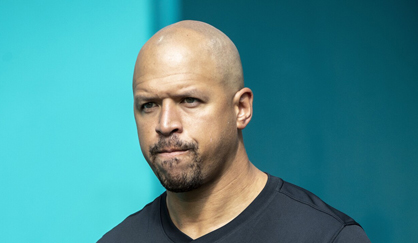
New York Jets wide receiver coach Miles Austin is facing a year-long suspension after it was discovered that he had violated the NFL’s rigid gambling policy. The NFL said Austin, 38, is appealing the suspension.

“The league will have no further comment until that appeal has been resolved,” the NFL’s statement said.

Austin, who is in his second season as a coach for the Jets, had been under investigation by the NFL for a lengthy period of time. Austin did not bet on NFL games, but apparently had made wagers on college football. He also allegedly made wagers at the team’s facility, which is also a violation of league policy.

Austin’s agent, William P. Deni Jr., put out a statement saying his client did not gamble on professional football.

“The NFL suspended Miles Austin for wagering from a legal mobile account on table games and non-NFL professional sports,” Deni said. “Miles did not wager on any NFL game in violation of the Gambling Policy for NFL Personnel. He has been fully cooperative with the NFL’s investigation. He is appealing his suspension.”

The NFL’s policy on gambling is one of the strictest in sports. According to the league, an NFL player or staff member can go to a regular casino but can’t enter a sportsbook during the season. If someone accrues more than $10,000 in gambling debt at any time, he has to tell the NFL’s security team, so the NFL can make sure no one blackmails him into rigging an NFL game.

Austin played 10 years in the NFL as a wide receiver for the Dallas Cowboys, Cleveland Browns and Philadelphia Eagles. He was a coach for one season with the San Francisco 49ers, before joining Robert Saleh’s staff in New York in 2021.

Austin is the third person associated with the NFL to be suspended for gambling since 2020. Former Arizona Cardinals defensive back Josh Shaw was suspended for the 2020 season after placing three parlay bets while on injured reserve in 2019.

Atlanta Falcons wide receiver Calvin Ridley was suspended for the 2022 season after he bet on NFL games in 2021. Commissioner Roger Goodell informed Ridley of the suspension in a letter.

“There is nothing more fundamental to the NFL’s success — and to the reputation of everyone associated with our league — than upholding the integrity of the game,” Goodell wrote in the letter.

“This is the responsibility of every player, coach, owner, game official, and anyone else employed in the league. Your actions put the integrity of the game at risk, threatened to damage public confidence in professional football, and potentially undermined the reputations of your fellow players throughout the NFL. For decades, gambling on NFL games has been considered among the most significant violations of league policy warranting the most substantial sanction. In your case, I acknowledge and commend you for your promptly reporting for an interview, and for admitting your actions.”

D.C. to Open First Strip Club Sportsbook

The Washington D.C. strip club known as the Cloakroom Gentlemen’s Club announced that it plans to add sports betting to its portfolio. The Cloakbook, as it is known, is also known as the Over Under Sportsbook Rooftop Lounge.

The Cloakbook is a joint venture with Elys Game Technology, which got its license December 27, and it touts itself as the first inside a strip club in the U.S.

“We are eagerly looking forward to… providing a whole new experience to our patrons in D.C.,” Tony Cavasilios, managing member of Cloakbook, said in a press release.

“Elys firmly believes that this segment of retail sports betting within neighborhood establishments could become a key driver for local employment and economic recovery at the community level throughout the United States and Canada,” Michele Ciavarella, the executive chairman of Elys Game Technology, said in a press release.

The sportsbook features wall-to-wall TVs and a seasonal cocktail menu. The roof retracts over the bar, according to Sports Handle.

“This new venture offers customers a chance to parlay an evening of enjoying a meal and beverage in the Over Under lounge while wagering on their favorite team, and to top it off with a celebration within the award-winning Cloakroom Gentlemen’s Club,” Cavasilios said.

BetMGM Battles Hacks, Fines for Premature Maryland Launch

In football, a false start is when someone on the offensive line jumps past the line of scrimmage too soon. The result is a 5-yard penalty.

The false start committed by BetMGM digital sportsbook in November carried a penalty of $145,000 for taking bets online before the official opening by the state.

The Maryland sports betting market conducted a soft launch for online operators on November 21, the day they were permitted to. But BetMGM took wagers November 16, according to the Maryland Lottery and Gaming Commission. Hence the largest fine in the agency’s history. The prior record fine was $5,000, said commission spokesman Seth Elkin.

The sportsbook remained open for three hours, during which 140 mobile bets were placed.

“At the time, we were going through the checks for our controlled demo that would start next week,” Roman Rubas, director of technical governance told Legal Sports Report. “One of those links got redirected in production, instead of being brought back to the splash page that said ‘it’s showtime, you’ll be able to wager soon,’ they were actually redirected to the sportsbook.”

The incident taught BetMGM a lesson, said Compliance Officer Rhea Loney. The company has made the adjustments needed to avoid a repeat performance in Maryland or elsewhere.

Still not every commissioner was satisfied.

This is “no more powerful than a slap on the hand,” said Commissioner Harold Hodges, who called on the commission to reform its policies as more operators run into technical issues. Hodges voted no to the settlement.

In other problems for the sportsbook, BetMGM acknowledged on December 21 that certain patron records got into the wrong hands. The breach affected personal information including “name, contact information (such as postal address, email address and telephone number), date of birth, Social Security number, player ID and screen name and information related to transactions with BetMGM,” a press release said. How much information varied from customer to customer.

The issue took place in May, but BetMGM learned of the problem on November 28, and launched an investigation. The company has worked with security experts to determine the scope. BetMGM has no evidence that patron passwords or account funds were accessed. Online operations were not compromised. The company is coordinating with law enforcement and taking steps to further enhance its security.

“We are taking this matter very seriously and are working quickly to investigate it. The security of our platform and our patrons’ data is a top priority for BetMGM. We regret any inconvenience this may cause,” said Adam Greenblatt, CEO of BetMGM.

BetMGM recommends patrons become vigilant for any suspicious activity or unsolicited communications regarding their personal information. The company has arranged to offer affected patrons credit monitoring and identity restoration services for two years at no cost to them.

Ohio Fines Penn Entertainment for Barstool Violations

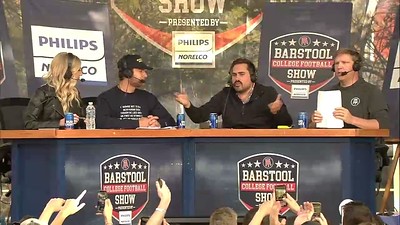
Barstool Sportsbook, part of Penn Entertainment, marketed its service to University of Toledo college students, a no-no in the state. The Ohio Casino Control Commission has since fined Penn a hefty $250,000.

The incident stems when Barstool hosted its Barstool College Football Show on the University of Toledo’s campus November 15.

During the program, Barstool promoted pre-registration, with cash bonuses that could be used at Penn casinos. Ohio laws bar advertising sports betting on college campuses.

Penn operates four casinos or racinos in Ohio: Hollywood Casinos in Toledo and in Youngstown, Columbus and Dayton. Penn has 30 days to challenge the decision or enroll in a mediation program.

Penn spokesman, Eric Schippers, told the Columbus Dispatch the company “looks forward to the opportunity to address this directly with the Ohio Casino Control Commission through its regulatory process.”

Dallas Mavericks Owner Seeks Vegas-Style Casino for Team


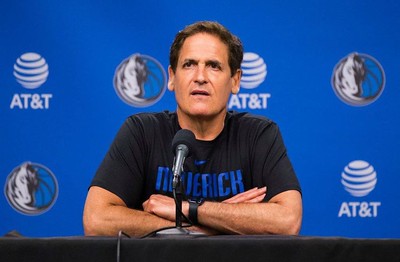
The owner of the Dallas Mavericks, Mark Cuban, has always thought big when it comes to business and his NBA team is no exception. The billionaire has recently floated an idea about a new home for the Mavericks.

They are currently housed at American Airlines Arena, where they have played since 2001. They share the building with the town’s NHL team, the Dallas Stars.

Cuban wants more than a standard arena for his team. He has designs on a Las Vegas-style resort and casino somewhere in the Dallas Metro area.

“My goal, and we’d partner with Las Vegas Sands, is when we build a new arena, it’ll be in the middle of a resort and casino,” Cuban told the Dallas Morning News. “That’s the mission.”

That would be great if for only one small detail—gambling and sports betting are not legal in Texas.

It’s not for lack of effort. Some state legislators have been trying to get both on the ballot for years but have been met with resistance from fellow lawmakers, including Texas Lieutenant Governor Dan Patrick, who is a staunch opponent of gambling. While Texas Governor Greg Abbott said during his recent re-election campaign that he could expanded gaming in Texas, the path is long and arduous.

Now, Texas State Senator Carol Alvarado, who represents Houston, has filed a resolution that would license four casinos and create a Texas Gaming Commission that would oversee sports betting.

Alvarado told the Dallas Morning News that she was excited to have Cuban as part of the process.

“I welcome him to the arena of this discussion,” Alvarado said. “Having somebody like Mark Cuban on board certainly gives a boost of enthusiasm to the effort. Hopefully, he’ll use his clout and resources to help get us across the finish line.”

Cuban realizes the political process is a tricky one.

“Obviously, it’s got to pass the legislature, and I’m not the politician to know all the elements there. But you’re talking about billions of dollars in revenue,” Cuban said. “And it won’t be one of those things, I don’t think, where you ask the city and state for concessions. It’s more about, ‘This is going to generate a ton of revenue.’”

D.C. Sports Betting App Focus of Heated Debate

The performance of Washington D.C. ‘s betting app was the impetus for a bill introduced by one of the council members, but the proposed legislation may be dead on arrival.

The topic of Councilmember Elissa Silverman’s bill, which would give operators like BetMGM, Caesars, and FanDuel more access for their mobile apps.

Currently, GambetDC, a lottery-run sports betting app developed through third-party provider Intralot, is the only operator allowed in the larger D.C. area.

But the app, which was approved in 2019 on a no-bid contract, has been widely criticized for its performance.

That criticism continued at a recent meeting of the Washington D.C. Council’s Business and Economic Committee. Silverman touted her bill and said that the current sportsbook provider has serious flaws.

“Gambet can’t be fixed,” Silverman said. “The District will correct the course on sports gambling and actually generate revenue only if the council acquires it through legislation.”

That drew the ire of Frank Suarez, executive director of the D.C. Office of Lottery and Gaming. He contentiously argued with Silverman in a debate that was often intense.

“What I want to make sure is clear is that the model you’re proposing will not raise revenue, and no matter how many different ways you look at it, it’s not a better model than what we currently have,” Suarez said. “I’m giving you facts, and I’m not hearing facts from your side that are coming that are saying that’s a better model.”

These were talking points that were in a recent press release put out by the Office of Lottery and Gaming.

“In addition to a new app experience, GambetDC unveiled a host of other product enhancements which should further drive growth,” the press release said. “This includes increasing the GambetDC average payout to 90%. Rapid expansion of the GambetDC retail footprint to 58 licensed retailers and upgrades to the retail self-service betting experience have also been key to growth.”

Silverman’s bill might be mute. She did not win reelection, nor did another co-sponsor of the bill, Mary Cheh. Without that support someone else would have to pick up the bill and try to get it passed. It is unclear now if there is anyone that would be willing to do that.

New York Lawmakers Consider iGaming

New York state lawmakers reconvened for the new session last week as various efforts to expand legal gambling in the state are expected to be considered. Most prominent among them are online gaming and online poker, a natural next step to the online sports betting market, which was launched in January 2021.

In an interview with the NY Sports Day news site, New York state Senator Joseph Addabbo said chances are good for approval of iGaming this year.

“We’re not getting billions of dollars of (federal) aid,” he said, noting that online gambling will make up for deficits in local budgets.

The lawmakers have until April to approve a gambling expansion bill, as the state budget, which is due at that time, must include the approved bill.

“I think iGaming is just sitting there waiting for us to work on,” Addabbo told NY Sports Day. Addabbo, a longtime advocate of iGaming in New York, sponsored a bill to legalize online gaming, S8412, which has been sitting in the Senate Finance Committee since last April. The bill sets the tax rate at 25 percent of iGaming revenues.

Addabbo told the publication that online casino revenues will eclipse those of sports betting, which generated more than $13 billion in revenue last year, as the largest online sports betting market in the U.S.

The sponsor memo to S8412 estimates the state would generate around $475 million annually in tax revenue, in addition to $150 million in one-time license fees from iGaming operators.

Pennsylvania Launches iGaming Bidding Process

The Pennsylvania Gaming Control Board (PGCB) announced that it is accepting petitions from casino operators primarily operating in jurisdictions outside of Pennsylvania, but who wish to seek approval to be Qualified Gaming Entities (QGE), for one of 12 remaining certificates to conduct online gaming.

A QGE has the ability to obtain one or more of the three categories of iGaming certificates that remain available in the commonwealth, and can operate online without having any ties to a Pennsylvania casino.

The period to petition the PGCB to obtain one of the remaining certificates began on January 3, and will run through March 3.

This is the board’s second round of bidding for iGaming certificates available to entities without a brick-and-mortar presence in Pennsylvania, the first petition period occurring in late 2018.  One entity was determined to be a QGE during the earlier petition period, but certificates have not yet been issued to it as its application remains in process.

The 12 remaining certificates, which cost $4 million each, are in the following three categories:

  • three certificates for games which simulate slot machines;
  • three certificates for banked table games which simulate casino table games played against the house; and,
  • six certificates for non-banked table games (generally, poker).

The iGaming license process was created under Pennsylvania’s 2017 gaming expansion law. Under that law, the 13 current casino licensees had the first opportunity to apply for and obtain the 39 available interactive gaming certificates (13 in each of the three categories).  Most iGaming websites in the commonwealth are operated directly by Pennsylvania’s brick-and-mortar casinos, or online operators who have entered market access agreements with those casinos.

QGEs can obtain access to the Pennsylvania online market without any such connections.

More information on how to petition for the available iGaming certificates is available under the QuickLinks section of the PGCB’s website homepage, gamingcontrolboard.pa.gov.

India Puts MeitY in Charge of iGaming

The government of India has put the Ministry of Electronics and Information Technology (MeitY) in charge of online gaming. The Ministry of Youth Affairs and Sports has been named to oversee eSports, such as Electronic Arts Inc.’s FIFA Soccer and Mobile Premier League.

The government has also proposed that the online gaming industry regulate itself through the creation of a self-regulatory body.

MeitY Minister Rajeev Chandrasekhar announced that the ministry would begin releasing rules and guidelines for online gaming and would soon hold a consultation with the public after that.

The rules could be revised after that process is completed.

It began by publishing proposed rules governing apps or websites where there is an exchange of users’ money, such as online casinos, card games and fantasy sports.

A seven-member ministerial task force began work on the rules in May. It also recommended MeitY as the governmental agency that should implement them.

Games of chance and online gambling are not covered under these rules. Concentrating all online gaming under one agency is seen as necessary because most legal issues dealing with them are based on Entry 34 of the State list of the Constitution, which governs gambling and wagering. It will also give consumers and operators a central location to address their concerns.

It also puts up a wall between online gaming and online gambling and prevents states from going after skill-based games under the pretext of regulating gambling. In the past, some states that outlaw gambling have sought to forbid online games as well. The goal is to prevent the industry being hobbled by a crazy quilt of competing regulations.

Online gaming is expected to more than triple in numbers between now and 2026, to an estimated $7 billion annually. The country has more than 400 online game start-ups, and an estimated 360 million players.

This has caused concerns among those who point to rising levels of addiction, which can lead to financial ruin, and in some cases, suicide.

In the last three years the Indian state of Tamil Nadu has reported 17 suicides that it attributes to online gaming. This prompted the state in October to pass a law that prohibits online gambling and regulates online gaming.

Meanwhile the government has adopted a draft amendment that requires the online gaming sector to regulate itself to a degree, especially in adopting policies that fight addiction and encourage social responsibility.

It would require that such a body register with the government, and that its board include a person nominated by the government with experience in public policy, public administration, law enforcement or public finance and another member taken from the fields of psychology, medicine or consumer education.

Gaming companies would also be required to appoint a chief compliance officer to ensure the companies are obeying the law and to verify user IDs before setting up accounts.

All India Gaming Federation CEO Roland Landers told Reuters: “We believe this is a great first step for comprehensive regulation for online gaming and will hopefully reduce the state-wise regulatory fragmentation that was a big challenge for the industry.”

Fanatics Chooses Amelco, Sends Kambi Reeling

As the sports merchandise provider Fanatics gets closer to launching its own sportsbook, the competition for its system business was heated. Most expected Kambi, the market share leader in the U.S., to be the winner, but Fanatics instead threw their business to Amelco, a London-based software company to provide its platform and player account management system.

Fanatics CEO Matt King mentioned the deal in a hearing before the Massachusetts Gaming Commission, where Fanatics is hoping to launch in 2023.

“It is a proven code base and operating platform in the U.S., as well as internationally, so we feel very good that we were able to build our business on the back of a world class and proven sports wagering technology,” King said.

The decision was surprising since Amelco’s U.S. business isn’t nearly as robust as Kambi’s. Listed as Amelco’s clients are Fubo Sports book, which is out of business; PlayUp, an Australian company with lots of legal problems; FoxBet, which hasn’t had much success; and Hard Rock which is operating in only four states.

Kambi, which is not without its own problems—its deal with Penn National’s Barstool was cancelled earlier this year—took a big hit with share prices dropping almost 13 percent the day of the hearing, wiping out nearly 11 percent of the company’s equity.

Kambi Signs Partnership Top Brazil Fantasy Site

Kambi Group plc, a leading sports betting partner, has signed an online sportsbook agreement with Rei do Pitaco (RDP), the largest daily fantasy sports operator in Brazil.

The multi-year partnership will enable RDP to leverage Kambi’s market-leading technology and services to launch a real-money online sportsbook in Brazil, which is in the process of regulating sports betting and expected to become one of the largest regulated markets in the world.

Mobile-led RDP has built its fantasy sports success through a focus on soccer, by far the most popular sport in Brazil. The operator’s mobile app has received more than 3.4 million app downloads since going live in 2019, with its customer database to continue to grow through the addition of sports betting.

Under the agreement, the operator will utilize Kambi’s customizable technology and powerful suite of APIs and differentiation tools to deliver a highly localized product to its players, as well as benefitting from award-winning products such as the Kambi Bet Builder.

RDP recently secured venture capital investment to expedite growth and power its move into sports betting. The company has also received investment from technology entrepreneur and FanDuel co-founder Nigel Eccles, who last year took up the position of chair of RDP.

Kristian Nylén, Kambi CEO and co-founder, said: “Brazil has the potential to come one of the world’s largest regulated sports betting markets so I am delighted Kambi has partnered with Rei do Pitaco, a company which I believe is uniquely positioned to gain a strong position in the country.

“The talented people behind Rei do Pitaco have exciting and ambitious plans, so this agreement is a testament to the strength and flexibility of our sportsbook technology to be able to support those aims and enhances our position as the leading sportsbook partner in Latin America and across the world.”

Mateus Dantas, CEO and co-founder of Rei do Pitaco, said: “We are pleased to have agreed this exciting sports betting partnership with Kambi. Through this new operation, we are confident of delivering a market-leading online sportsbook to our fast-growing customer database which will have access to an excellent and safe user experience on our platform.”

Manhattan Caesars Casino Proposal Brings Jay-Z into the Fold

SL Green and Caesars Entertainment have their work cut out for them in an effort to secure the one casino license for downstate New York not already accounted for. The two companies consider Times Square the best location. The partnership has a new partner—rapper and entertainment guru Jay-Z, who not only supports the concept but is putting money into the project at 1515 Broadway.

The role of Jay-Z’s Roc Nation will be to program entertainment, not just at the casino but also at other SL Green properties in the Times Square area, according to the New York Post.

“New York is the epicenter of culture. We have the opportunity to create a destination at the heart of the true crossroads of the word. My partnership with SL Green and Caesars has all the promise and commitment to economic opportunity, growth and enrichment for the community,” Jay-Z said in a statement.

Caesars Palace Times Square, as it’s to be called, will occupy eight floors in the 54-story tower and none on the ground floor. Indeed, the ground floor will include an entrance to the Minskoff Theater.

SLG CEO Marc Holliday indicated the casino may be as small as 250,000 square feet. An 800-room hotel would occupy floors above the casino.

The plan is supported by owners of restaurants such as Carmine’s, Bond 45 and Junior’s, by Actors Equity and hotel and construction unions.

But the powerful Broadway League opposes the plan and gambling in the Times Square area.

Despite the opposition, Holliday expects ticket sales for Broadway will skyrocket, including those the consortium will buy for distribution to casino customers. The casino project will bring in seven million additional visitors to Times Square, $166 million in retail purchases outside 1515 Broadway and seven million restaurant meals, he said.

For Holliday, the project is vital to slow the gradual decline in the district.

The slide, Holliday said, doesn’t yet mark a return to the lawless days of the 1970s to the early 1990s, although crime is noticeably up, but rather a slow-but-steady unraveling of the commercial energy and sense of security that Times Square had only 10 years ago.

Times Square district office vacancy has ballooned from 5 percent to 25 percent in the last decade, according to CBRE.

Poll: NJ Residents Oppose Casino Expansion, Full Smoking Ban

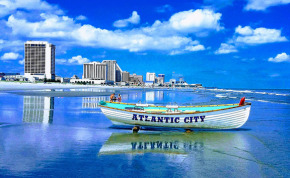
A poll of New Jersey voters conducted by Fairleigh Dickinson University (FDU) found that a majority of residents across all political affiliations oppose expanding casinos beyond New Jersey. The same poll found that few New Jersey residents support a total smoking ban in Atlantic City casinos, with the majority saying that limiting smoking, as is done now, is sufficient.

The question of casinos outside of Atlantic City, particularly in North Jersey, has arisen once again as New York City and other nearby locations downstate in New York prepare to welcome casinos.

In the FDU poll, only 37 percent of New Jersey residents said they favor expanding casino gambling outside of Atlantic City, with a bare majority, 51 percent, saying that they oppose such an expansion. Those results spanned party affiliations—50 percent of Democrats oppose it, along with 54 percent of Republicans and 53 percent of independents. Those numbers were in line with a 2016 FDU poll that posed the same questions.

Any expansion of casinos would require a vote on a constitutional amendment in the state; in 2016, such an amendment failed, 77 percent to 23 percent.

“Competition from new casinos opening soon in New York City and the endless search for new sources of revenue mean that there’s a lot of pressure to open new casinos in Jersey,” said Dan Cassino, a professor of government and politics at FDU who was executive director of the poll. “But if the state wants those casinos, they’re going to have to change a lot of minds.

“Views of casino expansion in New Jersey have been crystallized for years. None of the arguments that have been made in favor of expansion have made any dent.”

Older residents, who may remember the initial wave of casinos opening in Atlantic City in 1978, are the most skeptical about opening casinos elsewhere in the state. Only 25 percent of residents 65 and older favor casino expansion, with 65 percent saying that they oppose it. By way of contrast, 47 percent of residents 31 to 44 favor expansion—the only age group where supporters outnumber opponents.

The question of banning smoking on casino floors has been front-and-center, with majorities of lawmakers signing on as cosponsors of a bill to eliminate the casino loophole in New Jersey’s indoor smoking ban. However, according to the FDU poll, few New Jersey residents want to see a total smoking ban.

According to the poll results, most New Jersey residents (57 percent) support the status quo on smoking in casinos, in which smoking is allowed only in certain designated areas totaling 25 percent of the gaming floor. Twenty-nine percent support a complete ban on smoking in casinos, and 12 percent say that smoking should be allowed anywhere in a casino. These figures have not changed much from when the question was asked 13 years ago, in 2009; at that time, 35 percent of New Jersey residents said that it should be banned entirely, with 47 percent saying that it should be limited to certain areas.

“This is a balancing act,” said Cassino. “Smoking bans protect workers from secondhand smoke, but no one wants to risk hurting the casino’s bottom lines and having to bail out Atlantic City. Again.”

Support for a ban on smoking in casinos is highest among older voters (42 percent among those 65 and older), and lowest among young voters (just 14 percent). More educated voters—those with a college degree—are more likely to support a ban (35 percent) than those without a four-year degree (24 percent). As with casino expansion, though, partisanship has no real impact on views of smoking in casinos: Democrats, Republicans and independents are all equally likely to support a ban. 

The survey was conducted between October 24 and November 1, using a certified list of adult New Jersey residents carried out by Ironwood Insights. Respondents were randomly chosen from the list, and contacted via either live caller telephone interviews, or text-to-web surveys sent to cellular phones, resulting in an overall sample of 801 respondents. 174 of the surveys were carried out via live caller telephone interviews and the remainder (627) were done on a web platform via web links sent via SMS to cell phones.

Hard Rock Reveals Plans for Mirage Replacement

Hard Rock International is now one step closer to finalizing its $1.08 billion acquisition of the operations of the iconic Mirage hotel and casino from MGM Resorts International, after the Nevada Gaming Control Board (NGCB) endorsed the transaction on December 7.

The matter will now proceed to the Nevada Gaming Commission (NGC) for final approval on December 22.

Throughout the course of the NGCB hearing, Hard Rock, which is owned by the Seminole Indian Tribe, laid out its plans to completely overhaul and expand the longstanding Strip property, most likely beginning late next year.

James Allen, president and CEO of Hard Rock, told regulators that the overall room count for the property will expand by 600, from 3,044 to 3,644. Casino space is expected to almost double, from 94,000 square feet to just under 175,000 square feet.

Convention space, which is becoming an increasingly attractive amenity given the resurgence of the convention industry, will be expanded from 200,000 to 283,000 square feet.

Slot and table game numbers will increase dramatically—the property currently boasts 836 machines and 51 tables, which will grow to 2,000 and 212, respectively. Allen also said that Hard Rock plans to add three additional food and beverage outlets.

One of the most anticipated details was the fate of the Mirage’s famous erupting volcano, which has become a local favorite over the years, to the point that a petition was started to save the attraction once it was announced that the property was changing hands.

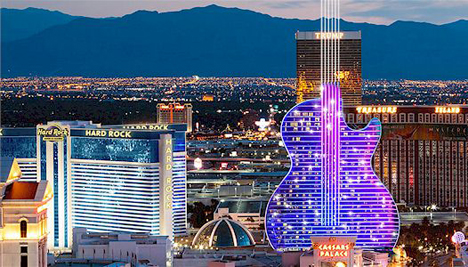
Unfortunately for some, Hard Rock plans to remove the volcano to make way for a prominent guitar-shaped tower, which is a staple of the company’s other properties. Allen said that he originally wanted to build the tower around 1,000 feet, but county officials refused to approve it; instead it will stand at approximately 550 feet.

During the hearing, Allen acknowledged that “the volcano is legendary, but as you saw in the renderings, the guitar-shaped hotel replaces the volcano.”

Joe Lupo, the future president and CEO of Hard Rock Las Vegas, says the building will be special.

“I think having a new product out here is really important,” he told GGB in an exclusive interview. “When you see the Guitar hotel on the strip, you’ll have to go inside and check it out. What Jim Allen is designing, is going to be really so new, it will be like the Mirage in 89 that was a game changer in Las Vegas. There’s a lot of similarities in the change that that’ll make this one property you’ll have to visit on your Las Vegas trip.”

As far as the property’s sportsbook, its existing operator BetMGM is expected to remain in place. Surprisingly, Hard Rock has also inked a deal to keep the Beatles-inspired Love Cirque du Soleil show, after the troupe had previously announced that it was closing up shop.

Two other Mirage sometimes controversial staples are leaving however, the dolphin show and the Siegfried and Roy tigers.

“I know there are some people who really care about these animals, especially the team at the Mirage,” Lupo explained. “And it wasn’t an easy conversation, but it’s just not a long term feature. We’re going be doing construction, and that that environment will change back there is not healthy for the animals.

“However, I do believe after reading a lot of comments that most people think that there, there’s some better relocation efforts and better sites for the animals and that are not usually located here in the middle of the desert. We’re going to our best to take care of the animals and ensure they have a long, healthy life. We will work really hard to ensure they go to great environment. So I feel very comfortable with that knowing that we’re going to do the right thing.”

With regards to staffing, Allen said current employees will be invited to stay on, especially given the fact that they will need all the help they can get on account of the planned expansions.

In all, Hard Rock hopes to have the property completely restored and turned around by late 2025 or early 2026.

After the hearing concluded, Allen told the Las Vegas Review-Journal that he felt it was “a great day for the Hard Rock entity, and we’re looking forward to taking the next step with the Nevada Gaming Commission.”

If ultimately approved by the NGC, Hard Rock would make history by becoming the first tribal-owned operator to plant its flag on the Strip, the most iconic street in the U.S. gaming industry.

While there are already two other tribal outfits in town—the Palms, operated by the San Manuel Band of Mission Indians and the casino at Virgin Hotels Las Vegas, operated by Mohegan Gaming and Entertainment—neither of them are actually on the Strip itself.

“I think Las Vegas is still the gaming and entertainment capital of the world,” Allen told the Review-Journal. “I think we all understand there’s a tremendous amount of business in Macau, but it’s just not the same type of destination that Las Vegas is. It’s a monumental historic day for us to be a part of this amazing history.”