Author: Casino Connection Staff

2023 May Be the Year for iGaming in Indiana

After two years of fighting for gaming expansion in the Indiana legislature, 2023 may be the year to approve iGaming.

Among the issues to be addressed in a new bill are problem gambling and how to tax online gaming. It is expected that the legislation will originate in the House of Representatives and be carried by Rep. Ethan Manning.

Tax rates being discussed are from 18 percent to 19 percent and earmarking up to 3.5 percent of tax revenues to fight problem gambling, according to industry expert Ed Fiegenbaum.

Manning told Capital Chronicle, “At this time, it’s too early to speculate on the form any proposed legislation might take, but I will continue to have conversations with other members and stakeholders as we move forward.” Manning led the legalization effort last year, but House Bill 1356 died in the Public Policy Committee. What’s different this year is that Manning is the head of that committee.

The state legalized online sportsbooks in 2019 but left unaddressed non-sports internet gaming, including casinos and lotteries, which would bring online gaming to anyone with a smartphone or other device that can support apps.

Two years ago the Hoosier Lottery negotiated with IGT Indiana to offer online lottery games, according to the Fort Wayne Journal Gazette. However, once some legislators found out about this they approved House Bill 1260 that prevented the lottery from adding online games.

Another booster of the iGaming legalization is the Indiana Gaming Association, whose President and CEO Matt Bell commented, “The industry has rebounded off of the pandemic and responded well, but the competitive threats that are on the horizon are very real and very significant.”

Bell called for the legislature to help the gaming business keep up with technology and that without it, the state’s casinos could “absolutely anticipate a hole in our budget” as profits hemorrhage to other markets.

The state has 12 casinos that brought in $2.5 billion in the 2021-2022 fiscal year and paid $700 million to the state. Spectrum Gaming Group, which conducted a report on iGaming for the Gaming Commission, estimates that online gaming could generate nearly $2 billion in its first three years. That would translate into $190 million in state taxes if an 18 percent taxation rate is assumed.

Because iGaming takes less investment for buildings and employees, it has less impact on employment and collateral industries that serve brick-and-mortar casinos. Spectrum cautioned that a lower tax rate for internet games would hurt physical casinos.

Problem gambling activists add the warning that an activity that is so easy that you can do it anywhere with a phone has a built in hazard and costs to society. Moreover, the people who tend to gravitate towards online gaming are younger, more likely to bet higher amounts and more likely to build up large debts as a result.

Although support for an online gaming bill is strong in the House, Senate President Pro Tempore Rodric Bray told the Gazette that the Senate was unlikely to move on the bill this session. The senator cited several reasons, including “the significant expansion of our gaming laws over the last four years, the fact that he doesn’t have constituents coming to him requesting iGaming, and that Indiana already ranks fourth in the nation for casino revenue.”

Report: Illegal Gaming Market Triple the Size of Legal Market

The U.S. is rife with illegal gambling, both outside our shores and under the radar at taverns and clubs all over the country. The head of the American Gaming Association (AGA), Bill Miller, wants to do something about that.

The AGA commissioned the Innovation Group to prepare a report on the impact of illegal, offshore gaming operations on the legal market and on state tax revenues.

They surveyed more than 5,000 Americans and their gaming habits. The report looked at existing data on gaming participation rates “and the known size of the legal market.”

It found, “Americans bet more than $510 billion a year with illegal and unregulated operators. This costs the legal industry $44.2 billion in gaming revenue and state governments $13.3 billion in lost tax revenue.”

The 17-page report noted that with regards to unregulated offerings, U.S. residents primarily bet with illegal or unregulated bookies, iGaming websites and “skill games.” Additionally, it asserted that the amounts spent by Americans on illegal sportsbooks and offshore sportsbooks is the equivalent of almost 40 percent of the regulated U.S. sportsbook market.

With $13.5 billion in estimated revenue (it’s hard to get accurate figures), the illegal iGaming market is nearly three times the size of the legal U.S. iGaming market, estimated to be $5 billion in 2022.

The report also noted that there are an estimated 580,561 unregulated gambling machines in taverns, convenience stores and unlicensed gambling halls across the country.

“Wherever they are found, illegal and unregulated operators prey on vulnerable consumers, offer no commitment to responsible gaming, give no recourse to bettors if something goes wrong, encourage money laundering and generate no economic benefit to states or tribal nations,” the report said.

The authors further asserted that the legal gaming industry is “among the most highly regulated industries in America. Whether it is financial solvency and other licensing requirements, know your customer or anti-money laundering regulations, legal gaming operators and suppliers comply with thousands of laws and regulations designed to ensure consumer protections and confidence in the gaming market.”

In response to the recent findings, Miller said that he wants indictments filed by federal law enforcements against operators of illegal casinos and sportsbooks. His comments came during a speech to the National Council of Legislators of Gaming States in Las Vegas in early December.

Noting that a common tactic among illegal operators is to become so annoying that lawmakers will change the laws to make them legal, he declared, “I think that’s dead wrong,” adding, “And an indictment will make it very difficult for someone who lives in that gray market to ever get licensed.” He concluded, “So we’re going to continue to work on it. It is not a fight that’s going to be overnight.”

Recently, Miller sent a letter to Attorney General Merrick Garland that prompted the FBI to hold conversations with him about his criticism of “pervasive illegal gambling.” He urged the Justice Department to target the largest offshore operators that violate state and federal laws.

He wrote, “This action would provide much-needed clarity that these websites are criminal enterprises, which can help to deter the American public from visiting these sites and prompt businesses to take appropriate action to ensure they are not supporting them.”
Las Vegas Visitation Up, Revenues Down for November ‘22

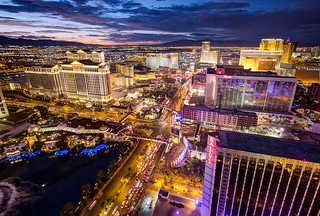
Las Vegas’ visitation and revenue figures for November 2022 have been released via the Las Vegas Convention and Visitors Authority (LVCVA) and UNLV’s Center for Gaming Research (CGR), and even though tourism rates remain strong, revenues appear to be headed for decline.

According to the LVCVA, the city’s overall visitor volume came in at 3.26 million for the month, which represented a healthy 5 percent increase from November 2021’s total.

Additionally, convention visitation shot up to 582,800, a 45 percent increase year-over-year. This was good news for operators and officials alike, as the convention industry has long been considered to be the biggest sector that has still yet to return to pre-Covid levels in Las Vegas. Indeed, November’s figures still represented a 3 percent decrease from the same period in 2019.

The Consumer Electronics Show (CES), one of the biggest events of the year for the city, will take place January 5-8, and is expected to boost those figures.

Josh Swissman, a consultant and partner for the Strategy Organization, told the Las Vegas Review-Journal that conventions and conferences are a critical piece of Las Vegas’ overall success.

“They book so far in advance,” Swissman said. “It’s a great bellwether to general economic health and interest in Las Vegas. It’s also good because that’s a big chunk of rooms that sits on the books that allows hotel operators, casino operators to yield the room rates from.”

The city’s hotel occupancy continued its steady ascent in November, coming in at 81 percent, a 3 percent increase from last year—room nights occupied totaled 3.67 million, a 5 percent increase of last year’s total for the same period.

The only figure that outperformed pre-Covid averages was room rates, as November’s average of $186.48 per night was a whopping 38 percent higher than that of 2019.

With all of that in mind, overall revenues still showed a slight decline, which is what many investors and analysts have been expecting after over a year of stellar performance.

According to figures from the CGR, Las Vegas Strip revenues totaled $669 million for the month, a drop of over 11 percent year-over-year. Statewide revenues came in at $1.22 billion, a 7.6 percent decrease from last year.

Despite the decreases, it’s tough to draw too many conclusions about the year ahead, especially given the fact that the last 18 months have produced some of the highest totals in state history. After all, November did represent the 21st consecutive month that the state posted revenues of over $1 billion.

November slot revenues for Las Vegas jumped 1.9 percent year-over-year to $416.2 million, while game revenue plummeted to $253.2 million, a decrease of 27 percent.

Baccarat figures were especially disappointing, as the Strip saw just $57 million in revenue, down over 37 percent from November 2021.

To the north in Washoe County, which encompasses Reno, Sparks and Carson City, overall November revenues dropped 4 percent year-over-year to $79 million, but the region did open two new venues in 2022, which will look to boost figures for 2023.

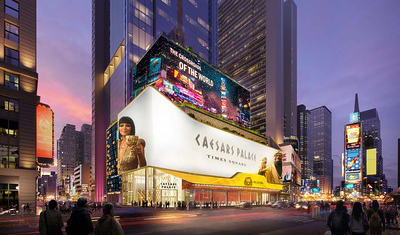
Times Square Businesses Welcome Caesars

Prominent businesses in New York City have come out in favor of Caesars Entertainment’s proposed casino in Times Square.

A Coalition for a Better Times Square (CBTS), a group of more than 20 restaurants, other businesses and labor unions, released a statement in favor of Caesars’ bid for one of the three available downstate casino licenses, predicting nearly $1 billion in economic benefits to the area.

“A successful bid will generate $967 million in annual area spending, providing a much-needed boost to area theaters, hotels, restaurants, and businesses, and commit to fund a wide range of neighborhood initiatives and improvements to make Times Square the safest, cleanest, and most pedestrian-friendly entertainment district in the world,” the coalition said in the statement.

The CBTS statement outlined areas in which the casino would provide a boost to the local economy:

  • Retail spending would jump by more than $160 million
  • Broadway ticket sales would increase by $65 million
  • Broadway shows would welcome more than half a million new visitors
  • Times Square would get 7 million more visitors
  • Local hotels would see more than 600,000 new visitors each year

“Bringing almost half a million new theatergoers into our theaters, a commitment to union jobs, and unprecedented investments in safety and traffic flow will be beneficial for Broadway and its workers,” said David Levy, communications director at the Actors’ Equity Association, according to PlayUSA.com.

Some Broadway theater owners may disagree. In late November, The Broadway League, which represents 700 members in the Broadway theater industry, released a statement in opposition to the casino, saying it would draw potential theatergoers to the gaming floor and cost them money.

The CBTS contends the opposite effect of bringing more people into the district, predicting a boost in ticket sales.

New York’s Gaming Facility Location Board is set to vote on casino bids for the three downstate licenses on January 6. For New York City, Caesars is in competition with Bally’s, MGM Resorts, Genting, Las Vegas Sands Corp. and Wynn Resorts.

Feds Discover CNMI Money Laundering Scheme

Federal law enforcement agencies, including the FBI and the IRS, have reportedly uncovered a money-laundering scheme that involves political figures and the holder of the only gaming license in the Commonwealth of the Northern Mariana Islands (CNMI), Imperial Pacific International (IPI).

The U.S. Attorney’s Office in December filed a complaint for forfeiture with the U.S. District Court. It seeks more than $310,000 that the court had seized earlier from a Bank of Saipan account in the name of “MCS.” It called this money “defendant funds.”

Allegedly, the federal agencies discovered a long-term scheme to escape taxes through money laundering and wire evasion. It involved CNMI political figures and IPI through its consultant, MCS.

The complaint spells out how MCS was involved in money laundering and wire schemes. It notes the involvement of what the complaint identifies as the company that was awarded the exclusive gaming license, which could only be IPI.

According to the complaint, “In the first scheme, defendant funds were transferred in a way that was necessary to enable fraud upon a government regulatory authority, namely the Commonwealth Casino Commission. In the second scheme, defendant funds were part of and necessary to a long-running and expansive effort to improperly influence government officials for the purpose of obtaining preferential treatment. Finally, A.Y. and MCS used defendant funds to claim false expenses, thus fraudulently reducing tax liability to the CNMI.”

The company in the complaint established relationships with local political figures by flying them around in private jets to foreign lands. Later, in 2014, the CNMI legislature voted to grant an exclusive gaming license to IPI on Saipan.

The complaint notes that “One of the political figures on the foreign trips played an integral role in passage of the casino enabling legislation.”

Before it received the exclusive license the company was paying A.Y. and MCS, which had served as a consultant, about $5,000 a month. Over a five-year period they received more than $2 million.

The complaint also notes that the company through MCS contributed over $46,000 to local political candidates, who failed to disclose the contributions. CNMI government officials are barred from accepting non-monetary gifts valued at more than $50.

The complaint also alleges that CNMI was defrauded of tax revenues through false statements and omissions.

In a separate but related development, Imperial Pacific International is struggling to protect its assets on Saipan on the uncompleted casino it owns.

According to IPI’s human resource partner How Yo Chi, IPI only has five security guards to protect its property. Recently its senior HR adviser resigned, leaving that job to Chi.

Recently, Chi spoke to the Commonwealth Casino Commission to answer questions. He noted that IPI payroll is now five security guards and six administrative staff.

The commission told Chi he needs to protect the unfinished resort hotel and casino from burglars. The property has been burglarized twice in recent weeks with tools and copper wire taken.

Chi said the best he could do is maintain 24-hour security with the five guards. Meanwhile the company is giving tours to potential investors interested in purchasing the property.

Fontainebleau Gets Construction Financing

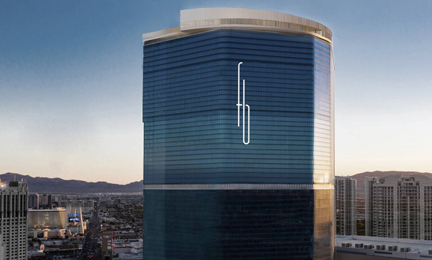
The difficulties of the Fontainebleau Las Vegas could finally be over. The property was the poster child for the 2007 recession when construction ceased after funding dried up. It went through several owners, including Carl Icahn, before winding up right where it started, under the original owners, who also own the Fontainebleau in Miami Beach.

And last week, the partnership between Fontainebleau Development, a builder, owner, and operator of luxury hospitality, commercial, and retail properties, and Koch Real Estate Investments (KREI), the real estate investment arm of Koch Industries, has secured—with J.P. Morgan as administrative agent—a $2.2 billion construction loan to complete Fontainebleau Las Vegas, the 67-story hotel, gaming, meeting, and entertainment destination coming to the north end of the Las Vegas Strip.

“This is a milestone for Fontainebleau Las Vegas and stands as a testament to the tremendous dedication of our team and our partners at Koch Real Estate Investments,” says Fontainebleau Development President Brett Mufson. “We are eager to bring our iconic Fontainebleau brand—timeless beauty, unparalleled service, and innovative design—to the Las Vegas Strip.”

Fontainebleau Las Vegas spans 25 acres and nine million square feet in a coveted location on the northern end of the Las Vegas Strip directly adjacent to the Las Vegas Convention Center, and will feature approximately 3,700 luxury hotel rooms, 550,000 square feet of customizable convention and meeting space, and a world-class collection of gaming, dining, retail, lifestyle, and health and wellness experiences.

The funding will allow the property to keep to the timeline of a grand opening in the fourth quarter of 2023.

Buffalo Casinos Forced to Close During Blizzard, Now Back Open

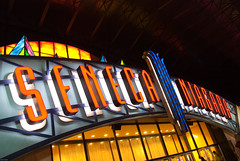
Operations are returning to normal at Seneca Buffalo Creek Casino, which was closed for six days due to one of the worst snowstorms in Buffalo’s history.

More than four feet of snow blanketed the area and with vicious winds, creating white-out conditions. City officials instituted a driving ban in the greater Western New York area.

The storm was responsible for 37 deaths. The upstate New York casino closed at 1 p.m. ET on Friday, December 23.

Many employees and customers figured they could wait out the storm in the comfort of the casino and were a bit surprised when told the facility was going to close down.

Adrea Newbern-O’Reiley told Spectrum News that she went to Seneca Buffalo Creek Casino to pick up her husband. She said she ended up giving other customers a ride too.

“They thought the casino would be a safe haven because they knew it to be a 24-hour establishment,” Newbern-O’Reiley said.

After they left the casino the conditions became extremely dangerous and her vehicle got stranded in a snow drift. Fortunately nine hours later a local dug them out and took them to a hotel.

“This blizzard here was like no other blizzard,” Newbern-O’Reiley said. “To be out in it, I felt like we were in a whole different place.”

Seneca Buffalo Creek Casino wasn’t the only casino that was forced to close its doors. Seneca Niagara Resort & Casino, 21 miles away from the other facility, also had to close after the driving ban was put into effect and employees could not drive to work.

That casino was only closed for a couple of days. Seneca Allegany Resort & Casino in Salamanca remained open.

Buffalo’s neighbor to the north, Ontario, Canada was also affected by the weather, fortunately not to the degree that Buffalo’s casinos were.

Elements Casino Victoria, and Shorelines Casino Thousand Islands saw a reduction in hours but did not have to close. Neither did Fallsview Casino & Resort and Casino Niagara, who remained open, though the sportsbooks had to adjust their hours because of staffing issues. Betting kiosks remained open, however.

“It was a challenging holiday weekend, but we made the best of it,” Niagara Casinos President Richard Taylor told CDC Gaming Reports. “While our operations did see a reduction in services and hours, it is the safety of our staff and guests that really matters most.”

New Committee to Probe Oregon’s Gambling Market

Oregon state representative John Lively has been tabbed as the new chairman of the Gambling Regulation Committee for the 2023 legislative session, which started at the beginning of the year.

The Democrat will be charged with looking into the state of gambling in the Beaver State, which has had casino gambling since 1971 and was one of a handful of states that were exempt from the sports betting ban that was lifted by the Supreme Court in 2018. They quickly approved sports betting in August 2019.

Lively said it is time to look at all forms of gambling in the state and said it hasn’t been done in more than 25 years.

“Where is all this going, and should there be limits on how fast gambling grows or doesn’t grow, rather than just the fact that if there’s people willing to do it, then we’ll do it,” Lively told local outlet KLCC.

Another facet of gambling in Oregon is the lottery. The state makes a majority of its revenue from video lottery. Lively said that will be reviewed as well.

“If the state continues to try to grow the (Oregon) Lottery rapidly, the impact that has on tribes and their revenue, and whether there’s a role the legislature can play regarding revenue-sharing, I don’t know what that answer is,” Lively told KLCC. He added that “how we would support and protect the tribes if we continue to grow the lottery.”

There are 10 Native American owned and operated casinos in Oregon, but they aren’t regulated by the state. That might be an issue that is addressed in 2023.

This panel headed by Lively will have the ability to propose legislation and have the members of the State Assembly vote on it.

“There are areas that we could potentially reach some kind of agreement on and work on policy direction, (such as) how well we take care of people who are addicted to gambling, specifically those who are low-income who are most likely to be negatively impacted,” Lively said. “Do we have the programs in place? Are they available? Are they effective?”

Virginia Casinos Making Progress

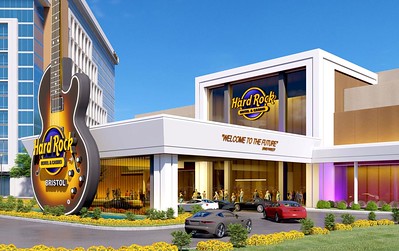
The permanent $500 million Hard Rock Hotel and Casino Bristol in Virginia still is set to open in 2024, despite recent changes in the plan, officials said. A groundbreaking was held at the site of the former Sears building at the Bristol Mall last month.

Hard Rock International Chief Operating Officer Jon Lucas said, “What changed was due to some supply chain issues and some construction costs that were escalating. We took another look at what the best way is to do this and we found that tearing down the Sears building would be cheaper than trying to retrofit the Sears building. We have a commitment to Virginia Lottery and we will live up to that for sure.”

Lucas added the 30,000 square-foot temporary casino, which opened in July, will be included in the permanent facility. He said, “We feel like the temporary facility came out so nice, that with a little bit of sprucing up we can make that part of the permanent as well.” Lucas said that space will be exclusively non-smoking.

Hard Rock Bristol is the first of potentially five casinos to open in Virginia. Hard Rock Bristol President Allie Evangelista said, “We are really excited about other casinos coming to the state of Virginia. Obviously being the first one is something we are proud of, but it is a lot more work to be the first.”

In Norfolk, the city council unanimously voted to approve allowances for the parking lot at the Harbor Park stadium, the future location of the Pamunkey Indian Tribe’s Headwaters Resort & Casino. The city will sell the lot to the tribe as soon as casino plans are finalized. The council also approved an allowance for a seawall on the Elizabeth River on land adjacent to the stadium and the planned casino. The venue is expected to open in 2024.

The tribe hoped to open a temporary casino inside the stadium this past summer. However, a Virginian-Pilot investigation revealed that plan didn’t conform to specific language in the casino-gambling referendum Norfolk voters approved in 2020.

Tribal officials said the temporary casino will be built in the stadium parking lot and would operate during construction of the casino resort. No opening date for the temporary casino has been announced.

MGM Sells Remainder of October 1 Site

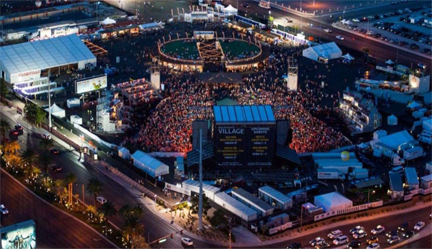
MGM Resorts International President Bill Hornbuckle announced the closing of the sale of the 13-acre Village, including most of the site of the 2017 Route 91 Harvest Festival in front of Mandalay Bay, where the deadliest mass shooting in modern U.S. history occurred October 1, 2017 when 58 people were gunned down.

The sale does not include the two acres MGM previously donated to Clark County, designated for a permanent October 1 memorial honoring the victims of the shooting.

“We know the importance this location holds to so many and have always put tremendous thought into every consideration involving the site,” Hornbuckle said in an email message to MGM employees. “This is no exception.”

Three Affiliated Tribes is a sovereign nation composed of the Arikara, Hidatsa and Mandan Nation tribes, also known as MHA Nation. It is based on the Fort Berthold Reservation in western North Dakota, known for shale oil production that has generated nearly $1.7 billion from drilling on reservation land over the past decade and a half.

The tribes also operate the 4 Bears Casino & Lodge on Fort Berthold Reservation land. The MGM Las Vegas purchase opens the possibility of a new casino development on the Strip, but no details or future development plans were included in the announcement of the sale.

“This is a sound investment for the MHA Nation,” said John Fredericks III, an attorney representing the tribes, according to the Las Vegas Review-Journal. “There are no immediate specific plans for development but the MHA Nation will be exploring its development opportunities in the near term.”

If they build a casino on the site, the MHA Nation would be the fourth tribal entity operating casinos in Las Vegas, joining Palms owner San Manuel Band of Mission Indians, the Seminole Tribe of Florida, owners of Hard Rock Las Vegas, and the Mohegan Tribe of Connecticut, which operates the casino at Virgin Hotels Las Vegas.

The property involved in the Village sale and the donation to Clark County has been dormant since the night of the massacre. Formerly announced plans to utilize the site for parking for events at Allegiant Stadium along with plans for a community center never materialized.

“The Three Affiliated Tribes have demonstrated that they care about our community, its future and, of course, its past,” Hornbuckle wrote in the employee email. “I’d like to thank them for their commitment to the community and wish them the best moving forward.”

Casino Gambling On Texas Lawmakers’ Agenda

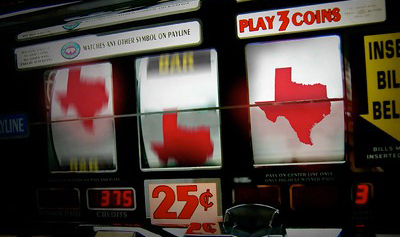
The 2023 Texas legislative session will begin Tuesday, January 10. Among the bills lawmakers will consider is a casino gaming bill filed by state Senator Carol Alvarado, who has filed similar legislation every year since 2009.

The measure would allow casino gambling at a limited number of destination resorts, authorize a Texas Gaming Commission, legalize sports betting, require occupational licenses to conduct casino gaming and impose a gaming tax.

The constitutional amendment would “foster economic development and job growth, and to provide tax relief and funding for education and public safety,” Alvarado said.

She noted a referendum would allow Texans to “vote on whether or not we should have gaming” in Texas. “The way it’s crafted, it would be very specific for casinos, Dallas, Austin, Houston and San Antonio. It would have to have several components, starting with a 4-to-5-star hotel, a complex for conventions, conferences and entertainment, restaurants and shops,” Alvarado said in a television interview.

She added casino gambling would make Texas a vacation and entertainment destination and stimulate the economy and create jobs. In Houston alone, Alvarado said, casino gambling would create “hundreds of thousands of jobs.”

The bill would require approval of two-thirds of the legislature and a majority of Texas voters. Alvarado said that wouldn’t be a problem, noting, “I guarantee, you go to Louisiana to any casino, and the majority of license plates are going to be from Texas.”

Governor Greg Abbott recently said he would be open to limited legalized gambling. However, Lieutenant Governor Dan Patrick previously said the Senate would never pass a casino gambling measure.

Delaware Racino Reopens After “Technical Difficulties”

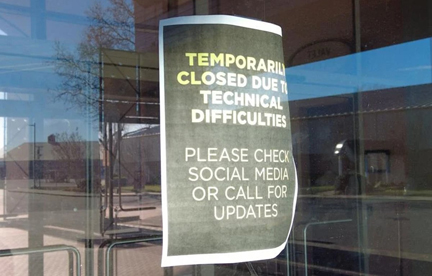
In Delaware, Harrington Raceway & Casino reopened on New Year’s Eve but officials still have not offered an explanation about the technical issues that caused the racino to abruptly close on December 27.

The harness racetrack and casino, owned by the Delaware State Fair, posted on social media the property was shutting down due to unspecified “technical difficulties” causing a “temporary disruption” to gaming and computer systems.

The post stated, “We are working diligently to investigate the source of the disruption, confirm its impact on our systems and restore full functionality to our affected systems as quickly as possible.” Casino officials said they were dedicating significant resources to resolving the issue, including bringing in cybersecurity specialists.

Several patrons, however, posted concerns about their personal information being compromised.

Delaware Lottery Director Helene Keeley said at about 12 noon on Tuesday, December 17, Harrington Raceway Chief Executive Officer Patti Key informed her the property was closing because of technical issues. In a statement, Keeley said, “Harrington Raceway is a private company and we are confident they will make the proper decisions for its business and its customers.”

Patrons who visited the casino over the holiday weekend said they still had issues with some gaming machines, such as slots misreading their players’ club cards and malfunctioning ATM machines and voucher redemption kiosks.

Casino officials said free play and other comps that expired at the end of 2022 would be honored through January 31.

One of three commercial casinos in Delaware, Harrington Raceway & Casino offers 1,400 slot machines, 30 table games, a 100-seat poker room and a sportsbook.

Massachusetts Licenses MGM Springfield, Plainridge Park

The Massachusetts Gaming Commission awarded its second in-person sports betting license December 19 to MGM Springfield and its final one on December 20 to Plainridge Park, with conditions. As with Encore Boston Harbor, patrons will not be ready to wager until early next year.

The commission delayed the approval two weeks prior and even with the unanimous vote, issues remain. The casino faces a lawsuit; Springfield politicians were less than elated; and regulators still have concerns with the relationship between MGM Springfield and BetMGM, a subsidiary online sportsbook 50 percent owned by MGM Resorts International.

BetMGM will provide many of the services to the in-person sportsbook and will also seek out a mobile license approval associated with the casino, according to MassLive.

Regulators insisted the gaming company failed to explain enough about BetMGM’s technology or its agreements with other locations.

At the December 19 hearing, Commissioner Nakisha Skinner brought up steps MGM Springfield will take to maintain control given the role BetMGM will play in the process.

“I have a hard time imagining a scenario where we have different concerns about BetMGM as a vendor than we would as a category three [mobile] tethered applicant,” Skinner said. “I think all of the issues that we’d be concerned about in connection with their category three application, they’re present and very much an issue in their role as a vendor for MGM Springfield.”

Attorney Jed Nosal, who reps MGM, responded that BetMGM is a service provider for the casino sports betting plans. But the gaming hall keeps full charge of the operations.

“MGM Springfield and MGM Resorts International, and all of the qualifiers that are in front of you, their suitability stands on its own,” he said. “The commission can move forward with this application based on that existing suitability of the applicant and its qualifiers.”

The lawsuit involves Chelan Brown, who accused the casino of inaccurate diversity numbers when it was pursuing a casino license and that she faced discrimination and retaliation.

Nosal denied all allegations.

MGM Springfield Vice President Gus Kim insisted MGM did not falsify reports or otherwise practice any discrimination.

For sports betting, MGM has built a $4 billion lounge with a 45-foot screen for games, a bar, wagering counter and betting kiosks. Officials plan to offer sports betting at staff-operated point-of-sale counters and through automated kiosks.

The commission approved Plainridge Park Casino December 20, the final Category 1 retail sports betting license in the commonwealth. The new license is temporary, according to the Boston Globe.

To lift the temporary tag Penn Entertainment must address the commission’s apprehension about Barstool Sports and its founder Dave Portnoy. That comes with an edict that no one under 21 can attend any Barstool College Football Show event. The permit also demands Plainridge to cooperate fully with the commission inquiry into Barstool Sports and possible problems the company could have on the casino.

The commission also attached a stipulation to its approval of a Category 3 online sports betting license for Caesars Entertainment. The mobile sportsbook will not rely on marketing or advertising with any Massachusetts college or university, according to Yogonet Gaming News.

The commission will begin its investigation on January 3.

“The concern that I have about Barstool and the relationship with PPC, Penn and now [Penn Sports Interactive] has a lot to do with branding and not simply responsible gaming,” Commissioner Eileen O’Brien said at the meeting, as reported by Boston 25 News.

Penn Entertainment President and CEO Jay Snowden defended Portnoy. Penn would not have partnered with Portnoy if he were misogynistic or racist. Penn Entertainment bought a 36 percent stake in Barstool in 2020 and expects to purchase the rest next year.

“Neither David Portnoy nor anyone else at Barstool has any control or decision-making authority over the operations of either the retail or online operations of Barstool Sportsbook,” said Snowden, who referred to Barstool as Penn’s media and marketing partner. “Barstool has been a successful partner and they are a critical element of Penn’s unique omnichannel strategy.”

Retail sports betting in Massachusetts will accept wagers in late January, while online betting could start in March. Each casino in the state—Encore Boston Harbor, Plainridge Park Casino, and MGM Springfield—can depend on two branded applications to hold in-person betting and mobile wagering.

Both Caesars Sportsbook and WynnBET, which was awarded a license last week, will operate mobile betting applications tied to Encore Boston Harbor. The Gaming Commission voted December 19 to award BetMGM a mobile sports betting license tied to MGM Springfield.

Hard Rock Mirage Acquisition Finalized, Approved by Nevada Regulators

On December 16, Hard Rock International’s $1.07 billion acquisition of the operations of the Mirage from MGM International was officially finalized, thanks to the approval of the Nevada Gaming Commission (NGC).

Following the NGC’s approval, the deal closed on December 19. Hard Rock, which is owned by the Seminole Tribe of Florida, now becomes the first tribal operator with a spot on the famed Las Vegas Strip.

Per the details of the transaction, Hard Rock will lease the property from real estate investment trust VICI Properties, with a base rate of $90 million per year with subsequent increases. MGM has also allowed for Hard Rock to keep the existing Mirage brand in place until the property is redeveloped.

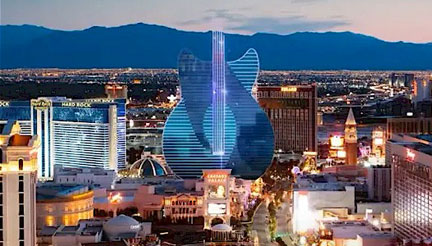
And there is no shortage of plans for that front, as Hard Rock has laid out its extensive, multibillion-dollar vision for the property, which includes a guitar-shaped hotel tower that will replace the famous Mirage volcano attraction. The tower was originally proposed to stand over 1,000 feet tall, but county commissioners refused to approve it at that height; instead, it is expected to land somewhere between 600 and 700 feet.

The company also plans to quadruple its table games, double its slot count, and add a total of 600 more hotel rooms. In total, the casino floor will be expanded by 80,000 square feet.

Construction is expected to begin late next year, with the property reopening under its new brand in late 2025 or early 2026.

During the NGC hearing, Hard Rock Chairman Jim Allen told regulators that the deal was carefully researched and planned. Allen acknowledged the historical significance of the Mirage, which first opened under Steve Wynn in 1989.

“When the opportunity to purchase the Mirage came about, it was appealing to us —the size of the parcel, located on the 50-yard line of the Strip,” Allen said. “The question was, could we create something iconic?”

Despite the fact that the property will be completely gutted and redesigned, Allen is adamant that it will remain open during construction. “It’s important to say on the record 100 percent that we’re not closing the building,” he said.

The official designs and blueprints will be done by the end of the summer, then the bidding process will take somewhere between three to four months, according to Allen. Construction itself is projected to take about 30 months.

North Carolina Casino Political Scandal Continues

A political scandal is growing in North Carolina’s Cleveland County over the Catawba Nation’s Two Kings Casino in Kings Mountain. According to a report in the Charlotte Observer, Cleveland County officials reaped “comparatively huge sums of money” in campaign contributions from people with business ties to the casino, which opened in 2021.

The latest report centers on Cleveland County Commissioner Eddie Holbrook. According to the report, in each of the first three quarters of 2018, Holbrook raised more money than his competitors did over the entire year—some $64,570. The newspaper cited Holbrook’s financial ties to the Catawba casino in Kings Mountain, with the majority of the money his campaign raised in 2018 coming from people who either have business ties to the casino, which Holbrook supported for years before it opened in 2021, or to companies benefiting from the casino.

Holbrook’s campaign received $33,000 in donations from only four people, three that have financial stakes in companies related to the casino and a relative of one of those three associates, according to the Observer.

County businessmen Doug Brown and Stuart LeGrand, along with LeGrand’s daughter, gave nearly $23,000 to Holbrook’s campaign in 2018, campaign finance reports show. Wallace Cheves, the man hired by Catawba Nation to help them get Two Kings Casino, also donated $10,200 to the campaign. Neither donated to any other candidates, and Holbrook maintained his strong support for the project.

Holbrook also held a financial stake in the casino, the Observer reported in August. Through a company he created with his wife, called Moose & Putter Butter, LLC, Holbrook owned a small piece of a company called Kings Mountain Equipment Supply, which is contracted to provide slot machines to the casino.

Repeated Cost Hikes Raise Questions About MSG Sphere Venue

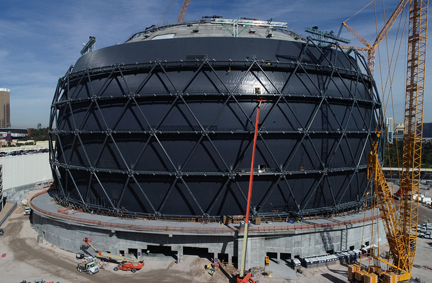
The long-awaited Madison Square Garden (MSG) Sphere entertainment venue first broke ground behind the Venetian in September 2018—the development costs at that time were estimated at $1.8 billion.

Since then, that figure has ballooned to over $2.1 billion and counting, surpassing the $1.9 billion price tag that the Raiders’ Allegiant Stadium fetched. This is despite the fact that its capacity is only around 20,000, compared to the 65,000 that Allegiant can hold.

The venue was first projected to open last year, but is now expected to be completed sometime in 2023.

MSG representatives have attributed the rising expenses and delays to supply chain hiccups, economic inflation and challenges related to the technological complexity of the project, but investors and industry analysts are starting to question whether or not the facility will be the home run that the company is promising.

Last month, during MSG’s third-quarter earnings call, Chief Financial Officer David Brynes assured investors that there was still an abundance of sponsorship interest for the venue, saying that “companies and brands are going to want to be associated” with the project.

He added that the majority of these opportunities “are with existing major sponsors” at other venues owned by the company, which makes future prospects “even more encouraging.”

MSG has said previously that it plans to supplement the added costs with cash flow from its other assets, which include the famed Madison Square Garden and Radio City Music Hall venues in New York City as well as the New York Rangers and New York Knicks professional sports franchises.

That said, JP Morgan analyst David Karnovsky said afterward in a research note November 10 that the financial prospects for the venue are “unclear, given a lack of details from the company.”

Others, including Paul Golding from Macquarie Securities, have posited that the cost hikes may not be over just yet—Golding said in a research note from December 13 that consolidating some of MSG’s live entertainment ventures into another publicly traded company could serve to help bolster the venue’s financial troubles, should they continue.

In an email to the Nevada Independent, Jeffries analyst David Katz said that part of the problem could be that MSG vastly underestimated the venue’s potential costs “from the outset.”

Despite the increased concern, however, there is little doubt that if MSG can deliver the one-of-a-kind experience that the Sphere projects to offer, it will eventually attain success given the healthy event schedule.

Katz told the Independent that after touring the venue recently, he believes that it “could become a must-see asset in Las Vegas.”

Upon completion, the Sphere is slated to host the largest LED screens in the world, one on the exterior that totals 580,000 square feet and one on the interior that spans 160,000 square feet. The visuals will be complemented by an arsenal of over 160,000 speakers. The company is expected to utilize these offerings for advertising purposes during non-event times.

In a previous statement, Andrew Shulkind, senior vice president of MSG Sphere Studios, said that the ”vision with MSG Sphere is to create immersive experiences that transport audiences to new places, and there are few landscapes more awe-inspiring than space.”

In addition to musical performances, the company has also said that the Sphere could be used for sporting events that don’t require a large playing surface, such as boxing and mixed martial arts, both of which are staples in the Las Vegas sports scene.

When it does get up and running, competition will be steep, given that Allegiant Stadium and MGM’s T-Mobile Arena have produced extremely high revenues since their openings. The two venues also play host to sports franchises—Allegiant with the Raiders and T-Mobile with the Golden Knights—but the Sphere will have to rely solely on one-off events. But the first announced event at the Sphere could be a blockbuster. The Irish band U2 has confirmed it will set up for a month-long residency once the facility opens performing a show that takes full advantage of all the Sphere’s interactivity.

Bumpy Launch for Ohio Sports Betting

With the change of the calendar from December 31 to January 1, the much-anticipated sports betting industry in Ohio has begun. Will there be a learning curve for operators and bettors? Bet on it. No matter—it’s here, learning curves and all.

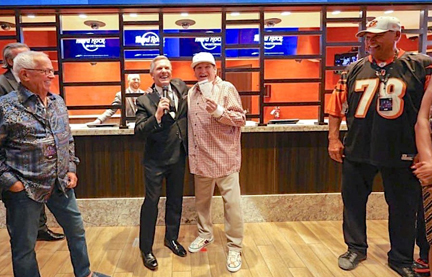
Entain and MGM Resorts’ BetMGM opened at the Great American Ballpark in concert with the Cincinnati Reds. Ironically, baseball legend Pete Rose, who is banned from the sport for gambling, was on hand to make the first bet.

SuperBook launched its seventh market in conjunction with soccer club FC Cincinnati. Betr brought its micro betting app to the Pro Football Hall of Fame Village.

So far, the state has licensed 20 mobile operators and nine retail ones, plus around 200 businesses for kiosks.

Meanwhile, the launch also attracted large crowds at Cleveland area sportsbooks. Parking lots at MGM Northfield Park and Jack Casino in downtown Cleveland were packed, according to Cleveland.com. Sports fans were ready when the ball dropped on New Year’s Eve.

Casinos in Ohio see sports betting as a way to tap new customers, especially on Sunday afternoons.

“We already have such fervent sports fans in Cleveland,” said one spokesperson for the Jack. “This is just another way to get them to be part of the game.”

It was a sentiment echoed by Scott Lokke, senior vice president and general manager at Jack. ”Gone are the days of you bet on wins and losses,” he said. “There are all these in-game bets now and it’s completely changed the industry. Fan engagement increases significantly. They are constantly in tune.”

All provided options for bar and food service, a variety of comfortable seating at tables and bars—and in the case of Jack and MGM—large theater-style seats. And, of course, walls covered with video screens.

Jack’s downtown offers table play in the sportsbook area so people can play at the tables and still watch the games they’ve bet on. MGM keeps the emphasis on sports. The Caesars Sportsbook has an upscale sports pub vibe. No slots and no table games, but the bar spans two levels.

Regardless of the venue, bets can be taken through a mobile sportsbook app, at self-bet kiosks or face-to-face with cash and an actual human.

Among customers surveyed, the most popular type of bet appeared to be the parlay, which offers several different wagers on one card. The odds are much higher and the potential win greater.

“It’s great because it didn’t really cost that much,” said Mike Racatl of Akron. He put down $40 on a parlay bet that will bring in $500 if he wins.

Mitchell Allen, proprietor of Zeno’s in Columbus, has kiosks in-house so patrons can place live bets.

“Sports betting is huge right now,” said Allen, who waited more than a year for this moment, according to WCMH. “Having the availability for us to make some money off it will be great for business. I think it will add another way for people to have fun in the bar and enjoy games they wouldn’t necessarily watch. I’m kind of learning on the go right now.”

Customers can wager as much as $700 each week through these businesses.

Donerick’s Pub will have kiosks in all of its locations. General Manager Marianne Lausch said their owner and managers took classes to minimize mistakes.

“Basically when you come up you will have the option to do your sports betting from here. You will still be able to do your keno and your Ohio Lottery, but you’ll be able to do everything from one stop,” Lausch said.

Ohio Governor Mike DeWine doesn’t oppose sports betting. If he did, he would not have signed the enabling legislation in 2021. The one thing he asks in return is to follow the rules. In less than a week into sports betting, already there have been instances where the operators crossed the line.

He shared his sentiments with the executive director of the Ohio Casino Control Commission (OCCC), along with a number of commission members.

“The companies that are doing the massive advertising need to be aware that they’re being looked at very closely by the governor and the Casino Control Commission in regard to statements that they are making,” DeWine said. “We believe that at least on several occasions they’ve already crossed the line,” he added without elaboration. “My message to them is that this will not be tolerated in the State of Ohio.”

The commission recommended a $350,000 fine against DraftKings for mailing to those under 21. State regulators said on Friday that the company mailed some 2,500 advertisements to people under 21, according to Cleveland.com.

Barstool Sportsbook violated the prohibition against holding an event on a college campus, in this case the University of Toledo.

DeWine also mentioned promotions operators are offering to lure customers, and those offering free betting credits.

“That’s a pretty clear line they cannot cross,” DeWine said. ”I also think they must be very careful, candidly, in regard to the claim of ‘free money and free gaming.’ When you look at the fine print, or try to figure out what it really means, it doesn’t mean what certainly is being implied by the TV advertising.”

DraftKings has a right to a hearing after which the commission will vote on any action.

“The Commission has been very clear about the rules and standards for sports gaming advertising with the industry and are disappointed with the lack of compliance we have seen despite reminders,” said Matthew Schuler, executive director of the OCCC, in a press release. “While we do not take administrative action lightly, DraftKings’ conduct in this case warrants the Commission’s intervention to ensure the integrity of sports gaming.”

DraftKings did not immediately respond to a request for comment from Covers.

Sportsbooks Differ on Refunds After Harrowing Scene for Bills-Bengals

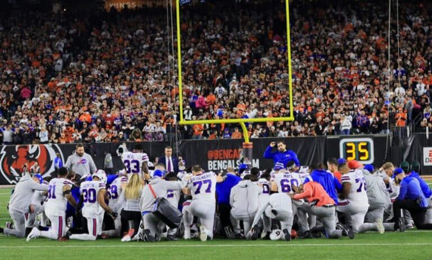
In the 1st quarter of the Bills-Bengals Monday Night Football game January 2, Bills safety Damar Hamlin made a routine tackle on Bengals wide receiver Tee Higgins; he then collapsed on the field after suffering cardiac arrest. Medical staff immediately administered CPR on Hamlin and were able to restart his heart, which ultimately saved his life—Hamlin remains in critical condition, but has regained consciousness and movement.

Once the shock of the incident wore off, coupled with Hamlin’s amazing recovery process, sportsbooks had a decision to make: what to do with the thousands of wagers that were placed on the postponed game—now cancelled.

The day after the game, several sportsbooks were in a holding pattern, not sure whether the bets should be considered live or to refund money to customers.

The NFL was noncommittal on whether the game would be suspended or rescheduled. After the game, the NFL held a conference call and the Associated Press asked what was the status of the game’s future.

“That’s not the consideration right now,” replied Jeff Miller, the executive vice president of communications for the NFL. “Our concern is for the player and his well-being. At the appropriate time, I’m sure that we’ll have a conversation around the next steps regarding the game.”

The next day, NFL Commissioner Roger Goodell announced the game would be cancelled.

That was of little guidance for sportsbooks, who would keep the action live if the game was going to be played.

DraftKings posted a statement on Twitter.

“When an official decision is made regarding the status of the game, we will assess the situation and communicate accordingly.”

Caesars and PointsBet kept mum on their plans, but a spokesperson for WynnBET told Sports Handle, “Our house rules state that all wagers would be void if the event were to not be played within 24 hours of the postponement,” indicating bettors there should expect their money back shortly.

By Thursday, however, the majority of sportsbooks had ruled the bets void. Bally Bet, BetMGM, Caesars, FanDuel and Hard Rock all announced the cancellation of bets.

Circa Sportsbook said its house rules were clear regarding the settlement of bets.

“Per our house rules, all football games must be played within eight days of the originally scheduled date and take place within a 100-mile radius of the originally scheduled venue,” Jeff Benson, Circa’s operations manager, told Sports Handle. “Once we have more understanding from the league as to when this game will be completed, then we’ll be able to refund any affected markets if the game won’t fall in that eight-day window.”

The AP eventually reported on January 5 that the NFL was canceling the game and it would not be rescheduled. That would mean that at most sportsbooks the bets would be refunded.

Two future bets that thankfully were not affected by the game was the season win total for both teams. Both the Bills and Bengals already hit their overs the previous week.

But the cancelled game between two division leaders in the AFC threw the playoffs into turmoil. The AFC championship game—penultimate to the Super Bowl, will now be played at a neutral site should either of these teams advance. The cancelled game would have decided who hosted the AFC playoff.

Ohio Joins Sports Betting States

A little over a year since a bill legalizing sports betting was signed by Governor Mike DeWine, sports betting in Ohio went live on New Year’s Day. A total of 16 mobile sportsbooks and 12 brick-and-mortar sportsbooks went live immediately, but dozens more will follow as Ohio is one of the first states to allow free-standing kiosks in bars, restaurants, grocery and convenience stores and others. More than 1,000 kiosk locations were approved prior to the launch.

Like in most states, the sports betting operators are offering a variety of bonuses to attract players. BetRivers, the brand of Rush Street Interactive, will offer a “second chance” where players are offered a bet of up to $500 with a code, as well as a string of “house specials” focusing on Ohio favorites.

“We are really excited to offer Ohio’s nearly 12 million residents betting action on the upcoming college bowls and the NFL’s big game, and expect our BetRivers sportsbook to be very popular as bettors come to appreciate and trust our high-quality and innovative product that we are known for in other states,” said Richard Schwartz, chief executive officer of RSI. “In addition to football, BetRivers offers our customers endless entertainment with countless other sports and betting options available for their pleasure, including an exciting range of bets on NBA and NCAA basketball.

“At RSI we are constantly striving to provide a more trusted betting experience by emphasizing usability, responsibility, and transparency. Our mission is to always put the player experience first – focusing on earning and retaining player trust through our array of proprietary betting options, fast and easy payouts, and best-in-class customer service. We can’t wait for Ohioans to experience all that BetRivers offers.”

Caesars Sportsbook emphasized its several locations, including Scioto Downs and inside the Rocket Mortgage FieldHouse, as a partner of the NBA Cleveland Cavalier, as well as its popular online book.

“Caesars Sportsbook is ready to offer a top-of-the-line sports betting experience to Ohioans,” said Eric Hession, president of Caesars Digital. “This launch builds on our legacy in Ohio of treating customers like royalty. We look forward to providing an added level of excitement to the sports entertainment experience, whether they use our mobile app or visit one of our new retail sportsbooks in Columbus or Cleveland.”

BetMGM also highlighted its two Ohio locations, MGM Northfield, outside of Cleveland, and the Great American Ballpark in Cincinnati.

“Today marks a monumental day of growth for both BetMGM and the sports betting industry,” said Adam Greenblatt, BetMGM CEO. “Ohio is home to thousands of passionate sports fans, who now have the opportunity to enjoy first-hand the excitement and benefits of wagering with BetMGM.”

At MGM Northfield Park, the BetMGM Sportsbook features an LED video wall and makes it easy for guests to access a variety of sports wagering options including five betting windows and 14 kiosks.

As the Official Sports Betting Partner of the Cincinnati Reds, BetMGM debuted an in-stadium sportsbook at the Great American Ball Park that is open to guests year-round. The 6,244 square foot space features 15 betting kiosks and three betting windows.

Matt Buckley, president and COO, Midwest Group, MGM Resorts International, said, “The addition of legalized sports betting at MGM Northfield Park strengthens our reputation as Ohio’s premier entertainment destination. This new amenity will give our guests the ultimate sports viewing experience, while creating more jobs and economic growth for the state.”

Other sportsbooks that launched on New Year’s Day include FanDuel, DraftKings, Barstool Sportsbook, bet365, PointsBet, and more. Ohioans will also be able to wager at retail locations such as Belterra Park, Hollywood Casino Columbus, JACK Cleveland Casino and Hollywood Gaming at Dayton Raceway, among others.

Along with the launch of sportsbooks in Ohio, a warning was sent out via advertising from the group, Ohio For Responsible Gambling (ORG). As part of ORG’s “Get Set Before You Bet” gambling education push, “Pause Before You Play” is designed to make bettors aware of the potential for problem gambling with sports betting.

“The challenges of problem gambling go far beyond the person placing a bet,” said Derek Longmeier, executive director of Problem Gambling Network of Ohio. “Families, children, and businesses all face consequences with a person’s gambling addiction.

“The majority of Ohioans who gamble will stay within their limits. As sports betting grows exponentially in 2023, it makes sense that we will see more challenges here in Ohio.”

It is estimated that Ohioans will bet up to $8 billion in the first year, with the state netting over $50 million in taxes and fees.

67K DraftKings Accounts Exposed in Account Hacks

More than 67,000 customers of the popular sports betting operator Draft Kings had their personal information compromised in a data breach in November, the company said recently. More than $300,000 was stolen from accounts, which has already been restored by DraftKings.

The hackers gained access to DraftKings’ database by a popular method called credential stuffing. The attack uses automated tools to make millions of attempts to sign into accounts with usernames and passwords that have been stolen from other online accounts.

If a user has used the same login information for another account, such as Facebook, Amazon, or Ebay, the hackers can successfully gain entry into another account.

The attackers aim to take over as many accounts as possible to steal personal and financial info, which gets sold on hacking forums or the dark web. However, the stolen information may also be used in identity theft scams to make unauthorized purchases or empty banking accounts linked to compromised accounts.

The company filed a data breach notification with the Attorney General’s office regarding the incident. They said the credentials needed to log into customer’s accounts came from a non-DraftKings source.

“In the event an account was accessed, among other things, the attacker could have viewed the account holder’s name, address, phone number, email address, last four digits of payment card, profile photo, information about prior transactions, account balance, and last date of password change,” the breach notification reads.

The company sent an email to those affected.

“At this time, there is currently no evidence that the attackers accessed your Social Security number, driver’s license number or financial account number,” the email read. “While bad actors may have viewed the last four digits of your payment card, your full payment card number, expiration date, and your CVV are not stored in your account.”

To try and prevent further attacks, DraftKings reset the passwords of the affected accounts and company officials said they implemented additional fraud alerts.

DraftKings is also telling customers to never use the same password that they use for other online accounts and to never share personal information with a third party.