Author: Casino Connection Staff

Sports Betting Operators Plagued by Account Hacks

It was bound to happen regardless of safeguards in place. Fraud, compromising mobile sports betting and online casino accounts. Even the presence of two step authentication is not a guaranteed safety net.

DraftKings acknowledged that hackers used a program called credential stuffing. In this crime, hackers buy a database of usernames and passwords, run these through sports betting and online casino sites to see if they can log into accounts. If so, the scammers change the bank account information to withdraw funds, change the phone number and/or email on the account to lock the real user out.

“DraftKings is aware that some customers are experiencing irregular activity with their accounts. We currently believe that the login information of these customers was compromised on other sites and then used to access their DraftKings accounts, where they used the same login information,” the company said in a statement. The firm promised full restitution for affected clients, which could come to more than $300,000.

“In light of recent reports of a hack impacting some other sports betting websites, we are reaching out to remind our customers about the importance of good cybersecurity hygiene,” FanDuel Sportsbook said in a statement.

BetMGM customers suffered fraud involving a poker hack, where the culprits created new accounts. Essentially, scammers were creating new accounts for players enrolled in the Global Payment Solutions’ VIP Preferred program. When funds were deposited into a stored bank account, the scammers changed the account info and withdrew funds to a different account.

Poker player Phil Galfond posted some of the communication from Global Payment Solutions when he reached out to close his account after it was hacked.

“They got back to me in less than an hour and closed my account (per my request). Impressive customer service experience during what’s likely an extra busy time for them.”

Global Payment Solutions released a statement to SBCAmericas:

“Our gaming business has been assisting law enforcement with an investigation into fraudulent accounts set up at unaffiliated third parties using stolen personal information. There has been no security breach or fraudulent accounts opened at our gaming business in connection with this investigation. We have been working closely with these third parties to ensure all impacted individuals receive refunds.”

MIRACL co-founder and CEO Rob Griffin spoke with SBCAmericas about how this fraud took place and what steps can be done to avoid a repeat.

New Jersey and Ontario mandate a two-factor authentication for all online accounts. Otherwise that decision is left to the consumer.

“This story serves as another example of the downfall of optional MFA. With credential stuffing attacks on the rise, it’s absolutely essential that MFA is mandated across the board, and fast. The fact of the matter is, if the victims had enabled MFA, this would not have happened,” MIRACL Co-founder and CEO Rob Griffin said. MIRACL is a multi-factor authentication company focused on consumer applications that is pushing for the expansion of that technology across regulated markets.

Griffin also mentioned that multifactor authentication did not guarantee accounts free of fraud. Indeed scammers can lockout account holders by turning the MFA against the consumer.

Here’s one way it works. A hacker reaches out to the phone company and reports that the sim card on the victim’s phone has been compromised, then moving text messages over to a different phone number. It’s very lucrative, Griffin said.

To make such a move more difficult, Griffin suggested Instead of a code as the second factor, require a specific device which can be cleared for access.

While the bulk of two-factor remains text message-based, customers should be careful to change their passwords frequently, and not use the same passwords across multiple accounts, and of course, enable two-factor authentication on their accounts.

DraftKings intended to refund those accounts impacted, the operator said. The company also urged customers to use unique passwords for its accounts.

“We have seen no evidence that DraftKings’ systems were breached to obtain this information,” DraftKings President and Co-Founder Paul Liberman said.

Liberman told Legal Sports Report DraftKings urged customers to use unique passwords and do not share passwords with anyone.

BetMGM has offered this response to ESPN and other outlets via a company spokesperson:

“We’re aware of a potential incident and are actively investigating. The security of our patrons’ accounts is of the utmost importance to us. We encourage any impacted patrons to contact our customer service department directly.”

Many states have implemented the ability to use two-factor authentication — including a code sent via text message upon login — to make accounts more secure.

Josh Cooper, 39, told Yahoo Sports that hackers attempted to withdraw more than $19,000 from his DraftKings account.

Cooper said, “I think that I was just right there while it happened, logged in, able to hit the cancel button as soon as it popped up.”

Las Vegas Sportsbooks Report Mixed Results on World Cup Betting

Moving the World Cup from the summer to the fall, because of host Qatar’s brutal heat in July, has had detrimental results for the event and now Las Vegas sportsbooks are adding to that misery.

Most sportsbook operators in Sin City are reporting that betting has been lower than when soccer’s premier event was held in Russia in 2018. Most have said, however, that they were mildly surprised they have gotten the handle that they have.

The biggest factor in the lower amount of wagers has been another type of football—the NCAA and NFL dominate this time of year and 2022 was no different.

Jay Kornegay, vice president of race and sports operations at Westgate Las Vegas, told the Associated Press that they expected lower volume for the World Cup.

“We knew going into this World Cup and it taking place during the fall and sharing that main stage with football, basketball and hockey was going to take some of that limelight away from the World Cup,” Kornegay said. “Normally, it has the main stage all to itself in the summer. This year, it’s different and it’s definitely showing.”

But Adam Pullen, Caesars Sportsbook assistant director of trading, told the AP that this year’s World Cup has the advantage of being more readily available to bettors since more states have legalized sports betting.

“It’s comparing apples to oranges, but at least we’ll see how it does compare and how drastic a difference it is,” Pullen said. “I’ve been pleased. I think soccer over the years keeps getting bigger and bigger.”

There was more interest from gamblers when the U.S. was in the tournament, but they were eliminated in the first round of the knockout stage by the Netherlands.

“It brings the casual fan in, the patriotic fan,” Pullen said. “If they know the U.S. is playing, then they’re more likely to place a bet on another match. It’s always good for the U.S. to be involved.”

Still, Kornegay said interest has picked back up and should increase as the teams play in the quarterfinals, semifinals, and the December 18 final.

“You had some teams that were upset early, and that’s usually not good for the handle as some of the popular teams,” Kornegay said. “But those teams still advanced. Like Argentina, one of the more popular teams, despite their first-round loss in group play, they advanced and look very good at this point.”

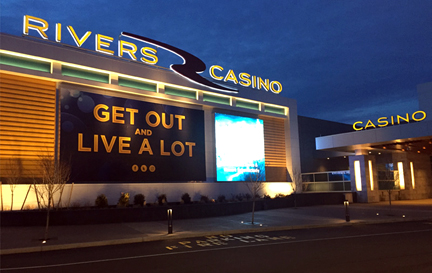
New Table Games Jobs at Rivers Casino & Resort Schenectady

Kick off the New Year with a new career at Rivers Casino & Resort Schenectady. If you’re looking for a fun, hands-on, and fast-paced profession, then becoming a table games dealer at Rivers Casino might be the job for you. Currently, Rivers Casino has openings for over 20 new table games dealers.

Rivers Casino’s next Dealer Academy, a $5,000 value offered FREE of charge, begins on Monday, January 2, 2023, at the Rivers Casino training center located at 220 Harborside Drive, Suite #201, Schenectady, NY 12305. Classes will be held from 11 a.m until 3 p.m. Monday through Friday for six weeks. A second class may be added depending on number of students. Applicants must be 21 years of age or older.

Interested Dealer Academy participants are encouraged to apply online today at https://www.riverscasino.com/schenectady/careers/dealer-school.

The program welcomes fun, energetic, and reliable participants of all levels—from beginners with no knowledge at all of table games to those with more experience. The Rivers Casino Dealer Academy teaches students a range of popular games beginning with Blackjack and other novelty table games. Once they pass their final audition and obtain their NYS gaming license, participants will be offered a part-time or full-time position as a table games dealer at Rivers Casino.

Rivers Casino offers table games dealers hourly wages and tips in excess of $25 an hour along with a generous benefits package including paid time off, medical/dental/vision plans, a 401(k) plan with company match, tuition reimbursement, and more. Complimentary shuttle bus service from the local CDTA blue line stop is also provided. Candidates must be able to work all shifts, including weekends and holidays.

Massachusetts Gaming Commission Begins Applicant Hearings

The Massachusetts Gaming Commission set aside three hours December 5 to hear from the public regarding the 15 applicants for a sports betting license.

Jeff Johnson of Plainville showed up—and that was it. No more speakers attended to voice opinions for or against any applications, according to the Boston Herald.

Johnson, vice chair of the Select Board, attended to cheer for Plainridge Park Casino.

“We look forward to this process bearing fruit early in the new year. In particular, here in Plainville. I will be grateful to know that the cars we see exiting the Commonwealth, carrying our money to sports wagering and table games just across the border from us, will have options to eat and spend and enjoy our money in our state,” he told the commission.

That the one speaker called for Plainridge Park Casino to be approved turned out ironic, given the discourse of the commissioners the following day over Barstool, the sports betting arm of Penn Entertainment, the parent of Plainridge Park.

The initial round of hearings was set aside for retail sports betting licenses for Category 1 casinos which would go live in late January or at least by Super Bowl time. These cover the three licensed casinos: MGM Springfield, Encore Boston Harbor and Plainridge.

Of the three it was Plainville which raised a red flag about Penn Entertainment’s ties to Barstool Sports. Penn, which acquired a stake of Barstool in 2020, has taken steps to buy the entire company for $387 million, according to GBH News.

As a result, Barstool has gotten its own sports betting app and branding inside Penn casinos. What has surfaced is a recent profile of Barstool, its founder, David Portnoy, and Penn Entertainment in the New York Times.

Titled. “Desperate for Growth, Aging Casino Company Embraced ‘Degenerate Gambler’”, the piece examined the Penn Entertainment-Barstool partnership and what could be termed a blasé approach to responsible gambling. It also detailed Portnoy’s link to problem gambling, recurring personal tax liens, and sexual assault allegations, according to SBCAmericas.

“You’re gonna have a Barstool’s-branded sports bar on the premises, according to the proposition that you guys are putting forward,” Commissioner Eileen O’Brien said. “And I’m concerned about some of the historical marketing associated with Barstool.”

Commission Chair Cathy Judd-Stein said the timing of the article and its promotion of gambling behavior could be deemed irresponsible.

“So now we have an obligation to reconcile what is very available publicly as to Barstool and really the significant personality attached to Barstool and what we’re gonna do about it as we think about this application,” Judd-Stein said. On the other hand, she also cited the responsible gaming presentation as excellent, except maybe for some of the Barstool information.

“I have seen that it cuts through, I believe, a lot of the clutter, I would say, in terms of these advertising opportunities as well,” Erin Chamberlin, the senior vice president of regional operations for Penn Entertainment, said. “It’s a very innovative approach to responsible gaming. It speaks to younger people in a different type of voice that I think resonates with them and really makes it stand out a little bit differently.”

O’Brien questioned Penn Entertainment representatives about a specific incident in the article when Portnoy and other Barstool personalities hosted a tailgate event—and all that tailgate events entail—near the University of Tennessee campus during a college football game. Despite efforts by Penn to explain that it was not on campus and geared more for alumni than students, O’Brien found the event troubling.

“I’m disturbed by that and then I’d love to have a conversation about how the company is addressing those types of things,” O’Brien said.

Penn Entertainment also tried to clarify the difference between Barstool Media and Barstool Sportsbook.

“I think one of the important things to keep in mind was this was the Barstool College Football Show which was broadcast from there,” Penn Entertainment Chief Compliance Officer Chris Soriano argued. “There was no sportsbook advertising. This was Barstool Media. This was not the gaming operation.”

How to handle betting and college sports is an industry-wide problem. Chamberlin also pointed out this is a problem that is not specific to Barstool, but something the entire industry is grappling with.

“But what we are not doing is specifically sponsoring any colleges or universities from marketing perspective with any sports betting agreement,” she said. “You have not seen Penn Entertainment enter into any of those types of agreements, very purposely.”

Barstool has a heavy presence in the media with 11 channels of distribution and 90 personalities, Soriano said. “We regularly train, we regularly coordinate with Barstool,” he told the commission.

Chamberlin said Barstool has taken an “innovative approach to responsible gambling” and suggested the irreverent tone speaks more effectively to younger bettors.

Judd-Stein didn’t necessarily buy it all.

“Are we being genuine here? Because I came across the article because you brought it to the attention of the MGC Investigation and Enforcement Bureau,” she said. Judd-Stein went on to ask if Barstool considers itself a responsible gaming advocate. If so, maybe the IEB should not have been given a copy.

“So now we have an obligation to reconcile what is very available publicly as to Barstool and, really, the significant personality attached to Barstool, and what we are going to do about it as we think about this application,” Judd-Stein said.

The commission postponed a vote on the Plainridge Park application..

But the process moves forward, despite concerns in some quarters about launching in-person sports betting in late January, but mobile wagers in early March.

“The legal department, as you have seen, has continued to crank out the regulations required for sports wagering, those are currently on schedule,” said Karen Wells, executive director of the commission.

The commission will hold meetings to review applications for mobile licenses tied to retail casinos in mid-December. Meetings regarding six companies seeking to host online wagering untethered to brick-and-mortar casinos should begin in January.

The casino applications reveal something as it pertains to the physical layout of sportsbooks at each property, according to Masslive.com

In the MGM Springfield application, property officials said they would rely on BetMGM as both the retail and mobile sportsbook. The company is a subsidiary of MGM Resorts International and British firm, Entain.

“BetMGM is one of the leading entertainment companies in North America, pioneering the expansion of online sports betting and gaming,” the application said.

The casino built a sportsbook with stadium seating, a 45-foot viewing wall, an enclosed wagering counter, with room for kiosks.

Encore Boston Harbor will allow patrons access to a handful of locales within the property, including the WynnBET Sportsbook, with ten betting windows and 29 betting kiosks.

“We anticipate that this venue will be one of the most popular destinations in New England for those who want a place to watch the game after placing their bet,” the casino said.

Kiosks will be available 24/7 with live betting windows offered 9 a.m. to midnight.

Plainridge Park officials will rely on kiosks and live teller windows. In addition to more traditional competitions, the casino will offer eSports betting like Counter-Strike:Global Offensive and League of Legends.

“Odds sheets will be available, and team members will be prepared to answer questions that guests may have regarding how to place a wager,” officials wrote.

Wells said applicant reviews are on time to issue licenses at the correct time frame to meet commission expectations for launch dates.

“The other piece that’s coming down the road is going to be the internal control submissions and review, along with review of the house rules,” she said.

Competition Heats Up for NY Casinos

The committee that will award the three casino licenses for New York’s “southern tier” are going to have quite a selection of proposals, no doubt all of them somewhat controversial. A casino in Times Square tops that list.

“An unprecedented and dangerous experiment,” says the latest pronouncement from the Broadway League. It is the strongest yet of its opposition to a casino in Times Square. The League, which represents theater owners and producers, has threatened a prolonged war against the largest commercial landlord, SL Green, and Caesars Entertainment who have zeroed in on the company’s property at 1515 Broadway.

The conflict between the ayes and the nays over a casino in New York City’s prime retail estate will play out in most of the locations evolving as the site. The two existing racinos are considered front-runners for two of the three licenses: Genting Group’s Resorts World New York City in Queens and MGM Resorts International’s Empire City Casino in Yonkers, N.Y., which would be allowed to expand their offerings into full-casino gaming if granted licenses. But even this could be controversial, with New York Governor Kathy Hockul being criticized for accepting campaign donations from each during her recently concluded re-election campaign.

A casino on Times Square, according to League president Charlotte St. Martin, will destroy neighborhood restaurants, increase congestion and bring nothing in return, according to the New York Post.

Previous statements predicted that a casino would “overwhelm the already densely congested area” and destroy the vitality of the famed theater industry.

St. Martin reminded supporters that the goal of casinos is to keep customers inside gambling, not outside dining.

“Limited budgets would be cannibalized by casino gambling” even as Broadway struggles back from the pandemic.

SL Green and Caesars say just the opposite, that an upscale casino would prevent the district from sliding back into its bad-old-days era of crime and blight.

Project details from the developer will not be released until the state asks for specifics later this month.

Sport Connections

The latest in the saga of licensing a casino in or around New York City brings the Mets and Yankees in a competition worth more than a World Series ring neither team could stick around long enough to collect.

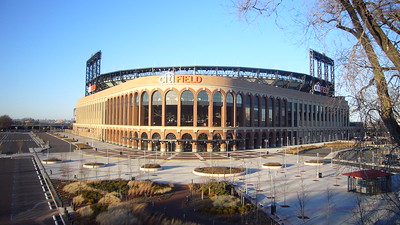
Mets owner Steve Cohen has already declared his site would be in Queens not far from Citi Field. His ace in a hole is the promise of a 25,000 seat soccer stadium in Willets Point. Cohen has discussed the casino proposal with Hard Rock and Las Vegas Sands as possible partners.

The Yankees are a relative newcomer in the scramble. Their dream location is Coney Island in Brooklyn. The Yankees co-founded, and own 25 percent of a firm called Legends, which is joining Thor Equities, Saratoga Casino Holdings and The Chickasaw Nation in the quest to secure a location. Oh yeah, Dallas Cowboys owner Jerry Jones owns 25 percent of Legends as well.

Legends’ itself has a stake in 1 World Trade Observatory, the Circle Line, the Intrepid Museum and Major League Baseball stores.

For those unfamiliar with Coney Island, the famous waterfront is where the Mets minor league team, the Cyclones play. Ask an old-timer and they’ll tell you the Dodgers called Brooklyn home for eons before abandoning the city for L.A. in the late 1950s.

“The Legends people are involved in the entertainment portion of the proposal, which is being put together,” said James Featherstonhaugh, a lobbyist in Albany and one of the principals on Saratoga Casino.

“This partnership allows officials to draw on the expertise and institutional knowledge of respected developers and operators while also fulfilling a generations-long promise to Coney Island by providing the region with a permanent, thriving local economic engine,” the parties said in a joint statement. “If awarded a license, Coney Island’s economy will no longer be so singularly dependent on summertime amusement park visitors.”

Saratoga Casino Holdings describes itself in the statement as having a “proven track record,” running what it claims to be the most successful racino in Upstate New York. The company operates 175,000 square feet of casino gaming space; plus entertainment venues, restaurants, nightclubs, and bars.

“My family has done business in New York for generations, including opening the first non-tribal casino in 2004 which has contributed over $1.2 billion to New York State education,” said Sam Gerrity, CEO of Saratoga Casino Holdings, according to casino.org. “We are thrilled to be partnering with Thor Equities Group, LLC and Global Gaming Solutions, LLC, two world-class organizations, to bring a community-friendly gaming and entertainment venue to Coney Island.”

The Chickasaw Nation, along with its business entity Global Gaming Solutions, operates more than 25,000 EGTs, 2,000-plus hotel rooms, 30-plu restaurants and a number of retail outlets.

“The business portfolio includes the largest casino in the world, WinStar World Casino and Resort which hosts 9 million guests annually,” said the company in a press release. The Chickasaw Nation also employs nearly 13,500 people.

“We currently enjoy an excellent strategic partnership with Legends at our flagship property WinStar World Casino and Resort (in Oklahoma). Our investment and involvement in this project reflect a desire to expand that relationship and extend it to additional strategic partners in Thor and Saratoga,” Global Gaming Board Chairman Bill Lance said.

The Yankees declined comment but Legends president Bill Rhoda, released a statement. “Legends is proud to work with Thor Equities and our gaming partners Saratoga Casino and The Chickasaw Nation to provide our operational and experiential expertise to bring the preeminent resort casino in New York to Coney Island.”

Rhoda said the Coney Island resort will offer world class entertainment and dining options year-round.

“We’re never afraid of a fight,” Melissa Gliatta, chief operating officer for Thor Equities, told the New York Post. “We’re scrappy. We believe in Coney Island. Coney Island needs this project.”

According to the Post, Cohen, who spent more than $334,000 on outside lobbyists, proposes a $780 million mixed-used project, which also includes 2,500 units of affordable housing, a hotel and the stadium for the New York City Football Club.

“They view the stadium plan as a big selling point for the casino,” said a City Hall source. “Anything that shows the state that more people will be coming to the Willets Point area will only help the casino plan.”

Cohen has also considered the parking lot adjacent to Citi Field. But would need to get the parkland designation on the lots removed.

A partnership between real estate heavyweight SL Green and casino-entertainment giant Caesars Entertainment has targeted Times Square.

Another competitor calls for a casino in the massive Hudson Yards project, this one from real estate and gambling giants Related Companies and Wynn Resorts, which would be located on the undeveloped western portion of the area, adjacent to the city’s Javits Convention Center, fulfilling prior housing and public space commitments.

Senator Joe Addabbo is the legislative point person for all things gambling. And the awarding of one of three casino licenses in the New York City area is a jackpot waiting to happen. What does he say about the competition for the third license? He says let’s go Jets as in move out of New Jersey and back to New York.

He wants the Jets to return to play in a new stadium proposed in Willets Point. In other words, he’s backing Cohen’s proposal, but would like to add a 70,000 plus stadium for the Jets, either as a separate field to the proposed soccer field or as a single, larger stadium for both sports, according to Legal Sports Report.

Addabbo knows this idea is half baked, or so far-fetched it isn’t baked at all.

Addabbo says there is room for both a soccer and football stadium, along with a hotel, casino and housing under Cohen’s scheme. Traffic would be a nightmare that would have to be addressed as would infrastructure.

“The Jets coming back to New York would be monumental.”

“If you’re building a stadium—and I know it’s only 25,000 seats—but if you’ve got that kind of incentive to build a stadium, if the opportunity is there with the land and the expiring leases, we can connect the dots, why miss this opportunity?” Addabbo said.

“To go into a brand-new stadium as the New York Jets and the marketing behind it, that just blows it out of the water.

The Jets currently share 82,500-seat MetLife Stadium with the Giants. However, either team can get out of the 25-year stadium lease in 2025 if they give the state of New Jersey 12-months’ notice.

New York State brought in $1.54 billion in online sports betting handle last month. Through November 20, New York operators have combined for $14 billion in handle, leading to nearly $600 million in tax revenue.

“Imagine if New Yorkers actually got to bet on an actual New York football club called the New York Jets,” Addabbo said. “I think it’s that much more of an enticing business that we would have for online sports betting.”

Mets owner Steve Cohen has continued lobbying efforts for a downstate casino in the Citi Field parking lot in partnership with Hard Rock through New Green Willets.

“I’ll reserve judgment until I see all the submissions,” Addabbo said. “Two in Queens, you’re really going to have to convince the siting board or the gaming commission that long-term this makes sense financially. That it’s not just a novelty. Is it sustainable? I think that’s a hard argument to make.”

Island Dream

Las Vegas Sands, possibly having fallen into disfavor with Cohen, announced last week it would shift its target to Long Island to avoid the traffic jams that a New York City casino would surely create.

Former New York Governor and now LVS Vice President David Patterson told a Chamber of Commerce meeting it makes sense.

“The most important thing about the location of a casino is proximity to the airports because a very high percentage of gamblers fly around the world and go to these casinos,” he told Newsday. “So, Long Island, particularly right at the edge with Queens, you can get to the airport in 15 minutes sometimes.”

Patterson mentioned Nassau County, in the middle of Long Island, as a possible site, particularly the Nassau Veterans Memorial Coliseum, the former home of the NHL New York Islanders, now used primarily as a concert venue.

Newsday also reported that sources indicated the UBS Arena/Belmont Park area in Elmont, now home to the Islanders, is also being considered for a site.

Sands executives Ron Reese and Norbert Riezler told the Chamber that LVS would invest up to $4 billion, which would include a large portion of meetings and convention space.

Judge Rules Oklahoma Tribes Lack Standing

U.S. District Judge Timothy J. Kelly recently granted motions to dismiss a lawsuit brought against the United Keetoowah Band of Cherokee Indians and the Kialegee Tribal Town over the Class III gaming compacts they signed with Oklahoma Governor Kevin Stitt. The lawsuit was brought in August 2020 by four other Oklahoma tribes: the Cherokee, Chickasaw, Choctaw and Citizen Band of Potawatomi. Kelly ruled the four plaintiff tribes did not have standing to challenge the compacts signed between Stitt and the Kialegee Tribal Town and UKB because those two tribes currently do not operate casinos.

The ruling, however, allows the portion of the lawsuit that challenges similar compacts signed by Stitt with the Comanche Nation and Otoe-Missouria Tribe of Indians.

The four plaintiff tribes claimed the compacts were illegal because they didn’t follow Oklahoma’s legal process for compacts. The Oklahoma Supreme Court supported those arguments in two separate rulings.

The four plaintiff tribes also sued the U.S. Department of the Interior which approved the compacts via “inaction,” meaning the compacts could take effect if the Secretary of the Interior took no action for 45 days.

Kelly wrote, “Plaintiffs have plausibly alleged standing to bring counts one through eight of their operative complaint insofar as those counts challenge the Comanche Nation’s compact and the Otoe-Missouria Tribe’s compact. But they have not plausibly alleged standing to bring counts one through eight of their operative complaint insofar as those counts challenge the United Keetoowah Band’s compact or the Kialegee Tribal Town’s compact.” The judge also dismissed claims the four tribes faced a “substantial risk” of future illegal competitive injury from the approval of the Kialegee Tribal Town and UKB compacts.

The new gaming compacts included several new provisions, in particular approval of sports betting for the Comanche and Otoe-Missouria tribes.

Facebook Stiffens Rules for Gambling Ads

Facebook parent Meta Platforms, Inc. has published new guidelines for the acceptance of gambling advertising by the social media giant.

“Authorized advertisers must follow all applicable laws and include targeting criteria consistent with Meta’s targeting requirements. At a minimum, ads may not be targeted to people under 18 years of age,” reads Meta’s new advertising policy, published on the company’s website.

Meta provided details explaining which forms of gambling require written permission. The new policies affect all forms of online gambling, such as advertising “common types of gambling include betting, lotteries, raffles, casino games, fantasy sports, bingo, poker, skill game tournaments and sweepstakes,” the site said.

Other forms of gambling that also require written permission for advertising include games that require a monetary value for entry featuring prizes with monetary value; this, according to the platform, includes not only cash but also digital currencies such as Bitcoin. Games that require the user to pay in order to play or pay to get an advantage in winning a prize of monetary value also fall under the regulation.

Finally, Meta announced that gambling ads “with destination (landing) pages that contain promotions for online gambling or games, even if there is no opportunity to gamble or game directly on that page, such as aggregator or affiliate sites” require written permission.

Free-to-play games are not subject to this regulation, as well as ads that promote gambling at retail locations such as brick-and-mortar gambling venues.

VICI Buys Remaining Pieces of Mandalay Bay and MGM Grand

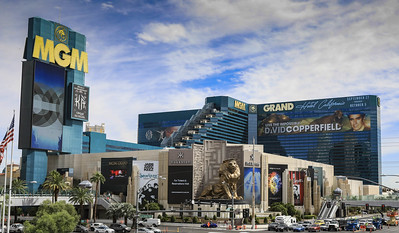
VICI, the Caesars real estate investment trust (REIT) spinoff, last week acquired the remaining 49.9 percent equity in two Las Vegas Strip casinos operated by MGM Resorts, MGM Grand and Mandalay Bay. The price of the deal was $1.3 billion, with a $3 billion debt load.

The deal makes VICI the largest landowner on the Strip, with control of over 600 acres. In addition to the two properties in last week’s deal, VICI owns The Mirage (soon to be managed by Hard Rock International), Park MGM, Luxor, New York-New York, Excalibur and other properties leased to MGM Resorts.

VICI last year acquired MGM Growth Properties for $17.2 billion, making it the largest REIT in gaming.

Bally’s To Hold Another Chicago Casino Meeting

Chicago city officials and Bally’s management will hold a community meeting on Monday, December 5 to address area residents’ concerns about the impact of Bally’s $1.7 billion casino coming to the Tribune Publishing site. River North residents said they want Bally’s to address extending streets and adding a public park at the casino resort location.

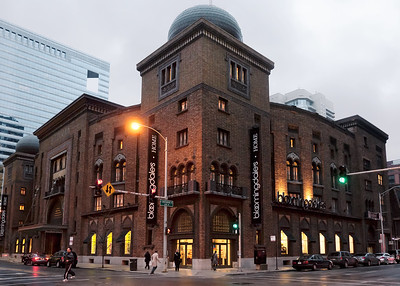
Meanwhile, hundreds of area residents and business owners attended Bally’s community meeting on November 29, where one of the main topics was Bally’s plan to open a temporary casino at the historic Medinah Temple downtown.

Fish Transportation Group Senior Consultant Tim Doron, senior traffic consultant on the casino project, presented a report commissioned by Bally’s on parking availability around Medinah Temple. The report indicated the 5,000-plus spaces in nearby garages were “adequate” to cover the estimated peak demand of 500 spaces during normal casino operating hours. Doron said, “Suffice it to say there is plentiful parking in the area,” as several members of the audience shook their heads.

Doron added he visited the parking garages near Medinah Temple during peak times and counted empty spaces. He also presented diagrams showing how the valet parking, loading and unloading zones and ride-share systems would operate on the streets surrounding the casino.

Chicago Police First Deputy Superintendent Eric Carter presented the department’s safety plan, which would include additional patrols, private security hired by Bally’s, increased surveillance cameras and officer training. Carter said, “We’ve done everything we can to work collaboratively with Bally’s to ensure public safety in and around the venue.”

42nd Ward Alderman Brendan Reilly, whose ward includes the Medinah Temple, said, “Bally’s public safety plan is essentially a PowerPoint presentation with a handful of bullet points with no specifics about staffing, force levels, overtime, compensation, all the stuff neighbors want to know about.”

27th Ward Alderman Walter Burnett, whose ward includes the permanent casino resort, said, “Everybody is going to be working hard to make sure that the casino has the least amount of challenges for people possible. The city has already taken Bally’s money, $40 million. It’s a done deal, it is what it is so they have to make it work.”

At the meeting, Christopher Jewett, Bally’s vice president of corporate development, and Ameet Patel, senior vice president of regional operations, also discussed job fairs and Bally’s planned community-based initiatives.

The permanent waterfront facility will feature 3,400 slots and 170 table games, plus a 500-room hotel with a rooftop bar, 10 dining options, 65,000-square-foot entertainment center, 20,000-square-foot exhibition hall and outdoor music venue. Bally’s will make yearly payments of $4 million to the city which also will collect an estimated $200 million in yearly tax revenue. Bally’s also will invest $74 million in infrastructure improvements in River West.

Genting Asking $1 Billion For Miami Property

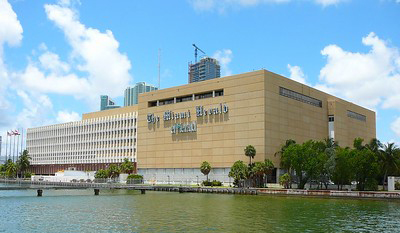
Malaysia-based Genting announced it will sell its 15.5-acre tract in downtown Miami. The sale marks the finale of Genting’s plans to open a Miami casino, which depended on changes in state law that to date haven’t happened.

Genting bought the former Miami Herald parcel in 2011 for $235 million and has listed it for more than $1 billion with the Avision Young commercial brokerage. Michael Fay, managing director at Avision Young’s Miami office, said, “It’s a transformational, iconic site. We already have interest in excess of $1 billion.” He added a future developer is likely to be allowed to build 60-story-plus towers with up to 7,500 residential units and 20 million square feet of commercial space. “This site is among the most valuable in the United States, let alone South Florida,” Fay said.

Genting still owns a complex north of the former Herald site that includes the Omni mall and a Hilton hotel, giving it the property it would need if it gained a casino license in the future.

The pending deal is bound to set a new peak for Miami commercial real estate prices.

The former Herald site is the last large undeveloped, privately owned waterfront property in downtown Miami. Since Genting demolished the former Herald facility in 2014, the land has sat idle except for occasional special events such as Art Miami and the Miami International Boat Show.

Robert DeSalvio, president at Genting Americas East, said the company still has plans to redevelop its real estate holdings north of the Herald site.

“South Florida’s popularity only continues to grow, and we are incredibly optimistic about our opportunity to bring a unique development to the area,” he said. “With our focus now locked in on 10 acres of prime real estate, we look forward to accelerating the process of outlining a project, putting shovels in the ground and getting a project built that all South Floridians can be proud of.”

Wynn Completes Sale, Leaseback of Encore Boston Harbor

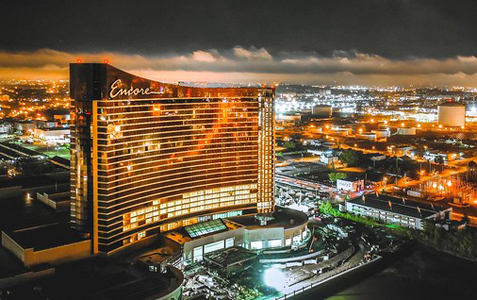
Wynn Resorts confirmed that it has completed the previously announced sale/leaseback arrangement for its Encore Boston Harbor property. The company sold the resort’s real estate to Realty Income, a real estate investment trust, for $1.7 billion.

Wynn will lease the property for 30 years at a rate of $100 million per year, and maintain all operations. Under the terms of the agreement, rent will increase at a rate of 1.75 percent for the first decade, and the greater of that percentage or the consumer price increase over the remaining 20 years. The deal comes in at a cap rate of 5.9 percent. It is Realty Income’s first lease agreement in the gaming industry.

According to Wynn Resorts, proceeds from the deal will improve its liquidity position, which currently stands at $4.4 billion.

Station Casinos Buys, Sells Las Vegas Plots

Station Casinos is continuing to stay extremely active in and around the Las Vegas Valley—the company completed two large transactions in just the last few weeks, as it maintains its quest to double its portfolio in the area by 2030.

Station recently finalized the purchase of a 67-acre plot near Losee Road in North Las Vegas for $55 million, per county records. The company now plans to build a casino-resort with over 500 rooms and 75,000 square feet of gaming space on the site, which was already approved by the North Las Vegas City Council last month.

The land was sold by Pacific Oak Strategic Opportunity REIT, which did not comment on the sale. The developer now has just one remaining plot available for sale of the 1,670 acres it originally purchased near Tule Springs.

During council hearings, attorney and Station representative Rebecca Milterberger told city officials that the Losee casino project would be developed in two phases, but did not give an exact timeline for construction, given the amount of other projects Station is currently juggling.

Scott Kreeger, president of Station’s parent company Red Rock Resorts, told the Las Vegas Review-Journal that the Loss project is not an immediate priority for Station, partly because the company wants to wait for the area to further develop.

“We think long term, that’s a very dynamic growth area for residential and business,” Kreeger told the Review-Journal. “As that area matures, we’re well positioned to take advantage of that.”

At the time, then-Mayor John Lee praised the project as “something positive for the area,” and added that he was “looking forward to something like this coming to our community.”

In addition to the recent purchase, Station also completed the sale of 21.3 acres immediately adjacent to its ongoing Durango casino project in the southwest part of town for just under $24 million.

The land was sold to Ovation Development Corp., which plans to build apartments on the site, according to county records. Neither Ovation nor Station commented on the recent sale.

This isn’t the first time the two sides have worked together, with Ovation having purchased 5 acres behind Sunset Station in late 2021 with plans to develop a 55-and-older residential area.

Station closed numerous properties throughout the area that never reopened from Covid closures, including Wild Wild West, Fiesta Rancho, Texas Station and Fiesta Henderson. All four will be demolished, but the Wild Wild West land will be repurposed whereas the other three plots will be sold to non-gaming entities.

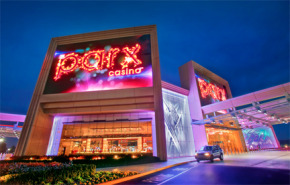
Parx Shippensburg to Open in February

Parx Casino Shippensburg, the Category 4 “mini-casino” and satellite of the successful Parx Casino in Bensalem, will open in February 2023, the operator announced on its Facebook page.

The 73,000-square-foot casino, originally slated to open last month, will feature “approximately” 500 slot machines, 48 electronic table games, a “first class” sports bar and 100-seat restaurant, according to the operator.

The restaurant will feature a full bar and wide selection of beers. The menu will feature stone-baked pizzas made to order in an onsite, live-fire oven as well as burgers, sandwiches, chicken parmigiana, spaghetti and meatballs, fish and chips and much more.

The casino will also feature sports wagering kiosks.

The Parx casino will be Pennsylvania’s fourth Category 4 casino. Category 4 casinos were created by Pennsylvania’s 2017 gaming expansion law to address underserved areas. The so-called “mini-casinos” are restricted to 750 slot machines and 30 table games on opening with an additional 10 tables via petition.

Bally’s Adjusts Chicago Casino Plans

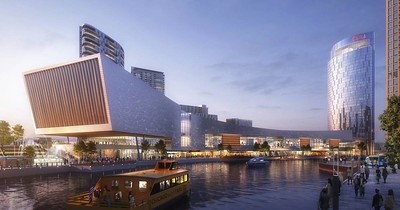
At the latest and final community engagement meeting about Bally’s $1.7 billion downtown Chicago casino, company officials said in response to residents’ requests that the project design will include more green space and traffic solutions.

Earlier, also responding to residents’ concerns, Bally’s officials canceled a proposed pedestrian bridge over the river. Besides the casino, project plans also include a hotel, theater and outdoor music venue.

Brad McCauley, a landscape architect with Site Design Group, told attendees, “We want people to come in through the green and really enjoy their time whether or not they’re going to the casino.” Christine Carlyle, director of planning at SCB Architects added, the updated design places the casino at the center of a “series of experiences,” including a river walk lined with restaurants, bars, seating areas and water access.

Bally’s West Senior Vice President Ameet Patel assured attendees the casino will not resemble a “glitzy Las Vegas Strip joint.” He said bright lights and loud concerts will be held indoors, with outdoor spaces preserved for public recreation.

He stated, “Look at where this process was in the green space six months ago, and look at where we are today. We have expanded the dog park. We have expanded the green space. We have expanded the riverwalk. This is a productive exercise that we want to continue for months to come. Let’s all be part of the solution and continue this dialogue.”

During the 90-minute public comment period, several speakers praised Bally’s willingness to adjust designs after receiving feedback. However, many area residents who spoke said they’re still concerned about increased traffic and noise. Tim Doron, senior traffic consultant at Fish Transportation Group, said traffic probably will increase at night, but not during rush hour. He said more than 30 traffic improvements are planned, including additional signals and street extensions.

A temporary Bally’s casino is expected to open in June at the historic Medinah Temple in River North. It will operate for three years while the permanent venue is built at the current site of the Freedom Center, where the Chicago Tribune has long been printed.

On December 12, the city’s Plan Commission will hold a hearing on a proposed zoning amendment for the casino site. Chicago officials have said the Bally’s facility will generate $200 million in annual tax revenue for the city.

New Resort-Casino Project Proposed for Reno

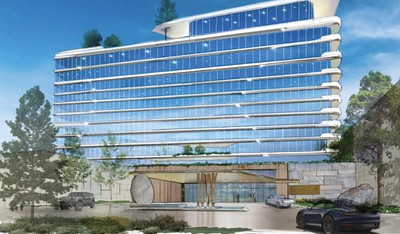
Elevation Entertainment, a California-based real estate development firm, has submitted proposals to the city of Reno for a new hotel-casino project, named Firecreek Crossing Resort-Casino, which would represent the first ground-up casino project for the city in over 20 years.

The proposed casino would be located in one of the busiest areas of the city, on the corner of South Virginia Street and Kietzke Lane, very close to the Reno convention center. According to the filings, the development would also include dining options, a public park and a beer garden.

Elevation is known for building and overhauling small-scale hotels, and it has built two card rooms in California, the Seven Mile Casino in Chula Vista as well as Sacramento’s Stones Gambling Hall.

In an interview with the Reno Gazette-Journal, Elevation CEO Ryan Stone said the new project “is going to be a complete game changer for entertainment in Reno. Reno deserves it and needs it, and when people see the design and how much detail we put into making this great, people are going to be excited.”

According to Stone, Elevation first hatched the idea to expand into Nevada after the Covid-19 pandemic forced business closures in California. He noted that “we also liked Nevada’s pro-business approach while California had a different approach.”

Interestingly, this is not the first time a company has proposed to build a casino on the same site—in 2016, Station Casinos bought the lot and proposed a 90,000 square-foot casino with a 21,000 square-foot gaming floor and other amenities.

However, Covid struck them down as well, and even though the company pledged to move forward with the project, the land was eventually sold to Elevation. The sale has not been finalized, but Stone confirmed that the company is contractually bound to purchase the plot.

Stone told the RGJ that “it took two years to put all the pieces together. That’s the reality. It’s a complicated deal with a lot of moving parts but we’re good at complicated deals.”

One challenging aspect to the deal is that it involves two separate plots—the 7.76 acres sold by Station as well as a 12-acre plot nearby. The size of the land will allow Elevation to offer more rooms, which was a big sticking point for Station’s previous proposal.

John Farahi, CEO of Reno’s Atlantis Casino Resort, said in 2016 that he felt Station should “bring a project that brings in more tourism and enlarges the pie, which helps the whole community.”

Firecreek Crossing is slated to offer 201 rooms and 48 suites, with 1,250 slots, 40-plus tables and a sportsbook.

An attorney for the project, Garrett Gordon, told the RGJ that he feels confident the city will approve the casino, because of the taxes it would generate for an otherwise vacant area.

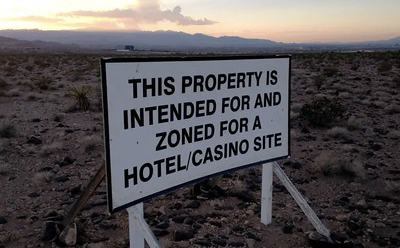
Gordon said that approval “shouldn’t be controversial,” because if you look at the site as it stands now, “there’s needles and there’s garbage there. It has campaign signs that everyone is sick of looking at.”

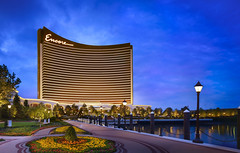
Massachusetts Questions Encore Boston Harbor Expansion

Massachusetts regulators are researching the state’s 2013 gaming referendum and gaming law to determine whether Wynn Resorts’ expansion to a new development across the street is permitted to have gaming.

The extension originally was planned as a non-gaming addition, which would not require gaming regulation. However, the company recently altered the plans to include gaming in the addition. Regulators say they want to study the 2013 ballot question to ascertain whether voters approved gaming in general by Wynn Resorts, or only at the specified Encore Boston Harbor location, which did not include the addition.

The gaming law created after the successful referendum is silent on expansions of gaming properties. The 2013 ballot question was:

“Shall the city of Everett permit the operation of a gaming establishment licensed by the Massachusetts Gaming Commission to be located at the property located on Horizon Way (off ‘Lower Broadway’) in Everett, formerly known as the Monsanto Chemical Site?”

The host community agreement signed by Everett officials does provide that Wynn may “acquire land in the City in and around the area depicted in Exhibit A (the current Encore Boston Harbor site), but did not address whether those nearby properties can host gaming.

The commission told Wynn officials to return at the net meeting with a presentation showing the boundaries of the former Monsanto chemical site.

Dream Las Vegas Operator Acquired by Hyatt

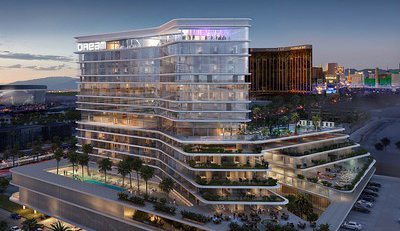
Industry giant Hyatt Hotels Corp. has announced that it is acquiring Dream Hotel Group for a starting price of $125 million, with additional consideration of up to an additional $175 million as more Dream properties, including its Dream Las Vegas casino on the Strip, come online over the next six years.

The takeover will encompass 12 existing properties, and management agreements for an additional 24 properties that have yet to open.

The 531-room Dream Las Vegas project is located near the intersection of Russell Road and Las Vegas Boulevard. The California-based firms Contour and Shopoff Realty Investments are developing the resort-casino, which is slated to open in early 2025.

Shopoff Realty CEO Bill Shopoff told the Las Vegas Review-Journal that he feels Hyatt’s acquisition is “a huge positive for the project given the depth of the Hyatt reservation system.”

The project, which was unveiled in February 2020, has already faced some challenges, including a number of design changes that were required due to the casino’s close proximity to Harry Reid International Airport.

In addition, when the Pinball Hall of Fame relocated to a facility adjacent to the Dream site, it encroached on the casino’s property, which , according to a lawsuit subsequently filed by Shopoff, prevented a drainage outlet from being built “as originally designed and engineered.”

The case has since been settled, with Shopoff and company conceding a small portion of land in exchange for payment, the amounts of which were undisclosed.

Virginia Hard Rock Breaks Ground

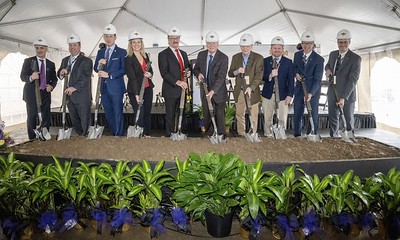
A groundbreaking ceremony recently was held in Virginia at Hard Rock International’s $400 million Hard Rock Hotel & Casino in Bristol. The permanent casino is expected to open in spring 2024. Currently Hard Rock Bristol is operating at a temporary location in the former Belk store at the Bristol Mall.

Allie Evangelista, president of Hard Rock Hotel & Casino Bristol, said, “This is an exciting day for Bristol. Our temporary casino has been a tremendous success, and we already have welcomed guests from all 50 states. I cannot wait for the next step, when we open the permanent casino in 2024 and have even more entertainment, dining and music amenities to offer our customers.”

The 300,000-square-foot permanent casino will offer 1,300 slots, 50 table games, a sportsbook, food and drink options, including the iconic Hard Rock Café, 3,200-seat performance venue and a 20,000-person outdoor entertainment venue.

The venue is expected to create 1,200 to 1,500 jobs and attract 2 million to 4 million visitors annually. A 2019 state-sponsored study projected the casino could generate $3.7 million in yearly local tax revenue for the city. The Virginia Lottery reported the temporary casino has generated at least $14 million in revenue each month from August through October.

Jon Lucas, chief operating officer at Hard Rock International, said, “From the very start, this property’s economic and community impact has surpassed expectations, and we are thrilled to unveil what’s coming next. Building on our momentum, and with the incredible support from the Virginia Lottery and the Bristol community, we are ready to begin the next chapter.”

Meanwhile, things are not going as smoothly in Richmond, which, like Bristol, was one of five cities approved by the legislature for a casino. Voters in 2021 narrowly rejected Urban One’s proposed $565 million ONE Casino + Resort. Earlier this year, Richmond was blocked from holding a do-over voter referendum after the General Assembly approved a budget that would block that vote until November 2023.

Petersburg officials are behind the move to prevent the Richmond casino, including state Senator Joe Morrissey, who said, “I’m going to fall on my sword on that one. I am not interested in two casinos.”

A legislative study concluded casinos in Richmond and in Petersburg, 25 miles apart, both could be profitable. The study said the Petersburg would be smaller and generate annual net gaming revenue of $140 million and the larger Richmond casino would generate $249 million. If both casinos were operating, the study said the state would receive $49 million in tax revenue.

Richmond officials are still pushing for the ONE Casino + Resort. The original development partner, Peninsula Pacific Entertainment was purchased on November 1 by Churchill Downs Inc., which stated it would continue “P2E’s ongoing effort, in partnership with in Richmond, Virginia.”

Elsewhere in Virginia, Rivers Casino in Portsmouth expects to open January 15, 2023. HeadWaters Casino in Norfolk plans to open a temporary location in March and a permanent location in 2024. Caesars Virginia in Danville also will open a temporary location in 2023 and a permanent casino in late 2024.

Pennsylvania Agrees to Cut Horse Racing Dates After Slot Slump

The concept behind racinos was simple: install slot machines at tracks and take a portion of the revenue generated would go to the Pennsylvania Race Horse Development Trust Fund, which increases purses at the state’s four tracks. Higher purses mean better horses, which means higher handle.

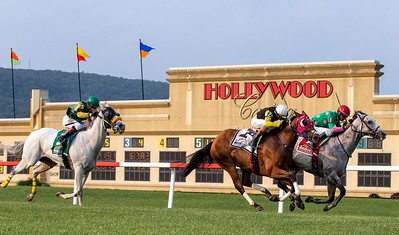
And it works. Most of the time. But a continued decrease in slot play at Hollywood Casino at Penn National Race Course has resulted in a cut back in live racing dates of 10.5 percent in 2023. The casino asked Pennsylvania Horse Racing Commission’s for—and received approval for—a drop in dates from 150 to 134, according to Eric Johnston, director of racing operations at Penn Entertainment.

To many, the idea of a decline in slot play is unheard of. But Todd Mostoller, executive director of the Pennsylvania Horsemen’s Benevolent and Protective Association, blames the rise in gaming competition and the proliferation of unregulated skill games, which cut into Hollywood Casino’s numbers.

“We had a mature gaming market in Pennsylvania,” said Mostoller, whose organization represents horse owners, trainers and backstretch workers at Penn National Race Course. “There is only so much money for gambling at one’s disposal and now they’ve legislated casinos in York and Morgantown with another coming in Shippensburg.”

Revenues generated by Hollywood’s York and Morgantown “mini-casinos” do not have to donate to the trust fund. Neither does revenue from online casinos and sports betting.

Thoroughbred horse racing will run Wednesday through Friday next year at the race course.

The schedule will also include two breaks: a two week one in April and a four week stoppage from late September to late October. The track tends to operate year round.

Moreover, each night will feature seven rather than eight races, But the average daily purse will stay at $146,000 a day, Johnston told Pennlive.com.

The loss of 16 dates equals a $2.33 million drop in available purse monies for owners, trainers and jockeys.

“They are all small businessmen back here and it’s a big deal if there are fewer chances for revenue production. It’s not an easy deal,” Mostoller said.

Governor Tom Wolf preferred to use slot revenue to create a scholarship fund for low and moderate income families. But horse owners and breeders said specific language in the trust bars that kind of use.

Fertitta Adds Cripple Creek casino to portfolio

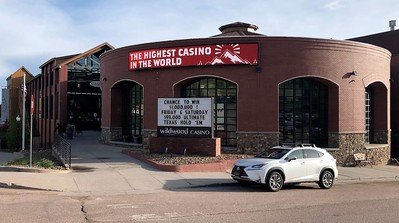
Texas billionaire Tilman Fertitta, who built his fortune in restaurants and has branched out into casinos, added another property to his holdings. Fertitta acquired Wildwood Casino and Hotel in Cripple Creek, CO last week.

Fertitta already owns the Golden Nugget in Las Vegas, as well as casinos in Laughlin, NV, Biloxi, MS, Atlantic City, NJ, and Lake Charles, Louisiana. Tilman, who Forbes estimates his worth at $8.1 billion, owns several restaurant chains and the Houston Rockets.

The latest casino, located about 100 miles south of Denver, has 528 slot machines, 12 tables for poker, blackjack, craps, roulette and baccarat, and is listed as the largest facility in the area, according to the Colorado Division of Gaming.

“Located just 45 miles from Colorado Springs, Cripple Creek has grown significantly over the years attracting visitors from across the country,” Gerry Del Prete, chief operating officer of gaming for Fertitta Entertainment, said in a news release. “We are thrilled to join this community and look forward to enhancing the property and bringing our brands to this new destination city.”

Like his other casinos, this one will be rebranded with the Golden Nugget name. Fertitta Entertainment was required to file documents with the Securities and Exchange Commission to become a publicly traded company, the price for the Colorado casino was listed at $43 million. The company ended up not going public.

The previous owner of the casino was American Gaming Group. AGG had opened the casino in 2008 and recently spent $14 million to build a 101-room hotel.

The deal was brokered by Innovation Capital.

Joseph Canfora, managing partner and CEO of American Gaming Group, Wildwood’s parent company, said, “Innovation Capital’s advice and execution on the sale process resulted in a value creating transaction for AGG’s shareholders. We have worked with Innovation on numerous transactions over the years and we value our relationship with them and their client-first approach to the business.”

Fertitta is not done trying to acquire casinos. It has long been rumored that the 65-year-old is eyeing the Las Vegas Strip to either purchase an existing casino or build on vacant land.

“Yes, 100 percent, I’m interested,” Fertitta told the Houston Chronicle in 2019 regarding the Las Vegas Strip. “I’ll try to pick off one or two properties.”