Author: Casino Connection Staff

California Ad Strategy for Prop 27 Calls for Less TV, More Mail

Some supporters of California’s Proposition 27 think the TV ad blitz in support and in opposition to the proposition is close to becoming an annoying negative. So FanDuel and BetMGM plan to pivot to a direct to consumer approach, easing up on the TV ads.

“The feedback we’ve had is that there has just been too much TV around Prop 27, and the counter-messaging from Prop 26 [is] just overwhelming voters,” BetMGM CEO Adam Greenblatt told Sports Handle.

The latest approach centers on direct mail ads along with digital marketing.

A recent survey by the Public Policy Institute of California showed that approximately 54 percent opposed Prop 27 and 34 percent supported the initiative.

“What I’ve learned is, in elections, you just never know,” Greenblatt said. “Polling is directional but not determinant.”

“They don’t have the same [mechanisms] to verify the rigorous Know Your Customer processes that our customers have to go through,” FanDuel CEO Amy Howe said at a recent panel. “The black market does not protect consumers. At the end of the day, this is going to fuel underage gaming.”

The California online sports betting market could produce a handle of $3 billion in annual gross gaming revenue, according to estimates from gambling research firm Eilers & Krejcik.

Regulator: Kansas Sports Betting Off to Good Start

Kansas Lottery Executive Director Stephen Durrell told Legal Sports Report there have been few problems since the market opened September 1. There are six operators taking bets—a total of 2.4 million in the first 10 days, according to the Lottery.

“On the part of the lottery, platforms and casinos, there are no complaints,” Durrell said. “There was one little hiccup with a credit card company. They weren’t processing transactions for three or four days, but that’s been the only hiccup. And we didn’t get any complaints on that.”

Those 2.4 million bets were worth more than $39 million in handle, according to the Lottery. Durrell said the launch prior to the first NFL betting weekend was key to early success.

“During the session, there were so many numbers thrown around, it was sort of anyone’s guess, so we erred on the side of caution,” Durrell said. “We knew there would be good numbers with the start of the professional football season, but they turned out to be very good.”

Each of the four Kansas-owned casinos can partner with up to three sportsbook operators. Just six license slots are filled, according to Durrell. By new year’s, another two may be taking bets.

“All of our casino partners are happy with the platforms they have,” Durrell said.

The live Kansas sportsbooks are:

  • Barstool Sportsbook
  • BetMGM Sportsbook
  • Caesars Sportsbook
  • DraftKings Sportsbook
  • FanDuel Sportsbook
  • PointsBet

GeoComply: NFL Bets Pouring in From Inside Stadiums

Data from GeoComply, a Canadian-based cybersecurity and fraud prevention firm, has indicated that NFL fans are placing bets from inside stadiums at record levels thus far this season.

According to the company’s latest report, multiple games this season have registered more than 60,000 location checks at the stadium itself, including 66,000 checks at State Farm Stadium in Phoenix during the September 11 game between the Arizona Cardinals and Kansas City Chiefs, as well as a whopping 76,400 checks at Lincoln Financial Field for the September 19 Monday Night Football matchup between the Philadelphia Eagles and Minnesota Vikings.

So far this year, a total of nine legal sports betting states have hosted NFL games, those being New York, New Jersey, Tennessee, Louisiana, Colorado, Michigan, Arizona, Pennsylvania and Illinois.

The data from the recent report was taken from inside stadiums as well as immediate surrounding areas such as parking lots and other tailgating areas. For each game, GeoComply began tracking location checks for a period of seven hours, starting three hours before kickoff and running until for an additional four hours after that.

CEO Anna Sainsbury said in a statement that the data represents “a clear win for states that choose to regulate sports betting.” According to the company, more than 10 percent of in-person attendees in regulated states thus far have engaged with licensed sportsbooks.

“This wealth of data is so important for lawmakers and sports leagues to determine sports betting policies in their states and at their stadiums,” she added.

Although the season is still very young and the idea of wagering while at the game itself is still relatively foreign to some, the report has shown that stadiums are quickly becoming betting hubs in the cities they are located.

In one instance, the September 18 matchup between the Pittsburgh Steelers and New England Patriots at Acrisure Stadium in Pittsburgh accounted for just under 30 percent of all sports betting activity throughout the entire city during the seven-hour time window.

Twitch Bans Streams of Offshore Gambling Sites, Sportsbooks OK

Twitch, the streaming platform whose growth has primarily been fueled by video game content creators, has announced that starting October 18, it will ban streams featuring gambling websites that “aren’t licensed either in the U.S. or other jurisdictions,” due to a lack of “sufficient consumer protection.”

However, the Amazon-owned company also said that it will continue to allow streams that feature sports betting, poker and fantasy sports.

A number of well-known gambling sites have already been named in the upcoming ban, including Rollbit, Stake, Roobet and Duelbits. Twitch has said that those are just the first to be mentioned, and more will follow in the near future.

The company released the following statement via Twitter: “Gambling content on Twitch has been a big topic of discussion in the community, and something we’ve been actively reviewing since our last policy update in this area. While we prohibit sharing links or referral codes to all sites that include slots, roulette or dice games, we’ve seen some people circumvent those rules and expose our community to potential harm.

“So, we’ll be making a policy update on October 18th to prohibit streaming of gambling sites that include slots, roulette, and dice games that aren’t licensed in the U.S. or other jurisdictions that provide sufficient consumer protection.”

Gambling on Twitch has been somewhat controversial for several years now, but the issue reached a boiling point on September 18, when popular streamer ItsSilker admitted to scamming his audience as well as other streamers to the tune of $200,000 in order to pay for his gambling addiction.

Since then, numerous high-profile Twitch users have spoken out about the company’s relaxed stance on gambling streams, with some even vowing to stay off the site through the end of the year as an act of protest.

Others have banded together to raise funds in order to pay back subscribers who fell victim to the scam. Unfortunately, a large number of people have already come forward, meaning that ItsSilker likely perpetrated his scam for multiple years.

Twitch’s existing guidelines already prohibit users from referring viewers to websites that feature slots, dice games or roulette, and they are also banned from offering promotional deals and discount codes from such sites as well.

However, gambling streams are extremely popular on the site, according to data from a site called TwitchTracker. There are believed to be over 50,000 viewers watching gambling streams at any given time, most of which are using cryptocurrencies such as bitcoin and etherium to wager. An earlier report from Bloomberg indicated that a large number of viewers have developed signs of problem gambling after watching streams for prolonged periods of time.

According to StreamHatchet, viewers have watched more than 200 million hours of gambling streams on Twitch thus far in 2022, which is more than all of 2020. Slots are the most popular game—in fact, “slots” is listed as the company’s tenth-most popular category, ahead of hugely popular video games such as Call of Duty and World of Warcraft.

Missouri Governor Shuts Down Effort To Pass Sports Betting Bill

Missouri Governor Mike Parson shut the door Monday on efforts by the Missouri House to legalize sports betting. Lawmakers are back in the Capitol as part of a special session called by Parson to deal with a cut in state income tax rates.

Missouri is surrounded by legal sports betting states, and residents have availed themselves of wagering in those jurisdictions. Enough is enough, says State Rep. Dan Houx—he introduced House Bill 4 to legalize sports betting in the Show Me State.            

“Sports betting is clearly beyond the call and does not relate to Governor Parson’s topics in the call. I do not anticipate sports betting being a part of special session,” said Kelli Jones, a spokeswoman for Parson.

The governor said it should be introduced again in January instead, according to Yogonet Gaming News.                                                                             

The legislation, which took many lawmakers by surprise, said casinos could operate a retail sportsbook and at least three mobile platforms. An initial fee would cost $150,000, with a 10 percent tax on adjusted gross receipts with an annual renewal fee not to exceed $50,000.

Along with offering betting in the state’s existing casinos, professional sports teams like the St. Louis Cardinals baseball team and the St. Louis Blues hockey team could have betting windows at their facilities, according to the St. Louis Post-Dispatch.

According to the proposed law, revenue from taxes would be go into the State Treasury and credited to the “Gaming Proceeds for Education Fund.”

“All the states surrounding us already have it, so we’re losing revenue,” Houx told KMBC. “We had a meeting a couple of weeks back, House Republicans, and every member of the House came up to me and said, ‘Hey, the number one thing we’re hearing from constituents is sports gambling, why we couldn’t get it done.’”

It’s not just the loss of tax revenue—bars and restaurants are also losing money. The Houx bill resembles the one he sponsored last year which fell apart in the Senate due to the licensing fees.

Democratic Rep. Ashley Aune said she’s also heard complaints from constituents that the state is lagging behind its neighbors.

“Missouri should have done this already,” Aune said.

Polls Show Minnesotans Hotter on Sports Betting than Ohioans

A recent poll of Minnesota residents found that 48 percent favored legalization of sports betting, and 33 percent were opposed.

According to the poll, which was conducted by the outlets Star Tribune, MPR News and KARE 11 Minnesota, about 20 percent are undecided, per Yogonet Gaming News.

By and large, men favored legalization more than women.

When it came to the major political parties, 53 percent of Democrats, 50 percent of Republicans, and 40 percent of independents supported legalization.

In the Twin Cities metro area, support was right around 50 percent. Northern Minnesota gave 53 percent support, while 39 percent of Southern Minnesotans gave a thumbs up.

Surprisingly, those aged 18-34 showed less support, even though sports betting is said to appeal to younger demographics. On the flip side, those 35-49 were the most likely to support sports betting.

Efforts to pass legislation failed in May when the Senate and House were unable to reach an agreement. Under the House measure, which was crafted with input from the state’s 11 tribal nations, Minnesotans would have been able to place bets at brick-and-mortar locations and online.

In related news, when Ohio launches sports betting on January 1, supporters who expect a flood of wagers to roll in, are going to be disappointed. According to a poll by NBC4, Emerson College and the Hill, 84 percent of Ohioans do not plan to bet on sports.

“I don’t participate, and I don’t agree with it,” voter Pat Ross said.

“I have enough vices already,” voter Paul Vanwagenen said. “I’ll pass on gambling, thank you.”

Eight percent of Ohioans who do plan on wagering on sports say they’ll use a combination of online and in-person betting. Voters like Corey Lancaster said, as long as it’s profitable for Ohio, he is on board.

“I’m not much of a betting man, but I am happy the option is there for the people who do want to engage in it,” Lancaster said.

The state estimates more than $3 billion in revenue after “several years of operation.” But Larry Hanna said sports betting takes away the fun of watching sports and rooting for your team.

“It’s whether they covered the spread and I just think its fueled so much in terms of a negative impact on what purity there was in sports,” he said.

Said Ross, “I think we’re enticing people to have another addiction. And there’s enough addictions out there we have to deal with.”

The state says there is a significant amount of money allocated for addiction issues that may arise. The law also creates a committee to study the relationship between sports gaming and problem gambling.

Study Says Indiana Ready for iGaming

A 103-page study released last week by the Indiana Gaming Commission predicts a “relatively smooth process” should the state legalize online gaming, and added that iGaming would bring in hundreds of millions in incremental tax revenue without cannibalizing the state’s brick-and-mortar casino revenues.

The process, according to the study, will be helped by the fact that the state has already introduced online sports betting, and therefore its internet gaming regulatory structure is already in place.

The study estimates that the state would earn between $341 million and $943 million in taxes off iGaming over three years, depending on the rate adopted, according to consultant Spectrum Gaming Group, which conducted the study on the state’s behalf.

To allay fears of cannibalization of the land-based casino industry, the study pointed to other states that have authorized iGaming. Based on data from the six states that have both iGaming and brick-and-mortar casinos—Connecticut, Delaware, Michigan, New Jersey, Pennsylvania and West Virginia—the report predicts little or no adverse effects from iGaming to the state’s 12 casinos, which earned $700 million in taxes last year.

“There’s a viable iGaming market in Indiana that is untapped,” said Matt Bell, president and CEO of the Casino Association of Indiana, according to WNDU-TV. “Indiana can act to move into that space without cannibalizing business from its brick-and-mortar casinos.”

Factors that could affect that opinion involve the structure of a legal iGaming business in Indiana—a model that limits licensing to current casino licensees, an open system available to all gaming companies, or a hybrid of the two in which third-party operators and suppliers partner with existing casinos to run sports betting.

The latter model is the one adopted for sports betting in Indiana, and is also the model in most current iGaming markets, including New Jersey and Pennsylvania.

“I would say that that model, from a market perspective, has proven very successful, with Hoosiers wagering more than $4 billion in sports contests in what, three years and a month?” Bell said. “Our state has experience with a hybrid model, our operators have experience with a hybrid model; I think there would be a level of comfort with that, from an industry perspective.”

Since digital gaming requires fewer direct employees and little capital investment, the study recommended a low tax rate. Bell said the Casino Association recommends tax rates of between 15 percent and 20 percent.

The report also said inclusion of live-dealer gaming could create more jobs—“meaningful employment impacts,” creating “many hundreds of jobs,” according to the report. Four of the five states with live-dealer gaming require the purpose-built studios to be located in-state, to keep the economic benefits within their borders.

Without live-dealer gaming, iGaming would have “no meaningful impact” on direct casino employment, but would create opportunities within iGaming operations.

The report also emphasizes the importance of including safeguards against problem gambling. “The authorization of iGaming would mean that, potentially, every Indiana adult would have a full suite of casino games in his or her pocket, via one or more gambling apps on a mobile phone,” the report said. However, it noted the state’s mature casino industry and digital sports betting, which gives the industry a head-start in promoting responsible gaming.

The report said the state is “well-positioned to integrate iGaming with its existing responsible-gaming measures.”

The report explores additional regulatory details, like operator licensing fees, occupational licensing, new game certification, anti-money laundering measures and customer identification verification.

State officials hope the report will contribute to iGaming legalization after a first attempt this year failed to pass the legislature.

Bragg, Bally’s Partner on iGaming Content

Bragg Gaming Group announced that it has entered into an expansive iGaming content development partnership with Bally’s Interactive, the digital arm of Bally’s Corporation.

Under the agreement, Bally’s Interactive online brands such as Virgin Casino, JackpotJoy and Vera & John will launch content from Bragg’s proprietary slots studios, including Atomic Slot Lab and Indigo Magic, as well as from a range of exclusive proprietary and third-party titles from Bragg’s existing and future portfolio.

In addition, Bragg will distribute titles on an exclusive basis via its remote game server from a select number of Bally’s Interactive’s third-party partner studios, marking a new and exclusive distribution channel for iGaming content from certain developers including Gaming Arts and King Show Games.

The arrangement significantly increases the diversity of the content Bragg features in key regulated markets such as the U.K., and in the U.S. and with an option for more studios to be added to the partnership.

“Bally’s Interactive, and before that Gamesys, has a well-earned reputation for recognizing quality game development studios that offer content differentiation that attracts players, a key driver of player engagement across globally regulated iGaming markets,” said Yaniv Sherman, CEO of Bragg Gaming Group.

“By bringing proprietary content from our Atomic Slot Lab and Indigo Magic studios, as well as games from our exclusive third-party portfolio, to Bally’s Interactive online brands in different jurisdictions around the world, we are expanding the reach of our most popular games that also offer us our best economic returns. In addition, with this partnership we are significantly growing our portfolio of high-quality, exclusive third-party titles, which we expect will further strengthen our profile in key regulated markets.

“We look forward to working closely with the Bally’s Interactive team to establish market and brand-specific game launch roadmaps that will bring more players the content they favor.”

Robeson Reeves, president of interactive at Bally’s Corporation said, “Bragg’s ability to offer games at speed and with simplicity into new markets is strategically important for us, and we’re delighted to enter into this new partnership with a group that is quickly becoming one of the industry leaders.

“Both Bally’s Interactive and Bragg have enjoyed strong growth in recent months and share similar ideals in terms of providing high-caliber entertainment with care, making this an alliance we’re very confident will lead to great mutual success.”

Bragg Gaming just announced it will consolidate all of its products under the single brand Bragg Gaming Group, following acquisitions of Wild Streak Gaming and Spin Games and its entry into the U.S. market. The company’s Oryx Gaming offices in Slovenia will become Bragg Ljubljana, while Spin Games in the U.S. and India will change to Bragg Reno and Bragg Chennai, respectively.

The company will also open a new Bragg Las Vegas office this year.

PlayUp Merges with IGAC Ahead of NASDAQ Listing

Australian betting technology group PlayUp Limited has entered into a business combination agreement with special purpose acquisition company (SPAC) IG Acquisition Corp (IGAC). Part of the deal is that PlayUp Limited will be listed on the NASDAQ. 

The transaction is expected to close in the first quarter of 2023 contingent upon all of the closing conditions being met. The merger will value PlayUp at $350 million. 

The acquisition team at IGAC said it had been searching for a suitable candidate to merge for the last two years. They determined that PlayUp was the most likely to succeed. 

The company has betting licenses in Australia, New Zealand, India, and is operational in Colorado and New Jersey. It holds licenses in Iowa and Indiana but has yet to launch in those states. 

PlayUp, which was founded in 2014 as a global sports, entertainment, and betting operator that develops its own proprietary technology to power its brand and offering, saw its gross revenue grown 56 percent in 2022 compared to the same period in 2021. 

“PlayUp believes this transaction will enable us to continue investing in our proprietary technology and deliver on our aspirations to be the unrivaled entertainment and betting platform of the future,” said Daniel Simic, CEO of PlayUp, in a press release. “We envision a world where our players can enhance their experience betting on the products they already love plus interact with the next generation of immersive betting products that embrace newer technologies such as AR and VR.” 

Christian Goode, Chief Executive Officer of IGAC, said the merger presents a unique opportunity.

“Currently, there is no platform that allows consumers to access every type of betting product through one single sign on,” Goode said. “Generally, industry competitors have chosen to focus on one product or another. IGAC and PlayUp have the same shared vision: to bring the global online betting industry the most comprehensive suite of traditional and innovative betting products from all over the globe together into one app.”

Now PlayUp will have fresh capital to continue achieving that goal, Goode added. 

As part of the transaction, PlayUp CEO Daniel Simic will retain the title of Global CEO of the combined company, working alongside Goode and IGAC Chairman Bradley Tusk.

India Calls for iGaming Regulation

A government panel in India has called for the government to create a regulatory body for online gaming in response to problem gambling issues.

The confidential draft report calls for the creation of a new regulatory body under India’s IT ministry to determine which online games qualify as games of skill and which are chance-based gambling, and for these conclusions to be codified in a new federal online gaming law that will include “punishment provisions, along with blocking powers, for the government against prohibited gaming formats.”

The mobile gaming industry in India is projected to be worth $5 billion by 2025, from $1.5 billion this year. India’s Supreme Court has ruled that the card game rummy and certain fantasy games are skill-based and legal, but at least one state court classified games such as poker as chance-based, or akin to gambling, which is banned in most states.

“On the aspect of prohibiting games of chance being played online, the proposed Digital India Act can include it in the list of prohibited user harms that will not be permitted,” the report stated.

Mohegan Launches Online Gaming Platform in Canada

Mohegan Digital has partnered with Kambi and Pala Interactive to develop PlayFallsview, an iGaming platform for the Fallsview Casino Resort in Ontario, Canada.

“We are thrilled to be launching playfallsview.com with the help of some of the most powerful technology in the industry,” said Todd Stender, Director of Product for Mohegan. “Our partnerships with Pala Interactive and Kambi allow us to deliver a full suite of the best casino content. We are offering the top slot games, in addition to live dealer games via Evolution.”

Richard Taylor, president, Niagara Casinos, which owns Fallsview, said he is excited to work with Mohegan Digital on the next iteration of Ontario gaming.

Fallsview Casino Resort, operated by Mohegan, is the largest gaming resort in Canada. PlayFallsview is the resort’s online brand, which is now live at play.playfallsview.com and app stores.

Ocean Casino’s Rising Tide

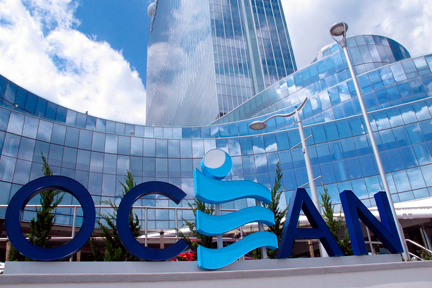
When Bill Callahan took over at Ocean Casino Resort after 17 years at Borgata, he found a property mired in last place when it comes to the monthly New Jersey revenue reports.

“Yes, it had been getting better,” he says, “but there were still lots of holes in the operation that needed to be closed. Those holes started with the player database.”

“More than 95 percent of our database had a value of $100 or less” says Callahan. It was time for a change.

When Ocean first reopened, it had to claim a spot in the Atlantic City marketplace. Granted it had a lot to overcome from its initial opening as Revel where smoking was banned, comps were hard to come by, and the wayfinding on the property was a mess. A diversion to the quirky owner Glenn Straub did not help and an eventual sale to Bruce Deifik didn’t work. The chief lender, New York hedge fund Luxor Capital (no relation to the Las Vegas hotel of the same name) stepped in and revamped management and things began to turn around.

When Callahan was appointed general manager after an interim period, he, along with a talented and insightful executive team, identified many areas that could be improved, and things immediately began to pick up. Soon thereafter, the Illitch Group, which owns the MotorCity Casino in Detroit, bought 50 percent of the property.

“We have the best product and team members in the market. Our goal in the next few years is to become the No. 1 casino in Atlantic City,” he told the Associated Press. “This property is still in its infancy; there’s so much more that it can grow.”

Moving up the revenue ladder in Atlantic City is difficult, but Ocean has made progress. In July, often the best month of the year on the Boardwalk, Ocean posted the third-highest gross gaming revenue at $43.3 million, trailing only Hard Rock at $59.8 million and Borgata at $124 million (which has double the amount of hotel rooms). Ocean was one of only three casinos to increase its in-person revenue. The vast majority of revenue at Ocean comes from in-person revenue since its online gaming efforts are not fully ramped up, unlike the Borgata/BetMGM, which is one of the market leaders in iGaming revenue.

But it didn’t just happen. Callahan says the support of the owners allowed management to do the things necessary to improve revenues. That started with finishing more than 450 hotel rooms that were never fully built out. Those enhancements included upgraded suites that are reminiscent of a beach home.

“Our inspiration for the rooms,” says Callahan, “was a home in the Hamptons. They’ve got that light, beachy feel, airy, spacious and bright. We tried to keep the furnishings simple but timeless.”

A top-floor presidential suite includes 2 large bedrooms at each end, elegant baths with soaking tubs, all connected by several rooms that include seating areas, pool tables and bars.

But as with all rooms and suites at Ocean, it’s all about the views. Floor-to-ceiling windows reveal sweeping vistas of the Boardwalk and the coast seemingly stretching for miles out to sea.

“We have completed the rooms in our hotel tower and are pleased with the strong occupancy rates we’ve seen throughout the summer,” says Callahan.

He hopes to continue that rate throughout the shoulder season as he says the group sales department is hitting on all cylinders.

“We have an entire floor dedicated to meetings and conventions,” he says. “The interest has really increased post-pandemic and we have a number of quality groups booked after the summer.”

The revamped Ocean Rewards players club is all aspirational with the advantages multiplying as player reach higher levels. The new program is divided into four tiers.

  • Signature: Entry level for all players
  • Preferred: 3,000 tier points earned
  • Prime: 20,000 tier points earned
  • Reserve: Invitation only

Unlike other casinos in town, Ocean has revamped and relocated their players lounges. Avila Lounge, located adjacent to Ovation Hall, on the Meeting Level offers Preferred, Prime and Reserve Ocean Rewards Members delicious dishes prepared by Ocean’s culinary team.

“It’s a relaxing environment where our guests can grab a bite to eat without the stress of long lines,” says Callahan.

But the ultra-lounge is Luna’s (l.)—the former high limit room that has an ocean, beach and boardwalk view along with premium food and beverage offerings. Only a few players have access.

“Only about 20 percent of our guests qualify to use the club,” explains Callahan. “But they’ve developed a real camaraderie there and enjoy hanging out together on the busy weekends.”

The lounge is just a few steps from the casino’s high-limit pit, which was carved out of a previously unused part of the casino.

“It was space located under the HQ2 Nightclub,” Callahan says of the room which is bathed in sunlight with a high airy ceiling. “We were worried about the noise, so we had the techs in the nightclub turn the music all the way up to test the experience and we couldn’t hear a thing.”

Just outside of the high-limit room is a group of tables that also caters to the premium players.

“It makes this entire part of the casino more fun, more exciting,” he says. “The players love it.”

For the “whales” of the Boardwalk, Ocean features something unique in Atlantic City. The Loft is an intimate gaming lounge on the 44th floor with a breathtaking view of Atlantic City, the ocean and the Boardwalk. It’s open only for the biggest players, and can be activated in less than 45 minutes.

“We’ve had players who want to hang out with their friends in a quiet and private place,” he says. “Sometimes they want to be anonymous, but other times they just want to have a great time and get treated well.”

The slot layout on the casino floor has changed markedly since Ocean’s new executive team has arrived.

“The players didn’t know where to go and there was a lot of wasted space,” he says. “So we drew up a plan and presented it to our owners. The cost was going to be $2 million to make the moves. To their credit, they trusted us and it has paid off. Customers now enjoy easy navigation on the casino floor with a best-In-class gaming layout.

Another big change on the casino floor is the sports book. Ocean was the first casino in Atlantic City to open a dedicated sports book at a time they had an agreement with William Hill to run the book. While it was a standard book at the time, it didn’t create the excitement that Ocean executives had hoped for. When Caesars Entertainment bought William Hill, it triggered a clause that allowed Ocean to get out of the deal.

They turned the space over to Atlantic City’s SOSH Architects, who transformed the space into The Gallery.

“This is the most valuable real estate in the casino,” Callahan said. “So we ditched the easy chairs and added a few gaming tables and a center bar which is usually quite busy and is the focal point of the entire casino. It has energized the center of the casino.”

High above, the Balcony Bar gives sports bettors the best view of the massive screens surrounding The Gallery.

“Once football season kicks off,” says Callahan, “we expect this to be one of the most active areas of the entire property.”

Ocean’s entertainment is a key focal point as the team has ramped up its programming at Ovation Hall. Entertainment director and Atlantic City veteran Steve Gietka has scheduled some major acts through the end of the year including ZZ Top, Flo Rida, the Rascals, Diana Ross, Staind and the Atlantic City Jazz Festival, among others.

While initial improvements are complete, Ocean will continue to invest in the casino and hotel, however the teams immediate focus is on the food and beverage offerings. Within the past year the property has opened the famed NYC Institution, Serendipity3, a Hawaiian-Inspired casual concept called Makai and a high-energy hotspot in Nola’s Bar & Lounge. More unique F&B options, including a brand-new Starbucks are also on the horizon.

“We’re just getting started,” Callahan says. Ocean’s quest for Number-1 is still on the books and he’s confident his team can deliver.

ECGC Smoking Panel Canceled After Giannantonio Pulls Out

A planned discussion of a potential smoking ban for Atlantic City casinos at this week’s East Coast Gaming Congress (ECGC) was canceled after the main participant on the casino operator side, Mark Giannantonio, pulled out of the event.

Giannantonio, president of Resorts Casino, is the current head of the Casino Association of New Jersey, which has pledged to keep the casino exemption to New Jersey’s indoor smoking ban. A bill to wipe out the exemption and impose a smoking ban in Atlantic City casinos has gathered numerous sponsors in both chambers of the New Jersey Assembly, and Governor Phil Murphy has pledged to sign any smoking ban legislation that reaches his desk.

Anti-smoking activists and Atlantic City casino employees, who have been pushing for a smoking ban as a health issue, were anticipating the session as the first public airing of the dispute between advocates of a ban and a representative of the operators, who vehemently oppose a ban as a possible drag on business.

“The Casino Association of New Jersey has been very transparent in its position that an immediate smoking ban would have a significant adverse effect on Atlantic City,” Giannantonio told the Associated Press. “We believe that more time is needed to devise and implement a solution that will address the concerns of our employees without jeopardizing jobs and benefits to seniors.”

Cynthia Hallett, president and CEO of Americans for Nonsmokers’ Rights Foundation, and Eric Hausler, CEO of Greenwood Racing, which owns the smoke-free Park Casino in Pennsylvania, had been planned as the other panelists.

Hallett was quick to criticize the pullout, telling the AP that the industry is simply avoiding the issue. “It’s remarkably telling that Atlantic City casinos couldn’t find one person to publicly defend their position in favor of indoor smoking,” Hallett said. “They know that they cannot win on the facts—even their economic arguments have been thoroughly rebutted—so they are avoiding a public discussion.

“We are disappointed that this conversation will be missing from the formal conference program, but rest assured: The presence of casino workers who have been fighting for their health will be felt next week,” she said, referring to this week’s conference.

The governor, who is slated to speak at the ECGC, reaffirmed his commitment to sign any smoking ban that reaches his desk in comments to News12NJ.

“I have said if that bill gets on my desk, I will sign it. And that continues to be my answer,” Murphy said. “It’s one that has a lot of passion on both sides of it. On one side, you’ve got ‘will it impact business,’ particularly if other states don’t have the same ban. I think the other side of it is where I’m more comfortable, which is, at the end of the day, we will still get good business. Atlantic City is an American gem. We’ve got the ocean and the other competitors don’t. And this is the right thing for our respective health.”

New Jersey Lawmakers Mull iGaming Extension

A committee of the New Jersey Assembly met last week to consider extending legal internet gaming to 2033. Online gaming began in 2013, with a sunset date of 2023.

“I think it’s critical for the properties here, to keeping them open and to keeping those jobs open,” said Assemblyman Don Guardian (R-Atlantic), a co-sponsor and former Atlantic City mayor, according to the New Jersey Monitor.

Assemblywoman Clare Swift, also a sponsor of the bill believes it’s critical to get it passed.

“Over the past 10 years, online casinos have proven to be an integral part of gaming in our state,” she told WPG Radio. “New Jersey residents and visitors have benefitted from the convenience that internet gaming provides which has provided the revenue necessary for casinos to make new improvements to their brick-and-mortar properties. This industry is growing rapidly and by extending the authorization we are providing legal certainty that will allow for greater investments to take everything to the next level of performance.”

Read More: Is A New Era Of Gambling In Atlantic City & New Jersey Coming? | https://wpgtalkradio.com/is-a-new-era-of-gambling-in-atlantic-city-new-jersey-coming/?utm_source=tsmclip&utm_medium=referral

Assemblyman Ralph Caputo added that internet gaming arguably saved the land-based industry in Atlantic City.

“The casino industry was subsiding,” he said of the state of the industry in 2013, just before four casinos closed. “It was collapsing at the time. It’s been very helpful in terms of keeping the lights on in Atlantic City. We can’t do without that.”

Last year, New Jersey’s casinos brought in nearly $1.4 billion from internet gaming, a 41 percent increase over the $970 million reported in 2020. That increase followed a stunning 101 percent rise in internet wager revenues spurred by pandemic shutdown orders in 2020, according to the Division of Gaming Enforcement.

Guardian is also bullish about possible wagering activity on esports, and both he and Swift have support it with legislation.

“Ask anyone under 40:: e-sports are the next frontier of gaming,” Guardian, who serves on the Tourism, Gaming and the Arts Committee, said. “E-sports conferences and tournaments across the world draw millions of fans and players each year and along with Stockton University’s E-Sports Innovation Center, Atlantic City should be the center of operations in the United States. Opening up this new industry means another revenue stream for casinos, more good- paying local jobs, and an untapped, younger market that will breathe new life into Atlantic County tourism.”

Disney Working Hard to Develop ESPN Sports Betting App

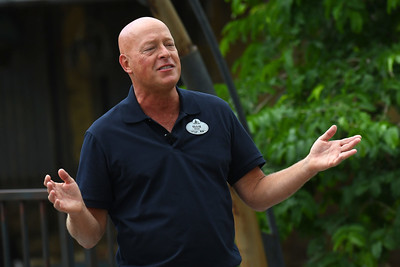
What Disney CEO Bob Chapek said at a D23 fan event in Anaheim, was that the kingdom a mouse built would not spin off its ESPN holding. Indeed, the company is said to be hard at work on an ESPN sports betting app.

ESPN is essential to the company’s future, and gambling is a part of that future.

“Sports betting is a part of what our younger, say, under-35 sports audience is telling us they want as part of their sports lifestyle,” Chapek said, according to Bloomberg.

Chapek gave no timeline for the completion of the app.

Moreover, ESPN plans to expand its sports betting content with new shows, updated roles, and more content with in-depth analysis and coverage during football season.

ESPN President Jimmy Pitaro declared sports wagering as a “must-have” for the brand.

Meanwhile, ESPN has been a subject for investors, including Dan Loeb of Third Point Capital, which has a stake in the network. He said spinning the network off would give ESPN more flexibility.

Chapek has fielded about 100 inquiries about a sale, which he says speaks to its increasing value. No spin off!

In related ESPN news, the network has tapped Doug Kezirian as its sports betting insider. He had been hosting the gambling-focused Daily Wager show since it launched in March 2019 but has almost 20 years’ experience in betting coverage, according to Yogonet Gaming News.

Kezirian will increase visibility across studio shows and digital platforms. That means writing multiple betting columns each week for ESPN.com, with topics including last-minute football betting advice, insider perspective and selection for Saturdays and Sundays. He will also appear on ESPN Radio, especially during the college and NFL seasons.

The expanded presence means ESPN Sports Betting Analyst Tyler Fulghum takes over as host of Daily Wager. He’ll also contribute to other programming.

ESPN Sports Betting Analyst Joe Fortenbaugh will contribute to Daily Wager and other studio shows, and in January, he’ll host a digital show and podcast.

“Fans are craving sports betting content, and ahead of and during football season we want to provide it to them,” said Scott Clark, vice president, fantasy & sports betting content, ESPN. “We have added some talented minds to the diverse and well-respected industry experts we already have and are implementing new creative ideas into the mix.”

You want more? Sports Betting Analyst Erin Dolan will host Bet with Erin Dolan each Monday, on Snapchat. She’ll make appearances on Monday Tailgate, while also continuing to provide sports betting analysis for Daily Wager, Bet, SportsCenter, and This Just In, among other shows.

SportsCenter commentator and betting analyst ‘Stanford’ Steve Coughlin and research producer and sports betting analyst Chris ‘The Bear’ Fallica will share regular weekly picks columns on Thursdays, along with the return of their podcast on Wednesdays.

SportsCenter anchor Scott Van Pelt’s Winners segment from SportsCenter with Scott Van Pelt will become a new weekly column on Fridays. Also on Fridays, ESPN’s sports betting analysts will combine for a weekly NFL betting tips column.

Pitaro said he sees sports gambling as part of his company heading forward. “It’s not a ‘nice to have,’ it’s pretty much at this point a must-have,” he explained. For him, this means ESPN must serve the sports fan “with what they’re expecting” and take the friction out of the process. He stated ESPN has the opportunities “to partner with different folks and be a bit more aggressive in the space.”

Study: U.S. Gambling Industry Tops $215 Billion

When all forms of legal gambling are considered, the combined value of the U.S. gaming industry tops $215 billion, according to a study conducted by the news site PlayUSA.

The month-long examination of state and local records included casinos, lotteries, horse racing, online gaming and sports betting.

In an interview with PlayUSA, Alan Feldman, distinguished fellow at the University of Nevada, Las Vegas International Gaming Institute, put the $215 billion number into perspective.

“These numbers sound right, and they do not surprise me,” Feldman said, “in part, because the gambling industry, led by the casino and tribal casinos, have come to realize that this is a lot of fun if you give people a reason to come and a reason to stay and relax and enjoy themselves.”

PlayUSA combined the following metrics to derive its figure:

  • $105.26 billion: Total sales of lottery tickets for state and national games in 2021, accumulated from reports to state authorities.
  • $53 billion: Total gross gaming revenue for 2021 at the nation’s 466 commercial casinos. This includes online gaming.
  • $39 billion: Total gross gaming revenue for 2021 at the country’s 510 tribal gaming operations..
  • $5 billion: Total wagering last year at California card rooms.
  • $12.2 billion: Total amount wagered in legal pari-mutuel betting in 2021, according to Equibase, North America racing’s official database. That figure accounts for betting on 33,567 races, Equibase said.

ACLU Files Suit Against City of Las Vegas Over Fremont St. Curfew

The city of Las Vegas is being sued by the American Civil Liberties Union (ACLU) of Nevada over the recent implementation of an “unconstitutional” curfew at the Fremont Street Experience (FSE) downtown.

Following an uptick in crime over the summer months, city officials granted the owners of the FSE a “special event permit” in June, which allowed the attraction to limit admittance to those over the age of 21 on Friday, Saturday and Sunday nights. Street performers are also prohibited during those times.

The permit was granted for an event the FSE calls “Festivus,” which runs through the end of November.

In response, the ACLU, which is representing two 18-year-old individuals and a street performer, has alleged that the event is fictitious, and was only announced as a means of securing the permit in order to restrict under-21 patrons. The union says the curfew violates their clients’ rights under the First Amendment.

The lawsuit has been filed in Las Vegas’ federal court.

ACLU representatives told the Las Vegas Review-Journal that the curfew “ is just another example of the city’s complicity in treating public property like it belongs to Fremont Street Experience and its casino owners. Fremont Street is a public forum, and it should be open to the public.”

Las Vegas spokesperson Jace Radke told the Review-Journal that the city does not comment on litigation that is pending or ongoing. Representatives from the FSE also declined to comment.

Turmoil in the UK Makes Gaming an Afterthought

On September 6 Liz Truss took center stage in one of the U.K.’s most symbolic centuries-old traditions, making the pilgrimage to Balmoral Castle to accept the position as Queen Elizabeth II’s first minister, just a two days before the beloved monarch passed away on September 8 at the age of 96.

Truss won a two-person race for Conservative leader between her and Rishi Sunak, which was decided by 180,000 party members who received their ballots by mail in August.

Truss is now the third woman to serve as prime minister (PM). The Conservative leader begins with a lot on her plate: rampaging inflation, an energy crisis, high taxes, labor unrest, a strained health care system due to long waiting lists and personnel shortages, not to mention the Ukraine war. She has to make decisions that will dramatically affect the electorate in a good way in less than two years, or else she faces the possibility of losing the next election. Probably far down in her list of priorities is gambling reform.

With winter approaching, Brits will begin to focus on keeping warm, and the ongoing Russia-Ukraine war is complicating things. Due to the fact that the U.K. and most other European nations are economically punishing Russia and longtime president Vladimir Putin for invading Ukraine, energy prices are almost certain to reach unsustainable levels. Putin’s decision to punish Europe by closing the Nord Stream natural gas pipeline is only expected to make things worse.

Truss succeeds the charismatic, urbane but morally compromised Boris Johnson—who lost his job not because he wasn’t popular, but because he was caught violating Covid rules that ordinary citizens had endured for two years. He resigned after three years in office.

Johnson announced his departure two months ago, and laced his farewell speech with typically flamboyant language: “I am like one of those booster rockets that has fulfilled its function. I will now be gently re-entering the atmosphere and splashing down invisibly in some remote and obscure corner of the Pacific.” He added, “Like Cincinnatus, I am returning to my plow.”

Some observers believe that the new PM might be less strict about gaming regulations than her predecessor. She is unlikely to want to cut into the profits of an industry that contributes so much in tax revenues.

Similarly, Truss is not expected to spend a lot of resources on gaming reform. A government white paper that was supposed to be released in September that would be the blueprint for reforming the Gambling Act of 2005 will likely be pushed back as Truss populates her new government with ministers loyal to her. The white paper might even be discarded in favor of a new beginning.

Of course, if the prime minister isn’t able to right the ship and overcome 18 percent inflation, there won’t be a lot of discretionary spending for casinos and betting shops. Truss has indicated that fighting inflation is the first priority of her new government.

In her first address as prime minister in front of No. 10 Downing Street, Truss declared, “I will deliver a bold plan to cut taxes and grow our economy. I will deliver on the energy crisis, dealing with people’s energy bills, but also dealing with the long-term issues we have on energy supply.”

She plans to cap energy bills with taxpayer subsidies of as much as £100 billion ($116 billion.)

Prior to the election of Truss, British betting markets kept a running tab on the odds of whether she or Sunak would win. Near the end of the five-week campaign Sunak’s odds shrank to 27/1. When Truss’s victory became a foregone conclusion, the betting markets shifted over to speculation about who she would select for various cabinet positions with a shake-up virtually guaranteed.

Truss’ first move in the gaming space may not make the industry happy, however. Truss’ appointment to lead the agency that oversees gaming, the Department of Digital, Culture, Media and Sport (DCMS), Michelle Donelan, has been a longtime critic of the industry. Donelan backed the strong pull back and low betting limits of FOBTs, the electronic games that were the backbone of many high-street bookmakers in the UK, and also supported a limit on gambling advertising, some of which is incorporated into the pending changes to the gaming act.

But despite her critical stand on some gaming issues, not much is known about Donelan’s overall view of gaming. She briefly assumed the role of education secretary in the waning days of the Boris Johnson administration and she has stated that’s where her interest lies. As a party loyalist, she was expected to be offered a cabinet post, just not this one.

For the time being, junior minister Damian Collins, who has been taking the lead on the DCMS gaming issues, remains in place.

Due to the current uncertainty due to the new government, the UK Gambling Commission (UKGC) is pumping the brakes on planned reforms. It announced September 2 it would not require operators to stop marketing to consumers who are considered to be at-risk of gambling addiction. The requirement is being postponed until February or perhaps indefinitely.


The UKGC said some of the Social Responsibility Code Provision 3.4.3 would go into effect on September 12 but the most onerous provisions would not. Industry representatives had requested an extension because of technological challenges.

Instead, the UKGC will consult directly with gaming sector representatives. The focus of that meeting will be bonus offers. It will push ahead with the requirement that operators work harder to identify potential gambling harm and develop AI systems to help them do that.

However, operators won’t be required to consider the UKGC’s guidance on customer interaction for remote operators, which was published three months ago. Instead, the commission will hold a consultation with stakeholders.

The commission issued this statement: “After careful consideration, we have decided that the majority of the new requirements will come into force as planned on 12 September. Remote gambling operators are already subject to a duty to conduct effective customer interaction, and the new requirements reflect the minimum steps that we consider are necessary to meet that duty.”

Mayor Establishes Advisory Board For Chicago Casino

Mayor Lori Lightfoot has established an advisory council that will keep developers abreast of community reactions to the plan to build a $1.7 billion Bally’s Casino in downtown Chicago. In a release last week, the mayor said wants to give city residents the opportunity to provide input on the plan.

“Since beginning the process to secure a Chicago casino, my administration has remained dedicated to ensuring our residents have every opportunity to share their thoughts and concerns about it,” Lightfoot said in a statement. “This Community Advisory Council will create a tangible space for this important engagement and allow community stakeholders of all kinds to have a meaningful impact before, during, and after the casino’s construction.” c

Included in the organization will be residents and community groups in neighborhoods close to the casino site. She will also include experts in the disciplines that will be crucial to the development of a casino, and will be controlled by a host of different city agencies, including the Chicago Department of Planning and Development, the Mayor’s Office of Community Engagement, the Chicago Department of Transportation, and the city’s chief financial officer, Jennie Huang Bennett.

The council will be tasked with gathering community reaction to various elements of the plan throughout the process, and have input on both the temporary site and the permanent casino until it opens.

Last week, environmental advocates and others see the future casino as an opportunity to properly develop its Chicago River frontage, including green space and easy public access.

For example, Jen Masengarb, executive director at the American Institute of Architects Chicago, said, “I’m stating the obvious here, but the transformation of that stretch of the river between Function A, what it was, and Function B, what it will be, is going to be one of the most dramatic switches that we’ve seen in the river.”

Currently, the future casino site is occupied by a huge printing plant, the Freedom Center, which faces the river with a stark brick wall and a massive private parking lot. Located there is “the saddest park ever,” featuring one picnic table, Masengarb said.

Blair Kamin, the Pulitzer Prize-winning former architecture critic for the Chicago Tribune stated, “The Freedom Center was just awful. It had no connection with the river other than, I guess, receiving paper for the presses. Great public works are multi-generational projects. It’s taken generations to get where we are today so the riverfront is like a 50-year, 30-year, 20-year timeline. But the casino is a huge piece and an important one of connecting the downtown” to points north.

City officials agree. Maurice Cox, commissioner of the Department of Planning and Development, said, “The casino district now creates a destination. So, for me, I feel like that’s the next thing. Let’s establish a green agenda and character of the casino district. And that will then inform the way the rest of the river should develop.”

According to renderings released by Bally’s, the riverside portions of the site will resemble the popular Riverwalk, with bars and dining options along the promenade. Wide steps descend from the casino building’s glass walls to the river edge, where water taxis can dock, and a terraced park features fountains and green space.

Margaret Frisbie, executive director of the advocacy group Friends of the Chicago River, said, “There was a lot of outrage about a casino on the lakefront. However, if you look at that particular location now, it’s a seawall and a big building. So, if that turns into natural habitat and public access, I see that as a win in the long term, in the bigger picture.”

Joyen Vakil, senior vice president of design and development for Bally’s, noted the renderings “are very true to the general flavor that we want to introduce for the riverwalk environment. Having said that, they were conceptual. It’s fair to say that, like with every rendering, they’re going to evolve.”

The changes partly will be due to input from community groups. Vakil said, “We’ve been listening to what they have to say. And we are trying to incorporate as much of it as possible.”

The River North Residents Association, for example, including more than 90 buildings across the river from the casino site, has eased off its initial opposition to the casino.

Association President Brian Israel said, “We turned to trying to improve the project in a variety of ways that would lessen negative impacts” and ensure provisions for riverfront access and green space will remain. The group told Bally’s it opposed a proposed outdoor concert venue due to the noise and traffic. Although that venue is still included in Bally’s plans, Vakil said, “We are sensitive to what community groups have mentioned about nuisance” and are working to help make it “well-received among community members.”

Another issue was the planned pedestrian bridge, connecting the bustling casino site to what is now a quiet River North park. Vakil said, “Based on community input, we decided that the bridge was not a good idea. So, we’ve eliminated that from the project.”

Vakil noted Bally’s executives and project designers spent an entire day touring existing Chicago riverfront sites for inspiration. The river “has certainly not been an afterthought. It is an integral part of the design of the project,” he said.

Bally’s officials also have met with Frisbie’s river advocacy group and plans to meet with public-private advisory panels, the city’s River Ecology and Governance Task Force and its Committee on Design. Frisbie said,” We talked about the design solutions we’d like to see, like cutting down sea walls to minimum heights and slopes so that you can really get down to the water and have a natural edge actually near the water as much as possible.”

A more finalized plan will be included in Bally’s zoning application, which will face approval from the Chicago Plan Commission, the city council zoning committee and ultimately the full city council. Before these steps, the Illinois Gaming Board must approve Bally’s casino license application, which it filed in August.

Bally’s delivered a $40 million payment toward the project but still needs approval from the Illinois Gaming Board, and then must endure the city’s extensive planning and zoning approval process.

Massachusetts Places RG Software on All Slots

Massachusetts regulators gathered at Encore Boston Harbor last week to mark the completion of a six-year project that has placed optional responsible gaming software on every slot machine operating in the state—a total of more than 10,000 machines. It is the first state to make such a move.

Massachusetts has three casinos, and the technology was first installed at PENN Entertainment’s Plainridge Park as a pilot program in 2016. It launched at MGM Springfield in April of this year, and currently 32,000 players have signed up, including just over 3,100 at MGM in six months, according to the Massachusetts Gaming Commission (MGC).

The software allows the player to opt-in when inserting a player’s club card. When activated, it allows consumers to set a budget on how much they will wager, and gives the player updates on total wagering several times during the day.

“All three licensees have been true partners in this collaboration,” MGC Chair Cathy Judd-Stein said, according to US Bets. “This is not happening in other jurisdictions, so it truly is unique.”

The software is custom designed for each location. “It’s intended to be an informed player choice,” MGC Director Mark Vander Linden said via video link from Encore-Boston Harbor during last week’s meeting. “Our job is to make sure players have all the information about whether or not they want to continue to play.”

Responsible gaming advocates have lauded Massachusetts for what they say is a groundbreaking program in the U.S.