Author: Casino Connection Staff

Change Makes Great Falls Friendlier to Casinos

A change to the city code that the city of Great Falls, Montana’s Planning Advisory Board discussed September 13 will make it easier for a casino to locate there.

Currently, casino developers must comply with municipal and state distance requirements for schools and worship facilities and they must meet square footage requirements for landscaping.

The amendment the board will consider will wipe away the municipal code, meaning that casino developers would only have to meet state codes.

The deputy director of the Planning & Community Development Department, Tom Micuda, told board members, “There’s only so many licenses that are available to business owners, and essentially because we’ve exceeded our quota, we get very few requests. it’s rarely somebody who wants to build a brand new casino in Great Falls because it’s just very hard to do now.”

The applicant who seeks the change owns property that he is interested in selling to a potential casino developer. The building is vacant but once housed a casino. A state license is still available. The amendment would also eliminate special landscaping requirements for a casino.

The board voted in favor of the amendment.

Neon Museum Interested in Signage From Shuttered Station Properties

Las Vegas’ Neon Museum is currently engaged in talks with Station Casinos about retrieving some of the signage that will come from Station’s four properties that have been tagged for demolition, according to museum representatives.

In an email to local outlet KSNV, a museum spokesperson said that the organization “welcomes the opportunity to preserve historical elements that allow the Museum to tell the stories of locally-owned casinos in Las Vegas, and discussions are ongoing with Stations Casinos.”

The demolition of Station’s Fiesta Henderson and Texas Station, both of which never reopened after closing in March 2020 due to the Covid-19 pandemic, began September 12.

The Fiesta Rancho and Wild Wild West casinos, which were also closed for good in recent weeks, have yet to begin the demolition process.

As far as next steps, Station has said previously that it plans to sell the land from the Fiesta Rancho, Fiesta Henderson and Texas Station sites to non-gaming entities. However, it plans to keep the Wild Wild West land to use for a larger development in the future.

A spokesman for the company said that it did not have any definitive plans regarding property signage as of yet.

Las Vegas: Silverton Owner to Build Apartment Complex Next to Resort

Ed Roski, the owner of Las Vegas’ Silverton Casino Hotel, has received approval from Clark County officials to build an apartment complex adjacent to the resort, which is located on Blue Diamond Road near Interstate 15.

According to public records, the complex will be five stories tall and will feature a total of 290 units, ranging in size from 600 square feet to over 1300 square feet. The complex will include amenities such as a golf simulator, a bocce ball court and an outdoor courtyard space.

Craig Cavileer, CEO of the Silverton, told the Las Vegas Review-Journal that the company does “not have any comment on the project.”

The move to build housing near resorts is somewhat of a growing trend in the Las Vegas area—last year, the Calida Group opened an upscale rental building adjacent to the Palms casino, and Ovation Development is currently working to build a seniors-only complex near Sunset Station in Henderson.

Roski, who also serves as chairman of Majestic Realty Co. in Southern California, has expanded the Silverton site multiple times over the past five-plus years.

In 2016, the state’s first Cracker Barrel restaurant was opened on land Roski owns next to the resort. Around that same time, an 18-story timeshare complex, which is branded under the Silverton name, was also opened on Roski-owned land.

Construction is also ongoing for the Silverton Village complex, a nearby development which features a Hyatt Place hotel and various retail shops and restaurants.

At the Silverton itself, its hotel and pool are currently undergoing renovations that are expected to be completed sometime in the first quarter of next year.

Horseshoe Casino to Open in Near Future in Louisiana

Construction and renovations are currently ongoing at Caesars’ new Horseshoe Casino in Westlake, Louisiana, which is a rebranding of the former Isle of Capri riverboat casino.

The new property will be land-based, according to the company. Covid impacts and hurricanes in the region have already delayed progress significantly, but there is optimism that Horseshoe may be ready to open by year’s end.

Jeff Favre, Horseshoe’s senior vice president and general manager, told local outlet KPLC that he will “certainly welcome the day when we reopen, which will be in the near future.”

Favre noted that just about every facet of the property is being renovated or rebuilt—”“We’ll have a new bar. The pool is getting redone, like I said the hotel is getting renovated,” he said. “We’ll have some new retail space. We are definitely on the other side of the mountain. We can see the light at the end of the tunnel, we are very excited about that and look forward to it.”

The old inn hotel that formerly sat across from the riverboat has been demolished, according to Favre. The new property will be all-inclusive, and will include a sports betting area in addition to the casino.

No media has been allowed inside the facility as of yet, but Favre is confident that all will come together before the start of next year.

MGM Resorts Signs All-Pro Raider as Brand Ambassador

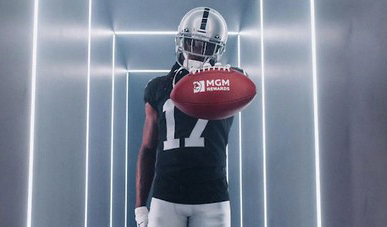
Las Vegas Raiders All-Pro wide receiver Davante Adams signed up to be MGM Resorts International’s first active National Football League athlete brand ambassador. Adams will be featured in MGM Resorts marketing campaigns, digital content initiatives and participate in select MGM Rewards special events at the company’s Las Vegas and regional properties.

“Davante is a class act both on and off the field and has built a strong fan base,” said MGM Resorts International Senior Vice President of Sports and Sponsorships Lance Evans.

Adams came to the Raiders after eight seasons with the Green Bay Packers.

Adams broke the Packers’ franchise record for receiving yards in a single season with more than 1,500 yards last year, and became the only Packers player to have two games in a single postseason with at least 100 receiving yards.

“From day one, the MGM Resorts team welcomed my family and me to Las Vegas with open arms,” Adams said. “It’s truly an honor to be the first active NFL athlete to partner with this world-class company and to continue building a legacy in this new city I am privileged to call home.”

Nevada Regulators Preparing for New Hearings Involving Steve Wynn

The Nevada Gaming Control Board (NGCB) has confirmed that it intends to move forward with further disciplinary proceedings in conjunction with the Nevada Gaming Commission (NGC) against Steve Wynn, former CEO of Wynn Resorts Ltd., over allegations of sexual harassment.

The casino mogul, who now resides in Florida, has been embroiled in numerous legal controversies over the last five-plus years, but has maintained that he is not subject to regulatory discipline due to the fact that he is no longer associated with his former company and no longer holds any gaming licenses.

NGCB Chairman Brin Gibson said in an email to the Las Vegas Review-Journal that “At this point, the board is preparing to recommence the action against Mr. Wynn.” He added that “The board maintains the Nevada Gaming Commission has full authority to decide the proposed regulatory complaint against Mr. Wynn.”

Gibson did not set a date for the new hearings, but noted that the matter is separate from a previously settled action against Wynn Resorts that resulted in a $20 million fine for the company, which was also related to allegations of sexual harassment.

Wynn and Nevada officials have been engaged in a legal game of cat-and-mouse since at least October of 2019, when the NGCB first accused the former CEO of violating state regulations by failing to properly “exercise discretion and sound judgment” to prevent incidents that might reflect poorly on the state.

The formal complaint was centered around a number of accusations of harassment from female Wynn Resorts employees. In December of that year, Wynn appeared before the NGC and argued that the agency had no jurisdiction over him after he relinquished his connections to the company.

The complaint issued against Wynn was never heard because his attorneys refused to cooperate with regulators until a court formally ordered them to do so. The case was then sent to Clark County District Court—Judge Adriana Escobar ruled in Wynn’s favor in November 2020. The NGCB subsequently appealed to the Nevada Supreme Court, which delivered a complicated ruling, saying that Wynn could not appeal a regulatory decision until the matter was actually adjudicated in proceedings.

Now, state regulators are working to arrange those proceedings so that the matter can be resolved once and for all.

“As required by the Nevada Supreme Court, the District Court has remanded the action back to the Nevada Gaming Control Board and the Nevada Gaming Commission for further proceedings,” Gibson told the Review-Journal.

To this point, Wynn has not been formally charged or convicted for any sexual-related crimes.

Pennsylvania Township Tries to Stop Mall Mini-Casino

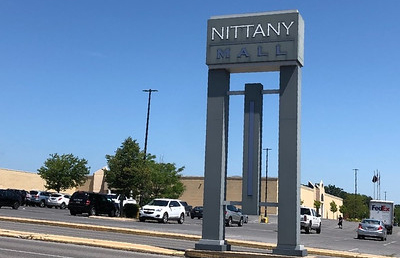
The council of College Township, a municipality in Pennsylvania, wants to stop the state from licensing a $120 million mini-casino with 750 slot machines in the Nittany Mall, but is not sure there is much it can actually do. The deadline for it to opt out may have passed.

Hundreds of residents of the town of about 11,000 have written letters opposing or supporting the casino—although opponents far outnumber supporters. Supporters say the mini casino could be a shot in the arm for the mall.

On September 1, the council reviewed a timeline and asked questions about the potential casino. The most common question asked was whether the council could still opt out of being a host city and whether it could deny or rescind its previous approval of the development plan.

The township’s solicitor advised the council that its right to opt-out expired 60 days after August 2019.

According to Assistant Township Manager Mike Bloom, “Specific to the land development the solicitor noted that to date, the applicant and developer has been acting in reliance upon the townships decisions that you have taken — that being the decision related to the opt-in, opt-out as well as the conditional approval of the development — as such, the developer has continued to allocate considerable resources toward the proposed casino project, which supports their position.”

Some opponents have suggested that the council should appeal to the Pennsylvania Gaming Control Board and say there is considerable public opposition, and ask the board to deny the casino’s license. A council member suggested the town solicitor look into whether the town would be liable for a lawsuit by the casino developer if it did that.

In 2017 a bill became law that authorized gaming expansion in Pennsylvania. At that time municipalities were able to opt out of having a casino within its boundaries by sending a resolution to the Gaming Control Board by December 31, 2017. Several towns opted out, but College Township didn’t.

Councilmember Eric Bernier explained why: “The other municipalities had a lot more at risk if they had not opted out as opposed to College which already had any potential casino operation restricted to a very small area in the township where, at least on the surface, it looked like, you know, the infrastructure could support it and it … could contribute to the economic revitalization of the area.”

The commission could approve the project as soon as November although opponents may testify to the board on October 19. The proposal comes from Center County, whose principal Ira Lubert bid $10 million for a mini-casino license. Such a casino is defined as one-quarter the size of a normal Pennsylvania casino. Last year Bally’s announced a partnership with Lubert to build the casino.

Red Rock Announces Plans to Shutter, Demo Fourth Las Vegas Property

Red Rock Resorts has announced plans to close and demolish its Wild Wild West casino property on Tropicana Avenue near the Las Vegas Strip. This comes just six weeks after the company announced similar plans for three other properties in the area, those being Fiesta Henderson, Texas Station and Fiesta Rancho.

Michael Britt, a spokesman for Red Rock, confirmed to the Nevada Independent that the property would close at midnight on Wednesday, September 7. Britt noted that current Wild Wild West employees would have opportunities at other Station Casinos locations, a Red Rock subsidiary.

The company also announced that it would combine the 20 acres that Wild Wild West currently sits on with an adjacent 80-acre plot that it also owns, for a new project that has yet to be announced. This differs from the previous three locations mentioned above, in that Red Rock plans to sell those plots once the properties are demolished.

According to public records, Red Rock has owned Wild Wild West since 1998. Its hotel was managed by a separate party.

It’s been a busy summer so far for Red Rock—in addition to the shuttered properties, the company also purchased two additional tracts of land in recent months: a 128-acre site on the south side of Las Vegas Boulevard and a 67-acre plot in North Las Vegas.

The company has long used the strategy of buying large plots in lesser-populated areas and sitting on them for long periods of time—the site for the Durango Station project, which is currently under construction, was purchased over 15 years ago.

Papanier: Tropicana to Become West Coast “Flagship” for Bally’s

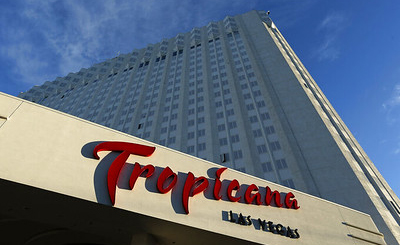
The Nevada Gaming Control Board (NGCB) has given initial approval to Bally’s Corp. for its $308 million acquisition of the Tropicana Las Vegas from Penn Entertainment. The deal will now proceed to the Nevada Gaming Commission (NGC), which will make the final ruling at its next meeting on September 22.

Bally’s officials told the NGCB that it plans to finalize the deal by month’s end. Gaming and Leisure Properties (GLPI), a real estate investment trust, owns the property, and Bally’s will manage the operations of the casino and pay GLPI $10.5 million per year as part of a 50-year lease agreement, subject to increases over time.

George Papanier, Bally’s president, told the Nevada Independent that the company views “ Tropicana Las Vegas as an opportunity for a flagship property for our western region.”

During the recent hearing, NGCB officials had a lot of questions about the company’s interactive division, which was formed as part of a $2 billion merger with U.K.-based Gamesys Group last year. The business is said to operate in numerous “gray” markets internationally.

Bally’s CEO Lee Fenton—who came to Bally’s from Gamesys after the merger—-told officials that the company has the ability to cancel any of its existing contracts with partnered companies if there is any indication that they might “ever compromise our position with any regulator around the world.”

Papanier and Fenton also provided a lot of details about the company’s plan to open a landmark $1.7 billion casino resort in Chicago after winning the sweepstakes for the city’s sole gaming license.

As far as the Tropicana, however, there was no mention of the Oakland A’s and the team’s search for a new stadium—the property has been heavily speculated to be in consideration for a potential relocation, similar to what the Raiders did with Allegiant Stadium.

Bally’s is expected to rebrand the property under its name, and attorneys for the company said that it will develop a definitive marketing plan within 120 days of taking ownership.

New Las Vegas Strip Retail Complex Prepares for Early 2023 Opening

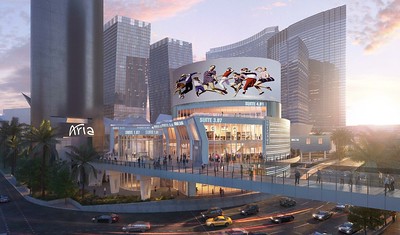
The new four-story retail shopping center known as 63, near the intersection of Harmon Avenue and Las Vegas Boulevard, is slated to finish its first phase of construction next month, according to Brett Torino, the developer for the project.

Torino told the Las Vegas Review-Journal that the building is almost fully leased, and once the first phase is complete, tenants can move in and start preparing their units. The official opening is expected to take place in February of next year.

The complex sits next to a number of large resorts on the Strip, including the Bellagio, Vdara, Aria and the Cosmopolitan. It’s also close to the Shops at Crystals, a similar luxury mall. It’s the site of the former Harman Hotel, which was built during the original buildout of CityCenter but later demolished after construction supports proved to be inadequate.

Torino and New York-based development firm Flag Luxury Group first purchased the site last year for just under $80 million. The project came to be known as 63 because Torino and Flag founder Paul Kanavos were both 63 years old at the time.

In total, the complex will span an impressive 228,278 square feet, according to Clark County records. Its facade houses a 6,000 square-foot digital billboard that has already started running advertisements.

One of the most notable features of the complex will be the Ocean Prime steakhouse, which is operated by Cameron Mitchell Restaurants (CMR). David Miller, president and COO of CMR, told the Review-Journal that the rent is certainly pricey, but the business potential of the area is more than worth it.

Miller said that it’s impossible to “be in an A-plus location on Las Vegas Boulevard and Harmon and not expect to pay a premium rent.”

California Voters Confused by Rival Sports Betting ads

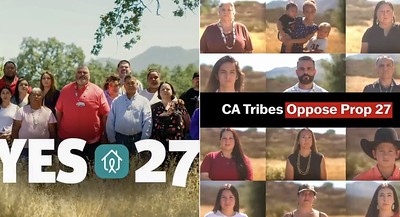
California’s voters are being bombarded by ads for two conflicting sports betting measures on the November ballot, and finding it difficult to know true from false about the claims. It is hard for some to determine which measure is supported by tribes and which would actually help fight homelessness.

This is leading some election experts to predict that neither measure will ultimately make it past the post on election day, because of voter confusion.

Ads for one measure, Proposition 27, claims it would solve homelessness. The measure would allow sports betting operators to offer online sports. It also claims to help tribes that don’t have casinos. The activity would be taxed at 10 percent, and would direct 85 percent of funds toward combating homelessness and mental illness, with 15 percent to non-gaming tribes.

State analysts predict Proposition 27 will raise hundreds of millions in state taxes—much more than is predicted for Proposition 26.

Ads for Proposition 26, the tribally supported measure that would allow only retail sports betting in brick-and-mortar casinos and racetracks, say Proposition 27 attacks tribal sovereignty. Their measure, by contrast, would add craps and roulette to tribal offerings and allow tribes to directly sue cardrooms for gaming infractions.

The electoral campaign is already the most expensive in the state’s history. The combined donations for both sides last week passed $419 million, which will increase the frequency of campaign ads as November approaches. A fine trick, since it is already nearly impossible to avoid such ads on TV, radio, online and on billboards and newspapers. It is also nearly impossible for voters not educated in the minutiae of sports betting to know which to support.

Sports betting represents the only remaining form of casino gambling California tribes don’t already have. The seven online sports betting operators, led by FanDuel and DraftKings, want a piece of the action. They want to offer online sports betting, which the tribes aren’t ready to support yet, even though online sportsbooks have become the most lucrative form in the states that allow it. Proposition 27 requires that operators partner with gaming tribes, but tribes oppose it because it would end their monopoly.

One reason voters are confused is that Proposition 26 ads say tribes support it and oppose Proposition 27. Proposition 27 ads say that tribes support it. That’s partially true: a few tribes that would benefit from funds for non-gaming do support it.

A familiar face on the “Yes on 27” campaign is Jose “Moke” Simon III, chairman of the Middletown Rancheria of Pomo Indians. He claims that “only one proposition supports California tribes like ours … vote ‘Yes’ on 27.” Moke’s voice is a tiny minority among tribes, but it is a tribal voice. Two other tribes also back Proposition 27—which makes it possible for “Yes on 27” to claim tribes support it.

Law professor and gaming law expert I. Nelson Rose told the Pasadena Star-News, “Out of self-interest I can see why, particularly remote tribes, would want to be in favor of 27.” Only about half of the Golden State’s 110 federally recognized tribes have casinos. Many remote tribes will probably never be able to build one.

According to Nathan Click, spokesman for the “Yes on 27” campaign, such small, remote tribes, “see the promise of being able to offer bets on a safe and responsible marketplace outside of their tribal lands.”

But they are a definitive minority, says Kathy Fairbanks, spokeswoman of the campaign for Proposition 26 and against Proposition 27: “Fifty-nine tribes in California that have taken a firm position (against) Prop 27” she said. “There are only three tribes that support it.”

One recent “No on 27” ad highlighted that fact, by showing one side of the screen with the many names of the tribes who oppose it, and on the other side of the screen the three tribes who are for it.

Both major political parties in the Golden State have come out against Proposition 27, with the Democrats neutral on Proposition 26 and the Republicans against both measures.

The state GOP has gotten donations from both campaigns: $500,000 from “No on 27” and $2.5 million from “No on 26.” The donations were made after the state party announced its position.

The Los Angeles Times Editorial Board also opposes both measures. The board wrote of online sports betting: “[it] would essentially turn every cellphone, tablet, and computer into a legal casino where bets could be placed with a few taps on an app.”

The board does not concede Proposition 27 arguments that their measure would cut the amount of offshore and illegal gambling. It retorts that legalizing marijuana in the state did not curtail the state’s black market in the drug.

It also opposes Proposition 26, saying it gives tribes an unfair advantage over card clubs and sports betting operators: “The measure amounts to a toxic brew of industry interests designed not only to enrich the funders but also to push away their competitors. If California ever decides to embrace sports betting, it should be with a framework that is as even-handed as possible, and not one that so blatantly picks winners and losers.”

Massachusetts Takes Time Setting up Sports Betting

Deborah Goldberg is all for getting the sports betting market up and running in Massachusetts. However, the state treasurer also wants assurances the regulations will protect the lottery.

“While lawmakers project that sports wagering will generate $60 million in state revenue each year, only $16.5 million, or 27.5 percent, will be earmarked for unrestricted local aid,” Goldberg told the Boston Herald. “By contrast, the Lottery produced approximately $1.1 billion for our cities and towns just last year.”

Numbers don’t lie. Goldberg requested that sports betting applicants present a plan that can reduce negative impacts on the Lottery prior to receiving a license. What’s more, she wants the sportsbook to partner with the lottery in both in-person and online cross-promotion, according to Yogonet Gaming News.

The regulatory approach is similar to the regulations in place for existing gaming licensees, and Goldberg said that has worked to everyone’s benefit.

She also wants both the Treasurer’s office and lottery to head a feasibility study into whether retail operations should operate wagering kiosks. And she wants the Lottery to be available online.

Goldberg’s extensive wish list comes as regulators have taken a deliberate approach to approving regulations, one where integrity is primary.

“Our process will play out as it would have whenever this law came to the Gaming Commission to regulate, and we will not compromise getting this right for anything,” Commission Chair Cathy Judd-Stein said, according to MassLive. “With that said, we also are aware of the importance of timing.”

At the latest Gaming Commission (MGC) meeting, a major study of the social and economic impacts of gambling in Massachusetts revealed a disparity between state lottery revenue and that expected from sports betting, which served to support Goldberg’s petition.

Judd-Stein justified streamlined emergency regulations to create a faster process that would trim the comment period prior to regulations taking effect.

In related news, a recent study indicated that some 20 percent of Massachusetts residents already bet on sports, an increase of 7 percent since 2014.

“We know that Massachusetts is quite a sports crazy state already,” said Rachel A. Volberg, a University of Massachusetts Amherst professor and the principal investigator on two major studies funded by the MGC.

What’s more, sports betting is available in every neighboring state except Vermont, according to MassLive.

“People in Massachusetts have been bombarded by that advertising even though sports betting is not legal here,” said Volberg.

The other source is illegal wagers through offshore sportsbooks.

Volberg said research indicates sports bettors may have a higher incidence of problem gambling, because they usually partake in other types of gambling, like lotteries or casinos.

“Maximizing benefits and minimizing harm starts with good tools and then those tools have to be implemented,” she added.

The MGC has things like Play My Way, an online budgeting tool that helps gamblers know when they’ve had enough. The commission also requires and promotes GameSense, an online and in-person educational program that reminds gamblers when to walk away.

There are also voluntary self-exclusion programs.

“Now we are going to have presumably additional operators, new to the market,” Volberg said. “We don’t know how these new operators will implement safeguards. With so many voices promoting sports betting, the health message gets drowned out.”

As part of its role associated with deciding the regulations for sports betting, the MGC met with a panel of experts on the subject of problem gaming, according to the Boston Herald.

“This was very informative. I’ve taken more notes today than I think I’ve ever taken in my years’ time here,” Commissioner Brad Hill said.

Pew Research Finds 19 Percent of U.S. Adults Bet on SportsThe Pew Research Center surveyed adults in the U.S. on sports betting and found almost 20 percent have placed a bet. Of that demographic, 15 percent bet with friends or pool contests, and not legalized sports betting.

A recent report from the Pew Research Center found that 19 percent of adults in the U.S. acknowledged betting on sports during the past year. But it’s how they bet that stands out, according to the Associated Press. Some 15 percent bet with friends, in a private pool, a casual wager or a fantasy league.

Only 8 percent bet at a casino, racetrack or kiosk, and just 6 percent wagered online, which seems to be the overwhelming choice of bettors in other polls. More than 80 percent of legal sports bets go online, and in some cases it’s in the mid 90’s. The Pew survey did not ask if the online sites were legally regulated or not.

The survey’s results show plenty of opportunity for expansion even, if 62 percent of states already have legal sports betting.

The center surveyed 6,034 adults from July 5-17. Broken down by gender, 24 percent of respondents were male; 15 percent female. 22 percent were under 50 and 17 percent over 50.

Broken down by race, the Pew results found 27 percent of Black respondents bet on sports; 24 percent of the Hispanic respondents; 18 percent of whites and 10 percent of Asian-Americans.

As for educational level, 18 percent had college degrees, 20 percent did not. For income level, 22 percent identified in the upper income brackets; 19 percent fell in the middle and lower income status. The survey also found little significant difference between Democrat or Republican affiliation.

When asked whether sports wagers were good or bad for society, 57 percent said neither and 34 percent said bad, while 8 percent considered it good.

A similar question in relation to the impact on sports itself showed 49 percent were neutral, 33 percent saw it as bad, and 16 percent said it is good.

Arizona Marks Impressive 1st Year in Sports Betting; Kansas Hopes to Follow

If you supported sports betting in Arizona, you’re probably a happy person right about now. The first full year of gambling raked in $5 billion, more than surpassing expectations.

“A year ago, I was thinking maybe if the state is lucky, it might at some point this year hit $500 million for wagers in a single month,” said Chris Boan, lead writer for BetArizona.com. “And it’s hit that number three times, and two other months it was above $490 million and was within an eyelash of that $500 million benchmark.”

Credit goes in part to the approach taken by the state. The regulations called for 20 sports betting licenses, 10 earmarked for Native American tribes and 10 to pro sports teams. The tribes took all 10 of their allotted licenses, but only eight teams received licenses, leaving room for improvement, according to Cronkite News.      

And let’s not forget the privilege fee and licensing fee which put more than $30 million into the state general fund, said Maxwell Hartgraves, a public information officer for the Arizona Department of Gaming.

“That is definitely a positive from sports betting and fantasy sports,” Hartgraves said. “Not to mention new employees, new companies coming into the state.”

Arizona has a relatively low tax rate: 8 percent for retail revenue and 10 percent for the much larger online component.

The state could make more money by issuing the two remaining team licenses and could change the law to accept more tribal licenses.

Then again, the tribes aren’t short on gambling money. Tribal gaming produced $123 million to the state in the 12 months ending June 30.

Part of what has made Arizona so successful in just one year is the state’s approach to sports betting, said Brendan Bussmann, managing partner of B Global.

“Arizona offered a unique model and sort of advanced on two fronts,” he said. “One that tribes would be considered on a commercial level to go statewide. And then introduced the ability for teams to have direct access to licenses in a combined format. Looking at it now a year later, the market continues to be a success.”

Brandt Iden, now head of U.S. government affairs for leading global sports technology company SportRadar, believes there is more than meets the eye when it comes to gambling legislation.

“It’s a very tumultuous process. Sometimes it takes a while to get gaming done in a lot of states and it goes to show you, you’ve gotta continually work at it to get over the finish line,” Iden said.

Kansas should be so lucky. The state went full blast with its sports betting program after a soft launch on September 1. The early betting allowed both customers and the sportsbooks to get used to each other and work out any kinks before the September 8 opening of the NFL season.

The Kansas Lottery, which operates the sports betting phase, says players won’t notice a difference between lottery and sports wagers, according to KSHB.

“Folks have been wagering effectively on all the platforms. Our casino partners and all the platforms have been doing a great job of getting people to understand how sports wagering works here in the state, and it’s worked for them very well,” said Stephen Durrell, executive director of Kansas Lottery.

Players bet most often on Kansas State University, the University of Kansas and the Kansas City Royals. The Chiefs hadn’t been in play for enough time. Durrell says that will change.

“KU and K-State are very popular, and as we get into basketball season, which will remain popular,” Durrell said. “The Chiefs are going to be extremely popular. Folks really like to wager on the home teams.”

Some people notified the Kansas Lottery that credit card transactions weren’t going through, preventing some players from placing bets. Although the issues were not widespread, Durrell says they have since been addressed. Select credit card companies were unaware that sports betting went live in Kansas.

“There was evidence over the last week that people outside the state tried to place wagers when they shouldn’t, but the law is very clear that they had to actually be located in the state to place a wager,” Durrell said.

NFL Kickoff Produces Record Number of Location-Verified Bets

The first week of the NFL regular season is complete, and according to a report released by GeoComply, the games brought in 103.1 million location-verified bets, the highest number on record and an increase of over 70 season from last year’s opener.

GeoComply is a Canadian-based firm that provides fraud protection and security services by verifying the location and “digital identity” of bettors, to ensure they are not placing bets in unauthorized markets.

Anna Sainsbury, GeoComply CEO, said in a statement, “The growth of legal betting suggests that Americans are ditching offshore sportsbooks for regulated options in their home states. This is exactly the outcome legislators and regulators looked to achieve through legalization as they now protect consumers and increase tax revenues.”

With regards to individual markets, the East Coast reigned supreme—New York came in first with 15.3 percent of verified transactions, followed by Pennsylvania with 14.8 percent and New Jersey with 13.1 percent.

The overall increase was due in large part to the addition of five new betting markets since the beginning of last season, those being Kansas, Louisiana, New York, Arkansas and Connecticut.

The two states with the highest increases were Illinois and Pennsylvania. Illinois’ number of geolocation checks increased 5 million to 8 million, thanks to legislation that allowed for mobile registration. Pennsylvania registered an increase of just under 30 percent, jumping from 11.8 million to 15.3 million this year.

Sainsbury added: “GeoComply has worked hand in glove with our customers over the offseason to ensure a seamless and, most importantly, safe start to the NFL season. Whether it’s confirming location, verifying identities or detecting and thwarting possible fraud, our technology solutions are leading the way to support the regulated online gaming environment.”

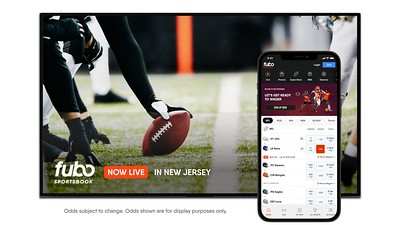
Fubo Sportsbook Launches Statewide in New Jersey

On September 7, Fubo Gaming, a subsidiary of sports-first live TV streaming platform FuboTV Inc., launched its Fubo Sportsbook in New Jersey after successfully completing the soft play phase of the state’s Division of Gaming Enforcement regulatory process.

Sports enthusiasts 21 years of age and older across the Garden State can now place a variety of wagers on thousands of live and future professional and out-of-state collegiate sporting events using the Fubo Sportsbook app on iOS and Android or on the website.

The launch of Fubo’s sportsbook, the first to integrate watching and wagering in one ecosystem, kicks off just in time for the 2022-23 NFL season, one of the busiest sports betting periods.

Fubo Gaming intends to continue iterating the app, launching additional features that will further integrate wagering into the FuboTV platform.

The launch in New Jersey, via an agreement with Caesars Entertainment, Inc., further expands FuboTV’s mission to deliver personalized omniscreen experiences that turn passive viewers into active participants.

“Launching Fubo Sportsbook in New Jersey is an important early step in the development of our integrated platform, which includes a recently improved user experience and enhanced product capabilities,” said Scott Butera, president of Fubo Gaming. “As one of the largest and most established sports betting markets in the U.S., New Jersey will allow Fubo to analyze and efficiently develop the most engaging product features that are focused on driving streaming customers into wagering. New Jersey is known for having deeply passionate sports fans, who, we believe, will enjoy our one-of-a-kind immersive sports wagering and viewing experience in time for football season.”

“An integrated wagering platform, offering both live video and a sportsbook, is, we believe, the best gaming experience for consumers,” said David Gandler, co-founder and CEO, FuboTV. “Today’s launch marks an important milestone for Fubo Sportsbook. Our book is now available in three states, including one of the top wagering markets in the country, just 10 months after launching our first. We remain committed to interactive wagering and continue to explore potential partnership opportunities for Fubo Sportsbook.”

“We are thrilled to fully activate our partnership with Fubo, providing Jets fans access to the Fubo sports betting experience on the app and in the Fubo Sportsbook Lounge as we kick off the 2022 Jets season,” said Jeff Fernandez, vice president of business development and ventures for the New York Jets. “With the official launch of Fubo Sportsbook in New Jersey, the Fubo Lounge and Fubo’s wagering app will provide an opportunity for our fans to responsibly gamble on sporting events from one of the best experiential settings in the NFL.”

Ohio Casino Commission Issues Licenses to 300 Operators

Ohio’s Casino Control Commission (OCCC) has approved over 300 licenses, including to the Cleveland Browns, Columbus Crew and Cincinnati Reds, for use during their home games.

Of the 10 companies currently seeking licenses to offer gambling either through a website or app (type A) or in person (type B), licenses were approved for these eight:

JACK Cleveland Casino (A/B)

JACK Thistledown Racino (A/B)

Cleveland Browns Football Company (A/B)

Crew SC Stadium Company (A/B)

Muirfield Village Golf Club Subsidiary (A/B)

Cincinnati Reds (A/B)

Hollywood Casino Toledo (A/B)

Hollywood Gaming at Mahoning Valley (A/B)

Cincinnati Bengals (A) and FC Cincinnati Holdings (A/B) had no reps and therefore did not receive a license.

The commission awarded 300 Type C licenses to bars, restaurants and other suppliers, allowing them to operate gambling kiosks. In central Ohio, those locations included Grandad’s Pizza and Pub, Novak’s Tavern Patio and Yogi’s Bar and Grill.

Commission Executive Director Matt Schuler criticized a third of the applicants who did not submit required materials about the employees and leadership personnel that will be operating the company’s sports betting.

Those applicants have until October 5 to turn in the material or be disqualified.

“We do not have the time or the resources to carry them across the finish line,” he said. “They have to be capable of doing the very minimum requirements set forward by the General Assembly.”

The commission also approved its fourth batch of rules surrounding the operations of Ohio’s legalized sports gambling, including requiring approved license-holders to submit a plan to address and prevent disordered and problem gambling.

“Please submit them with some time in advance, a few weeks, so that our staff here can thoroughly review and vet them and make sure that gaming that’s offered in the state of Ohio, it’s safe, it’s conducted with integrity and is not going to take advantage of any Ohio citizens,” a commission representative said.

Churchill Downs, FanDuel Ink Multi-Faceted Deal

Churchill Downs Incorporated (CDI), the prominent horse racing and gaming operator, has signed a multi-faceted agreement with FanDuel Group which involves television and media rights, parimutuel wagers and more.

According to the terms of the deal, CDI will provide the technology and services needed to allow FanDuel users to place parimutuel horse racing wagers on its ADW and sports betting platforms. FanDuel will also broadcast CDI-owned or managed horse racing content via its new platform FanDuel TV.

CDI’s parimutuel technology will be provided through its subsidiary United Tote Company (UTC). The horse racing giant also recently announced that it has agreed to sell a sizable portion of UTC shares to the New York Racing Association.

“With the launch of FanDuel TV last week and the upcoming integration of premier racing content into our market-leading sportsbook, we believe this is an inflection point in our ability to offer our customers a seamless wagering experience with a single wallet,” FanDuel CEO Amy Howe said in a statement.

She added: “We are especially pleased that we will be able to offer wagering on the most exciting two minutes in sports, the Kentucky Derby, and that we will have exclusive broadcast rights to the Churchill Downs Incorporated family of tracks on FanDuel TV. We look forward to creating new audiences for horse racing.”

Per the agreement, CDI will collect fees for wagers placed on its content, including its flagship Kentucky Derby race, for which FanDuel will now become a non-exclusive betting sponsor. FanDuel TV’s broadcast rights for CDI’s non-Derby content will become exclusive in 2023, once the current rights deal expires.

CDI CEO Bill Carstanjen said in a statement: “We are confident that FanDuel’s market approach teamed with our expertise and technology will seamlessly deliver horse racing content and pari-mutuel wagering solutions to a significant number of new fans.”

According to Dan Politzer, an analyst for Wells Fargo, the deal will likely result in a boost of $3 to $4 per share for CDI, representing between $10 million and $12 million in EBITDA.

Foxwoods to add $85 Million Gaming Space

Foxwoods Resort Casino in Connecticut plans to add a sixth gaming space “in the heart of the property,” says Jason Guyot, president and chief executive officer. It’s all part of $85 million in improvements that will start this fall.

In a phone interview with the Day, the CEO said “The thought is to create a vibrant hub of activity in the heart of the property.” Guyot added, “We’re spread out so far, from the Rainmaker Casino on one side to The Fox Tower on the other side, it’s difficult for guests to manage. There’s no better place to put it (a new gaming space) than Grand Pequot, the busiest section of the property ― the heartbeat of the property.”

The new space will join the Cedar, Grand Pequot, Rainmaker, Stargazer and the Fox Tower casinos. It will replace the Grand Ballroom. Once complete, it will feature 500 slot machines, including 175 high-limit machines and 24 gaming tables.

The total number of slot machines in the property, 3,000, will remain about the same. It will reduce the number in other casinos. That number reflects demand, says Guyot.

The Grand Ballroom became superfluous when Foxwoods decided to convert its original bingo hall into the Rainmaker Expo Center, which will open before the end of the year. When that happens, construction on the new casino will commence.

Guyot added, “We’ve had to do some very strategic things to be able to free up the ballroom,” Guyot said. “The Expo Center will give us around 40,000 more square feet than we had in the ballroom. We’ll be able to do more things, like indoor Wiffle ball, car and boat shows, Comicons (comic book conventions) without having to worry about breaking a $500,000 chandelier.”

The casino is still experiencing a labor shortage, said Guyot, despite raising benefits and pay rates. “It’s still a huge challenge to find talent,” he said. The total number of employees is about 3,100, compared to 5,100 before the Covid pandemic.

Sportsbook Signing Bonus Offers Disappearing

Place a bet with your local sportsbook and get one of those free bet bonuses. Oops. Sorry. You’re probably too late. For a variety of reasons, sign-up bonuses have taken a hiatus—maybe a permanent one.

Last November, SI Sportsbook, which had just gone into business in Colorado, offered this deal: bet up to $7,500 on your initial wager. If you win, good luck to you. If you lose, you get a free bet equal to the amount lost, according to Sports Handle.

Less than a year later, and the offer for new users is $100 in free bets after the first $20 wager.

Caesars, which had offered a $10,000 risk-free bet last year, now provides a meager $1,250 risk-free bet.

“As you get deeper into the player cohorts they become less valuable, so bonusing becomes smaller,” said Alun Bowden of Eilers & Krejcik Gaming. “Early adopters might be worth throwing $500 at, but your Johnny-come-lately, $10-a-game bettors aren’t.”

The pattern follows what happened in Europe, but far quicker.

“The U.S. is basically the European sports betting sector on fast-forward,” Bowden said, noting that sign-up bonuses in Europe now generally linger in the $30-$35 range.

Besides diminishing returns, shareholders are tired of not seeing profits. “They want to see more marketing promotional discipline,” said Ryan Sigdahl, a partner and senior research analyst at Craig-Hallum Capital Group. “All of the major operators are targeting positive EBITDA at some point in 2023, so they need to start rationalizing spend now to work towards those targets.”

Shareholders have faced a disturbing reality. Stock prices have collapsed compared to a 52 year high.

Example? DraftKings fell from $64.50 to $17.88. Ouch.

“Also, New York’s high tax rate of 51 percent is burdensome, so operators need to rationalize quicker than states with lower rates and thus more dollars to spend on the player versus giving to the state off the top,” Sigdahl said.

Operators have collected tons of data on users and have begun to tailor offers and events to keep them in the game.

“In addition to receiving pressure from investors and the macroeconomic climate, operators now possess more user data than ever before and are optimizing their marketing mixes to reflect learnings surrounding unit economics,” said Lloyd Danzig, the founder and managing partner at Sharp Alpha Advisors, which specializes in sports betting and online gaming.

Of course, there’s always a smart aleck in every group. BetMGM, for instance, has upped its offer from $600 risk-free to $1,000. The company also ended bonuses in New York and Pennsylvania, at least temporarily.

Danzig says the bonus trend will likely reassert itself.

“It is true that sign-up bonuses have largely declined across operators,” Danzig said. “However, this trend is likely to be interrupted by the launch of sports betting in populous states like California and Florida, as well as by the entrance of heavyweight contenders such as Fanatics.”

What potentially sets Fanatics apart in its desire to acquire customers is the cross-selling potential it has as a clothing company.

“It’s all an extension of the game,” Las Vegas-based gaming consultant Brendan Bussmann of B Global told Sports Handle over the summer. “If I have someone betting in the middle of a game and they are a Nebraska fan, I can sell them a T-shirt while they are in-game wagering. It’s the Holy Grail of being able to sell memorabilia as well as engaging people in the game.”

Still, the future doesn’t look too good, Sigdahl said.

“We think this is a natural evolution for the industry in the early innings of maturation and a good thing for the differentiated operators. Ultimately, product will win the customer long term.”