Author: Casino Connection Staff

LVCVA: Visitation Increasing, But Not to Pre-Covid Levels

The Las Vegas Convention and Visitors Authority (LVCVA) recently released visitation figures for the month of June—according to the tourism board, midweek hotel occupancy reached 80 percent for the first time since the pandemic began in March 2020.

Additionally, weekend occupancy recorded its fourth consecutive month above the 90 percent threshold.

However, the agency was sure to note that these figures are still demonstrably lower than pre-Covid averages; the midweek rate from June 2019, for instance, came in at 91.7 percent.

Despite the comparisons, the recent resurgence is still impressive, especially considering the recent increase in the overall number of rooms. Kevin Bagger, vice president of research for the LVCVA, told the Las Vegas Review-Journal that with “ the opening of the Virgin Hotels Las Vegas and Resorts World since the middle of last year, overall hotel occupancy reached 82.7 percent, 6.8 points ahead of last June, but down 9 points vs. June 2019.”

While visitation rates climb back up, room rates are finally dropping back down, with June registering an average of $156.92 after back-to-back months above $175 per night. However, even the lowered rate of $156.92 is still 30.3 percent higher than that of June 2019.

For the first half of 2022 overall, the average rate was $162.60, which is a whopping 44.4 percent increase from the first half of last year.

Other findings of note include:

  • Convention attendance this year is up 514 percent from the first half of 2021.
  • The whole of southern Nevada, including the Las Vegas Valley and surrounding area, has seen just over 18.5 million visitors thus far in 2022.
  • According to the Nevada Department of Transportation, traffic on major highways around Las Vegas has been steady at about 126,000 vehicles per day.

Massachusetts Passes Sports Betting Bill in Overtime

They finally did it. After more than a year of legal wrangling, the Commonwealth of Massachusetts pushed the ball across the goal line. Massachusetts lawmakers reached a deal August 1 legalizing in-person and mobile sports betting. The bill awaits Governor Charlie Baker’s signature.

The deal concluded five hours past the 11:59 close of the legislative session on July 31. Baker has 10 days to sign it. If he doesn’t sign it, the bill is dead, but Baker is not likely to let it die, according to Sports Handle.

The inclusion of in-state college sports was a major sticking point holding up a deal. The legislation permits wagering on collegiate athletics, but not Massachusetts schools, unless they are part of a tournament like March Madness.

The legislation requires the Massachusetts Gaming Commission (MGC) to award in-person licenses for casinos, racetracks and simulcast facilities, as well as 15 mobile licenses through applications or digital platforms, according to a news release from the office of House Speaker Ronald J. Mariano.

Lawmakers settled on a $1 million application fee, and a $5 million licensing fee good for five years. Operators will also have to pay a $200,000 processing fee. This new law expects to generate an estimated $60 million in annual tax revenue for the state, in addition to collecting up to $80 million in initial license fees, renewable every five years. The taxes run from 15 percent on in-person wagering and 20 percent on mobile bets, according to Boston25 News.

In a statement, Mariano said, “I’m incredibly proud that today, and after years of House-led efforts to authorize legal sports wagering in Massachusetts, the legislature has acted to bring the immense economic benefits of a legal sports betting industry to the Commonwealth.”

The revenue collected will be allocated to municipalities, and for economic, workforce, education, and public health priorities.

“This legislation will provide much needed economic development to the state while allowing our residents to enjoy sports betting right here in the Commonwealth,” said Rep. Aaron Michlewitz.

The MGC will also be conducting a study into the feasibility of allowing retail locations to operate sports wagering kiosks.

A date for the launch of sports betting has not yet been determined.

The bill as written does not provide a go-live date, but the MCG will move to approve rules, open the application process, and authorize potential operators. In April, MGC Chair Cathy Judd-Stein said the agency was already doing “its due diligence” and would “be able to get those regulations in place nimbly.” But exactly what that means is anyone’s guess. The clock on legal-to-launch won’t begin until Baker signs the bill.

Going live in any state requires mountains of paperwork for regulators and operators, as well as the creation of bank accounts, rejiggering of mobile platforms, and time to advertise, among other details.

Senate President Karen Spilka, who opposed legal wagering, pushed for the in-state college ban. As recently as last week, she told WBUR, “We have heard from every single college president and all the athletic directors begging us to not include college betting in these bills, that it is not a good thing.”

The bill features an official league data mandate, should a league request it. The mandate is backed by the professional sports teams, but most legislatures ignore it. Massachusetts becomes the seventh state, behind Arizona, Illinois, Michigan, New York, Tennessee and Virginia, to require it. More than 30 U.S. states and jurisdictions have legalized sports wagering since 2018, according to Sports Handle.

The mandate means that sportsbooks must buy their data feeds either directly from the league or through a third-party vendor that has a deal with the league, and essentially gives the leagues a monopoly on data.

Another part of the bill costs some operators up to $1 million per year more to be in business as a stand-alone platform. The fee goes to responsible gaming.

Massachusetts has long had a history of strong and comprehensive responsible gaming infrastructure, and existing programs will now extend to sports betting.

Another issue deals with advertisements—digital platforms will have to show a gambling hotline number every time a bet is placed, advertising to minors is prohibited, no lines of credit may be given to bettors, credit cards cannot be used, and operators must submit a detailed problem gambling plan for review.

In total, there could be 15 mobile platforms across the state, which would make Massachusetts the most open, competitive market in New England, if not the U.S. When Maine goes live, it could have up to four, Connecticut has a cap of three, Rhode Island has two, and New Hampshire has one. The Bay State will even have more than New York, which currently has a cap of nine.

The legislation does not cover retail sportsbooks in any of the state’s stadiums or arenas.

“And they’ve told us in the past that it’ll take about 90 days for them to do that. We’ve been actively kind of talking to them and they’ve been following along so they should be basically up to speed on all the different components,” said State Senator Eric Lesser said. “So you’re talking about maybe October that the whole thing could be up and running. So you know, pretty soon, and definitely for the fall football season.”

The MGC is not waiting for Baker’s signature and planned an August 4 meeting to discuss how it will approach sports betting. The agenda calls for an overview of the regulatory process and timeline.

The state’s casinos have already identified and built out spaces for sports books, according to Off Shore Gaming Association.

“The Gaming Commission is going to be able to give provisional licenses and I think definitely the known players will have some level of advantage, right, because they kind of know the process, they’ve been through background checks for the brick and mortars at least back in 2011,” Lesser said.

Caesars Won’t Pick Sides in California Sports Betting Campaign

Caesars Entertainment has friends on both sides of California’s sports betting election campaign, and so the company has decided to remain neutral, at least according to CEO Tom Reeg. The election on November 8 includes dueling sports betting measures that would amend the California constitution.

Caesars’ neutral stance is in contrast to other Las Vegas gaming firms that have picked sides in a donnybrook that includes most gaming tribes who back Proposition 26 and retail-only sports betting, and out-of-state operators who don’t mind if Proposition 26 passes, but definitely want Proposition 27 to pass so they can introduce online sports wagering to the Golden State.

Reeg told investment analysts on a recent earnings call why he chooses to be the Switzerland of gaming companies: One reason is that Caesars has a “decades-long” business relationship with several tribes, such as the Rincon Band of Luiseño Mission Indians, which owns Harrah’s Southern California Resort.

The Rincon band, like the great majority of tribes, are backing Proposition 26. Besides giving tribes and racetracks exclusive rights to retail sports betting, it would also allow the tribes to expand their gaming offerings to include craps and roulette.

Proposition 27, bankrolled by seven sports betting operators led by BetMGM, FanDuel and DraftKings, seeks to legalize online sports betting. The operators would need to be tethered to tribal casinos, but the tribes still oppose it because they wouldn’t control it.

With regards to Caesars’ position, Reeg said, “We don’t want to be in opposition to tribal interests when we’re their partner. So, we’ve remained neutral in California throughout. You should expect that to be the case in any state where tribes are at odds with the commercial interests.”

However, if either or both measures pass, Caesars would take part in the market, which would be the largest in the U.S. by far.

With three months remaining in the campaign, the bitterness has only just begun, as well as the expense. So far, the four groups participating in the election have reported in excess of $230 million in contributions.

The most recent campaign ad, a 30-second ad, comes from “Californians for Solutions for Homelessness and Mental Health Solutions,” the operators’ measure, seemingly pitting “wealthy tribes” against “poorer tribes.” Although the measure’s top selling point is that it would earmark 85 percent of taxes to combat homelessness and treat mental health issues, another 15 percent would go for an economic development fund for non-gaming tribes. The committee has $100 million to pay for similar ads.

The ad talks about how Proposition 27 would direct money to smaller tribes that “for years have been left in the dust,” and snipes that “Wealthy tribes with big casinos make billions while small tribes struggle in poverty.”

Glenn Lodge, Chairman of the Chemehuevi Indian Tribe, has attacked this approach: “It’s shameful to attack tribes that have a proven track record of sharing hundreds of millions with limited and non-gaming tribes like mine.” He added, “These out-of-state corporations should stop the divisive and misleading attacks.”

James Siva, chairman of the California Nations Indian Gaming Association, calls the ad campaign, “Shameful, despicable,” adding “The out-of-state corporations and their Wall Street investors funding Prop 27 have deceptively tried to convince voters that their measure will help tribes. The truth is now out.”

The opponents of Proposition 27 have also released some strongly worded ads of their own, accusing the operators of misleading voters about how much tribes would get. The “Californians for Solutions” ad declares: “It doesn’t tell you 90% of the profits go to the out-of-state corporations,” continuing, “A tiny share goes to the homeless and even less to tribes. And a big loophole says the cost to promote betting reduces money for the tribes.”

Things are complicated by the fact that some tribes do support Proposition 27: including the Middletown Rancheria of Pomo Indians and the Santa Rosa Indian Community of the Santa Rosa Rancheria.

Saudi LIV Golf Draws Opposition to Wagers in Some States

You knew something was different when police accompanied the golfers on the LIV Tour at Trump National Bedminster Golf Club in New Jersey. You knew something was odd when legal wagering was not available in New Jersey, Pennsylvania and New York, like it was for the more traditional PGA Rocket Mortgage Classic in Detroit.

The problem was the source of the money to put the tourney on: it came from the Saudi Royal Family. Given the locale of Bedminster, just 30 miles from where the World Trade Towers fell, there were more than enough people opposed to this golf outing.

As to the field of participants for the LIV event, 11 owned a total of 21 majors during their careers, including Phil Mickelson. The Rocket Mortgage Classic also had 11 major winners, but few with name recognition like Mickelson or Brooks Koepka, who have both won more majors than anyone who was in the Rocket Mortgage Classic field.

Rocket Mortgage Classic betting was universally permitted in U.S. states that offer legal sports betting. DraftKings offered bettors a chance to wager on the LIV in Connecticut, New Hampshire, Illinois, Oregon, Wyoming, Arizona, and Ontario.

American Tony Finau won the PGA event and a cool $1.5 million. Henrik Stenson of Sweden won the LIV event and took home a $4 million paycheck in the process, according to NJ Online Gambling.

Mickelson played in a group with Stenson and Louis Oosthuizen, each of whom have been named “Champion Golfer of the Year” for winning a British Open.

All 48 players at the Bedminster course on Sunday collected at least $120,000; at the Rocket Mortgage Classic, only 19 of the 156 players earned that much.

Reports say that Mickelson, Koepka, and Dustin Johnson have all agreed to jump ship for guaranteed checks of $100 million or more. And at least a dozen of the 48 LIV players are said to have been guaranteed millions of their own.

It’s fair to ask whether the LIV top players are putting out the effort with the guarantees for mere attendance. About half of the Rocket Mortgage field missed the 36-hole cut and went home with zero prize money. LIV golfers played only 54 holes, and there was no cut. The guaranteed money may spoil the level of competitiveness for many players.

Money aside, LIV golf lacks cameras covering almost all of the course, creating an integrity red flag.

The New Jersey Division of Gaming Enforcement told NJ Online Gambling, “Pursuant to our regulations, DGE has neither approved nor denied wagering on LIV Golf, as DGE has not received the required information to fully consider.”

As LIV Tour czar Greg Norman said in the New York Post, the PGA Tour’s decision not to bring a tournament to the greater New York City area this year is “insane.”

“We wanted to make sure that we brought our product to this market, and New York City is obviously the home of the CEOs and the institutional money,” Norman said. “So, it was logical that we get here sooner than later.”

Most of the 16 threesomes drew a handful of spectators in the galleries. Each group, meanwhile, was accompanied by one or two law enforcement escorts in the event of a protest on the course.

Bally’s Now a Sports Betting Partner Of The New York Yankees

Bally’s Bet, the mobile sports betting arm of Bally’s Corporation, has partnered with the current kings of baseball, the vaulted New York Yankees. The team has racked up 70 wins as of August 1, more than any team in baseball this year.

Under the terms, Bally’s receives use of New York Yankees trademarks and marketing designations as a sports betting partner through Bally Bet, a daily fantasy sports partner with Monkey Knife Fight, an iGaming partner with Bally Casino, and a free-to-play gaming partner with Bally Play. Bally’s Casino in Atlantic City will also become a Yankees partner.

Inside Yankee Stadium, Bally’s gets LED advertising along the outfield wall that lines the playing field, field-facing walls on the main level bars in left and right field, the terrace level ribbon board, and LED boards throughout the Great Hall. Additionally, Bally’s receives an in-game feature on the stadium’s high-definition centerfield video board.

“This is a great partnership that will give Bally Bet and our other Bally’s Interactive brands terrific visibility in New York,” says Adi Dhandhania, chief operating officer of Bally’s Interactive North America, the digital and sports betting division of Bally’s Corporation. “The Yankees’ history as a franchise and their popularity as a global brand speaks for itself.”

The Yankees are just as excited. “We hope that their branding in Yankee Stadium along with their in-Stadium customer engagement will greatly strengthen Bally’s overall gaming presence in New York,” said Michael J. Tusiani, New York Yankees’ senior vice president of partnerships.

Philadelphia Sports Bar To Bring New Face to Sports Betting

Bankroll looks like a sportsbook, but isn’t one. It’s a sports bar with a betting concierge, even though you can only place a bet on your phone.

Betting Hero will partner with Bankroll to create the concierge program that introduces in-house sports betting experts to help Bankroll guests place wagers.

Bankroll will open in Center City Philadelphia this fall, according to Play Pennsylvania, with approximately 18,500 square-feet of space, enough to accommodate 400 guests. It will contain a restaurant, multiple bars, an upper mezzanine level with private lounges and multiple TVs. The cost of the project is estimated to be $20 million.

“We are thrilled to collaborate with Betting Hero and its team of seasoned sports betting experts to create the next generation of gaming catered to sports fans,” said Bankroll CEO Padma Rao in a statement. “Our unique concierge service will provide customers customized content, coaching, and community unlike any other venue or platform.”

The project evolved after a study conducted by Betting Hero Research found that 47 percent of sports bettors want to place more bets but don’t really have a handle on the mechanics. Additionally, 71 percent of sports bettors find it important or very important to be able to watch what they bet on; Bankroll, like most retail sportsbooks, solves that problem.

Bankroll will serve those who want to learn the basics, including setting up an account on a betting app, learning about the different types of bets they can place, and how to pay and withdraw their winnings. Veteran bettors will be able to talk to the in-house experts about the finer points.

Betting Hero will also focus on VIP customer engagement, customer acquisition, and building relationships with gambling and sports betting companies.

“Betting has become an integral part of the sports fan experience,” said Betting Hero President Jai Maw. “Creating a high-end betting experience at a venue like Bankroll gives guests more ways to engage with their favorite games and provides betting companies a truly differentiated way to engage customers.”

U.K.’s Entain Sees Uptick in Women Betting on Euro 2022

Entain revealed it has processed 1.5 million online bets on the Women’s Euro 2022 national soccer team tournament, with 14 percent of these wagers placed by women.

Some 46 percent came from the U.K., Entain’s home base, 22 percent from German bettors and 16 percent from Brazil, according to iGaming Business.

The Ladbrokes and Coral brands in the U.K. saw a five-fold increase in the total number of bets placed on the tournament, including the semi-final, compared to the Women’s Euro 2017. Entain also noted a six-fold increase in bets placed by women.

U.K. bettors wagered almost 60 percent of outright bets for England to win. German bettors had a similar percentage for their country to capture the crown. Host nation England beat Germany 2-1 in overtime on July 31.

The increase in betting rates on the Women’s Euro 2022 coincides with an increase in wagering on women’s football overall. The number of online bets on the 2021-22 Women’s UEFA Champions League was 61 percent higher than the equivalent figure for the 2019-20 tournament.

The 2021-22 Women’s FA Cup drew 130 percent more online bets than the 2019-20 event, while the two tournaments also experienced increases in bets from women of 79 and 212 percent, respectively, over the same timeframe.

“Women’s football has seen a phenomenal rise in popularity in recent years, generating an incredible buzz for the sport,” Entain’s managing director for digital in the UK and Ireland Julie Doleman said. “This has also been reflected in betting activity on women’s football matches, which has grown at similarly seismic rates, particularly among female customers.”

Ohio Prep School Applies For Sports Betting License

SPIRE Institute, a college prep school that focuses on sports performance and training, recently submitted applications to the Ohio Casino Control Commission (OCCC) for Type A and Type B sports betting licenses, alongside nationally recognized sports gambling operators and Ohio-based professional sports franchises. The school wants to be ready to debut a platform when wagering officially launches on January 1, 2023.

Type A licenses authorize sports betting through one or two online sportsbooks and require a non-refundable application fee of $150,000. Type B licenses authorize betting at an approved retail facility and require a nonrefundable application fee of $20,000.

Located 50 miles east of Cleveland in Geneva, Ohio, SPIRE applied for the licenses under the name Geneva Sports LLC on July 15, the final day of the first application window for various sports betting licenses.

Problem Gambling Network of Ohio Executive Director Derek Longmeier said a high school’s involvement in the sports betting business conveys the wrong message to student athletes.

He fears it could lead to teenagers trying to place wagers on sports or gambling addiction problems. He added the OCCC ought to review the application and eligibility process. “It really makes you think about what other things that might come up with the way the law is loosely drafted. If I were other sportsbooks, I would wonder how is that good to run a sportsbook in Ohio if a high school could also run a sportsbook. I think that’s very much outside of what the General Assembly had anticipated,” Longmeier stated.

On its website, SPIRE states it’s one of “the most unique and comprehensive Athletic, Academic, Personal and Career Development organizations in the world.” It features a 750,000-square-foot indoor, multi-sport, training and education facility, catering to 9th through 12th graders who want to improve their athletic skills. Tuition reportedly costs $50,000 annually.

OCCC Executive Director Matt Schuler said the commission expects to notify applicants it they’ll receive a license well in advance of the January 1 deadline. He noted submitting an application does not assure approval. “What the General Assembly put in that log is what we’re going to look at, fairly and impartially, for every applicant. Every applicant is different, but they’re all required to provide the commission with the same information,” Schuler said.

Maine Sports Betting Takes Effect, But First Bet May Not Be Until 2024

The sports betting law approved by the Maine legislature takes effect August 8, but if you expect rules and regulations to be in place and applications approved before the 2022 NFL season ends, you are probably out of luck.

If you expected to place the first bet during the 2023 NFL season, you also may be out of luck.

Milt Champion, executive director of the Maine Gambling Control Unit, is looking at January 2024 by the time the agency sorts out the rules, according to the Associated Press.

“This is not an easy process,” Champion said. “We’re not trying to put this off. We just want to do it right.”

Native American tribes have the exclusive rights for all online sports betting, with casinos and off-track betting parlors settling for in-person exclusivity. As anybody who has followed legalization of sports betting can attest, more than 85 percent of the revenue comes from online wagers.

The move to let the tribes corral all the mobile revenue could be an olive branch after Governor Janet Mills threatened a veto of their proposal for greater sovereignty.

Caesars Sportsbook Goes Live in Wyoming, Inks Deal in Grizzlies

Caesars Entertainment started August off the right way.

On August 2, the gaming giant went live in Wyoming with its Caesars Sportsbook mobile app. On August 3, the company announced a multi-year partnership with the Memphis Grizzlies of the NBA.

Wyoming now becomes the 24th state or jurisdiction to offer the mobile sports betting app, according to CDC Gaming Reports.

“Our upgraded mobile sports wagering app together with unforgettable experiences through Caesars Rewards is a special combination we’re bringing to sports fans in Wyoming,” said Caesars Digital Co-President Eric Hession in a statement.

Those who download the app, register and deposit money can sign-up for a special offer: if the initial bet does not win, players can receive a free bet equal to the amount lost, up to $1,500.

The new Caesars Sportsbook app focuses on speed, ease of use, and intuitive features.

The company says it’s the only app in Wyoming that rewards bettors with exclusive chances at Caesars destinations across the United States.

The highlights of the NBA deal include game-day promotions and a retail sportsbook in the FedExForum, where the Grizzlies play.

“The Memphis Grizzlies are an exciting young NBA team and it’s great to announce this partnership ahead of what should be a special season for the franchise,” said Caesars Digital Co-President Chris Holdren in a statement. “We embrace the chance to strengthen our connection in the Memphis area through the legacy of our nearby resort, Horseshoe Tunica 30 miles away in Mississippi. This collaboration allows us to engage more sports fans while bringing them experiences they can’t get anywhere else.”

Caesars Sportsbook also will be on signage throughout FedEx Forum and have presenting status on pre-game and post-game radio broadcasts, in addition to various digital and social media assets. The sportsbook also be the presenting partner of Grind City Media, a sports and pop-culture podcast network based in Nashville that focuses on the NBA.

“Caesars Sportsbook is one of the biggest names in sports and entertainment,” said Grizzlies President Jason Wexler. “The alignment of Caesars Sportsbook with Grind City Media digital shows, content, and features will enhance our continued development and execution of best-in-class content for all sports fans to enjoy.”

Michigan Tribe Partners With Detroit Lions

The Saginaw Chippewa Tribal Nation’s Soaring Eagle Casino in Mount Pleasant, Michigan and the Detroit Lions recently formed a multi-year sports betting partnership. The deal includes sponsoring “Inside the Den” television specials and the weekly “Inside the Pride” show, plus “Power Hour at Ford Field” on game days.

Soaring Eagle Gaming Chief Executive Officer Melinda Coffin said,

“Soaring Eagle Gaming is honored to join forces with the Detroit Lions in a multi-year partnership that will bring excitement to Lions with our support of “Power Hour,” our Fan Cave experience and gaming-related offers from all of our properties.”

The “Power Hour,” which features Spin It to Win It and Roar-aoke at Ford Field on game days, will offer prizes from Soaring Eagle, including free hotel stays, concert tickets and resort credits.

Also, the casino will be the presenting partner of “Inside the Den” on the new Lions TV Network, which has seven affiliate stations in media markets throughout Michigan and northern Ohio. The popular online series will offer three episodes leading into the season.

Detroit Lions Director of Broadcasting Carl Moll said, “It’s exciting to not only debut the Lions TV Network in its latest iteration, but to kick it off with such an engaging and fan-focused partner as Soaring Eagle. We are looking forward to continuing to evolve our television content this season and beyond.”

Billions Left on Table by States Without iGaming Report Says

The pace of the legalization of iGaming has dramatically lagged behind that of sports betting. For those states that have legalized sports betting but not iGaming, they are missing out on billions of dollars of taxes, according to a new study released by Light & Wonder and compiled by VIXIO GamblingCompliance.

The study, the U.S. iGaming State Tax Revenue Potential report, was released last week and highlighted the advantages of offering iGaming and the perils of not legalizing it.

“States are leaving billions of dollars in tax revenue on the table which could fund a variety of public programs and services without resorting to broad-based taxes,” said Howard Glaser, Light & Wonder’s global head of government affairs.

Glaser pointed out that in states where iGaming is currently not legal, residents are turning to illegal offshore gambling sites which provide no customer support and pay no taxes.

While 35 states, Puerto Rico and the District of Columbia have legalized sports betting only six— Connecticut, Delaware, Michigan, New Jersey, Pennsylvania and West Virginia—have also legalized iGaming. In the 30 states that have active sports betting at this time, bettors wagered $4.29 billion which produced only $560 million in taxes. According to the American Gaming Association.

In the six states that offer iGaming, the online casinos generated $3.71 billion in total revenue and $970 million in gaming taxes in 2021.

The report highlighted the Michigan success story, where the state legalized both sports betting and iGaming at the same time. It said that Michigan generated “significant revenues” just months after opening by “suitable marketing and product investment” by operators.

Conversely, the VIXIO report mentioned state that are missing out of significant tax revenue by failing to legalized iGaming.

The state of New York is leaving more than $400 million in tax revenue on the table by failing to legalize online casino games, according to a new study.

New York state Senator Joe Addabbo has already introduced a bill to legalize online casino games. “We are missing the ball here by not doing iGaming at this point,” Addabbo told the New York Post.

“It would stop the flow of money into other states and into the illegal market. And, we’re looking for more revenue for education and the ability to help those with an addiction.”

The iGaming issue arises as New York prepares to open the bidding process for three downstate land-based casino licenses.

Indiana Republican state Sen. Jon Ford, the president of the National Council of Legislators from Gaming States (NCLGS), said, “We certainly recognize that iGaming, when structured properly, has the potential to attract a broader demographic, and to become a meaningful source of state tax revenue.”

In Nevada, which has legalized online poker, iGaming is still not being considered. The decision is a clash between locals’ operators like Station Casinos and the big Strip casino companies.

MGM Resorts CEO Bill Hornbuckle said Nevada is “missing a significant opportunity for growth,” while acknowledging that lots of bricks-and-mortar casinos in Nevada are opposed to iGaming.

iDEA Growth Founder and General Counsel Jeff Ifrah, a noted iGaming lawyer, said that iGaming revenue could solve a lot of problems in states where it still is not legal.

“Every year that passes without a state embracing the opportunity to build its financial resources by legalizing iGaming is another year its residents miss out on better roads, education, police and fire services and health care,” said Ifrah. “At the same time, these states are allowing much-needed resources to flow freely to illegal, offshore gaming sites that have no regulations to protect against such things as underage gambling, fraud and deceptive advertising practices.”

Flutter to Lay Off Staff in U.K., Ireland

Online gaming and sports betting giant Flutter, which owns brands including Paddy Power, Betfair and Sky Bet, announced through a spokesperson that it will make an unspecified number of layoffs after an internal review revealed a number of redundancies.

The spokesperson said the majority of those whose roles are eliminated will be aided in finding new positions with Flutter. As a result, there would be only a “small number” of job losses.

“These proposed changes reflect the next phase of our integration, as we look to consolidate parallel operating models and position the business to continue growing against a more challenging operating environment,” the spokesperson said, according to iGaming Business.

“While we have sought to minimize the impact this will have on our colleagues, with most employees affected being redeployed into alternative or newly created roles, the proposals may lead to a small number of job losses.

“We are communicating with those affected as part of a consultation process and will be providing them with the support they need throughout.”

Tipico Lauds ‘Panic Button’ Tool

Tipico, a Malta-based iGaming operator serving the German market, has reported success for its unique “panic button,” a tool designed to reduce problem gambling that allows players to instantly implement a 24-hour self-exclusion from gambling.

The “panic button” was the result of a regulatory requirement to implement a lightweight and simple self-exclusion feature. In contrast with more traditional methods, the tool is designed to be omnipresent and effective with one click.

“Although exclusions are considered an effective method to protect vulnerable customers, there is often a high threshold. Vulnerable customers use them as a last resort, typically after a certain degree of harm has already occurred,” the report from Tipico stated, according to iGaming Business.

“In some cases, this can be mitigated by exclusions imposed by the operator, but these depend on whether problem behavior can be detected early enough with sufficient certainty.”

Tipico reported common usage among its users as a sign of the tool’s acceptance.

“Always on screen, it gives customers a one-click option to get excluded in national self-exclusion scheme OASIS for 24 hours. That way, the customer can ward off a potential loss of control or gain the necessary time to think about an indefinite self-exclusion. With about 10,000 customers using it every month, it is well-accepted.”

The data showed a reduction in turnover from €277 of stakes per week average for users at the time of using the tool, to just a €124 stake per week average turnover, a 55 percent drop.

“This initial evidence points towards the panic button being well-accepted, non-invasive and effective,” the report said. “However, more research will be required to investigate betting motives and the choice of bets in the phase after the panic button break.”

Greentube Licensed for iGaming in Ontario

Greentube, digital gaming and entertainment division of global slot supplier and operator Novomatic AG, announced it has received its iGaming supplier license from the regulator in Ontario, as it targets further expansion in markets across North America.

The new license, granted by the Alcohol and Gaming Commission of Ontario, will see Greentube enter a market which implemented online regulation for the first time earlier this year.

It follows on from other launches in Canada, including British Columbia, Manitoba and Quebec, while Greentube has also entered the regulated U.S. market in New Jersey and Michigan.

Games from Greentube’s extensive portfolio, including Diamond Cash: Mighty Elephant, Diamond Cash: Mighty Sevens and Diamond Cash: Oasis Riches, as well as other titles developed specifically for players in North America, will be available in the market for operators imminently.

Judge to Rule on New Jersey PILOT Case Within 30 Days

After a July 13 hearing, a Superior Court Judge indicated he will decide in the next 30 days whether the state has to pay Atlantic County lost revenue as a result of an amended law that changed how payments are calculated for an alternative to property taxes. The amendment removed online gaming and sports betting from the revenues used to calculate the annual cost to casinos from the PILOT law, or payment-in-lieu-of-taxes.

The program, created in 2016, offered an alternative tax formula for casinos in exchange for a cessation of tax appeals filed by them.

But the amendment decreased the amount the county would receive each year, leading to a lawsuit against the state. Ronald Ricchio, an attorney for Atlantic County, argued during the hearing the amended law violated a 2018 settlement, and therefore violated that court order.

“This goes right directly to the constitutional separation of powers. It’s the executive and the legislative branch essentially thumbing its nose to the judiciary, and it doesn’t work that way,” Ricchio said, as reported by the New Jersey Monitor.

The amended law could cost the county as much as $25 million through 2026, when the PILOT payment ends. PILOT payments would fall $5 million short this year, Ricchio said. The payments made in February and May were $2.4 million short of what the county would have received under the previous version of the law.

The county should receive $4,725,000, the difference between what Atlantic County would have received in 2022 had the law not changed, plus any attorney fees incurred since the litigation began, according to The Press of Atlantic City. Those expenses have already surpassed $300,000, according to James Ferguson, county counsel.

Any decision in this case is likely to be appealed. Attorneys for the state have already attempted to move the casino dispute into the Appellate Division, but that bid was unsuccessful.

Podcast with David Cordish, Chairman & CEO, The Cordish Companies

The Cordish Companies is a family business that stretches back for five generations. David Cordish is the chairman of the company that has been a pioneer of urban development in cities around the world. Ten years ago, Cordish got directly involved in gaming with the opening of Maryland LIVE!, one of the most successful casinos on the east coast. The company has since expanded into Pennsylvania and has grand plans for the future. He spoke with CC Publisher Roger Gros from his offices in Baltimore in June.

New Jersey DGE at Forefront of Responsible Gaming Issues

The U.K. Gambling Commission awaits a long anticipated report on the need to update its Gambling Act of 2005. Much of the content expects to deal with the area of responsible gambling or problem gambling or gambling harm. However you phrase it, it comes down to reducing the number of gambling addicts.

What does any of this have to do with the New Jersey Division of Gaming Enforcement (DGE)?

Well, when it comes to gambling, what happens on one side of the pond is typically bound to happen on the other side. The problems that have affected the U.K. have not eluded the U.S., and the DGE is one agency that tackles the issue as part of its functions.

But don’t let the name mislead you, said Director David Rebuck. “The New Jersey Division of Gaming Enforcement is considered a leader in the area of responsible gaming, and other jurisdictions often confer with New Jersey regarding possible responsible gaming best practices.”

Indeed, New Jersey’s responsible gaming protocols are on par with what is available in Europe, he said. The state has offered self-exclusion from casino gaming since 2001 and from online gaming since 2013. But the state’s online operators must go beyond self-exclusion. Required features include:

  • Deposit limits
  • Time limits
  • Spend limits
  • ”Cooling-off” periods

“Rutgers University has issued six responsible gaming reports to the DGE, which are published on the DGE website’s ‘Responsible Gaming’ section. We implement recommendations from these reports,” Rebuck said.

The most recent report recommended the use of an early warning system for players with sufficient information to guide informed choice regarding limit-setting. Such a system could ultimately incorporate pop-up messages to alert players when they have reached limit-setting thresholds.

The industry evolves, expands, and reacts to developing technology. “Regulators must be agile and prepared to handle the challenges related to balancing… technology and the need for strong social responsibility protocols to protect the vulnerable,” Rebuck said.

Look for more protocols by the beginning of 2023.

The division is looking at two components. First, each provider will appoint a dedicated staff—and a responsible gaming lead—who will ensure at-risk patrons are supplied critical information such as resources available or various features offered by the operator.

The second leverages technology to help identify potential problem gamblers. This element requires the operator to implement automated triggers based on the patron’s account activity as well as play behavior. Operators have until January 1, 2023, to have their program approved and functioning.

All of these steps apply to sports betting as well.

Advertising may be one area where Europe is slightly ahead of New Jersey and the rest of the U.S. market. Expected to be high on the agenda in the U.K. report is a ban on gaming advertisements on sports jerseys. According to recent reports, the Premier League is already poised to ban such attire before the government forces its hand.

Rebuck agrees that advertising is a hot topic when it comes to responsible gaming: “The DGE already has regulations requiring that advertising be truthful and not misleading. Responsible gaming messaging is also required on all advertising.”

Ads on jerseys are just now beginning to appear in the U.S. But where ads are ubiquitous is on television, for both sports betting and online casinos.

“As advertising becomes more pervasive, the DGE is also currently exploring additional best practices in this area,” Rebuck said.

Gambling advertising, particularly for sports wagering, has definitely oversaturated the market, said Lia Nower, professor and director of the Center for Gambling Studies at Rutgers University and co-author of the DGE reports on internet gaming.

“There is a need for restrictions, which should be thoughtfully developed, based on what we know from gambling research as well as what we’ve learned from restrictions placed on alcohol and cigarette advertising,” Nower said.

Felicia Grondin, executive director of the Council on Compulsive Gambling of New Jersey, Inc., would like limits placed on the frequency and content of gambling advertising, akin to liquor commercials. “But I think this issue would need to be addressed on the federal level,” she said.

There’s always the concern that too many restrictions could drive bettors to illegal offshore sites, the kind legal sports betting was supposed to put out of business.

“I do think that educating individuals about responsible play would better inform the public and, by lessening advertising, there would be less encouragement to gamble,” Grondin said. “I testified before the Assembly Tourism, Gaming and the Arts committee. During my testimony I suggested that information, such as warning labels about the potentially addictive nature of gambling, be required at brick-and-mortar casinos and online gaming sites, like those placed on cigarettes.”

To Nower, gamblers will always patronize illegal sites if they view them as advantageous.

“Even if there are legal options,” she says. “Restrictions should be targeted particularly to protect youth, because we know the younger people start gambling and the more gambling they do, the more likely they are to develop problems over time.”

A.C. Casino Workers Wanted Harris to Support Smoking Ban

For months, local and national groups have joined forces in an effort to close the loophole that permits smoking on sections of Atlantic City casino floors. A little more than half of the state legislature has co-sponsored the legislation, but it has yet to pass.

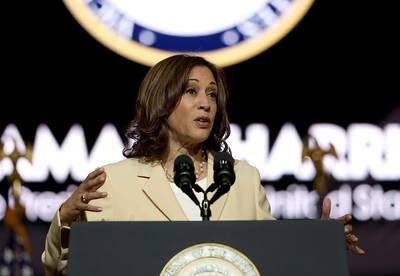
Then the Veep, Vice President Kamala Harris, came into town to attend a roundtable on abortion at the NAACP convention, according to New Jersey Globe.

The anti-smoking contingent hoped Harris would comment, a voice which could reflect far greater exposure than another state Senator. She did not.

“No worker should have to decide between a paycheck and their health – or their unborn child’s health,” said Nicole Vitola of Casino Employees Against Smoking Effects (CEASE)

Vitola pointed out that 45 percent of casino workers are people of color, meaning that group is disproportionately harmed by second-hand smoke, and also drew specific attention to the plight of pregnant workers.

“Vice President Harris should know that as she meets with legislators about reproductive rights and health in Atlantic City today, pregnant casino workers are still forced to breathe secondhand smoke,” she said.

Hard Rock Affirms Plans to Rebrand, Reopen Mirage in 2025

In a recent press release regarding guest satisfaction studies, Hard Rock International (HRI) confirmed that it plans to rebrand the Mirage Hotel & Casino in Las Vegas and reopen the property sometime in 2025.

HRI purchased the operations of the Mirage late last year from MGM Resorts for a little over $1 billion, and the property will become the first tribal-owned resort on the Strip itself, upon reopening.

Per the original purchase agreement, MGM will keep the rights to the Mirage brand, and license it without royalties to HRI for up to three years until the rebranding process is completed. The Seminole Tribe of Florida, which owns HRI, has said previously that it plans to construct another guitar-shaped hotel at the site, which is a staple of the Hard Rock brand.

Jim Allen, chairman of HRI, said in December after the deal was announced that the company was “honored to welcome The Mirage’s 3,500 team members to the Hard Rock family.”

“When complete, Hard Rock Las Vegas will be a fully-integrated resort welcoming meetings, groups, tourists and casino guests from around the world to its nearly 80 acre center-Strip location, “ said Allen.

In addition to the Las Vegas expansion, HRI also recently announced plans to open Greece’s first integrated resort in Athens sometime in 2026.