Author: Casino Connection Staff

Connecticut Town Pegs Would-Be Casino Parcel for Eminent Domain

The East Windsor, Connecticut Board of Selectmen has taken the first steps toward using eminent domain to seize a property owned by the state’s two Native American tribes originally pegged for a new casino.

The Mashantucket Pequot Tribal Nation and the Mohegan Tribe purchased the land, a former Showcase Cinemas property, in 2017 under a joint tribal venture, MMCT, with plans to build the state’s first commercial casino there. That plan was approved by the state legislature and then-Governor Dannel Malloy, who hoped to keep revenue in the state that otherwise would go to MGM’s new casino just over the Massachusetts border in Springfield.

Last year, the tribes abandoned plans for the project, which was to be called Tribal Winds Casino. In March 2021, current Governor Ned Lamont negotiated with the tribes to amend their compact to bring online gaming and sports betting to the state. As part of that arrangement, the tribes agreed to not build Tribal Winds for at least 10 years.

East Windsor officials were upset, not only by the fact the tribes had promised payments of $40 million a year for the first five years the casino operated and cancellation of what would have been a $400 million project along with jobs and investment in the local community, but by the prospect of the site remaining fenced off and abandoned for a decade.

Last week town officials took the first steps toward seizing the property under eminent domain, to free up the property for public use.

“We have tried to be reasonable with the tribal nations, meeting with them on several occasions, to discuss how to develop the parcel,” First Selectman Jason Bowsza said in a press release. “The clear economic harm to East Windsor, as a result of that property being left undeveloped for 10 years, is unacceptable.”

“East Windsor deserves the opportunity to pursue economic growth, provide jobs, and transform this now blighted space into productive use,” Selectman Sarah Muska added in the press release. “We know where the Lamont administration and MMCT stand, and it is not where we need to be.”

Deputy First Selectman Marie DeSousa added to the release, saying, “The stalled development was not the outcome we were promised. Therefore, I have no choice but to pursue this avenue to bring jobs and development opportunities to this community.”

“To have this parcel, which is in the center of our business district, locked out from any development for 10 years, is something we simply cannot allow to continue,” Selectman Alan Baker told the Journal Inquirer.

The board unanimously took the first step in the eminent domain process, by establishing the site as a redevelopment district. Future action is expected soon.
NV Regulators Vote in Favor of County Fair Horse Races

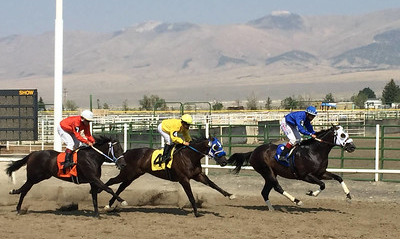
The Nevada Gaming Control Board (NGCB) has voted unanimously in favor of authorizing horse racing events at county fairs in Elko and Ely this summer, after being briefed on some small issues that occurred at last year’s events.

The Nevada Gaming Commission (NGC) will now make a final decision on the matter during their next meeting on June 23.

The proposed races would take place in Ely from Aug. 19-21 and in Elko from Aug. 26 until Sept. 5. Both events feature thoroughbred and quarter horse racing, and have historically been popular and well-attended by locals. Parimutuel betting is allowed at both sites, and they typically run anywhere from six to 10 races per day.

Elko’s NGCB Enforcement Division Supervisor, Brian McIntosh, told fellow board members that he was in favor of the races, despite certain issues that arose at each fair last summer.

According to McIntosh, there were two incidents that took place during last year’s White Pine County races in Ely: a horse jumped the rail and left the track during one race, and a jockey was bucked off his horse in the starting gate before another. Both horses and their jockeys were unharmed.

In response to the incidents, McIntosh explained that the pre-race buck-off was unavoidable and that the jockey was wearing the proper protective equipment, which saved him from injury. As for the horse leaving the track, however, that issue has been resolved by raising the height of the guard rails and installing barriers so that the horses are unable to see past the track.

The Elko issues, on the other hand, stemmed from two horses that tested positive for illegal substances post-race. In one instance, a horse was treated with an anti-inflammatory medication that was not on the board’s approved list of drugs, and in the other, a horse had multiple medications in its system at once, which is also not allowed under NGC regulations.

As a result, the trainers of each horse were fined $750 apiece. McIntosh said these incidents were both examples of oversight and not malicious in nature.

Despite the hiccups, the NGCB voted quickly in favor of the races, and Chairman Brin Gibson called the events “wonderful” and a “holdover from the old West.”

Nebraska Racino Takes Temporary Back Seat

Ho-Chunk Inc., the economic development arm of the Winnebago Tribe of Nebraska, announced the development of a new casino in South Sioux City, Nebraska will be delayed. Ho-Chunk Chief Executive Officer Lance Morgan said the tribe recently received provisional gaming licenses for its WarHorse casinos in Omaha and Lincoln, which have more funding and resources than the Sioux City project.

Morgan stated, “It’s been harder to line up the financing for South Sioux, so we’re going to fund it internally, but we only have so many resources, both in terms of people and in terms of capital. And since Omaha and Lincoln are larger markets, that’s where we’re going to focus.”

Morgan said the new South Sioux City casino, located about a mile away from Atokad Park, will be finished about six to12 months after the Omaha and Lincoln facilities are completed and create 200 new jobs.

WarHorse Gaming and the Nebraska Horsemen’s Benevolent and Protective Association applied for licenses for proposed Lincoln and Omaha casinos on June 2−the same day the Nebraska Racing and Gaming Commission approved the licensing fee structure. Provisional licenses are granted for 90 days; they do not authorize operators to commence gaming, but they provide the necessary documentation for arranging financing and ordering equipment.

Lynne McNally, executive vice president of the horsemen’s group, said WarHorse plans to break ground on the Omaha project this summer and open a temporary facility with 800 slot machines within 10 months.

A temporary casino would also open in Lincoln, with 300 slots. The permanent $220 million casino at Lincoln Race Course will offer more than 1,200 gaming stations, a 196-room hotel, event space, spa and several restaurants. Construction is expected to take 18-24 months to complete.

McNally recently said WarHorse is seeking to borrow $560 million to finance casino construction, which also includes $80 for the South Sioux City facility. She said WarHorse has no immediate plans to apply for a gaming license for that venue; she said, “It’s been more of a struggle to line up financing for that project, due to a saturated gaming market in metro Sioux City.”

A gaming license will cost $5 million for a 5-year term, including an initial $1 million payment due at the time of application and $1 million per year thereafter.

In Grand Island, Fonner Park officials said a temporary casino with 200 slots will open this fall. In addition, Caesars Entertainment will open a Harrah’s Casino in Columbus by the second half of 2023. The Chickasaw Nation also plans to develop a new racino in Hastings.

Proposals for six other racinos are on hold since the legislature in April passed a moratorium on any new operations until the Racing and Gaming Commission can complete studies of the horse racing and casino markets and their socioeconomic impact.

Temporary Illinois Casino Coming This Fall

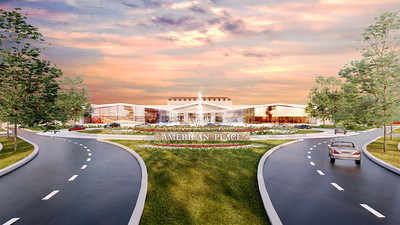
In Waukegan, Illinois, a concrete pad at the former Fountain Square location will be the site of the Temporary by American Place casino by the end of the year, according to officials at Full House Resorts, developers of the new casino hotel.

They said the venue, the size of three football fields, will actually be a tent made of material designed to handle the weather during its expected life span. The temporary structure will offer 1,000 slot machines, 50 table games, three restaurants and a bar.

The permanent casino resort, expected to open in 2025, will feature 1,640 slots, 100 table games and a sportsbook, plus a 1,500-seat entertainment venue, six bars and several restaurants and a rooftop helipad. In addition, the Mansion at American Place will offer 20 luxury villas with butlers, room service and a spa.

The casino’s location is one of the top reasons Full House officials believe it will be a success. When it opens, it will be the closest casino for 1.2 million people in Lake County and southern Wisconsin. Rivers Casino in Des Plaines, Elgin’s Grand Victoria Casino and Potawatomi Hotel and Casino in Milwaukee are within a 1-hour drive of Waukegan.

Waukegan Mayor Ann Taylor said developers have held several job fairs to fill positions at the temporary casino. She noted, “With the casino coming in, we’ve been starting to see a lot of buzz with Waukegan. I think other businesses see Waukegan is on the cusp and they want to be part of it.” Other advantages are Metra access to downtown Chicago and the city’s location halfway between Chicago and Milwaukee, Taylor said.

Nearby regional casinos have nothing to worry about from American Place, said Tom Thanas, executive director of the Illinois Casino Gaming Association. “Brick-and-mortar casinos have been operating in the state for 30 years now. The casinos have always adjusted and reacted and welcomed the competition.”

Arena Group Signs Execs for Las Vegas Hotel Casino Project

Until now, the Oak View Group (OVG) concentrated its business ventures on arenas. But now the group is committed to its largest project yet, a casino hotel and arena project on Las Vegas Boulevard. And to pull it off, OVG secured the services of a trio of high profile executives culled from Las Vegas institutions.

Randy Morton, who has a 20-year track record as a Bellagio executive, comes to OVG after a stint with Foley Entertainment Group, owners of the Las Vegas Golden Knights. Morton will serve as president of OVG Las Vegas Hotel & Casino. OVG will construct a $3 billion entertainment complex centered around a $1 billion, 20,000-seat arena at Las Vegas Boulevard and Blue Diamond Road, according to the Las Vegas Review Journal.

The project is expected to be completed in 2026.

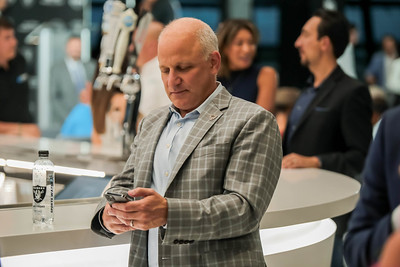
Marc Badain, a Raiders executive who ran the business operations, helped relocate the team from Oakland, and was key to the development of Allegiant Stadium. He becomes president of OVG Las Vegas Sports & Entertainment.

The third leg in this tripod is former Wynn Macau Senior Vice President of Finance Patrick Crockett, who will serve as financial consultant to the project.

“I’m thrilled to join the team at Oak View Group and work alongside Marc,” said Morton. “As soon as (Oak View Group CEO) Tim (Leiweke) shared his vision for the Las Vegas luxury boutique hotel and casino with me, not only did I know it was going to be big, but I knew I wanted to be involved.”

Morton will be well served as former president and COO of Bellagio, where he led the resort to the first AAA Five Diamond Award.

“Adding Randy to the team continues to show the commitment that (Leiweke) and Oak View Group have made to this transformative project,” Badain said.

Prior to Wynn Macau, Crockett worked in finance positions at MGM, Bellagio and Mirage.

“Our Las Vegas project represents a critical first step for OVG in seamlessly integrating the greatest in new and innovative hotel and casino offerings with the best in arena development and live entertainment,” Tim Leiweke said. “This unprecedented project is an industry game-changer, but to do it right, that means putting the best team in place.”

Francesca Bodie, president of business development for the Oak View Group, said the three executives will be crucial to bring the project to life.

“Each understands what it takes to develop, build and open a world-class entertainment destination and we couldn’t be more delighted to welcome them aboard.”

OVG’s recent openings include the Moody Center, a $375 million, 15,000-seat venue at the University of Texas in Austin; the launch of OVG Canada; and the groundbreaking for a redevelopment project of city-owned Baltimore Arena, a $200 million privately funded 60-year-old arena, formerly known as the Baltimore Civic Center and Royal Farms Arena.

Oak View Group will break ground next year on the 25 acres of a 66 acre tract. The group has no connection to the other 41 acres. The company will operate the arena and bring in a partner to operate the hotel-casino.

“South of the Las Vegas Strip represents one of the few areas of potential future growth of the gaming and entertainment corridor,” Leiweke said at the time of the March announcement.

The site of the planned arena is next to the planned train station for Brightline’s high-speed rail between California and Las Vegas.

AGA Hails U.S.’s Lifting Pre-departure Covid Testing Requirement

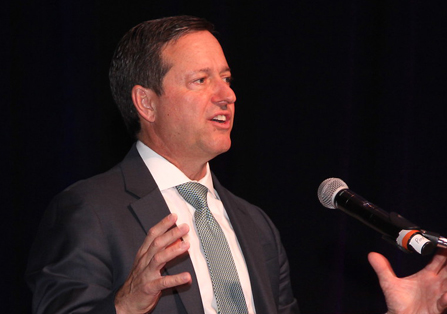
American Gaming Association’s CEO Bill Miller hailed the decision by the Biden administration to lift the pre-departure Covid-19 testing requirement on June 12. He said this would help the U.S. gaming and hospitality industries to recover and put it on par with other countries.

He added that the association was “thankful for the Nevada delegation and other champions in Congress who continue to support gaming communities across the country.” He said, “We are grateful to the CDC, all those in the health and science community, and the Biden administration for tackling this enormous challenge and making this a reality.”

He asked that the administration do what it can to help return tourism to pre-Covid pandemic levels. Miller said, “We ask the State Department to continue their work to speed up international visa processing time by investing in additional staff and allowing virtual interviews.”

Miller previously expressed confidence that this year would be the year that U.S. gaming returns to normal. “Gaming executives are signaling confidence in our continued recovery, that is in line with record-setting consumer demand for gaming,” he said.

Oklahoma Cherokees Buy MGM’s Gold Strike Tunica

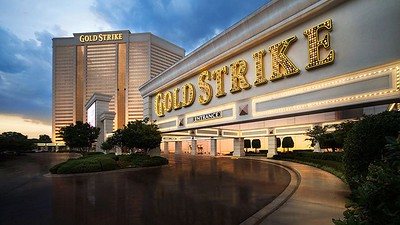
Cherokee Nation Businesses based in Oklahoma, last week revealed it had reached an agreement with MGM Resorts to buy Gold Strike Tunica, the only casino the company owned in the northern Mississippi market. A subsidiary of the CNB, Cherokee Nation Entertainment Gaming Holdings, will pay $450 million for the 1,100 room property, with a 50,000 square foot casino.

It’s the first gaming venture outside of Oklahoma for the tribe and its first investment in commercial gaming. The tribe owns and operates Hard Rock Casino Hotel in Tulsa and nine other tribal gaming enterprises across the state.

“Cherokee Nation Entertainment has a rich history of operating award-winning hospitality destinations in Oklahoma, and we are proud to continue our growth in gaming and bring the level of excellence we are known for to the Tunica area,” said Mark Fulton, president of Cherokee Nation Entertainment (CNE). “We are excited for the team at Gold Strike Tunica to join the CNE family.”

Gold Strike Tunica was built in 1994, one of the second wave of Tunica casinos built in a region closer to Memphis, Tunica’s principal market, that includes the Horseshoe casino. At the time, the 32 story building was the tallest building in Mississippi.

For MGM, the sale of the property was a shedding of a secondary, but successful, asset.

“Gold Strike is a wonderful property with a bright future,” said MGM Resorts CEO Bill Hornbuckle. “Strategically, though, we decided to narrow our focus in Mississippi to a single resort, Beau Rivage (in Biloxi on the Gulf Coast), and dedicate more of our time and resources to continuing to drive success there.”

Complicating the sale a bit was the ownership of the real estate by VICI Holdings, which recently closed on the sale of MGM Growth Properties. To complete the Gold Strike sale, VICI agreed to reduce the annual rent payment on the property by $40 million. .

The $450 million sale price indicates an 11 times valuation of property EBITDA from 2021.

“This is a great outcome for the company, as we can reprioritize future capital expenditures toward opportunities that will enhance the customer experience at our other locations,” said Jonathan Halkyard, CFO and Treasurer, MGM Resorts International. “We appreciate VICI, as the real estate owner of Gold Strike, working constructively with CNE to facilitate a new lease agreement.”

The deal is subject to regulatory approvals and is expected to close in the second quarter of 2023.

“We look forward to expanding our gaming and hospitality businesses as we execute on our strategic plan to grow our footprint outside of the Cherokee Nation Reservation,” said Chuck Garrett, chief executive officer of Cherokee Nation Businesses. “This acquisition will enable us to better serve our mission of growing Cherokee Nation’s economy while also having a significant positive impact on the local economies we serve.”

The Cherokee Nation is just another in a growing list of tribes that have used their gaming expertise to venture in the commercial gaming world. That list now includes the Seminoles, the Eastern Band of Cherokee Indians, San Manuel Band of Mission Indians, the Chickasaw Nation and the Poarch Band of Creek Indians, along with several others.

Florida Gaming Commissioners Target Unregulated Games

Starting July 1, Florida’s new 5-member Florida Gaming Control Commission, established by the legislature in May 2021 and appointed by Governor Ron DeSantis, will take over the duties of the Department of Business and Professional Regulation. However, commissioners have only met a few times; their most recent meeting was the first with all five members.

During that meeting, commissioners instructed Executive Director Louis Trombetta to advertise for the position of director of gaming enforcement. The position will require 10 years of experience in law enforcement, including criminal investigations. Commissioner Chuck Drago said, “It’s going to be a big challenge for us and for the law enforcement director to get out in the state as quickly as possible and let these other law enforcement agencies know that they’ve got this expertise now. Many law enforcement agencies aren’t familiar enough with the gray market machines and so forth to really understand it and make the cases they need to make.”

So-called gray market games are a big concern, said Seminole Tribe lobbyist Marc Dunbar. The state has declared gray market electronic games to be illegal and denied licenses to operators, but unregulated operations continue to pop up.

Dunbar told commissioners, “We’ve had known organized crime, we’ve had shootings, we’ve had actually murders involved in the gray market industry in Florida. One of the things that’s tied law enforcement’s hands, local government’s hands and the Division of Parimutuel Wagering and state agencies’ hands is an entity that didn’t have that plenary authority.

Please communicate your existence to local elected officials and local law enforcement. It’s going to be important as they move forward looking at these kind of operations.”

CA Tribes Accused of False Attacks Against Sports Betting Measure

California gaming tribes who oppose a measure by out-of-state sports betting operators that would legalize online sportsbooks are being accused of “fear mongering” ads.

Seven online operators who want to operate in the Golden State have pointed to ads on social media posted by tribes who wish to retain their monopoly on the market.

In one ad, a voiceover intones “every cellphone, laptop, tablet, and even video game console into a gambling device, opening up online gambling to anyone, anywhere, anytime. That could lead to more addiction, financial ruin, and homelessness, while exposing millions of children to online gambling.”

The operators, who include BetMGM, DraftKings, and FanDuel, qualified for the November ballot the California Solutions to Homelessness and Mental Health Act. It would require operators to work with tribal casinos.

Nathan Click, their spokesman, told Sportshandle, “It’s not surprising to see negative ads in political campaigns, but we are not going to be deterred. Our measure is proving to be popular with California voters.”

Opposing the measure is the Coalition for Safe, Responsible Gaming, whose principals are the Pechanga Band of Indians, Yocha Dehe Wintun Nation, and Agua Caliente Band of Cahuilla Indians. Long before the operators’ initiative, they qualified a measure which would legalize retail sports betting only, and only for tribal casinos and racetracks.

Kathy Fairbanks, their spokeswoman, commented, “The way we approach a campaign like this is to look at it in all of its parts. What is it proposing to do? Is that going to be harmful or helpful to people in California?” She added, “In our case, our coalition thinks it is harmful. So how do you communicate that to voters?”

They decided on a hard-hitting campaign that forces viewers to consider what would happen if children become gambling addicts.

Keith Whyte, executive director of the National Council on Problem Gambling, says the tribes have a credibility problem.

“Whenever an industry vertical uses problem gaming to attack another segment or another operator or another state, they ought to make sure they have absolutely no responsible gaming issues themselves and make sure 100 percent their customers have treatment on demand,” he said. “The first priority is to make sure your own responsible gaming services and problem gaming jurisdictions are the best before criticizing someone else.”

Fairbanks counters that California’s tribes are committed to funding problem gambling programs through their tribal state gaming compacts. Their current proposal, she says, would earmark 15 percent of revenue to the California Department of Health for gambling addiction programs.

John Pappas, a gaming consultant with the industry group iDEA Growth, says the ads perpetuate myths. “I say myth, because there is really no evidence that legalizing online gaming, sports betting, or poker creates a worse environment for underage consumers than the black market,” he said. He adds, “It’s really fear mongering. It goes to the base concerns of most Americans who don’t want kids gambling.”

Critics of this approach say some tribes admit the tribal initiative is a first step. They plan to eventually seek to offer mobile sports betting through tribal casinos because it has proven to be the most lucrative form of sports betting.

Pappas argues that existing mobile sports betting operations in half of the U.S. states require consumers to provide a name, gender, mailing address, phone number and email address. They often require part of the account holder’s Social Security number. They also require they be funded by a credit or debit card, online bank transfer or wire transfer. All are difficult, if not impossible for a minor to provide.

Ohio Opens Sports Betting Application Window

On June 15, the Ohio Casino Control Commission (OCCC) approved provisional licensing rules, opening up the application process for online and retail sportsbooks and operators of kiosks in bars and restaurants.

The first application window, for retail, mobile or lottery sports betting operators, will close July 15. The second window will close August 15 and will include mobile operators that are offered a second license by a casino or sports team. These licenses are not guaranteed; operators must prove they will offer the state additional economic impact. Lottery retailers desiring to offer sports betting also can apply during this period.

The OCCC will create a new website chronicling “on a regular basis” which companies have applied for a sports betting license. Eventually a searchable public registry of all applicants will be available.

Sports betting must launch by January 1, 2023 according to enabling legislation. However, mobile and retail sportsbooks can start signing up players before then. OCCC Executive Director Matt Schuler noted the state’s 11 casinos and racinos will have slightly more than six months to create on-site sportsbooks.

Hollywood Casino Toledo Vice President of Marketing Alex Rangel said that venue as well as Penn National Gaming’s three other Ohio properties will have on-site Barstool Sportsbooks ready for the January 1 launch.

He said, “We get asked every single day about it from our guests. It’s been going that way for years, ‘When are you guys going to get sports betting?’ Since people heard HB 29 passed, that just ratcheted up that much more. They really wanted it to start by the start of football.”

Rangel said construction will begin in early July at the Toledo sportsbook, which will include a bar, three-tier-level seating, a pair of 22-foot-long jumbo screens and “TVs everywhere.” Betting windows will be located near the sportsbook’s entrance, and 30 self-service betting kiosks will be available throughout the casino. He added, “We’re optimistic as a whole that Ohio is going to be a very healthy market, being the seventh-largest state in the country.”

JACK Entertainment plans to open sportsbooks at JACK Cleveland Casino and JACK Thistledown Racino in North Randall. Both will include video walls for viewing sports and comfortable seating. Hard Rock Casino Cincinnati’s sportsbook will be built next to the Hard Rock Cafe Bar, officials said.

Sportsbook plans are inconclusive at Miami Valley Gaming and Belterra Park Cincinnati. A Miami Valley Gaming spokesman said a construction start date hasn’t been said because of a lack of space and recent expenditures on a new gaming patio. However, patrons still will be able to wager on sports with their cell phones while watching sports at the racino bar.

At Belterra Park Cincinnati, space also is limited, but patrons will be able to place mobile sports bets at the Stadium Sports Bar & Grill, which offers more than 50 HDTVs. MGM Northfield Park has converted its former gift shop to a TAP Sports Bar, but has not announced if it will build an on-site sportsbook.

The Cleveland Browns have a partnership deal with Bally’s, including a Bally’s branded lounge at FirstEnergy Stadium. The Cleveland Cavaliers have partnership deals with Caesars Sportsbook and Fubo Gaming, including building retail sportsbook lounges inside Rocket Mortgage Fieldhouse. In addition, the Pro Football Hall of Fame in Canton has a partnership deal with Rush Street Interactive, including building an RSI sportsbook at the Hall of Fame Village’s Fan Engagement Zone.

Audit Uncovers Flaws in Colorado Sports Betting

A recent audit of the Colorado Division of Gaming (CDG) detected alleged flaws in how the division regulates sports betting, including inadequate background checks for licensed operators.

The probe, which was just released to the public, was conducted by the Colorado Office of the State Auditor. It found that during the state’s first year of regulated sports betting—which began in May 2020—the CDG lacked “an effective process to investigate sports betting operations for temporary licensure, or to collect sufficient documentation to determine if sports betting operations’ monthly tax filing were accurate.”

The audit revealed that 90 percent of temporary licenses were issued with limited background checks, but allowed licensees to operate as if they had permanent licenses.

This prompted the auditors to conduct its own background checks on the suitability of five randomly selected operators. It also looked at 22 tax filings and “found wide variation between the amount of wagering activity (i.e., bets, free bets, and payments to players) that operations reported after each gaming day compared to the totals they reported in their monthly tax filings.”

The variances totaled about $1 million. The audit also found that “the Division could not demonstrate if or how it verified that the tax filings were based on accurate data.”

The audit found that the CDG inadequately monitored sports betting operators. It concluded that the state is losing out on significant gaming revenue.

It concluded, “Between May 2020 and April 2021, the State collected $6.6 million in sports betting tax.” It added, “Our analysis of the 324 tax filings reported during this time period determined that if operations had not been allowed to deduct and carry forward operating losses, the State would have collected $7.3 million, or an additional $706,600, in sports betting tax during that first year.”

A recent law signed by Governor Jared Polis will eventually end tax write-offs for sports betting promotions.

Texans Boost Louisiana Sports Betting

The lack of legalized sports betting in Texas has been very good for Louisiana, according to Louisiana Gaming Control Board (LGCB) Chairman Ronnie Johns. The western region of the state, including Lake Charles and Shreveport- Bossier City, has attracted mobile and retail sports bettors and casino visitors from Houston to Austin and beyond. “They cater basically to that Houston/East Texas/San Antonio market. So, they do a lot of business,” Johns said.

It’s difficult to precisely estimate the number of Texans who travel to Louisiana to place bets, but data from the geolocation firm GeoComply indicates active betting across the east Texas border into Louisiana. Super Bowl Sunday, February 13, is a good example. On that day, GeoComply showed Lake Charles received 40,000 mobile check-ins and Shreveport-Bossier City received around 131,000. Baton Rouge received about 190,000 mobile wagering check-ins.

GeoComply data shows that on Sunday, January 30, the day of the National Football League conference championships, 32 percent of Louisiana online sports betting occurred in West and Central Louisiana. The remaining 68 percent came from the Baton Rouge and New Orleans metro areas, according to GeoComply.

More current data from GeoComply indicates from April 27 to May 25, there were around 225,000 mobile sportsbook check-ins from the Lake Charles area, and about twice as many from Shreveport-Bossier City.

Lake Charles is the home of L’Auberge Casino Resort Lake Charles (Barstool) and Golden Nugget Lake Charles Hotel and Casino (DraftKings). Both offer retail sportsbooks plus mobile sports betting. A third retail sportsbook, Horseshoe Casino Lake Charles (Caesars Sportsbook) is expected to open later this year. Johns said, “They’re sold out every weekend, and they’re estimating 85 percent of their casino business comes out of Texas. In terms of casino revenue, they’re the largest market, because of the Texas bettors coming in.”

Johns said about $840 million in handle was wagered on sports in Louisiana through April, generating $10 million for the state. The LGCB said at the retail level, football clearly outpaces other sports, with proceeds of $3.7 million since the November launch through this April. Basketball trailed behind at $2.1 million, and parlay bets netted slightly over $13 million statewide. Louisiana is expected to net more than $30 million in annual state revenue once sports betting is in full swing, according to some estimates.

Perhaps the most notable Texas sports bettor to place a wager in West Louisiana is Houston furniture store magnate Jim McIngvale, aka “Mattress Mack.” He reportedly bet $9.5 million on the 2022 Super Bowl from his phone at a welcome center over the Texas- Louisiana state line.

Johns said, “He got in his car, drove right across the state line to a welcome center right on I-10. Got out, got him a Coke, placed a $4.5 million bet, came back the next week and placed a $5 million bet.” Most of McIngvale’s bets were placed with Caesars, Johns said.

CA Sports Betting Measure Passes Signature Halfway Mark

“Californians for Solutions to Homelessness and Mental Health Support,” which hopes to qualify an online sports betting measure for the November ballot, has passed the halfway mark of verifiable signatures. Based on random verifications, the California Secretary of State’s office is projecting that 578,799 signatures are valid, more than half of the 997,139 needed to make the ballot.

The proponents submitted nearly 1.6 million signatures to the Secretary of State’s office last month, giving them a 10 percent cushion. State officials have until June 2 to complete the random sampling, with 23 counties that remain to submit their signature data. That includes the three counties where proponents gathered the most signatures, Los Angeles, Riverside and San Diego.

The measure, which is backed by out-of-state sportsbook operators, would amend the state constitution. Should it qualify for the ballot, two sports betting measures would be presented to voters. The first, put forward by a consortium of gaming tribes, would give tribal casinos and the Golden State’s four racetracks a monopoly on retail sports betting, while not allowing mobile sports betting.

The operator-sponsored measure would allow operators to offer mobile sports betting, but tethered to tribal casinos. Both measures could pass because they don’t exclude each other. However, the state’s cardrooms have brought a legal challenge to the tribal measure.

Under the provisions of the operators’ measure, sportsbook operators would pay a $100 million license fee. It would lock out smaller operators by requiring that operators be licensed in at least 10 other states, or five states if they operate at 12 Class II casinos.

Tribal casinos could get a license for $10 million.

The measure would earmark most of the taxes generated from online sports betting to tackle homelessness and mental health problems.

The rival measures have already generated considerable heat. The operators have said they will spend $100 million to sell the voters, while tribes have already started a well-financed campaign to disparage the measure by claiming that it would lead to thousands of minors being allowed to make sports bets.

Various politicians, business groups, labor unions and civic organizations have come out for or against the rival measures.

N.Y. Sports Betting has Slowed but Still Rakes in Tax Dollars

More than five months have passed since New York state introduced mobile sports betting, and the numbers tell the tale. New York bettors have risked $7.69 billion in bets, leading to gross gaming revenue (GGR) of $541 million among the eight operators in the state. The industry yielded $276 million in new tax revenue for the state, 98 percent of which goes toward education, according to N.Y. Online Gambling.

“In less than half a year, New York has become a leader among states implementing successful gaming policies, with hundreds of millions of dollars going to important programs that will improve the lives of all New Yorkers,” Gov. Kathy Hochul said in a recent press release. “I am committed to upholding responsible and effective gaming policies that will move the industry forward and continue to drive our state’s economic growth.”

New York has already surpassed Pennsylvania and New Jersey, as well as the four commercial casinos upstate, in tax revenue. However, activity has slowed down lately with no major sporting events in place.

For the week ending June 5, New York bettors generated $270 million in handle, with the operators earning $10.8 million, according to figures posted by the New York State Gaming Commission. That’s the lowest GGR since launching in January.

However, what the eight mobile sportsbook operators generated during the slow month of May is still significant. Bettors wagered $1.26 billion in May, producing $109.8 million in revenue and $56 million in taxes. The handle ranked the smallest since the January 8 launch, yet the third best month in tax generation, according to Legal Sports Report.

FanDuel led all operators again, with a handle of $552.6 million, or 43.7 percent of the total online handle. DraftKings placed second with $3.12 million.

Unless Pennsylvania sportsbooks had a near-record tax month in May, New York will be the new leader in terms of taxes from U.S. sports betting since the end of PASPA in May 2018.

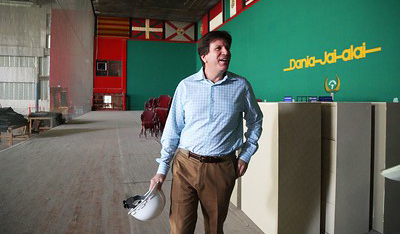
Jai Alai Exec Sees Path to Future for the Dying Sport

The world’s last active fronton in Florida, Magic City Fronton, will remain open through the 2023 season. Scott Savin, COO of the fronton, hopes the plans he’s put in place will revitalize the game. To date, the place attracts those 40 and over as well as younger people drawn to the Magic City Jai Alai videos on social media, according to US Bets.

“Right now, everyone’s enthusiastic that we’re still very much in the growing phase and everything looks like it’s unfolding positively,” Savin said.

The sport almost died off five years ago, until Savin hatched the idea to resurrect it. First, he erected a new fronton at his casino between Little Havana and Miami’s airport. Then, he enlisted former University of Miami athletes to take up the sport, broke a union that was dominated by players from the Basque region of Spain, and gave the game some breathing room.

Savin worked out deals with BetRivers to offer mobile sports betting on jai alai in Pennsylvania, Illinois, and five other states, and streamed matches live. The sport is growing in popularity.

The company had 170,000 unique visitors to TikTok for their Memorial Day livestream, with the average viewer spending more than three minutes per person watching.

“That gives us cause for a lot of optimism,” Savin said. “I’m generally not a patient person, but I’m learning patience. It’s crawl, walk, run, and crawling is getting eyeballs.”

Quality of play has improved immensely, and now they attract the best players in the world. Three of the top five singles players globally and two of the top five doubles squads play at Magic City. Players can earn upward of $110,000 for six months’ work if they play well enough.

Betting is up 30 percent, and jai alai sometimes makes the top 10 by handle.

Savin has received inquiries from investors in Las Vegas and overseas who want the league to expand. Could there be a western conference and an eastern conference, competing for the Super Bowl of jai alai?

Selling teams brings in more revenue, with some fetching upwards of $100,000. In August, the casino will stage its first-ever draft, in which new owners will call the shots. The winner of Battle Court gets $50,000 in prize money, plus whatever revenue sharing is handed out, and there are no further costs to the owners.

Savin is excited about the future, and he remains confident that the potential for long-term sustainability is there.

“That’s what everyone is clinging to, with a wide-eyed optimism for what the sport potentially could be,” Savin said.

Barstool’s 4th Sportsbook in PA Now Open at Hollywood Casino

A new Barstool Sportsbook located inside Hollywood Casino at The Meadows is now open, becoming the fourth Barstool location to open in Pennsylvania since August of last year.

The new location, which cost about $7 million to build, will feature a restaurant, bars and even a small number of low-limit slot machines and table games in addition to the sportsbook.

Barstool, a sports media company, has expanded heavily into the gaming space after Penn National Gaming purchased a 36 percent stake in the company back in early 2020. Penn has said previously that it plans to acquire the remaining stake in Barstool sometime in the future, most likely in 2023.

The collaboration between the two companies began with online sportsbooks, but quickly expanded into land-based locations, primarily on the East Coast. In addition to the recent location at The Meadows, Barstool and Penn also operate books at Hollywood Casinos in York, Morgantown and Penn National Race Course.

On an earnings call earlier this year, Penn CEO Jay Snowden said that the company was “encouraged by the ongoing visitation of our younger demographic,” and that it is “focused on reimagining our properties and offerings to enhance the entertainment appeal to the steadily growing segment of customers.”

Wyoming Sports Betting Launch: Slow but Steady

Ten months after the launch of Wyoming’s sports betting market, the Wyoming Gaming Commission (WGC) admits that it’s not a barn-burner. However, it is showing steady growth.

Overseeing the introduction of mobile-only sports betting for the WGC is David Carpenter. He was put in charge of the rollout in April 2021, shortly after Governor Mark Gordon signed the bill legalizing it. The Cowboy State is one of the rare states to only offer mobile sports betting, since it has no casinos.

So far, FanDuel, DraftKings, BetMGM and Caesars Sportsbook offer sports wagering, with Caesars being the most recent. The market opened with 10,000 to 15,000 unique users in the first few weeks, which approached 30,000 for the NFL season and has hovered around that number for five months. NFL is the most popular sports betting sport, with basketball and hockey less so, said Carpenter.

“I think we’re right in line with our numbers compared to other states, we’re just on a different level because of our population,” Carpenter told CDC Gaming Reports. “I think it’ll continue to grow for quite a while and I think that the excitement will keep building.”

Wyoming, is, of course, the state with the lowest population, with fewer than 600,000 residents. Carpenter’s goal is for 10 percent of the population to have accounts.

Carpenter concluded, “Our goal at the end of the day is to get the illegal offshore operators out of the state and to bring in these regulated markets to make money off of.”

The state collects 10 percent of sports betting revenue, with the first $300,000 earmarked for programs to treat gambling addiction. So far the state hasn’t breached that benchmark. Carpenter says it is a realistic goal for the state to reach $1 million in revenue for the first calendar year.

N. Carolina Legislator Still Sees Sports Betting in 2022

It’s mid-June, meaning that the legislative session in North Carolina ends in less than two weeks. That said, the House Judiciary Committee has not put the mobile sports betting bill on its agenda.

The Judiciary committee is the first of a handful of committee stops. The Senate approved the bill last August.

If enacted, the legislation would allow statewide mobile sports betting. Currently, in-person sports wagering is legal at two tribal-owned casinos in the state. As many as a dozen mobile sports betting licenses could be awarded, with the proposed tax rate of 8 percent of adjusted gross revenue.

Despite a slow start to the session, Rep. Jason Saine remains optimistic about the bill’s chances. Saine is taking a leading role in helping the bill move through the House.

“If everything goes according to plan, it should still be heard next week,” Angela Morando, Rep. Jason Saine’s legislative assistant, told Sports Handle in an email. “Rep. Saine is hopeful that everything will stay on track from the rest of this short session.”

Maryland Online Sports Betting Could Be Ready This Fall

If you want to place a bet on the Orioles in Maryland, there are a number of places to do so: MGM National Harbor, Live! Casino, Horseshoe Casino, Hollywood Casino, and Ocean Downs Casino, to name a handful.

But if you want the convenience of betting online or using your phone, you have to wait a while. Authorities have no firm date, but hope the launch can occur while the NFL is still playing in 2022.

“Football tends to attract more wagering than other sports, and beyond that, the real revenue potential is in mobile,” said John Martin, director of the Maryland Lottery and Gaming Control Agency. “When the market is fully launched, including mobile, our back-of-the-envelope estimate is that sports wagering will contribute roughly $30 million a year to Maryland.”

The Maryland Sports Wagering Application Review Commission (MSWARC), the agency charged with awarding sports betting licenses, is focused on completing an industry analysis before beginning the process of dishing out online licenses. Martin expects the study to be finalized in the next couple of months, according to Saturday Tradition. That puts licensing to begin sometime in August or September.

Since it could take months for the licensing and testing process, the debut on mobile wagering may have to wait till late 2022 or even into 2023.

The MSWARC approved three off-track betting venues: Riverboat on the Potomac, Long Shot’s, and Greenmount Station. All three are readying their locations to accept bets. Bingo World in Anne Arundel County received the last of the licenses for the moment.

At least two of the four should be ready to take wagers by summer.

“They are completing a number of operational procedures that are required before they can launch, and in some cases, they are doing construction of their sports wagering areas, so we are moving at their pace,” Martin said.

FuboTV Pick’em Games Integrate Live TV, Sports Betting

When FuboTV Inc. introduced pick’em games over the weekend, it became the first company to launch the free-to-play sports contests directly integrated into the live TV streaming experience.

According to a June 16 release, pick’em players in select markets now can access Fubo Sportsbook by scanning a QR code and placing real-money wagers. This marks the latest incorporation of FuboTV and its owned-and-operated real-money wagering platform.

Pick’em players will be able to predict the outcome of select live sporting events directly from the home screen of FuboTV’s live TV streaming platform. Fubo will make pick’ems available prior to the start of select live sporting events each Sunday. Players can test their skills through a variety of contests, including Perfect Pick’ems, to earn points and compete against their friends and the FuboTV community for the chance to work their way up leaderboards.

FuboTV will continue to expand the types of contests, the gaming experience and later will introduce prizing.

Pick’ems launched Sunday, June 19 to select FuboTV subscribers and will continue to roll out to the company’s user base in the coming months.

“With this weekend’s launch, FuboTV will become the first live TV streaming platform to offer pick’em games integrated into the video experience with a direct gateway to an owned-and-operated sportsbook,” said Mike Berkley, chief product officer, FuboTV. “We believe interactivity is a key product differentiator for Fubo and, with these immersive experiences built into our live streaming product, we can offer the most personalized—and customizable—sports and entertainment television experience.”

“While other media companies are entering into external partnerships with betting companies, FuboTV and Fubo Sportsbook have combined both into one ecosystem,” added Scott Butera, president of Fubo Gaming. “The launch of pick’ems will further demonstrate FuboTV’s unique product integration and commitment to offering fans real-time immersive experiences across multiple touchpoints.”

“Our mission is to transform the TV experience through interactive engagement, including free gaming and real-money wagering, into streaming video,” said David Gandler, co-founder and CEO, FuboTV. “This industry-first integration has been popular with consumers, and, as we reported on our recent first quarter 2022 earnings call, we’re already seeing encouraging early signs of the flywheel effect between FuboTV and Fubo Sportsbook. We believe our built-in video audience will allow us to acquire users more efficiently, with a limited amount of marketing spend. We will continue to build our fully unified streaming TV and sportsbook experience with the rollout of more interactive features this year.”