Author: Casino Connection Staff

Some California Cities Say Sportsbook Initiative Will Kill Cardrooms

Some California cities that host cardrooms that contribute a significant amount to their general funds are warning against a ballot measure they say could put those casinos out of business, killing a $1.6 billion industry.

Unfortunately for them, the California Sports Wagering Regulation and Unlawful Gambling Act is backed by a coalition of gaming tribes that represent a much larger industry. It is led by Pechanga Resort Casino, the largest casino on the West Coast.

It would allow tribal casinos and the Golden State’s four racetracks, to offer sports betting, and add roulette and craps to their slot machines. This would, say the cities, give the tribes virtually a monopoly on gaming in the state. They point to a provision in the act that they say could allow the tribes to complete that monopoly by strangling the cardrooms.

The act would expand on the state’s Private Attorneys General Act and allow private attorneys hired by tribes to stand in for the state Attorney General to sue cardrooms over possible violations.

Cities close to Los Angeles and San Francisco host some of the largest, most lucrative cardrooms in the state. Several get the lion’s share of their revenue from their card casinos.

The cities opposing the measure include Commerce, Compton, Hawaiian Gardens and Bell Gardens. At a May 19 press conference Bell Gardens councilwoman Alejandra Cortez pointed out that Bicycle Hotel & Casino accounts for 46 percent of her city’s budget.

She said the Covid pandemic gave her city “a preview of what that would be like when we had to shut down in 2020 during the COVID-19 pandemic.” She added, “It was closed for nine months and it resulted in a loss of about $10 million.”

Kathy Fairbanks, spokeswoman for the Coalition for Safe, Responsible Gaming, which supports the initiative, says their fears are overblown. She said in a statement: “Our measure simply ensures existing laws preventing illegal gambling are being followed,” she said. “Cardrooms following the law have nothing to worry about—nor do their employees.”

Fairbanks, on the other hand, points to recent settlements that several cardrooms have had to pay for violating state and federal laws on money laundering. “The only cardroom casinos at risk of legal enforcement are those that repeatedly violate California gaming laws,” she said.

But the tribes themselves are fighting the other measure that is on the ballot, proposed by out-of-state sportsbook operators. They are spending millions on advertisements to oppose.

That measure, the California Solutions to Homelessness and Mental Health Support Act, is counting on Golden State residents to look at their measure in the light what most people think is the state’s biggest problem: homelessness.

An opponent of that measure, Rob Stutzman, who represents Tribal Sovereignty and Safe Gaming, told CDC Gaming Reports, “Yes, they are promising money to fight homelessness, and if you look at the fine print, 90 percent of these dollars go out of state, and then the pennies that remain get chopped up through some other loopholes.” He added, “Essentially, you’re looking at maybe a 3% bump to the amount of money the state currently spends on homelessness.”

Maryland Online Sports Betting Likely Dead for 2022

Maryland voters approved sports betting in 2020, and this year, retail sportsbook licenses are still being granted, and the state’s casinos have already handled more than $132 million in wagers. As far as the much more lucrative online and mobile sportsbooks, officials doubt a plan will be implemented by the end of this year, or even by next February’s Super Bowl.

What’s holding it up is an effort by multiple state agencies to comply with the sports betting law’s requirement that women- and minority-owned businesses be represented in the sports betting industry.

The Maryland Sports Wagering Application Review Committee (SWARC) is currently awaiting results of a disparity study by the Maryland Lottery and Gaming Control Agency.

State officials now say online and mobile sports betting are not likely to go live until late 2023.

Meanwhile, the retail licensing process continues. Cumberland’s mayor and City Council voted last week to adopt zoning guidelines to permit sports gambling within the city limits. A final reading of the ordinance was conducted during the council’s regular meeting held at City Hall. The vote was unanimous to implement the guidelines which permit fantasy competitions and sports wagering.

So far, 17 of the retail licenses were awarded to large gambling houses, but 30 licenses remain unfilled.

Minnesota Sports Betting Misses Finish Line

In Minnesota, sports betting legislation fell short of the finish line just before the session ended May 22. The addition of licenses for two horse racetracks doomed the bill sponsored by state Rep. Zack Stephenson.

The legislation started out with bipartisan support and advanced through five House committees before it passed the full House, 70-57. Unlike previous years, the Minnesota Indian Gaming Association supported Stephenson’s bill, which would have given the state’s 11 gaming tribes exclusive rights to on-site and online sports wagering. Mobile sports betting would have been taxed at 10 percent.

But when the bill reached the Senate, a committee added an amendment to allow sports betting at the two horse racetracks, following Majority Leader Jeremy Miller’s insistence that commercial venues, as well as tribes, be allowed to offer sports wagering. MIGA sent an opposition letter to the committee withdrawing its support for the bill. The full Senate did not take up the legislation.

State Rep. Pat Garofalo, a co-sponsor of the measure, said, “There are too many legislators focused on short-term political considerations instead of thinking about what is best for the whole state. The sports gambling issue is symbolic of how screwed up the lawmaking process is in Minnesota.”

According to a KTSP/SurveyUSA poll., more than 60 percent of Minnesotans support legalized sports betting.

Michigan Joins Multi-State Internet Gaming Agreement

Michigan recently became the fourth member of the Multi-State Internet Gaming Agreement, allowing residents to play online poker with players from Nevada, New Jersey and Delaware. Michigan Gaming Control Board Executive Director Henry Williams, who signed the agreement, said, “By joining, Michigan will almost double the potential pool of participants in multistate poker games.”

State Senator Curtis Hertel, an early supporter of legalized online gaming, added, “Michigan poker players will enjoy more options and will likely play for bigger money when they can compete against players from other states. I am glad we were able to make this possible for Michigan poker players.”

Currently, three casino and online platform operators offer internet poker: MGM Grand Detroit and BetMGM; the Grand Traverse Band of Ottawa and Chippewa Indians and the World Series of Poker; and the Little Traverse Bay Bands of Odawa Indians and PokerStars.

The MGCB recently released figures indicating the state’s casinos brought in $163.1 million in revenue in April, including a monthly record of $132.4 million. Sports betting totaled $30.7 million in April. As a result, the state received about $35 million in tax revenue, with $25.2 million from gambling platforms, $7.2 million from Detroit’s three casinos and $2.7 million from tribal casinos.

Governor Gretchen Whitmer signed legislation allowing internet gaming in December 2019. In its first full year, online gaming generated more than $282 million in tax revenue for Michigan, with most of that total going to K-12 public schools. The funds also cover the MGCB’s operating costs, plus $2 million for the First Responder Presumed Coverage Fund and $500,000 for the Compulsive Gaming Prevention Fund.

GAN Shareholder Calls for Board and CEO to Be Replaced

Jan Svendsen, founder of Coolbet, is none too happy with GAN, where he is a shareholder. Svendsen recently made posts on social media saying that he wants to replace GAN’s current board as well as CEO Dermot Smurfit.

The company delivered underwhelming results while management collected nice salaries and bonuses, according to IGaming NEXT.

Published on Reddit and LinkedIn, Svendsen unleashed his version of events around GAN’s purchase of Estonian and his own company, Coolbet. He left his company after he turned down a position as office manager in Spain last year.

That was “not a big problem,” he said. “My problem now is that I currently hold 840,000 shares at GAN and know personally that the leadership team at GAN is non-effective and the board is weak.”

At the time of writing, GAN’s $3.35 share price gives Svendsen’s stake in the business a valuation of $2.8 million. At GAN’s 52-week high share price of $18.48, the shares would be worth $15.5 million.

“I don’t think the board is very professional at GAN,” Svendsen wrote. “From what I heard, the chair is an old friend of the Smurfit family. Dermot Smurfit’s uncle also serves on the board. In addition, the CFO of GAN, Karen Flores, serves on the board.

“In my opinion, one of the responsibilities of the board is to look after GAN’s money; it does not seem wise to have the CFO serve on the board. My general impression is that the board is weak and more like a “yes Dermot” board.”

He particularly laid into the IT team, although he said new CTO Jan Roos—a former Coolbet employee— “has done a good job of trying to clean up the ineffective mess that was inherited at GAN.”

Still, he didn’t think executives like the CFO should serve on the board looking after GAN’s money.

Coolbet accounted for an increase in full-year revenue to $125.4 million, compared to just $35.2 million in 2020.

“2021 was a horrible year for GAN; GAN did not deliver on the bottom line and the share price dropped significantly. Regardless, the leadership team gave themselves huge bonuses. Why? Aren’t bonuses something you should pay out when you produce positive results?”

The development of GAN Sports, a B2B solution built on Coolbet’s software, should guide GAN into new B2B markets.

“But using so many resources from Coolbet to clean up the GAN B2B mess also comes with a price for B2C. The growth of Coolbet is slowing down a lot, and that may not be so smart when Coolbet is the only part of GAN that is making the money.”

“It is a company with great potential because of what Coolbet brings to the table. We need a leader who can collect the troops and who respects all the employees of the company. Someone who can keep up the quality and be more vigilant about spending money.”

“I must be very clear that this is posted only from me as a worried shareholder. I don’t have any ambition or intention to have a management or director role in GAN,” Svendsen said.

TTB Given Deadline in Playtech Takeover Bid

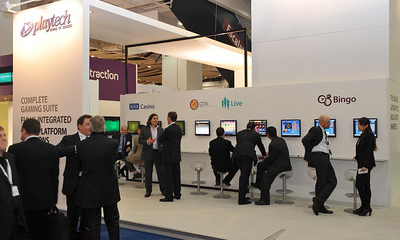
Online gaming giant Playtech has given bidder TTB Partners a deadline of June 17 to commit to making a bid to acquire the company. TTB asked Playtech to schedule the deadline after restrictions to do so under London’s City Code on Takeovers and Mergers expired.

Restrictions had been imposed after TTB advised Gopher Investments, a minority shareholder of Playtech, in Gopher’s own bid to acquire Playtech. Gopher pulled out of a three-way competition to acquire Playtech in November. Playtech shareholders subsequently rejected a takeover bid from Aristocrat Leisure Limited.

The restrictions expired May 20. Under the city code, TTB must either announce its firm intent to make an offer for Playtech or that it is not making an offer, by 5 p.m. on June 17.

“Discussions between the company and TTB are ongoing and progress continues to be made,” the Playtech board announced, according to iGaming Business. “There continues to be no certainty that an offer will be made, or the terms on which any offer may be made. The independent committee is conscious that TTB has been considering a possible offer for Playtech for 15 weeks.”

Playtech’s board added that, should it receive a bid, shareholder value will be its top priority. “The independent committee continues to explore options for maximizing shareholder value, and reiterates the strong performance of the group, as announced to the market on May 5, 2022, which has continued through the month of April and into the month of May.”

White Hat Studios Strikes U.S. Content Deal with DraftKings

White Hat Studios, the content division of major iGaming platform White Hat Gaming, has continued its expansion in the US by signing a content deal with international operator DraftKings.

Through the agreement, White Hat will supply DraftKings with Europe’s market-leading slots, jackpot slots, and RNG table content in live states across the country, including New Jersey, Michigan, Pennsylvania, Connecticut and West Virginia.

DraftKings’ U.S. customers will benefit from premium branded titles with proven track records in mature markets, which are optimized to appeal to a North American audience, which include Ted, Deal or No Deal and Peaky Blinders.

Andy Whitworth, CEO at White Hat Studios, said: “We’re incredibly excited to partner with one of North America’s most influential and forward-thinking operators in DraftKings, who are a leader in bringing the latest content to the market.

This is a huge step for us as we continue our expansion, we can’t wait to see our content go live with them.”

This deal is the latest in a long list of clients that have signed recently as excitement gathers for White Hat Studios debut in its first state of Michigan.

Córdoba Opens Bidding Process for 10 iGaming Licenses

Córdoba, Argentina’s second most populous province, has opened the tender process for 10 online gaming licenses, under a legalization bill passed in January. The law originally provided for five licenses, but was expanded.

“Online gaming is already in force in the province, but now what we are going to do is to make a call for tender, for those aspiring to be licensees,” said José Alonso, assistant manager of the legal department for Córdoba’s Department of the Lottery, according to Yogonet.com. “We are formalizing a situation that has been illegally developing in the province, to which we are giving a framework of legitimacy and protection for all players.”

According to Yogonet, the law aims to regulate online gambling through, among other actions, the creation of a Registry of Online Gambling Licenses, as well as “collaborating with the state in the detection and eradication of illegal games, in the fight against fraud and criminality.”

Companies or business groups must submit and acquire the national and international bidding documents by June 10, and the envelopes with the technical and financial proposals must be sent to Lotería de Córdoba before July 5. The application process foresees that 10 companies or joint ventures, with up to 30 percent foreign capital, will obtain a 15-year concession, which would start to be in force in September.

William Hill Enters Latvia, Powered by GiG

William Hill, one of the largest and most familiar brands in the gaming industry has gone live in Latvia powered by Gaming innovation Group’s (GiG) award-winning iGaming platform.

While strengthening GiG’s presence in the country, this launch is the first step for William Hill into the growing Latvian market, with the two companies partnering to fully rebrand the site of one of the previous leading operators from 11.lv to williamhill.lv.

William Hill’s new online Latvian offering has been built using GiG’s frontend framework and will provide its players with a user-friendly and competitive online casino and sportsbook. With a unique look and feel, the quality of GiG’s delivery promises that they will stand out as a leading operator within the Latvian market, both now and into the future.

GiG CEO Richard Brown said, “We are proud that William Hill has chosen our frontend solution for the rebrand and launch of its newly acquired online casino and sportsbook sites for Latvia. We look forward to continuing to support William Hill in their success and expansion in the Latvian market.”

Janis Tregers, managing director for William Hill Latvia added, “We are very excited to continue our journey in the Latvian market by working with such a strong brand as William Hill. 11.lv has served us well and will be missed, but the transition comes easier to ourselves and our customers in large part because of the improvements in the product we have been able to deliver in collaboration with GiG to accompany this rebrand.”

Take-Two Completes Acquisition of Zynga

Video game content supplier Take-Two Interactive Software announced it has completed its acquisition of social gaming content supplier and operator Zynga, creator of FarmVille, in an $11.7 billion deal. The purchase price of Take-Two, which owns Grand Theft Auto publisher Rockstar, comprises $3.50 per share in cash and 0.0406 shares of Take-Two common stock in exchange for each Zynga share.

“We are excited for Zynga’s next-generation mobile platform, free-to-play expertise, diverse offering of games and incredible team to join the Take-Two family,” Frank Gibeau, chief executive of Zynga, said. “We are eager to continue building an unparalleled portfolio of games that will reach broader markets and lead to continued growth for this next chapter of Zynga’s history.”

Strauss Zelnick, chairman and CEO of Take-Two, added, “We are thrilled to complete our combination with Zynga, which is a pivotal step to increase exponentially our net bookings from mobile, the fastest-growing segment in interactive entertainment, while also providing us with substantial cost synergies and revenue opportunities.

“As we bring together our exceptional talent, exciting pipelines of games, and industry-leading technologies and capabilities, we believe that we can take our portfolio to another level of creativity, innovation, and quality. Each of our teams has a strong history of operational execution, and together, we expect that we will enhance our financial profile through greater scale and profitability, paving the way for us to deliver strong shareholder value.”

Bally’s Atlantic City Celebrates Its Renovations On Memorial Day Weekend

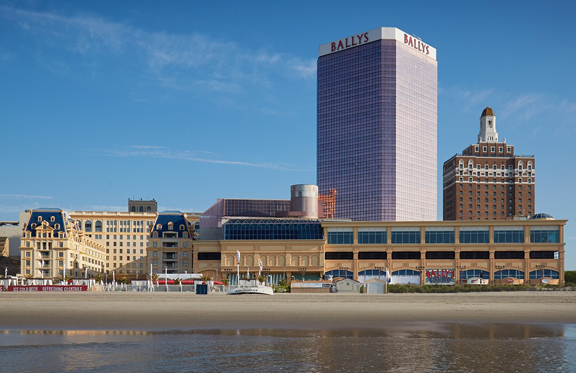
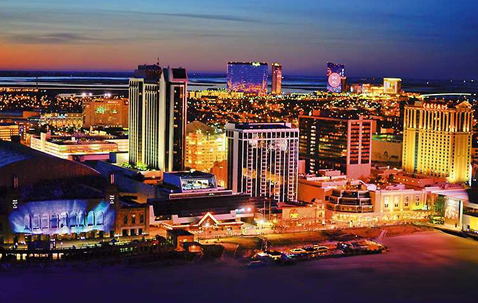
Bally’s Atlantic City, under new ownership, will debut its property-wide renovations including the all-new Bally’s Tower featuring 750 newly renovated rooms, a new hotel lobby, Carousel Bar, and The Yard on Memorial Day Weekend.

GRAND OPENING CELEBRATION

OFFICIAL RIBBON-CUTTING CEREMONY
Thursday, May 26

Bally’s Hotel Lobby & Carousel Bar | 11:30 AM open to public

Hotel Lobby
A refreshed hotel lobby represents a whole new experience from arrival to departure. The all-new design includes a complete refresh of the space from carpet to walls and a reimagined front desk with new finishes transforming the arrival experience to align with the stunning new guest rooms.

Carousel Bar – 360-Degree Rotating Bar
The all-new Carousel Bar features 360-degree views of the casino and hotel lobby.  This immersive experience features an elevated 24-seat rotating bar reminiscent of a carousel and is the first venue of its kind in New Jersey.  Guests can enjoy modern cocktails with Atlantic City flavors such as Saltwater Taffy, Cotton Candy, funnel cake, and more.  Open 24/7. (Must be 21.)

The Yard – Beers, Eats, & Beats | Noon open to the public (Indoor Experience)
This beer garden-style venue is a must-experience attraction offering live entertainment, a gastro-pub style menu, a curated tap list featuring local and national brewers, and a wide range of craft cocktails.  The Yard is also home of Bally’s Signature Pale Ale, an exclusive ale that is the product of a collaboration between New Jersey’s own Spellbound Brewing and Bally’s Atlantic City.  Adding to this experience are 90’s themed arcade games, lounge-style seating, and an indoor and outdoor stage for live entertainment. Located at Bally’s courtyard just steps off the Atlantic City Boardwalk, The Yard is sure to become an instant classic all-year long.  The exterior experience will debut early Summer of 2022.

Bally’s Legends VIP Beach | 1:00 PM open to the public (Preview)
Bally’s Legends VIP Beach is located just off the Bally’s Beach Bar. This designated beach is for our Bally Rewards Legend members and offers private lounge seating, and a beachside butler service including towel service, specialty passed amenities, cool towels, beach massages, security, and private F&B offerings and service. Open Friday, Saturday, and Sunday beginning Memorial Day Weekend. For reservations, Legend members must contact their host.

THE ALL-NEW BALLY’S TOWER

Hotel Rooms
The newly remodeled iconic Bally’s tower includes 750 renovated hotel rooms with a design inspired by the heart and soul of the Atlantic City beach and boardwalk, and the fresh relaxed summertime feel that comes with it. The contemporary and clean design is reflective of a bright and soothing coastal environment. Guests will notice the lighter and brighter feel of these rooms including new flooring with carpet inlays, tiled bathrooms with modern vanities and illuminated mirrors, and all-new showers. Guests will experience a refreshing coastal environment inside and out.

Additional Suites
While Bally’s is completely transforming the tower, the architectural elements enable us to have a wonderful array of room types. The 112 corner deluxe king rooms in the Bally Tower function as junior suites with extra space and views from the living room and bathroom that can’t be matched. These rooms feature a separate sitting area with a settee, lounge chair, and coffee table – great for entertaining in style. In the bathrooms, guests will find a spa-like experience with a separate shower and freestanding deep soak tub, plus ocean or bay views.

Penthouse Suites
In addition to fully remodeling the suites on the 45th – 48th floor, Bally’s combined a select number of rooms to create 16 new penthouse-style suites. The new suite designs are best-in-class and include dining areas, pool tables, wet bars, custom rainfall showers, and more.  These exclusive rooms are used to pamper our VIP guests.

ENTERTAINMENT

Bally’s Atlantic City is celebrating all weekend long with live entertainment.

LIVE RADIO REMOTES | Friday, May 27th

  • Q102 FM Philly – 10 AM – 3 PM
  • WDAS 105.3 Philly – 10 AM – 3 PM
  • Q104 NY – 10 AM – 3 PM

FIREWORKS SHOW | Sunday, May 29 at 9:00 PM

  • Come celebrate the grand opening of the all-new Bally’s Atlantic City with Fireworks by Grucci on Sunday, May 29 at 9:00 PM. Watch from the Atlantic City Boardwalk, Bally’s Beach Bar, The Yard, or Johnny’s Rockets.  Don’t miss DJ Dave Mass spinning from 6 PM to Midnight.

BALLY’S BEACH BAR | All weekend long

  • Friday, May 27 – Live DJ beginning at 1 PM, Priceless from 2 PM – 6 PM and Don’t Call Me Francis 9 PM – 1 AM
  • Saturday, May 28 – Live DJ beginning at 1 PM, Big House Band 2 PM – 6 PM and Cheers The Band from 9 PM -1 AM.
  • Sunday, May 29 – Live DJs beginning at 1 PM through Midnight and DJ Cheeko 2 PM – 6 PM. Plus Bally’s fireworks at 9 PM.
  • Monday, May 30 – Live DJs from 1 PM through Midnight.

THE YARD | Friday, May 27 and Saturday, May 28

  • Live acoustic music from 8 PM to Midnight on Friday, May 27 and Saturday, May 28.

CAROUSEL BAR | Friday, May 27 through Sunday, May 29

  • Live DJ from 8 PM to 1 PM on Friday, May 27, Saturday, May 28 and Sunday, May 29

JERRY LONGO’S MEATBALLS AND MARTINIS

  • Friday, May 27 – DJ Stevie O. 7 PM – Midnight
  • Saturday, May 28 – DJ Johnny Looch 7 PM – Midnight
  • Sunday, May 29 – Carl Angelo Smith 5 PM – 8 PM

WATER DOG

  • Friday, May 27 Dead Reckoning – 6 PM
  • Saturday, May 28 Andrew Moorer – 9 PM

PROMOTION

$125,00 JEEP GIVEAWAY| Friday, May 27 and Saturday, May 28

In celebration of our grand opening, we’re giving away a Jeep Grand Cherokee or Jeep Wrangler Unlimited plus thousands in prizes!  Bally Rewards members can earn entries now through May 28. Plus, 10x entries on Thursdays and Sundays in April and May.  Visit the Players Club for complete details.

GRAND PRIZE DRAWINGS: Friday, May 27 & Saturday, May 28 | 10 PM Each Night • Sweepstakes Center, Casino Level. Activate Your Entries Each Day: 6 PM – 9:45 PM • Kiosk

FREE SELF-PARKING

Self-Park for FREE* with a Bally’s Players Card:

When you spend $50 or more at any of our restaurants (excluding Saturdays and holidays).   Or earn 5 Bally Bucks playing at our slots or tables games. Visit the Players Club for complete details.

NEW OR INACTIVE MEMBER OFFER

Come give us a try and we’ll match any AC casino offer plus tier status match or give you $25 Free Slot Play.  Visit the Players Club for complete details.

For more information, visit www.ballyac.com/celebrate.

Clearing the Air

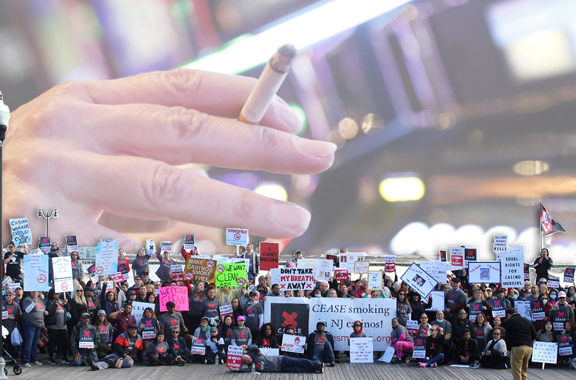
Atlantic City dealers and others want to clear the air—and are getting closer to their goal.

When New Jersey went smokeless at indoor locations, the law permitted Atlantic City casinos to set aside 25 percent of the gaming floor for smokers. Casino owners saying without smoking, they’ll lose a ton of money, and they have the studies to prove it, according to the Press of Atlantic City.

But many casinos employees, backed by anti-smoking organizations, say their health is more important than catering to the smokers. They assert that a little short-term pain will be rewarded with long-term gain.

Atlantic City unions are split. Local 54 of UNITE HERE favors the decision to let patrons smoke. The United Auto Workers represent dealers who want the ban.

“Our members include dealers who sit inches away from patrons who blow smoke directly into their face for eight hours a day, every single day,” said a UAW letter on behalf of workers at Caesars, Bally’s, and Tropicana. “It is simply unacceptable knowing what we know about the dangers of secondhand smoke. No worker in the state of New Jersey should be forced to breathe cancer-causing chemicals every single day.”

The New Jersey legislature has yet to get behind the Assembly and Senate bills to close the loophole that keeps smoking alive on the casino floors in Atlantic City. The lack of major progress has not stopped various lawmakers from adding their names as co-sponsors of bills which never seem to get a committee hearing. And without a committee hearing, legislation goes nowhere.

All this comes as a statewide poll from Stockton University released April 29 shows strong support for the ban. Stockton took the pulse of 640 respondents from all over the state, and found that 62 percent supported the total ban, while 31 percent did not. Some 59 percent of South Jerseyans questioned in the poll said yes to the ban, while 66 percent of North Jersey residents want the ban. The poll was conducted between April 4 to 13.

The industry says such legislation would hurt the bottom line, which in turn would hurt employment, according to the Casino Association of New Jersey.

Atlantic City Mayor Marty Small opposes the ban. “We had a perfect example of … banning smoking in a casino with the former Revel,” Small said.

Is the association waging a losing if valiant war? “Adding a smoking ban could cause a devastating effect to the community and state,” said association President Joe Lupo, who is also president of the city’s Hard Rock casino.

Added Pete Naccarelli, a dealer since 1996: “Our argument is health. How much is my life worth?”

Local 54, which represents restaurant, housekeeping and other non-gaming workers, is against the legislation, according to NJ.com.

“While we want to ensure that our members work in a safe work environment, banning smoking in New Jersey casinos would mean lost jobs for our union and throughout the state, and lost tax revenues and less money for senior programs,” wrote Bob McDevitt, president of Local 54.

A smoking ban “would mean lost jobs for our union and throughout the state, and lost tax revenues and less money for senior programs,” said McDevitt, whose union represents workers engaged in other casino-related jobs.

“We will not stand idly by and watch our members choose between their health and their job,” said the UAW letter. “We all have a right to breathe clean air at our workplaces.”

If John DeCree’s analysis of the proposed smoking ban is correct, the impact on the casino industry may be worse than anticipated. DeCree, a senior analyst with CBRE Equity, said property managers in the resort say smoking sections can generate up to 50 percent of the gaming revenues. Overall, revenue can fall by as much as 25 percent, based on the impact in other markets, especially those in which closer, more convenient casinos with smoking offer an alternative.

Although smoking is only permitted on 25 percent of the casino floor, our discussions with several Atlantic City property managers indicate that the smoking sections generate up to 50 percent or more of total gaming revenue. This is consistent with our research over the years that often reveal smoking sections in casinos generate substantially higher win per days (WPDs) than non-smoking sections.

Moreover, Atlantic City is primarily a drive-to destination market that draws the vast majority of its customers from the Philadelphia and New York metro areas. Smoking customers from these regions generally have more conveniently located casino options, many of which still allow smoking at least on part of the casino floor.

“We estimate a full smoking ban at Atlantic City casinos could negatively impact gaming revenue by as much as 20-25 percent. Our analysis is based on several case studies of prior smoking bans,” DeCree said.

In markets like Chicagoland, New Orleans, and at Mountaineer in West Virginia, where customers had conveniently located smoking alternatives, gaming revenue declined 20 percent+ in the first year after smoking was banned. In markets like Delaware and Peoria, IL, where there was really no convenient smoking alternative, gaming revenue declined 12 percent.

Yet another issue involves smokers who will come to Atlantic City even if there is a ban. The customers will be forced to go outside to a designated area to smoke with means less time on device, not just from being away puffing, but because Atlantic City casinos are large, it takes longer to reach the designated areas.

Meanwhile, a Philadelphia casino that allowed smoking banned it last week.

Rivers Casino Philadelphia announced that it has ended indoor smoking at its property, becoming the second Philadelphia-area casino to voluntarily ban smoking on its floor. Last fall, Parx Casino in the Philadelphia suburb of Bensalem instituted an indoor smoking ban. And Mt. Airy Casino in northeast Pennsylvania has also prohibited smoking.

Parx, despite the smoking ban, remains the highest-grossing casino in Pennsylvania. Rivers, owned by Chicago-based Rush Street Gaming, is No. 3 in revenue for the commonwealth. Both properties are significant competitors of Atlantic City casinos, which so far have resisted the elimination of smoking, although a bill in the legislature to remove the casino exemption to New Jersey’s indoor smoking ban has seen movement.

“It’s becoming harder and harder for Atlantic City casinos to defend indoor smoking that threatens the health of their employees,” said Cynthia Hallett, president and CEO of Americans for Nonsmokers’ Rights. “Rivers Casino Philly joins Parx Casino and casinos in Delaware, Maryland, New York and Connecticut in not permitting indoor smoking. It’s past time for Atlantic City casinos to end this outdated business practice and instead benefit from the guests who would visit their properties were it not for the smoke.”

The Casino Association of New Jersey has maintained its position that a smoking ban would significantly harm business, and even lead to one or more casinos closing. However, according to Parx Chief Marketing Officer Marc Oppenheimer, quoted on the Nonsmokers’ Rights website, the experience in Pennsylvania shows no evidence of that.

“Since smoking was allowed to return to (Pennsylvania casinos) in June, we have continued to be an indoor non-smoking facility,” Oppenheimer said. “We’ve done it for the health and comfort of both our guests and team members. We have received significant positive feedback from both constituencies. And (we) have continued our strong performance and gains of market share in the region.”

In February, a Parx spokesman told NJBiz, “Even many smokers have given positive feedback and have not minded going to the smoking patio. Employees are extremely happy with the change — especially the table games team.”

Fixed-Odds Races Arrive at New Jersey Track

It’s been talked about for months, but the time is here. Fixed-odds racing in the U.S. kicks off May 7 at Monmouth Park in Oceanport, New Jersey. Unlike parimutuel betting, the odds established are the same through post time. You bet a horse to win at 5-1 odds several hours in advance, the odds remain 5-1.

It’s all the rage elsewhere. “In both Europe and Australia, fixed odds wagering has a proven track record of success, and we’re confident it will be just as popular in the United States,” Monmouth operator Dennis Drazin said.

For those who prefer the traditional parimutuel form of wagers, fear not. The track offers that too.

Australian-based BetMakers Technology Group will oversee fixed odds wagers at Monmouth Park. Two areas specifically designated for fixed odds wagering will be available initially:

The track will feature two locations with tellers handling fixed odds: the first-floor grandstand paddock side and the first-floor clubhouse paddock side. Self-service will be arriving soon.

“We firmly believe the launch of fixed odds marks the start of a model which will be a huge success for all the participants of the racing industry who eventually come on board,” said Todd Buckingham, CEO, managing director and founder of BetMakers.

With the start of the 62-date calendar underway Drazin hopes the sports betting industry insists horse racing odds at the track become a part of gambling apps on customers’ cellphones.

The meet runs through September 18 and will feature 52 stakes worth $8.3 million. The highlight, as always, is the Grade 1, $1 million TVG.com Haskell Stakes, which takes place on Saturday, July 23.

Drazin previously told NJ Online Gambling that the New Jersey Division of Alcohol Beverage Control began cracking down in 2018 after a number of reports of underage drinking at the Oceanport track. And with security needing to focus on monitoring all arriving visitors during the COVID-19 pandemic, the cooler ban was put in place.

Fixed odds are another in a series of steps that turned an ailing track around.

“Eleven years ago, we were on the precipice of disaster,” Drazin said. “The racetrack was about to be privatized or closed. And everyone bet against us to survive more than a year.”

The state’s thoroughbred horsemen took the reins of the track from the state and hired Drazin’s Darby Development company to manage it.

The launch of legal sports betting in mid-2018 and the revival of a state purse subsidy program provides $10 million in additional prize money has further improved the track’s bottom line. Fixed odds could entice younger bettors to stop by.

“Now we not only can break even, but we can make a few bucks,” Drazin said.

DraftKings Finalizes Acquisition of Golden Nugget OG

When DraftKings and Golden Nugget Online Gaming announced that the sportsbook would acquire the iGaming site, the all-stock transaction carried a value of $1.5 billion based on the share price. The deal closed last week.

GNOG Chairman Tilman Fertitta said it’s a game-changer.

“This will be an alliance unlike any other in the digital sports, entertainment and online gaming industry,” said Fertitta. “Now that the acquisition is completed, I look forward to what the future will bring for our combined company and am confident this relationship will be a huge success.”

DraftKings CEO Jason Robbins feels the same way.

Acquiring Golden Nugget Online Gaming gives us synergies across our business,” he said. “We anticipate that this acquisition will provide meaningful revenue uplift by utilizing our data-driven marketing capabilities and a dual brand iGaming strategy, gross margin improvement opportunities, and cost savings across external marketing and SG&A. I am proud to welcome the Golden Nugget Online Gaming team to the DraftKings family.”

The agreement gave GNOG shareholders 0.365 shares of DraftKings stock for each share of GNOG. At the current rate—25 percent of the original price—the deal is worth $365 million. Of course, GNOG tumbled as well.

Regardless, Fertitta said the deal was still going ahead because GNOG’s value dropped commensurately.

“It’s not just DraftKings,” Fertitta said. “Look at every other online gaming company, it’s universal. GNOG would likely be trading like that also.”

Fertitta remains bullish on the long-term prospects of the DKNG stock. He’ll be one of the largest shareholders of DraftKings and in a few years it could be in Amazon and Tesla territory. The guy really believes it.

“When they turn the corner like all tech companies and become profitable, they become really profitable. I saw that for myself running GNOG.”

“I wanted only stock,” Fertitta said who owns 46 percent of GNOG stock.

Going along with the deal is former GNOC President Thomas Winter and his staff, which engineered the remarkable success of the company. Winter becomes general manager of North America iGaming for DraftKings. That alone gives Fertitta confidence.

“I wanted to ride this thing all the way up with these guys,” he says. “This is the best management team in the space.”

Second Judge Shoots Down Atlantic City Casino Tax Changes

A second Superior Court judge came out in favor of Atlantic County in its quest to retain the status quo as it pertains to the payments-in-lieu-of-taxes agreement with the casino industry. The gaming halls had argued that the state should eliminate sports betting and iGaming revenues from the PILOT calculations., as only a small percentage of the revenue goes to the casinos, and the rest goes to third parties. The legislature agreed and it became law in December, according to the Press of Atlantic City.

But the result was detrimental to Atlantic County by as much as $26 million over the next five years. More to the point, the amended law violated a 2018 consent decree. So, the county sued the state. Judge Joseph Marczyk ruled on February 25 that the legislature’s amendment to the PILOT program did indeed violate that same consent order.

The state filed to have the court reconsider the decision, claiming Marczyk jumped ahead in the legal process by ruling that the consent agreement had been violated. By then Marczyk was on loan to the appellate courts so Judge Michael J. Blee handled the reconsideration motion. On May 2, he ruled that Marczyk was correct, denying the state request for reconsideration.

“Now you have two judges who agree that the state was wrong and that the taxpayers of this county were being treated extremely shabbily,” said County Executive Dennis Levinson said.

Assemblyman Don Guardian, who was the city’s mayor at the time the PILOT deal was worked out, told the same Senate Budget and Appropriations Committee that the casinos should abide by the deal they themselves had sought, according to NJ.Com

The PILOT deal was seen as a way for casinos to save money if the downward revenue trend had continued, which turned out not to be the case.

“Now we know that was a bad bet for casino operators, but we shouldn’t be paying for that bad bet,” Guardian said, referring to rising costs.

In other Atlantic City news, May 31 marks the expiration of the contract between Local 54 of UNITE HERE and eight of the nine casinos—Ocean Casino Resort abides by whatever contract the other casinos and the union sign. One of the major points is a pay raise for the workers. Labor shortages have resulted in higher wages in other industries. Union boss Bob McDevitt said he has 500 openings he cannot fill. Inflation has led to higher costs all around, so a dollar earned does not translate into a dollar spent.

“It is our intention to move our workers more firmly into the middle class,” McDevitt said. Union workers began wearing buttons on their uniforms last week that say, “Casino Workers Need A Raise.”

Three Las Vegas Strip Properties Close to Changing Hands

The rich get richer and the opportunities mount on the Las Vegas Strip. Last week, MGM Resorts reported it would close a deal to buy the Cosmopolitan of Las Vegas from Blackstone, and that the deal to sell the Mirage to Hard Rock International should close by the end of the year.

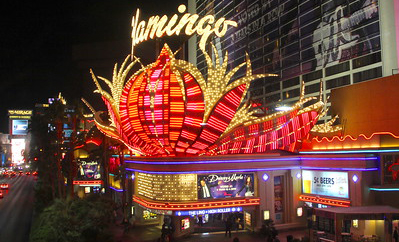
Meanwhile, the mystery of what Strip property Caesars Entertainment would sell was cleared up as sources identified the Flamingo as the property on the block.

For the Cosmopolitan, MGM will pay Blackstone $5.65 billion to acquire the property that opened in 2010 at a cost of $3.9 billion. Once the deal is complete MGM will sell the real estate of the Cosmopolitan to a REIT, a consortium of investors, for $4.4. billion. Those investors include the Cherng Family Trust, an investment firm developed by Panda Express founders Andrew and Peggy Cherng, and Stonepeak, an investment firm that specializes in infrastructure and real estate assets. MGM will pay the firm an annual rent of $200 million for 30 years.

The Cosmopolitan has 3,027 rooms in two towers, a 110,000-square-foot casino floor, 300,000 square feet of retail and food and beverage outlets and a 3,200-seat theater.

MGM President and CEO Bill Hornbuckle says he’s admired the Cosmopolitan for years, particularly since it is adjacent to MGM’s CityCenter project and the Aria Hotel Casino.

“We’ve been interested in that for some time,” he told the Nevada Gaming Control Board at a hearing last week. “Obviously now, the marketplace has afforded us finally an opportunity to do it. It is a great property. It is massively well-branded and well-run.

“I give great credit to (Cosmopolitan President and CEO) Bill McBeath and the entire team there. They’ve taken it from a meager beginning and made it into a powerhouse in Las Vegas. And for us to get it to join our portfolio and the market mix and the customer base that it brings to us is extremely compelling.”

Caesars CEO Reeg said last week that a sale of a Strip property was moving along. Although he didn’t mention the Flamingo, sources said this is the target for the sale. Bloomberg cited several sources that claim Caesars is looking for $1 billion for the property’s operations, but hasn’t had any bites, claiming the property’s age and need for renovations make it risky. Another factor is a buyer will be required to separate the property from the powerful Caesars Rewards loyalty program, which would cause an immediate business decline.

But Reeg is confident that a sale will be done in the timeframe originally outlined, even without identifying the property.

“When you get a lot of lawyers involved, the work extends to whatever the maximum allowable deadline is,” Reeg told investors in a conference call. “So if we finish one day ahead of that six months, I’d be very pleased.”

Caesars has committed to selling a Strip property in order to reduce its $13.5 billion in debt, estimated at the end of the first quarter.

The Flamingo opened in 1946, originally envisioned by Las Vegas pioneer Billy Wilkerson, but completed by mobster Bugsy Siegel.

Lightfoot Chooses Bally’s for Chicago, But Obstacles Remain

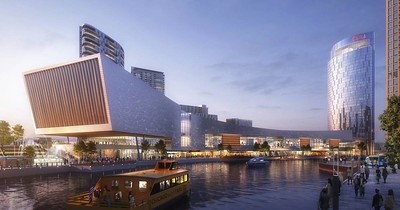
Following many months of proposals, public comment and intense opposition from neighborhood groups, Chicago Mayor Lori Lightfoot announced last week that Bally’s Corp. will be awarded the sole license to develop and operate a casino resort in the city. The venue will be located at the Tribune Publishing Center on the Near North Side in the River West neighborhood near Halsted Street and Chicago Avenue.

Bally’s has proposed a $1.7 billion venue with 3,400 slots and 170 table games, plus a 500-room hotel tower, 3,000-seat theater, exhibition experience, Riverwalk extension, pedestrian bridge, outdoor park, outdoor music venue, pool spa, fitness center, sun deck, six restaurants, cafés and a food hall. The project will create more than 3,000 construction jobs and 3,000 permanent jobs and will generate approximately $400 million a year in gaming and other revenue for the city and the state.

Lightfoot said, “Bally’s Corp. will create a world-class entertainment district in our city that will delight residents and tourists alike Following significant analyses and community input on all aspects of our three finalists for Chicago’s casino license, the selection committee and I have chosen Bally’s to move forward in the development of the city’s first integrated casino resort.

“We are confident that Bally’s Tribune Publishing Center development will shore up the city’s pension funds, create thousands of good-paying jobs and lead to a bright financial future for our city.”

The two other finalists for the casino license were Rivers at the 78 by Rush Street Gaming, on the south branch of the Chicago River; and Hard Rock at One Central by Hard Rock International, adjacent to Soldier Field and McCormick Place.

Hard Rock issued a statement saying, “The Hard Rock brand is currently expanding its portfolio of casinos, hotels and cafes in 72 different markets around the world. We were honored to have been named a finalist for the Chicago casino.”

The day before the announcement, Lightfoot denied reports that she had chosen Bally’s to develop the casino.

“The reporting today in advance of even the evaluation committee meeting and making a recommendation to me is just not accurate,” she said. “We have a very specific process, and the process is there is an evaluation committee that’s been hard at work through this process. They will evaluate all the information that has been provided by the three finalists and they will give their recommendation to me.”

Now Bally’s and the city will negotiate a comprehensive Host-Community Agreement, which will be evaluated by a special aldermanic committee. The entire City Council will participate in the final recommendation process, then the Illinois Gaming Board will approve or disapprove.

Bally’s Chairman Soo Kim said, “We would like to thank Mayor Lightfoot and her office for conducting a tough, but fair, RFP process and selecting Bally’s Chicago as the final bidder for the city’s casino. Chicago is a unique and vibrant city, deserving of world-class gaming and entertainment destination that is of, by and for the people by driving the local economy, supporting local labor, creating multigenerational wealth for minority investors and showcasing the best of what the city has to offer. We look forward to continuing to work collaboratively with Mayor Lightfoot and all of our valued community partners on this exciting endeavor.”

City officials said Bally’s Tribune proposal was chosen because it met or exceeded core goals outlined by the casino selection committee and offered the best financials to the city. Bally’s will make a $40 million payment when the Host-Community Agreement is signed and pay $4 million a year after that. Bally’s also made the highest minimum-capital commitment to the project, and it’s the only finalist without a competing regional casino.

In addition, officials noted Bally’s completed an agreement with organized labor. It will commit to 60 percent minority hiring and establish a jobs program targeting neighborhoods with the highest unemployment and lowest income, including career pathways for upward mobility. Also, Bally’s will create a crowdfunding equity initiative and will invite small local restaurants and businesses to open in the casino.

Alderman Walter Burnett, who represents the 27th Ward, where the casino would be located, said he supports Lightfoot’s choice.

“This is a once-in-a-lifetime opportunity for the city of Chicago and it will be a premier destination for generations to come,” he said. “Do I want to deal with the casino and deal with all the drama? Well, not necessarily. But I know we have to. I know we have to deal with the pension funds for the firemen and the police.”

Opposing the selection was Alderman Brendan Reilly, who represents the 42nd Ward. He said the Bally’s site makes “no sense” logistically and suggested it received preferential treatment.

“I’m concerned that there’s a select number of people in the mayor’s office dictating the course of this entire discussion, and it sure feels like Bally’s has been given a leg up and that’s not fair,” Reilly said.

He also expressed dissatisfaction with the selection process. “We have a special casino committee at city hall that met once for two hours. We asked a bunch of questions received no answers on the record, and just last night received our answers in writing. And the announcement was made this morning 12 hours later. I think that’s unacceptable,” Reilly said.

Alderman Brian Hopkins of the 2nd Ward voiced concerns about the selection process. He said, “My understanding was we would have the opportunity to evaluate the options and actually vote on it. If Lightfoot is going to usurp that entire process before we’ve completed our work and just making a decision, I wish she would have told us that at the outset.”

Ahead of the announcement, River North Residents Association President Brian Israel stated it would be “very discouraging and disappointing” if Bally’s was announced as the city’s final choice. Israel noted the organization’s ongoing residents’ survey indicated more than 80 percent of the 2,300 respondents said they oppose the Bally’s proposal.

“We were expecting this to get towards the decision-making process in early summer, with many more meetings of the special committee and more opportunities for public input,” he said.

City officials said Bally’s is expected to open a temporary casino at the Medinah Temple, located near major transit and retail/hospitality corridors, sometime in the middle of next year. The permanent casino isn’t expected to open until 2026.

The public can weigh in at a community engagement event hosted by the city from 7 p.m. to 9 p.m., Thursday, May 12, at UIC Forum, 725 West Roosevelt Road in Chicago.

Seminoles Suspend Florida Casino Payments

The Seminole Tribe of Florida recently ceased making its quarterly $500 million revenue sharing payments to the state, part of the 2021 gaming compact. That agreement was approved by the Florida legislature but was invalidated by U.S. District Judge Dabney Friedrich in November. The tribe appealed to the U.S. Court of Appeals for the District of Columbia Circuit but a decision is not expected in the near future, and observers said whichever side loses the appeal will take the case to the U.S. Supreme Court.

Tribal spokesman Gary Bitner said the tribe will stop the payments while the legal process plays out. Under the new compact, the Seminoles would have paid $500 million per quarter but that amount was decreased to $350 million following the lower court ruling.

That agreement gave the tribe exclusive rights to offer retail and online sports betting. As part of the arrangement, the tribe would have partnered with parimutuel operators to create a hub-and-spoke network of kiosks in participating businesses, with the main processor located on the Seminole reservation.

However, Magic City Casino and the Bonita Springs Poker Room filed suit in Washington, D.C., claiming the compact’s online sports betting provisions violated the Indian Gaming Regulatory Act since the law doesn’t allow tribes to operate gaming off their lands. The lawsuit also challenged the Department of the Interior’s approval of the compact.

The Seminoles began offering mobile betting through its Hard Rock Sportsbook on November 1, three weeks before Friedrich issued her order invalidating the entire amended compact. The tribe unsuccessfully tried to get a stay on Friedrich’s order, but it shut down its sports betting app in early December.

The new compact also would have allowed the Seminoles to offer dice games and roulette, and to build three additional facilities within its Hollywood Reservation, a 500-acre area located 20 miles north of Miami.

In exchange for the additional gaming rights, the tribe agreed to make revenue sharing payments to the state. The compact specified paying the state a minimum of $2.5 billion over the first five years and no less than $400 million in any year during that period. The state expected to receive $6 billion over the first decade.

However, the payments are on hold until the litigation is resolved. Meanwhile, Bitner said, the tribe is making revenue sharing payments into an escrow account.

Vici Closes on Deal to Buy MGM Growth Properties

Vici Properties, the largest gaming-related real-estate investment trust, announced it has closed on its acquisition of MGM Growth Properties, the second-largest gaming REIT, for $17.2 billion.

The $17.2 billion purchase price includes the assumption of around $5.7 billion of debt from the MGM spinoff.

Upon closing, Vici now owns 43 properties nationwide in 15 states, including 10 resorts on the Las Vegas Strip, including Mandalay Bay, MGM Grand, The Mirage, Park MGM, New York-New York, Luxor and Excalibur in addition to the three Caesars Entertainment properties—Caesars Palace, Harrah’s Las Vegas and the Flamingo.

The company also is now “the largest owner of hotel and conference real estate in America,” Vici CEO Ed Pitoniak said in a press release.

Outside of Nevada, the deal brought properties including MGM Grand Detroit and MGM National Harbor into the Vici fold.

Vici will receive more than $1 billion in initial annual rent from the newly acquired properties.

MGM Resorts, which spun off MGM Growth in 2016 and was its controlling shareholder, received about $4.4 billion in cash as part of Vici’s buyout, according to the press release. Operations at MGM Resorts-run properties now owned by Vici “will continue as before for guests and employees,” MGM spokesman Brian Ahern told the Las Vegas Review-Journal.

MGM will use proceeds from the deal to invest in its core business and to “continue to seek meaningful growth opportunities,” President and CEO Bill Hornbuckle said in an earnings call last week.

Federal Appeals Court Upholds RICO Claim Against Wynn

Wynn Resorts and founder Steve Wynn had been very successful in the courtroom in recent years, but that streak has ended after the 9th Circuit Court of Appeals ruled that a RICO (Racketeer Influenced and Corrupt Organizations) claim against Wynn and the company would stand, indicating the possibility of trial barring a settlement.

According to the court’s ruling, the motion to dismiss the claim was denied because the arguments presented are substantial enough to justify more deliberation from a merits panel. A response to the ruling is due May 25, and there is currently no timetable in place for a requisite panel. The panel would be tasked with determining whether or not the claim actually warrants a trial.

The origins of said claim trace back to 2018, when former Wynn employee Angela Limcaco filed suit against the company for wrongful termination. In her claim, she alleged that her employment was terminated after she reported Wynn himself to the company for sexual harassment against a fellow Wynn Las Vegas salon employee back in 2005.

The federal judge overseeing the case, Miranda Du, granted a motion dismissing the suit, citing an expiration of the statute of limitations.

However, Wynn’s lead counsel, Elayna Youchah, was appointed as a Nevada federal district court judge shortly before her motion to dismiss the case was submitted. She then accepted the post after Judge Du granted the dismissal, suggesting the two were essentially collaborators on the case.

Not long after the ruling, it was also discovered that payments had been made from Wynn Resorts to the Legal Aid Center of Southern Nevada (LACSN). LACSN executive director Barbara Buckley was on the panel that appointed Youchah—this confluence of events eventually led Limcaco to file a RICO charge in federal court in California.

The charge was also dismissed in November 2021, prompting Limcaco to appeal to the 9th Circuit Court back in March.

For Wynn himself, the recent ruling is only one of the embattled casino mogul’s current considerations. Just last week, the Nevada Supreme Court sided in favor of the Nevada Gaming Control Board (NGCB) after they appealed a district court’s ruling that Wynn could not face sanctions due to the fact that he was no longer employed by his namesake company or any other Nevada gaming licensee.

The Supreme Court’s ruling technically returned the matter back to the original court, but this time with orders to dismiss a previous petition from Wynn’s counsel requesting Wynn be exempt from sanctions due to his separation from the company. According to the Supreme Court, the district court had no authority to grant the request.

Although the NGCB is still unable to sanction Wynn as they would if he were still a gaming employee, the door for a potential lifetime ban in the state is now open.