Author: Casino Connection Staff

All Casinos Hiring in Atlantic City

As the summer tourist season fast approaches, Atlantic City’s nine casinos are working to fill thousands of open job positions.

According to the Press of Atlantic City, as of February an employment report from the New Jersey Division of Gaming Enforcement (DGE) showed that the resort casinos still have not returned to pre-pandemic employment levels.

“Persisting low staffing levels coupled with the anticipation of a strong summer season will present a particular challenge for hiring managers as they seek to fill gaps with seasonal staff,” said Jane Bokunewicz, director of the Lloyd D. Levenson Institute of Gaming, Hospitality and Tourism at Stockton University, which studies the Atlantic City casino industry. “This might be an even greater challenge than usual given that the war in Ukraine and lingering pandemic concerns could impact the return of some foreign workers using the J-1 visa program.”

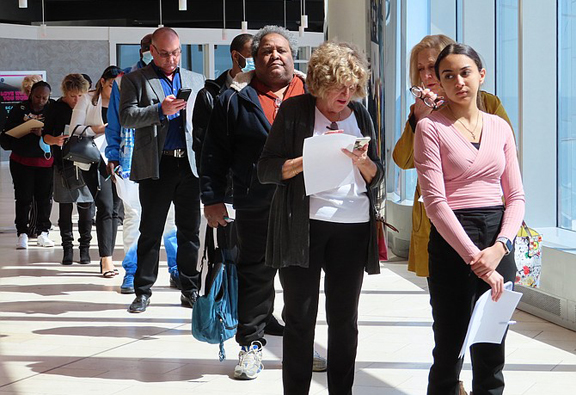
Joe Lupo, president of both the Hard Rock Hotel & Casino in Atlantic City and the Casino Association of New Jersey, told the Press there are 2,000 full- and part-time casino jobs open in the city. Properties are holding job fairs to bring in candidates, and a new Stockton summer internship program hopes to add another wave of potential employees.

The Stockton Atlantic City Summer Experience allows students to live on the school’s city campus on the Boardwalk for free during the summer. They work for one of the premiere resort businesses, earn wages and gain valuable job experience. Also students take a four-credit course on workforce readiness, including mentoring sessions.

“Our provost, Leamor Kahanov, and I envisioned this first summer pilot program to attract 40 students for the initial cohort for the program,” said Brian K. Jackson, chief operating officer of Stockton’s Atlantic City campus. “As of today, we have 622 Stockton students complete the interest form to participate in the program.”

The program offers positions in various departments, including IT, finance, marketing and human resources. Each position comes with a set of criteria associated with the major.

“We meet individually with each of the partners to present to them our vision for the program, and we got feedback from them as well,” Jackson said. “We encouraged them to open up opportunities that (are) front face and behind-the-scenes positions; those are critically important to the operation. They have been very generous about offering those jobs.”

The program is expected to be a positive for the industry, said Bob Ellis, vice president of human resources at Hard Rock. Last week, the property had a mixer for about 100 Stockton students associated with the program. So far, Hard Rock has hired 24 Stockton students for the program.

“When I was younger I never thought of this industry,” Ellis said. “Having the students come here, it exposes them to the business and could attract them to the business.”

If casinos are unable to fill their open positions, they may have to limit capacities on restaurants and over amenities in the peak tourism season.

“Coming out of Covid, especially last year after the restrictions were lifted, the workforce supply just has not been available,” Lupo said. “It’s been difficult for all of us to find enough people. I certainly know after meeting with everyone last week that every property is hiring.”

“Gaming is facing the same labor issues that we see across the broader economy,” said Casey Clark, senior vice president of the American Gaming Association. “In our recent CEO survey, the labor shortage is a top concern across the country.

“Competition for talent is a huge impediment for growth, and we’re also experiencing an expansion of gaming with customer demand increasing,” he said. “Those things are problematic when they happen together.”

According to the Associated Press, things are tough all over, including in Las Vegas. Last month, an economic development official said more than 40,000 jobs have gone unfilled since the state’s casinos reopened after a temporary closure in 2020.

“Work is available whether you are a first-time job seeker, changing fields, newly relocated to the area or retired and wish to return to work,” said Wanda Gispert, a vice president with MGM Resorts.

Across the country, about 1.65 million workers wqere employed in the gambling, amusement and recreation sectors of the U.S. economy in March, representing about 91 percent of the pre-pandemic workforce, Clark said.

Shamika Townsend, a newly hired casino dealer in Atlantic City, told the Press she was glad that a number of jobs were available, and that she was hired. “I wanted to move up and improve my situation,” she said. “These places have to compete with everybody else for workers now, and there’s money to be had.”

Golden Nugget Owner to Acquire Six Acres on the Vegas Strip

Houston-based entrepreneur, casino magnate and TV personality Tilman Fertitta is expected to close a deal to acquire a six-acre lot on Las Vegas Strip sometime in the near future, and although exact details have yet to be released, the price is estimated to be around $200 million.

The lot sits near the intersection of Las Vegas Boulevard and Harmon Avenue, and features a Travelodge motel and other spaces that are expected to be torn down in lieu of a new, ground-up resort.

While a new resort project on the Strip would certainly be costly and difficult to complete, the opportunity is certainly there, as the property is within walking distance of the high-end CityCenter complex, which features the Shops at Crystals retail center as well the Waldorf Astoria, Vdara and Aria resorts.

Neither Fertitta nor Spectrum Group Management, the current owner of the property, have commented on the reported deal. Details of the transaction were first reported anonymously by the Vital Vegas website, and later by the Las Vegas Review Journal.

The deal is rumored to be finalized sometime in the next two to three months.

This wouldn’t be Fertitta’s first Las Vegas venture, as the billionaire businessman already purchased the Golden Nugget back in 2005. A new project on the Strip, however, would substantially increase the mogul’s footprint in the Las Vegas Valley.

Brett Torino, a local developer with multiple retail construction projects on the Strip near Fertitta’s proposed site, told the Review-Journal that the area is “begging” to be further developed. Torino said that Fertitta would have “a massive amount” of different construction opportunities at his disposal.

Another lot of about 10 acres is also in close proximity–that site is expected to be developed into more retail space by New York firm Gindi Capital.

Fertitta has an expansive portfolio of corporate holdings, including various restaurant chains, resorts and casinos, and most recently, the Houston Rockets NBA franchise. His net worth, according to Forbes, is valued at over $5 billion.

Palms Becomes First Tribally Owned and Operated Casino in Vegas

he San Manuel Band of Mission Indians has become the first tribe to own and operate a casino in Las Vegas. While the Mohegan tribe operates the casino at the Virgin Las Vegas hotel, and the Seminoles have purchased the Mirage which will be rebranded a Hard Rock, the Palms is the first fully operating casino to open under tribal ownership.

The Palms closed during the pandemic, less than a year after it reopened following a $500 million renovation by Station Casinos, which bought the casino from the original owners and developers, the Maloof family. Under Station ownership, the property never achieved the traction necessary to succeed and wasn’t reopened when most other Station casinos did after the lockdown.

San Manuel has been shopping for a Las Vegas destination casino for some time, according to Latisha Casa, the chairwoman of San Manuel Gaming & Hospitality Authority (SMGHA), the business arm of the tribe that actually owns the casino.

“It is something that the tribe considered for a long time and seeing the successes that we’ve had in Yaamava and all the lessons that we’ve learned from that experience, we wanted to expand,” she explained in an exclusive interview with GGB News. “But we wanted to hold true to our core of the things that we know and build upon our expertise and Las Vegas was where we wanted to be.”

Before settling on the Palms, however, the tribe, as it has in California, wanted to give back to the community. In early 2020, San Manuel Band contributed $9 million to the University of Nevada Las Vegas (UNLV) to support course development and an endowed chair at the William F. Harrah College of Hospitality. It also provides curricular, faculty, and program support at the William S. Boyd School of Law. And just this month, San Manuel established a collaboration with the college’s International Gaming Institute to conduct research into problem gambling.

So it wasn’t a surprise when the San Manuel Band announced it had purchased the Palms from Station Casinos in early 2021. The Palms was originally opened in 2001 by the Maloofs, who had achieved success in the Las Vegas locals market with the Fiesta casino. The Palms was an immediate hit, able to establish a strong locals following during the day, and attracting tourists and out-of-town younger clientele in the evenings with an aggressive nightclub strategy.

When Station bought the Palms in 2016, it immediately embarked on a full renovation, eventually spending approximately $1 billion on the purchase and redesign of the property. It reopened following the renovation in 2018 but never fully established the popularity it had under the Maloof ownership, and when the Kaos nightclub, a major investment, failed to generate ROI, Station lost interest in the property. It was one of four Station-owned casinos that failed to reopen after the March 2020 pandemic closings, until it was purchased by San Manuel for $650 million.

Since the massive renovation had just been completed, GM Cynthia Kiser Murphey, a longtime MGM executive, said only minor adjustments needed to be made.

“The property was meticulously remodeled, with amazing restaurants, a beautiful gaming floor, and some of the finest entertainment venues anywhere not to mention the suites with unmatched views,” she says. “So the focus for the San Manuel Gaming and Hospitality Authority first and foremost was the back of the house. The back of the house needed to be refreshed quite a bit. And that was the very first project that occurred. We also have a pretty big investment in our new sports book and we’re super proud of that along with William Hill (Caesars), our partner.”

The SMGHA officially took possession of the property in January and 133 days later, it opened, meaning executives had to build a team to run it. Kiser Murphey said priority was given to former Palms employees.

“We’re very honored that over 50 percent of our employees have returned after two years,” she says. “And we have over 70 day-one employees who opened the Palms the first time in 2001.”

She says that the institutional knowledge brought by those returned employees has been a godsend.

“For example, 97 percent of the catering department came back and they walked in here and started showing us how things were done and really helping us with the roadmap,” says Kiser Murphey. “And then we always want the new people to feel welcome too. So we created kind of a buddy system which was started informally. So they’ve helped us tremendously and we’re celebrating them.”

Now that the property has reopened, it has done so without a database of players, always a high hurdle to overcome. Casas says, however, there’s a plan to utilize the database at Yaamava to initially fuel visits to the Palms.

“Yaamava has a very loyal database,” she says. “The property is known for tremendous friendliness, it’s immaculately clean, and it’s very, very well managed. So that’s a great introduction to our company to have the Palms partner with Yaamava. And Yaamava just opened a beautiful hotel with awesome amenities and great entertainment. So we know the Yaamava customers are visiting Las Vegas. And whether they stay with us or just come over and earn points and take advantage of the entertainment and the dining and the gaming here, that’s great. We’ll welcome everyone.”

The locals database will be built by building up the reputation of the Palms says Kiser Murphey.

“A very big focus will be the local database and we feel very confident that people want to come and see the Palms,” she says. “We’ve already had so much positive feedback. We’re just very fortunate about that and we’re gonna welcome our locals in. And then of course there’s 45 million plus visitors to Las Vegas every year.”

Atlantic City Visitor Numbers Climbing

A number of indices measure how a resort fares between one year and the next. Among them is transportation. The South Jersey Transportation Authority (SJTA) recently released positive first-quarter figures from the air and from the roadways.

Toll-paying traffic on the Atlantic City Expressway rose 6.5 percent in the first quarter of 2022 over the same period last year. The number of passengers using Atlantic City International Airport jumped 69 percent, according to the SJTA.

“The authority continues on an upward trend in all major categories including toll revenue, toll paying traffic, parking revenue, ridership statistics and passengers at the Atlantic City International Airport,” SJTA Executive Director Stephen F. Dougherty said on April 20.

The increases on the highway came despite a toll hike of almost 40 percent in September 2020, with the pandemic still raging. Since the new tolls were in place during the first quarter of 2021 and 2022, the comparisons were not influenced by the tolls, according to the Press of Atlantic City.

First quarter toll revenue on the expressway increased 8.1 percent to $21.6 million, Dougherty said.

First quarter non-parking revenue at the airport soared to $1.4 million, an increase of 36 percent over first quarter 2021, Dougherty said. Year-to-date parking revenue at the airport leaped 64 percent also at $1.4 million.

North Carolina Cherokees Approve Casino Bids

In North Carolina, the Eastern Band of Cherokee Indians’ tribal council voted 8-2 for a resolution allowing EBCI Holdings Inc., the tribe’s gaming arm, to bid on building two new casinos. Named Project Thoroughbred, it comes with a price tag of $25 million which would give EBCI Holdings a 44 percent stake in “expanded commercial gaming interests.”

EBCI Holdings Chief Executive Officer Scott Barber submitted the proposal during a special session called by Principal Chief Richard G. Sneed on April 13. Barber said the two properties would be outside EBCI’s sovereign territory but within North Carolina. No other information was provided.

ECBI Secretary of Finance and EBCI board member Cory Blankenship said, “It allows us to go into a new state with a gaming property under a partnership agreement so the tribe’s not on the hook 100 percent. We will actually have a 44 percent equity stake. And, we’ll have the opportunity, if we’re the winning bidder, to develop two gaming properties in a new jurisdiction.”

Blankenship added, “The total project cost is $90 million. In our position, what we’re asking for is a $25 million equity commitment from the tribe that will come from the tribe’s reserve accounts. There’s a $2.5 million commitment upfront that will be paid from an EBCI Holdings account. To get into an actual casino deal, to build two casino facilities right out of the ground, $25 million is a relatively low bar for getting into that position.”

Rep. Bill Taylor questioned the short turn-around time for the project and the need for the special session. He said, “This is my 10th year in council, and I’ve seen how it works. If you want something done real quick, then it is ‘time sensitive.’ How long have you known about this project? How long have you been working on this?”

Blankenship responded EBCI Holdings had been working on the project for 10 days prior to the special session. He stated, “I think it’s a good opportunity. When we look at casino deals, when we look at the commercial gaming market, this price tag seems like a high dollar amount but $90 million is a relatively low cost of entry. Rather than that, we’re talking about a $44 million equity deal and $25 million investment from the tribe

He noted the Eastern Band is not the only tribe interested in this particular opportunity. “But it appears that we are in the lead because of the reputation of the Eastern Band and because of the reputation of EBCI Holdings and because we have a 30-year track record of being responsible in this industry. I think that we’ve got a really good shot at this, and it is time sensitive,” Blankenship said.

In support of the resolution, Vice Chief Alan B. Ensley said, “We know what we’re facing now as far as the competition goes. We’ve got to act. We know we’re on very thin ice. We could be in major trouble if we’re not proactive.”

Rep. T.W. Saunooke also voiced support for timely action. He said, “These opportunities, when they come up, we need to be ready to act. We’re not always going to have months and months to discuss and put it out there and deliberate and talk and go back and forth. The speed of business outside the reservation is quick.”

One of the major questions discussed involved how revenue from this project would impact per capita distributions for tribal members. Sneed stated, “Every time an opportunity comes up, almost without fail the first question that comes up is, ‘Is it going to per cap?’ On this particular project, that is certainly a possibility but it falls with the council to make that determination when it comes to the distribution.”

Sneed added, “In my opinion, there needs to be a shift in our mindset. We enjoy the benefits that we enjoy today because a quarter of a century ago there was some courageous council members and a chief who voted, ratified and passed gaming in the face of opposition, because they had a vision of where this tribe could be. We have a responsibility now to pay that forward and to plan seven generations forward. Yes, this can go to per capita, but my plea to the people is to have the same vision for future generations of Cherokees who will come after, that they may enjoy the same benefits that we enjoy now, and not that every time a project comes up the only determining factor is whether or not an individual citizen will support it is if they are going to get something right now.”

The Eastern Band of Cherokee Indians owns two Harrah’s casinos in North Carolina. Last August, EBCI Holdings purchased Caesars Southern Indiana.

Aristocrat Gaming Breaks Ground on New Manufacturing Facility

Aristocrat Gaming last week ground on a new manufacturing facility in Henderson, Nevada, further strengthening its commitment to southern Nevada community and to the customers it serves across the globe.

Henderson Mayor Debra March joined hundreds of Aristocrat team members for the groundbreaking celebration. Also attending were Dane Hudson, Special Projects & Grants Director, Office of Senator Jacky Rosen, Nevada; Alejandro Rodriguez, District Director Office of Congresswoman Susie Lee; Ana Quintanilla, District Director, Office of Congresswoman Dina Titus; Scott Muelrath, President and CEO and Lisa Chao, VP of Membership, Henderson Chamber of Commerce; Sallie Doebler, Vice President of Corporate Partnerships, Vegas Chamber.

Aristocrat’s new “Las Vegas Integration Center” is located at 3571 Volunteer Blvd, Building 2, Henderson at the corner of Paradise and Volunteer, making it a great location for logistics. The greater than 250,000 square-foot facility will house large scale production and innovative office space that will be on the leading edge of manufacturing capabilities.

Aristocrat President of Americas and EMEA Tommy O’Brien led the ceremony with energy and excitement for the future. He said, “We are thrilled to build our new manufacturing facility in Henderson as we continue to refine our efficiencies and provide the best product. We have complete confidence that our team members will use this new facility to its full capacity to create the best experience for our customers for years to come.”

Also appearing for the company were CEO Hector Fernandez, Senior Vice President Customer Order Execution Deanne McKissick, and VP of Operations Mihir Wagh.

In addition to the Las Vegas Integration Center, Aristocrat has a two-building campus in the Summerlin area of Las Vegas.

Lightfoot Seeks $75 Million Upfront Casino Payment

Chicago Mayor Lori Lightfoot wants an upfront payment of $75 million from the gaming operator chosen to develop a downtown casino, according to Crain’s Chicago Business. That total includes $40 million on selection plus $2 million a year down the road. It’s not clear if the money would go to the city’s general budget, to specific neighborhood projects or other purposes. Also, it’s unclear whether the money would be an early tax payment or is an additional add-on.

Industry sources said requests for upfront payments from casino operators are not unusual nationally. Observers said the move positions Lightfoot, facing re-election, as a hard bargainer, winning the best possible deal for Chicago. The mayor is expected to sell her eventual choice among the three finalists to the city council and the Illinois Gaming Board within the next few weeks.

The three competing developers are Bally’s, proposing the Chicago Tribune printing plant property at Halsted and Chicago; Rush Street Gaming’s proposal within the 78 development at Roosevelt and Clark; and Hard Rock’s proposal within the One Central development west of Soldier Field. Residents in all three areas have expressed strong opposition in a series of public meetings and now some aldermen have said they oppose the sites. Bally’s is the only finalist that has made an upfront offer, of $25 million.

In recent testimony before a virtual meeting of the Special Committee on the Chicago Casino, a group of aldermen hand-picked by Lightfoot, Chicago Chief Financial Officer Jennie Huang Bennett confirmed city officials “asked for an upfront payment from each of the bidders and continue to negotiate that.” She said, “We are working to negotiate a better proposal from what we had released in the evaluation report,” adding the payments would be a “bridge” between what the city needs now and what it will get when a temporary casino presumably opens by 2024, with a permanent venue opening a few years later.

At the virtual meeting, the Special Committee took questions about subjects from timing and process to resurrecting two discarded proposals involving McCormick Place. The city is counting on a casino to generate $200 million in annual tax revenue to make up a shortfall in pension funding. Lightfoot plans to submit the final choice to the Illinois Gaming Board for approval in time to include upfront payments from the winning bidder in the 2023 fiscal budget this fall, said Alderman Tom Tunney, chairman of the Special Committee.

At the committee meeting, Bennett also acknowledged that labor peace and subsequent wage agreements “need to be discussed and they need to be negotiated” for casino operations. She said the three casino operators have agreed to adopt labor agreements with construction unions before any work can start. “As a part of the evaluation, the city will consider very heavily the agreements that are in place before it proposes something to council,” Bennett said.

Richmond, Virginia Officials Discuss Competing Revenue Plans

Last November, voters in Richmond, Virginia narrowly defeated the ONE Casino and Resort, 51 percent to 49 percent. However, Mayor Levar Stoney and council members revived the proposal and it will be on the ballot again this November.

In the meantime, Stoney and council members are discussing how to spend the estimated $30 million the casino would generate in annual tax revenue.

Stoney has proposed a 2-cent reduction in the city’s real estate tax rate. The current rate is $1.20 per 100 dollars of assessed value. Stoney said, “We’ve seen everything is going up. The price of gas, the price of your Oreos, all are going up across the country, and so, we think right now, people are deserving of that two-cent tax cut on the real estate taxes.”

Another proposal would direct one-third of casino tax revenue to public schools. However, Stoney said his budget will fund public schools and infrastructure. “When you talk about school funding, that’s obviously going to be there. That’s already in our plan. And so I don’t think both are necessary,” Stoney said. The city’s public schools stand to lose about $7 million in state funding next year due to decreasing student enrollment and soaring property values.

Councilman Mike Jones said both proposals are worthwhile. “The mayor’s paper has merit. It just simply does if you look at the nuts and bolts of it. The concern is, is it out in front of the vote? I don’t think it is. It’s just letting us know where we’re going in the event it happens.”

The November referendum is not a given, however. A provision included in the state budget amendment pending in the Virginia General Assembly could prevent Richmond from voting on casino gambling until November 2023.

Nevada Regulators to Investigate Gambler’s Claims about RW President

The Nevada Gaming Control Board (NGCB) is investigating claims made in a deposition by a gambler that Resorts World President Scott Sibella falsely denied their relationship during a March licensing hearing, and that a convicted felon is connected to one of the restaurants at Resorts World.

The claims were made by Brandon Sattler, a gambler currently embroiled in a high-dollar bankruptcy fraud lawsuit. A spokeswoman for Resorts World told The Nevada Independent that the company had already reached out to the NGCB when they were first notified of the claims.

NGCB official Kristi Marusich said in a statement to the Independent that the board would review the allegations, and that they “have nothing for comment yet other than we will take a good look into the allegations” made by Sattler.

At a March 5 regulatory hearing , Sibella was questioned by the NGCB about a subpoena he had received for a legal matter involving Sattiler that was later withdrawn. Sibella said then that he “didn’t know him from Adam.”

Sattler claims to have worked at Tacos el Cabron, a restaurant at the Resorts World property–he also claimed that David Stroj, a felon convicted of illegal bookmaking, was a partial owner of the restaurant.

In the statement provided by Resorts World to the Independent, the company said they conducted extensive background checks on Tacos el Cabron due to the fact that Stroj’s father is a manager at the restaurant, but confirmed that Stroj himself is not affiliated. ,

In an email to the Independent, Stroj denied any involvement with Tacos el Cabron or Sattler.

Maine Sports Betting Bill Goes to Governor

After being passed by the Maine Senate on April 19 and in the previous week by the House, a bill to legalize sports betting could soon be on the desk of Governor Janet Mills. The bill does not include a launch date.

Whether Mills will sign it and give Maine’s four federally recognized tribes their first entry into Indian gaming is another matter. One reason for her possible reticence might be that LD 585 is part of a larger debate over tribal sovereignty in the Pine Tree State. Also complicating the issue is that the legislature acted on Wednesday, April 20 to extend the legislative session by a day. It will now reconvene Monday, April 25.

The governor signaled on April 20 that she might veto the bill she previously supported if Augusta lawmakers send her a more sweeping tribal rights bill. That rachets up the stakes. The bill Mills opposes and which has been pushed by the so-called Wabanaki Alliance gives tribes more jurisdiction over resources, taxation and criminal justice. It upends the status quo dating back to 1980, when the Maine Indian Claims Settlement Act was passed by Congress.

The governor has supported tribes offering sports betting as half a loaf for their demands for full tribal sovereignty rights. Tribes in the state are not allowed to offer gaming under the Indian Gaming Regulatory Act (IGRA) because they’re bound by the terms of a 1980s land-claims settlement. The tribes accepted a $81.5 million settlement in exchange for agreeing to be treated like municipalities, rather than as sovereign, as they are in most states. In a current active bill, tribes would be given more control over taxation, and natural resources.

Maine Gambling Control Board Chairman Steven Silver told Legal Sports Report: “The bill is now sitting on the appropriations table. That is where the sports betting bill from last session went to seemingly die after passing both the House and Senate last year.” He added, “It does not appear that LD 585 will suffer the same fate since this was the Governor’s preferred bill. However, with this legislature, nothing is final until the ink is dry.”

If sports betting is legalized, Maine will join its neighbors, New Hampshire, Connecticut, Rhode Island and New York, which already offer the wagers.

The legislation would give the tribes, known as the Wabanaki Nations, exclusive rights to operate mobile sports betting. An amendment that was tacked on toward the end of the session gave the state’s two brick and mortar casinos, Hollywood Casino Hotel and Raceway and Oxford Casino and off-track betting parlors the right to offer retail sports betting. But there’s no hiding the fact that “the casinos suffered a pretty big blow,” as Silver put it. The casinos have for years lobbied the legislature for mobile sports betting.

The first version of the bill would have excluded commercial casinos entirely. Lobbyists for the casinos, led by Penn National Gaming, and lawmakers, Senator Joe Baldacci, and Senator Brad Farri, swung into action and obtained the small concession.

Before the vote Penobscot Indian Nation Chief Kirk Francis argued against casinos having retail sportsbooks, “This is a tribal bill for a meaningful opportunity in Maine’s gaming industry and we believe the inclusion of casinos with online platforms is going to crush any opportunities for the tribes going forward.” He said the attempt to include the two casinos would give them control of the mobile sports market.

In states where both mobile and retail sports betting are legal, mobile generally accounts for about 85 percent of the receipts. Under the bill, each tribe, which include the Maliseet, Micmac, Penobscot, and Passamaquoddy, could apply for a mobile sports betting license and the state would get 10 percent of the gross. Mobile licenses would cost $200,000 and be good for four years.

A lawmaker who was unhappy by how the legislation was arrived at was Senator Bradlee Ferrin, who complained during the debate: “Members of this body voted for mobile sports betting in our previous session and the process this bill came forward through excluded members from both chambers. We had worked all this out.”

Chairman Silver is also not happy with the result. He told Sports Handle, “The Gambling Control Board’s task is regulating the casinos, and we’ve seen the casinos employ a lot of Mainers, contribute tens of millions of dollars in taxes, and operate responsibly for all these years through a pandemic and everything else.” He added, “And now you’re gonna say, ‘Hey, we have this new product that we’re really concerned about, how it’s gonna affect our population, so we’re just gonna hand it over to entities that have no experience in Maine operating gambling.’ That doesn’t make sense.”

The Hollywood Casino Hotel and Raceway in Bangor and the Oxford Casino were authorized by the voters 20 years ago.

The legislature has considered sports betting legislation in 2019, 2020 and 2021. In 2020 a bill was passed but was vetoed by the governor. As late as April 18 three bills were active. All three were the subject of intense backroom negotiations.

The issue of tribal rights is especially touchy since that is very likely to be a contentious issue in the upcoming 2022 state election.

House Majority Leader Michelle Dunphy, commenting on how sports betting might help tribes, told the Portland Press Herald, “It will perhaps have an immediate impact on their prosperity.” She added, “It will also, however, be another important step in a long journey over 500 years in the making – the journey of our communities transforming themselves from conquerors and occupiers among a proud people to becoming neighbors.”

Maggie Dana, chief of the Passamaquoddy Tribe at Pleasant Point, who closely monitored the vote, commented to the AP: “People don’t understand the depth of injustice unless they’ve lived it. The Wabanaki people have lived it for hundreds of years. We lived it and we carry it, every single day.”

U.S. Rep. Jared Golden has sponsored a bill in the House that would stipulate that Maine tribes be treated like other Indian tribes, in spite of the 1980 bill.

The governor’s office says she was not consulted and claims it would set a precedent of the federal government amending the 1980 act without consulting with the state.

The governor’s lawyer, Jerry Reid wrote Congress this note: “We respectfully request that Congress ensure that the State of Maine … are consulted in the development of such legislation in the future to avoid problems like this one.”

It’s ironic that Governor Mills opposes such legislation since, when she came into office in 2019, she vowed to fix the state’s acrimonious relationship with its tribes.

Rhode Island Casino Employees Sue Parent Company

In working for a casino, just like playing against a casino, the odds always favor the house. Dozens of employees of Twin River Casino employees are calling foul on how the house calculates overtime.

About 80 employees of Bally’s Twin River Casino in Rhode Island are suing the parent company in a class action lawsuit. They claim overtime payments were unlawfully miscalculated.

The tipped workers, who include bartenders, dealers and servers, accused Bally’s of violating the Fair Labor Standards Act by undercounting their hours to avoid paying overtime.

The method Bally’s used, claims the lawsuit, was a time-clock that rounds times to the nearest 15 minutes. At the same time workers are not allowed to punch in more than seven minutes before their shift starts.

According to attorney Chip Muller, “This means they would never be able to round down … in the employee’s favor,” Muller explained. “In other words, the rounding always was in favor of the house.”

Muller added, “There are two options, right? The first is that they were ignorant of the law and were breaking the law unknowingly. The other is that they knew full well what they were doing and chose to break the law anyway.” The workers’ attorney concluded, “Either way, it doesn’t matter for our purposes because the law requires employers to follow it whether they like it or not.”

Twin River doesn’t comment on legal matters, so it issued no comment to the lawsuit.

Meanwhile, Bally’s Tiverton Casino and Hotel has requested the town to lower the casino property tax valuation. The Rhode Island-based casino claims the Covid pandemic’s effects caused its property value to plunge.

The last time the city assessed the casino’s property it was at $60,476,900, a 6.5 percent depreciation from its previous assessment. That was December 31, 2020, during the worst of the pandemic.

The casino has appealed the Tax Assessor’s calculations for November 2021. The appeal argues that a fair assessment would include a 61 percent obsolescence factor. It adds that it “seeks to work with the Tax Assessor’s Office to determine an appropriate obsolescence factor.”

The town’s tax assessor denied the original appeal in January, which was then appealed to the Tiverton Tax Board of Review. It is expected hand down a decision within a few weeks.

Vegas Operators Still Interested in New York Casinos

For months, the consensus opinion almost assured that two of the three casino licenses up for grabs in the New York City region would go to a pair of existing racinos. The reason? They have the infrastructure in place and can convert to full casino status without building from the ground up.

However, according to the Las Vegas Review Journal, a competitive bidding process offers no guarantee that either of the two properties would get the nod. Genting operates Resorts World New York City in Queens, as well as Resorts World Catskills and a Resorts World Las Vegas. MGM Resorts runs Empire City Casino in Yonkers, Westchester County.

No matter. Interest is still high.

“We are thrilled that Gov. Kathy Hochul and the state legislature have reached an agreement to allow the state to issue the available commercial casino licenses,” MGM President and CEO Bill Hornbuckle said in an email. “…MGM Resorts looks forward to responding to the anticipated request for applications and is excited by the opportunity to bring thousands of quality jobs and meaningful private investment to Westchester and the region.”

CBRE Equity Research pointed out in a note to investors that a bidding process could drive up the cost of a license set to a minimum of $500 million as well as the cost of taxes beyond the minimum of 25 percent for slots and 10 percent for table games. The market expects to generate $4.8 billion in gross gaming revenue among the three new licensed properties.

Even at the minimum numbers, the tax rates rank among the highest in the country. Las Vegas has a maximum of 6.75 percent, while Atlantic City is at 9.75 percent.

In addition to Resorts World and MGM, other companies with a Las Vegas presence interested in New York City include Las Vegas Sands Corp., Wynn Resorts Ltd., Hard Rock International, Bally’s Corp., and Rush Street Gaming, which currently has no Nevada properties.

New York is surrounded by gaming states and annually sees billions of dollars flowing from New Yorkers to the state coffers in Pennsylvania, New Jersey and Connecticut, the Sands said in October.

Potential casino sites for the three licenses include St. George on Staten Island; Times Square and on the banks of the East River in Manhattan; and Belmont Park in Elmont on Long Island, just east of the city limits.

Another voice has spoken up: Hunts Point on the Bronx waterfront. Assemblywoman Amanda Septimo says a casino would be just the economic engine for the borough.

A casino could bring thousands of construction jobs and hundreds of permanent jobs, she added.

City Councilman Rafael Salamanca Jr., whose South Bronx district includes Hunts Point, said that while advocating for a casino is not a priority for him, he envisions vacant Hunts Point waterfront property as a good site for one.

“If I get a call from someone that’s interested in doing this, my ears and my doors are open to hearing them out and making sure that it’s the right fit,” Salamanca told the Bronx Times. “And if it’s something that could be a reality and my community could benefit from, I will support it.”

Councilwoman Amanda Farías, whose district neighbors Salamanca’s to the east, had a similar reaction. She is happy to support a councilmember who wants a casino, particularly with local hiring, living wages and career pathways.

“Generally, I think bringing any new type of career, job, economic growth opportunity to the Bronx, where our employment was the most affected during the pandemic, is a great idea,” said Farías, who chairs the City Council Economic Development Committee.

Salamanca pointed out that the possibilities wouldn’t stop with table games, as lodging and restaurants would add to the potential of an “economic boom.”

The proximity to Yonkers’ Empire City—mere minutes from the Bronx border—may pose challenges for making a Hunts Point site a reality, but Salamanca said the Bronx should still be part of the conversation.

More than 30 percent of Empire City’s workforce are Bronx residents, according to a spokesperson for MGM Resorts, which owns Empire City.

AGA: Gaming CEOs Bullish on 2022

Gaming CEOs are optimistic about the industry’s continued growth and recovery, according to the American Gaming Association’s Gaming Industry Outlook presented in partnership with Fitch Ratings.

More survey respondents (67 percent) rate the current business situation as “good” than six months ago (54 percent), while none describe it as “poor.” Meanwhile, four in 10 CEOs expect the industry’s business climate to improve over the next two quarters, compared to 13 percent that expect business conditions to worsen.

“Gaming executives are signaling confidence in our continued recovery that is in line with record-setting consumer demand for gaming,” said AGA President and CEO Bill Miller. “I’m optimistic that 2022 will see the return of a true sense of normalcy for gaming.”

While gaming CEOs are generally positive about the industry’s economic outlook, they also report macroeconomic impediments to business growth. Top concerns include:

  • Supply chain issues (75 percent)
  • Inflationary and interest rate concerns (67 percent)
  • Labor shortages (54 percent)

Notably, Covid-19 and demand for meetings and events are no longer among the top five concerns for gaming CEOs.

“Like businesses across the country, our industry is grappling with supply chain, labor and inflation challenges that, if left uncontrolled, could dampen our continued growth and economic outlook,” added Miller.

The Gaming Industry Outlook includes two separate indices: the Current Conditions Index and the Future Conditions Index.

Current Conditions Index. Despite all-time high commercial gaming revenue through the first two months of 2022, the Current Conditions Index of 93.5 reflects a slowing in casino gaming-related economic activity compared to record industry growth in the fourth quarter of 2021. The index shows that the gaming industry has grown at an annualized pace of approximately 16.5 percent over the last three quarters.

Future Conditions Index. The Future Conditions Index stands at 101.1, reflecting anticipated expansion of casino gaming-related economic activity over the next six months at a modest 1.1 percent annualized rate—a return to normal industry growth after a year of tremendous industry expansion from pandemic-era lows in 2020.

Gaming Executive Panel. The majority of gaming CEOs surveyed (79 percent) expect the pace of wage and benefit growth to increase over the next three to six months, while 50 percent expect the pace of hiring to increase.

Among gaming operators, 53 percent plan to invest more capital than normal in hotel facilities in the coming year, while about one-third plan to invest more than normal in slots on the casino floor (27 percent) and brick-and-mortar sportsbooks (33 percent).

Suppliers report increased bullishness for sales growth over the next six months: 100 percent of respondents expect sales of gaming units for new or expansion use to rise; 86 percent expect sales of gaming units for replacement use to rise; and 71 percent expect the pace of their capital investment to rise.

Virginia Judge Dismisses Cordish Lawsuit

In Virginia, Circuit Court Judge Bradley Cavedo ruled on April 7 that the Cordish Companies’ lawsuit against the city of Norfolk for allowing the Pamunkey Indian Tribe to open a casino had no merit.

Norfolk voters approved a casino in November 2020. Baltimore-based Cordish, the developer of the Waterside District, claimed it had an “agreement to agree” with the city to develop a casino. The company alleged the city breached the agreement by partnering with the tribe on its HeadWaters Resort and Casino, located less than a mile from Waterside.

After several months of threats, in June 2021, Cordish, did sue the city in the Circuit Court for the City of Richmond. Cordish sought $100 million in compensation for the lost casino bid, claiming it had “suffered significant damages.”

The company also claimed it had first rights to a Norfolk casino as part of the Waterside District agreement. The lawsuit stated the casino was the main reason Cordish decided to revitalize the marketplace, which it alleged was a money pit. The city said that was untrue and threatened to countersue for defamation.

Cavedo ruled that the language in § 10.2.1 of the lease agreement is not a condition precedent, but a mere “agreement to agree”, which is unenforceable under Virginia Law. In other words, the judge stated the

“agreement to agree” with Cordish created no obligation on the part of the city and the Norfolk Redevelopment Housing Authority.

Meanwhile, in in his annual State of the City address, Portsmouth Mayor Shannon Glover touted “record breaking” economic investment of $469 million in the city in 2021, which created 815 new jobs. Glover said a major factor is the $300 million Rivers Casino, which broke ground in December and is expected to open in early 2023, creating 1,200 permanent jobs.

Former Indiana Casino Heavyweight Pleads Guilty to Tax Fraud

Just one hour before John Keeler’s federal trial for tax fraud was set to begin, the New Centaur and Spectacle Entertainment casino executive and former Indiana state lawmaker pleaded guilty to one count of filing a false tax return.

The charges involved a scheme to secretly direct $25,000 in casino cash to a Republican Party political action committee in Marion County. A week earlier, Keeler’s co-defendant, former state Senator Brent Waltz, pleaded guilty to two counts of making and receiving illegal campaign contributions and making false statements to the Federal Bureau of Investigation.

Prosecutors dropped five other counts against Keeler as part of a plea deal. He faces up to three years in prison, but probably will serve less time, and will be required to pay restitution of $14,350. Waltz faces up to 10 years in prison, but like Keeler, probably will receive a much lighter sentence under a plea deal. Sentencing for both Keeler and Waltz has not been scheduled.

The pair’s guilty pleas are the latest developments in the multi-year federal investigation involving New Centaur LLC, the former owners of Indiana’s two horse racetrack casinos until 2018. Keeler was the company’s vice president and general counsel. To conceal the source of the funds illegally directed to the Republican Party PAC, Keeler and Maryland political consultant Kelley Rogers agreed that one of Roger’s companies would send a fake invoice to New Centaur; Rogers would then contribute most of the money to the PAC.

Keeler also had been accused of a similar scheme to funnel more than $40,000 in casino money to Waltz’s failed U.S. House bid in 2015. Those charges were dropped as part of the plea deal. Those allegations also involved fake contracts between New Centaur and companies controlled by Rogers. Rogers and Waltz then recruited and paid “straw donors” to contribute to Waltz’s campaign under their own names.

With the convictions of Waltz and Keeler, all pending cases in the investigation are completed. However, observers said other prosecutions might be forthcoming.

In a related development, at a recent pre-trial hearing, an attorney with the U.S. Department of Justice’s public integrity section claimed Keeler’s boss, former New Centaur and Spectacle Entertainment Chief Executive Officer Rod Ratcliff, was a co-conspirator. Ratcliff said he had been “falsely accused” and noted he has not been advised that he is a target of any grand jury investigation.

To date, Ratcliff has not been publicly charged with any crime. One of the most influential figures in Indiana politics, he has been a major contributor to Republican candidates. Last year, the Indiana Gaming Commission revoked his gaming license and permanently banned him from Indiana’s gambling industry.

Illinois Golden Nugget Breaks Ground

Danville, Illinois city officials, casino executives and members of the public attended the recent groundbreaking for the Golden Nugget Casino.

Mayor Rickey Williams Jr. said, “This is a historic day for Danville, one that people worked on for decades. I’m so proud is because everyone worked together to make this happen. There were Democrats and there were Republicans, there were poor folks and rich folks, there were people from the state house and from city hall.

“This is history in the making,” he continued, “and it’s going to be a game-changer for all of us here in Danville and Vermilion County. Let the good times roll.”

Gerry Del Prete, chief operations officer of gaming at Fertitta Gaming, thanked everyone on behalf of Fertitta Entertainment, Landry’s restaurants and the Golden Nugget family. “The Golden Nugget is an iconic brand and it’s been around for over 75 years,” he said. “We have five casino resort locations across the country, and we can’t wait to add Golden Nugget Danville to the family.”

Ward 1 Alderwoman Brenda Brown added that, thanks to the new casino, “People can stop saying there’s nothing to do here.”

The casino is expected to open in March 2023 and create 300 jobs. Plans call for a 41,500-square-foot gaming floor with 500 slot machines, 14 table games, two restaurants, including a Saltgrass Steakhouse, a sportsbook and 650 surface parking spaces. An online gaming and digital sports betting platform will be offered through Golden Nugget Online Gaming Inc.

Analysts projected the venue will generate $5 million to $7 million dollars in annual tax revenue. Williams noted Golden Nugget also has committed to give back with a $100,000 donation each year to the United Way, along with an annual donation of $50,000 donation to the police and fire departments, Vermilion Advantage and local community college scholarships.

State Senator Scott Bennett said since the casino site is so close to the Indiana border, “about 50 percent to 60 percent of the money spent will come from the Indiana side.”

Live! Casino Pittsburgh Will Open Event Center in June

The Live! Casino in Pittsburgh, Pennsylvania has announced that its new 7,000-square-foot event and entertainment space, the Venue at Live! Casino, will open in late June. The space was designed to host corporate functions, weddings, concerts and special events.

_It will accommodate up to 780 guests with adjustable layouts and state-of-the-art audio/visual for wedding receptions, cocktail parties, theatre presentations, live entertainment events and more. Event guests will have access to the services and amenities of the world-class casino entertainment property including Sports & Social Steel City, PBR Cowboy Bar, an exclusive private event entrance and covered parking garage.

“We are setting a new standard for all meetings and events in the region with The Venue at Live! Casino,” said Sean Sullivan, general manager of Live! Casino. “Led by a best-in-class team, this most recent investment is focused on making your experience unforgettable from the moment you step onto our property to the moment you leave.”

The $150 million Live! Casino in Pittsburgh opened in November 2020 in Westmoreland County, approximately 30 miles from downtown Pittsburgh. The 100,000-square-foot facility features 750 slots and approximately 40 live-action table games; a designated poker room; a FanDuel Sportsbook; plus, nationally-recognized restaurants and live entertainment venues. Live! Casino is operated by Stadium Casino Westmoreland RE, an affiliate of the Cordish Companies.

Vegas ‘Miracle’: Fontainebleau to Open in 2023

On the north side of the Las Vegas Strip, a new billboard stands close to the ongoing construction site for the long-awaited Fontainebleau casino with a simple, optimistic motto: “Miracles still happen.”

The sign, which features the official name and branding for the resort, can be seen as a symbol for the long and sordid history of the project, which many felt would never make it to fruition after years of ownership changes and bankruptcies.

Pending further complications, the resort is finally scheduled to open sometime near the end of 2023.

When asked about the meaning of the recent billboard, representatives from the project released a statement saying that the building “was always meant to be Fontainebleau Las Vegas,” and that they are looking forward to finally bringing its original vision to life.

Interestingly enough, the building’s original developer, Jeffrey Soffer, is back at the helm after dumping the project in 2010 due to bankruptcy. This time around, Soffer is backed by Kansas powerhouse Koch Industries, who helped him reacquire the property from previous owner Steve Witkoff.

Witkoff had planned to rebrand the casino as the Drew Las Vegas, before the Covid-19 pandemic forced him to quickly shut down and sell off—he is still embroiled in millions of dollars of construction liens.

Before Witkoff, the property also passed through the hands of billionaire financier Carl Icahn, who purchased it from Soffer and flipped it to Witkoff in 2017 without developing it at all.

Last fall, Soffer and the new Fontainebleau team unveiled their plans for the 67-story resort, which will feature about 3,700 rooms and a 100,000-square-foot ballroom.

2022 NFL Draft Garners Record Attendance for Vegas

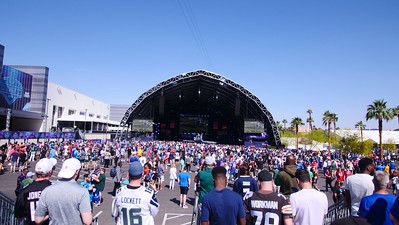
After Covid-19 forced Las Vegas to miss out on the 2020 NFL Draft, the redemptive 2022 draft weekend starting on Thursday, April 28 is slated to generate a massive turnout, even for Vegas’ standards.

Little to no official estimates have been made thus far, but some feel that attendance could approach a million visitors, based on comparisons to the most recent live draft event, which was held in Nashville in 2019.

The 2019 draft drew over 600,000 visitors and resulted in an economic impact of nearly $224 million–this year’s event is slated to shatter both of those figures, given the fact that Las Vegas boasts nearly three times the number of hotel rooms than the Music City.

Virginia Valentine, CEO of the Nevada Resort Association, told the Las Vegas Review-Journal that the city “was built for signature events like this,” and that it is prepared to “set a new standard in hosting NFL events while breaking attendance records.”

Many have also looked at figures from Las Vegas’ 2019 New Year’s Eve celebration as a potential gauge for in-person attendance and spending. That event, according to the Las Vegas Convention and Visitors Authority (LVCVA), drew over 325,000 people and generated just under $500 million.

However, not everyone is certain that the three-day draft event will fetch the same turnout.

University of Las Vegas (UNLV) hospitality professor Amanda Belarmino told the Review-Journal that figures may be lower than New Year’s because of the inability for potential visitors to take time off from work, especially for a multi-day event. She did note, however, that “room rates indicate there is a high demand.”

Per the LVCVA, the average daily room rate this time last year was just under $110 a night. This year, rates have jumped to over $244 a night, based on a survey of about 150 listings on the popular booking site hotels.com.

According to the Review-Journal, a spokesman from Harry Reid International Airport said that they were experiencing two waves of traffic–those arriving for the draft and those leaving the National Association of Broadcasters annual trade show, which ends the day before the draft beings.

The airport is also expected to see a massive increase in the amount of private planes flying in, and due to the limited amount of space, pilots will be encouraged to divert to North Las Vegas Airport or Henderson Executive Airport instead.

The general feeling among city officials and hospitality executives is that if the draft event is as successful as it is slated to be, the city will almost certainly be granted the opportunity to host the Super Bowl and other NFL events in the near future.

Massachusetts Sports Betting Bill Approved by Senate

After languishing for months in a Massachusetts Senate committee purgatory, a bill to legalize sports betting was approved by the full Senate. A form of the bill was passed by the House months ago by a vote of 156 to 3. Up until now the Senate has been less eager to take up the issue. But there are significant differences between the two.

The two chambers have until the end of the legislative session, July 31, to reconcile the two versions and get them to Governor Charlie Baker, who is eager to sign such a bill before he retires in December.

On April 22 the Senate Ways and Means Committee moved the bill. But it doesn’t contain a key provision that was in the House bill: allowing wagers on college sports. That might be enough to keep the two chambers from agreeing on a final bill. Last summer House Speaker Ron Mariano told the State House News Service that a bill without college betting “probably would be” a deal killer. “

“I find myself having a tough time trying to justify going through all of this to not include probably the main driver of betting in the commonwealth,” said Mariano.

The reason is largely money. Without college betting, state revenue would be no more than $35 million, compared to $60 million when it is included. Only one state that has sports betting, Oregon, doesn’t allow betting on college games.

However, lawmakers have been lobbied by presidents and athletic directors of eight colleges and universities such as University of Massachusetts, Boston College and Harvard University that all have athletic programs. They argue that student athletes would be under such pressure that the integrity of the games would be threatened.

Also, the Senate bill would tax sports betting revenue at 20 percent for retail wagers and 35 percent for mobile sports bets, compared to 12.5 percent for retail and 15 percent for mobile in the House bill. The Senate rates are higher than what most states charge.

The two bills are also miles apart on license structure, with 11 online sportsbooks permitted by the House bill, compared to nine in the Senate bill. The House bill assigns three retail and mobile licenses to the Bay State’s casinos, the MGM Springfield, Encore Boston Harbor and Plainridge Park slots parlor. Up to six additional operators would be authorized to take both kinds of bets. Licenses would be for five years, which would cost $5 million for the initial license and each renewal.

The Senate bill allows for only six mobile licenses, but probably less would be approved. It does, however, allow for another casino license (the state still has one commercial license it has not issued) and the possibility for tribal casinos.

Another way the bills differ is their approach to using credit cards to pay sports bets. Senator Eric Lesser notes that due to his insistence, the Senate bill doesn’t allow the use of a credit card. The House version does. But the Senate version goes on step further by prohibiting “third-party payment method providing funds through the use of a credit card.” Under this stipulation, a player couldn’t fund his sports betting account via e-wallets or PayPal using credit cards.

Both bills would put sports betting under the Massachusetts Gaming Commission.

Consumer protection standards seems to be the cornerstone of the Senate bill. The bill bans ads during sporting events and a requirement that any ads that do appear do so before an audience that is certified to be 85 percent over 21.