Author: Casino Connection Staff

Caesars Virginia Opening Delayed Until 2024

The opening of Caesars Virginia in Danville will be delayed until 2024 due to supply chain challenges. Originally, Caesars officials announced construction would be completed in second or third quarter 2023 and the venue would open in the third or fourth quarter.

Caesars Entertainment spokesman Robert Livingston said, “We have seen supply chain issues and other market forces that continue to wreak havoc.” He added labor shortages throughout the construction industry are slowing down building everywhere. However, Livingston told city leaders, “None of this has altered our commitment to Danville. We remain confident this project will open in 2024. No one is more committed than Caesars to get this off the ground.”

Livingston said currently hundreds of years’ accumulation of concrete is being dug up at the casino location, the former Dan River Inc. Schoolfield site. “There’s a lot of concrete on that site,” he said.

Livingston noted Caesars’ $5 million in annual subsidy payments to Danville, as required in the development agreement with the city, will start in September 2023. The payments will be made quarterly, he said.

Blackstone Executive Says Firm ‘Bullish’ on Las Vegas Market

In a recent interview with the Las Vegas Sun, Tyler Henritze, head of strategic investments for the real estate division of mega-investment firm Blackstone Inc., indicated that the firm was still very much interested in the Las Vegas market.

In total, Blackstone manages a Las Vegas portfolio of about 100 properties, valued at nearly $25 billion collectively. The firm has also purchased real estate assets from the Bellagio, MGM Grand and Mandalay Bay in the last three years.

According to Henritze, the city has “grown up,” and offers a much more “diversified entertainment economy” than it has in previous years. Henritze also noted that Blackstone’s Las Vegas holdings are extremely diversified, including resort assets, millions of square feet of facilities and commercial properties.

“It’s no longer just about gambling in Las Vegas, it’s about business and sports and entertainment,” Henritze told the Sun. “As a result, if I look across our real estate business, we’ve made big investments across the board.”

When asked about the possibility of revenue decline as more jurisdictions around the country debate gambling legalization and expansion, Henritze was confident that the city has taken positive steps to diversify its economy. He noted the success of the Raiders and Golden Knights franchises, as well as the Formula One racing event recently unveiled for the Strip.

Henritze was also asked about the recent trend of real estate firms purchasing casinos and then leasing them back to gaming companies–in his words, this arrangement offers a sort of freedom, in the sense that by “bifurcating the operations of a casino from the real estate, you allow capital to invest in one or the other, as people see appropriate.”

With regards to future investments in the city, the firm expects to continue to look for more opportunities in the gaming and logistics industries. According to Henritze, Blackstone’s plans for the Las Vegas market moving forward look “much of the same.”

Hard Rock Bristol Granted First Virginia License

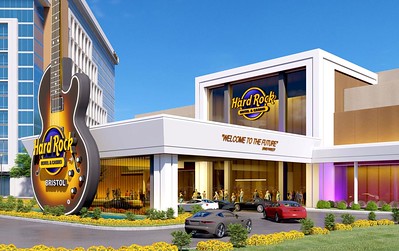
The Virginia Lottery Board recently issued its first casino license to Hard Rock Bristol, which will open a temporary, 30,000-square-foot facility July 8 at the former Bristol Mall with 870 slots, 21 table games and a sportsbook. The mall has been unoccupied since 2017.

Hard Rock International Chief Operating Officer Jon Lucas said, “We are excited by the Virginia Lottery Board’s action today granting a license to open Virginia’s first casino in Bristol subject to the completion of outstanding operational activities. We appreciate the Virginia Lottery’s assistance and diligence in working closely with our team over many months to reach today’s important milestone for Bristol, Southwest Virginia and the commonwealth.”

The $300 million, 90,000-squre foot permanent facility, expected to be completed in 2025, will transform the Bristol mall into a casino resort with 2,700 slots, 100 table games, sportsbook, seven restaurants and four bars, 3,200-person capacity concert venue and a 20,000-person capacity outdoor entertainment venue. The 750-room hotel tower will offer a spa, retail area, Hard Rock Café and 50,000 square feet of convention space.

Three other Virginia casinos are in process in Norfolk, Portsmouth and Danville. Richmond voters initially rejected a casino referendum in November 2021 but a possible do-over is in the works. The four cities met the requirements of the enabling legislation, including an unemployment rate of at least 5 percent in 2018, a poverty rate of at least 20 percent in 2017 and a population decrease of at least 20 percent from 1990 to 2016.

2022 NFL Draft: Good for Vegas, Bad for Sportsbooks

After two years of Covid-19 delays, the 2022 NFL Draft in Las Vegas went off without a hitch. The three-day event is receiving rave reviews from officials while drawing ire from Vegas sportsbooks, who reported losses on the event for the sixth straight year.

According to the Las Vegas Review-Journal, NFL commissioner Roger Goodell said that the league was “really thrilled” that the draft event turned out to be “bigger than we ever imagined.” According to Goodell, overall it was “better than perfect.”

The league is estimating a total attendance of over 300,000 across the three-day, which is not quite the figure that city officials were expecting, but official figures have yet to be released.

Goodell was effusive in his praise of the city’s hospitality workers and event staff for their hard work and cooperation in putting the event together. “ Everyone had to work together, everyone had to find solutions and find creative ways to really have a great time,” Goodell told the Review-Journal. “I think that’s what showed through.”

Gov. Steve Sisolak was also proud of how Southern Nevada performed over the weekend, especially given the unfortunate two-year layoff. Sisolak said he views the draft as a win-win situation for all involved because there are no winners and losers–only passionate fans.

Despite the large crowd sizes, city officials told the Review-Journal that aside from a fan jumping into the Bellagio fountain, there were little to no major incidents. Clark County Commissioner Michael Naft said the event provided “a family friendly environment for people on the whole.”

Local sportsbook operators, on the other hand, did not have the same praise.

The Nevada Gaming Control Board authorized wagering on the draft back in 2017, and books have gotten hit hard every year by sharp bettors and insiders. Due to the fact that the draft is a live event that is based on quick decisions, it is nearly impossible to handicap effectively. Just one surprise pick or trade will inevitably set off a chain reaction, which is much more risk than bookmakers are normally willing to take. The interest is too high, however, to take it off the board completely.

“It’s not a game of chance, which is what betting is supposed to be about,” South Point sportsbook director Chris Andrews told the Review-Journal. “It’s not a sporting event where guys are out there playing and you can win or lose.”

All drafts are unpredictable but this year’s edition proved to be especially volatile, as a number of surprise moves proved to be costly for local bookmakers. The most notable example of this was the first overall pick, when the Jacksonville Jaguars selected Travon Walker. Walker, a star defensive end from Georgia’s national championship team, opened at most books with 40-1 odds to be selected number one overall.

As his odds gradually lowered, more fans joined in on the hype by wagering on Walker—by the time he was selected there were tickets all over the place, resulting in one-sided action, which is exactly what books seek to avoid.

SuperBook Vice President Jay Kornegay lamented the draft, calling it his “least favorite event to post.” Unlike regular games, Kornegay said, the draft is a niche event that is usually wagered on by sharp, attentive fans.

The other needle-moving selection came just two picks later, when the Houston Texans made a surprise choice by drafting Louisiana State cornerback Derek Stingley Jr. with the third overall pick. Stingley was not expected to be the first cornerback drafted, and was not even considered by some to be a first-round pick.

According to MGM Resorts Director of Trading Jeff Stoneback, that was the move that put them in the red. “We would be very happy to break even,” said Stoneback. “That’s our goal for the draft, which has yet to happen.”

During a first-quarter earnings call for 2022, Caesars Entertainment CEO Tom Reeg praised the recent NFL Draft event for the visitation-related revenue it brought to the Las Vegas economy but added, “It was not a particularly great gambling crowd. It was good for visitation, but the casino numbers were kind of average.”

Reeg was quick to point out that Caesars’ Las Vegas properties notched their highest 30-day room revenues ever in the month of April. This was only partly thanks to the draft event, as there were also two weekends’ worth of concerts from Korean pop sensation BTS as well as a five-day conference for the National Association of Broadcasters.

Sports Betting Hall of Fame Inductees Announced for 2022

The Sports Betting Hall of Fame has announced its 2022 class, with four total inductees: Vinny Magliulo of the Las Vegas Dissemination Co. and Gaughan Gaming; Sandy Drozd of USBookmaking; Chris Andrews of the South Point Hotel, Casino & Spa; and Paul Burns of the Canadian Gaming Association.

This year’s class will be enshrined in a ceremony during the SBC North America Summit 2022 conference on Wednesday, July 13. The induction ceremony will be held at Meadowlands Racing & Entertainment in East Rutherford, New Jersey.

The other conference events will be held at the Meadowlands Exposition Center in nearby Secaucus.

The Sports Betting Hall of Fame was started in 2016 by SBC Gaming, with the goal of recognizing “individuals who have contributed a great deal to the industry over the course of their careers with a lasting legacy.”

According to the company, the purpose of the Hall is to “honor, preserve and perpetuate the names and outstanding accomplishments of personalities who have brought lasting fame to the sports betting sector.”

In a release, SBC executive Sue Schneider said that the company was excited to see how the Hall would continue to grow over the next few years as “the industry enjoys substantial growth in multiple U.S. states and Canada.”

Over the course of its first seven classes, the Hall has honored inductees from all over the world, including the U.S., U.K., Canada, and South America. Inductees range from industry leaders to politicians and other sports betting figures, such as Jukka Honkavaara, the man who placed the first online sports bet ever back in 1996.

For more information about the trade show or to register, visit SBCevents.com.

Minnesota Sports Betting Bill Heads to House

Facing a session end date of May 23, the Minnesota House and Senate still are debating the sports betting bills. The House bill, HF 778, would limit sports wagering to tribal casinos, but a competing Senate measure also wants to allow it at horse racetracks to avoid granting tribes a monopoly.

The bill has passed in eight committees in the past few months and most recently passed the House Ways and Means Committee. Now it will go to the House floor although no date has been set.

The legislation, sponsored by state Rep. Zack Stephenson, would allow online and retail sports betting to be offered by the state’s 11 tribes at their casinos and through apps. Sports betting revenue would be taxed at 10 percent, with half going to responsible gambling initiatives. Stephenson said, “I take it really seriously, and the advocates who work in problem gaming can tell you that we’ve incorporated every suggestion that they’ve ever made into the bill,” Stephenson said. The rest of tax revenue would fund youth sports programs in communities with high levels of juvenile crime.

The bill would create two “master mobile sports betting licenses.” Each would be valid for 20 years and would be granted to organizations consisting of two or more tribes. One license would be given to an organization of northern tribes and another to southern tribes. Each tribe in a licensed organization could partner with an online sportsbook operator to run their app.

The tribes would have to negotiate new compacts with Governor Tim Walz, who has said he’s open to a bill that includes tribal interests.

Stephenson said, “The path has gotten a little murkier and harder to see how we can get it done, but I think there’s still an opportunity.”

Ohio Sports Betting Application Window Opens June 15

The Ohio Casino Control Commission announced the 30-day window for sports betting license applications will begin June 15. The first application window will be for proprietors that want to launch sports betting on the universal start date, unknown for now, when all licensees will go live. After that window closes, the OCCC will process applications from prospective proprietors as they are received. Observers said it could take the OCCC between 60 and 90 days to approve applications.

Public comment recently closed on draft applications issued by the OCCC. The applications will be available to operators June 1. The OCCC will take applications for 25 Type A licenses, which allow retail and digital wagering at sports arenas and casinos; the application fee is $150,000. Forty Type B licenses, allowing wagering at brick-and-mortar facilities only, will have a $20,000 application fee.

Type A, B and C proprietors, first-designated mobile management service providers, management service providers and suppliers may apply during the June 15 to July 15 window. A second window for Type C sports gaming hosts and second-designated MMSPs will be open between July 15 and August 15.

Under Ohio’s sports betting law, the OCCC must launch wagering by January 1 of next year.

Vermont Lawmaker May Sponsor Mobile Wagering Bill

A Vermont lawmaker is considering filing a law that would legalize online wagering. Sports Handle obtained a draft of the bill but didn’t say which legislator was the author.

According to the draft, which hasn’t yet been filed, the state’s Board of Liquor and Lottery would regulate the mobile wagering, with six mobile platforms authorized. Operators would need to go through a competitive bidding process to qualify for one. As part of their bidding, applicants would name their preferred tax rate.

The bill does not appear to address retail wagering. If adopted, Vermont would become the third state to have digital-only wagering. The others are Wyoming and Tennessee.

California Sports Betting Measure Qualifies for Ballot

A measure by online gaming operators based outside of California has gathered 1.6 million signatures, which should be enough to qualify it for the November ballot.

One million signatures are required to put a measure on the ballot. Some of the operators backing the measure are FanDuel, DraftKings and BetMGM.

It becomes the second sportsbook measure to qualify for this year’s ballot. The first is sponsored by a consortium of gaming tribes who only want retail sports book at tribal casinos and the state’s four racetracks.

The operators’ measure, which the tribes oppose, doesn’t clash with their measure. They claim it complements it by allowing online sports betting, but only tethered to tribal casinos.

As the largest state in population, the Golden State is the Golden Apple of sports betting markets, 39 million, compared to the next largest sports betting marketplace, New York, with 19 million. It could be worth as much as $3.5 billion annually say some experts. Peter Schoenke, a board member of the Fantasy Sports and Gaming Association calls the California market “the holy grail.”

In a tip-of-the-hat to California’s biggest issue, homelessness, the measure, called the California Solutions to Homelessness and Mental Health Act, would set aside 85 percent of its tax revenues for homelessness and mental health support. The rest would go to tribes that don’t take part in the market. The online activity would be taxed at 10 percent.

The proponents, Californians for Solutions to Homelessness and Mental Health Support, claim this would raise $500 million annually. Nathan Click, their spokesman, commented, “This is the state’s No. 1 need, its greatest humanitarian challenge, and right now there is no permanent revenue source for housing and the services required to help elevator people out of homelessness.”

To become law, the rival measures each need 50 percent plus one vote, to pass.

It is already certain that hundreds of millions of dollars, and perhaps as much as $1 billion will be spent by the sides—the campaign could be the largest in the state’s history. The tribal campaign has already started to target the sportsbook operators with TV ad saying measure would make it easy for youth to bet using their parents’ accounts.

The online proponents argue that facial recognition software and background checks will protect against this problem.

The online measure is supported by some homeless advocates. Tamera Kohler, CEO of the Regional Task Force on Homelessness San Diego, issued a statement: “These states are using this revenue to solve big challenges. California should be next.”

Fresno Mayor Jerry Dyer, added, “This ballot measure would give cities like Fresno a guaranteed funding source to address homelessness.” He added, “To truly solve this critical issue and give those most vulnerable among us the housing, mental health and addiction treatment they need, there must be an ongoing revenue stream. This initiative would do just that.” If passed, it could go “live” as early as next January.

Dyer’s endorsement has also drawn fire in the form of TV and online ads. One declared, “Mayor Dyer: Please protect our kids! Reject the Corporate Online Gambling Proposition.”

A major criticism of the operators’ measure is the large fee for a sports betting license, $100 million. Gaming companies also must be licensed in 10 states or operate in five states and run 12 casinos. Critics say that would effectively lock out all but the largest operators.

To compare, New York, to date the most expensive, charges a $25 million licensing fee.

The high fees do not apply to tribes, who would pay a one-time $10 million license fee, renewable every five years for $1 million.

The measure would also create a new division within the state’s Department of Justice to regulate online sportsbook.

The two measures are not the only ones active. Another tribal backed coalition (but a different one), called Californians for Tribal Sovereignty and Safe Gaming, would allow tribes to exclusively offer sports betting at brick and mortar casinos, and online. The measure is supported by three tribes: the San Manuel Band of Mission Indians, the Rincon Band of Luisueño Indians, and Wilton Rancheria.

Tribal ads are pushing the narrative that tribes should exclusively control sports betting because they have been reliable caretakers of gaming for more than 20 years.

A recent University of California poll showed 45 percent of voters support amending the constitution to allow sports betting, with 33 percent opposed and 22 percent undecided.

Maine Law Gives Tribes Control of Sports Betting

Maine Governor Janet Mills, May 2 signed a bill into law that gives the state’s tribes exclusive control of online sports betting. It also reduces tribal taxes and creates a framework for more collaboration on expanding tribal sovereignty.

Maine’s two land-based casinos, the Hollywood Casino and the Oxford Casino, off-track betting facilities, and racetracks may operate retail sportsbooks under: LD 585. It goes into effect 90 days after the current legislative session ends.

LD 585 has three parts. The first creates a tribal state collaboration, which says the governor and tribal leaders should meet annually and creates liaisons between tribes and departments. The second part creates tax exemptions for certain incomes and persons. The third piece is specific to online and sports betting.

Mills declared, “This law provides meaningful economic opportunities for the Wabanaki Nations. It incentivizes investment in tribal communities, and it formalizes a collaboration process on policy that sets the foundation for a stronger relationship in the future.”

Because of the convoluted nature of the law, it may be almost two years before sports betting actually occurs.

“Maine is not Las Vegas; Maine is not Atlantic City. But that doesn’t make it lesser of a regulatory responsibility on my part, and so I’m going to make sure we get things done correctly,” said Milton Champion, executive director of the Maine Gambling Control Unit, the state’s regulatory body.

Champion said he would consider the experience of other states.

“If (another state’s) law is particularly close to ours, I may venture in and take a look at their rules and see what they’ve done,” he said. “Obviously, we’re a little late in the game here in Maine, so I’m hoping to have lesser hiccups than other states have had.”

But Champion believes Maine is so unique it might take a while to get it right.

“Depending on that response and the pushback and how detailed that is, I may have to go back to the drawing board, republish new rules, have another hearing, or at least a 30-day time frame for written comment,” Champion said.

The law did not come close to satisfying tribal aspirations for sovereignty such as other states’ federally-recognized tribes enjoy. They had sought the passage of LD 1626 to alter the status quo that was created by the Maine Indian Land Claims Settlement Act of 1980. That Act of Congress treats the Wabanaki tribes—Penobscot Nation, Passamaquoddy tribes at Indian Township and Pleasant Point, Houlton Band of Maliseets and Mi’kmaq as municipalities subject to state law rather than sovereigns equal to the state.

During a testimony to lawmakers, Penobscot Indian Nation Chief Kirk Francis said the Settlement Act hobbles the tribe’s ability “to provide services to our people, create an economy that benefits our community and those around us, and excluded us from many federal laws intended to benefit tribal nations.”

Governor Mills opposes LD 1626. She promised to veto the sports betting bill she herself negotiated and supported, if lawmakers had insisted on passing both. She wrote to tribal and legislative leaders: “I do not wish to have a confrontation. It would serve no constructive purpose and only inflame emotions on all sides of the discussion.” Still, the legislature will return to work on May 9, and some would like to revive the bill.

The tribes issued this statement: “Permanent sovereignty restoration remains the legislative priority for the Wabanaki Nations, and it will continue to be our priority moving forward.”

They wrote a separate letter to Mills and legislative leaders. “Time is on our side,” they wrote. “Our people have lived with the negative consequences of the settlement act for over 40 years. However, we have made more progress in our sovereignty restoration efforts in the past four years than we did in the previous several decades.”

Mills offered the sports betting bill as half a loaf in lieu of full sovereignty. She prefers to improve the lot of the tribes through small, incremental steps. Such as LD 906, which allows the Passamaquoddy Tribe to seek alternate forms of groundwater on the reservation without state approval, or amending the Settlement Act to give some tribes the authority to prosecute domestic violence cases against non-tribal members in tribal courts. She has also led the enactment of legislation changing Columbus Day to Indigenous Peoples’ Day.

Mills and the tribes negotiated for many months. Although it is true that Maine’s tribes remain uniquely unsovereign compared to other states, it is also true that Maine now is one of just a few states that have a formal tribal-state collaboration process in place.

The law also finally gives the tribes an entrée into gaming, something they have unsuccessfully sought for 40 years.

Massachusetts House, Senate Disagree on Sports Betting

Last year the Massachusetts House passed a sports betting bill that includes college football, which many consider one of the more lucrative aspects of sports wagering. However, the Senate last week passed a bill that excludes college betting.

Up until recently House Speaker Ron Mariano had said that a bill without college betting was a “dealbreaker.” However, lately he has seemed to soften that stance.

The difference between the two bills is subordinated in many critics’ minds by the way that the Senate vote took place. During a joint press conference by Governor Charlie Baker and Senate President Karen Spilka, she was peppered by questions about why the vote was done by voice, rather than a roll call.

Spilka answered, “That was what the senators went forward with,” she said. “It wasn’t one person or two people. It was a general consensus they were ready to move forward.” She implied she voted against the bill.

It is hard to determine who voted for the bill with a voice vote.

Progressive Mass Policy Director Jonathan Cohn told MassLive the vote appeared to be “intentionally opaque” for a vote on major policy. “It’s almost like they’re designing for failure,” he said.

He added, “There is a fundamental opacity in the legislative process in Massachusetts and a damning lack of transparency here.” He continued, “This is something you see again and again across issues — a tendency to avoid taking difficult votes as a way of asserting power.”

Senator Diana DiZoglio echoed those concerns. She told MassLive, “It’s extremely centralized,” adding “This is yet another example of why we need shared leadership. There should be full transparency and accountability around policy.”

Because leadership controls staff members’ salaries and committee appointments, it has a large influence on what bills are passed. Ella McDonald of Act on Mass, a legislative watchdog group, told MassLive: “That combined with the general lack of transparency means representatives and senators more accountable to the speaker or senate president than they are to the voters.”

Now the real work shifts to a conference committee, which will try to hammer out the differences and produce a bill that satisfies both chambers. Negotiations could be contentious, but, since they will occur behind closed doors, few people will know.

Lawmakers have tried to legalize sports betting for five years, since the U.S. Supreme Court lifted the federal ban. The House twice passed bills that later died in the Senate. This is largely attributed to Spilka’s control over the process.

Public pressure may have caused Spilka to relent and allow the vote. Add to that a recent poll showing that 60 percent of the Senate supported legalizing sports betting.

The legislative session ends July 31.

The state’s three casino owners have made their wishes known. They want a lower tax rate than is proposed and with college sports. A joint letter by Penn National Gaming, owner of Plainridge Park Casino, Wynn, owner of Encore Boston Harbor and the MGM Springfield, went to the legislature one day before the Senate debate.

SB 2844 allows for statewide mobile betting on digital platforms tethered to existing casinos and retail sports betting. Profits would be taxed at 20 percent for retail and 35 percent for mobile. College sports are banned. Sports betting advertising would be prohibited during live televised games.

The House bill would tax retail wagers at 12.5 percent and digital bets at 15 percent. It allows college sports bets and doesn’t address advertising during events.

The letter asks the Senate to use the House’s tax rate and allow college bets. Such rates are in line with other states, they wrote. They also ask that promotional play credits be deductible from taxable receipts.

They also asked for multiple skins, as opposed to one operator per casino. Pointing to states that allow multiple skins, the letter adds, “The data relative to existing mobile operations in other states is clear that this model serves the largest possible market, will create efficiencies for the implementation of consumer protections and regulatory control for the Massachusetts Gaming Commission, and generate more tax revenue.”

One oft-mentioned argument for sports betting is that neighboring states like New Hampshire make a hefty profit from Bay Staters who cross the state line.

Statistics from the New Hampshire Lottery Commission show that Massachusetts bettors account for about 15 percent of mobile bets in the Granite State. However lottery director Charlie McIntyre seems unworried about losing Massachusetts customers. He said in a statement, “We’re not surprised other states would look to replicate our success.”

Challenge to Washington Sports Betting Moves to Western District

Maverick Gaming has filed a legal challenge to the tribal exclusivity of sports gaming in Washington state has been moved by a federal judge from the U.S. District Court for the District of Columbia to the Western District of Washington.

Maverick Gaming, based in Washington, alleges that the Indian Gaming Regulatory Act (IGRA) has been misapplied in giving the state’s gaming tribes exclusivity on some forms of gaming—and not allowing commercial casinos, of which Maverick owns 19 of Washington state’s 44 licensed cardrooms.

The Washington Indian Gaming Association, which represents most of the 29 gaming tribes in the state, issued this statement from Executive Director Rebecca George, applauding the move to a Western District court: “Maverick Gaming’s lawsuit seeks to invalidate all tribal gaming compacts in Washington state and undermine the carefully crafted, limited and successful system of gaming we have developed here over three decades. Their plans would cause irreparable harm locally, not just to historically marginalized Tribal communities but also to the general public.”

Twenty-nine tribes has Class III gaming compacts and 22 tribes operate 29 casinos. Seventeen tribes have been approved to offer sports betting since the legislature approved sports betting in March 2020. The Snoqualmie Tribe opened the state’s first sportsbook last September.

Maverick CEO Eric Persson disagrees. He issued this statement: “While we disagree with today’s decision by a D.C. District Court Judge to relocate our litigation to the Western District of Washington, we have always believed that the final decision on this issue will most likely be settled by the United States Supreme Court. We look forward to continuing our litigation in the Western District of Washington and believe that the defendants’ decision to pursue a different venue instead of confronting the merits of our litigation only underscores the strength of our position.”

Persson said an “inclusive and regulated marketplace” would generate more tax revenue for public services, create jobs and reduce black market sports betting. His 19 small casinos employee about 2,000.

Persson argues that Washington is misinterpreting the intent of IGRA. His attorney, Theodore Olson, added, “Contrary to the act’s own words, the law is being used to insulate tribes in Washington State from competition that exists in many other states with legal gaming marketplaces.”

NCAA Lets Schools Sell Data for Sportsbooks

Last month, the Mid-American Conference asked the NCAA for more guidance on sports wagering constraints. What the conference requested concerned a portion of the Division 1 manual which says athletes, school staff and conference employees may not offer information that could end up associated with sports wagering, according to Sportico.

On April 27, The Division I Interpretations Committee responded and decided that an individual, school, or conference can provide stats to sports wagering companies, as long as the same information can be accessed by the public at large.

The decision should open the doors for universities and other schools to sell their data and other info to sportsbooks. Such deals have proven lucrative to pro leagues like the NBA and NFL, as have associations with sportsbooks. The MAC moved in that direction when it signed a deal with Genius Sports last month. The NCAA ruling could allow the conference to sell data to Genius which can sell it to sportsbooks.

And whatever the MAC earned on this deal, the mammoth Big Ten and SEC will make that much more.

It’s all part of a new approach by the NCAA to defer its authority to the individual schools or conferences. The old worries of integrity and possible cheating scandals fell by the wayside. The fear spoke to the fact that college athletes were not compensated beside room and board in college. Even that could be drawing to a close.

NBA, NFL teams have to pay a set percentage of team/league revenue to the players. So, revenue from data deals goes to the athletes. The NFL players association revenue-sharing agreement with the NFL. Licensed player data is included in that section of the CBA, ensuring players receive compensation for those deals.

“One theoretically could attempt to make an argument that the players in professional sports leagues, based upon the salaries that they’re receiving, are engaging in a work-for-hire,” said Marc Edelman, a law professor at Baruch College, who has extensive experience working with sports, gaming, and antitrust legislation.

Michigan Theater Sportsbook Leads to Caesars Deal

Last December, Emagine Entertainment opened the nation’s first movie-theater-based sports betting-lounge in Royal Oak, Michigan. The venture caught the attention of Caesars Entertainment and recently Caesars and Emagine announced their partnership. The venue was rebranded as Caesars Sportsbook Lounge Powered by Emagine. The theater doesn’t have a gambling license but its “Vegas-style sports lounge” offers sports fans an area to wager online.

The lounge will feature betting odds on dedicated displays and games will be broadcast on several huge screens. Amenities include a cinema sound system, heated leather recliners, individual tables and free high-speed WIFI.

Caesars Digital Co-President Eric Hession said, “We are excited about this partnership with Emagine Entertainment and applaud their ingenuity in creating a sports lounge in a movie theatre. This concept should provide an exciting environment for people to enjoy a televised sporting event and for us to connect with new customers while also rewarding our existing loyal customer base.”

Emagine Entertainment Chief Executive Officer Anthony LaVerde stated, “Our commitment to building innovative entertainment experiences for our guests led us to the creation of the sports lounge at Emagine Royal Oak. Partnering with Caesars is a major milestone in our ongoing commitment to being the most innovative theater chain in the country.” He added more locations are expected to open later this year.

VegasWinners Service Enters Pennsylvania Market

VegasWinners, a subsidiary of Winners Inc. and a supplier of sports betting content, analysis, research and data, has been approved by the Pennsylvania Gaming Control Board as a sports wagering service provider able to refer customers to licensed sportsbooks for commission payments.

“Gaining approval to operate in Pennsylvania is a massive statement for our business,” said Andy Scott, chief marketing officer of VegasWinners. “The appetite for sports betting in this market is clearly significant, and we believe that our handicapping service will resonate well. Being recognized by the PGCB as a legitimate provider of sports betting content is also critical to our wider strategy as we enhance our marketing opportunities.”

VegasWinners is licensed in several states, and is an applicant in additional jurisdictions as sports betting spreads in the U.S.

High 5 Games, BetMGM Extend Inventory in New Jersey

On May 4, High 5 Games announced that its gaming titles are now available on BetMGM Casino, Borgata Casino and Party Casino in New Jersey. This High 5 games launch is an extension of the company’s pre-existing partnership with BetMGM and further strengthens the relationship.

“With headquarters in New Jersey, expanding our presence here at home was a no-brainer; BetMGM is the perfect partner to make that happen,” said Tony Singer, CEO of High 5 Games. “As one of the most respected iGaming brands in the United States, our partnership with BetMGM has always been at the core of our North American expansion plans. We’ve already done some great things with BetMGM in other live markets, like launching Rapid Rewards for greater player engagement, and we can’t wait to do great things together in New Jersey.”

Top High 5 Games titles including Platinum Goddess, Triple Double Da Vinci Diamonds and Green Machine Deluxe can also be found on BetMGM Casino in both Michigan and Ontario, where they were available on the first day of market regulation. With more than 200 games available, BetMGM players will have access to some of High 5 Games’ best content at launch in New Jersey.

Oliver Bartlett, director of gaming for BetMGM, said, “BetMGM players love the unique content and promotions that High 5 Games produces. After successes in Michigan and Ontario, we’re excited to further expand our partnership into New Jersey and to grow our industry-best portfolio with games that players enjoy.”

Through the GameSense integration within BetMGM’s mobile and desktop platforms, BetMGM customers can directly access responsible gaming tools.

MGM to Acquire LeoVegas

MGM Resorts International announced that it has begun a recommended public tender offer for 100 percent of the shares of LeoVegas AB, the Swedish online gaming operator, for a price of SEK 61 in cash per share, equivalent to a total tender value of approximately $607 million. The acquisition will enable international expansion of the operator’s popular BetMGM U.S. online gaming and sports betting business.

The acquisition will be financed with existing cash and is expected to be accretive to MGM Resorts’ earnings and cash flow per share.

“Our vision is to be the world’s premier gaming entertainment company, and this strategic opportunity with LeoVegas will allow us to continue to grow our reach throughout the world,” said MGM Resorts President and CEO Bill Hornbuckle.

“We have achieved remarkable success with BetMGM in the U.S., and with the acquisition of LeoVegas in Europe we will expand our online gaming presence globally. We believe that this offer creates a compelling opportunity that allows the combined teams of MGM Resorts and LeoVegas to accelerate our global digital gaming growth and fully realize the potential of our omnichannel strategy. We look forward to being able to welcome the LeoVegas team to our MGM Resorts family.”

Founded in 2011 by Gustaf Hagman and Robin Ramm-Ericson, LeoVegas is a leading global online gaming company with licenses in eight jurisdictions, primarily in the Nordics and rest of Europe. LeoVegas generated €393 million in revenue and €48 million in Adjusted EBITDA during the 12 months ended March 31. The business is headquartered in Stockholm with offices in Malta, the U.K. and Milan.

MGM Resorts said the acquisition of LeoVegas will provide a unique opportunity for the company to create a scaled global online gaming business with the following attributes:

  • Strategic Opportunities to Accelerate Growth and Product Offerings: “LeoVegas’ online casino and sports betting capabilities and strong customer base outside of the U.S. are expected to further expand MGM Resorts’ presence around the world,” the operator said in a press release.
  • Experienced Online Gaming Management Team and Superior Technology Capabilities. “LeoVegas’ management team has demonstrated the ability to develop a robust and scalable technology platform with advanced product offerings,” MGM reported.
  • Commitment to Continued Profitable Growth: “LeoVegas has operated profitably as a high-growth platform since 2014,” the operator said. “From 2017 to 2021, LeoVegas’ revenues compounded annual growth rate was 16 percent, while maintaining strong profitability. MGM Resorts’ scale, brands and expertise will allow the combined businesses to expand within existing gaming segments and provide incremental opportunities to enter new areas.”

The acceptance period of the offer is expected to commence on or around June 2022 and expire on or around August 2022. An offer document regarding the offer is expected to be made public shortly before the commencement of the acceptance period. Assuming that the offer is declared unconditional no later than around end of August, settlement is expected to begin around early September 2022.

The offer is subject to certain regulatory approvals, the receipt of valid tenders of more than 90 percent of LeoVegas’ shares and customary closing conditions. It is expected to be completed during the second half of fiscal year 2022.

LeoVegas’ revenue grew by 1.9 percent year-on-year to €98.5 million in Q1 of 2022, as the operator’s board outlined its reasons to support the acquisition offer from MGM Resorts. The operator noted that, in local currency terms, revenue was level year-on-year, however.

The operator’s decision to withdraw from the Dutch market when it opened on October 1 continued to have a major impact on revenue. With the Netherlands excluded, revenue would have been up 9 percent year-on-year.

Elsewhere, LeoVegas noted that the business was especially successful in Sweden, where a SEK5,000 deposit cap for online casino was repealed during the quarter.

“Sweden had another good quarter and generated a new record level of revenues for the period,” LeoVegas said, according to iGaming Business. “During the quarter, the company was once again the largest commercial operator in the Swedish market and continued to capture market shares.”

In U.K., 888 Shareholders to Vote on William Hill Acquisition

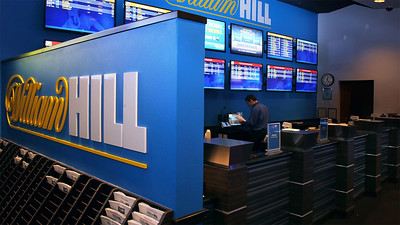
When Israel-based 888 Holdings won the bid for William Hill’s non-U.S. assets from Caesars, it agreed to purchase a company much larger than its own inventory. As a result, the deal must be approved by 888 shareholders. That vote occurs on May 16, according to iGaming Business.

A month ago, 888 and Caesars reduced the purchase price to acquire the assets by £250 million (US$315 million), with the cash portion of the deal now set at £584.9 million instead of £834.9 million.

Still, the deal made strategic sense for both businesses at the new purchase price, 888 said. The new empire to rise from the mashup would be the third largest publicly traded online gambling operator in the world. “The deal therefore represents a transformational opportunity for 888 to significantly increase its scale, further diversify and strengthen its product mix, and build leading positions across several of its key markets,” said the company in a statement.

For 888 this is a chance to widen exposure to sports betting, while also enhancing its position in locally regulated markets. It’s expansive scale can override marketing restrictions.

The business will also achieve cost synergies, including annual savings of £100 million by 2025 through a single platform, and duplicate costs.

The business made £1.24 billion in revenue in 2021, up by 7.3 percent from 2020 but still down by 14.7 percent from 2019.

Little more than half owes to U.K. online gaming, with £628.6 million, up 24.9 percent, thanks to £326.2 million in gaming revenue and £302.4 million betting revenue.

Retail revenue declined further amid continued Covid-19 lockdowns, as the retail division brought in £336.8 million, down 4.9 percent from 2020 and 53.0 percent from 2019.

PAGCOR Cancels 22 POGO Licenses, Cites Covid

The Philippine Amusement and Gaming Corp. (PAGCOR) says the impact of Covid-19 led to its decision to cancel the licenses of 22 Philippine Offshore Gaming Operators (POGOs).

The list of canceled POGOs was published last month by the Philippines’ Anti-Money Laundering Council (AMLC). Six of the 22 were not registered with the AMLC as required by law.

According to Inside Asian Gaming, the state-run gaming regulator said Covid precipitated a decline in the POGO industry. The industry shut down for months in 2020, causing POGOs’ foreign employees to leave the country “in fear of discrimination when availing of health services,” PAGCOR stated. That was followed by a ban on the entry of POGO foreign workers into the country, and limitations on the operational capacities of service providers pursuant to the imposed quarantine classifications.

The number of POGOs dropped from a high of 63 in 2019 to just 26 operational POGOs as of April 26.

Asked about the prospects of recovery, the regulator told IAG, “After two years since the first imposition of the lockdown and shutdown of operations, the POGO industry has not yet fully recovered.

“There is a possibility for new expansion but there is a need to create a more conducive environment by providing more practicable and adaptable treatment of our POGO licensees in this time of crisis and to give them the opportunity to revitalize operations as well as attract new operators.”

Revenue from POGO licenses fell from PHP5.28 billion (US$101 million) in 2020 to PHP3.47 billion (US$67 million) in 2021. PAGCOR has projected a further decline to PHP 1.67 billion (US$32 million) in 2022.

L&W Adds Konami Content to OpenGaming

The former Scientific Games Corp., now doing business as Light & Wonder, announced it is adding content from Konami Gaming, Inc. to its OpenGaming iGaming platform under a new aggregation partnership.

The deal will see a wide selection of the iconic gaming developer’s online portfolio arrive on the OpenGaming platform, meaning operator customers in regulated markets across the U.S. will gain access to a host of classic Konami fan favorites.

Barstool Sports players in Michigan and Pennsylvania, along with Golden Nugget customers in New Jersey, are among the first to have access to Konami slots such as Adorned Peacock, China Shores and Astronomical Magic.

This partnership serves as a major statement of intent for the recently rebranded organization, as it strengthens its position as the leading cross-platform gaming company in the world.

“This landmark aggregation deal is a huge moment for Light & Wonder in the United States,” said Steve Mayes, partnership director at Light & Wonder. “It’s no secret that Konami is one of the biggest providers of quality omnichannel content, and its offering is truly second to none. We’re absolutely thrilled to be able to offer OpenGaming customers its incredible portfolio of slots and confident they’ll prove hugely popular with players across multiple states.”

“Our team is excited for the launch of this partnership, particularly after the recent rebrand of Light & Wonder and the ongoing growth of the iGaming sector,” said Megan Wolkoff, director, online product at Konami Gaming, Inc.

“The audience reach that OpenGaming provides is hugely appealing, and means our immersive content can be accessible to even more players. We’re happy to see our games live already via OpenGaming and look forward to a fruitful partnership with Light & Wonder.”

The OpenGaming ecosystem delivers more than 2,500 games from a global network of in-house and third-party game studios with ease of integration that is robust and secure. All games available through OpenGaming are supported with a comprehensive range of responsible gambling tools, helping to deliver a safe and enjoyable gaming experience for players.