Author: Casino Connection Staff

Bet365’s Colorado Launch Postponed, Sights Set on September

Global sports betting operator bet365 was previously slated to launch in Colorado at some point during the second quarter of this year, but according to its parent company, that rollout has been delayed until after the summer.

Peter Hoetzinger, co-CEO of Century Casinos, recently told Legal Sports Report that the new goal is “most likely September 1.” However, neither Hoetzinger nor bet365 offered further comment as to why the launch was being delayed.

The two-month hiatus will come at an inopportune time for bet365, as it will miss the beginning of college football season, which is one the biggest revenue draws in the U.S. sports industry.

It also means that the sportsbook will launch just one week before the start of the 2022-2023 NFL season, which does not leave much room for customer acquisition.

For now, New Jersey remains as the company’s sole U.S. foothold.

Bet365 has done extremely well internationally, but their lack of progress in the U.S. has come as a surprise to some around the industry—one anonymous sportsbook executive told Legal Sports Report earlier this year that the company is the “biggest enigma in sports betting,” due to the fact that it has “done almost nothing in the U.S.” despite its sizable cash flow in other markets.

In recent months, bet365 has made big international investments, most recently securing a deal with the PGA Tour to be their sports betting partner in the U.K., Australia and Canada. The company also entered the regulated Ontario market in April.

Brazil: Soccer Teams Want a Piece of Betting Action

Brazil’s sports betting market carries a value of about R$25 billion (US$4.8 billion) a year. With that kind of money, the country’s soccer teams want their share.

Last month, 15 clubs met with the Chamber of Deputies to discuss updating Pele Law, which governs sports in the country. The discussions included sharing revenue from online games, according to casino.org.

Clubs put up an amendment that grants them royalties. The economic return of betting data in the betting market produces enough revenue sharing to those who produce the data.

According to a recent survey, 28 percent of the Brazilian population has made some kind of sports bet.

The Pelé Law that would be updated states: “The right to the playing field belongs to sports entities, consisting of the exclusive prerogative to negotiate, authorize, or prohibit the capture, fixation, emission, transmission, or reproduction of images by any means or process of a sporting event in which they participate.”

The clubs convinced Deputy Felipe Carreras to accelerate an update in the text.

Premier League Asks Clubs to Eliminate Gaming Ads on Shirts

With the U.K. expecting to release its much-awaited overhaul of gambling laws in the near future, the Premier League has gotten ahead of the curve. The league has asked its member clubs to get behind efforts to phase out the use of gambling companies sponsoring shirts.

The request is seen as a way to avoid a government-enforced ban.

The shirt delas would phase out gradually over the course of three years under the league proposal, according to Yahoo.

Per league policy, all 14 clubs need to agree to the proposal for it to take effect. Close to half of the league’s top-flight clubs had such deals last season.

Premier League brain trusts believe the ban is inevitable whether they did something now or not. The government expects to release its White Paper on gambling reform soon, and a ban on gambling endorsements is expected to be included in the reformation.

Deal Closes and Bengtsson Steps Down as William Hill CEO

Ulrik Bengtsson has announced that he will leave his position as CEO of bookmaker William Hill Ltd. upon completion of the sale of the company’s international assets to 888 Holdings.

“With the on-sale to 888 Holdings due to be completed later next week, the time is right for me to say goodbye to William Hill and to hand over to Itai Pazner, CEO of 888 Holdings,” Bengtsson said in a press release.

“I look back over the last four years with pride at what we’ve achieved, which has brought us to this point where 888 Holdings sees the massive benefit of acquiring William Hill and the opportunities it will open up for both businesses.

“I joined William Hill in April 2018 as chief digital officer and started the journey to diversify William Hill internationally. With the acquisition of Mr Green in early 2019, we created William Hill International, and later that year, I was proud to take on the CEO role and lead the business to the great place it is today.

“888 Holdings has acquired a brilliant business with two premium brands in William Hill and Mr Green, and I look forward to seeing how the combined business grows over the coming years.”

Prazner, CEO of 888 Holdings, said, “Ulrik can rightly be very proud of building such a strong team, and as we look forward to combining the businesses, I am excited about the opportunities for the enlarged business, supported by top-quality management talent from both businesses.”

The on-sale of William Hill Limited to 888 Holdings was expected to be completed on July 1.

Washington State Gamers Propose Zynga Settlement

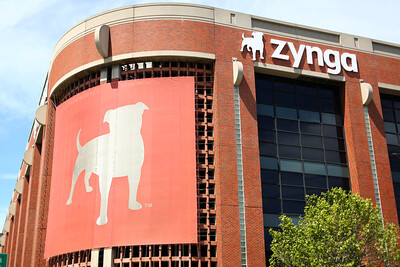
Video game developer Zynga allegedly will agree to a $12 million settlement proposed by plaintiffs in Washington state who sued the company for offering illegal gambling games. The lawsuit is the fifth in a series of litigations against the company; the other four were resolved with settlements totaling $223 million.

The lawsuit claimed a few of Zynga’s mobile casino games required players to pay real money for virtual casino chips. This is illegal under Washington state law, which defines virtual chips as objects of value; therefore, under the law, mobile casino games are considered games of chance, or gambling.

The suggested $12 million is about 25 percent of the plaintiffs’ reported damages. State law allows the amount to be from 20 percent to more than 60 percent, which, given “the current economic climate will be life-changing for many Class Members.”

Jeju Casinos Consider iGaming

The South Korean island of Jeju is considering the “pros and cons” of online gaming at its foreigner-only casinos. Of eight licensed casinos, five are currently closed as the holiday destination grapples with the loss of in-person tourism due to Covid-19.

Alex Park JeungYeon, assistant director of the government’s Casino Policy Division, told GGRAsia that “remote gambling over the internet to overseas customers” is “currently being examined” with any and all “drawbacks” to be considered.

The concept of iGaming as a palliative was first raised in October by a member of the National Assembly’s Culture, Sports and Tourism Committee. At a policy forum in November, members of the Jeju government heard from experts who suggested that online gaming services could be beneficial, using payment methods including blockchain.

Such a plan would require approval from the national government. The country’s leadership changed on May 10, when Yoon Suk-yeol took office as South Korea’s president, following an election in March.

It seems that local gaming, in which South Koreans would be able to play as well as work at casinos in Jeju, is still out of the question.

Park also said the island must draw tourists and foreign customers from beyond Japan and China for the casino industry to thrive.

“For our tourism strategy after the end of Covid-19 pandemic, we’d like to focus more on attracting Mongolia and Vietnam tourists, as those countries are possessing a large group of Korean culture and Korean wave fans,” he said.

BetMGM Inks Deal With EveryMatrix

EveryMatrix on June 29 signed a deal with operator BetMGM that offers players entrée to games through a pair of in-house game studios on its New Jersey platform. Players can choose content from Spearhead Studios and Armadillo Studios, according to Yogonet.

The studios created branded titles such as “John Daly Spin It And Win It” and “The Lioness with Amanda Nunes, “ themed around the larger-than-life PGA golfer and former UFC Women’s Bantamweight Champion, respectively.

“EveryMatrix is delighted to contribute to BetMGM’s massive successes, with new titles in the second half of the year,” said Erik Nyman, president of EveryMatrix.

At the same time, the new titles will strengthen BetMGM’s position, said Oliver Bartlett, director of gaming, BetMGM.

The first quarter proved successful for EveryMatrix. Gross profit grew across all business segments increasing by 14 percent year-over-year to €13.9 million (US$14.6 million). This result was driven by substantial growth around the world and the stabilization of German revenues after the regulatory changes there.

Flutter’s PokerStars Debuts In Ontario

Flutter Entertainment’s PokerStars brand launched its poker, casino and sports betting offering in Ontario, dubbed PokerStars CAON. The action followed approval by the Alcohol and Gaming Commission of Ontario and the signing of an operating agreement with AGCO’s subsidiary, iGaming Ontario.

The brand’s app and online offerings feature more than 5,000 games, poker, blackjack and more.

To celebrate the platform launch, between July 10 and July 18, PokerStars will host the Ontario Platinum Series exclusively for players in Ontario, offering a $1 million guaranteed prize pool. Officials said there’s “much more ahead in Ontario this summer,” including special events and a rewards program. Also, a new weekly tournament, the New Sunday Majors, will offer a $100,000 guaranteed prize pool.

Flutter International Chief Executive Officer Dan Taylor said, “Ontario’s online gambling market is going through a stage of huge growth following its opening in early April, so being able to launch the full range of PokerStars products as a registered operator in the province is an enormous achievement. I’d like to thank all those involved in helping to make PokerStars’ range of safe and trusted products available to players in Ontario and for their contribution towards our ongoing strategy of growing our business in regulated markets.”

Tom Warren, PokerStars marketing director, added, “In many respects, Ontario is our home market, given the first-ever hand of PokerStars was played here over 20 years ago, so we are thrilled about the new regulated environment within which our players can play. A lot has changed in that time, but our commitment to offering our players the most epic and thrilling experience in the market hasn’t, and we can’t wait to get started.”

Atlantic City Casino Strike Averted

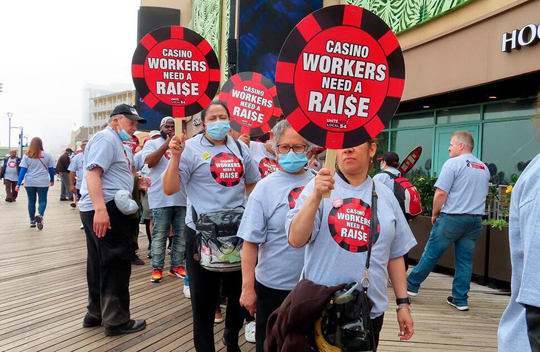
After weeks of negotiations, four of Atlantic City’s main casinos have reached a new agreement with Local 54 of the Unite Here union, avoiding a strike just in the nick of time for July 4 weekend, one of the biggest of the year for the city.

The union announced late on Thursday, June 30 that it had reached agreements with Caesars’ three properties, including its flagship casino, the Tropicana and Harrah’s, as well as the Borgata, which is operated by MGM Resorts International.

That left the Hard Rock as the lone holdout, although executives and the union reached an agreement hours before the July 3 strike deadline. Its contract expired after the other properties, meaning it has two additional days before its deadline.

Bob McDevitt, president of Unite Here, told the Associated Press called it “the best contract we’ve ever had” and that the union “got everything we wanted and everything we needed,” including substantial pay raises for workers, in order to combat inflation and rising costs of living.

Exact terms of the settlement have yet to be disclosed, as the terms still need to be fully ratified by membership before they can be implemented, according to Unite Here spokeswoman Bethany Holmes.

This latest labor struggle was somewhat unique for Atlantic City, in that most of its previous standoffs were centered around healthcare and retirement benefits. This instance, however, was primarily concerned with workers’ base pay and compensation. Union officials indicated that the increase in wages was “significant.” Multiple casino workers were quoted by the Associated Press as saying that it was the most substantial pay raise of their careers.

A strike would have been the city’s first since 2016, when Trump Taj Mahal workers refused to return to work after a bankruptcy court nullified pension and healthcare benefits. Interestingly enough, the casino was then sold to Hard Rock in 2018, which was why the contract expired at a different time.

Past strikes have turned violent and cast Atlantic City’s image badly, but union officials and casino executives did all they could to avoid that again.

Previous reports had indicated that the city’s casinos could lose upwards of $2 million per day each if a strike had taken place. Operators had argued that revenue numbers were being inflated due to the fact that a large percentage of online and sports betting revenue is withheld, and that in reality they were struggling to keep pace with pre-pandemic averages.

Those arguments appear to have been unsuccessful, given the recent settlements.

Sources told GGB News that casino executives understood the importance of the union workers in rebounding from the pandemic and were prepared to reward them with higher pay, and attempting to keep pace with soaring inflation.

Following the agreements, Hard Rock International was the only company to offer a comment.

“We are extremely pleased that we were once again able to reach a successful settlement with Unite Here Local 54 to increase wages and benefits for our deserving team members,” said Jim Allen, chairman of the company. “We look forward to further expanding this excellent relationship at both the national and local levels as we expand our iconic brand.”

This represents a major victory for Unite Here, but labor strife is also afoot more than 300 miles to the north in Lincoln, Rhode Island. Local 54’s sister chapter, Local 26, has authorized a strike Friday against Bally’s Twin River Casino over much the same issues: wages and staffing levels.

Bally’s Atlantic City has a “me too” clause in which it automatically agreed to the terms negotiated by the other casinos, and wasn’t in danger of being impacted by an Atlantic City strike. Ocean Casino Resort has a similar agreement and did not take part in the negotiations.

The union seeks wages to match the cost of living, and increased hires, with more full-time schedules. The two sides met June 24 and were set to negotiate again on June 29.

According to spokeswoman Lynette Ng, the contract expired July 1.

Bally’s spokeswoman Patti Doyle did not comment on the strike- vote, saying that the company will “speak to our union colleagues at the negotiating table.”

The union represents about 200 of the 1,900 employees, Doyle said. The union does not represent workers at the company’s Tiverton casino.

Atlantic City’s Local 54 Authorizes Strike

Whether Local 54 of Unite Here union goes on strike over the latest contract negotiations is still undetermined. The union voted on June 15 to authorize a strike. It will be in the arsenal of tactics if negotiations turn sour—the union can strike any or all nine casinos, according to the Associated Press.

“We’ve been saying for some time now that casino workers need a real raise,” union spokesperson Bethany Holmes said. “We’re two weeks past our contract expiration, and we’ll continue to try to get there with the companies, but we’re taking a vote this week to put in the hands of the negotiating committee which has the power to call a strike, if necessary.”

If authorized, a strike would come at a time when the casinos are just beginning to show financial recovery after the Covid-19 pandemic. The workers, however, are not. The union wants significant wage increases to help deal with the effect of the pandemic coupled with inflation.

For maximum impact, the union could choose the July 4 weekend to throw up pickets when crowds are the largest.

The casinos say money is not rolling in as fast as the union claims. The industry says they only retain 30 percent of the online casino and sports betting revenue. A more accurate measurement would be in-person revenue.

Ocean Casino Resort and Bally’s agreed to honor the terms of contracts eventually reached with some of the larger casino companies in town, but no contracts have yet been agreed upon.

Caesars Unveils More Investments for AC Property

Caesars Entertainment will invest half of its $400 million allocation for Atlantic City this year to Caesars Atlantic City. The outlay will renovate the casino floor, lobby, outdoor pool of the rooftop Qua Baths & Spa, including cabanas, and valet area, according to the Associated Press.

“This major investment demonstrates our ongoing commitment to elevating guests’ experiences at our resorts as well as advancing the Atlantic City tourism economy,” said John Koster, regional president for the company’s Eastern Division.

These are the culmination of other substantial investments the company is committed to. The property completed renovations to 750 hotel rooms and suites with both a Roman theme and elements of the Atlantic City beachfront. It also plans to open Nobu Atlantic City, a restaurant and hotel within Caesars.

Nobu Hotel Atlantic City will open after the restaurant’s debut, on the top three floors of Caesars Centurion Tower. It will feature redesigned rooms and suites with a Japanese theme.

Chef Gordon Ramsay will open the East Coast’s first Gordon Ramsay Hell’s Kitchen restaurant this summer.

The corporation is committed to complete its investment by the end of 2023.

AC Casinos Claim That They Are Unfairly Taxed

The peak year for the Atlantic City casino industry in the new century was 2006, the year gaming revenue crossed the $5 billion mark. $5.2 billion to be exact. The following catastrophes occurred:

  • Casinos opened in Pennsylvania
  • The Great Recession opened everywhere
  • Superstorm Sandy
  • Tumbling gaming revenues
  • Successful tax appeals
  • PILOT

Approved in 2016 by the state legislature, PILOT—an acronym for payment in lieu of taxes—put a stop to costly tax appeals which resulted in large refunds from the city of Atlantic City to the casinos. Under PILOT, the gaming halls paid an amount established by a formula involving gaming revenues, hotel room count and acreage. Moreover, the city would know how much tax revenue to expect and budget accordingly. Part of the PILOT revenue went to Atlantic County, and part went to the schools.

But, this being Atlantic City, something was bound to go off the rails, and off the rails it went. The coronavirus pandemic slammed casino revenues for over two years. And this year, a casino tax break expired. The gaming industry, with help from State Senate President Steve Sweeney, pushed for an amendment to cut sports betting and online gaming from the calculations. Their reasoning: most of the revenue went to third-party operators, not to casinos, so why should the revenue be counted as part of our taxes?

Fair or foul? The Press of Atlantic City and ProPublica examined the situation in detail to try and answer that question.

For Atlantic City, property valuation went from $13.7 billion in 2008 with 11 casinos to $3.2 billion in 2016 with only seven properties. Debt skyrocketed to $456 million. The successful tax appeals made a bad situation worse.

PILOT made the bad situation a little better.

Starting in 2020, the city and the casino industry faced another crisis in the form of the Covid-19 pandemic. The casinos shuttered for several months and when they reopened, they did so with a boatload of restrictions. In-person visitation dropped. Most restaurants resorted to take out. But mobile sports betting and online gaming exploded, at least keeping the industry afloat.

Yet, revenue fell compared to pre-pandemic days in 2019, even with the online spending. In 2021, the casinos’ revenues began to improve, but they still pursued options to reduce their tax liability. “Failing to adjust the PILOT would have resulted in egregious, inappropriate, and inequitable taxes for any industry, let alone an industry that is still fighting to recover from Covid-19,” The Casino Association of New Jersey said in a statement.

As casinos pushed for tax relief, the industry recorded profits above 2019 pre-pandemic levels. The industry reported around $767 million in gross operating profit in 2021, the best figure in a decade.

Under the PILOT figures, Atlantic City would have received $133 million this year, $41 million more than the city is actually getting under the amended law, according to state and city projections. Lawmakers passed the amendments with little in the way of hearings or debate.

The city of Atlantic City accepted the change, even though they would lose all that revenue in the process. Atlantic County was not so magnanimous. They sued over its proposed loss of revenue. The court said the casino payment had to align with a 2018 agreement with Atlantic County.

“How do you do a tax decrease of that magnitude while they’re registering those kinds of profits on their books?” said Jim Kennedy, former executive director of the Casino Reinvestment Development Authority, the state agency that oversees the investment of gaming tax revenue for economic development projects.

The timing of the casino request coincided with the expiration of a separate tax break for the industry, that being the investment alternative tax, created in 1984 to finance community projects. But the industry got a break on those taxes, at least for five years, which ended this year.

You can see where this is going and how it all ties together—the Taj Mahal and Revel, both closed, changed ownership and reopened in early summer 2018 as Hard Rock and Ocean, respectively. Online gaming and sports betting mushroomed. Revenue climbed; so did PILOT payments.

Determine the industry’s overall PILOT payment by calculating the prior calendar year’s total gross gaming revenue, which, in 2021, was $4.2 billion. Based on the system established in 2016, the overall PILOT payment would be $165 million, a $35 million hike compared to 2021. Two of the city’s nine casinos would have actually seen a decrease in their PILOT. But under the amended law, every casino pays less, except for Caesars which would pay $15.6 million as opposed to $13.4 million under the 2016 bill.

None of this sat well with the county.

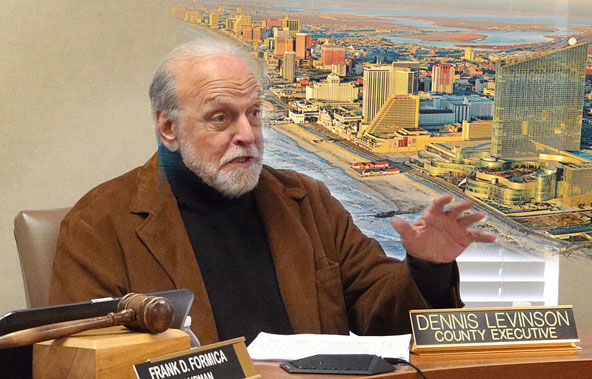
“It is confounding that the casinos can claim they are suffering while all reports indicate they are setting revenue records,” County Executive Dennis Levinson wrote.

But Steve Sweeney issued dire warnings. “We are risking four casinos closing,” he told his colleagues. “And that’s why this bill was proposed.”

“The numbers don’t indicate any casino would close,” said Roger Gros, publisher of Global Gaming Business Magazine, an industry trade publication.

The loss of funds for the county would affect programs such as opioid response, flu and Covid-19 vaccination initiative, and transportation services for senior citizens, disabled residents, and veterans.

Hence, the lawsuit.

A judge ruled in favor of Atlantic County back in February because the state violated a 2018 settlement agreement—a ruling that was upheld by the municipal court last month. The state plans to appeal.

“The industry as a whole is going to use that negotiating leverage, as they always do,” said Robert Sturges, a former leader of the state agency responsible for regulating casinos, the Division of Gaming Enforcement, who now consults for the casino industry. “Does it actually come to that? I’m sure it won’t.”

The industry believes their percentage of online revenues falls between 20 and 25 percent. So why not tax the online portion accordingly?

Golden Nugget Atlantic City appears to have inked a deal to share the PILOT burden, however. The company specified that its internet gaming partner is responsible for the portion of the PILOT dues generated under its online license, according to that firm’s SEC filings.

MGM Resorts International, which owns Borgata Hotel Casino & Spa in Atlantic City, led the way in 2018, when it entered a 50-50 joint venture with Britain-based Entain PLC to form BetMGM, an online wagering sportsbook.

By 2021, Caesars Entertainment Inc.—the parent company of Caesars Atlantic City, Harrah’s Resort Atlantic City and Tropicana Atlantic City—had gone further, clearing several hurdles to acquire one of its online betting partners, Britain-based William Hill PLC, which collects about one-fifth of all the money bet on sports in the U.S., according to the company’s reports.

Bally’s Corp. was making similar moves, scooping up a number of betting sites to support its expansion into the online gambling space. When Bally’s released its preliminary first-quarter results in April 2021, it also disclosed its plan to acquire U.K. online gaming operator Gamesys Group PLC for $2.7 billion. The purchase closed in October, one in a series of buys to bring internet gaming operations entirely in-house.

Not Enough Votes To Ban Smoking In AC

The list of lawmakers supporting the ban on smoking in the casinos in Atlantic City keeps growing. Assembly members William Spearman and Carol Murphy are the most recent, bringing the number of the lower house to 35, six short of the majority needed for passage of the bill. According to NJ Online Gambling, 16 Senators have endorsed the proposal, which is five short.

The session ends June 30, which means it is unlikely the votes will be there in time, especially with hearings required before a vote in each house.

Just as well—having the ban go into effect over the summer months may be impractical. Some out-of-state visitors, including wealthy gamblers, could have booked trips to Atlantic City, counting on the smoking sections to still be in place.

Then again, if it were possible to pass the measure, the effective date could be set for after Labor Day.

“Passing this legislation is the least we can do for frontline casino employees who worked throughout the pandemic, keeping our already struggling gaming industry open for business during some of the bleakest moments over the last couple of years,” Spearman said in a press release. “We know that a healthy, smoke-free indoor casino industry is good for business and even better for workers.”

Said Murphy, “The dangers of secondhand smoke have been well documented for many years and for Atlantic City casino workers, getting rid of smoking in their workplace is a life-or-death fight.”

While casino executives in Atlantic City have warned of dire consequences that could result from a smoking ban, advocates of such a measure point to improved financial figures noted by the state Division of Gaming Enforcement. First quarter results of $155.6 million was the most profitable since 2008.

“The findings released by the New Jersey Division of Gaming Enforcement continue to undercut claims by casino executives that cite revenue falling short of pre-pandemic levels as the central reason for opposing efforts to make casinos smoke-free indoors,” Chris Moyer, a spokesperson for Americans for Nonsmokers’ Rights, said in a statement issued to NJ Online Gambling.

John DeCree, gaming equities analyst for CBRE, said the ban could cost the casinos 20 to 25 percent of their gaming revenue. The mid-decade closure of five casinos has left an ugly taste for many, and whether that makes lawmakers reticent about change remains to be seen.

New Jersey Requires Sportsbooks Verify Income ID

To add security to online sportsbook sites, the New Jersey Division of Gaming Enforcement (NJDGE) is requiring two-factor or multi-factor authentication (2FA) for access to sites for betting. The guidelines were issued in March.

The extra steps are expected to stop hackers from getting their mitts onto sportsbook accounts, according to Legal Sports Report.

“The vast majority of the public’s login information is out there for the right price,” said Tom Hill, head of sports betting and iGaming at identity firm Prove. “Or you can pull it together if you know where to look. This is about keeping existing accounts secured.”

Among login options:

  • A request for a password, pattern, or answers to challenge questions;
  • A request for an item possessed by a patron such as an electronic token, physical token, or an identification card. This is reserved only for the largest transactions, Hill said;
  • A request for biometric data, such as fingerprints, facial or voice recognition.

“The challenge for operators is to find the perfect balance,” Hill said. “How do they provide security without added friction?”

Bettors will also have to authenticate every two weeks.

FanDuel and DraftKings already perform 2FA. The rest will be ready, Hill said. Hill also noted that operators tend to be innovative in their thinking about 2FA. He believes other states will do likewise.

“I’d give them and the ecosystem a lot of credit in solving this,” Hill said. “Other industries have legacy systems and blockades to the right solutions. But in the sports betting and gaming space, it’s refreshing to see them moving the ball forward and providing the best experience for the players. It is a juxtaposition to other sectors we work with like banks, healthcare, retail.”

East Coast Gaming Congress & NextGen Gaming Forum To Take Place In September

The 25th East Coast Gaming Congress & NexGen Gaming Forum will take place Sept. 21 – 23, 2022, at the Hard Rock Hotel & Casino in Atlantic City.

The theme of this silver anniversary celebration of the two-day conference is “Gaming Here, Gaming There, Gaming Everywhere.” The conference will feature, for the first time, two industry leaders round-tables, where the best minds in the industry come together and share their insights on the future of all things gaming.

The conference will kick off with an opening reception on Wednesday, September 21. There also will be three keynote addresses over the two day congress, and a networking cocktail party on Thursday evening.

Additional panel discussions will focus on issues facing the industry including:

  • Sports Betting: Which Model is Working Best?
    Analyze This
    Is Gaming Growing Responsibly?
    Gaming Revenues Going Up in Smoke?
    The Best Things in Gaming Right Now Are …
    State Regulators: Keeping Their Promise to Keep Pace
    Whither Igaming?
    Creating One Industry: Lotteries, Gaming

Gaming operators, equipment manufacturers, regulators, attorneys, architects, analysts, public officials, investors, and other gaming-related professionals are expected to attend ECGC. The full two-day conference schedule and registration is at www.ecgc.us. Early-bird registration savings are available until August 19. Group discounts, and sponsorship opportunities are also available.

ECGC is organized and produced by Cooper Levenson, Attorneys at Law, Spectrum Gaming Group, Esports Entertainment Group, and Sports Illustrated Sportsbook.

Supreme Court Rules In Favor Of Texas El Tigua Tribe

In a 5-4 decision on June 15, the U.S. Supreme Court ruled the El Tigua Indians in El Paso, Texas can legally operate bingo-based games at its Speaking Rock Entertainment Center. The decision is a major victory for the Tiguas, also known as the Ysleta del Sur Pueblo, who have been battling with the state of Texas over gambling for more than three decades. The ruling also is a victory for the Alabama-Coushatta Tribe, operators of Naskila Gaming in Livingston.

In 2020, the U.S. Fifth Circuit Court of Appeals ruled against the Tiguas, resulting in the case going to the Supreme Court. A Texas district court allowed bingo games to continue at Speaking Rock while the tribe’s appeals moved forward. The case now will return to the appeals court to allow it “to revise its precedent and reconsider this case in the correct light.”

The appeals court has repeatedly sided with the state of Texas and the Supreme Court has passed on several opportunities to consider the dispute. But it agreed last year to hear the case at the urging of the Biden administration, which sided with the Tiguas. The high court heard oral arguments in the case in February.

The Tiguas said their games of chance at Speaking Rock Entertainment Center in El Paso’s Lower Valley are based on bingo, a game that is permitted and regulated in Texas. The state has argued that its laws on bingo prohibit the kind of games offered by the tribe.

In the majority opinion, Justice Neil M. Gorsuch wrote, “In this case, Texas contends that Congress expressly ordained that all of its gaming laws should be treated as surrogate federal law enforceable on the Ysleta del Sur Pueblo Reservation. In the end, however, we find no evidence Congress endowed state law with anything like the power Texas claims. If Texas thinks good governance requires a different set of rules, its appeals are better directed to those who make the laws than those charged with following them.”

The ruling does not mean Native American tribes can offer any games they choose within their lands. Gorsuch said, “None of this is to say that the tribe may offer gaming on whatever terms it wishes. The Restoration Act provides that a gaming activity prohibited by Texas law is also prohibited on tribal land as a matter of federal law. Other gaming activities are subject to tribal regulation and must conform to the terms and conditions set forth in federal law.”

In other words, the ruling does not expand the types of games tribes can offer on their lands, but it reaffirms their autonomy to regulate gambling activities that are not prohibited in Texas.

Ricky Sylestine, chair of the Alabama-Coushatta Tribe of Texas’ Tribal Council, said, “The Court’s decision is an affirmation of tribal sovereignty and a victory for the Texas economy. The highest court in the land has made clear that our tribe has the right to legally operate electronic bingo on our reservation, just as we have the past six years.”

The ruling also opens up a lucrative market for suppliers.

In a statement, AGS Chief Executive Officer David Lopez said, “After an extremely long process in the judicial system, I would like to congratulate our Native American business partners and friends on their well-deserved win. This ruling makes it possible for these sovereign tribes to gain economic freedom and confirms their rights as federally recognized tribes. AGS stands by our tribal operator partners as they look to exercise their rights and wish them success in current and future ventures as sovereign tribes in the state of Texas. We are proud to support all our Native American partners throughout the country, and, in particular, these tribes that have fought so hard and so long in pursuit of their economic freedom.”

VA: Push is On To Bring Casino to Petersburg

The Virginia General Assembly is sending money to help with Petersburg’s bid to get a gaming license to host a casino in the state budget.

“We had to fight through over 23 lobbyists that the city of Richmond hired to try and defeat this budget amendment,” said Petersburg Mayor Sam Parham.

“They’ve already done a preliminary report that Petersburg meets all of the markers for a host casino city,” State Senator Joe Morrissey said.

Meanwhile, Richmond officials aren’t sitting by and letting the casino slip through its fingers and into Petersburg’s hands. Richmond officials and the developer of the proposed casino said the language included in the state budget is unlawful, according to the Richmond Times-Dispatch.

Another provision in the budget bars a second Richmond referendum vote until 2023. The vote last November lost by a slim margin.

City officials and Urban One Inc., the national media company tapped to build a casino resort, might file a lawsuit to put the question on the ballot again this fall.

Richmond Circuit Court approved a new vote and “pre-certification” from the Virginia Lottery.

“This retroactive budget language seeks to unconstitutionally invalidate a final Court Order and inappropriately constrain the Virginia Lottery in fulfilling its regulatory authority in the same manner as it has done for other casinos,” the statement reads.

The budget bill says Richmond cannot hold a second vote until completion of a feasibility study on Petersburg.

“We’re disappointed the Virginia General Assembly has amended the state budget in a way that will deliberately harm the city of Richmond by denying economic opportunities for its residents,” said Richmond Mayor Levar Stoney. “We are still assessing our legal options but remain firm in our belief that the citizens of Richmond should not be disenfranchised just months before they would have the opportunity to vote.”

In January, Morrissey said he will bring legislation designating Petersburg as a casino host.

“So, the [Richmond] mayor if he is desirous and wants to fight in court, fine. It wouldn’t be the first time that he’s wasted city of Richmond funds to fight a losing battle,” said Morrissey, who lost to Stoney in Richmond’s 2016 mayoral election.

The city selected Urban One for the referendum last year after soliciting multiple bids for the project. Officials said the proposed One Casino and Resort would generate $30 million in annual tax revenue and create 1,500 jobs. The deal also included an agreement that the Maryland-based media company would immediately pay the city $25 million if voters approved the ballot measure.

After it failed to pass last year, Stoney and other officials have sought to retry the vote. In an attempt to sway voters, the mayor and other officials have floated a plan to reduce the city’s real estate tax rate by 2 percent if the project passes this fall.

“This is about transforming the city of Petersburg, and for our love and our passion of our city, and what we want it to look like for many decades to come,” said Parham, who joined Morrissey at the Petersburg library Thursday.

“It is time for you to move on,” Morrissey said in a message to Richmond leaders. “The benefits of a casino to Petersburg far, far outweigh the benefits to Richmond. I am confident that the governor fully supports a casino coming to Petersburg.”

Hard Rock AC Appoints Alicia Magee as VP of Finance

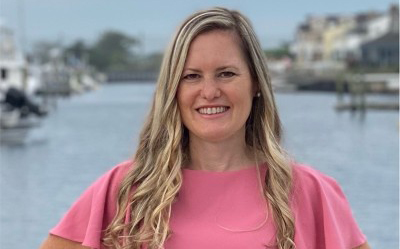
Hard Rock Hotel & Casino Atlantic City has promoted Alicia Magee to the role of vice president of finance. Magee previously served as Hard Rock’s executive director of operational compliance since 2020.

As part of her new role, Magee will help manage all of the property’s finance-related departments, such as cashiering, casino accounting, payroll, collections and more.

In a statement, Hard Rock Atlantic City President Joe Lupo said that Magee has “a wealth of experience in finance within the casino industry and in this market,” and that he was “proud to promote such an accomplished woman to a senior leadership role at Hard Rock Atlantic City.”

Prior to her experience with Hard Rock Atlantic City, Magee worked with Caesars and Borgata as operations controller and director of casino cashiering, respectively.

Michigan Governor Rejects Tribal Casino

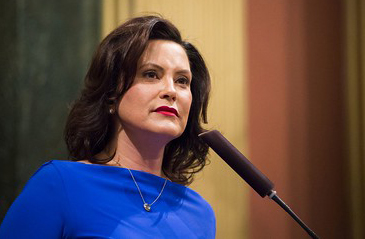
Michigan Governor Gretchen Whitmer recently rejected a request by the Little River Band of Ottawa Indians to build an off-reservation casino in Fruitport Township. The tribe had pursued the project for nearly 14 years.

In a letter to U.S. Interior Secretary Deb Haaland, Whitmer said she couldn’t approve the tribe’s request because of “uncertainty created” by the request of the Grand River Band of Ottawa Indians for federal recognition from the Interior Department, which has until October 12 to make a decision on that tribe’s petition. The Interior Department gave Whitmer an extended deadline of June 16 to rule on the Little River Band’s request.

In a statement, Whitmer said, “The Department of the Interior first needs to decide whether they are providing federal recognition to the neighboring Grand River Bands of Ottawa Indians. It is critical to have this information before making an informed decision. Without that information, I am unable to concur at this time and remain disappointed in the department’s lack of flexibility in this process.”

Whitmer said if the Grand River Band receives federal recognition, it may want to open its own casino in the same area as the Little River Band’s proposed casino in Fruitport Township. The Little River Band had proposed a $180 million casino and 220-room hotel on off-reservation land at the former Great Lakes Downs Racetrack. The tribe currently operates a casino in Manistee.

Little River Band Tribal Ogema Larry Romanelli said tribal members were “absolutely devastated” by Whitmer’s rejection. “This project would have created and supported 3,000 jobs for tribal members and families in the community along with providing funds for healthcare and housing. Our tribe has worked hand-in-hand with the Muskegon Community for the past 12 years to gain approval from the federal government and state government. Words cannot express how thankful we are for our community’s support and the disappointment we feel for them.”

Romanelli added, “We did everything right. The project has been supported by the Obama, Trump and Biden presidential administrations along with the Granholm and Snyder gubernatorial administrations. We received approvals from the Department of Interior and the Bureau of Indian Affairs. We met all the criteria required for approval. And while we disagree completely with Governor Whitmer’s decision, we respect that she has the authority to make it.”

State Senator Jon Bumstead stated, “I am extremely disappointed, angered and let down by Governor Gretchen Whitmer’s decision to kill 3,000 good-paying jobs by denying the Little River Band of Ottawa Indians’ request to build a casino in Muskegon. The fact is, this has been the governor’s decision to make for over a year, and it is now hers alone to own. Her attempts to shift blame are laughable given the project’s virtually unanimous support from here all the way to Washington, D.C. It is unfortunate that the governor is playing politics with people’s lives and livelihoods. This decision to reject the casino was not in the best interest of Michiganders and on behalf of the residents of my district and of West Michigan: Shame on you, Governor Whitmer.”

Whitmer acknowledged the impact of her decision, stating, “I realize that this non-concurrence is disappointing to the Little River Band and to supporters in the local community, and I am mindful of the significant amount of time and investment that went into this proposal.”

While the Little River Band criticized Whitmer’s decision, Ron Yob, chairman of the Grand River Bands, expressed his tribe’s relief.

“We applaud Governor Whitmer for her thoughtfulness and for doing the appropriate due diligence to make this important decision,” he said. “With this decision now made, the Grand River Bands will finalize our federal recognition with the potential of pursuing economic development activities in the Muskegon area.

In addition to Grand River Bands, three other tribes opposed the Little River Band’s casino: Nottawaseppi Huron Band of the Potawatomi, which owns the FireKeepers Casino Hotel near Battle Creek; the Saginaw Chippewa Indian Tribe of Michigan, operators of the Soaring Eagle Casino & Resort in Mount Pleasant and Saganing Eagles Landing in Standish; and the Match-E-Be-Nash-She-Wish Band of Pottawatomi Indians, which owns Gun Lake Casino in Bradley.

Jamie Stuck, chairman of the Nottawaseppi Huron Band of the Potawatomi, said, “Whitmer realizes that the request to approve this off-reservation casino would have violated the gaming compacts signed by all of the tribes in Michigan. Her decision maintains the cooperation and balance among the Michigan tribes.”

In addition, the state House passed a resolution in February 2021 opposing the expansion of off-reservation gaming that is not within gaming compacts approved by the tribes, the state and the U.S. Department of Interior. The Detroit City Council and the Wayne County Board of Commissioners also have issued resolutions opposing expanded off-reservation gaming in Michigan; three commercial casinos operate in Detroit.

All hope may not be lost for the Little River Band, however. Whitmer said, “Once DOI has acted on the Grand River Bands’ acknowledgment petition, I would welcome the opportunity to revisit this question and ask that you to find a way for me to do so.”

Judge Orders NM Racing Commission to Act on License Request

A District Court judge has ordered the New Mexico Racing Commission to act within 90 days on an application by Coronado Partners for the state’s sixth and last racing license. Coronado wants to build a racetrack and casino in Tucumcari.

Coronado had sought a writ of mandamus in December to force the commission to act on a license that it clearly didn’t want to act on. Judge Nancy Franchini granted the request for the writ. She rejected arguments from the commission’s director Ismael “Izzy” Trejo that the industry was too frail and brittle to accommodate another license.

The judge wrote, “Mr. Trejo’s opinion that ‘it just isn’t the right time’ to consider an application for the sixth racetrack license does not affect the NMHRC’s duty to issue a decision on the Petitioner’s application.”

Coronado Partners is proposing a racino with 500 employees that could, it says, generate as much as $55 million in revenue by 2025.

Coronado Partners principal Warren Frost told Eastern New Mexico News, “The commission can choose to issue us a license or deny it, although we are ready for them to issue us a license so that we can build the racetrack, we have been through this too many times. We will hope for a license but should assume they will deny it.”

In that event, said Frost, his company is prepared to appeal that decision to the judge. “If she finds that the commission’s reasons for denying the license are invalid, she can order them to issue us a license.” His company applied for the license in 2019.

Trejo declined to make a statement about the ruling. During the hearing in May, Trejo said a sixth license was a low priority for the commission, which has lost three commissioners, one of whom recently passed away. Governor Michelle Lujan Grisham then replaced the commission in April 2020.

The commission also had to deal with Covid, lawsuits, the legalization of sports betting and the enactment of the federal Horse Racing Integrity & Safety Act. In addition, said Trejo, the racetrack industry nationwide is in decline. He testified, “To issue a license like that is negligent to the industry.”