Author: Casino Connection Staff

Blatstein Brings Optimism to AC Project, But No Funds

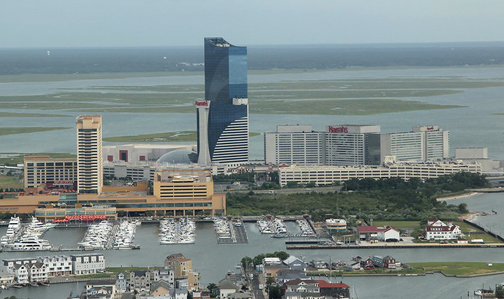
Developer Bart Blatstein has a track record in Atlantic City. He bought the former Showboat casino and has operated it as a semi-successful hotel and also an apartment building, the latter with a waiting list.

Earlier, he bought the Pier Shops at Caesars on the Boardwalk and changed the name to the Playground, with a vision for a music venue. But it flopped immediately and later he sold it back to Caesars at a loss.

Blatstein then bought AC’s famed oceanfront Garden Pier, the former site of the city’s history and art museum. Several failed projects there its future is yet to be determined.

His purchase of the Showboat, adjacent to Garden Pier, was accomplished about a sale to Stockton University fell through because of deed restrictions.

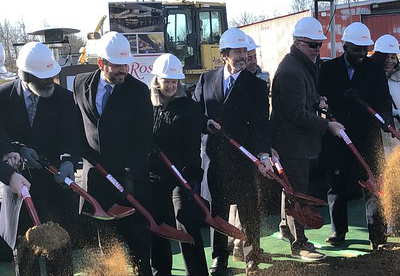
Finally, Blatstein made a big splash with his plans for a 100,000-square-foot year-round water park adjacent to Showboat. The project broke ground this month but given his spotty track record in Atlantic City, questions remain.

“What we do is transformational development,” Blatstein said at the groundbreaking. “We put in place a plan to patiently bring it about.”

The question is whether the groundbreaking was a publicity stunt to keep the idea afloat or the real beginning of the project. What is known, according to the Press of Atlantic City, is that Blatstein doesn’t yet have the funds for the water park.

The money part is supposed to fall into place with the sale of up to $97 million in tax-exempt municipal bonds to pay for the $100 million project. The Atlantic County Improvement Authority will oversee the sale.

“My understanding is they are going out to market within the next couple of weeks,” said authority Executive Director John Lamey at a recent board meeting. Specifically, to Citigroup. There has been no comment on what will happen should the bonds not sell. Janney Montgomery failed to sell them before Citigroup stepped in.

No worries. Blatstein took a similar path when his company transformed the Northern Liberties section of Philadelphia from a down-and-out area into a popular place for clubs, restaurants and housing that attracted a young clientele.

The water park, which he plans to open in time for summer 2023, will have a zipline, an inside boardwalk and a 10,000-square-foot, adults-only zone with pedicures and manicures, drinks, and a place to escape the kids, according to Blatstein.

“We have a much larger plan,” Blatstein said of the overall area surrounding the Showboat. “Look for a lot of announcements in 2022.”

But he wouldn’t specify exactly what he hopes to build on Garden Pier.

“I can’t talk about the plans there, it would be premature,” he said.

In the newsletter, Liberty and Prosperity, Atlantic City attorney Seth Grossman questioned if taxpayers would be on the hook should the project never get off the ground even if the money is raised. Officials with the ACIA and the Atlantic County Commissioners who approved the loan claim the bonds have no risk for taxpayers. A warning confirming that taxpayers won’t guarantee the investment may not prove to be true, Grossman wrote.

During the past 50 years, taxpayers were almost always forced to bail out state and county “contract” and “revenue” bonds when projects failed.

Last summer, the ACIA switched underwriters from Janney Montgomery Scott to sell the revenue bonds. When Janney failed to find investors, the authority brought on Citigroup. Blatstein said Janney would still be part of the transaction. His lawyer, Jeffrey Winitsky, said a new underwriter would “give the transaction a fresh perspective and marketing effort.”
AC Casinos Bring in Billions, But In-Person Play Lags

In 2006, casinos brought in $5.2 billion. Those were giddy days when developers tripped over each other to propose casinos in town. That was before the recession, which sent revenues downhill and closed four of the city’s gaming halls.

In 2021, New Jersey casinos brought in $4.7 billion, moving the ball in the right direction. But it’s not great compared with 2006, as figures nowadays feature internet gambling through casinos and sports betting tied to the casinos and the three racetracks, according to the Associated Press.

Figures released by the New Jersey Division of Gaming Enforcement

indicated the nine casinos won $2.55 billion last year through brick-and-mortar casinos. The results eclipsed the 2020 win by a $1 billion, but the 2020 results were impacted by the Covid-19 pandemic which involved capacity restrictions after a shutdown for three and a half months.

But 2021 saw fewer wins than the $2.68 billion won in 2019.

“Atlantic City’s casino industry, like the region’s gaming hospitality and tourism businesses overall, has proven resilient, but still vulnerable to fluctuations in Covid-19 infection rates and caseloads,” said Jane Bokunewicz, director of the Lloyd Levenson Institute at Stockton University, which studies the Atlantic City gambling industry.

The casinos and tracks kept 7.1 percent of the total amount bet as sports betting winnings, in line with national industry averages.

“We feel very fortunate to move into 2022 with a great team, dynamic brand and support from ownership,” said Joe Lupo, president of Hard Rock.

NJ Governor Promises to Support Smoking Ban

Smoking in Atlantic City casinos could be on the way out.

“The most likely [bill] to see swift action is a total smoking ban inside Atlantic City casinos,” according to Play NJ. “The gambling parlors are among the state’s last exemptions for allowing indoor smoking. Covid-19 makes this a public health issue and lawmakers will not want to hear about lost revenue for casinos.”

Herb Conaway, chairman of the Assembly Health Committee and a Burlington County physician, told the publication, “We have a number of employees who, as a condition of their work, are exposed to this carcinogen.”

Lamont White, co-leader of Casino Employees Against Smoking’s Effects (CEASE), is pressuring Governor Phil Murphy to keep the pledge he made as he was sworn in to his second term. “Governor Murphy has repeatedly said he’ll sign legislation to close the casino smoking loophole and protect us from dangerous secondhand smoke,” White said in a statement. “Now that he’s officially begun his new term, it’s time for him to press the case to legislators to get this done. Every day that goes by is another day we risk our health at work. … We won’t stop pushing him until the bill reaches his desk and he signs it into law.”

Six state senators reintroduced bipartisan legislation to close the loophole, according to Inside NJ. Senator Vince Polistina, who represents Atlantic City and thousands of casino workers, said, “The legislation could come up for a vote within the next month or two.”

In December, Murphy vowed to sign no-smoking legislation if it crosses his desk.

NJ Law Guarantees Harness Races Will Continue

If the Meadowlands Racetrack and Freehold Raceway want to continue to offer sports betting, they better maintain harness racing, according to a bill signed into law.

The law requires the tracks to run a minimum of 151 racing dates, with a provision that “the annual number of scheduled standardbred race dates may be decreased to no fewer than 75, upon written consent from the Standardbred Breeders’ and Owners’ Association of New Jersey.”

“The horse racing industry relies on thousands of jobs, from veterinarians to trainers and many others, and generates millions of dollars in tax revenue while also supporting open space,” bill sponsor Ronald Dancer — an assemblyman who is son of legendary harness racing driver and trainer Stanley Dancer — said in a statement.”

Assemblyman Ralph Caputo, another sponsor, told NJ Online Gambling that the bill protects the standardbred owners from any changes in the business plans of the harness racetrack owners.

The bill does not apply to the state’s thoroughbred racetrack, at Monmouth Park in Oceanport. Then again, the thoroughbred situation is not the same.

The New Jersey Thoroughbred Horsemen’s Association owns the track, and former state Racing Commission Chairman Dennis Drazin runs operations. As a result, there is no incentive to end racing or limit the number of race dates.

In November, the racing commission approved 90 racing dates for the Meadowlands and 85 for Freehold, a number matching the 2021 schedule for the Meadowlands and the addition of three dates at Freehold.

Monmouth Park will have 71 race dates, up nine from last year, including 11 cards on the turf at the Meadowlands in early fall. The Oceanport race total is up seven from last year.

Nevada OKs Remote Setup for Wagering Accounts

A proposal submitted by Sightline Payments that would allow Nevada casinos to accept remote application for a cashless gaming account was approved the state Gaming Control Board last week. The nod was given after regulators were assured that the measure didn’t violate any federal money laundering laws. Up until the present day, players had to present themselves in person and show a government ID in order to set up an account.

Under the new regulations, a player can use an app to input their information, upload a copy of the ID, and fund the account.

Marc Rubinstein, an attorney representing Station Casinos, last month had raised concerns about proposal and a possible violation of federal law, but at last week’s hearing he agreed with Deputy Attorney Michael Somps. “I don’t see there is any conflict with federal law,” Somps told the board.

“We’re comfortable that there’s no longer an issue with the federal law,” Rubinstein said. “I wanted to kind of close the loop since I was essentially the disrupter of the last workshop.”

Sightline co-CEO Omer Sattar said the approval upheld Nevada’s reputation as the “gold standard” for gaming innovation.

“Continuous innovation is critical to ensure Nevada remains at the forefront of gaming, and we could not do that without the support of our regulators,” Sattar said. “I would like to thank all the members of the Nevada Gaming Commission and Nevada Gaming Control Board for their efforts, and I would like to specifically thank Gaming Control Board member Phil Katsaros, who was a champion of this change.”

“This shift to allow for digital identity verification for wagering accounts allows Nevada’s gaming industry to leverage the best practices from across the financial services industry to enhance customer security and the customer experience,” said Jennifer Carleton, Sightline’s chief legal officer. “Nevada’s new regulation is in line with federal guidance permitting both new verification methods including knowledge-based authentication, as well as traditional documentary measures such as a customer’s driver’s license or passport. We look forward to working with regulators in gaming jurisdictions across the country to advance similar regulatory innovation.”

The approval of this regulation only applies to a cashless gaming account in a casino. It’s still not possible to set up a sports betting account remotely in Nevada.

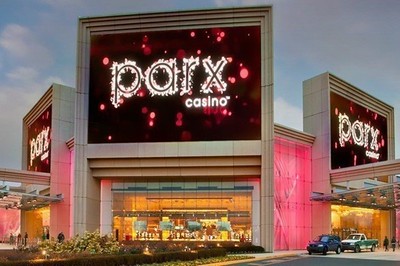
Parx Approved for Pennsylvania Mini-Casino, Will Add Hotel

The Pennsylvania Gaming Control Board last week awarded a Category 4 casino license to Parx Casino, owned by Greenwood Gaming, for the new Parx mini-casino in Shippensburg. The operator says the casino will be open by the end of the year.

Parx Shippensburg will be Pennsylvania’s 17th casino, and the fourth Category 4 facility. Category 4 casinos were created by the state’s 2017 gaming expansion law. Originally required to be owned by a current Category 1 (racino) or Category 2 (stand-alone resort) license, Category 4 casinos, commonly called “mini-casinos,” are restricted to 750 slot machines and 30 table games at opening, with an additional 10 tables added by petition after opening.

The casino will be built at Shippen Towne Center in a space that is half of a former Lowe’s store. It will open with 500 slot machines, 48 electronic table games, an in-casino sports bar, and an all-ages restaurant accessible from the casino’s main lobby but with no direct access to the casino floor.

Parx has said the other half of the former Lowe’s location is targeted for a non-gaming entertainment development, but the space will remain shuttered at the casino’s opening.

Parx Shippensburg will be a non-smoking facility, but the operator is planning an outdoor “smoking pad” adjacent to the casino floor.

Parx Director of Human Resources Susan Eckert told the Penn Live news site the Shippensburg project will create about 100 permanent full-time jobs with an average annual salary of about $48,700, plus 100 additional part-time or seasonal positions. It is expected to generate about $1.8 million annually in host community payments to be split between Shippensburg Township and Cumberland County, the site said.

The board’s vote ends a four-year period since Greenwood won the right to the license with an $8.1 million bid, a period when the operator failed in attempts to locate the casino in Carlisle and South Middleton, rejected in both cases by local votes.

In other Greenwood Gaming news, the operator revealed plans to open a 300-room hotel to the main Parx Casino in Bensalem.

The news was revealed in an internal email to Parx employees obtained by the PlayPennsylvania news site. The message said the operator is starting the process of building a hotel at Parx, and is soliciting bids from local and national architects.

“Right now we are contemplating a 300-room hotel with a bar, restaurant, night club, pool/spa complex and some modular meeting space,” the email reads, according to PlayPennsylvania. “This should take about 18-24 months.”

PlayPennsylvania cited a source that said the email was from fall 2021, which puts the timeline at 16-18 months at this point.

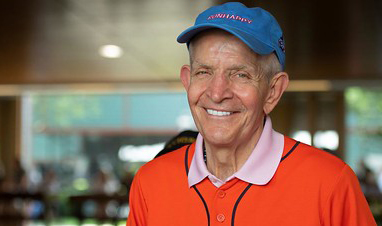
‘Mattress Mack’ Loses Over $5 Million in a Stretch of Betting

It must be nice to say goodbye to $4.7 million in five days and shrug your shoulders. That’s what Jim McIngvale did. The Houston furniture store owner known as Mattress Mack for his outlandish wagers put down $2.7 million on Alabama January 10 to win the college football title game. The Tide lost to Georgia.

On January 15, he placed $2 million in futures bets that the Patriots would win the Super Bowl. They never made it out of wild-card game as the Buffalo Bills walloped New England, according to the Las Vegas Review-Journal.

McIngvale placed the bets on Alabama at Caesars Sportsbook and the wagers on the Patriots at Barstool Sportsbook and theScore Bet.

“Life happens and you move on,” said McIngvale, 70. “You know how long it took me to get over it? Two seconds each. A gambler has to be resilient if anything. They knock you down and you’ve got to get back up. A setback is just a setup for a comeback.

The bets on Alabama were a hedge against losses on furniture promotions. Spend $3,000 or more and get it all back if Alabama won. He used a similar pitch when he came to the public’s attention in 2018 betting on the hometown Houston Astros to win baseball’s World Series. He says the program has helped his store be relevant in an increasingly competitive world.

“The promotion was great because Alabama is such a strong brand,” Mack said. “Afterwards, we did a deal where we offered all customers who lost a $1,000 gift certificate. It was good for business. Brick-and-mortar retailers are under siege right now. Unless we do something to differentiate ourselves from the competition, the Amazons of the world are going to overwhelm us.”

But Mack was back at it in the divisional round of the NFL playoffs He fell in love with the Tennessee Titans wagering $700,000 at Caesars Sportsbook and $1 million on the team to win the Super Bowl at +850. Had the Titans become NFL champions, he would have won $14.4 million. Regrettably, the Bengals upset the Titans.

But all was not lost for Mack. He hedged his Titans bet with a $1 million bet at Caesars on Cincinnati to cover the +3.5 points.

“The rationale is a couple guys I know that are pretty good at football are saying this is going to be a close game. I think Tennessee is going to win, so the rationale is if they win by one, two or three, I can win that bet and win the other one,” Mack told the Las Vegas Review Journal. “The other rationale is if Cincinnati wins, it cuts my losses on the Super Bowl bet.”

Federal Government to Appeal Florida Compact Decision

Mobile sports betting in Florida was shut down about a month following its debut when a suit filed by two card rooms challenging the deal that the Seminole Tribe made with the DeSantis administration was upheld. The suit claimed that because the bets were processed through servers on the reservation meant the bets were actually placed on the reservation was a fiction, and was therefore a violation of the 1988 Indian Gaming Regulatory Act (IGRA).

U.S. Interior Secretary Deb Haaland has informed the court that an appeal of the decision has been filed in the U.S. Court of Appeals District of Columbia Circuit. Haaland contends that her department had the right, under IGRA, to approve the compact, which essentially gave the Seminoles a monopoly on sports betting in the state of Florida, although the tribe can allow parimutuels and online sports betting companies to accept bets if the tribe gets the lion’s share of the revenue.

On November 22, a U.S. District court invalidated the federal approval of the compact, and denied an injunction from the tribe to be permitted to operate sports betting while an appeal was under way. The Seminoles had launched sports betting on November 1 and were forced to halt mobile betting.

The Seminoles has appealed the decision in December, but the addition of the Interior Department will make the case stronger. They’ll need to show exactly why wagers made elsewhere in the state should be considered wagers on Indian land. No date for a new hearing has been set.

Genting Upgrades in New York Could Improve Casino Odds

Genting Malaysia is expanding its Resorts World New York City property in Queens. The development goes beyond bricks and mortar. Genting also added staff and opened a new Hyatt Regency Hotel. It’s part of a plan to make Genting a stronger candidate for one of three full casino licenses in the New York City area.

James Koh, senior vice president of finance and corporate affairs, and Audrey Ng, assistant manager of corporate affairs, spoke about those plans in a CGS-CIMB Research corporate day, according to local financial news site, The Edge.

The New York State Gaming Commission anticipates sending a report to the governor and state legislature in June, followed by a request for applications, according to Asia Gaming Brief.

Genting plans to add Resorts World Hudson Valley in Orange County sometime this year. The company will convert a shopping mall into a venue with 1,300 video gaming machines for as much as $40 million.

Gross gambling revenue for Resorts World NYC in the three months through November was $222 million, up 2 percent from the same period pre-Covid in 2019. It had 6,447 operational machines, close to the maximum capacity of 6,500.

In related news, Governor Kathy Hochul included casino gambling in the New York City area in her $216.3 billion budget proposal.

The record-breaking budget permits the state Gaming Facility Location Board to issue a request for applications to open three new casino resorts, according to the New York Post.

“There will be a competition for them,” he said of the available licenses.

Assemblyman Gary Pretlow, chairman of the Standing Committee on Racing and Wagering, hailed Hochul’s plan.

“We can issue licenses this year and raise anywhere from $1 billion to $2 billion in revenues. There will be more jobs and income tax revenues. It’s a win-win-win.”

Casino operator Resorts World said in a statement: “Gaming in downstate New York is full of untapped potential.”

“If granted a full casino license, we are uniquely positioned to immediately elevate our support for the state in a number of significant ways. On day one, we’ll be able to hire and train hundreds of new union members, generate significant additional revenue for public schools, and drive economic activity for local small businesses and the Queens community.”

The proposal accelerates the timeline and scraps the penalties downstate operators will pay to upstate casinos if plans move forward prior to 2023.

MGM Resorts’ Empire City at Yonkers and Genting’s Resorts World Aqueduct would likely be license winners as they already have slot casinos and could be up and running quickly.

The third license up for grabs could be in New York City, Long Island, the Westchester area, Rockland, or Putnam counties.

In other licensing news, the Shinnecock Indian Nation is upping the ante on its proposed casino, trying to win approval to build a Las Vegas-style gaming facility off its Southampton territory.

Tribal leaders were among 31 organizations that responded last month to a request for information from the New York State Gaming Commission to gauge interest in contracts for three Class III gaming facilities—full-fledged casinos with live dealers—that could be awarded next year for the New York City region. The development comes nearly a year after Shinnecock leaders announced their third bid to build a casino on tribal territory in Southampton, albeit a Class II gaming facility that is limited to slot machines and electronic gaming tables, according to the Long Island Press.

“The Shinnecock submitted information on why it should be considered for a commercial, Class III gaming license in the New York Metropolitan area,” Randy King, Shinnecock tribal vice chair, told Dan’s Papers. “We will still continue our push for a modest facility on the East End of Long Island on our territory in Southampton.

The three downstate contracts were among seven for casinos statewide that New Yorkers voted to allow in a 2013 referendum that amended the state constitution to approve non-tribal casinos for the first time. The proposal was largely supported on Long Island with voters approving it by two-thirds of the vote. Fifty-seven percent of voters statewide gave the state the go-ahead.

The Shinnecock, which previously cleared five acres of land to build a casino on tribal land in 2003 and then tried reviving that stalled effort a decade ago after winning federal recognition, is betting the third time’s a charm. With a National Indian Gaming Commission approval in hand, all that stands in the way are environmental approvals for the facility planned on its land.

“We feel that we have all our ducks in a row this time,” Shinnecock Council Chairman Bryan Polite told reporters upon laying down his cards on the casino plan last year.

Dubbed Shinnecock Casino Hamptons, tribal leaders did not reveal how much revenue the casino would generate. The Shinnecock hope to parlay the cash infusion into helping its historically impoverished population. But King noted that the coronavirus pandemic-induced supply chain issues may slow the timeline for construction, which he expects to start this year and is projected to take 18 to 25 months to complete.

“Over the past several years we have witnessed the suffering of the Shinnecock Nation and also seen the opportunity to lift their people from the poverty they currently live in,” Tri-State Partner and Managing Member Jack Morris said during the February 2021 announcement. “This will be a property Long Island residents will enjoy visiting, while enabling the Shinnecock Nation to take advantage of opportunities other members of Native American nations have harnessed.”

But neighbors and local lawmakers have raised concerns a casino in Southampton would worsen gridlock that routinely grinds traffic to a crawl on two-lane Montauk Highway, especially during peak summer tourist season.

King said the tribe has the right to negotiate a facility and to take land into trust and to have property that a gaming facility is constructed on.

“The Cuomo administration refused our pleas to negotiate a gaming compact.”

Michigan Regulators Seek Public’s Help on ‘Skill’ Games

Due to a lack of investigators, the Michigan Gaming Control Board is seeking the public’s assistance in cracking down on unregulated gaming machines. It has asked bars, restaurants, gas stations and convenience store owners not to purchase or lease the illegal gaming machines and to disable them if they already own them. And it has requested that gamblers not play them.

Henry Williams, executive director of the gaming board, said it has no estimate on how many gaming machines are illegally operating in the state. Nor does the board know how much money the machines are taking in or how much the state is losing in tax revenue.

Williams said the board is concerned that without help, the number of machines will grow and lead to more crime. “Illegal gambling can lead to other, more serious crimes that compromise safety in Michigan communities. Citizens who use these unregulated machines also have little recourse” if they discover they’re being cheated by a machine, he said.

Businesses caught with an unauthorized gambling machine could lose their liquor and lottery licenses and face misdemeanor or felony charges and fines. To date, Williams said, the board has seized 1,033 machines and $248,518 in cash and has issued 246 felony and misdemeanor charges.

Michigan Liquor Control Commission Chairperson Pat Gagliardi said liquor license holders who allow illegal gambling and do not remove illegal gambling devices from their businesses also can face charges. “Illegal gambling is considered a serious violation by the commission. The penalties from a violation can include fines, suspension or revocation of a liquor license,” Gagliardi said.

Williams stated, “With additional education, we hope business owners will do the right thing and not offer illegal gaming in their establishments. However, we are prepared to enforce Michigan law and take action against those who violate it.”

He noted only 78 public tips were received in 2020, 92 in 2019 and 86 in 2018. The public can report illegal gambling machines anonymously on the state’s tip line: 888-314-2682.

Vegas-Style Casino Breaks Ground in Northern Virginia

Ground recently was broken at the Rose Gaming Resort in Dumfries, Virginia, owned by Colonial Downs Inc. which also owns the local Rosie’s Gaming Emporium. The $400 million venue will be the first Vegas-style casino in Northern Virginia, and feature a 50,000-square-foot gaming floor with 1,100 electronic gaming machines, but no table games or sportsbook. A luxury hotel, eight bars and restaurants, event and meeting space, theater and 80-acre park also are planned.

The project is estimated to generate $59 million in annual tax revenue and create more than 600 jobs.

The first phase of the venue will open in late 2023. The second phase will be completed by 2026, according to Aaron Gomes, chief operating officer at Peninsula Pacific Entertainment, the operating company.

Dumfries Mayor Derrick Wood said casino tax revenue will triple the budget of the city, which has a population of less than 5,700 citizens. “Most of the time people have to travel north to eat or to be entertained. It can take a large number of people off of I-95 headed to D.C. and keep people right here,” Wood said.

He added several road improvements are planned to prevent bottlenecks and excessive traffic, including expanding Route 1 to six lanes.

Richmond Casino Drive Isn’t Over

Virginia state Senator Joe Morrissey has introduced a bill that would allow a voter referendum on a casino in Petersburg. The measure also would block a second referendum in Richmond on Urban One’s ONE Casino plan within five years. The casino proposal was rejected by 51 percent of voters; most of the opposing votes came from the city’s wealthier, predominantly white neighborhoods. However, Richmond City Councilwoman Reva Trammell recently introduced a resolution to give the Urban One casino another chance.

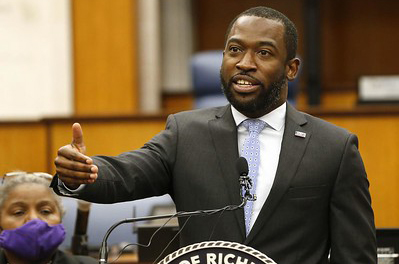
Meanwhile, Richmond Mayor Levar Stoney said he’s undecided on Trammell’s proposed second vote, but he said he understands why voters would want the opportunity. “I’m not surprised that people want to take another shot at a casino resort in South Richmond. When we have 1,500 good-paying jobs on the line, that’s a lifeline for families. So no one should be surprised that some people want another shot.”

Stoney said, “I go to a barbershop every week. There are Black and brown people who grew up in Richmond, over 55 years old, who say, ‘I love Richmond, but sometimes I don’t think Richmond loves me back.’ That’s devastating to hear. After the vote, what I heard almost made me want to cry.”

Stoney added, many who rejected the casino “want Richmond to be what it was in the 1960s or 1980s. We have to move beyond that for a Richmond of the 21st century. I think this administration has made some serious progress in doing that, but there are still challenges.”

Supporters of the ONE Casino project supporters said the casino would have been an economic boon for the area, particularly for the large concentration of poor and Black families that live there. Opponents raised concerns about gambling addiction and questioned if it would deliver on its advertised benefits, such as 1,500 new permanent jobs, $500 million in tax revenue over the next decade and financial support for city schools and community organizations. Urban One officials also pledged to immediately give the city $25 million.

Studies Show New Iowa Casino Would Have Cannibalizing Effect

The Iowa Racing and Gaming Commission recently presented the results of two studies, both indicating a casino in Cedar Rapids, Linn County, would cannibalize revenue from existing, nearby casinos.

A study by the Innovation Group showed existing casinos would lose 30 percent of their revenue, or $61 million total, to a new Cedar Rapids casino.

However, the new casino would generate $51 million in new revenue for the state.

Cedar Rapids Mayor Tiffany O’Donnell said, “I’m very encouraged. The effects will be minimal, and certainly the effects on existing casinos less than they’ve ever been before. If not a casino in Cedar Rapids now, I’m not sure when it would be.”

However, Elite Casino Resorts Chief Executive Officer Dan Kehl was not “encouraged” by the reports.

“It’s like déjà vu all over again,” he said. “The commission has studied this issue diligently. But the fact is, a Cedar Rapids casino comes primarily at the expense of Riverside, Waterloo and Meskwaki. We’ve invested heavily in our properties to make them attractive to our guests.” Elite operates casinos in Davenport and Riverside; consultants said the casinos in Riverside and the Isle Casino in Waterloo would be most affected by a Cedar Rapids casino.

Kehl said Iowa’s gambling industry needs to help existing casinos, especially those along the state borders, to compete with outside competition.

Cedar Rapids City Manager Jeff Pomerantz said, “Let’s bring in the competition. We’re ready for it in Cedar Rapids. We want to benefit the state, we want to benefit the community. I think the competitive forces are critical when others are trying to take our businesses into other states.”

Last November, 55 percent of Linn County voters approved a casino referendum. But three of the five IRGC commissioners must approve a new casino license. The commission denied Cedar Rapids a casino license in 2014 and 2017 over concerns it would cannibalize existing casinos.

The IRGC also commissioned Spectrum Gaming Group to conduct a socioeconomic study regarding casinos. It indicated some types of crimes do increase in casino communities, but generally those communities are not less safe.

Spectrum Gaming Group Managing Director Michael Pollock said, “Crime is a universal concern, a universal question in every gaming market. And the reality is—we’ve been studying this for 40 years—casinos do not create street crime, do not do anything along those lines.”

However, he noted robberies, thefts and other non-violent crimes, are higher in casino-host communities, because more people with more money present more opportunities for criminals.

“There’s going to always be some relationship, but it’s really a function of the number of people and the amount of money and the number of visitors. It doesn’t make a community unsafe,” Pollock said.

He noted other positive factors offset the impact. “When you add employment, and you add capital investment, quite the opposite is true. The community becomes safer. When you say the crime rate increases, people think that makes that community less safe and it’s not the case,” he said.

The history of an area pre-casino also makes a difference.

Pollock said, “The communities that seek to have a casino as an economic stimulus and very much want that economic stimulus, often have a lot of problems to begin with that they don’t have the resources to address. So, those problems may have been there, to begin with. That is essential to understanding what these numbers mean.”

A lot of variables also affect the rise in problem gambling associated with casinos, Pollock said. He noted Iowa’s problem gambling rate is very low and the state ranks fourth in problem gambling services funding.

Ahead of Reopening, Vegas Club Gets Big Upgrade

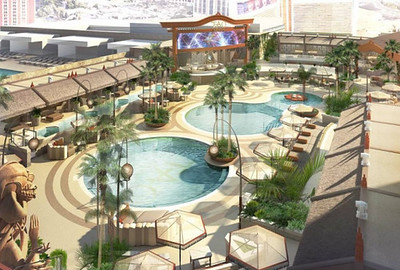
Tao Beach Dayclub atop the Venetian in Las Vegas has undergone a major upgrade that will more than double its size to five acres with a capacity for 3,000 patrons. The renovated club and pool area will reopen in March.

According to a news release, a DJ booth will give visitors “the opportunity to dance poolside to the sounds of some of today’s biggest main-stage acts.” It did not disclose how much it invested in the renovations, which began in 2020 under the direction of New York-based architecture and design firm Rockwell Group.

Rockwell designed the dayclub with multi-sensory experiences and detailed design elements, reported the Las Vegas Review-Journal. The venue has orange and warm wood tones with a variety of art installations, including two 15-foot sculptures by artist Daniel Popper. Popper created a pair of sculptural hands at the entry and a tree goddess that welcomes guests to the main bar.

Tao Beach will feature an artist calendar anchored by Swedish DJ Alesso, who is embarking on a multi-year residency, and DJ and producer Fisher, who is entering the second year of his residency with Tao Group Hospitality. The season will be filled with additional top artists and live performers, including Grammy-nominated producer and Black Book Records founder Chris Lake.

Guests can reserve one of 21 luxury cabanas with seven VIP cabanas featuring individual private plunge pools and unobstructed views of the pool deck.

Tao Beach will also offer a new poolside and cabana menu with oversized sushi boats and over-the-top edible structures. Several other Tao restaurant favorites, including seafood towers, sashimi carved table-side, and crafted hand rolls will enhance the Tao Beach experience.

The dayclub — a relatively new Las Vegas concept for a massive daytime pool party — is part of Tao Group Hospitality, a subsidiary of Madison Square Garden Entertainment Corp. MSG Entertainment is building the $1.9 billion MSG Sphere at The Venetian, a 17,500-seat entertainment venue that is expected to open in 2023.

Tao Group acquired Hakkasan Group in April 2021 for an undisclosed price, and the combined company operates more than 60 entertainment, dining and nightlife venues in more than 20 markets across five continents. Its brands include Tao, Hakkasan, Omnia, Marquee, Lavo, Beauty & Essex, Avenue, Cathédrale, Wet Republic, Yauatcha, Ling Ling, Sake no Hana, Casa Calavera, Jewel and Little Sister, among others.

In related news, Light Nightclub at Mandalay Bay has announced its grand reopening for February 11. The club has been closed for two years, since the onset of the pandemic.

Mess in Missouri

Six Missouri professional sports teams and existing casino operators recently signed off on the first-of-its-kind agreement in the U.S. to support legislation allowing statewide mobile wagering to be tied to existing gaming locations. The teams are Major League Baseball St. Louis Cardinals and Kansas City Royals, National Hockey League St. Louis Blues, Major League Soccer St. Louis City Soccer Club, NFL Kansas City Chiefs and National Women’s Soccer League Kansas City Current. Under the agreement, each team would be entitled to one mobile platform but not a retail location.

Casino operators would be entitled to three skins per property, capped at six. Penn National Gaming, owner of Barstool Sportsbook, and Caesars Entertainment each own three properties, and under the agreement, each would get six skins. Boyd Gaming, Century Casinos and Affinity Gaming have two retail properties each and Bally’s has one.

State Senator Dan Hegeman and state Senator Tony Luetkemeyer both have filed bills including the pre-established framework. Hegeman’s SB 1046 and Luetkemeyer’s SB 1061 call for a $50,000 application fee for retail licenses and $100,000 for digital licenses; allow a “sports district” around any professional venue; allow the use of official league data on Tier 2 bets; and set the sports betting tax rate at 10 percent. The Missouri Gaming Commission would regulate sports betting under both bills.

In addition, state Senator Denny Hoskins is trying for a fourth time to legalize sports betting in person at the state’s 13 casinos and online via those casinos.

“Hopefully we can get something passed. There are 30 states with sportsbooks. We have all the stakeholders on the same page,” he said.

Hoskins’ bill would tax net revenue at 21 percent; however, online sportsbooks would not pay the $2 fee charged per on-site player. That fee, imposed when casinos were authorized along the Missouri and Mississippi rivers, is split between the Missouri Gaming Commission and the casino-host communities; any surplus in the state’s share above the cost of operating the commission goes to veterans and other programs.

However, the Missouri Gaming Association, which represents the state’s gaming industry, wants a lower tax rate than 21 percent on sports betting. MGA Director Mike Winter said, “What you have to keep in mind is that sports betting is a small margin business. If taxes and other fees are excessively high, it will limit our ability to be competitive with illegal bookmakers.”

Missouri lawmakers also are continuing the debate over what is and what is not an illegal gambling machine. The Senate Government Accountability and Fiscal Oversight Committee recently held a hearing on state Senator Dan Hegeman’s bill to ban so-called pre-reveal games that have proliferated throughout the state. Many prosecutors are reluctant to file charges against the games’ vendors, although several prosecutions are pending and at least two have resulted in guilty verdicts.

At the hearing, Hegeman said he doesn’t believe legislation is needed for prosecutors to act. He noted a gambling company was convicted and fined and had their machines destroyed in Platte County last year.

“The conviction, lack of appeal and destruction of games in Platte County have taken away any impression that these games are legal,” said Hegeman, who has admitted, “I am not a big fan of gambling. I just go back and forth.”

However, lobbyist Tom Robbins said Hegeman’s bill would put his client, Torch Electronics, out of business. He said Torch games are legal because they “reveal” if a player will win the next game before they make another bet.

“Our games are not gambling devices because they are not games of chance,” Robbins said. He explained the games declared to be illegal in Platte County required a player to deposit money before they found out if they’d win or lose.

But state Senator Bill White said, “It is a rather loose and fictitious argument to say this is not a game of chance. People who sell pot could be considered a small business and it is illegal under our statutes.”

Torch faces prosecution in Linn County for felony promotion of gambling and is suing the state in Cole County Circuit Court to get a judicial declaration that their games are legal. The company also gave $350,000 in June into six political action committees connected to its lobbyist, Steve Tilley, a former House speaker and close associate of Governor Mike Parson.

Robbins, who works with Tilley at Strategic Capitol Consulting, told the committee Hegeman’s bill “is drafted, designed and targeted to put a single, family-owned business out of business.” He said besides targeting Torch, it would strip liquor licenses from retailers that offer the machines, forcing layoffs at those businesses.

An estimated 20,000 illegal gaming machines operate in Missouri; they pay no taxes and are not held accountable for returning a set minimum to players.

Winter said the Missouri Gaming Association supports Hegeman’s bill and opposes any attempt to replace the pre-reveal games with video lottery devices. “We have been consistent over the last few years that we are opposed to any expansion of the video lottery terminals around the state, nor do we believe that legalizing illegal machines is a good idea.”

On the subject of video lottery, Hoskins also is sponsoring a bill that would allow the Missouri Lottery to expand video lottery terminals in truck stops and veterans and fraternal organizations, plus allow pull-tab games in all lottery retail sites. Players could bet from one cent to $5, with prizes capped at $1,000. Hoskins’ bill would prohibit any company convicted of violating state gambling laws from becoming an authorized vendor of video lottery games; that provision would exclude Torch Electronics if it loses the criminal case in Linn County.

Also in Missouri, the Osage Nation is seeking to establish a casino at the Lake of the Ozarks. Tilley is the tribe’s lobbyist.

Minnesota Lawmaker Pursues Sports Betting Bill

Minnesota state Rep. Zack Stephenson, chair of the House Commerce Committee, said he expects to introduce a sports betting bill early in the session, which opens on January 31. He said he hasn’t written the measure yet but he has had “serious conversations” with stakeholders.

Stephenson noted, “There is a consensus we should be doing something. There have been lots of conversations and more to have. The momentum is growing and I’m more optimistic than ever that we will see meaningful action and passage.”

Those conversations include meetings with officials of Minnesota’s 11 tribal nations which operate 19 casinos. Previously, Stephenson said mobile sports betting would be the most significant change in gaming in Minnesota since tribal compacts were written in 1991.

However, in the past few years, tribal officials have objected to legalizing sports betting. Stephenson said he plans to discuss the issue with them before he finalizes draft legislation. He said he already has met with seven of the tribes, has scheduled meetings with two more and is working on meetings with the final two.

The Minnesota Indian Gaming Association recently released a statement suggesting the tribes may be ready to cooperate on new gaming legislation. MIGA Executive Director Andy Platto said, “The tribal governments making up MIGA have been examining the various ways sports betting has been implemented across the country and its impacts on tribal communities. As gaming experts, tribes stand ready to share this expertise with lawmakers considering the future of sports betting in Minnesota.”

Observers said some lawmakers prefer a bill legalizing retail sports betting but not mobile wagering. State Rep. Pat Garofalo, who has pushed for sports betting legislation for several years, said sports wagering probably would require a “two-step approach.”

State Senator Roger Chamberlain sponsored a bill that has carried over from the 2021 session and includes mobile sports betting. The measure also would give the state’s 11 tribes and two horseracing tracks retail sportsbook licenses.

Chamberlain said, “We’re happy to hear there is some movement on the House side and I believe there is a path forward. But unless mobile is part of it, it doesn’t make any sense. Up here it’s a little more difficult, but our belief is it’s a win-win-win. It’s a win for tribes, the state and the people who want to play.”

Governor Tim Walz previously has said he would sign sports betting legislation as long as the tribes approve it.

Kansas Revisits Sports Betting Legislation

In Kansas, the Senate and House are debating bills held over from the previous session that would legalize statewide mobile sports wagering.

At a hearing of the State and Federal Affairs Committee, Vice Chairman and state Senator Robert Olson said, “We have to try to figure out how to get this over the finish line. I’d like to see if we can come up with a compromise and fix this thing and maybe do a little magic. We’re missing out on a nice chunk of money.”

The arrangement in Kansas would differ from most states, since the Kansas constitution requires all gaming to be “owned” by the state. That means the Kansas Lottery would regulate sports betting and licensees would be known as “sportsbook managers.” As a result, sports betting gross gaming revenue would not be taxed; however, the Senate and House bills allow for a certain percentage of gross gaming revenue to be “retained” by the state.

The Senate bill would allow betting on horseracing but the House bill specifically prohibits betting on the sport, which is overseen by parimutuel regulators. Both bills require bettors to be at least age 21 and both ban betting on greyhound racing.

In addition, the Senate bill would allow three skins per sports betting manager and the House would allow one. The House bill would require using official league data to settle in-game wagers; the Senate bill does not include this provision. Under the Senate bill, 5.5 percent of gross gaming revenue from in-person wagers and 8 percent from digital wagering would go to the state; the House would require 14 percent for in-person wagers and 20 percent for mobile wagers. The Senate would earmark 2 percent of state revenue for responsible gaming programs; this set-aside isn’t included in the House bill.

Other differences: The House version would allow the lottery to have its own platform but the Senate version would not. Also, the House would limit in-person wagering to bets on a game’s outcome.

Observers at the hearing noted several committee members asked questions that clearly indicated they and their colleagues will need to be educated about sports wagering. Questions included: Will Missouri wagerers be able to use Kansas platforms in Kansas; can an individual’s age and location be verified online; and “How can I get my mobile phone activated at a casino” to place a bet.

Iowa Lawmakers Debate Sports Betting Revenue Split

Last year, sports bettors wagered more than $2 billion in Iowa, far ahead of the $575 million in bets placed in 2020. Last December Iowans wagered about $266.5 million, or an average of more than $8.5 million per day, still lower than the record set in November. Since the current fiscal year started July 1, Iowa has taken in $4.9 million in sports betting tax revenue, according to state figures.

Observers said last year’s sports betting boom was the result of legalizing online wagering. Now 91 percent of sports betting in Iowa is done online, not in person.

This pot of gold is causing lawmakers to rethink how to allocate the state’s portion of sports betting revenue, or $13 million since 2019 from the 6.75 percent tax on adjusted gross revenue. House Speaker Pat Grassley said, “The money coming in is maybe a little more than expected. Should it just be left out there and you kind of pick-and-choose what to do with it. We’re looking at doing some things with it that benefit Iowans. When you have unobligated funds, there’s probably 100 different ideas. So we’re going to engage in those conversations.”

House State Government Chairman Bobby Kaufmann said he’d like to see sports betting revenue go to counties that do not host one of Iowa’s 19 casinos. He stated, “Casinos with counties have a lot of nice things” due to gambling revenue directed to the nonprofit groups that hold casino licenses. For example, Kaufmann noted Riverside Casino & Golf Resort as attracts residents from Linn, Johnson and Cedar counties but those counties get a “pittance” compared with money that stays in Washington County.

Kaufmann said he’s drafting a bill to direct a portion of sports betting revenue to non-casino-host counties in support of first-responder services, in particular fire and ambulance, plus other community improvements, like youth sports facilities. He said he believes the legislation will receive bipartisan support.

State Rep. Mary Mascher said she would like sports betting revenue directed toward mental health services, and wants to continue to appropriate money from the Sports Wagering Receipts Fund to support problem gambling services. Lawmakers appropriated $300,000 in fiscal 2020 and $1.75 million in fiscal 2021 for the program. The Iowa Economic Development Authority appropriated another $1.5 million for the Sports Tourism Program.

Mascher said she’s concerned gambling addition will increase since the state has made it easy to wager from smartphones and home computers.

“We don’t have enough counselors and social workers to address those problems that have a direct relationship,” she said.

State Rep. Mike Sexton noted besides the possibility of addiction, the overwhelming number of television advertisements is almost as concerning. “If had known we’d have to sit through all those commercials, I would have voted against,” he said.

Virginia Lawmakers May Drop In-State Ban

Virginia legislators are debating whether to allow wagering on in-state colleges and universities, and if casino operators must report revenue resulting from promotional bonuses given to customers.

Currently, Virginia gamblers currently are prohibited from wagering on the University of Virginia, Virginia Tech and other in-state colleges and universities. But that could change with HB1127 sponsored by state Del. Schuyler T. VanValkenburg, allowing sportsbooks to accept bets on sporting events at Virginia colleges and universities.

The state has 14 NCAA Division I college athletic programs, including the Virginia Cavaliers, Virginia Tech Hokies and Liberty Flames, for example. Allowing bets on in-state schools could attract new bettors and lead to an increase in gaming and tax revenue, observers said.

VanValkenburg’s proposal bill only would allow wagers on an event’s outcome; prop bets will would be banned.

The House has not assigned HB 1127 to a committee yet. SB 576, the companion bill, was referred to the Senate Committee on General Laws and Technology.

In addition, state Del. Mark Sickles filed HB 1103 which “prohibits sports betting operators from excluding bonuses and promotions from taxable revenue after the first 12 months of wagering activity. The bill also eliminates the ability of sports betting permit holders, when calculating taxable revenue, to carry over losses on a monthly basis.”

Sickles’ proposal would continue to tax sports betting revenue at 15 percent. In November, the most recent month with sports betting data, Virginia took in a record $4.2 million in sports wagering taxes.

The state’s 11 licensed sports betting apps took in total wagers of $402.6 million in November and reported adjusted gross revenue of $29.9 million.

In October, Virginia reached $2 billion in total sports betting handle as sportsbooks accepted $427.3 million in sports bets.

BetMGM, Arizona Cardinals Preview Sportsbook

BetMGM and the Arizona Cardinals have released initial images of the nearly 17,000-square-foot BetMGM Sportsbook scheduled to open on the State Farm Stadium campus in time for kickoff of the 2022 football season. This will mark the first sportsbook at an NFL stadium.

Construction is under way on the two-story sports and entertainment destination that will operate on both event and non-event days. The BetMGM Sportsbook, located on the north side of The Great Lawn—the eight-acre grass area outside the stadium, used for tailgating—will combine the energy and viewing options of a state-of-the-art sportsbook with the amenities of a world-class sports bar.

Featuring dual entrances from both sides of The Great Lawn, guests will experience a massive video wall to watch games and enhanced game day parking options, as well as both indoor and outdoor dining options. Sports fans will be able to place wagers at trading windows or utilize user-friendly betting kiosks conveniently placed throughout the space.

“The Arizona Cardinals and BetMGM are both committed to enhancing the game day experience for fans in new and creative ways,” said BetMGM CEO Adam Greenblatt. “The BetMGM Sportsbook at State Farm Stadium will be one of the most unique and innovative additions to a venue that the sports and entertainment industry has ever seen.”

Cardinals owner Michael Bidwill said, “Since the launch of our partnership with BetMGM last August, the response has been incredible. When this sportsbook opens next season, it will provide an opportunity to engage and entertain our fans in a way that is unprecedented.”

The BetMGM Sportsbook at State Farm Stadium will complement the BetMGM mobile app that launched statewide in Arizona in September 2021.