Author: Casino Connection Staff

GLPI Completes Purchase of Maryland Live! Property

Real estate investment trust Gaming and Leisure Properties, Inc. announced the completion of one part of the acquisition of three land-based casino properties operated by The Cordish Companies, closing on the purchase of Live! Casino Hotel Maryland real estate.

GLPI stated its $1.14 billion acquisition of Live! Casino & Hotel Maryland completed, leaving the company to close the acquisition of the remaining assets of the deal announced earlier in the month, Live! Casino Pittsburgh and Live! Casino & Hotel Philadelphia for a total consideration of $1.81 billion.

Besides the acquisition of the land and real estate assets of Live! Maryland, GLPI entered into a future-oriented partnership deal with The Cordish Companies that would facilitate casino developments and financing in other areas of operation from the portfolio of the real estate and entertainment group based in Maryland.

GLPI Chairman and CEO Peter Carlino outlined the importance of the transaction and the impact of the addition of Live! Maryland to GLPI’s portfolio by further diversifying its “roster of leading operators.”

“The Cordish Companies is world-renowned for creating large-scale experiential real estate projects, casinos, hospitality and entertainment districts and we believe their Live! brand and their Live! Maryland together exemplify their track record of development and operating success.” Carlino said.

GLPI partly funded the transaction by assuming the existing debt of The Cordish Companies, approximately $363 million, and issuing 4.35 million of operating partnership units to the amount of $200 million, while the bulk of the price was paid out of available cash.

“Further, our new lease with Cordish has strong rent coverage and is part of an accretive overall transaction that positions our company to continue to build value for shareholders through via our industry-leading, high-quality tenant roster,” Carlino said.

GLPI entered into a single asset triple net lease with The Cordish Companies simultaneously with the closing of the acquisition that would ensure the uninterrupted ownership, control and management of the operations at the land-based gaming property.

The lease agreement provides for an initial term of 39 years that could be further extended to up to 60 years via inclusive tenant renewal options, and set the initial cash rent to $75 million annually that would escalate by 1.75 percent after the second year.

Nevada Board Appeals to Supreme Court Over Steve Wynn

Steve Wynn surrendered his gaming license in 2018 amid allegations of sexual misconduct and harassment. He severed his relationship with Wynn Resorts.

To Wynn, his relationship with gaming in Nevada is over and the Gaming Control Board can no longer hold him accountable for actions that took place when he held a license. The board says otherwise, according to the Nevada Independent.

Wynn lawyer, Colby Williams, told the state Supreme Court Wynn wasn’t getting “a free pass” for alleged misconduct but that regulators have no authority over his client, including failing to appear at a Gaming Control Board hearing.

Wynn gave up his license 20 months before the control board filed the five-count complaint that labeled him “unsuitable to be associated with a gaming enterprise or the gaming industry as a whole.”

The control board and Nevada Gaming Commission are appealing a November 2020 District Court ruling that said Wynn’s resignation and sale of his holdings in the company removed him from their oversight.

“Is Mr. Wynn going to be held accountable for acts that occurred while he was under a suitability finding?” Justice Lidia Stiglich said.

Regulators expressed concern that the lower court ruling would make it difficult for them to discipline former license holders after they leave the industry.

Deputy Attorney General Kiel Ireland said suitability doesn’t go away even if a gaming operator surrenders its license.

“A finding of suitability under our Gaming Control Act does not have any kind of automatic expiration,” Ireland said.

Chief Justice James Hardesty suggested the lower court’s ruling on oversight could allow gaming license holders to “absolve themselves of potential fine exposure for violations of the Gaming Act” just by leaving their positions with a gaming company

Wynn has long denied the allegations but still departed the company two weeks after they surfaced. and/or investigate” numerous allegations of sexual assault, sexual harassment and sexual misconduct by Steve Wynn.

Virginia Supreme Court to Rule on Skill Games

Virginia Attorney General Mark Herring recently asked the state Supreme Court to overturn a Greenville Circuit Court judge’s December 6 order that prohibits the state from enforcing its ban on slot-like electronic skill games.

As it stands, enforcement of the ban on the slot-like gambling machines, which continue to proliferate at convenience stores, truck stops and restaurants statewide, now is on hold until May.

The filing stated, “Far from preserving the previous state of affairs, the circuit court’s temporary injunction has upended the status quo and resulted in the proliferation of entirely unregulated gambling devices across the Commonwealth. It is now legal in Virginia for a child of any age to go to a corner store and gamble on so-called video skills games. The circuit court’s injunction has resulted in immediate and complete deregulation from the bench.”

Herring’s petition states the circuit court did not consider all the aspects of stopping the state from enforcing its electronic skill game ban. The filing states the circuit court erroneously concluded the gambling devices “constituted protected speech” under the First Amendment.

Previously, the Virginia Department of Alcoholic Beverage Control regulated and taxed the betting machines. That oversight no longer is in place. The lawsuit challenging the ban was filed before the ban was to take effect July 1, by former NASCAR driver Hermie Sadler, who owns a truck stop and gas station company. He and his company are represented by attorney and Republican state Senator Bill Stanley, former state Attorney General Anthony F. “Tony” Troy and Jason Hicks.

Sadler’s lawsuit claims the state’s ban is unconstitutional and impacts a major revenue source from his stores, even though Virginia allows legal gambling. He stated his stores have relied on the revenue from skill games for 20 years, especially during the Covid-19 pandemic.

The Virginia legislature voted to approve the so-called skill games ban in 2020, but Governor Ralph Northam asked them to delay it so the revenue the machines generated could help fund Covid-19 relief. At the same time, lawmakers approved a measure allowing up to five casinos and mobile sports betting in the state.

Attorneys for Sadler noted the company that owns Colonial Downs Group/Rosie’s Gaming Emporium filed an amicus brief in support of Herring’s petition for review. Stanley said, “We suspected this all along. The attempt to ban skill games was never about good government policy. It was about money and greed and the big casinos were behind it.” Troy said Herring was “helping big, out-of-state gaming interests crush local small business owners like Hermie Sadler.”

In response, a spokesperson for Herring said the attorney general’s office “is simply doing its job by defending the law passed by the General Assembly.”

The injunction will remain in effect until Sadler’s lawsuit goes to trial on May 18. The Virginia Supreme Court could rule on the issue before that.

Meanwhile, the charitable nonprofit Cheers sued the Virginia Department of Agriculture and Consumer Services. Cheers’ attorney state Senator Chap Peterson, said VDACS dropped regulations allowing Texas Hold ’Em-style fundraising poker tournaments before the laws took effect. Petersen said like skill games, Texas Hold ‘Em charitable tournaments are technically legal but have no regulation. He said, “Texas Hold ‘Em, if you’re a qualified charity, is decriminalized. The agency vacated all the rules for regulating the games, but they can’t recriminalize it. That would take a legislative step.”

Stanley said, “These court rulings demonstrate a need for the legislature to fix the problems that it alone created.”

Louisiana Riverboat Casino Moving Ashore

Boyd Gaming Corp. recently announced its plans to replace the Treasure Chest riverboat casino in Kenner, Louisiana with a new “state-of-the-art, land-based gaming facility.” Construction is expected to start this summer and the venue would open in late 2023.

Boyd Gaming President and CEO Keith Smith said, “With this project, we are proud to reinvest in a community that has been an important part of the Boyd Gaming family for more than 27 years. The all-new Treasure Chest will bring more jobs, more tax revenue and more visitors for the city of Kenner and Jefferson Parish, and it will significantly enhance the Treasure Chest experience, giving our guests a bigger and better gaming entertainment experience than ever before.”

The single-level facility will offer a 47,000-square-foot casino, several restaurants and bars, 10,000 square feet of convention and meeting space and a FanDuel-branded sportsbook.

Kenner Mayor Ben Zahn stated, “Treasure Chest has been an invaluable corporate and community partner in Kenner for 27 years. Treasure Chest continues to help support our police department, city council districts and our capital projects and debt reduction funds. But more than that, Treasure Chest and Boyd Gaming support our community in many other important ways, both big and small, such as the recent $50,000 donation to the Kenner Food Bank. We are thrilled their move on-land will be happening soon and are confident this expansion will bring an exciting future in Kenner, a continued partnership and great success.”

Tahoe Beachfront Property to Become Casino Resort

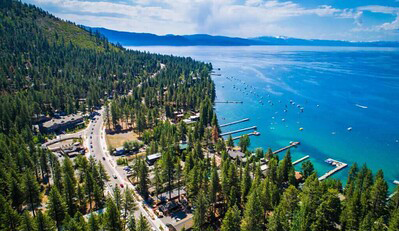
EKN Development Group has purchased the Beesley Cottages lakefront Tahoe property in Tahoe Vista. The California-based company previously bought the venerable Tahoe Biltmore Lodge & Casino and both properties are slated for a luxury casino resort project to be dubbed “The Beach Club.”

EKN and its partners Garn Development and Stack Real Estates paid $18 million for the lakefront property.

EKN President and CEO Ebbie K. Nakhjavani said in a statement: “The Beesley Cottages acquisition stands as yet another testament to our dedication in bringing this project to life. We are very excited to be a part of this community and to enhance the experience of our project. Our collaboration with local partners and stakeholders will include listening sessions and town hall meetings to continuously engage with members of the community. We want to ensure that there is a clear understanding of our vision, timelines, and what to expect as plans come to fruition.”

The project will include a new casino, 120-room hotel, retail shopping and 80 unit condominiums.

The Beesley Cottages property will be developed into a luxury beachfront clubhouse, according to the company. It will be used for events and weddings and also rent beach cabanas and boats.

The developer also plans to build new roads around the project and offer a shuttle service.

Martha Stewart-Branded Restaurant Coming to Las Vegas

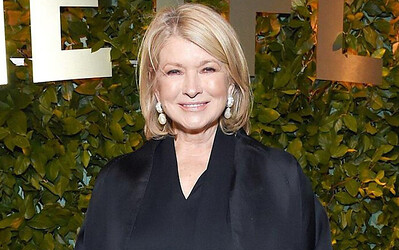
Martha Stewart will bring her billion-dollar brand to Las Vegas this spring with her first-ever restaurant. The Bedford by Martha Stewart is described as “a fully-immersive restaurant concept designed to bring Martha’s famed country farmhouse in Bedford, New York to life.” It will be located at Paris Las Vegas, a Caesars Entertainment property on the Vegas Strip.

“Caesars Entertainment has been an extremely hard-working, professional, and excellent partner to work with on the planning and building of the first-ever Martha Stewart restaurant,” Stewart said. “Our menu will be delicious, depicting the very same kinds of foods I serve my friends and family. The architecture and decoration of the spaces cleverly exemplify the beauty and atmosphere you might find at my beautiful farm in Bedford, New York. Dining at the Bedford will be immersive, fun, unexpected and utterly delectable.”

Jason Gregorec, senior vice president and general manager of Paris Las Vegas, called Stewart “one of the most celebrated voices in hospitality.”

“We are truly honored that she’s chosen Paris Las Vegas as the home for her very first restaurant,” he said. “Martha and her whole team have been incredible partners. When we open the doors, the Bedford by Martha Stewart will be a dining experience you simply can’t get elsewhere.”

Florida Amendment Battle Pits Seminoles Against Sands

On January 7, Florida Attorney General Ashley Moody asked the Florida Supreme Court to review a proposed constitutional amendment that would allow casinos in North Florida. Moody wants to determine if the proposal is unduly narrow in scope or misleading.

The action comes after a political committee backing the measure, Florida Voters in Charge, apparently surpassed the number of signatures necessary to start the review process.

On December 10, Florida Secretary of State Laurel Lee told Moody’s office that the “Limited Authorization of Casino Gaming” initiative exceeded the 222,898 signatures required for judicial review. Florida Voters in Charge faces a February 1 deadline to submit the 891,589 signatures it needs to get on the November ballot. The PAC submitted 425,523 valid signatures as of January 7, according to the state Division of Elections website.

The ballot initiative would let voters decide if existing parimutuel operators in North Florida can add casino games. It’s been almost completely funded by the Las Vegas Sands Corp., to the tune of $51 million-plus.

But the Seminole Tribe of Florida, which currently has a monopoly on Las Vegas-style casinos in the state, accuses Florida Voters in Charge of “engaging in a widespread, election-law conspiracy” as it works to gather the required signatures. The committee also accused the Seminoles of illegally trying to “sabotage” the petition drive by poaching workers and paying people to stop gathering signatures.

The Seminole Tribe of Florida funded its own political committee, Standing Up for Florida, with $20 million-plus. The committee recently asked a Leon County circuit judge for an “emergency motion for a temporary injunction to prevent election fraud.” It asked the judge to block Leon County Supervisor of Elections Mark Earley and Secretary of State Laurel Lee “from giving legal effect to all illegally-obtained initiative petitions” and to decide if the signatures Florida Voters in Charge has collected so far have been “illegally obtained” and should be tossed. The committee also has spent multi-millions on a multimedia campaign telling voters to avoid signing Florida Voters in Charge petitions.

Committee Chairman Pradeep “Rick” Asnani alleged Florida Voters in Charge and its contractors “are corrupting the petition process throughout Florida by blatantly violating civil and criminal laws to secure illicit access to Florida’s ballots.” For example, Standing Up for Florida attorney William Shepherd claimed Las Vegas Sands petition gatherers are being paid per signature in violation of Florida law. The court filings also accuse businesses and individuals working on the ballot initiative of shredding incomplete petitions and “forging signatures on petitions all over Florida.”

“The constitution of Florida is under attack. The illicit conduct of counter-defendants, Florida Voters in Charge and other parties, is an attack on Florida’s election integrity,” Shepherd wrote. A judge dismissed Shepherd’s lawsuit on December 17.

Florida Voters in Charge also filed a lawsuit alleging “parties acting on behalf of the Seminoles have engaged in concerted and aggressive efforts to harass and intimidate individuals who are exercising their legal right to obtain signatures necessary to place a citizen initiative on the Florida 2022 ballot.” The lawsuit claims signature gatherers were offered money to stop collecting signatures and to leave the state until February 1. It alleges people associated with the initiative’s opponents grabbed clipboards away from signature gatherers, followed workers to their hotel rooms and screamed at voters to prevent them from signing petitions.

Louisiana Regulators Target Super Bowl Launch

While rumors continue to swirl that online sports betting could launch in time for the National Football League playoffs, Louisiana Gaming Commission Chairman Ronnie Johns said no date has been set. Johns said, “There is some misinformation that we’re going to launch sports betting next week in conjunction with the NFL playoffs. While we very much would like to do that, it’s definitely not accurate. We are working literally on a daily basis to finalize all of the compliance issues and the technical issues with sports betting.”

Johns said he hopes online sports wagering will begin before the Super Bowl on February 13, but even that start date isn’t certain. Johns explained he can’t sign off on a date until the State Police send him their recommendation. “We’re going to roll it out as quickly as we can, but we’re going to roll it out the right way. We want to make sure that it’s ready to go,” Johns said.

He added the State Police also are reviewing geofencing technology which would assure only wagerers in the 55 of 64 parishes that approved online sports betting can place bets. “The technology is there. It’s very accurate. We’ve seen it in other states, and we know that it works, but we just have to make absolutely sure that that it’s working properly here in Louisiana before we roll it out,” Johns said.

Bettors still can place sports bets in person across the state. Johns said currently 13 licenses are in operation statewide, and seven licenses are pending.

Analysts forecast sports betting will produce $30 million in annual revenue for Louisiana, with one-quarter up to $20 million going to early childhood and the remaining 10 percent going to parish governments. Up to $500,000 will be directed to the Louisiana Association on Compulsive Gambling.

Johns said as they wait for the launch of online sports betting, gamblers can sign up with licensed operators.

Maverick Gaming Sues to End Tribal Sportsbook Monopoly

Maverick Gaming LLC’s CEO Eric Persson has sued in federal court to end the tribal monopoly on Washington’s sports betting, claiming he is being unconstitutionally discriminated against and that “There’s room for everybody in this business. We don’t overlap with tribes.”

Persson declared, “Every day we wake up determined to bring sports betting to the mass population of Washington. And what we’re doing right now is just the logical next step towards that process.”

One of Maverick’s attorneys in the federal lawsuit is Ted Olson, who was lead counsel for New Jersey’s successful lawsuit to overturn the old federal ban against sports betting.

The lawsuit, filed in U.S. District Court in Washington D.C. claims Washington state officials granted the state’s gaming tribes a “discriminatory tribal gaming monopoly.”

Persson’s company owns 19 of the state’s licensed card rooms. He was unsuccessful in 2020 in persuading lawmakers to include commercial casinos when they legalized sports betting. The state later approved 15 amended tribal state gaming compacts including sportsbooks.

Maverick was originally headquartered in Nevada, but relocated to Kirkland, Washington.

In a recent interview with Seattle Times, Persson commented “I think there’s a big gap between the judiciary and the legislative system,” adding, “And I think that as that gets clarified and the legislators understand that IGRA is being applied wrongly in the state of Washington, I think they’re going to engage us. And to me, this is just a logical next step.”

Rebecca George, executive director of the Washington Indian Gaming Association, which represents most of the state’s gaming tribes, declared, “Maverick Gaming’s newly announced federal lawsuit is a desperate attempt to overturn federal law, the will of the Washington State legislature, state and federal agency decisions, and the clearly expressed sentiments of the general public in Washington State.” She added, “It would severely undermine the well-regulated and safe system of limited gaming that has been established in Washington State over three decades of carefully negotiated compacts between the State of Washington and Native American tribes.”

Texas Pro Teams Continue Sports Betting Push

Although the Texas legislature’s 2021 session ended without the lawmakers even looking at sports betting, the Lone Star State’s professional sports teams are not giving up trying to get action.

An association that represents the pro teams, the Sports Betting Alliance, has called for the legislature to pass sports betting legislation to keep money in the state. They are aiming at the next legislative session in 2023.

Alliance members include Dallas Cowboys, Dallas Stars, Dallas Mavericks, FC Dallas, Texas Rangers and Texas Motor Speedway. Their spokesman, Cara Gustafson said last week, “It’s really just a matter of creating a groundwork and a framework for something that’s already happening.”

She added, “We’re really proud of the conversation we did start, and we think that it’s laid a really good groundwork to looking in the future. It’s clear based on feedback from lawmakers that the required voting threshold is there to pass sports betting in 2023.”

Dallas Cowboys owner Jerry Jones last July told a radio talk show, “I certainly know that gambling as it pertains to our games is here. Frankly, it’s been here. The handwriting’s on the wall. Gambling has been here a long time.”

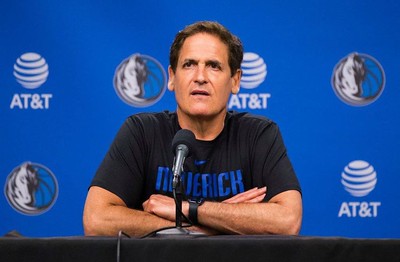
Dallas Mavericks owner Mark Cuban told the Fort Worth Star-Telegram, “Texas is a state that deeply believes in free Enterprise and consumer choice rather than the state dictating what Texans can or can’t do.”

He said the state needs resort casinos like in Las Vegas to provide “world class vacation and business destinations.”

Texas Rangers COO Neil Lebman said sports betting is already happening and that the state should collect revenue from it. “From the Ranger’s perspective, we look at it as it’s over $5 billion wagered illegally today in Texas on sports, and we think that while it’s going to happen—it is happening—we should license it, regulate it and benefit from it.”

BetMGM Goes Live in New York

BetMGM launched its mobile sportsbook in New York State on Monday, January 17. The provider has already formed official partnerships with the New York Knicks, the New York Rangers and Madison Square Garden Arena.

In a statement on January 14, BetMGM CEO Adam Greenblatt said, “We’ll now be able to fully activate our relationships with MGM Resorts’ Empire City Casino and Madison Square Garden. We look forward to offering customers in New York unique experiences that they can’t access on any other platform. A huge thank you to the New York Gaming Commission as well as to our entire BetMGM team who have worked tirelessly to bring this to fruition.”

The BetMGM app offers a user-friendly sports betting experience, making it easy to customize pre-game, in-play, futures and parlay wagers.

BetMGM’s integration with MGM Resorts’ M life Rewards program gives New York’s BetMGM customers the ability to redeem their gameplay for world-class experiences at MGM Resorts properties including Empire City Casino in Yonkers, Borgata in New Jersey, MGM National Harbor in Maryland, and Bellagio and MGM Grand in Las Vegas. BetMGM also will be able to reward its customers with VIP experiences involving the Knicks and Rangers.

Oklahoma Legislator Files Sports Betting Measure

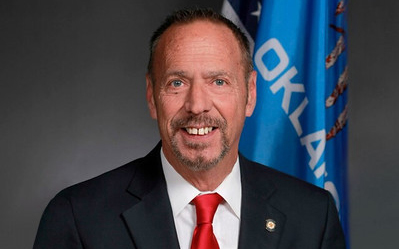
Oklahoma state Rep. Ken Luttrell recently filed House Bill 3008, which would add legalized sports betting to the state’s tribal gaming compact, with the state receiving 10 percent of net winnings.

Luttrell said, “I have had conversations with our gaming tribes during the interim to gauge their interest on this topic. I feel the time is right for Oklahoma to partner with the tribes and ensure a level, competitive gaming playing field with the surrounding states.”

Luttrell, a Cherokee citizen who has lobbied on tribal matters, said Oklahoma is losing revenue to other neighboring states or to illegal wagering operations.

He stated, “Illegal sports betting occurs throughout Oklahoma, and figures I obtained from the Oklahoma State Bureau of Investigation show 11 offenses recently with tens of thousands of dollars seized. This reflects only a fraction of what actually occurs in our state.” He added the Oxford Economics Group estimated legal sports betting would generate $240 million in revenue for Oklahoma and create more than 3,000 direct and indirect jobs.

Sources said it’s uncertain if Governor Kevin Stitt would sign Luttrell’s bill if it passed. Soon after he was elected, Stitt unsuccessfully attempted to have tribal gaming compacts invalidated. As a result, negotiations between Stitt’s administration and tribal nations have been “virtually non-existent.” Last year’s U.S. Supreme Court ruling in McGirt vs. Oklahoma further solidified claims of tribal sovereignty, much to Stitt’s displeasure.

Nearly all of Oklahoma’s 39 tribes operate gaming with 132 active casinos. The Oklahoma Indian Gaming Association announced 2021was one of their most profitable years, as revenue resurged following mandated closures in 2020. Casinos’ exclusivity fees paid to the state rose nearly 6.5 percent from January through August 2021 compared to the same period in 2019, according to state figures. Fees rose nearly 35.4 percent compared to 2020 when tribal operators were forced to close operations.

Arizona Coyotes Unveil Digital Sports Betting

Alex Meruelo, owner of Meruelo Gaming LLC and the Arizona Coyotes, has unveiled an online and digital sports betting platform SaharaBets, named for the Sahara Las Vegas casino.

Coyotes President and CEO Xavier A. Gutierrez said in a statement “The Coyotes are dedicated to providing innovative and entertaining experiences for our great fans,” Coyotes President and CEO Xavier A. Gutierrez said in a team statement. “Our partnership with SaharaBets will offer next-level gaming experiences for fans who want to unleash their competitive spirit.”

Bettors can download SaharaBets onto their smartphones, create accounts and deposit funds.

According to SaharaBets President Andrew Patterson, “But probably more importantly, it’s the engagement and the opportunity fans will have maybe outside the app.” He added, “What experiences can they gain by being a SaharaBets customer that really drive them to engage with the team in a different way and with the application, different than what you might get from other operators in the state.”

North Dakota Sports Betting Bill Will Return

Although a sports betting bill was defeated late last year in the North Dakota legislature, with the House voting yes and the Senate killing it, the bill’s author, Rep. Jim Kasper, plans to keep reintroducing it because he feels that commercial sports betting is inevitable.

“The people of North Dakota are already sports betting” he said recently. “They find ways to do it. I’m saying we legalize it in our state, and we tax it so that we have the benefit of what’s already happening for the citizens of our state and our state coffers.”

The legislative year in North Dakota is short: only 80 days every other year. Rep. Kasper and his allies have been trying to pass a commercial sports betting bill since 2019, shortly after the U.S. Supreme Court lifted the federal ban.

In an interview with GGB News, the representative confirmed that he will reintroduce it at the first opportunity.

“Heck yeah!” he said. “That will be one of my prime goals!”

He talked about the back and forth this year. “We had a had a big battle between DraftKings that wants to it all online, and the people who want to do charities, plus black jack and electronic pull-tab. In my bill I had the opportunity for the charitable entities to have a kiosk. That brought down DraftKings and their lobbyist. We won in the House but the Senate killed it.”

North Dakota University System Chancellor Mark Hagerott has warned that sports betting could put too much pressure on student athletes. But possibly the staunchest opponents of commercial sports betting remains the gaming tribes, which are opening their own sportsbooks.

The Dakota Magic Casino will open a sportsbook in the next few weeks. Dakota Nation Sportsbook will also accept sports wagers at Dakota Connection in Sisseton and Dakota Sioux in Watertown—certainly in time for the Super Bowl.

In her testimony before the legislature Collette Brown, executive director of the Gaming Commission at Spirit Lake casino declared, “DraftKings don’t care about North Dakota, they are trying to maximize their profits. We shouldn’t send gaming revenue to the New York Stock Exchange.”

Despite that statement, Brown insists, “I have nothing against commercial sports betting. The testimony I gave was to authorize sports betting and for it to be allowed in North Dakota. Currently, North Dakota does not have a gaming control board. It only has a Gaming Commission and the regulatory oversight is with the Attorney General’s office who has limited staff to inspect the five tribes of North Dakota on their gaming activities, when there are over 3,000 casino-like gaming machines (electronic pull tab/e-tab devices) in over 800 locations that have a liquor license in this state that have no regulatory oversight due to no FTEs (full time employees.) That is my main concern North Dakota does not have any gaming and regulatory structure to operate and regulate sports betting.

Asked by GGB News if she feels commercial sports wagering would harm tribal revenues, Brown replied, “We are already being harmed by the electronic pull tab devices in every location that has a liquor license, specifically our revenues had taken a 60 percent decrease from August 2018 (when e-tab devices were allowed to operate) to February 2020, prior to Covid closure in March, with the addition of sports betting we would have a compounding negative affect to our casino and our tribal services. We would have had to make the hard decision to close our casino doors if this was allowed.”

Since tribes that offer sports betting usually deal with an established provider, such as FanDuel or DraftKings, we asked if that too isn’t sending revenue to the New York Stock Exchange?

Brown replied, “Tribal casinos can choose any provider. It does not have to be FanDuel or DraftKings, a partnership between a supplier and a tribe that enforces their tribal sovereignty can negotiate terms.  Most well named providers are publicly traded. What they do with their piece of the money is their prerogative.”

“Of course, the tribes want the exclusivity,” said Kasper. “The tribes in North Dakota, they all have a casino and I think they make some pretty good money and yet the conditions on the reservation doesn’t seem to change. What is the leadership doing on the reservation to help their people become more self-sufficient and entrepreneurial?”

Kasper continued, “I know they have tribal colleges and the casinos are a good source of revenue, but the state does not get a nickel from tribal gaming. Sports betting is being done all over North Dakota now as we speak. They are not going to travel to the reservation. We either legalize it and allow charities to have a new source, or we kill it.”

Brown added, “We are already being harmed by the electronic pull tab devices in every location that has a liquor license. Specifically our revenues had taken a 60 percent decrease from August 2018 (when e-tab devices were allowed to operate) to February 2020, prior to Covid closure in March. With the addition of sports betting we would have a compounding negative effect to our casino and our Tribal services. We would have had to make the hard decision to close our casino doors if this was allowed.”

Brown continued, “So if the e-tab devices can harm us this much in a matter of eighteen months, with our detrimental impact the tribe had to make some hard decisions on what programs would continue on in 2019. Unfortunately there were some losses, with our education assistance, along with our tourism department to name a few.”

Kasper’s bill would have changed the law in tandem with putting a measure on the ballot to ask the voters to amend the state constitution.

“Our argument was let the people decide,” he says. “My bill would have implemented it if the constitutional amendment had passed. The senate killed that bill too. Even though we have 80 percent Republican in the legislature, we don’t get along that well.”

Kasper argues, “North Dakota should not be left out in the cold as one of the few states that doesn’t allow sports betting. It’s generating millions and billions of revenue. Why shouldn’t our citizens sports bet if they wish? This is something people can do on their electronic devices if they wish, or the charitable institutions at bar. It becomes a social thing in small towns.”

California Initiatives Offer Several Paths to Sports Betting

Competing proposals aimed at the November ballot offer several paths to California sports betting.

One measure that has already qualified for the ballot is proposed by a consortium of about 18 of California’s most powerful gaming tribes. It would only allow retail sports betting, and only at tribal casinos or racetracks.

Proponents of two other measures are still gathering signatures to qualify for November. Unlike the tribal proposal, both would allow mobile sports betting statewide. One is bankrolled by a group of sports betting operators, including FanDuel and DraftKings. Dubbed the California Solutions to Homelessness and Mental Health Act, it relies on homelessness being a hot button issue in the Golden State, which is “home” to 25 percent of the nation’s homeless. If passed by the voters, it would earmark 85 percent of tax revenue after expenses for the California Homelessness and Mental Health Fund (CHMHF). Proponents claim this would amount to $500 million a year.

The second mobile sports betting measure is backed by several California cities that host card clubs—which are locked out from participating in sports betting by the tribal proposal. It would set aside no specific percentage for the CHMHF.

A third mobile sports initiative, which hasn’t yet started to gather signatures, would set aside 10 percent of “sports wagering revenue” for CHMHF “if required by compact or regulations.”

Its most prominent tribal sponsor is the San Manuel Band of Mission Indians. Under this measure, tribes would also be able to add roulette and dice games to the Las Vegas-style gaming and slots they already offer.

It would amend the California constitution to provide a way for tribes to add sports betting to existing tribal-state gaming compacts or use a “model compact.” This would address the fact that sports gaming isn’t addressed by the 1988 Indian Gaming Regulatory Act (IGRA). It would earmark 15 percent of gross gaming revenue for a tribal fund and 10 percent for the CHMHF.

Mississippi Lawmaker Sponsors Mobile Sports Wagering Bill

Mississippi state Rep. Cedric Burnett recently introduced House Bill 184, which would amend the Mississippi Code to allow online and mobile sports betting via a licensed casino’s own online platform or by partnering with a vendor. Currently, sports wagers only can be placed in person at a casino.

The bill has been referred to the House Gaming Committee and the House Ways and Means Committee.

Mississippi was one of the first states to legalize sports betting, in August 2018. But this is the fourth attempt to legalize sports wagering online. In 2019, Burnett introduced House Bill 1481, which died in committee. He sponsored House Bill 172 in 2020; it also failed to pass out of committee. In 2020, state Senator Scott DeLane’s measure also died in committee without a hearing.

The issue has taken on greater urgency this year since Louisiana allowed sports betting at casinos in November and online betting is set to launch later this month. Supporters of the proposed legislation said bettors are likely to cross the state line and establish accounts in Louisiana.

The legislative session began January 4 and will conclude April 3. calendar in Mississippi that kicked off Monday concludes on April 3. Burnett’s measure states, “This act shall take effect and be in force from and after July 1, 2022.”

Online sports betting revenue would be taxed at the same rate as other gambling in the state, at 4 percent for gross revenue up to $50,000 per month, 6 percent for totals between $50,000 and $134,000 and 8 percent for higher gaming revenue.

Arkansas Regulators Approve Mobile Sports Wagers

The Arkansas Racing Commission has unanimously approved changes to the state’s gambling rules, allowing casinos to offer mobile sports betting and keep 51 percent of the revenue when partnering with online betting platforms; typically, casinos in most states where sports betting is legal keep 5 percent to 15 percent.

The Arkansas Legislative Council (ALC), scheduled to meet on January 28, must approve the rule changes. Racing Commission spokesman Scott Hardin said, “Whether this item makes the January agenda is yet to be determined. If ALC approves, the rule changes allowing mobile sports betting would be effective immediately.”

Eight people, including casino and sports wagering company representatives, spoke at the meeting where the rule changes were approved. Racing Commission attorney Byron Freeland said the commission received about 800 letters and emails from the public, most opposing sports betting.

BetMGM, DraftKings, and FanDuel all sent letters to the ARC expressing concern over the 51 percent split. They asked for that policy to be removed from the state’s proposed rules so vendors can negotiate directly with casinos. The commission denied the request.

FanDuel Director of Governmental Affairs Andrew Winchell wrote, “This requirement makes it financially unfeasible for top national online sports wagering operators to partner with casinos in Arkansas. Even if a casino licensee found a sports pool operator intermediary willing to partner under these conditions, to control expenses, they would need to dramatically limit what they spend on marketing and promotions. As we have seen in other states, a significant amount of marketing and promotional spend has been necessary to activate the market and pull customers from the illegal, offshore market and convert them to the legal regulated market.”

Oaklawn Racing and Casino Resort General Manager Wayne Smith wrote that out-of-state sports wagering vendors generally require receiving 85 percent to 95 percent of net revenue, with 5 percent to 15 percent going to the casinos.

He wrote, “We question whether under such circumstances this is really consistent with the intent of Amendment 100 limiting casino gaming and accepting sports wagers to the four licensed casinos, which are under the more direct regulation of the Arkansas Racing Commission. If the third-party subcontractor-vendor retains 85 percent to 95 percent of the net revenue themselves, who is really conducting the sports wagering?”

Smith added several Arkansas casino officials believe the ultimate goal of many out-of-state sports wagering vendors is to gather a confidential customer database for sports betting and other wagering.

“And in some instances, to promote those customers to visit casino properties in other states where the tax revenue and other economic benefits would be driven by other states, not Arkansas,” Smith said.

A BetMGM official wrote, “In addition to the unprecedented nature of the proposed regulation, imposing such an artificial cap on vendors’ revenue share, in this case not more than 50 percent, is not based on any market considerations and would only serve to impede competition. In short, the cap would make it impossible for sports betting platform providers to enter the Arkansas market and serve the state’s residents.”

Saracen Casino Chief Market Officer Carlton Saffa added that fee structures are built into several gambling laws around the state. He noted Arkansas casinos already have profit-sharing agreements for other games, like slot machines, with 80 percent of profits going to the casino.

Regarding national operators’ pushback, Saffa said the commission’s vote was unanimous. He said, “The folks who are closest to this, who heard the testimony, who received the hundreds of letters, there was not a single one who said, ‘No, these rules don’t make sense.’” Saffa said Saracen Casino plans to launch its own sports betting app in mid-February and would not want to give up 90 percent of revenue to a national operator.

Former state Rep. John Burris, a partner at the Capitol Advisors Group, which represents DraftKings, FanDuel, BetMGM, Fanatics and Bally’s, stated, “We think it’s a great opportunity. I think if I had one point, it would be that it’s not us versus them. Us being sports betting and them being the three in-state casinos. I think that perception has developed, but it’s really not the case. We view it as an opportunity to bring to a marketplace through the casinos’ revenue and a player who is generally being unregulated and utilized now.”

In 2019, the Arkansas legislature approved sportsbooks at the state’s three operating casinos, Saracen Casino Resort in Pine Bluff, Southland Casino Racing in West Memphis and Oaklawn Racing Casino Resort in Hot Springs, plus the recently licensed Legends Resort and Casino in Pope County. The new rule allows mobile betting anywhere within state lines through a casino’s partnership with a gambling license holder.

Since sports betting was approved, gamblers have wagered about $96 million at Arkansas’ three casinos, resulting in more than $83 million in payouts and $1.74 million in state revenue, according to the state Department of Finance and Administration.

Washington Casino Celebrates Sportsbook Opening

On December 21, the BetMGM Sportsbook celebrated its grand opening at the Emerald Queen Casino near Tacoma, Washington.

The fete included guest appearances by pro athletes Edgar Martinez, Lawyer Milloy, Sidney Rice and Marshawn “Beast Mode” Lynch. Bettors can wager on pro and college games (except those involving Washington State college.)

The casino is owned and operated by the Puyallup tribe, whose tribal council announced, “EQC has really gone above and beyond in making EQC Sportsbook the premier destination for sports betting in the Northwest.” It added, “We’ve got the biggest video screen in the country, great seating, and an opening day that brought sports legends plus a live broadcast and a live game. We are striving to offer the best sports betting experience around…”

It added, “We’ve got the biggest video screen in the country, great seating, and an opening day that brought sports legends plus a live broadcast and a live game. We are striving to offer the best sports betting experience around…”

It is located in the space that was formerly a sports bar but was expanded to accommodate 70 leather armchairs aimed toward a 500 square foot LED wall, which casino General Manager Frank Wright Jr. calls “the only one in the country” adding “It’s just one component of the immersive experience that sets BetMGM Sportsbook at EQC apart from every other sportsbook in the Pacific Northwest.”

Playtech Launches Live Studios in Michigan, NJ

Online gaming giant Playtech PLC announced the launch of two state-of-the-art live casino studios, one in Michigan and one in New Jersey.

The simultaneous launch of the two Playtech Live Casino facilities has been done in collaboration with newly established partner, Parx Interactive under the “Play Gun Lake” brand in Michigan and longstanding partner bet365 in New Jersey, and after receiving the required regulatory approvals. Both facilities represent the initial launch of Playtech’s entertainment-led Live Casino offering in the U.S. and the next step in Playtech’s strategic expansion in the U.S.

The studio in Southfield, Michigan has been developed to deliver a new standard in Live Casino experience. The initial launch comprises of classic roulette, blackjack and baccarat live dealer tables as well as All Bets Blackjack, which is based on Playtech’s leading scalable variant allowing an unlimited number of players to participate in a game. This initial offering will be followed by further launches including a sport-led environment, a new arcade experience which offers a new way to engage on Live Casino, and the introduction of some of the company’s leading Live Game Shows.

Both the Michigan and the New Jersey studios also feature Quantum Roulette Arcade. A key game in the company’s multiplier roulette portfolio, Quantum Roulette has been tailored for the U.S. market to create a new arcade gaming experience. It is a double-zero auto roulette table with a new 1,000X multiplier, which is the first live multiplier roulette variant to be launched in both states.

“This is a landmark moment for Playtech and our development in the U.S., and it is something we are all very excited about,” said Edo Haitin, CEO of Playtech Live Casino. “We are humbly grateful for the warm welcome and support our teams has received from the Atlantic City and Southfield communities, and we are looking forward to becoming an integral part of these communities and to contribute our part.

“The launch of the two facilities represents our core strategy of bringing our industry-leading studio standards to the U.S. while ensuring that Playtech Live’s most engaging and innovative products and technology are available to new markets and audiences. By partnering with Parx Interactive in Michigan and bet365 in New Jersey, we have been able to enter some of the fastest growing states in the U.S., and Playtech’s vision and drive for growth in these states has been well received by the local communities.”

Take-Two to Acquire Zynga

Take-Two Interactive, one of the largest publishers of video games with hits such as Grand Theft Auto and Rockstar, announced it has agreed to acquire social gaming giant Zynga in a deal valued at $12.7 billion.

Take-Two will pay $3.50 in cash and $6.36 worth of shares of Take-Two stock for every Zynga share. The price, a combined $9.86 per share, is 64.3 percent more than Zynga’s $6 closing share price on the day of the announcement.

“We are thrilled to announce our transformative transaction with Zynga, which significantly diversifies our business and establishes our leadership position in mobile, the fastest-growing segment of the interactive entertainment industry,” said Take-Two Chairman and CEO Strauss Zelnick. “This strategic combination brings together our best-in-class console and PC franchises with a market-leading, diversified mobile publishing platform that has a rich history of innovation and creativity.”

“Combining Zynga’s expertise in mobile and next-generation platforms with Take-Two’s best-in-class capabilities and intellectual property will enable us to further advance our mission to connect the world through games while achieving significant growth and synergies together,” Zynga CEO Frank Gibeau said.

“We are incredibly excited to have found a partner in Take-Two that shares our commitment to investing in our players, amplifying our creative culture, and generating more value for stockholders. With this transformative transaction, we begin a new journey which will allow us to create even better games, reach larger audiences and achieve significant growth as a leader in the next era of gaming.”

Following shareholder and regulatory approval, the deal is expected to close in the quarter ending June 30, which is the first quarter of Take-Two’s financial year. Current Zynga management will continue to operate the brand under the Take-Two umbrella.

The combination is expected to create a business that will bring in $6.1 billion annually in net bookings, a total expected to grow by 14 percent per year.