Author: Casino Connection Staff

Playtech Chief Could Join Takeover Bid

The head of London-based online gaming giant Playtech may join the company’s second-largest shareholder in its bid to take over the company. According to a report in Reuters, Playtech Chief Executive Mor Weizer and Thomas Hall, a former company director, have approached TTB Partners with a proposal to join with their interest in the takeover bid.

TTB, which holds a 4.9 percent interest in Playtech, was released by Playtech to make a fresh bid under U.K. takeover rules. The equity firm’s affiliate Gopher Investments was one of the original bidders for the company, but initially failed to submit a rival bid to the $2.8 billion takeover offer from Australia’s Aristocrat Leisure Limited. That bid was rejected by shareholders on February 2, when the slot supplier failed to muster the required 75 percent shareholder approval for the deal to go through.

Playtech’s board of directors will form an independent panel of directors (excluding Weizer) to consider takeover offers from TTB or other parties, the company told Reuters.

TTB said in a separate statement last week it had agreed to explore Weizer and Hall’s proposal to join its investor group.

BetMGM Launches 76ers Blackjack, Roulette Games

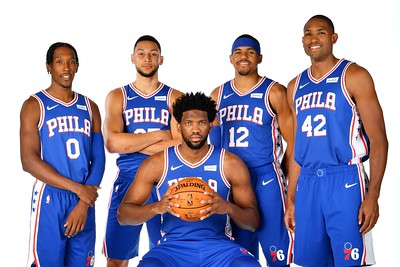
BetMGM has launched a new roulette and blackjack game in partnership with NBA franchise Philadelphia 76ers.

Featuring the team’s branding and colors, BetMGM users can now play Philadelphia 76ers Roulette and Blackjack on BetMGM Casino, Borgata Casino, and Party Casino in New Jersey, and BetMGM Casino and Borgata Casino in Pennsylvania.

Developed by Evolution, the operator’s live dealer partner, the new casino games are part of an existing gaming partnership between BetMGM and the 76ers, which was established in December 2020. As well as the casino games, the partnership also focuses on digital fan engagement campaigns and promotions.

“We are proud to broaden our partnership with the 76ers, a historic NBA franchise, through the introduction of these new branded roulette and blackjack games,” said Oliver Bartlett, director of gaming, BetMGM. “These games are great additions to BetMGM’s ever-growing casino offerings in New Jersey and Pennsylvania.”

76ers Roulette features realistic animations, additional neighbor section bets, and a full results interface. Meanwhile, 76ers Blackjack allows game play in up to five seats and includes popular side bets.

Both games offer an immersive gaming experience by seating players in a three-dimensional suite at the 76ers’ home arena. They also each feature a “go live” button, which pulls players out of their suite, onto the hardwood, and directly into the live version of the game they were playing.

“BetMGM has been an incredible partner over the last two seasons, and we’re excited to showcase our growing collaborations with the introduction of 76ers Roulette and Blackjack,” said Owen Morin, senior vice president, corporate partnerships for the Philadelphia 76ers. “We know that these new, innovative offerings will be a big hit with 76ers fans throughout New Jersey and Pennsylvania.”

BetMGM is also the 76ers’ official sports betting partner and is prominently featured on in-arena signage and across all team digital and social platforms.

PokerStars Preparing to Launch iGaming in Ontario

Online poker operator PokerStars is working with online regulators in Ontario, Canada to launch the province’s regulated iGaming market on April 4.

That launch of iGaming Ontario (iGO) will include online poker, casino and sports betting. iGO is under the umbrella of the Alcohol and Gaming Commission of Ontario (AGCO). Private operators must obtain licenses through the agency.

A spokesman for PokerStars said in a statement: “Canada is very close to our hearts. It’s our home ground and where PokerStars was born over 20 years ago.” The spokesman added, “It will be a historical moment for us to be licensed in our home province.”

The statement continued, “We are working with the AGCO and iGO on processes related to the new provincial regulatory model, and are focused on ensuring that we will continue to have an attractive offering for our community,” adding, “We will update you when we have more interesting details to share.”

PokerStars is one of the most licensed and regulated online poker operators in the world, with licenses in 20 nations.

Ontario is expected to be a closed market at first. That could change if Canada’s provinces sign an agreement to allow operators to pool players across provincial lines. This is something that has been considered, said iGO recently.

MGA Launches iGaming Roulette

Spanish supplier MGA Games, specialists in producing localized content for the online gambling sector, launched its long-awaited Roulette Grand Croupier, an RNG-based European roulette game unique to the market.

MGA Games premieres Roulette Grand Croupier with two exceptional croupiers—El Dioni, the famous former Spanish security guard, and actress, singer, and television collaborator Sonia Monroy. Both celebrities accompany and encourage users during the game, talking to them with original voice-overs. A completely new proposal that ensures a fully immersive experience for players.

Among its technical characteristics, the Roulette Grand Croupier’s 3D engine stands out, unique in the market, as well as its multi-environment and multi-character options. It is also offered in multiple languages to be available in online casinos around the world. The game is to be launched simultaneously for its international operators and will feature localized voice-overs adapted for the different countries.

Roulette Grand Croupier also has a unique graphic interface, an excellent rate of games per hour, the option for quick bets without a croupier, the configuration for minimum and maximum bets, and the monitoring of the latest numbers and statistics in real-time.

As with all MGA Games’ products, Roulette Grand Croupier has also been developed to work across all mobile platforms and includes the company’s Triple View design and sequential loading, avoiding waiting times and providing immediate game play to the player.

Aristocrat Creates iGaming Division, Shuffles Management

Australia’s Aristocrat Leisure Ltd. has announced the creation of a new division dedicate to real-money online gaming, and a shuffling of top management in its gaming division, at the company’s annual general meeting.

Aristocrat, while operating a social/casual gaming division for years, has been alone among the top slot suppliers in delaying the creation of a digital division. Announcement of the new division’s creation follows the failure of Aristocrat’s bid to take over London-based iGaming giant Playtech, PLC.

The new Aristocrat iGaming division will join Aristocrat Gaming, which supplies slots to gaming floors, and Pixel United, the company’s social gaming division, in three units making up Aristocrat Leisure. Heading it will be Mitchell Bowen, who has been CEO of Aristocrat Gaming over the past three years.

Hector Fernandez, the company’s president, Americas for the past two years, will become the new CEO of Aristocrat Gaming.

At the annual meeting, Aristocrat Leisure Limited CEO Trevor Crocker said the new online division will take a “build and buy” approach to scaling the business, developing a proprietary platform and turning to M&A where necessary.

“Achieving a scaled position in online RMG (real-money gaming) will be a medium-term effort. It will take sustained investment over a number of years,” Crocker said. “However, our record shows that Aristocrat knows how to successfully scale businesses.”

“As CEO of the Aristocrat Gaming business over the last three years, Mitchell has cemented his reputation as an industry executive of global standing,” Aristocrat Leisure CEO Trevor Crocker said of Bowen at the meeting. “His strategic and operational impact is evident in the outstanding momentum of the gaming business and its recovery post-Covid, with excellent staff engagement and an unwavering customer focus.”

Of Hernandez, Crocker said, “Throughout his time at Aristocrat, Hector has championed fresh thinking and high performance and worked with a talented team to solidify our Americas business as the market pace-setter, and the supplier of choice. A seamless leadership transition is well under way, and will be supported by additional internal appointments and promotions that further underline the depth of talent we’re delighted to have at Aristocrat.”

Crocker said more details on the new iGaming division will be revealed in May, on its half-year earnings call.

Australian Study Shows Spike in Online Gambling

A new study by the Australian Communications and Media Authority (ACMA) shows that online gaming is on the rest in the nation.

The new research from the ACMA has found that more than one in 10 (11 percent) Australians have reported participating in online gambling at some stage in the previous six months, up from 8 percent in 2020.

The snapshot, undertaken in June 2021 and titled “Online Gambling in Australia,” also showed an increase in sports betting, with 8 percent of Australians betting on sports or racing over the last six months, compared to 5 percent in 2020.

The research provides insight into the impact of Covid-19 on online gambling habits, with 16 percent of Australians who gamble online reporting an increase in their gambling frequency compared to before the pandemic.

Also released was a desktop study into affiliate marketing services that promotes and facilitates access to online gambling services.

The study found commissions for affiliate marketing sites for online gambling are substantially higher than other industries. The study also notes that social media and streaming services such as Twitch are becoming popular ways for affiliates to target gamblers.

In 2017, the ACMA started enforcing new illegal offshore gambling rules under the Interactive Gambling Act 2001, which prohibits online gambling services such as casinos from being provided or advertised to Australians. Since then the ACMA has facilitated the blocking of 354 illegal gambling websites and 21 affiliate marketing sites.

Both research reports will contribute to ACMA decision-making by providing up-to-date market developments and insights into consumer trends.

German State to Permit Online Gaming

The assembly (Landtag) of the German state of North Rhine-Westphalia has voted to allow online casinos, under the Fourth Interstate Gambling Treaty (GlüNeuRStv) approved by Germany’s 16 states.

The state has the largest population of Germany. It follows Schleswig-Holstein in opening its market.

The Landtag announced that five licenses will be issued under regulations that were also released on its website. Online gaming operators will be taxed and pay duties on the games, which may only include roulette, blackjack and baccarat. Licenses could be approved later for online poker and slot machines.

The lawmakers say they took this action to discourage gray and black market operators and offshore firms. They hopes this way to protect consumers against “addictive game designs” and advertising aimed at vulnerable populations.

The federal treaty created an overall gaming regulator, “The Joint Gambling Authority for German Federal States” (Gemeinsamen Glücksspielbehörde der Länder (GGL).) It is expected to launch early next year.

Web Portal Will Guide India’s Young iGaming Market

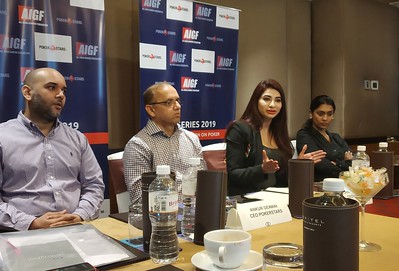
The All India Gaming Federation (AIGF) has launched an online portal to help the country’s young online gaming industry with regulatory issues.

The self-regulatory organization developed the portal in association with g2g.news. It will monitor the latest news on court cases, regulations and policy both at the federal and state level.

AIGF CEO Roland Landers said in a statement: “AIGF is happy to partner with G2G Technologies to launch a new intelligence-based regulatory updates platform.” He added, “The online gaming industry has seen fast-paced developments in various states as well as courts and other forums, but information about the same is not available to all stakeholders in a timely and curated manner.”

The platform can be found at https://aigfintelligence.in..

Cambodia’s Internet Gateway a Problem for iGaming

Cambodia’s national internet gateway may pose challenges for the country’s online gaming sector. All internet service providers and telecom companies were given a February 16 deadline to connect to the gateway. That deadline was postponed, but no one expects the government to abandon the plan.

The delay prompted this statement from the Internet Society, a nonprofit whose avowed mission statement is keep the internet a force for good: “The delay does nothing to change the nature of this gateway—it only pushes worrying effects off into the future.”

Critics of the new requirement say its purpose is to discourage political activism, silence dissent and crack down on non-approved communications, in a model like China’s. And one thing China disapproves of is online gaming. Beginning in 2019, Cambodia hewed to Beijing’s demands with a ban on iGaming. That ban hasn’t prevented gray-market operations, which have flourished in the kingdom.

Human rights activists decry the impending internet gateway because, they say, it will restrict freedom of information while attacking privacy. It will also, they say, hamper the country’s tech development through bad network performance and increased costs.

Recently Cambodia accelerated its restrictions on online gaming through the Telecommunications Regulatory Commission (TRC). That body has banned foreign gaming domains and online gaming platforms.

The TRC issued a statement saying it will “continue to work with the National Police and relevant authorities in charge of telecommunication operations to shut down all the websites that operate online gambling and lottery as they are illegal and against the government’s circular.”

Daniel Li, senior associate business development for Indo-China at IGamiX Management & Consulting, told Asia Gaming Brief the measure should be of concern to China-facing online gambling operators. But an argument can be made in favor of the measure, he added.

“The lack of censorship and control over Cambodia’s internet has been exploited by pedophile rings, cyber-attacks on the financial sectors, scammers as well as misinformation and organized criminal associations,” said Li. “Whilst there are criticisms over the use of this for political gains, critics haven’t pointed out the benefits this would have in safeguarding online users. Consumer protection, fair play anti-money laundering and terrorism financing have been high on (the government’s) agenda.”

Moreover, he added, “The impact on illegally operated online scams and online gaming platforms based in Cambodia may be a little more challenging to detect as their activities are predominantly focused to overseas audiences.”

SkillOnNet Adds Apple Pay to Payment Gateway

SkillOnNet, the operator of and platform behind award-winning online casino brands such as PlayOJO and DrückGlück, has added Apple Pay to its market-leading payment gateway for both deposits and withdrawals.

Apple Pay will be available to all casino brands on the SkillOnNet network in the U.K., Spain, Germany, Canada, Denmark, Portugal and Sweden. This includes Genting Casino, Spin Genie, BacanaPlay, EU Casino and Ahti Games.

Apple Pay is fast and safe, offering high levels of security and unprecedented privacy which has seen it become popular with online casino players in markets around the world.

This is partly because players can make payments to an online casino without having to share their bank account details. Payments are quickly validated either with a passcode, touch ID, face ID or by double-tapping the side of the Apple Watch.

The addition of Apple Pay further strengthens SkillOnNet’s leading payment gateway, which offers internationally recognized options such as Visa, MasterCard, Skrill, Neteller and PayPal as well as localized providers including ecoPayz, Euteller and toditoCash.

“Apple Pay has become one of the most popular payment methods thanks to its ease of use and high levels of security and privacy,” said Michael Golembo, sales and marketing director, EGO for SkillOnNet. “This is certainly the case for online casino players, who like the speed at which it allows them to make deposits and withdrawals securely.

“SkillOnNet has built its reputation of providing players with the best possible experience across all areas of the casino, and this includes payments. The addition of Apple Pay is evidence of our commitment to this, and further establishes us and our casino brands as true market leaders.”

Paysafe, Bally’s Partner on iGaming Payments

Paysafe, a leading specialized payments platform, announced a new partnership with Bally’s Corp. in Bally’s omnichannel online sports betting and iGaming offerings.

Paysafe has launched the partnership by streamlining player deposits for both the new Bally Bet online sportsbook for Arizona and the BallyCasino.com brand for New Jersey.

Through an integration with Paysafe’s payment gateway, the Bally Bet online sportsbook in Arizona will allow players within state lines to easily deposit funds with the brand using their credit or debit cards. After funding their Bally Bet account, sports bettors can then wager on a comprehensive range of sports markets.

Simultaneously, the BallyCasino.com real-money online casino for New Jersey has plugged into the Paysafe payment gateway. Whether players are staying at the Bally’s Atlantic City Casino Resort or enjoying the iCasino product elsewhere in the Garden State, they can now quickly and securely fund their BallyCasino.com account with a credit or debit card, with the transaction seamlessly processed by Paysafe.

Paysafe’s integrations with both BallyCasino.com in New Jersey and Bally Bet in Arizona are expected to be upgraded imminently to allow access to the specialized iGaming payments provider’s suite of alternative payment methods (APMs). These include the Skrill USA digital wallet and Paysafecash and paysafecard eCash solutions for players who prefer wagering online with cash.

For the partnership’s phase two, Paysafe will integrate with numerous Bally Bet online sportsbooks. These integrations are expected to go live in the coming months.

“The Bally’s brand has played a ubiquitous role in the evolution of American and global gaming for nearly 50 years, so we’re incredibly proud of our new partnership,” said Zak Cutler, CEO of North America iGaming at Paysafe. “In the short term, we look forward to streamlining payment acceptance and improving Arizona and New Jersey customer conversions for Bally’s sports-betting and iCasino brands, as we extend the partnership into other states over the longer term.”

Adi Dhandhania, COO of North America for Bally’s Interactive, commented, “As we roll out our digital casino and betting products across North America, we know it is integral to do so in tandem with a first-rate payment processor. This partnership with Paysafe is an important step in elevating the customer experience for all of our users.”

Ocean Casino Names New General Manager

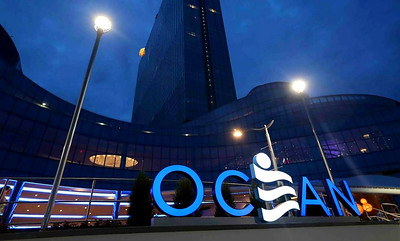
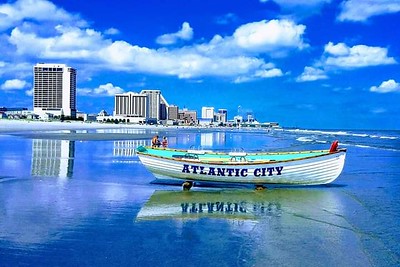
The owners of Atlantic City’s Ocean Casino Resort have tapped former Borgata executive Bill Callahan as its first general manager. The title represents the top post at the property, replacing CEO.

Callahan joined Ocean in July 2020 as senior vice president of hospitality and a year later received a promotion to executive vice president of hospitality and gaming. Last November, Callahan again got a promotion to interim CEO right after New Jersey regulators approved a deal to sell half interest to the Ilitch family. The family owns the Detroit Tigers and Red Wings as well as Little Caesars pizza and a casino in Detroit.

The casino is co-owned by New York hedge fund Luxor Capital Group.

“Bill is a 25-year veteran of the gaming industry who has done a great job since joining the team at Ocean,” said Bruce Dall, president of OCRM, LLC, a new company which owns Ocean. “He has been an integral part of enhancing the guest experience across the property, while helping to build the best hospitality team in the market.”

In terms of overall gambling revenue, Ocean ranks fourth in Atlantic City

While pleased with that success, Callahan has his sights set higher.

“Our ultimate goal in the next few years is to become the No. 1 casino in the market,” he told The Associated Press. “This property is still in its infancy; there’s so much more that it can grow.”

That would entail leapfrogging competitors including Hard Rock, Tropicana and the perennial market leader, Borgata.

“This is a $2.5 billion asset, and it was being run like a $110 million property,” Callahan said. “When we got here, the place was like, ‘How do we not spend money and just get through and not close?’”

In-person gambling revenue increased from $215 million in 2019 to $306 million last year. Only Hard Rock increased its in-person revenue over that time frame, from $324 million to $431 million.

Ocean plans to open 463 hotel rooms and suites on upper floors that were never completed, and a redone sportsbook this year to follow up on $15 million worth of recent investments in and around the casino floor.

NJ Judge to Rule on AC PILOT Suit

On February 8, Atlantic County and the state of New Jersey each pleaded their tax payment case before Superior Court Judge Joseph Marczyk. The judge will render a written decision whether to stop the amended casino payment-in-lieu-of-taxes law until the county’s challenge is done in the courts.

The county filed suit to stop the amended law which cuts back on much needed revenue for the county by eliminating sports betting and internet gaming from the gross gaming calculations, according to the Press of Atlantic City.

The county charges the changes violate a 2018 consent order settlement of the county’s lawsuit against the original 2016 so-called PILOT law. The law as changed will result in the county receiving $15 million to $26 million less through 2026.

John Lloyd, the lawyer for the state, argued the state legislature had the right to define “gross gaming revenue” in any way it saw fit, at any time, regardless of the consent agreement. He also said the original PILOT legislation and the consent order did not specify what constitutes gross gaming revenue, just that the New Jersey Division of Gaming Enforcement would decide.

County attorney Ron Riccio said the understanding was that calculations would include all revenues.

Moreover, Riccio and Marczyk both said the DGE included all sources of revenue in its calculations of “gross gaming revenue.”

In other Atlantic City news, it seems that each week another legislator climbs aboard the ban smoking express. This time around it’s the still powerful state Senator Richard Codey. The former Governor and former Senate president signed the Smoke-Free Air Act as Governor in 2006. The law banned smoking indoors in public places with the casinos exempt, according to NJ Online Gambling.

“Restaurants complained their businesses would suffer, but in fact, the opposite happened,” Codey said. Customers loved the smoke-free environment. The same will happen with the casinos. It’s past time that casino workers have the same protections as every other worker in New Jersey. We need to get this done.”

Codey is the eighth state senator to co-sponsor S264, a bill which simply deletes the portion of the old law that includes an exemption for casinos.

In a statement that’s part of the new bill, supporters say, “The National Institute for Occupational Safety and Health found that casino workers are at greater risk for lung and heart disease because of secondhand smoke, and a study in the Journal of Occupational and Environmental Medicine found that the air in casinos can have up to 50 times more cancer-causing particles than the air on rush-hour highways.”

Cynthia Hallett, president and CEO of the Americans for Nonsmokers’ Rights advocacy group, said that Codey “has heard every single, tired scare tactic the industry can come up with and he knows they aren’t true.”

U.S. Casino Traffic Improves After Slow Start to Year

U.S. casino visitations in January slid downward 2 percent compared to December, and fell 33 percent compared to December 2019 as measured by foot traffic. The traffic expects to turnaround.

“The omicron strain of Covid-19 likely hampered foot traffic in early January as consumer sentiment may have temporarily declined in the near term,” said David Katz, an equity analyst with Jefferies Equities Research. “However, with declining cases, we expect trends to improve through 2022. Although 2021 attendance was meaningfully lower than 2019, we continue to believe there remains a second leg of recovery for consumer demand, supporting our broader bullish stance on casinos.”

“January volume remained 33 percent below 2019 levels, likely the result of diminished international visitors.” Convention and group business was also sluggish, but casinos expect the business to grow in the latter half of 2022 and into 2023.

For Las Vegas locals market volume fell 40 percent compared to January 2019 and off 9 percent from December, Katz said.

Foot traffic dropped in the rest of Nevada from 2019 figures but had a mixed bag in comparison to December: Laughlin up; Reno down, Lake Tahoe also up from December.

In Kentucky, several openings skew performance relative to 2019, but Katz noted that foot traffic compared to 2020 is down 27.5 percent. January traffic increased 5.5 percent over December.

Gaming revenue in Ohio and Illinois for January fell double digits compared to December.

“Some omicron impact started in mid-December, but business largely recovered by the end of January,” Katz said of Penn National and Boyd Gaming. “Margins are slightly weaker versus second quarter and third quarter, but still elevated versus pre-Covid and should be sustainable going forward. Penn Interactive’s (adjusted earnings) loss is better than expected, with a clearer path to profitability that should provide some support for valuation.”

“In our expert’s view, it should take about two years for the new workforce to reach the pre-Covid skill level, which is particularly relevant for those who are responsible for hotel operating costs and execution,” Katz said.

Mask Mandates Dropped in Blue States

In a somewhat coordinated effort, the leaders of 11 states that previously had some kind of mask mandate as a response to the rapid increase of Covid cases decided to drop the requirement. Some of them did it immediately, others will be over by the end of February. Those include several states with big gaming enterprises, which welcomed the relaxation. While the cases of the omicron variety of Covid still remains high, the governors claimed that the normalization of hospitalizations and a lower death rate were enough to get them to act. The states that have or plan to drop the universal mask mandate are:

• California: Governor Gavin Newsom dropped what might have been the most draconian restrictions in the U.S. as of February 15. Los Angeles County will keep it in place for the time being for indoor gatherings, but will drop it for “mega” events. But they were still required for last weekend’s Super Bowl.

California’s casinos will not be requiring masks after February 15.

• Delaware: Mandatory masks expired on February 11 in all indoor locations.

• Illinois: The mask mandate will end on February 28, but local jurisdictions can enforce them if infections rise.

• Nevada: Governor Steve Sisolak instituted a mask mandate for all indoor spaces, including casinos and entertainment venues, in July, and had become under increasing pressure to relax it from the gaming, convention and entertainment businesses in the state. He’s also expected to face a tough re-election battle in November. Last Thursday, he dropped the mandate effective immediately.

“Some people think we were ready long ago, some people think we’re not ready yet,” Sisolak said. “I feel now is the appropriate time to move forward.”

Sisolak did not, however, terminate the state of emergency he imposed at the start of the pandemic, keeping the powers he granted to himself in place.

Some casino executives celebrated the news, and most Las Vegas Strip casinos immediately recognized the decision.

“Effective immediately, guests and employees are no longer required to wear masks indoors or outdoors,” MGM Resorts CEO & President Bill Hornbuckle wrote in a letter to employees. But he said MGM would still follow government-issued mandates that remain in place in Massachusetts, Maryland and Michigan.

• New York: Also one of the most extreme states locking people down and imposing mandates, New York Governor Kathy Hockul also eliminated the mask mandate immediately.

“This is what we’ve been waiting for, tremendous progress after two long years,” Gov. Kathy Hochul said. “We had a mask or vax requirement for businesses … and at this time we say it is the right decision to lift this mandate.”

• Oregon: The mandate in Oregon will remain in place until March 31, according to the state health department, which tied the end of masks to decreased infections and increase vaccinations.

• Washington: Governor Jay Inslee deemed the time was right to relax the outdoor mask mandate on February 18 but is keeping the indoor restriction in place for the time being.

“Today is not the day to lift all of the masking requirements,” Inslee said during a press conference. “It will be, and when we can do this, it is no longer a matter of ‘if,’ it is a question of ‘when.'”

Super Bowl Bets Rise, ‘Mattress Mac’ Sets Record

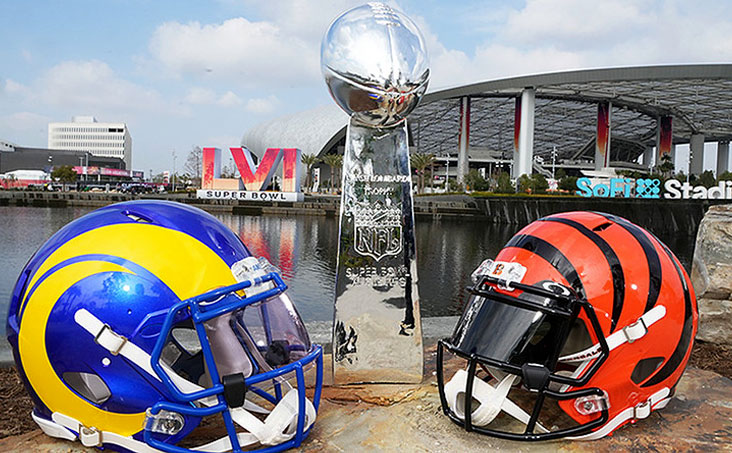
The weekend’s Super Bowl matchup may have drawn yawns from some Americans, who will tune in just to be entertained by the commercials. But for sportsbooks, the Rams-Bengals clash will set a record. According to the American Gaming Association (AGA), 31.4 million Americans will fork over a record $7.6 billion in wagers on the Big Game.

Due to the growth of legal sports betting, both in person and online, the volume of bets could jump 35 percent year over year, while the handle should climb 78 percent.

Seventy-six percent of prospective bettors declared it was important wager through a legal sportsbook rather than illegal channels, an 11 percent increase year over year. In addition to legal sportsbooks and illegal bookies, bettors also included people making casual wagers with friends or relatives and in office pools.

“Americans have never been more interested in legal sports wagering,” said AGA President and CEO Bill Miller. “The growth of legal options across the country not only protects fans and the integrity of games and bets, but also puts illegal operators on notice that their time is limited.”

Some 30 states plus Washington D.C. offer legal sports gambling, including 10 new states. In other stats:

  • 2 million American adults will place traditional sports wagers online, at a retail sportsbook or with a bookie.
  • 5 million plan to bet casually with friends or as part of a pool or squares contest, up 23 percent. The association said there is some overlap among those two groups.
  • 76 percent of bettors say it is important for themselves to bet through a legal operator, up 11 percent from last year.
  • As to favored teams, 55 percent planned to put their dough on the Rams. Many legal sportsbooks indicated more bets and total money being wagered on Cincinnati.

FanDuel, the official odds provider for the Associated Press, reports that 59 percent of bets were on Cincinnati to cover the four-point spread as an underdog. As for moneyline bets with no spread, before the game 76 percent favored the Bengals.

“You have a young guy like Joe Burrow, the Bengals quarterback, and a big market like Los Angeles,” said AGA senior director, research David Forman during a phone interview. “The playoffs have been extremely exciting, and you have more widespread availability of legal betting and that all comes together to create a lot of enthusiasm and expectation for the game this year.”

Forman added that last year’s numbers were still impacted somewhat by Covid-19.

“Last year we only had 21 legalized states. This year we’re at 31,” counting the District of Columbia. “Between the people living in new markets and the people in existing markets who are now more aware of all their legal betting options and jumping on that bandwagon goes a long way to explaining why so many more people are going to bet this year, especially placing traditional bets with legal bookmakers.

“It’s encouraging that (legal sports betting on the Super Bowl) keeps going up every year. I think that a big part of that is consumers becoming more aware that there are legal and illegal sportsbooks and that they have an option.”

But the Super Bowl is one of the most perilous times of year for those suffering from a gambling problem. Harry Levant, a public health advocate from Philadelphia and a recovering gambling addict, is an official with the group Stop Predatory Gambling. He said the rising tide of sports betting advertising, with numerous incentives, reinforces the issue. “One out of two people struggling with a gambling problem contemplates suicide, and one out of five will attempt suicide,” he said. “I am one of those one out of five.”

In-game betting makes the situation even worse for a compulsive gambler.

“No longer is gambling limited to who’s going to win the game,” Levant added. “Now gambling is on every play. Keep them gambling, keep chasing action.”

The prediction of record wagers will be accompanied by an advertising blitz plugging various sportsbooks. Caesars Sportsbook and DraftKings expected to run ads during the game. FanDuel launched a new campaign the week leading up to the game, according to Legal Sports Report.

During games, the NFL permitted up to six sportsbook ads per broadcast. Caesars spent a leading $73.1 million, according to Ad Age. FanDuel was second at $47.3 million.

Meanwhile, Jim “Mattress Mack” McIngvale couldn’t make a legal bet in his hometown of Houston, Texas, so off he went to Louisiana, where he aimed to place the largest legal sports wager in U.S. history. Since mobile sports betting just became legal in Louisiana, he just had to cross the border to make his mobile bet.

“Louisiana just became legal about three weeks ago, so it makes it real convenient for me,” Mack said. “But placing this bet in LSU country where they love Joe (Burrow) also figured into it. Tons of LSU fans are coming out for this promotion where if Joe wins the Big Game, they get the furniture free.”

At a rest stop in Vinton, Louisiana, Mack placed a Caesars Sportsbook mobile app and placed $5 million on Bengals moneyline +170 against the Rams in Super Bowl LVI. He had wagered $4,534,000 on Cincinnati +170 last week at Caesars, staking a total of $9,534,000 for a potential win of $16,207,800.

New York Addresses Uptick in Problem Gambling

Mobile sports betting in New York is a hit. No surprise there. But problem gambling interventions have seen a concurrent increase. Anticipating the uptick, the state earmarked $6 million a year from its gaming tax revenues to help problem bettors, according to NY Online Gambling.

When a New York state resident gambles more than $2,500 in a given month at an online sportsbook, the sportsbook must put a hold on the account and contact the bettor to see if there is a problem. At that point, the sportsbook may unfreeze the account, and even reopen credit card transactions, but has to report the incident to the New York State Gaming Commission.

Gamblers who believe their habit is becoming an addiction can contact one of the problem gaming offices.

“You knew these calls were going to increase,” said State Senator Joe Addabbo. “We are finally in position to help these individuals, whereas before, we didn’t know who they were. There was this unknown population going across the bridges to New Jersey or Pennsylvania or doing it illegally.”

Some 2 percent of Americans, or about 6.6 million people, have issues with gambling addiction, according to the New York Times. In New York, the gambling commission indicates 668,000 residents deal with this problem.

In New Jersey, calls to that state’s gambling hotline involving sports betting fell between 4 percent and 8 percent before legalization and rose to 35 percent by 2020.

“As legislators, we have to stand ready to improve anything that needs improving in terms of mobile sports betting, whether that’s the mechanisms themselves or addiction issues,” Addabbo said.

In related news, a webinar led by Les Bernal, national director of Stop Predatory Gambling tackled a growing concern: gambling ads.

Titled America’s New Storm of Gambling Advertising: A Threat to Public Health, the webinar featured two panelists—Mark Gottlieb, executive director of the Public Health Advocacy Institute and Harry Levant, founder of the Ethical Gambling Reform Group. Gottlieb compared the situation to tobacco usage, according to BettingUSA.com. Both products are easy to conceal and designed to change behaviors. Both can cause latent harms that may take years to surface.

Sports betting is no longer a standalone product; instead, it’s woven into sporting events. Taken to its extreme, Gottlieb said social harms include

  • Housing insecurity and homelessness
  • Depression and suicide
  • Debt
  • Domestic violence

His solution? Reasonable restrictions on the industry to rein in these practices.

Harry Levant said the repeal of PASPA in 2018 created a public health crisis. Levant doesn’t trust self-regulation of the industry. He questions whether it makes for sound public policy.

A major sticking point related to the partnerships between gambling companies and teams, leagues, the media, and states. According to Levant, gambling hooks customers by having access to customers, keeping them in constant action, which will cause them to chase gambling highs and losses.

Advertising is everywhere, occurring at all hours, and routinely uses celebrity participants.

“Risk-free” bets are anything but, Levant said. “Customers who forego reading the fine print will discover that rather than a refund, they receive site credits, which leads to more bets and chasing.”

Poll: Nevada Voters Support Gaming Tax Increase

A poll published February 3 in the Nevada Independent showed that most Silver State voters favor a casino tax increase that would support public education, but don’t want a sales tax hike for the same purpose. The measure is backed by the teachers’ union.

The online poll was conducted by the Independent and OH Predictive Insights from January 19 to January 26. It has a margin of error of 3.5 percent. Voters favored a plan that would raise the gaming tax rate for larger casinos from 6.75 percent to 9.75 percent.

Of the 59 percent supporting the casino tax increase, roughly half said they would “definitely” support the measure, while the remaining half said they would “probably” vote for it. Of 25 percent opposed, just over half (about 14 percent of the total) said they would “probably” vote against it, while the remainder (about 11 percent of the total) said they would definitely oppose it.

Among Democrats, 75 percent of respondents said they would support it, with 10 percent opposed. Opinions were more split among Republicans, who fell 41 percent in support and 43 percent opposed. Independents also tended toward support, with 59 percent for and 23 percent opposed.

Nevada has one of the lowest gaming tax rates in the country, though the increase has been criticized by the Nevada Resort Association, which sued to stop the measure in early 2020 and characterized the change as a “44 percent tax increase” on the gaming industry.

But the other initiative—one that would raise the state’s baseline sales tax to 8.35 percent to help fund education, effectively making the tax among the highest nationwide—was unpopular across all demographic groups.

“When you tie a tax to a discretionary item or vice item to education, pretty much all of them are always in the 60 percent range from my experience,” said Mike Noble, chief of research and managing partner of OH Predictive Insights.

The ballot initiatives were first proposed in early 2020 by the Clark County Education Association. According to the Independent, they “were used in part as a bargaining chip in the 2021 legislative session, where Democratic lawmakers … eventually let both initiatives die without any legislative action, in effect sending both to the ballot.

“Democrats later conceded to union leader’s requests to raise taxes legislatively, imposing an additional tax on the mining industry to support education,” the publication reported.

Five Gaming Bills Introduced in Hawaii

Hawaii and Utah are the only U.S. states without gambling. Now the Aloha State has several active gaming bills in the legislature. And they are very different from each other.

Each bill is being considered by four committees: Economic Development, Customer Protection and Commerce, Judiciary, and Hawaiian Affairs and Finance. Each committee would have to agree to move any legislation forward.

The unanimous support requirement has traditionally kept the legislature from moving on gaming. But that hasn’t prevented multiple proposals over 30 years. In 1995, a lawmaker proposed a floating casino in Honolulu Harbor. At the time, the state estimated that six such floating casinos could generate up to $104 million in taxes.

Last year, six gambling bills were introduced and died. One of them was proposed by the Department of Hawaiian Home Lands. It proposed a casino on Oahu to help buy land for Native Hawaiians. About 28,000 are on a waiting list. That bill could be revived this year. But at the current rate such homes are being built, the department estimates it will take 182 years to complete the task.

House Bill 772 would authorize one, members-only casino in Waikiki with a 10-year license. It could not be located in a hotel. However, guests at Oahu hotels would be allowed to play for a $20-per-day fee. The bill would also create the Hawaii Gaming Control Commission, which would vet applicants for the single license. It would tax gross gaming receipts, create a state gaming fund and operate a program for problem gamblers. Development costs of the casino would be borne by the owner.

The bill’s author, House Vice Speaker John Mizuno, sees it as a way to bring back the entertainment economy in Waikiki, which has declined in recent years.

House Bill 1973 would authorize sports betting under the umbrella of the Department of Business, Economic Development and Tourism. Profits would be taxed at 10 percent of gross. Operators such as BetMGM or DraftKings—an unlimited number of them—could operate apps and sportsbook websites. Licenses would cost $50,000, would be good for three years, and would cost $50,000 to renew.

The bill’s author, Rep. Chris Todd, says the 10 percent tax is just to get the conversation started, and that he’s open to other percentages.

Hawaii doesn’t have a lottery. House Bill 2040 and a similar bill in the Senate would create one: The Hawaiian Lottery and Gaming Corp. As in other states, it would regulate sports betting. House Bill 2485 and a companion bill in the Senate would also create a lottery commission. Profits would be used to fight invasive species, a big problem in the state.

Rep. 1815, also authored by Mizuno, is a sports betting bill that would allow operators to take sports bets online but no brick-and-mortar locations. It would tax it at 55 percent on gross.

This is an election year, and all 76 legislative seats are in play. For that reason, Mizuno doesn’t expect any votes on his gaming bills. He told Honolulu Civil Beat, “I just don’t feel the legislature is ready to go all out and pass a casino bill.” He does hope to start the conversation rolling.

To those who fear the problems associated with gaming addiction, Mizuno counters, “A lot of that fear can be taken out by saying this casino is for people that are actually staying in a Waikiki hotel or any hotel on Oahu.” That means natives wouldn’t be subject to gaming’s corrupting influences. He uses as an example casinos in Singapore, which make it very expensive for locals to enter.

Mizuno likes the models of states like Rhode Island or Maine, states that are limited to two casinos.

Sports betting is proliferating across the U.S. as can be seen from the billions bet on this year’s Super Bowl. It is legal in 33 states. Because it is so widespread, some observers think it might be the gaming activity with the best chance to be legalized in Hawaii.

Kahil Philander, a Washington State University professor who specializes in gaming, told Civil Beat: “In some cases, the public sees sports betting as something much less taboo than casino gaming and other gambling products.”

The problem is that just legalizing sports betting wouldn’t bring in enough tax revenue to justify it alone. Although there is a multibillion-dollar black market in sports betting in Hawaii, even if that market were legalized, sportsbooks normally keep about 5 percent as profit. A state tax would then skim off some from that.

According to John Holden, an Oklahoma State University professor specializing in gaming law, “A state looking to patch all the potholes or pay teachers a six-figure salary is going to be really disappointed.”

However, the ease of sports betting by app could erode the popularity of black market bookies, says Holden. “If you have mobile sports betting, we could all do that from the couch.”

Some lawmakers want to also legalize daily fantasy sports. Although proponents argue that these are games of skill, Hawaii’s Attorney General disagrees. It has ruled that DFS is a game of chance, and therefore illegal.

Rep. Angus McKelvey’s House Bill 2004 would change that. He argues that DFS games are ruled by many elements, such as how individual “players” on teams match up against other teams. “It’s not something like roulette,” he said. “It’s a very skill-based thing that takes into account a number of factors.”

His bill would exempt DFS from the state’s definition of gambling. But it would only allow operators of online DFS websites—think DraftKings or FanDuel— to operate in the state. He envisions these websites working with the Department of Taxation to pay the state’s share of revenues.

HB 2004 is probably lifeless for this year, although McKelvey is likely to work on the bill to reintroduce it next year. As part of the groundwork, DHHL want a study on potential revenue that could be generated by a resort-casino on Hawaiian homelands, as well as impacts on public health and safety that a casino might have. In yet another piece of legislation, Senator Jarrett Keohokalole and Rep. Dan Holt are introducing the DHHL proposal via Senate Bill 2608 and House Bill 1962. They would give the DHHL $500,000 to conduct the study, which would be due before the 2023 legislative session.

As the discussion continues, factions remain divided on the issue. Rep. Sean Quinlan said, “At some point, this is something we absolutely should do. It’s a huge market, and we’d be missing out on tax revenues.”

State Senator Kurt Fevella countered, “I don’t want that in our community. It’s only going be a tragedy for my community.”

All the while, the underground gambling economy continues to flourish.

Maryland Bill Would Bring Slots to Airport

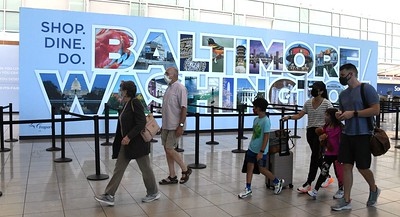
Maryland lawmakers will soon consider a proposed bill sponsored by a Baltimore County delegate that would bring slot machines to Baltimore’s BWI-Thurgood Marshall airport.

“Delayed flights, people are still at the airport hanging out, nothing to do, this is a captive audience and it’s an opportunity for us to get outside money,” said Baltimore County Delegate Ric Metzgar, R-District 6, the bill’s lead sponsor according to WBAL-TV news.

The bill may run into opposition from the Maryland Aviation Administration, which is concerned about space and said the airport only has room for 1,000 machines. The MAA is not taking an official position on the legislation.

Under the bill, part of the revenues would go to the Education Trust Fund and to the community around the facility.

“If it is going to the community to help and education and stuff, I think it would be a great idea,” said traveler Bonnie Polster, according to the WBAL report.

“I think it is a great opportunity for income for the state of Maryland for many, many years to come,” Metzgar said.

Similar bill have failed in previous legislative sessions in Maryland.