Author: Casino Connection Staff

European Affiliates Hope to Crack U.S. iGaming Market

European online gaming affiliates are hoping 2022 will be the year that they crack the U.S. market in a big way.

Online gaming affiliates refer players to online casinos, sportsbooks and other websites, including daily fantasy sports, poker and bingo.

The latest success this year was Gambling.com, a company founded in 2006, which was confirmed to enter the New York online gaming market. It accomplished this through the purchase last year of the U.S-based RotoWire.com, a DFS company founded in 1997.

RotoWire President Peter Schoenke said of the acquisition, “The U.S. is entering a whole new world of sports fandom and combining forces with Gambling.com Group will accelerate RotoWire’s growth. Gambling.com Group’s resources and experience will help RotoWire rapidly advance its sports betting offerings to take full advantage of this new era.”

This marriage has brought Gambling.com’s stock attention by U.S. buyers who like the fact that it is backed by a well-established European company.

A European affiliate that entered the U.S. market early on was Better Collective. Now that more states are joining the sportsbook parade the company expects to take advantage.

Operating in the U.S. is harder than in Europe because generally speaking, European companies do not need to be licensed. Also, navigating the shoals of 50 separate jurisdictions can be tricky—which illustrates why entering the market through an existing U.S. company can be a wise choice.

Scientific Games Adds Wazdan to OpenGaming

Scientific Games Corp. has signed exclusive aggregation agreement with multi-award-winning iGaming studio Wazdan, under which SG will add Wazdan games to its OpenGaming platform.

The two companies will work closely together to offer players mobile-first games in the states of New Jersey and West Virginia, starting in the first quarter of 2022.

Founded in 2010, Wazdan has grown rapidly in recent years, releasing over 140 games in 17 jurisdictions worldwide, including new and established European markets such as the U.K., Malta, Sweden, Denmark, Lithuania, Spain, Italy and Greece.

Wazdan’s focus on the North American market will intensify in the coming months, with the Malta-based studio currently in the process of finalizing supplier licenses in Michigan and Pennsylvania.

OpenGaming customers will have access to popular games such as Sizzling 777 Deluxe, Power of Gods: the Pantheon, Black Horse Deluxe, and Relic Hunters and the Book of Faith, as well as new Hold the Jackpot hits, such as Sun of Fortune and Burning Stars 3, with more to follow over the coming months.

“This exclusive aggregation partnership further strengthens the wide range of games we can offer players in key regulated states across the U.S. through our OpenGaming platform, which incorporate responsible gaming tools,” said Steve Mayes, partnership director at SG Digital.

“Everyone within the industry knows how talented the team at Wazdan are and what they bring to the table. We thoroughly believe players across the U.S. will enjoy their fantastic portfolio of slots just as much as everyone else across the world does. Finally, I’d like to thank Bekki D’Agata at Wazdan for her assistance in getting this major deal over the line.”

Michal Imiolek, chief operating officer at Wazdan NJ LLC, added, “Scientific Games is a company that needs no introduction, being one of the leading players in the industry. We’re delighted to partner with them in this exclusive agreement.

“Our progress in the United States has been our greatest success this year. We can’t wait to work closely with Scientific Games going forward and expand our footprint in the U.S., providing players with immersive experiences.”

Snipp to Acquire Gambit Digital

Canada’s Snipp Interactive Inc., a Platform-as-a-Service (PaaS) company in the global loyalty and promotions sector, announced it has entered into a binding acquisition agreement with each shareholder of Gambit to acquire Gambit Digital Promotions Inc., including its wholly-owned subsidiary Gambit Rewards Inc.

Gambit is the market’s regulator-approved consumer network that is the pioneer in integrating loyalty programs with online gaming and sports betting in America. Gambit’s proprietary and patent-pending platform for turning loyalty points into free-to-play tokens (“Loyalty Gaming”) provides leading brands across the United States with a unique solution to unlocking the $100 billion value in unused loyalty points, while at the same time offering fans a new way to engage with the high-growth vertical of online gaming and sports betting.

Launched in 2019 as a solution for gamifying rewards programs, Gambit players can use various loyalty points to play for actual cash winnings, cryptocurrencies, charity contributions or other prizes, without risking any real money. Gambit enables players to convert their accumulated points in their existing rewards programs to Gambit Play Tokens, which can then be used to participate in online gaming and live sports betting opportunities, and to spend their Gambit winnings on a variety of growing incentives.

All activity is centralized at www.gambitrewards.com, creating a single hub for Loyalty Gaming across the entire rewards landscape. Gambit’s early investors include well-known gaming executives and entrepreneurs Matt Davey and David VanEgmond.

The completion of the acquisition of Gambit is subject to customary closing conditions, including, but not limited to, the applicable regulatory approvals, including the approval of the TSX Venture Exchange.

Argentine Province Legalizes iGaming

The parliament of Córdoba, Argentina has approved a bill legalizing online gaming. It awaits the signature of Governor Juan Schiaretti to become law.

The new law allows casino games, sports betting and lotteries online. Up to five licenses will be granted.

Each Argentine state is allowed to pursue its own path in gaming. The first state to legalize iGaming was Buenos Aires, which gave seven licenses in 2021.

Licensees are allowed the develop their own offerings. The licenses are good for 20 years. Foreign participation is allowed, as long as the foreign operators partner with a license holder and limit participation to 35 percent of operations.

Advertising of online gaming is not permitted without the explicit approval of the government.

Indian State Pursues Online Gaming Ban

Despite being rocked back on its attempt to ban online gaming by a ruling of the Madras High Court, the government of the Indian state of Tamil Nadu insists it will ban such games.

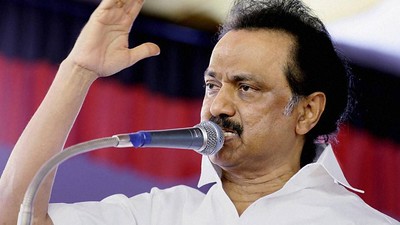
On January 6, Tamil Nadu Chief Minister MK Stalin promised to end online games with stakes “soon.”

Last year the government adopted an ordinance making online games with stakes illegal, citing alleged examples of players committing suicide after losing large sums. But the Madras High Court overturned the ban after online operators sued. They argued that the ban was “overly paternalistic.”

Atlantic County Files Suit to Stop AC PILOT Law

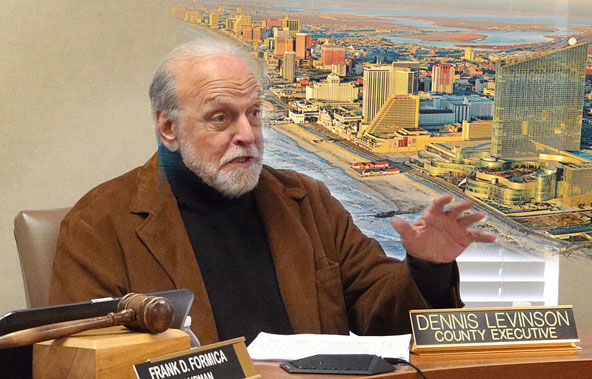
Atlantic County, New Jersey Executive Dennis Levinson had promised a lawsuit if state legislators approved an amended version of the PILOT program. The acronym stands for payments in lieu of taxes; the program would subtract sports betting and internet gaming revenues from the calculation of what casinos owe.

Despite Levinson’s threat, the state Senate and Assembly passed the amended PILOT on December 20 and Governor Phil Murphy signed it into law on December 21. The county filed a lawsuit on the morning of December 22, according to the Press of Atlantic City.

“What we want to do is let them know we had a consent agreement they violated,” Levinson said. “It’s just a question of fundamental fairness.”

The county also sued the state over the original 2016 PILOT law and settled the litigation in 2018. A spokesman for Murphy declined comment on pending litigation. The county filed an order to show cause in Atlantic County Superior Court.

The change would lower the payments from the casinos, who argued that the two streams of revenue involve third-party operators who receive the bulk of the revenue but do not contribute to PILOT.

For 2022, the new PILOT gives the county the same amount it received in 2021, about $17.5 million. However, the 2021 payments were based on casino revenues from 2020, a year impacted by the Covid-19 pandemic.

The state Office of Legislative Services has estimated the county will lose about $3.9 million in 2022 under the new law, but the county estimates its losses at $5 million to $7 million a year. The office says the city will lose money as well but will make some of that up with an increase in the investment alternative tax, which the county does not share.

“To show you how bad this is, the sponsor of the legislation can’t even support it,” Levinson said of Assemblyman John Armato, who voted against the bill along with Assemblyman Vince Mazzeo.

“They realized they couldn’t do that to their friends and neighbors who live in Atlantic County,” Levinson said.

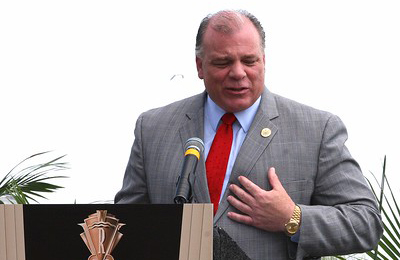
Outgoing Senate President Steve Sweeney, who sponsored the Senate amendment bill, said Atlantic County received too much money from the original legislation. But the 13.5 percent figure was set as part of the court settlement. Sweeney said as many as four of Atlantic City’s nine casinos would be in danger of closing without the amendment. But he offered nothing to back that statement up.

“Like the original PILOT law that averted casino bankruptcies, these new laws were needed to prevent the potential closures of two to four casinos in the wake of two rocky years of reduced tourism and convention cancellations due to Covid-19 restrictions and fears,” Sweeney said in a press release.

The Casino Association of New Jersey said in a statement the changes “will protect thousands of jobs and provide certainty and stability to the market” while helping to improve Atlantic City’s infrastructure and improve safety in the resort.

The county suit in 2016 challenged the constitutionality of the original PILOT bill. In 2018 the county agreed to a settlement for specific percentages. Levinson has said the new bill violates that settlement.

The PILOT amendments were intended to help the casinos recover from the coronavirus pandemic by reducing large increases in payments expected if the bill was not approved. While the casinos would pay more to everyone next year over 2021 even with the new bill, the payments for the current year were based on the depressed revenues in 2020.

The casinos say their core business—in-person gamblers—has declined compared to pre-pandemic 2019.

The new guys in town, Hard Rock Hotel & Casino Atlantic City and Ocean Casino Resort, say their revenue has risen when compared to 2019, but the other seven properties were down 22 percent.

The thrust of the initial bill was the casino industry successful appeal of their property tax assessments after five casinos shut their doors, sending gaming revenue in the resort downwards.

The successful appeals proved devastating to Atlantic City’s budget. The PILOT bill stopped further appeals while coming up with a financial formula which would result in a budget the city can count on.

Before the case goes to court, Superior Court Judge Joseph Marczyk has scheduled a conference with lawyers on January 4, and he will order mediation to settle the lawsuit. He asked both sides to come up with potential mediators.

The county asked for a temporary restraining order against the new law, but the judge said no.

Marczyk said the case “involves important matters of public policy and complex financial issues and calculations” and he needed more details before such a decision.

Levinson said a lot of lawmakers were embarrassed by the way the bills got fast-tracked.

“They promised the casinos they would do this, and they did,” Levinson said. “They didn’t say it was going to stick.”

A spokesman for Gov. Phil Murphy said the office does not comment on pending litigation.

The new legislation lowers casino payments from an estimated $165 million under the current law to $110 million under the new one. It gives the county the same amount in 2022 it received this year, about $17.5 million, but this year’s payments were based on depressed casino revenues from 2020 during the worst of the Covid-19 pandemic.

New York State Gets 30 Requests for Downstate Casinos

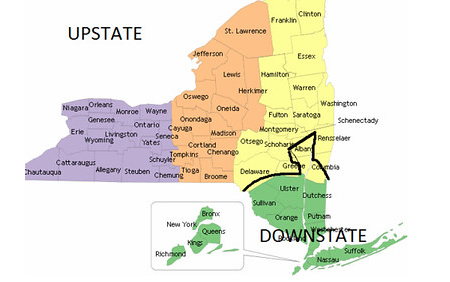
The quest for the final three casino licenses in the New York City area has begun. The New York State Gaming Commission received 30 requests for information, an informal gauge of interest.

Of the 30, eight come from casino operators: MGM Resorts International, Okada Manila International, Las Vegas Sands Corp., Wynn Resorts, Rush Street Gaming, Genting New York LLC, Hard Rock International, and Bally’s Corp.

Here’s the potential rub. Of the eight, two of them have their foot into downstate New York already. MGM Resorts operates the Empire City Casino at Yonkers Raceway, while Genting runs Resorts World New York City, at Aqueduct Racetrack in Queens. Neither is a full-scale casino. Along with Jake’s 58 Casino in Islandia, they offer video lottery terminals and electronic table games.

There is growing support to make at least Empire and Resorts World into full-fledged casinos, which would just leave a single gaming hall license.

Getting full approval means live table games, slot machines and a sportsbook.

In 2013, voters approved a constitutional amendment legalizing commercial casinos, with up to seven across the state. Four of them went upstate and downstate casinos were not permitted to open for seven years from the first opening of the other venues. The period, designed to give the upstate casinos a head start to build up business, ends in 2023. But some lawmakers want to move forward now.

Senate Racing, Gaming, and Wagering Committee Chairman, Joseph Addabbo, estimated the three licenses could provide $2 billion in funding for the state.

Addabbo and his Assembly counterpart Gary Pretlow, favor a plan to give Empire City and Resorts World full casino licenses. They’re not alone.

The New Bronx Chamber of Commerce sent a letter supporting the plan to elevate Empire City. Chamber President Lisa Sorin said almost 30 percent of Empire City’s workers live in the Bronx.

“The expansion of its operations will generate additional opportunities for job creation benefiting Bronxites,” she said.

Westchester County Executive George Latimer added that converting Empire City would create 2,500 new direct jobs and 7,500 indirect jobs.

New York City Council Member Adrienne Adams wrote in support of Genting’s Resort World, which operates in her district. She said Genting has invested hundreds of millions into the community and has helped spur economic development in the area.

Rush Street Gaming, which operates Rivers Schenectady in upstate New York, want the commission to establish a request for proposal process that lays out the requirements and how the commission will evaluate submissions. The company also says all licenses should be subject to open competition.

“It is critical that there be a level playing field for all potential applicants within the process, creating an impartial system and incorporating community input and assessment of current operations,” Rush Street said.

In other New York news, with the final stages in motion for mobile sports betting to launch by Super Bowl, supporters expressed concern over the high tax rate of 51 percent. Will it drag betting down? Will the tax rate keep bettors going into New Jersey to wager as they did before the passage of mobile sports betting?

Speaking at the National Council of Legislators from Gaming States conference in Austin, Texas, industry lobbyist and attorney Bill Pascrell III compared the approach to socialism.

He told NY Online Gambling, “When you’re taxing someone at 51 percent, with a thin margin, it’s essentially a socialist gaming empire,” Pascrell said. “The state is essentially their partner without having to spend any money.”

Some 25 percent of New Jersey’s online gaming comes from New Yorkers, Pascrell said. He doesn’t expect that to change much. To avoid the high taxes, New Yorkers could still travel to New Jersey to bet, where the rate is 14.25 percent.

“The incentive for all of the major operators, and I’m not going to single anybody out, is they’re going to be buying buses, caravans, and limousine services to get their players to move across the river,” Pascrell said. “I think it’s very short-sighted of New York.”

Is the size of the market and the cachet of the nation’s media capital enough to neutralize the hefty tax burdens? So far, casino operators say they’re ready to go.

“For FanDuel, we’re thrilled to participate in New York and it’s an exciting state,” said Stacie Stern, the sportsbook’s government affairs director. “Every state has its own thing going. I just think that states really do cling to their own identities and do things in their own ways. Or, maybe they look at it as a lesson in what not to do.”

Brandt Iden, head of government affairs for Sportradar U.S., called the tax rates in New York “astronomical” and speculated they could be back-breaking to operators.

“We’re quickly killing the golden goose. If you tax the heck out of it, it will die. You’re not supposed to do that as a legislator.”

Pascrell doesn’t know why New York didn’t adopt the New Jersey model of relatively low taxes.

“I don’t see how they’ll ever be able to turn a profit in New York and justify massive investment there which is needed to get a system up and running and done in a way that checks all the boxes,” Pascrell said. “Many think it has the potential to be a crown jewel, but when you put a tax rate in like that at its inception, you will see that that will have to be revisited. But tax rates are very hard to revisit either up or down.”

Queens Councilwoman Adrienne Adams is pushing to have Aqueduct become one of the three licensees downstate, according to the New York Post. She gave a December 8 letter to Gaming Commission officials seeking a permit to expand Resorts World slots parlor into a full-fledged casino with live card table games.

“Resorts World has contributed mightily to New York’s economy, creating jobs for local residents, and spurring economic development in the borough of Queens,” Adams wrote.

Resorts World employs more than 1,000 most people of color from Queens. Gaming giant Genting always envisioned expanding to a full-fledged casino when it opened a decade ago.

Meanwhile politicians in Westchester County sent letters to the gaming commission urging them to award a full casino license to the MGM Resorts’ Empire City Casino at Yonkers Raceway, including Westchester County Executive George Latimer and Mayor Mike Spano.

In related news, Rush Street, which owns Schenectady’s Rivers Casino, also wants in.

“We are developers of destination casinos, and we are proud of how we have transformed local communities,” reads part of their presentation, which talks about the contributions they have made to Schenectady and other cities where they have developed casinos including Chicago, Philadelphia and Niagara Falls, Ontario, according to the Albany Times-Union.

One of the respondents, the Water Club, located along the East River in Manhattan, proposes a small, exclusive casino, without slot machines. It would be the kind of place where “maybe the next James Bond can play a hand of poker in New York,” according to their response.

An East River casino proposal comes from Water Club restaurateur Michael “Buzzy” O’Keeffe and would be located next to the floating eatery off East 30th Street, according to the New York Post.

He envisioned table games but no slot machines.

“In the Borough of Manhattan, from river to river, this is the most viable location to place a smaller boutique (Monte Carlo) style casino that is easily expandable,” O’Keeffe wrote in his proposal. “An upscale Monte Carlo style casino on the East Side, Mid-Manhattan, and very visible along the FDR Drive on the East River.”

The casino would be 24,000 square feet and would have a modest 100-car parking lot.

He said 450 feet of “open deep-water pier” could be used to build more gaming facility space or “float in a custom casino.”

“Building on the waterfront is far less expensive than building in Midtown Manhattan. It is the easiest deal for the state and the city to make, as it already exists, and is ready to go,” O’Keeffe said.

“New York, the world’s capital, should have a beautiful and upscale casino (so maybe the next James Bond can play a hand of poker in New York),” he added. “One casino in Manhattan will end up as the hottest casino in the world.”

Rush Street Gaming was among the eight casino operators who tossed their chips into ring in search of one of three downstate casino licenses in New York. The company is also the only one to opt out of redacting much of their proposal so prying eyes can’t tell what’s going on.

The decision to go public with its request to allow the public access provides some positive media publicity. But is begs the question why the other seven didn’t follow suit, according to NY Online Gambling.

The commission itself noted in its statement, “Most redactions reflect requested positions of the submitter about material exempted from public disclosure. The commission has not confirmed that any of those redactions are consistent with the New York Freedom of Information Law.”

Rush Street’s filing, however, does give insight into some of the issues with and talking points around building a downstate casino. Rush Street suggested the state permit more than one casino per area.

“We believe the state should select the three casino locations anywhere in the Downstate area where they generate the most benefit regardless of where they each are located including in the case where more than one facility could be located in the same region,” the proposal says. Elsewhere, it says, “We believe it is prudent for the state to keep an open mind regarding the distribution of licenses Downstate.”

Rush Street provided a specific timeline for the project: four months to respond to the RFA and begin planning; six months for review; 18 months to three years for casino development. That means an opening sometime after 2023. Rush believes its Rivers Casino & Resort in Schenectady should give it an advantage, thanks to the synergy.

MGM Resorts runs the Empire City Casino at Yonkers Raceway. Resorts World has a property at Aqueduct Racetrack in Queens. Another submission, from Suffolk Region Off-Track Betting Corp., would be linked to that company’s Jake’s Casino in Islandia.

The request for information is not a formal presentation, more like guidelines for state executives and legislators.

BetMGM Launches Borgata Bingo

BetMGM announced the launch of Borgata Bingo online in New Jersey. Borgata Bingo gives players access to the first 75-ball real money online bingo product in the U.S., as well as to a host of exclusive slot games and jackpot prizes.

This is the first bingo product built exclusively for BetMGM by Entain, which leverages the global gaming expertise of Entain as well as its technology and in-house product development capabilities.

“Borgata Bingo provides players with an engaging digital gaming experience—one that builds upon the fun of live, in-person bingo,” said Matthew Sunderland, vice president of gaming, BetMGM. “We’re pleased to introduce this first-of-its-kind platform as we further expand the Borgata brand online.”

Borgata Bingo features both 75- and 90-ball bingo games. In addition to a full schedule of bingo programming, Borgata Bingo players can play Slingo and their favorite slot games, including BetMGM’s exclusive networked progressive jackpot games, without ever leaving the app.

Integration with MGM Resorts’ M Live rewards program allows Borgata Bingo players to redeem their online game play for experiences at MGM Resorts properties including the Borgata Hotel Casino & Spa in Atlantic City, as well as MGM Grand, Bellagio and ARIA in Las Vegas, MGM National Harbor in Maryland and Beau Rivage in Mississippi.

BetMGM is currently the top online casino operator in New Jersey, with a reported 30 percent gross gaming revenue (GGR) market share in October. BetMGM is also the leading online gaming operator in the United States, with an estimated 32 percent national GGR market share across its live markets: New Jersey, West Virginia, Pennsylvania and Michigan.

In other news, BetMGM announced it will continue to be the official betting operator of the PGA after signing a three-year extension through to 2024.

As part of the extension, both the PGA Tour and BetMGM will work together to provide odds to fans via the tour’s digital platform. Moreover, the casino operator will serve as the exclusive source for odds on the leaderboard and player pages on phatour.com, as well as on TourCast platform.

2021 is Best Year Ever for U.S. Casinos

The comeback of U.S. casino revenues after last year’s Covid-19 shutdowns is complete, as the American Gaming Association has reported that 2021 will go down as the top year for casino win in the history of the U.S. casino business.

The AGA reported last week that U.S. casinos broke the record for casino revenue at $44.15 billion based only on report through October, plus early November results from a handful of states. The total eclipse the previous record of $43.65 billion, for the entire year of 2019.

According to the AGA, in-person gambling has driven the industry’s comeback, generating $3.987 billion. That tops 2019 by 16 percent on stats through October. Additionally, Americans wagered a record $7.05 billion on sports in 25 jurisdictions through October, resulting in a hold of $408 million after winning bet were paid out. Internet gambling generated another $357 million in revenue.

The industry has surpassed $4 billion in monthly gaming revenue for eight consecutive months. Before 2021, monthly revenue never exceeded $4 billion.

NJ Senator Deaf to Atlantic City Smoking Issue

He’s a lame duck, so anything State Senator Steve Sweeney does in the last days of his Senate time is not likely to reflect badly on his legacy. If anything, he could make a positive statement to New Jersey workers and visitors by pushing through the bill closing the loophole that allows smoking in the casinos in Atlantic City.

“Because Senator Sweeney is only listening to the casino lobbyists and executives—and refusing to meet with the casino workers—probably doesn’t know that most casinos in eastern Pennsylvania have been operating without indoor smoking for most of the last year,” Chris Moyer said in a statement. An advisor to Americans for Nonsmokers’ Rights, Moyer accused Sweeney of lacking in the facts.

“It’s hard to take seriously his scare tactics about job losses after his recent, unsubstantiated claims that four casinos would close without a massive tax break. Where’s the proof? Atlantic City casinos thrived while operating smokefree.”

Live! Casino and Hotel Philadelphia has remained smokefree for most of the past 18 months. “Currently smoking is prohibited due to city Covid restrictions,” said Executive Director of Communications Carmen Gonzales.

Parx and Mount Airy Casino Resorts both opted to keeping their casinos smoke-free even when given permission to open them up to smoking. The decision did not result in negative revenue; indeed, Parx is considered the most successful casino in the state.

Ohio Legalizes Sports Betting, But Is The Tax Structure a Killer?

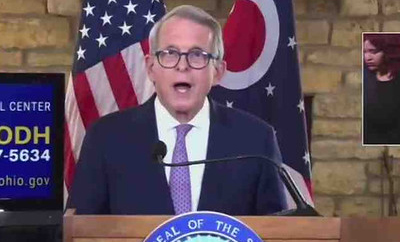
With a stroke of the pen, on December 22 Ohio Governor Mike DeWine signed a bill to legalize sports betting in the state.

Ohio lawmakers approved legislation earlier in December that will allow people to wager online, at casinos, racinos and at stand-alone betting kiosks in bars, restaurants, and professional sports facilities. Ohioans can bet on pro teams, racing, Olympic events, golf and tennis, and major college sports, according to the Associated Press.

For sports fans, all’s right with the world in Ohio. Well, hold your horses. Seems all’s not right. The new law requires sports betting be available by New Year’s Day—of 2023.

More than a year away.

Why so long?

Before a single license application can be accepted, the Ohio Casino Control Commission must formulate rules and regulations—a process that could take months. Some rules are already in place. For example, operators will pay a 10 percent tax on net—not gross—revenue to the state to help fund K-12 education and problem gambling programs.

But it isn’t the tax rate that has raised eyebrows in Ohio. It’s how the tax is to be paid by sportsbooks. Daily, or to be more accurate, on days when banks are open. With no negative carryovers.

Monthly payments are the norm in the business. Even when the state approves writing off promotional costs, it won’t help on days when the income is negative because there is nothing to deduct from.

As a result, operators could end up paying five times the actual tax rate, according to Sports Handle.

This can become a sticking point during a pro golf tournament in which winnings would be paid Sunday, but futures bets are accepted until the previous Wednesday. Football weekends, same thing. MLB, NBA, NHL playoff series too, depending on when games are paid and when series are completed.

If changes to the system don’t happen, operators will work with it, even if it hurts consumers. For example, sportsbooks may refuse to accept futures bets until the day of an event, so bettors won’t be able to take advantage of changing odds.

Taxes aside, stakeholders hope to accept bets prior to 2023.

“We’re thrilled to have it done, it was a pretty long, arduous process,” said MGM Senior VP for Public Affairs Ayesha Molino. “In terms of 2023, we will remain ever optimistic that that timeline will move up, and we will work with the regulators to see if we can speed the process along.”

Since the legislation calls for formation of an advisory committee like Maryland, accepting the first bets are not likely to happen until April.

It’s highly unlikely that wagering will go live on or near April 1, 2022, in large part because the bill also calls for formation of an advisory committee that will be part of the regulatory process. In Maryland and Tennessee, both of which also have advisory committees, it took several months just to appoint the committee members, and then at least a few weeks for the members to become familiar with the laws and the landscape.

Ohio lawmakers made room for pro sports venues to offer sports betting. And while the bill requires that digital platforms be tethered to existing businesses in Ohio, there appear to be a total of 21 existing casinos and pro sports franchises or venues.

That leaves four digital licenses that could be connected to companies with a presence in the state but maybe not a gaming presence. So, could this mean that a supermarket chain like Kroger, which is headquartered in Ohio, could open a sportsbook? Stakeholders aren’t quite sure.

Here’s a breakdown of license categories:

  • Lottery vendors will be allowed to have kiosks
  • 25 Type A licenses, which allow for digital wagering and can be obtained by companies with a physical location in Ohio. Sports organizations will pay a $500,000 application fee and $250,000 renewal fee, while non-sports organizations will pay a $1 million application fee and a $500,000 renewal fee
  • 40 Type B licenses, which are retail licenses, will be available to companies in Ohio. A set number of licenses per county based on population will be allowed
  • Type C licenses, which will be available to lottery partners, are strictly for small businesses wanting kiosks

Suffice it to say, sports fans will have to wait to celebrate, and likely will miss yet another Super Bowl.

“We want to get this up and running as soon as possible, but we’re building a whole new industry,” Said Senator Kirk Schuring of Canton. “We’re hoping it can be done sooner (than 2023).”

Former Nevada Senator Harry Reid Dies

The boy from Searchlight, Nevada, was always a rags-to-riches story. The son of a failed gold miner, Harry Reid rose to prominence by taking lessons he learned in his difficult early life, and his time as a boxer.

Reid graduated from George Washington University Law School and then became a Capitol Police officer for several years before returning to Nevada to stage a victorious campaign for state Assembly at the age of 28. Om 1974, he ran for the U.S. Senate only to lose to Paul Laxalt by less than 700 votes.

In 1977, he entered the gaming industry for the first time when he was appointed chairman of the Gaming Commission by Governor Mike O’Callaghan, during a time when the industry was trying to shed its mobster image. According to Reid, it was “an intense, surreal time when it sometimes felt as if I’d wandered into some kind of terrible funhouse.” At one point, Reid claimed a bomb had been planted in his wife’s car, although some of the details were a little sketchy.

Four years later, he campaigned again, this time for a seat in the House of Representatives and won. After two terms in the House, he again ran against Laxalt, and won.

He credits his success for his straightforward manner.

“I speak bluntly,” Reid wrote in 2008. “Sometimes I can be impulsive. I believe something to be right, and I do it. And then I don’t worry about it. This has not necessarily served me well, but it is who I am. I can be no one else”

When he retired in 2016, he was the longest serving member of Congress in Nevada history.

While he brought many advantages to his home state, he always protected the state’s gaming industry. He was an early opponent of tribal gaming across the country, and when the National Gambling Impact Study Commission was formed in 1998 with the purpose of imposing federal taxes and controls on the industry, Reid was influential in appointing MGM Mirage then-Chairman Terry Lanni, and John Wilhelm, the leader of the largest union in the casino industry, the Hotel Employees and Restaurant Employees (HERE). Both were able to modify the commission’s findings, which dismissed the idea of any federal involvement in the industry.

Reid suffered from pancreatic cancer, and his death brought tributes from both sides of the aisle.

Analyst: Nevada Needs Conventions to Sustain Comeback

In Nevada, casino revenues are expected to reach $12 billion for 2021—an almost unthinkable outcome given the impact of the pandemic. But a report from Deutsche Bank analyst Carlos Santarelli says gaming revenues will contract in 2022, and conventions are the key to a robust economy going forward.

According to the Nevada Independent, Santarelli said comparisons for domestic gaming in regional markets and Las Vegas will “stiffen” in the second quarter of 2022 and beyond.

“We think the setup for the year is actually somewhat challenging,” with “limited room for error,” Santarelli wrote in a recent report. He added that the Las Vegas Strip recovery experienced could face a “modest contraction” during 2022.

In 2020, casino shutdowns and operating restrictions caused Strip revenues to plummet 43.3 percent compared to 2019—the lowest annual total since 1996. But through October, Strip gaming revenues are 3.5 percent ahead of the 2019 total by nearly $6.59 billion. Strip gaming revenue from slot machine play is up 13 percent this year compared to 2019. Slot wagering has also increased 12 percent.

Statewide, Nevada casinos have reported eight straight $1 billion gaming revenue months, tying a 14-year-old record. The total is 9.2 percent above 2019’s $12 billion figure.

It’s good news, but it could be a short-term surge, Santarelli wrote.

“The 2021 recovery in Las Vegas Strip gaming revenue surpassed even the most bullish predictions, driven primarily by a consolidation of travel domestically and elevated spending levels,” Santarelli wrote.

He said tourism was up because travel options were limited, but it’s “difficult to assume” that casino spending will continue to see elevated levels in 2022, especially as travel restrictions are lifted.

He pointed to meetings and conventions as a lifeline for 2022. Santarelli said Strip operators are “largely bullish” about the return of group business in the new year, and “is a key for the Strip.” While leisure and casino customer spend levels will “struggle to maintain current run rates … operators believe the medium-to-longer-term health of the market remains tied to the resumption of convention and group business.”

For now, the gaming industry is enjoying the fruits of a profitable year.

The American Gaming Association said combined revenue from slots and table games, sports betting and iGaming was $4.75 billion in October, the second highest monthly total ever behind $4.93 billion in July 2021, and the eighth month in a row that commercial casinos surpassed $4 billion.

According to the AGA, 24 of the 25 commercial gaming states that were operational in October 2019 saw a revenue increase, with New Mexico down less than 1 percent.

In related news, according to the Las Vegas Review-Journal, Nevada’s total economy is slowly returning to pre-pandemic levels, adding thousands of jobs in November and reporting a drop in the unemployment rate. The Department of Employment, Training and Rehabilitation (DETR) reported Friday that the state added 2,600 jobs in November, bringing the state’s total employment level up to 1,367,500.

Despite the decline, Nevada has the second-highest unemployment rate in the country. California ranks No. 1 with 6.9 percent while, nationally the rate stands at 4.2 percent, according to the Bureau of Labor Statistics.

Governor Steve Sisolak said in a news release that he’s encouraged by the uptick in employment and decline in unemployment.

“Nevada has now recovered more jobs than at the same point in the Great Recession, another sign that Nevada’s economy is resilient and continues to come back,” said Sisolak. “As we look to the new year, we will continue to focus on helping Nevada’s employers provide good jobs for Nevada families.”

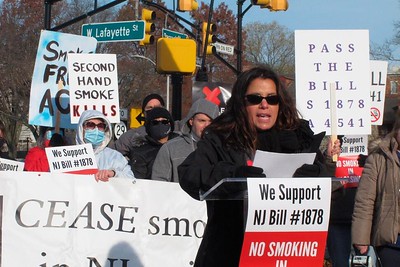
New Jersey Smoking Opponents Protest Failure to Move Bill

It comes down to priorities and anti-smoking casino workers believe they fall on the different side of the debate when it comes to the legislature. They’ve pushed for a year to close the loophole that lets smokers light up in a portion of the casinos in Atlantic City. But when It comes to approving tax relief for the gaming halls, they rush the bills through.

The smoking bill has languished for a year, according to the Associated Press.

“Why doesn’t the state of New Jersey care about us?’ asked Lamont White, a Borgata Hotel Casino & Spa dealer who has worked in Atlantic City casinos for 36 years.

New Jersey actually did ban all smoking in the casinos early last year after the coronavirus pandemic broke out, on public health grounds. But the ban was lifted in July of this year, and the casinos returned to the status quo of allowing smoking on 25 percent of the casino floor.

“The one blessing in that pandemic is we got a break from the smoke and the cancer,” said Nicole Vitola, a Borgata dealer. “There’s no reason a pregnant woman should be subjected to secondhand smoke like I was in order to support my family.”

She used the often-uttered words of Democratic Governor Phil Murphy regarding his decisions on Covid-19 in her call for an end to smoking in the casinos.

“Governor Murphy: You say you follow the science,” Vitola said. “The science is clear: secondhand smoke kills.”

Murphy has said he will sign a smoking ban into law once the legislature passes it.

Sweeney repeated an oft-repeated concern of the industry that it would lose business if smoking were banned. That is the position of the Casino Association of New Jersey, the casinos’ trade group.

“Some people tell you they lose 16 percent of your business” if smoking is banned, Sweeney said.

But casino workers point out that the Atlantic City casinos actually did better under the temporary smoking ban than they did before it was implemented.

Angela Martinelli, a Borgata dealer, held a breathing assistance device with an oxygen tube that snaked up to her nose as she participated in the protest. She said she has developed emphysema from working in the casinos.

“My lungs just kept getting worse,” she said. “I’m sick of it. I’m living proof that secondhand smoke creates destruction.”

In related news, Assemblyman Paul Moriarty released a statement December 14 in support of closing the loophole that permits smoking in portions of the casinos in Atlantic City, according to the Press of Atlantic City.

“It is time for New Jersey to treat casino employees as equal to other service industry workers and prohibit smoking in casinos,” said Moriarty, deputy speaker of the Assembly.

Earlier this year, Parx Casino in Bensalem, Pa, the state’s highest-grossing casino in 2019, extended its smoke-free policies Americans for Nonsmokers’ Rights said.

The smoking-ban bill has gathered dust in Trenton for over a year without moving forward,

Gov. Phil Murphy has said he intends to sign the bill once it arrives at his desk.

The National Institute for Occupational Safety and Health says casino workers are at greater risk for lung and heart disease because of secondhand smoke exposure, and a study in the Journal of Occupational and Environmental Medicine found casino air to potentially have 50 times more cancer-causing particles than air on rush-hour highways, according to the bill.

The Casino Association of New Jersey, the casinos’ trade group, said a ban would cost customers, thus revenue.

“Scare tactics about revenue and job loss are just that — efforts to maintain the status quo, even as it threatens the health of thousands of New Jersey workers,” said Cynthia Hallett, president and CEO of Americans for Nonsmokers’ Rights. “By signing on as a prime sponsor of legislation to eliminate the casino smoking loophole, Assemblyman Moriarty is listening to the voices of thousands of workers instead of the big tobacco and gaming lobbyists.”

Penn National Opens Hollywood Morgantown

Penn increases dominant Pennsylvania presence with fourth casino

On December 22, Penn National Gaming celebrated the grand opening of Hollywood Casino Morgantown, its fourth gaming and entertainment facility in Pennsylvania. The $111 million state-of-the-art casino is the Company’s 44th property in North America.

The 80,000-square-foot casino is the company’s second Category 4 casino, created by Pennsylvania’s 2017 gaming expansion law to address underserved gaming regions. Category 4 casinos are limited to 750 slot machines and 30 table games upon opening, with the option to petition regulators for an additional 10 table games after opening. Penn opened its Hollywood Casino York Category 4 casino in August.

Hollywood Casino Morgantown opened with the maximum allowable contingent of 750 slots and 30 tables. The property also offers a retail Barstool Sportsbook and upscale casual dining.

The Barstool Sportsbook includes a state-of-the-art Jumbotron above the bar, bleacher seating, sports betting tellers and sports wagering and racing kiosks, along with interactive games, an outdoor fire pit and a Barstool Sportsbook merchandise station.

State gaming officials, legislators and area dignitaries including Philadelphia Eagles legend Vince Papale joined Penn National Gaming team members for a ribbon-cutting ceremony. Hollywood Casino Morgantown then opened to the public at noon.

“We would like to officially welcome players and guests to Hollywood Casino Morgantown, our fourth property in the commonwealth,” said Todd George, executive vice president of operations for Penn National.

“We’re thrilled to showcase this regional entertainment destination, offering premier gaming and dining in a modern atmosphere. In addition, we’re grateful for the support of our host community, Caernarvon Township, and to all of our local and state legislators and regional business leaders who helped make this day possible. We’re proud to be creating jobs and starting a new economic engine right here in Berks County.

“We’re also excited to outfit this casino with our innovative ‘3Cs’ technology, which provides for a cardless, cashless, contactless ‘mywallet’ experience. I would like to thank the Pennsylvania Gaming Control Board for their support as well as our technology partners Everi Holdings and Acres Manufacturing.

“This next-level technology, which is in place at all four of our Pennsylvania casinos, further supports our omnichannel business approach in which we provide the best experiences whether people are playing at our properties or across our numerous online offerings.”

The facility employs approximately 375 people and generated over 275 construction jobs.

Hollywood Casino Morgantown includes three casual dining options – Barstool Sportsbook, Tony Luke’s and Red Lotus Asian Kitchen—as well as Bar 76, a 100-seat bar and entertainment lounge on the gaming floor.

The opening increases Penn’s dominance in Pennsylvania. In addition to the two Category 4 casinos, Penn National operates its flagship Hollywood Casino at Penn National Race Course outside Harrisburg and the recently rebranded Hollywood Casino at the Meadows south of Pittsburgh.

Philadelphia Casinos Must Check for Vaccines

Philadelphia will join other cities is requiring proof of vaccination before entry into restaurants, arenas such as the Wells Fargo Center, and casinos like Live! Casino Philadelphia. The mandate, which takes effect on January 3, resulted because of a rise in the number of Covid-19 cases and the evolution of the omicron variant, according to PlayPennsylvania.

Announced December 13, the mandate applies to indoor sports venues.

*“New cases and hospitalizations are rising, and we must do more to protect our residents. The City’s indoor mask mandate helped us control case rates this fall, so we are rolling out a complementary vaccine mandate for food establishments, where masking is not feasible,” said Mayor Jim Kenney.

From January 3 through 17 a negative test within 24 hours will be accepted. instead. After January 17, proof of vaccination will be required.

Currently, masks are required at Philadelphia casinos and other indoor businesses. As a result, smoking is not permitted at Philly casinos right now.

New York City’s vaccine mandate applies to visitors at Resort World NY, the only casino in New York City. New Orleans also requires vaccine proof at Harrah’s New Orleans.

Former casino industry exec turned university instructor and casino consultant, Robert Ambrose, gave his perspective on what producing proof of vaccination could mean for casinos and customers.

“This is another operational post-pandemic challenge for casinos under this mandate at least here in Philly. First, I think casino customers that are not vaccinated will just shift their loyalty to a non-mandated casino in the region or gamble online.”

“I spent most of my career at the executive level in casino operations, so I look at the issues with ‘policing’ it,” Ambrose said.

Covering the many casino entrances with staffing to check for vaccination cards will be a challenge. And using a security guard who is already posted at the entrance to handle this task adds another item to their list of underage ID checks and watching for suspicious activity.

“On the consumer side, I think most casino customers will comply. However, if lines become long to enter the casino because of card checks during a busy night, this could be a negative for the guest. I think other casino jurisdictions will be watching how this pans out,” Ambrose said.

Full House Sues Indiana Over Vigo Casino License

Casino operator Full House Resorts filed suit against the Indiana Gaming Commission in reaction to the commission’s decision to grant the casino license for Vigo County to Churchill Downs, Inc. The company is asking the Marion County Superior Court to nullify the license award because the commission adjourned to an executive session in the middle of a meeting, to discuss the proposals of Full House and CDI.

The lawsuit cites Indiana’s Open Door Law, which holds that “a governing body may not conduct an executive session during a meeting.”

“After the mid-hearing executive session, which contravenes the Open Door Law, the commission returned to the hearing,” the complaint reads. “Without any public debate, comment, discussion or explanation, the commission voted to deny Full House’s application and grant Churchill’s application.”

The complaint also claims that the proposal of Full House was better for the state. “Full House spent great time and expense to secure a highly visible site that approximately 11 million cars pass annually,” the complaint says. “Full House’s destination complex was designed to essentially be a billboard to the millions of cars that drive by its site.”

The lawsuit argues that Churchill Downs’ site on U.S. 41 is far less visible, off the freeway and near a county jail and sewage treatment site with a rooftop bar that overlooks the jail and treatment plant.

“The nature of a sewage treatment plant in such close proximity to a public entertainment venue is counter-intuitive to any prudent, rational individual; the same can be said for locating an entertainment venue near a county jail,” the complaint said.

The lawsuit also claims CDI violated the law by proposing an alternate location. “Churchill’s presentation to the commission during the hearing contained an appendix, which was not publicly presented, and which included an illegal second location for the casino that Churchill did not have under contract, near the Terre Haute airport… Churchill’s proposal of multiple and amorphous sites should have disqualified its proposal from consideration because Indiana law required one location to be provided in the application.”

The complaint asks the court to find that the commission violated the Open Door Law, void the decision to deny Full House’s application and grant Churchill Downs’ application and prohibit the awarding of the license to Churchill Downs.

The Full House proposal calls for a 100,000-square foot casino called American Place, with 1,000 slots, 50 gaming tables and a 100-room hotel. Churchill Downs’ proposal is for a $190 million 10-story, 125-room hotel atop a casino named the Queen of Terre Haute near Haute City Center.

Alabama to Consider Gaming Again

Lawmakers in Alabama say they will once again introduce legislation to create a constitutional amendment authorizing a lottery and Class III casino gaming in the spring 2022 session. The Alabama Senate passed a constitutional amendment last April to authorize gaming, but the measure stalled in the House of Representatives.

Republican Senator Greg Albritton told the Associated Press he plans to introduce the proposed constitutional amendment that would create a state lottery and authorize a Class III casino compact with the Poarch Band of Creek Indians, which currently operates three Class II casinos in the state, in addition to its ownership of Wind Creek Bethlehem commercial casino in Pennsylvania.

“This simply needs to get off our plate, off the table. We need to deal with this and waiting another year is not going to help us. That would just be revenue thrown aside or thrown away,” Albritton told the AP.

The Republican House leadership is skeptical the legislation will pass in the spring session, with lawmakers facing primaries in May.

“I would be very surprised if it would pass in a regular session in an election year,” Republican Rep. Steve Clouse, chairman of the House general fund budget committee, told the AP. “By the time we get toward to end of March first of April people are going to be antsy to get out of there.”

Robbie McGhee, vice chairman of the Poarch Band of Creek Indians Tribal Council, believes that giving the voters a choice in an upcoming referendum is the right way to pass it .

“I think this is the perfect opportunity to say, ‘That I’m going to give the power to people to make this decision,’” McGhee said.

Last year, the Senate passed a bill that, in addition to approving a compact with the Poarch Band, would have also given existing dog tracks and electronic bingo operations the ability to host casino gaming as well. But Albriitton’s bill does not mention these facilities and would be opposed by those operators who don’t believe that giving the tribe a monopoly with casino gaming is the right move.

Days Are Numbered for Mirage Volcano

For more than 30 years, an iconic faux volcano has been blowing its top at the MGM Mirage in Las Vegas. Soon, the hourly eruptions will come to an end.

Hard Rock International, which recently bought the Mirage in a billion-dollar deal, will tear down the volcano as part of a comprehensive renovation of the Strip casino. The Florida-based operator, run by the powerful Seminole Tribe, will pay MGM Resorts $1.08 billion for the property, giving it a showplace on the Las Vegas Strip.

The company plans to build a guitar-shaped hotel tower in front of the property, as well as other renovations, such as a live music venue, reported Bloomberg News. Its partner, a real estate investment trust, has earmarked up to $1.5 billion for the remodeling. The fate of some older attractions, such as a Beatles-themed Cirque du Soleil show, have yet to be determined.

“It’s a massive redo,” said Hard Rock CEO Jim Allen.

Hard Rock will lease the Mirage name royalty-free for three years. MGM expects to net $815 million after taxes and fees when the sale closes in the second half of next year, according to a statement.

The deal represents a major expansion for the Hard Rock brand, which is owned by Florida’s Seminole tribe. There was a Hard Rock casino located off the Strip for a number of years that is now owned by Virgin Hotels. The company has for some time been looking for a casino on the Strip, the center of Las Vegas nightlife.

The Mirage, built by casino mogul Steve Wynn, opened in 1989. It’s known for the volcano out front that erupts nightly, as well as its dolphin and tiger attraction. MGM is in the process of acquiring the higher-end Cosmopolitan Las Vegas, and CEO Bill Hornbuckle has said he wants to reduce the company’s exposure to Las Vegas. MGM is the largest operator of casinos in America’s gambling capital.

Hard Rock will pay rent to MGM Growth Properties, a real estate investment trust that owns the Mirage land. MGM Growth is in the process of merging with Vici Properties.

Wayne Newton to Return to Vegas Strip

After an almost two-year absence, legendary entertainer Wayne Newton will be back onstage in Las Vegas, performing at the Wayne Newton Theater, aka Bugsy’s Cabaret, inside the Flamingo.

“Wayne: Up Close and Personal,” which will feature music, storytelling and video memories in a cabaret setting, will run through June.
Newton began performing at the Flamingo in 1963, back in the “Danke Schoen” days, he told the Las Vegas Review-Journal.

“It took me long enough to get back here, right?” he said. “I’ve finally come full circle.” He noted that the two-year pause, which resulted from a back injury, was the longest hiatus in a career that spans six decades.

“The real challenge is coming back to the lineup of the show, what is next, what video is coming,” Newton said. “Just remembering the continuity is not an easy thing. It was second nature, but it needs to be re-learned when you’ve been down so long.”

The Bugsy’s venue is known as the Wayne Newton Theater when the singer is in residence.