Author: Casino Connection Staff

PlayStar Partners with Intelitics for New Jersey Debut

Intelitics, a leading performance marketing and analytics provider, has been selected by online casino brand PlayStar to support its imminent launch in New Jersey, set for the first quarter of 2022.

The partnership will see Intelitics provide PlayStar with its scalable customer acquisition tracking platform, allowing the operator to make informed, data-driven campaign decisions across all user acquisition channels, including affiliates and paid media.

The Intelitics platform and product suite will also provide PlayStar’s affiliate and marketing partners with access to real-time data and analytics, as well as flexible pixel tracking to allow them to effectively manage their own campaigns and monitor their effectiveness quickly and easily.

For PlayStar, the partnership with Intelitics forms part of its wider mission to provide U.S. players with an online casino experience like no other. This will be achieved by focusing on three key areas—personalization, engagement and customer experience. The operator has developed a unique player engagement concept that remains a closely guarded secret, and Intelitics’ powerful platform and tool set will allow PlayStar to track the effectiveness of all engagement activity with new and existing players in real time.

For Intelitics, the deal with PlayStar is the latest in a string of partnerships with U.S. operators, and reflects a wider market demand for quality insight on user acquisition in what is the fastest-growing online casino market in the world.

Brands entering highly competitive markets like New Jersey, where player lifetime values are high but so too are acquisition costs, need to have a marketing tech stack that empowers them with granular, optimizable data and that is what Intelitics provides.

“We’re very much looking forward to teaming up with PlayStar, and to allowing the operator to leverage our industry-leading user-acquisition platform to ensure it gets off to the best possible start in New Jersey,” said Allan Petrilli, vice president of sales and growth for Intelitics. “We’re particularly excited to be working with its incredible team which has a track record of high-level success in the iGaming industry, and look forward to being an integral part of its success story for years to come.”

Adam Noble, chief business development officer at PlayStar, added, “Intelitics’ technology fits with our goal of making our players feel like the star of the show from the first moment they engage with our brand, and it will also help us to drive tremendous efficiencies as we continue to scale.

“It has been a pleasure working with the Intelitics team as we prepare to launch PlayStar in New Jersey early next year, and we look forward to a long and successful partnership between both businesses as we navigate the fast-paced, high-growth online casino market in the U.S.”

SG Acquires Euro iGaming Supplier ELK Studios

Scientific Games Corp. has strengthened its original iGaming content offering and production capabilities with the acquisition of ELK Studios, a leading European games developer.

According to the company, this “highly synergistic” acquisition of a digital content studio marks another important step as the company rapidly executes its vision to become the leading cross-platform global game company.

ELK Studios is a Stockholm-based developer with a long history of producing carefully crafted games with groundbreaking mathematics, superb artwork and a mobile-first focus. The highly profitable digital studio’s hit releases include Wild Toro II, Katmandu and Cygnus, and its games also feature the innovative X-iter tool allowing players to jump into the action through a selection of special predefined modes.

The acquisition is the latest in a string of targeted content-focused deals as SG moves quickly to invest in and grow its presence in digital markets. By adding ELK Studios to its in-house games portfolio, the company has further bolstered its capacity for creating iGaming content and will be looking to take ELK’s top-ranked content into the U.S. and Canadian markets while further enhancing its position as a leading content provider in the U.K. and Europe.

“Acquiring ELK Studios demonstrates once again our commitment to make targeted, value-enhancing investments designed to advance our cross-platform content capabilities,” said Barry Cottle, president and CEO of Scientific Games.

“The ELK Studios team is packed with talent and enhances our existing in-house teams and capabilities. The highly synergistic combination of their top-ranked games and our leading OpenGaming ecosystem offers exciting distribution opportunities in the U.S. and Canada. I am thrilled to welcome them to our team.”

ELK Studios is already live with a wide range of operators through the market leading OpenGaming ecosystem, with its titles proving highly popular with key operators across the U.K. and Europe. The studio will continue to work independently to create new titles, while also benefiting from Scientific Games’ comprehensive range of resources including commercial scale, market expansion, support in U.S. and Canada, game IP and data analytics tools.

Dylan Slaney, CEO of iGaming at Scientific Games, said, “We have had a strategic partnership with ELK Studios for a number of years, and its games have performed brilliantly across the OpenGaming platform. ELK is one of the most innovative and top-ranked studios in iGaming. Their passion and enthusiasm for producing games of standout quality is infectious. They will play a pivotal role in helping us continue to provide players with even more immersive and engaging experiences.”

Filip Säfbeck, CEO of ELK Studios, said, “This deal is the fruit of many years of hard work by a team that is fully committed to crafting high-quality online gaming experiences. We see it as the perfect time to join the Scientific Games team, given that our ambitions to grow through innovation and into the U.S. and Canada are in total alignment. We have experienced firsthand through our OpenGaming partnership that Scientific Games can take our games to the next level. This acquisition offers us a solid base to bring to market a wide range of exciting new slots more smoothly than ever to online casino partners across the globe.”

The latest deal by Scientific Games follows recent high-profile iGaming acquisitions of slot developer Lightning Box and premium live casino solutions provider Authentic Gaming.

Aristocrat Closes in on Playtech Acquisition

The closing of Aristocrat Leisure Limited’s acquisition of online gaming giant Playtech PLC appeared closer than ever last week, as Playtech hastened the sale to a shareholder of Finalto, its financial trading division.

Playtech confirmed to Inside Asian Gaming that its shareholders had approved the sale of Finalto to Gopher Investments, the owner of 4.97 percent of Playtech shares that recently pulled back a competing bid to acquire the company.

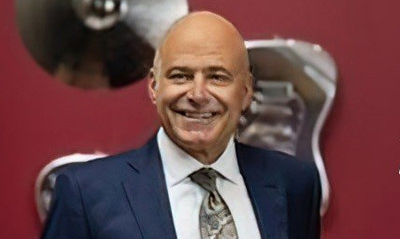
Aristocrat CEO and Managing Director Trevor Croker said in a filing that the sale or Finalto was a key condition of Aristocrat completing the acquisition.

“The approval given by Playtech shareholders to dispose of Finalto meets a condition of Aristocrat’s recommended offer and is a further step forward in the completion process,” Croker said, according to IAG.

“Aristocrat’s offer for Playtech has been recommended by the Playtech Board and is the only offer on the table for shareholders. We believe that Aristocrat’s offer provides an attractive value and enhanced regulatory and financial certainty for Playtech shareholders, while the combined group will also provide greater opportunities for Playtech employees in a leading global organization.”

“Aristocrat is well positioned to complete the transaction as planned in the second quarter of calendar year 2022.”

Aristocrat’s bid values Playtech at AU$3.9 billion (US$2.9 billion).

PlayStudios Secures Mobile Rights to Tetris

PlayStudios, the developer of the playAWARDS loyalty platform and a suite of free-to-play mobile and social games, announced it is expanding into the popular puzzle game genre as the exclusive developer and publisher of the iconic Tetris game franchise for mobile devices.

Through a strategic partnership with the Tetris Company and N3TWORK, PlayStudios has assumed the exclusive global, multi-title mobile rights (excluding China) for the Tetris game. PlayStudios will continue to operate and advance the current Tetris mobile products, while reimagining and eventually launching a new and improved version of the game that incorporates the company’s unique playAWARDS loyalty platform.

The design of the new game will draw inspiration from leading casual game formats and embody new features and mechanics that will usher in a new era for Tetris on mobile. The current Tetris mobile app, which was introduced in early 2020 by N3TWORK, has generated approximately 30 million downloads to date, and has retained millions of active players who will now become part of the PlayStudios’ audience network.

“For nearly 40 years, Tetris has appealed to a broad, multi-generational audience,” says PlayStudios founder, Chairman and CEO Andrew Pascal. “Breaking into the puzzle genre with a storied brand like Tetris fits our strategy perfectly. It affords us the opportunity to integrate an iconic game into our playAWARDS loyalty program and drive meaningful growth.”

“Securing the exclusive license fully aligns with our strategic priorities and positions us to accelerate our growth, diversify our portfolio, grow our network of players, and scale our unique playAWARDS platform,” added PlayStudios Executive Vice President and Head of Corporate and Business Development Jason Hahn.

“PlayStudios’ expertise in developing and operating compelling and beautifully executed games on top of their unique loyalty marketing platform make them an ideal partner to create a richer, more engaging experience for our loyal Tetris fans, old and new,” said Maya Rogers, president and CEO of Tetris. “We’re confident that PlayStudios will be a wonderful steward of our brand.”

FansUnite Acquires American Affiliate

Canadian betting operator FansUnite Entertainment ‎Inc. announced a definitive agreement dated November 22 to acquire the businesses and brands of American Affiliate LLC, securing a podium position in the U.S. online betting market.

American Affiliate is a diverse collection of assets dedicated to generating new depositing customers for legal sportsbooks, online casinos, online poker sites, and adjacent products in the U.S. market. Its vision blends an exclusive focus on the U.S. opportunity with marquee brands, a powerful omnichannel approach, a deep portfolio of proprietary technology, and a proven management team.

“The acquisition of American Affiliate represents the most significant milestone for FansUnite to date,” said Scott Burton, CEO of FansUnite Entertainment. “This transformative transaction will provide us further access to the lucrative U.S. regulated sports betting and online gambling market while generating accretive, high-margin revenue, expanding our leadership team, and accelerating the growth of our company’s footprint in the global gambling market.

“When we looked at how quickly the U.S market is expanding, it made clear strategic sense for us to enter the affiliate business as a way to partner with some of the largest gambling companies in the world. We will now own and operate an unparalleled customer acquisition portfolio, allowing us to leverage our technology, brands and talent to immediately capture share in the U.S. sports betting and online gambling market.”

Combined, the American Affiliate brands represent one of the most significant single sources of new depositing customers for legal U.S. sports betting and online gambling operators. The leadership team has over 40 years of combined experience in the regulated gambling industry, including senior roles at market leaders such as ACEP, Amelco, DraftKings, Catena Media and GeoComply.

Brands, platforms, content, and services highlighted in the transaction include Betting Hero (www.bettinghero.com), Props (www.props.com), BetPrep (www.betprep.com) and Wagers (www.wagers.com).

“Legal U.S. sportsbooks and online casinos are spending billions of dollars to acquire and retain customers,” said American Affiliate CEO Chris Grove. “Our brands, team, and technology allow us to capture a meaningful share of that marketing spend today while producing some of the highest margins in the U.S. online betting ecosystem.

“But that success is only a starting point. We anticipate unprecedented near-term growth as legal online betting continues to expand into new states and new products. Joining with FansUnite was key to our strategy of aggressively scaling our business to meet that opportunity head-on.”

Hard Rock AC Names Spagno to Head Table Games

Hard Rock Hotel & Casino Atlantic City has appointed gaming industry veteran Anthony Spagno as vice president of table games.

“Anthony Spagno brings more than four decades of gaming experience to the table,” said Joe Lupo, property president, in a statement. “We are thrilled to welcome him to the Hard Rock Atlantic City team where we know he will have a positive impact on our team members and market-leading table games growth.”

Spagno began his casino career as a dealer at Caesars Atlantic City in 1980, when legal gambling was just a few years old. He rose through the ranks with various management promotions. Before joining Hard Rock, Spagno was the vice president of table games and vice president of gaming operations at Valley Forge Casino in King of Prussia, Pa. He handled both the domestic and Asian player development teams.

Callahan Named Interim CEO at Ocean Casino

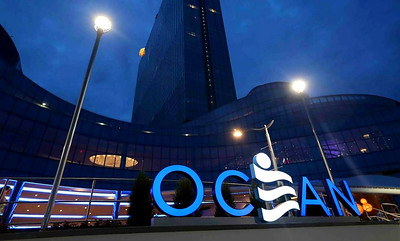
Just weeks after Terry Glebocki unexpectedly resigned as CEO of Ocean Casino Resort, the property promoted Bill Callahan as interim CEO.

According to the Associated Press, the state Division of Gaming Enforcement approved the appointment on November 9.

Prior to the appointment Callahan, a 25-year industry veteran, served as executive vice president and senior vice president of Ocean. He came over from Borgata, part of a contingent of executives who left to join Ocean. Borgata sued Ocean for poaching and theft of trade secrets. The suit settled in May.

Neither the casino nor its owner, New York hedge fund Luxor Capital Partners, would comment Tuesday.

Callahan has 25 years of experience in the casino industry.

At the Borgata, Callahan spent 17 years as vice president of relationship marketing, responsible for a team that handled table games, slots, and Asian-games marketing.

Voters Defeat New Jersey College Wagers

Several seemingly shoo-in ballot measures were shown the door on Election Day last week. Voters in Virginia passed on a plan to develop a casino resort in Richmond. And voters in New Jersey nixed a proposal to permit betting on in-state college athletics.

Richmond Rout

Developers touting an ambitious casino proposal in Richmond were astounded when voters said no to the plan on November 2. Unofficial results showed 51 percent of voters rejected the proposal for the planned ONE Casino + Resort.

Alfred Liggins, CEO of Silver Spring-based media conglomerate Urban One, said he was “extremely disappointed” at the outcome.

The multimillion-dollar development would have included 100,000 square feet of casino space, a luxury hotel, a live theater, and dozens of new restaurants. Proponents said the project would have brought 4,500 construction and resort jobs to the city. It would also have made Liggins the first black majority owner of a casino since the late Don Barden, the first African American casino operator in Las Vegas.

“For the last two years, we have worked so hard to build a large and inclusive tent with our ONE Casino + Resort project,” wrote Liggins in an email to a local TV station. “We had a lot of loyal supporters who worked tirelessly on behalf of this project and for whom we will be eternally grateful.”

Richmond City Councilman Mike Jones was also upset by the vote. “I’m really concerned with the fact that every neighborhood every precinct in the First, the Second, the Third District, they can walk their streets, they have the infrastructure, we don’t have those things,” Jones said. “And so, you know, I am for the Democratic process. That’s what I voted for on council, to send it to the referendum and let the citizens of Richmond decide. But it’s interesting to see a breakdown along racial and neighborhood lines.”

Richmond Mayor Levar Stoney, a vocal supporter of the casino project, said he respected the will of the voters.

“While I believe this was a $565 million opportunity lost to create well-paying jobs, expand opportunity, keep taxes low and increase revenue to meet the needs of our growing city, I am proud of the transparent and public process we went through to listen to our residents and put this opportunity before our voters,” Stoney said. “From the beginning, we said the people would decide. They have spoken, and we must respect their decision.”

Richmond was the last of five Virginia cities to vote on casino referendums and was the only one to pass on the opportunity. According to WRIC-TV, Bristol, Danville, Norfolk and Portsmouth all passed casino referendums last November with far less opposition.

“The people have spoken,” said Paul Goldman, director of Vote No on RVA Casino. “We decided to try an all-digital advertising strategy in a modern-day David vs. Goliath story. We appealed to the conscience of our city. I am proud to have been part of such an amazing upset.”

Opponents succeeded in delivering their message: that a casino would worsen poverty and lead to gambling addiction.

In other parts of Virginia, four other cities approved casinos by 65 percent or more in referendums.

No to Betting on NJ Teams

In New Jersey, bettors who hoped to wager on the Rutgers Scarlet Knights to beat Penn State next year are now officially out of luck. Almost 57 percent of voters in the Garden State rejected a constitutional amendment that would have permitted betting on college teams from New Jersey, according to NorthJersey.com.

More than half the country now allows sports betting. And though New Jersey powered the lawsuit that ultimately overcame the Professional and Amateur Sports Protection Act (PASPA) in 2018, the state has some of the strictest rules around college sports betting. By contrast, 13 states have no restrictions at all, according to the American Gaming Association.

New Jersey didn’t include college betting in the original 2011 referendum that approved sports betting due to concerns that student athletes would be coerced to fix or throw games. Since then, the NCAA has allowed college athletes to be paid for endorsements and commercials, which legislators think reduces the chance that gambling could sway their performance.

In other New Jersey news, the CEO of Americans for Nonsmokers’ Rights (ANR) used the election to demand that Governor Phil Murphy ban smoking in casinos. Murphy himself was reelected by a wafer-thin margin, but the unexpected defeat of State Senate President Steve Sweeney should make the ban easier to accomplish.

“With Governor Murphy and Senator-elect Joe Polistina winning their races, two of the most outspoken proponents of closing the loophole that allows indoor smoking at Atlantic City casinos will be positioned to act,” said Cynthia Hallett of the ANR.

Iowa, New Hampshire, Texas

Voters in Linn County, Iowa passed a referendum to permit gaming, and made permanent an authorization that first passed in 2013. The measure passed 55 percent to 45 percent, and clears the path for a casino in downtown Cedar Rapids, although the state would still have to give its seal of approval.

There was no organized opposition to the measure. The initiative did not specify a particular location, and plans must be submitted to the Iowa Racing and Gaming Commission (IRGC).

Linn County Gaming Association member Anne Parmley told Radio Iowa: “Having the revenues that would be generated by this casino at their disposal to support operations, give them the opportunity to serve more citizens, the needs are expanding.”

Casino developers pushing the measure say they will earmark 8 percent of revenues to area nonprofits, double what the state requires.

Parmley said, “We just want voters to understand what kind of impact those millions of dollars could have on Linn County and our nonprofits, especially considering a lot are really struggling post-pandemic and after the derecho.” However, twice in recent memory the IRGC has prevented a new casino in the city, on the grounds that it would take away revenue from existing gaming facilities.

For the second time in Portsmouth, New Hampshire, voters narrowly rejected a measure to allow Keno 603 games at residents and taverns. The vote came down to just 21 votes: 2,770 opposed, 2,649 in favor.

Nashua, New Hampshire voters, meanwhile, approved a measure to allow sportsbook retail operations in Gate City. A 2019 law allows sports betting in the Granite State, and authorized up to 10 brick-and-mortar sportsbooks. So far, voters in six cities have approved the facilities, and 14 towns approved sportsbooks last year. To date, two sportsbooks have opened, at Seabrook and Manchester.

In Texas, voters overwhelmingly approved Proposition 1, which allows charitable raffles at rodeo events of the Professional Rodeo Cowboys Association and Women’s Professional Rodeo Association. Unauthorized raffles are considered illegal in the Lone Star State. Prop. 1 was among eight constitutional amendments approved on Election Day; it was approved by 84 percent of voters.

Bally’s Begins Three-Year Overhaul in Atlantic City

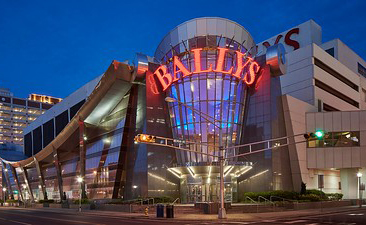
Bally’s Corp. has begun its three-year, $100 million upgrade at Bally’s Atlantic City, according to NJ Online Gambling.

In addition to hundreds of new slot machines, the hotel is renovating 750 rooms with a “lighter and brighter feel” with 112 corner-king rooms.

Other rooms will be combined to create 16 penthouse suites, an amenity for high rollers. In common areas, Bally’s will refresh he lobby with columns featuring quartz stones and new light fixtures. And look for a new lobby bar.

One of the first upgrades is FanDuel’s first sportsbook in the city set to be open in time for March Madness.

“We continue to seek unique opportunities to enhance our guest experience and look forward to introducing a new indoor/outdoor entertainment concept,” said Bally’s spokeswoman Diane Spiers.

Study: Caesars Building Brand Awareness in Sports Betting Markets

A new study shows that during the six-month period ending in October, Caesars Entertainment’s brand awareness among radio listeners in markets where sports betting is legal grew by over 113 percent, compared with 40 percent for the second-place sports betting operator, WynnBET.

The study, conducted by MARU/Matchbox and commissioned by the Cumulus/Westwood One Audio Active Group, looked at 21 national sportsbook operators and how far they have penetrated the national consciousness.

Overall, DraftKings, at 73 percent, and FanDuel, at 69 percent, have the most brand awareness, but both companies were stagnant over the six-month period.

Perhaps the biggest takeaway from the non-legal states is how much growth is to be expected in brand awareness among sportsbooks once a state authorizes them.

“I used to have a college roommate that would tell me he was going to kick my ass one day whenever I would ‘borrow’ food and my answer was always ‘well, until that day,’” Demetri Ravanos, assistant content director and editor for Barrett Media, told the news site US Bets. “I feel like that is the answer here (for how much growth there is).

“Sports radio is riding high on gambling money right now. Will that money cannon run out of ammunition at some point? Yeah, but until that day, we’re living like Caligula. Honestly, I could see this leading to new stations launching to take advantage of all the money out there before I could see sportsbooks stop spending.”

Michael Harrison, the publisher of Talkers magazine, agreed, telling US Bets, “Radio is a powerful advertising medium to establish brand awareness of competing betting platforms,” Harrison said. “The radio listener who bets on the games is as interested in learning about the sportsbooks as stock market investors are in knowing about competing brokerage firms. Sportsbook advertising will continue to grow as an advertising bonanza for radio.”

Lots of Jobs. Too Few Applicants. Welcome to Las Vegas

Las Vegas serves as a good barometer for the state of the job market post-Covid. It’s heavy on hospitality, an industry hit hard by the coronavirus pandemic. Today, jobs are plentiful. It’s the lack of employees to fill those jobs that is at issue, according to the Las Vegas Review-Journal.

The common rationale for this situation says folks refused to seek a job because they were getting so much more in unemployment benefits with the federal stimulus add on. That pump has run dry, at least for additional benefits. But jobs still struggle to be filled, blowing a whole in that theory.

Nevada’s unemployment rate ranked highest in the country for July and August and declined from 7.7 to 7.5 in September. It’s still high. Job fairs draw just a fraction of applications they did in the past.

Broadway Pizzeria has a handful of open positions but can’t get applicants, despite a $15 an hour wage.

“Anywhere you go, any of these places, everyone’s in the same boat,” co-owner Anthony Rossi said. “We’re essential workers. We’ve been doing this, working straight through the pandemic. Nobody got a break, no one sat at home. It’s tough (to hire and retain) for that reason.”

The lack of applicants has affected drivers, teachers, and other non-hospitality employees, among others.

“A lot of what we’re seeing is that people are really reassessing their priorities as it involves work,” UNLV labor economist Jeff Waddoups said. “It’s not just around, ‘Do I want to work or not?’ The pandemic allowed people to step back and say, ‘Is it really worth it for me to work now?’”

Businesses and experts anticipated more growth in September throughout the country with the federal unemployment benefits ending. The situation skewed even more because 4.3 million workers quit their jobs in August.

“A lot of us thought there would be a return of workers once the benefits were discontinued. And I think what that means is we don’t understand workers well enough,” Waddoups said. “I think maybe we just overestimate how important money is.”

Other job seekers want flexibility and ease of job applications. So, they turn to gig work.

Despite the influx of job postings, experts say it’s important to note that appropriate qualifications matter.

“We talk about high level numbers a lot: this many jobs created, this level of unemployment and whatnot,” said David Schmidt, chief economist at the Nevada Department of Employment, Training and Rehabilitation. “But ultimately, all of those big numbers are really made up of lots and lots of individual people with their own unique circumstances. The jobs that people might be trying to fill and the skills, qualifications and abilities that people have don’t always line up.”

Hard Rock Envisions Two Casinos in Metro New York

Hard Rock took Atlantic City’s shuttered Taj Mahal and turned it into a successful hotel and casino under its brand, in the hometown of Jim Allen, chairman of the company owned by Florida’s Seminole Tribe. While Atlantic City’s property hums along, Allen now has set his sights a little farther north.

The company would love to get the coveted license expected to be available for New York City, one of three expected in the Metro New York area. In addition to New York, look for licenses in Long Island, Westchester, Rockland, or Putnam counties.

Allen also hopes to land a casino at the Meadowlands eight miles away if a change in the state constitution permits casinos outside Atlantic City.

Hard Rock and other interested parties have until December 10 to make their intentions about New York known to the New York State Gaming Commission, Allen said at the East Coast Gaming Congress at Harrah’s Atlantic City. Other major casino companies anticipated to toss their chips into the ring include Caesars Entertainment, Bally’s, Las Vegas Sands and Wynn Resorts.

While Caesars wants in, CEO Tom Reeg isn’t sure the terms would allow for a profitable venture.

Ironically, Hard Rock’s bid for a Chicago casino would compete with a Hard Rock casino already approved in Rockford, Illinois and also operates Hard Rock Northern Indiana, less than an hour from Chicago, demonstrating that Allen is not adverse to multiple casinos in close proximity.

Five Bids for Chicago Casino

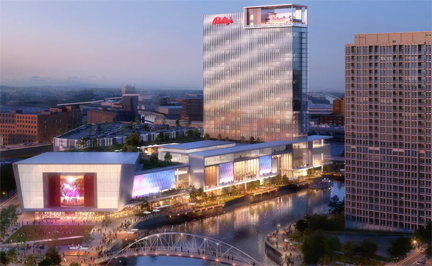
The long-awaited bidding process for a Chicago casino began earlier this year and reached the midpoint this week when three companies bid for casinos in five locations around the city. Bally’s Corp., Hard Rock International and Rush Street Gaming submitted bids. Bally’s and Rush Street entered to separate bids. While all of the bids are quality and high-class proposals, Mayor Lori Lightfoot’s desire to get the larger gaming companies like Caesars Entertainment, MGM Resorts or Las Vegas Sands involved failed, even though she was able to negotiate a lower tax rate and extended the deadline for bids.

Details of the bids include:

  • Bally’s Corporation submitted proposals for two sites and would self-manage the facility. One site would be Chicago Tribune Publishing Center, at the corner of Chicago Avenue and Halsted Street. The second site would be the McCormick Place Truck Marshaling Yard near 31st Street and DuSable Lake Shore Drive.
  • HR Chicago added a proposal for a undisclosed single site that would be managed by Hard Rock International;
  • Rivers Chicago at the McCormick Place Lakeside Center is for a single site managed by Rush Street Gaming adjacent to ; and
  • Rivers 78 Gaming submitted a proposal for a single site, Chicago 78, a 60+ acre site south of the Loop, that would also be managed by Rush Street Gaming.

Despite the lack of bids from the major gaming companies, Lightfoot was excited to move the process forward.

“We are thrilled to have received five high-caliber proposals from Bally’s Corp.; HR Chicago LLC; Rivers Chicago at McCormick LLC; and Rivers 78 Gaming LLC,” she said in a statement. “The submission of bid responses represents a major step toward the thoughtful development of a casino-resort that uplifts our businesses, employs and empowers our residents and encourages tourism. We look forward to the next phase of discussions to bring this world-class entertainment experience to our city.”

The process began in 2019, but an initial tax rate of 70 percent was not well received by the potential bidders so Lightfoot went back to the legislature. The current tax rate is expected to be around 40 percent.

Some believe Chicago-based Rush Street Gaming has the inside track, particularly because it’s majority owned by billionaire Neil Bluhm. Lightfoot denies that she’s favoring any bid, but Bluhm’s daughters have contributed more than $200,000 to Lightfoot’s campaigns. In addition, Rush Street, along with Churchill Downs, operates the state’s most successful casino, Rivers, in Des Plaines.

Names of the investors in the casinos have not been released, but Bally’s says 25 percent of its investors include “philanthropists, business owners, sports stars, celebrities, and everyday Chicagoans.”

“This property will be built, owned, and operated by Chicagoans, with a focus on minority and women investors, contractors, suppliers, consultants, and employees,” Bally’s chairman Soo Kim said. “It will generate tax revenue, create good-paying jobs, and attract international, national, and local visitors for generations to come.”

The city will now set up a casino review committee that will evaluate the bids. No timeline was given for a final decision, but Lightfoot will have the final say about which proposal will be presented to city council for the ultimate nod.

New Table Games Jobs at Rivers Casino & Resort Schenectady

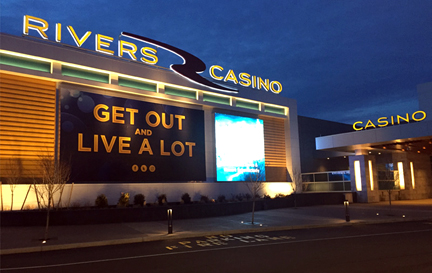
Deal yourself a new career at Rivers Casino & Resort Schenectady. If you’re looking for a fun, hands-on, and fast-paced profession, then becoming a table games dealer at Rivers Casino might be just the job for you.

Rivers Casino’s next Dealer Academy, a $5,000 value offered FREE of charge, begins on Monday, November 15, at the Rivers Casino training center located at 220 Harborside Drive, Suite #201, Schenectady, NY 12305. Training classes will be held from 3 p.m. until 7 p.m. Monday through Friday. Another Dealer Academy is scheduled to begin on December 27th with classes to be held from 10 a.m. until 2 p.m. Monday through Friday. Applicants must be 21 years of age or older.

This program welcomes fun, energetic, and reliable participants of all levels—from beginners with no knowledge at all of table games to those with more experience.

The Rivers Casino Dealer Academy teaches students a range of popular games beginning with Blackjack and other novelty table games. Once they pass their final audition and obtain their NYS gaming license, participants will be offered a part-time or full-time position as a table games dealer at Rivers Casino.

Rivers Casino offers table games dealers hourly wages and tips in excess of $20 an hour along with a generous benefits package including paid time off, medical/dental/vision plans, a 401(k) plan with company match, tuition reimbursement, and more.

Complimentary shuttle bus service from the local CDTA blue line stop is also provided.

Candidates must be able to work all shifts, including weekends and holidays.

Interested dealer school participants can learn more details and apply online at https://www.riverscasino.com/schenectady/careers/dealer-school.

Two Strip Properties For Sale

The Las Vegas Strip will get a little less congested—at least in terms of ownership of the resorts there—now that the two companies that control the majority of the properties have committed to selling one each.

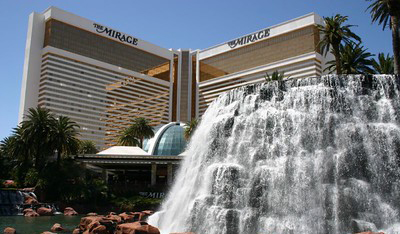
The announcement by MGM President and CEO Bill Hornbuckle was a surprise. Although the Mirage was “sold” to the MGM REIT spinoff MGM Growth Properties (MGP) several years ago, there was no warning that the company was considering a sale of the original property of Mirage Resorts. Any sale would only include the operations as MGP, which is being sold to rival VICI Properties (a Caesars spinoff), will surely retain the property. The sale comes just a week after MGM announced the purchase of the Cosmopolitan of Las Vegas from Blackstone, the company that owns the property. That purchase seems to have triggered a sale of the Mirage.

“Doing so will allow us to maintain our existing Las Vegas exposure while focusing on the complementary and diverse nature of our offerings in our hometown,” Hornbuckle said. “It’s a storied property with great brand recognition and a strong customer base and loyal following. Mirage has served us well over the years, and we’re certain it will remain a success with a new operator in the future.”

Hornbuckle said the central location of the Mirage and its 77 acres makes it more valuable than any other MGM Strip property.

“But as we looked at capital allocation, and we looked at the notion of diversification, we have enough of Las Vegas,” Hornbuckle said. “And we’re looking at the marketplace right now. Obviously, we’re buying and selling at the same time, so we understand the marketplace. We think there is an opportune time, and we think this might be it to sell an asset in Las Vegas. So the Mirage, for us, became the obvious one.”

“It’s an amazing property,” he continued. “I’m excited for somebody to come in and make it their marquee property.”

Meanwhile, Caesars Entertainment will sell off one of its Las Vegas Strip resorts early next year, according to company CEO Tom Reeg.

“You should expect us to put that into motion in the early part of (2022),” Reeg said last Tuesday during a call with investors.

The plan was first announced in 2019, when Eldorado Resorts prepared to acquire Caesars. At that time, Reeg said the company would “be a seller of a Strip asset.” Like so many other best-laid plans, this one was interrupted by the Covid-19 pandemic.

A report in the Las Vegas Review-Journal suggested that the delay may not have affected the potential value of the sale. As proof, it noted that in September, the Blackstone Group announced it was selling the Cosmopolitan of Las Vegas for $5.65 billion, nearly $4 billion more than its 2014 purchase price. And in July, MGM Resorts International announced that it was buying out its partner in CityCenter for $2.1 billion, in a move that gives it full ownership of the Aria and Vdara resorts. MGM then sold the two hotels to Blackstone for $3.9 billion in a leaseback deal.

“The playing field has been cleared with the Cosmo and Aria trades,” Reeg said. “We should encounter pretty robust demand for a center-Strip asset that frankly may be one of the last to trade for quite some time.”

Caesars operates Caesars Palace, Harrah’s Las Vegas, Flamingo, Bally’s, the Linq Hotel, the Cromwell, Paris Las Vegas, Planet Hollywood and Rio. Analysts have speculated that selling Planet Hollywood could make the most sense for the company.

Reeg said 2022 will be a “massive cash generation and deployment year for the company.” The company expects its sale of its William Hill non-U.S. assets to close during the first quarter of 2022, a deal that would bring in about $1.2 billion in net proceeds for Caesars.

Overall, Reeg said the company expects to have “in excess of $5 billion in cash” to deploy in 2022. Some of that will be spent on their digital business and capital projects, “but the vast majority of that is going to go to pay down debt,” Reeg said. The goal is to pay off half of the company’s conventional debt, Reeg said, thereby reducing its cash interest payments by up to $400 million a year.

According to MSN Market Watch, Caesars posted a surprising loss Tuesday, sending shares lower in after-hours trading, but the stock rebounded after the sale plan was announced. An October 22 assessment by Truist analysts said, “While we think many of Caesars’ markets were strong in September, non-recurring events (e.g. wildfires in Tahoe and flooding in New Orleans) along with increasing interactive investment likely had a meaningful impact on the quarter’s trajectory.”

Reeg agreed. “On the brick-and-mortar side, if (Hurricane) Ida didn’t hit New Orleans and we didn’t have the fire in Tahoe, we would have done $1.1 billion of brick-and-mortar EBITDA in the quarter. We had an extremely strong quarter, demand remains particularly robust, and in regards to New Orleans and Tahoe, Tahoe has pretty quickly recovered back to above 2019 levels, not quite as strong as it was pre-fire, but continuing to build.”

President and COO Anthony Carano said room occupancy at its Las Vegas properties reached 89 percent for the third quarter, with weekends running at 97 percent. “As we look to 2022, we see several tailwinds in our business,” Carano said. “We remain optimistic about further visitation gains as consumers return to our properties once COVID fears have fully subsided and the eventual return of convention customers to Las Vegas and our destination markets.”

U.S. Supreme Court Takes Up Texas Tigua Case

The U.S. Supreme Court recently announced it will hear a case that could end the Tigua (Ysleta del Sur Pueblo) and the Alabama Coushatta tribes’ decades-long battles to offer gaming on their reservations. A ruling for the tribes would support the claim of any federally recognized tribe that cannot offer gaming due to laws predating the 1988 Indian Gaming Regulatory Act (IGRA).

The Department of Justice urged the Supreme Court to grant the Tigua’s challenge to a 2019 decision by the 5th Circuit Court of Appeals, which ruled the bingo games offered at the tribe’s El Paso casino were illegal.

The Supreme Court also will review other district court decisions, including a 1994 ruling that the federal 1985 Texas Restoration Act oversees the tribe’s gaming rights, not IGRA.

The Texas Restoration Act recognized the sovereign status of the Tigua and the Alabama Coushatta tribe, based north of Houston, and restored their lands. But it included a non-gaming clause. It was bad timing. Two years later, IGRA protected federally recognized tribes’ rights to offer Class II gaming on sovereign land, provided this type of gaming was legal elsewhere in the state; that is the case in Texas.

The two tribes have long claimed they were pressured into signing the Texas Restoration Act, believing it was their only chance to regain sovereign status. They argue IGRA should supersede TRA. The two tribes have opened casinos on their lands, but Texas has sought to close them, and they have occasionally been forced to close.

Meanwhile, for 20 years the Kickapoo Tribe has offered bingo operations without state interference at its casino near the Mexican border. The tribe was recognized in 1985 by a law that did not include a non-gaming clause.

Observers believe the Tigua could be victorious. The Biden administration has made it known it wants Texas to address the situation. Also, for the first time in U.S history, the Department of the Interior is headed by a Native American, Deb Haaland. Additionally, in an August letter to the Supreme Court, Acting U.S. Solicitor General Brian Fletcher recommended the court take up the case. Fletcher said the 5th Circuit ruling was “an error,” and he said these issues have “impaired the uniformity of a federal regulatory scheme, and has uniquely disadvantaged two Indian tribes.”

Nova Southeastern University Law Professor Bob Jarvis said, “If the Supreme Court takes the case, and if it finds for the tribe, then every other tribe that currently is foreclosed from offering gambling because of a pre-IGRA law would have a basis for arguing that the court’s new decision supports their getting gambling.”

That would include the Passamaquoddy, the Penobscot Nation and the Aroostook Band of Micmac Indians in Maine; the Narragansett Indian Tribe in Rhode Island; and the Wampanoag Tribe of Gay Head in Massachusetts.

Allen Named Chairman of AGA

The American Gaming Association (AGA) last week announced that Hard Rock International Chairman and Seminole Gaming CEO Jim Allen will serve as the association’s next chairman. The AGA board of directors elected Allen to succeed Aristocrat Technologies CEO Trevor Croker, who has served as AGA chairman since January 2020. His two-year term begins in January 2022.

Allen has served on AGA’s board of directors since 2015, where his leadership and experience has played an integral role in driving association priorities. For 20 years, Allen has led all gaming, hospitality and entertainment operations for the Seminole Tribe of Florida, vastly expanding the tribe’s gaming operations across the state and country. Allen becomes the first representative of a Native American gaming enterprise to become AGA chairman.

“This is a pivotal juncture for the gaming industry and I’m honored to serve as the AGA’s next chairman,” said Allen. “The AGA has played an essential role in uniting the industry throughout the pandemic, and I’m thankful to Trevor and the AGA board of directors for entrusting me to help lead the industry’s continued recovery.”

“I’m thrilled to welcome Jim as AGA chairman,” said AGA President and CEO Bill Miller. “Jim brings decades of experience in commercial casino operations and tribal gaming—a perspective that will be invaluable as we work to set the industry’s agenda, accelerate gaming’s comeback, and strengthen our value to communities across the country.”

“Trevor has been a tremendous chairman of the AGA and trusted advisor to me over the past two years, guiding the industry through the most challenging time in its history,” continued Miller. “The AGA and entire gaming community are indebted to his service to the industry.”

“It has been a privilege to serve as AGA chairman,” stated Croker. “I’m incredibly proud of our success in laying the foundation for gaming’s recovery and ensuring our future is brighter than ever. I have the utmost confidence that Jim, Bill and the entire association will continue to lead the gaming industry forward.”

In addition, the AGA’s executive committee recently extended Miller’s contract to remain the association’s president and CEO for an additional three years. Since joining in 2019, Miller and the AGA have advanced important industry priorities, such as:

  • Accelerating gaming’s recovery from the COVID-19 pandemic, including the industry’s historic inclusion in the CARES Act.
  • Securing a favorable regulatory environment for the industry to help pave the way for casino payments modernization and other industry innovation.
  • Expanding responsible gaming efforts as the industry grows, including the establishment of AGA’s Have A Game Plan. Bet Responsibly.
  • Amplifying gaming’s voice to the public and policymakers through communications and research and building gaming champions on Capitol Hill.

Study Evaluates Proposed Louisiana Casino Impact

In a recently released report, the New Orleans-based Convergence Strategy Group stated a casino on the Lake Pontchartrain waterfront near Slidell, Louisiana area most likely would have a “moderately positive to negligible impact on surrounding businesses.”

Commissioned by the St. Tammany Corporation, the economic development agency for the parish, the report stated, “Through the research we see moderately positive impacts from similar developments across the country all the way down to just no impact, but we have not been able to uncover the negative impacts that many communities have feared.”

Peninsula Pacific Entertainment has proposed a $329 million casino resort, Camellia Bay, on vacant land near the Interstate 10 twin spans. St. Tammany Parish voters will decide the fate of the casino in a December referendum.

The anti-casino group, Stand Up St. Tammany, called the study “propaganda.” Spokesperson Chris Jean said, “They are not objectively doing the research for the community. Instead, they are a hired gun to tell you what St. Tammany Corp and P2E need you to believe going into the upcoming vote.”

Parish residents have expressed concerns that the casino would cause property values to decline and crime to rise. They have cited a National Association of Realtors report that projected a 4.6 percent drop in property values in Springfield, Massachusetts, following the opening of the MGM Springfield casino in 2018. However, the CSG study disputed that, noting Springfield property values actually rose 21.4 percent, compared to 2.3 percent to 14.3 percent growth in the surrounding area.

Suzanne Leckert, an author of the CSG study, added it showed sales tax revenue would increase. She said the study found no pattern of business closures or bankruptcies after casinos opened. CSG also analyzed the proposed casino’s impact on small businesses, tourism, crime and marriage/divorce rates.

CSG used data from the Bureau of Labor Statistics, the U.S. Census, municipal governments and interviews with local leaders. It also reviewed studies from other casino communities and included a review of past studies. CSG found casinos have “a range of impacts on host communities, from positive to non-discernable.” However, the study stated researchers found no recently developed casino markets had negative correlations.

St. Tammany Corp. Chief Executive Officer Chris Masingill, said, “The community impact study provides an abundance of data and information for St. Tammany residents to take into consideration to help them make an informed decision about this project. This project has really been reviewed, has been scrutinized from every single angle. We know that there’s a significant campaign of misinformation and distortions and we want people to have all of the information.”

Louisiana Regulator Approve Louisiana Downs Sale

The Louisiana Racing Commission recently gave final approval for the sale of Harrah’s Louisiana Downs horse racetrack and casino in Bossier City to Rubico Gaming for $22 million. The Louisiana Gaming Commission previously approved the deal.

Rubico President Kevin Preston said, “We are prepared to bring this iconic track back to its iconic status.”

Caesars Entertainment Senior Vice President Joe Morris said the sale is expected to close November 1. “We’re completely committed to making the transition as smooth as possible,” Morris said.

The racetrack opened in 1974. In its prime in the early 1980s, up to 1.3 million fans attended the track throughout the racing season. Preston said Rubico will continue to operate the racetrack and the 12,000-square foot casino, and plans to apply for a sports betting license. Preston told regulators Rubico will add an RV park and make significant upgrades to both the casino and the racing campus.

The Gaming Control Board also voted unanimously to grant FanDuel a fantasy sports license, joining DraftKings which has been operating in Louisiana for several months.

Iowa’s Last Greyhound Track to Close

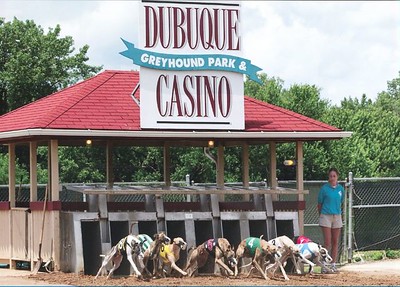
The Iowa Racing and Gaming Commission said the Iowa Greyhound Association has asked to drop the number of meets at Iowa Greyhound Park in Dubuque to 18 days and also to end greyhound racing after the season in 2022. The last remaining dog racetrack in the state, Iowa Greyhound Park has survived this long due to payment obligations made by other tracks.

IRGC Administrator Brian Ohorilko said, “As part of the original greyhound cessation legislation that was passed approximately seven years ago, the two racetracks that offered greyhound racing, Q-Casino and Horseshoe Casino, could opt out of greyhound racing and pay a fee over seven years. Those payments have been coming in every year and the last payment would be made in 2022.”

Dog races began at the Dubuque Greyhound Park June 1985, followed by Bluffs Run in Council Bluffs in February 1986 and Waterloo Greyhound Park in October 1986. Following the closure of Iowa Greyhound Park, if the greyhound industry remains the same, only three dog racetracks will remain operational in the U.S.: Mardi Gras Casino and Resort and Wheeling Island Hotel-Casino-Racetrack in West Virginia and Southland Park Gaming and Racing in Arkansas. Florida, once the capital of greyhound racing, banned the sport late last year.

In May, a bipartisan group of members of the U.S. House of Representatives introduced to ban greyhound racing. U.S. Rep. Tony Cárdenas of California stated, “Greyhound racing is cruel and must end. These docile animals are kept in stacked cages for 20 hours or more a day and are subjected to brutal training practices and races, facing the risk of injury and death at every turn.”