Author: Casino Connection Staff

Scientific Games Acquires Sideplay to Grow iLottery

Scientific Games Corp. has continued recent efforts to expand its digital portfolio with the acquisition of digital iLottery content studio Sideplay Entertainment.

The Sideplay deal comes after Scientific Games announced in late June plans to divest its lottery and sports betting businesses in order to deleverage and provide the resources to further invest in digital.

Three weeks after acquiring Australian slot game company Lightning Box—a move designed to “bolster the company’s in-house studios with even more talented game makers”—Scientific Games said the addition of Sideplay would expand its portfolio of iLottery content and accelerate the global market penetration of its iLottery business.

The combination of Sideplay’s innovative portfolio of digital games and agile content distribution technology with Scientific Games’ iLottery platforms and digital solutions is expected to increase player engagement and drive further growth of the company’s iLottery solutions in markets around the world, it added.

Sideplay is the primary supplier of digital “eInstant” games to the U.K. National Lottery. Scientific Games is already exclusive distributor of Sideplay content for iLottery programs in North America, including the Pennsylvania Lottery and Loto-Québec.

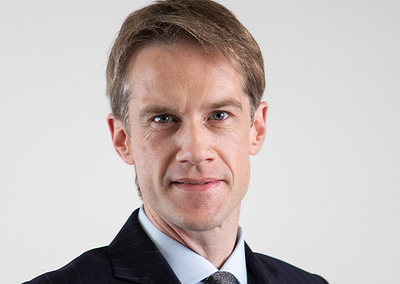
“We’re excited to welcome Steve Hickson and the entire Sideplay team to Scientific Games Lottery Group to help us advance our strategy as a growth company delivering the best retail and digital content, platforms and game category services that maximize proceeds for our lottery customers,” said Pat McHugh, lottery CEO for Scientific Games.

“Sideplay’s highly-experienced digital game developers have a proven track record of delivering exceptional iLottery content to market quickly. We have already integrated Sideplay’s digital games into our iLottery platforms and combining their unique approach to game development for Scientific Games’ more than 20 iLottery customers worldwide will accelerate our iLottery offerings for our customers and their players.”

No financial details were disclosed.

Ontario Commission Recognizes BMM Testlabs for iGaming

International gaming testing company BMM Testlabs has been recognized as an iGaming independent testing laboratory (ITL) by the Alcohol and Gaming Commission of Ontario (AGCO). The decision allows BMM to expand its business within the province, where it was recognized as an ITL in April and formally licensed in July.

“BMM Testlabs provides almost four decades of experience and expertise for the ever-evolving gaming industry,” said Travis Foley, executive vice president and chief technology officer, North America, for BMM Testlabs. “As emerging iGaming and sports wagering markets continue to develop, we can be trusted to help our partners navigate the regulatory landscape.”

The AGCO’s recognition officially authorizes BMM Testlabs to provide various testing and compliance services for iGaming products within the region.

“We would like to thank the AGCO for their effort and diligence throughout the approval process,” Foley said. “We are honored that the AGCO has approved BMM Testlabs to test, audit and certify iGaming products for Ontario and look forward to providing our testing services and technical consultancy to this significant jurisdiction.”

Credit Card Ban Supported by Australian Online Operators

Most of Australia’s online wagering operators, represented by Members of Responsible Wagering Australia (RWA), have decided to support a ban on using credit cards to fund online gambling.

RWA CEO Brent Jackson announced the new policy to the Parliamentary Joint Committee on Corporations and Financial Services. The Joint Committee began an inquiry into regulation of financial services used for online gambling March 25. The inquiry is looking into whether such a ban should be imposed on credit cards and digital wallets.

Jackson told the lawmakers “As a policy-based body we want to achieve the best outcome for consumer protection. We think that the best way of achieving this is by committing to transparent discussion and actively working with stakeholders to make sure we provide the best outcomes.”

He added, “Australia’s major online wagering operators will support development of measures to prohibit credit card wagering.”

Jackson promised that his association would work with banking institutions to make this happen. He continued, “Responsible Wagering Australia members have agreed to develop a technical solution to deliver this reform in a timely fashion and will seek the assistance of banks and payment processing providers to ensure the change can be delivered without adverse unintended consequences.”

Some banks have anticipated such regulations and started taking action on their own. In 2020 Bank Australia announced it would cease processing credit card payments for gambling.

VICI to Acquire MGM Growth Properties

VICI Properties, Inc., the real estate investment trust formed in 2017 through a spinoff from Caesars Entertainment and owner of 28 properties including Caesars’ top Strip casinos, will acquire MGM Growth Properties from MGM Resorts International, creating the largest REIT in the U.S.

The transaction will add top MGM properties—like MGM Grand Las Vegas, Mandalay Bay, Excalibur and Luxor in Las Vegas, MGM National Harbor in Maryland, Borgata in Atlantic City—to a portfolio that already includes properties like Caesars Palace and Harrah’s Las Vegas.

Under the agreement, VICI Properties will acquire MGP for a total consideration of $17.2 billion, inclusive of the assumption of approximately $5.7 billion of debt. Upon completion of the merger, VICI will have an estimated enterprise value of $45 billion, solidifying VICI’s position as the largest experiential net lease REIT while also advancing VICI’s strategic goals of portfolio enhancement and diversification.

MGP Class A shareholders will receive 1.366 shares of newly issued VICI stock in exchange for each Class A share of MGP. The fixed exchange ratio represents an agreed upon price of $43 per share of MGP Class A shares based on VICI’s trailing five-day volume weighted average price of $31.47 as of July 30, and represents a 15.9 percent premium to MGP’s closing stock price on August 3.

MGM Resorts will receive $43 per unit in cash for the redemption of the majority of its MGP Operating Partnership units hat it holds for total cash consideration of approximately $4.4 billion, and will also retain approximately 12 million units in a newly formed operating partnership of VICI Properties. The MGP Class B share that is held by MGM Resorts will be canceled.

Simultaneous with the closing of the transaction, VICI Properties will enter into an amended and restated triple-net master lease with MGM Resorts. The lease will have an initial total annual rent of $860 million, inclusive of MGP’s pending acquisition of MGM Springfield, and an initial term of 25 years, with three 10-year tenant renewal options.

Rent under the amended and restated master lease will escalate at a rate of 2 percent per annum for the first 10 years and thereafter at the greater of 2 percent per annum or the consumer price index, subject to a 3 percent cap.

Additionally, VICI will retain MGP’s existing 50.1 percent ownership stake in the joint venture with Blackstone Real Estate Income Trust, Inc., which owns the real estate assets of MGM Grand Las Vegas and Mandalay Bay. The BREIT JV lease will remain unchanged and provides for current annual base rent of approximately $298 million and an initial term of 30 years, with two 10-year tenant renewal options.

“Through this transformative strategic acquisition, we are merging MGP’s best-in-class portfolio into VICI’s best-in-class management and governance platform, creating the premier gaming, entertainment and leisure REIT in America,” said Ed Pitoniak, CEO of VICI Properties. “We want to thank James Stewart, Andy Chien and the MGP Board for building and stewarding a portfolio of such exceptional quality, and going forward we are honored to become a key real estate and capital partner for Bill Hornbuckle and the MGM Resorts management team and board. We look forward to supporting their strategic growth objectives for decades to come.”

“After many years of growing both of our portfolios, combining them into one company will generate the best results for the shareholders of both companies,” said Stewart, CEO of MGP. “The combined company will create a superior platform for delivering exceptional returns to MGP’s existing shareholders, by improving diversification, increasing scale, lowering cost of capital and benefiting from future growth.”

Bill Hornbuckle, CEO and president of MGM Resorts, said, “This transaction unlocks the significant real estate value of our assets, enhances our financial flexibility and strengthens our ability to execute key growth initiatives. We look forward to our long-term partnership with VICI.

“In 2016, we started on our journey to become asset-light,” Hornbuckle continued, “and this announcement, together with our recently announced Springfield and CityCenter transactions, reflects the culmination of those efforts and a major step forward in simplifying our corporate structure. As a result of these actions, we are well positioned and remain focused on pursuing growth opportunities in our core business, with significant financial flexibility to continue to deploy capital to maximize shareholder value.”

The acquisition adds 15 properties comprising 33,000 hotel rooms and 3.6 million square feet of meeting and convention space to the VICI portfolio.

VICI also announced a 9.1 percent dividend increase with the payment of a 36-cent dividend on October 7 to shareholders as of September 24.

Wall Street returned positive reviews of the transaction.

“VICI’s announcement of an agreement to acquire MGP is generally positive for both VICI and MGM, in our view,” wrote David Katz of Jefferies, “given that the former continues to grow accretively and the latter simplifies its structure and builds its already flush resources. In this regard, we expect a positive reaction in both stocks.”

Luis Chinchilla of Deutsche Bank noted that the transaction provides VICI with an opportunity to refinance its existing term loan, “which should facilitate the company’s path toward an investment grade rating,” observed Frank Fantini, president of Fantini Research.

Carlo Santarelli, a Deutsche Bank research analyst, noted that the transaction grows MGM’s balance sheet to more than $10 billion in cash.

“We have long believed that (mergers and acquisitions) among the gaming triple-net REITs was a likely outcome,” Santarelli said in a statement. “We have also noted, over time, that the true driver of M&A in the sector was cost of capital, and with VICI having traded at a healthy equity premium to the group for some time, with access to inexpensive debt financing, the transaction makes both intuitive and financial sense.”

According to Jeffries Equity Analyst David Katz, VICI’s announcement of an agreement to acquire MGP “is generally positive for both VICI and MGM in our view,” he said in an email to CDC Gaming Reports, “given that the former continues to grow accretively and the latter simplifies its structure and builds its already flush resources. In this regard, we expect a positive reaction in both stocks, pending VICI management commentary this (morning) and MGM management commentary along with 2Q21 earnings on 8/4.”

The deal grows the sheer square footage under VICI’s ownership to new heights. Pitoniak said in an investor conference call last week that the sheer square footage marshaled in what was then 28 properties—which include, most recently, the Venetian and Sands Expo Center—is the reason the company logged net income of $300.7 million, or 54 cents per share, for the second quarter, up from $229.4 million or 47 cents per share for the same period last year.

“With 28 properties, our average property measures 2.3 million square feet,” Pitoniak said. “Compare that with the largest conventional triple-net REIT where the average-owned store measures 17,000 square feet. Why does scale matter? Because large scale tends to correlate to spatial complexity, multi-functionality, abundant reprogramming capacity, and higher replacement cost. All of which add to mission criticality.”

In addition to the casino properties, the REIT has diversified, most recently investing $80 million in the Great Wolf Lodge, a project in Perryville, Maryland that includes a $250 million resort with a 126,000-square-foot indoor water park.

“We would rather have value concentrated in high-quality non-commodity assets than dispersed across conventional commodity triple-net boxes,” Pitoniak said. “These big buildings and the ample land parcels around them also create an opportunity for incremental capital investment for our tenants and potentially for us. And that kind of incremental same-store capital-investment opportunity isn’t likely to be available in the typical smaller box owned by a triple-net REIT.”

The deal leaves only the original gaming REIT, Gaming and Leisure Properties, as the only other REIT with gaming investments.

GLPI, the real estate investment trust that owns properties operated largely by Penn National Gaming reported a strong second quarter, with net income of $138.2 million on total revenue of $317.8 million, up from $112.4 million and $262 million, respectively, a year ago.

Company officials cited a $22 million year-to-year jump in rental income as contributing to the strong results.

“GLPI’s record second-quarter results and our financial performance over the last year highlight the value of resilient regional gaming markets and our high quality tenant roster,” said Peter Carlino, chairman and CEO of GLPI, “that has been further diversified while maintaining a close watch on our capital structure and cost of capital.

“As a result, we have established sustained financial stability, capitalized on new growth opportunities with existing and new tenants, and returned capital to shareholders in the form of stock and cash dividends on an uninterrupted basis, despite the challenges presented by the pandemic.

“As we look to the second half of 2021, GLPI remains well positioned to deliver record results as we further expand and diversify our portfolio and benefit from the continued strength in regional gaming markets, with many of the operations at GLPI’s properties recording both record bottom-line results and margins, as well as growth in top-line performance compared to 2019 (prior to the Covid-19 outbreak). As a result, on May 1, 2021, full rent escalators were achieved with respect to the Amended Pinnacle Master Lease, the Boyd Master Lease and the Belterra Park Lease, which increased annualized rent by $6.1 million.”

Not So Fast on Chicago Casino

On August 5, the office of Chicago Mayor Lori Lightfoot announced that would-be Chicago casino operators have two more months to respond to the city’s request for proposal (RFP) to helm the project. The statement indicated that the extension was granted “after several potential bidders sought additional time to evaluate the opportunity.”

“This extension gives potential bidders more time to fully assess the Chicago casino opportunity; conduct additional due diligence; assemble more competitive bid packages; and explore financing opportunities,” the statement continued.”

The Chicago Sun-Times pointed out that operators have had more than two years to consider the prospect of a “potential big-city cash cow,” authorized as part of a statewide gaming expansion signed into law in 2019 by Governor J.B. Pritzker.

Multiple reports have cited that the major gaming companies expected to bid now have little or no interest in a Chicago casino because of a host of reasons such a high tax rate, difficult potential locations and Illinois’ bad reputation of sticking to their word when it comes to a stable regulatory system, and at least four new casinos already approved in the suburbs of Chicago.

After lowering the effective tax rate from an “onerous” 72 percent to 40 percent, Lightfoot issued the RFP in April.

The delay—which gives operators until October 1 to respond—could simply be a lack. MGM Resorts International, Wynn Resorts and Caesars Entertainment have already passed on the project.

Lightfoot continues to put a good face on it, calling the casino a “once-in-a-lifetime opportunity.”

“This historic casino project stands to expand the economic vibrancy and strength of our city by bringing sustainable, good-paying jobs to residents from underrepresented backgrounds and creating a world-class casino-resort that attracts visitors from all over,” she said. “Extending the deadline for interested bidders will allow the city to collect as many robust, impactful and transformative proposals as possible. I look forward to seeing these bids roll in and working very closely with whichever team is ultimately chosen to develop Chicago’s first-ever casino.”

The statement called the Chicago casino project “one of the most attractive casino-resort development opportunities in the country … The potential gaming operator will have the opportunity to incorporate its property into the city’s vibrant cultural scene, robust public transit infrastructure, and highly diversified economy.”

Caesars Sells European & African Casinos to Metropolitan

When Eldorado Resorts bought Caesars Entertainment, the new owners pledged to sell off non-core assets and exit the international market, where Eldorado had no experience, and apply those funds to reducing the Caesars debt load. The upcoming sale of the non-U.S. assets of William Hill is drawing lots of bidders and should exceed $1 billion.

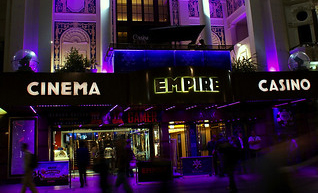
Last week the company continued that strategy by agreeing to sell is European and African casinos to Metropolitan Capital, a subsidiary of Silver Point Capital. The company owns 11 properties in the UK, Egypt and South Africa—three casinos in London, the Empire, the Playboy Casino and the Sportsman. It also runs Manchester 235, Alea Nottingham, Alea Glasgow and Rendezvous Brighton in the UK. The agreement also includes Caesars Cairo, Kings and Queens Casino and Ramses Casino in Egypt and Emerald Resort in South Africa. Financial terms of the deal were not immediately released.

“We are very excited about the opportunity to acquire a number of historic and high-end casinos in the UK,” Silver Point founder Edward Mulé said. “The acquisition fits well with Silver Point’s focus on investing in high-quality businesses at opportune times.”

The company has hired Michael Silberling, who at one time ran this portfolio of casinos for Caesars. Most recently he was COO of Mohegan Sun and prior to that he was CEO of Affinity Gaming.

“The world, the global economy, and the hospitality industry have been rocked by the Covid-19 pandemic, but I believe that this team is well positioned to lead a strong rebound of this business, benefitting from their experience and expertise, and a partner that is committed to invest,” Silberling said. “We intend to focus on job creation and investment in this historic business as we partner with our employees, regulators and the communities in which we operate to create a safe, fun and memorable experience for our customers that is second to none.”

Catawba Nation Breaks Ground on NC Casino

The “pre-launch,” 500-slot modular facility for the Catawba Two Kings Casino in Kings Mountain, North Carolina has been open slightly more than one month. But a date finally has been set for the groundbreaking of the permanent $273 million casino: Wednesday, August 11.

Mike Ulizio, president of the Catawba Nation Gaming Authority, said, “We are working toward beginning construction on the introductory phase, which will be part of the permanent casino and feature an additional 1,300 slot machines, restaurants and other amenities by year’s end. That phase will take about a year to complete.” Ulizio said the temporary facility employs 250 people and the permanent one will create 2,600 new jobs.

Catawba Nation Chief Bill Harris commented, “Catawba Two Kings Casino represents the righting of a historical wrong for the Catawba Nation. But it is also so much more. It represents a prosperous future and renewed kinship between the Catawba Nation and the many communities that now occupy Catawba ancestral lands, including Kings Mountain, Cleveland County and the state of North Carolina.”

Ulizio noted, “We’ve seen plenty of big winners over the first month, and we regularly post them on @twokingscasino on Instagram. We’ve seen several win more than $10,000 and had one player from Gaston County win $75,000.”

He said on opening day, July 1, the line to enter the casino wrapped around the building. “Since then, business has been very good and we are seeing a steady week-over-week increase in the number of players,” Ulizio said.

He added, “We have now signed up 27,000 people for the players club, which is remarkable given we’ve only been open a month. The casino has steady crowds on weekdays but we are seeing significantly more patrons on weekends.”

Judge Says Wynn Lawsuit Can Proceed

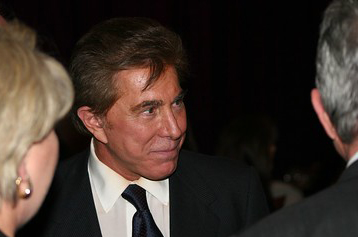
A federal judge in Nevada has given the go-ahead to a lawsuit that seeks class-action status for Wynn Resorts shareholders. The plaintiffs allege that executives at Wynn Resorts Ltd. knew about but disregarded reports that former Chairman and CEO Steve Wynn engaged in a pattern of sexual harassment and misconduct against his employees.

According to the Associated Press, U.S. District Judge Andrew Gordon ruled the case can go forward. It is based on the claim that Wynn, members of his board and top executives at his Las Vegas-based company violated Securities and Exchange Commission rules through “material misrepresentations and omissions.”

The case went public in January 2018 following an expose in the Wall Street Journal. Wynn resigned shortly thereafter, but has continued to deny the allegations. The Journal cited dozens of casino employees who described, as the judge noted, “behavior that cumulatively would amount to a decades-long pattern of sexual misconduct.”

The lawsuit seeks unspecified damages for unnamed holders of Wynn stock, which plummeted by more than 17 after percent after the scandal broke. “The court’s decision underscores the fact that alleged sexual misconduct and harassment by corporate executives are material issues for investors, especially when management turns a blind eye to reports of wrongdoing,” said Murielle Steven Walsh, attorney for the plaintiffs. “This type of misconduct poses a threat to a company’s financial success.

The judge said plaintiffs “sufficiently alleged” that Wynn, current company president and CEO Matt Maddox and two other executives, Kim Sinatra, former executive vice president general counsel and secretary, and Stephen Cootey, former chief financial and accounting officer and treasurer, “were aware of information contradicting their statements that denied misconduct allegations.”

“The inference that these defendants were aware of Wynn’s alleged misconduct at the time of their statements is cogent and compelling,” Gordon wrote.

In a statement, Wynn Resorts spokesman Michael Weaver said the company looks forward to the case “moving beyond the allegation stage.”

In February 2019, the Nevada Gaming Commission fined the company a record $20 million for failing to investigate claims of sexual misconduct against Wynn. Then-commissioner Philip Pro said investigators found “a failure of a corporate culture to effectively govern itself as it should.” Later that year, the Massachusetts Gaming Commission fined Wynn Resorts $35 million for on the same basis. It also fined Maddox $500,000 for a “clear failure” to investigate at least one misconduct complaint.

Massachusetts regulators said they were “troubled by the systemic failures and pervasive culture of non-disclosure” at Wynn Resorts. At one point, there was speculation the company would rebrand and wipe the famous Wynn signature from resorts in Las Vegas, Macau and Boston.

Southern Nevada Tourism Industry Lost $34 Billion to Covid

A new report commissioned by the Las Vegas Convention and Visitors Authority (LVCA) tallied the cost of the Covid-19 pandemic, which shut down Southern Nevada tourism for much of 2020.

Author Jeremy Aguero of Applied Analysis said the pandemic cost the industry $34 billion in total economic input: visitor spending, employee spending, and suppliers and vendors. He added that a total of 125,600 jobs may have been lost.

“The Covid-19 pandemic left an indelible imprint on the Southern Nevada tourism industry and the broader regional economy,” Aguero said in the report summary. “Compared to recent recessions, the Covid-19 recession’s magnitude was unprecedented in its depth and speed. … While the economic losses in 2020 were material, it is worth noting that many of the economic conditions and shortfalls have persisted into early 2021.”

The virus is still a threat, and a new indoor mask mandate has thrown a wet blanket on the party atmosphere in Vegas. Some tourists have canceled their plans to visit. But UNLV hospitality professor Amanda Belarmino told the Pahrump Valley Times that masks should “assuage some of those fears,” and not deter tourism. “Nobody does hospitality like Las Vegas, and our Covid-19 response has been second to none. We know the casino-hotels had previously implemented successful mitigation measures, and as those return, we will continue to host guests safely.”

But in a letter to employees, MGM Resorts President and CEO Bill Hornbuckle called it “another disheartening step backward when we should be focused on continuing our recovery. In addition to the heart-wrenching thought of more illness and death, I fear that progressively more restrictive measures, including a return to social distancing and capacity restrictions, could be around the corner if we continue on this path. This would be a significant blow to our community, industry and economy.”

MGM now requires employees to provide proof of vaccine or be subject to regular Covid-19 testing—for which they must pay $15 a week.

Despite the discouraging news, state gaming win exceeded $1 billion for the fourth straight month in June, reported the Las Vegas Review-Journal, and Clark County exceeded $1 billion for just the third time in history.

The last time the state had four consecutive months of $1 billion-plus win was January 2008 to April 2008, just before the Great Recession, the Review-Journal reported.

Churchill Downs to Invest $200 Million in Kentucky Facilities

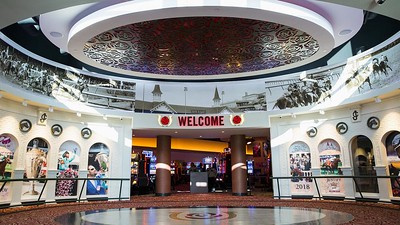
Churchill Downs Inc. announced it will invest more than $200 million in Derby City and Churchill Downs racetrack in Louisville, Kentucky. Plans for the 3-year-old Derby City historical racing center include a 135,000-square-foot expansion, featuring a 5-story, 123-room, hotel tower and 41,000 square feet of new casino floor space with 200 new gaming positions and a VIP gaming area. A new restaurant, sports bar and live entertainment stage also are planned. The projects are expected to create 400 construction jobs and 60 permanent positions. Work will begin early next year and be completed in late 2022 and early 2023, officials said.

Several projects also are in the works for the racetrack itself, officials said. Churchill Downs will spend $45 million to renovate the Homestretch Club in time for the 148th Kentucky Derby next May. Outdoor bleachers near the Winner’s Circle will be converted into new seating with better views of the starting gate, Big Board and homestretch.

In addition, the company will spend $90 million on the Turn 1 Experience, adding 7,100 seats, including 5,100 covered, and two concourses, ready by the 2023 Derby. Also, the Paddock and Plaza areas will be redesigned and be finished by Derby Day 2024.

In a call with analysts, Churchill Downs Inc. Chief Executive Officer Bill Carstanjen said, “Derby City Gaming is even more of a juggernaut than we ever thought. And generally in business, it doesn’t have to be complicated; when you have something working well, invest more in what’s working. So Derby City Gaming really powered right through the pandemic and we need to respect that and invest around that.”

He added, “Derby City Gaming continues to exceed the company’s expectations. The expansion of this premier gaming property is intended to create an elevated experience for our guests that is inclusive of all their hospitality needs and is anticipated to fuel ongoing growth in purse contributions for Churchill Downs Racetrack.”

Macquarie Analyst Jordan Bender called the Churchill Downs Racetrack an “irreplaceable asset.” He stated, “An underappreciated part of the investment story, in our view, is the growth through the historical racing machines in Kentucky at Derby City. What Derby City Gaming has been able to do is capture that part of the market where there is significant population in Louisville. People don’t have to drive from downtown over the river anymore. The gaming’s really staying in the state.”

According to Churchill Downs’ recently released second-quarter results, Derby City, which offers about 1,000 historical horseracing machines, generated more revenue in April through June than any of Churchill Downs’ eight actual casinos it operates in other states. In comparison, Derby City, opened in 2018, lacks real slot machines, table games, sports betting and other casino features that are illegal in Kentucky.

Churchill Downs also operates historical horseracing facilities near its Turfway Park in northern Kentucky and on the southern Kentucky border at Oak Grove, designed to attract the Nashville market. Oak Grove generated $25.6 million in net revenue in the April-June quarter, ahead of four of Churchill Downs’ eight casinos.

Churchill Downs now is said to be considering a fourth casino-like venue in downtown Louisville. Carstanjen said, “We think now is a great time to invest in our hometown, and that it will be a win-win for our community and Churchill Downs.”

Meanwhile, Churchill Downs did not submit racing dates to the Illinois Racing Board for 2022 for its Arlington International Racecourse, meaning it’s likely there will be no racing at Arlington next year. If Churchill Downs does not accept a bid on the Arlington property from an interested development group, the racetrack will close forever at the end of the 2021 racing season.

Several months ago, Churchill Downs said it would sell the property to developers. The bidding window closed in June with no word from Churchill Downs officials. One group, whose spokesman is former Arlington president Roy Arnold, said it would divide the properties and continue to hold races. The Chicago Bears also placed a bid and said it would move from Soldier Field.

As it stands, Illinois will have just two racetracks in 2022. Hawthorne Racecourse in Stickney applied for 365 days of Thoroughbred racing and, operating as Suburban Downs, for 365 days of Standardbred racing. Fairmount Park in East St. Louis, which runs a Thoroughbred meet, applied for 150 days, from March 12 through November 20.

Hawthorne planned to add a casino under 2019 legislation, but construction has significantly slowed. After lobbying for years for a casino license at Arlington, Churchill Downs declined to apply for a casino license when it had the opportunity two years ago, stating gaming taxes were too high to make a profit. Observers took that to mean Arlington’s days were numbered. Churchill Downs owns a majority stake in Rivers Casino, located only 12 miles east of Arlington.

Richmond City Council Approves Casino Terms

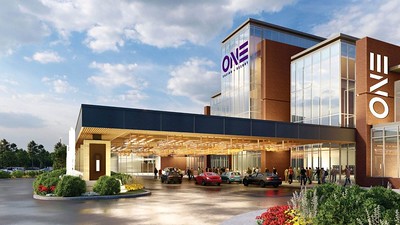
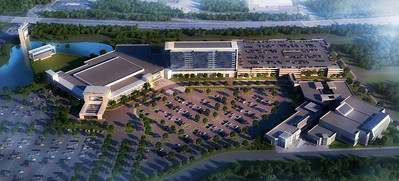
In Virginia, the Richmond city council recently gave unanimous consent to plans and contract terms for a casino resort project that will appear on the November 2 ballot. If local voters approve the ballot issue, media conglomerate Urban One will proceed to build a casino resort on property currently owned by Philip Morris USA.

The Washington, D.C.-based Urban One operates several radio stations in the Richmond-area market. It’s partnering with Rosie’s Gaming Emporiums and Colonial Downs racetrack operator Peninsula Pacific Entertainment on the project.

Supporters point to the projected $30 million in annual tax revenue and 1,000-plus jobs the development could create. However, opponents are concerned much of the money will come from people who can least afford to lose it.

If the measure passes, Urban One will provide a $25.5 million upfront payment to the city and $16 million in payments to local nonprofits and government organizations over the next 10 years. In addition, terms include $25 million in advertising for public initiatives at no cost to the city; an annual compensation package averaging $55,000 for casino resort employees; up to $500,000 in reimbursement to the city for consulting fees it paid during the evaluation process; $200,000 annually for problem gambling services; and a 40 percent participation goal for small and minority owned businesses for the facility’s construction and operation. Plans also include a television and radio production studio on-site.

Prior to the vote, Councilwoman Reva Trammell, who represents the area where the casino would be built, urged colleagues and Richmond residents to support the project. She said, “This is a golden opportunity, not just for the South Side and 8th District, but for the city as a whole. Give my people, all of us, a chance.”

Trammell said nearly everyone in her district supports the casino resort. But Quinton Robbins of the social justice advocacy group Richmond for All said that’s not so. He said the organization surveyed residents near the project site and found 45 percent of those individuals opposed it; an additional 25 percent said they were undecided. Robbins stated, “Casino developers have pushed the narrative that South Side residents support the expansion of the gaming industry in their neighborhood. I believe the results are clear: There’s no broad-based neighborhood support for this casino.”

A new state law allows Richmond to allow a casino if a majority of voters approve it in the referendum. Voters in Danville, Norfolk, Portsmouth and Bristol already have approved casinos in those cities.

Work Begins on Rivers Casino Portsmouth in Virginia

Work crews have begun site work on the $300 million Rivers Casino Portsmouth at Hampton Roads, Virginia. It is being developed by Rush Street Gaming. The gaming company is still awaiting the approval of the license by the Virginia Lottery board.

Justin Ballard of S.B. Ballard Construction Co., told 13 News Now:

“Over the next couple of weeks, you’ll start seeing some major landscape changes, all the trees and shrubbery on site will all be gone.”

The casino, along with several others, weas overwhelmingly authorized by a referendum last November. When it opens it will employ about 1,300 people on a full-time basis.

Louisiana Mayor Will Vote No On Proposed Casino

As supporters and opponents of a proposed $325 million casino near Slidell, Louisiana intensify their efforts, the mayors of Slidell and Mandeville announced they’ll vote “no” in a November 13 referendum to allow Los Angeles-based Peninsula Pacific Entertainment to develop the facility. St. Tammany Parish Sheriff Randy Smith, Slidell Police Chief Randy Fandal and the Slidell City Council also oppose the casino.

In a letter addressed “To the Citizens of Our Community”, Slidell Mayor Greg Cromer wrote he is asked nearly every day where he stands on the issue. “My answer is that I will be voting NO on the casino referendum.” He said he had read numerous studies and reports, both pro and con, about the casino’s fiscal impact, and also had been listening to opinion. The Slidell city council recently voted to allocate $25,000 for an economic impact study on the proposed casino.

Mandeville Mayor Clay Madden stated as mayor of the city and lifelong St. Tammany Parish resident he is “firmly against” a casino in the parish. “I do not think it is consistent with the beautiful north shore’s quality of life. While I respect the rights of all residents to vote, my family and I will be NO votes on this matter.”

Developer Peninsula Pacific Entertainment recently pledged, if the referendum passes, it would pay at once the entire $35 million it had promised for a sports complex in eastern St. Tammany Parish instead of spreading the payment out over several years. P2E Chief Executive Officer Brent Stevens, in a letter to Cromer, wrote, “Our goal is to demonstrate our commitment to being a strong community partner. We also want to remove any uncertainty about the longevity of funding for this project.” Cromer said the letter didn’t change his mind.

P2E spokesman Jason Harbison said, “Mayor Cromer’s flip-flopping on this issue should have everyone scratching their heads. The mayor welcomed us with open arms. He toured us around the city and recommended locations both within the city limits and around eastern St. Tammany. Mayor Cromer actively recruited legislative leaders to sponsor and pass the required legislation. This project would not have advanced without his support.”

Cromer acknowledged showing developers possible casino sites but he said they already knew where they wanted it to be located. He noted casinos do well in depressed economies with high unemployment, but if those conditions don’t exist, casinos compete with other businesses for employees and end up drawing workers from outside the area who take their paychecks back to their communities. “Our businesses are up in arms about it in a big way, the impact it would have on them,” Cromer said.

Meanwhile, a lawsuit seeks to stop the referendum from happening at all, citing alleged violations of the state constitution, parish zoning rules and other issues.

In June, Covington lawyer Charles Branton and Slidell pastor John Raymond filed a pair of lawsuits in an unsuccessful effort to prevent the vote. Since then, the suits were consolidated and an amended petition was filed in state District Court in St. Tammany Parish. The suit is scheduled to be heard in 22nd Judicial District Judge John Keller’s court on October 7-8.

The plaintiffs argue that Act 362, the measure adopted by the legislature to allow the referendum, violates Louisiana’s constitution because it asks voters to approve a casino in a specific location. Casino opponents have long argued that St. Tammany voters, who voted against gambling in 1996, initially should have been asked if they wanted to allow gambling anywhere in the parish. The lawsuit makes the same claim, stating the referendum is a denial of equal protection of east St. Tammany residents because gambling would be allowed there but would remain illegal elsewhere in the parish.

The suit also alleges the legislature usurped the parish government’s authority over land use because it designates the casino location. Plaintiffs said no rezoning has been brought before the parish Planning and Zoning Commission and no land in St. Tammany currently is zoned for riverboat gambling.

Another issue is an amended parish code, adopted in 2017, requires a minimum distance of one mile from the casino to any church, school, library or public playground. The St. Tammany Fishing Pier is located less than a mile of the site, the suit says, noting, “Not all playgrounds are made of swing sets and slides.”

Also, the lawsuit states the riverboat gambling license P2E wants to move from Bossier City to St. Tammany Parish is not transferable and must be placed on the open market for all bidders. Louisiana Riverboat Gaming Partnership, which holds the license, filed a petition to intervene in the suit last month, arguing it has a right to protect its interest.

Responding to the lawsuit, Harbison said the proposed casino has strong support across the parish. He said, “That’s why opponents are using unfounded lawsuits and deception to stop their neighbors from voting on this economic development opportunity. We look forward to our day in court and, more importantly, election day, when the voters will have the chance to vote yes.”

Maverick Gaming Launches Nevada Casino

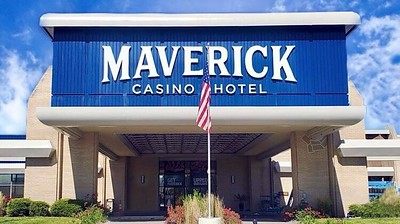
Maverick Gaming has launched the Maverick Casino & Hotel in Elko, Nevada. It is, says CEO Eric Persson, majority owner, the first step in redeveloping and connecting its properties across Nevada, Colorado and Washington.

The conversion of the property was from the Red Lion Hotel and Casino Elko. Kirkland-Washington-based Maverick Gaming has 24 properties, and has embarked on a multi-year project to upgrade their infrastructure, improve the guest experience and rebrand them as either Maverick Casino & Hotel, Ace’s Poker, Dragon Tiger Casino, or Macau Legend.

Persson commented “This is an important step for Maverick Gaming as we continue to grow and invest in our portfolio of properties. Our plan has always been to consolidate our assets under our four key brands and unite them under Play Maverick Loyalty and Sports programs.” He added, “This is the next step in our evolution as we continue building Maverick Gaming as a best-in-class regional operator and, today, we are excited to introduce this new, unique experience to our friends in Elko.”