Author: Casino Connection Staff

PA Mini-Casino Wins Key Approval

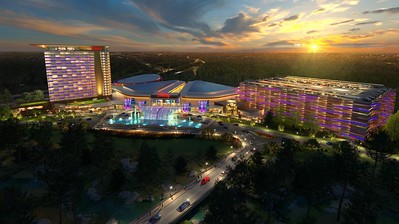
Greenwood Gaming and Entertainment won a key approval of its plan to build a Category 4 satellite casino in Cumberland County, in the south-central portion of Pennsylvania, when the Shippensburg Township Board of Supervisors voted 3-0 to approve Greenwood’s plan to develop a Parx-branded casino just off Interstate 81.

Category 4 casinos, limited to 750 slots and 30 table games (with 10 additional tables by petition), were created by Pennsylvania’s 2017 gaming expansion law to place gaming in underserved areas. The proposed 77,572-square-foot Parx Casino, linked to the license of the successful Parx casino in the Philadelphia suburb of Bensalem, is planned for more than half of the space of a former Lowe’s store in the Shippen Towne Center, with the remainder of the space slated for retail development.

The Parx mini-casino is planned to open with 600 slot machines and a nationally branded restaurant and sports bar with seating for around 250. The facility will provide around 125 full-time and part-time jobs, with full-time position averaging more than $40,000 in salary plus benefits.

The casino is expected to boost tax revenue in a township where 65 percent of the land is occupied by Shippensburg University, which pays no local property tax.

“The dollars for us, if we can put this thing to bed with a casino, will be a real win,” Township Supervisor Steve Oldt told the Pennlive news site. “I can now fund the fire department. I can fund the EMS. I cannot worry about trying to go out there and figure out how much taxes we’ve got coming in. Because we’ll be able to benefit the community.”

The new Parx Casino is slated to open sometime in 2022.

Richmond’s Three Competitors Make Their Case

Richmond, Virginia residents recently attended virtual presentations by the three casino operators competing for the city’s gaming license: the nation’s largest Black-owned radio and media company, Urban One of Silver Spring, Maryland; casino developer and operator Bally’s Corp. of Lincoln, Rhode Island; and real estate developer and casino operator, the Cordish Companies of Baltimore.

Bally’s is proposing the $650 million Bally’s Richmond Casino Resort in South Side. The 117,000-square-foot complex is the largest of the three competitors and includes a large casino, 250-room upscale hotel, events space, concert venue, more than a dozen restaurants and other amenities. The facility would generate much of its own power through solar energy and create a green space with wetlands that will not be disturbed.

Bally’s is offering Richmond an upfront payment of $100 million plus an additional share of gaming revenue. The company also would invest $3 million a year in a program that provides vouchers for its players to spend at small businesses in Richmond.

Marc Cristafulli, Bally’s executive vice president, said the project would create 2,000 jobs paying an average of $52,000 a year and a minimum of $15 an hour. He said the project has attracted Black investors and would meet the city’s goal of 40 percent minority suppliers and vendors.

Prior to the presentation, 4th District Councilmember Kristen Larson said, “This project was proposed without any input from my office or the community. I found out about the two casinos proposed in the 4th district via the news media. While the reasons for opposition are wide ranging, access and traffic impacts for that parcel are a huge issue for the district.”

In response, Cristafulli said Bally’s would build a new entry and exit road into the property. “We listened to Council Member Larson’s feedback regarding potential traffic issues Bally’s Richmond might create, and we are pleased to have fully addressed the issue she identified.”

Still, many residents told local news shows they still have unanswered questions. Anti-casino signs are visible in the Stratford Hills area and a Facebook group with more than 500 members vows to “fight the proposal.”

One resident said Bally’s presentation “really didn’t address the concerns of citizens that are directly impacted by this. It seemed like a surprise to them that these were neighborhoods. It seemed like a real miss, like they had no concept of who lived here and who was going to be directly impacted.”

Another said, “The draw to this neighborhood specifically is the green space and quick access to the river and putting a casino right smack dab in the middle of it will just completely destroy the appeal of this neighborhood.”

Some attendees expressed concern about potential gravesites of emancipated slaves on the site. But Bally’s Senior Project Manager Michael Monty said the company has reviewed a cemetery deed for a property north of the casino site. “To be clear, the cemetery reference in this deed is not on our site. Beyond this, we have seen some sketches drawn by hand, but we have not seen any valid sources that would indicate any graves on our site.” Monty said the company plans to address any information regarding cemetery sites.

Scott’s Addition Boulevard Association hosted the Cordish Company’s virtual meeting. Cordish plans to replace the 17-acre Bow Tie movie theater complex with the $600 million Live! Casino & Resort Richmond. It would include a casino, 330-room upscale, 4-diamond hotel, convention center, restaurants and entertainment venues. Spokesperson Carl Furman said the project would require 3,000 employees with pay averaging above $60,000 with a $15 an hour minimum.

Furman added the company is would not make an upfront payment to the city, but instead would provide about $30 million a year in gaming tax revenue to Richmond–about $10 million more than the city’s share of projected annual state gaming tax.

The company also would create a community benefit fund that would donate an average of $13.3 million to help fund community services, such as infrastructure, education, health care, parks and recreation, affordable housing and workforce training and development.

Cordish Chief Operating Officer Zed Smith, who is Black, said Black and minority investors would have a 50 percent ownership stake in the casino-resort. He noted the company has a track record of minority inclusion for its existing casino operations in Florida, Maryland, Pennsylvania and Texas.

Cordish President Rob Norton told attendees, “We believe 100 percent that we are the best choice for Richmond. We are not building an island. We are building a project that we hope will be a catalyst for creating energy into the Scott’s Addition area.”

Still, Cordish faces community opposition. Second District Councilwoman Katherine Jordan said, “As I made clear to my constituents, the Cordish Companies, the city’s economic development team and the casino selection consultants, I am a hard “no” on any gaming at the Bow Tie Cinemas site. My constituents don’t want it, the thriving greater Scott’s Addition doesn’t need it and gaming and college sports just don’t mix. I welcome the developers to look at other non-gaming investments in our city.”

In addition, SABA President Trevor Dickerson said an informal online survey of 608 residents, business owners and community members indicated 77 percent opposed the casino resort. He said among the chief concerns was the potential traffic the massive project would cause. Cordish Managing Partner and Chief Executive Officer Joe Weinberg said roads would be widened and other infrastructure improvements would be made if the casino was approved. “One hundred percent of the infrastructure will be coming from us. That was one of the conditions from the city as part of the RFP,” Weinberg explained.

Finally, Urban One gave a presentation about its proposed $517 million One Casino + Resort, located at the former Philip Morris operations center. The project would include a casino, 150-room upscale hotel, concert venue and more. Urban One Chief Executive Officer Alfred C. Liggins III stated Urban One would open a temporary casino while the resort is being developed to generate income and early tax revenue for the city. The proposed location includes 55 acres of green space and wetlands that would be preserved, Liggins said.

The project would create 1,500 jobs, with an average salary of $48,000 a year, with employees becoming part owners and eligible for a $3,000 to $5,000 annual profit-sharing bonus, Liggins said.

He noted Urban One would provide an upfront payment of $60 million to the city plus an additional $6 million annually from casino revenue above the city’s share of the state gaming tax. In addition, Liggins said the company would contribute about $3 million a year to area nonprofits, and provide the city with $2.5 million in free advertising and promotion through its radio, cable TV and other outlets.

Liggins told attendees at least 50 Black investors, along with himself and his mother, Urban One Chairwoman Cathy Hughes, would together generate 80 percent of the $75 million equity stake in the project. He noted at least 40 percent of the suppliers and vendors would be minorities. Pacific Peninsula Entertainment, which operates Colonial Downs and Rosie’s Gaming Emporiums, would operate but have no ownership in the facility.

Since the casino would be located in an industrial area off I-95, Liggins said it would have the least traffic impact of all three proposals. He noted Exit 69 off the interstate would lead directly to the casino’s entryway.

In response to a resident’s question about nearby neighborhoods in the 8th District, Liggins said compared to the other proposals, “We’ve got the largest buffers between us and any respective home.” In regard to a question about crime, Peninsula Pacific Chief Operating Officer Aaron Gomes said, “We have thousands of surveillance cameras that cover almost all of the public spaces inside and outside the property and the results are positive in the communities we operate in.”

Richmond’s Department of Economic Development said the casino review committee, made up of nine members including two city council members, will recommend one of the casino proposals in May. The recommendation will go to the city council for approval. If it’s approved, Richmond residents will vote in a referendum in November whether to accept the city’s choice.

Consultants hired by the city projected a casino would generate $19 million to $21 million in annual gaming tax revenue for Richmond, plus another $10.5 million a year from real estate, meals, lodging and other taxes.

Nevada Ties Casino Capacity Limits to Employee Vaccinations

Nevada regulators say they won’t relax capacity restrictions in the state’s casinos until more employees are vaccinated against the Covid-19 virus.

Nevada casinos are currently operating under capacity restrictions that have been steadily relaxed since the fall and currently stand at 50 percent. Higher occupancy limits are in the offing, beginning May 1.

This “measured approach,” as Gaming Control Board Chairman Brin Gibson termed it, will continue on the basis of a “number of factors.”

Primarily this will depend on the rate of new infections statewide. But with tourists returning to casinos in increasingly greater numbers, in Las Vegas especially, “the status of vaccination penetration within the state’s hospitality workforce” looms larger as a consideration, according to a memorandum issued jointly by the Control Board and the state Gaming Commission.

The memo voiced concern over the “relatively low degree” of vaccination within that group.

“Viral surges are a continuing threat to the economic health of the gaming industry and greater state, as they threaten the hard-fought efforts undertaken over the last year to safely reopen,” the memo said, adding that “Consideration by the (Control Board) to increase gaming floor occupancy will only be taken in cases where licensees have taken measurable and material steps to vaccinate, and thereby, protect their workforce, visitors and the community.”

In line with this, casino operators are stepping up their involvement, notably in Las Vegas, where MGM Resorts International, Caesars Entertainment, Wynn Resorts, Station Casinos and The Cosmopolitan of Las Vegas have begun sponsoring vaccinations for employees at on-site clinics.

“We’re committed to doing all that we can to help get as many people vaccinated as quickly as possible by removing barriers to access and bringing vaccination clinics directly to our employees and their families,” MGM said in a statement.

To date, more than 18 percent of the Nevada population has been fully vaccinated, according to the state Department of Health and Human Services, including nearly 334,000 people in and around Las Vegas, and that’s expected to increase with Governor Steve Sisolak’s recent order extending the inoculations to all Nevadans 16 and older.

According to The Associated Press, the state had confirmed 462 new cases of the virus as of April 3 and 14 more deaths, raising the state’s totals to 304,454 cases and 6,260 deaths.

WSOP to Return In-Person Play for 2021

The World Series of Poker (WSOP) announced much-anticipated plans for 2021, including the return of the live, in-person World Series of Poker event and $10,000 No-Limit Hold’em World Championship, best known as the Main Event.

The world-famous tournament series, which experienced record-breaking participation in 2019 and adjusted to a hybrid format to accommodate 2020, will be back in person at Rio All-Suite Hotel & Casino this fall pending applicable state and/or regulatory approvals.

A diverse calendar of events will begin Thursday, September 30 with all play concluding on Tuesday, November 23.

The 2021 opening weekend is expected to feature a special charity event to benefit frontline health workers, a $25,000 H.O.R.S.E. and a $5 million No-Limit Hold’em event billed as the Reunion. Further details and specifics on the complete schedule will be released this summer.

The Main Event is expected to begin Thursday, November 4 and run through Wednesday, November 17.

Specific Covid-19 safety protocols and other related 2021 tournament policies will be reviewed with gaming regulators in the lead-up to the event. The World Series of Poker will be compliant with all directives from the state of Nevada regarding social distancing and capacity limits on the tournament dates.

“This year, more than ever, we embrace our role at the WSOP to deliver memorable experiences and bring this community of poker lovers back together,” said Ty Stewart, WSOP executive director. “In 2021, the theme is, get vaccinated and get back to Vegas.”

Building off last summer’s record-setting success for both domestic and international online poker tournaments, the WSOP plans to fill the summer void with a slate of WSOP Gold Bracelet online events. In 2020, WSOP.com’s domestic series awarded nearly $27 million in prize money across its 31 events, making it far and away the biggest online tournament series in the history of U.S. regulated poker.

Similarly, WSOP Online was a massive draw for international players in partnership with GGPoker, with the WSOP Online Main Event smashing the Guinness Book World Record for largest online poker tournament with a $27.5 million prize pool for a single event. In total, nearly $150 million in prize money was awarded across the festival, including seven-figure prize pools in 45 events, placing it among the biggest tournament series in history.

WSOP.com will hold the domestic tournaments on its All-American Poker Network beginning Thursday, July 1, closing with a $1,000 championship. Qualification will be available for as little as $1.

WSOP Europe is expected to round out the year of poker action with its return to King’s Casino in Rozvadov, Czech Republic running from Friday, November 19 through Tuesday, December 8, subject to regulatory approval.

“We hope and anticipate travel restrictions will ease by the fall,” said Stewart. “It’s important to us that we have an excellent tournament schedule available to our European players.”

The tournament is expected to include 15 gold bracelet events, including a €10,000 buy-in WSOP Europe Main Event and a €50,000 High Roller event.

Appeals Court Sides with Wynn

A federal appellate court panel has sided with former casino mogul Steve Wynn in his defamation lawsuit against attorney Lisa Bloom and her law firm over a news release noting allegations against Wynn.

A three-judge panel with the 9th U.S. Circuit Court of Appeals upheld a lower court’s decision to deny Bloom’s motion to dismiss Wynn’s complaint. Bloom had filed what’s known as an anti-SLAPP motion, designed to stop frivolous claims, arguing that Wynn was a “billionaire trying to silence his critics.”

Wynn filed the defamation lawsuit in response to a news release from the Bloom Firm in which Lisa Bloom said she represented “a new woman alleging sexual harassment and retaliation against Steve Wynn.”

Bloom said her client was a dancer from the show ShowStoppers at Wynn Las Vegas from late 2014 through late 2016, and was ordered to strip down “to be sexually appealing to Mr. Wynn.”

Wynn called accusations that he leered at female performers absurd, since he was legally blind at the time.

“Wynn has demonstrated a genuine dispute of material fact as to whether Bloom defendants acted with actual malice in publishing the press release,” the 9th Circuit panel wrote. “Bloom defendants chose to publish the press release inculpating Wynn after learning that none of the witnesses could confirm that Wynn played any role in giving the instructions and without considering alternative explanations or investigating further.”

Labor, Community Groups Push for NYC Casinos

The New York legislature is getting an earful from an array of community, business and labor leaders calling for the speedy licensing of Resorts World New York City in Queens and Empire City in Yonkers as full-scale casinos.

Resorts World’s case was brought to state Assembly Speaker Carl Heastie and Majority Leader Andrew Stewart-Cousins in the form of a petition signed by nearly three dozen individuals and organizations in and around the New York City borough who want the giant Aqueduct racino awarded one of three casino licenses designated for the downstate region by the end of the year. Governor Andrew Cuomo also received a copy.

“Covid-19 has absolutely ravaged our city and state, but the virus has been particularly damaging to those who faced significant challenges and struggles before the pandemic ever started,” the coalition wrote. “Hundreds of thousands of New Yorkers have lost their jobs; tax revenues that support vital services are drying up; non-profits are facing existential threats to their survival.”

Noting that Resorts World has generated more than $3 billion for New York’s public schools and other recipients in its 10 years in business, the letter claims that a full casino at the property would create thousands of jobs within months.

“Our borough and our local business community have benefited greatly from Resorts World’s commitment to Queens. RWNY attracts tourists, catalyzes economic activity that supports small businesses, creates jobs for local residents and generates billions in tax revenue,” Queens Chamber of Commerce President and CEO Tom Grech said. “Allowing RWNY to become a full-scale gaming destination will only increase the positive impact they have on our borough and help the entire region recover from the devastation brought on by the pandemic.”

Hope Knight, president and CEO of the Greater Jamaica Development Corporation, added that “The ability to provide good-paying jobs with relatively low barriers to access to southeast Queens residents is crucial to Covid recovery, particularly for families of color, with quality health care and benefits to sustain a life cycle for family.”

Signees include the Queens Economic Development Corporation, Queens Centers for Progress, Rockaway Development & Revitalization Corporation and the Jamaica Center for the Arts.

“Beyond the jobs and revenue, during its decade of operations, Resorts World has proven to be a solid partner for the Queens community we all represent,” the letter states.

New York voters in 2013 endorsed an amendment to the state Constitution allowing seven privately owned casinos on a Las Vegas scale with live-dealer table games such as blackjack, baccarat and roulette and house-banked slot machines. Four of the licenses were designated for locations designed to provide jobs and economic development upstate. The remaining three are earmarked for the New York City area but under a moratorium delaying them 10 years to 2023 to allow the upstate casinos, which opened in 2016, 2017 and 2018, to establish themselves competitively.

The result is that Resorts World, which is owned by a U.S. subsidiary of the Malaysia-based Genting Group conglomerate, and Empire City, which is attached to Yonkers Raceway and owned by Las Vegas-based MGM Resorts International, house massive casinos with thousands of machine games, but these are limited to video lottery terminals and electronic versions of traditional table games.

The push for the New York City licenses is nothing new. Genting, MGM and other big names in gaming such as Las Vegas Sands have been lobbying for years for an end to the moratorium without apparent success𑁋that is, until the pandemic hit and engendered a statewide fiscal crisis that is pressuring Albany to act this year to award them.

On March 26, a coalition of influential labor groups staged a virtual rally to tout the benefits an Empire City license would bring to Yonkers, the Bronx and the greater Westchester County region.

“Think of all of the additional union jobs this would create for the building and construction trades men and women,” said Thomas Carey, president of the Westchester-Putnam Central Labor Body. “A full-scale license means the transition would happen immediately, so we would start to see all of this impact for our unions and our communities, very quickly.”

Membership in the coalition, “A Sure Bet for New York’s Future,” as it’s called, has more than doubled over the last month to include some 60 unions and allied businesses along with community and faith-based organizations.

They say the license will generate 13,000 jobs, $75 million in additional wages, $400 million in private investment and $1 billion in economic impacts for the region.

“The workforce that would benefit from this project lives right here in Westchester and the Bronx,” said Richard McSpedon, business representative for Local 3 of the IBEW. “A full-scale casino license for Empire City Casino will support the creation of thousands of union jobs. This project makes total sense for our communities.”

“Because gaming revenues in New York are directed to the education fund, this means our state will get the resources it needs to adequately support our children’s education,” said Samantha Rosado-Ciriello, president of the Yonkers Federation of Teachers.

Jodie Reaver, a political organizer for the Southern Westchester Action Committee, said, “This has the chance to be life changing. We’re talking about thousands of good paying, family-sustaining jobs to a region that desperately needs them. For these communities, it’s as simple as that.”

Las Vegas Tourism on the Mend, But Gaming Revenue Lags

Signs are pointing to a steady return of tourists to Las Vegas but without a recovery in gaming revenues to match.

February numbers compiled by the Las Vegas Convention and Visitors Authority show 1.5 million visits during the month, down almost 54 percent from the same month a year ago but up a healthy 19 percent over January.

Occupancy across Southern Nevada’s 145,300 hotel and motel rooms hit 42 percent, a 10 percent increase over January but still way below the 87 percent recorded in February 2020.

But with the first big convention since last March scheduled in June𑁋the World of Concrete trade show, which is expected to draw 60,000 construction industry attendees to the newly expanded Las Vegas Convention Center𑁋observers are hoping the momentum will continue.

Gaming revenues are still lagging, however. Statewide win was basically flat compared to January. Compared to last February, win on the Las Vegas Strip was down almost 42 percent and accounted for nearly 92 percent of February’s statewide decrease year on year of nearly 26 percent, according to results published by the Nevada Gaming Control Board.

Revenue for the state’s casinos totaled $772.4 million for the month, up slightly from January’s $762 million but a long way off from last February, which was one of the best months ever at $1 billion-plus.

“I would expect March 2021 to be up significantly over last March,” said Control Board analyst Michael Lawton said. “Gaming activity is improving due to improved metrics related to Covid-19, capacity limitations being increased and stimulus checks which are acting as a catalyst to elevated spending by consumers.”

The return of air travel from the market’s main sources of high rollers will be another key.

McCarran International Airport noted that international passenger traffic was down almost 95 percent in February compared to the same month a year ago, and the effects were apparent in an overall decline in passenger volume of 58 percent compared with February 2020.

Through the first two months of 2021, McCarran’s passenger numbers are 61 percent behind January and February 2020’s, with 3.1 million passengers so far this year compared to 8 million to start last year, according to data released by the Clark County Department of Aviation.

Louisiana Casino Supporters, Opponents Face Off

At a February meeting of the Tammany Parish, Louisiana city council, residents mostly spoke in favor of a $250 million casino in Slidell proposed by Los Angeles-based Peninsula Pacific. But now opponents are organizing against the project. Foes of the casino turned out at a recent meeting of the Slidell City Council. Council Chairman Kenneth Tamborella told attendees a casino resolution on its agenda was not for or against the casino, but simply allowed citizens to express their opinions.

And express they did. Ray Larry, pastor at Providence Missionary Baptist Church, said, “I’ve been on the other side. I was addicted to gambling. In 1981, I lost a month’s wages. I know what it does to a family. Why bring it to our city?” Another pastor, Emil Gretarsson of Open Arms ministries, wondered why the entire parish could vote on a casino that would only affect Slidell. Others cited gambling ills, including addiction, financial hardship, divorce, domestic violence, suicide and declining property values.

Gene Mills, executive director of the Louisiana Family Forum said, “It’s difficult to get elected officials to look long-term when the short-term looks so glittery. I’ve been watching for two decades, the same battle over and over again.”

Slidell resident Lisa Clayton said, “Pontius Pilate was given the opportunity to make a decision or not, and he decided to punt and wash his hands and say let the people decide. We have an opportunity to speak against something that God does not want in this community.” Slidell Police Chief Randy Fandal said that after hearing the speakers, he decided to oppose the casino.

At the end of the meeting, the council voted to hold another public session, in the city auditorium, on April 19. Peninsula Pacific officials will be there to provide more information to Slidell residents.

Anti-casino groups also are making their voices heard. The religious-based lobbyist group Louisiana Family Forum sent out an email blast against the Slidell casino. And Watchdog PAC LLC, a 501(c)4, sent a mailer to parts of St. Tammany Parish picturing New York Governor Andrew Cuomo and claiming del Lago, a Peninsula Pacific-owned casino in upstate New York, overpromised how much tax revenue it would generate and then sought a tax break. “Even a bad governor like Andrew Cuomo could see it with his own eyes,” the mailer stated.

When asked if other casinos were funding their effort, Watchdog PAC Chairman Scott Wilfong said the group doesn’t disclose its donors. “We’re taking a position on what we see as a local issue. We’re not done with our efforts,” he said.

Legislators and other elected officials, however, said they’ve heard mostly positive feedback about the casino. Even half of the homeowners in the subdivision closest to the site support the proposed project.

Elected officials note gambling isn’t as controversial as it was in 1996 when 62 percent of voters rejected casinos and video poker, or in 2008 when then-Parish President Kevin Davis proposed a Slidell casino but backed down due to strong opposition from the religious community.

Meanwhile, representatives from Peninsula Pacific have been meeting with civic groups, local leaders and homeowners groups to gain support for the project, while accusing Mississippi Gulf Coast casinos of financing anti-casino efforts. Local spokesperson Jay Connaughton said, “It’s shameful that Mississippi casinos are slinging mud and twisting facts while we are engaging with the community to develop a first-class resort. It should surprise no one that Mississippi casinos will spend whatever it takes to protect the $350 million they earn off of Louisiana residents every year.”

Massachusetts Casinos Want Poker to Return

Although the Bay State’s two casino resorts have been allowed to reintroduce craps, roulette and a fourth seat at gaming tables, they would like for the Massachusetts Gaming Commission to give them the go ahead to bring back poker.

They may be waiting awhile.

Since the changes were made between July and October, players have started to complain about no poker, according to Investigations and Enforcement Bureau Assistant Director Bruce Band. He told the MGC, “Complaints about not having poker have gone up greatly since two weeks ago,” he told the Gaming Commission. “Everybody wants to know when we’re gonna do it.”

Poker is not profitable for the casinos when only four players are allowed at a table, said Band.

According to the Encore Boston Harbor in Everett, “fully operational” poker would need nine seats at a table. It posted this on its website:

“When that time comes, we will evaluate the viability of the market, the demand for the game, and our facility’s capacity to support it. Until then, we will continue to operate without live poker.”

Band told the panel: “They’re still working on a table there to see if they can figure out a way to get the dividers and make it safe for everybody at the table.”

The commission allowed a fourth seat to table games on March 11. This resulted in 90 new gaming positions at the MGM Springfield and 183 at the Encore.

Band explained “But the only thing that we observed was that a normal craps game gets about 130 rolls per hour. With the plexiglass that’s probably cut that down to about 90 rolls per hour, slowed the game down a little bit.”

Betting on Baseball Could Break $40 Billion Mark This Season

In 2020, the Covid-19 pandemic-shortened the Major League Baseball season from 162 games to just 60. This year, MLB is back to the full grind, an intensive schedule that almost doubles that of basketball and hockey. All those games and all those betting options make for a sports bettor’s paradise.

“While baseball hasn’t always been traditionally highest on the sports betting spectrum, it always provides one of the most interesting seasons because of its length and number of games,” according to Brendan D. Bussmann, partner with Global Market Advisors, who has extensive experience in sports-betting markets around the world.

With so many games, baseball holds a wealth of opportunities for bettors. “There always seems to be a dark horse who sometimes doesn’t emerge until halfway through the season,” Bussmann said. “Someone can always get into a slump or on to a hot streak.”

Breaking the Bank

In most MLB seasons, U.S. sports bettors wager around $40 billion on baseball. This season should easily break that mark, said Nate Johnson, product manager at sportsbook software provider PayPerHead.

Another element added back into the equation: fans, at least on a limited basis to start the season.

“Fans are the lifeblood of our game,” said Kenny Gersh, MLB executive vice president of business development. “We missed fans so much last season. Little by little, we hope the overall picture improves and we can welcome more fans during the season, under health and safety protocols.”

Fans are also a major financial resource. Put 45,000 in Citizens Bank Park, for example, and the home team (in this case, the Philadelphia Phillies) enjoys revenues from ticket sales, souvenirs, hot dogs, crab fries, Philly cheese steaks, and of course, peanuts and Cracker Jack.

Like so many other sports, baseball has developed relationships in the last two years with sportsbooks, the latest being Bally’s Corp.

“We created our Authorized Gaming Operator (AGO) program two years ago in order to develop relationships with each of the major U.S. sportsbooks,” Gersh said. Bally’s is MLB’s 14th partnership.

“The opportunity to put the Bally’s stamp on America’s national pastime provides an innovative and engaging sports betting experience.” said George Papanier, president and CEO of Bally’s.

When a sportsbook agrees to become an AGO, it gets access to marks and logos for its sports betting product as well as the ability to use official league data and the ability to work with clubs, Gersh said.

Such relationships carry a set of integrity provisions and data-sharing requirements that protect the league as the legal sports betting market grows. “It also allows us to work closely with sportsbooks to enhance their product offerings that our fans engage with,” Gersh said.

Leagues, Sportsbooks Align

DraftKings got a head start on its agreement with MLB, signing a partnership deal in 2012, six years before the legalization of sports betting. At the time, DraftKings was a leader in daily fantasy sports. Still is. The sportsbook has also partnered with the Colorado Rockies and Chicago Cubs.

“There’s more money to be made by the league and its teams through strong partnerships that increase engagement and knowledge into the fan base,” Bussmann said.

As with other sports, in-game betting has become a growing part of the business.

“Our Live+ and Premium Props platforms are perfect for baseball bettors. Live+ has game trackers and video streams. Props offer individual performance options like how many strikeouts Clayton Kershaw gets in a game,” said Johnson.

DraftKings top baseball bets include:

  • Money line: who wins the game
  • Run line: unique to baseball, this bet is a popular option for regular bettors (sort of like a point spread for baseball)
  • Totals, or over/under bets are among the most popular wagers that sports bettors place, based on the total runs by both teams
  • First player to hit a homerun
  • Over/under for strikeouts by player
  • Total runs in the first five innings
  • Money line in the first five innings

DraftKings declined specifics, but acknowledged that baseball is historically among its top leagues for betting (football is king). The sportsbook expects pent-up demand for a full season to drive betting.

“We anticipate a significant level of engagement,” said a spokeswoman. “Collectively, we’re seeing the light at the end of the tunnel and the return of baseball only adds to optimism and excitement for the days ahead.”

Scientific Games, Golden Nugget Launch NJ Mobile Sportsbook

Scientific Games Corp. announced that it has launched its comprehensive mobile sports betting solution with leading U.S. casino operator Golden Nugget Online Gaming in New Jersey.

The deployment will see Golden Nugget’s customers benefit from SG’s OpenSports product suite and managed trading services from Don Best Sports, as the operator migrates onto Scientific Games’ sports betting technology. This includes the launch of a native iOS application that allows users to enjoy a unified experience and navigate through Golden Nugget’s full offering through a single app.

Last month, Golden Nugget launched online casino and digital sports betting content in Michigan with Scientific Games, offering a wide range of in-house and third-party content and wager on sports via the OpenSports and OpenGaming platform.

The New Jersey digital sports betting launch with Golden Nugget adds further weight to Scientific Games’ presence in the U.S. market, with the company set to strengthen its partnership with the leading operator later this year by delivering its OpenGaming platform in Pennsylvania.

“Scientific Games’ OpenSports platform has a well-deserved reputation for being robust and scalable, and our initial experience in Michigan, amid a very busy sporting period, has been positive,” said Thomas Winter, president of Golden Nugget Online Gaming.

“As we expand together across the U.S., we are delighted to enter the next phase of our partnership in New Jersey, where players will be able to enjoy an upgraded betting experience and advanced product features such as Bet Builder, Parlay Boosts, Daily Enhanced Odds (Golden Lines, Notorious Vig), Quick Parlays, Same-Game Parlays, Cash Out and promotions such as Next Bet On Us.”

Cathryn Lai, senior vice president and general manager, U.S. digital at Scientific Games, said, “Golden Nugget’s launch in New Jersey represents an exciting and important milestone in a partnership that we believe will flourish right across the U.S. moving forward. It serves as a testament to the power of OpenSports, which is ready to take the player offering in the Garden State to new heights.”

Mobile Sports Betting Coming to New York

The New York legislature and Governor Andrew Cuomo have reached agreement on a $212 billion state budget that calls for expanding sports betting to the internet along the limited lines envisioned by the governor.

Though key details of the April 7 deal remain to be filled in, the plan basically empowers the New York State Gaming Commission to bid out two licenses beginning July 1, then select the winners through a points system determined largely by how much money applicants say they’ll make for the state.

Frontrunners for the licenses are expected to include the seven land-based books currently taking bets in the state:

  • FanDuel at Tioga Downs Casino Resort
  • DraftKings at del Lago Resort & Casino
  • BetRivers at Rivers Casino & Resort
  • Bet365 at Resorts World Catskills; along with Kambi, which operates the books at the Seneca Indian Nations’ three casinos
  • Caesars/William Hill at the Oneida Nation’s Turning Stone Resort Casino
  • FOX Bet at the Akwesasne Mohawk Casino Resort.

The agreement is a far cry from the more open-market approach pushed by gaming advocates in the legislature. They wanted four platforms, one per commercial casino, with up to two skins each, 14 in all, counting the three downstate casinos that are expected to be licensed in 2023. They also wanted betting kiosks at sports arenas, racetracks and OTBs.

But at minimum, as a “hybrid,” as state Senator Joseph Addabbo termed the April 7 deal, it means the upstate casinos will likely be in position to accept smartphone bets in time for the 2022 Super Bowl.

“We had a different vision of what mobile sports betting could look like,” the senator said. “But if both sides dug in their heels, we wouldn’t have this agreement. We worked out a deal.”

Going back to January, when Cuomo first inserted internet sports betting into the budget negotiations, he made no secret of his preference for a state-controlled system providing market exclusivity in exchange for a 50-55 percent share of revenues, similar to what DraftKings pays New Hampshire for its monopoly there. It appears he’s compromised on that, although the tax rate has yet to be determined. He’s also agreed to eliminate the New York Lottery from the process. And he’s given in to Addabbo and industry advocates in the legislature on the possibility of more licenses in the future, “if (the Gaming Commission) determines such additional awards are in the best interests of the state,” as the deal reads.

But if the duopoly can double neighboring New Jersey’s $6 billion in 2020 handle, as he and lawmakers believe, he’s satisfied it will pump at least $99 million into the treasury in the market’s first full year, providing badly needed relief for a fiscal situation ravaged by the Covid-19 crisis, and up to $500 million a year by 2025.

The two platforms also will be assessed a one-time $25 million fee for their renewable 10-year licenses and will pay $5 million a year to the four commercial casinos to host their servers.

“There are certainly details that have to be worked out,” Addabbo said. “But it’s going to be a product that New Yorkers can be proud of and will hopefully utilize.”

The details include the possibility of a costly dispute with the Oneidas, who pay the state around $70 million of their annual slot machine win in exchange for market exclusivity over a broad swath of central New York. They contend the deal could violate their exclusivity, and they’re threatening to withhold the payments.

The tribe issued a statement saying, “We are disappointed and believe the legislation is a step backwards, as the state apparently expects the Oneida Indian Nation to bid for the right to offer mobile sports betting within our own 10-county zone, for which the nation already pays the state and localities.

They criticized the deal as “an unbalanced approach that will unnecessarily hurt our region, but said they “remain open to discussing workable solutions when the state is prepared to do so.”

It’s reported the tribe wants a server of its own and some assurance they’ll get a share of the revenues from remote wagers placed within the exclusivity zone.

Cuomo said last week he’s willing to work something out.

Maryland Senate Considering Unlimited Sports Betting

State senators in Maryland have passed amended sports betting enabling legislation that would remove all limits on the number of licenses for retail and online/mobile sports betting.

The bill passed by the state House of Delegates limited the number of retail licenses to 10 and online/mobile licenses to 15. The Senate bill, passed on a voice vote last week, removes those limits. Additionally, while the House measure stipulated that sportsbooks at Pimlico Race Course and the stadiums of the Baltimore Orioles, Baltimore Ravens and Washington Football Team would operate only on game and race days, the Senate bill removes those restrictions as well, allowing daily betting.

“We are doing our best not to pick winners and losers, but to let the market work itself out,” said Senator Craig Zucker, sponsor and main author of the plan, according to the Baltimore Sun.

The bill now goes back to the House for consideration of the amendments. The House could agree to the changes, stand behind its plan or work out the differences in a conference committee.

The Senate plan would create five license types, each lasting for five years:

  • Class A1 would be for licenses at the three large Baltimore-Washington area casinos, thoroughbred racetracks and the Orioles, Ravens and Washington Football Team stadiums. A license holder would pay a $2 million fee, with a $500,000 fee to renew after five years. The casinos are MGM National Harbor near Washington, Live! Casino and Hotel in Hanover, and Baltimore’s Horseshoe Casino.
  • Class A2 would be for casinos with fewer than 1,000 slot machines. They’d pay a $1 million fee, plus a $300,000 renewal fee after five years. These casinos are the Hollywood Casino in Cecil County, Ocean Downs Casino on the Eastern Shore and Rocky Gap Casino in Western Maryland.
  • Class B1 would cover most other in-person licenses. Those businesses would pay a $250,000 fee and $50,000 for the five-year renewal.
  • Class B2 is for on-site betting at businesses with fewer than 25 employees and $3 million in sales. They’d pay a $50,000 initial fee and a $10,000 renewal fee.
  • Mobile licenses would be available to qualifying businesses. Each would pay a $500,000 fee, then a $100,000 five-year renewal fee. The mobile licenses would be separate from the retail licenses. Companies could apply for one type of license or the other, or both.

The Class B1 and B2 licensees would pay a tax of 13 percent of revenues to the state, while the other licensees would pay 15 percent.

Illinois Ends Online Sports Betting Registration

Despite a rise in Covid-19 cases in Illinois, starting Sunday, April 11, sports bettors are now required to register for an account in person at a retail sportsbook. Governor J.B. Pritzker allowed his executive order to expire, effectively ending online registration which has been in place since August, leading to Illinois’ rank as the fourth-largest sports betting market in the U.S.

But analysts cautioned returning to the in-person registration requirement “puts the brakes” on the fast-growing Illinois market that has attracted $1.6 billion in wagers and generated $28 million in tax revenue since the state’s first legal bet was placed just days before Covid-19 closures in March 2020. The Illinois sports-betting industry posted more than $581 million in handle in January, an 18.3 percent rise from $491 million in December, including $7.2 million for the state treasury.

As observers scratched their heads over Pritzker’s turnaround, his spokeswoman Jordan Abudayyeh said, “Illinois is currently in Phase 4 with vaccination rates rapidly increasing and casinos around the state have reopened with safety guidelines in place, so the suspension of in-person sports betting registration requirements is no longer needed.”

When Illinois lawmakers passed sports betting legislation in 2019, they included an 18-month in-person signup period for online accounts, primarily to benefit casino sportsbooks. But Pritzker’s order closing casinos due to Covid-19 allowed the online sports betting industry to gain a foothold, especially when professional sports started up last summer. More than 95 percent of the sports bets placed to date in Illinois have been made online.

On June 8, Pritzker extended the online sign-up provision, then reversed course in July, then extended online sign-ups again on August 21. Since then, he renewed the order on a monthly basis until this past weekend.

Joe Boozell, lead writer at PlayIllinois.com, said, “We know that Rivers Casino in Des Plaines had lobbied for in-person registration because they have an advantageous location being located close to downtown Chicago, and in a world where nobody can’t sign up with their phones, they were sort of in pole position.” The in-person requirement also benefits Hawthorne Race Course, which has two suburban off-track betting sites where sports bettors can register.

However, the restriction is sure to impact the major online-only companies. Chicagoans will have to drive to the Par-A-Dice Casino in East Peoria to register with FanDuel, or even farther to the Casino Queen in East St. Louis to register with DraftKings.

PlayUSA.com Analyst Dustin Gouker said it was a “poor choice” to bring back the requirement as statewide handles set new records each month.

“Reversing that now essentially puts the brakes on that growth, and will artificially suppress online gaming in Illinois for as long as it is in place,” Gouker said.

State Rep. Mike Zalewski, sponsor of the 2019 sports betting legislation, said lawmakers might review the controversial provision. “It’s important to remember that without the in-person registration requirement, sports betting would have never been legalized in 2019 as it was a pivotal aspect of an agreement among all the stakeholders. That being said, the strong revenue numbers generated reflect that Illinois should have a robust online marketplace with no restrictions. I’m hopeful we can continue to modify the law and keep Illinois one of the most successful sports betting states in the country,” Zalewski said.

Sale of Will Hill to Caesars On Hold

The $2.9 billion purchase of William Hill to Caesars Entertainment seemed like a done deal until two U.S. hedge funds said no, objecting to a decision by the board to recommend approval to investors, according to the Financial Mail.

GWM Asset Management and HBK Capital Management said shareholders did not have enough details to make an informed judgment. The funds own 11 percent of William Hill.

In related news, revenue for William Hill in 2020 fell only 16 percent to £1.32 billion (US$1.8 billion) despite the coronavirus pandemic. Other companies did even better during a year in which casinos, betting shops and sports events closed for portions of the year. Flutter’s Paddy Power Betfair and Sky Betting and Gaming divisions enjoyed sports revenue increases of 5 percent and 26 percent.

The online sports betting handle from March to December exceeded £2.01 billion, according to iGaming Business. The financial results owe in part to a strong fourth quarter. Online gamblers wagered £319.6 million in December.

Gambling statistics for January and February showed a major decline in activity compared to December 2020. Gross gambling yield declined to £495.4 million in February, down 19 percent from December. The number of active accounts fell 4 percent to around 10.2 million, while total wagers tumbled 6 percent to 6.2 billion.

Real-event betting yield declined to £234.5 million in February, or 16 percent from December 2020. In January and February, virtual event betting and esports betting were £6.7 million and £1.6 million, respectively.

Slot machine yield dropped to about £176.9 million, off 1 percent from December. The total number of spins slid 6 percent to 5.50 billion. From December to February, the number of online slots sessions over an hour rose 4 percent. The number of sessions reached 2.6 million in January, but inched down 1 percent in February. The average length of a session was 21.5 minutes, according to Gambling News.

A decline in profits can be attributed to lockdowns in the U.K. The number of cases rose following the holiday season which triggered tighter restrictions.

Betting shops were expected to reopen April 12, with casinos coming back May 17—so long as there is no surge in infections.

Meantime storm clouds could be gathering as 2021 as the industry faces a revamp of the 2005 Gambling Act to accommodate the 21st century digital age. The review began in December by the Department for Digital, Culture, Media and Sport.

Gambling industry opponents like the Gambling Related Harm All-Party Parliamentary Group argued the laws are outdated. The criticism also came at a time when online betting gained momentum, including in-game bets.

Will Prochaska, chief executive of problem gambling charity Gambling with Lives, says in-game bets pose a greater risk because of the speed of games.

“We know that the types of gambling products which create the most harm are those that are immersive and have high speeds of play,” Prochaska said. “In terms of sports betting, these specific products offer multiple opportunities to bet in a short space of time.”

Still, when the DCMS asked for evidence, in-play bets did not seem to be an issue. Instead, the focus seemed to be on VIP schemes, deposit limits and marketing, all of which could hurt betting revenue.

“We welcome the government’s gambling review, which will examine the financial relationship between sports and betting operators,” Betting and Gaming Council chair Brigid Simmonds said.

The sports betting industry hopes to avoid major limitations. “The industry’s importance to popular national pastimes such as football, rugby league, horseracing, snooker and darts shows why it’s vital that the Government gets the balance right, and does not drive punters towards the illegal, online black market, who have no interest in supporting sport either at a grassroots or national level,” Simmonds says.

Prochaska doesn’t buy it.

“I think the argument that you shouldn’t over-regulate regulated sites because people will move to the black market, suggests a race to the bottom,” he said.

Back in November, the Gambling Commission looked at a series of proposals that would alter interactions with customers at risk of problem gaming. The list includes a proposed £100 on deposits until they pass an affordability check.

“I think affordability checks could be a key tool in limiting harm,” Prochaska said. “We believe that anything more than £100 would not be as effective as a soft cap limit. That figure’s really about the upper limit and there has been research from the Social Market Foundation that suggests that that’s the case.”

However, Sonny Cott, operations manager for affordability solutions provider beBettor, said the concern is overblown.

“One misconception is that an affordability check must require a customer to share highly sensitive financial information to an operator even at low levels of spend and disrupt the customer’s play,” he said.

Any changes to sports betting will likely be secondary to online casino changes. Online casino games remain a top priority for gambling opponents because of the level of harm. Many changes proposed to limit harm from online slots such as spin speed, or stake limits, won’t affect sports betting directly.

Another major concerns deals with sponsorship, which could lead to huge losses for leagues like the English Football League if banned.

No matter. Prochaska wants gambling sponsorship to end. “It just seems wholly unnecessary to see that level of gambling exposure, especially to young people and people who may be in recovery,” he said.

Simmonds disagrees.

“Sponsorship from betting and gaming operators is worth more than £10 million a year to darts and snooker, while English Football League clubs receive around £40 million a year from the industry,” she said.

Simmonds told the House of Lords’ Select Committee on the Social and Economic Impact of the Gambling Industry, that as an industry they would consider a voluntary ban.

Kansas Sports Betting Bill Stalls

Efforts to legalize Kansas sports betting stalled March 31. It seems to be a case of too many people with too many ideas.

The Kansas Senate approved sports betting last month. A House committee said no. It still could be revived this year, but supporters doubt it.

“It does stand a strong chance of passing, but will depend on a few key changes,” Rep. Samantha Poetter wrote to Legal Sports Report. “The good news is that it can be brought back up before the session adjourns. The bad news is that we may not have time to work all the issues out with it before then.”

Kansas entered the year as one of the states with a promising outlook, as the Senate pushed a bill forward in 2020 before the Covid-19 shutdown.

Under the Senate version, each casino could open a retail sportsbook and three mobile operators. Sports venues could also partner with a casino for an online sportsbook. The state would tax retail bets at 5.5 percent and online ones at 8 percent.

The lottery predicted more than $600 million would be wagered each year.

Lottery retailers were unhappy with the bill’s direction in both chambers.

“We stand against this bill for one reason: we’re not in it,” Fuel True Executive Director Tom Palace said of the energy and convenience stores.

The House substitute permitted more than 1,000 retailers to take bets on lottery machines. Each of the four casinos was able to partner with one sportsbook operator for an online skin. The state would tax in-person bets at 14 percent and platform wagers at 20 percent.

Last year, Governor Laura Kelly opposed the Senate bill, believing more money would be available going through the lottery. Others withdrew their support after favorite projects were kept from enjoying revenue.

Both bills would ultimately allow for the state’s multiple tribal casinos to also offer sports betting.

In the end, the House, facing a gaggle of competing interests, turned down the legislation.

“We’ll get a chance to take another crack at this, but you’ve got to thread the needle,” said Rep. Stephanie Clayton.

The Senate version, which limits mobile betting to casinos, assumes the gambling halls take all the risk, according to the Associated Press.

The state constitution requires sports betting to be regulated by the Kansas Lottery, which also owns casinos outside of tribal casinos.

Clayton calls the House plan a free-market approach, which includes the hundreds of retailers that sell lottery tickets.

Still other legislators see the bill as a way to jump start the race track industry. The state permits lottery owned slot machines at the tracks.

Then there’s the argument that casino owners could sue the state for violating contracts with the lottery.

Finally, some Democrats want to ban greyhound racing, seeing it as an animal-welfare problem. But the House rejected the idea, costing its sports betting plan additional votes.

Maine Lawmakers Mull Sports Betting

Maine state Senator Louis Luchini has introduced Senate Bill 1352 which would legalize and regulate sports betting. Luchini introduced a similar bill in 2019. It was passed by both chambers but vetoed by Governor Janet Mills.

Luchini’s bill would put sports betting under the umbrella of the Department of Public Safety Gambling Control Unit. Licenses would be granted to commercial racetracks, OTB facilities, slot machine or casino operators or federally recognized tribes. It would cost $20,000 for a license.

The bill has been referred to the Committee on Veterans and Legal Affairs.

The state would collect 10 percent on brick and mortar retailers and 16 percent on mobile online operators.

Wyoming Sports Betting to Launch September 2021

Wyoming became the second state this year to legalize sports betting when Governor Mark Gordon signed HB 133 into law April 5.

The bill’s sponsor Rep. Tom Walters told Wyoming News Now: “It’s something I’ve actually worked on not just this session, but I worked on it last session. So to see it pass ultimately is very exciting. I think it’s good for the people of Wyoming because it allows for this regulated market.”

It was his second attempt. The first had failed last year.

Wyoming Gaming Commission Director Charles Moore told lawmakers recently that he expects to be able to start accepting sports wagers on September 1. The commission projects about $449 million in wagers each year. Not bad considering the state has a population of 579,000.

Operators will pay the state $100,000 for five year license, with renewal costing $50,000. The state will collect 10 percent on gaming revenues, with $300,000 set aside for problem gambling treatment.

The state wants to encourage only experience sports betting providers to apply. Licenses will only be granted operators who are currently operating in at least three other states.

Dave & Buster’s to Add Sportsbooks

The Dave & Buster’s chain of sports-themed restaurants announced several new initiatives to help the company recover from the effects of the Covid-19 pandemic. Among them will be sportsbooks at restaurant locations where sports betting is legal, the company said.

The chain will add sports betting as part of a package of initiatives including off-premise sales and a virtual wings concept called Wings Out.

“We feel like sports betting could represent a meaningful opportunity for this brand,” Dave & Buster’s CEO Brian Jenkins told financial analysts at a meeting last week, according to Restaurant Business. “This is a wave that’s really just kind of beginning.”

DraftKings Expands Reach with VSiN Buy

In the latest partnership by a major U.S. sports betting company, DraftKings has purchased Vegas Sports Information Network, known as VSiN, which broadcasts live from the South Point and the

Circa casinos in Las Vegas with sports betting content, news, analysis and data.

Terms were not available, according to the Associated Press.

“VSiN creates authentic and credible content that resonates with sports bettors at every level, whether they’re experienced or new to sports betting,” said Jason Robins, co-founder, CEO and board chairman of Boston-based DraftKings, in a news release. “VSiN has an established infrastructure that DraftKings can immediately help expand.”

And vice versa. The idea was first planted at a gaming tradeshow two years ago, when VSiN CEO Brian Musburger bounced the idea around with Robins, according to CDC Gaming Reports. At that point, both VSiN and DraftKings were still in their relative infancy when it came to sports betting alliances.

“Jason and I were on a panel together,” Musburger said. “We just sat down afterward and talked.”

VSiN develops, produces, and distributes as many as 18 hours of live content daily, as well as 24/7 streaming services. Its roster of talent features legendary sportscaster Brent Musburger and former NFL executive Michael Lombardi, who’s worked for the San Francisco 49ers, the Cleveland Browns, the Philadelphia Eagles and the Los Angeles Raiders. From 2014 to 2016, Lombardi was an assistant to the coaching staff of the New England Patriots. He’s also worked for numerous media outlets, including Sports Illustrated.

DraftKings expects to keep the existing work force, including VSiN CEO Brian Musburger—Brent’s nephew—who will manage day-to-day operations with his team.

VSiN’s content can be found on Comcast Xfinity, Sling TV, fuboTV, Rogers’ Sportsnet, MSG Networks, NESN, AT&T Pittsburgh, Marquee Sports Network, iHeartRadio and TuneIn, as well as podcasts and betcasts.

“We created VSiN as a destination for sports bettors to find the most credible content to help inform their wagering decisions,” Brian Musburger said of the deal. “This new ownership is going allow us to achieve some of our goals. Editorially, there will be no change. Our strength is our content.”

In a note to investors, Deutsche Bank gaming analyst Carlo Santarelli said, “Strategically, the acquisition of VSiN should enhance DraftKings’ ability to produce content and grow its audience reach, presumably aiding in customer acquisition and further broadening brand awareness.”

According to the Chicago Tribune, DraftKings stock was up 1 percent on the news, after losing 8.5 percent in value on news that online sports betting in New York for 2021 wasn’t a sure thing.

“We are incrementally positive on the acquisition as we believe it positions DraftKings to further build out its content capabilities to a betting centric content consumer, make a broader push into streaming, deepen their presence in Las Vegas and create unique betting products integrated with VSiN content and personalities similar to Barstool Sportsbooks,” said a note from market research analyst Oppenheimer. Oppenheimer has DraftKings as an “outperform” with a price target of $80, up nearly 40 percent from where the stock was in late March.

In related news, on March 29 DraftKings announced that it’s added WWE as its latest official gaming partner, subject to regulatory approvals. The collaboration centers on DraftKings’ free-to-play pools product and will launch at WWE’s two-night WrestleMania on April 10 and 11.

“This relationship helps fuel the engagement and drama of WWE’s signature matchups and storylines as audiences enjoy the second-screen experiences our products provide,” said Ezra Kucharz, chief business officer at DraftKings.

DraftKings will receive an exclusive license to media assets and in-game branding for WWE pay-per-view events. Both WWE fans and DraftKings customers can participate in a number pools contests and products and experience digital promotion and program integration.

“This collaboration marks a deepening engagement with our fans and will provide DraftKings the opportunity to leverage the appeal and reach of the WWE brand,” Stephanie McMahon, chief brand officer for WWE.

Johnny Avello, director of race and sportsbook operations at DraftKings, recently was the guest of Tim Skubick on his weekly PBS show, “Off the Record,” on WLNS in Lansing, Michigan. Skubick asked Avello, “On a scale of one to 10, Avello said, the Michigan sports betting market is “a nine. Michigan has been a big state for us.”