Author: Casino Connection Staff

Arizona Gets Comprehensive Gaming Expansion

On April 15, Arizona Governor Doug Ducey signed a sports betting bill and expansion of tribal gaming that will be one of the most comprehensive in any state in decades.

The bill Ducey signed will allow for the expansion of tribal casinos and additional table games, including baccarat, roulette, craps, pai gow, and keno— balanced by off-reservation sports betting, fantasy sports and keno.

Part of the deal is a new 20-year compact Ducey negotiated with the tribes that will allow as many as 11 new tribal casinos. The total number of slot machines could rise from its current 15,600 to a maximum of 20,500.

The sports betting bill was passed despite an apparent logjam due to old fashioned political horse-trading.

The bill’s sponsor Senator T.J. Shope had to balance the interests of the state’s gaming tribes, the professional sports leagues and the racetracks, and even bars and restaurants that wanted a piece of the action. Eventually the bars and restaurants had to settle for nothing while the racetracks got the consolation prize of money for larger purses, but not what they had sought: historical racing machines.

At the end he commented: “It’s one of those things where everybody is happy in many respects and not in other respects. But at the end of the day, it helps Arizona.”

Senator Shope had to maneuver his bill against a competing sports betting bill that also included historical horseracing machines, which were a poison pill as far as the gaming tribes were concerned because they too closely resemble slot machines—for which the tribes have insisted on a monopoly. Any bill without the tribes was DOA.

Shope talked to the competing bill’s sponsor, who was also the chairman of the Senate appropriations committee, Dave Gowan. As Shope described it to CDC Gaming Reports: “The issue in the Senate was over historic horse racing, and while I knew the appropriations chairman was coming from a good place and was genuinely trying to help, he knew I had over 20 votes, which is over two-thirds of the membership.”

That closed door conversation led to Shope’s bill moving forward. “It was never a vote problem, the votes were always there to pass the thing. It became more of a turf battle between myself and the appropriations chair, and the racetracks and all the other entities that were at the table,” said Shope.

Eventually the tribes and the non-tribal interests such as professional sports, reached a compromise. “We were kind of boxed in, but the tribes wanted to go full Vegas-style with their casinos and had to change the compact anyway, so there was some teamwork that needed to be hatched,” said Shope.

The tribes needed to give in on a total monopoly on gaming because they wanted to expand the games they could offer to include roulette and craps, but more importantly, to expand off the reservation to build casinos in the metro Phoenix area. In return, they had to concede sports betting to the racetracks and professional sports teams. The racetracks (and fraternal organizations) also got betting on fantasy sports and Keno.

The racetracks didn’t make out so good because they and the tribes have a history. In 2002 when the tribes went to the ballot box to authorize casino gaming in the state, the racetracks put up a competing initiative. The tribes have not forgotten. In addition, the tribe had been negotiating with Governor Ducey for multiple years to update their 20-year compacts, whereas the racetracks were, so to speak, late out of the gate.

Shope added, “The racetracks weren’t the only ones who came in late. We got to a point where every bar in the state wanted a license of some sort.” They too were too late.

Shope also got the assistance of former Arizona Coyotes captain Shane Doan who stopped by the Senate and lobbied individual senators.

An opponent of the bill, Senator Sally Gonzales, who is also a member of the Yaqui Tribe, opposed the bill, while admitting, “The tribes do want it and they’ve asked our leaders to vote for it, but you know how they’re doing it. With their hands behind their backs. Because they need and want a new compact and the governor is holding this legislation to pass before he signs a new compact with them.”

Even before the governor signed the bill, DraftKings expanded on its deal with the PGA Tour by announcing it would open a retail sportsbook at the golf club TPC Scottsdale. DraftKings plans to create a “19th hole” retail location at the club.

DraftKings Chief Business Officer Ezra Kucharz hailed the agreement: “This momentous effort to pursue a first-of-its-kind sportsbook with the PGA Tour is a testament to the vision of both organizations that we believe will ultimately benefit Arizona sports fans who want to legally bet on sports.”

DraftKings will also become the exclusive sportsbook partner of the Waste Management Phoenix Open golf tournament, which is played at TPC Scottsdale. The tribes got 10 sports betting licenses, with the professional sports teams such as the Arizona Diamondbacks, and Arizona Cardinals also getting 10.

The pro licenses are limited to stadiums that seat at least 10,000, which can include hosts of PGA golfing events or auto racing events, such as the Phoenix Raceway.

The tribal licenses will have to be shared out between the 16 tribes that operate 25 casinos in the state.

All 20 license holders will also be able to offer mobile sports betting. Bettors will be able to register remotely to use these sites.

The license holders are likely to work with national providers such as FanDuel and DraftKings, MGM’s BetMGM, William Hill, PointsBet, Penn Interactive (Barstool) and FOX Bet Sportsbook.

Also legalized by the bill is betting on fantasy sports, which will be limited to the racetracks and fraternal organizations such as the VFW. Fantasy sports may also be hosted by individuals if the contests aren’t open to the general public and are limited to 15 participants. These wagers will be taxed at 8 percent.

Sports betting is likely to start by the end of the year. The delay is imposed by the fact that the U.S. Department of the Interior must approve of the changes to the state tribal gaming compacts—which are separate from the enabling legislation.

It is unknown how much money the state will take in annually in new taxes on these legalized activities, but one sponsor claims it could be more than $100 million. Sports wagers will be taxed at 8 percent. Revenue from that is projected to be about $4.1 million.

However it is estimated that an estimated $3 billion a year is bet in the Arizona underground economy.
37-Foot Guitar Lit at Hard Rock Indiana

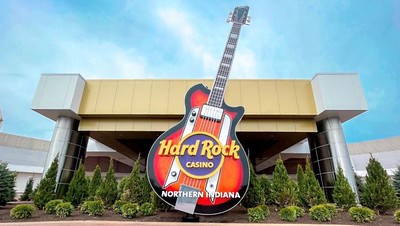
Friday, May 14 is the date set for the grand opening of the new $300 million Hard Rock Casino Northern Indiana in Gary. But the 37-foot tall, 15-foot wide guitar that will welcome visitors is already up and illuminated.

The guitar is modeled on a 1965 Airline Town and Country guitar owned by onetime Gary resident Joe Jackson, patriarch of the Jackson 5. Hard Rock Casino Northern Indiana President Matt Schuffert said, “This is the guitar that changed the world.”

Giovanni Taliaferro, director of memorabilia design for Hard Rock International, explained the back story of the guitar. “It was a prize possession of Joe’s and he had strict rules: No one was to touch his guitar. Well, the kids didn’t listen. Tito picked up the guitar and just started playing it, and he kept playing it, and he kept playing it. At the same time, Jermaine and Jackie stood up and started singing. And he’s like, ‘Wow, there’s something here.'”

Jackson’s actual guitar will have a place of honor inside the new 200,000-square-foot venue, plus other memorabilia from the Jacksons—including Michael Jackson’s iconic jacket from the “Beat It” video–and other musical performers and groups with ties to Gary, Northwest Indiana and Chicago. Taliaferro said, “This is THE guitar. I was just in Los Angeles and picked it up from Tito. And I want to thank the entire Jackson family for entrusting us with preserving and showcasing this precious artifact in their hometown of Gary, Indiana.”

From the outside, the Hard Rock looks as if it’s finished, but Schuffert said they’re down to the interior details. The facility will offer a casino with 1,650 slots and 80 table games, a sportsbook, five dining options, a Hard Rock Cafe, a Rock Shop and a 2,000-seat Hard Rock Live performance venue.

Several Jackson family members attended the groundbreaking in January 2020 for the casino, which will be the first land-based gaming facility in Northwest Indiana, replacing the Majestic Star Casino on Lake Michigan, which permanently closed April 18.

Under state law, Majestic Star employees are guaranteed jobs at the Hard Rock Casino. Schuffert commented, “As Majestic Star winds down their operations there, and really celebrates a great legacy over there, we’re looking forward to bringing that team over here and really putting together one big, great team.”

Schuffert said patrons used to visiting the Majestic Star or other Northwest Indiana casinos will be pleasantly surprised when they enter the Hard Rock for the first time. “It’s just a beautiful facility, it’s hard to put into words. I just can’t wait for people to see it for themselves,” he said.

Elite Resorts Announces $100 Million Fonner Park Casino

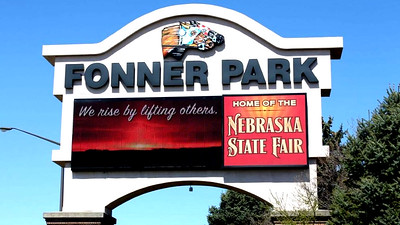
Iowa-based Elite Casino Resorts will develop a $100 million casino complex at Fonner Park in Grand Island, Nebraska.

The budget includes $45 million for new construction and about $3.5 million for upgrades to the existing Fonner Park. Plans include a casino with 650 slot machines and 20 table games, VIP lounge, sportsbook, restaurants and show lounge, plus a 116-room boutique hotel with indoor and outdoor pools, spa and salon. Officials at Elite, operators of casinos in Iowa City, Davenport and Larchwood, Iowa, said the project would create 400 new jobs.

Fonner Park Chief Executive Officer Chris Kotulak said, “I had an image in my mind, both architecturally, operationally and a mindset of what I thought would be a good fit for Fonner Park and Grand Island. Elite Casino Resorts quickly rose to the top among our impressive list of candidates.” Nine companies submitted proposals to operate the casino, including “the biggest of the big” and “the smallest of the small,” Kotulak said, adding the selection process involved many meetings and “a lot of travel,” Kotulak said.

Elite Casino Resorts Chief Executive Officer Dan Kehl said the company will build a “big, beautiful resort with first-class amenities that should make Grand Island and Fonner Park proud.” He said the new casino resort will reimagine Fonner Park and reinvigorate the “iconic property,” built in 1954. “We have spent more than 30 years building a business in towns your size, and it’s in our wheelhouse. We’re so excited about this partnership with Fonner Park,” Kehl said.

Kehl said a temporary gaming facility will open in the Fonner Park concourse, then the hotel and casino will be constructed in a single 18-month phase. “The casino floor will have a seamless connection to the existing Fonner Park structure to guarantee guest flow between the casino, racing operations and the convention center,” he said.

Kehl stated the hotel will be “rich with amenities” and include luxury suites. He continued, “We will offer classy, fun and varied restaurant choices,” including a Grab & Go restaurant, a family dining establishment and a sports bar and grill, as well as the rooftop Ruthie’s Steak & Seafood, offering an expansive view of Grand Island.

Fonner Park’s casino is the third to be announced publicly since Nebraska voters last year approved casino gambling at the state’s horseracing tracks. In January, WarHorse Gaming, a subsidiary of the Winnebago Tribe’s Ho-Chunk Inc., unveiled plans for a $200 million casino resort at Lincoln Race Track. Expected to open next year, it will include 1,200 gaming stations, spa, restaurant, bars and conference and event space plus a 196-room hotel.

WarHorse also announced a $200 million casino at Horsemen’s Park in Omaha. It has yet to officially announce a casino at Atokad in South Sioux City.

PlaySugarHouse.com and BetRivers.com Weekend Betting Preview

With the month of April beginning to come to a close, the playoff races in the NBA and NHL are heating up. But this weekend also provides several, unique, high-stakes matchups for bettors at PlaySugarHouse.com and BetRivers.com. Read how bettors are wagering on some of the weekend’s biggest events.

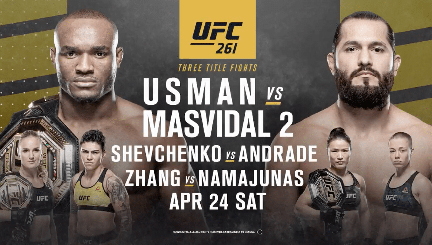
UFC 261: No weekend event has more current bets or handle than the UFC 261 PPV, headlined by three title fights, with two of the defending champs entering as heavy public favorites. Welterweight champ Kamaru Usman (18-1, -435 ML) is backed by 84% of the total fight handle and 81% of total fight bets to defeat Jorge Masvidal (35-14, +320 ML), who Usman defeated via unanimous decision in July 2020. Usman opened -400 ML for Saturday night, and is currently -435 ML to win. The largest current wager is a $7,000 bet on Usman to win (-400 ML) with a potential payout of $8,750.

Valentina Shevchenko (20-3, -455 ML) makes her fifth defense of the UFC women’s strawweight title when she faces Jessica Andrade (21-8, +340 ML), and the public is heavily backing the champ with 96% of the total fight handle and 92% of the total fight bets. Shevchenko opened -400 ML to win, but is now -455 ML, making her the strongest favorite of any fighter on the card. The largest current bet is a $6,500 wager on Shevchenko to win (-400 ML) with a potential payout of $8,125.

COLLEGE FOOTBALL: The 2020-2021 Division 1 FCS Tournament gets going this weekend, with a 16-team field to determine the FCS National Champion. No. 3 seed James Madison (-625 ML, -14.5) is the heaviest public favorite of the first round, backed by more money than any other team and responsible for 93% of the total handle to defeat VMI (+400 ML). Unseeded Missouri State (+210 ML, +6.5), despite being the first round underdog, is the second-most wagered-on team, and is backed by 92% of the game handle to beat unseeded North Dakota (-278 ML). The Bison of North Dakota State (-278 ML, -7.5), winners of six of the last seven FCS championships, are unseeded but favored to beat Eastern Washington in the first round. The public is backing NDSU with 89% of the game handle and 91% of total game bets. The largest college football bet of the weekend is a $6,000 wager on Missouri State +7.5 (-116) that has a potential payout of $11,160.

SOCCER: Manchester City (-200 ML) and Tottenham (+490 ML) are the final two teams left standing in the 92-team EFL Cup tournament, and will compete for the championship on Sunday afternoon. The two sides are split in their last five head-to-head, with each team winning twice with one draw. Manchester City scored the most recent victory, a 3-0 win in February, which followed back-to-back 2-0 wins for Tottenham. City will enter the match having won three of their last five, including two wins over Borussia Dortmund in the Champions League. Tottenham, which recently parted ways with head coach Jose Mourinho is 2-1-2 in its last five games. The public is backing Manchester City with 78% of the total match handle and 92% of total match bets.

NFL DRAFT: The 2021 NFL Draft is less than a week away, and while there is a good understanding of who will go No. 1 (Trevor Lawrence -10000) to Jacksonville and No. 2 (Zach Wilson -5000) to the New York Jets, the public is heavily invested in what the San Francisco 49ers will do at No. 3. Alabama QB Mac Jones (-150 to go No. 3) currently has the shortest odds to land in the Bay Area, but Ohio State QB Justin Fields (+160 to go No. 3) is the public pick, with 92% of the bet handle. In fact, The No. 3 pick is currently the most wagered-on prop bet of the entire 2021 NFL Draft.

Fields, along with LSU WR Ja’Marr Chase, are the most wagered-on players in the draft, and are backed by the two largest NFL Draft bets thus far: A $10,000 wager on Justin Fields to be picked in the Top 10 (-500) and a $4,500 wager on Chase to be the first WR drafted (-400).


Maryland Passes Sports Betting Law

On the last day of the legislative session, Maryland lawmakers cleared compromise enabling legislation for the state’s sports betting industry, after House and Senate negotiators have reached agreement on the rules under which sports betting will be conducted.

The compromise bill passed both chambers easily, with votes of 47-0 in the Senate and 122-16 in the House.

Among the changes to the House and Senate-passed bills was the restoration of limits on the number of sports betting licenses to be issued. The Senate had removed all limits on licenses from the House-approved measure. The compromise bill provides for 30 retail sports betting licenses for businesses, and 60 online/mobile licenses. It also allows sportsbooks at casinos, and daily wagering at the state’s three professional sports stadiums and racetracks.

Sports betting would be taxed at a rate of 15 percent for mobile/online platforms and 13 percent for retail operations, and all funds would go toward education costs or problem gambling initiatives.

“By December 1, 2025, we’ll revisit it to see if there’s more licenses that need to be issued to meet demand,” state Senator Craig Zucker told the Associated Press.

Under the compromise bill, expected to be signed by Governor Larry Hogan, the state would issue 10 licenses to the state’s larger casinos, Laurel Park racetrack and the three professional sports teams. as well as off-track betting locations, the Maryland State Fair, and two larger electronic bingo facilities.

Thirty “Class B” licenses would be offered on a competitive basis to sports bars, restaurants, smaller tracks and other businesses wanting to offer on-site betting.

Maryland voters approved sports wagering by a 2-to-1 margin in November’s general election.

Connecticut Lottery Seeks Sportsbook Provider

Now that sports betting has been legalized by Connecticut, the state lottery has published a request for qualifications (RFQ) for potential sports betting partners. Responses are due by April 23, with formal proposal due May 10, indicating the urgency the lottery is operating under to provide sports betting by fall.

Lottery Chairman Rob Simmelkjaer, interviewed by Legal Sports Report, declared, “There is a hope to launch sports betting in Connecticut by the start of NFL season. That’s been articulated by the governor, by the leaders of the tribal nations that are going to be our partners slash competitors in the state.” He added, “It’s an aggressive timeline – not sure that it will happen. But we’ve created a timeline that at least leaves that possibility open.”

Simmelkjaer said the state market will have “three competitive entities.” The quality of the product and pricing will be consideration, so will acquiring and keeping customers. He said the ideal situation would for anyone in the state to be within 30 minutes of a sportsbook retailer.

“It’s something we spent a lot of time thinking about and working on in the process of negotiating this deal with the administration and the tribes,” he said.

Operators must already be operating in at least three jurisdictions, within the U.S. or internationally. Sports betting revenue will be subject to a 13.75 percent tax.

The state has almost 3,000 lottery retails. “They won’t all be taking sports bets,” Simmelkjaer said, “but they’re all touch points that we can use potentially as we look to acquire customers.”

Although sports betting has been legalized, the legal framework must still be fleshed out by lawmakers. Then tribal gaming compacts will need to be amended and approved by the federal Bureau of Indian Affairs.

Texas Mulls Sports Betting

Texas state Rep. Dan Huberty would like to legalize sports betting and use the tax proceeds to help fund special education. He has introduced HB 2070. He is optimistic of success. “I like my odds,” he said recently.

Huberty believes that there is about $5.6 billion in untapped sports betting activity in the state, either the black market variety, or the amount that Lone Star state residents spend on wagers in other jurisdictions that offer it.

With the second largest population, after California, Texas is the philosopher’s stone for sports betting enthusiasts because of how much potential revenue lurks.

The $5.6 billion number Huberty uses comes from the Sports Betting Alliance, a group of professional sports teams based in the state who have gone to bat, figuratively, for the idea. Tax that figure at 10 percent of gross, which the representative’s bill calls for, and you have a lot of money for education.

The effort is personal for Huberty, as he has a dyslexic son who could benefit from extra special education dollars.

Although Texas has a reputation for being a hard sell for gaming expansion, this year there are ten gaming bills already circulating.

Texas is also an even tougher sell for tax increases, which suits Huberty just fine. He told Sports Handle last week: “When we went through the process, and talked about we’re going to do this, finding long-term payment for this, we had to find revenue sources.” He added, “We don’t have an income tax. We don’t want to impact oil and gas — the question is how do I find sources of revenue untapped and available.”

Huberty was astounded when he found out how much was being wagered on illegal offshore sites.

Huberty needs to persuade fellow lawmakers to put his proposal on a House Joint Resolution to put it on the November ballot as an amendment to the state constitution. This will require a two-thirds majority of both Chambers.

Last month Huberty commented to GGB News: “There’s a tremendous amount of support and a lot of interest. We have the lottery and racing, we already have gambling in these areas. This would allow betting for people who don’t necessarily want to go to a casino. And there is 100 percent support from the sports teams. Every major sports team is behind it. Our view is simply to let the voters decide.”

The bill has bipartisan support and, of course from every professional sports team in the Lone Star State.

Unlike some competing bills, Huberty’s would allow wagers on the state’s dozens of colleges that offer high level sports, considered critical in raising the $5.6 billion annual handle. Huberty said, “(A) significant portion of wagering is on college sports. Based on data, up to 50%. That’s a big number when you consider the amount of wagering.”

One very significant opponent is Lt. Governor Dan Patrick, who has opposed the idea from the start. In Texas the Lt. Governor has a significant influence on the fate of bills, where he is in charge of the Senate.

Huberty is also relying on the public, which has registered a strong support for expanded gaming and sports betting in several recent polls.

Ohio Lawmakers Debate Sports Betting Details

One of the central issues for Ohio as the state debates sports betting regulations is who gets to participate. Should sportsbooks be limited to the four casinos and seven racinos or opened up?

Bowling alleys want a share.

Casinos “know that the online platform and the mobile apps will capture anywhere from 90 to 95 percent of the market,” said David Corey, executive vice president of the Bowling Centers Association of Ohio, representing 150 businesses and their 5,000 employees. “So all we’re really asking for is 5 percent. That’s why this is so ludicrous.”

Corey said lottery kiosks could be modified for sports betting. “The infrastructure is already in place.”

Another part of the debate has been over whether sports betting should be regulated by the Ohio Casino Control Commission, which oversees the casinos or the Ohio Lottery Commission which regulates racetracks’ slots parlors and lotteries.

“If popular sports betting is allowed only at casinos, Ohio lottery profits would most likely decline, and schools would have to fight even harder for adequate funding,” said William Phillis, executive director of the Ohio Coalition for Equity and Adequacy of School Funding.

Lawmakers must decide whether businesses that sell lottery tickets like retail stores, bars, restaurants, veterans and fraternity organizations should participate, according to the Toledo Blade.

Legislators have listened to industry leaders on what can work in Ohio and how, according to the Ohio Capital Journal.

Casinos insist they have the capability to operate such a business and all the regulations it entails. Yet many want wagers to be available at any retailer or organization licensed to sell lottery tickets.

Rep. Brigid Kelly expects to introduce a bill which taps the casino commission as the regulatory agency and sets a tax rate of 8 percent.

The Senate Select Committee on Gaming has held hearings on a sports betting framework.

Eric Schippers, a senior vice president for Penn National Gaming, told the committee that “it is critical that the operation of retail and mobile sports betting be limited to existing licensed gaming operators, who have invested billions in economic development in Ohio, and our designated skin partners.”

Penn National operates four of Ohio’s 11 casino or racinos.

“We believe allowing two or three skins per licensee in Ohio would mean far more upfront license fees and revenues to the state,” Schippers said.

“Operating such a complex security system is expensive and extremely labor intensive. We spend millions of dollars annually on surveillance equipment, surveillance personnel, and security officers at each of our properties to maintain a safe and secure environment for our customers.”

Greg Beswick, of the Ohio Fair Gaming Coalition, wants to open it up to a wide number of businesses.

“We’re very interested in making sure (sports betting) can happen from everywhere,” Beswick said.

Tennessee Sportsbook Can Still Take Bets

In the continuing saga of Action 24/7, Davidson County Chancery Court Chancellor Patricia Head Moskal, said the sportsbook can continue taking bets while the case against it proceeds. The rationale: the court has exclusive jurisdiction over the sportsbook appeal.

The Lottery suspended Action 24/7’s license in March due to suspicions of fraud, according to the Associated Press. The local sportsbook filed suit and the license brought back to active status.

“The court appreciates that online sports wagering in Tennessee is a newly emerging business, the Act and Board Rules are newly implemented, and (the lottery’s) compliance and supervisory responsibilities are newly undertaken,” the judge wrote. “Nevertheless, the Court must enforce the provisions of the Act and Rules as written.”

Lottery officials suspended Action 24/7’s license—affirmed by the lottery board—after several reports of debit card fraud to lottery investigators. In one instance, a person carried out 124 deposits into a gaming account using seven different cards, and then placed a few bets before withdrawing the rest of the money. Investigators said had better controls been in place this may not have happened.

Lawyers for Action 24/7 said lottery investigators claimed damages in the “tens if not hundreds of thousands of dollars,” but was little more than $22,000 and the sportsbook took steps to prevent a repeat.

Pittsburgh Penguins Arena to House Sportsbook

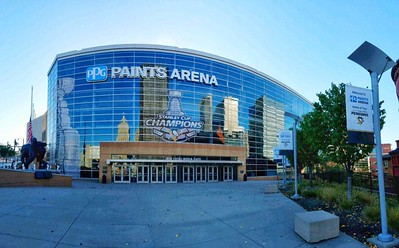
The Sports & Exhibition Authority of Pittsburgh and Allegheny County has cleared the way for the creation of the BetRivers Lounge, a sports lounge at the PPG Paints Arena of the NHL’s Pittsburgh Penguins, where fans will be able to place mobile bets on BetRivers.com while watching games.

The lounge, expected to open next month, is a partnership between the Pittsburgh Penguins and the city’s Rivers Casino. It will feature two rows of luxury seating, designed to resemble the sportsbook lounge at the casino. It is being built by removing several rows of seating at the top of the lower section of the arena.

The BetRivers Lounge will include multiple live-action video screens and a bar. It is being built at a cost of around $2.3 million. Under its lease with the exhibition authority, the Penguins are responsible for the construction cost and all maintenance costs.

Currently, Pennsylvania Covid-19 restrictions limit attendance at indoor games to 25 percent capacity.

Bally’s, Gamesys Finalize Merger Details

Bally’s Corp. announced that it has agreed to terms with U.K.-based online betting operator Gamesys Group PLC under which the two companies will merge.

Rhode Island-based Bally’s announced that the company and Gamesys Group have agreed on definitive terms by which Bally’s will combine with Gamesys.

Consistent with U.K. regulatory requirements, Bally’s arranged interim financing for the transaction from Deutsche Bank Aktiengesellschaft, London Branch, Goldman Sachs Bank USA and Barclays Bank PLC. Bally’s intends to seek to refinance the bridge facility and Gamesys’ debt through one or more capital market transactions, which could include public or private offerings of Bally’s shares or other securities and a company-wide bank credit facility. There can be no assurance to the timing or terms of such capital markets transactions.

Commenting on the combination, Soo Kim, chairman of Bally’s Corp., said, “We believe that this combination will mark a transformational step in our journey to become a leading integrated, omnichannel gaming company with a B2B2C business. We think that Gamesys’ proven technology platform alongside its highly respected and experienced management team, combined with the U.S. market access that Bally’s provides, should allow the combined group to capitalize on the significant growth opportunities in the U.S. sports betting and online markets.

“We are truly excited about the opportunities that this combination would offer and the enhanced and comprehensive experience and product offering that it would enable us to offer our customers.”

Bally’s and Gamesys officials say their boards of directors believe that the combination has a compelling strategic and financial rationale, would create long-term value for both companies and would be consistent with the companies’ respective long-term growth strategies. Gamesys would benefit from Bally’s fast-growing land-based and online platform in the United States, providing market access through Bally’s operations in key states as the nascent iGaming and sports betting opportunity develops in the U.S.

In turn, Bally’s would benefit from Gamesys’ proven technology platform, expertise and highly respected and experienced management team across the online gaming field. The combined entity would be well positioned to capitalize on the full range of opportunities available both in the U.S. and abroad.

Neil Goulden, chairman of Gamesys, said, “The combination would give unique optionality to Gamesys shareholders. The recommended cash offer, including the Gamesys FY20 dividend, provides a 41.2 percent premium to the Gamesys share price at the time of the original proposal from Bally’s and is at a significant premium to the all-time high Gamesys share price prior to the 2.4 announcement.

“However, should Gamesys shareholders wish to invest in a business with a strong foothold in the high-growth U.S. gambling market combined with established markets in the U.K. and Japan, they can elect for part or all of their holding to be converted into Bally’s shares.”

Caesars Exec Steve Callender Takes a Bow

On March 31, after 43 years in the gaming industry, Caesars Entertainment exec Steve Callender retired, seemingly with little prelude. But his exit wasn’t really that abrupt.

“My boss knew about this in November. It’s not as sudden as you think,” said Callender, former eastern regional president of Caesars Entertainment.

Still, the decision took some soul-searching. “My family sacrificed a lot for me,” Callender told GGB News. “My wife, Kathy, had wanted me to leave for a while.”

After undergoing back surgery in September, Callender knew it was time to devote himself to his family, including three children and six grandchildren who live in the Atlantic City area. He also wanted to go to more Phillies games and play more golf. “My wife is a golfer,” he said, “and we like to compete.” In retirement, the couple will also spend time at the vacation home they’ve owned for 15 years in Palm Bay, Florida.

From Day One

A resident of Brigantine, New Jersey, just north of Atlantic City, Callender grew up less than 60 miles away, in the town of Pennsauken. He graduated from Glassboro State College (now Rowan University) and in 1978, became a day-one craps dealer at Atlantic City’s first casino—and the first U.S. casino outside Nevada—Resorts International.

“I had just graduated from college, and 10,000 people had applied for 500 jobs,” he said after his retirement was announced. “I was lucky enough to be selected, and they taught me how to deal. It was the first craps game I’d ever seen—and I was dealing it.”

That the gaming industry is a meritocracy can be proven by Callender’s career. He learned the business from the bottom up, and rose from dealer to vice president of casino operations at Resorts. “I worked for Merv Griffin at Resorts; that was fun,” he said. “It was also exciting to be at Bally’s Park Place when they bought Caesars.”

After a stint at the Atlantic City Hilton, he served as senior vice president of table operations at Bally’s, then returned to his old stomping grounds at Resorts, a post he held for another four years. He moved to Tropicana in 2010, after billionaire investor Carl Icahn picked up the bankrupt property for just $200 million, and was promoted to general manager in 2012. At the time, the Trop was at a low ebb.

“They were just out of bankruptcy. Morale was terrible. They were not performing. We turned these things around,” Callender said.

Changing Times

And how. By 2018, when Icahn sold Tropicana Entertainment to Eldorado Resorts, its assets including six casino properties were in “very good shape… top-notch assets.” said Union Gaming Research analyst John DeCree. Reuters described the Atlantic City Boardwalk property as Tropicana’s “crown jewel,” just behind market-leading Borgata in gaming revenue.

Callender guided the transition of Tropicana to Eldorado, and did it again in 2020, when Eldorado absorbed Caesars Entertainment. “Eldorado took it up to another level,” he said. “I went from a guy who ran one casino to running multiple casinos. It challenged me to do more.” He oversaw the introduction of online gaming in 2013, and sports betting in 2018, welcoming the first guests (l.) to the Tropicana’s 5,000-square-foot William Hill sportsbook. And of course, he presided over the property in 2020, with all its challenges.

Of Atlantic City’s nine casinos, only two reported an uptick in gaming revenues last year, Golden Nugget and Resorts, both on the strength of online operations. While Tropicana posted reduced revenues, Callender sounded a positive note. In January, in his role as president of the Casino Association of New Jersey (CANJ), he said he was confident business will be back. “It’s going to take a couple months … but there is incredible pent-up demand. Many of our older customers have gotten their shots and they’re coming back. People will continue to come.”

Now 66, Callender said he has no regrets about his career path, his decision to remain in Atlantic City, or his decision to call it a day. During his career, he had the opportunity to become a casino manager in Bettendorf, Iowa, but turned it down. He also turned down an offer to become a vice president at Caesars Palace in Las Vegas. “My roots are in South Jersey,” Callender said. “I was in the major leagues here.”

Without false modesty, Callender acknowledged that it isn’t easy to do what he did. “Most people don’t do it. I worked the floor. I’m in front of guests and team members. It’s a hard job.”

Still A Force

In retirement, he plans to stay active in the community, especially with the United Way and with the American Red Cross. He also sits on the boards of the Atlantic City Executive Council, Atlantic City Restart & Recovery and the Lloyd D. Levenson Institute of Gaming, Hospitality & Tourism. He’s the current president of the 200 Club of Atlantic & Cape May Counties, a non-profit that provides financial support for the families of first responders who die in the line of duty. Needless to add, Callender has a finger on the pulse of Atlantic City, and speaks to Mayor Marty Small Sr. frequently.

“People in Philadelphia and Baltimore know I have a lot of experience,” he said, “and they won’t hesitate to ask for advice.”

For the time being, Caesars Entertainment President and Chief Operating Officer Anthony Carano and Chief Marketing Officer Josh Jones will assume Callender’s duties, leading the general managers at Tropicana, Caesars and Harrah’s in Atlantic City, Horseshoe Baltimore and Harrah’s Philadelphia.

“Steve Callender is a true gaming trailblazer,” Carano said of the departing executive. “Not many of us can say we were there at the start of something and helped steer it into a powerhouse industry over a four-decades-long career. Steve’s passion for our business and its people made him a tremendous leader in both our company and the industry. Steve will be greatly missed. As this new direction leads him away from us at Caesars Entertainment, we thank him for his incredible commitment.”

Meanwhile, Callender reports that he enjoyed his first week of retirement.

“I got to spend Easter with my family,” he said.

MotorCity Comes to Atlantic City

Detroit’s Ilitch family, of Little Caesars pizza fame, has its hands in a number of pies. It owns two major-league sports teams, the Detroit Tigers of Major League Baseball fame and the Detroit Red Wings of the NHL.

Family matriarch Marian Ilitch became the sole owner of MotorCity Casino Hotel in Detroit in 2005. Her late husband, Mike, was prohibited from involvement because MLB rules at the time barred owners from having any interest in gambling companies, according to the Detroit Free Press.

In total, the family’s companies employ more than 24,000 full-time and part-time people around the world; in 2018, the organization’s total combined revenue was $3.8 billion.

Now it’s set its sights set on Atlantic City.

Luxor Capital Group LP, a New York hedge fund, said April 6 it has agreed to sell Ilitch as much as 50 percent of Ocean Casino Resort, the Boardwalk property formerly known as Revel. The firm is seeking interim approval to become a part owner from the New Jersey Casino Control Commission.

The price Ilitch will pay was not disclosed.

“We are extremely excited about the proposed investment by the Ilitch organization, which, if approved, will give Ocean access to growth capital and provide a strategic partner to Luxor,” Luxor said in a statement.

Luxor took over operations of Ocean Casino in January 2019 in exchange for cancelling former owner Bruce Deifik’s debt. The hedge fund did not discuss details of the agreement with Ilitch or how the deal may affect operations, and is expected to remain mum until the approval process moves further along, according to the Associated Press.

Among Atlantic City casinos, the 47-story Ocean has an especially turbulent history. Planned as Revel before the 2008 Great Recession, it was downsized from two towers to one after the economy tanked, but construction went forward at a cost of $2.4 billion. The property on 20 oceanfront acres opened in April 2012, but declared Chapter 11 bankruptcy twice before closing again in 2014.

Shortly thereafter, Revel was sold to Florida developer Glenn Straub for just $82 million. The colorful Straub had a contentious relationship with local government officials, according to the Press of Atlantic City; he once warned business owners coming to New Jersey “to take all your clothes off” because “they don’t know how to not rape you.”

Straub floated a number of plans to repurpose the casino, which he renamed TEN. Those ideas included turning it into a technical school and using it as a center to house Syrian refugees. He never reopened it, and in 2018 sold it to developer Bruce Deifik, who plowed $70 million of his own money into the property, then reopened it as Ocean Resort Casino in June 2018.

Deifik’s tenure in the city was short-lived. A year later, facing sexual harassment allegations by casino employees and about to be stripped of his gaming license, Deifik lost his stake in the property, and Luxor took control. Months later, Deifik died in a car accident in Colorado. His death and Straub’s fate—the latter faces 15 years in prison in Florida on charges of grand theft larceny—led to speculation about a “Revel curse.”

Ocean Casino has put that talk to rest. For the first nine months of 2020, it had a gross operating profit of more than $12 million, a big improvement over a $2.5 million loss in the same period a year earlier. During that challenging period, Ocean was the only casino in Atlantic City that did not report a decline.

The Ilitch organization told Casino Beats that it “recognizes the success that the team at Ocean has achieved over the past two years,” and adds that it “looks forward to working with the Ocean team and building on their accomplishments through continued investment in both the property and the customer experience.”

The modernistic, mirror-clad resort features 1,399 guest rooms and suites, 138,000 square feet of casino space with 1,937 slot machines and 125 gaming tables, and a William Hill sportsbook.

In related news, the Tigers and Red Wings signed a deal April 5 with MotorCity Casino’s FanDuel sportsbook as an official gaming partner.

“After a very successful launch in Michigan, we are excited to continue our momentum by partnering in this way with two of the most iconic sports organizations in the country,” said Mike Raffensperger, CMO of FanDuel Group in a statement.

Last week the Tigers also entered into a promotional agreement with BetMGM.

FanDuel sportsbook will be included in signage at Comerica Park and Little Caesars Arena, including outfield walls and dasher boards. FanDuel content also will be used on the teams’ radio networks.

Both venues already partnered with the casino. Comerica Park features the MotorCity Casino Tiger Club, which includes the Off Ramp Bar. Little Caesars Arena includes the MotorCity Casino Club, which hosts VIP experiences with gourmet food and beverage options.

BetRivers.com and PlaySugarHouse.com Weekend Betting Preview

A fun weekend chock-full of sports betting action is highlighted by one of the most unique matchups of 2021, as YouTube celebrity Jake Paul takes on former UFC welterweight contender Ben Askren in an eight-round professional boxing match on Saturday night. Read below for a breakdown of how PlaySugarHouse.com and BetRivers.com bettors are wagering on the fight, and the rest of the sporting weekend.

BOXING: On Saturday night, controversial YouTube celebrity Jake Paul (2-0, -190 ML) steps inside the ring for the third time to take on former UFC welterweight contender and four-time All-American wrestler Ben Askren (0-0, +160 ML) in an eight-round main event. Paul, who opened as a -250 ML favorite, most recently defeated former NBA star Nate Robinson via second-round KO in November. The public is currently backing Paul with 75% of the total fight bets and 63% of the total fight handle despite facing the first legitimate professional of his career. There has been plenty of line movement as the week progressed and the buzz for this fight grew, as Paul moved from -250 to -220, all the way to -168 and now back to -190.

Askren (19-2-1 MMA), who won 19 consecutive fights and captured the Bellator and ONE FC welterweight titles, is both the betting and public underdog for just the second time in his professional career. At UFC 239 in July of 2019, Askren entered his highly anticipated bout against Jorge Masvidal as the betting and public underdog for the very first time, and was knocked out cold in under seven seconds thanks to a highlight reel flying knee, suffering his first pro loss and only knockout loss of his career.

The largest current bet is a $3,600 wager on Jake Paul (-179 ML) by an Illinois BetRivers.com bettor that will pay out $5,616 if Paul is victorious.

MLB: The Pittsburgh Pirates enter the weekend with a 5-8 record through their first 14 games. While the 2021 MLB season is still young, if the Buccos continue this trend, they will finish the season with 62 wins. The pre-season win total for Pittsburgh — the second most popular N.L. win total bet — was set at 59.5 wins, and 89% of the handle is backing the Under (-111).

On the other end of the spectrum are the red-hot Boston Red Sox, winners of nine of their last ten. Boston is on pace to win 112 games, and while that might be a bit of a stretch, what’s more realistic is the Red Sox winning over 80.5 games, the team’s pre-season win total. The public is backing Over 80.5 (-105) with 79% of the handle and 81% of bets. There is a lot of baseball still to be played, but for bettors backing the Red Sox to make the playoffs (+274), like the Illinois BetRivers.com bettor who wagered $2,400 with a potential payout of $8,976, things are starting off on the right foot.

NBA: The Philadelphia 76ers (+450 East) have the best record in the East but remain behind the Brooklyn Nets (-106) and Milwaukee Bucks (+250) as the favorite to win the Eastern Conference. Philadelphia, winners of three straight, host the Los Angeles Clippers this evening (+225 West). The Clippers and Sixers are currently backed by the third and fourth largest percentage of total NBA championship handle respectively, trailing just the Lakers and Nets.

The two teams above the Clippers in the West standings are the Utah Jazz (+400 West) and Phoenix Suns (+900 West), winners of nine of their last ten. The Suns have been backed by more money in the month of April than any team in the Western Conference, while Utah currently holds the NBA’s best record. Jazz head coach Quin Snyder is both the odds-on (-167) and public favorite to win Coach of the Year honors, backed by 41% of the futures handle and 17% of futures bets.

SOCCER: A pivotal weekend of domestic cup action awaits sports bettors this weekend thanks to the Copa del Rey final and the FA Cup semifinals. F.C. Barcelona (-200 ML) is the strong public pick to defeat Athletic Club Bilbao (+475 ML) and win Spain’s top domestic tournament, backed by 89% of total game bets and 86% of total game handle. Barcelona and Bilbao have split their last four meetings, although Bilbao has won the last two meetings in tournament play, including the 2020 Copa del Rey quarterfinals. The first of two FA Cup semifinals, Manchester City (-124 ML) is a strong public favorite, backed by 86% of total game bets and 85% of total game handle to defeat Chelsea (+370 ML) and advance to its third FA Cup Final in three years. On Sunday, Leicester City (-113 ML) looks to advance to its first FA Cup Final since 1969 when it faces Southampton (+300 ML). Leicester is the public pick with 91% of total game bets and 84% of total game handle.

Mohegan Sun Signs Three-Year Deal with Miss America Organization

Mohegan Sun, the flagship property of Mohegan Gaming & Entertainment’s (MGE), last week announced an extention of its partnership with the Miss America Organization (MAO) to continue hosting one of the nation’s most anticipated competitions. For the next three years, Miss America events and finals will take place at the Mohegan Sun Arena. This historic relationship is a testament to Mohegan Sun’s consistent innovation and industry-leading health and safety practices that have inspired confidence among its distinguished partners and the public. The 100th anniversary Miss America competition will be broadcast live in December 2021.

“Following the success of the Miss America 2020 competition at Mohegan Sun, we knew we had created something very special here in Connecticut and we’re thrilled to be able to host Miss America events and competitions for the next three years at our destination,” said Jeff Hamilton, president and general manager of Mohegan Sun. “Miss America will now become one of Mohegan Sun’s largest annual events in terms of size, scope and reach, allowing us to continue to deliver world-class, unique experiences to all those who step through our doors. We share many values with MAO, such as community support and empowerment, and we are excited and honored to add the like-minded organization to our incredible roster of renowned partners.”

2021 marks a historic year for MAO as the nationally recognized nonprofit celebrates its 100th anniversary this fall. The pageant got its start in Atlantic City, where it was held until 2005 when it left for Las Vegas and other venues. The 2020 competition was the first held at Mohegan Sun.

The milestone competition will continue to highlight a diverse group of young students and professionals who are advancing the message of female strength, independence, and empowerment through their efforts in the areas of scholarship, talent and social impact. MAO looks forward to returning to the big stage and providing a national platform for each talented candidate to share their voice with viewers around the country.

“For 100 years Miss America has been an icon, a champion for social causes, and one of the leading providers of scholarships to women in the country,” said Shantel Krebs, Miss America Organization President & CEO. “We are thrilled to have Mohegan Sun join us in this mission. As a leading integrated entertainment resort with a state-of-the-art venue and innovative vision for hosting events, Mohegan is the ideal partner as we enter into our second century of service to America’s outstanding young women.”

Is MaximBet Coming to New Jersey?

MaximBet has a familiar ring to it. It blends a popular men’s magazine brand with sports betting and online casinos. And it could be coming soon to New Jersey.

The partnership between Maxim, the magazine, and the Carousel Group, the sportsbook, is betting on the combination to propel it forward in an increasingly crowded marketplace.

According to PlayNJ.com, the Carousel Group and Maxim plan to promote its betting foray through the millions of subscribers to the magazine and other channels. Maxim has the marketing knowhow; Carousel, the gambling element.

Carousel partnered with Caesars in February for an online sportsbook in New Jersey, which would also go for an online casino product. The selected name of SportsBetting.com made a lot of marketing sense. But MaximBet will be the new name. There does not seem to be a specific date for the launch in New Jersey or elsewhere under that name.

Carousel has a live operation in Colorado, and awaits regulatory approval in Indiana, and Iowa for a sportsbook.

The question is whether the name change is a good move from a marketing standpoint. SportsBetting.com is certainly easy to remember.

To succeed MaximBet will require a high number of Maxim readers to convert to Maxim bettors. Maxim’s audience fits the perfect demographic for sports and online betting. Still, will Carousel grab enough of a share of the New Jersey market?

The press release mentioned an investment from xSigma, a subsidiary of ZKIN International Group. Funding could be used to take MaximBet live. Indeed, partnering with Maxim and its marketing affinity may have been a move needed to secure a financing commitment.

Employing Maxim’s advertising strength may have been what Carousel used to seal the financing deal. Now everyone involved waits to see if Maxim can deliver regular gamblers to Carousel, or if sticking with SportsBetting.com would have been the better play.

Foxwoods’ First Native CEO: Appointment ‘Means Everything’

On March 21, Jason Guyot, a nearly two-decade veteran of Connecticut’s Foxwoods Resort Casino, was officially instated as president and CEO. He had held the position on an interim basis for nearly a year.

The historic appointment made Guyot the first member of the Mashantucket Pequot Tribal Nation to be elevated to the job. He replaced former CEO John James, who resigned in April 2020 after eight months on the job. James departed shortly after the resort closed, with thousands of workers furloughed. James, in turn, had replaced 65-year-old Felix Rappaport, who died unexpectedly of a heart attack in June 2018, four years after becoming president and CEO.

Speaking to GGB News about his new role, Guyot said, “It means everything to me.”

Though he took the reins at the start of the Covid-19 shutdown, Guyot said, “The timing was right. It was something I’d been working for my entire career. And it holds extra weight, because I don’t just head this tremendous enterprise, but the future of the tribe. It is of the utmost importance, because it’s all about the future of the tribal nation.”

One Road, Many Paths

Despite Guyot’s longevity with the tribal enterprise, it wasn’t always his goal to occupy the CEO’s chair.

“It was not,” he told GGB. “My first exposure to the enterprise was in the mid-1990s, as a bellhop. Then I started out my career at Foxwoods in 2003, as a manager of employment and diversity after graduating from college. I thought I was going to be in social services but ended up in employment services, and worked my way up from there.”

Guyot benefited from exposure to many aspects of the business. “I ended up in human resources and behavioral science, and continued to move my way up the organization. In 2007, I was offered the opportunity to move to operations and to oversee the opening of Fox Tower. I fell in love with operations.”

His position as senior VP of resort operations gave him “a wealth of experience. I tried to take advantage of everything that came my way, from overseeing property management to resorts sales and development. I’ve had a well-rounded experience in hospitality, thanks to the opportunity.”

Comeback Trail

As the U.S. gaming industry reopens after the Covid pandemic, Guyot is charting a path for Foxwoods to come back strong. “The pandemic in general has really been a challenging time for all businesses and all people, and coming out of it has been a lot of learning—learning what’s more efficient, what’s best for the guest.

“I took over in April 2020, in some of the most difficult times for this operation. We looked at every aspect to be more profitable and engage the workforce. We learned there were different ways to do things, and I think we’ll all benefit as we move into the future.”

That future includes sports betting and online gaming, thanks to a deal recently struck between Connecticut’s gaming tribes and Governor Ned Lamont.

“We’re thrilled to have that landmark agreement; it’s an historical moment for us as an organization and as a tribal nation,” said Guyot. “A lot of things need to happen to get it through the legislature, but we want to get sports betting up by fall, in time for the NFL season. That would be the goal.”

While some people believe the onset of iGaming could siphon business from the brick-and-mortar operation, Guyot isn’t unduly concerned. “What we’ve seen from other jurisdictions is that it’s an incremental thing; individuals still want to experience live entertainment and stay at hotels.”

New Frontiers

Other frontiers for the Mashantucket Pequot Tribal Nation lie outside the continental U.S. and abroad. In January, the Pequots announced a partnership with LionGrove LLC, a private equity firm, to reopen the El San Juan Casino in Puerto Rico at the old Fairmont Hotel (l.). The tribe will invest $12.5 million in the venture and rebrand the property as the Foxwoods El San Juan.
“That’s expected to open in November of this year,” Guyot said. “We have a team down there working hard to get it up and running. The hotel is already open; the casino will be open later this year.”

In addition to Puerto Rico, Foxwoods is looking at Japan, which legalized integrated resorts with gaming in 2016 and will license three IRs in the first round of liberalization.

“We continue to look into new opportunities outside the U.S. and domestically,” said Guyot. “We want to expand the brand. We’re the first tribal casino in the U.S. There was Las Vegas and Atlantic City and then Foxwoods. That still resonates. That’s still important to us and speaks to the iconic brand of Foxwoods.”

‘Right Leader, Right Vision’

Mashantucket Pequot Tribal Chairman Rodney Butler praised Guyot for steering the company through one of the most turbulent periods in its history, calling his appointment “a special milestone for Foxwoods as well as our tribal family. What Jason has done over the past 12 months has been remarkable, taking the helm of Foxwoods at the onset of the pandemic, building safety guidelines from the ground up to ensure guests feel safe, and championing a new kind of culture for our team members.

“Jason Guyot is the right leader with the right vision to drive Foxwoods through its next phase of evolution,” Butler said, “and we are equally proud that Jason is our first Pequot CEO.”

Meanwhile, business at the resort in Ledyard, Connecticut is gradually returning, and is currently at “60 to 65 percent capacity,” said Guyot. “We haven’t reopened the hotels completely, but we see a lot of pent-up demand for places where people can go and be safe. We’ve proven this is one of the safest places you can visit. We’re excited to get back to the new normal, hopefully by fall.”

Entertainment has also returned to Foxwoods’ Grand Theater. “We’ve booked four shows with Dave Chapelle at 90 percent capacity” for this summer, he said. “We’re mandating Covid rapid tests for entry. We’re definitely trying some new things so we can provide a safe experience for our guests.” Additional safety measures include enhanced contactless ticketing, mandatory face masks and a maximized ventilation system for fresh air flow.

Guyot said his new position is not “a pit stop” in his career. “I’ve been here for over 18 years. I live here. This is my home, and I’m completely invested in the success of this tribe.”

Asked his advice for young people who want to achieve at his level, Guyot said, “My goal is to offer tribal members the same opportunities I was afforded. A lot of the drive needs to come from inside, and if I can inspire that, I would feel well about the role I’ve played. You have to make a lot of sacrifices, but if you’re resilient, stay focused and expose yourself to uncomfortable situations, you’ll be more well-rounded. You’ll be comfortable leading anything at the drop of the hat.

“You never know how you’re going to be called upon,” Guyot said. “The more you challenge yourself, the better off you’ll be in general—and not just at this organization.”

Manhattan Casino Plan In N.Y. State Budget

A process leading to the eventual licensing of three casinos in the greater New York City region has made its way into the state’s budget for the upcoming year.

A key provision of the 2021-22 spending plan calls for creation of a community advisory board to examine locations and review prospective operators for a casino in Manhattan, which is considered the big prize in a downstate market extending from the lower Hudson Valley to Long Island and where legislation passed in 2013 provides for the licenses to be awarded beginning in 2023.

The board will consist of 20 unpaid members, five each appointed by Governor Andrew Cuomo and Senate Majority Leader Andrea Stewart-Cousins and Assembly Speaker Carl Heastie. They would appoint the other five members.

Both Stewart-Cousins and Heastie represent districts in the region: Westchester and the Bronx, respectively.

“Such advisory board shall have representatives of the area where the facility is to be located and any other impacted areas, which shall include but not be limited to: representatives of city government, community boards, the borough president, the City Council, the Mayor’s Office and community stakeholders.

The plan immediately elicited jeers from city leaders, who’ve made no secret of the fact that they’re dead set against a gambling hall in the Big Apple.

“There’s a lot of opposition to opening a casino in Manhattan,” acknowledged Queens Senator Joseph Addabbo, a leader of the Legislature’s pro-gaming contingent and chairman of the Committee on Racing, Gaming and Wagering in the upper house.

“Cuomo is like a mad scientist in his lab drafting language for a new casino,” one city lawmaker said.

Manhattan Borough President Gale Brewer blasted it as “a terrible idea, just awful.”

“I’m 100 percent, 1,000 percent against it. As are all of the Manhattan elected officials that I’ve been talking to about it. We’ve all been talking about how to prevent it from happening.”

Mayor Bill De Blasio, on the other hand, indicated a willingness to consider the possibility.

“I think the Legislature is being very smart about this,” he said during a recent press conference at City Hall. “They clearly value local land-use decision-making and the rights of localities to have a say.

“I’ve always been clear about the fact that I think there’s a bit of a mixed bag when it comes to casinos𑁋and we need to be very careful about how we approach things. But we’ll work with whatever the state legislation does.”

The licensing of the downstate casinos has become a pressing issue amid the battering the state’s finances have taken in the Covid crisis. Each is expected to be charged a $500 million up-front fee, and that’s before a single dollar in taxes and other possible payments are assessed.

The prospects are equally enticing to some of the biggest names in the industry, among them Las Vegas Sands, Wynn Resorts, MGM Resorts International and Genting, all of which are pushing for licensing sooner than 2023.

MGM and Genting are believed to enjoy the pole position since both are already heavily invested in the market with massive racinos at Yonkers Raceway in the case of MGM and at Aqueduct in the case of Genting and converting them to full-scale casinos with live table games would be a relatively straightforward process.

Other locations being scouted include: Willets Point in Queens, where the New York Mets play at Citi Field; Belmont Park, also in Queens, home to Belmont Park racetrack and the stadium of the New York Islanders of the National Hockey League; and Staten Island’s St. George neighborhood, home to the Staten Island Ferry and the Empire Outlets retail complex.

Lightfoot Considering Some Chicago Casino Sites

Chicago Mayor Lori Lightfoot recently said she has some locations in mind for the city’s first casino. Proposals will be accepted later this month and the casino is expected to open by 2025. Lightfoot said she would hope to expedite that schedule by allowing a temporary location. Bloomberg reported the selected company could operate a temporary casino for up to 36 months.

Lightfoot said she wants the final spot selected for the casino to be more than just a gambling venue. “We need to create an entertainment district, so that we have good paying jobs not only on the front end, through the construction, but on the back end. We need a tourist destination for people all over the world to come see this latest attraction in the great city of Chicago,” Lightfoot stated.

The city’s single resort casino is expected to include gaming, a hotel, restaurants, entertainment and meeting and convention facilities. Operators considering forwarding a proposal will have to weigh the benefits of an essential monopoly for a single company partnering with the city against the 40 percent effective gaming tax rate—which was even higher until the state legislature reduced it last year.

In response to Chicago’s 17-page “request for information,” 11 companies, including four gaming operators, offered suggestions to questions about possible locations, the minimum and maximum number of hotel rooms, square footage for amenities, the effects of Covid-19 and temporary facilities.

The four casino operators were Las Vegas-based Wynn Resorts Ltd. and MGM Resorts International, Florida’s Hard Rock International and Chicago-based Rush Street Gaming. Four real estate developers, a casino feasibility consultant and a casino financier (MGM’s affiliated MGM Growth Properties REIT) and a neighborhood organization also submitted answers to the city’s questions.

Wynn Resorts in a statement said, “When a city of significance decides to consider a gaming resort, we are always interested in exploring the opportunity.” The company’s Encore Boston Harbor illustrates its experience developing a casino resort in an urban area.

MGM also has developed casinos in downtown Detroit, downtown Springfield, Massachusetts and the Washington, D.C. area.

Hard Rock, owned by Florida’s Seminole Indian Tribe, operates hotels worldwide and casino resorts in Atlantic City and Biloxi, Mississippi.

Rush Street, headed by billionaire and Chicago resident Neil Bluhm, may have a hometown advantage because of its familiarity with the Chicago region. It has developed casino properties in Philadelphia, Pittsburgh, Des Plaines, Illinois and Schenectady, New York under the Rivers Casino brand.

Las Vegas Sands Corp. also has been suggested as a Chicago casino resort developer. It successfully operated properties in Las Vegas, Macao and Singapore. Most recently it has focused on Texas but could shift its attention to Chicago due to the political environment in Texas and fading prospects for gambling there.

Other names mentioned include Las Vegas’ newest casino operator, Mohegan Gaming and Entertainment, the Genting Group, Boyd Gaming, Penn National Gaming and Golden Nugget.

Las Vegas-based Union Gaming Analyst Grant Govertsen noted Caesars Entertainment probably wouldn’t be interested in Chicago. That’s because Caesars is well-established in Illinois and Indiana markets close to Chicago. Also it could face regulatory concerns about market saturation.

PA Mini-Casino Wins Key Approval

Greenwood Gaming and Entertainment won a key approval of its plan to build a Category 4 satellite casino in Cumberland County, in the south-central portion of Pennsylvania, when the Shippensburg Township Board of Supervisors voted 3-0 to approve Greenwood’s plan to develop a Parx-branded casino just off Interstate 81.

Category 4 casinos, limited to 750 slots and 30 table games (with 10 additional tables by petition), were created by Pennsylvania’s 2017 gaming expansion law to place gaming in underserved areas. The proposed 77,572-square-foot Parx Casino, linked to the license of the successful Parx casino in the Philadelphia suburb of Bensalem, is planned for more than half of the space of a former Lowe’s store in the Shippen Towne Center, with the remainder of the space slated for retail development.

The Parx mini-casino is planned to open with 600 slot machines and a nationally branded restaurant and sports bar with seating for around 250. The facility will provide around 125 full-time and part-time jobs, with full-time position averaging more than $40,000 in salary plus benefits.

The casino is expected to boost tax revenue in a township where 65 percent of the land is occupied by Shippensburg University, which pays no local property tax.

“The dollars for us, if we can put this thing to bed with a casino, will be a real win,” Township Supervisor Steve Oldt told the Pennlive news site. “I can now fund the fire department. I can fund the EMS. I cannot worry about trying to go out there and figure out how much taxes we’ve got coming in. Because we’ll be able to benefit the community.”

The new Parx Casino is slated to open sometime in 2022.