Author: Casino Connection Staff

Borgata Adds to Suit Accusing Ocean of Stealing Data

When Borgata executives showed up on the payroll of the new Ocean Casino Resort, Atlantic City’s gaming leader cried foul. Borgata also filed a federal lawsuit last August accusing Ocean of poaching proprietary data about the casino’s big-time gamblers.

Last month, Borgata said Ocean continued to raid its executive pool and amended the complaint to reflect that, according to NJ Online Gambling.

Lawyers for Borgata allege that in the last year, Ocean’s hiring activities represented an illegal act to increase their competitiveness by targeting those with trade secrets. The hires included William Callahan, Borgata’s former vice president of relationship marketing and Kelly Burke, former executive director of marketing.

“Many of these executives have since done precisely what Ocean hired them to do: employ their intimate knowledge of Borgata’s confidential information…in an attempt to lure Borgata’s most important customers to Ocean,” the complaint said.

The case, filed in Nevada, home to MGM Resorts, Borgata’s parent, was reassigned to New Jersey.

“Ocean hired three other marketing and customer service employees who had previously reported to one of the first hires. A little while later, Ocean hired five butlers and five other marketing and customer service professionals away from Borgata,” the complaint said.

According to the lawsuit, high-level guests—known as whales—spend as much as $4 million a visit.

“In the current environment, government-mandated occupancy restrictions have combined with low visitation, low room rates, and low per capita spending to put pressure on Borgata and every other hotel casino in the Atlantic City market. Competition for high-level patrons is fierce, and Borgata’s ability to leverage hard-earned historical information about each of these most valuable customers is critical to its ability to maintain these valuable relationships.”

The suit also said executives like Callahan develop close personal relationships with patrons, from attending weddings and sporting events to offering luxury visits.

“They possessed detailed knowledge of these players’ particular wants and needs, permissions sought, accommodation preferences, schedules, gaming habits, credit requirements, comp requirements, staffing preferences, and other information about the players and their tendencies that Borgata relied upon,” the complaint said.

In its suit, Borgata alleged that the hiring practices began last May when a part-owner of Ocean met with Callahan and Burke.

“The purpose of targeting Callahan and Burke was clear: Both individuals had access to and intrinsic knowledge of Borgata’s trade secrets, and if Ocean were successful in luring Callahan and Burke to breach their employment agreements, Ocean could take advantage of Borgata’s trade secrets for its own benefit.”

Callahan and Burke left Borgata last summer.

“Neither Callahan nor Burke informed Borgata that they had accepted positions at Ocean. To the contrary, they both concealed the identity of their new employer.”

Other former Borgata staff heading to Ocean included Borgata’s director of communications, a social media manager, a public relations manager, a digital manager, and a digital specialist.

Borgata wants “the immediate return of all trade secrets and all devices and documents containing trade secrets and other information” as well as an award of damages “as the court may deem just and proper.”

Leaving Las Vegas: Sands’ $6.25 Billion Exit

The Las Vegas Strip exists today largely in the mold that Las Vegas Sands fashioned for it, and certainly, there’s been plenty to say over the last week about the company’s $6.25 billion decision to leave. There’s been no shortage of questions. The most compelling: Why did the company sell?

The deal didn’t come from out of the blue. Bloomberg News had an inside track on it back in the fall, even down to the sale price and the likelihood of a split owner/operator transaction involving a real estate investment trust (REIT)𑁋two of which, VICI Properties and MGM Growth Properties, already own most of the Strip’s resort casinos.

As it turned out, it was VICI, a REIT spun off from the Caesars bankruptcy. It owns more than a dozen Caesars resorts and nearly 30 others around the U.S. in lease agreement with five separate operators.

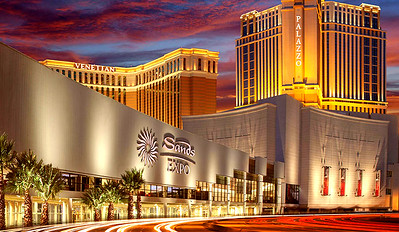
VICI is paying $4 billion in cash for the Venetian, its sister resort, the Palazzo, and the Sands Expo and Convention Center, in partnership with Apollo Global Management. Apollo is the private equity giant whose 2008 leveraged buyout of Harrah’s Entertainment in partnership with TPG Capital also figured prominently in the Caesars bankruptcy.

On top of the $4 billion, Apollo is paying $2.25 billion for the companies that operate the three properties, with a little help from LVS, which is kicking in $1.2 billion of the purchase price in the form of a term loan. LVS also is guaranteeing the $250 million in annual rent Apollo will pay VICI for the operating rights through 2023, subject to certain EBITDAR benchmarks.

Far and away it’s a great deal for VICI, which is adding two more marquee Strip resorts to an already glittering portfolio, encompassing more than 7,000 top-end rooms and suites, 225,000 square feet of gaming space, some of the best dining and shopping in Las Vegas and 2.3 million square feet of prime meetings and exhibitions space, not to mention the MGS Sphere, an 18,000-seat entertainment showplace slated to open in 2023 at a cost of $1.7 billion.

Apollo, for its part, is back on the Strip for relatively small money, considering the quality of the LVS assets, the capstone of an aggressive acquisitions strategy that currently includes Toronto-listed Great Canadian Gaming, Italian sports betting group Gamenet, a stake in IGT’s Lottomatica and a pending investment in Sazka, Europe’s largest lottery operator.

Of course, Apollo is not an operator. But as Alex van Hoek, an Apollo partner, astutely observed, “The Venetian has one of the best teams in the industry, focused on delivering world-class customer service and experiences.”

Then again, they’re buying into a destination that’s been devastated by the pandemic like no other in the country. But here, too, van Hoek was duly optimistic. The deal “underscores our conviction in a strong recovery for Las Vegas as vaccines usher in a reopening of leisure and travel in the United States and across the world,” he said.

A conviction, or so it appears, that LVS and its late founder, Sheldon Adelson, may not have entirely shared, at least not as operators who generated 87 percent of their $13.74 billion in 2019 revenues from Macau and Singapore, and which even in pandemic-battered 2020 were good for 79.5 percent.

“Anyone who thinks Sheldon Adelson wasn’t a brilliant businessman didn’t know him,” said Brendan Bussmann, director of government affairs for industry consultants Global Market Advisors. “He was one of the most brilliant people I ever met. Maybe he saw something.”

What we know is that the reinvention of Las Vegas as a fabulously successful convention destination where far more money gets made outside its casinos than in them𑁋that was the product of a singular vision, embodied in the Venetian, the convention-focused resort that came along on the cusp of the new century to rewrite the book on what you could charge for hotel rooms in the desert.

In Bussmann’s words, “It changed the landscape of Las Vegas.”

But in 2020, as the pandemic raged and business travel ground to a halt, and Adelson slowly succumbed to the cancer that claimed him earlier this year at the age of 87, the vision was in tatters.

Was it the second quarter’s $985 million operating loss? The third-quarter loss of $610 million announced just days before the Bloomberg story broke?

Clearly something had changed. It may have come from the board of directors, perhaps from longtime President and COO Rob Goldstein, Adelson’s hand-picked No. 2 and ultimately his successor as chairman and CEO.

More likely, it was Adelson.

“There is a belief that Sheldon was behind this,” a Wall Street analyst close to the deal told GGB News.

He had to be thinking at that point about the impending transfer of his controlling 57 percent of the stock to his wife, 75-year-old Miriam Adelson, a physician and noted philanthropist with priorities that no doubt have little in common with the business of running gambling halls.

“It was one of those where an opportunity to get a check like that doesn’t come around too often,” said Bussmann. “And when most of your money is coming from Asia anyway, it makes sense.”

The company will now be known simply as “Sands.”

“Clearly, it’s a positive,” said the analyst quoted above. “You’re seeing cap rates on a par with where they were pre-pandemic, looking back at the sale of the Bellagio and MGM and deals like that. But lower interest rates clearly affected this. And it was seller financing, REIT financing. And you have to wonder about the reluctance of the banks right now to finance these deals. There are some folks who are just hesitant. It’s unclear, was this unique in nature? I mean, how many players out there want to pay these multiples? And it’s unclear in what it says about the timing of (a Strip) recovery and what the recovery will look like.”

Obviously, there’s a lot LVS can do with $6.25 billion, like pay down some of its $3.97 billion in debt, restart the payment of dividends, a cause near and dear to Adelson’s heart, recycle capital back into its higher ROI holdings in Macau and Singapore, where some $5.5 billion worth of redevelopment and expansion work is under way and where the company’s invaluable Macau concession is set to expire in 18 months.

And it was reported that Adelson and his yacht shared a marina with Crown Resorts majority owner James Packer on New Year’s Eve, although there is some question the two met at that time. Could Sands be a player in picking up the pieces when all the regulatory investigations of Crown’s corporate misdeeds are completed in Australia? After all Sands has a pipeline to Chinese gamblers that runs through Macau, and now has the financial wherewithal to perhaps pick up the Australian operator at fire-sale prices, including a brand new integrated resort in Sydney.

There are potentially greener pastures in the U.S. as well, New York City and Texas (the company has been lobbying heavily in both states) being at the top of the list.

“It’s hard to say. Clearly, they’re interested in Texas and New York,” the analyst who spoke with GGB News said. “But isn’t Las Vegas the key to any regional strategy? Their intentions in the online space are sketchy as well. And I don’t think the markets believe they needed to do this to fund expansion in Asia. There are just so many unknowns. More questions than answers.”

Perhaps all that’s certain, as Bussmann put it, is this:

“I know it’s a cliché, but it really is the end of an era.”

DraftKings Predicts $1 Billion in Revenue for 2021

DraftKings’ earnings report, unveiled February 26, missed Wall Street expectations, but revenue exceeded forecasts.

DraftKings said it lost 69 cents per share for the three months ending December 31; forecasters predicted 49 cents a share. Revenues of $322 million jumped up 145.8 percent from the prior year; analysts predicted $232 million.

“We come away encouraged by DraftKings strong execution and attribute the fourth quarter upside to lower-than-anticipated promotion costs and daily fantasy sports, a product that is still growing and where DraftKings may have captured some additional share,” said J.P. Morgan gaming analyst Daniel Politzer.

In a conference call, DraftKings CEO Jason Robins said the return of sports in the post-Covid-19 period accelerated fan involvement with the company. The results led DraftKings to raise its 2021 revenue forecast from as much as $850 million to a cool $1 billion.

“We think the results were broadly encouraging as DraftKings continues to command a dominant share in sports betting and has increased its relevance in iCasino, as evidenced by the quick ramp in Pennsylvania,” said Deutsche Bank gaming analyst Carlo Santarelli.

DraftKings said it raised its estimate after Michigan and Virginia introduced mobile sports betting. The forecast also does not factor in additional legalization in states. The latter made 12 states where DraftKings operates.

New Yorkers Want More Gaming, Poll Shows

A new poll shows voters in pandemic-stricken New York may be getting behind the idea of full-scale casino gambling in New York City.

Global Strategy Group, a nationally known public relations and research firm, conducted the survey of 800 registered voters on behalf of the metropolitan area’s two racinos, Resorts World New York City, located at Aqueduct racetrack in Queens, and Empire City Yonkers, owned by Las Vegas-based MGM Resorts International.

Subjects were selected from communities surrounding the two properties, and 70 percent of them said they favor permitting the racinos, currently limited to video lottery terminals and electronic table games, to expand with live tables and house-banked slot machines.

Only 16 percent of respondents opposed the idea, and the rest were undecided.

But that changed significantly when the state’s Covid-related fiscal crisis was added to the equation.

“The billion dollars in license fees and millions per year in additional tax revenue and protection of jobs in hard-hit communities in Yonkers and the Bronx effectively persuade undecided voters to tilt toward supporting the proposal,” according to Global Strategies’ analysis of the results.

“Once voters hear about these benefits, undecided voters move in favor of the proposal and support climbs to 83 percent statewide.”

Bringing casinos to New York City has been a subject of heated discussion ever since the state’s voters back in 2013 approved the licensing of up to seven privately owned casinos. Under the legislation that followed, four licenses were allocated upstate and the remaining three, presumably slated for New York City, put on hold until 2023.

Lobbying to scrap the moratorium has been ongoing ever since, but without the backing of Governor Andrew Cuomo. The massive costs of the pandemic could change that, however, and the pressure to award the licenses sooner rather than later may prove politically and fiscally irresistible.

A recent study completed for the New York Gaming Commission estimates that granting full-scale gaming to the Aqueduct and Yonkers racinos and licensing a new casino in Manhattan could generate between $420 million and $630 million in new tax revenue for the state.

The Global Strategy Group respondents initially were given a choice of methods for closing a state budget deficit that could hit $14.5 billion this year alone. Revenue from expanded gambling came out on top at 56 percent, while only 7 percent chose tax increases and 6 percent favored spending cuts.

A large number of respondents, however, upwards of one-third, passed on the question.

Expanding sports betting to the internet is another hot-button issue. Currently, it’s limited to in-person wagering at the upstate casinos, one of which is owned by Resorts World, and the state’s Indian casinos, and Cuomo had opposed moving beyond that absent an amendment to the state Constitution.

He’s since relented in the face of the Covid crisis, but he favors a single lottery-style operator, a position that has the administration at odds with mobile betting advocates in the Legislature who favor an open market populated by multiple licensees.

Asked about whether mobile sports betting should be operated just by the four upstate commercial casinos or extended to Resorts World Aqueduct and Empire City, 51 percent of the Global Strategy poll respondents said they favored including the two racinos, 21 percent said they favored including only the upstate casinos and 28 percent stated no preference.

Convention-Less January Falls Hard on the Vegas Strip

The pandemic-battered Las Vegas Strip saw January gaming revenues fall more than 43 percent year on year.

Win totaled $321.5 million versus $572.2 million last January, according to figures compiled by the Nevada Gaming Control Board.

The drop was hardly surprising measured against one of the last pre-Covid months of 2020 and one that benefited from the massive New Year’s celebrations that were absent from the Strip in 2021 and the Consumer Electronics Show, a major January event that went virtual this year.

January is normally Las Vegas’ second-best convention month of the year. Some 717,000 attendees converged on the city last January, compared to something like zero in January 2021. Year on year, the difference was a 63.5 percent decline in total visitation for the month and a midweek hotel occupancy rate of just 22.5 percent compared with 83.8 percent last January. Total occupancy was 48.3 percent.

The impacts on gaming revenue drove down statewide win for the month by 26.6 percent to $761.8 million, compared to $1.03 billion a year ago.

The Las Vegas Strip accounted for 90.9 percent of the total decline.

The response from analysts, however, generally were upbeat.

Macquarie Securities Chad Beynon said Las Vegas operators had set a “slightly more cautious” tone for January in their fourth quarter earnings reports, in light of which he views January’s results as “a small positive.”

“Obviously, a lack of non-gaming spending will continue to impair near-term results, but it is encouraging to see (a) healthy (and) spending visitor.”

Joe Greff with J.P. Morgan said, “Given improved vaccination rates, slower Covid-19 new case trends, and increased capacity limits, we think this month likely marks the bottom of Las Vegas Strip gaming revenue.”

On the plus side, Northern Nevada outperformed last year’s numbers. Washoe County, which includes the Reno market, posted a 4.9 percent revenue increase. Lake Tahoe was up 23.7 percent, and several rural parts of the state also showed double-digit increases.

“Locals and in drive-in domestic play are recording increases to gaming win during the pandemic,” Control Board Senior Research Analyst Michael Lawton explained. “This month, in addition to the player mix, these markets also benefited from a favorable calendar, which included two additional weekend days.”

Another plus was sports betting, which blew away January 2020’s statewide win by 159.9 percent. The state’s books made $52.4 million on wagers totaling $645.5 million, a 28.8 increase over January 2020 and the second-highest monthly volume on record. Mobile bets accounted for $363.5 million of it, good for 56.2 percent.

In related news, officials of the Las Vegas Convention and Visitors Authority are scheduled to meet this week to discuss a plan to enlist social media influencers to lure tourists and business travelers back to Las Vegas.

The plan, developed by R&R Partners, the advertising and PR agency for the LVCVA, was laid out on March 1 at a meeting of the authority’s marketing committee, according to a report in the Las Vegas Review Journal.

R&R has proposed a spate of initiatives that include inviting influencers to town this coming weekend for a first-hand look at how the city is gearing up for the demand most observers believe is steadily building for the entertainment and leisure activities Las Vegas is famous for.

In turn, it’s expected those influencers will be sharing the story with their millions of followers.

The plan also calls for enlisting a variety of social media and multimedia platforms to document the preparations and safety protocols being undertaken in advance of the expected return of business travel, commencing with the World of Concrete trade show slated for June, a major event on the Vegas show calendar that drew upwards of 50,000 attendees prior to the pandemic. These will be distributed via video and other channels to meeting planners and convention promoters with an eye on the progress of bookings in the next couple of months and the limitations of the authority’s advertising budget, which has been cut more than 30 percent from 2019’s.

“Taking all those factors into account, if the feeling is shared that we need to punch the accelerator, we’re ready to punch it.” said R&R President Billy Vassiliadis.

Supporting these efforts is an R&R initiative dubbed “Fast Forward,” an addition to the LVCVA’s “Vegas Means Business” conventions web site that will look to leverage the city’s image as a destination of “perpetual reinvention” and “constant redefinition” centered around the new $987 million Las Vegas Convention Center expansion.

Fast Forward will be filled with stories, photographs, maps and videos showing all of the city’s convention and meeting facilities for planners to use in their pitches to businesses, organizations and trade associations that may be undecided about the safety of in-person gatherings.

As part of these efforts, the authority is partnering with Caesars Entertainment in April to bring meeting planners to see the new Convention Center and tour a number of new or revamped meetings venues developed by Caesars, Wynn Resorts and MGM Resorts International.

“As we move forward with the vaccine rollout, we expect the second half of the year will start to ramp back up,” said Stephanie Glanzer, chief sales officer for MGM. “I’m a strong believer that we’ll come out of this, and Las Vegas will remain the top destination.”

Statistics published by the LVCVA show that the between last March and this January, the city’s convention attendance, historically the lifeblood of the Strip’s hotel and non-gaming revenues, stood at zero or was too small to count.

Last month, though, the state of Nevada began to ease capacity restrictions on businesses and public gatherings, and they’re set to loosen them again this month, with businesses operating at 35 percent capacity moving up to 50 percent and public gatherings moving up to 250 people or 50 percent capacity.

In the meantime, smaller gatherings that fall below the LVCVA’s radar remain in full swing. MGM, for one, has hosted more than 200 of them in recent months.

“Small groups are happening and will continue to happen,” Glanzer said. “We do believe large gatherings will come soon after (Covid case) numbers get better.”

LVCVA spokeswoman Lori Nelson-Kraft concurred. “Our convention calendar is robust throughout the remainder of this year and into 2022 pending the fluid state of the pandemic,” she said. “Many of our trade shows and meetings are booked years in advance, and even throughout the pandemic, shows have stayed in touch with us, excited to return to in-person events and meetings when it’s appropriate to reconvene.”

In that respect, all eyes are now turned to the arrival of World of Concrete, slated for June 7-10, the first big show to come back since the pandemic hit and the first that will use the Convention Center’s expanded, and as yet unoccupied, West Hall.

As LVCVA President and CEO Steve Hill put It, “It’s like a horse race and we’re at the starting gate.”

Wynn Invests in Studio, Podcast Firm

Wynn Resorts is the next in a growing list of casino resorts entering the sports broadcast business. The company, which will invest $3.5 million in podcast firm Blue Wire, will build a studio in the Wynn Las Vegas’ lobby. Expected to be ready for the 2021 NFL season, the studio will help promote Wynn’s online gaming division, WynnBET.

Blue Wire will gather journalists, influential fans, former jocks and commentators from social media with a goal of providing sports talk emanating from the studio, including dozens of podcasts worldwide. Blue Wire has several on-air personalities as part of the partnership, according to the Las Vegas Review-Journal.

Blue Wire hosts over 140 shows on sports. The hope is that on site studios will help get tourists to enter the property.

Wynn receives equity and advertising, according to The Verge.

The deal runs for three years. Elsewhere:

  • In January, BetMGM struck a deal with the Athletic to produce podcasts.
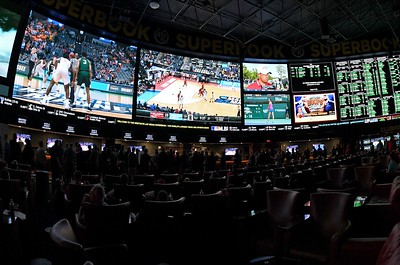
  • ESPN Radio and KOMP 92.3-FM broadcast live from Westgate SuperBook.
  • The sportsbook at Circa hosts the Vegas Stats and Information Network—VSiN—with live broadcasts and podcasts.
  • Penn National Gaming has acquired Barstool Sports, a broadcast and podcast operation.

Caesars Also Interested in Texas Casinos

Up until now Las Vegas Sands Corp. has been largely driving the train of lobbyists trying to persuade the Texas legislature to jump on board a proposal to authorize several casino’s for the Lone Star state’s largest cities.

Add to that interest the largest gaming company in the U.S., Caesars Entertainment. But CEO Tom Reeg isn’t betting the farm on that happening.

During the company’s quarterly conference call recent he commented, “That’s another state where I’m highly confident there will be significant public interest.” He added, “Can you get through the legislature there with all the various competing bodies? The odds would be against you, given what’s happened there historically.”

A bill was filed last week to give Texas’s pro sports teams a chance to vie for sports betting licenses. As in all gaming proposals, this one would require a two-thirds vote of both chambers of the legislature and then a vote of the people to amend the state constitution.

The most prominent opponent to this idea is Lt. Governor Dan Patrick, who controls much of what comes before the Senate, where he is presiding officer. Several weeks ago he told a radio talk show, “The teams and casinos trying to push sports betting say they could generate $150 million a year by their numbers. That’s a lot of money. But it pays for half a day of our yearly budget.”

Texas’s budget took a big hit from the pandemic, and it could use more funding. It is facing a budget shortfall of $4.6 billion. That could be even worse after the recent winter storm cut power to the state.

Texas has 13 professional sports teams, many college teams and the second largest state population, so sports betting would be BIG business in the state.

Bally’s OK’d To Buy Lake Tahoe Resort

The Nevada Gaming Control Board has approved the acquisition of Lake Tahoe’s MontBleu Resort Casino & Spa by Bally’s Corp.

The purchase dates back to last April, when Rhode Island-based Bally’s, then known as Twin River Worldwide Holdings, agreed to a $155 million package deal with Eldorado Resorts for MontBleu and Eldorado Shreveport Resort and Casino in Louisiana.

Subsequent deals worth $255 million for two Eldorado-owned casinos in Kansas City, Missouri, Vicksburg, Mississippi, and Caesars Entertainment’s Bally’s Atlantic City have boosted the Bally’s portfolio to 11 casinos in seven states “one of the best regional footprints in gaming,” CEO George Papanier told the Control Board during last week’s hearing.

He said the company will build on a data base of 14 million customers to enhance its cross-marketing through a “comprehensive national rebranding initiative” and the addition of “a one-card solution to our brick-and-mortar and interactive technology.”

In November, Bally’s acquired sports betting platform Bet.Works and concluded a partnership with Sinclair Broadcasting, home to 21 regional sports networks, as the springboards for an expansion into the online market.

“Not only are we a gaming company,” Chairman Soo Kim told the Control Board, “and starting to become a technology company, but we are also a media company through our parentship with Sinclair and the rights to integrate their content.”

PA Casinos Confident of Revenue Return

Pennsylvania casino operators expressed optimism about a return of revenues in the wake of the Covid-19 crisis, and warned of cannibalization of industry revenues by unlicensed so-called “skill” gaming machines proliferating around the state.

The comments came at a meeting of the Pennsylvania House Gaming Oversight Committee into the effects of the Covid-19 pandemic on the state’s casino industry.

Adrian King, an attorney representing the state’s casino licensees, told the committee that the state’s gaming industry will “return itself to the position that it has been since its inception, which is, quite frankly, a tax-generating machine. The best in the United States. A golden goose.” Representatives of Cordish Companies heralded the two casinos the operator opened in the midst of the pandemic, and other operators looked forward to new Category 4 satellite casinos opening within the next year.

According to CDC Gaming Reports, Joe Billhimer, the executive vice president in charge of Cordish’s two Pennsylvania properties, heralded the combined $850 million the company spent to open Live! Casino Pittsburgh in December and Live! Casino & Hotel Philadelphia last month. Dan Ihm, vice president and general manager of Hollywood Casino at Penn National Race Course, outlined that operator’s plan to spend $170 million on two satellite facilities.

Kathy McCracken, GM of Wind Creek Bethlehem, said the company will break ground this year on a $155 million hotel, and Parx Casino CEO Eric Hauser outlined a plan for a $70 million satellite facility in Shippensburg.

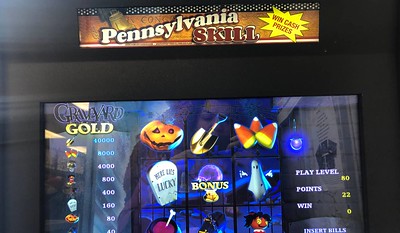
However, the operators cited lawmakers’ plans to consider legalizing and licensing up to 20,000 facilities offering unregistered so-called “skill games,” as well as VGTs at bars and restaurants, as a threat to the continued health of the industry.

“It would send a bad message to the business community and beyond if the legislators consider changing the rules on operators at this point,” Billhimer told the panel.

“Customers and revenues do not grow merely because we want them to or because there’s another form of gambling available,” Rivers Pittsburgh General Manager Bud Green told the committee “We’re at a saturation point in Pennsylvania, and other forms of distributed gaming will cannibalize your (tax) revenues.”

Horner Named Hard Rock VP of Legal, General Counsel

Hard Rock Hotel & Casino Atlantic City has announced the appointment of Nanette L. Horner as the company’s vice president of legal and general counsel. Horner has 25 years of experience as a gaming attorney, and previously worked with Empire Resorts and the Pennsylvania Gaming Control Board (PGCB).

“Hard Rock Atlantic City is proud to welcome Nanette to our team,” Hard Rock President Joe Lupo said in a statement. “Her extensive background in the gaming industry and deep roots in the community make her an invaluable asset to our team.”

Horner served as deputy chief counsel assigned to the Bureau of Licensing for the PGCB. She was then named the board’s first director of the Office of Compulsive and Problem Gambling. She also serves on the advisory board for the National Council on Problem Gambling. After PGCB, Horner held several positions at Empire, including executive vice president and chief compliance officer.

A Rutgers University graduate, Horner was an adjunct professor at the Rutgers-Camden School of Law for seven years.

Throughout her career, she has earned recognition on New York City and state’s “Responsible 100” list and received the Corporate and Social Responsibility Special Award for Outstanding Achievement in Promoting Workforce Diversity & Ethical Gaming Operations.

Connecticut Governor, Mohegans Cut Sports Betting Deal

Connecticut Governor Ned Lamont and the Mohegan Tribe, owners of Mohegan Sun, have made a separate deal on sports betting that excludes the Mashantucket Pequots, owners of Foxwoods Resorts Casino. The Pequots now are fuming that they’ve been disrespected.

Under the terms of the deal jointly announced March 2 by Lamont and Mohegan Tribal Chairman James Gessner Jr., Indian casinos and the Connecticut Lottery would be able to offer sportsbooks and mobile sports betting. The Pequots were not mentioned in the announcement.

Lamont stated: “This agreement represents months of hard work and dedication to getting a deal that’s best for the residents of Connecticut and moves our state forward when it comes to the future of gaming.”

His office added that the agreement would “would generate tens of millions of dollars in new revenue for the state, while keeping Connecticut competitive with gaming changes currently being offered or considered in neighboring states.”

Gessner said, “This path will allow Connecticut to generate tax revenues from sports and online gaming that are competitive with other states and help keep Connecticut with those states when it comes to growing our economy and benefiting the state budget.” The chairman added, “We’re thankful to Governor Lamont and his team, and we look forward to continued work with the General Assembly as this process continues.”

Any agreement between the tribes and the state would need to be approved in the legislature, whose current session ends June 9.

Untouched would be the agreement whereby the tribes pay 25 percent of their slots revenue to the state in revenue sharing.

Reportedly the Pequots balked at the 20 percent tax on online gaming. They want an 18 percent rate. Under the announced deal, there would be a 13.75 percent tax on sports bets placed at the two casinos, online or in person.

According to the tribe, the difference in percentage rates amounts to up to $1 million per year and is considered a crucial point.

Pequot Chairman Rodney Butler lashed out at the separate agreement: “After months of closed-door negotiations, it’s offensive that Governor Lamont would announce an agreement with only one of the two Tribal Nations that have been a party to the negotiations, despite full knowledge that both sovereign Nations are needed to implement any agreement.”

He added, “We have participated in these discussions in good faith and consider today’s events extremely disrespectful in terms of process and substance. ”

Butler was seemingly caught off-guard by the joint announcement, because he had told reporters previously: “When there is an announcement, I think you’ll be pleased with the ability of the governor’s staff to negotiate — probably shocked in some areas,” Butler said. “What do I say about a good deal — nobody leaves happy, right? And so it’s been painful. But again, it’s the right thing to do for this market to finally move this across the finish line.”

A spokesman for the governor commented, “Sports wagering is allowed at the casinos and online through the casinos under this agreement. We’re hopeful the Mashantucket Pequot Tribe joins this agreement.”

House Speaker Matt Ritter expressed hopes for a quick deal so the state can start collecting taxes on sports betting. “These parties are so close that it is frustrating that we’re not there yet,” he said.

Under the terms of the Lamont- Gessner agreement: the CT Lottery would be able to run 15 retail sports betting locations, and an online sportsbook. It could offer sub-licenses for some locations to Sportech. Licenses would be for ten years, with five-year extensions.

It also calls for retail sports betting in the state’s two largest cities, Hartford and Bridgeport. Since Hartford is 27 miles from Springfield, Massachusetts, home of the MGM Springfield casino, it could be seen as direct threat to that casino, and might bring about a lawsuit from MGM. That company has done its best to stick a wrench in the efforts of Connecticut to expand gaming by fighting the tribes’ efforts to build a satellite casino in East Windsor.

Sportech, which is the state’s licensed off-track betting vendor and operates 14 OTB locations, two Bobby V’s Restaurant & Sports Bar venues and online, mobile and phone wagering, has threatened litigation upon being left out. It declared, “One year ago, Governor Lamont stated he would seek a fair resolution regarding gaming expansion involving existing gaming operators that ‘must be designed to avoid and withstand endless legal challenges.’ Regretfully, the Governor’s announcement this afternoon, that principally excludes Sportech from expanded gaming, leaves us with little option but to pursue legal recourse on behalf of our 400 Connecticut employees.”

Of tribal casino payments and the CT Lottery, the Lottery is more profitable. In 2019 the Lottery paid $370 million to the state, compared $255 million for the gaming tribes. The Lottery started to pass the casinos in 2013, when it generated $312 million. More than half of its revenue comes from the sale of instant scratchers.

The 49-year-old CT Lottery (Connecticut Lottery Corp.) has made it through several years of scandals and false steps that have led many to question its competence. This included the resignation of former president and CEO Anne Noble, in 2016, after the discovery of fraud by retailers. The next year, under an interim CEO, an error in a drawing required doing it over again, which led to more resignations.

At a recent appearance before law makers, new CEO Greg Smith made a pitch for the Lottery to enable sales through apps and computers.

He has the support of the governor’s administration, which recruited a former NBC Sports and ESPN executive, Rob Simmelkjaer a year ago as board chairman to help the lottery revamp its image in anticipation of its possible participation in sports betting. His previous experience had included researching the relationship between wagering and sports.

Lamont’s Chief of Staff, Paul Mounds, recently told lawmakers, “We knew that there’s definitely going to be discussions, as it deals with an expanded role of the lottery, and we wanted to identify someone who brings instant credibility.”

Mounds made that statement before Lamont’s deal with the Mohegans was announced, which made his other comment, also made before that announcement, even more telling: “We knew that we wanted as an administration to pursue sports gaming. And we needed more people with expertise, to be able to provide insight and guidance of the industry to the administration. As it deals with the lottery, I’m not at the position to speak about any particular role.”

After an informational appearance by Smith and Simmelkjaer before lawmakers, Rep. Maria Horn, co-chairwoman of the public safety committee, commented “I had a lot of conversations following the informational forum that we conducted, in which legislators told me, ‘Well, they seem on top of their game.’ This seems like a different kind of operation.”

Simmelkjaer praises Smith, who was hired in 2018 to right the Lottery’s ship: “It really started with Greg and his ability to sort of steady the ship to instill more confidence and more stability in the executive staff of the lottery,” he told CT Mirror. “It has taken a little bit of time, obviously, but he had already started the process of creating more stability, better morale, and a stronger sense of mission for the staff of the lottery.” He added, “I came in in May and immediately got to work on putting some of these issues behind us.”

Simmelkjaer was recruited directly by Governor Lamont after they met at a Chili’s Grill & Bar.

One who is skeptical about sharing sports betting with the Lottery is Senator Cathy Osten, who sponsored the bill that would give sports betting exclusively to the tribes. She says the Lottery needs to demonstrate that it is competently-led again.

Washington Takes First Step Toward Sportsbook Licensing

The Washington State Gambling Commission (WSGC) last week unveiled “pre-licensing qualification rules,” for sports betting applications. The commission vote to adopt the rules was unanimous.

The rules spell out what materials that applicants will need to have before they begin the application process. Currently the commission is confined to collecting information from interested parties. It is not yet approving operators.

WSGC Director Dave Trujillo commented, “This rule is not the end-all, be-all for sports wagering. “But it starts the process.”

More than a year ago the legislature legalized sports betting for the state’s tribal casinos only. Currently five of the 29 federally-recognized tribes are negotiating new tribal state gaming compacts. Twenty-two tribes operate 29 casinos in the state.

The rules were adopted after hearing comments from several possible operators, including DraftKings, FanDuel and William Hill, plus several gaming tribes.

Kansas Sports Betting Bill Advances To Senate

After approving six amendments the Kansas Senate Committee on Federal and State Affairs advanced to the Senate floor SB 84, which would legalize land-based and mobile sports betting in the state.

One of the amendments changed the tax rate on gross gaming revenue from retail sportsbooks from 7.5 percent to 5.5 percent, with 2 percent going to problem gambling services. Casinos in the state already contribute 2 percent of revenue to problem gambling programs. Additionally, the tax rate on mobile sportsbooks was changed from 10 percent to 8 percent.

The committee also accommodated animal rights lobbyists who asked for more stringent language regarding wagering on greyhound racing. Also, the committee allowed individual establishments to have three instead of two online operators. Digital operators would have to be associated with brick-and-mortar casinos or professional sports franchises. Another amendment would allow the Kansas Lottery to regulate sports wagering but would prevent it from offering its own sports wagering platform.

The committee denied a request from representatives of convenience stores asking for sports wagering kiosks to be located at the state’s 1,200 lottery retailers statewide.

A similar sports betting bill, HB 2199, currently is being considered in the House Committee on Federal and State Affairs. It provides for a 14 percent tax rate for retail sportsbooks and a 20 percent rate for mobile wagering.

One or both bills could pass; if both do, they will go to a committee to be reconciled before heading to Governor Laura Kelly’s desk. No dates have been set for hearing the bills. The legislature will adjourn on May 15.

Maryland Lawmakers Consider Sports Betting Bills

Lawmakers in Maryland are considering bills to launch the sports betting business approved by voters in November’s elections. Among the latest is a measure introduced by House of Delegates Speaker Adrienne A. Jones that was the subject of House committee hearing last week.

Jones’ bill would create licenses for in-person betting at the state’s six casinos, and 10 licenses for online/mobile sportsbooks at websites, which would be open to competitive bidding. At a hearing of the House Gaming Oversight Committee, betting advocates called for more than 10 online sportsbooks. John Pappas of advocacy group iDEA Growth called for as many as 24 mobile sportsbook licenses.

“More competition will bring more revenue to the state,” said Pappas, according to the Baltimore Sun.

Jason Tosches, director of regulatory affairs and market development for theScore, a sportsbook operator licensed in multiple states, added that competition ultimately leads to better benefits for sports bettors. “By creating competition, you continually force operators to innovate,” said Tosches.

The operators noted in testimony that the vast majority of current sports betting revenue has been through mobile wagering, but retail books in casinos are still required to compete with nearby states.

“We view this as more of an amenity because our competitor states have it,” said P.J. Hogan, a lobbyist representing the Rocky Gap Casino in Western Maryland, according to the Sun.

The state Senate is still working on drafting its version of sports betting legislation.

Barstool Sportsbook to Enter Illinois Soon

If plans come to fruition, Illinois would be the third online presence for Barstool Sportsbook after Pennsylvania and Michigan, states where it ranked third in handle among as many as a dozen mobile choices.

Barstool also operates bricks-and-mortar sportsbooks in Colorado and Indiana. Look for expansion through its ownership by Penn National Gaming, which owns 36 percent of Barstool. With the Hollywood properties in Aurora and Joliet and Ameristar in Indiana, Barstool could boast three locations not far from Chicago.

To date, five companies have an online operation in Illinois, including DraftKings, BetRivers, FanDuel, PointsBet and William Hill. The combined handle in December exceeded $491 million, fourth highest in the country, according to Sports Handle.

Barstool hopes to be ready to accept bets by the NCAA tournament later this month. The company could trigger more online entrants in Illinois, such as BetMGM and Unibet. With FanDuel tied to the Fairmount Park, BetMGM could partner with Par-A-Dice Casino, owned by Boyd Gaming. Unibet might well tie in to Argosy Casino.

BetRivers.com and PlaySugarHouse.com Weekend Betting Preview

WEEKEND BETTING PREVIEW AT BETRIVERS.COM AND PLAYSUGARHOUSE.COM

Read below for a detailed breakdown of how BetRivers.com and PlaySugarHouse.com bettors are wagering on the weekend’s biggest sporting events.

COLLEGE BASKETBALL: We’re roughly 48 hours away from Selection Sunday, and No. 1 Gonzaga (+250 NCAA Champion) enters the weekend having already locked up an automatic bid thanks to winning the WCC Tournament. The Bulldogs are expected to be the No.1 overall seed in the NCAA Tournament, and are currently backed by 38.3% of the total NCAA Tournament handle, over three times the handle of Michigan (+450 NCAA Champion), the second-most-backed team to win the championship. 

Michigan (+175 Big Ten) begin their quest for a Big Ten Tournament championship today against Maryland, and the Maize and Blue are currently backed by a league-best 33% of Big Ten bets and the second-largest percentage of Big Ten handle (25.3%), trailing just Iowa (+425 Big Ten), backed by 26.2% of the total handle to win the Big Ten.

Baylor (+275 NCAA Champion), with the second shortest odds to cut down the nets at the end of March Madness, are backed by the third-most NCAA Tournament bets (10%) and handle (9.8%). The Bears are heavy favorites to win the conference tournament, but take on red-hot Oklahoma State in the Big 12 Tournament semifinals on Friday night. Baylor (-167 Big 12) is currently backed by an overwhelming 63% of the bets and 64% of the handle to win the Big 12 Tournament.

PLAYERS CHAMPIONSHIP: Sergio Garcia (+500 to win) finished seven strokes under par on Thursday at TPC Sawgrass to take a two-stroke lead over Brian Harman (+1600 to win) after the opening round. Garcia entered the event +6600 to win, while Harman entered +16500. Garcia’s strong start led to a big win thanks to a $125 wager on Garcia Round 1 Leader (+700) for a payout of $1,000. Corey Connors (+1800 to win), one of the five most wagered-on golfers in the field, sits just three shots back of the lead after the first round. Collin Morikawa (+1600 to win), the most wagered-on golfer in the field, shot a one-under on Thursday, finishing the first round six shots out of first place. The largest current tournament bet is a $2,750 wager on Morikawa (+2000) that will payout $57,750 with a comeback win.

NBA: The NBA is back from its All-Star break, and although the Lakers remain the favorite to win the Western Conference (+120) and NBA Finals (+260), LeBron & Co. sit 3.5 games out of first place, behind the Utah Jazz (+400 West) and red-hot Phoenix Suns (+1200 West), winners of nine of ten. In the East, the Brooklyn Nets (+130 East) entered the All-Star Break having won nine of ten and sit just a half game back of the Philadelphia 76ers (+500 East). The Nets enter the second half of the season backed by 37% of the Eastern Conference bets and 31% of the Eastern Conference handle, while the Sixers are backed by 23% of Eastern Conference bets and 30% of Eastern Conference handle. The Nets host the Pistons on Saturday while the 76ers face the Wizards on Friday and the Spurs on Sunday.

BOXING: Roman “Choclatito” Gonzalez (50-2, +138 ML) looks to reclaim his WBC and The Ring super flyweight title when he faces Juan Francisco Estrada (41-3, -167 ML) in the main event on Saturday night. Gonzalez, who famously won 48 straight fights until a September 2017 loss, has won four straight fights, three by way of KO or TKO. Estrada captured the WBC and The Ring titles in April 2019, and has successfully defended the belts twice both by way of TKO. The public doesn’t expect the fight to go the distance, with 94% of the O/U bets and 97% of O/U handle backing Under 10.5 (+205). Estrada is currently backed by 82% of the ML handle, but Choclatito is backed by 63% of ML bets. The largest current bet is a $5,400 wager on Estrada ML (-167) that will pay out $8,640 if the champion defeats the challenger.

Best of iGaming Awards Announced by iGamingPlayer.com

iGamingPlayer.com has announced the establishment of the “Best of iGaming” Awards to honor the top websites, bet selections and products from the online sports betting industry, online casinos and online poker rooms.

What makes the Best of iGaming Awards stand out from the others? The winners will be chosen by the players themselves, not by industry suppliers, operators or experts. Because the players are the real experts. They’re the ones using the products and services designed by so-called experts.

“A ‘Best of iGaming’ Award from iGamingPlayer.com tells the world that players love what you’re doing, and have recognized the quality of your products and services,” says Becky Kingman-Gros, president and COO of iGamingPlayer.com. “So nominate your site, products or services, and see how the players respond.”

The Best of iGaming Awards will be presented at the end of 2021 by iGamingPlayer.com, the leading licensed affiliate marketing site, delivering quality players to online casinos, poker rooms and sports betting websites.

The nomination process will run from March 15 to June 15. Seven finalists in each category will be announced on July 1. Then visitors to the iGamingPlayer.com website can begin voting for the best of the best. The voting will continue through October 31, with the winners to be announced on December 1 at a site to be determined.

The Categories:

  • Best Casino (Overall)
  • Best Casino (Tables)
  • Best Casino (Slots)
  • Best Video Poker Department
  • Best Slot Game
  • Best Table Game
  • Best Live-Dealer Sites
  • Best Video Poker Game
  • Best Bonuses/Promotions
  • Best Poker Site
  • Best Sportsbook
  • Best Bet Selection (Sportsbooks)
  • Best Betting Platform (Sportsbooks)
  • Best Sportsbetting Promos
  • Best Casino App
  • Best Sports Betting App
  • Best Poker App
  • Best Payment System
  • Best Customer Service
  • Best Responsible Gaming Program

Kingman-Gros says the Best of iGaming Awards will quickly join the most prestigious honors in the field, as all eyes are on interactive options for sports betting and iGaming.

“The visitors to the iGamingPlayer.com website arrive seeking the best bets, the most comprehensive platform, and quality customer service,” she says. “These are the experts at online sports betting and iGaming, so the products they identify will be recognized as the leaders in their fields.”

A badge will be issued by iGamingPlayer.com to the winners of each category. Those badges can be displayed on the websites of the winners.

About iGamingPlayer
iGamingPlayer.com was one of the first legal licensed affiliate marketing sites in the U.S., receiving its first license in New Jersey in 2014. The site is now licensed and operating in nine different states and jurisdictions in North America. The content-rich website directs players to the websites of its affiliate partners. For more information about how to get involved in the iGamingPlayer.com affiliate program, contact Becky Kingman-Gros at Bkingros@casinoconnection.com.


Canadian Officials Question Online Casino Plan

Members of the Legislative Assembly (MLAs) of Canada’s Prince Edward Island (PEI) continue to criticize a governmental proposal to approve online gaming. Critics of the plan say it would raise revenues on the backs “of our most vulnerable.”

The attacks are bipartisan, or rather tri-partisan, since they come from all three parties in the legislature. The cabinet authorized the Atlantic Lotto web-based casino on December 22. The lottery company has been pitching it to all four Atlantic provinces for many years. Finally, last year New Brunswick relented, and PEI followed suit.

Leading the criticism was opposition leader Peter Bevan-Baker. Defending the program was Premier Dennis King, who said legal iGaming would bring those with gambling problems into a regulated, safer market.

“If Islanders are choosing to do gaming online, they should do it through a platform that’s regulated through Atlantic Lottery Corp.,” King declared, “and not some of these bootleg operations.”

When residents patronize illegal websites, said King, “all the resources and taxes go offshore. We can’t figure out who’s actually using the service and how we can help them if they need it.”

MLA Sidney MacEwen said he, too, is concerned about people dealing with addiction. “That’s a real concern for me. It’s a concern for my constituents… if I’m a problem gambler and I’ve taken the steps to quit, and all of a sudden, I see it right in front of me, (I can) just log back in, just log back in,” he said.

Some critics have asked that the government reconsider the plan and its potential impacts.

Toronto Star to Fund Reporting With Online Casino

Torstar Corp., owner of Canada’s Toronto Star and other newspapers, has announced it will launch an online casino to help pay for its journalism.

In a news release the corporation announced, “We are excited at the prospect of participating in a regulated online Ontario gaming market with a made-in-Ontario product.”

The century-old Torstar was recently purchased by an investment company, Nordstar, whose co-owner Paul Rivett commented, “Doing this as part of Torstar will help support the growth and expansion of quality community-based journalism.”

Residents of Ontario spend about $500 million on online gaming, said the company, with the great majority of it going to outside the country to illegal offshore websites.

Currently only the provincial government can offer online gaming, but lawmakers have been discussing allowing other licensed companies to also offer it.

Rivett added, “We want to ensure the new marketplace is well represented with a Canadian, Ontario-based gaming brand so that more of our players’ entertainment dollars stay in our province.”

Torstar has hired a gaming industry consultant to help it determine if such a venture would be profitable.

Richmond Hill city councilor Tom Muench is skeptical that this is a good role for a newspaper. He commented in an email to CBC News: “I think it’s fair to say that if a casino was to pop up in communities say six months ago, many local Torstar-owned papers would write a concerned local story.” He added, “If the federal government propped up the media with government tax dollars and now with casinos, how do we assure a strong independent news and media industry?”

Will Legal Marijuana Take Atlantic City Higher?

In November, New Jersey joined the small but growing fraternity of U.S. states whose voters have legalized recreational marijuana.

In the near term, don’t expect Atlantic City casinos to open pot dispensaries or allow joints to be smoked at blackjack tables. In fact, legal pot may have little direct influence on the state’s casino industry. But it could provide a competitive edge—as long as legal pot is unavailable in adjoining jurisdictions.

Casinos must comply with federal regulations that still prohibit recreational pot, observed Jane F. Bokunewicz of the Lloyd D. Levenson Institute of Gaming, Hospitality & Tourism, based at New Jersey’s Stockton University. “So we can expect casinos to be extremely cautious with respect to the use of cannabis products on their property.”

And as for sales, well, they’re definitely out, said Bill Pascrell III, lobbyist with the Princeton Public Affairs Group. “There’s no chance in hell that there’ll be retail sales on casino properties,” he told GGB News. “At all.”

Yet legalization could have a tangential effect, attracting more tourists from states where pot isn’t readily available. That means you, Pennsylvania and New York.

“Atlantic City will see visitors from states where cannabis is still illegal, and that in itself remains a draw for some tourists,” said Morgan Fox, media relations director of the National Cannabis Industry Association.

And while casinos likely won’t host pot pubs and the like, Atlantic City could establish a “cannabis quarter” in town that would grow, cultivate and sell various forms of marijuana.

“This can be proximate to casinos,” Pascrell said, and may spark an economic mini-boom in itself.

The tax revenue, potential jobs and tourism opportunities of a cultivation center would benefit the city, Fox added, “It makes as much sense as any other retail establishment that benefits from foot traffic and tourism.”

Cultivation labs are both discreet and unobtrusive, added Rob Mejia, adjunct faculty in Cannabis Studies at Stockton University and president of Our Community Harvest: A Cannabis Education Company.

What the law will still prohibit is partaking of marijuana in public, whether in a park, on the beach or on a casino floor.

“There are so many prohibitions about where you can’t use marijuana, that the short answer for now is in a private home,” Pascrell said.

“You can’t do it on any state or federal-owned site, including housing. Things like consumption lounges are down the road,” Mejia said.

Over time, as recreational cannabis becomes more mainstream, it could be approved for use within a casino environment, just like smoking and alcohol use, in designated public spaces or private hotel rooms.

“It’s more a smoking issue than anything else—you can never smoke (pot) on a casino floor,” said Pascrell. “But you can smoke a joint outside a property and go into the casino. And with edibles, you can’t tell. There’s no way to monitor that unless you’re obnoxious.”

Another important wrinkle in all this: New Jersey might say cannabis is legal, but the feds still say otherwise—at least until Congress approves a federal law legalizing marijuana.

For a number of years, federal law enforcement hasn’t focused on cannabis providers in states where it’s legal, even after former Attorney General Jeff Sessions rescinded an Obama-era memo that said the feds wouldn’t enforce the federal law, Fox said. “But the fact that cannabis is still illegal federally continues to make some companies reticent to do business with regulated cannabis businesses, particularly large companies in regulated industries like gaming.”

On February 24, Stockton held a webinar, “Destination Cannabis,” on integrating recreational cannabis into the hospitality and tourism industry. Speakers said it would take time to evolve.

“I really got the message that education is critical to getting this off the ground safely and responsibly,” said Michael Chait, president of the Greater Atlantic City Chamber of Commerce, which co-sponsored the webinar with the Levenson Institute.

Survey Says… Edibles Preferred

A 2019 survey conducted by the California Cannabis Tourism Association found that 29 percent of the leisure travel audience wants the ability to access cannabis-related services, said the association’s Brian Applegarth, who was a panelist at the Stockton webinar. The survey also said that smoking weed was the least preferred way to ingest cannabis, after edibles, drinkables and topicals.

“Partnerships will be important for destination events,” Applegarth said. “Having some hospitality training and knowing what visitors want will be important. You have to know your audience.”

And while edibles are most popular, they bring their own challenges, as most of the people creating them have no food background.

“Trained chefs could do more,” according to David Yusefzadeh, a Massachusetts-based chef and food designer and CEO/founder of Cloud Creamery, a cannabis ice cream company. “But you have to have patience. You’ll be dealing with the government for permits, and they’re also learning,”

Whether in joint form, edible form or as a drink, marijuana can impair the senses, as does alcohol. And that means casino employees need to be able to single out those whose impairment reaches dangerous levels.

“Casino employees already know how to deal with erratic behavior associated with alcohol,” Fox said. “The association of cannabis with violent, aggressive or otherwise dangerous behavior is far, far less than that of alcohol. It will not be difficult to incorporate education to identify signs of cannabis overconsumption into existing employee training programs.”

Research and experience has led businesses that serve alcohol to gauge levels of impairment and the point at which a customer should be denied service. “Until mainstream knowledge and experience of cannabis products catches up, it will be incredibly difficult for operators to define impairment related to the use of cannabis products and educate employees in how to best serve and protect customers under the influence of these products,” Bokunewicz said.

Various cannabis products deliver different levels of the psychoactive compound THC, she added, from a very mild or negligible dose to quite a strong dose. “Until assessment and action tools are developed for operators, we can expect them to be wary of openly accepting the use of cannabis products, especially those high in THC, at their facilities,” she said.

At this point, only 11 states have legalized recreational pot. Thirty-five have medical marijuana programs. The remaining states adhere to the federal law, under which marijuana is still classified as a Schedule 1 drug.

Post-Covid, Will Smoking Return to NJ Casinos?

As a result of restrictions imposed to deal with the Covid-19 pandemic, New Jersey has prohibited smoking on casino floors. But as restrictions ease, will the practice be allowed to resume? Maybe not.


According to the advocacy group Americans for Nonsmokers Rights (AFNR), more and more casinos nationwide have chosen to be smoke-free. At least 160 sovereign tribal gaming venues have implemented 100 percent smoke-free policies during Covid-19. And 23 states require commercial casinos to be smoke-free indoors.

“Smoke-free casinos are becoming more inevitable every day,” Bronson Frick, director of advocacy for the group, told GGB News. “Casinos in New Jersey as well as in neighboring Pennsylvania have adapted to operating smoke-free properties during this pandemic. And for the first time ever, gaming workers have not been forced to breathe in secondhand smoke, which everyone knows leads to serious health repercussions such as cancer.”

Claims that smoke-free policies hurt revenues are no longer accurate, Frick said. “It’s well past time for casinos to operate like a modern industry and permanently adopt smoke-free indoor policies that protect workers and guests and attract new customers who prefer a smoke-free environment. Just consider that among young adults, 90 percent are nonsmokers.”

That figure may not include marijuana smokers, some of whom think smoking cannabis is not as damaging as smoking tobacco. But Frick said smoke-free policies should cover all forms of use: tobacco, vaping and marijuana.

“The policy approach we recommend is to take it outside—shift smoking to outdoor patios off the gaming floors and food and beverage areas.”