Author: Casino Connection Staff

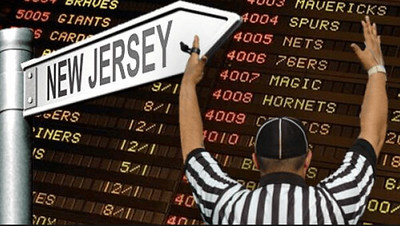
NJ Books Discourage Withdrawals, Face Fines

Some sportsbooks in New Jersey have requested customers not take cash out of their accounts, to the displeasure of the New Jersey Division of Gaming Enforcement (DGE). In a letter on the DGE website, Director David Rebuck said that urging consumers not to withdrawal funds violates several state rules, and he’s threatening fines.

Rebuck said a few sportsbooks offered cash bonuses to customers who cancelled requests, but did not reveal their names or how many complaints the agency received, according to the Associated Press.

“Patrons who request withdrawals have the right to receive their funds as expeditiously as possible,” he wrote. “Operators should clearly understand that the Division will take regulatory action and impose civil penalties whenever patrons are improperly encouraged or incentivized to rescind their withdrawal.”

Rebuck did not specify a timeline. But a DGE investigation found some customers did not get access to their money for two weeks, according to Legal Sports Report.

New Jersey, the national leader in sports betting, has the strictest regulatory system in the nation, a model for others to follow. Yet Stop Predatory Gambling accused the state attorney general’s office of “moral hypocrisy” for litigating against the opioid industry, but taking a more lenient approach to sportsbooks.

“This is a naked attempt by online gambling operators to get citizens to lose more money,” said Les Bernal, the group’s director. “What New Jersey should be doing is suspending and fining them, not just some long-winded letter threatening future action.”

Under New Jersey rules, operators can take a non-specific time frame to ensure bettors identity and investigate fraud or money laundering. Once those issues are resolved, customers should receive money immediately, officials say.

“In the period between a withdrawal request and the actual release of funds to the customer, patrons reported contact from providers encouraging or enticing them to reverse the withdrawal request and wager the funds,” Rebuck wrote. “It has been reported by some patrons that they were even offered bonus money to reverse a pending withdrawal request.”

Keith Whyte, the executive director of the National Council on Problem Gambling, wants the DGE to name names.

“There are some serious responsible gambling concerns here,” Whyte said. “Especially around the solicitation of play during arbitrarily extended withdrawal times.” One possible option, Whyte said, was a self-exclusion button for reverse withdrawals.

Richard Schwartz, president of Rush Street Interactive, which operates PlaySugarhouse.com in New Jersey, said the company approved more than 75 percent of online player cash-out requests during the fourth quarter of last year. “Our automated payout system protects our players by enabling them to cash out quickly so they don’t otherwise cancel their payout requests and continue gambling with their winnings,” he said.

Whyte suggests three policy solutions that could correct the problem. First, players should be able to lock in a withdrawal, in effect preventing it from being reversed. Second, oblige sportsbooks to add responsible gambling messaging if reverse withdrawals are permitted. Third, players who reverse multiple withdrawals should be flagged as high-risk.

In Atlantic City, Drone Racing the Latest Sport for Bettors

When casinos and most athletic competition shut down last March due to the coronavirus pandemic, gamblers bet on obscure and little-known sports, among them table tennis. The success of such wagers proved that bettors will bet on just about everything.

The latest competition to prove the adage is drone racing. That’s right. In these contests, the peculiar remote-controlled devices that deliver packages to your doorstep race under the guided hand of pilots. There’s even a Drone Racing League. New Jersey, Colorado, New Hampshire, New Jersey, Tennessee and West Virginia accept bets on league competitions.

“Fan engagement is so much broader than we had ever anticipated,” said Johnny Avello, director of race and sportsbook for DraftKings, which has a partnership with the league. “The Drone Racing League is the epitome of next-generation sports entertainment with an entirely new fan base for DraftKings to reach.”

Avello describes the sport as Formula 1 meets Twitch. “Races are true spectacles straight out of a sci-fi movie and we’re proud to make history with the first-ever regulated wagering on aerial sports as an official partner.”

DraftKings introduces traditional sports bettors to drone race wagering as a new sport while also familiarizing the tech-savvy DRL audiences with the DraftKings’ mobile sportsbook, Avello said. The partnership gives the sportsbook exclusive marketing rights around sports betting and branding integrations, including custom gates, through the culmination of the current 2020 DRL Allianz World Championship season.

For the current DRL Allianz World Championship Season, pilots race digital versions of custom DRL Racer4 drones remotely on the DRL SIM, a true-to-life drone racing video game available on Xbox and Steam, said DRL President Rachel Jacobson. “Because the physics are one-to-one in the game, the level of the competition mirrors live racing.”

DraftKings first introduced customers to the drone league with a free-to-play pool during the 2020 DRL season before betting was available. The pool saw 30 percent more entries in its opening week than DraftKings averages for new sport launches. These pools on DraftKings have attracted over 175,000 total entries to date.

“The opportunity for us to elevate our engagement through all forms of gaming and gambling will only increase as mobile betting becomes more adopted across the country,” Jacobson said.

To date, DraftKings offers two bets: winning pilot and heat winner, with prop bets in the near future as the league gains betting converts, Avello said.

New Jersey permits wagers on both virtual and live racing. “Live racing is considered an athletic event and virtual falls under esports,” said Lee Moore, a spokesman for the Division of Gaming Enforcement.

Other rules in New Jersey for drone racing: no wagering will be permitted on races taped in advance or produced for television. For virtual events, competitors under 18 will not be permitted to pilot. If live, a majority of pilots must be 18 or older.

The drone races so far with DraftKings are virtual. “But we see engagement potential be it physical or virtual. We have witnessed that engagement objective with NASCAR, iRacing, Call of Duty, Rocket League, League of Legends and Overwatch,” Avello said.

DRL’s Level 14 race took place in the U.S. Air Force Boneyard map, inspired by the world’s largest military aircraft maintenance facility. “Our Level 15 and 16 races will take place at virtual replicas of the Biosphere, the world’s largest indoor ecological center in Oracle, Arizona, and Allianz Riviera, an iconic arena in Nice, France,” said Jacobson, who spent 21 years with the NBA in various roles.

With live racing, unlike traditional motorsports that feature flat tracks with consistent left turns, drones zip down buildings, spin through gates and soar through tunnels, weaving around LED-lit aerial racecourses, said Jacobson, who’s all for racing in her home state of New Jersey.

“Now that DRL is taking bets there, racing drones around casinos in Atlantic City would be amazing, and we’d be happy to speak with any venue owners there looking to bring a bold, visually spectacular sporting event, watched by tens of millions of fans in 50 countries on top sports networks around the world.”

DRL integrates both virtual and live drone racing events. “We’ve hosted the DRL SIM Tryouts, annual, player-to-pilot esports tournaments, then pit our pilots against each other through live courses in the Allianz World Championship Season,” Jacobson said. “While we’ve doubled down on the esports side of our business this season due to Covid, moving forward, you’ll see us continuing to bridge simulated-racing competition with physical live drone racing events.”

Pilot Phluxy said he discovered drone racing at a time when he wanted to make cool videos. On YouTube, he found First Person View freestyle content, which highlights cinematic shots from drones that are both fast and flexible. “So I took flying lessons through the DRL Simulator.”

The Simulator features 54-missions teaching basic flying lessons so you can fly without worrying about breaking anything if you crash, Phluxy said. “I found a great community of drone racers and started getting into it competitively. I tried out during the annual esports tournament in 2018 and in 2019, which earned a contract to compete.”

For the past two seasons, Phluxy has been racing against the world’s best drone pilots. “While racing physical drones throughout my rookie year in the 2019 DRL Allianz World Championship Season, I made podium three times and even won an entire level.”

The DRL Simulator is a perfect 1:1 replica of what it’s like racing a real drone, he said. “When flying a physical course, we wear a pair of goggles that live stream a video feed from a camera mounted on the drone, so we see what the drone sees. It almost feels like you’re leaving your body and racing through a real-life video game. The only difference is with the Simulator game, the drones don’t collide. During live races, crashes are part of the fun.”

MGM Opts Out of Entain Bidding

In the end, MGM Resorts International folded its cards rather than up its bid for British company Entain PLC.

After Entain rejected MGM’s initial offer of $11 billion, the Las Vegas-based casino company said January 19 it would not revise the offer, according to the Las Vegas Review-Journal. Entain’s board said the MGM offer undervalued the company’s worth. Entain, formerly GVC Holdings, operates several European online gaming brands including bwin, partypoker, Ladbrokes Coral and FoxyBingo.

“We interpret the news as Entain’s shareholders wanting much more than what MGM was willing to offer,” said J.P. Morgan analyst Joseph Greff in a note to investors.

The purchase would have given MGM complete ownership of Roar Digital—which oversees BetMGM sportsbooks—instead of the 50 percent share it now holds; Entain owns the other half. MGM and Entain expect to continue their partnership searching for ways to grow BetMGM.

BetMGM “remains a key priority,” MGM CEO Bill Hornbuckle said in a release. “We believe that BetMGM has established itself as a top-three leader in its markets and we remain committed to working with Entain to ensure its strong momentum continues as it expects to be operational in 20 states by the end of 2021.”

Last week, BetMGM announced plans to open a sportsbook at Nationals Park in Washington D.C., home of Major League Baseball’s Washington Nationals.

MGM’s decision to pull back its proposal came as a surprise; earlier this month, the company’s largest shareholder, IAC/InterActiveCorp., sent a letter of support saying it would back the deal with an investment of up to $1 billion.

“The opportunity was clearly supported by MGM’s largest shareholder and provided clear strategic benefits,” Jefferies gaming analyst David Katz said of the surprising move.

Macquarie analyst Chad Beynon said the decision to walk away reflects a desire to maintain a healthy balance sheet.

Still, in its release, MGM indicated it will still explore other opportunities should they come along.

Said Greff, “We think it is tough, though not impossible, for someone else to buy Entain given so much potential equity value coming from a 50/50 joint venture with MGM.”

Meanwhile, the CEO position at iGaming supplier Entain didn’t stay vacant for long. When Shay Segev surprisingly resigned earlier this month, in the midst of a major bid for the company from MGM Resorts, the search did not extend far from the company leadership structure. Jette Nygaard-Andersen, previously a director of Entain and an experienced hand at iGaming, was quickly named to succeed Segev, who will stay at Entain through July before joining sports-streamig company DAZN.

Barry Gibson, Enatain’s chairman, called Nygaard-Andersen a “ready made CEO.” She is just the fourth woman lead an FTSE 100 company.

A Danish national, Nygaard-Andersen headed up the esports team, Astralis, and had senior leadership roles at Modern Times Group, a Swedish media firm that also has e-sports interests.

“I am very excited to have the opportunity of continuing the extraordinary momentum that Entain has in its existing markets, as well as helping it enter new regulated markets and reach new audiences,” she said.

MGM Resorts last week said it would not make another bid for Entain once its $11 billion offer was rejected (see “iGaming” in this week’s GGB News). As a result, it’s expected that Nygaard-Andersen efforts will be to grow Entain, which has a 50-50 partnership on BetMGM, the online wagering arm of the casino giant.

In other Entain news, turnabout is fair play as shareholders with an 11 percent stake in Enlabs rejected Entain’s bid to purchase the company saying the offer undervalued Enlabs.

Entain offered Enlabs SEK 2.8 billion (US$336.3 million).

While the Enlab board recommended the deal, shareholders like Alta Fox Capital Management and Topline Capital opposed the offer, according to Gambling Insider.

SPAC Could Launch Fertitta onto NYSE

A blank check firm could help launch an IPO for Texas billionaire Tilman Fertitta, who wants to take his Golden Nugget and Landry’s companies onto the New York Stock Exchange (NYSE).

The special purpose acquisition company (SPAC) Fast Acquisition Corp., could reportedly help Fertitta raise $1 billion to help retire some debt he has accrued during the pandemic keeping his casinos and restaurant chains afloat. Fast Acquisition already is listed on the NYSE.

According to Bloomberg, the SPAC is in talks with Fertitta. The new combined entity could be valued as much as $7 billion, an unnamed source told Bloomberg. Landry’s operates hundreds of restaurants, under names that include Morton’s steakhouse, McCormick & Schmick’s and Bubba Gump Shrimp Co.

Although neither Golden Nugget nor Landry’s commented, Fertitta has previously admitted he is working on bringing an IPO to the NYSE.

Fertitta, 63, is reportedly worth about $6 billion.

Fast Acquisition in 2019 raised $200 million, and said it was looking at acquisitions in the dining, hospitality and related sectors.

After Adelson: What’s Next for Las Vegas Sands?

Sheldon Adelson has left the Las Vegas Sands Corp. with a strategic legacy of unrivaled success and a management team more than capable of carrying it forward through uncertain times.

This isn’t expected to change, not internally, despite the multibillionaire’s death after a long battle with lymphatic cancer. Adelson died January 11 at the age of 87.

Looking outward, though, the world that Adelson’s global resort powerhouse was accustomed to bestriding like a titan has changed𑁋vastly.

In that larger world, Sheldon Adelson was best known as the most prolific individual contributor to political campaigns in U.S. history. He was bent on leveraging his fortune—he was 19th on the Forbes 400 at last count—to advance the cause of Zionism, champion conservative causes and keep unions out of his Las Vegas hotels.

While most analysts believe that Adelson’s death will not fundamentally change the strategy and direction of Las Vegas Sands, it couldn’t have come at a less opportune time. The worst pandemic in a century has shaken the foundations of the conventions and meetings trade upon which Adelson erected his gaming empire more than 20 years ago.

Bear in mind, the notion that you could sell hotel rooms on the Las Vegas Strip for hundreds of dollars a night was unheard-of as late as the 1990s. Then Adelson proved you could. His was an extraordinary vision𑁋as he once put in his colorful way, he had the “adventure gene.” Its power was such that the rest of corporate gaming in Las Vegas reinvented itself around it.

Now, it’s in tatters.

That Adelson was terribly ill was known publicly since before the Covid-19 crisis hit at the end of 2019. It’s not known how involved he was with day-to-day operations when Bloomberg revealed 10 months later that LVS was looking to get out from under the wreckage.

The story, which had it that talks were under way to sell the Venetian and Palazzo on the Strip, came less than a week after LVS reported an operating loss of $610 million for the three months that ended September 30 on net revenues that were down 82 percent to $586 million compared to the same period in 2019.

This was a huge improvement over the $985 million in red ink reported in the second quarter. But clearly something had changed. It may have come from the board of directors, perhaps from longtime President and COO Rob Goldstein, Adelson’s hand-picked No. 2 and his successor as interim chairman and CEO. Quite possibly it came from Adelson himself. In any case, as far as LVS is concerned, the Strip𑁋which constitutes a mere 15 percent of the company’s total revenues and 10 percent of EBITDA𑁋has become expendable.

As Alidad Tash, a Macau-based consultant and former advisor to LVS, put it at the time: “Adelson has three areas he makes money, Las Vegas, Singapore and Macau. If I have to sell an asset to pay for supporting the other two, if I have three horses and I need to kill one to feed the other two, it would be Las Vegas. It just doesn’t generate as much.”

The $6 billion Bloomberg said the company was asking, including the Sands Expo and Convention Center, implied at the time a not unreasonable multiple of 12 times’ 2019 pre-tax earnings. In other words, a deal could make sense.

But for who?

As Bank of America stated at the time, “The pool of potential buyers who can write US$6 billion cheques for any real estate asset is typically small, but post-Covid, and with negative earnings (currently), we think it is even smaller and is coupled with much less favorable capital markets.”

One scenario advanced by Hong Kong-based brokerage Sanford Bernstein, among others, is a sale-leaseback with a gaming REIT, and it was reported early in November that both MGM Growth Properties and Caesars’ VICI Properties were crunching the numbers. Since then, reports indicate that Hard Rock International and Tilman Fertitta’s Golden Nugget have also initiated conversations.

“We are not sure how much interest from strategic buyers there might be given the high absolute price, other reportedly available assets on the Strip, and the unique positioning of the properties,” said Morgan Stanley’s Thomas Allen. “However, given the potential for a cheaper OpCo price through a sale-leaseback and historically relatively steady EBITDA, there could be other interest.”

As Adelson was fond of saying, “A billion dollars here, a billion dollars there, pretty soon you’re talking about real money.”

There’s a lot LVS could do with six of those billions, like pay down some of its $3.97 billion in debt, restart the payment of dividends, which were suspended due to the pandemic, and recycle capital back into its higher ROI holdings in Macau and Singapore, where some $5.5 billion worth of redevelopment and expansion work is under way and where the company’s invaluable Macau concession is set to expire in 18 months.

There are potentially greener pastures in the U.S., New York City being at the top of the list. The company is lobbying heavily there and has hired former New York Governor David Patterson to lead the campaign. LVS has hired lobbyist in Texas, always a potentially profitable location. And the company has also eyed an Atlanta casino as a game changer.

LVS also was viewed as a leading contender to develop a destination resort in Japan. Adelson famously said he’d spend $10 billion to get in, then the Covid crisis changed everything, and LVS announced last year that it was backing out, citing regulatory concerns. Yet, Japan remains one of the most potentially lucrative gaming markets in the world, and it’s been suggested the company could revisit its stance should conditions evolve more to its liking or Tokyo emerge as a candidate for a casino.

Then again, it’s possible LVS may prefer to exit the U.S. entirely with a view to rebranding itself as a “Chinese” company headquartered in Macau, where it makes most of its money.

Up until last year, LVS, like Wynn Resorts and MGM Resorts International, were able to fall back on a billion Chinese with an unquenchable appetite for gambling. But in the Covid era that, too, is less bankable than it used to be. For years, China’s government has been wrestling with chronic capital flight. Five years ago, the Communist Party launched a nationwide crackdown from which Macau’s vaunted VIP market has never fully recovered. Last year, Beijing called out gambling-related currency outflows as a national security risk, raising troubling questions about how much of it will be tolerated going forward for the sake of enriching a handful of junketeers and six casino companies, three of them owned by Americans.

“It’s definitely not fun to be in a ‘storm eye,’ positioned amidst a variety of disputes/tensions, both domestic and foreign,” as one Macau observer told industry news site Inside Asian Gaming. “What used to be ‘advantages’ during normal times can be harmful when the circumstances have changed substantially.”

There could be something of this underlying the about-face that surfaced in a recent Bloomberg News report that LVS was in discussions with potential partners to enter the sports betting business, a move that would take the company down the internet gambling path which Adelson so vehemently opposed.

Nineteen states now offer sports betting and six more have approved it and are awaiting implementation. Experts see the market approaching $10 billion over the next five years.

“There’s a real pressure to make sure you’re in position to cash in on the pretty substantial thirst for online gambling,” Chris Grove, an analyst at Eilers & Krejcik Gaming, told Bloomberg. “A lot of companies were caught by surprise by the kind of explosion it’s received.”

The news was enough to bump LVS’ stock 2.8 percent on the New York Stock Exchange.

How much of this is guided by Goldstein’s hand is not known. As it stands, the company’s future still resides with the 57 percent of the stock controlled by Adelson’s wife, 75-year-old Miriam Adelson, and several family trusts. Adelson’s son-in-law, Patrick Dumont, is the company’s chief financial officer and has reportedly been groomed to take over the top spot when Goldstein decides to call it a career.

Miriam’s influence has never been far from the scene, showing up both in Adelson’s views on Middle East politics and his opposition to internet gambling. An Israeli-born physician specializing in addiction and substance abuse, she and Adelson met after one of Adelson’s adopted sons by his first marriage died of a drug overdose.

She and her husband were the largest donors to Trump’s presidential campaign, a largesse that was rewarded during Trump’s first year in office when he reversed decades of U.S. policy and moved the U.S. embassy in Israel from Tel Aviv to Jerusalem.

In 2018, Trump bestowed on Miriam the Presidential Medal of Freedom.

The question now becomes how much influence she will seek to wield over the future of Las Vegas Sands.

PA, NJ Gaming Revenues Down

The Covid-19 pandemic dealt blows to casino revenue and gaming tax in both Pennsylvania and New Jersey for 2020, but thanks to online gaming revenues, the impact on gaming revenue taxes in New Jersey was nullified.

According to a report in the Philadelphia Inquirer, gaming revenues in Pennsylvania dropped from $6.1 billion in 2019 to just $2.7 billion in 2020. In New Jersey, revenues were $2.9 billion last year, down from $3.5 billion the previous year. However, the tax impact on the two states was vastly different, owing mainly to the contributions of online gaming in New Jersey.

Pennsylvania’s state and local revenue tax collected was $317 million last year, down 22 percent, whereas New Jersey, gaming tax revenue actually increased slightly over 2019—$302.7 million an increase of $2.3 million over 2019. The difference was online gaming revenue, with internet wagers taxed at a higher rate than casino revenue.

“Without the increase in online revenue, there is no telling how much weaker a position the entire industry would be in right now,” Dustin Gouker, lead analyst for PlayPennsylvania.com, said in a statement.

Chicago Considers Casino Locations

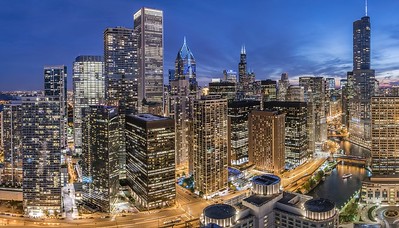
According to a Request for Information issued last year regarding a Chicago casino, most respondents prefer an accessible location in or near downtown, measuring 10 acres to 25 acres, with room for a casino, hotel, parking, entertainment and more.

One of the top contenders is the Lakeside Center at McCormick Place. It wasn’t used much before Covid-19 hit, and offers huge open spaces casinos desire, plus parking, hotels next door and a lakefront setting. A spokeswoman for the agency that operates McCormick Place said it has had no recent discussions with officials regarding a casino.

The 78 in the South Loop features 62 open acres running southwest from Roosevelt Road and Clark Street. A source said, “This is clearly the site that would make the most revenue for the city and the state. You can build a product there that’s interesting and cool.” It has highway access but developers have a deal with the University of Illinois to put a tech research center there.

The 30-acre Chicago Tribune’s Freedom Center printing plant at 777 West Chicago Avenue offers the benefit of enough space to build a temporary casino while the permanent facility is being built. It would require improved access, and it would have to be bought out from Nexstar Media Group, which leases it to the Tribune.

The Palmer House hotel which is in foreclosure and temporarily closed due to Covid-19 also has been mentioned. A developer said, “We think infill sites are more interesting, that are walkable and part of the urban fabric and would ultimately become a bigger entertainment destination because it needs to be about more than gambling.”

Navy Pier offers the advantages of being government-owned and located where a lot of activity already takes place, with crowds and attractions built-in. However, observers said access issues could deter high rollers and conventioneers. Some have suggested Navy Pier as an option for temporary gambling, but a source said, “There’s not a lot of evidence that temporary sites work well.”

Among the outliers is the state’s Thompson Center has been proposed. A source said, “There would be so much irony there to put it right in the seat of government.” The old Michael Reese Hospital site is surrounded by a community that’s strongly opposed to a casino. The One Central development planned near Soldier Field is too far away, insiders said. The Old Post Office once was a strategic choice but now it’s making money as corporate offices. Finally, some sites on the Southeast Side have been mentioned but they’re too far removed from downtown.

Mayor Lori Lightfoot said she plans to issue a Request for Proposals during the first quarter.

Hard Rock Takes Steps to Open London Casino

Hard Rock International last week announced it has acquired a casino premise license that would allow it to build and open a casino in the U.K.

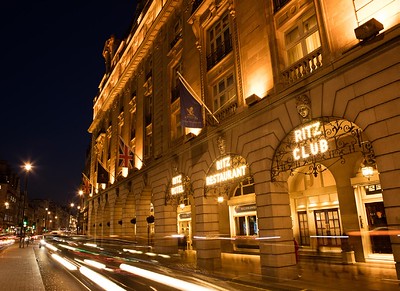
It purchased the license from the Ritz Club in London. This would continue the company’s aggressive entrée into the international market at global gateway cities such as New York, Paris, Madrid, etc.

Jim Allen, chairman of Hard Rock International, commented, “We look forward to expanding our brand offerings and bringing our hospitality, gaming and entertainment to the birthplace of Hard Rock.” Hard Rock is also pursuing the rights to operating an integrated resort in Japan.

The Ritz Club closed last March due to the coronavirus lockdown and announced recently that it wouldn’t be reopening.

Nebraska Lawmaker Flips On Gaming

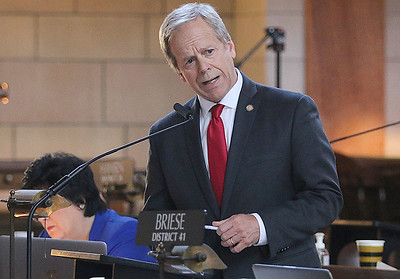
Nebraska state Senator Tom Briese, formerly an opponent of expanded gaming, recently filed three bills that would expedite opening and regulating racinos, targeted for early 2022.

“For the last several years, on the floor of the legislature, I have opposed the expansion of casino gaming in our great state,” said Briese, chairman of the General Affairs Committee. “In November the voters spoke and they really delivered a mandate, and that mandate is that they want to see casinos at racetracks, and they want the property tax relief that that will provide.

“I believe this is legislation that respects the will of an overwhelming majority of the people while leaving in place reasonable restrictions to prevent some of the abuses we see in other states.” He said his responsibility as a lawmaker is to make sure the will of the voters is addressed quickly.

The proposed LB 560 would require wagers to be placed on-site by bettors at least age 21. It also would prohibit credit cards from being used to place bets. Operators who apply for a gaming license would be required to undergo a background check.

Briese’s LB 561 would combine the Nebraska Gaming Commission, established by the November ballot measure, with the state racing commission. “We felt that would be a more efficient use of state resources, and there’s going to be some efficiency involved in doing that,” Briese said.

Additionally, LB 365 would direct $225,000 from the General Fund to the Gaming Commission in order to hire experts and cover other related costs.

Nebraska Horsemen’s Benevolent and Protective Association Executive Vice President Lynne McNally said technology already is available to restrict betting at the casino to designated areas. “If this bill passes, we will be installing what’s called geofencing. So you could place bets within the racetrack enclosure itself, meaning our facility, but you would not be able to place a bet outside of the facility,” she said.

Pat Loontjer, executive director of the anti-gambling organization Gambling with the Good Life said the group appreciates Briese’s efforts to establish regulations before the new racinos have even opened. “He is trying to minimize the damage which is what we’re all about, as far as how it’s going to affect the public and businesses and youth and everything else,” she said.

MGM Grand Detroit Poker Room Reopens

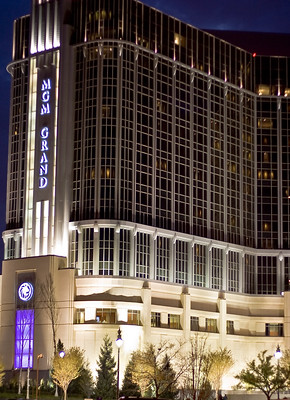
Poker rooms at Detroit’s three casinos will be allowed to reopen after being closed for more than nine months due to Covid-19. The rooms will operate under health and safety rules in compliance with orders from the Michigan Gaming Control Board. Detroit’s casinos were shut down in mid-March and briefly reopened in August, but without poker. When the casinos reopened in December, poker was not offered.

MGM Grand Detroit’s poker room reopened Friday, January 22. Manager of Poker Operations Keith Frankel sent an email to customers noting, “It is my pleasure to announce the reopening of the MGM Grand Detroit Poker Room. We’re keeping the health and safety of our guests and employees at the forefront of all we do.”

The room is open 24/7. New limits include only five available tables arranged with social distancing, and up to eight players per table, down from the usual nine. Plexiglass dividers separate players’ seats. Masks are mandatory. Cards and chips are frequently sanitized. Only cash games are offered and no tournaments will be held. Also, there is no food and beverage service.

In September, MotorCity and Greektown casinos announced their poker rooms were reopening. However, the Michigan Gaming Control Board had not approved safety plans so the rooms remained closed until now. MotorCity is the most popular poker room in Detroit among dedicated players. A spokesman for Greektown said it plans to reopen its poker room in the next “few weeks.”

Judge Supports Flynt’s Lawsuit Vs. California

A federal judge has slapped down California’s attempt to dismiss a lawsuit by Hustler publisher and casino owner Larry Flynt, who is challenging the old law that was adopted to prevent mobsters from owning casinos in the Golden State.

The judge indicated that the law, which is aimed at organized crime, in additional to being “archaic,” might also be unconstitutional since it seeks to regulate interstate commerce.

The porn publisher owns two casinos in Southern California, the Hustler Casino and Larry Flynt’s Lucky Lady Casino, and seeks to buy casino interests in other states, which is where California’s old law comes into effect. The law prevents state residents from owning or investing in casinos in other states.

Flynt argues that the law was intended to hobble mob figures, who are no longer a major factor in Nevada casinos. He adds that the law prevents him from profiting from the national boom in gaming. He also notes that the state has issued exemptions to the rule in the past.

U.S. District Judge John Mendez’s 12-page ruling said the 1986 law should be examined as to its unconstitutionality. He wrote, “Defendants again fail to illustrate how these allegations are insufficient as a matter of law.” He added, “This could, theoretically, prohibit a licensee from forming a business partnership, unrelated to gambling, with a person who has interests in a casino.”

The 2016 lawsuit followed a fine by the state on one of Flynt’s investors that forced him to divest himself of interest in an out-of-state casino. Initially Mendez ruled that the lawsuit had been filed past the statute of limitations, however the 9th Circuit Court of Appeals ordered him to rehear the case.

Covid Wasn’t Kind to New York Casinos

Gaming revenue at New York’s four commercial casinos fell by almost 60 percent in 2020.

The result isn’t surprising, considering the properties were closed by state order for nearly six months last year and then opened at severely reduced capacities.

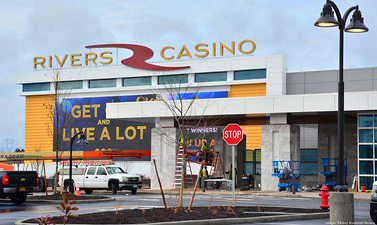
Resorts World Catskills in Monticello led the commercial market with $87 million in revenue, a decline of 58 percent compared with 2019. Rivers Casino & Resort in Schenectady was second with $76.1 million. Rivers also suffered the least on a percentage basis, recording a decline of 55 percent. Del Lago Resort and Casino in the Finger Lakes region reported $61.2 million in revenue, down 61 percent. Tioga Downs Casino near Binghamton in the Southern Tier reported $35.5 million, down 57 percent.

The state’s nine racinos saw combined revenue drop 62 percent.

Sisolak Envisions a New, Different Nevada

The Covid-19 crisis has been a wake-up call for Nevada Governor Steve Sisolak.

In his annual State of the State address, Sisolak outlined plans aimed at diversifying Nevada’s economy away from a near-total dependence on gaming-related tourism.

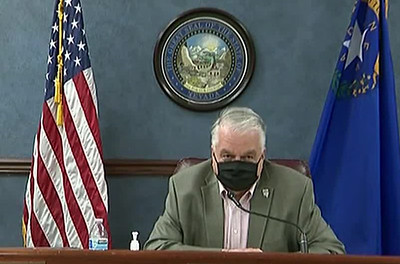
Appearing for the prerecorded speech wearing a mask, the first-term Democrat proposed large-scale investment in job training, infrastructure and renewable energy, saying, “It’s not enough to just aim for a full reopening of our current economy. We must look forward to the kind of economy that will let our state prosper in the future.”

Sisolak shut the state’s casinos for 78 days last year, from mid-March to early June, to contain the spread of the pandemic, which has infected more than one out of every 12 Nevadans and at one point left almost as many workers jobless. Unemployment soared to 30.1 percent in April, the highest reported in any state in history, and while jobs have returned slowly since, the unemployment rate as of the end of November still stood at more than 10 percent.

Resort-scale gaming, the state’s principal industry, saw casino revenues fall by 34.5 percent through the first 11 months of the year. The Las Vegas Strip, the state’s largest market, was down more than 42 percent as visitation plunged more than 54 percent.

The state, which relies heavily on gaming taxes, is facing one of the worst budget crises in the nation.

In his address, Sisolak described the virus as “challenging,” “excruciating” and “unprecedented” and said the measures he has in mind to move beyond it will generate an estimated 165,000 jobs over the next decade and help the state lessen its dependence on tourism.

A proposal he calls Nevada Job Force would allow companies to fund, design and run job training programs. He said also he wants to establish a resource center connecting Nevadans with remote work around the world. He also plans to ask the state’s System of Higher Education to help community colleges evolve into independent bodies focused on job readiness and union apprenticeship programs. He said this would differ from trade schools but would provide similar training with a focus on skills that will modernize the state’s workforce.

He promised to work with the legislature on policies geared toward establishing the state as a center for the transmission, storage and distribution of clean energy through initiatives to promote the development of electric vehicle infrastructure, component manufacturing and the mining of lithium, a key component in rechargeable batteries, including those that power electric cars.

He also proposed the creation of “Innovation Zones” for start-up business engaged in research and new technologies. He said the zones would provide a “jump-start” to businesses that meet certain benchmarks but would not involve taxpayer funding or tax abatements.

In the interim, he said his priority is ensuring the widespread distribution of Covid vaccines.

“The quicker we can do that,” he said, “the quicker we can get people back to work, the quicker we can get business back𑁋people coming to town and getting things done.”

Colorado Casinos Lift Wager Limits

The city councils of Colorado’s three casino towns, Black Hawk, Cripple Creek and Central City, have voted to raise wagering limits. The state’s voters in November approved Amendment 77, which gave the cities the authority to do this without having to go to the voters each time.

The wagering cap had been $100. That cap had been arrived at in 2008, also by a statewide election. Before that the limit had been $5.

The cities also got the right to approve new games for their casinos as long as they are allowed by the Colorado Limited Gaming Control Commission.

Black Hawk was the first. On December 1 the city council authorized unlimited single-bet wagers and opened the way for baccarat, keno and pai gow poker, among others. Those changes become effective May 1, 2021. Central City and Cripple Creek quickly followed Black Hawk’s example.

The intent was clear, to keep Colorado residents home and not flying off to Las Vegas to pay high limit games. Now the only state with bet limits is South Dakota.

Seam Demueule, general manager of the Ameristar Casino Resort and Spa in Black Hawk, told the Boston Patch, “This is not a game changer for us.” Demueule, who is also secretary-treasurer of the Colorado Gaming Association, added, “When I say it’s not a game changer I mean I don’t expect it to grow revenue by hundreds of millions of dollars every year. It just allows us to have some parity with neighboring states.”

One of the games the state’s casinos have wanted to add for years is Baccarat. The gaming commission is expected to take up adding the game at its next meeting.

Outgoing Gilpin County commissioner Ron Engels explained why the new rules will benefit Black Hawk and Central City, which are both in the county. “Denver is the second-largest feeder market for Las Vegas and the casino operators who are going to be extending their limit or removing them are certainly hoping some of those people stay here,” he told Boston Patch. “But we’re are also hoping that people will make this a primary destination as well, coming from elsewhere in the country to visit our mountain community.”

Covid-19 Restrictions Extended in Massachusetts

Massachusetts Governor Charlie Baker January 7 announced that the most recent Covid-19 restrictions would be extended for at least two more weeks, until January 22. The restrictions first went into effect the day before Christmas.

Businesses that are restricted to 25 capacity include the state’s three casinos, the MGM Springfield, the Encore Boston Harbor and Plainridge Parks slots parlor. Also churches, retail stores, restaurants and offices.

The governor cited the rising infection numbers and the pressure on the state’s health care system and hospital ICUs. “We know that extending those restrictions for many businesses, especially small business, is a lot to ask,” said Baker.

U.S. Sports Betting: A Legislative Update

Almost half of U.S. states now have some kind of legal sports betting, and more are expected to sign off on the wagers this year.

The drive by lawmakers to sanction more legal markets is due in part to the economic crunch caused by Covid-19. It hasn’t gone unnoticed by lawmakers that New Jersey hit almost $1 billion worth of sports wagers in December alone. New York Governor Andrew Cuomo has finally agreed to permit mobile sports wagers in the state, rather than seeing New Yorkers cross the border into Jersey to bet. And now, even Texas may be interested in legal sports betting.

Let’s take a look at U.S. states where sports-betting legislation is in the news.

CONNECTICUT

At his State of the State address on January 6, Connecticut Governor Ned Lamont called for legalization of sports betting. Proponents say the state’s residents can already cross the state line into Rhode Island to place sports bets and do so illegally within state lines.

Lamont told lawmakers, “I am working with our neighboring states and look forward to working with our tribal partners on a path forward to modernize gaming in our state, and working with the legislature on legalization of marijuana.” He added, “Sports betting, internet gaming, legalized marijuana—they’re all happening all around us. Let’s not surrender these opportunities to out-of-state markets or, even worse, to underground markets.”

Connecticut is far behind neighboring New Jersey, which has created a sports betting market that closed in on $1 billion for the month of December.

So far the state has not yet reached an agreement with the two gaming tribes, the Mashantuckets and Mohegans, who insist on sports betting exclusivity, claiming this is guaranteed by their tribal state gaming compacts.

But other entities are claiming a place at the table, including OTB and the lottery. The city council is scheduled to hear an update on the project at its next meeting.

GEORGIA

Late last year, the Georgia House Regulated Industries committee passed a resolution that would have allowed casino gambling, horseracing and sports betting in the state. However, the bill stalled due to Covid-19 pandemic. But this year, House Tourism and Economic Development Chairman Ron Stephens said a stand-alone sports betting bill has a real chance at success.

Stephens said sports betting legislation “is the easiest one to pass. It clearly does not require a constitutional amendment,” just a simple majority, unlike horseracing or casino gambling. “We’ve gotten some opinions from the people that write our bills that sports betting doesn’t require a constitutional amendment, and it’s something people are doing in Georgia already. It’s just a matter of us giving the Georgia Lottery Commission direction and authority they already have,” he said.

Stephens said he intends to file three gambling measures: a bill legalizing sports betting and two separate resolutions requiring the state constitution be amended to allow horseracing and casino gambling. For more than six years, expanded gambling supporters have not been able to gather the two-thirds majorities required in the House and Senate to approve constitutional amendments and place them on the statewide ballot.

Billy Linville, a lobbyist for the Georgia Professional Sports Integrity Alliance, a coalition of four of Atlanta’s professional sports teams, said his group believes the legislature will pass a sports betting bill this year. “A new state law with strict regulatory requirements will bring significant new revenue to the state, strengthen HOPE scholarships and protect the integrity of professional sports, a multibillion dollar industry in Georgia,” Linville stated.

Developers still will push for Stephens’ destination casino resort legislation. Wynn Development President Chris Gordon said, “We believe a gaming resort in Atlanta would be a significant generator of tourism and will generate much-needed tax revenue for the state of Georgia. Consequently, we support legislative efforts to allow a gaming resort and legalized sports betting, which of course will ultimately be decided by the people of Georgia.”

Proponents said casino gambling could create thousands of jobs and generate hundreds of millions of dollars for the HOPE scholarship, funded by the Georgia Lottery. However, conservative groups and religious organizations oppose expanding any form of gambling, which they say preys on the poor and leads to crime and the breakdown of the family.

KENTUCKY

Kentucky state Rep. Adam Koenig recently introduced House Bill 241, which would legalize sports betting at the state’s racetracks and professional sports venues with 50,000 seats or more, such as the Kentucky Speedway. The bill also would allow online sports wagering and online poker, as well as daily fantasy games. The Kentucky Horse Racing Commission would have regulatory authority. Currently the bill is in the Committee on Committees, which assigns legislation to committees. Through January 11, House Bill 241 listed 17 sponsors, both Republicans and Democrats.

The bill is similar to a measure Koenig sponsored last year which advanced through the Kentucky House Licensing and Occupations Committee but never made it to the House floor.

Koenig’s bill, however, may have to take a back seat to protecting historical horseracing machines. The legality of the machines has been an issue since the state Supreme Court in September ruled at least one type of the machines is not parimutuel and therefore illegal.

In his State of the Commonwealth and Budget address on January 7, Governor Andy Beshear called on state lawmakers to back legislation that would protect historical horseracing. “Speaking of laws that unduly restrict us from growth and innovation, it is time to legalize medical marijuana, pass sports betting, and save historic horse racing.”

The machines have dramatically helped the state’s horseracing industry by enhancing purses, among other benefits. Sports wagering also is expected to support Kentucky racing.

MASSACHUSETTS

Legalized sports betting may get a second chance in the Massachusetts legislature this year.

It was left out of the recently passed economic development bill, despite arguments that sportsbook would rake in up to $35 million in tax revenue annually. The senators who killed the proposal wanted a narrow focus on immediate relief for those impacted by the pandemic: families, small businesses and communities.

Some senators who opposed sports betting for that bill might be open to a standalone bill. Rep. John Barrett III told the Berkshire Eagle, “A lot of reps were bothered” by the Senate’s inaction. He called sports betting, “a no brainer to the House.”

Senator Eric Lesser, who opposed putting sports betting in the relief bill, said he “would personally like to see legislation move forward in this new session now that we have time to focus on it.”

Senate Ways and Means Chairman Michael Rodrigues, said “the time is close, and we are going to be tackling this issue.” Senator Adam Hinds added, “I do expect it to be an ongoing conversation and one of the early issues addressed in this term.”

Others, like Rep. Paul Mark, remarked that Massachusetts is in a race with other states in the region to develop sports betting as a revenue source, to keep that money in the state. He told the Eagle, “We need to do it in a manner that protects the integrity of the sporting competitions while also offering addiction services and reducing opportunities for abuse.”

The state’s residents reportedly spent $680 million on offshore sports betting in 2016.

MICHIGAN

Fifteen licensed online sportsbooks or platforms are ready to go live as soon as the Michigan Gaming Control Board gives the word, following a few days of final testing. MGCB Executive Director Richard Kalm said that word could come as soon as January 19. Ads touting pre-launch offers from the various providers have been ubiquitous on television and the internet.

Kalm said, “I know it seems slow to the public, but from our perspective, the regulatory perspective, we just cannot launch new types of gaming until we have rules in place to protect the integrity of that gaming.”

Retail sportsbooks opened in March, just before the Covid-19 pandemic hit. Casinos and their sportsbooks closed for four and a half months, reopened at reduced capacity and then shut down again from November 18 through December 22. Observers expect legalized online sports betting to help make up for lost tax revenue for the city of Detroit and the state.

Michigan has licensed 12 tribal casinos and the three Detroit casinos to host online sports betting. Citizens Research Council of Michigan President Eric Lupher said, “Between the tribal casinos and the Detroit casinos, online sports betting could generate somewhere between $16, $17 and as much as $20, $21 million of tax revenues. The Detroit share of that we’re looking at somewhere between $2.3 and say $3 million.”

MichiganSharp.com Analyst Geoff Fisk stated, “I think we’ll see upwards of 90 percent of sports betting handle come from mobile betting. Online casino gaming will really take off as the industry matures and the online platforms add more games.”

A major issue for regulators is security, Kalm said. Players need to be 21 to wager and set up an account with one of the licensed platforms. He said, “Since you’re not in person making the bet, we have to be very careful that we know the customer and we also know the location of the customer. All those testing procedures, the identification, geolocation, all the things that have to be in place before we could launch online takes a considerable amount of time.”

NEW HAMPSHIRE

New Hampshire state Rep. Tim Lang has filed a bill that would remove the cap on the number of retail sportsbooks in the Granite State and legalize in-play wagering at brick-and-mortar casinos.

He had previously tried to pass a similar bill last year when the Democrats controlled the House, but now that all three branches of the state government are in Republican hands he feels his bill has a better chance.

Feeling he has the wind at his back, Lang says he also plans to eventually file an iGaming bill.

His bill, HB 330, is a short bill whose only difference from his original is that this sentence has been removed: “No more than 10 sports book retail locations may be in operation at any given time.” Despite that, Lang doesn’t think the state will ever have more than that number due to its small population.

His bill is headed for the Ways and Means Committee and Lang is confident of approval. He has until June 30 to do that. Once passed it becomes law 60 days later.

Ten New Hampshire cities have approved hosting retail sports betting. The Brook casino became the first to host in-person sports betting in the state, operated by DraftKings in August 2020. DraftKings online/mobile wagering went live in December 2019.

NEW YORK

New York Governor Andrew Cuomo has included mobile sports betting in his proposed budget. Under his proposal the New York State Commission would issue an RFP for sports betting operators or platforms to offer online sportsbook in the Empire State.

Operators would need to team up with existing commercial casinos.

In his budget proposal, Governor Cuomo declared, “At a time when New York faces a historic budget deficit due to the Covid-19 pandemic, the current online sports wagering structure incentivizes a large segment of New York residents to travel out of state to make online sports wagers or continue to patronize black markets.”

The governor said he considers New York to be the largest sports betting market in the U.S. “By legalizing online sports betting we aim to keep millions of dollars in revenue here at home, which will only strengthen our ability to rebuild from the Covid-19 crisis.”

The New York State Gaming Commission has reported a 210.6 percent increase in sports betting revenue in December over the previous year.

Gross gaming revenue from sportsbook was $2.3 million in December, compared to $740,418 in the same month in 2019.

OREGON

A bill has been filed in the Oregon legislature that would legalize mobile and retail sports betting under the Oregon Racing Commission, removing it from the aegis of the Oregon Lottery.

Currently the only sports betting in the state is the ScoreBoard app operated by the Oregon Lottery. HN 2127 does not spell out that the ScoreBoard app would go away, but does shift the regulator from the lottery to the commission.

The bill is being pushed by Governor Kate Brown and most observers feel it will open the marketplace up to more competition since it doesn’t limit the number of operators, and only charges $50,000 for a license.

The bill would also expand sports betting from pro sports only to college sports. However it requires the use of official league data, which would bring the state in line with practices in Illinois, Virginia, Michigan and Tennessee.

It allows the prohibition of certain bet types upon the request of sports governing bodies.

It also authorizes an up to 10 percent tax on gross gaming revenue and allows those 18 and above to place wagers. Currently 21 and above is the legal age.

The launch of ScoreBoard by the Lottery in October 2019 has reportedly been a money loser for the first year, and has been plagued with technical problems.

TEXAS

Even Texas, historically one of the states most resistant to expanded gaming, is now making inquiries about sports betting to states like New Jersey, where it’s already up, running and growing.

According to Legal Sports Report, the office of Texas Governor Greg Abbott has contacted lobbyists and regulators of such states to tap their wisdom on the best way to legalizes sportsbook.

Reportedly backing the effort are Jerry Jones, owner of the Dallas Cowboys, Dallas Mavericks owner Mark Cuban and Houston Rockets owner Tilman Fertitta. All three have their fingers in sports betting. Jones owns a percentage of DraftKings, Fertitta owns the highly successful Golden Nugget online operation, and Cuban has invested in the esports betting platform Unikrn, as well as other sports betting ventures.

Under one proposal, as many as 20 sports betting licenses would be made available for various franchises and racetracks in the Lone Star State, putting the teams in the position of a casino. Texas has no commercial casinos.

So far no sponsor exists for such a bill, although a draft is being written. Any change to the state’s gaming laws would require an amendment to the state constitution, which could only be done by a vote of the people.

The state is looking at a fearsome budget deficit due to the effects of Covid-19, which is why lawmakers who would traditionally oppose any kind of gaming expansion might look favorably at such a proposal this time.

After California, Texas is the largest undeveloped sports betting market in the U.S.

Potential opponents include the Oklahoma tribes that operate a large casino just across the state line and colleges that have sports programs.

A further complication is a strong effort to lobby for legalization of casino gaming that was launched by Las Vegas Sands billionaire Sheldon Adelson, who died this week. Adelson and his wife donated $4.5 million last year to the Republican party last year.

VIRGINIA

Virginia Lottery Executive Director Kevin Hall recently said bettors may be able to legally place online wagers in time for the Super Bowl.

“We’ve moved pretty far down the field in building out the sports betting program. We’re close to the end zone and once we begin to issue the first of the licenses and once the sportsbooks feel like they’re ready to go, they can go live,” Hall said.

Twelve online sports betting licenses will be issued by the Virginia Lottery, which will oversee and regulate the industry’s launch and operation. Bets on professional sports events will be taken pre-game and in-game, and only pre-game for college teams. Betting will not be allowed on Virginia college teams or the Olympics. Participants must be at least age 21 and physically located inside Virginia.

The General Assembly legalized sports betting last year, but it’s taken time It’s no secret that betting has been happening here already.

“There’s no reason to be naive there’s sports betting going on already. It’s one-on-one or in an office setting or probably much of it is being done with offshore sports books,” said Hall.

Analysts forecast sports betting revenue will bring in $400 million in wagers in 2021, with 15 percent going to the state in tax revenue. A portion of that amount will go toward problem gambling services. Hall stated, “I think it’s important Virginia has developed a program in a responsible way to make sure consumers are protected and can have some confidence that the sportsbook is operating within the rules and that there are some reasonable guardrails to ensure, for instance, the under aged aren’t using the apps and that there are some resources available for people that feel like they might be getting in over their head.”

Freehold Raceway to Go Mobile with PlayUp

Freehold Raceway was the last of the three New Jersey tracks to offer sports betting when it went live with in-person wagering in October. On January 12, the track partnered with PlayUp, an Australian online sportsbook, to accept mobile betting in conjunction with Parx Casino in Pennsylvania.

The track hoped to go live online by November. The goal now is before the end of the first quarter, according to the Associated Press.

“Parx Casino is happy to partner with PlayUp in New Jersey as they debut their international expertise of online sports betting in the United States,” said Matthew Cullen, Parx’s senior vice president of interactive gaming and sports.

The track reported $291,632 in sports betting revenue last year, all of it from bets taken in person.

Michigan and Virginia Launch Sports Betting

Two major states last week joined the list of U.S. jurisdictions that conduct legal sports betting. Michigan and Virginia launched wagering late last week—just in time for the four remaining National Football League teams to battle it out for a spot in Super Bowl LV.

The Michigan Gaming Control Board announced 10 casinos and their online platform partners were approved to launch online gambling and sports betting. The 10 casinos/tribes and their partners include:

  • BetMGM (MGM Grand Detroit)
  • BetRivers (Little River Casino Resort)
  • DraftKings (Bay Mills Resort)
  • FanDuel (MotorCity Casino)
  • Golden Nugget (Ojibwa Casino)
  • TwinSpires (formerly BetAmerica, partnered with Island Resort & Casino)
  • William Hill (Turtle Creek Casino & Hotel)
  • WynnBET (Kewadin Casino)

Additional approvals are expected in the near future.

FanDuel, DraftKings and BetMGM have been running ads for weeks leading up to the launch. Participants could sign up but could not place bets.

The legislature approved and Governor Gretchen Whitmer signed off on legalized internet gambling and sports betting in December 2019 but it took another year, impacted by Covid-19, for lawmakers to establish rules and regulations.

Richard Kalm, executive director of the Gaming Control Board, said, “Online gaming and sports betting will provide the casinos with new ways to engage with customers while the state and local communities will benefit from taxes and payments on wagering revenue. We want the public to have confidence when they place wagers, and our agency has required the providers to prove they meet Michigan’s standards, which are designed to protect the participants.”

In-person sports betting began in Michigan last March but casinos closed soon after due to the Covid-19 pandemic. Sportsbooks reopened in the summer and closed again November 18 but have remained open since December 22 at reduced occupancy.

Bettors must be at least 21 years of age and must be located within state borders to place bets online.

Greektown currently offers only online sports betting. Greektown owner Penn National Gaming launched its Barstool Sportsbook mobile app on January 22 and issued a statement that its online casino games “will follow shortly thereafter, subject to final regulatory approvals.” Greektown opened a retail sportsbook in December.

MGM Resortss President of the Midwest Group David Tsai said, “We are excited to bring BetMGM’s market-leading sports betting and iGaming app to Michigan. The online experience will be a complementary extension of MGM Grand Detroit’s best-in-Michigan BetMGM Sportsbook and lounge, giving sports fans and bettors different opportunities to get in on the action.”

MotorCity Casino Hotel President Bruce Dall noted the casino opened its on-site FanDuel Sportsbook in early 2020. He said MotorCity is “thrilled to build on this collaboration with a fully integrated, real money online gaming experience for residents and visitors to the state of Michigan.”

FanDuel Chief Marketing Officer Mike Raffensperger stated about 90 percent of the company’s users in markets where sports betting already is allowed use FanDuel through its mobile app. He added, “Frankly speaking, sports betting is a marketplace that existed prior to us launching legally. It just happened in the black market and the gray market with offshore accounts where maybe you’ll get your money out, maybe you won’t.”

Raffensperger said onsite casino sportsbooks don’t have to worry about online apps. “There’s nothing like the experience of a sports book, watching a great game on giant TVs and being there with your friends. Covid-19 has made that difficult but it’s a wonderful, fun experience.”

Bryan Newland, Indian community chairman at Bay Mills Resort & Casino in the Upper Peninsula, said, “We look forward to officially launching our partnership with DraftKings and bringing a new aspect of gaming entertainment to our fellow Michiganders. Online gaming and sports betting will help our tribe and our casino move solidly into the future.”

Revenue from online sports wagering through commercial and tribal apps will be taxed at 8.4 percent. For all other internet gambling, the tax rate will range from 20 percent to 28 percent, based on adjusted gross receipts.

Last year, retail sports betting at the Detroit casinos brought in just under $845,000 for the city and more than $690,000 for the state. Sports betting and internet gaming tax revenue will be allocated with 30 percent to the city, 5 percent or up to $3 million a year from each source to the Michigan Agriculture Equine Industry Development Fund and 65 percent to the state’s Internet Sports Betting Fund or Internet Gaming Fund.

Tribal casinos will pay 90 percent of sports betting revenue to the Internet Sports Betting Fund and 10 percent to the Michigan Strategic Fund. For online gambling revenue, they’ll pay 20 percent to local governments, 70 percent to the Internet Gaming Fund and 10 percent to the Michigan Strategic Fund.

The three commercial casino retail sportsbooks in Detroit took in $130.7 million in sports wagers since launching last March, with revenues of about $18.3 million. Covid-19 closures and cancellations of college and professional sports impacted results. In total, the Detroit casinos posted about $639 million in total revenue during 2020, a drop of 57 percent from a record $1.5 billion in 2019, according to MGCB data. They paid $73.8 million in wagering taxes and development agreement payments to the city in 2020, down from $184.2 million paid in 2019.

With online sports betting now a reality in Michigan, DraftKings Director of Race and Sportsbook Johnny Avello said, “I think we’re going to do pretty well in the state. Different states have different behaviors on how they bet. Michigan is a state with a good sports background. It’s going to be a competitive market, but we don’t run away from competition.”

In Virginia, the state Lottery approved a permit for FanDuel, which accepted its first wager on Thursday, January 21. FanDuel was given a head start by affiliating with the NFL Washington Football Team (formerly the Redskins) under a clause in the law that granted professional sports teams in the state “substantial and preferred consideration” in the licensing process. The team is based I Ashburn, Virginia, but plays its games in Landover, Maryland. The team is seeking a new stadium and the sports betting head start is expected to peek interest in a stadium in the Old Dominion.

Other companies, including BetMGM, Draft Kings, Barstool Sports and WynnBet, have applied for licenses as well and are expected to be approved in the coming weeks.

“We anticipate more than one sportsbook will be in position to begin accepting legal wagers from Virginians in time for the Super Bowl,” Virginia Lottery spokesman John Hagerty said.

FanDuel’s Raffensperger told the Associated Press that the opportunity was “humongous” and said his company will roll out a one-time risk-free promotion of the refund of a bet up to $1,000 if it loses.

The Virginia State Lottery has approved 10 independent standalone sports betting licenses in addition to five that will go along with casinos approved in the southern part of the state that should begin operating in 2022. The lottery said 25 operators have applied for the 10 licenses. They had until October 31 to apply and the lottery must approve or deny within 90 days.

Connecticut Lawmakers Close In On Legal Sports Betting Deal

In Connecticut, all signs point to the imminent legalization of sports betting.

On January 6 in his annual State of the State address, Governor Ned Lamont called for legal bets, saying, “Sports betting, internet gaming and legalized marijuana are happening all around us. Let’s not surrender these opportunities to out-of-state markets or even worse, underground markets.”

In an interview with GGB News, incoming House Speaker Matt Ritter said, “I hope we’re getting close to a deal. I suspect one will happen. But ultimately it’s a little more complicated than a normal bill, because Connecticut’s two gaming tribes, the Mohegans and Mashantucket Pequots, “have got to get a deal with the governor. It’s one thing to sign a bill, and another to sign a compact amendment, and that’s where his role comes in.”

The Mohegans and Mashantuckets respectively own and operate Mohegan Sun in Uncasville and Foxwoods in Ledyard. It’s widely assumed that if they’re given a monopoly on sports betting, it will invite a lawsuit by MGM Resorts International, which currently operates MGM Springfield across the border in Massachusetts and also planned to build a casino in Bridgeport, the largest city in Connecticut. MGM also spent years in federal court and the court of public opinion in a house-by-house rear-guard action against the tribes’ satellite casino, which they wanted to build in East Windsor (that project was recently postponed, likely indefinitely). The state might also be sued by OTB interests such as Sportech.

“If we give tribes exclusivity on the reservation, that’s not an issue,” Ritter continued. “It’s the question of what happens if you go off the reservation,” as with mobile sportsbooks. “There’s probably no bill you can pass that doesn’t have some risk, but how much risk is the state willing to take from a litigation lawsuit? Some people have different appetites.”

This time around, MGM isn’t the factor that it was in former years, Ritter pointed out. “MGM is in a different stance than they were. They have no registered lobbyists. But I don’t see a scenario without a lawsuit” from other gaming interests, he added. “I err on the side of the tribes, because we get a lot of revenue from them. What I don’t want is to rip up the compacts.”

Asked about Senator Cathy Osten’s bill, which would give the tribes exclusivity on sports betting, Ritter said, “Osten’s bill goes into iGaming, which is a whole different conversation. I would vote for iGaming, but that’s a lot more than just sports betting. Playing poker on your phone is different than betting on the Giants. If I were the tribes, I would realize that iGaming is probably the more lucrative of the two. I think if you opened it up to the other operators, it wouldn’t be that much money.”

Osten Bill Upholds Tribal Exclusivity

In an interview with GGB News, Osten said her bill “is similar to last year’s, but doesn’t include the Bridgeport and East Windsor casinos, because all new ventures are on hold while we go through the pandemic.”

Osten said she’s optimistic that the time is right for her bill. “I believe the atmosphere is good to get it passed,” she said. “I believe we would have passed it last year if we had stayed in session. I’m getting the municipalities on our side.”

Economics is the main driver of this alliance, she said. “We lost about 12,000 jobs here related to the two casinos or their vendors. Hospitality and tourism across the board are having difficulties right now based on consumer confidence. People aren’t as willing to take chances in venues that have a lot of people. I’m confident it will pass.”

Her bill “includes sports betting, in person, retail or online, phones etc. and tribal exclusivity,” she said. “Court cases I’ve seen around the country indicate that sports betting is considered a Class III game, which is part of the (tribal) compact already. The bill also includes iGaming, iKeno, and iLottery. iKeno would follow the rules that Keno follows where there’s an agreement between the tribes, and iLottery would be run by the lottery corporation or its vendor. The money raised would fund debt-free college.”

In the past, Governor Lamont has said he was seeking a “global” bill that would cover all aspects of gaming. Osten said she’s talked to Lamont’s people about this. “I believe that it more than covers anything he would put in it. He has said he is favor of sports betting and iGaming, both retail and online.” She said she doesn’t believe rival bills will emerge. “House leadership is new, and the senate leadership supports my bill. I sent it to the leaders of the Senate and House—both Democratic and Republican. I figured out a long time ago that you might as well share with people.”

She considers the bill bipartisan. “I have had the second-in-command of the Republicans sign on for the bill, and the ranking member on appropriations from the House. I have equal numbers of House Democrats and Republicans. I look forward to having Connecticut join 20 other states that have done this, and it’s clear the state can use the revenues.”

‘Litigation Benefits No One’

Ted Taylor, president of Sportech, which operates OTB sites throughout the state told GGB News he’s “optimistic” about sports betting legislation. “We believe that the desire to find a solution is there for lawmakers as well as for Governor Lamont’s administration. Sports betting has grown significantly to be part of the fan experience, and the public is certainly supportive of a competitive sports betting choice. So we believe 2021 could see that goal achieved.”

The move would be “quite important” for his business, said Taylor. “With Sportech’s North American headquarters in Connecticut, we’ve invested heavily in our businesses here, and it’s critical that we remain competitive as the gaming landscape changes, both in the state and the region. It’s also an important component to our strategy in the aftermath of the Covid-19 pandemic and its impact on our Connecticut employees and operations.

“The state has attempted to establish cohesive sports betting legislation but hasn’t been able to do so, as some parties insist on complete control,” he continued. “That’s too bad, because a cohesive strategy would protect the state’s four existing gaming operators from the growing regional competition, protect consumers from illegal operators, offer consumers choice in gaming entertainment and generate new state revenues to offset declines across both the commercial and tribal segments. Differences of opinion about whether or not all new gaming in the state should be controlled by a duopoly has led to an impasse that is bad for everyone involved.”

The core difference of opinion, said Taylor, “stems from the casino operators claiming they have exclusivity over all gaming in the state. These claims have no basis in fact, and the rhetoric associated with those claims, of breaching tribal agreements, presents more significant risk to casino revenue than to state proceeds in our opinion.

“Litigation benefits no one except the lawyers. I know we don’t want that, and I’m fairly sure the sate feels the same way. A common-sense solution for pursuing new opportunities, especially for a service already being delivered in neighboring states, requires a reasonable approach from all parties.”

Why should OTB companies be included in a sportsbook bill? “Betting is what we do at Sportech,” said Taylor. “Our Connecticut businesses have been accepting bets on the sports of racing and jai alai since 1993, and we’re currently the only licensed operator legally allowed to accept bets online across the state of Connecticut.”

He added, “Sports betting aligns very closely with betting on racing and jai alai, far more so than with casino or lottery operators. Betting is a contest of skill rather than of chance; it depends on the outcome of events that take place outside the betting venue. And in most other states that allow it, sports betting isn’t restricted to casino properties in the way that traditional casino games may be.”

Taylor might even argue that OTB is a better choice for sports betting than casinos.

“I would go as far as to say that of all the current options for gaming in Connecticut, our shops and digital channels are the most appropriate for sports betting,” he said. “However, our position remains that this opportunity should be extended to the other gaming operators across the state, including both casinos and the lottery. Each one is a professional operator who would bring choice and competition to the Connecticut consumer. Such an arrangement has worked well in other states. For example, New Jersey has been successful under a model that equally treats racetracks—which conduct the same betting as Sportech’s OTBs—and casinos.”

Turner says the tribes are the “roadblock” to such a deal.

“We’ve seen no evidence to the contrary,” he said. “The statement that an omnibus gaming bill would break the tribal agreements has been noted publicly by Chairman (Rodney) Butler of the Mashantucket Pequot Tribal Nation, who then notes the combined payments made to the state by them and Mohegan Gaming and Entertainment under the arrangement as being at risk. The figures of $200 million a year, or almost $8 billion since inception, are raised. These are large sums, clearly. However, the deal is 25 percent of slot revenue to the state, so if the tribes are paying $200 million to the state, it’s evident their own margin is $600 million a year, or an incredible $24 billion since they started.”

Turner concluded, “These specific agreements between the casinos and the state have been successful, and to risk those kinds of profits and additionally risk having new competing commercial casinos in the state because you want to be the only operator for sports betting seems a high-risk gamble. The alternative is an expansion into the iGaming that’s most important to them, and remaining one of only four operators providing sports betting.

“I know what I would rather bet on.”

Sports Betting In Florida a Long Shot

Florida’s recent history of gambling and the legislature boils down to this. Keep the Seminoles happy. The result of such happiness is to not get much accomplished whether expanding casinos beyond the existing sites or sports betting.

So proponents of sports betting hold out very little hope for a legislative breakthrough this session. Still, with a new year, hope springs eternal.

According to Legal Sports Report, Jeff Brandes, a state Senator from the Pinellas area, expects to introduce three bills to legalize sports betting with a licensing fee of $100,000 and a 15 percent tax rate. He did the same introductions last year to no avail.

Florida has a 60 day session, one that can be extended by a three-fifths vote by each house. The laws also allow a special session. Under the state Constitution either the Governor or the President of the Senate must call for a special session in conjunction with the Speaker of the House.

The leading bill, SB 392, would allow residents over 21 to bet on just about anything except high school and youth sports. Regulation and licensing would fall to the Florida Lottery. No data mandate or integrity fee.

If SB 392 becomes law, SB 394 kicks in and establishes the tax rate of 15 percent or whatever deemed proper. The money would go to the Educational Enhancement Trust Fund, and for administrative costs.

The final piece, SB 396, creates annual licensing fees.

Why three bills? The Florida Constitution requires each bill to pertain to a single topic. Introducing the bills is the easy part.

The state compact with the Seminole Tribe states that new Class III gambling activity—sports betting, for example—would be included and that inclusion means exclusivity. Offer sports betting outside the confines of the Seminole casinos and the compact breaks. Past history dictates that without the tribe’s permission, litigation would follow.

Then there’s the 2018 amendment that says any new gambling requires support of the voters in a referendum, an amendment spearheaded by the Seminoles and Disney.