Author: Casino Connection Staff

Hawaii Governor Opposes Casino Proposal

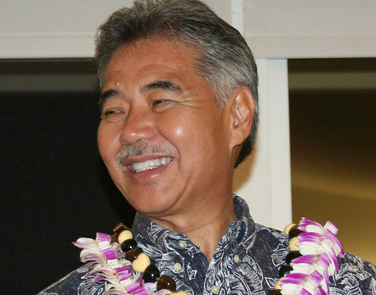
Hawaii Governor David Ige opposes a proposal by the Hawaiian Homes Commission to build a casino in the town of Kapolei on the island of Oahu, on lands set aside for Native Hawaiians.

The commission approved of the proposal in December by a vote of 5-4. It will next ask for the governor to include the proposal in his legislative agenda for this year.

During a radio interview Ige declared, “The benefits (of a casino) would not exceed the social costs of gambling,” adding “It does not provide economic value to our community.”

The 203,000-acre Department of Hawaiian Homelands (DHHL) land trust for Native Hawaiians was created during the administration of President Warren Harding 100 years ago.

DHHL Deputy Chairman Tyler Gomes last week told an interviewer on Facebook that the casino would offer “an opportunity to have a conversation about a number of shortfalls the department faces.”

He said that a “conservative” estimate of the possible revenues for such a casino are $30 million annually. The department could use these funds for a long list of Native people waiting for homesteads on the land.”

Gomes declared, “I know there are people who have been waiting at least 30 years. But I think the bigger number and the more troubling number for the department is the estimation that if we continue producing homes and lots at the rate that we currently are — and assuming that no one is going to join the wait list after today, which we know is not going to happen — at that rate it would take us 182 years to address the wait list at the current funding level.”

He said the department needs $140 million to operate, and received about $20 million from the legislature last year.

During that same Facebook streaming show, Gomes was criticized by viewers, one of whom called the DHHL, “the Department of Homeless Hawaiians,” while another added, “So sad that some people would come to the most beautiful place on earth to stay inside and roll some dice.”

The proposal is also giving heartburn to some Las Vegas interests who would prefer that Hawaiians travel to Nevada to do their gambling. Many thousands of tourists from the Aloha state come to Nevada annually because it is one of only two states that completely ban gaming.

If approved, the measure would impose a 45 percent tax on lost wagers, with the DHHL getting 80 percent of that.

Las Vegas is still struggling to preserve its tourist industry, which has been close to being shattered by the pandemic. Some casinos are offering testing sites that meet the rigorous standards of Hawaii’s Safe Travel requirements.

Sports Betting: State of the States

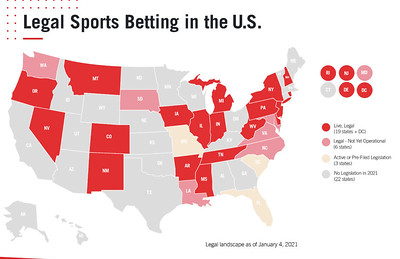
Almost half the states have some kind of legalized sports betting as 2021 unfolds. A handful of others seem ready to join the club this year. SportsHandle compiled a list of those that might go and those expected to be a no.

Arizona has had legislation for the past two years that would allow tribal and commercial retail sports betting. But the tribes had issues with the bills. However, a deal between FanDuel and the Phoenix Suns could mean commercial online betting is on the horizon, along with renegotiation of tribal compacts. If everyone signs on during the three-month legislative session, it’s a go.

In Connecticut, the tribes that run Mohegan Sun and Foxwoods insist they have exclusivity when it comes to sports betting. Yet some lawmakers have pushed for commercial casinos and sportsbooks. But one of the legislators opposed to tribal-only sports betting did not seek reelection. Plus, Governor Ned Lamont, facing a serious budget deficit, seems more inclined to work with the tribes. The partnership between the Mashantuckets, who own Foxwoods, and DraftKings might also help Senator Cathy Osten shepherd legislation to the finish line.

Georgia should be a no-brainer. The state’s pro teams support legalization. So do voters. But approval requires a constitutional amendment unless the lottery runs the show. Turns out, a bill to have the lottery run statewide mobile betting is on the drawing board. However, others say a gaming commission is more efficient, which goes back to the amendment and a referendum in 2022. Look for something to pass in 2021, but not be legal until 2022.

In Kansas, competing bills have come and gone for a few years. But an agreement may be at hand. The Senate wants a commission; the House wants the lottery to oversee the product. If they can reach a compromise, 2021 will see a sports betting bill.

In Florida, it’s the same old same old. Senator Jeff Brandes introduced a bill in December to appoint the lottery as regulator and permit statewide mobile sports betting. But the Seminole tribe says no way, we have exclusivity. If the tribe doesn’t say yes, no dice.

South Carolina has a bill in each chamber. Both are similar but the House version doesn’t permit collegiate sports betting. The hope is to get a proposal on the ballot for voters to decide in November. To get that far would mean lawmakers swallow their distaste for gambling to help with the budget deficit.

Maine lawmakers passed legislation in 2019 but Governor Janet Mills vetoed it. The latest attempt would permit statewide mobile betting, establish a 10 percent tax rate and issue 11 licenses for tribal and retail casinos. It seems likely to pass, but will Mills sign this time? Maybe if a deficit is on her mind.

Another state with a significant tribal presence, Minnesota, is a question mark for 2021. Lawmakers have introduced bills here in the past, but the tribes so far aren’t seeing anything they like. Maybe 2021 is a year that both sides could come to the table and hammer out an agreement.

Ohio, like other states, is divided between a gaming commission and the lottery as regulators. Governor Mike DeWine supports sports betting but whether the two chambers can bridge their differences remains to be seen.

Some Call on FinCEN to Help Prevent ‘Messenger Betting’

It’s illegal in the U.S. for one person to place a sports wager for someone else. So-called “messenger betting” is seldom prosecuted, although it’s a felony. But as more jurisdictions begin offering sportsbooks, some are calling for more involvement by the federal Financial Crimes Enforcement Network (FinCEN).

Two months ago, a bettor made headlines when he claimed DraftKings had shut down his mobile sports betting account after he won a $3 million parlay. DraftKings, which runs New Jersey’s sports betting, suspended the account after learning that a friend of his placed a bet on his mobile account in New Jersey while the originator of the bet was living in Florida.

DraftKings says that the appropriate “authorities” without naming them, are looking into the matter. Authorities that might be appropriate for such an investigation include the New Jersey Attorney General and the state Division of Gaming Enforcement (DGE). Both have been silent on this issue.

New Jersey’s sports betting market is having a banner year. In November, there were $936.1 million in bets—more than $1 million higher than the national record for a single month. There’s considerable interest in discovering how many of those wagers are proxy wagers from out of state. This would probably be a violation of the 1960s Federal Wire Act, and could lead to intervention by FinCEN.

New Jersey’s DGE is promoting a Know Your Customer program for mobile platforms. Its technical staff has created a KYC plug in that can be used to identify and locate patrons.

DGE Director David L. Rebuck has been having discussions with FinCEN. He said his agency strives to make the state’s casinos national leaders in following federal law. Especially federal laws on money laundering and relating to reporting currency transactions larger than $10,000.

He is also discussing mobile and online gaming with FinCEN. Mobile betting has required sports betting operators to quickly get up to speed on best practices for verifying both a patron’s identity but also location when creating an account.

One such tool is face recognition software, such as is routinely employed in many Smartphones. But some operators are reluctant to employ it since many consider it too intrusive.

But there are other tools as well that pinpoint what phone is being used for a wager and what account it is linked to. These identifiers can be used on desktop or laptop computers.

Sportsbooks also can suspend an account if they find out single customers have multiple accounts.

Recently New Jersey began employing new enhancements to the account creation identification system. Rebuck said he expects this system to be a model for other states that have sports betting.

Cuomo Comes Around on Mobile Sports Bets

In this week’s State of the State address, New York Governor Andrew Cuomo will finally declare his support for mobile sports betting. According to the New York Daily News, the governor, outspoken in his opposition to online wagers until now, will “make the revenue-generating measure a central part of his policy proposals.”

Cuomo’s turnabout is seen as a surrender to the budget demands created by Covid-19, which has drained state coffers. Sports betting is already legal in New York but can only be done on-site, at a casino, despite the overwhelming preference of sports bettors for mobile.

Meanwhile New Jersey, which dominates the online wagering market, has made the most of sports betting in all its forms. Handle reached $931.6 million in November, outpacing Nevada and breaking a previous one-month record, and more than 90 percent of those bets were placed online or on mobile devices. Operators reaped $50.6 million in revenue for the month, and the state got $6.2 million in taxes. Moreover, one survey found that nearly one-fifth of New Jersey’s sports wagering revenues come from New Yorkers who cross the border to bet on sports; an Eilers & Krejcik Gaming report in February 2020 estimated New Yorkers wagered $837 million in New Jersey in 2019.

Cuomo now seems to have bowed to the inevitability of mobile, and also dropped his contention that legalizing the bets would require a change in the state constitution. In a statement, he said, “At a time when New York faces a historic budget deficit due to the Covid-19 pandemic, the current online sports wagering structure incentivizes a large segment of New York residents to travel out of state to make online sports wagers or continue to patronize black markets.

“New York has the potential to be the largest sports wagering market in the United States,” Cuomo continued. “By legalizing online sports betting, we aim to keep millions of dollars in tax revenue here at home, which will only strengthen our ability to rebuild from the Covid-19 crisis.”

It’s a far cry from his position of a year ago, when the governor said mobile sportsbooks would provide “no new casino revenue.”

“This is not the time to come up with creative although irresponsible revenue sources to solve a problem which doesn’t really exist,” he said at the time.

State Senator Joseph Addabbo, chairman of the Senate Racing, Gaming and Wagering Committee, said it’s “encouraging” that the governor has changed his view, and agrees there are no constitutional issues. Servers for mobile betting would be placed at retail locations that already are approved mobile betting operators.

“I’m hopeful his administration is just as enthusiastic and energetic about implementing mobile sports betting in our state as I am,” Addabbo said.

“By legalizing mobile sports betting, New York will be able to reap the benefits of the economic gains it will create and help the state rebuild after the Covid-19 pandemic, in addition to increasing educational funding, addressing illegal (gambling) activity in the state and assisting those with gaming addictions.”

Addabbo disagrees with Cuomo’s plan to let the state Lottery Division run the show, fearing it would limit competition and a free-market approach that could drive more sports bets. “We have to get it right in the short term. I don’t want to miss out on an opportunity,” he said.

According to the Buffalo News, Robert Mujica, Cuomo’s budget director, estimates that online sports betting plan could bring $500 million to the state. According to Legal Sports Report, New York may need to compare favorably with the Garden State’s 13 percent tax on mobile revenue, but the Cuomo administration has suggested it’s after a bigger cut of the revenue pie. “I’m here to raise money for the state,” Cuomo said.

Upstate New York’s four casinos would be first in line to offer the bets, and the state could grant three additional licenses. Among operators who may launch the new market are BetMGM, whose parent company owns and operates Empire City Casino at Yonkers Raceway; DraftKings, which partners with Resorts World in New Jersey and currently runs retail betting at del Lago Resort & Casino in Waterloo; FanDuel, which already runs the retail sportsbook at Tioga Downs in Nichols; Rush Street Gaming, owners of Rivers Casino & Resort Schenectady and online operator BetRivers; Fox Bet, which will presumably run the mobile enterprise for the Mohawk Tribe, which runs the Akwesasne Mohawk Casino Resort in Hogansburg; and Caesars, which struck a deal with the Oneida Tribe, operator of Turning Stone Resort in Verona.

New Jersey Horsemen’s Suit Nears End

A suit in New Jersey over opposition to sports betting by pro leagues and the NCAA in 2014 could be nearing a resolution.

A federal judge last month nixed an effort by the New Jersey Thoroughbred Horsemen’s Association to get the NBA, NFL, NHL, MLB and the NCAA to pay more than $100 million in damages. The association claimed that the leagues opposition to sports betting at Monmouth Park Racetrack cost them, according to the Associated Press.

Still undecided is some $3 million put up by the leagues as a bond after receiving a restraining order against Monmouth Park.

While the Supreme Court wouldn’t overturn the sports betting ban until 2018, voters and the legislature had already given the go ahead. With that as support, Monmouth Park made plans to open a sportsbook. A federal judge issued a temporary restraining order stopping Monmouth Park by siding with the leagues’ argument that allowing the track to begin accepting bets would cause irreparable harm to their brand and the integrity of their games.

The bond would covers losses the track might suffer during the restraining order. A month later the judge overruled the New Jersey law because it violated the 1992 prohibition.

After the Supreme Court overturned the prohibition, the association went to court not only to get the 2014 bond but also the $140 million in damages from the expiration of the restraining order. The horsemen argued that the leagues acted in bad faith when it came to the integrity issue because they promoted and endorsed fantasy sports. The leagues say legal action was nonsense.

On December 3, U.S. District Judge Freda Wolfson said no dice to the damages, but would hold a later hearing on the bond.

76ers Partner with BetMGM

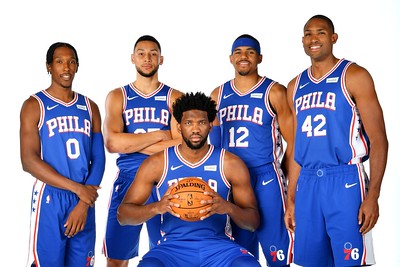
Now that BetMGM has launched its mobile platform in Pennsylvania, the sportsbook has struck a deal with the Philadelphia 76ers NBA team as its official sports betting partner.

The partnership will feature television signage, including BetMGM’s logo on the pole pads during 76ers games, and fan engagement, such as promotions within the 76ers app, 76ers-branded casino games, and more. All of which brings more fan interaction with the team.

“This partnership gives us the ability to connect with our fans on the digital channels where they spend their time through customized 76ers branded games and activations. BetMGM will also propel us into a new space, strategically targeting fans in the sports betting and gaming realm,” said Katie O’Reilly, 76ers chief revenue officer.

In addition, MGM Resorts’ Borgata Hotel Casino & Spa in Atlantic City will be designated as an official away game host for the team, which means on-site events when feasible.

Massachusetts Sports Betting Not A Sure Thing

Massachusetts should have little trouble passing sports betting legislation. Yet a bill with positive support in 2019—with backing from the Governor—went nowhere. Same thing in 2020.

As for 2021, well Massachusetts lawmakers agreed to a $627 million economic development deal January 5, at the end of a legislative session.

Among other elements, the bill features grants to small businesses, a change in zoning laws to minimize obstructions to housing development, and funding for tourism and restaurant businesses hurt by the coronavirus pandemic. But no sports betting.

Senator Eric Lesser sees a sports betting bill getting completed in the next session which began January 6. But he wants a standalone law.

“I do think you’ll see a process on sports betting move forward, but in this bill the focus needed to be on getting relief to people” impacted by the Covid-19 recession, Lesser said.

After gambling opponents nixed sports betting two years ago, a coalition of casinos, sportsbook operators and pro teams rallied for legislation which could raise $20 million to $35 million a year in revenues to help deal with the Covid-19 pandemic fueled recession. In addition to the tax revenues, money is available from licensing fees.

Alas, while some lawmakers came on board, their numbers weren’t enough to pass in 2020.

“Now in the pandemic…sports betting that is dominated by the three established gaming facilities is more palatable to the legislature to help the casinos survive and to try to revive gaming revenue to the state and host communities,” consultant Tony Cignoli told MassLive.

Gaming analysts said one obstacle to a deal involved the number of licenses.

“While some stakeholders want to focus solely on those that have access either because they’re an existing licensee or a fantasy sports operator, others would like to see a more robust, competitive market,” said Brendan Bussmann, a gaming industry analyst partner at Global Market Advisers.

Another obstacle is the continued opposition to any kind of gambling.

Is the money from taxes significant enough to make a difference in the deficit? Probably not. And opponents say sports betting attracts people addicted to gambling.

“There’s nothing industrious about taking people’s money for nothing in return. They promote false promises. They never pay back what they say that they will,” said Celeste Myers, a sports betting opponent who led the campaign against an East Boston casino in 2012.

Five Missouri Sports Betting Bills Proposed

The Missouri legislature now has five sports betting proposals to consider in the new session starting January 13. Democratic Missouri state Rep. Wes Rogers’ pre-filed sports betting bill joins four pre-filed by Senate Republicans, including one that also would legalize video lottery terminals. Lawmakers also have pre-filed other bills that would allow riverboat casinos to operate on land, plus two that address illegal gambling.

Last year, similar bills proposed to allow the state’s 13 casinos to operate retail and online sportsbooks advanced out of committee before the Covid-19 pandemic cut short the legislative session. Now, with the prospects of declining tax revenue and rising health care costs, legislators hope expanded gaming can partially fill the state budget that was cut by about half a billion dollars in 2020.

In the House, Rogers’ bill would allow online and retail sports betting, regulated by the Missouri Gaming Commission. Three skins would be allowed per casino for a total of 39. The sports betting license application fee would be $25,000 with a $10,000 annual administration fee and $5,000 license renewal fee every five years. Adjusted gross revenue would be taxed at 6 percent. College prop bets would be allowed but pro leagues may request to limit, restrict or prohibit bets placed on their events and/or individual player prop bets. League royalty fees are not included.

Compared to the four Senate bills, Rogers’ proposes lower gross gaming revenue taxes avoids pro league royalties. Rogers’ proposal shares several elements with Senate Majority Leader Caleb Rowden’s, which has slightly higher taxes at 6.75 percent and an application fee of $50,000 plus an annual administration fee of $20,000 and $10,000 license renewal every five years.

State Senator Denny Hoskins filed two of the four Senate sports betting bills; one would legalize only sports betting and another also would allow video lottery terminals. Hoskins, who has served in the Missouri House from 2009 through 2017, has introduced bills to legalize VLTs in his last five years in the Senate.

Additionally, Senate President Pro Tem Dave Schatz and state Senator Dan Hegeman filed separate bills restricting illegal gambling, specifically targeting the hundreds of illegal video terminals currently in operation statewide. Lawmakers could decide to legalize and regulate the machines, or maintain the ban on them and crack down on violators.

BetMGM Launches PA Online Sportsbook

BetMGM, the joint venture between MGM Resorts International and Entain PLC, announced the launch of its market-leading sports betting app in Pennsylvania, giving bettors access to benefits tied to MGM Resorts casino resorts nationwide. The addition of sports wagering follows the recent introduction of the company’s iGaming offering to the state.

“The response to BetMGM Casino in Pennsylvania has been incredible, and we’re thrilled to bring our best-in-class sports betting offering to the Keystone State,” said Adam Greenblatt, BetMGM CEO. “Pennsylvania is known for its legendary sports fans, and we look forward to sharing the excitement of BetMGM with them.”

The BetMGM app offers a user-friendly sports betting experience, making it easy to customize pre-game, live in-play, futures and parlay wagers. Additionally, BetMGM’s integration with MGM Resorts’ M life Rewards loyalty club allows BetMGM customers in Pennsylvania to redeem their game play for experiences at MGM Resorts properties nationwide, including Bellagio and MGM Grand in Las Vegas, Borgata in New Jersey and MGM National Harbor in Maryland.

Earlier this year, BetMGM announced a partnership with the Pittsburgh Steelers, which BetMGM as the team’s first Official Gaming and Sports Betting Partner. Pennsylvania marks the seventh state in which BetMGM’s mobile app is available statewide, joining Colorado, Indiana, Nevada, New Jersey, Tennessee and West Virginia.

The BetMGM app is available for download in Pennsylvania on both iOS and Android and is accessible via desktop at www.betmgm.com.

Sportsbook Pre-Licensing Coming to Washington

The Washington State Gambling Commission is aiming to bring sports betting pre-licensing available by spring of 2021.

Regulators made the announcement at the December 17 meeting of the commission. If they make this timeline, it will be one year after the legislature legalized sports betting for Indian casinos.

The commission’s CFO Chris Stanley added that Governor Jay Inslee has given the commission an extension on paying back a loan of $6 million the state had given it as startup funding for clamping down on illegal sports betting in anticipation of it being legalized. Now it will have until 2023 to repay the loan.

Stanley commented, “This is really great news, it gives us a lot of flexibility. I’m grateful to the governor for putting this in the budget.”

Putting the regulations out there by spring with a “pre-licensing” packet, will help potential operators prepare for opening by preparing the documents they need ahead of time. Those rules could be available for the commission to review on January 15.

Tribal casinos will be the only venues where sports betting will be legal and only by retail, not online or mobile. The state has about 29 Indian casinos where sportsbook could be available once they negotiate an amendment to their state tribal gaming compacts. So far four tribes are in negotiation to do so.

In a separate but related development, Incredible Technologies, based in Illinois, has installed its first Class II gaming machines in the state, at the Angel of the Winds Casino Resort. The machines are Class II versions of IT’s most popular Class III games. They include such titles as Infinity Skybox and Infinity V55 products.

IT’s Vice President of Gaming Sales and Market Dan Schrementi commented, “This install marks a new era in IT history,” adding, “Our successful test period in the Midwest has paved the way for Class II expansion across the country and it all starts here. We are truly grateful for the expert guidance and support from the team at Angel of the Winds and we are excited to bring this vision to life in the state of Washington.”

Churchill Downs Names Anderson President

Churchill Downs Inc. (CDI) in Louisville, Kentucky has announced the recent promotions of three executive employees.

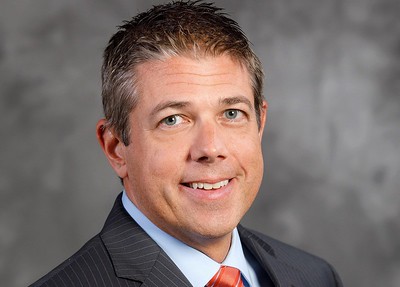
CDI named Mike Anderson the 14th president at Churchill Downs Racetrack, home of the Kentucky Derby. Anderson joined CDI in 1996 as controller and has served as vice president of corporate finance, investor relations, risk management and treasurer. Most recently he was vice president of operations, where he managed the planning, construction and opening of more than $300 million in capital projects at numerous CDI properties.

CDI President and Chief Operating Officer Bill Mudd said, “Mike Anderson is a uniquely qualified leader to assume the role of president at Churchill Downs Racetrack, having successfully and consistently delivered on company goals across multiple departments. Over its 146-year history, the racetrack has grown into an incredibly sophisticated and complex business organization, and Anderson is poised to lead it through continued growth and success.”

Anderson stated, “The opportunity to serve this company, the Commonwealth and our community as president of Churchill Downs Racetrack is the privilege of a lifetime. As a native of Louisville, it is humbling to consider what this historic place represents to so many people. I am eager to build upon the great traditions of the Kentucky Derby and continue the company’s work to establish a legacy of integrity and inclusivity both at Churchill Downs and within our industry.”

CDI also appointed Mike Ziegler as senior vice president and general manager at Churchill Downs Racetrack. He will continue to serve as executive director of racing for the company as CDI conducts a search to support him in that function. Ziegler joined CDI in 2015, previously serving in numerous leadership roles across the industry.

In addition, CDI named Ryan Jordan vice president of operations, corporate. He will oversee operational support for all business units. Jordan joined CDI in 2009 as vice president of operations for Churchill Downs Entertainment Group. Later he was appointed senior vice president and general manager of Churchill Downs Racetrack.

Mudd stated, “I am excited for Ryan to join us in this key position at corporate. It is a great opportunity for him to expand his experience base and further contribute to the company.”

Penn National Opens Barstool Books in Indiana, Detroit

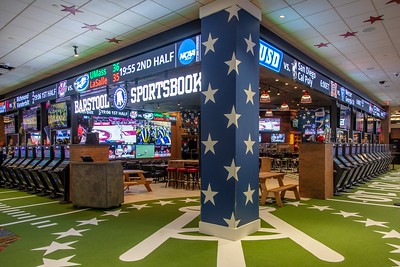
Penn National Gaming, Inc. last week launched Barstool-branded retail sportsbooks at its rebranded Barstool Sportsbooks at Hollywood Casino Lawrenceburg and Ameristar East Chicago Casino & Hotel in Indiana, an at Greektown Casino in Detroit.

“We are very excited to be opening our newly branded Barstool Sportsbooks,” said Rafael Verde, senior vice president of regional operations for Penn National. “The new designs incorporate the spirit of the Barstool Sports brand, resulting in unique sports wagering and dining experiences that we expect our customers will thoroughly enjoy.”

Penn National has rebranded the existing sportsbooks located near the entrance to the casino floor at Hollywood Lawrenceburg and by the entrance to the property at Ameristar East Chicago. Each Barstool Sportsbook features a captivating entryway, sports viewing area, redesigned dining space, betting counter that features large odds boards, numerous sports betting kiosks and ticket writer stations that will support thousands of sports wagering options for customers.

Guests will enjoy a first-class wagering experience in close proximity to dining and numerous televisions showcasing sports action from across the country and around the world. Guests will also be able to earn tier points and myCashmycash using the company’s myChoice loyalty program when wagering at the sportsbook.

“Hollywood Lawrenceburg and Ameristar East Chicago have been offering sports wagering in Indiana for well over a year,” said Mr. Verde. “The passionate sports fans in the Tri State area and Chicagoland have been eagerly awaiting the opening of our new Barstool Sportsbooks, and we look forward to introducing both in the coming days.”

At Greektown, the new Barstool Sportsbook is located on the second floor adjacent to the table games area. As with the others, it features the branded entryway, sports viewing area and dining space, betting counter that features large odds boards, numerous sports betting kiosks and ticket writer stations. Customers earn the same myChoice perks.

“We are thrilled to be opening our new Barstool Sportsbook,” said John Drake, vice president and general manager at Greektown Casino. “The new design showcases the spirit of the Barstool Sports brand, resulting in an outstanding sports wagering experience that we expect our customers will thoroughly enjoy.

“The passionate sports fans in Detroit and throughout Michigan have been excitedly awaiting the opening of our new Barstool Sportsbook. We look forward to welcoming them.”

Florida Senator Files Sports Betting Bills

When Florida’s 60-day legislative session begins March 2, lawmakers will be seeking ways to address the state’s projected $3 billion revenue shortfall over the next two years without raising taxes. After gambling legislation failed to pass in the last two sessions, legislators are expected to consider—but not necessarily pass–proposals to legalize sports betting.

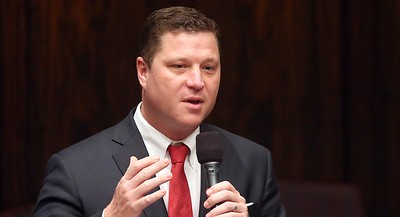
State Senator Jeff Brandes has filed three gambling bills. Senate Bill 392 would allow the Department of the Lottery to license and regulate legal sports wagering in Florida, starting October 1, 2021, with revenue dedicated to education. SB 394 would tax sports betting revenue at 15 percent. And SB 396 would set up $100,000 application and renewal fees for state-issued sports wagering licenses.

Brandes proposed similar bills at the end of the 2020 session. He said he hopes they will encourage talks between Florida and the Seminole Tribe which claims to have exclusivity regarding sports betting, and which stopped making revenue sharing payments to the state due to disagreements over banked card games, control of online gaming and sports wagering. The two sides held compact discussions last year but they went nowhere.

Another consideration concerning sports betting is Amendment 3, which passed in November 2018, requiring any gambling expansion to be approved by 60 percent of voters, bypassing the legislature.

Florida Senate President Wilton Simpson‘s office commented, “President Simpson believes it is important to look at opportunities to maximize revenue for the State of Florida. Discussions continue regarding what is available to us on the private side and also with the Seminole Tribe. At this time, the Senate is not at a point where we are prepared to introduce legislation related to these issues.”

Kentucky’s Beshear Wants Sports Betting, Historic Horseracing

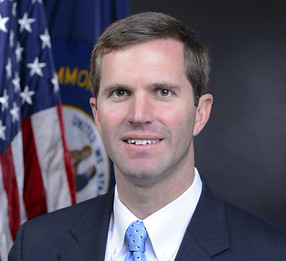
Kentucky Governor Andy Beshear recently reiterated his belief that sports betting should be legalized in the state. When asked if the time is right, Beshear responded, “I believe the time was right years and years and years ago when virtually every state around us, all Republican states, already have it. We talk about having a competitive business climate but right now we’re not allowing business that every state around us is.”

Beshear noted five neighboring states allow sports betting—Illinois,  Indiana, Tennessee, Virginia and West Virginia—and Missouri and Ohio are moving forward on legislation. “The fact is you can drive right across the border, virtually any of our borders, and on your cell phone make a bet, and a dollar or a percentage of that bet is going to go to those states for their roads and bridges, for their schools and for other needs. The fact that we haven’t done it at this point is not only silly but puts us at a competitive disadvantage,” he said.

Last year, state Rep. Adam Koenig’s proposed sports wagering bill stalled in committee. He is sponsoring sports betting legislation again this year although there may not be enough time to consider it in the 30-day session, since legalizing historic horseracing is the top priority, he said. The Kentucky Supreme Court last year ruled some of the games did not comply with state pari-mutuel laws. In the last fiscal year, historical horseracing machines generated $33.8 million in tax revenue for the state.

“Historic horseracing is something that’s absolutely necessary if we want to continue to be the thoroughbred capital of the world. It supports thousands upon thousands of jobs and it’s time for the Senate and the House to step up and do right for an industry that we cannot let go somewhere else,” Beshear said.

He added he’d like to expand gambling to also include casinos. “Let’s go ahead and do full casino gaming. Indiana has it. They make hundreds of millions of dollars a year in revenue. We ought to do that. I’m willing to start with sports betting, but how about we compete with West Virginia, Pennsylvania, Indiana, Ohio and Missouri that all have casinos at or near our borders,” Beshear stated.

Meanwhile, he said, “We want to help push sports betting over the line this year. We think once people see that and the opportunity that’s there that hopefully we’ll be closer to the full-blown gaming that I believe the majority of Kentuckians want and are tired of their dollars paving the roads in our neighboring states.”

Online Sports Betting Near Debut in Virginia

The Virginia Lottery expects to say “yes” in January to activation of more than a dozen betting sites to take sports wagers. Officials predict as much as $400 million in handle in 2021, and rising from there.

Virginia Lottery Director Kevin Hall said the state received 25 applications for a license. The law requires the lottery to pick a minimum of four and a maximum of 12 providers. Sports organizations are not counted in the 12. So any applications submitted by the Washington NFL football team, the D.C. United soccer franchise or NASCAR could be approved for a license without affecting the limits.

Virginia’s tax rate of 15 percent is higher than some, lower than others.

Jessica Feil, a lobbyist with the American Gaming Association, said the industry believes a tax rate in the low teens is ideal.

While lottery proceeds in Virginia are dedicated to education, tax revenue from sports gambling will go to the state’s general fund. The state could realize as much as $5 million in the initial year and eventually generate $455 million a year, according to the Associated Press.

State Senator Jeremy McPike, a sponsor of the enabling legislation, is satisfied that the lottery regulations match legislators’ intent. The lottery expects to grant final approval to would-be operators sometime in January. Once that approval is granted, the companies can accept wagers.

Sinclair Broadcasting Lays Groundwork for Minnesota Sports Betting

Sinclair Broadcasting expects to take sports betting to a new level next summer should Minnesota legalize the wagers. Here’s an example involving the Minnesota Twins, televised on Fox Sports North, owned by Sinclair.

Twins play-by-play guy Dick Bremer asks viewers if the closer will succeed. “If you’d like to place a bet on it, just go to your Bally’s Sports app and click on ‘in-game wagers.'”

To accommodate the approach, Fox Sports North will be rebranded to Bally’s Sports, perhaps by opening day on April 1. But bringing gambling to broadcasts goes beyond baseball, to the Timberwolves, Wild and Minnesota United FC games. The rebrand follows the $86 million deal in November with Bally’s Corp. as a way to enhance the relationship between sports and betting, according to the Minnesota Star Tribune.

Betting on games “creates more engagement, and that’s what drives value for teams,” Chris Ripley, Sinclair’s CEO, said. “It’s a win-win for everybody.”

Sinclair said that its regional networks, hurt by the pandemic, lost $4 billion in worth after the Fox purchase. So finding new eyeballs is a must.

Research indicated 63 percent of 25 to 34 viewers acknowledge an interest in sports betting; 46 percent bet on games at least once a month; and more important, people who bet on games are 24 percent more likely to watch the games.

“The overall vision, of which this is a keystone, is to ‘gamify’ sports, to make watching sports like playing a video game,” Ripley said. “We think this will dramatically increase the attractiveness, especially for a younger generation.”

Part of the equation is to make betting available on mobile devices. To that end, Bally’s paid $100 million to purchase Bet.Works, which develops gambling software for a mobile app that can connect to Sinclair’s streamed broadcasts.

Bills have been filed in the Minnesota legislature to legalize sports gambling in each of the past two years, but faced enormous opposition from tribal casino owners. But Fox Sports North reaches into northern Iowa and Deadwood, South Dakota, both not far for Minnesota residents.

Online Super Bowl Bets Possible In Virginia

Online sports betting licenses could be approved in Virginia within the next few weeks. Virginia Lottery Executive Director Kevin Hall said, “If a licensee is ready to go, some of them could be up and running by the Super Bowl. That’s a good opportunity. It’s the biggest thing on the sports calendar all year, so we might be able to launch with a bang.” Hall said the lottery has received 25 applications for 12 licenses.

Under the law passed last year, wagers could be made on pre-game and in-game professional sports, and pre-game bets could be placed on collegiate sports outside of Virginia.

He noted sports betting could produce up to $5 million in the first year, then double each year thereafter. The state could receive up to $50 million in tax revenue if all 12 licenses are filled, which he estimated would occur within four to five years.

Hall said online sports wagering is nothing new but legalizing it would add safety and regulatory measures, like verifying the age, identity and location of players, making sure they’re physically located in Virginia. Also, problem gambling services would be available. “The priority is here in Virginia, sports betting is offered in a safe and responsible way. There will be strong consumer protections, guardrails that prevent underage gambling, procedures and audits to make sure there’s no criminal activity like money laundering or tax evasion. It’s being done successfully in other states so we can learn from their experiences,” Hall said.

Also in Virginia, the city of Richmond, Virginia announced it is now accepting proposals for a casino resort. Applications will be due by 3 p.m., February 22, 2021. A public comment period and consultations with third-party experts will occur after that. In November, a voter referendum will be required, as well as the selection of a preferred casino operator and location. At least three casino operators have indicated they’re interested in developing a casino resort in Richmond: Colonial Downs Group, Urban One Inc. and the Pamunkey Indian Tribe, which has proposed a $350 million facility.

Richmond is one of five cities authorized to have a casino resort in legislation signed by Governor Ralph Northam in early 2020. Voters in the other four locations–Bristol, Danville, Norfolk and Portsmouth—overwhelmingly approved casino resorts in their cities in last month’s election. State officials estimate the five venues could generate $262 million in annual tax revenue.

Mayor Levar Stoney commented, “This competitive selection process will allow us to find the best opportunity for Richmond, an economic development project that includes well-paying jobs and workforce training opportunities. Ultimately, the operator selected for this project must bring to the table the economic opportunity and community benefits voters will support in November.”

Richmond Director of Economic Development Leonard Sledge added the project could benefit the city “at the sole expense” of the casino operator. “Subjecting potential operators to a robust competitive review process ensures that the city can make the most of this opportunity on behalf of its residents,” he said. Stoney spokesman Sam Schwarzkopf confirmed, “The casino operator will be solely responsible for all costs associated with designing, building, opening and operating the resort casino.”

Results from a survey released earlier this month indicate the public wants to know how the casino resort applicants will support minority owned business enterprise and improve surrounding businesses and public infrastructure. In addition, applicants are being asked to submit drawings of their proposed venue, details about its size and revenue projections, as well as community engagement plans and chow they would address adverse impacts on the public, such as gentrification, traffic congestion and crime.

Mid-January Launch for Michigan Mobile Bets

The Michigan Gaming Control Board has approved 15 casinos and their vendors to offer online gambling when it goes live as expected in mid-January. Governor Gretchen Whitmer signed legislation legalizing sports betting in December 2019. The three Detroit casinos—MGM Grand Detroit, Motor City and Greektown and 20 of the state’s 23 tribal casinos—all opened sportsbooks.

However, online gaming required a separate set of regulations, which were approved by the Joint Committee on Administrative Rules on December 1. The 15-day waiting period was waived, allowing casinos and the gaming control board to issue licenses immediately.

Among the initial 15 licensees were the American Wagering division of William Hill, GAN, Golden Nugget, Scientific Games’ NYX Digital Gaming arm, Parx Interactive and PointsBet, BetMGM, DraftKings and FanDuel’s online casino brands. Provisional licenses have since been issued to Gaming Realms, Continent8, NetEnt and AGS. Now each platform must undergo independent testing to ensure the integrity of their games and that they can make sure bets are not placed by anyone underage or not located within the state lines.

Michigan Gaming Control Board Executive Director Rick Kalm said testing labs may be running behind due to a number of states planning to launch online gambling at the same time, including Iowa and Illinois. Another slowdown may be caused by the fact that Michigan was the only state to regulate online gambling for both tribal and commercial casinos.

As a result, the gaming board must license tribal casinos for online sports betting, even though they have operated independently of state oversight as sovereign nations. That means the state must wait until platforms for both a tribal and commercial casino are ready at the same time, in order to give both types of casinos equal opportunity.

Analysts expect online gambling will generate more than $90 million in revenue in its first year. The three commercial Detroit casinos– – will be taxed at 8.4 percent on online gambling revenues, directed to Detroit and to the state which will allocate the money to the School Aid Fund.

Kalm noted, “We have a division of online gaming already inside the agency which will be ensuring internal controls and watching the online gaming format. But we still have the retail side, the commercial casino side, and we have regulators in place there, too. It’s sort of adding another arm to us.”

Meanwhile, Whitmer recently signed Senate Bill 991 that would allow online poker to be played across state lines. Specifically, real-money online poker sites in Michigan could pool players with their sites in other regulated states as well as Native American tribes. Nevada, Delaware and New Jersey currently offer interstate poker. The bill passed the state Senate 36-1 and the House 85-16 on December 30. It will take effect before the end of March.

PokerStars, owned by FanDuel, is expected to be first online poker platform to go live.

WSOP Announces Online Tournament Series

The World Series of Poker (WSOP) has announced an online circuit series that will commence January 14 with the first of a slate of online tournaments for 2021 with WSOP.com as the official home.

Holding live poker tournaments is problematic for at least the first part of the year, so the annual circuit has been moved online. It will include leaderboards and ranking systems and 13 online events with additional prize money and more than 180 Gold Rings. There will also be online festivals monthly in the Nevada and New Jersey markets.

The structure of the tournaments will be modeled on the live events of the past. Each series will have 12 WSOP gold ring events with four “Super Circuits” with an expanded slate of 18 gold ring events, such as $1,000 and $2,000 high roller events.

A new feature of this year will be some tournaments that will be co-branded with official casino host venues. Players from outside of the market will be offered special rates to stay at those casinos.

To sweeten the pot the WSOP Online Circuit Services will add more than $600,000 in prizes. WSOP Executive Director Ty Stewart commented,

“Players deserve great tournaments and great value year-round, and that’s what we aim to do with the 2021 WSOP Online Circuit Series. We’ve been thrilled with the big prize pools for WSOP.COM events in 2020, and we only expect to see that grow with this new model.”

The WSOP Online Circuit Championship Gold Bracelet Event will have a $250,000 prize pool with 256 entrants. There are many ways to qualify for this tournament, such as winning a WSOP Gold Ring or the $10,000 Player of the Month Leaderboard, where the top 10 players will win a share of the $10,000 and be invited to participate in a $25,000 freeroll, with the first-place finisher winning a seat in the Year-End championship.

Golden Nugget Offers West Virginia iGaming

Golden Nugget, the leader of New Jersey’s online casino market, announced a partnership with the Greenbrier in West Virginia to bring online sports betting and casino gambling to the state, pending regulatory approval. The deal makes Golden Nugget the third online casino operating in West Virginia, following the launch of DraftKings Casino in July and BetMGM in August.

Other online sports betting options include DraftKings, FanDuel, BetMGM, William Hill and Betly, the online sportsbook offering from Mardi Gras Casino.

West Virginia is one of only four states that allow all three forms of online gambling–sports betting, casinos and poker. New Jersey and Pennsylvania currently also offer all three iGaming options, and Michigan is on the brink of offering online gambling.

Observers expect FanDuel to expand operations in West Virginia to compete with market leader DraftKings.