Author: Casino Connection Staff

Golden Nugget Online to Go Public, Split from Casino

The New Jersey Casino Control Commission last week granted a casino license to Golden Nugget Online Gaming LLC, and approved the internet casino subsidiary’s request to merge with a purpose acquisition company to become a public company traded on the Nasdaq exchange.

The move was approved at a special meeting of the commission the day before Thanksgiving, requested by Golden Nugget casino owner Tilman Fertitta. Federal regulators must still sign off on the deal.

The approval comes as Golden Nugget Atlantic City continues to be the market leaders in online gambling in New Jersey. In 2019, Golden Nugget reported more than $177 million in online gaming revenue. The land-based casino only generated $22 million more than online for the entire year. Through the first 10 months of 2020, Golden Nugget has won more than $263 million from online gaming.

The license granted to GNOC makes the entity an internet gaming affiliate of Golden Nugget casino. The entity itself will merge with publicly traded Landcadia Holdings II Inc., a “blank check” acquisition company established by Fertitta that currently trades under the symbol LCA. After the merger, the new public company would trade under the symbol GNOC.

At the special meeting, Golden Nugget Vice President and Treasurer Richard Liem testified that the merger would allow Golden Nugget Online, New Jersey’s top online gaming site, to access capital to enable it to compete with larger operators in the expanding U.S. iGaming market.

“You need to have adequate access to capital to be able to grow and compete effectively in this nascent and very quickly growing industry,” Liem said, according to the Press of Atlantic City.

A representative of the state Division of Gaming Enforcement, Dylan Thompson, expressed concerns at the hearing that the deal could hurt Golden Nugget Atlantic City, which has benefited greatly from the iGaming revenue boost.

“The transaction would deprive (the casino) of the much-needed cash flow from internet gaming on a permanent basis,” Thompson said.

Because of this CCC Chairman James Plousis recommended conditions be added to the merger agreement to protect the land-based casino’s revenues.

“While there may continue to be variations in Golden Nugget’s online gaming versus land-based gaming revenue, particularly as the industry as a whole works to recover from the impact of Covid-19, I am satisfied with the petitioners’ assurances that they are committed to Golden Nugget Atlantic City’s ongoing financial stability,” Plousis said, according to the Press. “I am convinced that Mr. Fertitta will protect Golden Nugget’s brand of excellence and elegance, and will do so by supporting, maintaining and ultimately growing the Atlantic City casino hotel facility.”

In related news, Golden Nugget Online Gaming entered into a definitive agreement with Danville Development on November 19 to provide online sports wagering and iGaming in Illinois when it becomes legal.

Golden Nugget also agreed to a joint venture with Wilmot Gaming Illinois to build a new casino in Danville, Illinois, pending regulatory approvals. The casino, when opened, will be branded Golden Nugget. Danville Development is a joint venture between Wilmot and GN Danville, LLC, a wholly owned subsidiary of Golden Nugget.

In addition to the online component, GNOG will provide a mezzanine loan in the amount of $30 million to Danville Development for development of the casino. The 20-year agreement required GNOG to pay Danville Development a percentage of its online net gaming revenue, subject to minimum royalty payments over the term.

“The Golden Nugget is a nationally recognized brand and strengthens the submission, provides additional opportunities, and upgrades the overall project,” said James A. Wilmot, vice president of Wilmot.

This marks the Golden Nugget’s first joint venture on a casino project, Fertitta said. “We are honored to be the one selected amongst numerous bidders for this opportunity by the Wilmot family after a highly competitive process.”

Golden Nugget Online Gaming also struck a deal November 23 with Greenbrier Hotel Corporation in West Virginia for the right to offer mobile sports and online casino wagering under the Greenbrier’s licenses, again subject to regulatory approvals. As with Danville, GNOG will pay the Greenbrier a percentage of its online net gaming revenue, subject to minimum royalty payments over the term.

“The partnership with the Greenbrier is an important milestone for Golden Nugget Online Gaming expansion plans,” Fertitta said.

Greenbrier President Dr. Jill Justice said Golden Nugget has proven itself as a market leader in the industry. “We’re confident it will deliver a product that matches the standard that defines ‘America’s Resort,’” Justice said.

Billionaire Fertitta Considers IPO

Tilman Fertitta, the Texas billionaire who has built a casino and restaurant empire, may be taking his company public, according to Bloomberg.

Supposedly Fertitta is just exploring his options having been encouraged by recent upward moves in the stock market. No one has been willing to talk on the record about the discussions.

Fertitta has casinos in New Jersey, Nevada, Mississippi and Louisiana under the Golden Nugget brand and many restaurants under the Landry’s brand, which includes Bubba Gump Shrimp and Del Friscos, with a combined value of several billion. According to these reports, the billionaire would want to retain 50 percent of the company.

Fertitta has a net worth of about 4.1 billion, according to Forbes. That’s down from $4.9 billion before the pandemic and also due to the fall in oil prices. In reaction to the pandemic he furloughed 40,000 employees and borrowed $250 million to fund operations.

He has used leveraged funds to build his empire. Issuing an IPO would enable him to pay down some of that debt.

Not included in the IPO would be his basketball franchise and other entertainment assets.

Previously the billionaire announced plans to take his online gaming enterprise public as Golden Nugget Online. His consideration of an IPO for his restaurant and casino empire put a damper the price of the vehicle he’s using to take his online operations public.

Resorts Partners with Atlantic City Icons for New Restaurant

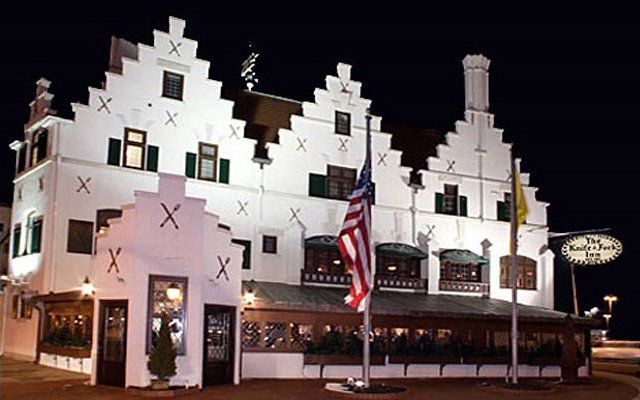
Come the New Year, Gallagher’s Steak House and its companion burger bar will end a long stay at Resorts Casino Hotel. In its place will be a new restaurant created by the owners of the iconic Knife & Fork Inn and Dock’s Oyster House, according to the Press of Atlantic City.

“This concept will provide a dining experience to our valued guests that is very unique from what we currently offer, and will be a perfect addition to Resorts’ winning amenities,” said Mark Giannantonio, president and CEO of Resorts.

The yet-to-be-named restaurant will feature a classic steakhouse, raw bar and live entertainment, according to a news release.

“We are excited to embark on this project with Resorts,” said Frank Dougherty, owner of both restaurants. “Resorts shares our commitment to preserving the history and ensuring the success of Atlantic City, and we are looking forward to a successful partnership on this new dining concept.”

Frank’s great-grandfather, Harry, opened Dock’s in 1897. The Knife & Fork opened as a men’s club in 1912 and was a speakeasy during Prohibition. In 1927, it became a restaurant when the Latz family purchased the building. The family managed the Knife & Fork until 2005 when they sold it to the Dougherty’s.

Report Spells out Market Leaders in Mobile Bets

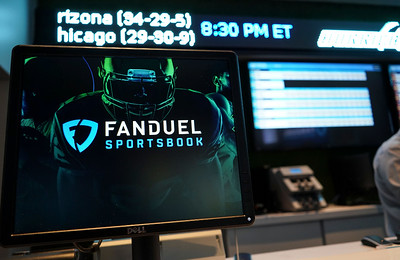
A report by Roundhill Investments looked at the market leaders in mobile sports betting state by state.

For the kingpin in sports betting, New Jersey, FanDuel and PointsBet share top spot as a result of their partnerships with the Meadowlands Racetrack. Together, they captured 62.5 percent of the market in September. But FanDuel, whose deal goes back farther, takes in the majority of the revenue, according to SportsHandle.

The leader in Nevada, where the mobile online revenue is just 54.9 percent compared to 89 percent in New Jersey is William Hill, with 33 percent, two thirds from mobile wagering. In Pennsylvania, FanDuel tops a market which has 89.5 percent of the handle from mobile bets.

For Indiana, where 83.5 percent of bets come from mobile sources, DraftKings ranks first. Colorado draws 98.4 percent from mobile wagers, and DraftKings and FanDuel have a large percentage of the bets, even though the state does not report by operator.

Until mid-August, BetRivers had a monopoly in Illinois. By then DraftKings and FanDuel joined the parade, but no clear winner at this point it seems.

DraftKings takes honors in West Virginia, where 77 percent of the handle comes from mobile. In Iowa—with a modest 69 percent of its handle from mobile—William Hill leads a crowded field. William Hill has a monopoly in Rhode Island, a state which draws 45 percent of revenues from mobile.

The report cites DraftKings as the winner in Oregon, but… it’s complicated as a result of the lottery involvement and a DraftKings merger with SBTech.

Speaking of lotteries, the Washington, D.C. version runs that show. But a temporary brick-and-mortar sportsbook at Capital One Arena run by William Hill brought in four times as much revenue in September than the online lottery product.

Atlantic City’s Credit Getting Stronger

Things are looking better for Atlantic City thanks to oversight of its government operations by the state of New jersey according to Moody’s Investor Services.

While the credit agency affirmed Atlantic City’s Ba3 credit rating Tuesday, it also changed the city’s outlook from stable to positive.

That change was due in part to the state helping to city deal with debt and financial challenges from the Covid-19 pandemic which has caused declining revenue at the city’s nine casinos, according to an analysis of the report by the Press of Atlantic City.

While the city’s credit rating remains below investment grade, the new outlook introduces the possibility of an upgrade in the next 12 to 24 months, the agency said.

“The new, positive outlook reflects our expectations that, despite the pandemic, Atlantic City will continue making strides in improving its governance and finances,” according to the Moody’s report. “While the pandemic has negatively impacted the casino industry, the negative credit consequences are relatively offset by the improved management of city operations and the more predictable PILOT (Payment In Lieu of Taxes) payment structure for casinos.”

Atlantic City has been under state oversight since 2016 with the passing of the Municipal Stabilization and Recovery Act, which is set to expire. Moody’s said reports that the act may be extended helped with the positive outlook.

“The state’s future oversight role remains to be determined and will be of critical importance to the city’s future credit,” the Moody’s report stated.

The report also said that the fiscal effects of COVID-19 restrictions on Atlantic City’s casinos highlighted the city’s “critical need for diversification,” of its economy.

Atlantic City Casino Jobs Shrink Again in October

It comes as no surprise that the labor market in the Atlantic City casino industry continues its slump. The number of employees declined double digits for the fourth consecutive month in October compared to the pre-Covid 2019.

The nine casinos employed 22,220 in October, according to the state Division of Gaming Enforcement, or 4,670 less that the same month last year, a drop of 17 percent. Even when the casinos reopened in July, they did so with capacity and other constraints cutting back on the labor requirements, according to the Press of Atlantic City.

“It’s getting tougher and tougher. These restrictions make a big difference,” said Steve Callender, president of the Casino Association of New Jersey and regional president for Caesars Entertainment Inc.

And with a surge in Covid-19 cases in New Jersey, fewer people expect to visit, which will impact employment through the winter.

October full time employment fell 21 percent while part-time work dropped 42 percent. At the same time, seasonal, on-call and furloughed workers increased 22 percent.

“The industry is hurting globally,” said Robert Ambrose, a former Atlantic City casino marketing executive and current associate professor of casino management at multiple schools. “The labor numbers we see are a direct reflection of seasonal staff reductions, pandemic influencers, such as mandated restrictions on dining, capacity and events, and a lack of discretionary income from those that are unemployed.”

The industry’s bright spot of online gaming and sports betting requires far fewer employees than brick-and-mortar casinos, he said.

“Casino win (revenue from slot machines and table games) is down and revenue from all amenities have been impacted,” Ambrose said, adding the industry slump may continue for a considerable amount of time.

Staff reductions contribute to balancing revenue declines, said Jane Bokunewicz, coordinator of the Lloyd D. Levenson Institute of Gaming, Hospitality & Tourism at Stockton University.

“The pandemic has simultaneously suppressed consumer demand and increased the cost of doing business because of safety precautions to protect employees and guests, forcing casino operators to scale back other expenses wherever possible,” she said.

Even those gainfully employed face a reduction in hours and wages, Callender said.

“The people that are working, a lot of them aren’t working 40 hours. They’re getting trimmed here and there, and it’s a difficult situation for them.”

And a return to normal won’t happen until the pandemic is under control either through treatments, a vaccine or both.

Chicago Casino One Step Closer To Reality

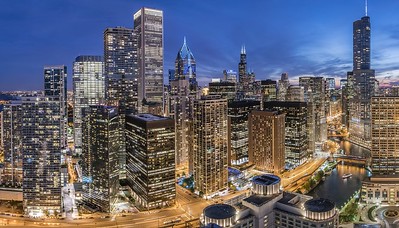
This summer, Chicago Mayor Lori Lightfoot’s office asked interested parties to answer questions about a potential casino in the city. The office recently released a non-binding summary of the responses from 11 operators, including casino operators Hard Rock International, MGM Resorts International, Wynn Resorts and a partnership between Rush Street Gaming and developer Related Midwest. Real estate developers D3 Realty, Development Management Associates, JDL and R2 Companies also responded.

Lightfoot said the city is now “one step closer to bringing the long-awaited Chicago casino to life.” She said the responses from the 11 firms contain “critical information we need to ensure this project will be a success.”

Eight of the respondents stated the casino should be built in or near downtown, agreeing with a 2019 feasibility study that recommended the Chicago casino be located “in a tourist-centric location that also enjoys, if possible, decent access to the local population.”

This could lead to pressure for Lightfoot from south and westside aldermen who want the casino in their wards, since it could create hundreds of jobs that have been passed over for private and public investments. Lightfoot previously said she would “work to put a casino in a place where we can spur economic growth as part of a larger economic development initiative.” Governor J.B. Pritzker also has commented he’d prefer the casino be developed in an area that has not benefited from the recent Chicago downtown development boom. The casino site will be selected after “a robust community engagement process,” that includes public meetings, officials said.

According to the summary, six of the 11 respondents who said they would operate a temporary casino during the two to three years it would take to build a permanent facility noted it should be downtown, but not in the same location as a permanent casino. They said the cash flow from a temporary casino would help pay for the larger venue, provide earlier tax revenue and create jobs. Three said a temporary casino would add extra cost, detract from the permanent facility and create confusion in the marketplace.

The summary also indicated the final choice for a Chicago casino should have adequate parking and be in a visible location near city amenities with the “ability to leverage the Chicago riverfront.” Ten of the 11 respondents stated the casino must include a hotel with 100 to 750 rooms, 25,000 square feet to 50,000 square feet of convention, entertainment and retail space, with a 100,000-square-foot to 200,000-square-foot gaming floor. One said it would use existing Chicago hotels but possibly build one later.

The information in the responses will be used to create a formal request for proposals early next year, depending on the Covid-19 situation, officials stated. The respondents “agreed that the current Covid-19 pandemic will have no or minimal impact on the finally constructed casino facility given the timeline for selecting and licensing a casino operator and construction of the casino complex,” according to the mayor’s office.

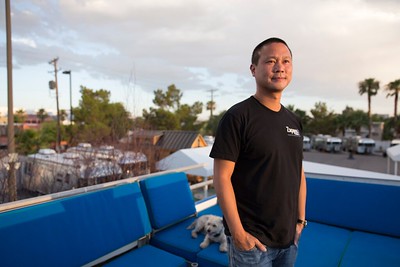
Tony Hsieh: A Visionary Remembered

Tony Hsieh was known for having the courage to put his money where his mouth was. Those who knew Hsieh will remember him for changing the face of Las Vegas with his own investment money, revitalizing the image of Downtown Las Vegas into a vibrant nightlife, art and restaurant scene.

It was, after all, Hsieh (pronounced “Shay”) who said in a 2013 speech he wanted to turn Downtown into “the most community-focused large city in the world.” This was a tall order given Las Vegas’ reputation as one of the most transient cities in the world. But that didn’t faze Hsieh.

“Before Tony moved his Zappos headquarters to the former Las Vegas City Hall in Downtown Las Vegas the national image of Downtown was loose slots and cheap shrimp cocktail,” says Seth Schorr, CEO, Fifth Street Gaming and chairman of Downtown Grand Hotel & Casino.

“And while there is definitely nothing wrong with a good value; Tony Hsieh brought a cache and energy to Downtown Las Vegas that had been lacking for decades. His vision, fully realized or not, helped shift the outdated stigma of our beloved Downtown to a tech-centric, hip and progressive city filled with innovative thinkers and visionaries focused on building a new community.”

As has been well-reported, Hsieh, former CEO of Zappo’s and eccentric Downtown Las Vegas visionary died November 27 of injuries from a housefire in Connecticut.

“When Tony Hsieh got involved in Downtown Las Vegas, few people shared his optimism for its future or his faith in its potential,” says Dr. David Schwarz, professor and gaming historian, University Libraries, and Associate Vice Provost, Office of Faculty Affairs.

Hsieh, who once lived in a 240-square-foot Airstream trailer Downtown with a pet alpaca named Marley, invested about $350 million in Downtown redevelopment. By 2017, Hsieh owned a reported 90 properties in the area. In addition to the sheer number of properties, it’s important to realize just how daring was his move to purchase those properties.

“Thanks to his vision and drive, Downtown Las Vegas is fundamentally different,” Schwartz says. “Thanks to him, the former city hall was transformed into a hub for commerce and numerous businesses were started on and around Fremont Street. His willingness to think big and out of the box pushed the redevelopment of Downtown farther and faster than most thought possible.”

Hsieh invested primarily in the East Fremont Street area and turned some iffy properties into a place now no one fears to tread. The basis for his decision to invest so heavily in Downtown stems from his understanding of a trend that he saw firsthand: the desire for Millennials to live and work within an urban area and not to commute inward from the suburbs.

He started amassing his fortune at a young age. At 24, Hsieh sold LinkExchange, an online marketing firm, to Microsoft Corporation for $265 million in stock. Shortly thereafter, Hsieh invested in Zappo’s, originally called ShoeSite.com. Hsieh and cofounder Nick Swinmurn ran the company together for a few years before moving the business from San Francisco to Henderson in 2004.

Hsieh became involved with Zappos as an advisor and investor in 1999, about two months after the company was founded. He eventually joined Zappos full time in 2000. Under Hsieh’s leadership, Zappos gross merchandise sales grew from $1.6 million in 2000 to over $1 billion in 2008.

In 2009, Hsieh, then chief executive, sold Zappo’s to online retail monolith Amazon for roughly $1.2 billion. In 2013, Hsieh moved Zappo’s headquarters from Henderson to the 11-story former Las Vegas City Hall.

Just this past August, Hsieh stepped down from the company he helped build and began a homebuying spree in the upscale ski town of Park City, Utah, including a 17,350-square-foot mansion complete with a sports court, private lake and horse riding corral, as well as other homes no smaller than 2,900 square feet. And in October, Hsieh’s side company DTP Companies — the downtown investment side of Hsieh’s empire formerly called the Downtown Project and begun in 2012 — bought Zappo’s headquarters for $65 million.

This brought about 1,500 workers into the center of Downtown, where Hsieh’s investments gave them something to do where before there was just decaying buildings and sketchy alleys. Now people had a reason to walk down East Fremont past the Fremont Street Experience besides just to go to the Atomic Café.

“We inspire people to live, work, and play through cultivating environments that encourage creativity, discovery, and WOW experiences,” according to DTP’s mission statement. “DTP is dedicated to helping revitalize part of Downtown Las Vegas through investment in small businesses; tech startups; real estate and development; and arts, culture and education. We are doing that by inspiring and empowering people to follow their passions to create a vibrant, connected urban core.”

DTP’s projects included Container Park and the Fremont9 apartments, a joint venture with the Wolff Company of Arizona. Container Park is an outdoor shopping mall and entertainment complex Downtown, where its tenants are housed in metal cubes and shipping containers.

Critics of DTP’s redevelopment plan cited more expensive housing in a market in which affordable housing already is hard to find. According to its website, the Fremont9 apartments, located at 901 Fremont St., range in price from $1,177 to $4,503 per month and range in size from 395 to 1,444 square feet.

Hsieh also was a strong supporter of the Smith Center for the Performing Arts. He donated $1 million to the Smith Center and would buy all the tickets in his box and distribute them among his employees.

“Tony’s kindness and generosity touched the lives of everyone around him and forever brightened the world,” according to a statement from DTP Companies. “Delivering happiness was always his mantra, so instead of mourning his transition, we ask you to join us in celebrating his life.”

Delivering Happiness was not just Hsieh’s mantra but it also was the title of his 2010 autobiography. In his book, Hsieh tells of his business strategy to make customer service the responsibility of all employees, not just the department, and how to incorporate the science of happiness into the workplace. Under his leadership, Zappo’s debuted as the highest-ranking newcomer in Fortune magazine’s annual “Best Companies to Work For” list in 2009.

The DTP release goes on to say: “On behalf of all DTP companies employees and staff, we would like to express our deepest condolences to Tony’s family and friends who have all lost Tony as a cherished loved one, visionary and friend. Tony was highly regarded by all of his fellow friends and colleagues in the tight-knit family at DTP companies, so this heartbreaking tragedy is one that affects many involved.”

Las Vegas Mayor Carolyn Goodman tweeted recently: “He was always dreaming, working to inspire and leading others to create a new vision.”

Ironically, Hsieh’s last days were anything but happy. In an article in Forbes magazine, authors Angela Au-Yeung and David Jeans, described a man so desperate for companionship that he hired a team of people just to be around him as he invested millions of dollars in Park City, while constantly huffing nitrous oxide. He was befriended by the singer, Jewel, who left abruptly in August after spending the summer there, leaving Hsieh a letter outlining the dangerous path he was on.

“The people you are surrounding yourself with are either ignorant or willing to be complicit in you killing yourself,” she wrote.

Even Hsieh’s death is shrouded in mystery. The house he was in he had given to a former employee, with whom he was still close. Several other people got out of the house safely, but Hsieh was found locked inside a storage area. Police and fire officials are still investigating the cause of the fire.

In the end, a person who had inspired happiness in others was the one searching hopelessly for it himself.

Covid Continues to Dog U.S. Casinos

Several states have either closed casinos in a second lockdown or increased restrictions on opening hours and amenities offered in the wake of a spike of Covid-19 cases spreading across the United States. While some are temporary and have an expiration date, others are indefinite and could be in place for months. Several tribal nations, not subject to state decrees, have made hard decisions on whether or not to curtail operations, as well.

ILLINOIS

Illinois’ 10 casinos and 37,459 video gambling machines in 7,135 locations shut down on Thursday, November 19 under orders from Governor J.B. Pritzker, due to a resurgence of Covid-19. No reopening date was set. Besides casinos, museums, theaters and numerous other entertainment venues and businesses were ordered to close. Indoor dining and bar service have been closed for several months, but outdoor dining still is allowed.

Earlier this year, Illinois was the first state to stop gaming operations due to Covid-19. That was on March 15. Originally they were going to be allowed to reopen after 14 days but the shutdown lasted until July 1.

Boyd Gaming spokesman David Strow said, “Based on the order, we will close Par-A-Dice Hotel Casino tonight. This closure will impact all public operations, including the casino, restaurants and hotel. We do not have an anticipated reopening date at this time.” Strow added, “team members will continue to receive regular pay and benefits, including tips, through the end of the year if necessary.”

A spokesperson for Caesars Entertainment said, “In compliance with government directives, Caesars Entertainment’s three Illinois properties, Harrah’s Joliet, Harrah’s Metropolis and Grand Victoria Casino Elgin, will temporarily shut down beginning at 11 p.m. on Thursday. The safety of our guests, team members and community is our top priority and as such we will continue to follow the recommendations of local regulators and public health officials.”

Penn National Gaming, operators of Argosy in Alton, Hollywood Casino Aurora and Hollywood Joliet, issued a statement through its communications firm. “The health and well-being of our team members and customers remains our paramount concern. We have been successfully operating under comprehensive safety protocols since reopening in June, in addition to significantly reduced capacity levels. We will continue to work closely with the Illinois Gaming Board, state and local leader, and public health officials to help prevent the spread of Covid-19.”

Other casino operations affected by the order include Rush Street Gaming’s Rivers Casino in Des Plaines; DraftKings, which licensed its name to the Casino Queen in East St. Louis; and the privately held Jumer’s in Rock Island, which is to be acquired by Bally’s Corp.

Pritzker said the closures and new rules were implemented to avoid a stay-at-home order for Illinois residents. He said the effort would “pause a number of indoor activities where the science shows us this virus can most easily spread.”


NEVADA


Faced with a seven-day average of new Covid-19 cases in excess of 2,000, Nevada Governor Steve Sisolak ordered a new round of restrictions on November 22. In an effort to mitigate the rise in infections, capacity in casinos, restaurants, and bars throughout the state, including those inside casinos will be restricted from 50 percent to 25 percent.

The limits also include a mandatory requirement that all Nevadans and visitors wear a mask or facial covering at all times. Reservations for restaurants are required, and no more than four patrons can be seated at one table.

Hotels and suites do not have to comply with the capacity limitations. Indeed, the governor exempted hotels to allow transit workers, truckers, and other essential employees to access needed rooms.

“My goal is to aggressively try to attack this spread while maintaining some portion of our economy and our daily life,” Sisolak said. “Going forward, we will reduce capacity in certain high-risk areas that have been shown nationally and in Nevada to contribute to the spread of Covid-19.”

The restrictions will last for three weeks after which the situation will be re-evaluated.

The prior restrictions in place since casinos reopened June 4 took their toll as fall approached. In September, for example, gaming revenues on the Strip fell 45 percent, visitation declined 55 percent, and airline passenger volume at McCarran International Airport dipped 56.5 percent.

“Recently, we took great steps to increase gathering size to 250 people or 50 percent, whichever was less,” Sisolak said.

That plan was be shelved for now. Shows that would have allowed up to 250 attendees have been cancelled.

Gaming experts say the new orders are unlikely to severely affect the bottom line since casino floors were operating at well under allowed capacities before the order.

The order does not affect the capacities of pools and retail, which can continue to operate at 50 percent capacity.

Rick Arpin, a former executive with MGM Resorts International, told the Review Journal, “The casinos in Las Vegas are rarely, if ever, at capacity.”

Meantime, hotel occupancies have run in the mid-30 percent range during the week and between 50 percent and 80 percent on weekends. MGM Resorts announced that it would close hotel operations at Mandalay Bay and the Mirage on Mondays through Thursdays, starting November 30. Restaurants and other amenities will remain open at the properties throughout the week.

MGM had already limited operations at Park MGM to just weekends, following a similar trend started by Las Vegas Sands, which has closed the Palazzo from Monday through Thursday, and Wynn Resorts, which has imposed similar limitations on Encore. Caesars Entertainment announced plans to reopen the Rio resort in late December, but only for weekend occupancy.

Nevada Gaming Control Board Chairman Brin Gibson said most operators will comply with the new limitations.

“The board will vigorously enforce the Governor’s newly announced gaming floor occupancy restrictions among gaming licensees and asks for the industry’s assistance. The more successfully Nevada mitigates the current spread over the next several weeks, the more likely we are to experience a complete return to current gaming floor occupancy percentages at that point.”

The president of the Nevada Resort Association, the state’s largest gaming trade organization, concurred.

“We understand the governor’s actions seek to balance the best interests of public health with the ongoing economic impacts,” said association President Virginia Valentine. “Like every state in the nation, Nevada faces a grim future if the virus’ spread is not contained and reversed quickly.”

Sisolak said theater and casino showroom venues joined places of worship, indoor movie theaters, weddings, funerals, celebrations of life, milestone celebrations and the like must adhere to the restrictions. The limits forced the cancellation of the annual National Finals Rodeo in December.

Spokesmen for three of the largest Strip operators, MGM Resorts International, Caesars Entertainment Inc. and Wynn Resorts Ltd. were supportive of the governor’s action and said they would comply.

Wynn spokesman Michael Weaver added, “We believe the Governor made a prudent decision that will protect public health.”

Nevada Resort Association President Virginia Valentine commented, “We understand the governor’s actions seek to balance the best interests of public health with the ongoing economic impacts.” She added, “Like every state in the nation, Nevada faces a grim future if the virus’ spread is not contained and reversed quickly.”

Any previously approved large gathering performances will be cancelled during the three week pause, according to the Las Vegas Review-Journal. The audiences have been spaced apart, with a 25-foot “entertainment moat” separating performers from the crowd.

These restrictions will clearly have a major impact on entertainment which in some cases restarted in October, MGM spokesman Brian Ahern said in a statement. “We will share that information as quickly as possible to minimize guest inconvenience.”

Absinthe will continue to play at Caesars Palace,” show producer Ross Mollison said. “The great news is we’re sold out until the end of the year.”

The show has sold each of 153-seat reopening capacity. In pre-Covid days, “Absinthe” sold out at 660-seat capacity, 14 shows per week. Now it’s 500 per week, for 10 shows.

Performances subject to closure include MGM Resorts International’s David Copperfield, Jabbawockeez and Brad Garrett’s Comedy Club at MGM Grand; Carrot Top and Fantasy at Luxor Theater; and Australian Bee Gees and Thunder From Down Under at Thunderland Showroom at Excalibur.

Cirque du Soleil announced Zumanity at New York-New York will close permanently.

SPI Entertainment CEO Adam Steck, who produces Australian Bee Gees and Thunder from Down Under, said, “It’s disappointing. We did everything we could do to make it safe for the customers, the cast and crew stepped up for a safe environment.”

“Fantasy” producer Anita Mann plans to return.

“We’re hoping we can go back to where we are now, with the 250 capacity. The audiences have enjoying the show, we’re selling out, and the cast has been thrilled to be back to work. Hoping we can get it turned around,” Mann said.

For Garrett, 50 people won’t work. “You can only bend comedy so much until it’s not a great experience live,” he said. “Plus, I want everyone safe. The numbers are horrible.”

Tropicana had brought back its Laugh Factory comedy lineup with headliner Andrew Dice Clay scheduled Thanksgiving weekend. Rich Little and Murray Sawchuck will return. Club operator Harry Basil said Sunday he still plans to keep the room running at 50 seat-capacity.

“I just talked to Dice, and he still wants to keep the dates. He just wants to make sure it’s safe,” said Basil. “We just want to be safe. We can still make it work.”

If the new restrictions weren’t bad enough, restrictions in Los Angeles and other parts of California will exact another toll. Los Angeles County accounted for 19 percent of Las Vegas visitors in 2018. California Governor Gavin Newsom imposed an overnight curfew on November 19. Newsom’s order calls for “non-essential work, movement and gatherings” to stop between 10 p.m. and 5 a.m. local time.

Automobile traffic from California has helped offset some of the limitations in air travel.

“With drive-to business driving the majority of Strip revenues right now, increasing California restrictions/quarantines are a real risk for Strip operators, especially in a seasonally slower time of year,” Barry Jonas, director of equity gaming research at Truist Securities, told FOX Business.

Average daily auto traffic jumped 8.1 percent year over year in September to 126,888 vehicles per day, according to Las Vegas Convention and Visitors Authority data. That follows declines of 13 percent, 10 percent and 4 percent in June, July and August.

“The pieces of our database that are missing or lagging, they’re the most profitable pieces of our database. It’s the 55-and-over cohort that’s not coming,” Caesars Entertainment Inc. CEO Tom Reeg said on the company’s third-quarter earnings call on November 5. “These are people that are not going anywhere and are not spending and are going to come out of this with significant pent-up demand and spending power.”

Earlier last week Nevada set another record for the most Covid-19 cases reported in a day, 2,853. Health officials are hoping to hold off until spring when most expect the various Covid-19 vaccines to be widely available to the public.

Meanwhile, the Nevada Gaming Control Board announced that Nevada’s gaming revenues had declined a mere 19.5 percent in October, the lowest drop since the pandemic closed the state’s casinos for 78 days beginning in mid-March.

According to the board, casinos took in about $822.7 million from patrons in October, compared to $1.02 billion the same month a year ago. One factor could have been that October had two additional weekend days compared to last October.

In Nevada gaming revenues declined 36.05 percent through October.

Northern Nevada, which includes Reno, actually saw an increase of gaming revenue of 6 percent, compared to a 30.2 percent decline in Las Vegas.

Michael Lawton, a senior research analyst with the Control Board, commented, “The performance of markets in Northern Nevada, in addition to Mesquite and the balance of Clark County, was the result of the favorable calendar and the fact that these markets rely on a combination drive-in traffic and local play.” He added, “The recovery is going to be uneven between markets that rely on local play versus markets that rely more on destination air travel.”

Macquarie Securities gaming analyst Chad Beynon told CDC Gaming Reports that the Strip casinos had seen their highest monthly gaming revenues since the beginning of the pandemic, but that the governor’s new restrictions would probably hamstring that recover. “Gaming revenues should face continued headwinds given the increase in cases in Nevada and heightened restrictions,” he said.

One gaming sector showed a definite improvement, sports betting, which saw an increase of 21.3 percent in wagers, or $659.6 million, a record, beating last October’s $614.5 million. The increased wagering didn’t translate into more profits: revenues dropped 11.5 percent to $42.4 million.

In a related development, room rates in Las Vegas had dropped for the Thanksgiving weekend. The likely culprit was the CDC travel advisories, or rather “anti-travel” advisories issued the Thanksgiving week.

Rates dropped between 3.6 percent to 54.7 percent depending on the properties, and whether they were on the Strip, downtown or elsewhere.

As University of Nevada Las Vegas’s International Gaming Institute fellow Alan Feldman phrased it, “It’s all pointing in the same direction — unless you must travel, please don’t. And Las Vegas is not in the ‘must travel’ category.”

He added, “Under these circumstances today, it’s all the more understandable that you’d see prices go down because you’ve seen travel restrictions and requests for limited travel, so fewer people are traveling.”

He called this “ominous” since the state and Clark County depend on taxes on the hospitality and gaming sectors.


RHODE ISLAND

Rhode Island Governor Gina Raimondo last week ordered both of the state’s casinos to close for two weeks, beginning November 30. The casinos are Twin River Casino Hotel in Lincoln and Tiverton Casino Hotel, both owned by Bally (formerly Twin River World Holdings.)

“I’ve done everything that I knew how to do to avoid the severe restrictions,” said the governor. “I’m in a world of all bad choices. And I am trying to pick the least bad options.” She said she was trying to avoid overloading the state’s hospitals, which have already reached 97 percent capacity for their dedicated Covid-19 beds. “We’re in a really bad place,” she added.

Other venues that will be closed include in person colleges and universities, offices, bars, recreational venues, and indoor sport facilities and gyms.

Twin River hosts about 6,000 daily visits, compared to 14,000 before the pandemic.

Although there have been cases of people who tested positive for Covid-19 who had also visited one of the two casinos with a two week period, state Health Department spokesman Joseph Wendelken conceded, “We don’t know that these people got sick there. We have not seen any large clusters of cases there.”

Marc Crisafulli, the executive vice president of Bally’s Corp. and president of Twin River Casino Hotel and Tiverton Casino Hotel said in a statement,

“We respect the governor’s decision to temporarily close our two Rhode Island casinos,” adding, “As we said at the outset of the COVID-19 pandemic, the continued health and safety of Rhode Islanders must take priority.”

Craig Sculos, Twin River general manager and vice president, was philosophical about the order. “It’s an old expression but one I live by: we’re playing the cards dealt,” he told the Providence Journal.

He added, “We’ve taken a very simple approach. We can only contain what happens within our four walls. Safety has been the number one governing principle for everything that we have done. So if a lockdown comes, a lockdown comes. We’ve done everything we can to make sure we are in compliance with what the expectation of the governor’s office is.”

This will be the second time the Rhode Island casinos were closed to everything but sports betting. The first time was March 13, a lockdown that lasted until June 8.

At Twin River, although it has been open since June, its hotel and event center remained closed as well as nearly half of its 4,100 video lottery terminals and the table games operated at limited capacity.

These limitations have caused VLT revenues to plummet 35 percent in September from the year before while table game revenues fell 43 percent.

The new two-week closure will result in two-thirds of the 2,500 employees being furloughed.

In the time remaining to them, some of the casino’s most dedicated or as Sculos calls them “serious” players have been upping their visits.

One type of player, those who visit casinos for entertainment or dining, are almost extinct, because the casino has nothing for them currently, said Sculos.

Another player who has been prominent by their absence are the elderly, who used to park next to VLTs for hours on end.


MICHIGAN

Amidst the spike of Covid-19 cases in Michigan, several tribal casinos are remaining open, some are temporarily closing and others are closing portions of their operations.

Soaring Eagle Casino & Resort in Mount Pleasant and Saganing Eagles Landing Casino and Hotel in Standish, owned by the Saginaw Chippewa Indian Tribe of Michigan, will remain open during the 3-week partial shutdown ordered by the Michigan Department of Health and Human Services, which began November 18. Tribal officials cited a “track record of success” with health and safety protocols.

Officials announced the decision to remain open on the casinos’ Facebook pages, noting mandatory mask-wearing has been particularly effective. “Contact tracing indicates that Coronavirus transmission typically occurs outside of the casino environment where masks may not have been worn and other protocols may not have been followed,” the statement indicated.

Saginaw Chippewa Indian Tribe Public Information Officer Frank Cloutier said, “Every case that we’ve had to experience here is not a case that originated within the workplace. There’s only about 60 percent of our floor that’s open and being offered. We’re creating that social distancing by turning off the machines, by closing table games, by closing a lot of our food and beverage areas, controlling that environment.”

Cloutier added the decision to keep the casinos open will be revisited if new information becomes available.

Gun Lake Casino in Wayland, owned by the Match-e-be-nash-she-wish Band of Pottawatomi Indians, also will stay open. Assistant General Manager Carter Pavey said, “As we continue to evaluate, we still take this very seriously. I think we have one of the more advanced ‘play it safe initiatives.’ We have one of the most advanced programs in place.” However, he noted the casino will close dine-in food operations and card tables, except the high limit room where capacity can be limited.

The Bay Mills Indian Community’s Bay Mills Resort and Casinos in Brimley has temporarily closed for three weeks, starting November 25. Tribal Chairperson Bryan Newland said, “To date we have not had one single case of Covid transmission at Bay Mills Resort and Casino or any of our tribally owned facilities. With that being said, it just doesn’t make sense to keep bringing people together indoors right now when we have the outbreak that we have in the Eastern Upper Peninsula. Just hang in there all the pandemics have ended and this one will end too.”

Newland said the tribe has budgeted funds from the CARES Act to continue to pay employees. He added when the casino reopens it will require masks and temperature checks, ban smoking and cut occupancy as before.

The Little River Band of Ottawa Indians’ Little River Casino Resort in Manistee also will be closed, from November 22 through December 8. Tribal leaders issued a statement noting the decision to close was made ” to assist in curbing the spread of the Covid-19 virus. We are supportive of our leaders and the healthcare officials who are the real heroes during this fight. We know that the initiatives taken by them, along with the support of us and the community, will help to get this situation under control.”


OHIO

Ohio casinos would see a curfew on patrons of 10 p.m. under new Covid-19 restriction implemented by Governor Mike DeWine.

The curfew effects the public which would have to avoid retail businesses between 10pm and 5am in hopes of slowing the spread of the coronavirus.

“We think we can accomplish, frankly, a lot more by having this curfew than by closing one or two business sectors,” the governor said.

The curfew will be imposed on individuals, not businesses, Dan Tierney, a spokesman for DeWine’s office told the Las Vegas Review Journal.

“The order closes no business, although we understand some business may change their hours as a result of the curfew,” he said.

Las Vegas-based MGM Resorts International’s MGM Northfield Park, located outside of Cleveland, will reduce its hours of operations to 8 a.m. to 10 p.m., for example.

DeWine said the curfew and increased mask use could help cut contacts between people by up to 25 percent.

“We know if we reduce number of people we come in contact with every day, we reduce the chance of getting the virus, and we reduce the chance of getting the virus if you unknowingly have it,” he said.


MAINE

Maine Governor Janet Mills has imposed a 9 p.m. curfew on the state’s businesses, including the state’s casinos.

Other businesses included in the order include restaurants, social clubs, movie theaters, and bars.

Mills said in a statement, “As we enter the colder months and a holiday season when we customarily gather with friends and family, we are also entering a new and dangerous phase of the pandemic.”

The order was criticized by the industry group Hospitality Maine as singling out the hospitality industry, although Hospitality Casino General Manager Austin Muchemore limited himself to saying that the Bangor casino had been successfully operating with safety protocols and reduced capacity.


NAVAJO NATION

Navajo Nation Jonathan Nez has rejected reopening the tribe’s four casinos, at the same time that the numbers of Covid cases among members hit record highs in a second wave.

In vetoing the bill by the Navajo Nation Council that would have reopened the casinos at 50 percent capacity, Nez said, “We cannot put a price tag on the health, safety, and lives of our Navajo people.” He added, “Revenues do not outweigh the precious lives of our elders, children, and gaming employees.”

The original vote to reopen the casinos was 15-8. To override the veto would take a two-thirds vote of the 24 member council, or 16.

Navajo Nation Gaming Enterprise CEO Brian Parrish had told the Navajo Times, “Our board and management team does not want to put the Navajo people or employees, or patrons at risk.” He added, “We understand why this is a challenging decision for everyone, including Navajo leadership. We are not sure what the next steps are.”

Several weeks ago Parrish had urged the council to reopen the casinos by November 17, citing the 1,180 employees of the casinos and over 100 employees of the Navajo Gaming Regulatory office, many of who are tribal members.

That date was necessary for the casinos to survive and not have to close permanently, he said.

After the veto he said, “We got our cash forecast report put together. We still have our team members on administrative leave with pay. We are paying all of our fixed expenses, utilities, debt service; we remain focused on honoring those responsibilities. We firmly we believe we have a couple of weeks.”

The decision whether to reopen the casinos was eventually left to the Council, rather than the gaming board.

Chief Legislative Counsel Dana Bobroff commented, “There’s nothing in Navajo law that specifically says the gaming board can open the casinos and not comply with Navajo Nation public health orders. That is essentially the crux right here.”

She added, “I do believe the enterprise gaming board does have the ability to open the casinos,” she said, “but without this legislation I lean to the fact … while the gaming board may be able to open casinos, they do have to do such in compliance with the Navajo Nation public health orders, emergency orders. That is problematic.”

Before the vote Parrish had explained that the reopening plan had an 11 page checklist with 233 safety items included that included turning off every other slot machine to provide social distancing.

He also noted that of the $301 million in profits made from gaming over the last six years, $210 million had been paid to the Nation.

Informing Nez’s veto was the fact that last week the Nation’s cases of new Covid-19 were 383, compared to the previous record of 351 cases the week before.

The total number of death was 631 as of that time, with the total number of positive cases being 15,039.

The Navajo Nation is now in the midst of a three week, 24-hour lockdown, except for essential workers, emergencies and going out of the home to buy essentials.


MISSISSIPPI

Island View Casino Resort in Gulfport wants $10 million from its insurance carrier for business losses resulting from a 65-day shutdown due to the Covid-19 pandemic. The property’s parent, Gulfside Casino Partnership, filed suit in federal court seeking not just the $10 million, but $90 million in punitive damages, attorney’s fees and interest.

According to the Sun Herald, Island View lost $46.2 million in revenue between March 16 and May 21 under orders from the Mississippi Gaming Commission. The insurance policy, for which Island View pays $408.268 a year, covers just $10 million. The lawsuit alleges breach of contract and negligence by Georgia-based Westchester Surplus Lines Insurance Co.

But the insurance company argues the property has to experience physical damage, as it would in a hurricane, to recover losses. Indeed, Crawford Global Technical Services wrote in a July letter to Island View: “As a general matter, the policies afford coverage only when there has been direct physical loss, damage or destruction. In the absence of such damage, there is not coverage.”

Pollutants and contaminants, including viruses, are excluded from coverage as is communicable disease, the letter said.

The casino disagrees. Officials claim the policy covers losses caused by canceled bookings, or the inability to accept bookings, as a result of “a contagious or infectious disease at an insured location, as determined by a public or civil authority,” and that the loss is covered “whether or not physical damage occurs to the property.”

Stay tuned for who wins and who loses this argument.

Caesars Sells Belle Of Baton Rouge

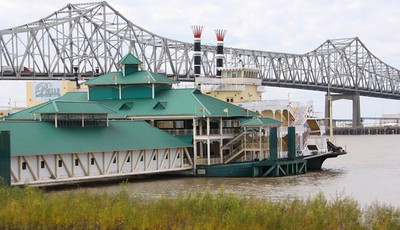
Caesars Entertainment recently announced it will sell for an undisclosed amount the operations of the Belle of Baton Rouge riverboat casino in Louisiana to CQ Holding Company, a privately held company that operates DraftKings at Casino Queen in East St. Louis, Illinois and Casino Queen Marquette in Iowa. The transaction is expected to close in mid-2021.

Since the $17.3 billion acquisition of Caesars by Eldorado Resorts in July, the new company has sold and plans to sell select venues in various markets, primarily to comply with Federal Trade Commission and state gaming regulators competition issues.

Caesars has pending deals to sell Eldorado Shreveport plus operations of MontBleu Resort Casino in Lake Tahoe to Bally’s Corporation for a total of $155 million. It also will sell Harrah’s Louisiana Downs Casino and Racetrack in Bossier City to Rubico Acquisition Corporation for $22 million. When these three deals close, Caesars still will operate Harrah’s New Orleans, Horseshoe Bossier City and Isle of Capri Lake Charles.

In October, Caesars announced it would sell the Tropicana Evansville in Indiana to real estate investment trust Gaming and Leisure Properties and Bally’s for $480 million. In accordance with Indiana gaming regulatory requirements, the company agreed to sell three of its five casinos in the state.

Docked on the Mississippi River, Belle of Baton Rouge casino offers 750 slots and 14 table games. It’s part of an entertainment complex that includes a 250-room hotel, restaurants and meeting space near the historic USS Kidd, between LSU and Southern University.

The Belle of Baton Rouge riverboat is owned by GLPI, which will retain ownership of the location.

Caesars Chief Economic Officer Thomas Reeg said, “Everything is for sale every day. We are economic animals. We’re always happy to be wowed by an offer.” He added, “I want to thank all of our Baton Rouge team members for their hard work and dedication, especially during the Covid-19 pandemic. We wish them the best under Casino Queen’s ownership.”

Las Vegas To Bounce Back Like The Roaring ‘20s, Wynn CEO Predicts

Not all predictions concerning Las Vegas immediate future are gloom and doom. Once the pandemic abates, Las Vegas could recover like the “Roaring ’20s” with economic prosperity, according to one casino executive.

“People are going to want to get out and have a good time,” Wynn Resorts CEO Matt Maddox said in an interview with Las Vegas Latin Chamber of Commerce President Peter Guzman.

“I think the future of Las Vegas is bright. I think Las Vegas can establish itself as the place to go to let loose,” Maddox continued. “It’s what we’ve always been, but I think it’s something we can really lean into to get us going again.”

In October, according to the most-recent statistics from the Las Vegas Convention and Visitors Authority, the city welcomed about 1.9 million visitors. That was down nearly 50 percent from the same month in 2019, as tourism remains sluggish because of the pandemic.

While Maddox lauded Las Vegas’ “long-term” recovery prospects, he said there will likely be more short-term pain for a city hit hard by the economic crisis. The jobless rate, which at the outset of the pandemic in the spring was at 30 percent, is about 12 percent.

With COVID-19 cases on the rise in Southern Nevada and in many other parts of the country, visitor numbers aren’t expected to improve in the coming weeks.

“It’ll take a couple years, but the future is bright,” Maddox said. “I think by summer, we’ll be back. Conventions won’t be back then because business travel will take forever, but vaccines will be rolling out and testing will be widespread. People will be ready to be back with other people. I think we’ll start to feel that momentum in February or March.”

Though perhaps known generally more for its casinos, Maddox said Las Vegas has in recent years morphed into a place that is known almost as much for its mass gatherings at places like sporting events, nightclubs and shows.

“Once people get out again and get a taste of what it’s like to be around other people, it’s electric,” Maddox said. “We need to be leading in this country to help get people back together. People are going to want to dress up and go out and be around people once it’s safe. I think it will be similar to the Roaring ‘20s after the pandemic of 1918 and 1919. It was like ‘oh my God, we survived this, let’s go have fun.’”

Virginia Lottery Expects Casinos In 2022

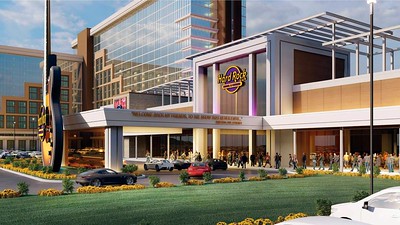
Developers of the Hard Rock Bristol Hotel & Casino in Bristol, Virginia said they expect to open a temporary gaming facility prior to April 2022. Virginia Lottery Executive Director Kevin Hall told the Virginia House Appropriations Committee that would be the earliest the lottery board would issue any gaming licenses and the soonest a temporary facility could operate. However, Hall said sports betting could start in early 2021.

Regarding the Bristol casino, Hall said, “We think it is highly unlikely that even an operator seeking a temporary permit would actually be operating casino gaming until April 2022 at the earliest.” Hall’s timeline is based on the legislation that authorized four casinos and sports betting to operate in the state under the oversight of the Lottery Board.

However, the investor group redeveloping the Bristol Mall said they expect much of the Hard Rock project to be open by late 2021. They added they want to offer a temporary casino away from the main casino in the former Sears store.

In a statement, the Bristol group said, “We are monitoring the Lottery’s permitting process for gaming, including recent public comments on a possible timeframe. We will be prepared to open a temporary gaming facility much sooner than April 2022 to help bring Bristol and the region much-needed new jobs and additional state and local tax revenue. We look forward to continuing to work closely with the lottery to satisfy all of the licensing requirements in a timely manner.”

In Danville, officials said they’re expecting the $15 million up-front payment from Caesars Virginia LLC to arrive soon. The city council will vote on final acceptance of the money at its December 15 meeting. Members won’t be voting on how to spend the funds at once; instead they agreed to review individual expenses as they come up. “I hope we’re not too anxious to spend this money without having a real good plan that the general public will have a comment on,” said Councilman Sherman Saunders said.

Previously, the council approved directing $5.9 million to go toward a new $17 million police station. Vice Mayor Gary Miller said he agreed that the city must be careful about how it spends the remaining $9.1 million. “At the end of the day, the citizens are going to hold the city council responsible for spending this money. The buck stops here,” Miller said.

Attorney Steven Gould, representing Caesars, shared the anticipated timeline for Caesars Virginia. He said Caesars has begun the search for an architect for a comprehensive design; a manager will be hired next year; a contractor will be chosen in the second or third quarter; and a groundbreaking could occur in fourth quarter 2021. Gould added educational partners will develop workforce training programs next year and hiring should start in late 2022 or early 2023. Construction should be complete in the second or third quarter 2023 and the casino is expected to open in third or fourth quarter. “We want to open as soon as we can,” Gould said.

Now through December 14, Richmond residents may take a survey asking what the city should consider in a proposal for a resort casino. The results will be used in a Request for Qualifications/Proposals, launching the competitive process to select a resort casino operator and location.

Mayor Levar Stoney said, “A competitive selection process will allow us to assess the best opportunity for Richmond. This survey is your opportunity to make sure the development proposals reflect your priorities, such as living-wage jobs, sustainable building practices and investment in the community.” Director of Economic Development Leonard Sledge added,

“Our primary objective is to identify a successful proposal that has outstanding economic opportunities and community benefits for Richmonders. We anticipate receiving multiple submissions, and we want to put a process in place to identify an operator and site that results in a true win for Richmond.”

The new casinos in Bristol, Danville, Richmond and Portsmouth will be authorized to offer legalized sports betting. Hall said the Lottery Board approved 70 pages of sports gaming regulations on September 15 and began accepting license applications on October 15; the application deadline was October 31. Hall said, “Our initial draft drew wide public comment and helpful recommendations from citizens, from major sports betting and casino operators, from several of the major sporting leagues. The reaction from the industry, so far, stakeholders think we have been transparent, accessible and reasonable during the rulemaking process.”

Hall said the board has received 25 applications from potential sportsbook operators and expects to issue the first license in early 2021. “There has been a high level of interest by leading national and international operators. We are now reviewing the applicants and we will conduct background and suitability checks within the 90-day time frame specified in the statute. We expect to be in position to issue the first online sports betting licenses early in 2021,” Hall said.

Currently sports bets can be placed in Virginia only through online platforms. Sports wagering is forecast to generate $5 million in state gaming tax revenue in its first year and $50 million annually by the fifth year, according to a 2019 report by the Joint Legislative Audit and Review Commission. The lottery hired Gina Smith, former chief financial officer and acting director at the Maryland Lottery, to lead the new gaming compliance division.

LA County Towns Call Cardroom Closures ‘Final Nail’

Leaders of several cities in Los Angeles County that heavily depend on cardroom taxes are calling the closures ordered this week by health officials the ‘final nail’ in their city budgets.

The city managers and mayors of Hawaiian Gardens, City of Commerce and Bell Gardens held a press conference on Monday, December 1 to beg the LA County Board of Supervisors to allow the seven card clubs that operate in their jurisdictions to reopen with beefed up safety measures.

The cities are millions of dollars in the red from the three closures since March. Moreover, the cardrooms have collectively spent millions of dollars installing six foot high clear plastic dividers, tents, outdoor air conditioning, temperature checks, masks for all, constant sanitation of cards and chips, touchless games and other measures to meet county protocols two months ago.

County health officials ordered the new return to near lockdown on the day after Thanksgiving. Among activities banned are most public and private gatherings, which include casinos. The orders are in effect until December 20.

County Health Director Barbara Ferrer defended the extreme measures. “We know we are asking a lot from so many who have been sacrificing for months on end and we hope that L.A. County residents continue following Public Health safety measures that we know can slow the spread. Acting with collective urgency right now is essential if we want to put a stop to this surge.”

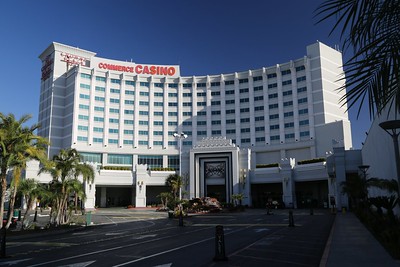
The casino city leaders met at one of the empty casinos, the Commerce Casino. Hawaiian Gardens City Manager Ernie Hernandez, who also spoke for California Cities for Self-Reliance declared, “Cardrooms have not been identified as a primary source of infections. Communities of color rely heavily on cardroom gaming.”

He called the science into question, noted that LA County concedes that it has no data on transmission of Covid-19 at cardrooms. He said his city, which gets 70 percent of its revenue from casinos, has laid of 40 percent of its staff.

Hernandez added, “If these closures continue, we will cut essential services. These are basic government services that people depend on for quality of life. For the sake of our community’s health, our future and thousands of public and private sector jobs, I implore the Board of Supervisor to make the right decision.”

The Gardens Casino’s general counsel Keith Sharp pointed out that the county’s casinos have spent millions on safety protocols and installations since October. He urged the County not to employ a one-size fits all solution. He said, “We recognize that this surge is serious and we plan to continue to do our part if permitted to do so. Shutting us down won’t prevent the surge but it will mean thousands of people out of work, harming cities and putting more lives in peril.”

Sharp said Hawaiian Gardens has lost more than $10 million in taxes from casinos so far in 2020. He expects revenues to drop 85 percent by the end of the year.

The city of Commerce doesn’t depend to quite that degree on casinos. Gaming provides 40 percent of revenues. Nonetheless the city has lost more than $12 million from the Commerce Casino so far this year according to John Griffo, director of business development for the casino. This will devastate the city’s youth, senior and library programs, he said.

Commerce Mayor Ivan Altamirano declared, “We’ve lost over $13 million already and that impacts public safety, it impacts our programs for the community so we really need this casino to get up and going.”

The closure also impacts the Commerce’s employees. During normal times the casino has 2,500 employees. Just before the latest shutdown it had 1,000 workers. They will be furloughed as well.

The Gardens Casino has gone from its pre-pandemic level of 2,000 employees to 600 this week before the shutdown.

When the Bicycle Casino closed it deprived Bell Gardens of half of its revenue according to Mayor Alejandra Cortez. She too foresees reductions in city services and additional layoffs of city employees. She declared, “This could be the last nail for our businesses and city. This is more than just gaming. It’s a vital resource to our community.”

She added, “So far, our city has projected an approximate $9 million in revenue loss so far. We have already eliminated police officer positions, reduced employee salaries and reduced our availability for other important services for children and seniors.”

The casinos are also a resource for their patrons. One such patron, Elaine Lam, who has visited the Gardens for 18 years from Westminster, told the Los Angeles Daily News: “I can’t stay home. I stay home, I go crazy.”

Nevada Regulators Mull Appeal in Wynn Case

In February 2018, Steve Wynn resigned as Chairman and CEO of Wynn Resorts a week after a Wall Street Journal article uncovered years of sexual misconduct and harassment allegations, which the casino executive has denied. He also sold his interest in the company.

Though Wynn has no role in any casino company, the Nevada Gaming Control Board tried to find him unsuitable to hold a casino license. But Clark County District Judge Adriana Escobar on November 19 agreed with arguments brought by Wynn’s attorneys that the former mogul’s resignation removed the Nevada Gaming Commission’s oversight.

In a statement after the ruling, the board said it would review the substance of the court’s decision and consult with its attorneys on whether to file an appeal.

“Over many months, the district court received extensive briefings and oral arguments which produced an exceedingly well-reasoned decision in favor of Mr. Wynn,” said Las Vegas lawyer Don Campbell. “Accordingly, we have every confidence that we will be able to conclusively demonstrate the continuing and compelling merit of our position should Nevada gaming authorities elect to pursue the matter further in yet another forum.”

The board filed a complaint in October 2019 that sought to label Wynn “unsuitable to be associated with a gaming enterprise or the gaming industry as a whole.” Two months later, the Nevada Gaming Commission voted it had the authority and jurisdiction to rule in the matter.

In her ruling, Escobar wrote, “Respondents fail to provide any authority supporting their jurisdiction over a person no longer involved in Nevada’s gaming industry in any capacity. Importantly, respondents fail to support their position that they have jurisdiction over a person with no intent to be involved in Nevada’s gaming industry in the future. Why? There is none.”

Campbell said he expected the Nevada Supreme Court to decide the issue. But Wynn “has no intention (in Nevada) or anywhere else in the world to re-enter gaming. None.”

Wynn Resorts paid a $20 million fine in February 2019—the largest in Nevada history—to the Gaming Commission to settle a 10-count complaint and/or investigate” numerous allegations of sexual assault, sexual harassment and sexual misconduct by Wynn. Massachusetts gaming regulators fined Wynn Resorts $35 million three months later.

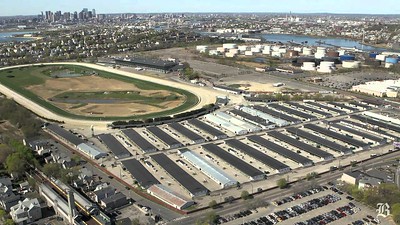
Former Suffolk Downs Owner Sues Wynn Again

Sterling Suffolk Racecourse after being rebuffed in federal court, is taking its lawsuit against Wynn Resorts to the Suffolk Superior Court in Massachusetts.

The former owner of Suffolk Downs racetrack is arguing that it was harmed when Wynn won the casino license for the Greater Boston area in 2014—and later built the $2.6 billion Encore Boston Harbor.

There’s nothing that can be done about the license, especially since the former racetrack has been sold for development, but the company is seeking more than $1 billion in damages.

A U.S. District court dismissed the lawsuit a year ago when Sterling Suffolk sought to prove racketeering. Sterling Suffolk has appealed, but in the meantime is pursuing the same claim in state court where it filed a claim November 16. It is suing both Wynn and FBT Everett Realty LLC, which sold the Everett property that lies along the Mystic River to Wynn.

The lawsuit claims then Wynn CEO Steve Wynn and some corporate executives violated state law by withholding information from the Massachusetts Gaming Commission that might have disqualified Wynn from the license. The lawsuit also claims that these actions drove a wedge between Sterling Suffolk and the Mohegan Sun, which it had partnered with to run the casino if it had obtained the license. This cost the racetrack owner more than $35 million annually.

These are essentially the charges made in the federal lawsuit.

The lawsuit bases its claims on criminal records of three people with ties to FBT Everett Realty and on Wynn’s edgy business partners in Macao. It also threw in allegations of sexual misconduct against Wynn that didn’t come to light until after the commission awarded the license.

Wynn resigned and his company eventually was fined $35 million by the MGC.

The Plaza Hotel & Casino Announces Greyhound Station Redevelopment And Symphony Park Connectivity Projects

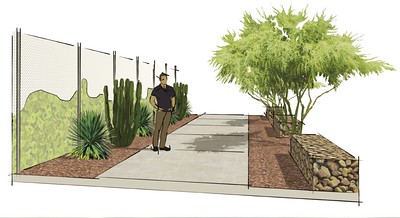
The Plaza Hotel & Casino will continue to transform its corridor of Main Street by redeveloping the current Greyhound bus terminal into a new destination that enhances the offerings and ambiance of Main Street.

According to Plaza Hotel & Casino CEO Jonathan Jossel, the Plaza will also partner with the City of Las Vegas to build a pedestrian-friendly pathway that leads to a new elevated bridge connecting the hotel-casino on Main Street to Symphony Park.

The Greyhound bus terminal will be vacated by mid-2021, and the Plaza has already begun discussions with developers on possible projects for the space.

With 48,500 square feet and adjacent parking, the building is a prime location for new dining, entertainment, or retail that will transform the area, encouraging visitors to walk up and down Main Street and experience all it has to offer.

In partnership with the city of Las Vegas, the Plaza also will build a four-block pedestrian pathway that will connect the Plaza with a new elevated bridge to be built by the city over the Union Pacific railroad tracks to the new residential and commercial development in Symphony Park.

The pathway will feature desert landscaping, lighting, and a decorative safety wall to create a relaxing and enjoyable pedestrian experience.

For more than a decade, Tamares Chairman and CEO Poju Zabludowicz has pursued a long-term vision for the development of the company’s holdings in downtown Las Vegas, including selling the Las Vegas Club in 2015, which made way for Circa, the first new resort to be constructed on Fremont Street since 1980.

Over the last decade, Tamares has also supported numerous improvement projects and expansions at the Plaza, most recently including the addition of 100-plus premium Luxe guest rooms and suites and the Core Arena, an outdoor equestrian and multipurpose facility on Main Street.

Continued development and improvements are expected in 2021, during which the Plaza will commemorate its 50th anniversary.

Sportsbooks Conflicted About Betting Limits

Connor Allen found himself in a pickle a few weeks back. The day before the NBA draft, Allen, a football analyst for 4for4 Football, heard rumors that the Chicago Bulls would pick Patrick Williams of Florida State for their fourth pick. Williams was +3000 on DraftKings, according to a report on the USBets website.

“I figured at 30/1, it’s worth a shot,” Allen said. “So I put down $250, which would’ve profited $7,500.”

But DraftKings only accepted $29.50 of the wager, and said the rest had to be approved. A quarter hour later, DraftKings said no and the odds dropped, closing at +200, according to USBets.

This kind of waffling happened to Allen before, but this time an even larger bet on Williams was accepted moments before he attempted his. When questioned, DraftKings said “We understand any frustrations. All wagers must be approved before final submissions on all user accounts. This is the time when our traders will review this for acceptance. In the future, we would suggest trying to lower the amount wagered.”

Telling customers to bet less money makes no sense when your own house rules allow for bets up to $20,000 on wagers like these.

DraftKings, which also says it has the right to limit bets anytime, wants to have it both ways it seems. So do other sportsbooks.

“I hear you, and I agree, it feels somewhat un-American to not let everyone bet the same amount,” said Adam Levitan, the co-founder of EstablishTheRun.com, a DFS site that also doubles as a place for Levitan to write about his player prop bets. “This guy can bet $10,000 because we have him marked as an unsophisticated player and this guy can only bet $30 because we have him marked as a successful sports bettor.”

In Pennsylvania, Levitan discovered few problems with FanDuel or DraftKings, but BetRivers wouldn’t let him get down more than $100 on NFL sides early in the week. Sure, these books are a private enterprise, but it’s still annoying.

Sportsbooks should be very clear with each individual bettor as to what their limits are. Some books are better than others in this regard: FOX Bet, for instance, offers you a chance to find out what your max bet is for any wager. FOX Bet knows how much they’re going to allow to wager. So why aren’t the other books more up front with their limits? Why make the limits process so opaque? (And why send bets to the traders on odds that are posted?)

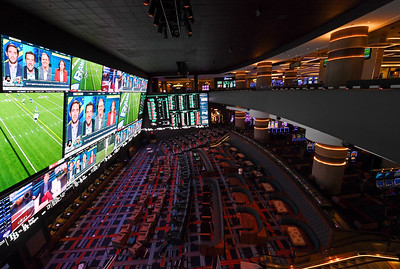
Perhaps all the books should take a page from the new kids on the block, Circa. You walk into a Circa sportsbook, there are printed sheets detailing the limits.

“We understand the hard work a lot of players put in making numbers and pricing things, and we want to be able to provide fair limits that make it worth people’s time to bet at our shops,” said Jeffrey Benson, the operations manager for Circa Sportsbook. “We might not have the biggest menu, but we’re very committed to every single thing we put up on the board. We’re committed to being tremendously transparent, honest, up front with the people that walk in our doors. We want to be as customer friendly as possible.”

Yahoo, BetMGM Expand Partnership

Yahoo Sports and BetMGM have expanded their sports betting partnership by adding new betting experiences to the Yahoo Sportsbook.

The new offerings will roll out alongside the 2020-2021 NFL betting season. The sportsbook will launch its new offering to all its patrons and will be implementing the products across the Yahoo Sports app.

With the new features, Yahoo Sportsbook users will be able to register for the BetMGM sportsbook directly through the Yahoo Sports app, making the process seamless.

This new process allows sports bettors to wager directly from the Yahoo Sports app, without the need to download the BetMGM app. The expansion also allows Yahoo Fantasy users to see odds and prop bets for players in their fantasy teams.

“The historic partnership with Yahoo Sports and BetMGM will change the future of fandom, providing new ways for sports fans to go beyond engaging with content and interact through commerce,” said Guru Gowrappan, CEO of Verizon Media, according to LegalSportsBetting.com. “At Verizon Media we believe in building products that connect consumers to their passions and drive the deepest end-to-end value possible.”

“This partnership marks an important moment for BetMGM in the growing U.S. sports betting sector,” added Jim Murren, chairman and CEO of MGM Resorts International. “Integrating Yahoo’s leading fantasy sports operations and content with BetMGM’s world-class sports betting and interactive platform uniquely positions us to drive market share and large-scale adoption among sports fans.”

MGM’s Hornbuckle Bullish on Online Sportsbook

MGM Resorts International’s CEO Bill Hornbuckle is bullish on the future of online sports betting, in spite of the crazy quilt of regulations from state to state that complicate things.

During an interview with ESPN at the Betting on Sports America conference at Mandalay Bay’s BetMGM Sportsbook, Hornbuckle said, “I think iGaming, led by sports, is a $20 billion industry domestically here in the U.S. Overall gaming is $55-60 billion in the U.S., give or take. You can see sports gambling will take a massive place both in the fundamentals of the business and ultimately the evolution of it.”

Before that can happen issues that need to be addressed include problem gambling, attracting customers who normally wager remotely to visit brick and mortar casinos.

Noting that the Raiders stadium is a block from the Mandalay Bay, Hornbuckle added, “The opportunity eight times a year to come to Las Vegas and enjoy an amazing experience around a Raiders’ game, whether you’re from Kansas City or Denver, is pretty spectacular not only for sports betting but for what it does for our industry and our space.”

He thinks wagering from mobile devices is probably not the threat to physical casinos that many imagine. “The idea that I could talk to you 365, make you hopefully understand our brand and our product by the device you have in your hand,” he told ESPN, “and earn some loyalty and an opportunity for you to come and motivate that trip, I feel really good about. I have no concerns.”

One challenge, says Hornbuckle, is to enable wagers on sports actions happening in real time. “The challenge today is that it doesn’t allow us to do anything instantly. But if you’re sitting at a tee box at a par three, you can make that bet. There’s a lot of propositions we can put into play,” he said.

He concluded, “It’s a dogfight. I view this much like the telecom industry. There’s going to be four or five real winners and a bunch of everybody else. … It’s going to take those who are strong of heart and deep wallets. It’s going to be several hundred million dollars in investment before we come to an environment where we think we’re making money and we’ve gained that market share.”

Georgia Ripe For Sports Betting

Since professional sports leagues resumed play after Covid-19 shutdowns, sports betting handle has soared. Observers said that’s due to orders restricting fans to stay home to limit the spread of the virus. As a result, states have collected $325 million more in handle through November compared to the same period last year, according to Bloomberg.

Georgia is one of the states that has not legalized sports betting. But when the state legislature reconvenes in January, Atlanta’s pro sports teams and other interested parties are expected to lobby for sports wagering. A primary observer has been Boston-based DraftKings Inc.

DraftKings Co-Founder and North America President Matt Kalish said, “It would be a perfect market to offer sports betting. I think the first step that the legislatures will have to consider is what framework are they interested in deploying. DraftKings advocates for an open, competitive market where the best product wins. I think a reasonable tax structure is also important to compete with illegal offshore sportsbooks that don’t pay any taxes.”

In Georgia, sports betting supporters said the illegal sports betting market is at least $2 million annually, not including those who travel to other states where sports wagering is allowed. That includes Tennessee, which passed a mobile sports betting bill last year; more than $27 million in wagers were placed in its first week. A similar bill was proposed in Georgia and passed the Senate Special Judiciary Committee, where it stalled–although it had advanced farther than any previous sports betting legislation.

Kalish said Georgia is like Tennessee, not just because both have popular pro teams, but also a strong fan base for local college teams. He noted two of the top five most popular sports in betting are college football and college basketball. “This is a great opportunity that will be very popular with consumers. We’ll absolutely be following the progress and advocating for what Georgians want on the sports betting front,” he said.