Author: Casino Connection Staff

More European Casinos Close Due to Covid-19

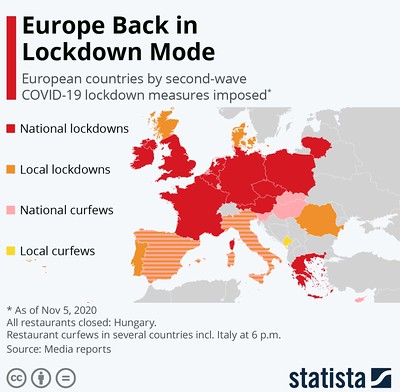
The governments of Latvia, Lithuania and Greece have announced closures dur to the coronavirus pandemic affect casinos and betting shops.

They join shutdowns in Europe including much of the UK as well as the Netherlands, Belgium France, Germany and Italy.

Lithuania’s government announced a temporary lockdown which will see the closure of all catering establishments, restaurants and cafes, as well as entertainment and gaming venues across the nation. The lockdown is scheduled from November 7 to November 29.

The country’s gambling revenue in the first half of 2020 fell by 15.9 percent to €43.8m as a result of lockdown restrictions imposed in the first half of the year.

Greece has also announced a 3-week suspension of land-based gaming as part of another national lockdown, to be imposed from November 7 until November 30. The restrictions will see former OPAP close, as well as its Play-branded gaming halls, as well lotteries and the horseracing facility at Markopoulo.

OPAP will continue to offer its range of products online, but the operator’s revenue is down 34.8% year-on-year for the first half of 2020.

Latvia is imposing a longer lockdown, from November 9 to December 6. The country has seen a 33.2% year-on-year decline for the year.

Meanwhile, bookmakers in the UK have agreed pay additional fees on existing streaming and data deals until December 2 to help prop up the racing industry during the latest pandemic shutdown. The extra revenue from online operators will help racecourses to make up for some of the funding shortfall caused by the widespread closure of betting shops in the UK and Ireland for the next month, according to SBC News.

Wampanoag’s Cromwell Arrested for Bribery Extortion

Cedric Cromwell, longtime chairman of the Mashpee Wampanoag Tribe of Massachusetts was arrested Friday on two federal counts of accepting bribes. The arrest was announced by U.S. Attorney for Massachusetts Andrew E. Lelling and the FBI.

Previously Lelling’s office issued indictments charging Cromwell and David DeQuarttro, owner of Robinson Green Beretta Corp, a Rhode Island architectural firm the tribe used to design its $1 billion First Light casino resort in Taunton—which was never built—on two counts of accepting or paying bribes and one count of conspiring to commit bribery.

The U.S. Attorney told reporters, “The charges allege that Mr. Cromwell violated the trust he owed the Mashpee Wampanoag Tribe by committing extortion, accepting bribes and otherwise abusing his position.” Lelling added, “Many American Indians face a host of difficult financial and social issues. They require – and deserve – real leadership. But it appears that Cromwell’s priority was not to serve his people, but to line his own pockets. We will continue to aggressively investigate public corruption, including by those who purport to serve our American Indian tribes.”

For three years, DeQuarttro paid Cromwell money and benefits totally more than $57,000, including $44,000 in personal checks written to CM International Consulting LLC, which was owned by a personal friend of Cromwell. That company then paid checks to Cromwell’ shell company One Nation Development. In return the tribe paid the architecture firm nearly $5 million.

Allegedly Cromwell spent all the bribe money on personal expenses, including payments to a mistress. He also received a free gym membership and free hotel stays.

Both men pleaded not guilty and were released on $25,000 prior to a planned December arraignment.

Cromwell became chairman of the 3,000-member tribe in 2009. The tribe is one of the earliest tribes that British colonists encountered when they settled the New World. The Mashpees are considered to be the tribe that greeted the Pilgrims shortly after they landed at Plymouth in 1620. It achieved federal recognition in 2007.

Cromwell has been much in the news in 2020, primarily because the Department of the Interior announced that it was removing the tribe’s reservation of more than 300 acres in Taunton and Martha’s Vineyard from trust. The land had previously been put in trust by the previous administration and had started building a casino before it was halted by an adverse ruling of a federal judge.

The action by the department to remove the land from trust was halted for the moment by a ruling of different federal judge.

A bill that would put the Mashpee land into trust by Act of Congress has been passed by the House of Representatives but stalled in the Senate after President Trump publicly opposed the idea.

A few days before Cromwell had been part of an event assembled by the National Congress of American Indians to give input on Indian issues to the incoming Biden administration.

Members of the tribal council tried on the Monday after Cromwell was arrested to remove him as chairman, but the motion was defeated by a vote of 4-3.

A hint of what was to come occurred three months ago after the U.S. Attorney subpoenaed financial documents from the Mashpee Wampanoag Tribal Gaming Authority three times in the last few months. Besides being chairman of the tribe, Cromwell also heads the Authority.

The Grand Jury also sought information related to the 2013 and 2017 elections of Cromwell. The tribal Treasurer Gordon Harris was also subpoenaed about a year ago.

AGA Report: Q3 Gaming Revenues Rebound from Covid-19; Smoke-Free Profitable

A new report from the American Gaming Association shows a significant rebound in U.S. commercial gaming revenues for the third quarter of 2020, with a huge jump over Covid-restricted Q2 revenues and inching closer to pre-pandemic levels.

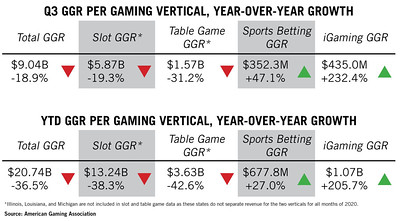
U.S. commercial gaming revenue for Q3 2020 totaled $9.04 billion, reaching 81 percent of the industry’s pre-Covid levels in Q3 2019, according to the AGA’s Commercial Gaming Revenue Tracker. Q3 revenue is up 294 percent from the historic lows of Q2, caused by pandemic-driven, mandatory closures.

Covid-19 health and safety measures, including social distancing and capacity restrictions, have contributed to the gaming industry’s recovery lagging the country’s broader economic recovery. Gaming revenue is down 36.5 percent year-over-year (YoY) in the first nine months of 2020, compared to the U.S. GDP’s 3 percent decline in the same period.

“Our industry continues to prioritize the health and safety of our employees, customers, and communities above all else,” said Bill Miller, AGA president and CEO. “While these quarterly results are promising, the reality is a full recovery is dependent on continued public health measures to control prevalence rates.

“As state and local officials respond to current Covid-19 outbreaks with additional restrictions, urgent congressional action to provide Covid-19 relief is even more crucial. Gaming employees and communities depend on it,” Miller added.

More than 100 casinos reopened between July and September with 902 commercial and tribal casinos (90.8 percent of total) operational by the end of the third quarter, compared to 800 (80.8 percent of total) at the start of July.

Many states that saw encouraging gaming revenue growth in Q2 continued the positive trend in Q3 despite continued capacity restraints. Five states—Arkansas (+.3 percent), Mississippi (2.8 percent), Ohio (+7.5 percent), Pennsylvania (+3.8 percent), and South Dakota (+6.1 percent)—outperformed their Q3 2019 revenue figures. Looking only at the most recent month, September, the recovery trends continue with both Maryland (+1 percent) and New Jersey (+6.5 percent) also returning to YoY gaming revenue growth.

While nationwide slot and table game revenue remained down compared to Q3 2019, sports betting revenue bounced back in Q3 2020, bolstered by an unusually crowded sports calendar and strong consumer interest in new legal betting markets in Colorado, Illinois, Michigan and Washington, D.C. Americans legally wagered a record $5.95 billion in Q3, generating $352.3 million in gaming revenue—the second-highest ever quarterly total.

iGaming continued to grow in Q3 2020, due, in part, to West Virginia launching in July. iGaming generated $435 million in Q3, up 8 percent from Q2 and 232 percent from Q3 2019.

The report also shows that smoke-free casinos in Arkansas, Maryland, New Jersey, Pennsylvania, Ohio and South Dakota have experienced year-on-year revenue increases, prompting advocacy group American Nonsmokers’ Rights to release a statement urging more casinos to ban smoking.

“AGA’s report shows that casinos with smoke-free policies have experienced year-over-year revenue increases or remained relatively stable, a remarkable feat given unprecedented capacity restrictions due to Covid-19,” said Bronson Frick, director of advocacy of Americans Nonsmokers’ Rights. “Most importantly, casinos with 100 percent smoke-free policies, such as in New Jersey and Pennsylvania, have kept nearly all of their employees Covid-free.

“It makes no sense to allow guests to remove their mask and blow secondhand smoke along with droplets carrying a potentially life-threatening disease into shared indoor air. We urge gaming operators everywhere to adopt 100 percent smoke-free indoor policies to protect the health of their employees and guests, nearly 75 percent of whom prefer smoke-free casinos.”

Most casino jurisdictions have banned smoking on casino floors to prevent the spread of Covid-19, with the notable exception of Nevada.

Harrah’s Whistleblower Resists Moving Complaint to Federal Court

Back in May and June, when Connecticut’s two gaming tribes were very publicly defying that state’s governor in reopening, California was acting out a similar tableau, but with dozens of tribal casinos considering ignoring Governor Gavin Newsom’s wishes about the safety of reopening.

One of these was Harrah’s Resort Southern California, whose general manager, Darrell Pilant, quit his job rather than reopen the resort in May, which he argued was unsafe. He later sued for wrongful termination—and is pushing back at Caesars Entertainment’s attempt to move the case to federal court—which would probably quash the suit.

Pilant’s “whistleblower” suit was filed in the Superior Court of the State of California, County of San Diego in September. In October Caesars Enterprise Services LLC, a subsidiary of Caesars Entertainment Inc., filed to remove the suit to the federal United States District Court for the Southern District of California.

If this succeeds, Pilant’s lawsuit could end up dead in the water, or so he argues. He would not be able to sue in federal court since he was not an employee of the Rincon Band of Luiseño Indians, which owns Harrah’s, he says.

Caesars, in its motion to move the case, argues that because the tribe owns the casino resort it must be included as a defendant since sovereign tribes may not be sued in state court. It calls the tribe an “indispensable party” to the lawsuit since it was the tribe’s decision to reopen rather than Caesars’.

Pilant retorts that he would be unable to pursue his case if it is moved, because he can’t sue a sovereign tribe.

Pilant’s wrongful termination complaint alleges violation of Cal. Labor Code§ 6310, violation of Cal. Labor Code§ 1102.1 and breach of written employment agreement.

He claims the Rincon tribe told him Governor Gavin Newsom

was “on board” with reopening. He later learned that was not true and he refused to reopen the casino. He was pressured to resign, an action he calls

wrongful termination.

In his filing, Pilant quotes from Governor Newsom’s May 15, 2020 letter: “[The plan to reopen casinos] deeply concerns me, and I urge tribal governments to reconsider…. I cannot stress enough that the risk of COVID-19 transmission remains a serious threat for all Californians. … [It] is in the best interest of public health to move toward a reopening in concert [with California’s phased reopening plan].”

On May 18 Pilant shared the letter with Caesars’s executives N. Lynne Hughes (VP Legal Affairs and Chief Legal Officer), Robert Livingston (Regional President and Pilant’s immediate supervisor} and Tom Jenkin (Global President}. Livingston later replaced Pilant as general manager.

Pilant, “expressed his health and safety concerns about reopening in contravention of advice and counsel of Governor Newsom. Later that evening, Mr. Pilant had a telephone call with Ms. Hughes and Mr. Livingston and was told that Caesars was going to proceed with the reopening on May 22, 2020,” according to Pilant’s filing.

Livingston replied to Pilant with an email later that night, CC’ing Hughes and Jenkin: “Did anyone else open today besides Viejas and Jamul? I feel better about opening in defiance of the Governor with others open.”

The next day: “Mr. Pilant telephoned Mr. Livingston and again reiterated his concerns that reopening the casino posed a serious health and safety risk. Mr. Pilant told Mr. Livingston that in good conscience he could not carry out the reopening and he felt he had no choice but to resign. Mr. Livingston confirmed that he knew Caesars’ plan to reopen was contrary to the advice of the Governor and he never once disagreed with Mr. Pilant regarding his concerns about employee and public health and safety. Nevertheless, Mr. Livingston urged Mr. Pilant to stay on and carry out the reopening.”

Caesars’ motion to remove the case to federal jurisdiction is based on two grounds:

1) federal question jurisdiction, pursuant to 28 U.S.C. sections 1331 and 1441(a), under the Indian Gaming Regulatory Act (“IGRA,” 25 U.S.C. §2701, et seq.); and (2) diversity of citizenship, pursuant to 28 U.S.C. sections 1332(a), 1441(b), 13 and 1446(b) as amended by the Federal Courts Jurisdiction and Venue Clarification Act of 2011, Pub. L. No. 112-63, 125 Stat. 758 (2011).

It argues that federal law states that “district courts shall have original jurisdiction of all civil actions arising under the Constitution, laws, or treaties of the United States.” It also argues “that Article I Section 8 of the United States Constitution, which provides that the real party-in-interest is a federally-recognized Indian Tribe and, thus, a domestic sovereign nation.”

It notes that the casino is on the Rincon Reservation, which

It points out that the casino is located on the Rincon Reservation, and “is wholly owned and controlled by the Rincon Band pursuant to IGRA, which establishes the regulatory framework that governs Indian gaming, as well as under government-to-government agreements between the Rincon Band and the State of California and, subsequently, with the United States Department of the Interior. It also “exercises ultimate authority and control over civil regulatory matters within the Rincon Reservation, including operations and decisions concerning the business, maintenance, and management of the Rincon Casino.”

Caesars maintains that it can’t be sued about reopening the casino without including the tribe, which actually made the decision: “On May 22, 2020, consistent with the Tribal Council’s directive to reopen essential businesses, the Rincon Casino reopened along with at least 6 other local tribal casinos. Specially Appearing Defendants CES and CEI had no role whatsoever in the decision to reopen the Rincon Casino when it reopened on May 22, 2020.”

Pilant is seeking redress because he disagreed with the tribe’s action reopening the casino, says the filing.

Pilant’s lawyers argue against dismissing the case because “Caesars waived its arguments because it entered into an employment agreement with Mr. Pilant expressly providing that Mr. Pilant has a right to pursue employment law claims against Caesars (not the tribe) arising out of his employment at Harrah’s.”

They write: “Caesars has not met its burden of providing that disposing of the action in the tribe’s absence would leave Caesars subject to a substantial risk of incurring double, multiple, or otherwise inconsistent obligations.” They add, “Plaintiff would have no remedy, much less an adequate remedy, if the case is dismissed.”

Pilant’s attorneys argue, “This is a case between an individual employee (who worked and resided in San Diego County), and a multi-billion corporation . . . It is not s dispute between Plaintiff and the Rincon Band.”

All the causes for action are made under state law. “The employment law claims are properly brought only against Caesars, which undeniably was Mr. Pilant’s employer. Mr. Pilant was not employed by the tribe. Mr. Pilant had no contract with the tribe. Mr. Pilant’s only employment relationship and only contractual relationship was with Caesars.”

Besides trying to deprive Pilant of his day in court. “The decision that is at the crux of this case is Caesars’ decision to send its own workforce back into the workplace that was unsafe and unhealthy.”

The attorneys declare, “Not only is the tribe not a proper party to this action (much less an indispensable party), but Mr. Pilant could not sue the Rincon Band even if the tribe were his employer.”

Hard Rock Hotel Transitions to Virgin Hotel

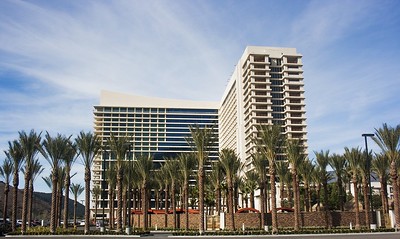
The rebranding of the former Hard Rock Hotel in Las Vegas to Virgin Hotels Las Vegas, is more than a mere cosmetic makeover. More substantive changes are the works as the new owner prepares to open January 15. It’s already started to accept reservations.

It is a drastic renovation that rivals any that have taken place heretofore in Las Vegas. Few sections of the property have been untouched, such as the addition of a five acre pool and entertainment complex, the “backyard.”

Richard “Boz” Bosworth, president and chief executive officer of JC Hospitality, owner of Virgin Las Vegas, told the Las Vegas Sun, “I think what makes us different from some of the other transformations and renovations is that it looks so much different. Bars have been moved, sightlines are different, our eco-systems and the way you can move around the property have changed.”

He added, “Out on our pool deck, where the Rehab pool party was, there’s no pool. It’s our event lawn and it has fire pits, birdcage seating, shrubbery and block walls, and it’s an area where you can have entertainment such as a concert in a Hollywood Bowl-type of experience, or you can put up a tent and have a wedding and get married there.”

It will enhance a pool that was always used for parties and concerts, but will be larger and will link to nearby restaurants via the Promenade. The restaurants along this pathway will include Olives, Casa Calavera, Kassi Beach Club and the Money Baby sports bar.

Bosworth believes the resort pool was never used to its full potential, and so, “it’s been completely reimagined with daybeds and cabanas to really become an entertainment and dining environment.” He added, “It’s a place to go as a hotel guest or to dine while surrounded by palm trees and beautiful landscaping, and your server can bring you your food from any number of restaurants. We think it’s truly going to be an experience much different than what you see in any current resort.”

This law space, when can be used for all sorts of events, will connect to the Manor, an indoor event space.

The resorts postponed its original November 2020, and has had the advantage of watching how other properties have reacted to the Covid pandemic, and has been able to pick and choose from among them. It is, said Bosworth, “the benefit of sitting on the sidelines watching best practices and seeing what works and what does not work.” He added, “We’re very conscious of where we are from a COVID perspective and like everyone else, we’re hoping science catches up quickly and our industry normalizes as soon as possible,” he told the Sun.

This will involve some apparent contradictions, such as creating intimate-seeming events that are also Covid-safe.

Reservations are being taken at the resort’s more than 1,500 rooms, which each include a dressing room and lounge, ergonomic beds, high-def televisions, reading nooks and even rooms devoted to our canine friends.

The hotel will have three towers, Opal, Canyon and the Ruby Tower, which will be nothing but suites.

The impending opening of Virgin Hotels Las Vegas, may have prompted a local developer, Michael Ochoa, to buy 12.1 acres almost adjacent to the resort for $12.5 million from Chinese investors.

But that’s just one of a number of real estate transaction east of the Strip that were beginning to peak before the arrival of Covid-19 let the air out of tourism, at least for several months.

Ochoa’s company, Ochoa Development Corp., told CDC Gaming Reports, that the group wanted to assemble a “really cool project,” that would be built within the two to three years but wouldn’t elaborate.

If so, Ochoa has gotten the parcel at bargain basement prices, since it was on the market for $47 million in 2017. One disadvantage of the property is that it has limited frontage on Paradise Road.

Virginia Cities Certify Casino Referendums

In Virginia, referendums to allow casinos in Bristol, Danville, Norfolk and Portsmouth all were approved by voters in the November 3 election. Local electoral boards have certified the results and now each city and its preferred casino partner may move forward.

A simple majority was required for passage. Bristol, Danville and Portsmouth approved the measures with two-thirds of the vote and Norfolk came close. The official results are as follows:

• Bristol (Hard Rock Casino and Resort Bristol)
Yes: 5,490 (71.1 percent)
No: 2,227 (28.9 percent)

• Danville (Caesars Casino Resort Danville)
Yes: 13,151 (68.7 percent)
No: 5,983 (31.3 percent)

• Norfolk (Pamunkey Casino Resort Norfolk)
Yes: 57,741 (65.1 percent)
No: 31,015 (34.9 percent)

• Portsmouth (Rivers Portsmouth Casino Resort)
Yes: 29,169 (66.7 percent)
No: 14,530 (33.3 percent)

Under Virginia law, this is the next step: “If a majority of those voting in a referendum held pursuant to § 58.1-4123 vote in the affirmative, the eligible host city shall certify its preferred casino gaming operator and submit such certification to the Department within 30 days.”

The Virginia Lottery, which will oversee casino gambling, has until April 7, 2021 to draft regulations. Once those are published, casino operators can formally apply for a license. The lottery then will have up to 12 months to review the application, conduct background and financial checks and issue a decision. Virginia Lottery Director Kevin Hall said the four new casinos could open in spring 2022. “While that feels like a long way off, it is well within the timelines of construction for each of the casinos,” he said.

However, before any casino opens, sports betting could launch early next year, Hall said. He said the lottery has received 25 sports betting applications for its 12 available licenses. “There is a high level of interest from national and international operators. We are now reviewing the applications and will do suitability and background checks,” he said. Applicants include BetMGM, DraftKings, FanDuel, PointsBet and WynnBet. Hard Rock (Bristol), Rush Street (Portsmouth), and William Hill/Caesars (Danville) already are partnered with casinos. In Norfolk, the Pamunkey Tribe has not yet announced a gaming operator.

Under the law, the deadline for sports betting applications was October 31. The lottery has 90 days from then to approve the applications. That’s January 29, one week before Super Bowl LV set for February 7 in Tampa.

As a result, if the lottery uses the full 90 days for review, the earliest sports wagers could be placed would be late January or early February.

FanDuel To Finance ‘Full Revitalization’ At Fairmount Park

FanDuel, operator of wagering and casino gambling platforms, announced it will make a multi-million-dollar investment in Fairmount Park Racetrack in Collinsville, Illinois, which will be rebranded as FanDuel Sportsbook and Horse Racing. The 95-year-old venue will undergo “a full revitalization,” according to FanDuel Group Chief Executive Officer Matt King. He said, “This is the first time we’ve put our brand on the overall track. We’re investing broadly to revitalize the track itself. Fairmount is an iconic state landmark which we plan to modernize, bringing innovative technology and entertainment offerings only FanDuel can deliver.” No dollar amount was given for the renovations.

FanDuel has worked with Fairmount for several years to offer track betting. The new retail sportsbook will take wagers on football, baseball and other non-racetrack sports. Pending Illinois Gaming Board approval, FanDuel Group will transfer its sports betting license from Par-A-Dice Casino in Peoria to the Collinsville venue.

Fairmount Park General Manager Melissa Helton said, “Fairmount Park is excited to extend our partnership with FanDuel Group to now include their sports gaming platform. This partnership will allow the park to remain an important economic driver for the surrounding communities.”

FanDuel Group and its popular horse racetrack wagering and television service TVG also pledged to fund Fairmount Park’s signature event, the $250,000 St. Louis Derby, which has not been run since 2006 due to finances.

The Collinsville track is one of three horseracing venues operating in Illinois and the only one outside the Chicago metro area. Opened in 1925, it features thoroughbred flat racing on a 1-mile dirt oval. The Ogden Corporation owned it for more than 30 years and sold it in 2000 in William Stiritz, then-chairman of Ralston Purina. The track offered racing this year but without fans due to Covid-19.

FanDuel officials said Fairmount Park has been approved to host 53 live racing days in 2021, plus daily simulcast wagering on tracks throughout the U.S. The venue offers simulcast wagering at its four off-track betting facilities in Alton, Carbondale, Springfield and Sauget.

NCAA Official Concerned with Prop Bets

Devyn Ford is a go-to running back for Penn State. In betting circle, it’s not out of the realm of possibility to have a proposition bet on how many yards Ford will carry the ball against Iowa November 21.

That has at least one executive with the NCAA concerned.

Speaking at the Sports Betting USA 2020 online seminar November 12, Naima Stevenson-Starks took issue with proposition bets on college players like Ford. Such wagers involve players reaching some type of goal designed by sportsbooks, such as how many touchdowns a quarterback will throw or how many tackles a linebacker will make.

Stevenson-Starks, the NCAA’s vice president for law, policy and governance, would like to see regulators restrict such bets to protect the integrity of the game.

“Unlike the professional leagues, we are now talking about student-athletes attending class with people who may be betting on their efforts on the field or the court,” Stevenson-Starks said. “That’s a concern.”

The NFL expressed similar concern about prop bets on its own players a few years ago. But player props take on a much larger segment of the sports betting industry than in collegiate athletics.

A survey of leading U.S. sportsbooks found little in the way of college player props, although they were more readily available on unlicensed offshore sites that are beyond the reach of U.S. regulators. A spokeswoman for DraftKings said its college props usually involve which team scores first or last, and how many points a team will score.

The Colorado State-Boise State football game did not offer bets on any individual player. The Golden Nugget sports betting site also did not offer player props on that game. FanDuel also said its college props market is small.

New Jersey is in the process of removing its restrictions on college sports betting to allow wagers on New Jersey teams and all games played in the state.

The NCAA position found a welcome ear with Cathy Judd-Stein, chairwoman of the Massachusetts Gaming Commission. She said the state will consider “the safety of amateur athletes to protect them against exploitation” in future sports betting legislation.

Meanwhile, as the college basketball season gears up for a November 25 start, the National Collegiate Athletic Association announced it is in talks with Indianapolis to be the single host city of the entire 2021 men’s college basketball tournament. Early round games had been scheduled at 13 sites nationwide, but officials said moving the games to one location would help lower Covid-19 risks by offering safe and controlled environments at venues, practice facilities, lodging and medical resources. In addition, the Final Four already is scheduled for April 2021 in Indianapolis, the headquarters of the NCAA.

NCAA President Mark Emmert said, “The committee and staff have thoughtfully monitored the pandemic to develop potential contingency plans. The board of governors’ and my top priorities are to protect the health and well-being of college athletes while also maintaining their opportunity to compete at the highest level. These principles have guided the decision-making process as we continue to assess how to have a fair and safe championship experience.”

NCAA Senior Vice President of Basketball Dan Gavitt added, “We have learned so much from monitoring other successful sporting events in the last several months, and it became clear it’s not feasible to manage this complex championship in so many different states with the challenges presented by the pandemic. However, we are developing a solid plan to present a safe, responsible and fantastic March Madness tournament unlike any other we’ve experienced.”

The women’s NCAA Tournament schedule remains in limbo. Since 2015, the first two rounds have been played on the home campuses of the top 16 seeds. Those will not be known until Selection Monday. The women’s Final Four will take place in San Antonio in March and the regionals supposedly will be played in Albany, New York, Austin, Texas, Cincinnati and Spokane, Washington.

Betting on Golf Pays Big

After a delay from spring to fall, the Masters Tournament teed off November 12 at Augusta National Golf Club. No fans attended the contest, but what were in attendance were signs of golf’s love affair with sports betting.

One of the favorites to win the green jacked, Bryson DeChambeau, expected to don a golf cap featuring the logo of sportsbook DraftKings. Unfortuntately, DeChambeau imploded in round one and never contended but the co-favorite, Dustin Johnson, pulled away over the weekend and waltzed to a five shot victory.

Betting on golf has spiked in recent months, with DraftKings enjoying a tenfold increase in action compared to last year, according to the Washington Post.

“We saw an explosion of interest in getting content and betting on golf because it was all there was” two months after the March shut down because of the coronavirus pandemic, said Patrick Keane, chief executive at Action Network, a media company devoted to sports gaming. “There was only so much Taiwanese baseball and Russian ping-pong that people could follow.”

Credit the PGA Tour itself with the explosion with an aggressive approach to marketing itself to bettors for a game friendly to wagers for years.

“The idea of competing in this manner, it is inherent in the game,” said Norb Gambuzza, the PGA Tour’s senior vice president of media and gaming. “It’s not something that we hide from or are reluctant to talk about.”

In a six week time frame that followed the cessation of all sports in March, officials rewrote policy that led to deals with four gambling operators. Players still can’t bet on golf, but they can partner with sportsbooks and networks can talk odds during broadcasts.

“And we did that all very deliberately because of that kind of lack of supply,” Gambuzza said.

Several sportsbooks saw golf betting double and triple from a year ago, making it the largest year over year gain in sport, even though wagers lag behind football, baseball and basketball. The average number of monthly users seeking golf content at Action Network rose almost 300 percent.

“People get confused by the vernacular with respect to betting—what’s plus-120, what’s minus-130, a parlay?—so many different confusing terms,” Keane said. “With golf, it’s easy. You bet a winner, top five, top 20, a head-to-head matchup.”

However, look for complications as the game incorporates in-play betting.

Streaming video and real-time shot-tracker data make it simple to bet on almost every aspect, right down to individual holes and shots, including prop bets such as who will hit the longest drive or get closest to the pin on a par-3. At last week’s Masters, bettors who believed that Tiger Woods would play a bogie-free first round (he did) were awarded with an 8-1 payout.

“When it comes to sports wagering, there probably isn’t a better sport because of pace of play for live betting,” said Ezra Kucharz, chief business officer for DraftKings.

Nothing is bulletproof, Gambuzza said. “There is inherent risk in running a sporting event across 18 holes where you have 100 to 150 guys competing. And so for anybody to sit here in my position and say that, ‘Yeah, we’ve got a foolproof system,’ would be grossly exaggerating at best.”

U.S. Online Casinos, Sportsbooks Show October Gains

If October proved anything it was that online gambling and sports betting have experienced limited downsides to date. Credit the convenience factor, for one. Also credit the coronavirus pandemic which left retail sportsbooks and casinos shuttered and then open in only limited capacity.

When it comes to iGaming, revenue for October in New Jersey, Pennsylvania, Delaware, and West Virginia added up to $155.5 million, an increase of 5.3 percent over September’s total of $147.3 million.

New Jersey online gambling revenue established a new record with $93.5 million, a 6.1 percent increase over the previous record set in August. October’s revenue more than doubled the results of October 2019.

But online poker fell to $2.5 million, down 4 percent from September and 16.6 percent from August.

Golden Nugget’s online casino held the top spot again with $28.1 million, according to PlayNJ. Yet its market share fell from a high of 36 percent in July to 29.7 percent in October as competition increased. The property’s various online casinos have reported a minimum of $26 million in monthly revenue since April with four brands: Golden Nugget, Betfair NJ, SugarHouse, and BetAmerica.

Borgata and Resorts Digital each crossed the $20 million mark for October. The former, led by BetMGM and Borgata brands, reported $22 million for the month, good for second place. Resorts Digital, led by DraftKings Casino, finished a competitive third with $21.6 million. The next closest was Caesars Interactive with $8.2 million.

New Jersey collected $14 million in online-gaming taxes, up nearly 6 percent from September.

New Jersey’s online casino industry numbers year to date comes to $779 million, a 102.8 percent year-over-year increase.

iGaming revenue in Pennsylvania set a record for the third month in row, taking in $59.8 million, an increase of 4.7 percent over September. And September rose 2 percent from the August record. Revenue from online slots totaled $40.3 million, table games $17 million, and online poker $2.4 million, according to CDC Gaming Reports.

Rivers Casino Philadelphia ranked first, posting $16.6 million for the month, of which $14.1 million came from slots. Penn National, through DraftKings, led table game revenue with $6 million.

Delaware produced $643,714 in iGaming revenues for October, a decrease of 23.4 percent from September and the lowest total since March of this year. Online video lottery (slot) games pulled in $450,428, while table games generated a bit more than $150,000.

West Virginia saw a decline in online gaming revenues of 16 percent to $1.6 million in October, its third full month in the market.

Of the seven legal sports wagering states that have released October handle and revenue figures so far, six of them saw increases over September. While September’s U.S. record breaking handle of $2.86 billion benefited by a confluence of games from all four major team sports, October saw few games from Major League Baseball, just five NBA games and no NHL games. But the NFL and college games were in full force so expect October tallies to be over $3 billion.

New Jersey’s nine casinos, two racetracks and mobile online options topped out at U.S. record of $803.1 million in handle, well ahead of Pennsylvania, which came in second at $525.8 million. It was the second consecutive month in which New Jersey set a new record. New Jersey’s gigantic handle figure led to a total of $58.6 million in sports betting revenue for New Jersey operators in October, according to NJ Online Gambling.

New York could only look at its neighbor with envy. The four upstate casinos with sports betting generated just $2.6 million. For the year, New Jersey’s casinos, racetracks, and their online sports betting app partners have raked in $281.6 million in revenue while their New York counterparts have totaled a mere $6.2 million.

In New Jersey, sportsbooks paid $35.5 million in taxes for the first 10 months of this year. New York estimates that less than $1 million went to taxes.

The difference owes to a lack of mobile sports betting in New York and to a much lesser extent, to a lack of retail casinos close to New York City.

Some 91 percent of all sports wagers in New Jersey in 2020 were done online. Much of New Jersey’s windfall comes from New Yorkers who cross the borders to place mobile bets. A total of $836 million was estimated to have been wagered by New Yorkers in New Jersey in 2019 at brick-and-mortar sites as well as online. The result was $6.3 million in foregone tax revenue for New York.

Sports betting handle in Pennsylvania hit $525.8 million in October, setting a new state record. That’s up 13.6 percent from the previous record of $462.8 million set in September, according to Legal Sports Report.

Sports betting revenue also hit a record $47.8 million, according to a state report, with $13.2 million in tax revenue. Even when stripping out the $11.1 million in promo credits granted in October, the taxable revenue is still higher than the previous revenue record of $31.6 million from January 2020.

Mobile handle share grew to 89.8 percent.

The $11.1 million in promo credits is 26.6 percent of total online revenue in October, down from 91.3 percent in September. But promo spend didn’t drop significantly. Revenue jumped a lot. Operators spent $12 million on promo credits in September.

Sportsbooks spend to pick up new customers during the NFL betting season and keep existing customers from jumping ship to new competition, like Barstool Sportsbook.

The newest online player, Barstool Sportsbook, took $63.8 million in bets during its first full month of operations in October. That ranks as fourth-best. FanDuel Sportsbook maintained its lead in the state with $184.9 million in handle. DraftKings Sportsbook was second with $123.4 million. BetRivers‘two licenses with Rivers Philadelphia and Rivers Pittsburgh combined for $68.6 million. Parx Sportsbook with $29.9 million and Fox Bet with $29 million finished fifth and sixth.

With just seven states, national handle is already up about $160 million over September. If other states prove stagnant in October, national handle could exceed $3.02 billion. But Colorado and Illinois will hardly show stagnant results. Both states are generating huge handles since they launched earlier this year.

Illinois sports betting began in early March, but hit a brick wall when the coronavirus pandemic shut down sports and casinos later that month. But in September, the third full month of live wagering, the state recorded a handle of $285 million, eclipsing the $208 bet in Indiana in the same month. Monthly handles rose from $53 million in July to $140 million in August.

Industry analysts said the handle speaks to the potential in a state with a rich tapestry of sports and sports enthusiasts. Some say the wagers could produce annual handles of $5 billion, in Nevada territory, according to the Chicago Sun-Times.

Credit for much of the handle increase also goes to mobile betting, which accounted for 92 percent of the wagers in September. The state had $6.8 million in adjusted gross sports betting revenue, good for 2.2 percent hold.

Of the seven casinos and one horse racing track, Rivers in Des Plaines led the way with $105 million in wagers, though its lead was not as steep, according to Legal Sports Report.

DraftKings at Casino Queen in downstate East St. Louis handled about $92 million, while the Par-A-Dice Casino in East Peoria took about $75 million in bets through FanDuel.

September generated about $1 million in state tax revenue with another $82,000 going to Cook County government. The industry could bring in $100 million to state coffers each year.

Baseball so far has drawn the most interest from Illinois bettors (3.2 million bets totaling $133 million from June through September), though football will surely soon overtake it (2.7 million bets totaling $92 million).

William Hill Shareholders OK Caesars Bid

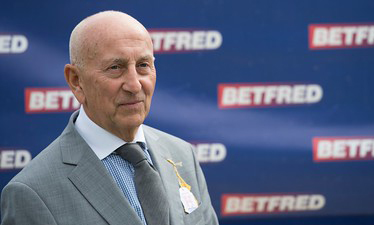
Fred Done, the billionaire owner of sportsbook, Betfred, helped to decide the fate of Caesars Entertainment in its bid to acquire William Hill. Done, William Hill’s largest investor, cast his vote November 19 in support of a £2.9 billion (US$3.8 billion) takeover bid.

Caesars tendered its offer in September after U.S. private equity fund Apollo, tabled a competing bid. William Hill chairman Roger Devlin supported the bid after the bookmaker suffered a blow from a government crackdown on fixed-odds betting terminals led to a fall of in share price.

U.K. bookmakers rivals GVC and Paddy Power Betfair agreed to lucrative partnerships with U.S. operators. Done told the Daily Telegraph in March that William Hill was “miles in front” of the GVC in U.S. operations.

“Businesses are all about value for money, and this is why I’m buying the Hills shares because they are cheap,” he said.

Caesars has said it will sell William Hill’s non-US operations once shareholders approve the takeover, and Done is reportedly interested in buying the assets.

Sports Betting Dead In Massachusetts

Any hope for the legalization of sports betting in Massachusetts this year died last week when the state Senate rejected a measure that would have added sports betting revenue to the convoluted and hurting state budget. An amendment from Minority Leader Bruce Tarr was rejected without a roll call, deepening the mystery of why the legislature didn’t include the potential revenue when the goal was to ease the tax burden for state residents. Tarr’s amendment would have permitted casinos, racetracks and online operators to apply for licenses, using the initial fees to help state businesses devastated by the Covid-19 closures.

Estimates are that the state would have reaped between $20 million and $50 million from the taxes on sports betting. Senators from both partes supported the measure.

“If we don’t do it in this bill, we should absolutely get to work before we end this year to make sure this is done,” Senator Marc Pacheco said. “I am very concerned that we are going to be missing the boat on this.”

The current legislative session runs through early January by the chance of any bill coming up that legalizes sports betting is very slim. According to Senate President Karen Spilka the emphasis will be on getting the budget passed and with no sports betting included, it will not be a priority.

Meanwhile, he gaming companies that control Massachusetts’ three casinos, Plainridge Park, the Encore Boston Harbor and MGM Springfield, told lawmakers that if sports betting is legalized that they want to keep it in-house.

The gaming companies, including Wynn Resorts, MGM and Penn National, sent a letter to legislative leaders who make up a joint committee of three representatives and three state senators tasked with looking at the issue of sportsbook for the Bay State.

“Those that make actual investments in Massachusetts, assume legitimate risk, and incur costs to provide a service or benefit in the Commonwealth should be enfranchised under this legislation,” wrote Plainridge Park General Manager Lance George and Encore Boston Harbor President Brian Gullbrants.

The gaming companies have suggested that the legislature should allow each of them to offer retail and online sports wagering and team up with as many as three online or mobile operators.

The companies did leave open the door for Boston-based DraftKings to get a slice of the pie, by suggesting that the Massachusetts Gaming Commission ought to be able to grant an online license to, “an online sports betting operator that is headquartered in Massachusetts and has a majority of their employees located in the Commonwealth.” DraftKings is the only company that fits that description.

The gaming companies warned lawmakers not to dally in legalizing sports betting. In their letter George and Gullbrants wrote, “Sports wagering expansion by our neighboring states substantially affects the competitive posture of the gaming industry here in the Commonwealth and places us at a strong disadvantage, with Massachusetts jobs, revenues and economic activity at stake. It is imperative that sports wagering expansion in the Commonwealth be done responsibly, with consideration of the framework in place in the existing 22 states that currently allow for legalized sports betting.”

That ship may have sailed.

Ohio Looks to Lame-Duck Session for Sports Betting

Lawmakers in Ohio are scrambling to pass sports betting legislation in the lame-duck session of the legislature over the coming weeks, as two of the three sponsors of sports-betting bill SB 111—Republican Rep. Dave Greenspan and Democratic Senator Sean O’Brien—lost their bids for re-election on November 3.

Last week, the Senate General Government and Agency Review Committee held a hearing on a draft compromise bill to the original SB 111.

“I think this hearing will inform and refresh in the minds of the committee the work that we have done over the summer and continue to do on the Senate bill,” state Senator John Eklund, co-sponsor of SB 111, told the Gambling.com news site. “Those that are in favor of the bill, they will continue to support the legislation, but I don’t believe there is a firm belief of which bill would be the bill, whether the Senate or the House. We are prepared to move forward.”

The Senate bill and the House bill, HB 194, would need to be passed and compromise legislation cleared in November and December, or the new legislature would need to start over in January.

The latest HB 194 proposal cut the number of Ohio sports betting licenses to two for each casino and racino operator in the state, down from three in the September version of the bill. It would mean a total of 22, down from 33. It also offers an 8 percent tax rate, a $100,000 fee for a five-year license and no official league data mandate.

The House bill has called for the Ohio Lottery Commission (OLC) to be the chief regulator, while the Senate bill puts control with the Ohio Casino Control Commission (OCCC).

College sports within the state would be allowed for sports wagers on the NCAA Division I level, but college club sports would not.

Neighboring Pennsylvania, Indiana and West Virginia already have strong sports betting markets.

PointsBet Goes Live in Colorado

PointsBet has gone live as the 16th sports betting app in Colorado after setting up exclusive deals in the state. The app goes through Double Eagle Casino in Cripple Creek, which tapped the company to run its sportsbook, both online and later, retail.

In addition, PointsBet has become the exclusive sportsbook of the Colorado Avalanche, Denver Nuggets, Colorado Mammoth and Ball Arena. It also agreed to a five-year deal with NBCUniversal, which includes nearly $400 million in committed ad spend with NBC taking a 4.9 percent stake in the company, according to Legal Sports Report.

The Australian-based sportsbook became the first in the U.S. to sign a sponsorship with a college, becoming the exclusive official partner of the University of Colorado.

The company will also establish its home base in the U.S. in Denver, where it will employ 200.

Sportsbook operators in Colorado took $207.7 million in handle during September, making it the fifth-biggest market by handle for the month. But PointsBet is aiming for at least 10 percent market share in all jurisdictions, CEO Sam Swanell said. The sportsbook operates in Illinois, Indiana, Iowa and New Jersey.

To kick off its launch, Play Colorado did a Q&A with Trip Stoddard, the director of customer experience and insights at PointsBet.

“We’re local,” Stoddard said. “We’re 10 minutes from Ball Arena. We’re right next to Coors Field. And Denver is just a great sports town. We’ve got the big four professional teams, which is fantastic.”

Stoddard said the mid November launch gave the company time to work on delivering the best experience with the fastest and easiest app.

“If you’re walking into Ball Arena, we want you to know that you can bet with a local operator. You don’t need to go with one of the national big dogs that probably don’t care too much about the state. So with that, we partnered with Kroenke.”

PointsBet expects to launch sports betting in Michigan in its fiscal third quarter, which begins January 1. Michigan will also be the first market to get PointsBet’s proprietary iGaming product. New Jersey is expected to get the casino product before the end of the fiscal year.

Wynn Launches Betting App with BetBull

Wynn Resorts has partnered with U.K.-based betting app producer BetBull to create a new app targeting both the online sports betting and online gaming markets, to be called WynnBET.

Wynn officials announced the partnership in their third-quarter earnings call, noting the company’s goal of doubling its U.S. market access for online wagering by the end of the year. Wynn officials called BetBull a “product-focused online gaming company” that combines free-to-play games with a social component that allows bettors to gather in chat rooms to “watch” games together, according to a report by SportsHandle.com.

Several weeks ago, Wynn announced a majority-owned joint venture with BetBull for online sports betting and interactive gaming, Wynn Interactive, to offer digital gaming both in the U.S. and internationally. Wynn Resorts owns 71 percent of the new subsidiary, and has made an $80 million investment in BetBull to fuel growth needs, the company said.

Wynn Interactive launched its first digital sports betting platform in August in New Jersey, and it has been live in Nevada for several years. The company has applied for live mobile sports betting licenses in Tennessee and Virginia, and officials say the company will continue to expand as more U.S. jurisdictions approve online sports betting and iGaming.

Evolution, Caesars Launch Live Casino in PA

Malta-based online gaming content supplier Evolution announced the launch of Live Casino games online for Caesars Casino & Sportsbook Pennsylvania in partnership with Caesars Entertainment.

With this partnership, Evolution provides its portfolio of online Live Casino and game-show-style games to Caesars’ customers first in Pennsylvania, with New Jersey to follow, powered online from Evolution’s live studios. The Evolution live games are available within the Caesars Casino & Sportsbook PA app, available on iOS and Android, or on desktop.

Johan Nordstrom, chief executive officer, Malta and chief commercial officer at Evolution, said, “We look forward to helping one of the biggest and most iconic brand names in the casino world achieve their goals in the U.S. gaming market and beyond.”

“Caesars is bullish on the future of iGaming—and with that, it’s important to us to continue to provide our customers the best in online gaming with a superior experience and the latest technology,” said Christian Stuart, head of sports and online gaming for Caesars Entertainment.

Wynn Interactive Expands its Reach in iGaming, Sports Betting

In an effort to expand its presence in the iGaming and online sports betting market, Wynn Resorts has partnered with U.K.-based BetBull. Wynn hopes to double its access by the end of 2021.

The latest pronouncement comes after the company said earlier in November it would reorganize certain assets (including BetBull) into a new majority-owned subsidiary for online sports betting and iGaming. Known as Wynn Interactive, the arm will offer digital gaming in both the U.S. and abroad. Wynn Resorts, which owns 71 percent of the new venture, invested $80 million in BetBull to fuel growth, according to SportsHandle. Former BetBull shareholders will receive a 29 percent stake in the new entity.

BetBull calls itself as a social sports betting community, where patrons can place bets alongside friends and groups, then cheer on the bets in a chat room.

“The founders of (BetBull) were a great cultural fit,” Wynn CEO Matt Maddox said. “They were the founders of Bwin and Party and understand this intimately. And they built a product in the U.K. that was really very social. When you see your friend making a bet, it will pop up on your phone. Do you want to follow your friend? It’s very parlay heavy.”

The partnership brings Wynn’s digital ventures under one umbrella, iGaming will remain BetBull in the U.K., but in the U.S., the app will be called WynnBET. The company also owns the social casino operations of Wynn Slots.

Wynn Interactive launched its first digital sports betting platform in August in New Jersey. It currently has access in nine markets, and expects to add seven more, including Tennessee and Virginia. WynnBET has partnered with Martinsville Speedway and Richmond Raceway as a way into the Virginia market.

In early October, Wynn announced a 10-year deal with GAN to furnish the software platform in Michigan. This pact follows Wynn’s agreement with the Sault Ste. Marie Tribe of Chippewa Indians in Michigan, who operate five casinos under the Kewadin Casinos brand.

According to a third quarter corporate report, Wynn Interactive is also working to enter California, Georgia, New York, Ohio, and Pennsylvania. When Wynn has access in all its states it is soliciting it will have a reach across half the U.S. sports betting market, according to Legal Sports Report.

“We’re learning a lot as we have product releases every two weeks,” Maddox said. “We’ve had lots of interest from various people wanting to co-invest, wanting to be a part of it.”

Wynn Interactive currently generates around $20 million in revenue, mainly via BetBull, Maddox said. That will “increase exponentially” as WynnBET launches in new states.

EveryMatrix Seeks New Jersey License

iGaming technology supplier EveryMatrix has filed a gaming license application with the New Jersey Division of Gaming Enforcement. If approved, the company can supply casino operators with products such as its integration platform and games aggregator CasinoEngine.

“We are very pleased to inform that we have filed our license application in our first U.S. state,” said Erik Nyman, president of EveryMatrix Americas. “The Garden State has enjoyed great success with exceptional development over the last years. This is a testament of the solid regulatory framework based on player protection, business stability and growth.”

In 2020, New Jersey is approaching $1 billion in online casino gross gaming revenues, one of the largest markets in the world.

Evolution Gaming Introduces Live Online Craps Game

Craps is a standard brick-and-mortar casino game, but now Evolution Gaming is ready to take it online announcing a new live game for online casinos.

Evolution says its version of the dice game is graphically set in an underground, speakeasy-style studio, but while the feel is old-school, everything else is 21st century, according to a news release. The company said its version will also be instructive to novice players.

“We understand that not everyone knows how to play Craps,” said Todd Haushalter, chief product officer at Evolution, said in the news release. “That’s why the game has both an ‘Easy Mode’ and a simple online interactive tutorial that clearly explains how to play and enjoy the game. Craps has been our most requested new game by both players and operators for years — now it’s finally here. I think players are going to love it.”

Evolution Gaming, based in Sweden, develops and produces business-to-business Live Casino solutions to gaming operators.

“Craps completes the Evolution portfolio in terms of offering every game you can find in a land-based casino,” Haushalter said in the release. “Developing the game and capturing the unique excitement of the craps table, but in an online setting, was a complex project.”

Evolution is also adding to its list of First Person games by launching a RNG variant of Craps. Like all of Evolution’s First Person games, it includes the “go live” button, which transports players through an in-game portal to the live version of the game, the release said.

Evolution has also announced the launch of Live Casino games online for Caesars Casino & Sportsbook Pennsylvania in partnership with Caesars Entertainment. The games will first be available to Caesars’ customers in Pennsylvania, with New Jersey to follow.

BetMGM has also announced the launch of a new Live Casino offering in New Jersey in partnership with Evolution. Evolution also announced recent deals with FanDuel, Rush Street Interactive, Wynn and William Hill.

New York Fund Backs Out of Bid for William Hill

New York investment fund Apollo Global Management will not seek to acquire sportsbook operator William Hill. The firm had until last Wednesday to submit an offer to better Caesars £2.9 billion (US$3.8 billion) bid, which was recommended by management and approved by shareholders. Company Chairman Roger Devlin said the Caesars-Hill merger secures “the best foundations from which to accelerate William Hill’s U.S. multi-state wagering ambitions.”

Apollo is interested, however in William Hill Plc’s non-U.S. assets, which Caesars has said it wants to sell. A new look Caesars would prefer not be saddled with the company’s European portfolio.

Betfred founder Fred Done, for one, expressed interest in the U.K. holdings while 888 Holdings leans towards online and Scandinavian online casino Mr Green.